Garden Blog - Top Tropicals
Date: 17 Oct 2026
🎃 Fright Night in the Greenhouse
By Tatiana Anderson, Plant Expert, Top Tropicals
Smokey: Relax, Sunshine. That pitcher plant only eats insects.
Sunshine: Then what's that horrible smell? Something died?
Smokey: Worse. Something bloomed. Welcome to Halloween at Top Tropicals!

Long before anyone sold plastic skeletons or spray-on cobwebs, nature had Halloween covered. It grew flowers so dark they pass for black. It shaped blooms like bats and gave them whiskers. It built leaves that look like bones, flowers that open only after dark, pitchers that drown insects, and blossoms that smell like something left too long in the sun. None of it was meant to scare anyone. Every strange trick has a job to do. Here are some of our favorite botanical oddities, the stories behind them, and what it takes to grow each one.
The Dark Side
Beautiful, mysterious, and dressed for Halloween
True black is almost unknown in plants. What looks black is usually deep purple or red, with pigments that absorb most of the light. Our tour starts with four plants that wear black, burgundy, and chocolate better than most costumes.
🖤 Adeniums with Black Flowers - Desert Rose
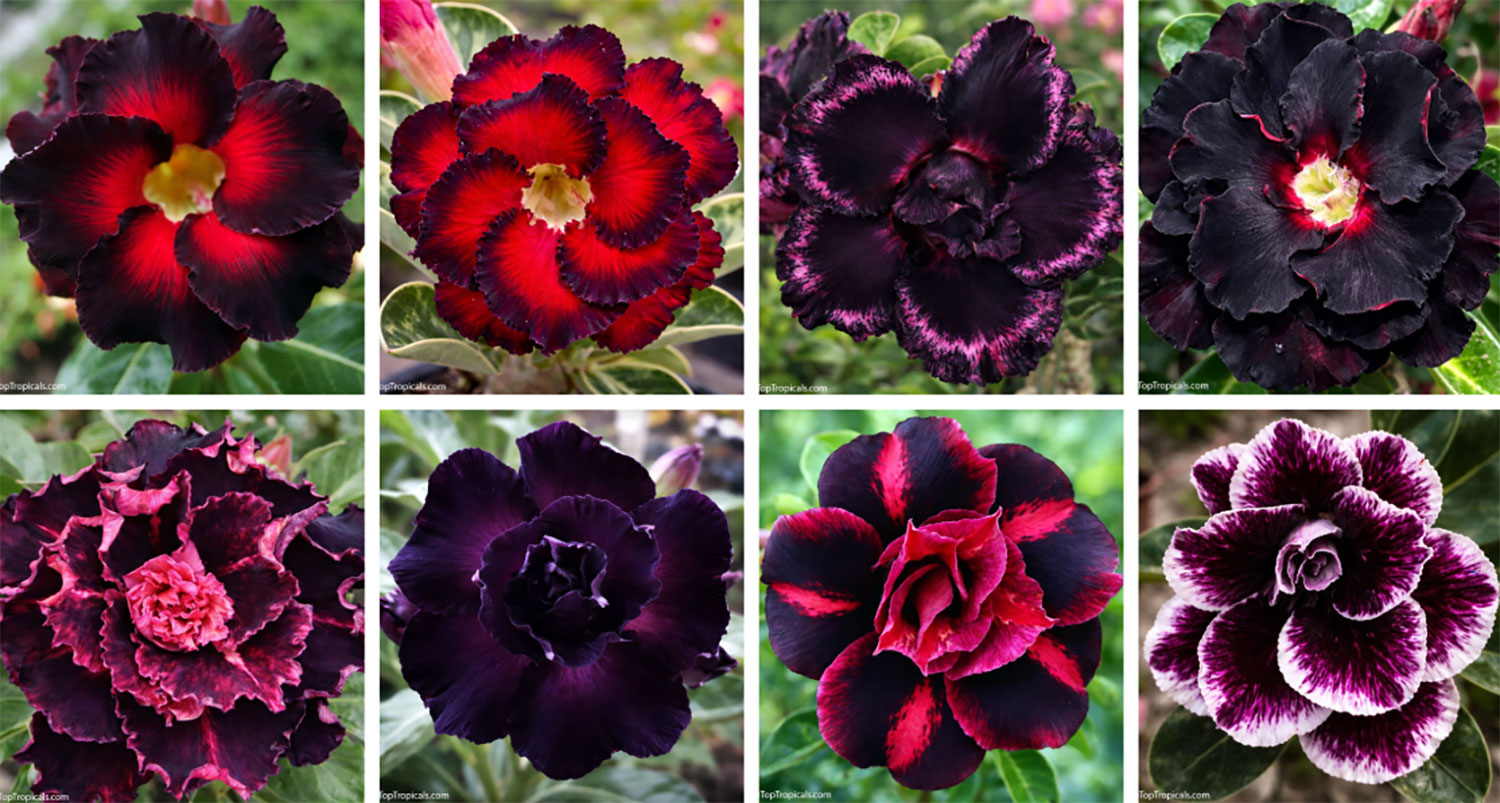
Desert Rose (Adenium sp.) is an odd plant to begin with. Its fat, swollen trunk stores water and twists into a living sculpture as the plant ages. Our dark-flowered Adeniums bloom in deep burgundy, wine, and purple-black, often with a velvety sheen. They are not truly black, but some come close enough that visitors lean in to check. Color usually runs darkest in mild weather and lightens in summer heat. Every trunk grows into its own shape.
Growing tips: Adenium is a sun plant. It needs six or more hours of direct sun to bloom well. On an ordinary windowsill it survives but rarely flowers. In summer, keep it on a sunny patio in a pot with large drainage holes and a gritty, fast-draining mix. Water thoroughly in hot weather once the mix dries. When nights drop below 60°F, many Adeniums drop their leaves for their winter rest. Keep the plant nearly dry until spring, because wet roots in cool weather kill more Adeniums than anything else. Bring it in before nights fall below 50°F. Most stay 1 to 3 feet tall in containers. In hot desert climates, shade dark pots in the afternoon so the roots don't cook.
🐉 Anthurium Black Dragon
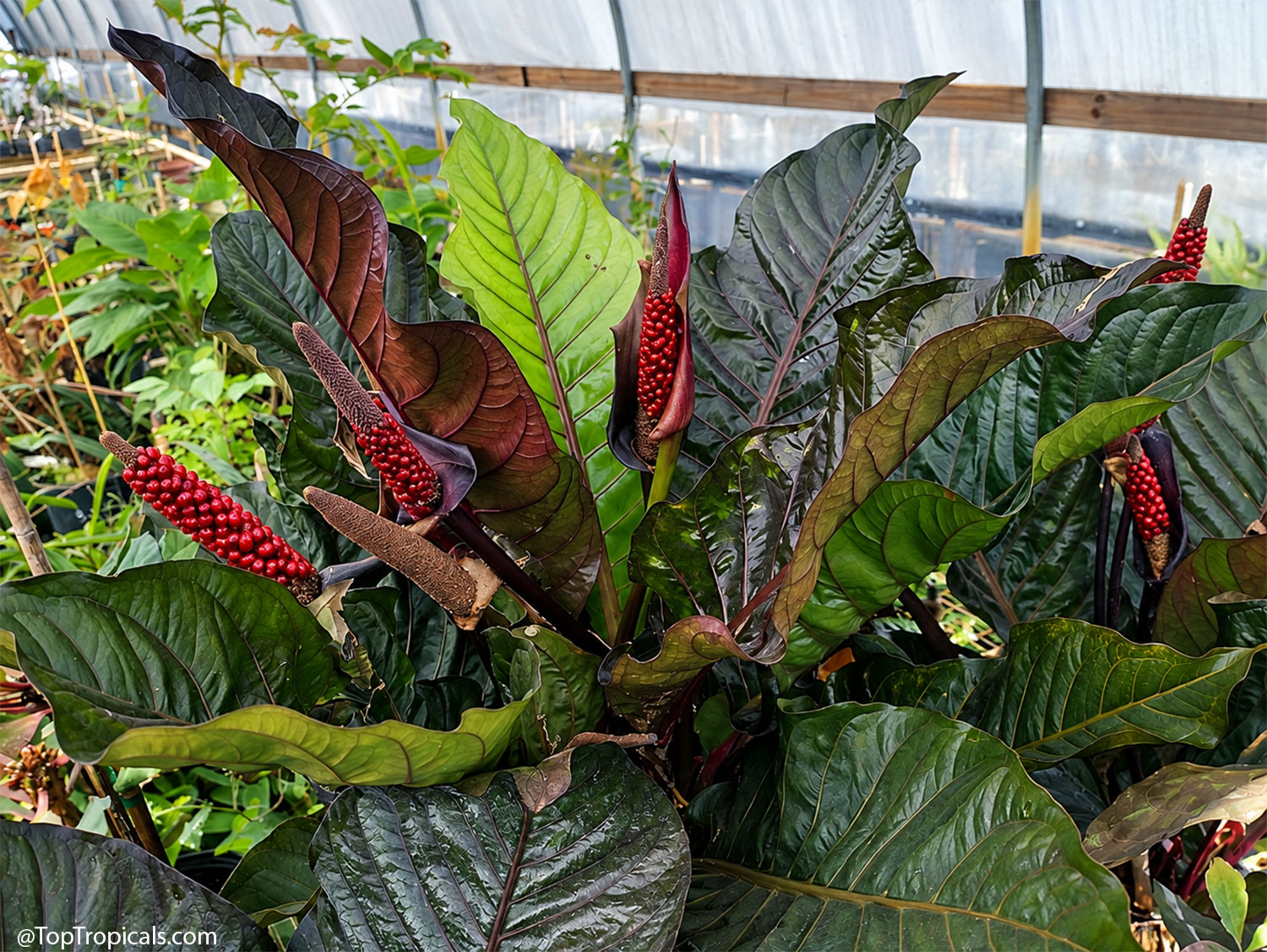
Most Anthuriums are sold for their red or pink blooms. Black Dragon (Anthurium sp.) is grown for its thick, upright, leathery leaves, which turn nearly black in bright filtered light and greenish-maroon in lower light. Move it and it changes color. Even the bloom is dark, a brown hood around a brown spike. That spike holds the real flowers, which are tiny, and once pollinated they can be followed by bright red berries. Each plant is grown from seed, so no two are exactly alike. Among ordinary green houseplants, it looks like their goth cousin.
Growing tips: This is one of the best indoor plants here. Bright indirect light keeps the leaves darkest. Use an airy mix of bark, perlite, and coir, water when the top inch dries, and never let it sit soggy. Its tough leaves handle average indoor humidity better than most Anthuriums, though it grows best above 50%. Expect 2 to 4 feet in a pot. Outdoors it suits shady spots in USDA zones 10-11. Elsewhere, bring it in before nights drop below 50°F.
Tacca Bat Head Lily - Black, White, and Green
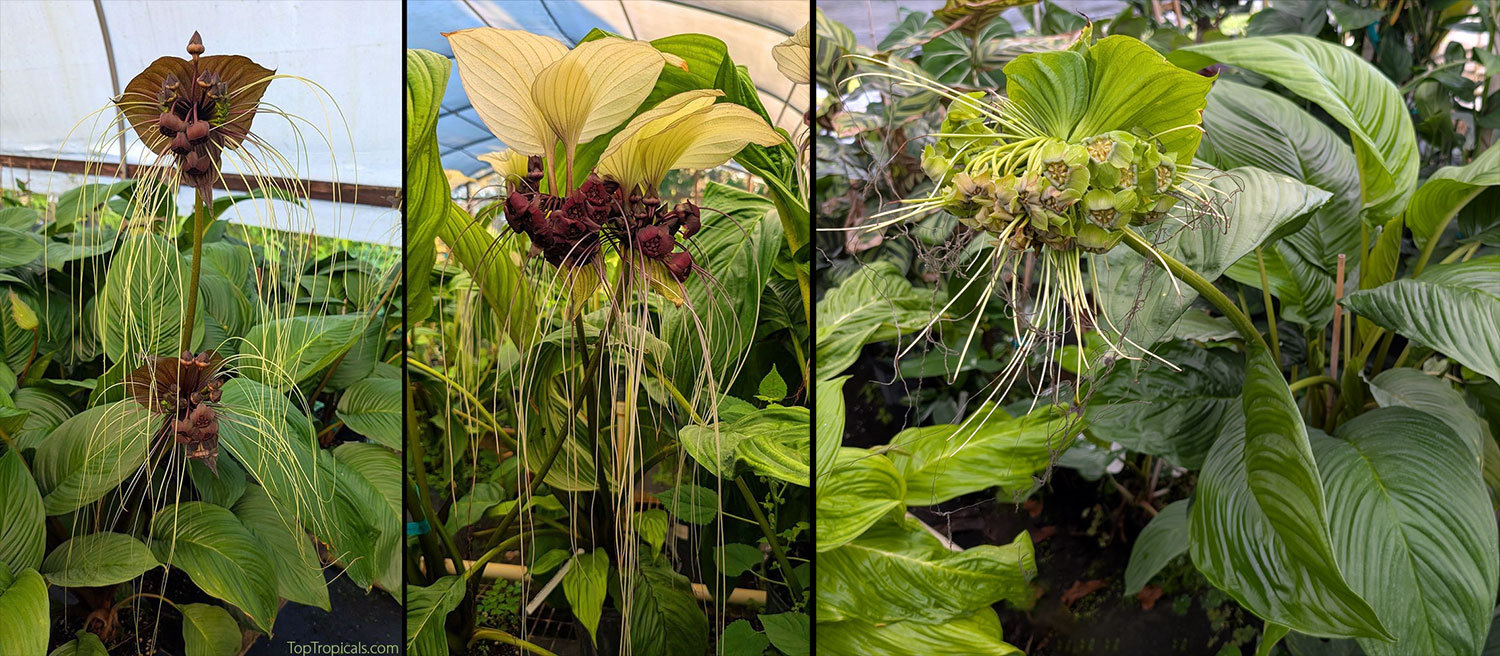
If a plant could pass for a bat, this is it. Broad, wing-like bracts spread over a cluster of small flowers, and long threads hang below like whiskers, sometimes a foot or more. The black bat flower, Tacca chantrieri, has purple-black wings. The white bat flower, Tacca integrifolia, is a separate species with tall white wings standing up like rabbit ears. Green forms share the bat shape in a quieter color.
What are the whiskers for? Nobody is quite sure. Botanists once assumed they lured flies, but the black bat flower turns out to pollinate mostly itself. Your guests won't care. They'll just stare.
Growing tips: Tacca is not a beginner plant, and humidity is the reason. It wants warmth, shade to bright filtered light, and humidity of 50% or more. Dry indoor air browns the leaves fast. In USDA zones 10-11 it thrives in a shaded, sheltered bed. Elsewhere, grow it on a summer patio, then move it to a greenhouse, sunroom, or humidified room for winter, keeping it above 55°F. Use a mix that holds moisture but stays airy. Keep it evenly moist while growing and drier in winter, when some leaves may decline. Plants reach 2 to 3 feet; the white species often grows taller. In dry climates, plan on growing it indoors beside a humidifier.
🖤 Pseuderanthemum Chocolate Raspberry
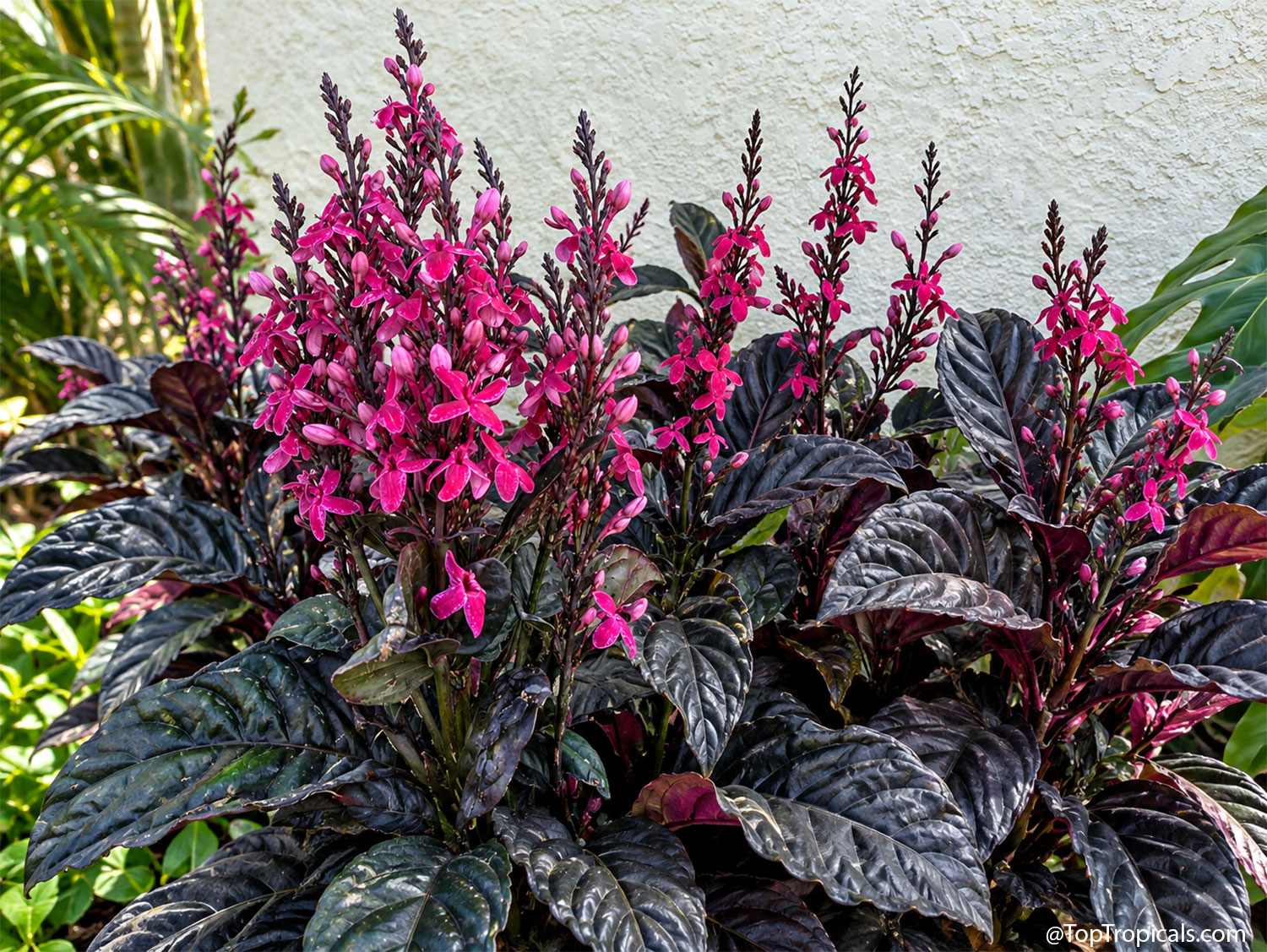
Here the leaves are the show: glossy chocolate-purple splashed with raspberry pink and lighter tones, every leaf different. Their colors shift with leaf age, light, and season. And the flowers deserve attention too: spikes of deep mauve blooms sprinkled with pink, often from winter into spring and sometimes more than once a year. Next to lime-green foliage or white flowers, it seems almost unreal. In USDA zones 10-11 it makes a hedge that looks dipped in chocolate and berry jam.
Growing tips: This is an outdoor shrub in USDA zones 10-11 and a container plant elsewhere. Light controls the color. Bright light or part sun brings out the pink and purple, while deep shade turns it green and leggy. Give it afternoon shade in hot, dry climates. In the ground it can top 5 feet, but regular pinching keeps it bushy at 2 to 4 feet in a pot. Keep it moist, not waterlogged. It is frost-tender, so move it to your brightest window before nights fall below 45°F. It holds on indoors through winter and colors up again outside in summer.
👉 Get some Chocolate Raspberry
🌙 Creatures of the Night
Some beauties wait until the sun goes down
Night bloomers keep late hours because their pollinators do. Moths, and in some places bats, do their work after dark. Flowers built for them tend to be large, pale enough to show in moonlight, and strongly scented so they can be found from a distance.
The first three plants here bloom at night, though you'll grow the third mainly for its bones. The fourth keeps ordinary hours, but it belongs to the same family of jungle cacti. Their growing requirements overlap, so the main care points are covered together at the end of the section.
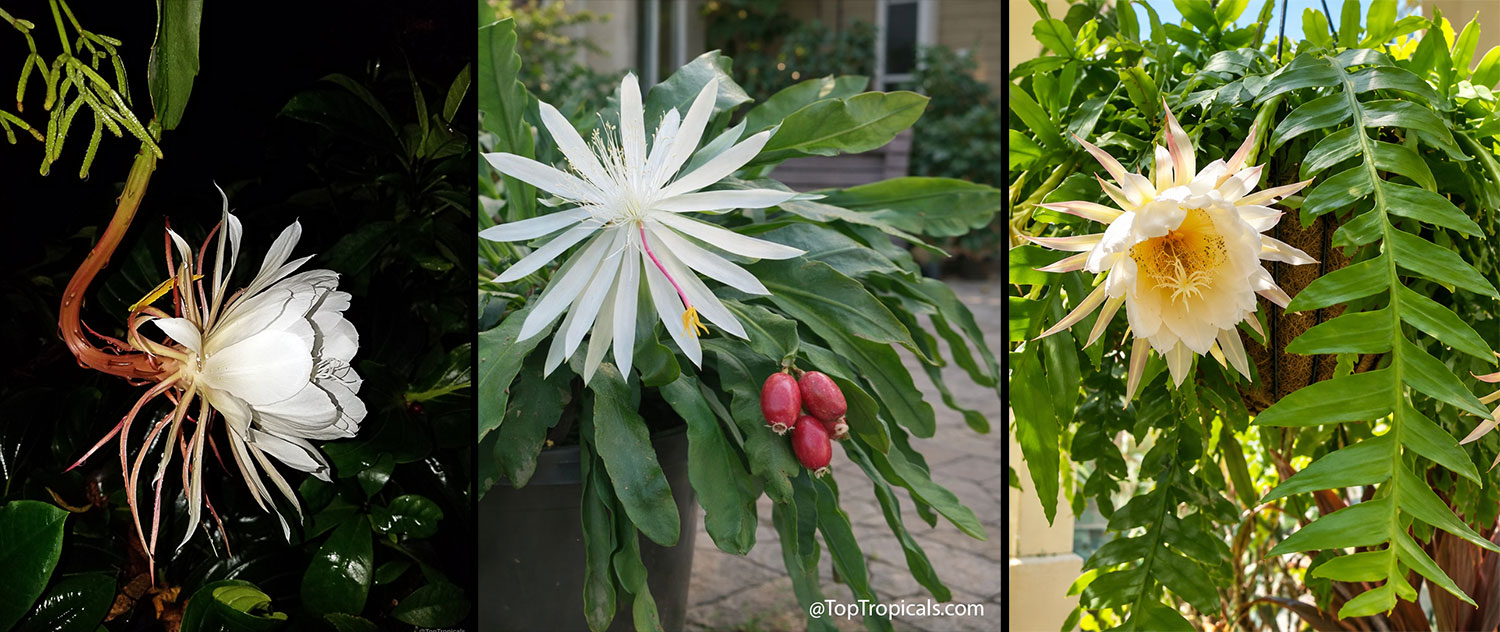
🔮Epiphyllum oxypetalum - Queen of the Night
Buds hang from the edges of the flat stems, then curve upward over a couple of weeks. On the big night, the flower opens after dark: white, many-petaled, close to a foot long, and fragrant enough to scent a patio. By morning it has collapsed. People throw parties for this plant, and a big specimen can open several flowers the same evening.
To be fair, it is not much to look at the rest of the year: a lanky tangle of flat green stems. You buy it for the night.
🔮Epiphyllum hookeri - Large-Fruiting Night-Blooming Cactus
This close cousin of the Queen has fast-growing, cascading stems that look lush even out of bloom. Its fragrant white flowers also open for a single night, with slimmer, more star-like petals. The bonus is fruit. Our seed-grown type is valued for large, edible fruit with mild, slightly sweet flesh. Every plant is a seedling, so size and flavor vary, and some are surprisingly good.
🔮Epiphyllum (Selenicereus) chrysocardium - Marniera Cactus
It looks like a giant fern, but there isn't a leaf on it. Those comb-like "fronds" are flattened cactus stems, cut nearly to the center and about 3 feet long. Hanging from a basket, they look like the ribcage of something large and green. Mature plants may produce huge white night flowers with a golden center; chrysocardium means "golden heart." Treat the flowers as a bonus. It is a close relative of dragon fruit.
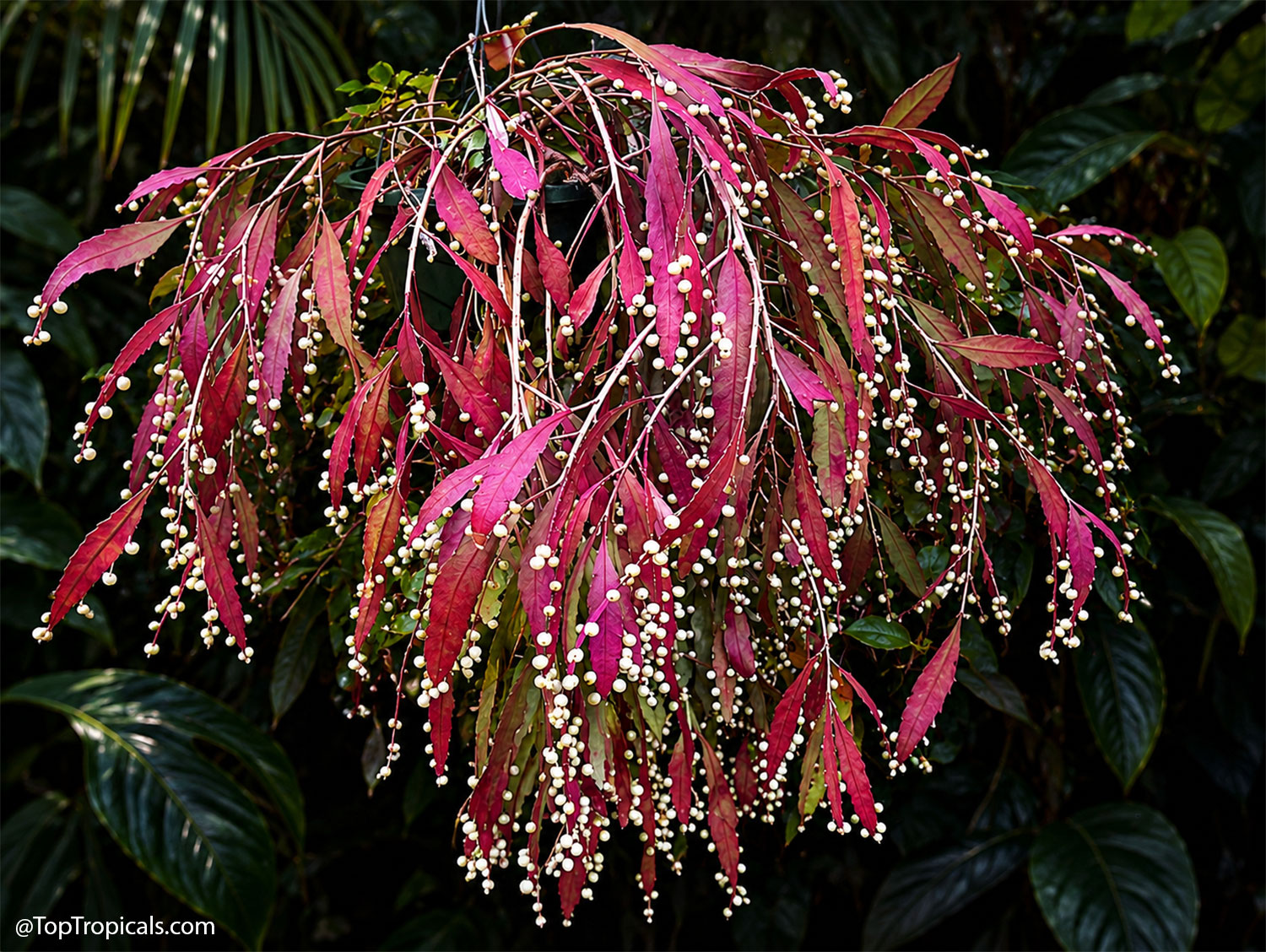
Rhipsalis ramulosa - Red Cactus
This cactus lives in trees and has no spines at all. Flat, scalloped stems hang in long strands, green in shade and blushing red to deep violet in bright light. Tiny flowers are followed by little white berries along the stems, hence its other name, Red Mistletoe Cactus. A well-colored basket looks like a red-tinged curtain. You may also see it sold as Pseudorhipsalis or Kimnachia ramulosa. It is the easiest plant in this group and a fine first jungle cactus.
Growing Tips for Jungle Cacti
These four are jungle cacti. In the wild they grow on tree branches, so they need very different care from desert cacti.
Light: Bright filtered light. Morning sun is fine, but strong afternoon sun yellows or burns the stems, especially in hot, dry climates. With too little light, the Epiphyllums won't bloom and Rhipsalis stays green.
Mix and water: Use a loose, orchid-style mix of bark and perlite with some potting soil. Water thoroughly when the top of the mix dries. They need water more often than a desert cactus, but never let them stay soggy. Water less in winter. Average indoor humidity is fine. In dry climates, keep them out of hot wind.
Where to grow them: Outdoors year round in USDA zones 10-11, under trees or on a shaded porch. Elsewhere, summer them outside in shade and bring them in to a bright window before nights fall below 50°F. The Queen and hookeri sprawl several feet and need a large pot with stakes or a big basket. Chrysocardium and Rhipsalis trail about 3 feet, so hang them high.
Flowers and fruit: The Epiphyllums bloom on established plants, usually in summer and fall. Bright light, a slightly crowded pot, and a cooler, drier winter rest all help. Kept indoors year round, they grow but bloom less reliably. Once buds form, don't move the plant, or the buds may drop. Fruit on hookeri is a maybe. It takes a mature plant and pollination. Many growers move pollen between flowers at night with a small brush.
Red color on Rhipsalis: Bright light and cooler nights bring out the red. Increase light gradually so the stems blush without burning.
The Monster Garden
Strange shapes, bizarre flowers, and a little botanical madness
Now the greenhouse gets weird. Ahead are plants that vanish underground for months and return as one giant leaf; plants with prickles, skeleton leaves, and cobwebs; and a flower that smells like a dumpster in August. The first three are voodoo lilies, which grow from tubers and sleep through part of the year. An empty-looking pot in winter does not necessarily mean the plant is dead.
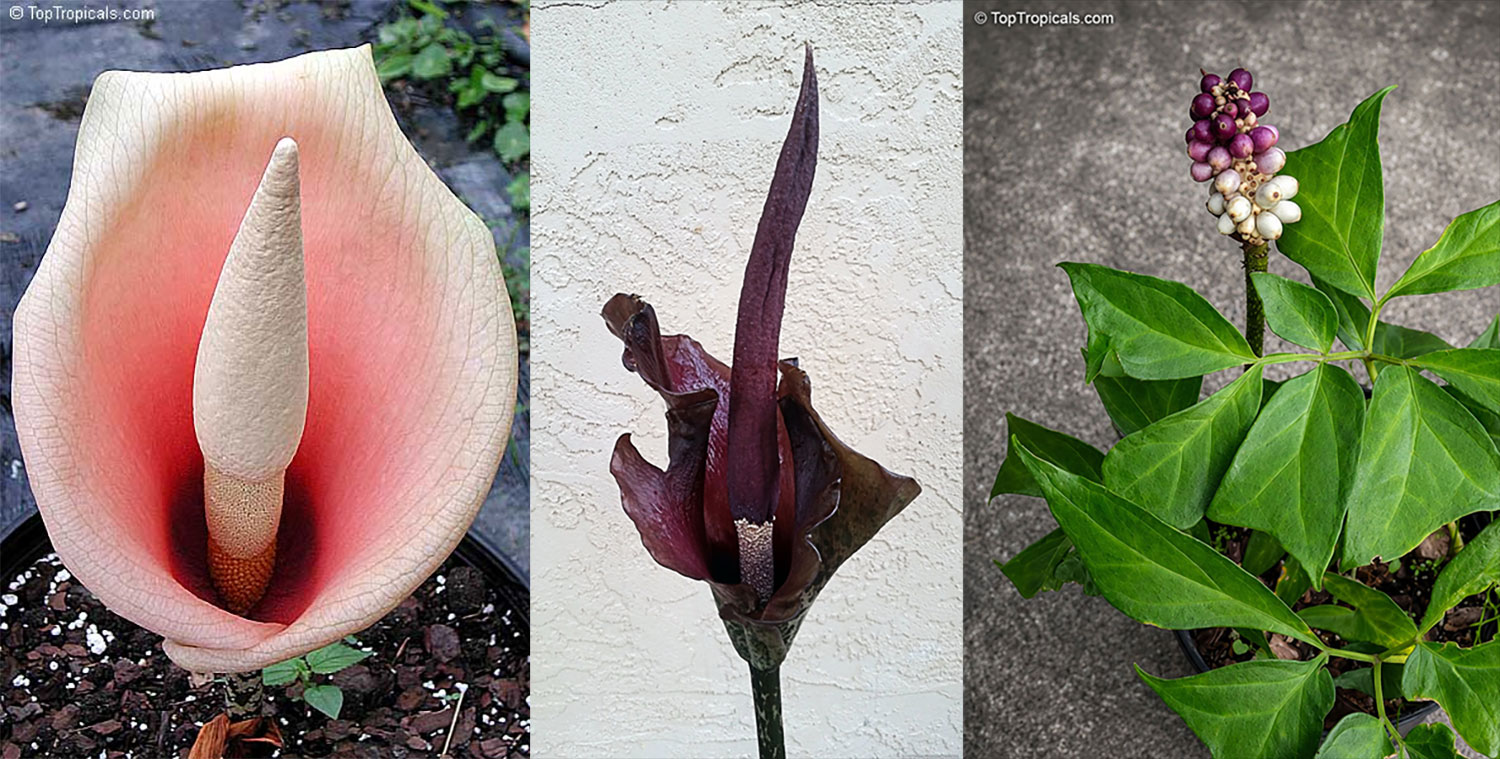
🗿 Amorphophallus bulbifer - Voodoo Lily
Each year the tuber sends up one leaf: a mottled stalk with an umbrella of leaflets, often around 3 feet tall. Here is the odd part. Small baby tubers form right on the leaf, and when it dies back in fall, they drop off and grow into new plants. A mature tuber may also bloom in spring before the leaf appears, with a pinkish flower. When it blooms, the odor can be sharply sulfurous and surprisingly strong, though usually brief. It is the easiest of the three to grow.
🗿 Amorphophallus konjac - Voodoo Lily
This one earns its monstrous reputation. In spring, a mature tuber sends up a maroon hood around a tall, nearly black spike, waist-high or more on big tubers. For a day or two it smells like rotting meat, on purpose. The odor draws flies and beetles that feed on dead animals. They crawl in, pick up pollen, and carry it to the next flower. Afterward comes a single leaf on a pale, snakeskin-spotted stalk, often 3 to 5 feet tall. The same tuber, processed, becomes konjac flour for shirataki noodles.
🗿 Anchomanes difformis - African Voodoo Lily
If konjac is a monster, this is its big brother from tropical Africa. It also makes a single leaf, but the stalk is covered in prickles and, in warm gardens, can top 6 feet, holding up a deeply divided blade several feet across. Visitors will check whether they've wandered into a dinosaur movie. The flower rises from the ground on its own prickly stalk, purplish and as bizarre as the leaf. Wear gloves when you handle it, because the prickles are real.
Growing Tips for Voodoo Lilies
These three live by two seasons, and each season needs the opposite care.
In leaf (spring and summer): Give them bright filtered light or part shade; konjac takes some sun. Use a rich, well-drained mix in a pot deep enough for the tuber to grow, and water generously.
Dormant (fall and winter): The leaf yellows and collapses in fall. The plant is dormant, not dead. Stop watering. Either leave the tuber dry in its pot or lift it and store it dry until a new shoot appears, then start watering again. Store Amorphophallus tubers cool but well above freezing, and keep Anchomanes warm. Wet soil during dormancy is what rots tubers. A tuber ordered this time of year may arrive dormant. Pot it dry, or store it until spring.
Climate: For reliable in-ground growing, reserve bulbifer and Anchomanes for frost-free sites in USDA zones 10-11. Konjac is hardier, but we recommend in-ground culture only in USDA zones 8-11 with excellent drainage; lift and store the dormant tuber dry where winters freeze hard or stay wet. Elsewhere, use pots and protect dormant tubers from freezing.
Indoors: Bulbifer and konjac make big seasonal foliage plants in a bright room. When a konjac flower spike appears, move it outside or to the garage for a couple of days. Anchomanes fits a pot while young, but each year's leaf tends to be bigger, and a mature plant needs a landscape bed or greenhouse.
💀 Philodendron tortum - Fern Leaf Skeleton Philodendron
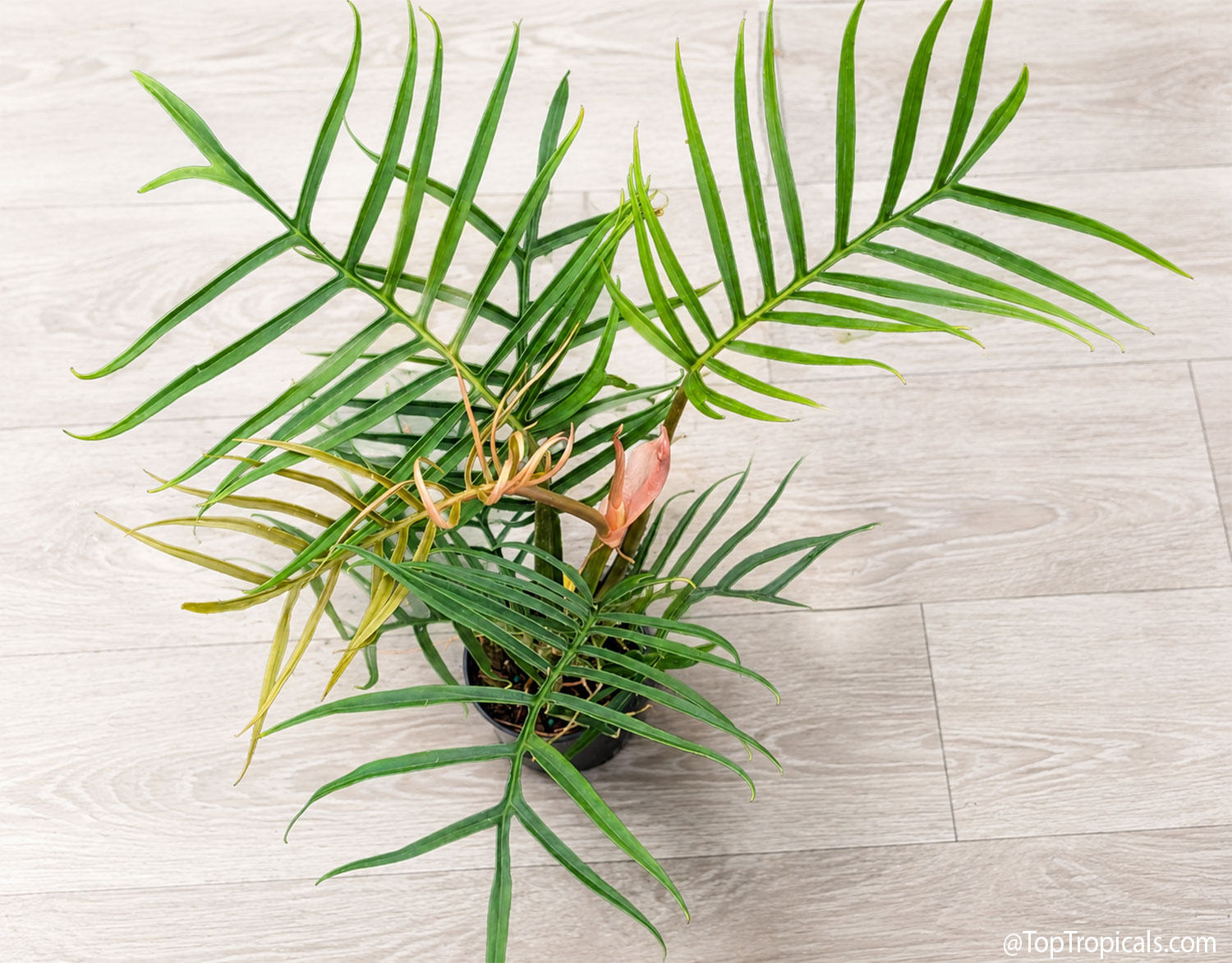
Skeleton fingers. Each leaf is cut into long, narrow segments, so the plant looks like a cluster of green bones. Despite the name, it is a climbing Philodendron from the Brazilian Amazon. Unlike its neighbors in this section, it has no off season: no dormancy, no smelly bloom, no disappearing act.
Growing tips: This is a top indoor choice. Give it bright indirect light and a moss pole or plank to climb, since climbing plants make larger, more dramatic leaves. Indoors it can reach several feet. Use a chunky mix of bark, perlite, and potting soil, water when the top inch dries, and empty the saucer. Normal home humidity works, and 50% or more gives the best leaves. Keep it above 55°F and out of drafts. Outdoors in USDA zones 10-11 it climbs trees in the shade. Put it where its silhouette shows, against a plain wall or in a bright corner.
👉 Get the Skeleton Philodendron
🕸️ Tradescantia sillamontana - White Velvet, Cobweb Spiderwort
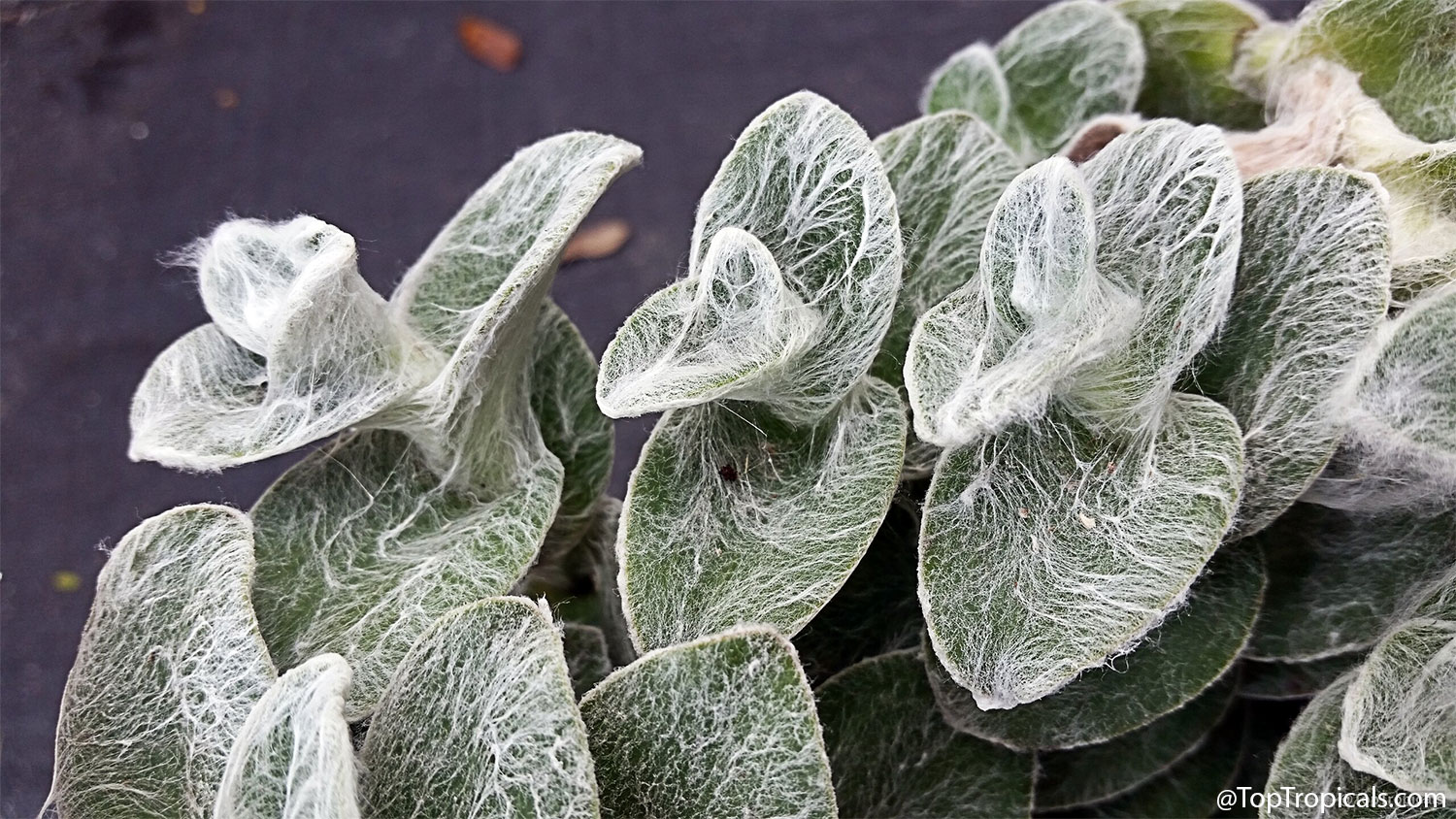
The cobwebs on this one never need dusting. Thick white wool covers the leaves and stems. It comes from dry, rocky hills in Mexico, where the fuzz helps shade the leaves and save water. Summer brings small magenta-pink flowers. It is the friendliest plant on the tour, happy in a sunny window with little fuss, and the only one here guests will want to pet.
Growing tips: Unlike most plants here, it wants sun: a sunny bed, rock garden, or pot outdoors, or your sunniest window indoors. In low light it stretches and loses its wool. It grows about a foot tall and spills over pot edges. Let the soil dry somewhat between waterings, and water the soil, not the hairy leaves. Frost kills the tops, but in mild-winter areas it often returns from the roots. In cold regions, bring it in. If it looks tired in late winter, cut it back, and it will grow fresh in spring.
🐸 Deadly Attractions
Looks can be deceiving, especially when dinner is involved
Our final two plants both lure insects. One really eats them, the other only lies to them so you need both!). And Sunshine's donut is safe: neither has any interest in pastry.
🐙 Stapelia gigantea - Zulu Giant Starfish Flower
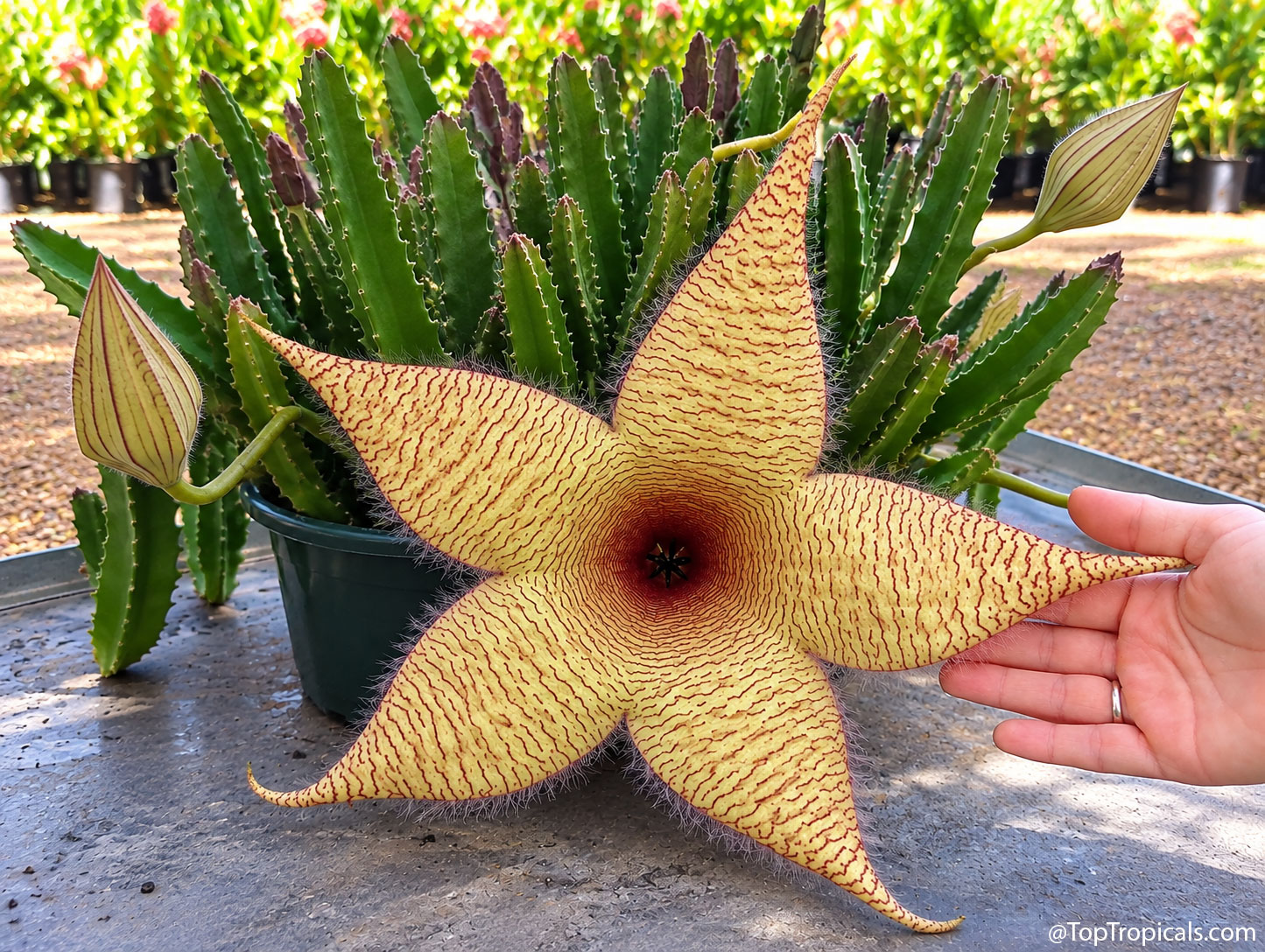
Picture a hairy, pale yellow star with fine red lines, 10 inches or more across. Then comes the smell. The flower imitates a dead animal, and flies fall for it, crawling around and even laying eggs on the petals. Along the way, pollen sticks to their legs and rides to the next flower. The maggots find no meat. Stapelia is not carnivorous and digests nothing. It just uses flies as unpaid couriers. It is a cousin of the Desert Rose that opened this tour. The rest of the year it is a tidy clump of velvety green stems from southern Africa.
Growing tips: Grow it like a succulent: bright light, with afternoon shade where summers are very hot. Reddish stems mean stress. Use a fast-draining cactus mix, in terracotta if possible. In warm months, water when the mix is completely dry, and keep it nearly dry in winter; soggy soil rots the stems. Clumps spread a foot or more, with stems about 8 inches tall. Keep it above 45F. Strong light is the key to flowering, which usually happens in late summer and fall. When a bud swells like a small balloon, plan where it will bloom. Each flower lasts only a few days. If yours blooms near Halloween, set it by the front door, and you'll have the most authentic decoration on the street. It even brings its own flies.
Nepenthes alata - Tropical Pitcher Plant
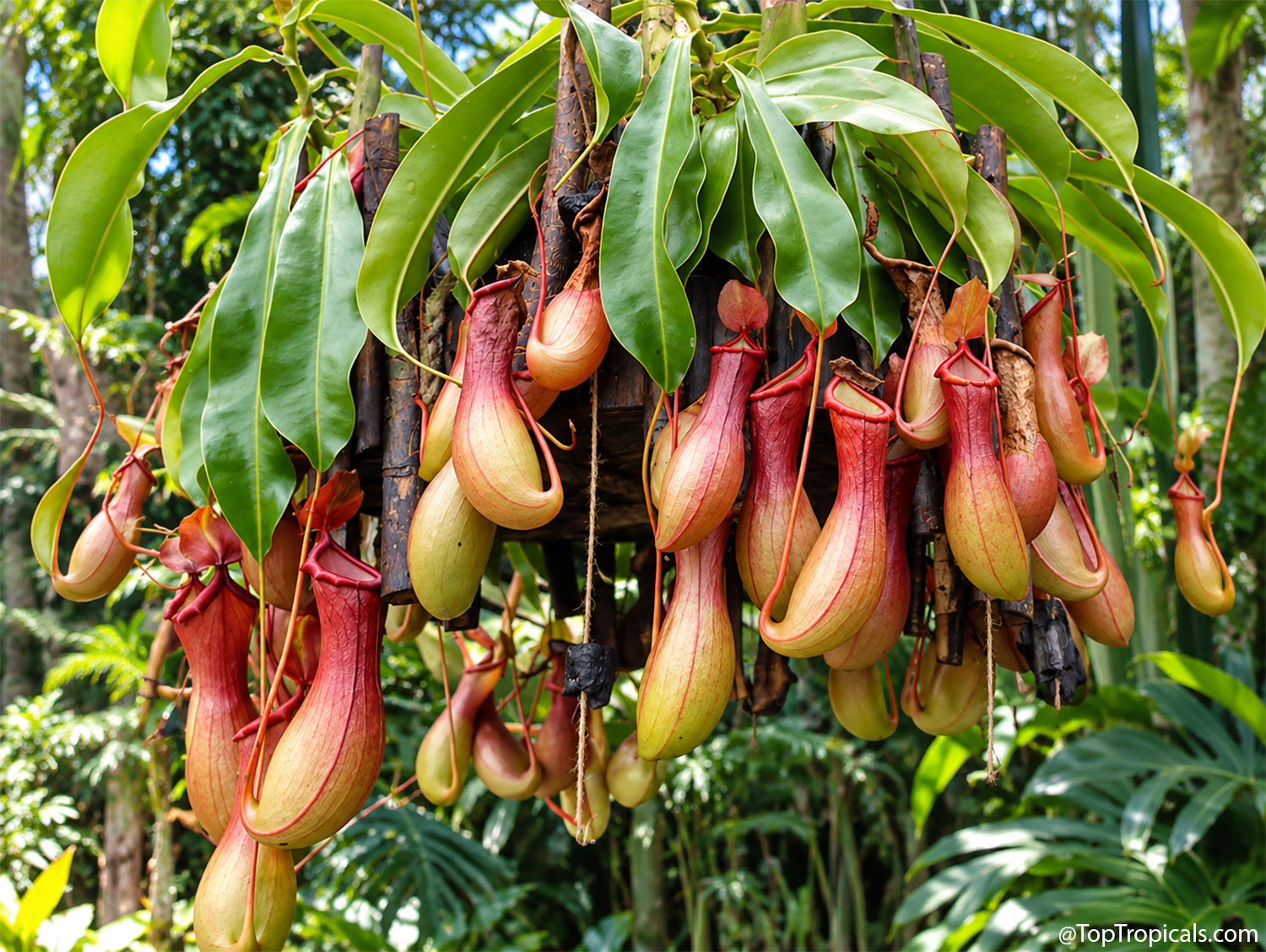
Each pitcher is a hanging cup with a lid, grown from the tip of a leaf. Insects come for nectar on the slippery rim, lean in too far, and slide down into digestive fluid. The plant feeds on them to get nutrients its poor native soil lacks. Slender, green to red-flushed pitchers hang in rows from the basket, a working trap you can watch on your porch. You may see it sold as either N. alata or N. graciliflora; the two are often confused in the trade, and the care is the same.
Growing tips: It is forgiving for a pitcher plant, and a beginner can succeed by following a few rules. Hang it in bright filtered light. Pot it in long-fiber sphagnum moss with some perlite or bark, never garden soil or regular potting mix. Use rainwater, distilled, or reverse-osmosis water, because hard tap water slowly kills it. Keep the moss moist and the plant above about 50°F. Humidity of 50% or more keeps the pitchers coming; in dry air it may grow leaves without pitchers. Old pitchers brown and die off, which is normal. Vines reach several feet, and trimming encourages new pitchers. No need to feed it hamburger. It catches its own.
👽 Which Monster Is Yours?
For a bright room indoors: Anthurium Black Dragon, Philodendron tortum, Red Rhipsalis, or the pitcher plant.
For a sunny patio or windowsill: Desert Rose, Giant Starfish Flower, or Cobweb Spiderwort.
For a shady patio or tropical garden: the night-blooming cacti, Chocolate Raspberry, or the bat flowers.
For adventurous growers with room: the voodoo lilies.
🕷 Bring Home Something Beautifully Strange!
Nature never needed a costume store. It came up with black flowers, bat-winged blooms, bones made of cactus, pitchers that drown insects, and a starfish that smells like a crime scene, all to solve ordinary problems of light, water, and pollination. All plants in this newsletter are available at Top Tropicals Online Store. Pick the one that suits you, and check each plant's page for current sizes.
Plastic skeletons go back in the attic on November 1. These plants stay weird all year.
Fall shopping notes: Some plants may arrive dormant, leafless, or bare-root in fall; check each plant description and its specific care instructions. Dormant tubers, succulents, and actively growing tropical plants need very different watering. Protect shipments from cold and acclimate new arrivals gradually.
Pet safety: Desert Rose is toxic to cats and dogs. Philodendron and Anthurium can also cause painful mouth irritation if chewed. Keep these plants out of pets' reach.
📚 LEARN MORE:
📚 The strange tropical plant that eats bugs - and gardeners can't stop collecting
📚 The largest succulent flower in the world - Starfish Flower
📚 Philodendron tortum forgot who he is
📚 The flower smells like a dead rat, but gardeners can’t wait for it to bloom
📚 Rare Night-Blooming Cactus that Glows and Grows Large Edible Fruit
📚 Why This Giant Cactus Flower Only Opens While You Sleep
🎥
🎥
🎥
🎥
🎥
🛒 SHOPPING LINKS:
Date: 16 Oct 2026
Eight pineapple cocktails for a tropical happy hour: quick-n-fun exotic recipes

🍴 Eight pineapple cocktails for a tropical happy hour: quick-n-fun exotic recipes 🍸
Who says pineapple belongs only in fruit salads and piña coladas?
Sweet, tangy, and wonderfully tropical, pineapple plays surprisingly well with bourbon, rum, tequila, and even whiskey. Here are eight delicious ways to turn this golden fruit into happy hour. No fancy equipment needed - just ice, a shaker (or a jar with a lid), and a few ingredients!
All recipes make one cocktail.
✦ 1. Bourbon Pineapple Smash
Muddle ¼ cup fresh pineapple chunks with 4–5 mint leaves. Add 2 oz bourbon, ½ oz lemon juice, ½ oz simple syrup, and 2 dashes aromatic bitters. Shake with ice, strain into a glass over fresh ice, and garnish with mint. Fruity, rich, and refreshing!
✦ 🌿 2. Pineapple Rum Fizz
Shake 2 oz white rum, 2 oz pineapple juice, ½ oz lime juice, and ½ oz rosemary syrup with ice. Strain into a tall glass, top with 2 oz sparkling water, and garnish with rosemary. To make the syrup, briefly simmer equal parts sugar and water with a rosemary sprig, then cool.
✦ 🌶 3. Spicy Pineapple Margarita
Shake 2 oz tequila, 2 oz pineapple juice, 1 oz lime juice, and ½ oz orange liqueur with ice and 2–3 thin jalapeño slices. Strain into a glass with a Tajín-coated rim. Add extra jalapeño if you like it hot!
✦ 4. Pineapple Moscow Mule
Fill a glass with ice. Add 2 oz vodka, 2 oz pineapple juice, and ½ oz lime juice. Stir, then top with 3–4 oz ginger beer. Garnish with a slice of grilled pineapple for extra caramelized sweetness.
✦ 🍋 5. Pineapple Bourbon Lemonade
Combine 2 oz bourbon, 2 oz pineapple juice, and 3 oz lemonade in a tall glass with ice. Stir and garnish with lemon and pineapple. Sweet, tart, and perfect for sipping on the patio.
✦ 🍹 6. Pineapple Old Fashioned
Stir 2 oz bourbon, ½ oz pineapple syrup, and 2 dashes aromatic bitters with ice. Strain over a large ice cube and garnish with orange peel. For quick pineapple syrup, simmer ½ cup pineapple juice with ½ cup sugar until dissolved, then cool. A tropical twist on a classic!
✦ 🍸 7. Pineapple Whiskey Sour
Shake 2 oz whiskey, 2 oz pineapple juice, and ¾ oz fresh lemon juice with ice. Strain into a glass and garnish with pineapple. Just three ingredients, perfectly balancing sweet and sour.
✦ 🍊 8. Pineapple Paloma
Combine 2 oz tequila, 2 oz pineapple juice, 2 oz grapefruit juice, and ½ oz lime juice in a glass with ice. Top with 2 oz sparkling water or grapefruit soda. Stir gently and garnish with a grapefruit wedge. Refreshing, citrusy, and wonderfully tropical!
🍍 A little tropical gardening inspiration
Fresh, homegrown pineapple makes these drinks even more fun. And you don't need a plantation to grow your own!
Pineapples are bromeliads, happy in containers, and surprisingly easy to grow in warm climates.
👉 Feed your pineapple for a sweeter harvest!
SUNSHINE Ananas – Amino-Acid Booster and Fertilizer for Pineapple and Bromeliads is specially formulated to promote vigorous growth, healthy plants, and better pineapple crops. Its gentle, balanced formula is ideal for bromeliads. For best results, combine with Sunshine Honey and Sunshine Superfood.
Sunshine Boosters are safe for edible plants when used as directed, so you can nourish your pineapple plants and enjoy their delicious homegrown fruit!
🛒 Grow the fruit. Mix the drink.
📚 Learn more:


• Ananas varieties (Pineapples) in Plant Encyclopedia
• The Truth About How Pineapples Are Born
• The white-fleshed, low-acid pineapple disrupting tropical gardens
• What are the best varieties of Pineapples?
• What is the best pineapple to grow at home
• How we ate all pineapples from that ugly corner
• The most luscious Hospitality Fruit: Pineapple
🎥
#Food_Forest #Container_Garden #Discover #Recipes
🟢 Join 👉 TopTropicals
Date: 15 Oct 2026
A cactus that traded thorns for red ribbons: Rhipsalis ramulosa
🎀 A cactus that traded thorns for red ribbons: Rhipsalis ramulosa
No desert. No prickly spines. Just cascading ribbons of red!
Red Rhipsalis (Rhipsalis ramulosa) is a cactus that looks nothing like its desert relatives. Its long, flat stems arch and cascade like colorful ribbons, turning brilliant red in bright light. And that's only the beginning of its surprises.
🎀 A cactus that blushes in the sunshine
Those beautiful red ribbons aren't leaves. They're actually flattened stems!
In bright light, the plant produces protective red pigments called anthocyanins. The stronger the light, the deeper the color - from green to bronze, crimson, and violet-red.
But don't overdo it! In Florida, bright filtered light or gentle morning sun can produce gorgeous colors without scorching the stems.
💡The red pigmentation is a response to light, but it doesn't necessarily mean that the plant is healthier under stronger sunlight.
🎀 A cactus that lives in trees
Forget sandy deserts! Red Rhipsalis comes from tropical forests, where it grows as an epiphyte, attaching itself to tree trunks and branches.
It doesn't steal nutrients from its host. Instead, its roots anchor it to bark and absorb moisture and nutrients from rainwater and accumulated organic debris.
That's why it loves airy, fast-draining potting mixes, good humidity, and moderate watering. No soggy roots, please!
🎀 Tiny pearls along the ribbons
Look closely at the stem edges. Small, delicate flowers appear there, followed by translucent white berries that resemble tiny pearls.
Against the deep red stems, they're especially striking.
Unlike the large, spectacular flowers of some other jungle cacti, Red Rhipsalis puts on a quieter show - with decorative stems and miniature fruits.
🎀 A living waterfall of red
This is where Red Rhipsalis really shines!
Plant it in a hanging basket, and its branching stems gradually spill over the edges, creating a cascading curtain of color.
Or hang the basket high on a pole, as we show in our video. The long red ribbons create a spectacular tropical display.
You can also grow it mounted on wood or let it creep through a shaded tropical garden.
And unlike plants that depend on a short flowering season, its colorful stems can provide interest year-round.
🎀 A cactus with an identity crisis
Botanists have moved this cactus around quite a bit! Over the years, it has been classified as Cereus, Rhipsalis, Disocactus, and Pseudorhipsalis.
🔬Today, its accepted scientific name is Kimnachia ramulosa, honoring cactus expert Myron Kimnach.
- Kew's Plants of the World Online
But gardeners still know it best as Red Rhipsalis. Whatever the name, those red ribbons are unmistakable!
🎀 There's a whole jungle of cacti!
Red Rhipsalis isn't the only cactus that abandoned the desert lifestyle.
Its tropical relatives include spectacular Orchid Cacti, night-blooming Epiphyllums, the unusual Blue Flame Cactus, and the wonderfully twisted Zig-Zag and Curly Locks Cacti. Some grow for their incredible flowers. Others for their strange stems. All prove that cacti can be much more than spines and desert sand!
🛒 Bring home your own waterfall of red ribbons!
Collect epiphytic jungle cacti:
· Epiphyllum hookeri - Large-Fruiting Night-Blooming Cactus
· Epiphyllum oxypetalum - Queen of the Night
· Epiphyllum (Selenicereus) chrysocardium - Marniera
· Pseudorhipsalis (Wittia) amazonica - Blue Flame
· Epiphyllum guatemalense Monstrosa - Orchid Cactus, Curly Locks
· Disocactus ackermanni - Red Orchid Jungle Cactus
📚 Learn more:
• Rhipsalis ramulosa in Plant Encyclopedia
• Why Red Cactus is better than Christmas Cactus
• Rhipsalis x pilocarpa - the Hairy Stemmed Jungle Cactus
• Epiphyllum hookeri Giant Cactus Flower Only Opens While You Sleep
• Rare Night-Blooming Cactus that Glows and Grows Large Edible Fruit
• Moonlight Cactus, the Night Blooming Wonder with a mystical twist: Epiphyllum oxypetalum FAQ
• The Best potting mix for Jungle Cactus
#Container_Garden #Discover
🟢 Join 👉 TopTropicals
Date: 14 Oct 2026
Daily Cat Lesson: Cats vs Shadows
🐾 Daily Cat Lesson: Cats vs. Shadows: Who Will Win?
A shadow moves across the curtain.
You see - a shadow.
Your cat sees PREY.
Cats are extremely sensitive to movement. Their hunting instinct can be triggered by tiny, quick changes - a shadow, reflection, flickering light or something moving behind a curtain.
🐾 Does the cat know there's nothing there?
Not necessarily at first. Cats investigate with several senses. Something that moves like prey gets attention, but once there's no smell, sound or satisfying object to catch, many cats eventually lose interest.
🐾 Is chasing shadows good play/exercise?
Sure! It's mental and physical stimulation. But unlike a toy, a shadow can never actually be caught. If your cat gets intensely frustrated, finish the game with a real toy he can stalk, pounce on and finally capture.
Meanwhile, Pelmen has discovered something moving suspiciously on the curtain.
The household is safe. The Shadow Monster is being dealt with.
🐈📸 Pelmen the Sphynx cat - a friend of TopTropicals PeopleCats.Garden.
🐈 Stay with us for your #DailyDoseOfCat!
#DailyCatLesson #PeopleCats
🟢 Join 👉 TopTropicals
Date: 14 Oct 2026
Mango Traditions From Around the World

🌎 Mango Traditions From Around the World
Mango season is more than harvest time. Around the world, it means summer, family, favorite recipes, busy fruit markets, and boxes of mangoes shared with friends.
India may be the historic heart of mango culture, but from Thailand to Mexico, every region has its own traditions.
🥭 India: Mango Season Is an Event
In India, people don't simply buy mangoes. They wait for mango season.
Regions proudly claim their favorites: Alphonso, Kesar, Dashehari, Langra and Himsagar. Mangoes are eaten fresh, made into drinks, sweets, chutneys and pickles, and given to family and friends. Even green mangoes have their own traditions.
🥭 West Bengal: Mango Country
The region is famous for Himsagar, Fazli, Lakshmanbhog, Gopalbhog and Khirsapati.
Mango growing is part of local heritage, with orchards and varieties passed through generations. In season, markets fill with mangoes of different shapes, colors, aromas and flavors.
🥭 Thailand: Ripe, Green, Sweet and Savory
Ripe mango with coconut sticky rice may be Thailand's most famous mango dish. But firm green mangoes are equally at home in salads and savory snacks.
Nam Doc Mai is prized ripe and sweet, while Keo Savoy and Fralan are often eaten crunchy and green.
🥭 Philippines: Mangoes and Hospitality
In the Philippines, mangoes are eaten fresh, dried, blended into drinks and used in desserts. Good fruit is also served to visitors and shared at family gatherings.
🥭 Mexico: Mango With a Kick
Fresh mango is a favorite warm-weather street snack, often served with lime, chili and Tajín. It also appears in drinks, frozen treats and salsas.
Sweet mango, sour lime and hot chili may sound unusual until you try it.
🥭 Pakistan: The Gift of Mangoes
Summer means mango season in Pakistan. Mangoes are served after meals and at family gatherings, while beautiful boxes of premium fruit are popular gifts. Chaunsa and Sindhri have especially loyal fans.
🥭 Middle East: A Luxury Summer Fruit
Premium Indian and Pakistani mangoes are prized seasonal fruit in many Middle Eastern markets. Beautiful mango boxes are bought for family or brought as gifts, with varieties such as Alphonso, Kesar and Chaunsa especially sought after.
🥭 Australia: Celebrating the Harvest
In tropical Australia, local mangoes signal summer. Markets, festivals and community events celebrate the harvest, while mangoes appear in salads, desserts, chutneys, or simply eaten fresh.
🥭 One Fruit, Hundreds of Traditions
The same fruit can become Indian aamras, Thai mango sticky rice, Mexican mango with chili and lime, a Pakistani gift box, green mango salad, or simply a ripe mango eaten over the kitchen sink because it's too juicy for civilized dining.
Behind these traditions are hundreds of varieties preserved because each has something different worth keeping.
Growing an old or unusual mango isn't just about fruit. It keeps a little piece of mango history alive.
And, of course, you get to eat it.
🛒 Shop mango varieties
📚 Learn more:
Mango Tree - Mangifera indica - in Plant Encyclopedia
Best Mango Varieties for Florida: It is Not Just About Taste
Early, Midseason & Late Mangoes: How to Get Fruit for Months
6 Best-Tasting Mango Varieties
6 Best Thai and Southeast Asian Mango Varieties
5 Best Indian Mango Varieties and Their Flavors
5 Best Dwarf Mango Trees for Small Yards
5 Best Mango Trees for Beginners
Top 10 Dwarf "Condo" Mango, great for container culture
Top 5 recommended vigorous Mango tree varieties, reliable producers
Top 5 Favorite Mango we just love
10 steps how to grow a mango tree
#Mango_Rainbow - varieties you should try
#Food_Forest #How_to #Discover #Mango


