Garden Blog - Top Tropicals

Date: 9 Jan 2026

Mango Tree for Zone 5: top 15 Condo Mango for growing in cold areas

Mango Tree for Zone 5

Mango Tree for Zone 5: top 15 Condo Mango for growing in cold areas
  • Can you grow a mango tree in Zone 5? Short answer - yes! The trick is - containers!

  • Mango trees are tropical plants but they do great in pots when you choose the right varieties.
  • Compact types stay short, respond well to pruning, and produce in containers.

  • You can grow them on a patio, balcony, even move them indoors in your condo for winter. That is why they are called condo mangoes!
    During warm months, they live outside.
    When cold weather hits, they come inside.
  • With good light, proper watering, fertilizing, and some patience, these trees can reward you with real mangoes. Not a farm harvest, but enough to enjoy and share.


🏆 Most popular Condo Mango varieties:
Baptiste
Carrie
Cogshall
Diamond
Fairchild
Ice Cream
Julie
Keitt
Lancetilla
Lemon Meringue
Mallika
Nam Doc Mai
Okrung
Pickering
Venus

🛒 Dicover Condo Mango

📚 Learn more:

#Food_Forest #How_to #Discover #Mango

🟢 Join 👉 TopTropicals

Date: 8 Jan 2026

Is winter killing your mango flowers? 33 winter-proof mid-season mango varieties in 90-sec tour

33 winter-proof mid-season mango varieties

❄️ Is winter killing your mango flowers? 33 winter-proof mid-season mango varieties in 90-sec tour
  • Mid-season mango varieties make up the heart of the mango harvest. They are not as early as the first winter bloomers and not as late as the extended-season types, but they fill out most of the season.
  • Mango trees are winter bloomers, but freezing temperatures can damage them, especially when the trees are still young.
  • Right now it is January, and many mid-season mango trees are in bloom or just starting to bloom. While a winter cold snap can damage flowers, mango trees are resilient and often re-bloom once warmer weather returns.
  • A list of winter-proof mid-season mango varieties in Top Tropicals garden - Winter 2026


Blooming time: late December - January, may re-bloom February-March
  • · All Summer
  • · Alphonso
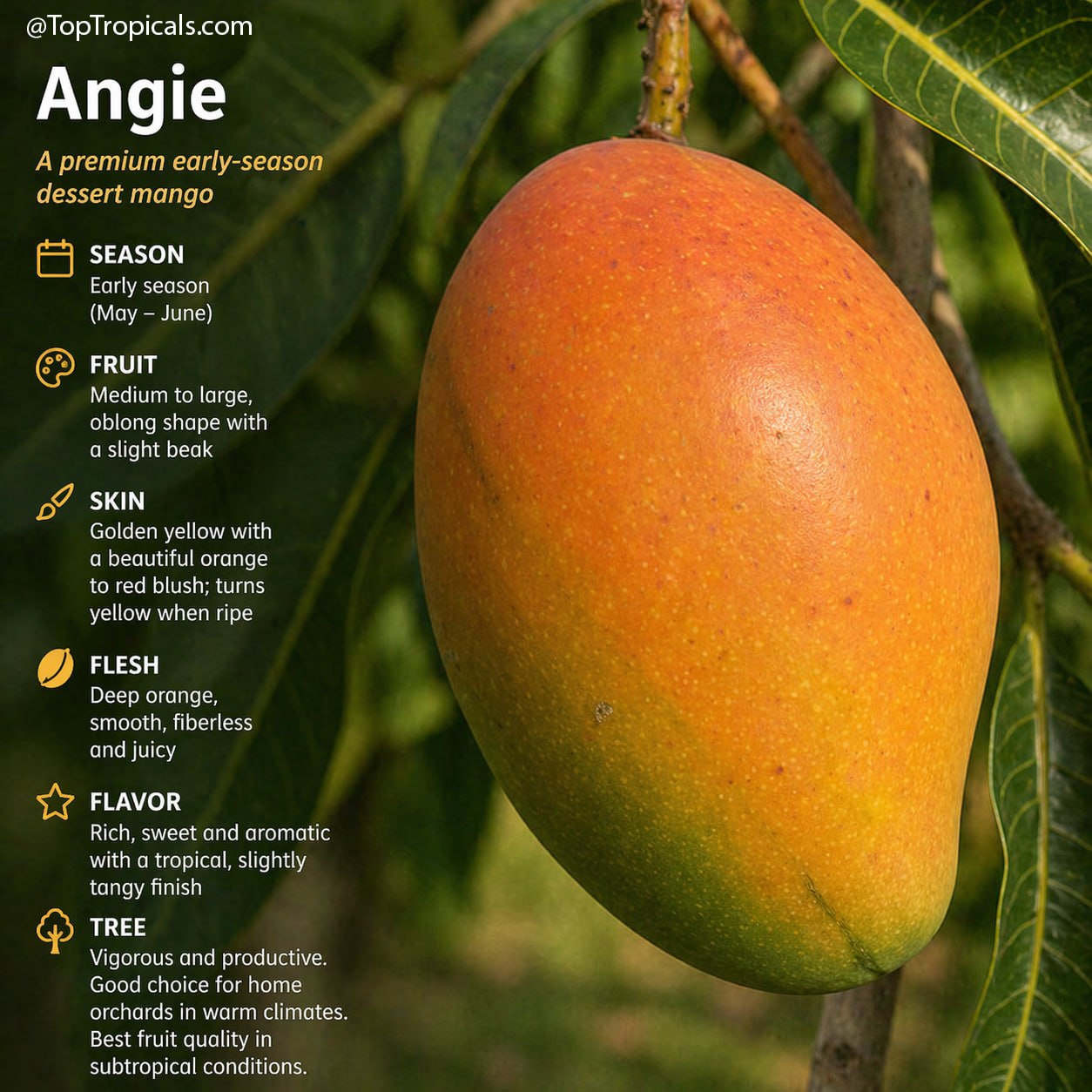
  • · Angie
  • · Baptiste
  • · Carrie
  • · Cogshall
  • · Creme Brulee
  • · Cushman
  • · East Indian
  • · Edward
  • · Florigon
  • · Fralan
  • · Fruit Cocktail
  • · Fruit Punch
  • · Gary
  • · Glenn
  • · Gold Nugget
  • · Harvest Moon
  • · Julie
  • · Juliette
  • · Lemon Zest
  • · Madame Fransis
  • · Maha Chinook
  • · O-15 (OMG)
  • · Pim Seng Mun
  • · Pineapple Pleasure
  • · Rapoza (Dwarf Hawaiian)
  • · Super Julie
  • · Suvarnarekha (Sundari)
  • · Triplesec (Seacrest, 40-36)
  • · Ugly Betty
  • · Venus
  • · Venus
  • · Wise


🛒 Explore Mango varieties

📚 Learn more:

#Food_Forest #Mango #How_to

🟢 Join 👉 TopTropicals

Date: 28 Dec 2025

Mango tree tipping - Quick Field Guide: why it improves flowering and production

Mango tree tipping - Quick Field Guide

Mango tree tipping - Quick Field Guide

Mango tree tipping - Quick Field Guide: why it improves flowering and production

📊 Mango Tree Tipping - Quick Field Guide

It is mid-winter. While early mango varieties like Nam Doc Mai are already flowering, late varieties still have a month or two before they start. Trees such as Keitt, Honey Kiss, Kent, Venus, Beverly, Palmer, and Neelam bloom later in the season. In warm climates without expected cold snaps, this is still a good window for tipping before flowering begins. Tipping encourages more branching, more flower tips, and better fruit production. If cold weather is still possible, save this guide and tip after the risk of cold has passed - but always before the tree enters the flowering stage.
  • ✔️ What tipping is


  • Tipping is the removal of the soft growing tip of a mango branch once it reaches about 20 inches long. This simple cut stops straight upward growth and forces the branch to split into multiple side shoots.
  • ✔️ When to tip

  • · Young, actively growing trees
  • · After a flush hardens slightly (not brand-new soft growth)
  • · Warm weather when the tree is growing strongly
  • · Best during the training years, not heavy fruiting years

  • ✔️ How to tip (step-by-step)

  • · Let a branch grow to about 20 inches
  • · Using clean pruners, remove 1-2 inches from the tip
  • · Cut just above a node (leaf joint)
  • · Do not cut into thick woody growth - this is a light heading cut

  • ✔️ What happens next

  • · 2-4 new branches usually form below the cut
  • · The tree becomes shorter, wider, and stronger
  • · More branch tips = more flowering points
  • · Better light penetration inside the canopy


✔️ Why it improves flowering and production
  • · Mango flowers form at branch tips
  • · More branches = more tips
  • · A well-shaped tree puts energy into fruiting, not height
  • · Easier harvesting and long-term structure


Common mistakes to avoid
  • · Letting branches get too long before tipping
  • · Tipping weak or stressed trees
  • · Over-tipping all at once (stagger cuts)
  • · Doing it right before cold weather
  • · Doing it too close to flowering


✍️ Simple rule to remember

→ grow 20 inches → tip → repeat
This builds a compact, productive mango tree from the start.

🛒 Explore mango trees

📚 Learn more:
▫️Tipping mango trees
📱 Why tipping mango trees makes them fruiting machines (DIY Garden Tip)

#Food_Forest #Mango #How_to

🟢 Join 👉 TopTropicals

Date: 19 Nov 2025

5 fruits that help manage gout (high uric acid)

5 fruits that help manage gout

5 fruits that help manage gout

🍒 5 fruits that help manage gout (high uric acid)

💥 High uric acid, hyperuricemia, also called gout, causes painful swelling in joints and can affect kidney health over time. Medicine helps, but so does what you grow and eat. Some fruits can naturally flush out excess uric acid and reduce inflammation. Here are five easy fruit trees and plants that can help:

🍋 Citrus
Citrus trees are great to grow in pots or sunny yards. Lemons and oranges are rich in vitamin C, which helps kidneys remove uric acid and keeps the body’s pH balanced. A glass of lemon water in the morning or a fresh orange during the day can help. Studies in Science Direct show lemon juice lowers uric acid levels in the blood.

Berries (mulberries, blackberries, blueberries, strawberries)
Berries are packed with antioxidants that fight inflammation and support kidney health. Mulberry trees are perennial trees and bushes that produce berries year after year. They grow well in both temperate and warm areas, and are an easy choice for all backyard gardeners. Mulberry high water content helps flush out toxins. Research from the National Institute of Health shows berries rich in polyphenols can lower uric acid naturally.

🍒 Cherries
Cherries are one of the best fruits for gout. They’re rich in anthocyanins, compounds that reduce inflammation and uric acid levels. National Institute of Health studies have found regular cherry intake helps lower gout attacks. Dwarf cherry trees can grow in large pots if space is limited.

🍌 Bananas
Bananas are rich in potassium, which helps the kidneys remove uric acid more efficiently, according to PubMed central. They’re also low in purines, the compounds that form uric acid. Dwarf banana varieties grow well in containers and add a tropical look while supporting healthy digestion and uric acid balance.

🍍Pineapple
Pineapple contains bromelain, a natural enzyme that eases swelling and pain caused by gout. It’s also refreshing and supports kidney function. Studies by global health science group show pineapple juice can help reduce inflammation and uric acid. It’s easy to grow in a pot or sunny garden bed.

These fruits won’t replace medicine, but they can support your body’s natural detox system. Grow them, eat them fresh, and enjoy both their flavor and health benefits.

🛒 Explore Fruit trees and grow your own natural remedies

📚
Learn more:

#Food_Forest #Mango #Remedies #Discover

🟢 Join 👉 TopTropicals

Date: 17 Nov 2025

Pram Kai Mai: a sweeter twist on Nam Doc Mai with a story - Mango Rainbow

Pram Kai Mai Mango crop in a basket

Pram Kai Mai Mango crop in a basket

Pram Kai Mai Mango

Pram Kai Mai Mango

Pram Kai Mai: a sweeter twist on Nam Doc Mai with a story - Mango Rainbow🌈
  • 🟡Why mango collectors chase after Pram Kai Mai?

  • Pram Kai Mai is like Nam Doc Mai’s cooler cousin - with even better flavor. This Thai mango can be eaten green when it’s sweet and crispy, or fully ripe when it turns golden and silky. No fiber, just smooth, juicy flesh and a tropical aroma that hits you as soon as you slice it. It’s semi-dwarf, great for pots, and some trees even fruit more than once a year. Rare, compact, and loaded with flavor - this one’s a collector’s dream.
  • 🟡Pram Kai Mai is a Thai dessert mango known for its gentle sweetness and smooth, almost fiberless flesh. The name appears in several spellings - Pram Kai Mai, Pram Kai Mea, Pram Kai Mia, Prom Ki Mia, and even Brahm Kai Meu - all referring to the same variety.
  • 🟡If we break down the original Thai name พร้ามกายเมีย (Brahm/Pram/Prom Kai Mea/Mai/Mia) literally: Brahm / Pram / Prom relates to "noble, elevated, precious".

กาย - Kai means body
เมีย - Mia means wife
But no one in Thailand interprets this name word-for-word.
In mango names, this construction works as a cultural compliment, a gentle metaphor. The meaning is closer to:
"A mango so good you would save it for the one you love most."
or "A fruit worthy of a beloved wife".
Similar to how in other languages we may call something "royal", "special", or "meant for someone dear", this name is simply expressing admiration.

And the fruit truly matches that feeling. It is fragrant and sweet, with soft tender flesh. It can be enjoyed while still crisp and green, when its flavor is clean and refreshing, or fully ripe, when it becomes rich and smooth, almost melting on the tongue.

🛒 Shop Mango varieties

📚 Learn more: #Mango_Rainbow - varieties you should try

#Food_Forest #Mango #Mango_Rainbow

🟢 Join 👉 TopTropicals