Date: 5 May 2025
🎀 Five plant gifts she'll love this Mother's Day
Q: My mother loves gardening and I am thinking to buy her a live plant to make her happy. What plant do you recommend?
A: At Top Tropicals, we have a big selection of wonderful gift plants . Below are a few suggestions for you, these plants are large, developed and ready to bloom or fruit!
1. Joy Perfume Tree
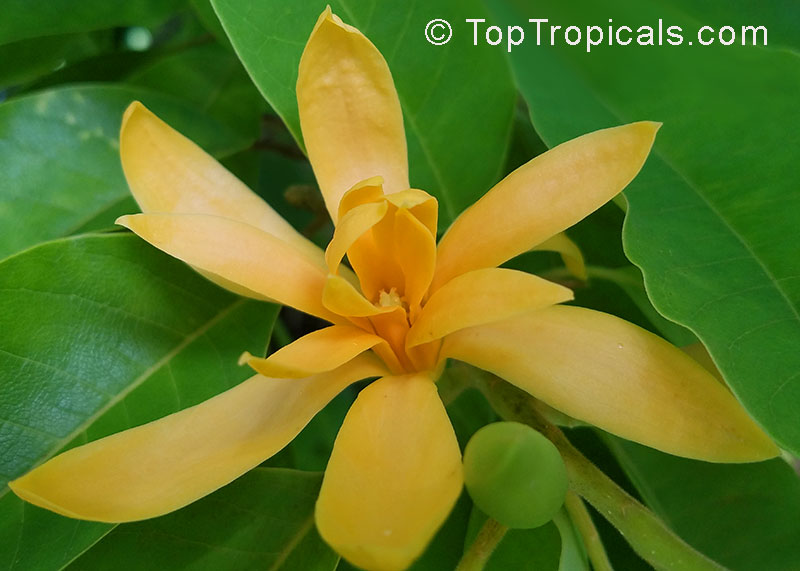
The
Champaka or Joy Perfume Tree (Magnolia champaca) - is a top choice for
Southern landscapes, prized for its striking columnar shape and fragrant,
fruity bubble gum-scented blooms - you won't be able to stop sticking your nose
in this flower! A signature plant at Top Tropicals, it's known for producing
the world's most expensive perfume, Joy. The Joy Perfume Tree blooms on and
off year-round and is currently in full bloom at our farm in Sebring, FL,
filling the air around with fantastic sweet scent. This tree thrives in both pots
and the ground, growing bushy and full as it matures. At Top Tropicals, we
have beautiful Champaka trees in all sizes, from 3-4 ft tall (ready to bloom in a year) to 6-10 ft tall (already
bloomed) for local pick up or delivery.
Learn more, with a short video.
2. Tropical Raspberry Mysore
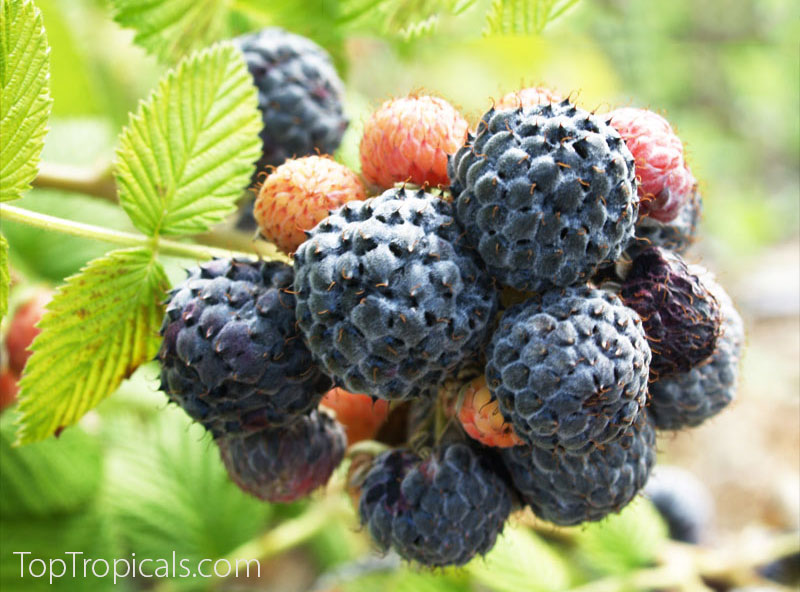
Tropical
Raspberry Mysore (Rubus albescens) - is the perfect solution for those missing
Northern fruit in hot climates. Unlike traditional raspberries that can't
handle the heat, this fast-growing Raspberry from India thrives in humid, hot
conditions and produces juicy, sweet fruit almost year-round! The clusters of
purple-black fruit are packed with flavor, and the plant is perfect for large
containers, producing plenty of fruit in no time. Cold-hardy to the upper 20s
F, it's an easy-to-grow, fast producer. We have beautiful, fruit-ready 3 gal Raspberry
bushes, ready to add a burst of sweetness to your garden!
Learn more, with a short
video.
3. Fragrant Jasmine Sambac
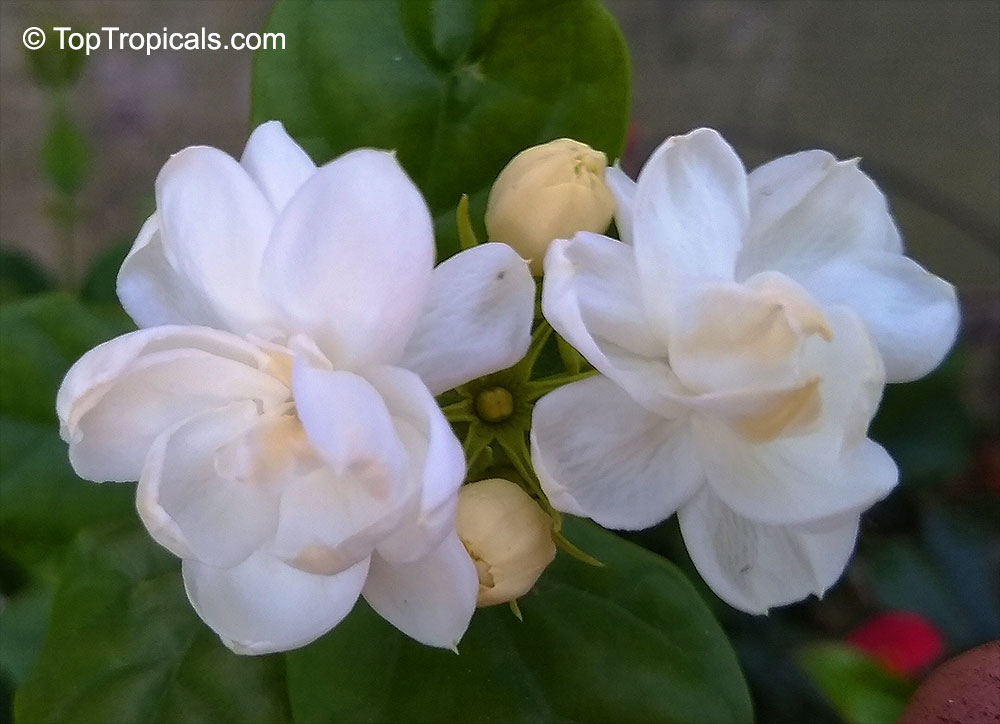
Jasminum
Sambac is widely regarded as the most fragrant jasmine, cherished by
tropical gardeners and plant collectors alike. Native to India, this jasmine is the
source of jasmine perfume oil and the signature ingredient in jasmine tea.
With various varieties offering unique flower sizes, shapes, and growth
habits, it’' perfect for both sun and shade, thriving as a container plant or
indoor favorite. Its delightful fragrance fills the air, and with the help
of
Sunshine Pikake plant booster, you can enjoy even more blooms. Jasmine Sambac,
along with Champaka, is another signature plant of Top Tropicals. Through the decades, we've collected all the available varieties in cultivation - check them out!
Learn more about Jasmine Sambac
varieties, with a short video.
4. Everbearing mulberry
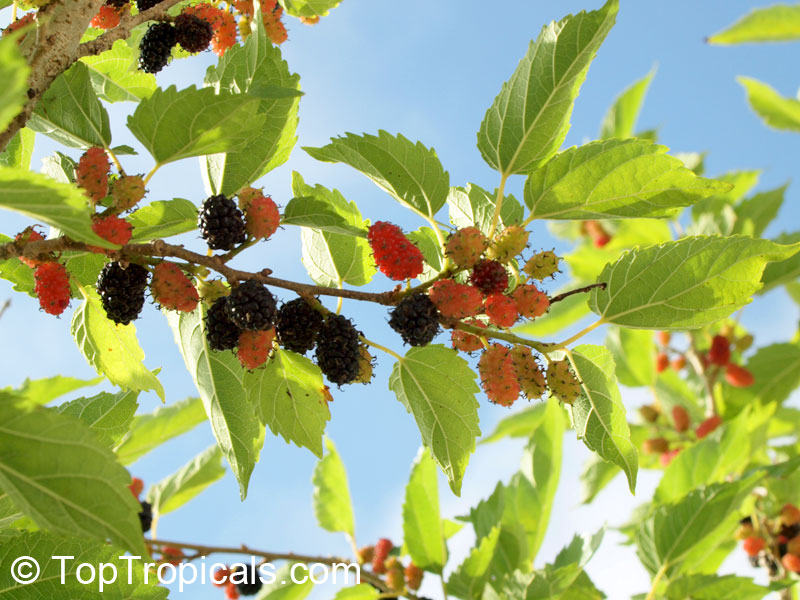
The Dwarf
Everbearing Mulberry (Morus sp.) - is the perfect way to enjoy fruit
year-round! This beautiful, cold hardy bush produces sweet, juicy mulberries starting
from the very first year - often the same season you plant it. With its dwarf
habit (easily maintained at 4-6 ft), it's perfect for containers and small
spaces. Cold-hardy and drought-resistant, this productive plant thrives in
various climates, from USDA zones 5 to 10! The fast-growing Mulberry will provide
fruit year-round, and with minimal care, it will flourish in almost any soil. Our
Everbearing Mulberry bushes produce enough fruit for both birds and breakfast - we pick a handful every day!
Learn more, with a
short video.
5. Medinilla Coral Spike
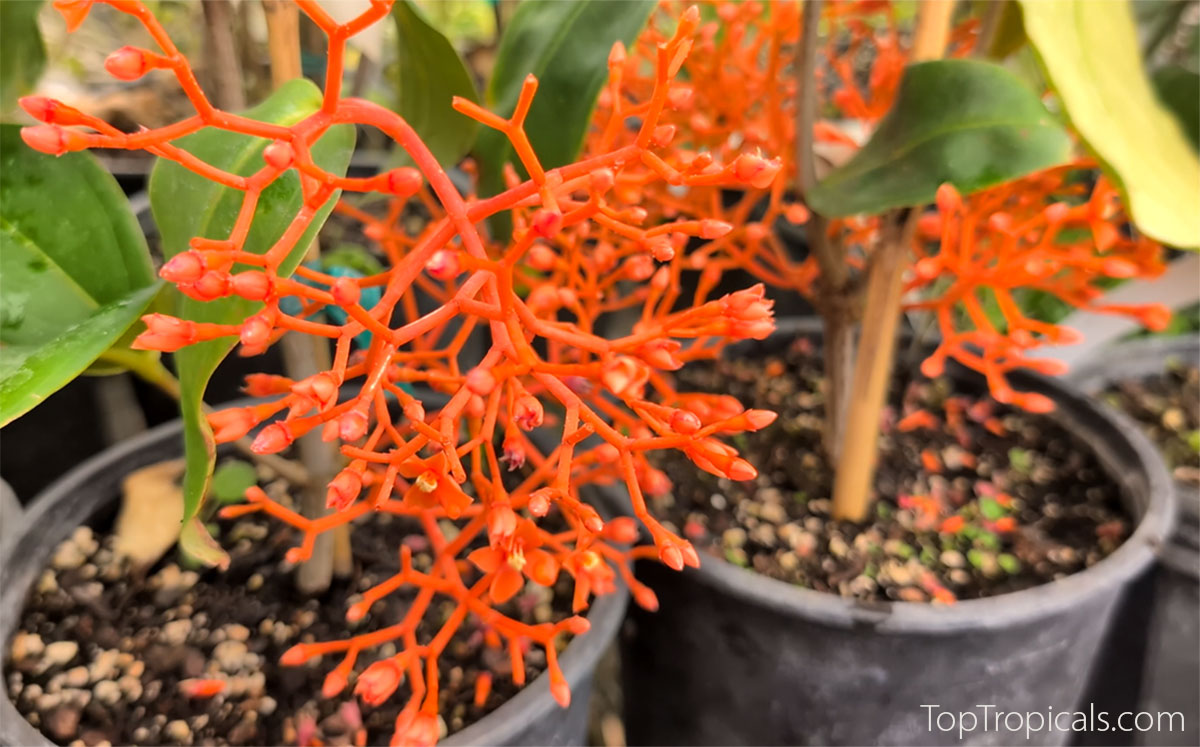
Rare Medinilla
scortechinii - Orange Coral Spike - is a rare gem that brings a touch of
the ocean to your garden! With bright orange stems bursting into star-shaped
blooms, it looks like something straight from a coral reef. Compact and easy to
grow, this plant stays under 2-3 ft tall, making it perfect for pots,
hanging baskets, or as an epiphytic accent. The glossy dark leaves contrast
beautifully with the vibrant orange panicles, and it thrives in bright shade. A must-have for collectors of unusual
tropical plants, this coral spike adds a bold pop of orange wherever it grows - but hurry, it doesn't stay in stock for long!
Learn more, with a short video.
Date: 22 Apr 2025
Is This a Plant or a Coral?
Medinilla scortechinii - Orange Coral Spike
🔥 Is This a Plant or a Coral?
- 🟠 Medinilla scortechinii - Orange Coral Spike - these flowers look like they came straight from a coral reef! Orange Coral Spike is a rare gem that's hard to find and easy to love.
- 🟠 Bright orange stems burst into star-shaped blooms that mimic glowing underwater branches - but they're blooming in your garden or home instead. Exotic, rare, and totally unforgettable.
- 🟠 Compact and easy to grow - stays under 2 ft tall.
- 🟠 Glossy dark leaves highlight the vibrant orange panicles.
- 🟠 Grows in light shade or filtered sun
- 🟠 Great in pots, hanging baskets, or as an epiphytic accent
- 🟠 Perfect for collectors of unusual tropical plants
- 🟠 Add a pop of orange to your garden or indoor jungle – this coral spike doesn’t stay in stock for long!
🛒 Buy Your Coral Bloom Beauty
📚 More from previous post:
A splash of tropical flair
#Container_Garden #Shade_Garden #Discover
🔴 Join 👉 TopTropicals
Date: 29 Nov 2023
What plants are good to order in Winter?

Photo above: Christmas time in Ukraine (left) and Florida (right)
Q: Are there any tropical plants that will do well if I order them in Winter? We just bought a house in New Jersey with a large sunroom, and I can't wait to fill it with tropical beauties! Should I wait until Spring, or do you have something for a Winter start?
A: This is indeed a very good question, as many tropical plant collectors grow their treasures outside the tropics. The short answer is - yes! You can start filling your tropical sunroom any time of the year, but some plants are easier to deal with in Winter than others. Below are some guidelines.
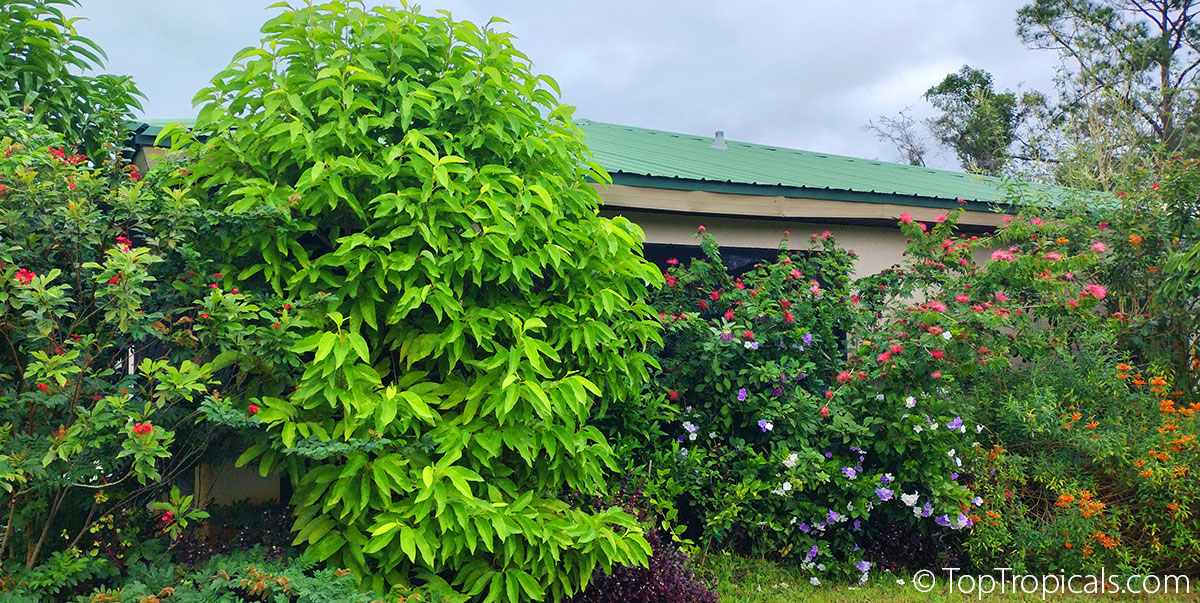
Winter bloomers today, left to right: Jatropha, Champaka, Brunfelsia, Calliandra, Leonotis.
1. Plants that prefer Winter shipping to avoid overheating stress:
- All plants with lush foliage such as Philodendrons, Medinilla
- Trees with fine feathery leaves such as Moringa, Jacaranda, Poinciana
- Some fruit trees sensitive to overheating during shipping: Papaya, Stawberry Tree, Starfruit (Carambola), Bilimbi.
2. Subtropical plants that are relatively cold hardy
- Fruit trees:
Loquats, Olives, Avocados, Tropical Cherries: Eugenia, Malpighia, Noni (more cold
hardy than you may think),
Canistel.
- Flowering trees: Champaka, Tabebuia.
- All Bananas
- see all relatively cold hardy
plants
3. Winter-dormant and/or deciduous plants: Adeniums, Plumerias, Gingers, Sugar Apple
, Peaches and
Plums, June Plum and Hog Plum.
See all deciduous/winter dormant plants.
4. Orchids, including Ground Orchids.
5. Winter flowers. Keep in mind that many tropical plants are
winter bloomers, and their flowering is most profuse in Winter months, so you
can enjoy the blooms right away:
Dombeya,
Thunbergia,
Gloxinia, Brunfelsia, Calliandra, Tibouchina, Barleria, Leonotis, Clerodendrums, Chinese Hat (Holmskioldia).
See all Winter bloomers.
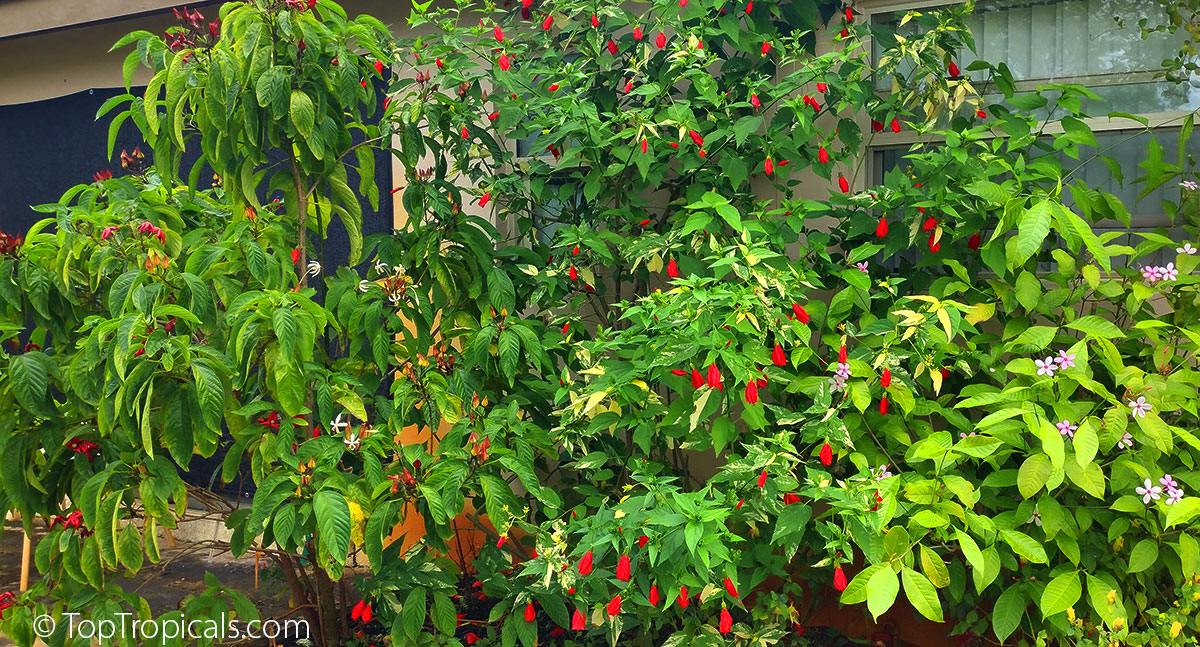
Winter bloomers today, left to right: Clerodendrum minahasse, Variegated Malvaviscus Summer Snow, Kopsia fruticosa
6. Winter plant care. During Winter the daylight is shorter and temperatures are
cooler.
- Reduce watering
- Use only liquid amino-acid based fertilizer Sunshine Boosters (safe to use year around)
- Monitor insects.
7. Shipping in Winter. We ship year around. However, if it gets below freezing in your area, you may use FedEx Hold location, they are temperature controlled so you don't have to worry about a box being dropped off at your cold porch outside.
8. A note for mild climate residents. Most tropical plants can be planted in the ground year around. Some ultra-tropical tender species such Chocolate tree, Ylang Ylang, or small size Mango trees can be grown in pots until Spring and planted out once chances of cold spell are gone. Until then, they can be moved indoors for cold nights.
Think outside the box and bring tropical paradise indoors during the time when we need warmth the most! Tropical plants will brighten your short winter days and help you to have truly HAPPY HOLIDAYS!
Date: 3 Feb 2019
Aquarius Plant Horoscope
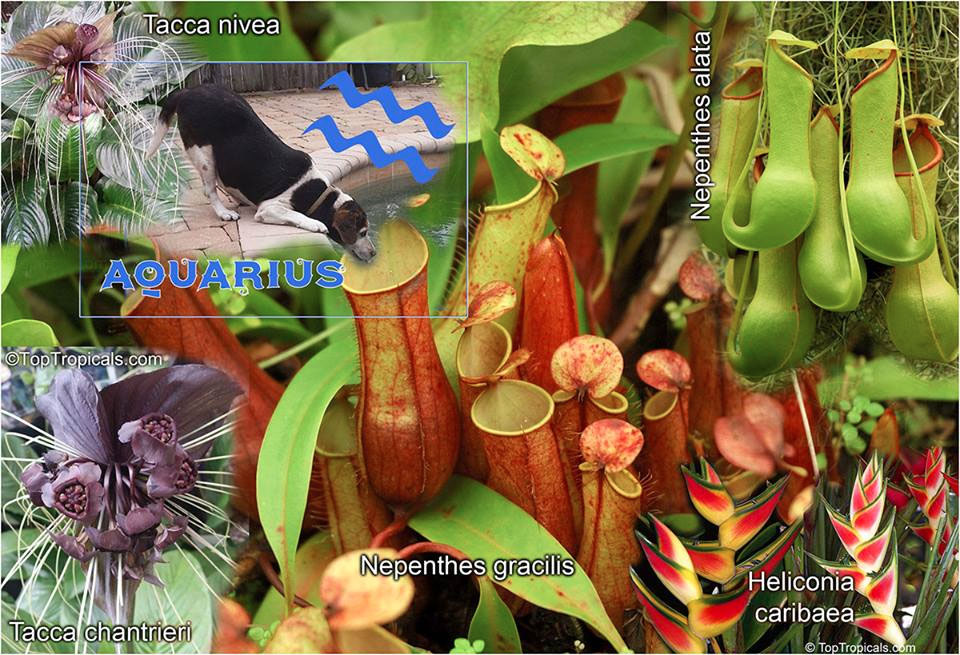

Aquarius - 1/22 -
2/18.
Aquarius is an AIR sign ruled by odd-ball Uranus.
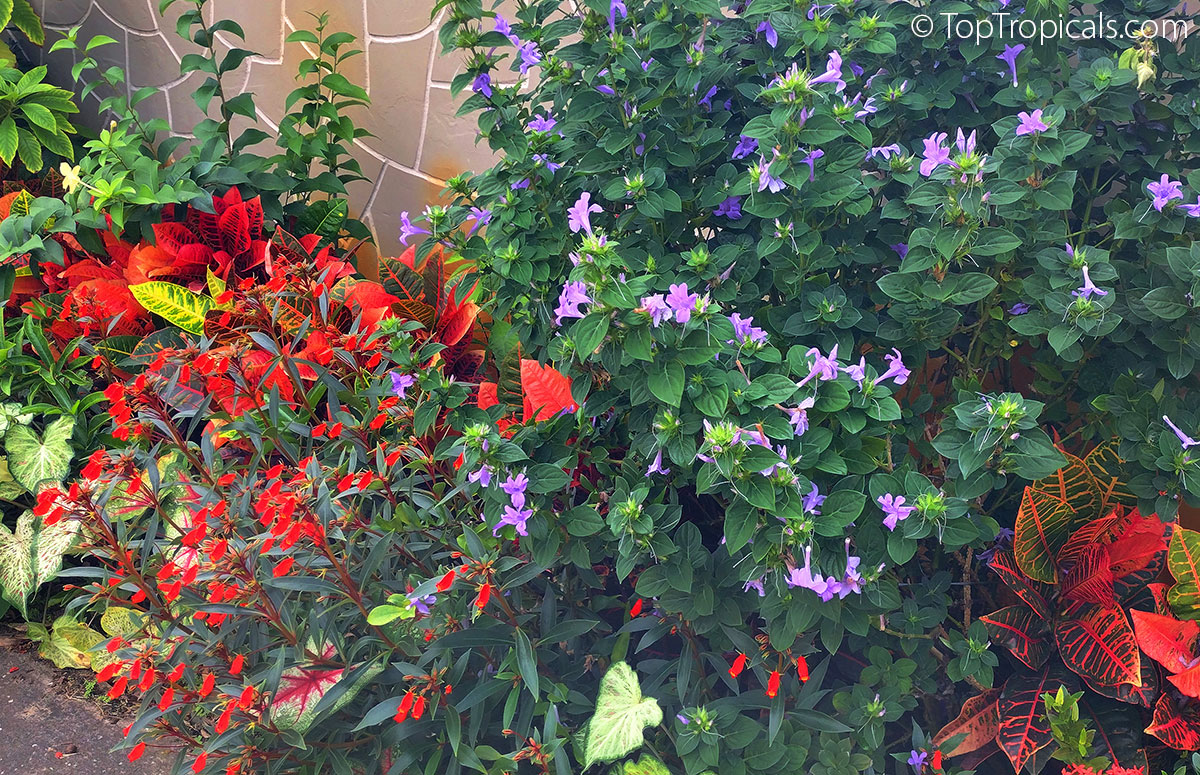
The water-bearer's plants will often grow in unusual places and may vary in
appearance. They often have purple or blue flowers, or may have unusual
colors.
The most healing and beneficial plants for Aquarius are the ones that help
circulation, relax the nervous system, or promote inspiration. When Uranus
was discovered, it replaced Mercury as ruler of Aquarius. Physiologically,
Uranus rules the bioelectrical impulses that power the body's nervous system
(nervous tension and nervous exhaustion brought on by powerful changes in the
environment are related to both Mercury and Uranus). Physically, Aquarius
rules the lower legs, the calves, and the ankles, and the electrical impulses
that travel through the body's nervous system. The nervous system itself is
ruled by Mercury, and Uranus is said to be a "higher octave" of Mercury. Since
Uranus was discovered after the correspondences with plants had been
established, the herbs used in Aquarius are Mercury herbs. Always difficult to
pinpoint, quirky Aquarius appreciates the unusual and complex flavor of star anise. Use this star-shaped spice when you wish to bring happy
surprises into your life.
Aquarius Zodiac lucky plants:
Anise, Orchid, Golden rain - Koelreuteria paniculata, Bird of Paradise, Heliconia, Petrea, Mandevilla, Jasminum, Kiwi, Persimmon, Loquat, Olive, Alocasia, Colocasia, Citrus, Apple, Peppers, Gingers, Carambola, herbs spicy with an unusual flavor, White Pothos, Ivy, Shami - Prosopis cineraria, Neem, Medinilla, Sheesham Tree, Catnip, Passion fruit, Valerian, Aloe, Myrrh, Kava-kava, Cinnamon, Clove, Eucalyptus, Coffee, Cola nut, Nepenthes, Vanilla Orchid, Strongylodon - Jade vine, Tacca - Bat Lily, Eranthemums, Agapanthus, Orchid trees, Bolusanthus, Chamaedorea metallica, Clerodendrum ugandense, Clitoria, Duranta, Guaiacum, Jacaranda, Lavanda.
For other signs information, see full Plant Horoscope.

Date: 14 Nov 2018
Plant Horoscope. Scorpio Zodiac lucky plants: Plants with thorns, red in color, and grow under adversity
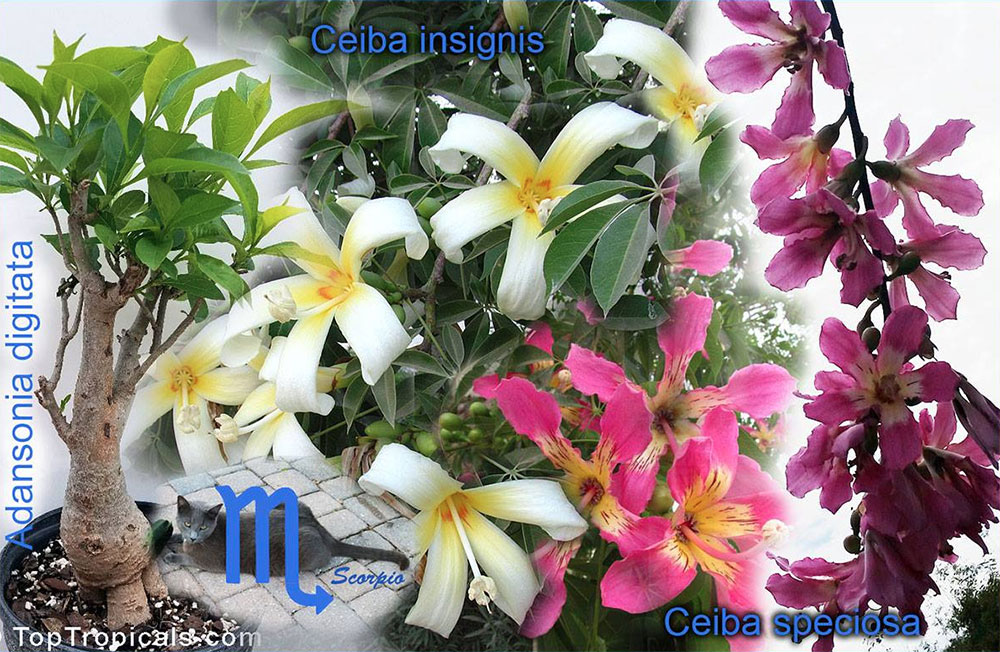

Scorpio - 10/23-11/21.
A WATER sign ruled by both Mars and Pluto.
Scorpio's plants are often found in remote places or on poor ground.
They will likely have thorns, can be red in color, and grow under adversity.
The good news is, most of these plants are nearly indestructible! This makes
them desirable for every gardener.
The reproductive organs are ruled by Scorpio, so these are plants that
balance the hormones, regulate the menstrual cycle, help with childbirth and
pregnancy. Until this century, Scorpio was ruled by Mars, and the herbs
associated with it had to do with the urogenital system and the colon. Many of the
herbs related to Scorpio are cleansing and revitalizing. Now, astrologers
assign Scorpio to Pluto, discovered in 1930 (Pluto is said by astrologers to be a higher octave of Mars). Physiologically, Scorpio involves the processes of catabolism and anabolism, the death and regeneration
of body cells. Diseases of Scorpio are often involved with the slow buildup of
toxic substances in the body (carcinogens, etc) or in the mind (anger,
jealousy). Scorpio loves a spice with depth and complexity. Camphor Basil adds
rich flavor to every dish it seasons, and its own aphrodisiac tendencies appeal to
Scorpio's lusty nature.
Scorpio Zodiac lucky plants:
Ceiba, Baobab, Pistachio, Nutmeg, Thunbergia, Combretums, Dragon fruit, Medinilla, Camphor Basil, Oregano, Vanilla orchid, Hibiscus, Various cacti and succulents,
Adenium, Honeysuckle, Peppers, Cordyline, Spider plant, Jasmine,
Gooseberries, Wild
indigo,
Bougainvillea,
Aloe vera, Raspberry
,
Palmetto, Horseradish tree, Camphor, Allspice and Bay Rum,Jujube, Sweet Mimosa, Agave,
Milkweed, Hong Kong
Orchid Tree, Pony Tail, Dwarf Poinciana, Bottlebrushes, Clusias, Crocosmia, Zig-Zag Cactus, Dracaena, Fire Bush, Hoyas, Jatropha
, Kalanchoe, Sausage tree, Devils Backbone, Pereskia, Red Plumeria, Firecracker, Rattlebox,
Rhoeo,
Calendula, Geranium, Thistles, Mint
, Sage,
Catnip,
Coriander, Sandalwood, Ginseng,
Euphorbias, Acacias