Garden Blog - Top Tropicals

Date: 4 Mar 2025

What are the most beautiful ornamental Banana varieties and which one should I plant?
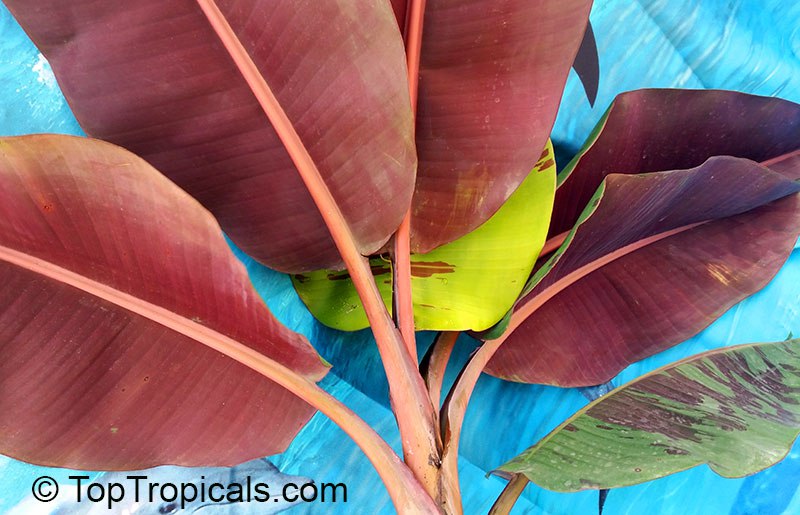
Blood Leaf, Musa x sumatrana Zebrina Rojo Banana
Blood Leaf, Musa x sumatrana Zebrina Rojo Banana

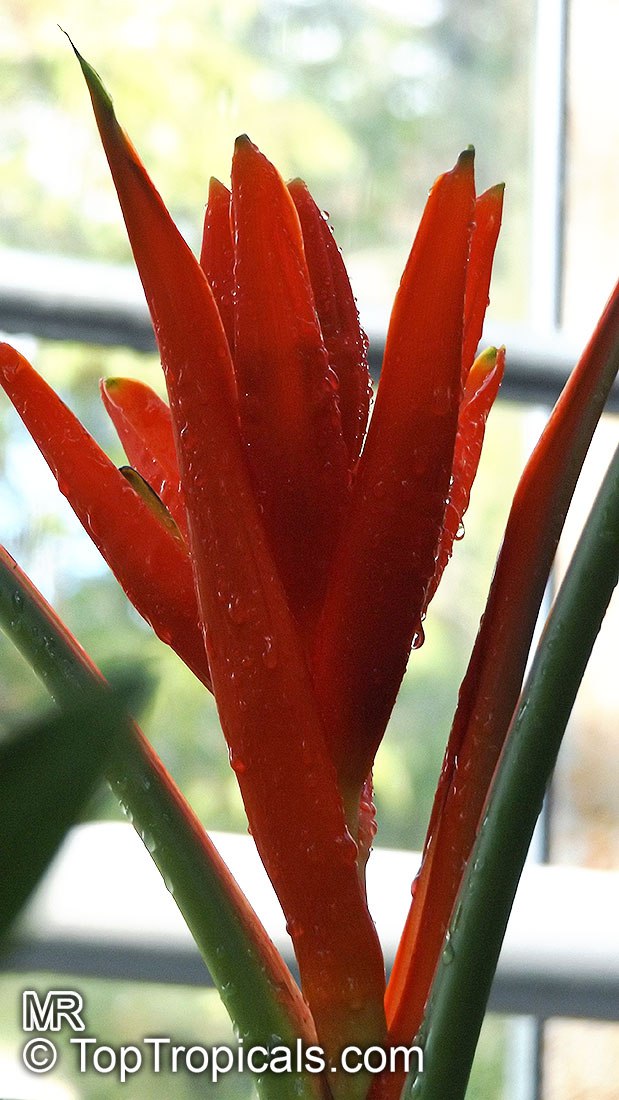
Musa coccinea - Scarlet Red Flowering Banana
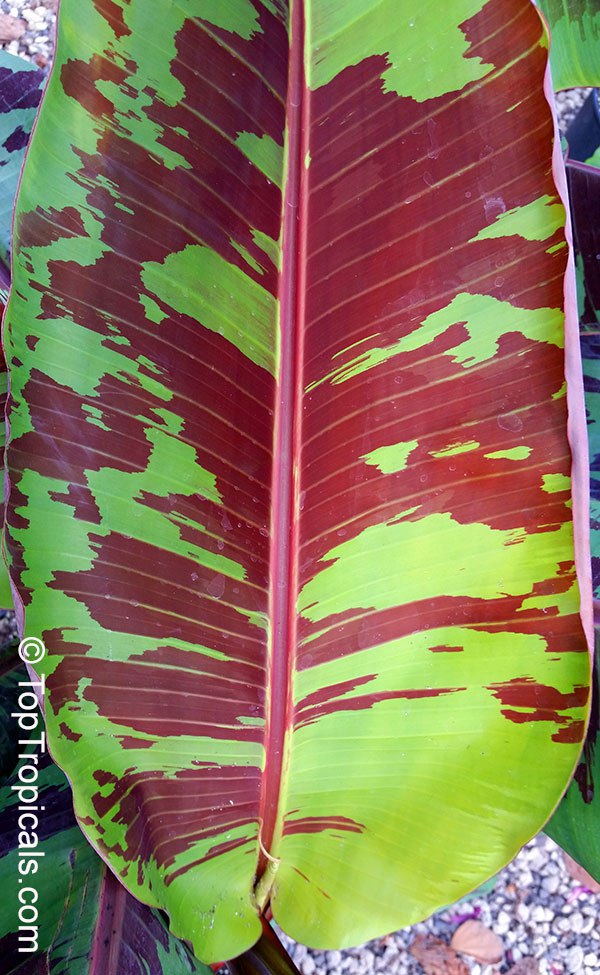
Musa coccinea - Scarlet Red Flowering Banana

Bordelon, Red Striped Banana

Bordelon, Red Striped Banana

Banana Red Leaf, Musa x sumatrana
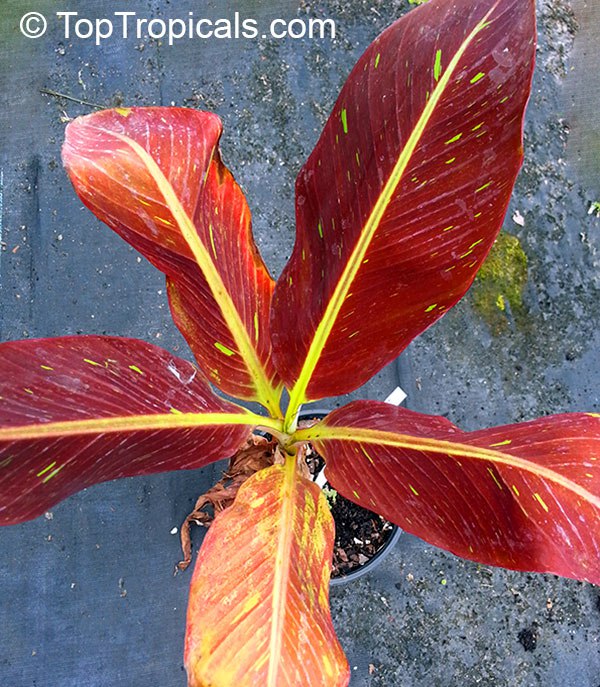
Banana Red Leaf, Musa x sumatrana

Musa Zebrina Rojo - Blood Leaf Banana

Musa Zebrina Rojo - Blood Leaf Banana

🚩 What are the most beautiful ornamental Banana varieties and which one should I plant?


Continued for the previous post🔼

❤️ The most popular ornamental banana varieties

  • 🔥 Blood Leaf, Musa x sumatrana Zebrina Rojo - a striking banana variety with green leaves splashed with red, burgundy undersides, and small red fruit, thriving in containers and overwintering well in colder climates.
  • 🔥 Musa coccinea - Scarlet Red Flowering Banana - is a rare, compact tropical banana from China and Vietnam, prized for its stunning red flower bracts with yellow blooms, glossy green leaves, and small ornamental orange fruits, making it a vibrant choice for gardens, pots, or cut arrangements.
  • 🔥 Bordelon, Red Striped - a hardy ornamental banana variety with 10-15' tall stalks, striking red-striped leaves, and red undersides, discovered in Bordelonville, Louisiana, and capable of flowering and producing seeded fruit if protected in winter.
  • 🔥 Banana Red Leaf, Musa x sumatrana - is a striking ornamental banana with large variegated leaves, red stems, and a solid maroon underside, growing 3-5 feet in containers or up to 8 feet in the ground, making it a stunning focal point or tropical backdrop.
  • 🔥 Banana Siam Ruby - a striking ornamental banana with beautiful ruby-red leaves splashed with bright lime green, intensifying in color with sun exposure, thriving in hot, humid areas, and perfect for tropical backdrops or large patio containers.


📚 More about ornamental Bananas:


Musa Zebrina Rojo - Blood Leaf Banana

🛍 Shop Banana varieties

#Food_Forest

🔴 Join 👉 TopTropicals

Date: 16 Sep 2025

You wont believe what this cat is eating for lunch!

Cat Niki

🍌 You won’t believe what this cat is eating for lunch!


"When life gives you lemons, throw them back and ask for a banana!"


🐈📸 Cat Niki is eating dry bananas at TopTropicals PeopleCats.Garden 

#PeopleCats #Quotes

🟢 Join 👉 TopTropicals

Date: 29 Nov 2023

What plants are good to order in Winter?

Christmas  dog  and  night  moon  with  snow

Photo above: Christmas time in Ukraine (left) and Florida (right)

Q: Are there any tropical plants that will do well if I order them in Winter? We just bought a house in New Jersey with a large sunroom, and I can't wait to fill it with tropical beauties! Should I wait until Spring, or do you have something for a Winter start?

A: This is indeed a very good question, as many tropical plant collectors grow their treasures outside the tropics. The short answer is - yes! You can start filling your tropical sunroom any time of the year, but some plants are easier to deal with in Winter than others. Below are some guidelines.

Winter  bloomers:  Jatropha,  Champaka,  Brunfelsia,  Calliandra,  Leonotis

Winter bloomers today, left to right: Jatropha, Champaka, Brunfelsia, Calliandra, Leonotis.

1. Plants that prefer Winter shipping to avoid overheating stress:
- All plants with lush foliage such as Philodendrons, Medinilla
- Trees with fine feathery leaves such as Moringa, Jacaranda, Poinciana
- Some fruit trees sensitive to overheating during shipping: Papaya, Stawberry Tree, Starfruit (Carambola), Bilimbi.

2. Subtropical plants that are relatively cold hardy
- Fruit trees: Loquats, Olives, Avocados, Tropical Cherries: Eugenia, Malpighia, Noni (more cold hardy than you may think), Canistel.
- Flowering trees: Champaka, Tabebuia.
- All Bananas
- see all relatively cold hardy plants

3. Winter-dormant and/or deciduous plants: Adeniums, Plumerias, Gingers, Sugar Apple , Peaches and Plums, June Plum and Hog Plum.
See all deciduous/winter dormant plants.

4. Orchids, including Ground Orchids.

5. Winter flowers. Keep in mind that many tropical plants are winter bloomers, and their flowering is most profuse in Winter months, so you can enjoy the blooms right away:
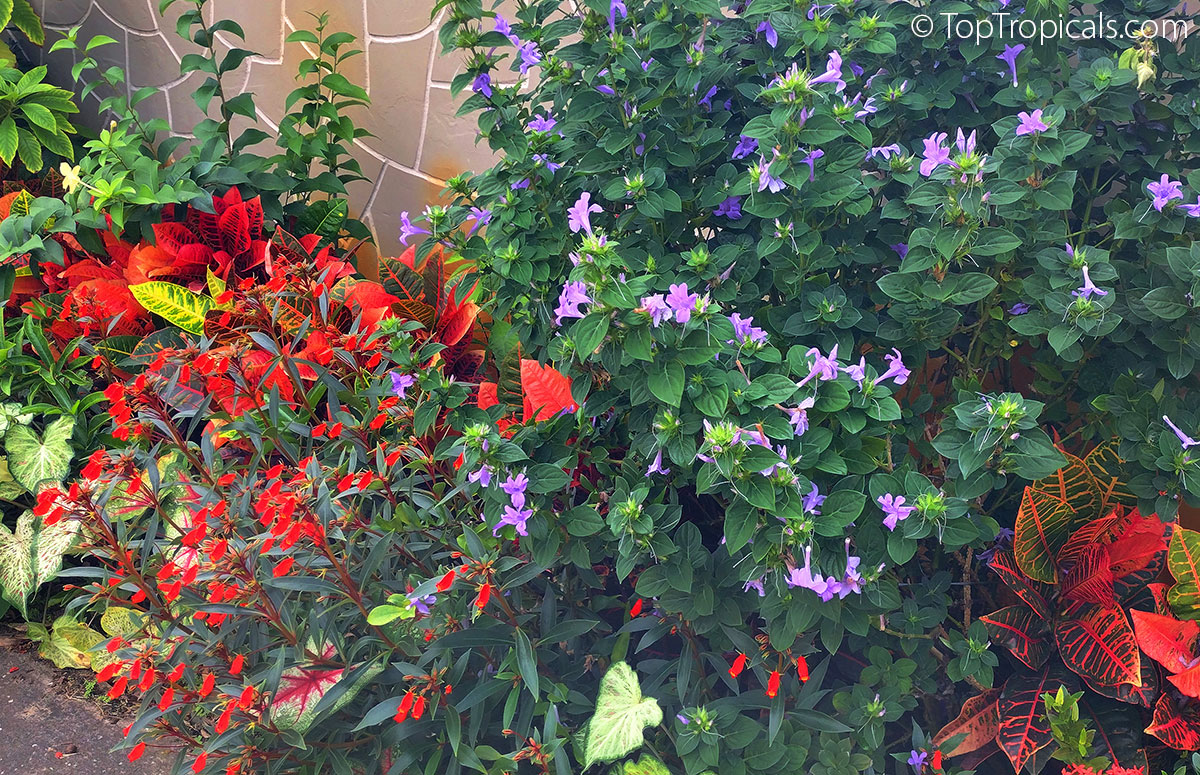
Dombeya, Thunbergia, Gloxinia, Brunfelsia, Calliandra, Tibouchina, Barleria, Leonotis, Clerodendrums, Chinese Hat (Holmskioldia).
See all Winter bloomers.

Winter  bloomers:  Clerodendrum  minahasse,  Malvaviscus  Summer  Snow,  Kopsia 


fruticosa

Winter bloomers today, left to right: Clerodendrum minahasse, Variegated Malvaviscus Summer Snow, Kopsia fruticosa

6. Winter plant care. During Winter the daylight is shorter and temperatures are cooler.
- Reduce watering
- Use only liquid amino-acid based fertilizer Sunshine Boosters (safe to use year around)
- Monitor insects.

7. Shipping in Winter. We ship year around. However, if it gets below freezing in your area, you may use FedEx Hold location, they are temperature controlled so you don't have to worry about a box being dropped off at your cold porch outside.

8. A note for mild climate residents. Most tropical plants can be planted in the ground year around. Some ultra-tropical tender species such Chocolate tree, Ylang Ylang, or small size Mango trees can be grown in pots until Spring and planted out once chances of cold spell are gone. Until then, they can be moved indoors for cold nights.

Think outside the box and bring tropical paradise indoors during the time when we need warmth the most! Tropical plants will brighten your short winter days and help you to have truly HAPPY HOLIDAYS!

Winter  bloomers:  Gloxinia,  Barleria,  and  ever-bright  Crotons

Winter bloomers today, left to right: Gloxinia, Barleria, and ever-bright Crotons...

Date: 22 Aug 2022

What tree will fruit indoors?

Fruit  trees  for  indoor  containers

Q: I love your tropical fruit selection and I wish I lived in a warmer climate. Is there any fruit tree that can be happy indoors during winter and have fruit? I am not expecting a big crop but it would be fun to have a small piece of tropics at home. I don't have much gardening experience, can you suggest something easy for a start?

A: Several tropical fruit trees can be grown indoors, in pots, providing bright light that is necessary for flowering and setting fruit. Among them are many varieties of Bananas, Guavas, Annonas and tropical Cherries - these can be easily maintained in containers. Even dwarf varieties of Avocado and Mango are good candidates for indoor culture. You can bring containers indoors for winter and take outside into full sun during warm months so your plants can store lots of energy in Summer.
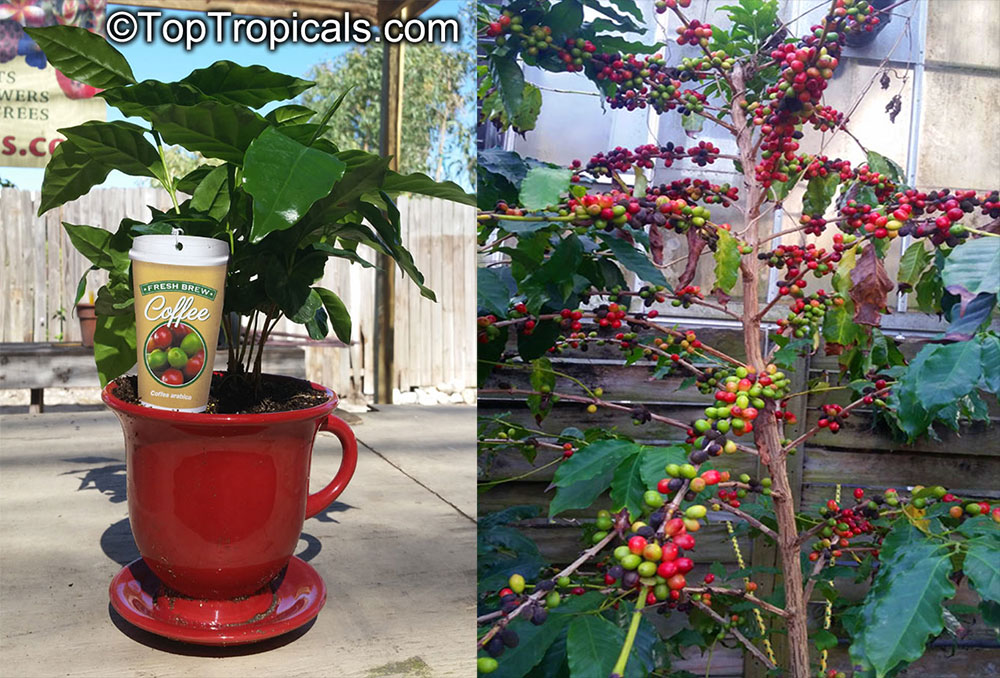
The easiest fruit tree for indoor culture that doesn't require bright light and can be grown indoors year around is a Coffee tree. Start with it, it is on sale today! Once you gain some experience, you can upgrade to a Chocolate tree!
Remember, all container grown plants need balanced nutrition program. It can be easily provided with Sunshine Boosters your around. For fruit trees, just add some Sunshine C-Cibus Crop Booster to your cart.

Coffee  video

Date: 20 Oct 2025

11 tropical fruits to eat instead of taking a fiber supplement

Tropical fruits to eat instead of taking a fiber supplement

Tropical fruits to eat instead of taking a fiber supplement

🍑 11 tropical fruits to eat instead of taking a fiber supplement

  • When we think of tropical fruit, we picture sweetness, sunshine, and exotic flavors packed with vitamin C. But beneath all that juicy goodness lies another gift: dietary fiber - quietly working to support digestion, feed the gut microbiome, and help keep blood sugar steady.
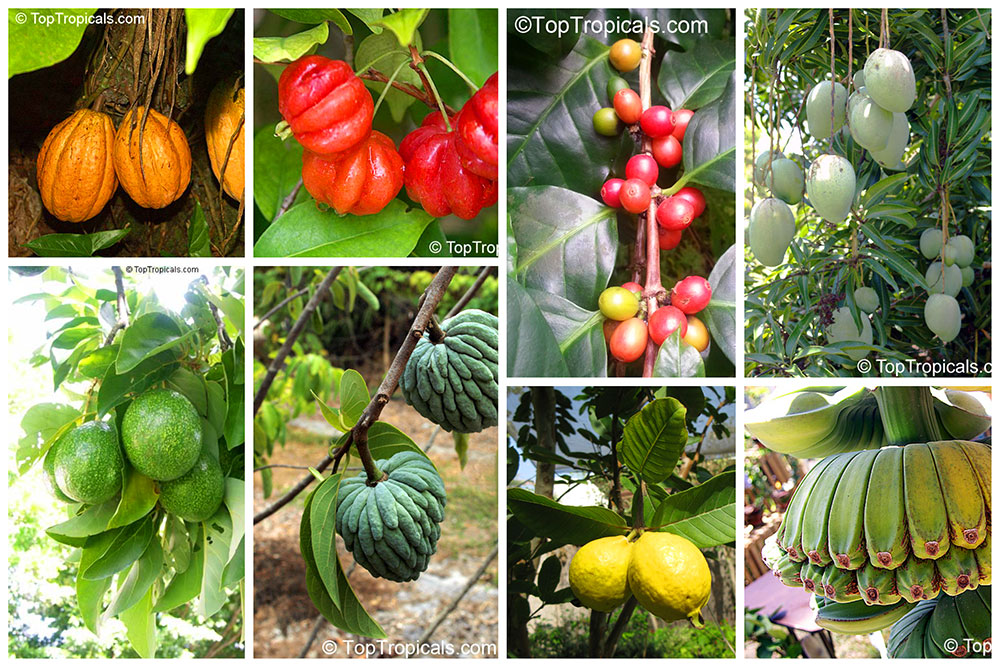
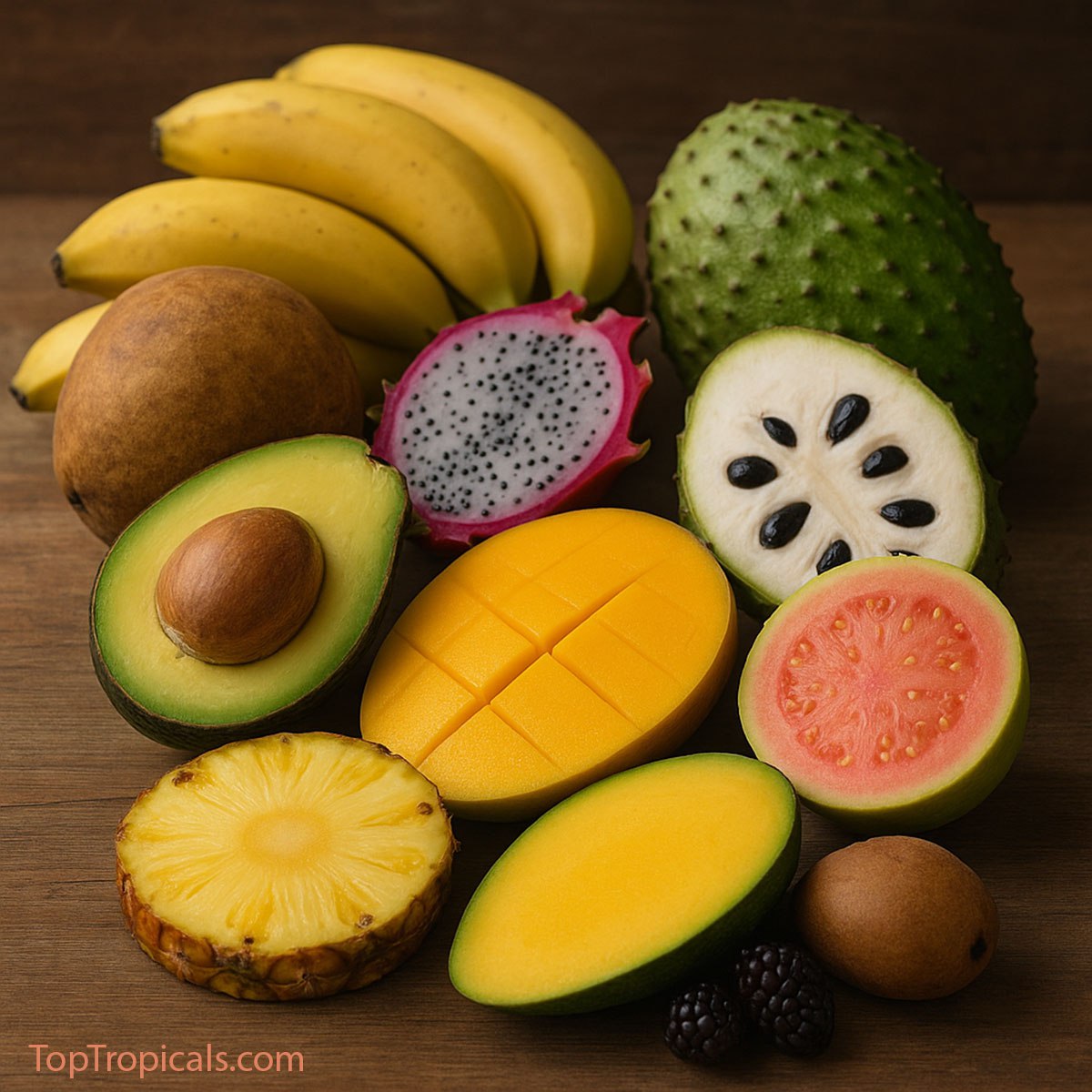
  • Avocado leads the pack among tropical fruits for fiber content. One creamy, ripe fruit can provide around 10 grams of fiber, roughly a third of an adult’s daily need. And there’s more to avocado than fiber - it’s also rich in healthy fats, micronutrients, and that silky texture everyone loves.
  • Other tropical fruits bring their own kind of fiber strength. Guava delivers up to 9 grams per cup, plus a burst of vitamin C.
  • Mango offers about 3 grams in half a fruit, especially when eaten with some of the skin.
  • Pineapple, though not always seen as a fiber powerhouse, still contributes around 2 grams per cup, along with bromelain, the enzyme that helps digestion.
  • Jackfruit’s fibrous pulp makes it another standout - it’s so meaty, it’s even used as a plant-based substitute in savory dishes.
  • Sapote fruit (Mamey, Canistel) and Sapodilla add fiber with a smooth, custard-like texture.
  • Adventurous tropical varieties like Annona (custard apple, soursop) may not top the charts in fiber numbers, but their soft, fibrous flesh still adds value: about 1.3 grams of fiber per 100 grams of fruit.
  • Bananas contain both soluble and insoluble fiber; the soluble part (mainly pectin) helps control blood sugar and appetite, while the insoluble fiber aids regularity.
  • Mulberries are rich in insoluble fiber, especially in their skin, supporting digestion and promoting healthy bowel movements.
  • Dragon fruit offers a mix of soluble fiber in its juicy flesh and insoluble fiber from its tiny edible seeds, which help support gut health and feed good bacteria.

These fruits aren’t just delicious - they help you meet your daily fiber needs in ways that are far more enjoyable (and sustainable) than taking supplements. And when home gardeners, farmers, or tropical communities grow and share them, it’s a double win: nutrition and tradition hand in hand.

✔️ Tropical fiber power: tips for getting more fiber from tropical fruits

  • ⏺Eat whole, not juiced. Most of the fiber is in the pulp, skin, and seeds. Juicing removes much of that goodness.
  • ⏺Mix it up. Tropical fruits are great, but balance them with legumes, whole grains, nuts, and veggies for a full fiber range.
  • ⏺Take it slow. If your diet is low in fiber, increase gradually to avoid bloating or discomfort.
  • ⏺Drink plenty of water. Fiber works best when paired with hydration.
  • ⏺Mind the ripeness. Unripe fruits can have more resistant starch, another form of fiber.
  • ⏺Get creative. Toss tropical fruits into smoothies, salsas, breakfast bowls, or even desserts - a tasty stealth-fiber strategy.


🛒 Plant a fruit tree to harvest your fruit tomorrow

📚 Learn more:


Tropical fruit health benefits guide - what fruit and edibles can help with health issues and vitamin deficiencies, Part 1 and Part 2.

#Food_Forest #Remedies #Discover #How_to

🟢 Join 👉 TopTropicals