Garden Blog - Top Tropicals

Date: 2 May 2024

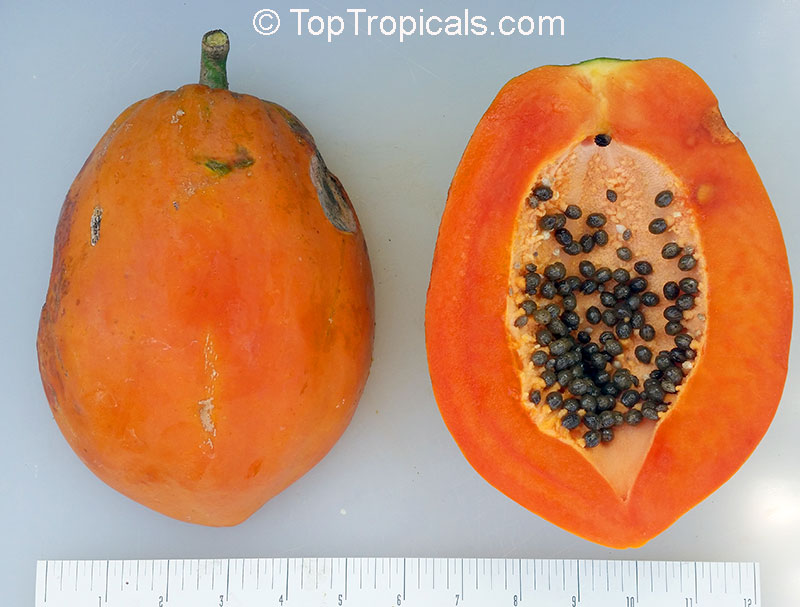
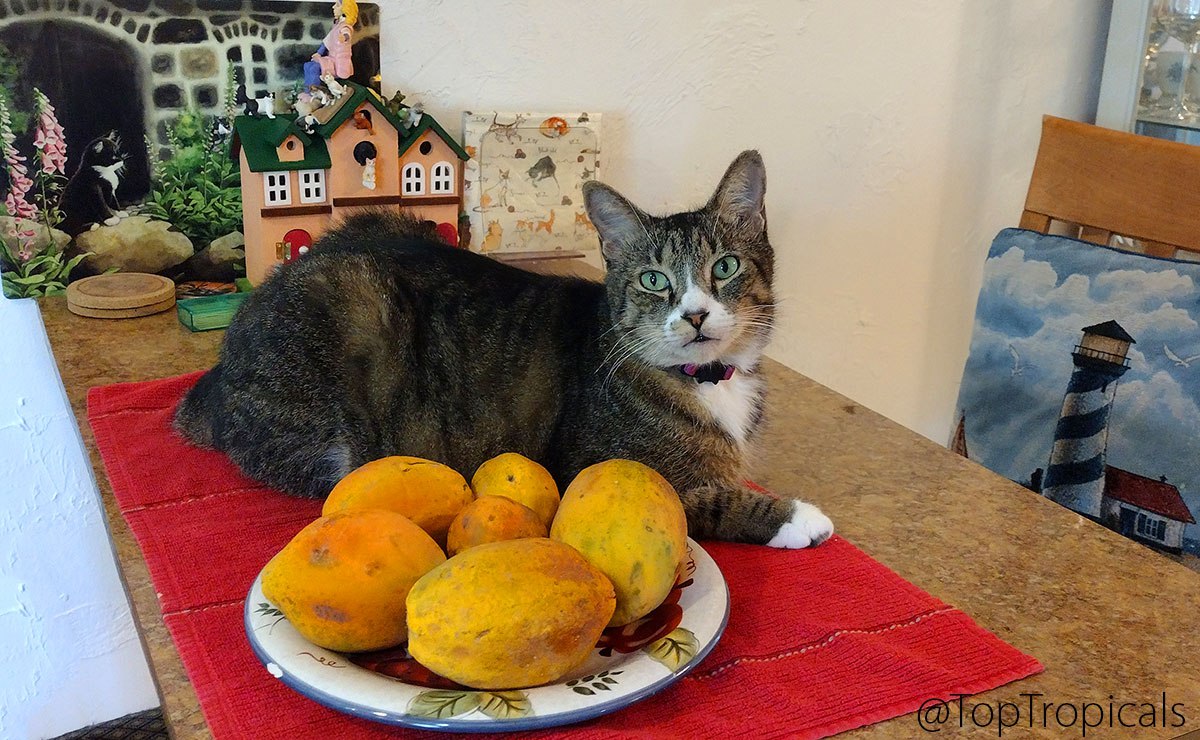
Fun Fact: Papayas contain an enzyme called papain, which is commonly used as a meat tenderizer, now you know what the secret is!

Papaya (Carica papaya)

Papaya (Carica papaya)

Papaya (Carica papaya)

Papaya (Carica papaya)

📖 Fun Fact: Papayas contain an enzyme called papain, which is commonly used as a meat tenderizer, now you know what the secret is!

Papaya (Carica papaya) is a delicious fruit that is good for you as a dessert or as a digestive aid. We eat it after every meal!

🛒 Shop Papaya trees

#Food_Forest #Fun_Facts

🏵 TopTropicals

Date: 16 Dec 2025

Nobel Prize goes to this pregnant male!

Male papaya with fruit

🏆 Nobel Prize goes to this pregnant male!

  • 👀 Some Papaya trees really break the rules, and this one deserves its own headline. We have a true oddball in the garden - a male papaya tree that actually set a lot of fruit! Not just one fruit, but a whole cluster hanging from those long flower stalks.
  • 👀 We all know that male papayas only make flowers but never set fruit. They only give us sweet fragrance from these flowers! By the way, thanks for the flowers, guys!
  • 👀 The fruit comes from the female flowers that sit tight on the trunk. But every now and then, nature throws a curveball. It looks like a male tree forms perfect female flowers on its long stems and decides to become a parent after all!
  • 👀 The result? Ripe, sweet papayas growing where they absolutely should not be. And yes, they even had seeds inside.
  • 👀 Gardeners wait years for good surprises like this. A male papaya giving birth… that’s rare enough to give a Nobel prize!


🛒 Explore the unpredictable world of Papayas

📚 Learn more:

Plant Facts

Carica papaya
Papaya
USDA Zone: 9-11
Small tree 10-20 ftFull sunDry conditionsModerate waterYellow, orange flowersWhite, off-white flowersEdible plantEthnomedical plant.
Plants marked as ethnomedical and/or described as medicinal, are not offered as medicine but rather as ornamentals or plant collectibles.
Ethnomedical statements / products have not been evaluated by the FDA and are not intended to diagnose, treat, cure, or prevent any disease. We urge all customers to consult a physician before using any supplements, herbals or medicines advertised here or elsewhere.Subtropical plant. Mature plant cold hardy at least to 30s F for a short time
  • More about Carica papaya from Plant Encyclopedia
  • The secret facts of Papaya's private life: it can go transgender!
  • ✦ Posts about #Papaya

  • #Food_Forest #Papaya

    🟢 Join 👉 TopTropicals

    Date: 3 Feb 2019

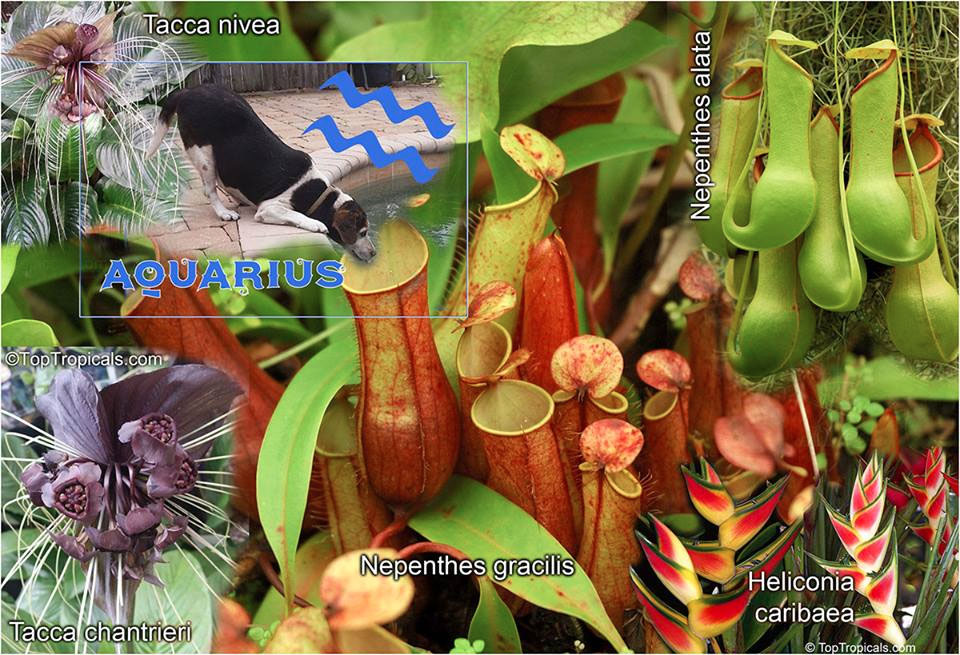
    Aquarius Plant Horoscope

    TopTropicals.com

    Aquarius - 1/22 - 2/18. Aquarius is an AIR sign ruled by odd-ball Uranus.
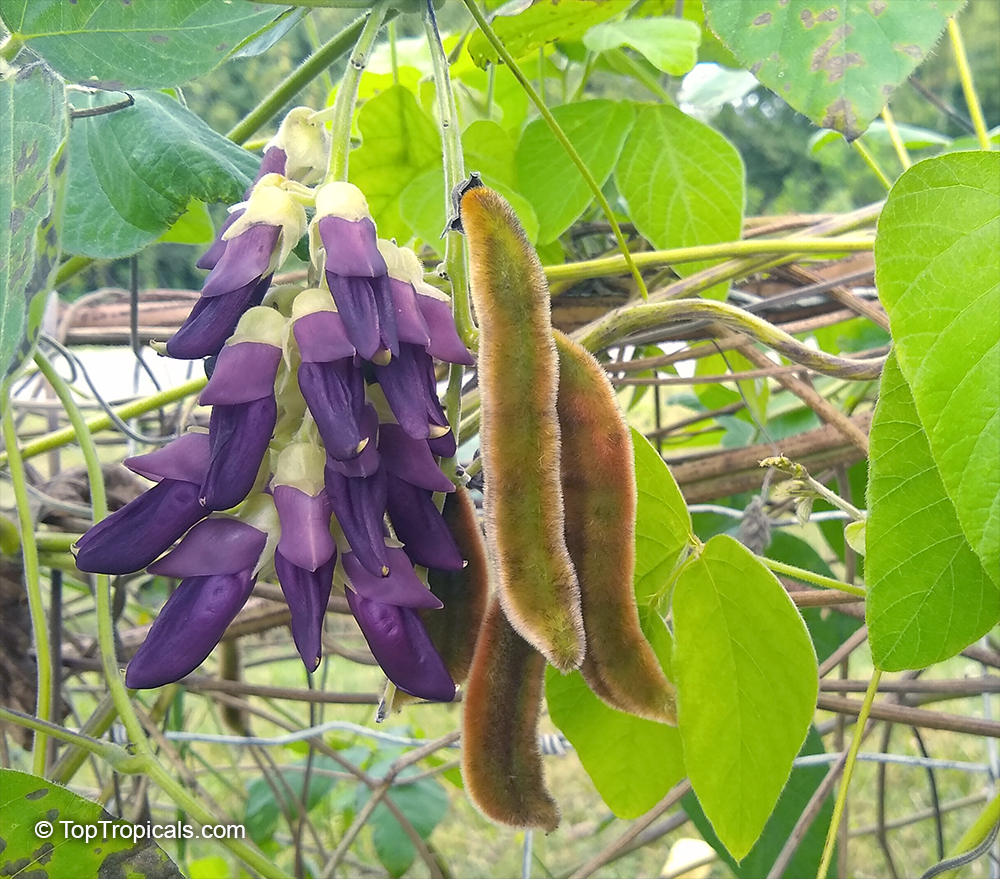
    The water-bearer's plants will often grow in unusual places and may vary in appearance. They often have purple or blue flowers, or may have unusual colors.
    The most healing and beneficial plants for Aquarius are the ones that help circulation, relax the nervous system, or promote inspiration. When Uranus was discovered, it replaced Mercury as ruler of Aquarius. Physiologically, Uranus rules the bioelectrical impulses that power the body's nervous system (nervous tension and nervous exhaustion brought on by powerful changes in the environment are related to both Mercury and Uranus). Physically, Aquarius rules the lower legs, the calves, and the ankles, and the electrical impulses that travel through the body's nervous system. The nervous system itself is ruled by Mercury, and Uranus is said to be a "higher octave" of Mercury. Since Uranus was discovered after the correspondences with plants had been established, the herbs used in Aquarius are Mercury herbs. Always difficult to pinpoint, quirky Aquarius appreciates the unusual and complex flavor of star anise. Use this star-shaped spice when you wish to bring happy surprises into your life.

    Aquarius Zodiac lucky plants:

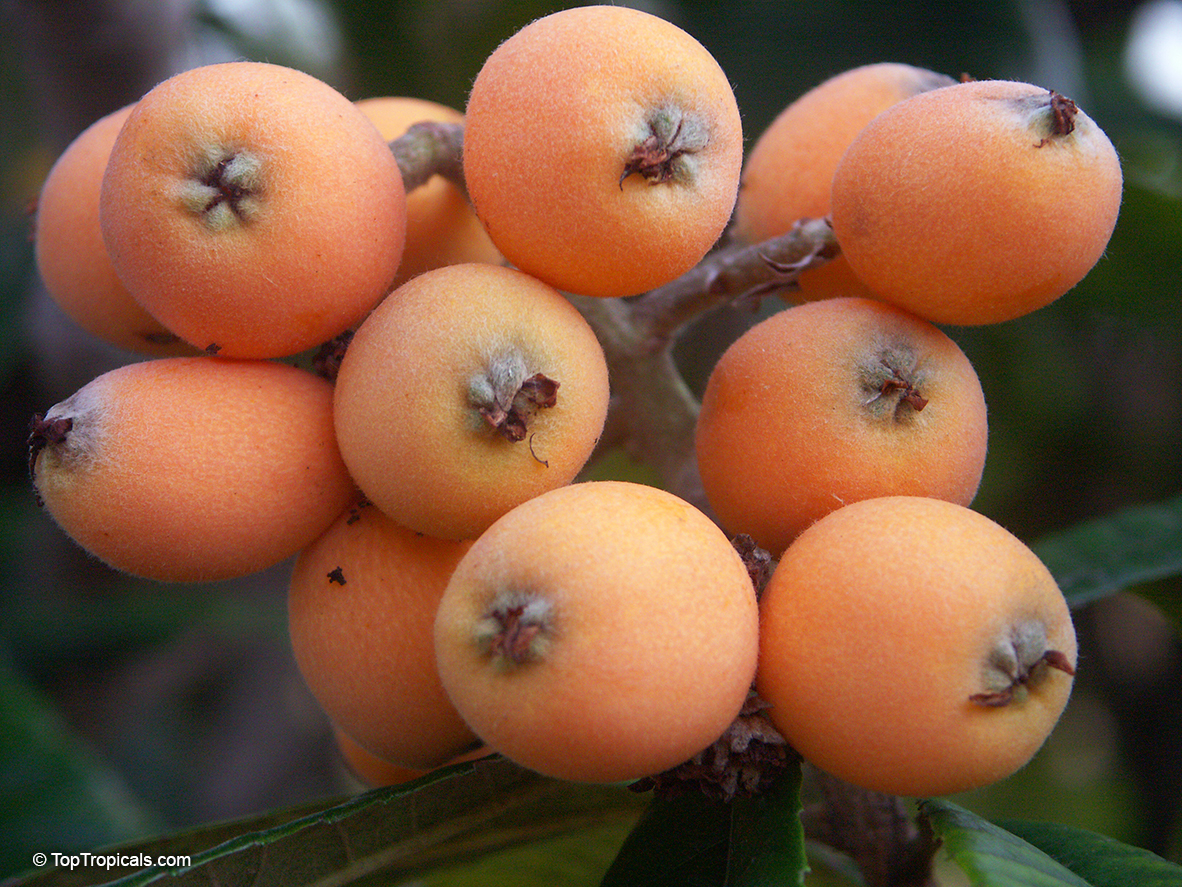
    Anise, Orchid, Golden rain - Koelreuteria paniculata, Bird of Paradise, Heliconia, Petrea, Mandevilla, Jasminum, Kiwi, Persimmon, Loquat, Olive, Alocasia, Colocasia, Citrus, Apple, Peppers, Gingers, Carambola, herbs spicy with an unusual flavor, White Pothos, Ivy, Shami - Prosopis cineraria, Neem, Medinilla, Sheesham Tree, Catnip, Passion fruit, Valerian, Aloe, Myrrh, Kava-kava, Cinnamon, Clove, Eucalyptus, Coffee, Cola nut, Nepenthes, Vanilla Orchid, Strongylodon - Jade vine, Tacca - Bat Lily, Eranthemums, Agapanthus, Orchid trees, Bolusanthus, Chamaedorea metallica, Clerodendrum ugandense, Clitoria, Duranta, Guaiacum, Jacaranda, Lavanda.

    For other signs information, see full Plant Horoscope.
    Date: 24 Dec 2018

    Plant Horoscope. Capricorn Zodiac lucky plants: Cordyline and Croton

    TopTropicals.com

    Capricorn - 12/22 - 1/19. An EARTH sign ruled by the planet Saturn. Capricorn's plants usually have few flowers, or small flowers, are knobby or woody, and may have an unpleasant smell or taste. Saturn rules plants with long lives and slow growth, so plants with annual rings are also associated with the Goat.
    Physiologically, Saturn rules the systems that give the body its structure and form: the skeletal system, and the skin, teeth, joints, and knees, so plants that are high in calcium can be very beneficial. Those can be woody plants and shrubs that show annual rings, as well as some poisonous or narcotic plants. Saturn plants are useful in treating arthritis and rheumatism. Traditional Capricorn appreciates a spice that is powerful but familiar. Black pepper adds flavor and a bit of heat to both food and life, creating movement without too much change.

    Capricorn Zodiac lucky plants: Baobab, Peach Palm, Patchouli, Bamboo, Cordyline, Spider Lily, Serissa, Desert Rose, Croton, Aloe, Palms, Giraffe knee plant - Gonatopus boivinii, Adenanthera, Black Pepper, Solanums, Loquat, Aglaonema, Jacaranda, Rosemary, Shisham - Dalbergia sissoo, Neem Tree, Nutmeg, Calendula, Brugmansia, Cannabis, Coca, Kava-Kava, Root Beer plant, Kratom, Banesteriopsis, Psychotria, Quince, Almonds, Ginkgo, Olive, Strophanthus, Bread Flower, Amorphophallus, Areca Palm, Anadenanthera, all Pipers, Brunfelsia, Chaya, Persimmons, Surinam Cherry, Bel Fruit, Ashoka Tree, Calla Lily.

    For other signs information, see full Plant Horoscope

    Date: 22 May 2016

    Plant Horoscope. Gemini Zodiac lucky plants: Anthurium and Philodenron

    Gemini - 5/21-6/20. Ruled by the mutable, changeable planet Mercury (also patron of the art of medicine), Gemini is an AIR sign. Plants ruled by Mercury tend to have ferny or highly-divided leaves or stems (like the bronchi of lungs), hairy or fuzzy leaves (related to the cilia in the lungs), or subtle odors.

    Gemini rules the lungs, shoulders, arms, and hands. Its plants help to strengthen the lungs and respiratory system, relax the nervous system, strengthen ears and hearing, the tongue and speaking, the vocal cords, lungs and thyroid, as well as the shoulders, arms, and hands. Gemini has so much going on mentally that they may need a little help to digest all the information they're constantly absorbing. Herbs that have clean, pure flavor not only help physical digestion, but assist spiritual and mental intake as well.

    Gemini Zodiac lucky plants: Ferns, Blechnum, Tree ferns and Cyatheas, Fern Tree, Aralias, Jackfruit and Breadfruit, Paulownia, Anthurium, Philodendron, Philadelphus, Clerodendrums, Anise, Lavender, Myrtle, Nut trees, Macadamia, Ficus, Piggyback plant - Tolmiea menziesii, Aloe vera, Fig, Honeysuckle, Azalea, Mint Tree Satureja, Vitex, Ironwood, Mulberry, Osmoxylon, Acalypha, Allamanda, Aphelandra, Iboza, Ruda, Kiwi, Caesalpinia, Cyphomandra, Monstera, Kalanchoe, Magnolia, Oregano, Ocimum, Naranjilla, Zamia, Delionix, Acacias, Calliandra, Patchoili, Palms, Geranium, Grevillea, Eucalyptus.

    For other signs information, see full Plant Horoscope