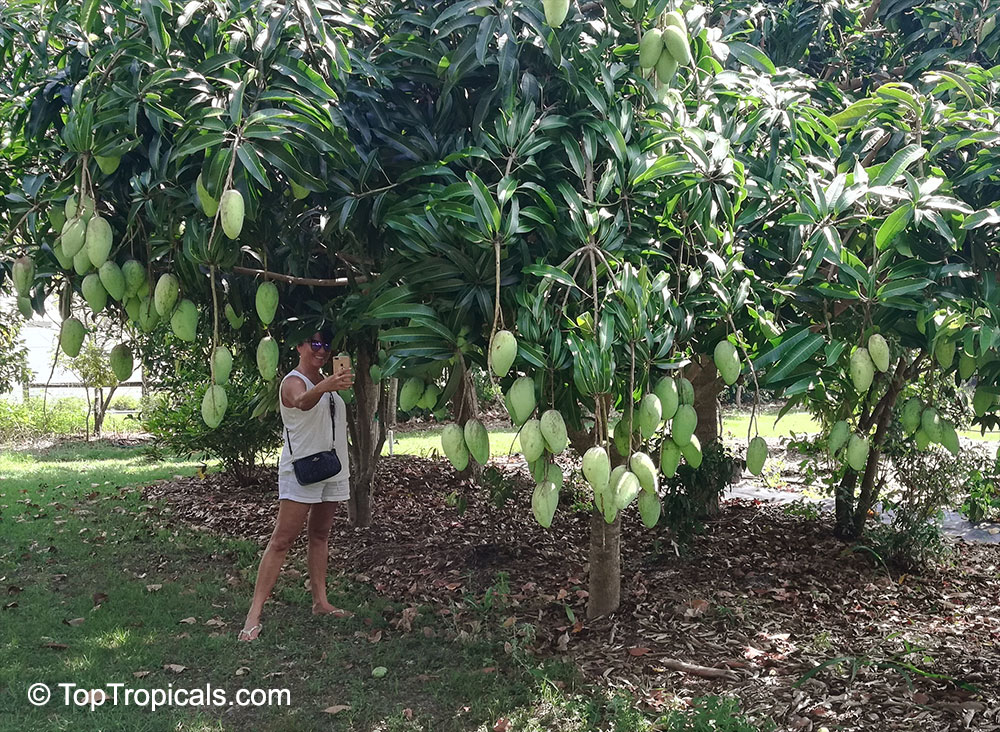
Large Grafted Mango Trees - Plant Now Before
Winter!
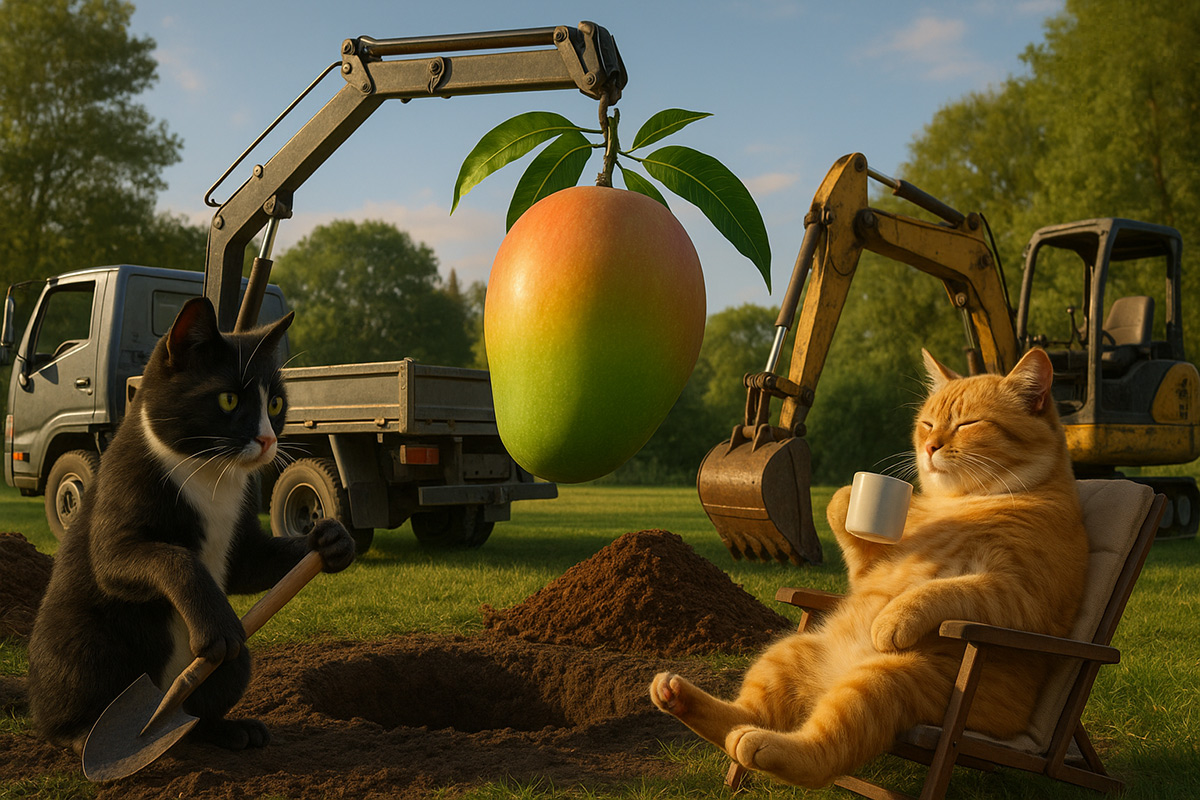
"Next Time We'll Specify - A TREE!" - Smokey and
Sunshine Plant a Giant Mango
🌡️ Why plant now?
Fall is the perfect time to plant tropical fruit trees. The
soil is still warm, the air is mild, and your trees can quietly build strong
roots. By spring, they’ll already be settled and ready to grow
fast.
Imagine walking outside next summer and picking your own
mangoes from a tree you planted this fall!
Holiday season in Florida means sunshine, green leaves, and cats on
patrol. On
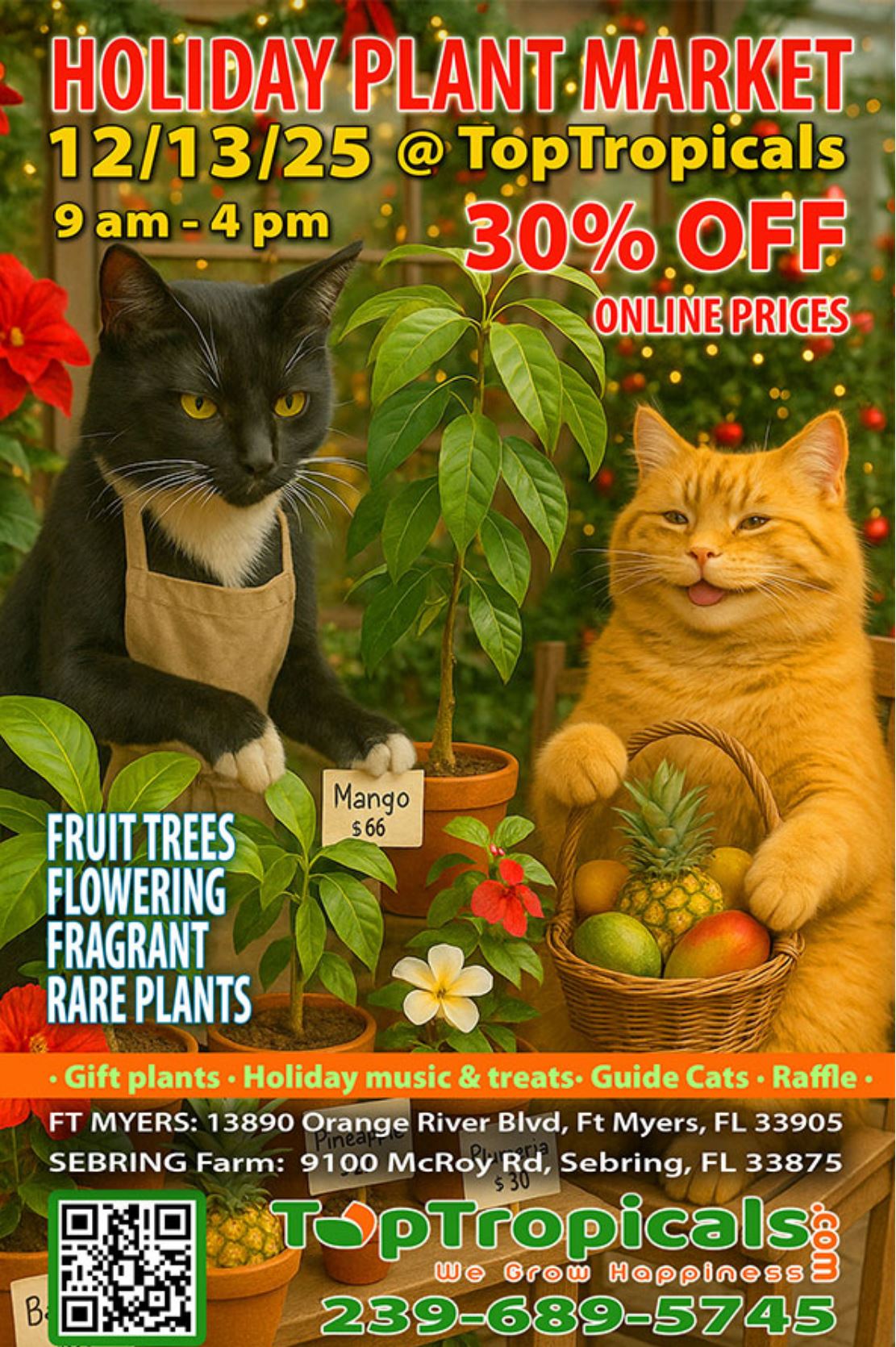
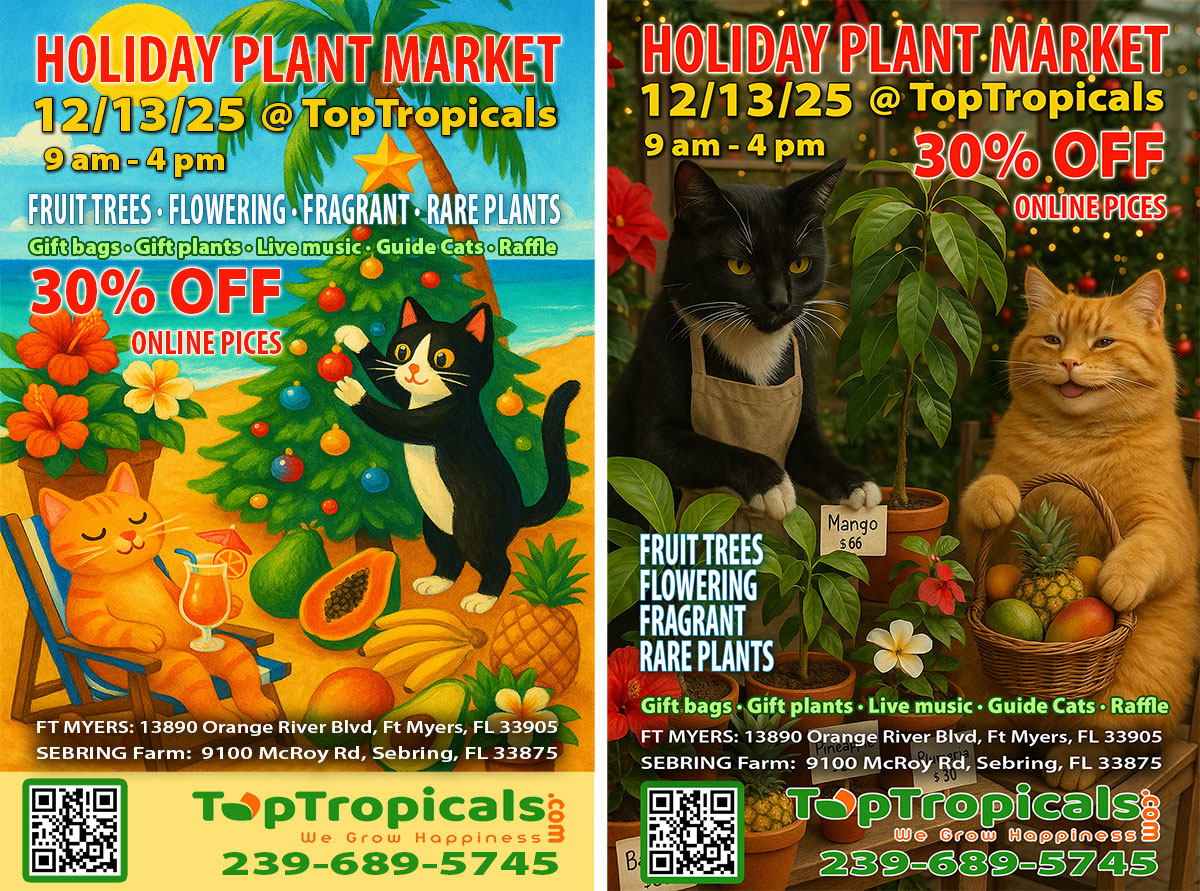
Saturday 12/13/25, our PeopleCats are hosting a special Holiday Plant Market
at TopTropicals,
9 am to 4 pm. This is not a regular nursery day. This is the one where you
grab a donut in one hand, a mango tree in the other, and try not to trip
over a cat giving you a tour.
We are bringing out the best plants we grew all year: big fruit trees
with real branches, flowering and fragrant beauties, rare collectors
plants, and vines that are ready to take off as soon as you get them home.
December is perfect planting weather in Florida, so while the rest of the
country is scraping frost from windshields, you can be
choosing which banana, mango, or jasmine will perfume your yard next
summer.
Holiday extras: 30% OFF online prices, free plant with purchase, 5 to 10
dollar specials, mini donuts and holiday treats, iced tea and citrus water,
tropical Christmas music, and
raffle prizes. If there is enough ripe fruit in the morning, we will set up
a
tasting table too. Our PeopleCats will be on duty all day, rearranging
plants,
checking on visitors, and occasionally allowing themselves to be petted
between tours.
Event discounts and specials are valid at both locations:
Save the date, tell a friend, and plan your plant hunting route now. Come
celebrate the holidays the Florida way: sunshine, rare fruit trees, happy
cats, and a car full of tropical
plants going home with you.
The strange tropical plant that eats bugs - and gardeners cant stop collecting
🐸 The strange tropical plant that eats bugs - and gardeners can't stop collecting
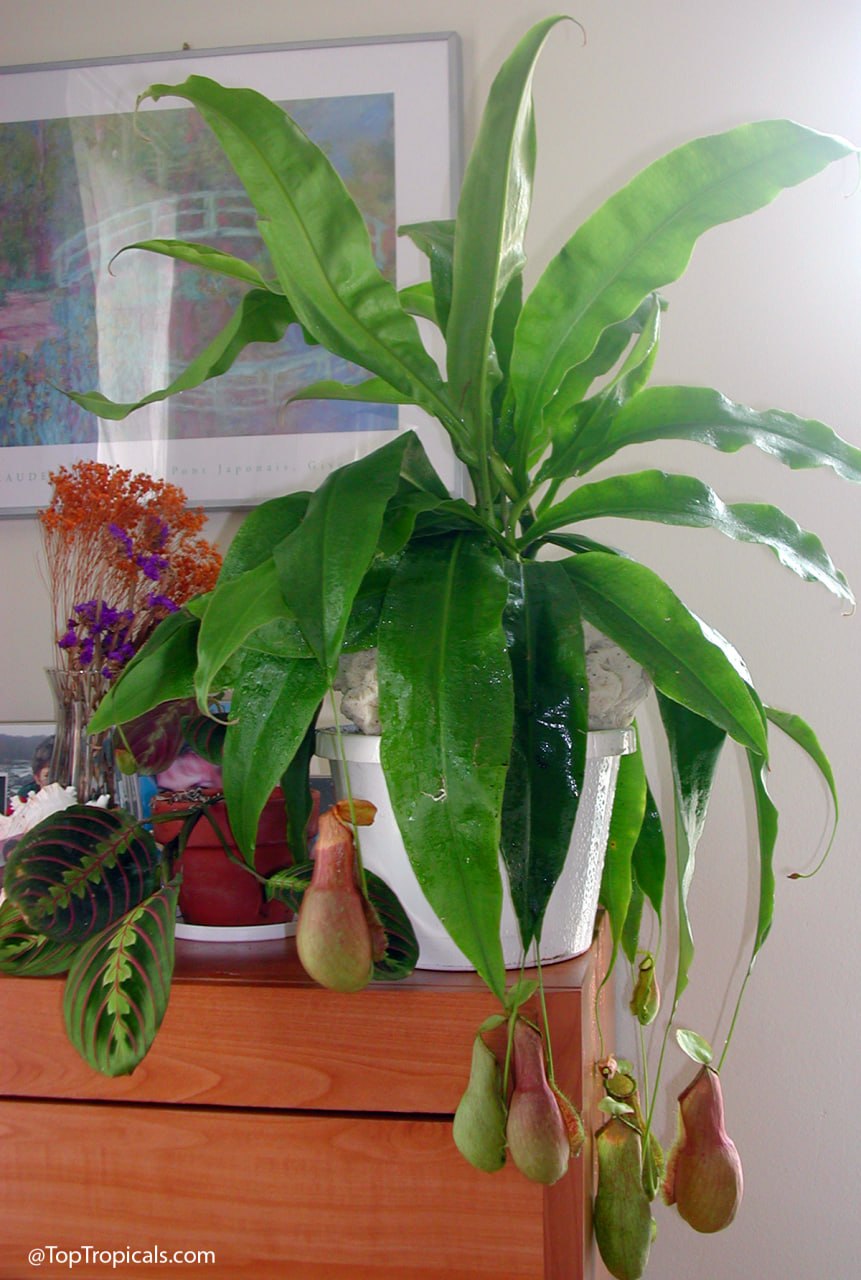
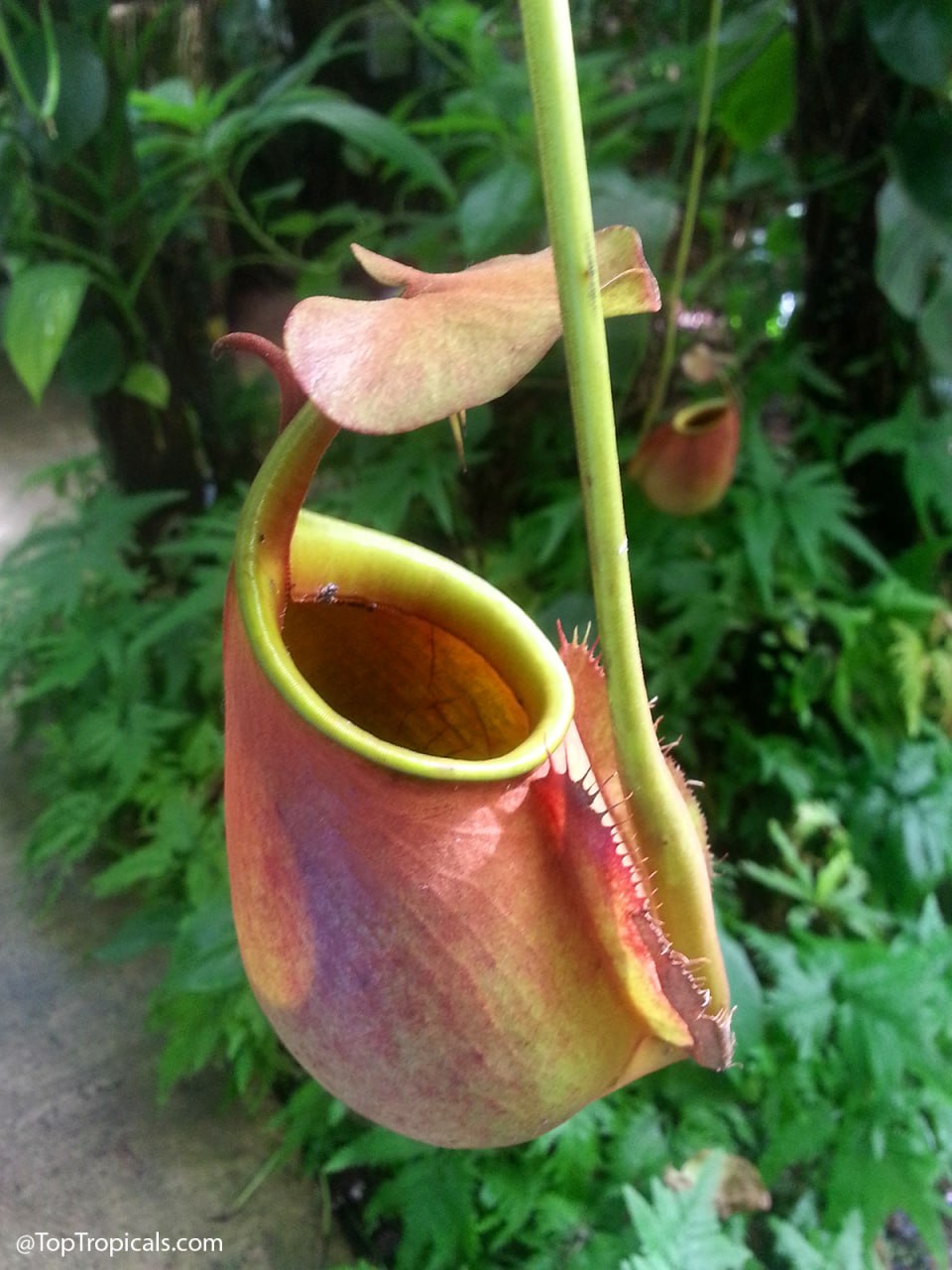
Nepenthes - tropical Pitcher Plants - look almost fake. Long vines and shiny leaves give way to colorful pitchers resembling exotic lanterns or sci-fi creatures. But these aren't flowers; they are sophisticated traps. Among the world's most fascinating carnivores, they lure insects into fluid-filled vessels to digest them for nutrients. Giant species can even trap small frogs or mice! 🐸🐭
🐱 Why pitcher plants look so unreal
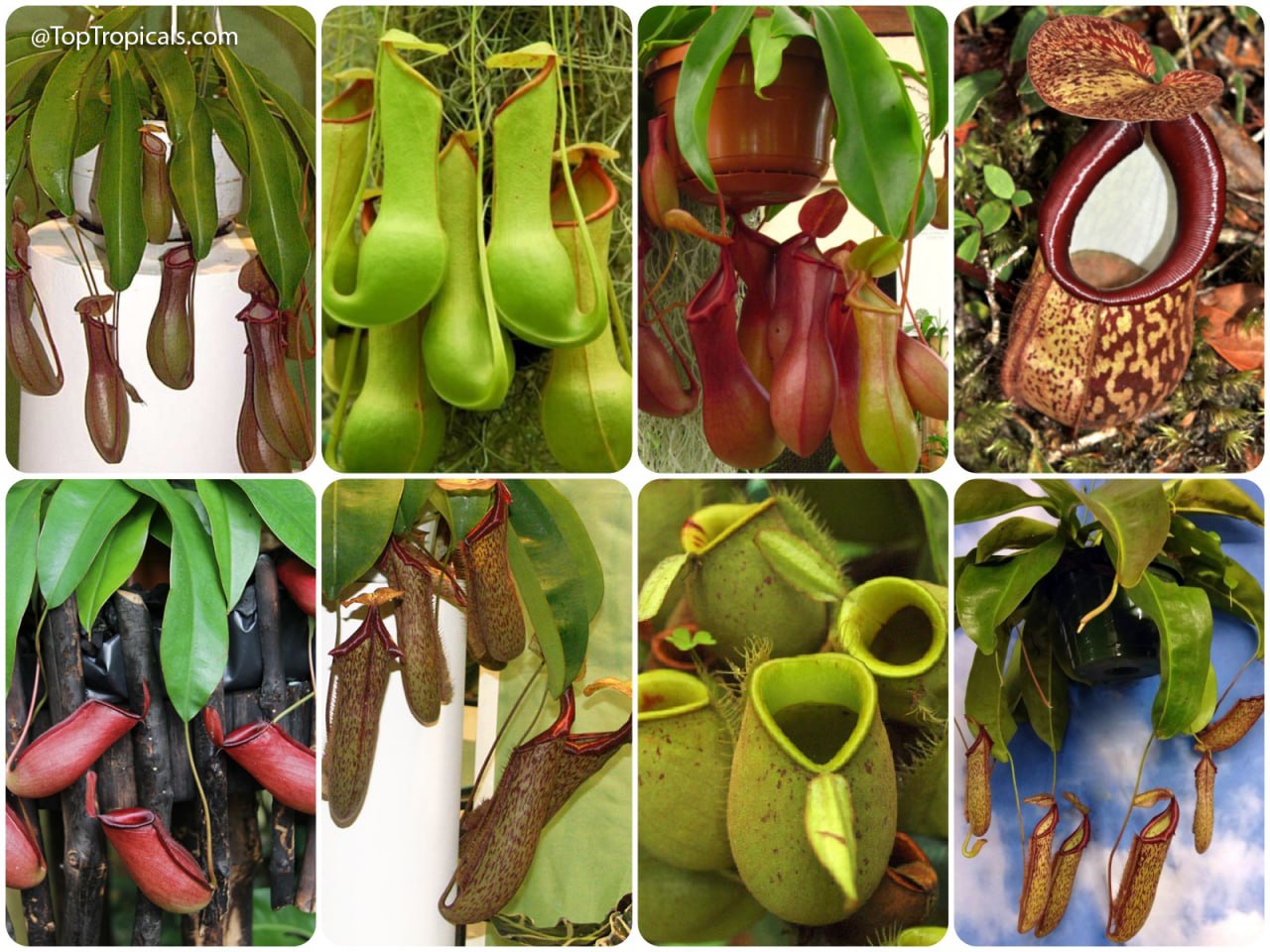
Pitchers are modified leaves designed to attract prey with vibrant colors and nectar. Many feature dramatic stripes or flared, sculpted rims. The diversity is immense: compact species fit on windowsills, while jungle giants produce foot-long traps. Some thrive in steamy lowlands, others in misty mountains. Their digestive fluid can even become sticky and elastic, making escape impossible.
🐱 The plant that inspired engineering
These plants have inspired more than just gardeners. Their slippery surfaces led to "liquid-infused" materials used in anti-fogging and water-repelling tech. Engineers study them as nature’s original biological pitfall trap, a masterclass in biomimetic design.
🐱 Why collectors become obsessed with Pitcher plants
What starts as a curiosity often becomes an obsession. With hundreds of species and hybrids, pitchers can resemble cobra heads, wine goblets, or alien pods. Under bright light, they develop stunning hues of burgundy, orange, or candy-stripes. Because of their popularity, ethical hobbyists emphasize buying nursery-propagated plants to protect wild populations from poaching.
🐱 Surprisingly easier than people think
Despite their reputation, many hybrids thrive indoors with basic care. They need bright indirect light, high humidity, and excellent drainage. Crucially, they require mineral-free water (distilled or rainwater) and airy media like sphagnum moss. Regular potting soil or tap water can be fatal to these sensitive plants.
🐱 The pitchers are temporary - and that's normal
It is normal for old pitchers to dry up as the plant grows. Healthy Nepenthes constantly replace traps, often changing shape and color as they mature. This shape-shifting behavior makes them addictive to watch - one month it’s an ordinary vine, the next it’s a living rainforest documentary.
🌱 💪 Green Magic + SUNSHINE Boosters: A
Complete System for Strong Plant Growth
By Tatiana Anderson, Horticulture Expert at Top
Tropicals with Smokey & Sunshine help
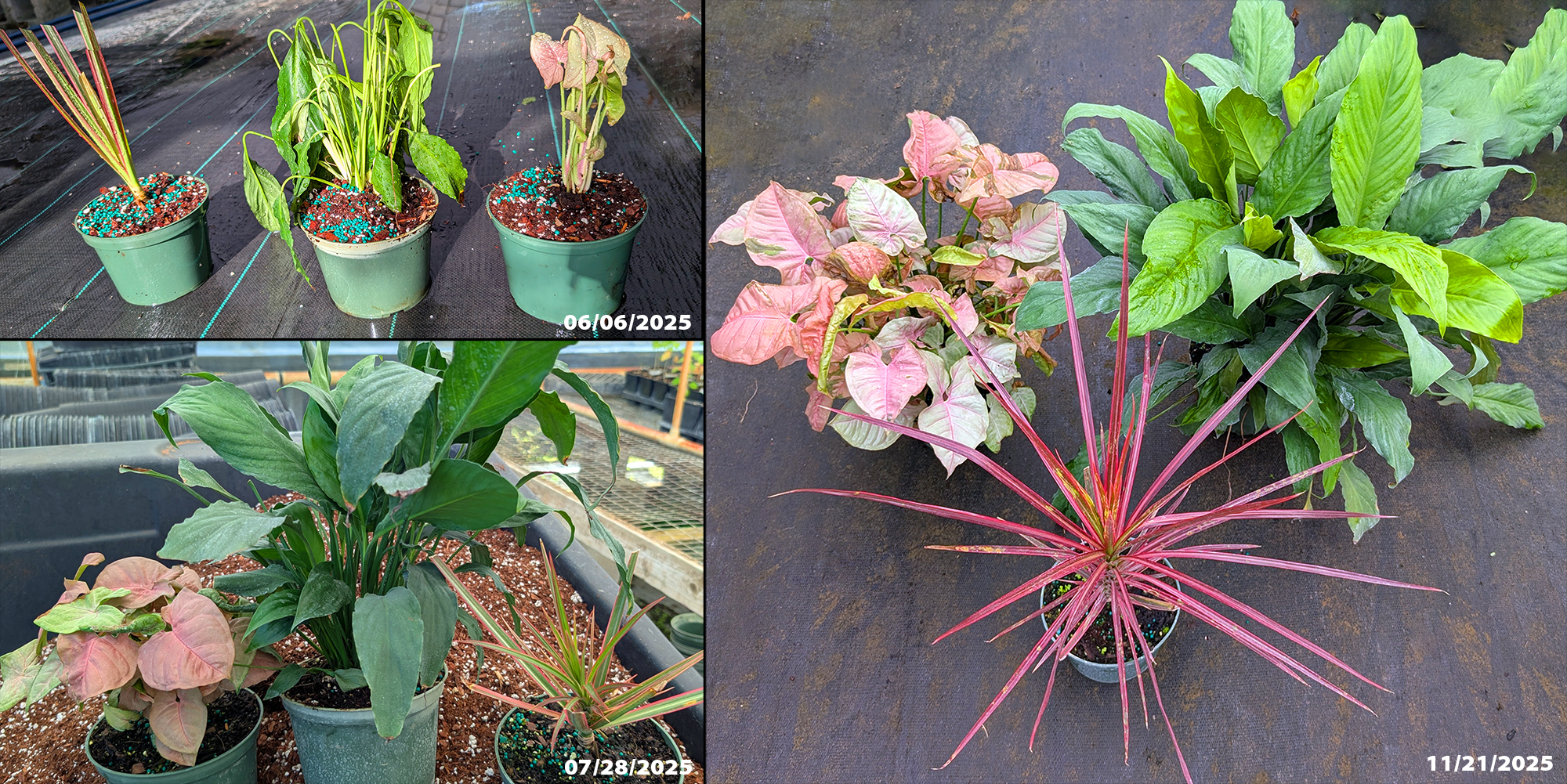
Green Magic recovery test with SUNSHINE Robusta support: Dracaena, Syngonium, and Spathiphyllum
revived from severe stress and growing vigorously.
☀️🌱 Sunshine Boosters: Complete Plant
Nutrition
Sunshine Boosters provide complete plant nutrition,
including Calcium and micronutrients that plants need for strong growth.
Because
nutrients are delivered in liquid form, plants can absorb them quickly and
respond almost immediately.
The Practical Problem
Liquid feeding works well, but it requires frequent application. In real
gardens, many growers simply do not have time to add liquid fertilizer with
every watering.
Green Magic: The Foundation
Green Magic solves this problem by providing steady
background nutrition through controlled-release fertilizer. It feeds plants
gradually, so they continue receiving nutrients even between liquid
feedings.
Why This Combination Works
Together, this system provides both complete nutrition and
steady feeding. Sunshine Boosters supply fast nutrients and
Calcium, while Green Magic maintains a stable nutrient supply between
feedings.
✍️ How to Feed Your Plants
📅 Step 1 – Start of the Growing Season
Apply Green Magic around the root zone every 6 months.
In ground:
Small Shrubs (1–3 feet): Use approximately 1/4
to 1/2 cup per plant
Established Trees: Use 1/2 lb to 1 lb of product per 1
inch of trunk diameter.
Small In-Ground Ornamentals: A common "spoon" rate is
roughly 1 teaspoon per gallon of estimated root volume (or per sq. ft. of
surface area).
Spread evenly around the dripline. Avoid piling the granules against
the base or trunk of the plant. For best results, lightly rake the granules
into the top 1–2 inches of soil.
Container plants:
Apply 1 tea spoon per 1 gal of soil (mix in with soil)
every 6 months during active growth period, or with every re-potting.
Water normally after application.
Adjustment for Temperature. Because Green Magic is
temperature-controlled, adjust your rate if your local climate is extreme:
Cooler Climates (<60°F average): Increase
the rate by 20% to ensure enough nutrients are released.
Hot Climates (> 80°F average): Decrease the rate
by 20% to prevent over-releasing as the heat speeds up the process.
☀️🌿 Step 2 – Active Growing Season
Apply Sunshine Boosters during the growing season.
Regular feeding (maintenance): Mix with tap water according to
the ratio on the label. For SUNSHINE Robusta use 25 ml (5 tsp)per
gallon
of water and spray leaves every 5-7
days during active growth.
Correction feeding ("medicine" dose): if plants show visible
nutrient deficiencies, combine SUNSHINE Robusta with SUNSHINE Superfood
and
spray every 5–7 days until new growth appears healthy. All SUNSHINE
Boosters
products are compatible and can be mixed with water in the same sprayer.
Best time to spray: early morning or evening when temperatures
are cooler and leaves can absorb nutrients efficiently.
Important: spray both the top and underside of leaves for
maximum absorption.
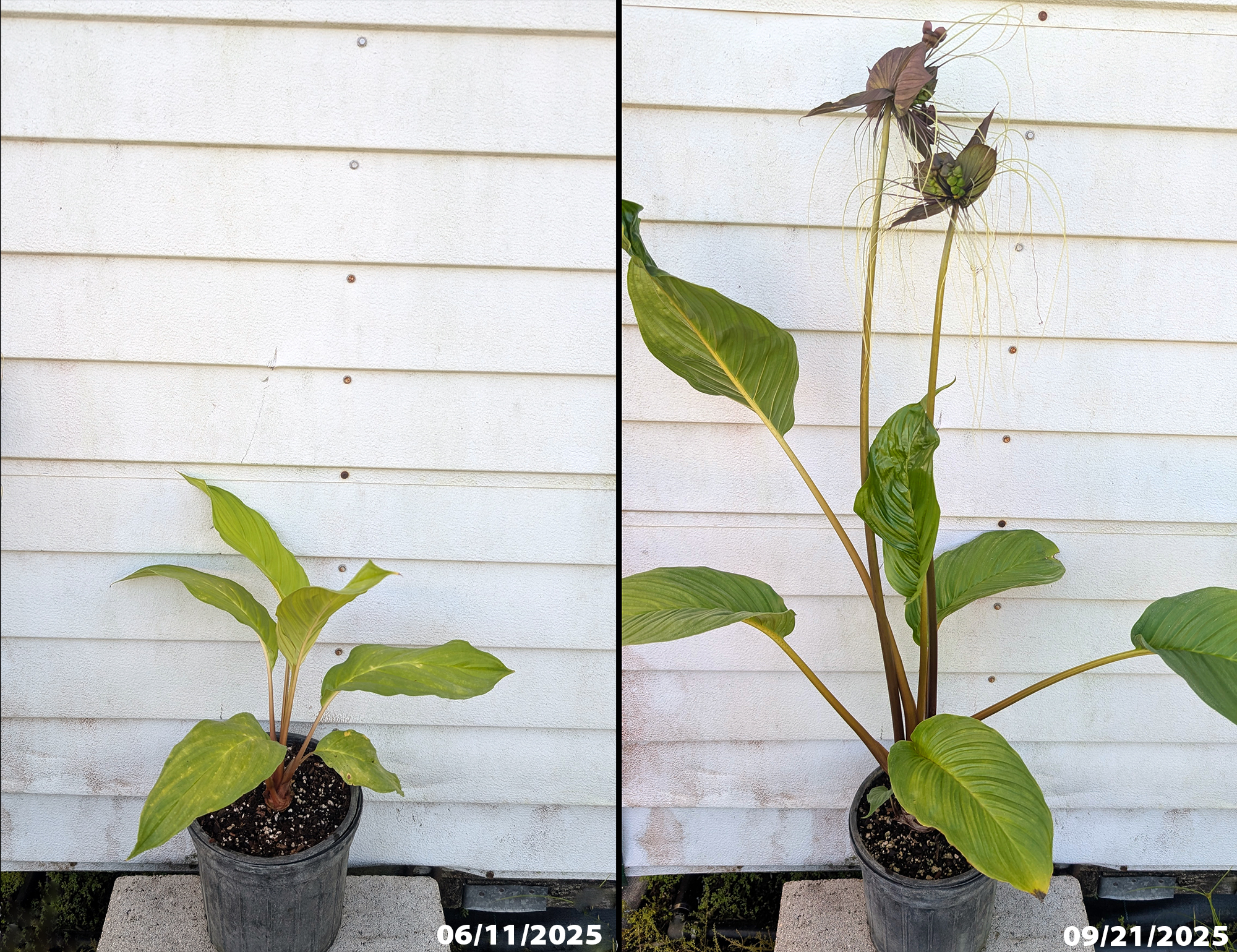
Tacca (bat flower) showing vigorous growth and producing flower buds in
the
same season after feeding with Green Magic.
Swipe left/right to see all data
↔️
📊 Seasonal feeding schedule with Green Magic and Sunshine Boosters.
Season
Product
Method
Goal
Spring (March)
Green Magic
Soil Surface
6-month steady nutrient base.
Growing Season
Sunshine Boosters
Foliar (Every 5-7 days)
Calcium & Bio-available growth power.
Late Summer
Green Magic
Soil Surface
Replenish foundation for Fall.
Winter
Sunshine Epi
Foliar/Drench
Cold tolerance and shipping recovery.
Quick Dose Reference
Green Magic: 1 teaspoon per 1 gallon of soil
volume.
Sunshine Boosters: 25 ml (5 tsp) per 1 gallon of
water.
Pro Tip: Always spray in the early morning or late
evening to prevent leaf scorch and ensure maximum absorption through the
stomata.
Why is the "Spring Fertilizer Rush" a problem?
Most gardeners apply a large amount of traditional fertilizer once in
March. This creates a "roller coaster" effect where plants get a sudden
spike of
nutrients followed by weeks of starvation. This leads to inconsistent growth
and potential "fertilizer burn."
What is "fertilizer burn"?
Traditional fertilizers are made of soluble salts. When too many salts
accumulate around the roots, they actually pull water out of the plant
tissues
(osmosis), dehydrating the plant and damaging sensitive root tips and leaf
edges.
Is there a difference between "Slow-Release" and
"Controlled-Release"?
Yes.
Slow-Release: Relies on natural factors like moisture
and soil microbes to break down. It is often unpredictable.
Controlled-Release: Uses engineered polymer membranes
(like Polyon) to release nutrients at a specific, predictable rate based
primarily on temperature.
Green Magic & Temperature
How does temperature affect my fertilizer?
Most fertilizers are lab-tested at 75°F. In hot climates
(90°F+), the nutrients release much faster. A "6-month" fertilizer
might only last 3
months in the summer heat.
How should I adjust Green Magic for my local weather?
Cooler Climates (<60°F): Increase the
application rate by 20%.
Hot Climates (> 80°F): Decrease the application
rate by 20% to prevent over-releasing.
The Calcium Gap
Why doesn't Green Magic contain Calcium?
Calcium salts are highly soluble and can destabilize the polymer coating
used in controlled-release granules. Therefore, most high-quality granules
leave Calcium out. You can provide Calcium by using SUNSHINE Boosters
Why is Calcium so important for new growth?
Calcium is the "bone" of the plant, building strong cell walls. Unlike
other nutrients, it is immobile—the plant cannot move it from old
leaves
to new ones. If you don't provide a constant supply, new leaves and fruit
will
emerge distorted or weak.
Advanced Science & Troubleshooting
What makes Sunshine Boosters "Bioavailable"?
Unlike most liquid fertilizers that use EDTA chelators, Sunshine Boosters
are amino-acid based. They use organic acids and glycine to escort minerals
into the plant, allowing it to incorporate nutrients into its proteins
almost
immediately.
Will these fertilizers affect the taste of my fruit?
No. Sunshine Boosters are made from pharmaceutical-grade components and
contain no urea or harmful salts, ensuring your harvest (like Mangoes or
Avocados) has a pure, natural flavor without a chemical aftertaste.
Avocado Plant Facts
Botanical name: Persea americana, Persea gratissima Also known as: Avocado, Alligator Pear, Aguacate, Abacate
USDA Zone: 9 - 11
Highligths
✨ Green Magic
- 15% Off This Week
Give Your Plants a Strong Start This Spring
Green Magic - 15% OFF.
Build the foundation for the entire growing season with a steady,
long-lasting nutrient base.
No coupon needed. The discount is automatically applied at
checkout.
Offer valid through 03/21/2026. Discount applies to Green
Magic products only. Not valid on previous purchases and cannot be combined
with other promotions or discounts. Offer subject to change without notice.
Sunshine: So Green Magic feeds the plant for months. Does
that mean I can forget about Sunshine Boosters?
Smokey: Not quite. Green Magic is the steady base diet.
Sunshine Boosters are the weekly power drink during active growth.
Sunshine: Ah. Like my regular meals and donuts on top.
Smokey: Exactly. Plants eat slowly from Green Magic, and
once a week they get a fresh boost.
Sunshine: Sprinkle once, then boosters every week. The
plant grows, I drink coffee, and nobody forgets anything important.
Dont Wait Years: 8 Fruit Plants You Can Harvest the Same Season
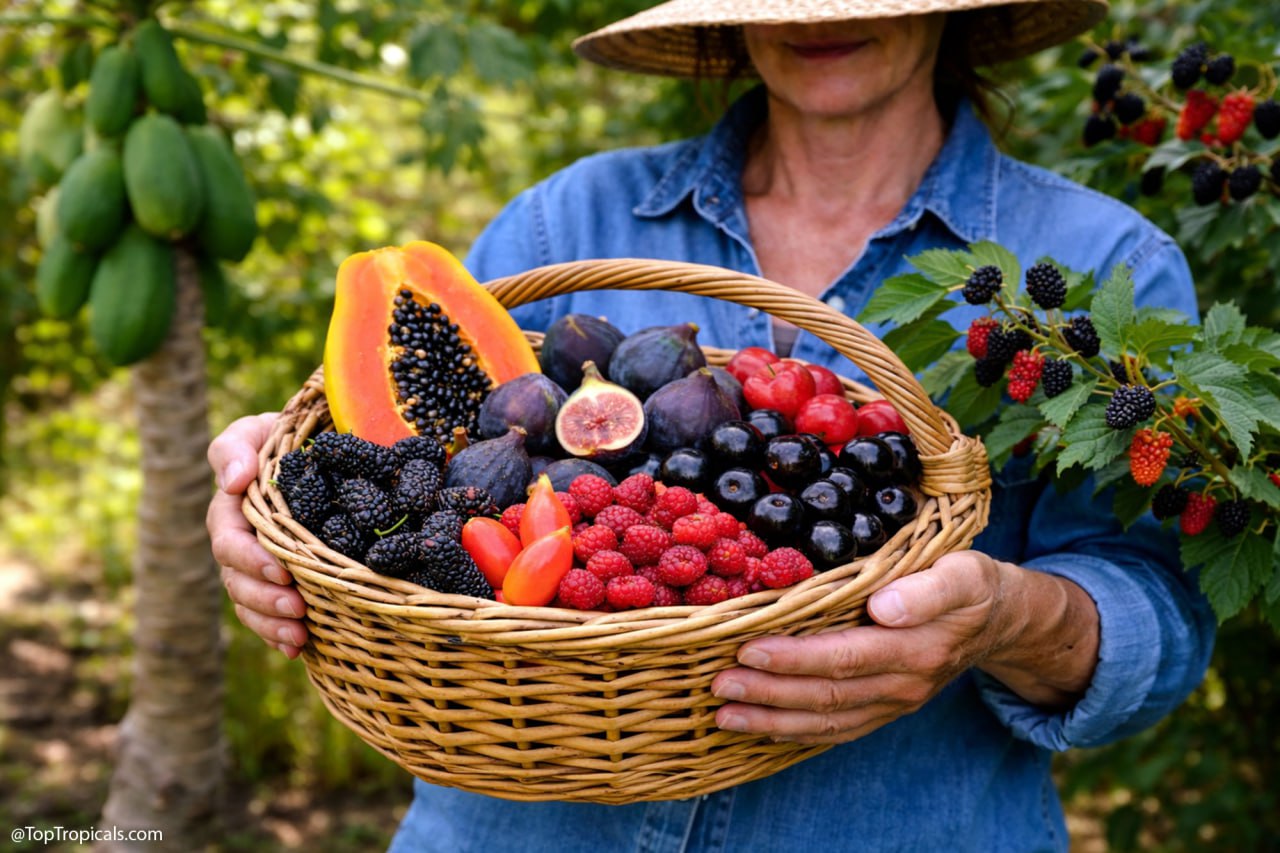
Don't wait years for fruit! Harvest papayas, berries, figs, and more in the very same season you plant them with these fast-growing varieties.
Don't Wait Years: 8 Fruit Plants You Can Harvest the Same Season 🍒
Growing fruit at home usually requires years of patience. Most gardeners view fruit trees as a long-term investment that may not pay off for a decade.
But you don't have to wait.
Certain tropical and subtropical plants are "fast-track" growers. In warm climates like Florida, choosing the right varieties means you can see flowers and fruit within months of planting - often in the very same season.
If you want a backyard harvest without the wait, here are the fastest-producing fruits you can plant today.
A compact shrub perfect for containers. It produces star-shaped flowers and dark purple fruit that tastes exactly like blackberry preserves. Established plants often fruit in their first season.
Blackberry Jam Fruit Plant Facts
Botanical name: Randia formosa, Mussaenda formosa, Randia mussaenda, Rosenbergiodendron formosum Also known as: Blackberry Jam Fruit, Jasmin de rosa
This fast-growing large shrub produces orange pulp with the uncanny flavor and texture of peanut butter. Expect flowers and bright red berries within months of planting in warm conditions.
The "giant herb" of the fruit world. Papayas are legendary for their speed, often flowering just months after planting and providing sweet, vitamin-rich fruit within the same year.
Papaya Plant Facts
Botanical name: Carica papaya Also known as: Papaya
The 'Lolita' cultivar is a game-changer. It grows quickly as an edible hedge and produces nearly black, resin-free fruit that is significantly sweeter than the common red varieties.
Surinam Cherry Plant Facts
Botanical name: Eugenia uniflora, Eugenia michelii Also known as: Surinam Cherry, Pitanga, Brazilian Cherry
Unlike traditional berries that require chill hours, these Rubus species thrive in the heat. Their vigorous canes grow rapidly, often fruiting the same season they hit the soil.
Holy Bramble Plant Facts
Botanical name: Rubus sanctus, Rubus ulmifolius subsp. sanctus Also known as: Holy Bramble, Burning Bush of the Bible
Mulberries are incredibly generous. Everbearing varieties produce sweet berries over an extended window and often begin fruiting the very first year they are planted.
Figs are the champions of container gardening. They are highly drought-tolerant and famous for setting honey-sweet fruit even at a very young age—often just months after being established.
Fig Tree Plant Facts
Botanical name: Ficus carica Also known as: Fig Tree, Brevo
Growing in containers?Fig trees are the drought-tolerant champions.
👉 Tips for Faster Results
• Start Large: Buy "nursery-established" plants rather than seeds. • Feed the Need: Use high-quality organic fertilizer to support rapid growth. • Sun is Fuel: Most of these varieties require at least 6-8 hours of direct sunlight to trigger flowering.
📷 Freshly picked tropical fruit bounty: don't wait years for fruit! Harvest papayas, berries, figs, and more in the very same season you plant them with these fast-growing varieties.