Garden Blog - Top Tropicals
Date: 9 Nov 2026
Three Tropical Pepper Plants You Can Grow and Eat
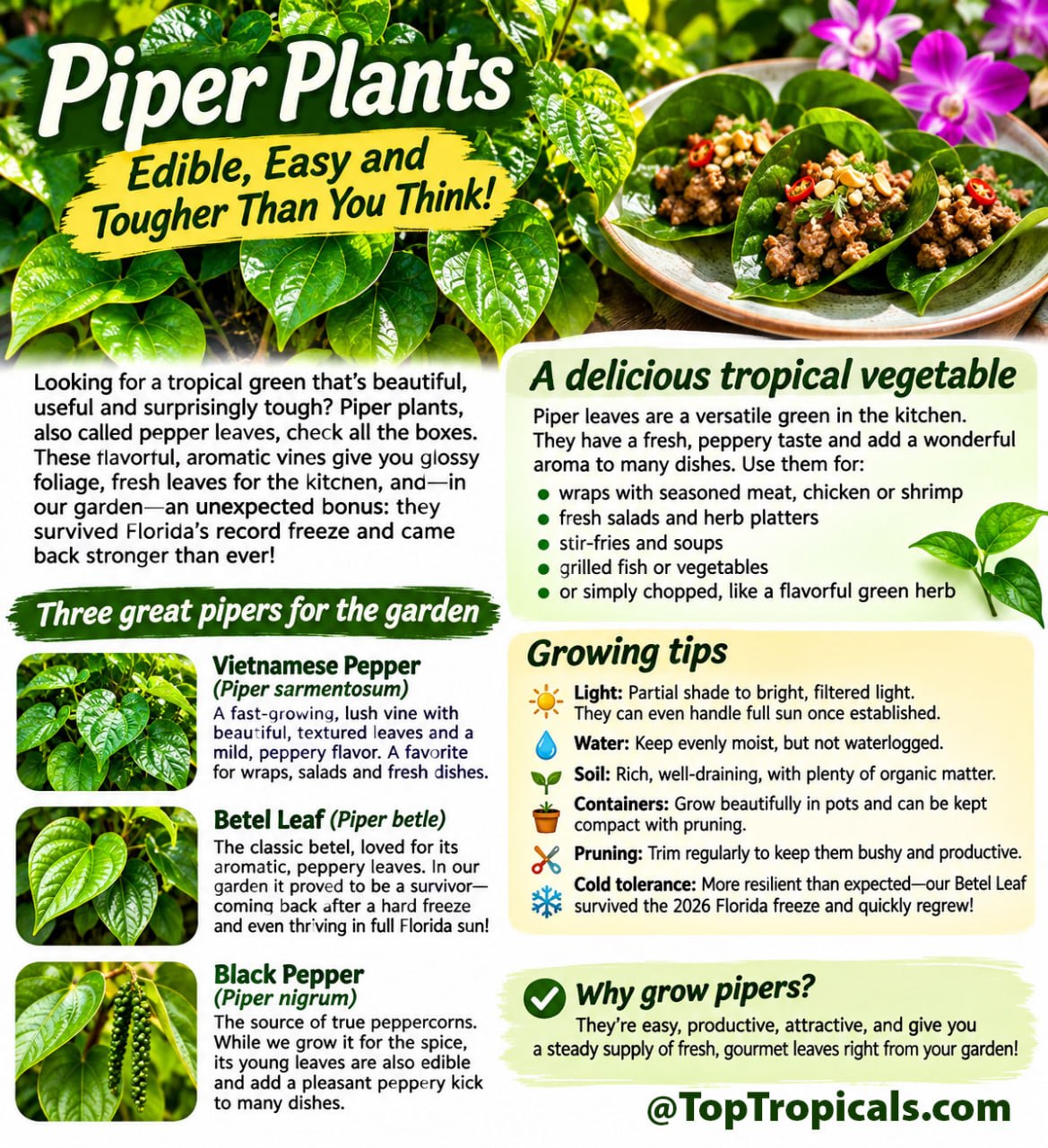
🍃 Three Tropical Pepper Plants You Can Grow and Eat
🛒 Grow Piper plants for tasty, peppery recipes
📚 Learn more:


• Piper sarmentosum in Plant Encyclopedia
• Grow Your Own Pepper Leaves: Three Tropical Vegetables Worth Discovering
#Food_Forest #Recipes #Container_Garden #How_to #Discover
🟢 Join 👉 TopTropicals
Date: 9 Nov 2026
Grow Your Own Pepper Leaves: Three Tropical Vegetables Worth Discovering
🍃 Grow Your Own Pepper Leaves: Three Tropical Vegetables Worth Discovering
Why buy exotic greens when you can pick them fresh from your garden? Pepper leaves are among the most useful edible plants we grow at Top Tropicals. They're beautiful, productive, easy to harvest, and bring wonderful flavors to everyday cooking.
Three favorites belong to the genus Piper, but each has its own personality.
🌿 Vietnamese Pepper – Piper sarmentosum
Also called Wild Betel or Lolot, this vigorous, low-growing plant produces beautiful, glossy, heart-shaped leaves.
The leaves have a distinctive peppery, aromatic flavor. They're especially delicious wrapped around seasoned meat and grilled, a popular Vietnamese preparation known as bò lá lốt.
It's an excellent edible groundcover for shady tropical gardens. It also grows beautifully in containers. Give it warmth, moisture, rich soil, and regular feeding for lush foliage.
🌿 Betel Leaf – Piper betle
Betel Leaf has glossy, heart-shaped leaves with a bold, spicy flavor, perfect for meat wraps and Asian dishes.
Normally a shade lover, our Betel Leaf gave us two surprises! It survived Florida's record February freeze without protection and regrew vigorously. Then we had to remove its shade tree that was damaged.
Now it's thriving in full Florida sun!
🌿 Black Pepper – Piper nigrum
Yes, the plant that produces ordinary black peppercorns also has edible leaves!
Unlike the other two, Black Pepper is a climbing vine. Give it a trellis, post, or tree for support.
Its young leaves can be used as an aromatic seasoning in cooked dishes, although peppercorns remain its main culinary attraction.
Grow it in warm, humid conditions with filtered sunlight and well-drained, organically rich soil.
🌿 Growing pepper leaves successfully
All three appreciate warmth, moisture, and fertile soil. A few simple rules help:
Light: Partial shade is the safest starting point. Established plants may tolerate more sun with sufficient moisture.
Water: Keep soil evenly moist, never constantly waterlogged.
Feeding: Regular light feeding encourages lush, flavorful foliage. Our Green Magic fertilizer produces beautiful, deep green growth.
Containers: All three grow in pots, although Piper nigrum needs climbing support.
Cold: Protect from frost, especially young plants. Our Betel Leaf's survival was an encouraging exception, not a guarantee.
Harvest: Pick healthy leaves regularly, leaving enough foliage for continued growth.
🌿 A vegetable that grows right outside your kitchen
Pepper leaves aren't just ornamental greenery. They're fresh, fragrant vegetables you can harvest whenever you need a handful.
Wrap them around meat, add them to cooked dishes, or experiment with traditional Asian recipes.
And unlike many vegetables that require constant replanting, these tropical perennials can provide repeated harvests for years in suitable climates.
💡Explore our Pepper Leaf recipes below, growing experiences, and individual plant guides.
🛒 Grow Piper plants for tasty, peppery recipes
📚 Learn more:
• Piper sarmentosum in Plant Encyclopedia
• 10-minute recipe Bo La Lot with a leaf you’ve never cooked before!
• 7 delicious ways to cook with Vietnamese Pepper - La Lot: Quick-n-Fun exotic recipes
• Lalot beef wraps: Quick-n-Fun exotic recipes
• Vietnamese Pepper - Lalot food wraps BBQ recipe
• Betel leaf bites: quick-n-fun exotic recipes
• Cooking with black pepper leaves
• How to grow your own Pepper plants. Five most valuable Pipers
• 9 tropical vegetables to grow indoors, or how to have garden-fresh produce all year
• How to to get Pepper leaves large and green
#Food_Forest #Recipes #Container_Garden #How_to #Discover
🟢 Join 👉 TopTropicals
Date: 8 Nov 2026
Why does Diamond tree Carob bloom on old wood?
No petals, no familiar blossoms - just mysterious reddish clusters growing from old branches. And a surprising connection to diamonds!
💎 A surprise in the garden
I noticed something unusual in the garden today. Strange reddish flower clusters were emerging directly from old woody branches. What on Earth was flowering like that?
At first, I couldn't recognize it. Then it hit me - our Carob Tree (Ceratonia siliqua) was finally blooming!
And what unusual flowers they are!
💎 Why does Carob flower on old wood?
Unlike most familiar flowering trees, Carob produces clusters of tiny, petal-free flowers directly on mature branches and sometimes even the trunk!
💡This unusual habit is called ramiflory (flowering on old branches) or cauliflory (flowering on the trunk) - and can bee seen also on trees like Jaboticaba, Mamey, Hug Plum, Cacao.
Instead of colorful petals, the flowers display prominent stamens or other reproductive structures, often in reddish, orange, or yellowish clusters. Some even have a strong, musky fragrance!
💎 Will these strange flowers become fruit?
Here's another surprise. Carob trees can be male, female, or hermaphroditic. Male flowers produce pollen, female flowers develop into pods after successful pollination, and hermaphroditic flowers contain both reproductive parts. So, not every flowering Carob Tree will produce fruit! If you're growing seedlings, their sex may remain a mystery until they bloom.
💎 From strange flowers to sweet chocolate!
The famous Carob pods eventually turn dark brown and become naturally sweet. Their dried pulp is ground into carob powder, a caffeine-free chocolate alternative!🍫
💎 Diamonds for seeds?
Ancient merchants used those hard seeds as reference weights for precious gemstones. That's where the word CARAT comes from!
Read our previous story: The tree that gave diamonds their "carats"
💎 An ancient survivor for modern gardens
Native to the Mediterranean, Carob is a beautiful, long-lived evergreen that loves sunshine and heat. Once established, it's remarkably drought tolerant and thrives in well-drained soil. Mature trees can handle brief light freezes, although young plants need protection.
Carob can live for centuries, providing shade, unusual flowers, and potentially sweet edible pods for generations.
👆 Grow a living piece of history!
An ancient Mediterranean treasure, now growing at Top Tropicals! Carob is an uncommon find in Florida nurseries, and we have only a few plants available. Get yours before they're gone! Bring home your own living piece of history.
🛒 Grow the tree behind diamonds
📚 Learn more:


• Ceratonia siliqua in Plant Encyclopedia
• The tree that gave diamonds their "carats"
#Food_Forest #Fun_facts #Discover #Trees
🟢 Join 👉 TopTropicals
Date: 8 Nov 2026
🛻 The Great Indoor Plant Migration
By Tatiana Anderson, Plant Expert, Top Tropicals

Sunshine: Don't worry. I've already decided what to save.
Smokey: Coffee, donuts and a refrigerator? Those aren't plants!
Sunshine: Neither is your laptop, but I don't see it freezing outside.

Every fall the forecast shows the first night in the low 40s, and suddenly the hibiscus, the annona, the young mango and twenty-seven other pots all seem to need to come inside. There are ten sunny windows. The family would still like to eat at the dining room table.
You probably can't protect all of them. Which plants are worth bringing inside, which can survive outdoors, and which would be easier to replace next spring?
🏡The Winter Triage: Who Gets Inside?
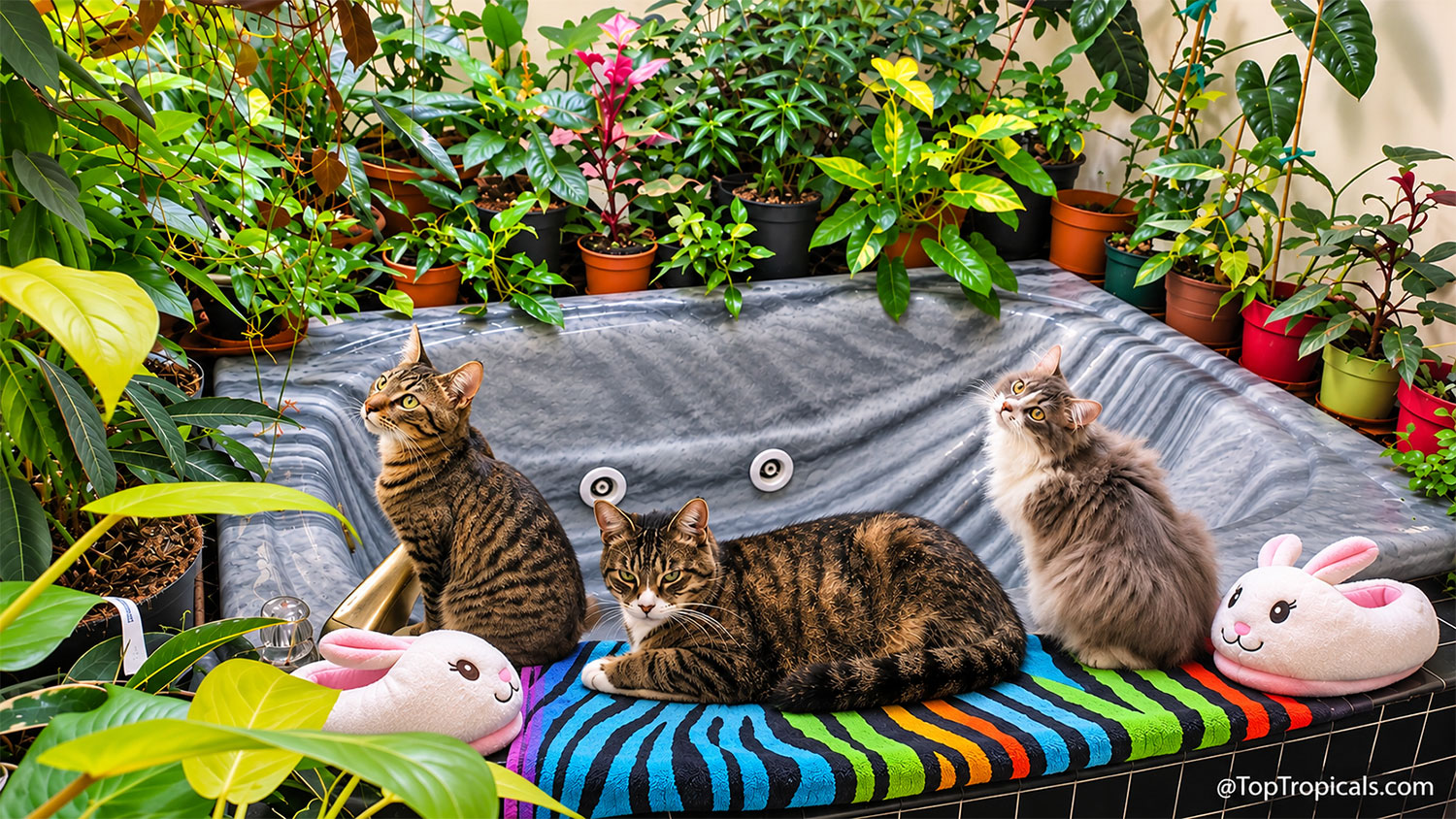
Sort your collection into four groups, ideally before the first cold front rather than during it. Where you live changes the sorting. In Florida, you're deciding what can stay outside. Farther north, you're deciding who gets the sunny windows.
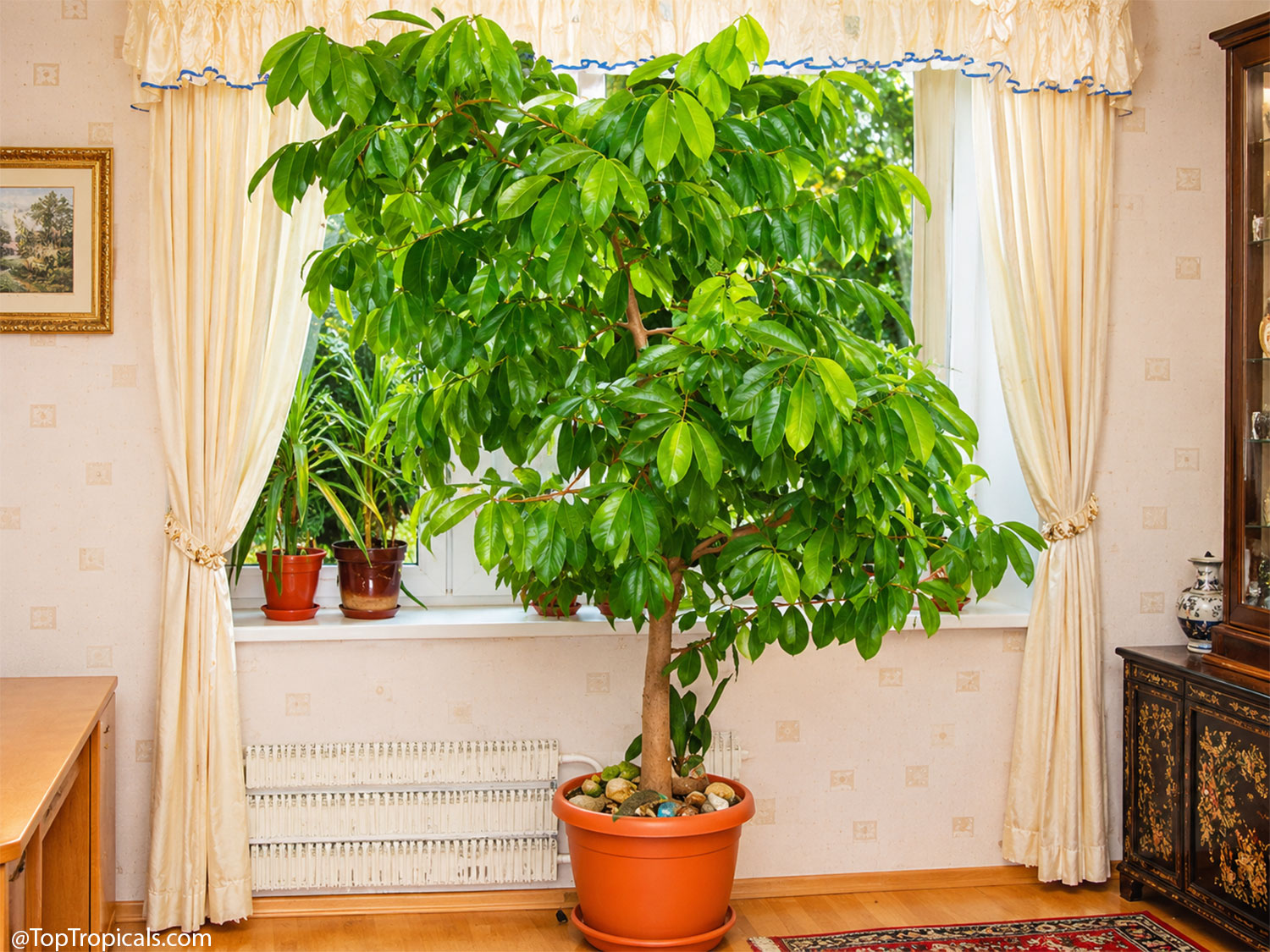
VIPs. These are plants that took years to get where they are, or that you can't easily buy again. A container jaboticaba that has finally started flowering on its trunk. A grafted mango or avocado that set its first fruit this year. Cacao, which shows chilling damage below about 50°F. A Brownea or another collector plant you waited a year to find. Most of these have no easy backup. Mango and avocado are difficult to root from cuttings, which is why nurseries graft them onto vigorous rootstock, and jaboticaba is slow no matter how it's grown. If a fruiting tree dies, replacing it means starting over with a young plant and waiting years. VIPs get the best window and the first spot in line.
Easy replacements. These are fast growers sold every spring as patio color: coleus, ornamental sweet potato vine, pentas, Persian shield, the $15 mandevilla basket from the porch. You can overwinter them, but most people get more for their money by enjoying them through fall and buying fresh plants when warm weather returns. If you love a particular coleus, take a cutting and let the big plant go.
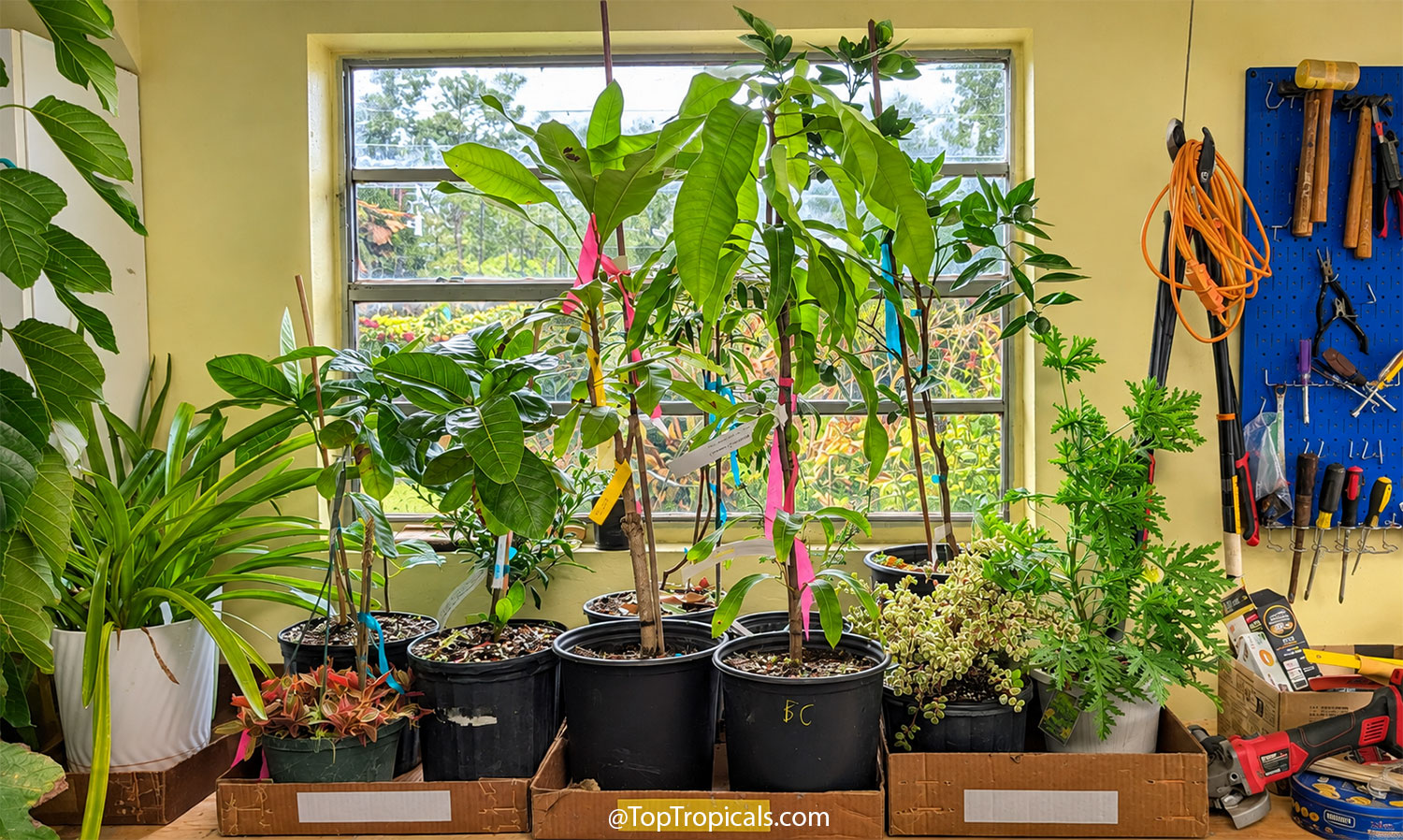
Tough customers. Whether a plant belongs here depends on your climate, the cultivar, whether it's established in the ground and how long the cold lasts. In zone 9, in-ground plants that have had a few years to settle in often get through a typical winter: loquat, pineapple guava (Feijoa), figs and Mexican-type avocados such as Mexicola and Lila. The same plants in containers are far more vulnerable, because their roots have no surrounding soil to buffer the cold. Firebush (Hamelia), yellow elder (Tecoma stans), hardy gingers and Musa basjoo may freeze to the ground and regrow from their surviving bases or underground rhizomes. A loquat tree can survive a night that kills its flowers and young fruit. In colder zones, check each species separately. Some need containers, while figs and Musa basjoo may survive outdoors with suitable winter protection. Figs and Musa basjoo can go dormant in a garage that stays near or above freezing. Evergreen plants like loquat still need bright light.
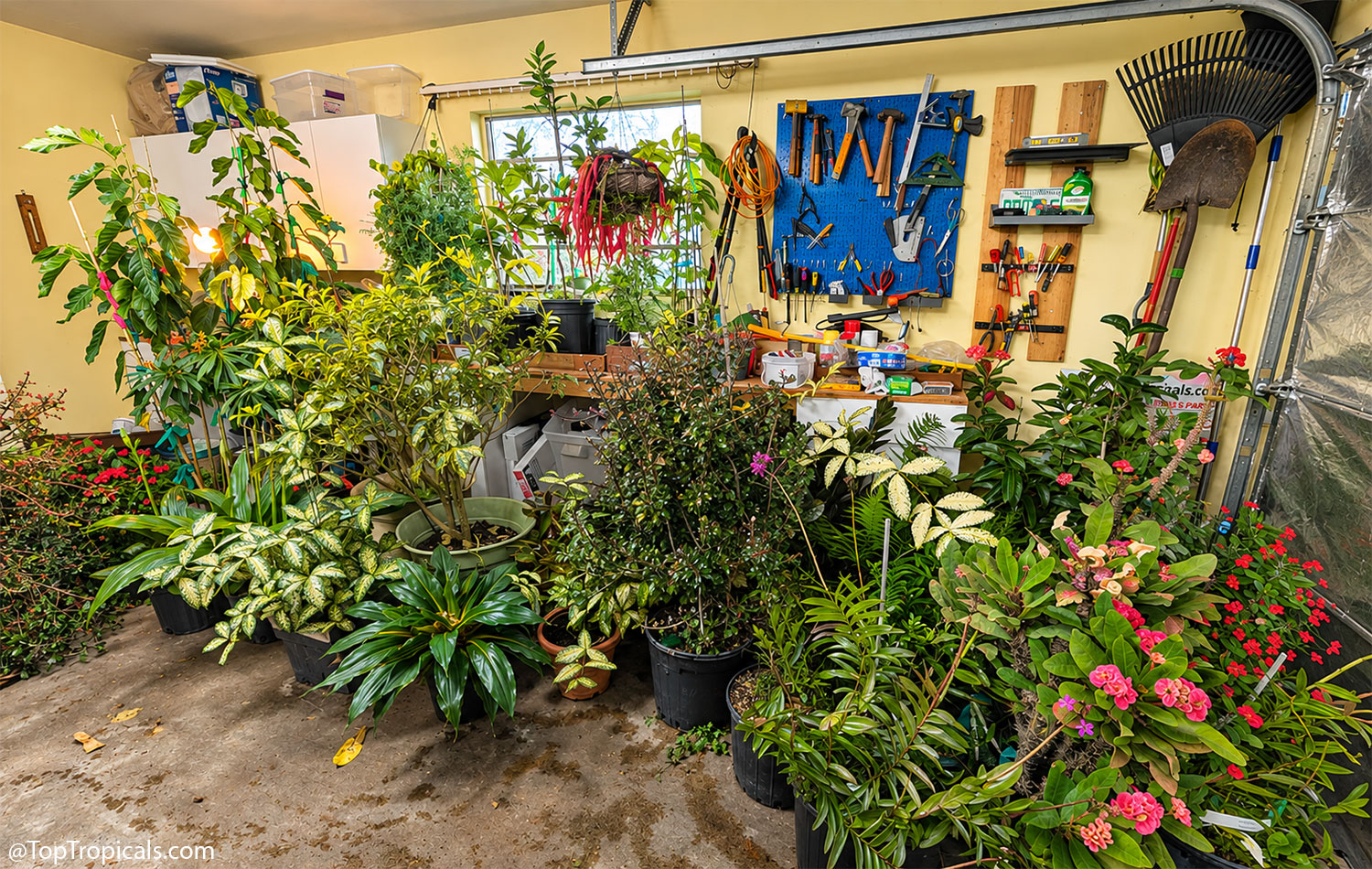
The undecided. These plants will probably survive outdoors but won't look good doing it. Hibiscus drops leaves near freezing, and its wood handles a light frost but not repeated hard freezes. Bougainvillea loses leaves and tips, then regrows from woody stems. Bananas like Cavendish can suffer severe leaf damage around freezing but often regrow from their underground rhizomes if those survive. Plumeria handles cool, dry weather, but cold plus wet soil rots it. For this group, it comes down to how much damage you're willing to look at until warm weather returns. Up north, the same plants are undecided for a different reason. They'll survive indoors, but in low light and dry heated air they often drop leaves and pick up spider mites.
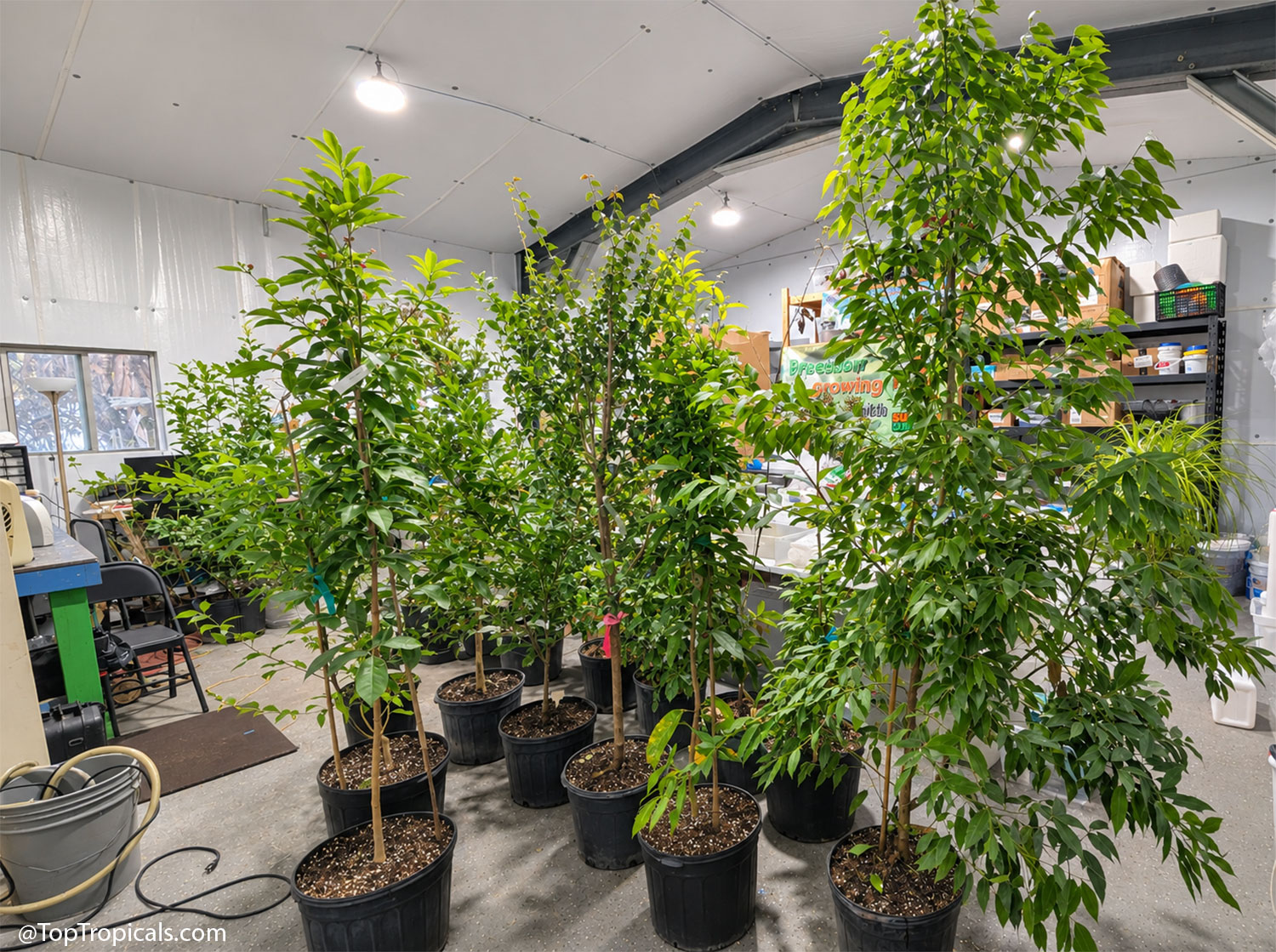
🔬 Save the Plant or Save the Genetics?
For many plants, a cutting is enough. A rooted cutting is the same variety as the parent in a much smaller pot.
Cuttings instead of moving enormous pots. A 5-foot hibiscus in a 20-gallon pot takes up a corner of a room. Three rooted cuttings fit on a windowsill and will eventually produce the same flowers. Hibiscus, Persian shield, coleus, acalypha, duranta and pentas usually root from 4- to 6-inch tip cuttings in a light, well-drained mix, given warmth and humidity. Mandevilla and croton can be done the same way but are slower and less predictable. Take cuttings while the parent is still healthy, before cold damage sets in.
Plants that can rest through winter. Some tropicals don't need light over winter if you let them go dormant, but they don't all want the same conditions:
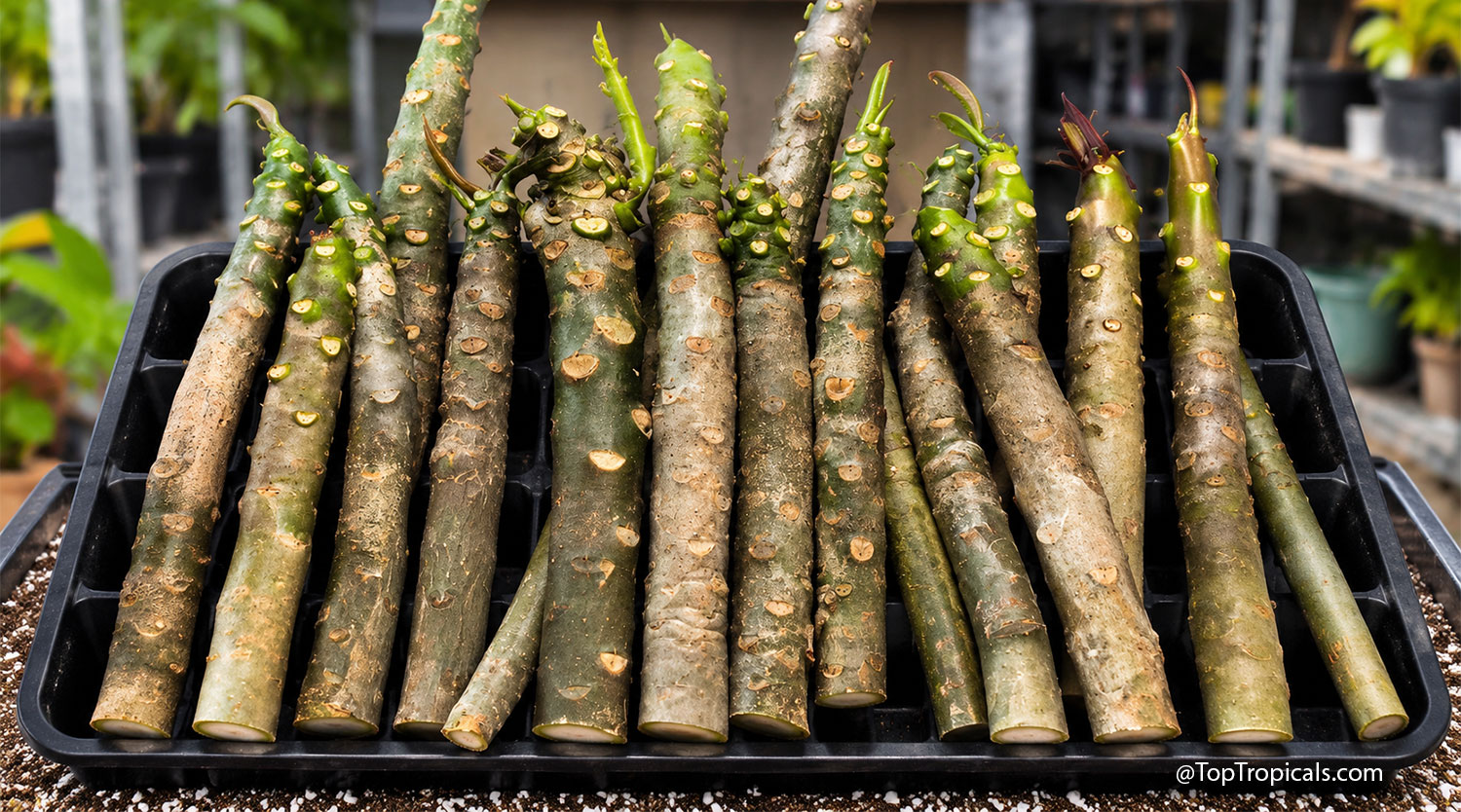
Dry and cool: Dormant plumeria cuttings or whole plants can be stored dry and without light in a garage or closet that stays above 40°F.
Cool and slightly moist: Brugmansia can be cut back and kept in a cool, frost-free location, with occasional watering to prevent the roots from drying out completely. Canna and ornamental ginger rhizomes store best in barely damp peat or vermiculite in a frost-free spot. If they dry out completely, they shrivel.
Dry and warm: Caladium tubers need warmth, ideally around 60°F or above. Colocasia (elephant ear) corms are commonly stored around 55°F to 60°F, although requirements vary by species and cultivar.
When propagation is easier than overwintering. If the plant roots easily, grows fast and blooms on new growth, a cutting is often the better plan. If it's slow, hard to root or valuable because of its age, it isn't. Make a note for next summer: air layering a large croton, fig or bougainvillea in July gives you a rooted backup well before cold weather.
💡 The Economics of Keeping a Tropical Plant Alive
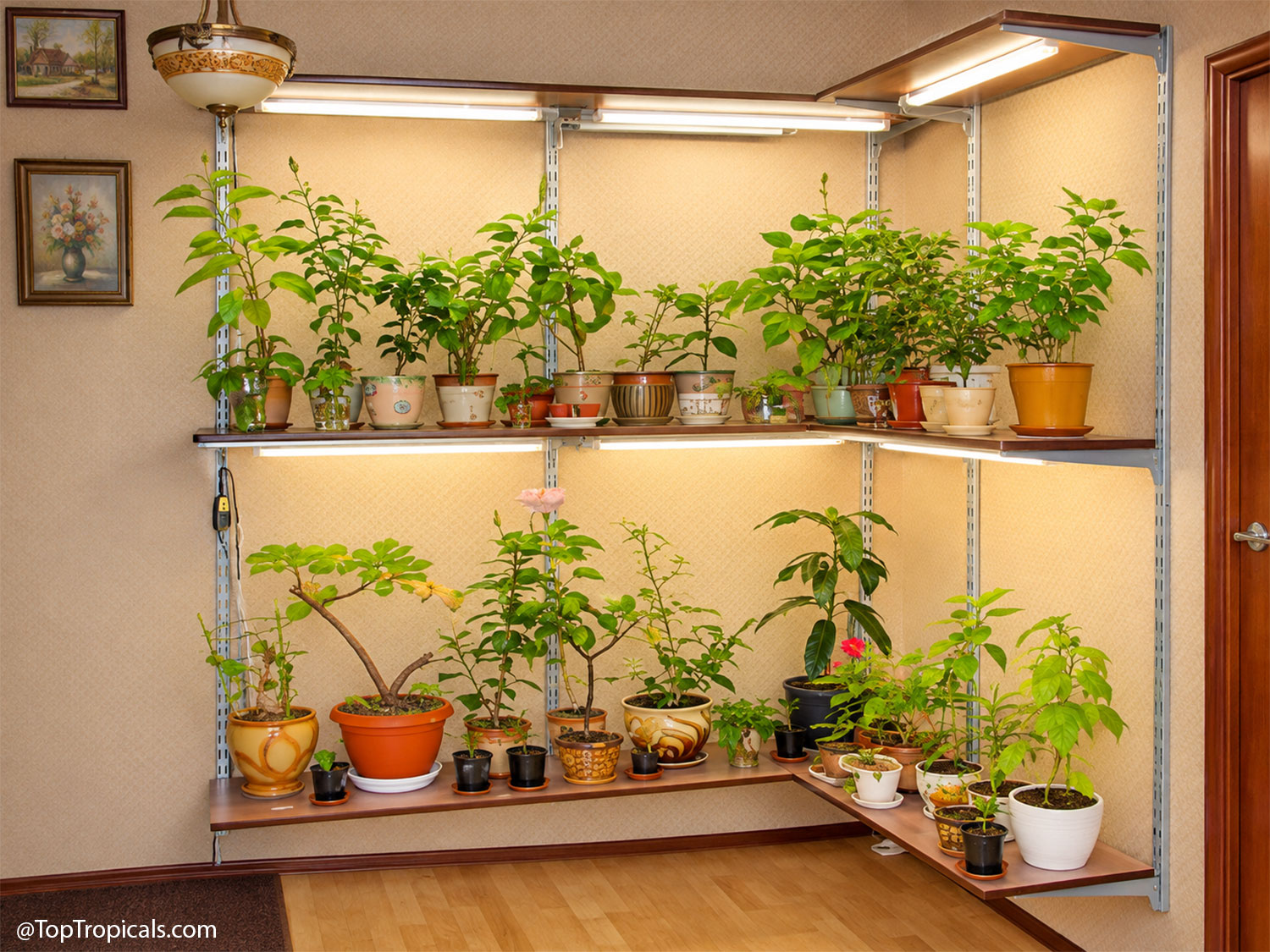
Grow lights are inexpensive to run. One small LED fixture on a timer costs a few dollars a month. A bright south-facing window helps, but a large fruit tree may still need more supplemental light than one small fixture provides.
Heating is the expensive part. A 1,500-watt electric heater running four hours per day uses about 180 kWh over 30 days. At 15 to 20 cents per kWh, that's roughly $27 to $36 a month for one heater, or well over $100 across a five-month winter.
So a $15 mandevilla doesn't justify a heated corner of the garage. A fruiting avocado is a different calculation. The tree may have cost $150, but it also represents four or five years of growth you can't buy back.
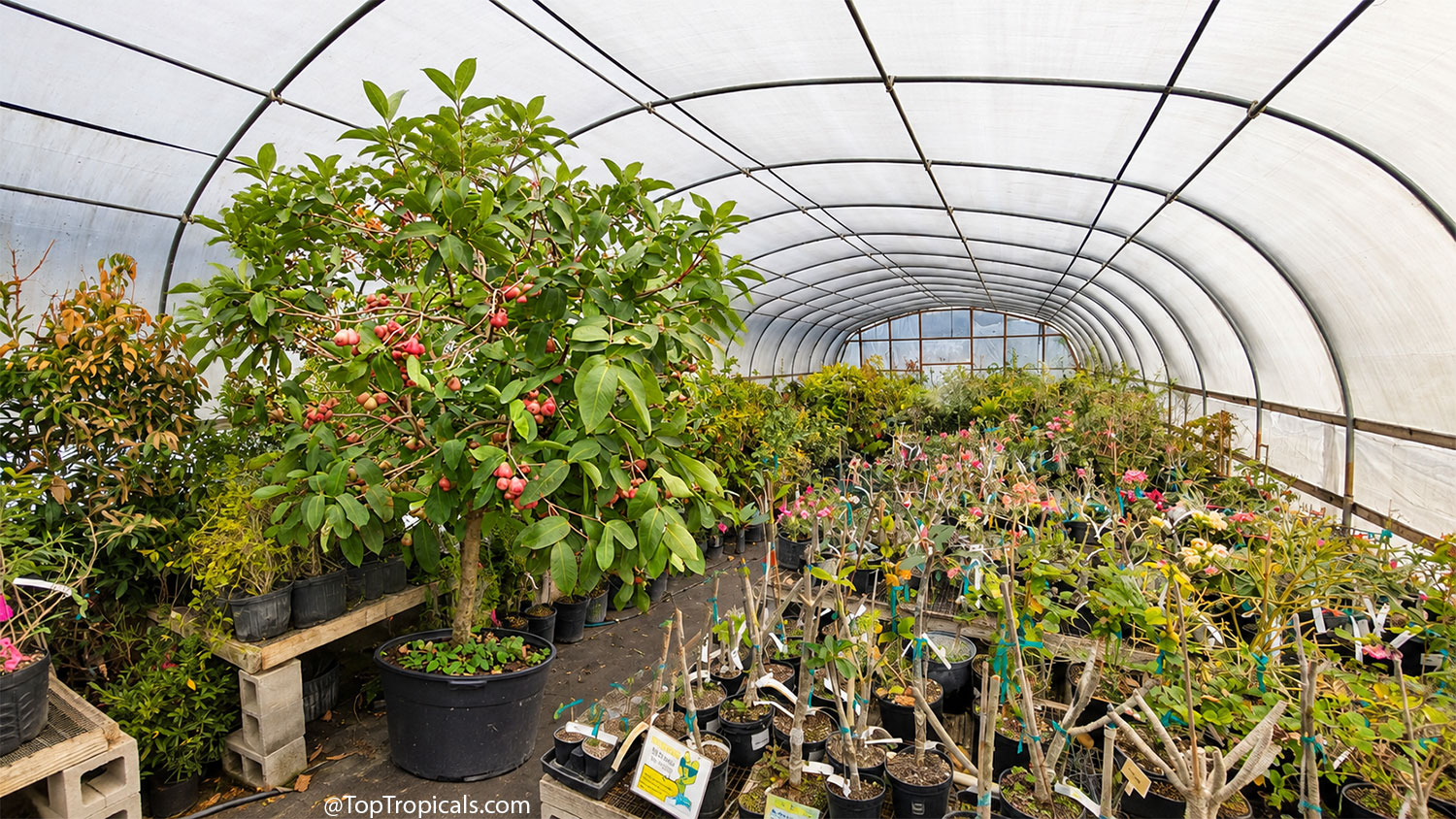
🎰 The Outdoor Gamble: How Much Risk Can You Accept?
A freeze can damage leaves, kill branches or destroy an entire plant. Grafted trees face another risk.
Leaves: usually survivable. An evergreen fruit tree without leaves can't photosynthesize until new foliage develops, which can delay flowering and fruiting.
Branches: a lost season of growth, and maybe of fruit.
The whole plant: dead trunk, crown or roots.
The variety: easy to overlook. If a young grafted mango or avocado freezes below the graft, it may come back strong in spring, but from the rootstock. You'll get a vigorous tree that isn't the one you bought. The graft union is often visible as a bulge or change in bark on the lower trunk. Its height varies.
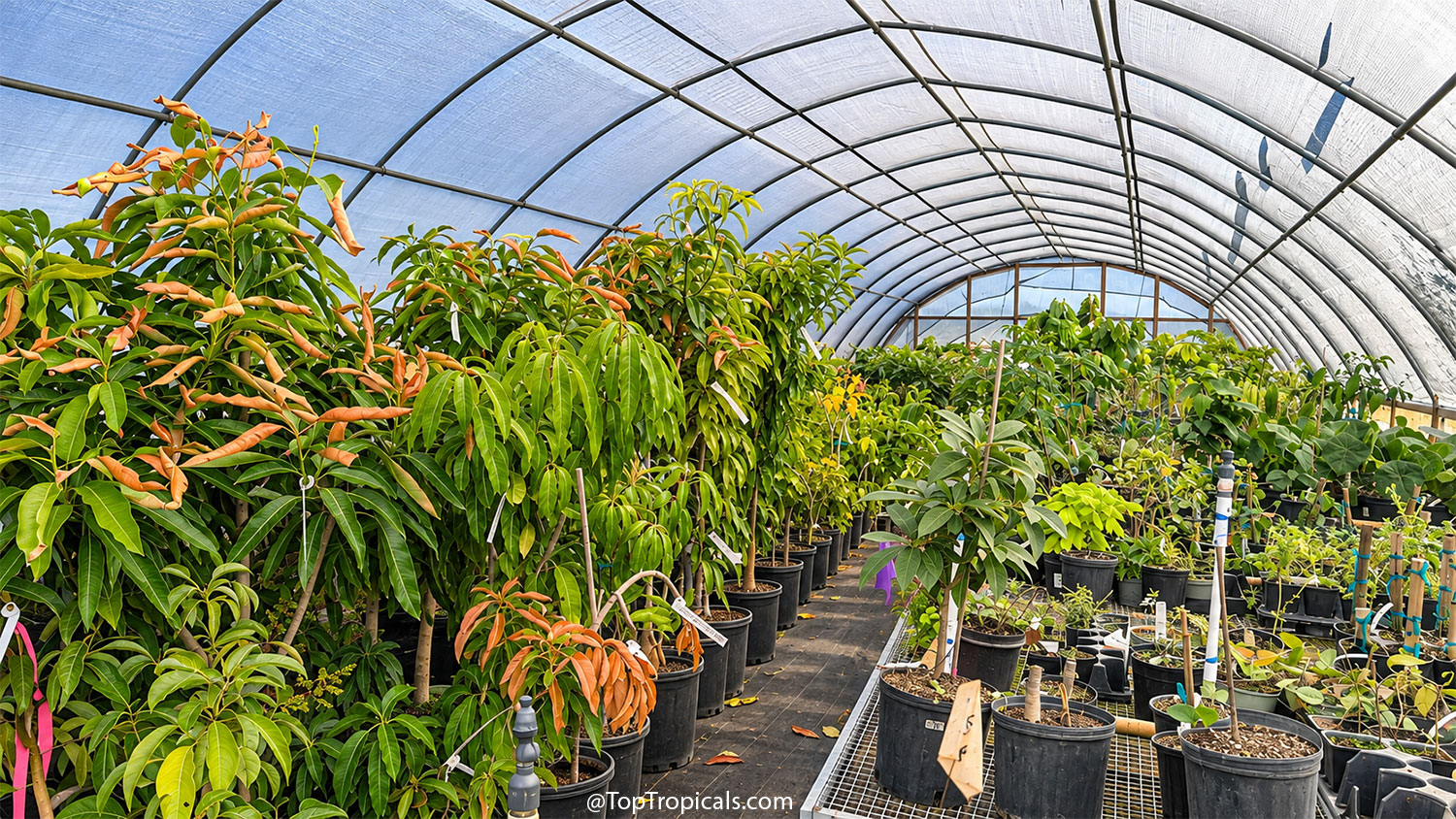
Two plants of the same kind, just 10 feet apart, can have very different winters. One sits against a south wall under a tree canopy; the other sits in a low spot where cold air settles.
For the specifics of covering plants and preparing for a freeze, see our winter-care guide.
❤️ The Emotional Problem: We Love Our Plants
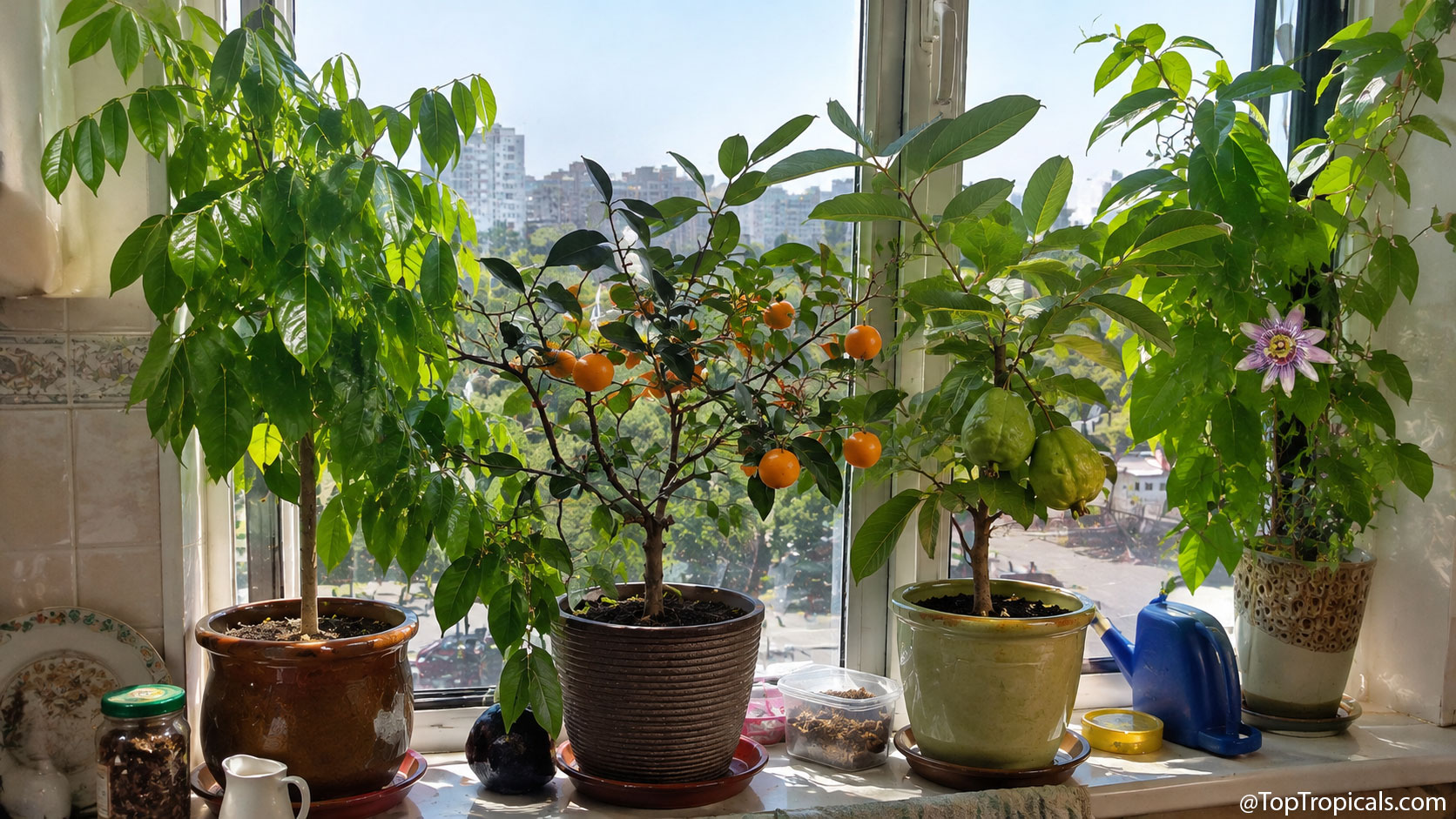
None of this logic helps much at 9 p.m. with a freeze warning on the phone. We'll compost a tomato vine in October without a second thought, then carry a 60-pound hibiscus up the stairs because it grew from a cutting a friend gave us.
Sentimental plants belong on the VIP list regardless of price. Just be honest about the rest. When someone has to step over a banana to reach the bathroom, the collection has started making decisions for the household.
By December, the kitchen counter is covered with cuttings. At least the family can still use the dining room table. And the empty spot left by the plant you let go is where next spring's new plant goes.
📚 Learn more:
- Bring the Jungle Inside, Winter Survival Guide:
- How to Prepare Your Tropical Garden for Winter
- Northern Gardeners: The Plants Come Inside
- Your tropical plants are moving indoors
- The Magic Number 65 (Part 2): When Tropicals Go to Sleep
🛒 SHOPPING LINKS:
Cold tolerant plants
Cold hardy avocado Potting Mix Sunshine Boosters Green Magic Fertilizer
Shop cold tolerant tropicals