Garden Blog - Top Tropicals
Date: 4 Aug 2026
The tree that gave diamonds their carats
💰 The tree that gave diamonds their "carats"
What do diamonds, chocolate, and one of the toughest fruit trees on Earth have in common?
They all lead back to the Carob Tree (Ceratonia siliqua).
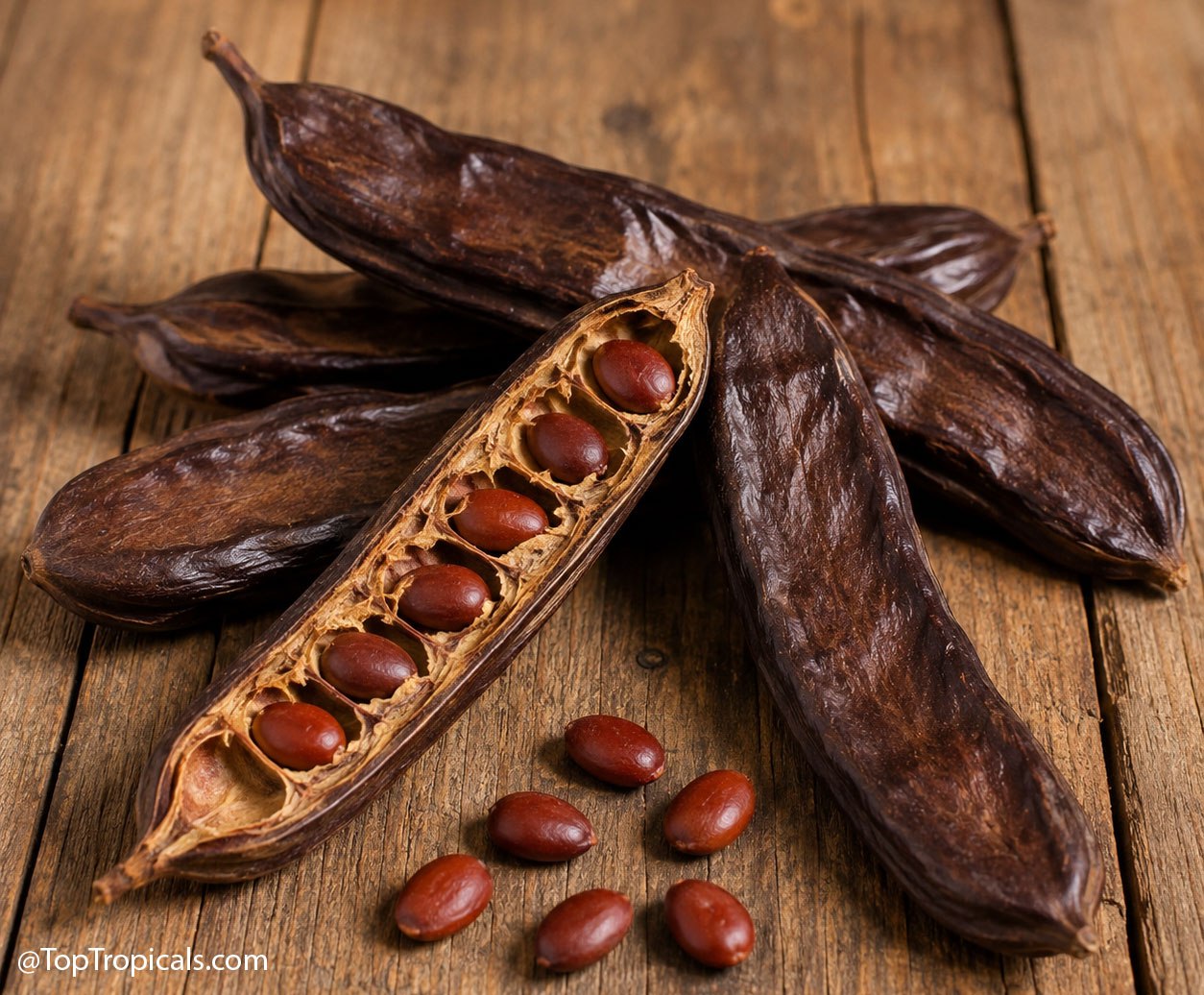
Long before jewelers had precision scales, merchants around the Mediterranean noticed something remarkable: carob seeds were almost identical in weight. They used them to weigh gold and gemstones, and the Greek keration became the Arabic qīrāṭ, eventually giving us the modern word carat - still used today for diamonds and other precious gems.
But carob is much more than a piece of history.
The original "carat" really did come from carob seeds
This is one of the rare plant stories that's actually true. Carob seeds are remarkably uniform in weight (around 0.2 g), so merchants throughout the Mediterranean and Middle East used them as reference weights for gems and gold. The Greek word keration ("little horn," referring to the pod) became the Arabic qīrāṭ, eventually giving us the modern word carat.
🍫 Before chocolate, there was Carob
Long before "healthy chocolate" became fashionable, roasted carob pods were eaten as candy and brewed into drinks. Carob powder naturally tastes sweet because the pods contain around 40-50% natural sugars, so unlike cocoa it usually requires little additional sugar.
☕️ Naturally caffeine-free
Unlike cocoa, coffee, or tea, carob contains no caffeine and virtually no theobromine, making it popular for children and people sensitive to stimulants.
🌳 An incredibly long-lived tree
A carob tree can remain productive for well over 100 years, with some Mediterranean specimens believed to be several centuries old. Mature trees become more productive with age.
💧 Built for drought
Carob is one of the toughest fruit trees of the Mediterranean climate. Once established, its deep root system allows it to survive long dry summers with very little irrigation, making it increasingly popular in water-conscious landscapes.
🌼 Flowers don't look like flowers
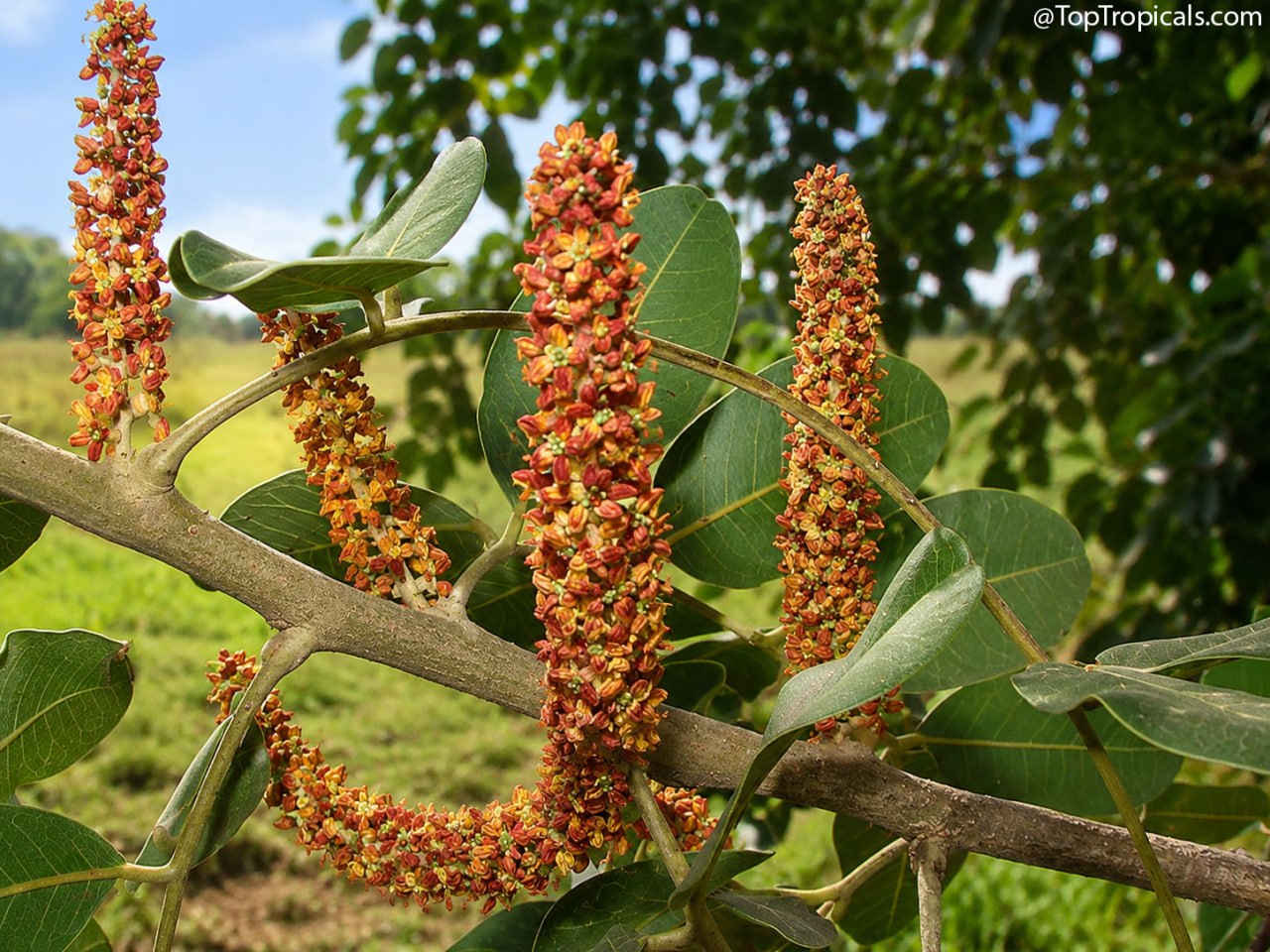
Unlike showy fruit trees, carob produces tiny reddish flowers without petals. They're highly fragrant - people describe the scent as musky.
🐝 Excellent bee plant
The flowers produce abundant nectar late in the season when many other trees have finished blooming, making carob valuable to honeybees.
🍯 Sweet without processing
Unlike most fruits, the pods are usually allowed to dry on the tree before harvest. At that point they're naturally sweet enough to eat out of hand or grind into powder.
🐪 A livestock favorite
For centuries throughout Spain, Portugal, Greece, Morocco, and the Middle East, carob pods were an important feed for horses, donkeys, goats, sheep, and camels because of their high sugar and energy content.
🍦 Locust bean gum and the ice cream industry
The seeds are even more valuable than they look. Their endosperm is processed into locust bean gum (E410), a natural thickener used in ice cream, yogurt, cream cheese, sauces, plant-based milks, and many other foods to improve texture and prevent ice crystals.
Many historians believe carob is the "locust" mentioned in the phrase "locusts and wild honey," leading to the common name St. John's Bread, although scholars still debate this interpretation.
Whether you're fascinated by ancient history, unusual edible plants, or simply want a beautiful, low-maintenance tree for the landscape, the Carob Tree is proof that some of the world's most useful plants have been quietly serving people for thousands of years.
🛒 Ready to grow a living piece of history? Plant the tree behind the "carat"
📚 Learn more:


Ceratonia siliqua in Plant Encyclopedia
Can we use chocolate as money?
Fruit of Money and Love
#Food_Forest #Fun_facts #Discover
🟢 Join 👉 TopTropicals