Garden Blog - Top Tropicals
Date: 2 Oct 2026
Your tropical plants are moving indoors
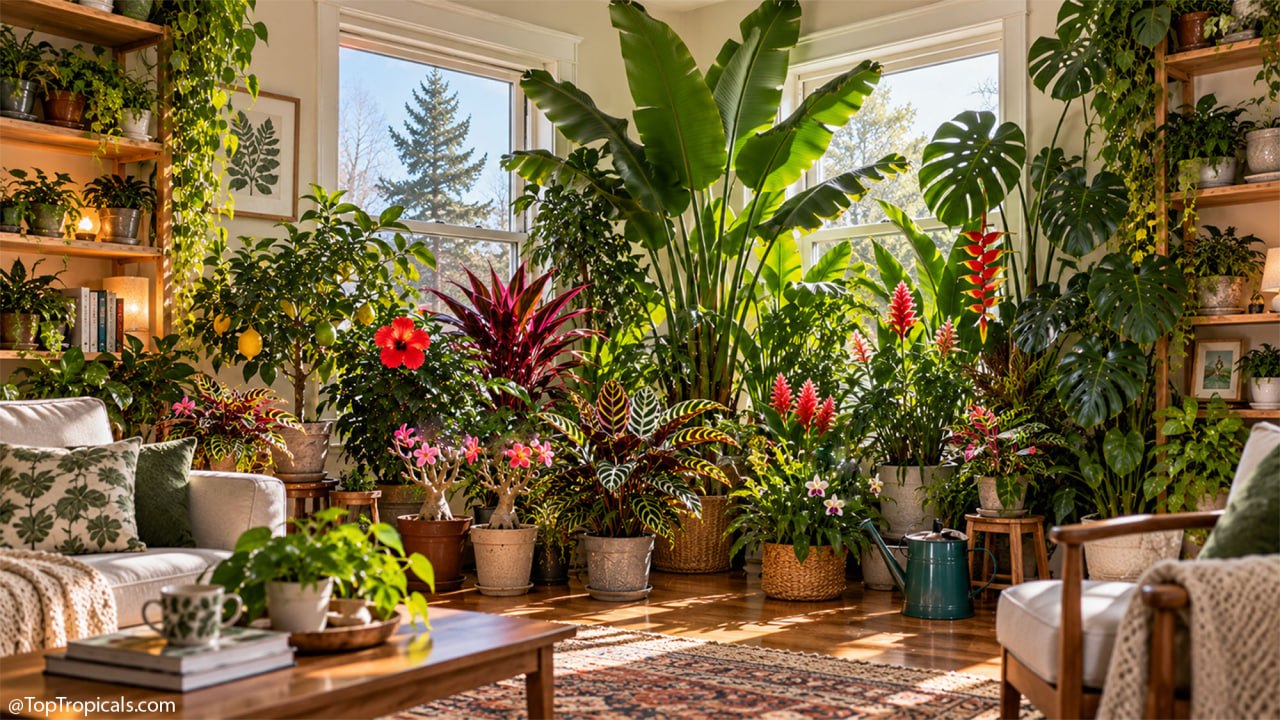
🏡 Your tropical plants are moving indoors. Are they ready?
💡 The biggest overwintering mistakes happen before plants ever come indoors. Here are 8 fall chores you shouldn't skip.
Every spring, we drag our tropical plants outside. They grow like crazy, flower, and sometimes produce fruit. By fall, that little hibiscus has become a monster, and the banana is outgrowing its pot.
Uh-oh! Where are we going to put them all?
Before hauling everything indoors, here are eight important jobs.
8 fall chores to save your tropical collection before the first frost.
🏡 1. Don't wait for frost
Many tropicals suffer long before freezing. Start moving sensitive plants when nights approach 50–55F. Calatheas may need to come inside earlier.
Remember, roots in containers cool much faster than roots in the ground!
🏡 2. Decide who gets the sunny window
Not every tropical needs the same winter accommodations.
• Sunshine lovers: Citrus, hibiscus, bananas and palms need bright windows or grow lights.
• Indoor naturals: Monsteras, philodendrons and calatheas adapt more easily.
• Winter sleepers: Desert roses may drop their leaves. Some bananas can be stored in a cool, frost-free location.
🏡 3. Don't bring the entire insect population indoors!
Outside, beneficial insects control pests. Inside, a few spider mites can become a major infestation.
Inspect leaves (especially underneath), stems and soil. Check pots for unwanted passengers. Shower foliage, treat pests outdoors and isolate newcomers for 3-4 weeks.
🏡 4. A little haircut, if needed
That gorgeous hibiscus might not fit through your front door!
Remove dead leaves, spent flowers and damaged branches. Lightly reshape oversized plants, but save major pruning for spring. Every healthy leaf is valuable during winter.
🏡 5. Clean the pots, leave the roots alone
Remove debris, wash containers and check drainage holes. Unless necessary, don't repot now. Disturbing roots before the low-light season adds stress.
🏡 6. Give them time to adjust
Gradually move sun-loving plants into shade 1–2 weeks before bringing them indoors. Some yellowing and leaf drop, especially on hibiscus and ficus, is normal.
🏡 7. Change your watering and fertilizing habits
A plant needing daily watering outdoors might need water only once a week or less indoors. Check the soil, not the calendar. Soggy roots are especially dangerous in winter!
Reduce fertilizing as growth slows and let dormant plants rest. Stop using dry granular fertilizers. Liquid amino acid-based fertilizers, like Sunshine Boosters, can be used year-round on actively growing plants. As watering decreases, fertilizer application should decrease too.
Keep tropicals away from heating vents and provide extra humidity when needed.
🏡 8. Set up your indoor jungle
Group plants by light requirements. Place tall specimens where they won't shade smaller ones. Use shelves, stands and hanging baskets.
Add grow lights where necessary, keep foliage away from cold windows and don't forget saucers. Your hardwood floors will thank you!
📅 Your fall countdown
• 3-4 weeks before: Choose plants, prepare space and lighting, inspect for pests.
• 2 weeks before: Begin shade acclimation, clean pots and treat infestations.
• Moving day: Check the forecast, inspect plants and arrange by light requirements.
• First month indoors: Isolate newcomers, watch for pests and adjust watering.
🏡 Let them take a winter vacation!
Some tropicals keep growing, others go dormant.
The goal? Healthy plants ready to explode with new growth next spring!
When warm weather returns, gradually reintroduce them to outdoor sunshine.
🛒 Shop Indoor plants
📚 Learn more:
• How to protect tropical plants in Winter
• How to overwinter tropical plants indoors
• 10 key tips for successful overwintering of tropical plants indoors
• How to take care of a mango tree in winter
🎥
#How_to #Discover
🟢 Join 👉 TopTropicals