Garden Blog - Top Tropicals
Date: 30 Sep 2026
6 Best-Tasting Mango Varieties

🥭 6 Best-Tasting Mango Varieties
Let's get one thing out of the way: mangoes are delicious. Choosing the "best-tasting" mango out of hundreds of varieties is highly subjective.
But some cultivars have flavors so distinctive that mango lovers talk about them again and again. These are five all-time favorites worth trying.
🥭 Sweet Tart
The name is surprisingly accurate. Sweet Tart combines intense sweetness with enough acidity to give the flavor a bright, almost candy-like punch. The flesh is rich, juicy and fiberless.
👌Flavor: intensely sweet, tangy, rich and complex.
🥭 Lemon Zest
This mango became famous for a reason. Along with rich mango sweetness, Lemon Zest has a distinctive citrus character that really can remind you of lemon candy.
👌Flavor: sweet, citrusy, aromatic and intensely flavored.
🥭 Coconut Cream
One of the most unusual mango flavor profiles. Coconut Cream has rich, creamy flesh with a noticeable coconut-like character. It's a mango, but your taste buds may argue otherwise.
👌Flavor: rich, creamy, sweet, with coconut notes.
💡 The flavor is incredible - but the tree itself is another story.
Coconut Cream has a crazy, sprawling growth habit and can turn into a landscaping nightmare if you let it do whatever it wants. Keep an eye on it and prune regularly to maintain a manageable shape. A little extra work, perhaps, but when it comes to taste, this one can beat just about everybody.
🥭 Carrie
Carrie is an old favorite that still holds its own against much newer cultivars. The soft, fiberless flesh has a powerful aroma and deep, classic mango flavor. Some people absolutely adore it.
👌Flavor: rich, aromatic, resinous and intensely "mango."
🥭 Orange Sherbet
Here's another mango with a name that gives away the experience. Orange Sherbet is intensely sweet and citrusy, with orange-like notes and smooth flesh.
👌Flavor: very sweet, orange-citrus, rich and aromatic.
🥭 Pineapple Pleasure
This one lives up to the name. Pineapple Pleasure is intensely sweet and tropical, with a noticeable pineapple-like flavor mixed into the mango richness. There is a bright, slightly tangy edge that keeps all that sweetness from becoming too heavy. If you like mangoes with a strong personality rather than just plain sugar-sweet fruit, this is a fun one.
👌 Flavor: very sweet, rich and tropical, with bright pineapple notes and a touch of tang.
✅ So which mango tastes best?
That's the dangerous question!
✓ Choose Sweet Tart for a sweet-and-tangy punch.
✓ Try Lemon Zest for lemony citrus notes.
✓ Choose Coconut Cream if you want something completely different.
✓ Pick Pineapple Pleasure for a sweet tropical punch with pineapple notes.
✓ Try Carrie for deep, old-fashioned mango flavor.
✓ And pick Orange Sherbet if sweet orange-citrus sounds irresistible.
These aren't the only great-tasting mangoes. Not even close.
With hundreds of cultivars in the mango world, we're simply picking a few standout varieties with distinctive flavors and long-standing reputations among mango enthusiasts.
The real solution? Plant more than one and conduct your own taste test.
🛒 Shop our best-tasting mango varieties
📚 Learn more:
Mango Tree - Mangifera indica - in Plant Encyclopedia
6 Best Thai and Southeast Asian Mango Varieties
5 Best Indian Mango Varieties and Their Flavors
5 Best Dwarf Mango Trees for Small Yards
5 Best Mango Trees for Beginners
Top 10 Dwarf "Condo" Mango, great for container culture
Top 5 recommended vigorous Mango tree varieties, reliable producers
Top 5 Favorite Mango we just love
10 steps how to grow a mango tree
#Mango_Rainbow - varieties you should try
#Food_Forest #How_to #Discover #Mango


Date: 29 Sep 2026
Daily Cat Lesson: How to Make the Litter Box Smell Like Roses
🐾 Daily Cat Lesson: How to Make the Litter Box Smell Like Roses
Well - preferably it should smell like nothing at all. Cats generally prefer clean, unscented litter, and strong perfumes may actually make a box less appealing.
- 🐾 Which litter is best?
For most cats, a fine-textured, unscented clumping litter is a good starting point. But cats have preferences - if yours refuses a particular litter, listen to the customer. - 🐾 How many boxes for multiple cats?
The standard recommendation is one box per cat, plus one extra, ideally distributed in different locations so one cat can't guard access to all of them. With a very large cat family, automatic and high-capacity systems can make the workload much more practical, but cleanliness and easy access still matter. - 🐾 The best odor control is removing the source.
Scoop clumping litter at least daily - more often with multiple cats - and periodically wash the box with mild detergent. Don't try to cover dirty-litter odor with heavy fragrance. - 🐾 Suddenly stopped using the litter box?
Don't automatically blame bad behavior. Urinary problems, constipation, pain, stress, a dirty box or another cat blocking access can all cause litter-box avoidance. - 🐾 What works for our 12+ indoor-cat community
- ✦ PetSafe Simply Clean Self-Cleaning Litter Box - Our old favorite. The entire litter bowl slowly rotates, moving clumps onto a conveyor and into a waste bin. No daily scooping. Our model appears discontinued, too sad: it was a budget under $200 system; but similar rotating/automatic systems are available such as Premier Pet Auto-Clean Litter Box.
- ✦ Pet Zone Smart Scoop Litter Box - Good for several cats. It automatically rakes clumping litter into a covered waste compartment. In our setup, we can usually go 2–3 days before emptying the bin.
- ✦ Tidy Cats Breeze Litter Box System - Very different approach: large pellets on top, urine passes through to a hidden absorbent pad underneath (pull-out tray). No sandy litter tracks around the house and excellent odor control. For one cat, you typically get 3-7 days from a pad; with multiple cats, it needs attention more often.
- ✦ Arm & Hammer Unscented Litter Deodorizer - Simple extra weapon against cat bathroom odor. Smells like candy.
🌹 The secret to making a litter box smell like roses? Don't. Make it smell like nothing.
🐈📸 Top Tropicals rescued cat Bob enjoying his private time with Tidy Cats Breeze System at PeopleCats.Garden.
🐈 Stay with us for your Daily Dose of Cat! #DailyCatLesson #PeopleCats
🟢 Join 👉 TopTropicals
Date: 29 Sep 2026
Tamarind coconut curry:

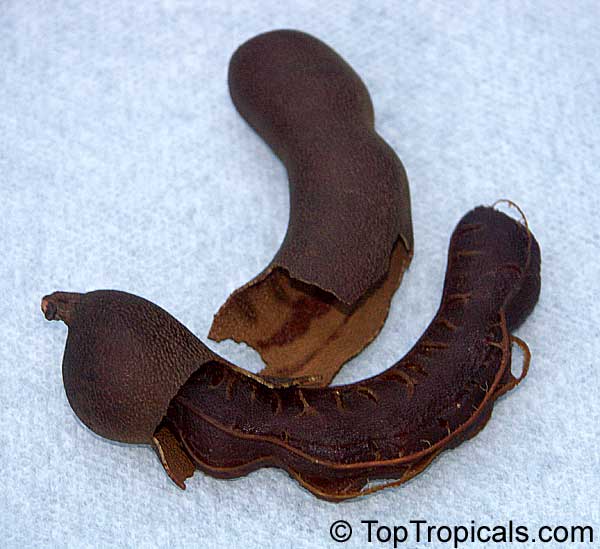
🍴 Tamarind coconut curry: quick-n-fun exotic recipes
🟡Stir tamarind into coconut milk with curry paste.
🟡Simmer 5 minutes and pour over vegetables or fish.
🟡Creamy with a bright edge.
🌿 About the plant:
Tamarind and coconut are a classic Southeast Asian pairing - sour meets creamy. The balance is what makes the sauce addictive.
🏡 In the garden:
In ideal tropical climates, Tamarind (Tamarindus indica) becomes a majestic shade tree. In cooler regions it can be grown in large containers while young.
🛒 Plant a Tamarind tree in your garden
📚 Learn more:


Tamarindus indica in Plant Encyclopedia
Tamarind Agua Fresca: quick-n-fun exotic recipes
Tamarind mango chutney: quick-n-fun exotic recipes
Tamarind shrimp stir-fry: quick-n-fun exotic recipes
Tamarind date dipping sauce: quick-n-fun exotic recipes
Top 10 fruit you'll ever need for your health benefits: #7 Tamarind
How to use Tamarind in cooking
#Food_Forest #Recipes
🟢 Join 👉 TopTropicals
Date: 29 Sep 2026
🌸 New Thai Adeniums: Same Plant, Totally Different Animal
By Tatiana Anderson, Plant Expert, Top Tropicals

Smokey: You said that three plants ago. You already have a wagon full.
Sunshine: Yes, but look at this one. It's beautiful.
Smokey: That is how we got the wagon full.

So, What Arrived This Time?
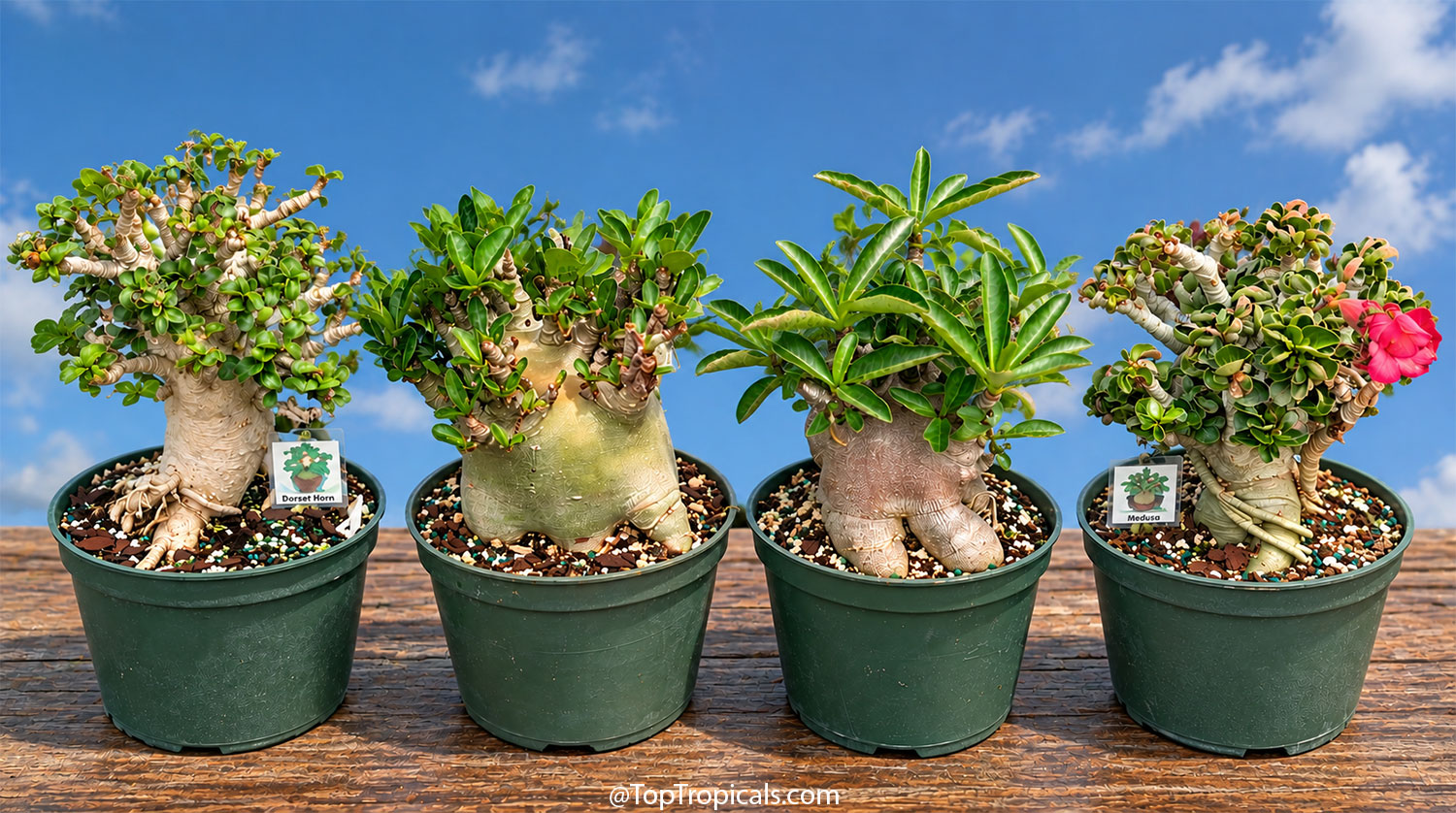
A new shipment of grafted Desert Roses came into the nursery this week.
Yes, plenty of gorgeous flowers - but this time we also have some seriously
weird Adeniums. Fat, twisted, curly, crested - plants you want even when
they're not blooming.
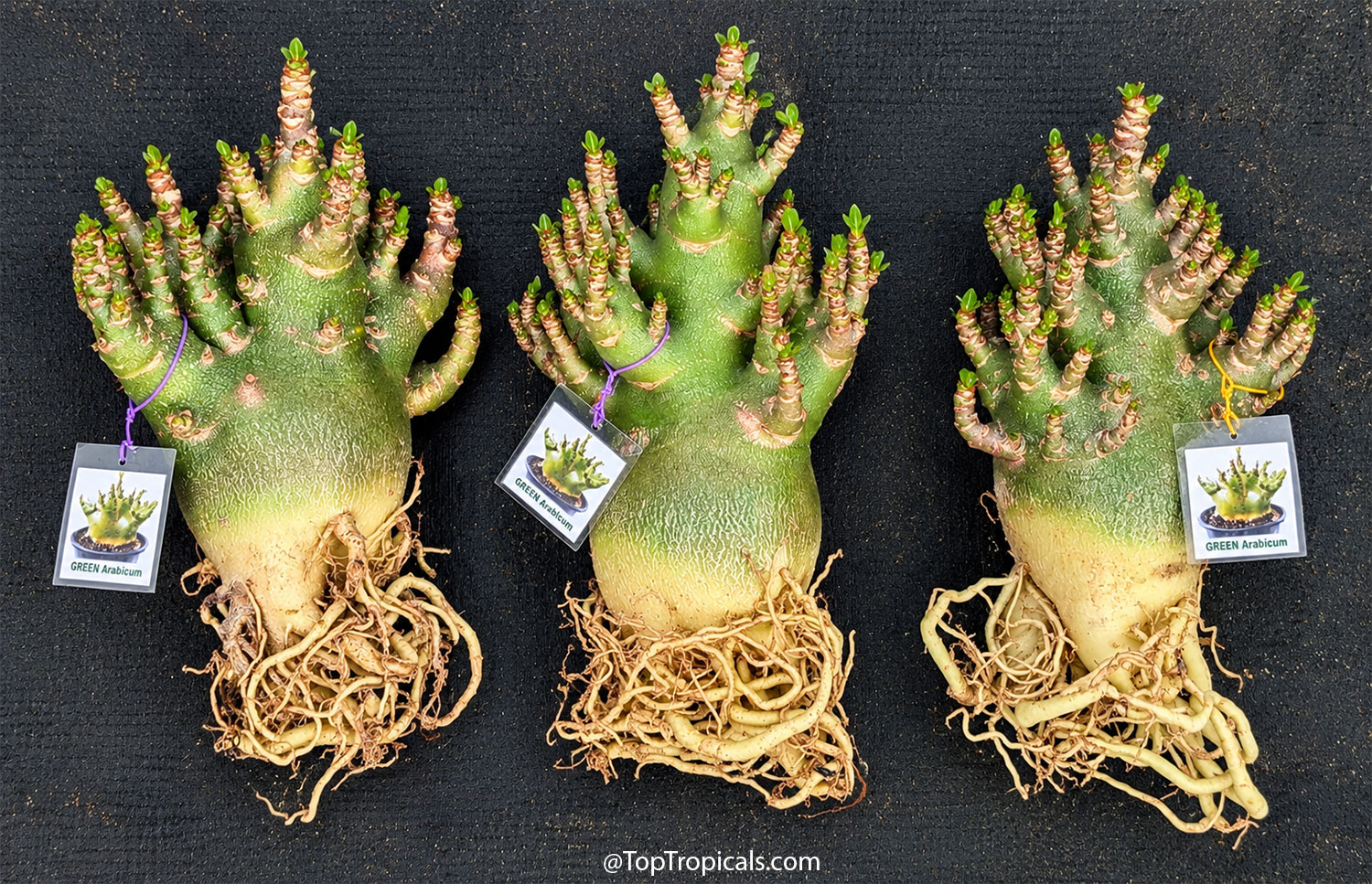
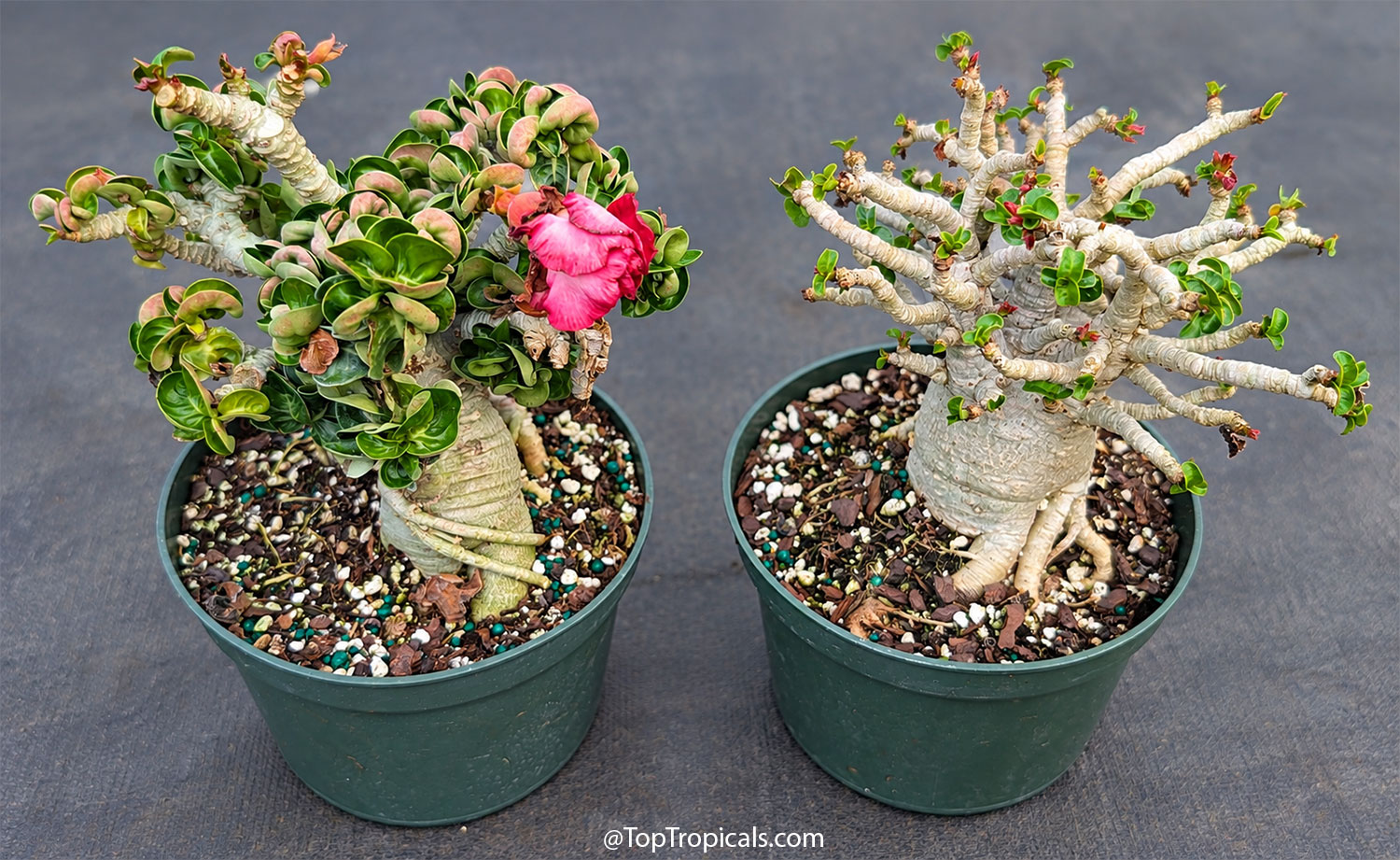
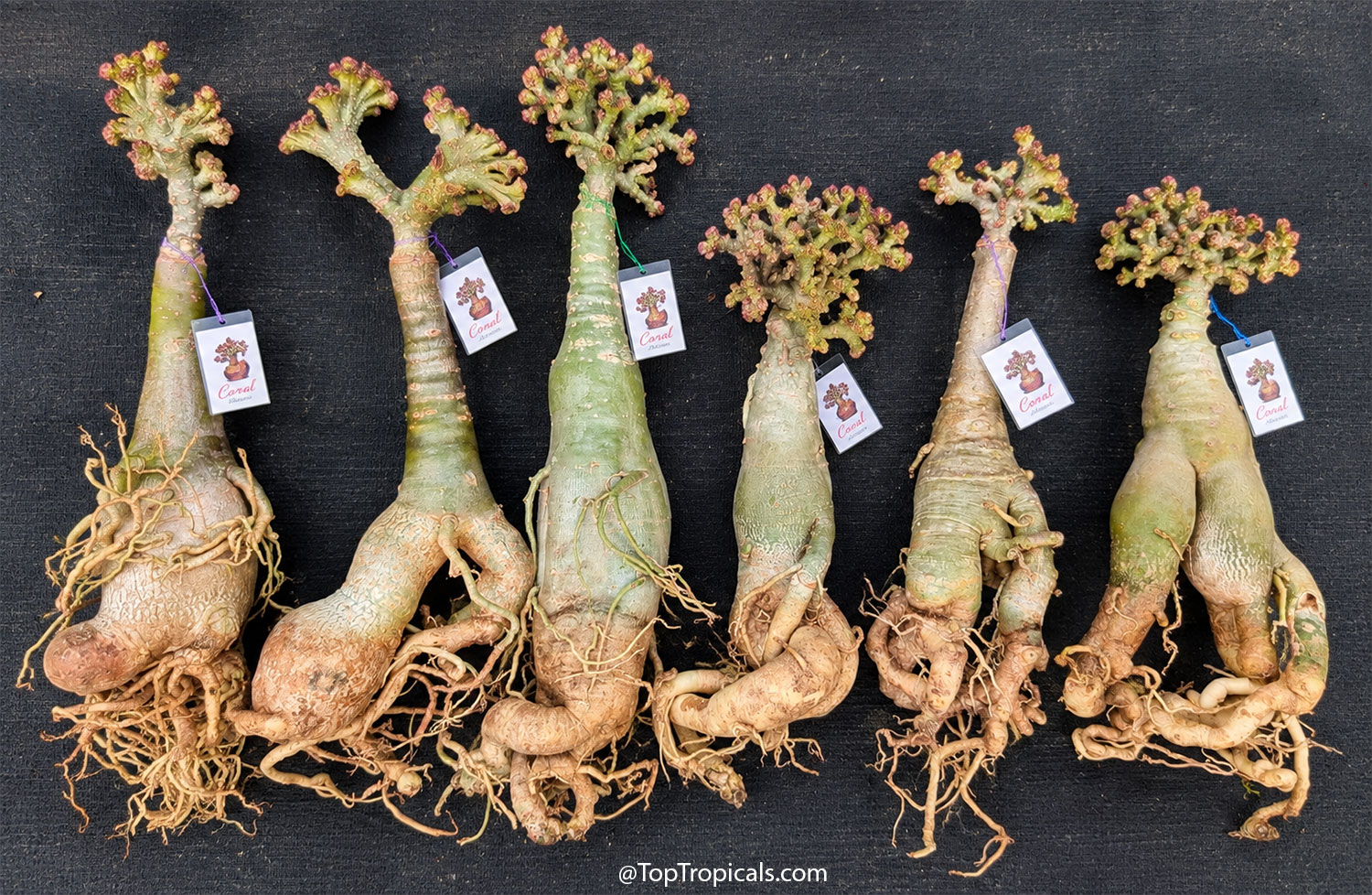
We’ll show you our Arabicums, Dorset Horn, Medusa, and, of course,
the wonderfully bizarre Coral Adenium. Plus, lots of new flowering
varieties.
Here's what arrived.
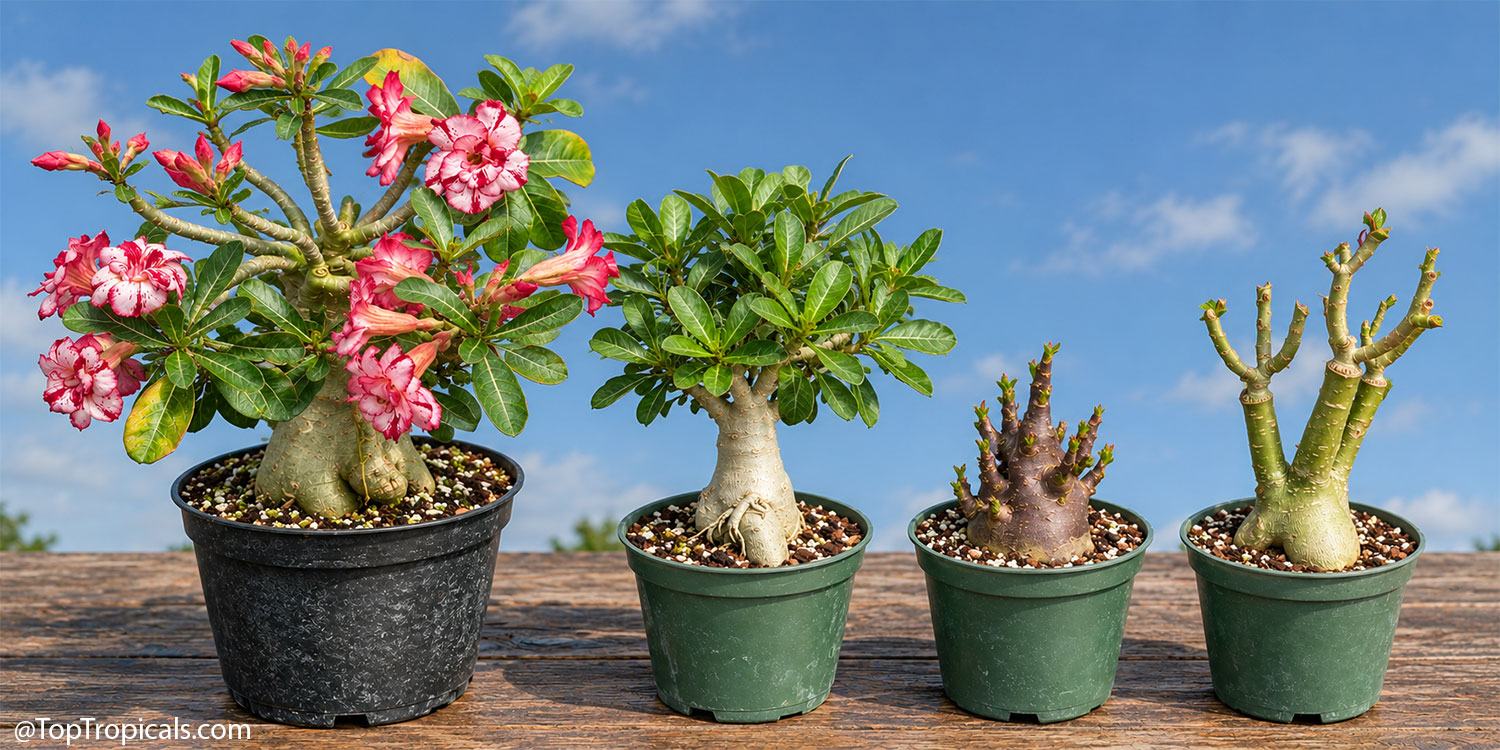
🌵Adenium Dorset Horn
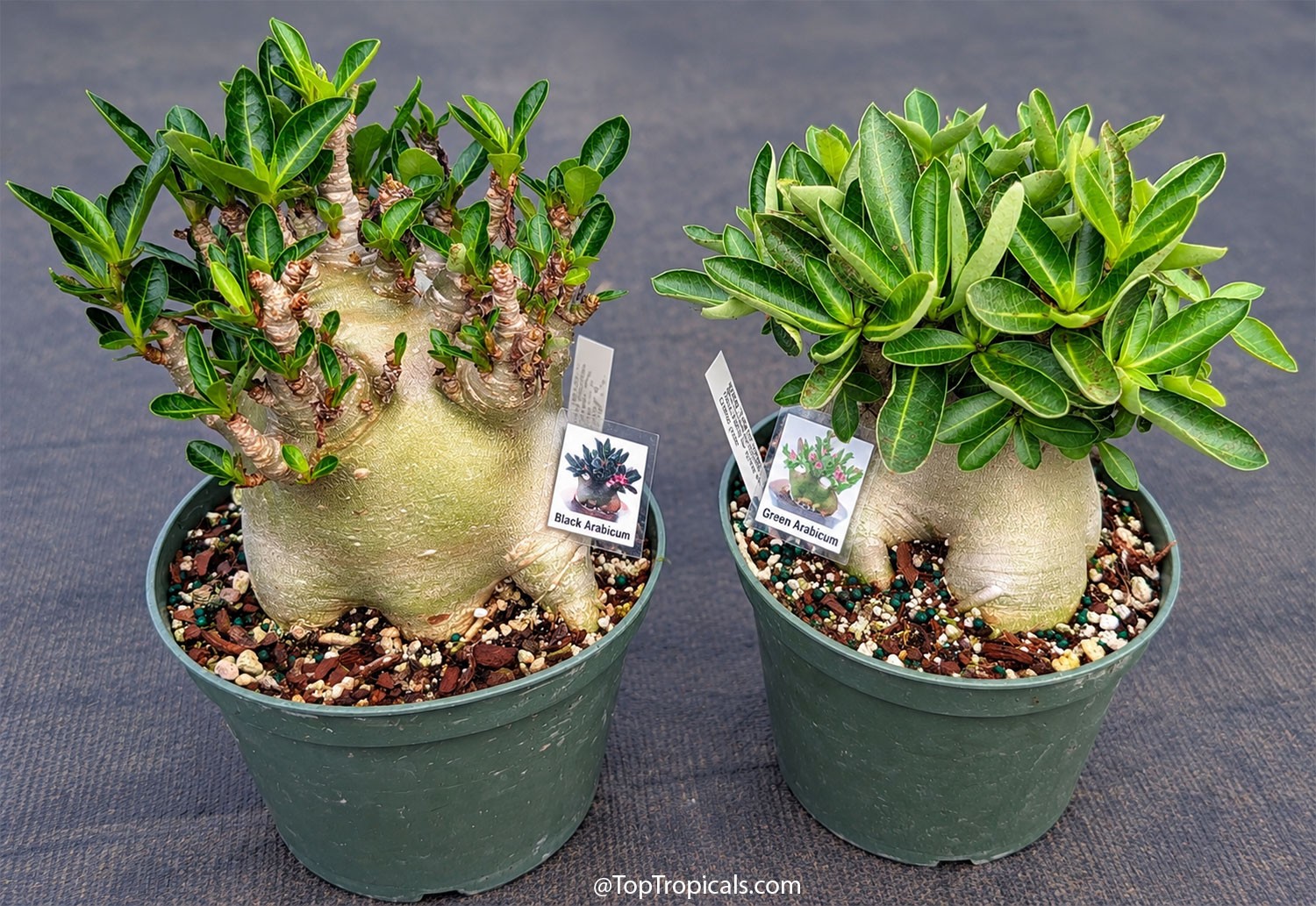
👾Adenium arabicum
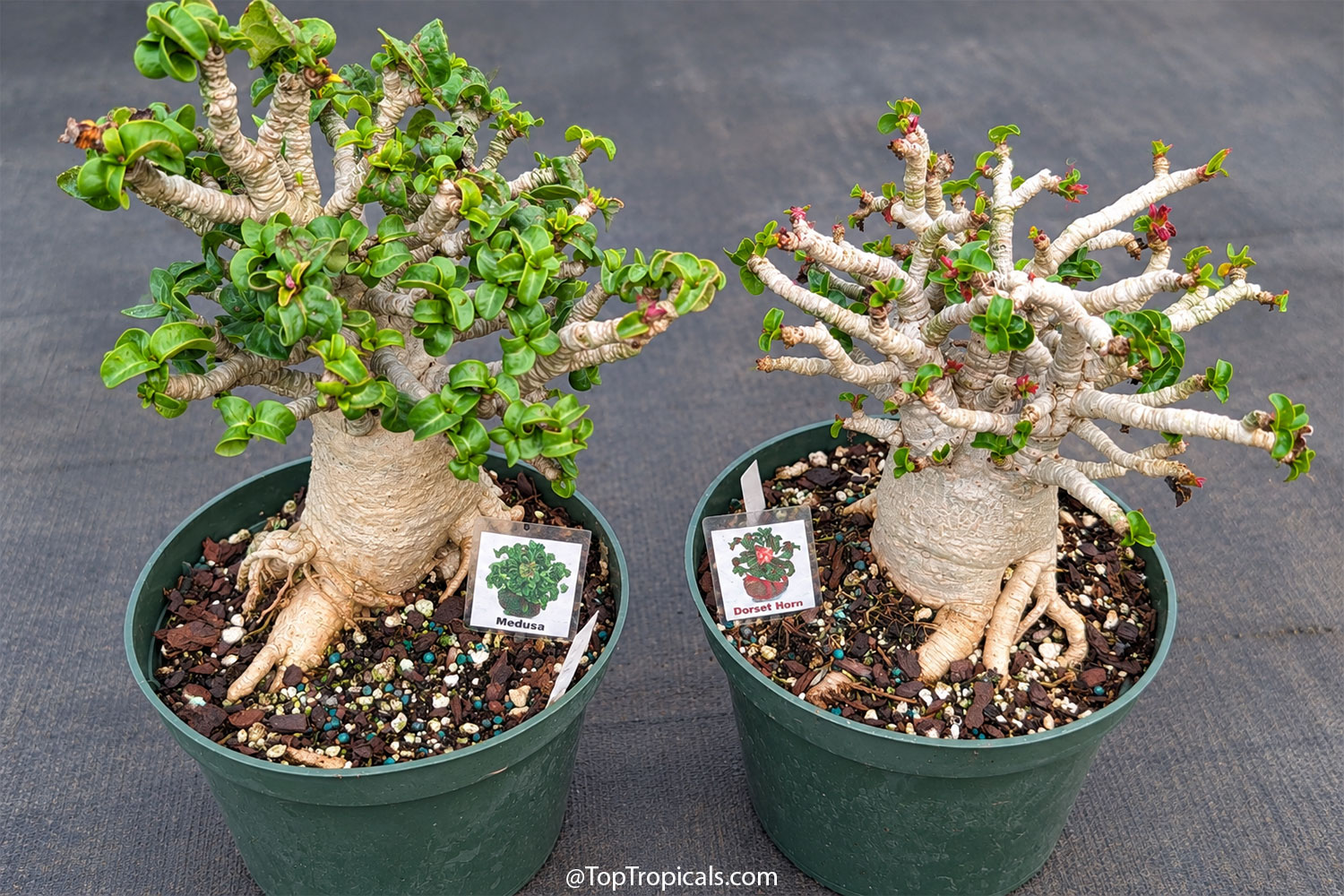
🐙 Adenium Medusa
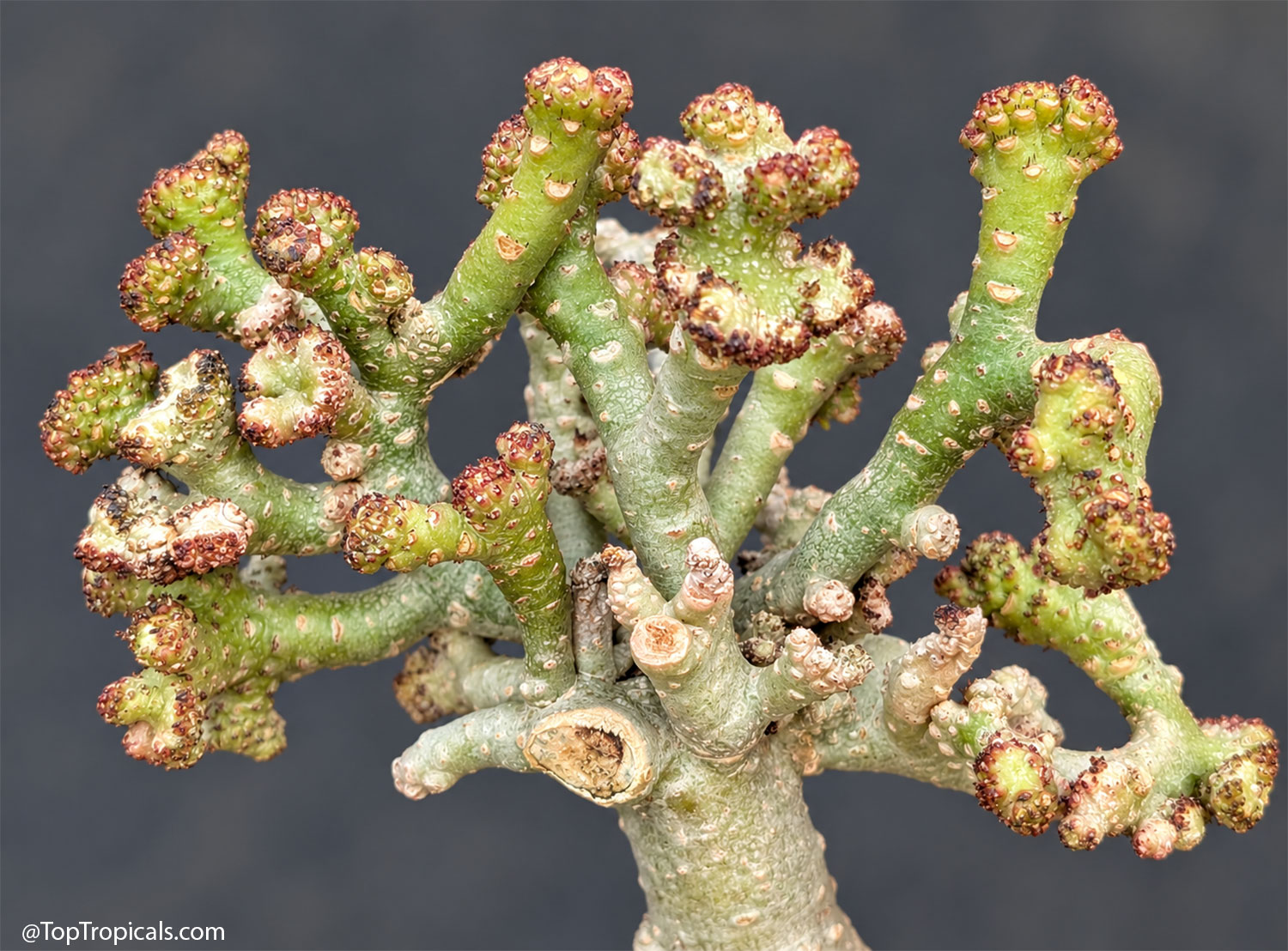
Adenium Coral Cristata
What you receive:
How One Adenium Becomes Ten

It usually starts with a practical reason. You want something that flowers, takes the heat, and doesn't sulk if you forget to water it for a week. Then you see a yellow one. Then a nearly black one. Then a double. Then one with a name you can't pronounce but suddenly need to own. At that point, the word "need" gets flexible.
A shipment like this one doesn't help.
The forms vary as much as the colors. There are single flowers, doubles layered like a small rose, ruffled petals, and twisted petals. Some have a thin dark edge. Some change color from the center to the rim. Vigor, compactness, and leaf color also vary from one cultivar to the next, but the real differences are in the flowers.
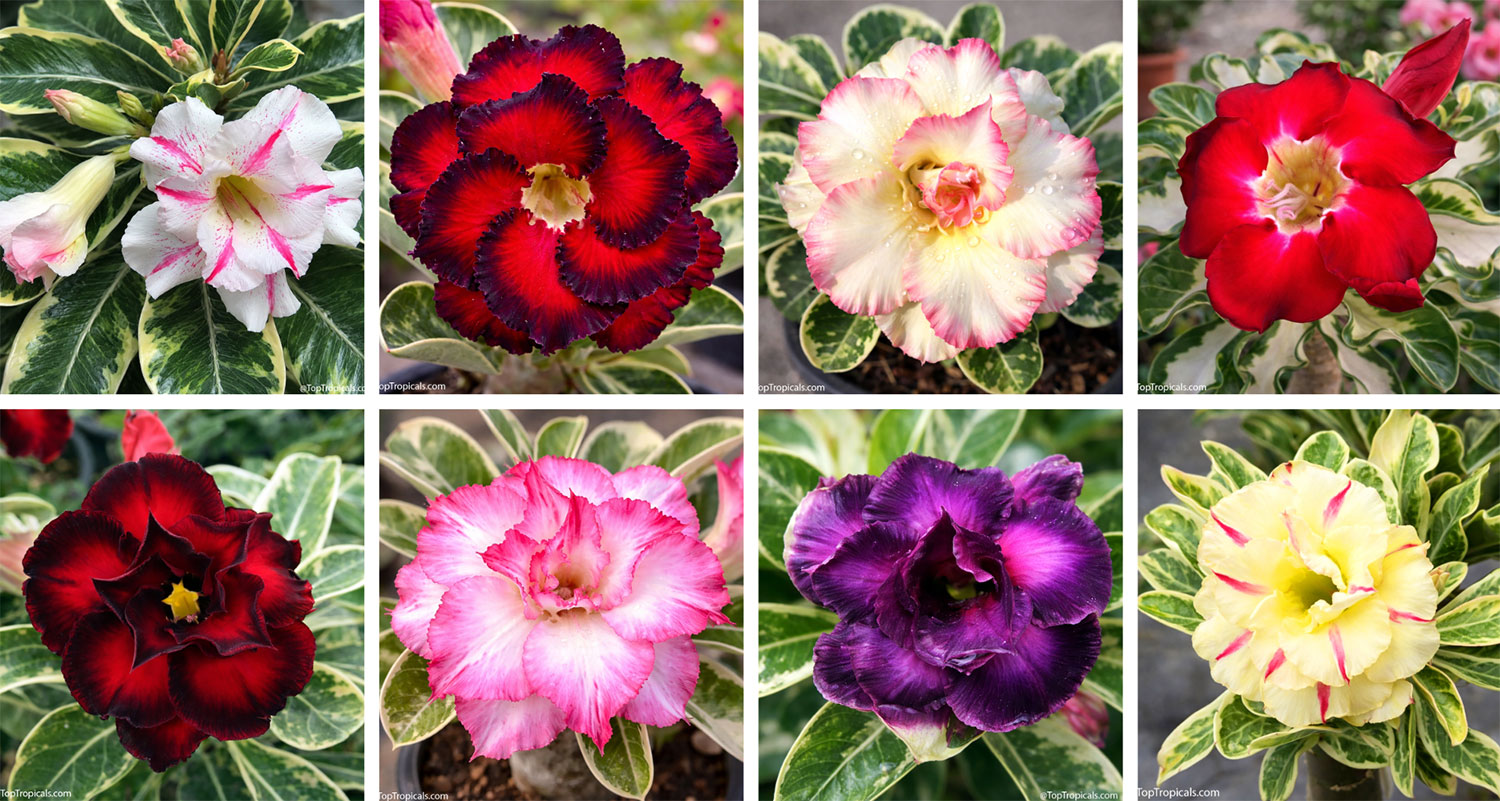
Collectors pick them for flower form, contrasting edges, color gradients, compact growth, and the shape of the caudex. And sometimes for the leaves. Variegated Adeniums have foliage marked with cream, white, or pale green, so they still look like something when they're not blooming.
Variegated cultivars:
Best of Siam
Variegated
Frozen White
Variegated
Hassadee
Variegated
Superbar
Variegated
Wonderful Candy
Variegated
Wonderful Pink
Variegated
Wonderful Purple
Variegated
Wonderful Red
Variegated
Wonderful Yellow
Variegated
Why Named Adeniums Are Grafted
Seed-grown Adeniums form a natural caudex from the start and usually bloom in two to three years. But they don't come true to type. Plant seed from a yellow double and you might get pink singles, red singles, or something nobody has seen before. That's how new cultivars turn up in the first place. What you won't reliably get is another yellow double.
Nothing wrong with seedlings. They're just a gamble.
Once a breeder has a flower worth keeping, the only way to keep it is to propagate the plant itself, not its seed. Cuttings will do it. For Adeniums, grafting is the usual method: a branch of the named cultivar goes onto a sturdy seed-grown rootstock. The rootstock grows the roots and a natural caudex. The top keeps producing the named flower.
The Thai Names
Many of our Adeniums come from Thai breeding programs. Thai breeders tend to name their plants after luck, wealth, prosperity, gold, jewels, flowers, and figures from mythology. Thong, which means gold, shows up constantly.
In our collection you'll find Chok Sedthee, Thong Nuekao, Thong Samsee, Pratum Thong, Petch Pratum, Ploy Nappan, Bua Sawan, and Swan and Dragon.
We'll admit it: the names are part of the attraction.
Growing Desert Roses in Containers
🎥 From Naked to BLOOM: 3 Secrets to Growing Bizarre Adeniums
We've grown Adeniums in Florida since 2002, and most of what we know about keeping them happy comes down to three rules: strong light, fast-draining soil, and not too much water.
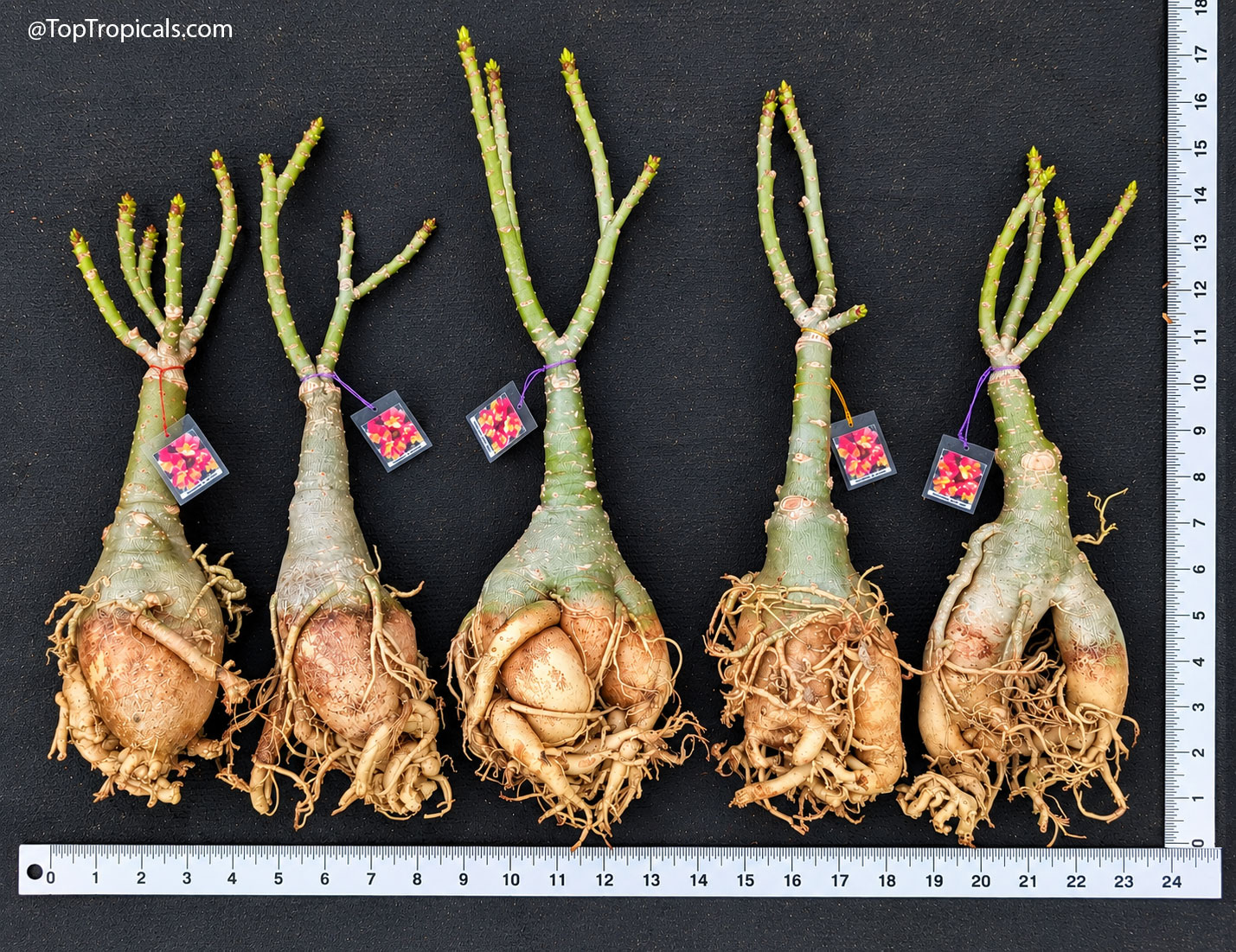
The Caudex
An Adenium doesn't need flowers to be interesting. The caudex takes care of that.
The caudex is the swollen base of the trunk. It stores water to get the plant through dry spells, and it gets thicker and more interesting every year.
Adeniums grow slowly, and in a pot most stay a manageable size for years. How big one eventually gets depends on the cultivar, the rootstock, and how it's grown. As it ages, its shape becomes as much a reason to grow it as the flowers.
One thing we do at every repotting is set the plant a little higher than before, so a bit more of the upper roots end up above the soil. After several repottings, those thick roots become part of the visible trunk, and the plant starts to look like a small old tree.
A single repotting won't do it. Give it a few seasons.
Pots and Repotting
Most growers use shallow, wide pots. They show off the caudex, keep a top-heavy plant from tipping over, and dry faster than deep pots. Unglazed clay is especially good because it breathes.
Don't use a pot much bigger than the root ball. More soil holds more water, and extra water is what Adeniums handle worst.
The pot needs a drainage hole. If it sits in a saucer, empty the saucer after watering. A pot standing in water undoes everything a good mix does.
Repot in the warm season, while the plant is growing and the roots recover fast. Avoid it while the plant is resting in winter, and go up only a little in pot size each time.
Soil
If we had to pick one thing to get right, it's the mix. Adeniums are succulents. Drought rarely kills them. Wet roots do.
You want a mix that is loose and airy, drains fast, and doesn't pack down over time. This is one we use:
- 30% coarse horticultural sand
- 30% pine bark
- 20% perlite
- 20% coconut coir
Bark keeps it open and gives it structure. Perlite does a similar job and lasts a long time. Sand lets water run through. Use coarse horticultural sand only - play sand and beach sand pack down like concrete. The coir is there so the mix doesn't dry out an hour after watering.
We've tried heavier mixes. They work until Florida gets a week of rain.
If you don't want to mix your own, use our Desert Rose (Adenium) Soilless Potting Mix. This is the mix we use and have tested on our Adeniums at Top Tropicals, formulated to stay loose, airy, and fast-draining around the roots and caudex. It takes the guesswork out of mixing your own.
Light, Water, and Weather
Water
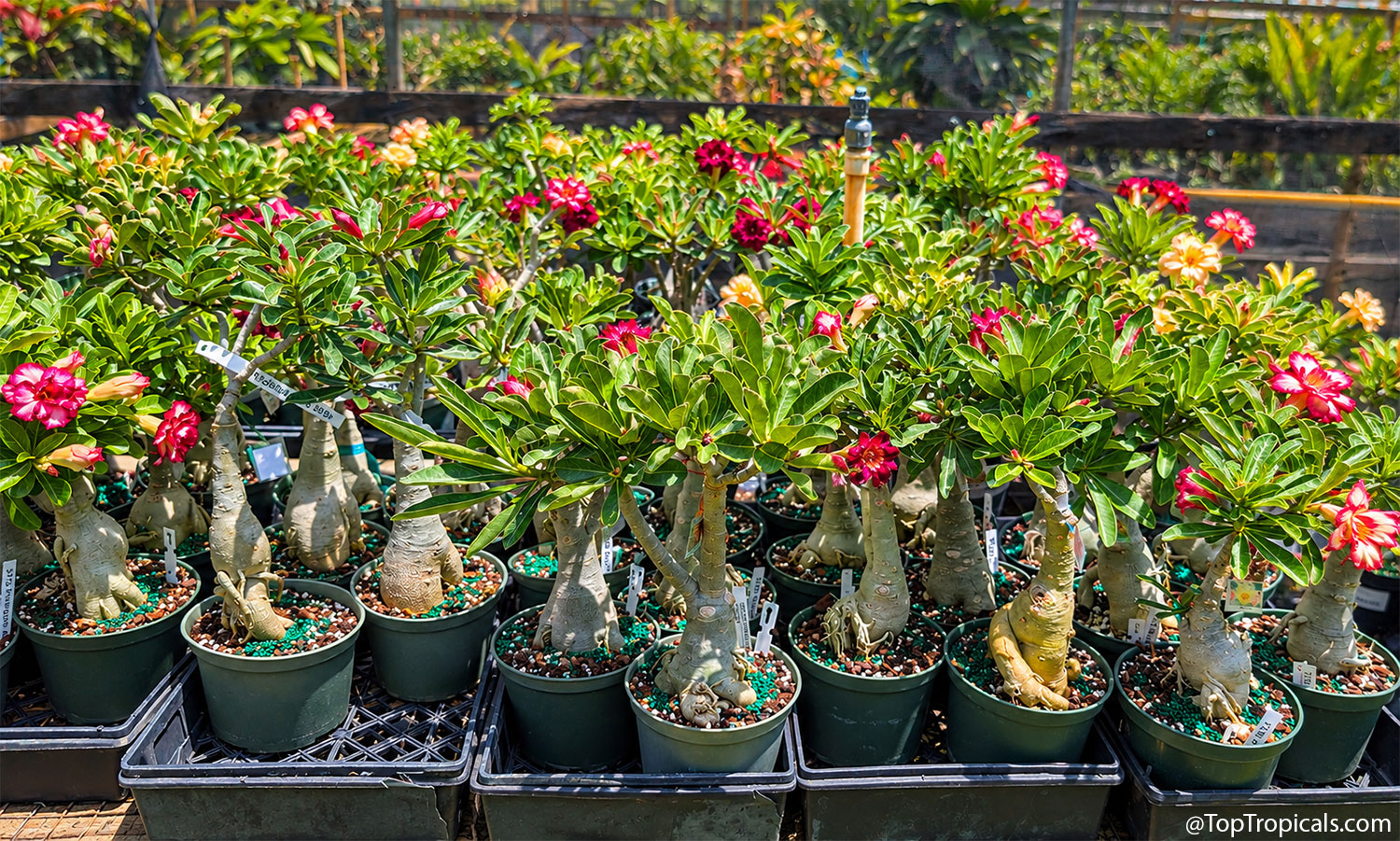
Water thoroughly, then let the mix dry out before you water again. That's most of it.
In Florida, the problem is usually not forgetting to water an Adenium. It's three days of rain when the pot never gets a chance to dry. During long wet stretches, move plants somewhere bright but covered, like the edge of a porch or under an overhang.
Light
Adeniums want strong light, and full sun often suits them well. In very hot places like Florida, Texas, and Southern California, though, more sun is not automatically better. Strong midday sun can scorch leaves and make flowers fade faster, and filtered light or some midday relief often works better there.
Filtered light is not shade. In low light, Adeniums grow weak and stretched and barely bloom. If yours is leggy and not flowering, look at the light before anything else.
Indoors
Adeniums are not low-light houseplants. They can grow indoors, but ordinary room light usually isn't enough. Give yours the sunniest window you have, ideally facing south or west. A few feet back from the glass is a lot less light than it looks. If no window gets enough sun, put a good grow light close to the plant.
Everything else is the same: fast mix, a pot that isn't too big, water only when the mix is dry. Pots dry more slowly indoors, so check before watering rather than going by the calendar. Keep the plant away from cold drafts and AC vents.
If you live somewhere with real winters, a common setup is summer outside and winter inside. When it goes back out in spring, start it in partial sun for a week or two. A plant that spent the winter indoors can sunburn if it goes straight into full sun.
Winter
As the days get shorter and cooler, many Adeniums slow down, and some drop most or all of their leaves. That's normal. The plant is resting and living off the water in its caudex.
A leafless Adenium in winter is usually not a dead one.
- Bring plants inside or under cover before the nights turn cold. Adeniums are warm-climate plants and don't like chilly, wet conditions.
- Water much less. A resting plant with few leaves uses very little, and cold, wet soil is the quickest way to lose one.
- No fertilizer until new growth starts in spring.
- Keep it in good light even while it rests.
- Check the caudex. Firm is generally good. Mushy can mean rot, usually from too much water. If it's just a little soft or wrinkled and the mix is dry, the plant may simply be thirsty. Check the mix before deciding which.
New leaves come back as the days get longer and warmer. Then go back to regular watering and feeding.
Feeding and Pruning
While the plant is growing, feed it lightly and often rather than heavily once in a while, following the label. We use a liquid bloom fertilizer such as Sunshine Megaflor Bloom Booster for flowering, Sunshine Superfood for micronutrients, and a controlled-release fertilizer like Green Magic underneath it all.
After a round of flowers, cut back leggy branches. The plant branches where you cut, and more branches mean more places for flowers.
An occasional trim is plenty. There's no need to keep cutting it back hard.
Grafted-Plant Care: Suckers Below the Graft
You can usually see the graft line as a joint or a change in the bark near the top of the caudex. Above it is the named variety. Below it is rootstock.
Now and then the rootstock sends up shoots of its own from below the graft. Those will bloom with rootstock flowers, not the named ones, and left alone they slowly draw energy away from the grafted top. Cut them off when you see them.
Pests
Two show up regularly, especially indoors. Spider mites like warm, dry air, which is what a heated house has in winter. Look for fine speckling on the leaves and faint webbing underneath. Mealybugs look like small tufts of white cotton in the leaf joints and along the stems.
Rinsing the leaves now and then and checking the undersides heads off most of it. For a heavier infestation, use insecticidal soap or horticultural oil and follow the label.
Buying in Fall, and When Your Adenium Arrives
Fall can be a good time to buy, depending on your climate and where the plant will spend the winter. In warm regions, or with a sunny indoor spot or greenhouse, a plant bought now settles in while it rests and is ready to grow in spring. In colder regions, have that protected spot ready before the plant ships.
When the box arrives:
- Unpack it right away.
- Put it in good light, but give it a few days before moving it into strong direct sun.
- Check the mix before watering. If it's still damp from shipping, wait.
- Don't repot yet, especially in fall. Let it settle.
- Some yellow leaves or leaf drop after shipping is normal, more so in cooler months. A firm caudex is a good sign.
Common Adenium Mistakes
- Too much water. The most common way to lose one.
- Heavy soil. Ordinary potting soil stays wet too long.
- Not enough light. The plant survives, stretches, and stops blooming.
- A pot that's too big, or one sitting in a saucer of water.
- Watering in winter as if it were summer.
- Leaving suckers below the graft. They bloom with rootstock flowers and slowly draw energy from the named variety.
Adenium Care in 30 Seconds
- Light: Strong. Full sun, or filtered light in very hot climates. Not shade.
- Soil: Loose, airy, fast-draining. Coarse sand, bark, perlite, coir.
- Water: Soak it, then let the mix dry. Protect from nonstop summer rain.
- Pot: Shallow and wide, stable, not oversized, with a drainage hole. Unglazed clay is ideal.
- Repot: Warm season is best. Set the plant slightly higher each time.
- Indoors: Your sunniest window, or a grow light.
- Winter: Less water, no fertilizer, bring it in before cold nights. Leaf drop is normal.
- Spring: Ease indoor plants back into full sun.
- Grafts: Remove shoots below the graft line.
- Pests: Watch for spider mites and mealybugs, especially indoors.
- Feed: Lightly and regularly during active growth.
- Prune: After flowering, to encourage branching.
A Few More Questions
When do Adeniums bloom?
In Florida, Adeniums usually bloom from spring through fall, often in several flushes rather than continuously. Mature plants in warm, bright conditions may flower for much of the year, while growth and blooming usually slow during winter. Indoors, flowering depends mostly on light and temperature - plants under very bright light or grow lights may bloom intermittently, but most flower best during the brighter, warmer months.
How long does it take a grafted Adenium to bloom?
Seedlings usually take two to three years. A grafted plant often blooms sooner because it starts from a branch of a flowering cultivar, but timing depends on plant size, season, and growing conditions.
Why did the flower buds fall off before opening?
Bud drop usually follows a sudden change, like a move from outdoors to indoors, a drop in light, or big swings between bone-dry and soaking-wet soil.
Should I plant my Adenium in the ground?
Most people keep them in pots, because it's much easier to control drainage and to move the plant under cover when it's rainy or cold.
Is Adenium sap toxic?
Yes. The sap is toxic if swallowed, so keep plants away from pets and small children. It can also irritate skin and eyes, so wear gloves when pruning and wash your hands afterward.
No matter how many Adeniums you've seen, sooner or later another one shows up that looks like nothing else. In this shipment, that's Adenium Coral Crested.
👉 Explore Exotic Thai Adeniums
✍️ More about Adeniums from Top Tropicals Garden Blog
📚 LEARN MORE:
📚 Adenium varieties in the Top Tropicals Plant Encyclopedia
📚 How to Grow Adeniums Without Overthinking It
📚6 variegated, impossible to ignore adeniums that change your collection
📚 Adeniums: More Than Just Plants
📚 The complete guide to potting mix
🎥From Naked to BLOOM: 3 Secrets to Growing Bizarre Adeniums
🛒 SHOPPING LINKS:
Date: 28 Sep 2026
Daily Cat Lesson: Whats a Healthy Cat Diet?
Sound on 🎤
Cats are obligate carnivores, but that doesn't mean they can live on chicken, tuna or dinner scraps.
- 🐾 Why aren't table scraps enough?
Cats need a precise balance of protein, fat, vitamins, minerals and essential nutrients such as taurine.
In nature, cats don't eat just muscle meat. They eat much of a whole mouse, bird or other small prey - muscle, organs, bones and other tissues - which together provide nutrients in very different proportions from our dinner scraps.
A homemade diet of meat or leftovers can be deficient in calcium, taurine and other nutrients even when it looks wonderfully "natural." - 🐾 Dry or wet food?
Both can provide complete nutrition if the label says "complete and balanced" for your cat's life stage.
Dry food is convenient and calorie-dense. Wet food contains much more water, which can help cats stay hydrated. For many cats, feeding some of each works very well. - 🐾 What about raw meat?
Raw meat isn't nutritionally complete by itself and can carry harmful bacteria and parasites.
A piece of plain meat can be an occasional treat, but it isn't a balanced diet. - 🐾 Does my cat need supplements?
Usually no. A complete and balanced commercial cat food already contains the vitamins, minerals and taurine a healthy cat needs. Adding supplements "just in case" can actually create nutritional imbalances.
Supplements may be useful for specific needs, but that's different from routinely adding a multivitamin to good cat food. - 🐾 And human food?
A little plain, cat-safe food occasionally is a treat - not dinner.
👍 The simplest rule:
Look for "complete and balanced" on the cat-food label. Everything else is extra.
🐈📸 Top Tropicals rescued cat James Coconuts is enjoying his meal at PeopleCats.Garden.
🐈 Stay with us for your Daily Dose of Cat! #DailyCatLesson #PeopleCats
🟢 Join 👉 TopTropicals