Garden Blog - Top Tropicals
Date: 10 Aug 2026
🌿 Roots Breathe: What Really Goes On Inside a Pot
By Tatiana Anderson, Plant Expert, Top Tropicals

Smokey: Not in a container.
Sunshine: Rich glaze makes donuts better.
Smokey: Donuts need neither oxygen nor drainage around their roots. In fact, they do not have roots at all.

You see a bag of dark, crumbly, rich-looking soil and something in you says yes, that is the good stuff. Plants must love that.
Here is the problem. You can grow a healthy tree in a pot of pure sand. You can also kill that same tree in a pot of rich black compost. The soil that looks the most nourishing is often the soil that suffocates roots.
Roots do not only drink. They breathe. They need air in the pot as much as they need water, and rich, dense, moisture-hoarding material is exactly what pushes that air out. Once you understand this, most of the confusing advice about potting soil sorts itself out.
🌿Garden Soil and Potting Mix Have Different Jobs
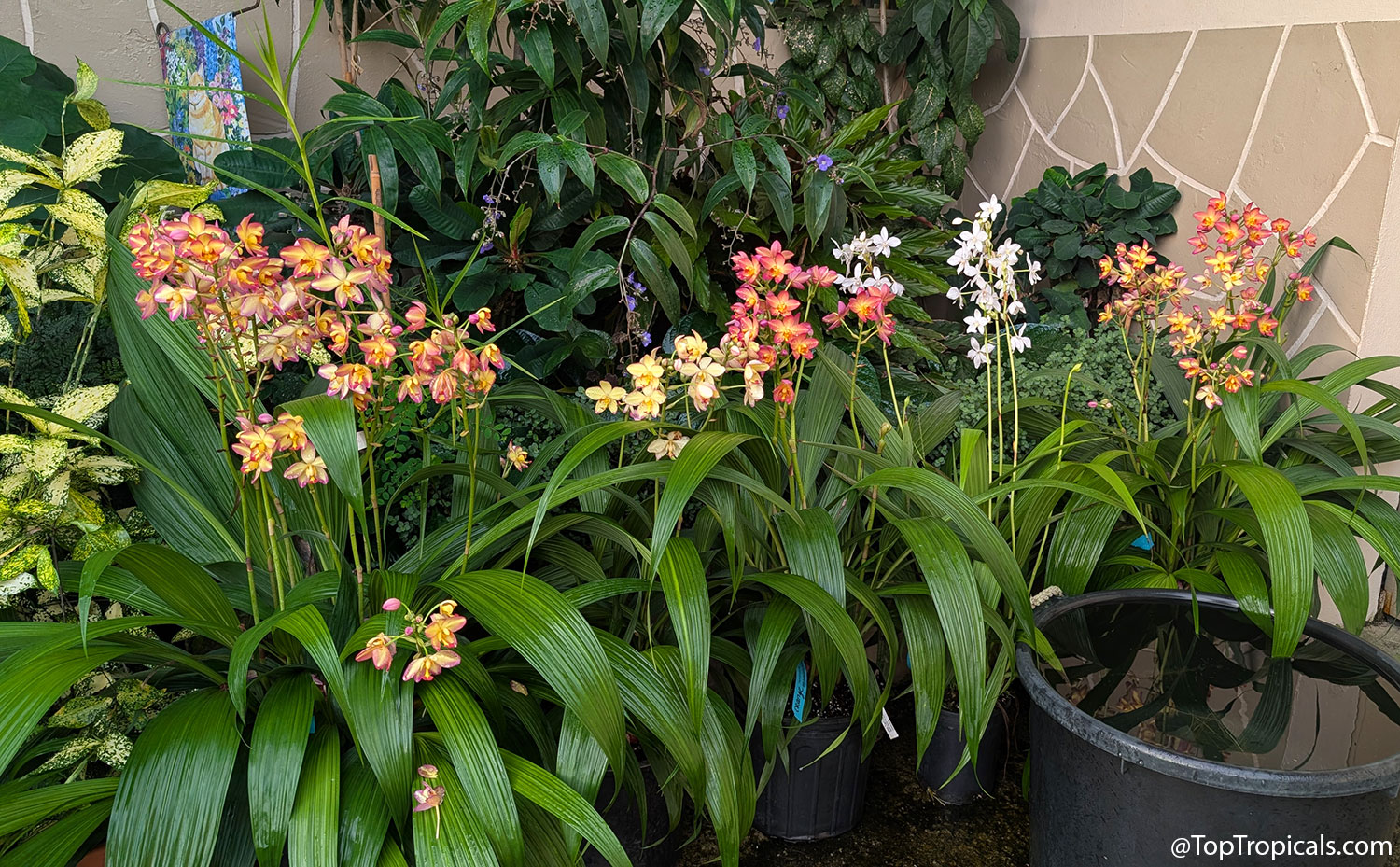
Garden soil works in the ground. Out there it has practically unlimited room for roots to spread, natural movement of water through a huge volume of earth, worms and other life keeping it open, and rain that flushes through and drains away. If one patch stays wet, roots simply grow around it toward drier ground.
A pot changes all of that. Root space is limited. Roots cannot escape a wet zone, because there is nowhere to escape to. Excess water lingers instead of draining into surrounding earth. As that water sits, it displaces the air in the root zone. Poorly aerated, soggy conditions are exactly what root diseases like, and roots that cannot breathe will suffocate and rot.
Notice what the real problem is. It is not water. Plants need water. The problem is standing water and the lack of oxygen that comes with it.
So the rule is simple. Do not use ordinary garden soil, topsoil, muck, or compost as the main material in a container. It behaves completely differently once you trap it in a pot.
🌿Roots Need Both Water and Air
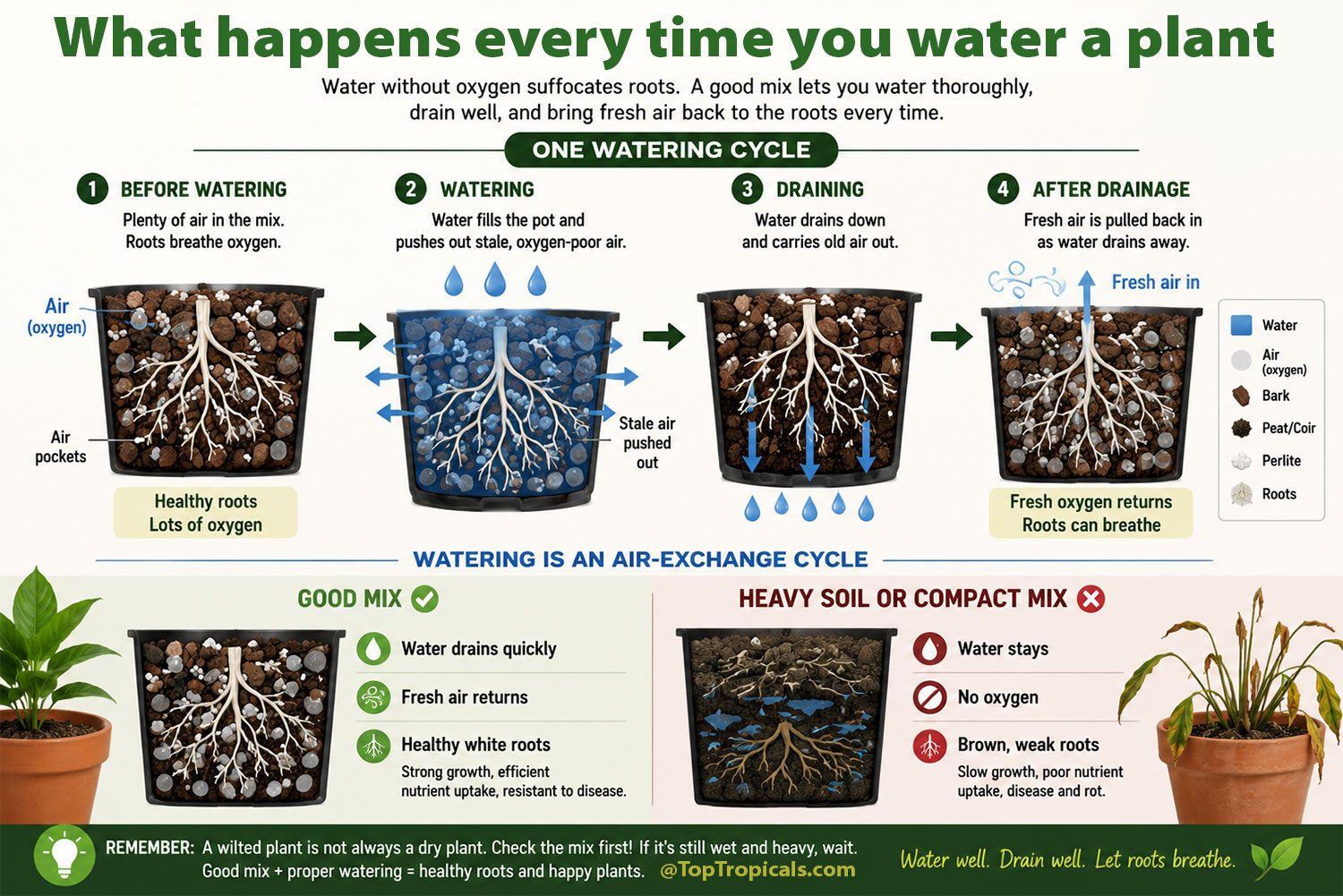
Roots do two jobs. They absorb water and nutrients, and they take in oxygen to do that work. Starve them of air and everything slows down. Root growth stalls, nutrient uptake drops, disease sets in more easily, and rot can begin.
This is a common way container plants decline, and it often fools the gardener. A wilted plant is not necessarily a dry plant. Before adding more water, check whether the mix is still wet. If the pot remains heavy and the mix is damp, more water will only make the problem worse.
Think of watering as a breathing cycle for the pot. When you water thoroughly, water moving down through the mix pushes stale, oxygen-poor air out. When that water drains away, it pulls fresh air back in behind it. A good mix lets you water generously and then drains fast, so the roots get a full drink and fresh air every time.
One of the best pieces of horticultural advice we ever received came from our good friend Murray Corman:
"Always overwater your plants. Improve your soil drainage." - Murray Corman
It sounds backward until you read it correctly. Plants want plenty of water. Very few of them tolerate stagnant water sitting around their roots. If your mix drains well, you can water thoroughly and often without fear, because the water passes through and the air comes back. This is not permission to leave a plant standing in a swamp. The point is that fixing drainage is almost always safer than trying to keep a badly drained mix alive by rationing tiny sips of water.
📚 More: how much water is too much?
🌿Why Professional Mixes Are Called Soilless
Open a bag of professional potting mix and you usually will not find any actual soil in it. That surprises people. But growers use selected materials instead of dirt because those materials let them control the things that matter: air space, drainage, moisture retention, structure, weight, acidity, and how well the mix resists packing down over time.
It is not fake soil, just a growing medium built on purpose. It's engineered soil.
Common components include pine bark, Canadian sphagnum peat moss, coconut coir, perlite, pumice or lava rock, charcoal in specialized blends, wetting agents, and dolomite lime. Just as telling is what is usually left out: topsoil, clay, muck, and compost as a main ingredient.
🌿What a Good Potting Mix Should Do
A good mix has to do several things at once. It should:
- Drain quickly.
- Hold enough moisture between waterings.
- Keep plenty of air space.
- Resist packing down.
- Stay structurally useful for years.
- Stay reasonably lightweight.
- Re-wet without a fight after it dries.
- Support healthy roots and the beneficial microbes that live with them.
It is a balance, not an extreme. You do not want a mix that lets every drop vanish the instant it lands, and you do not want one that stays dense and saturated. You want the middle: wet the whole pot, then let it drain and breathe.
Most tropical plants prefer a slightly acidic root zone, roughly pH 5.5 to 6.5. This is one reason peat moss, coconut coir, and pine bark show up in so many tropical mixes. They naturally sit well in that range. It is also why you should be careful about repeatedly adding alkaline materials unless a specific plant calls for them. Shell rock, limestone, crushed coral, oyster shell, and crushed concrete all push pH the wrong way for most tropicals.
🌿Potting Mix Ingredients and Their Jobs
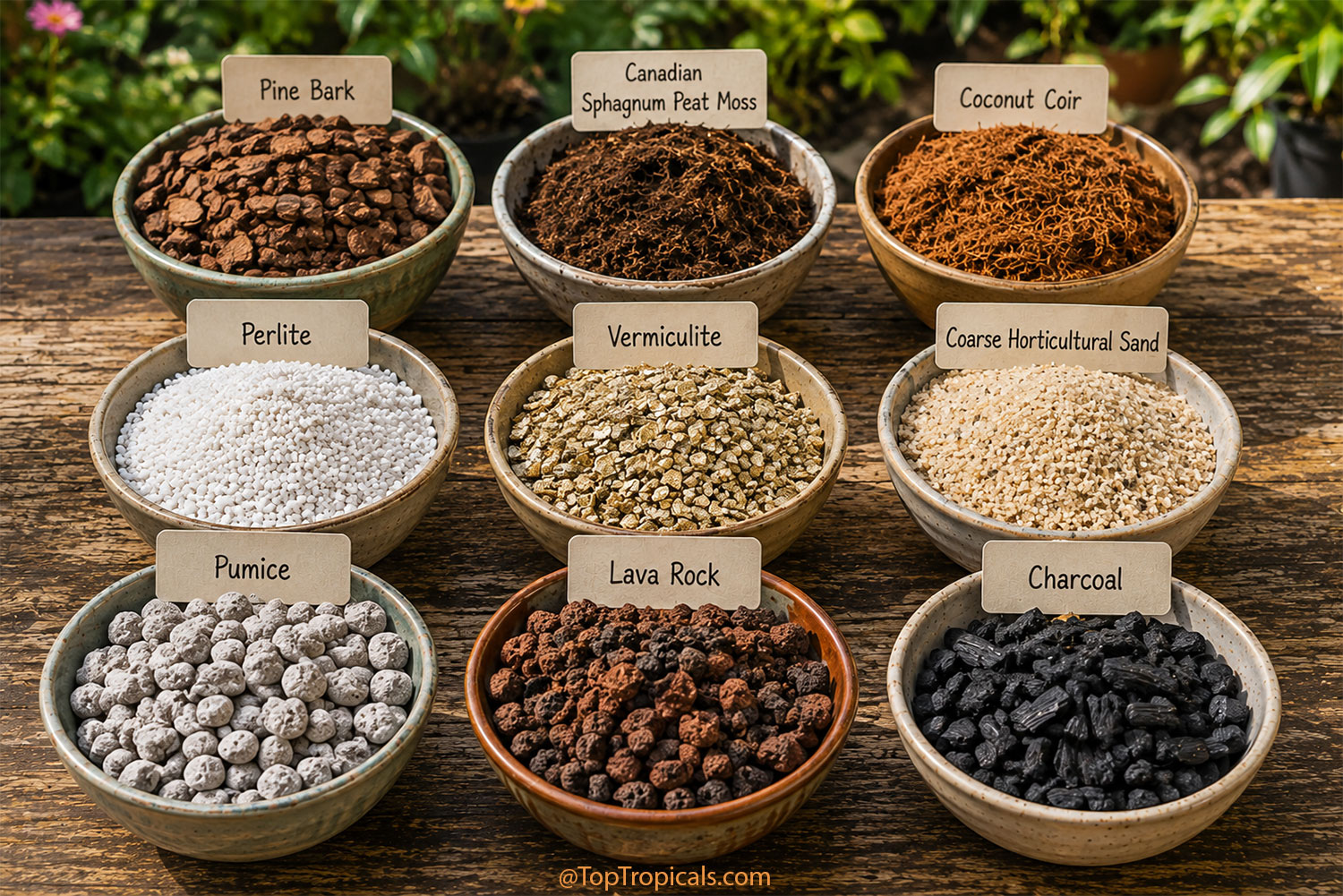
You do not need a chemistry degree to build a good mix. You need to know what each piece contributes.
Pine Bark
Pine bark is the backbone. It gives the mix structure, creates air pockets, improves drainage, and breaks down slowly compared to finer organic matter. It works well for tropical plants, fruit trees, aroids, and orchids.
Canadian Sphagnum Peat Moss
Canadian sphagnum peat moss holds moisture, keeps the mix light, and adds acidity. In professional bags it is fairly consistent. Be aware that material sold locally as Florida peat is a different animal, often closer to heavy muck, and far less useful in an airy container mix.
Coconut Coir
Coconut coir holds moisture while keeping useful air space, and it re-wets much more easily than peat once it has dried out. It decomposes slowly, so it helps the mix keep its structure over the long haul, and it is good for starting seeds and rooting cuttings. It is cleaner than garden soil or compost, though it is not sterile. We like pairing coir with Canadian peat: the coir brings structure and staying power, the peat brings moisture retention and natural acidity.
Perlite
Perlite is the white popcorn-looking material. It improves drainage and aeration, keeps the mix loose, weighs almost nothing, and never decomposes. It does not feed the plant, and it is not supposed to.
Vermiculite
Vermiculite holds more water than perlite and earns its place in seed-starting mixes and for moisture-loving plants. In very airy tropical mixes it is usually less useful than perlite.
Coarse Horticultural Sand
Coarse horticultural sand helps succulents, plumerias, and adeniums. The word coarse matters. Avoid fine play sand and beach sand. Fine sand worked into clay or dense soil can set up like concrete and make drainage worse, not better.
Pumice and Lava Rock
Pumice and lava rock give long-lasting drainage and permanent air space with little effect on pH. They suit cacti, succulents, plumerias, and adeniums.
Charcoal
Charcoal is optional. It turns up in some orchid and aroid mixes, where it adds air space and absorbs some impurities.
Wetting Agents and Dolomite Lime
Wetting agents help a fresh peat-based mix soak up water evenly instead of letting it run straight off a dry surface. Dolomite lime is used in small amounts to soften the acidity of peat-based mixes.
🌿Bigger Pots Are Not Always Safer
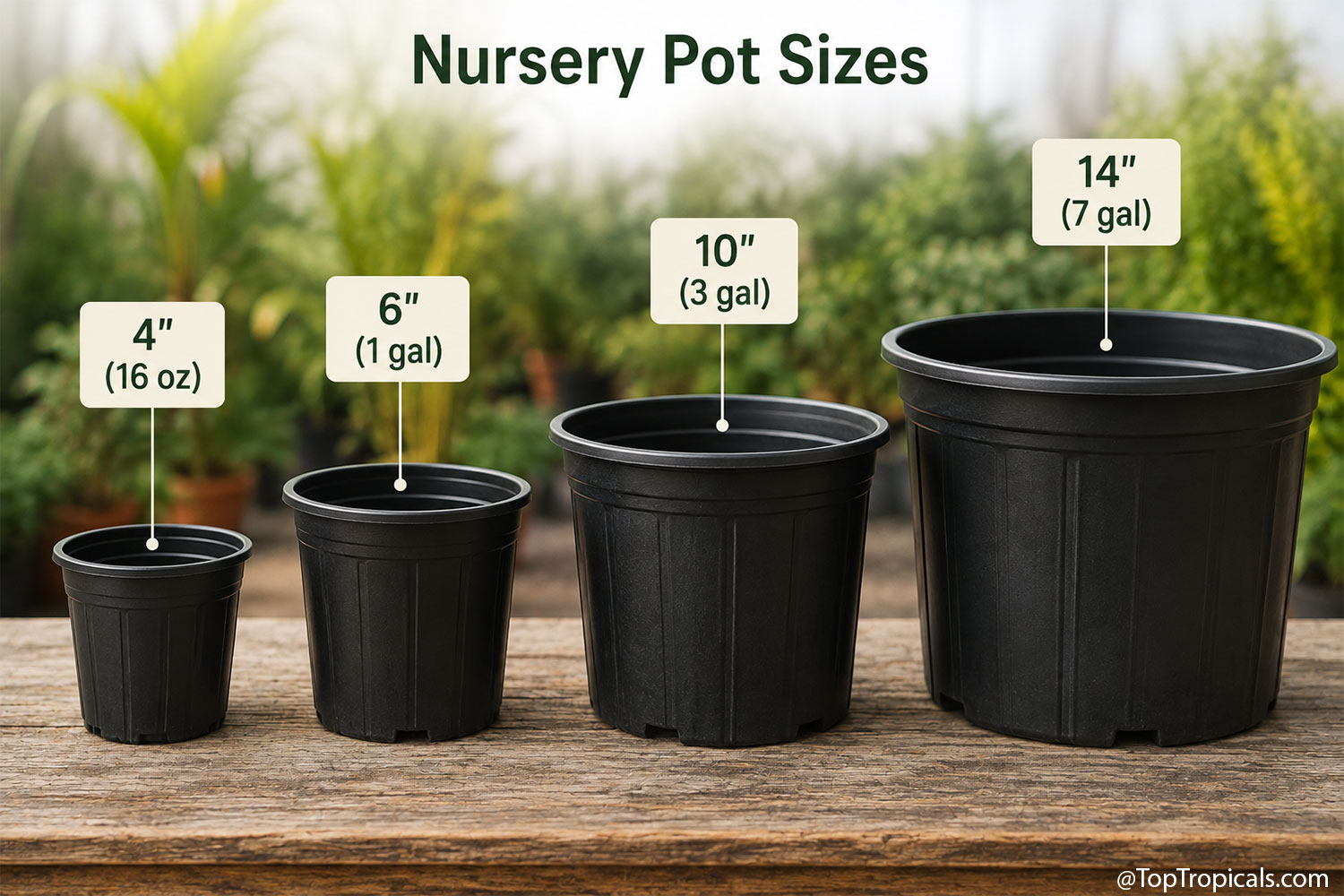
It feels generous to give a small plant a big roomy pot. It is also one of the easiest ways to drown it. A large pot holds more mix, and more mix holds more total water. With only a few small roots to drink it, the extra mix stays wet far too long.
Choose the smallest pot that comfortably fits the current root system and leaves reasonable room to grow. This is not an argument for cramming a plant into a jar forever. It is an argument against jumping three sizes at once.
🌿Fertilizer-Free Mixes
Many experienced growers reach for a mix with no fertilizer added, and there is a good reason. With a pre-fertilized bag, you often do not know what fertilizer went in, how much, how fast it releases, or how long it stays active. Different plants have different appetites.
Starting with a reliable, fertilizer-free mix and feeding each plant on its own schedule gives you control and predictability. This does not mean every fertilized mix is harmful. It means you get to decide, rather than inheriting someone else's guess.
🌿The Top Tropicals "Abundance" Mix
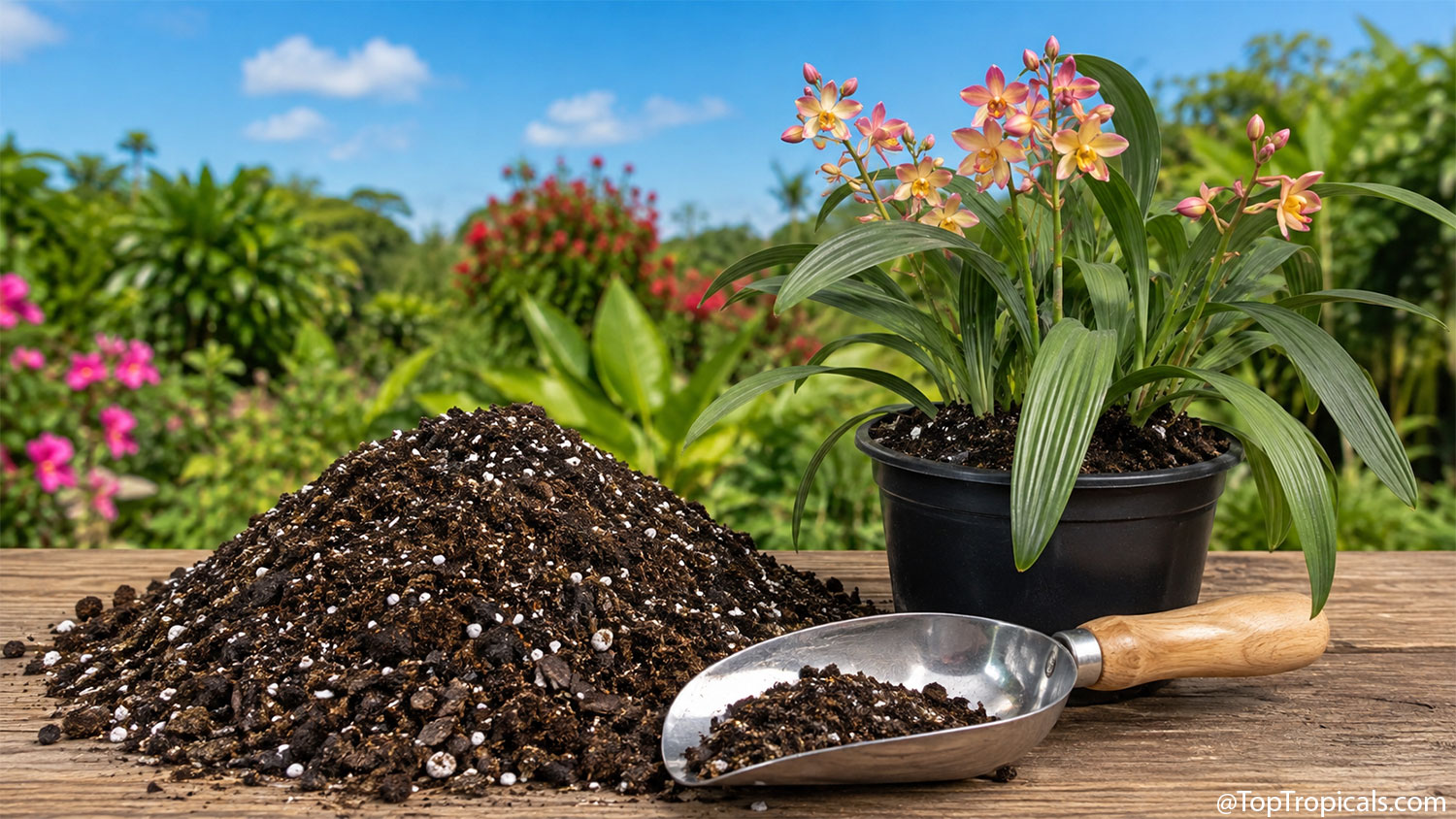
We have tested a lot of mixes over decades of commercial container growing. Some were cheaper. Some looked darker and richer in the bag. The plants kept doing best in our own formula, so we kept using it.
Top Tropicals "Abundance" Mix Key Ingredients
- 50 percent pine bark.
- 25 percent perlite.
- 20 percent coconut coir.
- 5 percent Canadian peat moss.
It works well for tropical fruit trees, flowering ornamentals, and most tropical plants grown in containers. The reason it works is the combination: strong drainage, high root aeration, enough moisture retention without turning heavy, low weight, and structure that lasts. It is not perfect for every plant, and the next section covers the exceptions.
🌿Specialized Mix Recipes
Some groups of plants want something tuned to their habits. All of these recipes, and the Abundance mix above, are measured by volume. Use the same scoop or bucket for every part, so 50 percent pine bark means five scoops of bark to every ten scoops of finished mix.
Aroids
Monstera, Philodendron, Anthurium, and Hoyas:
- 45 percent pine bark.
- 20 percent coconut coir.
- 20 percent perlite.
- 10 percent charcoal.
- 5 percent pumice.
Orchids
- 70 percent pine bark.
- 20 percent charcoal.
- 10 percent perlite.
The goal here is minimal fine material and maximum airflow.
Epiphyllums
- 35 percent pine bark.
- 30 percent coconut coir or peat moss.
- 20 percent perlite.
- 15 percent pumice.
This holds a bit more moisture than an orchid mix.
Adeniums and Plumerias
- 30 percent coarse horticultural sand.
- 30 percent pine bark.
- 20 percent perlite.
- 20 percent coconut coir.
Extremely fast-draining, while still holding enough moisture for active growth.
Cacti and Succulents
- 35 percent coarse horticultural sand.
- 30 percent pumice or lava rock.
- 20 percent pine bark.
- 15 percent coconut coir.
Built to dry out quickly between waterings.
🌿Rocks in the Bottom Do Not Improve Drainage
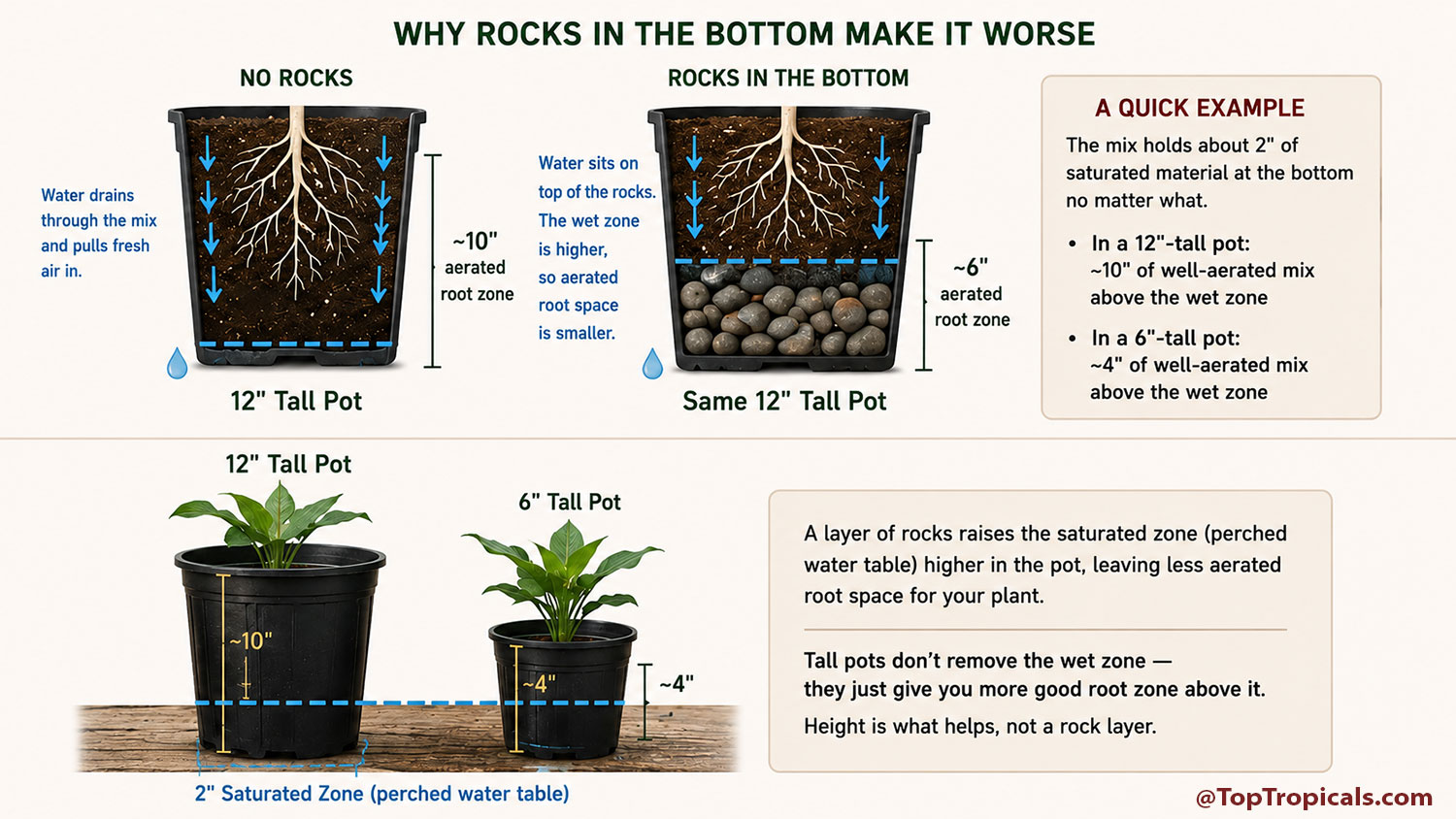
This one is worth slowing down for, because almost everyone has heard it and it is wrong.
Water does not move easily from a fine potting mix into the big open spaces between rocks. Instead of draining down through the gravel, some of the water stays suspended in the finer material just above the rock layer. This suspended zone is called the perched water table.
Here is what the rocks actually do. The saturated part of the mix does not sink into the rocks. It sits on top of them, which pushes the wet zone higher into the pot. The usable, aerated root space shrinks. So a layer of gravel in the bottom does not lower the perched water table. It raises the soggy zone closer to the roots, which is the opposite of what you wanted.
A quick example. Say a given mix holds about 2 inches of saturated material at the bottom no matter what. In a 12-inch-tall pot, you still have about 10 inches of well-aerated mix above that wet zone. In a 6-inch-tall pot, you have only about 4 inches. That is why tall pots can genuinely help deep-rooted plants. The height, not a rock layer, gives you more good root zone. Tall pots do not erase the perched water table, they just leave more room above it.
Rocks are not banned. They are fine for weighing down a pot that tends to tip, or as decorative top dressing. Just keep them out of the bottom as a drainage fix, because they are not one.
🌿The Florida Shell-Rock Problem
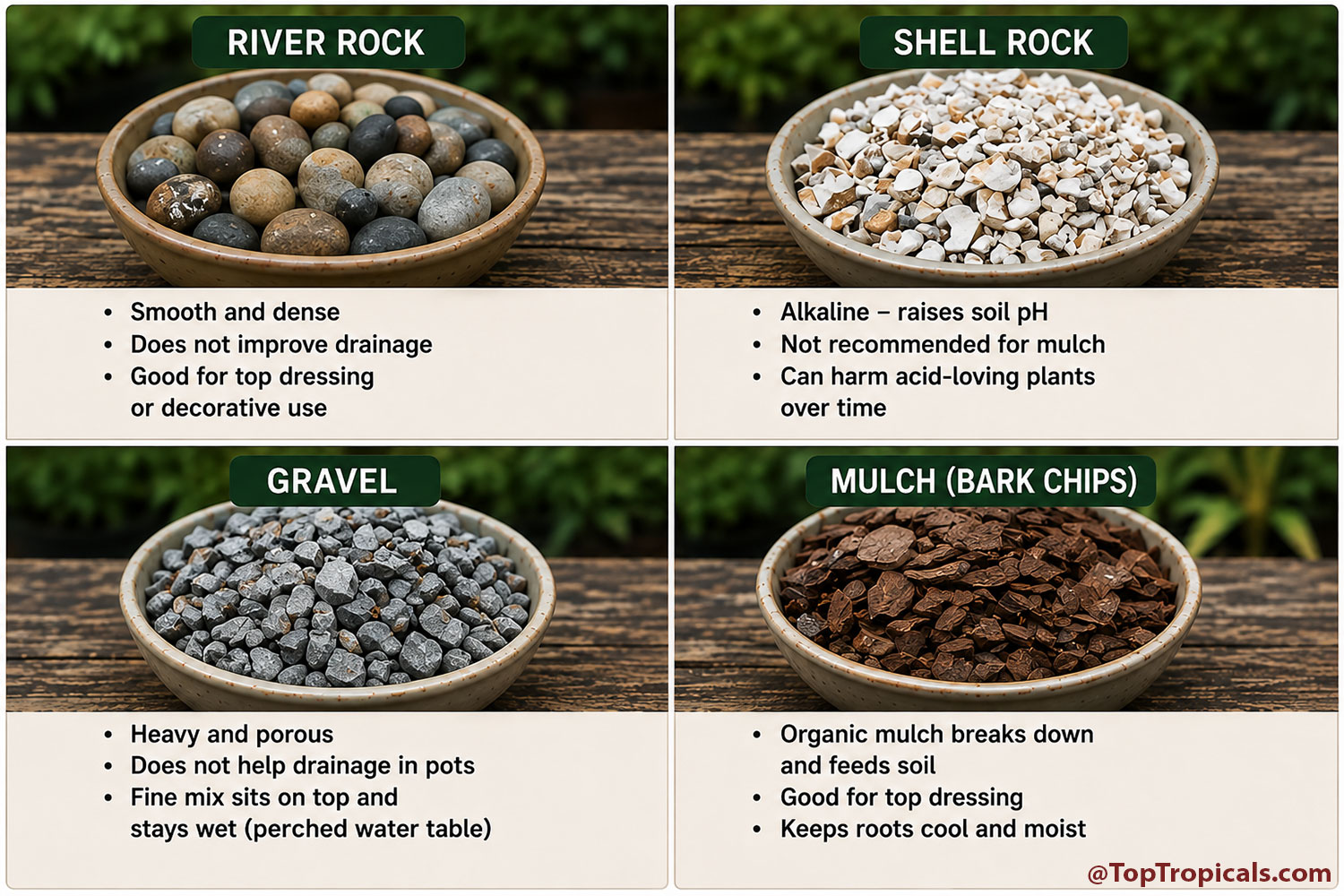
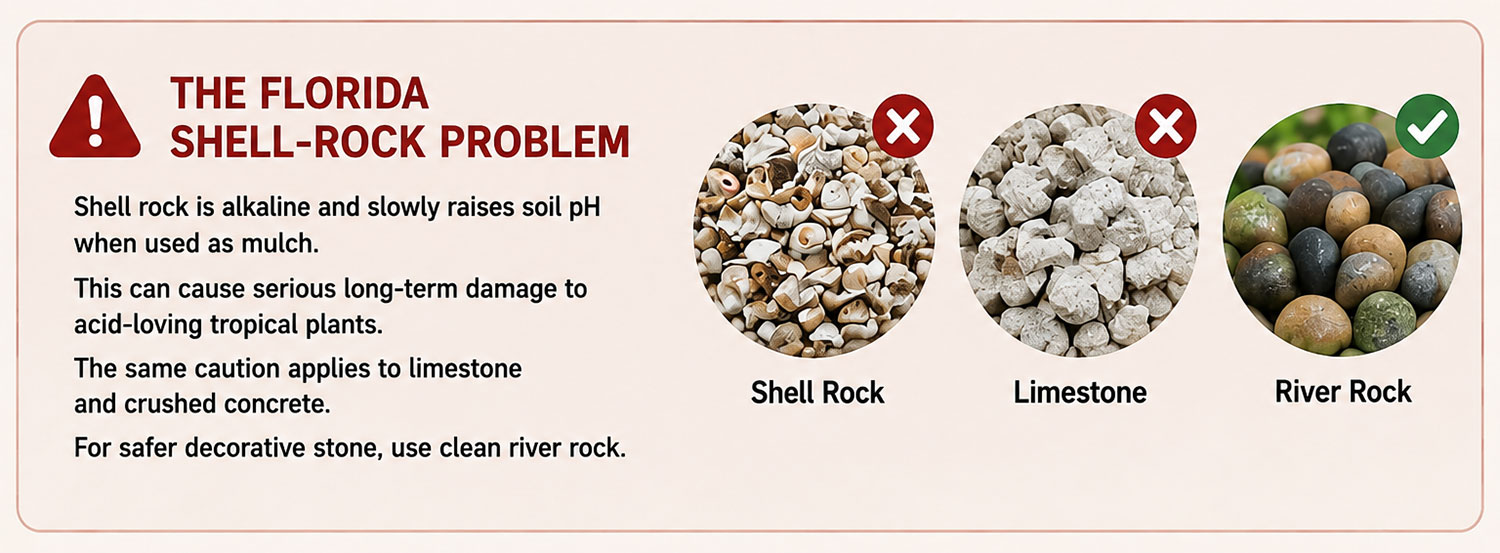
A quick warning for Florida gardeners. Shell rock is alkaline, and used as mulch it slowly raises soil pH. For many tropical plants that prefer acidic conditions, the gradual rise in pH can cause serious long-term damage. The same caution applies to limestone and crushed concrete near acid-loving plants. If you want decorative stone around your plants, clean river rock is generally the safer choice.
🌿Is Expensive Potting Mix Worth It?
There is an old line in horticulture: "Always plant a $10 tree in a $100 hole." The spirit carries over to containers.
Better ingredients cost more, but they hold their structure longer, resist packing down, keep draining, and support healthier roots. That lowers your odds of losing an expensive plant to a few dollars of bad mix. Price alone does not guarantee quality, so this is not an argument for buying the most expensive bag on the shelf. It is a reminder that saving a little on the mix gets expensive fast when the plant dies.
⛔️ Common Mistakes
- ❌ Using garden soil, topsoil, muck, or compost as the main container medium.
- ❌ Using pots with no drainage holes.
- ❌ Leaving pots sitting in standing water inside their saucers.
- ❌ Moving a small plant into a much larger pot.
- ❌ Assuming dark soil is automatically good soil.
- ❌ Trying to revive a sick, sad plant suffering from poor soil conditions and poor drainage by adding more fertilizer.
- ❌ Ignoring root aeration.
- ❌ Using fine sand instead of coarse horticultural sand.
- ❌ Adding rocks to the bottom of a pot for drainage.
A saucer itself is fine. The mistake is letting water stand in it after you water.
✅ Can you reuse old potting mix?
Yes, if the plant was healthy. Remove the old roots, make sure the mix still drains well, and check that there are no signs of disease. If the plant was sick or died in that mix, do not reuse it. Don't try to sterilize mix
The Bottom Line
Drainage matters more than extreme water-holding capacity. The healthiest roots do not grow in the darkest, richest-looking material. They grow in a medium that gives them both water and oxygen.
When a bag promises that it "holds moisture for weeks," hear what a professional grower hears. What you actually want is a mix that drains quickly, lets you water thoroughly and often, and swaps stale air for fresh oxygen every time you do.
Which brings us back to Murray Corman: "Always overwater your plants. Improve your soil drainage."
📚 More: How to re-pot a plant properly