Garden Blog - Top Tropicals

Date: 17 Sep 2025

Mulberry Care and Growing Tips

Mulberry  fruit  on  a  plate

Mulberries are tough, low-maintenance fruit trees that adapt to many conditions.

  • Climate: Hardy from USDA zone 5 to 10.
  • Soil: Grow well in almost any soil; prefer good drainage.
  • Watering: Regular watering during dry spells; drought tolerant once etablished.
  • Growth: 3–5 feet per year, producing fruit early.
  • Pruning: Annual pruning controls size and improves branching.
  • Pot culture: Dwarf types thrive in containers, staying 6–7 feet tall. Use a large pot, water consistently, and prune lightly. Use Abundance potting mix for best results.
  • Fertilizer: For reliable production, fertilizer regularly. Apply Sunshine C-Cibus liquid booster with every watering, or Green Magic controlled release fertilizer every 5-6 months.

❓ Mulberry FAQ


How soon will a mulberry fruit?

One to two years, sometimes the very first season.

What climates are suitable?

USDA zones 5–10, from -20F winters to hot summers.

How tall do they get?

Standard trees 20–30 ft; dwarfs 6–10 ft in pots.

Do I need more than one tree?

No, they are self-pollinating.

What do they taste like?

Sweet and juicy, like a blend of blackberry and raspberry.

How long is the harvest?

Everbearing types ripen gradually from summer into fall.

Do birds eat them?

Yes, but trees are so productive there’s plenty to share.

Are they messy?

Dark-fruited varieties can stain; white mulberries do not.

Can I grow them in containers?

Yes, dwarf types (Dwarf Everbearing, Issai) fruit well in pots.

How long do they live?

Many live for decades; Illinois Everbearing can endure for generations.

What are the health benefits?

Mulberries are low-glycemic, support healthy blood sugar, improve heart health, and are rich in antioxidants.

Shop Mulberries

Date: 17 Nov 2025

Pram Kai Mai: a sweeter twist on Nam Doc Mai with a story - Mango Rainbow

Pram Kai Mai Mango crop in a basket

Pram Kai Mai Mango crop in a basket

Pram Kai Mai Mango

Pram Kai Mai Mango

🥭 Pram Kai Mai: a sweeter twist on Nam Doc Mai with a story - Mango Rainbow🌈
  • 🟡Why mango collectors chase after Pram Kai Mai?
  • Pram Kai Mai is like Nam Doc Mai’s cooler cousin - with even better flavor. This Thai mango can be eaten green when it’s sweet and crispy, or fully ripe when it turns golden and silky. No fiber, just smooth, juicy flesh and a tropical aroma that hits you as soon as you slice it. It’s semi-dwarf, great for pots, and some trees even fruit more than once a year. Rare, compact, and loaded with flavor - this one’s a collector’s dream.
  • 🟡Pram Kai Mai is a Thai dessert mango known for its gentle sweetness and smooth, almost fiberless flesh. The name appears in several spellings - Pram Kai Mai, Pram Kai Mea, Pram Kai Mia, Prom Ki Mia, and even Brahm Kai Meu - all referring to the same variety.
  • 🟡If we break down the original Thai name พร้ามกายเมีย (Brahm/Pram/Prom Kai Mea/Mai/Mia) literally: Brahm / Pram / Prom relates to "noble, elevated, precious".

กาย - Kai means body
เมีย - Mia means wife
But no one in Thailand interprets this name word-for-word.
In mango names, this construction works as a cultural compliment, a gentle metaphor. The meaning is closer to:
"A mango so good you would save it for the one you love most."
or "A fruit worthy of a beloved wife".
Similar to how in other languages we may call something "royal", "special", or "meant for someone dear", this name is simply expressing admiration.

And the fruit truly matches that feeling. It is fragrant and sweet, with soft tender flesh. It can be enjoyed while still crisp and green, when its flavor is clean and refreshing, or fully ripe, when it becomes rich and smooth, almost melting on the tongue.

🛒 Shop Mango varieties

📚 Learn more: #Mango_Rainbow - varieties you should try

#Food_Forest #Mango #Mango_Rainbow

🟢 Join 👉 TopTropicals

Date: 22 Nov 2025

Stop buying macadamias - plant this tree to enjoy your own nuts

Macadamia tree (Macadamia integrifolia)

🌰 Stop buying macadamias - plant this tree to enjoy your own nuts!
  • 🐿 How to grow a Macadamia tree and enjoy your own nuts - the priciest nuts in the world? Macadamia trees (Macadamia integrifolia) are surprisingly easy to grow once you know what they need. They handle a wide range of soils, prefer regular watering, and adapt well to warm, humid climates. Young trees appreciate consistent moisture, but once established, they can tolerate short dry spells and even brief flooding.
  • 🐿 The most important step is nutrition. Macadamias are heavy feeders and rely on balanced microelements for strong roots, steady growth, and reliable nut production. Use a liquid fertilizer Sunshine C-Cibus and add microelements on a regular schedule. Sunshine SuperFood plant supplement is especially helpful for preventing the leaf yellowing and slow growth that happen when microelements run low.
  • 🐿 Choose a sunny spot, give the tree room to grow, and mulch around the base to keep moisture steady. As the tree matures, it will bloom and form clusters of green husks that dry and split to reveal the sweet nuts inside.
  • 🐿 With the right care, a single tree can reward you with a generous harvest of rich, expensive macadamias right from your garden.


💖 Macadamia nut health benefits

  • 📍 Macadamia nuts are packed with healthy monounsaturated fats, antioxidants, vitamins, and minerals.
  • 📍 They support heart health by lowering total and LDL cholesterol, help steady blood sugar thanks to low carbs and good fiber, and aid digestion and weight management by keeping you full longer.
  • 📍 Their antioxidants, including tocotrienols, protect cells from damage and may reduce risks of diabetes, Alzheimer’s, and certain cancers.
  • 📍 Macadamia oil is great for skin and hair, offering moisturizing, healing, and strengthening benefits.
  • 📍 Even though they are calorie-rich, small daily portions can actually support healthy weight goals.
  • 📍 Enjoy them raw, roasted, ground, as nut butter, or added to both sweet and savory dishes.


🛒 Grow your own Macadamia Nuts

📚 Learn more:


📱 Video about growing Macadamia trees

#Food_Forest #Remedies #How_to #Discover

🟢 Join 👉 TopTropicals

Date: 21 Nov 2025

How to keep your house plants beautiful all year by feeding them right
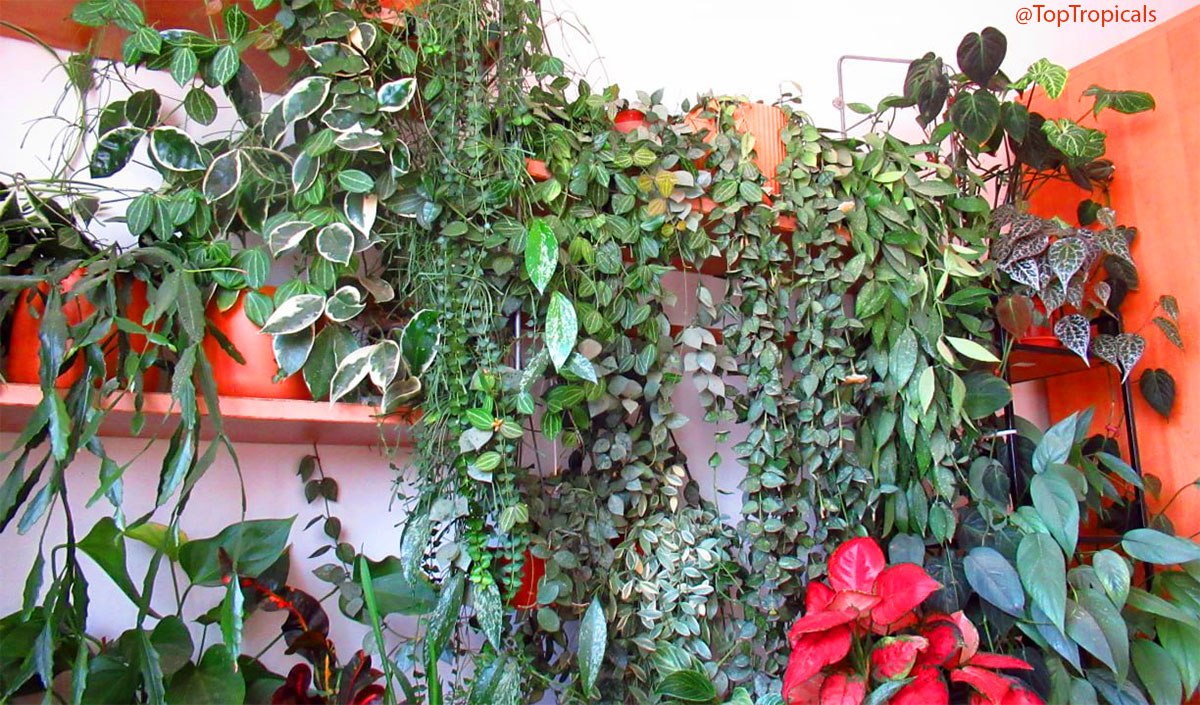
Indoor garden

Indoor garden

🍀 How to keep your house plants beautiful all year by feeding them right

  • 🌱 Healthy house plants are not just about light and water. They need food, just like we do. A good fertilizer routine keeps them green, strong, and blooming through every season. Here is a simple guide to feeding indoor plants the right way.
  • 🌱 General rules for fertilizing house plants


  • ▪️Feed lightly but regularly. Indoor plants grow in limited soil, so nutrients run out faster. Small, frequent feedings work better than one heavy dose.
  • ▪️Never fertilize dry soil. Water first, then feed.
  • ▪️Reduce feeding in winter when growth slows.
  • ▪️Watch your leaves. Pale, yellow, or slow-growing plants are asking for nutrients.
  • ▪️Use a complete formula. House plants need both macro-elements (N-P-K) and micro-elements, not just nitrogen.


🌱 What fertilizer to use


Sunshine Boosters - the everyday diet.
Sunshine Boosters are simple, balanced liquid fertilizers you mix with water. They give your plants everything they need for steady, healthy growth. They contain the right blend of nitrogen, phosphorus, potassium, and trace minerals. They do not contain harsh chemicals, so they are safe for homes with pets and kids. Regular use keeps plants growing faster, stronger, and more resilient to stress.

Sunshine Superfood - the vitamin supplement.
If a plant turns yellow or looks weak, it often needs micronutrients. These are the plant version of vitamins, including iron, zinc, copper, and manganese. Sunshine Superfood delivers these quickly and in the right proportions. Mix it with water and apply when you notice yellowing or slow growth. It corrects deficiencies fast and keeps leaves lush and green.

Green Magic - the long-term slow feeder.
Green Magic is a controlled-release fertilizer that works for six months. It uses poly-on coating technology to release nutrients slowly, without burning roots. It is perfect for repotting or for plant owners who want a set-it-and-forget-it option. Mix one teaspoon per gallon of soil during repotting or every six months. Excellent for container fruit trees and ornamentals that need steady feeding.

🌱 The simple routine

  • ▪️For regular watering: use Sunshine Boosters.
  • ▪️Once a month: add Sunshine Superfood to prevent yellowing.
  • ▪️Every six months: mix Green Magic into the soil for long-term support.

With the right diet, your house plants stay green, strong, and beautiful year-round. Feed them well, and they reward you every day.

📸 In the photo: Indoor garden of Marina Rybka, Israel, the Editor of TopTropicals.

🛒 Get your plants some food

📚 Learn more:
📱 What are Sunshine Boosters

#Fertilizers #How_to
🟢 Join 👉 TopTropicals
Date: 23 Nov 2025

🏡 To Use Your Garden Or Be Used By It

Two  cats  in  a  garden  planting  a  young  tree.  Smokey,  a  black-and-white 
 tuxedo  cat,  holds  a  small  shovel  and  works  the  soil,  while  Sunshine,  a 
 fluffy  orange  tabby,  sits  smiling  beside  a  bag  of  garden 
 soil.

Smokey and Sunshine November Planting.

Smokey: Winter roots make spring easy. Keep that plant straight.
Sunshine: I am keeping it straight by not touching it at all.
Smokey: That is exactly what I was afraid of.

November is the month when the garden finally stops yelling at you. The heat backs off, the bugs calm down, and the weeds take a breath. This is when we get to take control again. And as gardeners, we know the truth: Either you use your garden, or your garden will use you in spring. Let me walk you through this, gardener to gardener.

"November is when the garden finally listens. Give it a little direction now, shape it, guide it, and prepare it for spring. It will reward you all year." - Tatiana Anderson, Top Tropicals Plant Expert

🌴 When The Garden Uses You

We have all lived this scene:

  • March weeds appear, and two days later it looks like a jungle.
  • One missed watering turns into five wilted plants and a full week of recovery.
  • A skipped feeding shows up as yellow leaves and panic searching online.
  • Bugs return fast, and suddenly you are washing leaves every other day.
  • Random plant purchases fill your yard with chaos and mismatched care needs.
  • When the garden takes control, spring feels like hard work, not joy.

An  overgrown  tropical  garden  with  dense  foliage  and  vines  spilling  over
    a  walkway,  showing  how  a  garden  can  take  over  when  not  maintained.

Overgrown Tropical Garden Showing How a Garden Can Use You

📊 When You Use Your Garden

November flips the script. Plants slow down. Soil stays warm. This is the safest month to experiment, move plants, fix mistakes, and redesign.

What you do now pays off huge in March.

  • You map out sun zones and shade zones.
  • You mulch now so weeds do not explode later.
  • You move plants to better positions without heat stress.
  • You remove the high-drama plants before they start another season of complaints.
  • You pick what you want for next year instead of letting impulse buys rule you.

Spring becomes smooth instead of overwhelming. And honestly? It feels good to walk outside in March and see order instead of chaos.

A  neat,  organized  tropical  garden  with  trimmed  plants,  open  pathways, 
 and  balanced  landscaping,  showing  how  a  gardener  can  use  and  direct  the 
 garden.

In the photo: Every garden starts in small steps. Biquinho Pepper (front) in the garden.

What Benefit Do You Get Personally?

  • Less watering.
  • Fewer bugs.
  • Bigger fruit.
  • Better flowering.
  • Less money wasted.
  • Less time fixing problems you could have prevented now.

This is why experienced tropical gardeners adore November.

Garden

In the photo: Organized Tropical Garden. Firebush (lemon gold variety) and Cordylines (Ti Leaf) make colorful spots in the garden.

🐭 Start With Something Small Today (5 Minutes)

Pick one:

  • Add mulch to the driest spot in your yard.
  • Cut one dead branch from any tree.
  • Move one pot to a better sun angle.
  • Pull three weeds from the worst area.
  • Water deeply once this week.

Small steps now save hours later.

⭐ One Short Story

Last year we planted a Star Fruit in November. By March, it was already covered in flowers, and have been harvesting fruit non-stop since then! That is what winter planning does: it gives plants a head start you can actually see.

Young  Carambola  Star  Fruit  tree  fruiting

🐍 Plants That Will Use You If You Let Them

These are great plants, but only if you plan before planting them:

  • Banana (thirsty)
  • Hibiscus (hungry)
  • Brugmansia (sensitive)
  • Passion vine (takes over anything it touches)

Place them wrong, and they become full-time jobs.

An  overgrown  passion  vine  covering  a  garden  swing,  showing  how  a 
 fast-growing  plant  can  take  over  when  not  maintained.

In the photo: Passion Vine taking over the swing.

🐰 Plants That Work For You

These feel like free upgrades to the yard:

Pick even one of these and your garden starts giving back.

A  landscaped  garden  path  with  a  Cattley  Guava  tree  featuring  a  twisted 
 multicolor  trunk,  surrounded  by  trimmed  tropical  plants  and  decorative 
 garden 
 elements.

In the photo: Cattley Guava brings not only tasty fruit but also a wonderful character with its amazing multi-color twisted trunk.

🌡️ November Advantage

You cannot ruin anything in November. This is the safest, calmest month to shape your garden the way you want. If you act now, spring becomes a victory lap. If you wait, spring becomes a rescue mission.

A  landscaped  tropical  garden  with  a  potted  Adenium  in  full  bloom,  red 
 Cordylines  behind  it,  and  neat  mulched  beds  with  decorative  garden 
 elements.

In the photo: Adenium is a colorful accent in the garden.

💐 Thanksgiving Tie-In

This is the season to reset, breathe, and be thankful for your outdoor space. A garden that works for you is one of the best gifts you can give yourself going into the new year.

Start your November plan today. Use your garden. Do not let it use you.

A  neatly  designed  tropical  garden  bed  featuring  Megaskepasma,  iris, 
 Colocasia,  colorful  Crotons,  Dracaena,  and  Ti  Leaf  plants  arranged  in 
 mulched 
 landscaping.

In the photo: Megaskepasma, Iris, Colocasia, Crotons, Dracaena and Ti Leaf bring instant tropical look to your garden.

Shop Fruit trees

Shop Flowering shrubs