Garden Blog - Top Tropicals

Date: 26 Oct 2018

Improving cold hardiness before winter: fertilizer and micro-elements

TopTropicals.com

Q: I live in New Jersey and it is getting cool here, with temperatures in the upper 40s, but my tropical plant collection is in a heated sunroom (still around 70s). Should I continue fertilizing my plants? And if yes, my second question about deciduous Sugar Apple tree. Should I continue fertilizing it until it drops leaves?

A: First of all, even though you live outside tropical climate, your plants enjoy warm temperatures year round, and can be treated like if they were in a Southern garden.
Plant nutrients, both macro-elements (regular fertilizer) and micro-elements (such as iron, manganese, magnesium, copper, and other elements) play an important role not only in overall plant health but also in plant hardiness.
The rule of thumb is, even in warm climates we cut off any fertilizer by the end of October. You still have time for the last treatment this year (next will be in March, or when your plants start showing new growth). You may apply just a bit of slow-release granulated fertilizer, or water-soluble by foliar spray, diluted 1/2 of label strength, to all evergreen species in your collection.
The most important application before winter is micro-elements and other plant boosters that will help you plant collection survive winter months with a shorter daylight and cooler temperatures. Now it is a perfect time to make these simple steps:

1) Miscro-element applications, any one of: Superfood, Iron Supplement, Greenleaf.
2) Sunshine-T application: for improving cold hardiness, plus immune system resistance to insects and deceases.
3) Sunshine-Honey application for all fruit trees to encourage bigger and sweeter fruit next year.

Regarding your second question. Deciduous tropical plants like Annonas, Adeniums, Plumerias, etc - do not need regular fertilizer at this time, however, go ahead and apply microelements Superfood complex, as well as Sunshine-Honey, while leaves are still green. These two will give a kick-start to provide better flowering in spring, and production of sweeter fruit later.

Check out SUNSHINE boosters - all with free shipping!

Date: 24 Jun 2018

TopTropicals

Spring is coming, plants need food! Time to fertilize...

Last winter was long and snowy in the most part of our country. Hold on fellow gardeners up North, it is almost over!
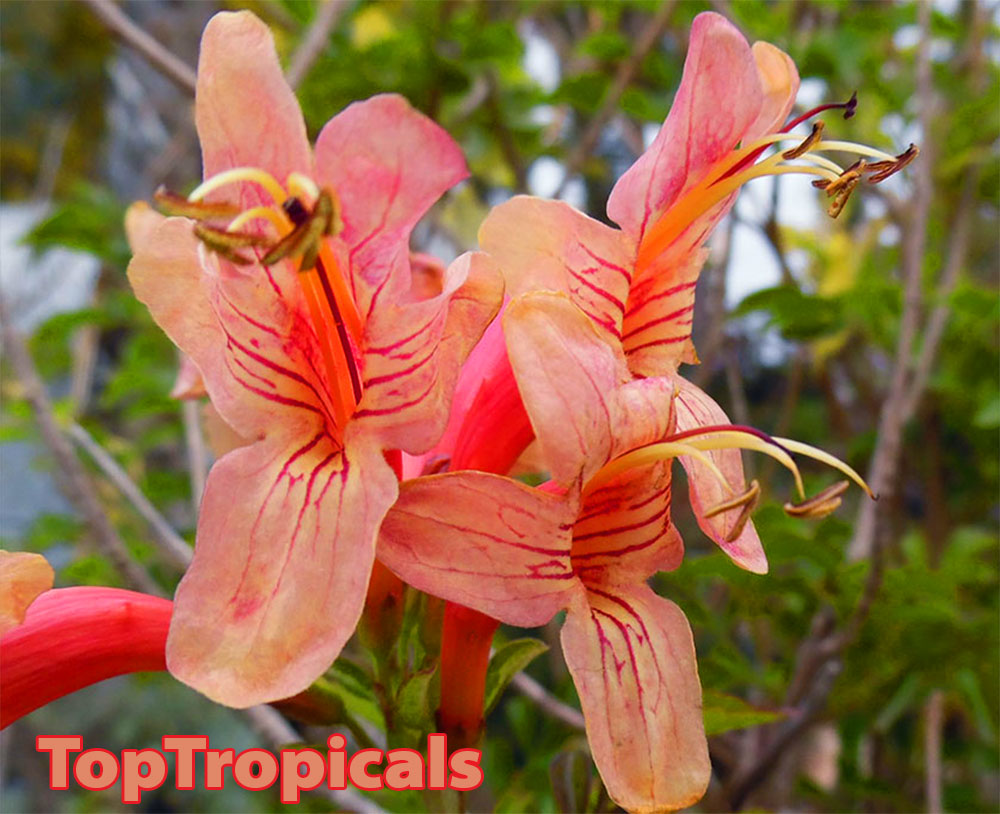
Here in Florida we have been blessed again with a mild winter without serious cold snaps. Early Spring that is already in the air. Look at this picture of flowers in our front yard now.
If the weather is already warm in your area (low temperatures above 55), it is time to start fertilizing. We are sending our love and support to tropical Puerto Rico suffered from hurricane last year, and will be happy to help you guys to restore your lost gardens!

CHECK LIST

what to do to give your garden a good kick start:

1. Slow release granulated food. Apply Slow Release Fertilizer and continue once a month. 1 tsp per gallon of pot, or a handful for in-ground plants. This will provide essential macro elements (NPK) required for a plant growth.

2. Water soluble micro-elements. Besides macro-elements, plants need many other elements that most of the time missing in soil. A lack of micro-elements causes different deficiencies, resulting in weak root systems, slow growth, deformed leaves, leaves yellowing, lack or no flowers/fruit. Apply these supplements as a foliar spray once a month to induce healthy growth and flower/fruit development. We recommend the following micro-element products to keep your plants healthy and vigorous year round:
a) SUNSHINE SuperFood - plant health booster. This revolutionary new liquid complex contains ALL microelements needed and can fix all possible problems occuring to your tropical plants - from roots to flowers and fruit. We have convenient dropper bottles of 5 ml for small plant collections, 50 ml for larger gardens, and 100 ml for professional landscape applications.
b) SUNSHINE-Micro - Microelement booster - for common iron deficiency (pale leaves)
c) SUNSHINE-Super-Iron - Microelement booster - for severe iron deficiency (severe yellowing leaves)

3. SUNSHINE plant boosters - SUNSHINE-E, -BC (caudex plants and bonsai), -H (house plants). Apply these natural plant stimulants to help plants recover from cold, dormancy, increase plant's metabolism and make a plant more readily absorb both Macro- and Micro-elements. SUNSHINE boosters also will help plants grow vigorously, withstand Summer heat and drought, and produce bigger and better flowers and fruit.

4. Kickstart a sweeter fruit. To get a better and sweeter crop in Summer and Fall, you need to start first application now. SUNSHINE Honey - is natural, Amber-colored, honey-like liquid microelement product for fruiting and edible plants that will make them sweeter, tastier and more flavorful! Very effective for tropical fruits, tubers, vegetables. Great for tropical fruit trees: Mango, June Plum, Annonas, Tropical Cherries, Carambola, Citrus; subtropical fruit trees: Peaches, Apricots, Loquat and berry plants (blackberry, mulberry, etc.)

5. SUNSHINE-S. Don't forget to plant seeds! It's a perfect timing now to start your tropical garden indoors even if it is still cold outside. Soak them in SUNSHINE-S solution to increase germination rate.

See full list of SUNSHINE boosters. All these products are essential plant elements. They are not toxic and can be used safely for edible landscapes.

Date: 31 Oct 2025

Black  Bat  Lily  and  White  Bat  Lily  plants  blooming  together  in  the  Top 
 Tropicals  greenhouse,  showing  contrast  between  dark  maroon  and  ivory  bracts 
 with  long  trailing 
 whiskers.

Black and White Bat Lilies (Tacca chantrieri and Tacca nivea) side by side in bloom

How to Care for Bat Lilies

by Top Tropicals Plant Expert Tatiana Anderson

🌞 Light

  • Bright, filtered light. Morning sun or dappled shade is perfect.
  • Avoid direct midday sun outdoors — it can scorch the leaves.
  • Indoors, place near a bright window with sheer curtains or use a grow light.

🌡️ Temperature

  • Warm and stable, ideally 70-85 F during the day.
  • Protect from cold drafts or sudden chills.
  • Ideally, do not let temperature drop below 45 F, although Taccas can tolerate short period of upper 30's.

💧 Watering

  • Keep soil evenly moist but not soggy.
  • Water when the top inch feels barely dry.
  • Use lukewarm water.
  • Avoid letting the pot sit in water.

💨 Humidity

  • High humidity (60-80%) is key.
  • Mist leaves often, use a humidity tray, or keep near a humidifier.
  • In greenhouses or bathrooms with a skylight, it thrives naturally.

🌱 Soil

  • Use rich, loose, well-draining mix
  • Combine bark, peat, and perlite for ideal airflow around the roots.
  • Best mix for growing tropical Tacca in pots - soilless potting mix Abundance . It provides perfect drainage and has a texture similar to a jungle rainforest media.

🍽️ Feeding

  • During growth season (Spring through Fall), feed with Green Magic controlled release fertilizer every 6 months. For even better results, you may apply liquid fertilizer Sunshine Boosters Rubusta.
  • Stop feeding dry fertilizer in cooler months when growth slows. Liquid Sunshine Boosters are safe to use with every watering, year around.

🏡 Indoor Growing

  • Great for bright bathrooms, sunrooms, or any warm, humid corner.
  • Rotate pot occasionally for even growth.
  • Keep away from heating vents and AC drafts.

🌴 Outdoor Growing (in warm climates)

  • Partial shade or filtered light under trees.
  • Excellent in large containers that can be brought inside for winter.
  • Shelter from heavy rain and wind.

Sunshine: "So… it’s a diva?"
Smokey: "Exactly. But take care of it - and it rewards you with wings!"
Smokey and Sunshine: "Happy Halloween!"

🎥 Watch Short Videos:

🛒 Grow your own gothic masterpiece:
Shop Bat Head Lily Tacca

Date: 15 Dec 2025

9 tropical vegetables to grow indoors, or how to have garden-fresh produce all year

9 tropical vegetables to grow indoors

9 tropical vegetables to grow indoors

🌱 9 tropical vegetables to grow indoors, or how to have garden-fresh produce all year


Cold weather does not have to mean the end of homegrown food. According to Southern Living, vegetables like lettuce, carrots, and radishes can be grown indoors during winter. The downside is that most of these are annuals - you harvest once, then start over.

Tropical vegetables work differently. Many are perennial, long-living plants that grow well in containers and keep producing for years. Grow them indoors year-round, move them outside in summer for extra sun and growth, then bring them back indoors before cold weather. With enough light and regular care, these plants can provide fresh harvests in every season.
  • ✅ Tips for growing tropical vegetables indoors


  • 📍Place plants near a bright window or supplement with grow lights for steady growth
  • 📍Use containers with good drainage and quality potting mix
  • 📍Keep plants away from cold drafts and heating vents
  • 📍Rotate pots and prune regularly to encourage fresh, tender growth
  • 📍Feed regularly with natural Sunshine Boosters - they are formulated for edibles


✅ Tropical vegetables to grow indoors

  • 🌿 Gynura procubens - Longevity Spinach, Cholesterol spinach - a fast-growing leafy green often called a superfood. The tender leaves are used fresh or lightly cooked and can be harvested repeatedly. This plant stays compact, handles containers easily, and regrows quickly after cutting.
  • 🌿 Sauropus androgynus - Katuk, Tropical Asparagus. One of Southeast Asia’s most popular leafy vegetables. Katuk produces edible shoots and leaves that are cooked in soups and stews. It grows well indoors and rewards regular harvesting with constant new growth.
  • 🌿 Cymbopogon citratus - Lemon grass: a tough, productive plant that adapts well to container growing. The stalks and leaves are used for teas, soups, and flavoring. Indoors, it grows more slowly but stays productive, especially when moved outdoors in summer.
  • 🌿 Lippia dulcis - Aztec Sweet Herb, Sweetleaf: a low-growing herb with naturally sweet leaves. The foliage can be eaten fresh or used as a sugar substitute in teas and desserts. It stays compact, tolerates pruning, and performs well in pots indoors.
  • 🌿 Piper sarmentosum - Vietnamese Pepper, Lalot: grown for its aromatic, edible leaves rather than peppercorns. The leaves are eaten fresh, cooked, or used as food wraps. This plant stays manageable indoors with light pruning.
  • 🌿 Piper nigrum - Black Pepper: the true black pepper vine. Grows well indoors as a container vine with support. It prefers warm temperatures, steady moisture, and bright filtered light.
  • 🌿 Piper auritum - Root Beer Plant, False Kava-Kava: close relative of Piper methysticum (Kava-Kava) known for its large, fragrant leaves with a spicy, root beer-like aroma. The leaves are used for wrapping foods and flavoring dishes. Best grown indoors with room for its bold foliage.
  • 🌿 Piper betle - Betel leaf: a traditional edible and medicinal leaf used widely in Asia. The glossy leaves are harvested continuously and used fresh or as wraps. This vine grows well indoors with warmth, humidity, and a small trellis.
  • 🌿 Piper longum - Indian Long Pepper, Pippali, Bengal Pepper: A tropical pepper relative grown for its elongated spice fruits and edible leaves. Slower to fruit indoors but easy to maintain as a leafy spice plant in containers with bright light and regular feeding.

Tropical vegetables make indoor gardening more rewarding because they do not stop after one harvest. With containers, light, and basic care, these plants can become long-term food producers that move seamlessly between indoors and outdoors - keeping fresh flavors within reach all year.

🛒 Explore tropical edibles, herbs and spices

📚 Learn more:


🎥 Karkade Tea
Longevity Spinach


#Food_Forest #Remedies #Container_Garden #How_to #Discover

🟢 Join 👉 TopTropicals

Date: 9 Jan 2026

Mango Tree for Zone 5: top 15 Condo Mango for growing in cold areas

Mango Tree for Zone 5

🥭 Mango Tree for Zone 5: top 15 Condo Mango for growing in cold areas

  • 🥭 Can you grow a mango tree in Zone 5? Short answer - yes! The trick is - containers!
  • Mango trees are tropical plants but they do great in pots when you choose the right varieties.
  • 🥭 Compact types stay short, respond well to pruning, and produce in containers.
  • You can grow them on a patio, balcony, even move them indoors in your condo for winter. That is why they are called condo mangoes!
    During warm months, they live outside.
    When cold weather hits, they come inside.
  • 🥭 With good light, proper watering, fertilizing, and some patience, these trees can reward you with real mangoes. Not a farm harvest, but enough to enjoy and share.


🏆 Most popular Condo Mango varieties:


Baptiste
Carrie
Cogshall
Diamond
Fairchild
Ice Cream
Julie
Keitt
Lancetilla
Lemon Meringue
Mallika
Nam Doc Mai
Okrung
Pickering
Venus

🛒 Discover Condo Mango

📚 Learn more:
#Food_Forest #How_to #Discover #Mango

🟢 Join 👉 TopTropicals