Garden Blog - Top Tropicals

Date: 2 Apr 2026

Skip the Egg Hunt - Start a Plant Hunt 🐰

Smokey  the  black-and-white  cat  with  glasses  sits  on  a  patio  taking 
 notes  while  Sunshine,  a  fluffy  orange  cat  wearing  bunny  ears,  holds  a  small 
 potted  mango  tree  with  light  yellow 
 flowers.
Sunshine: I went egg hunting. Found something better. Let’s grow it on the balcony. Mango-filled donuts, here I come.

Smokey: Finally. You’re thinking.

Read more about Smokey & Sunshine

Groundhog said long winter… and it sure felt like it. But now it is finally over, and balconies and patios are waking up again.

Easter is here, and with it comes that fresh start feeling - time to open the doors, bring plants back out, and start growing.

We made it through the cold. For northern gardeners, that is every year; for borderline zones, it is a reminder that freezes happen. That is exactly why growing in pots makes sense - you stay flexible.

Container growing is not just about pots - it is about choosing the right plants. The best options stay manageable, produce well, and handle being moved.

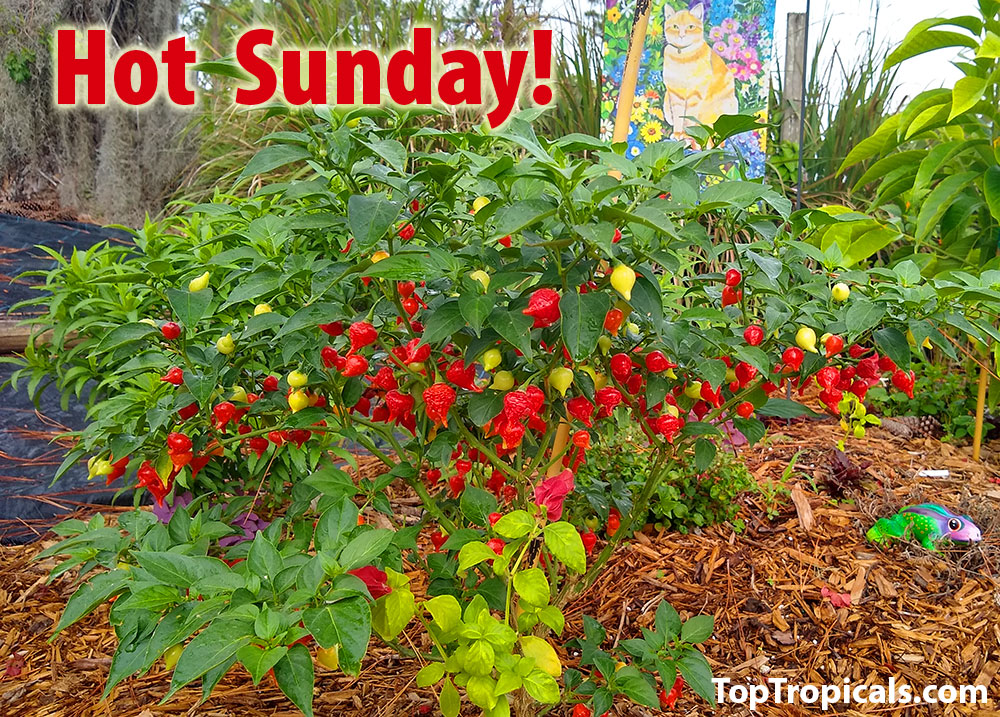
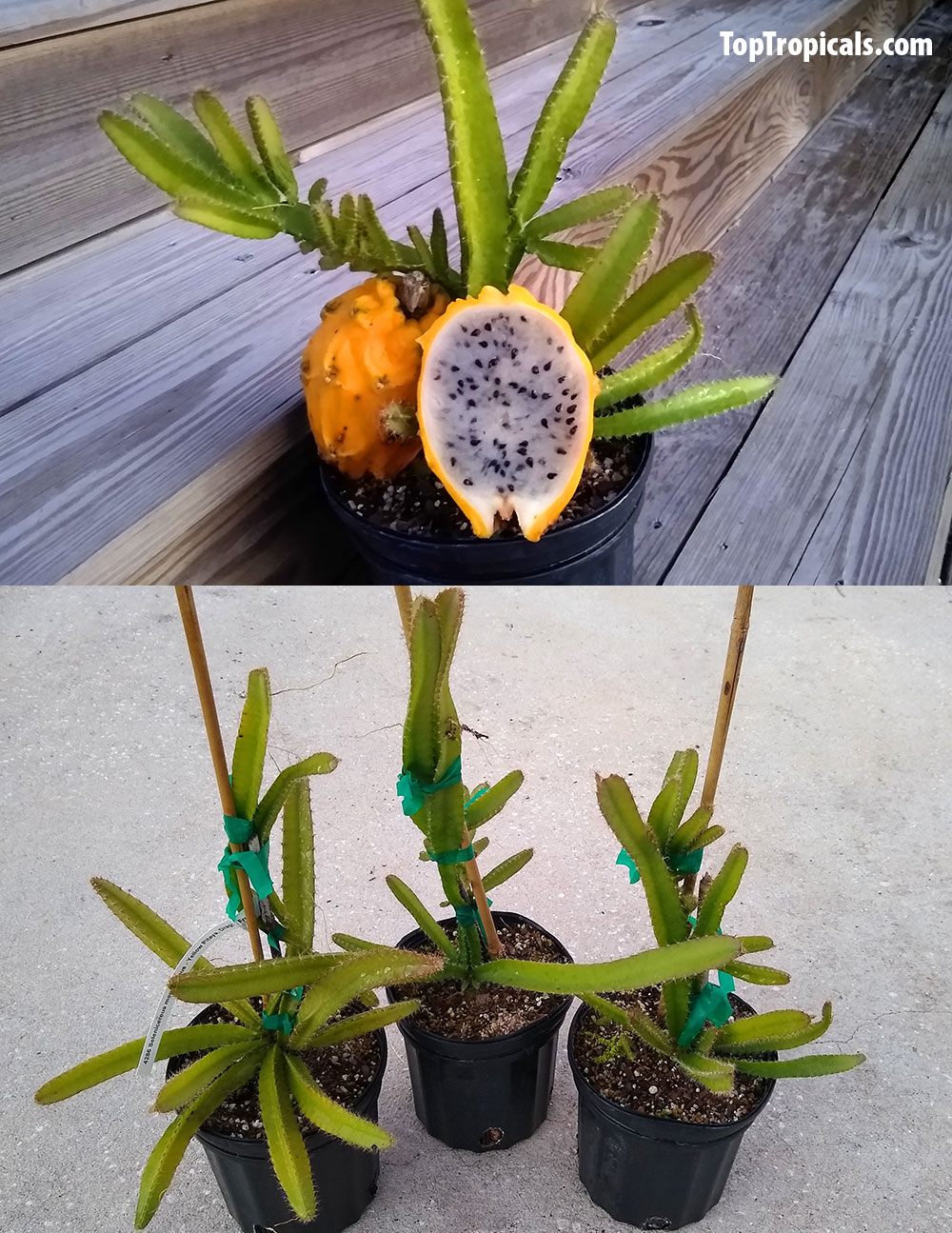
Let's look at what works. Start with plants that naturally stay compact and adapt well to containers. These are the ones that won’t outgrow your space and will reward you quickly. These are proven performers in containers - compact, productive, and easy to manage:

Simple rule: if it stays compact and handles pruning, it works in a container.

Skip the egg hunt this year - go on a plant hunt instead. Start with one or two plants this Easter - not ten. Get them established, learn how they grow, and then expand.

Container basics (keep it simple):

  • Pot size: start with 3–7 gallon, upgrade as plant grows
  • Soil: fast-draining mix (never heavy garden soil)
  • Water: soak well, then let top inch dry
  • Feeding: consistent light feeding works better than heavy doses
  • Sun: most tropicals want full sun (6+ hours)

🐣 Browse our Easter Container Collection

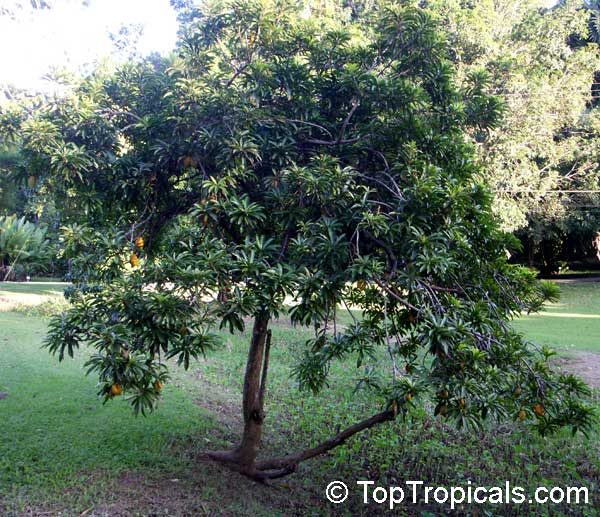
Randia  formosa  (Blackberry  Jam  Fruit)  showing  yellow  ripe  fruits,  some 
 cut  open  to  reveal  glossy  dark  pulp 
 inside.

Randia formosa - Blackberry Jam Fruit

Bunchosia  argentea  (Peanut  Butter  Fruit)  showing  clusters  of  red  ripe 
 fruits  on  a  leafy 
 branch.

Bunchosia argentea - Peanut Butter Fruit

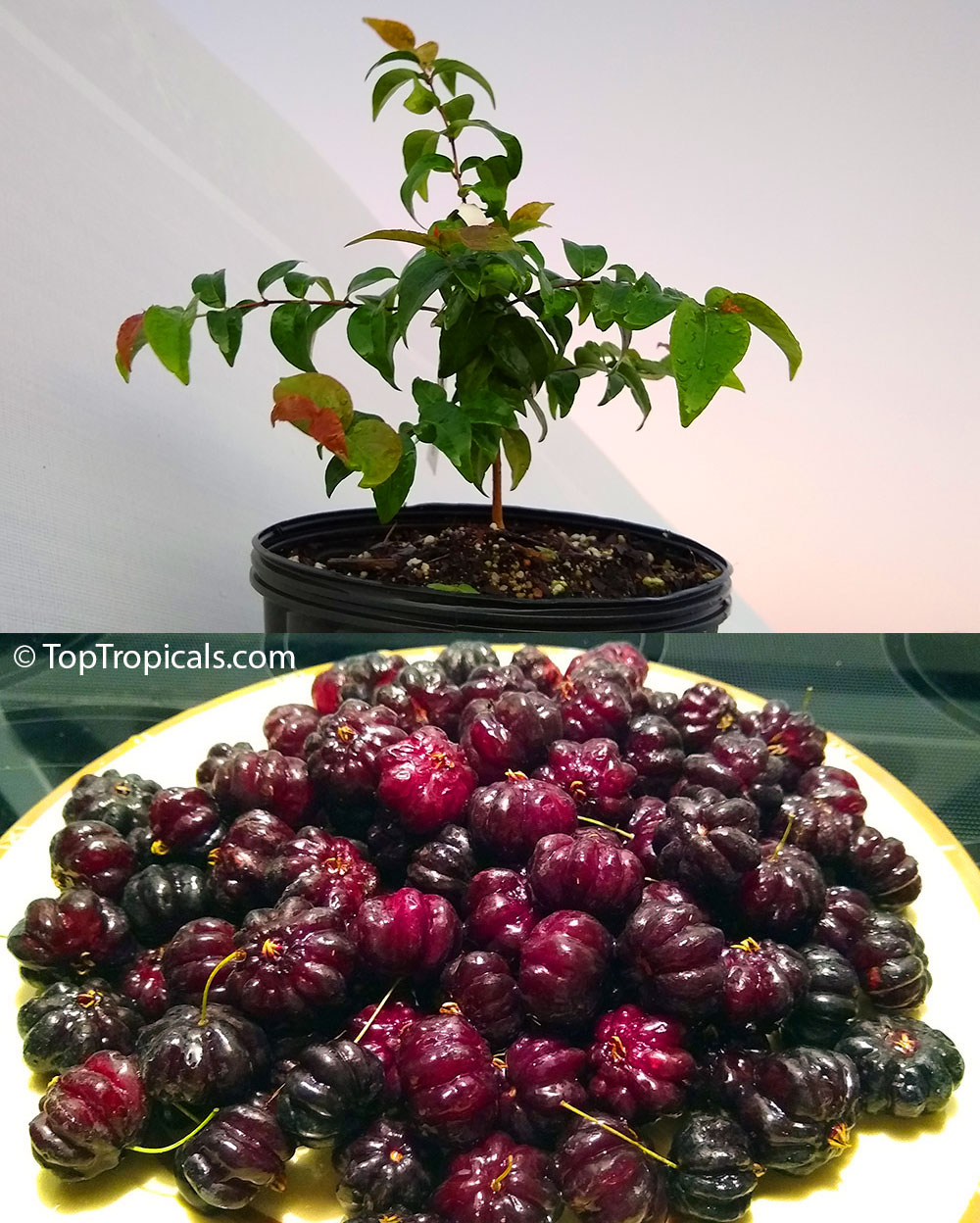
Myrciaria  cauliflora  (Jaboticaba)  tree  with  clusters  of  dark 
 purple-black  fruits  growing  directly  on  the 
 trunk.

Myrciaria cauliflora - Jaboticaba

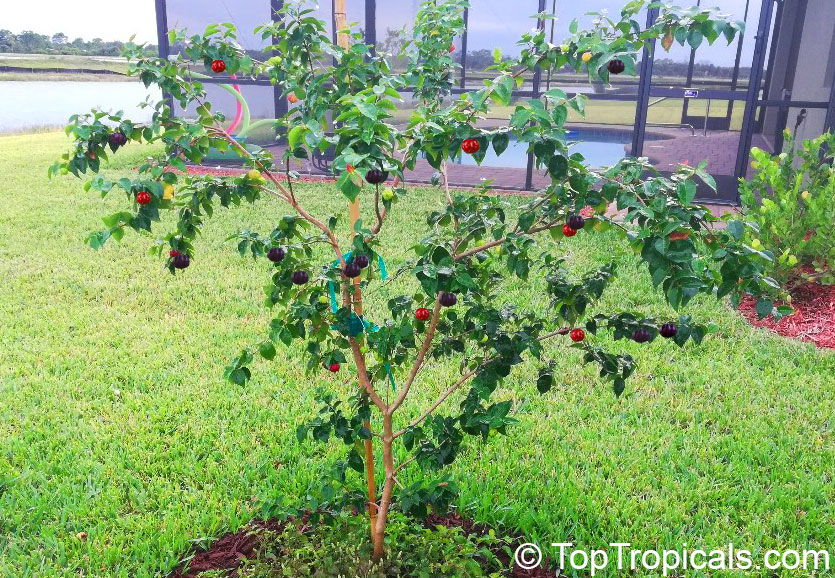
Eugenia  brasiliensis  (Grumichama)  with  red  ripe  cherries  hanging  from  a
   branch  against  blue 
 sky.

Eugenia brazilensis - Grumichama and more Eugenia Cherries

Date: 16 Jun 2025

Why is my palm tree turning yellow?

Green and yellow palm

Green and yellow palm

🌴 Why is my palm tree turning yellow?


Yellowing leaves are a common concern with palms and can be a sign of several issues, most commonly: nutrient deficiency and pests or disease. Additionally, leaf yellowing may be a sign off overwatering or poor drainage, underwatering, or cold damage.
  • ✔️ Nutrient deficiency


    Nutrient deficiency is the most frequent cause of palm issues. Palms are heavy feeders, and even a slight imbalance can lead to yellowing. Lack of nitrogen, magnesium, iron, or potassium is the leading cause.
  • ✔️ Signs of nutrient deficiencies:


Magnesium and Iron deficiency is one of the top culprits, especially in sandy soils. It causes older fronds to turn yellow with green veins.
  • Potassium deficiency causes yellow or orange spots on older fronds.
  • Nitrogen deficiency leads to overall pale yellowing, especially in new growth.


✔️ How to fix?


Use a slow-release fertilizer with high Nitrogen content, like Green Magic, that includes all these elements; with 16-6-11 grade and 6 months release, it turns plants green very quickly! You can also use a balanced liquid fertilizer like Sunshine Robusta. Additionally, a supplement of magnesium sulfate (Epsom salt) and micro-element supplement containing chelated Iron can help, like Sunshine Superfood (amino-acid based natural product).
  • ✔️ Pests and Diseases


    Pests and fungal diseases can lead to yellowing. Check for signs of scale, mites, or fungal and bacterial problems, especially if yellowing is uneven or spotted.
  • ✔️ Signs of pests:


Thrips cause silvery-yellow streaks or mottling
  • Spider mites, especially in dry conditions, cause yellow speckling
  • Scale insects can suck sap and weaken fronds
  • Mealybugs often found in leaf bases and crowns


✔️ How to fix?


Inspect your palm regularly and treat pests early with neem oil, insecticidal soap, or horticultural oil.
  • ✔️ Lethal yellowing


    Lethal yellowing is a serious disease caused by a phytoplasma, a type of bacteria-like organism. It affecting mostly Coconut palms and some other species like Phoenix (Date) palms. It causes premature fruit drop, yellowing of fronds starting from the lower ones, and eventual death of the tree.
  • ✔️ How to fix?


    Unfortunately, there's no cure, but early removal of infected trees can slow the spread. Disease-resistant coconut varieties are available.
  • ✔️ Other causes


Overwatering or Poor Drainage: Too much water can suffocate roots and lead to yellowing. Make sure the soil drains well and let it dry slightly between waterings.
  • Underwatering: Dry soil for too long will stress the palm. Water deeply but infrequently.
  • Cold Damage: Exposure to cold temperatures can turn fronds yellow or brown, especially in tropical varieties.


✔️In most cases, leaf yellowing isn't fatal, but it's a sign your palm needs attention. Focus on balanced feeding, proper watering, and pest checks to keep your palm healthy and green. Trim only fully dead fronds - yellow ones still provide nutrients to the palm. With proper care, your palm should green up again.

🛒 Shop garden supplies

#How_to #Fertilizers

🟢 Join 👉 TopTropicals

Date: 11 Jan 2021

Tropical gardener beginning-of-year checklist

Final pre-Spring check of whatever we had forgotten! For a gardener, the year ahead is a chance to do things you want, as a way to achieve the things you need to do. If your number one New Year's resolution is to garden more (a want-to item), you also will be exercising more (a need-to). Or if you plant a new edible garden (want, want, want), you will end up checking off "eat more leafy vegetables and fruits" from your to-do list!

12 steps to get ready for 2021 season:

1 - Spray fruit trees and houseplants with insecticide and micro-elements
2 - Continue spraying SUNSHINE-Epi to improve plant hardiness
3 - Protect tender plants during cold spells and especially from freeze
4 - Reduce watering during cooler months, keeping the root zone on a dry side
5 - To give your plants a kick start, fertilize with liquid SUNSHINE Boosters fertilizers - they are safe to be used year round
6 - Plant fruit trees: winter planting is beneficial to avoid heat stress for roots
7 - Plant Butterfly and Hummingbird Attractants
8 - Plant bulbs, vegetables and herbs. Use eco-safe, natural SUNSHINE boosters for all your edibles.
9 - Plan your summer garden and order seeds early
10 - Start tropical plants from seeds (indoors for cooler climates)
11 - Start ordering tropical plants and beneficial soil mix to get them established after shipping in pots
12 - Clean and oil garden tools

Date: 7 Oct 2019

Fertilizing in Winter?

Q: I'm a bit confused about what winter fertilization schedule I should follow in South Florida. For blooming plants, usually, I use a monthly granular bloom booster fertilizer as well as a liquid fertilizer every 10 days or so. Should I continue that schedule in the winter as well? Should I stop fertilizing altogether in the winter? How about fruit trees? What fertilization schedule should I follow in the winter?

A: Here is a general fertilizing schedule for established plants that we follow here in SW Florida.
The rule of thumb is, do not fertilize (with macro- NPK elements) when minimum temperatures drop below 65F and stay at that level for more than 7 days. At this temperature point, most of the tropical and subtropical plants slow down their metabolism and some of them going into dormancy. This means, nutrients are not consumed as much as during active growth period, and built-up nutrient supply within a plant plus whatever is available in the soil is just enough to get by through the winter. So additional fertilizing is not necessary. You may continue micro-element supplements and bio-stimulants throughout the year. In fact, it is highly recommended to do so, to help the plant survive cold spells. These are very effective tropical plant protectors:
SUNSHINE-Epi - Brassinosteroid plant hormone
SUNSHINE-Power-Si - Advanced plant protector with Silicon
SUNSHINE SuperFood - Complex microelement supplement

This rule is applied to both flowering and fruiting plants, in general. However, some species are winter-flowering and winter-fruiting. For those, you can make an exception and provide extra nutrients for flowering and fruiting, as long as the weather stays warm. During cold spells, avoid any NPK fertilizers and use only bio-stimulants and micro-elements. If you apply NPK during cold, it won't be consumed by a plant, build up in the soil, and may create a root burn situation.

In simple words, fertilize from March to October. Give plants some rest from November to February.

Date: 8 Aug 2019

How to grow Parijat indoors in winter

Q: I purchased Parijat plant last year spring. It had good growth in Summer, after that I kept the plant inside the house in winter. A couple of weeks it was ok, after that the plant lost leaves. What is a better idea for growing Parijat plant indoors in Winter?

A: Nyctanthes arbor-tristis, Parijat - is a semi-deciduous plant, which means, it may lose its leaves during unfavorable conditions such as drought, cold, low light and/or humidity. In your case, the plant dropped leaves because of the stress of moving indoors that includes reducing light and humidity levels. When a tropical plant loses leaves during winter, this means it goes into a dormant stage. If this happens, you need to reduce watering and keep the plant on a dry side, water in only when the top level of the soil feels dry to touch. Do not fertilize.
Try to place the plant in a well-lit spot such as a windowsill. If the windowsill and the window glass feel too cold for touch during wintertime, you may place a sheet of a Styrofoam underneath the pot, and a sheet of a bubble-wrap between the plant and the window glass, to create an extra barrier from cold. The plant may re-leaf during wintertime; if not, it may wait until spring, be patient.
Bring it back into outdoor light when minimum temperatures rise above 65F and resume fertilizing.

Recommended fertilizers for fragrant plants:

Pink N Good Daily Plant Food - Flower Booster
Plumeria Top Dress - Smart-Release Booster
SUNSHINE SuperFood - microelement supplement