Date: 9 Sep 2019
Time to clean your yard!
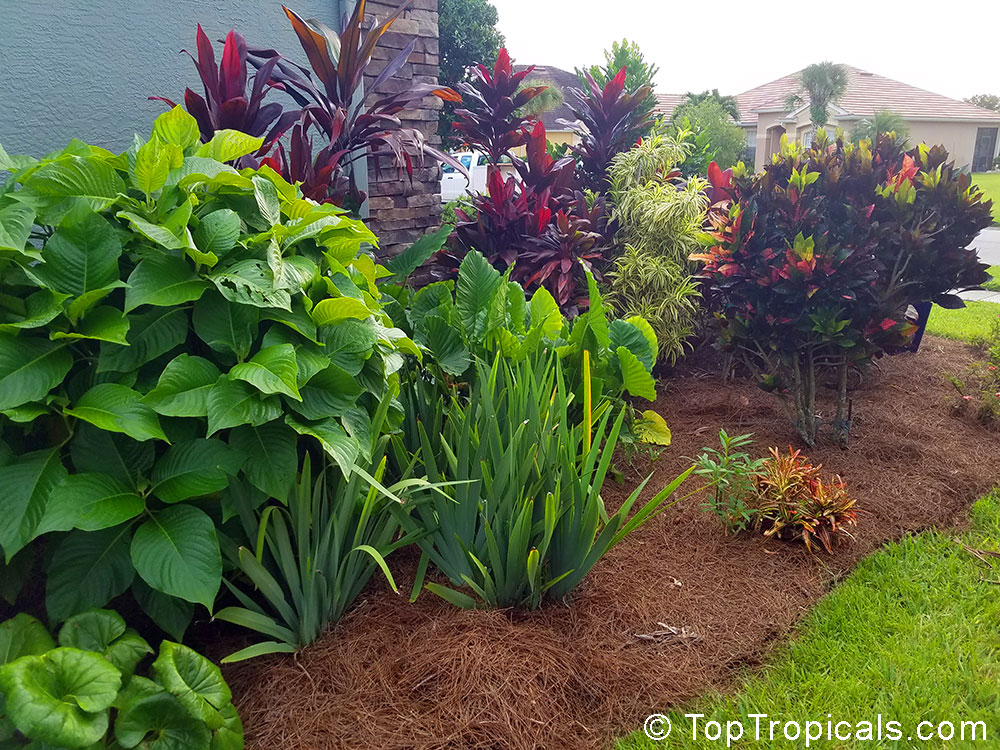
In the South. It's getting cooler in subtropical areas, and garden work becomes even more enjoyable. Your garden now is in the most perfect shape after summer vigorous growth. It is the best time now to run the last trim before winter, as well as last fertilizer application. Clean up your yard without sweating off, add mulch to help plants to survive through possible winter chills. Don't forget to start reducing watering! Remember once temperatures drop below 65F, tropical plants slow down or stop growing and go into winter dormancy sleep.
Up North. When temperatures drop below 45F, start bringing sensitive plants indoors or into protected areas. Prepare/cover greenhouse, check availability of covers (sheets, plastic) and condition of heaters. Plants indoors will experience environment change, may drop leaves, and need different care than out in the sun. Reduce watering, check for insects once a week, and stop fertilizing until spring. Remember to pick the brightest spots for overwintering your tropical plants!
Enjoy cooler weather, fresh air, and thank yourself for a wonderful work you have done in your yard!

Date: 14 May 2019
How to get gingers to bloom
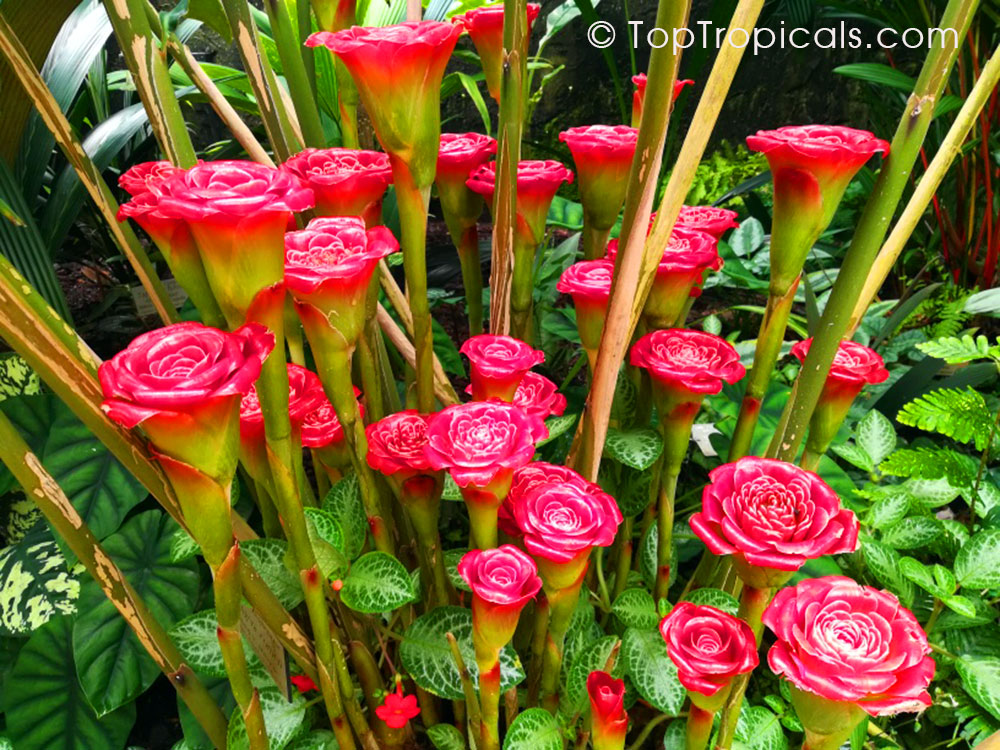
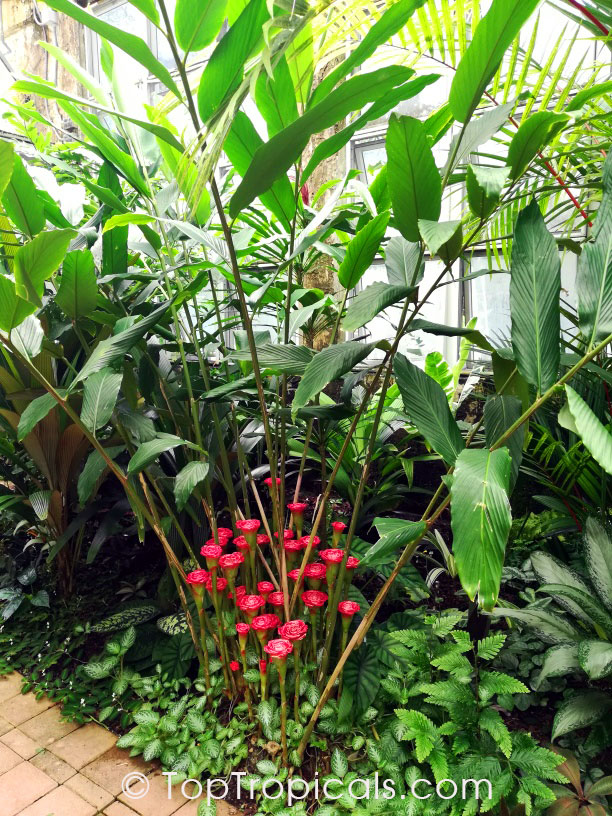
Q: I have several gingers in my yard, including Red Torch, Lobster Claw, and Red Bamboo Ginger, they grow beautifully but only produce large dark green leaves and no flowers. Is there anything I can do to make them bloom? Do they need any special fertilizer?
A: Gingers are easy to grow tropical plants with so many benefits, giving us unique spice, and showy flowers (including long-lasting cut flowers!) - where other plants fail, especially in deep shade. They are not fussy about soils and even water once established. To keep your gingers happy, follow these simple steps:
1. Bright light is essential for flowering, but planting gingers in
semi-shade or filtered light will keep them stress-free from burning summer rays.
2. Water gingers regularly until they established and start producing
new leaves and stems. Once they start clumping, you may reduce watering to a
minimum 9once a week or so), or rely on your sprinkler system.
3. Once the plant is established, start using fertilizer to induce
flowering and healthy growth.
- We recommend granulated "smart release" fertilizer for all tropical
plants. For gingers, the best formula is Tropical Allure. It provides all macro- and microelements essential for
the healthy growth of the plant.
- Apply balanced water-soluble plant food for Gingers, Heliconias and
Bananas -
Broad Leaf Plus - once a month.
- Additionally, you may also add to the menu flower booster Pink N Good Daly Plant Food - this fertilizer is used in very low
concentration and can be used with every watering.
4. Remove old dry and yellowing leaves with sharp cutters to avoid pest
problems and keep good air circulation around these clumping plants.
5. Keep soil covered with 1"mulch to protect from weeds and maintain
the optimal amount of moisture for the rhizomes.
Check out our specialized fertilizers for different plants - for all your gardening needs!

Date: 12 Mar 2019
Spring tips
Once temperatures stay above 65F, growing season starts for tropical plants.
1. Increase watering as soon as you see new buds opening and new leaves growing
2. Trim all dead or damaged wood 1-2 inches above new growth
3. Apply the following treats to make your plants happy:
- granulated balanced fertilizer
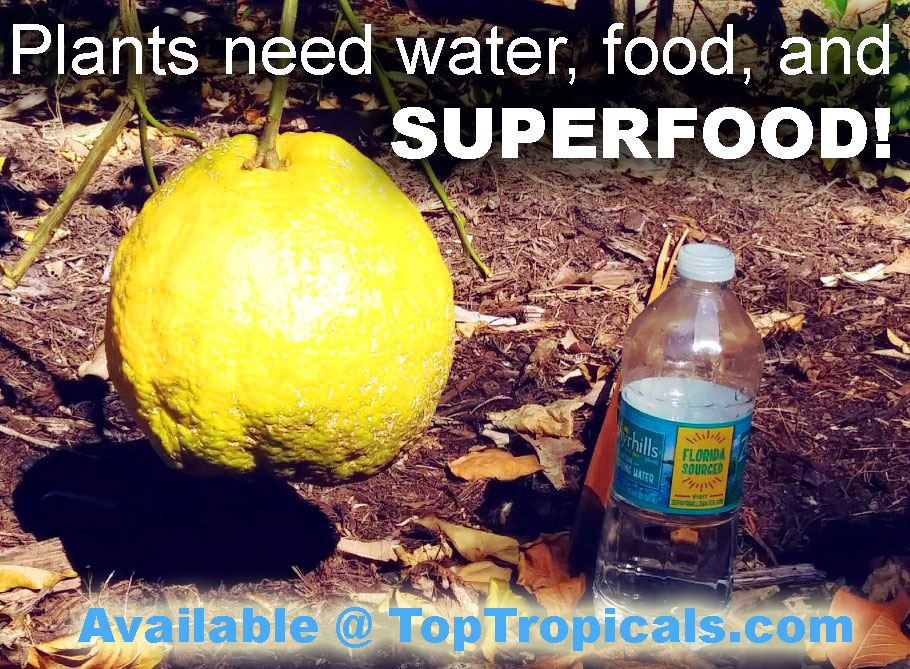
- SUNSHINE Superfood microelements as foliar spray for healthy growth, profuse flowering, and disease/bug resistance
- SUNSHINE-E to help plants come out of dormancy faster and increase metabolism. 100 ml bottles and 50 ml bottles available for large plant collections.
Date: 23 May 2024
How to keep plants green, and fruit trees - productive?
😺 SUNSHINE SuperFood - Micro-element Plant Booster does the job and adds to your plants' diet all necessary elements that may be lacking in poor soils.
SUNSHINE SuperFood has been a proven remedy in commercial crops.
‼️ Do your plants ever get the following problems? Sunshine Superfood will fix thems all:
❇️ Flowers are small or not fragrant? ✔️
❇️ Mishapen, small fruit or no fruiting? ✔️
❇️ Poor root growth? ✔️
❇️ Pale or yellow leaves, die backs, curled leaves, slow growth? ✔️
And much, much more! Don't let your plants starve!
✅
🎥 Sunshine Superfood results in sunflower fields of Ukraine, video from a drone we donated 💪🇺🇦
🛒 Get SUNSHINE SuperFood to improve your garden crops
#How_to #Fertilizers
🏵 @TopTropicals
Date: 24 Jul 2024
How to grow your own Pepper plants
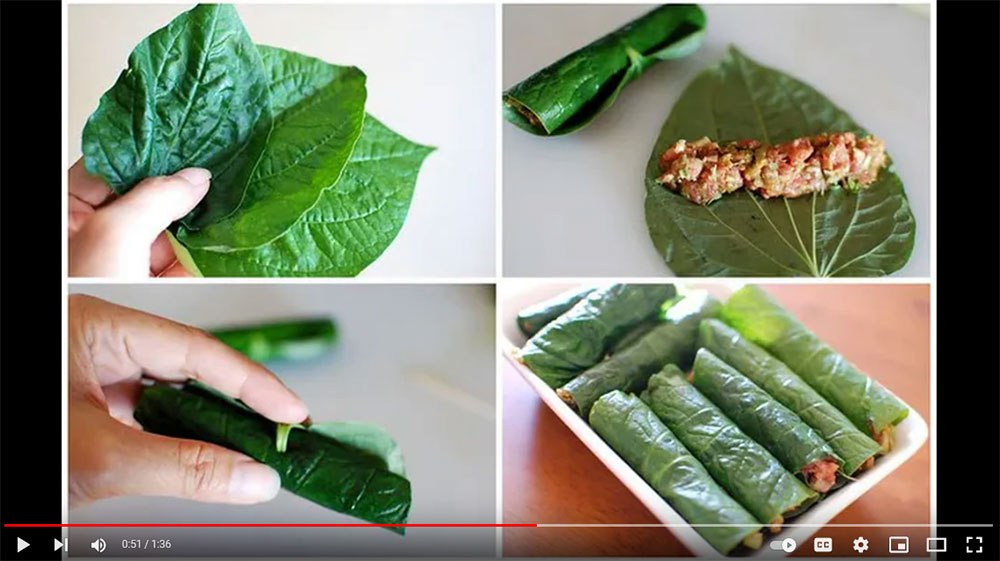
Piper sarmentosum - Vietnamese Pepper, Lalot leaves wraps
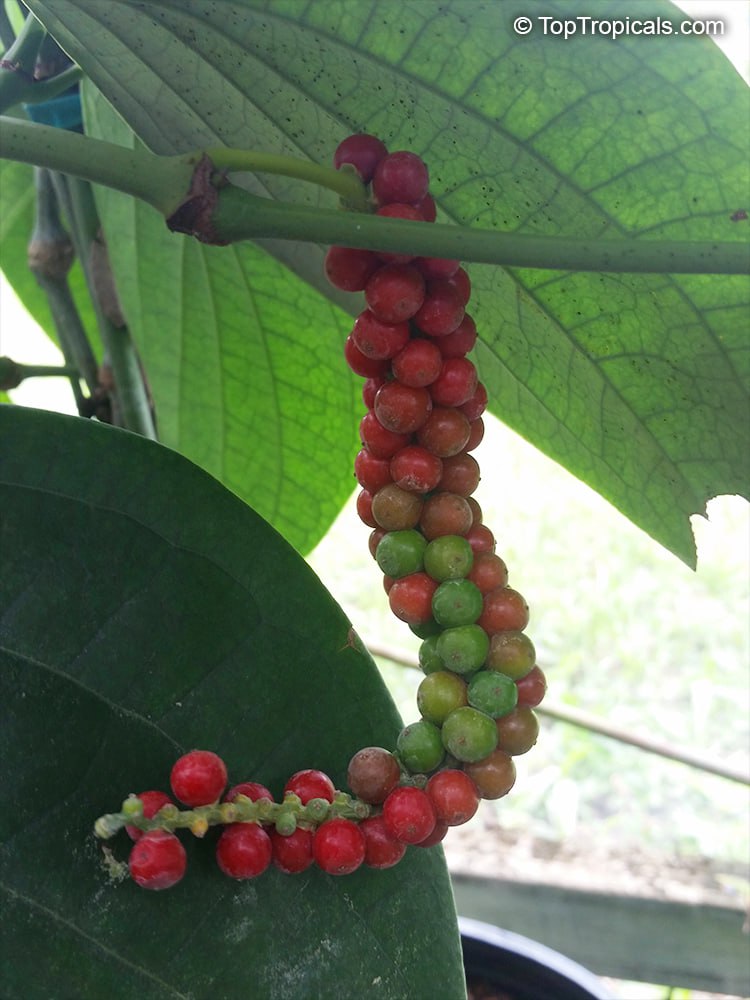
Piper nigrum - Black Pepper
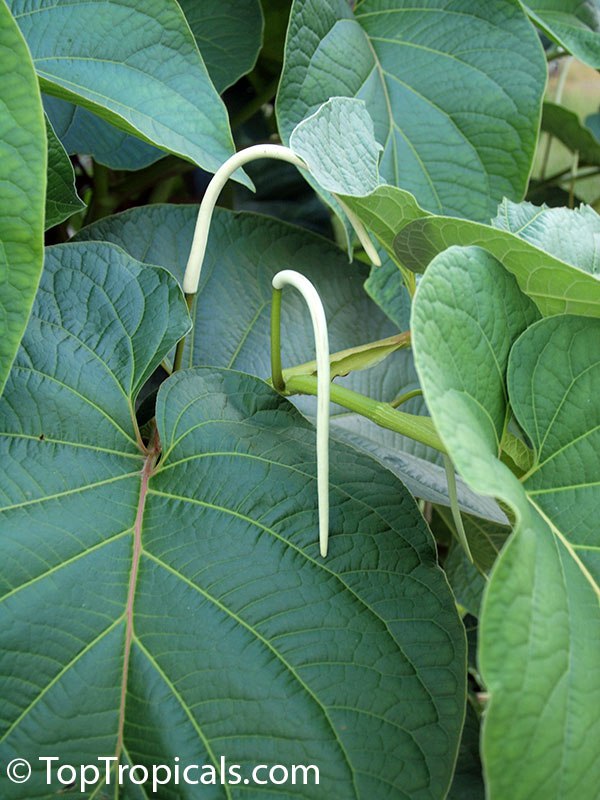
Piper auritum - Root Beer Plant, False Kava-Kava
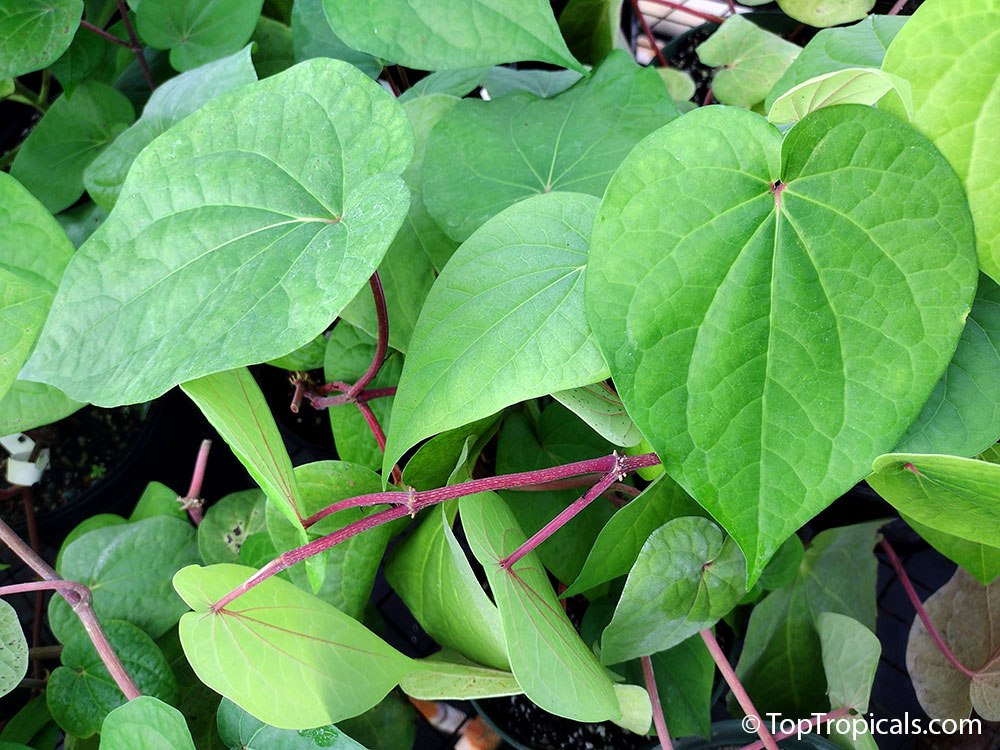
Piper betle - Betel leaf
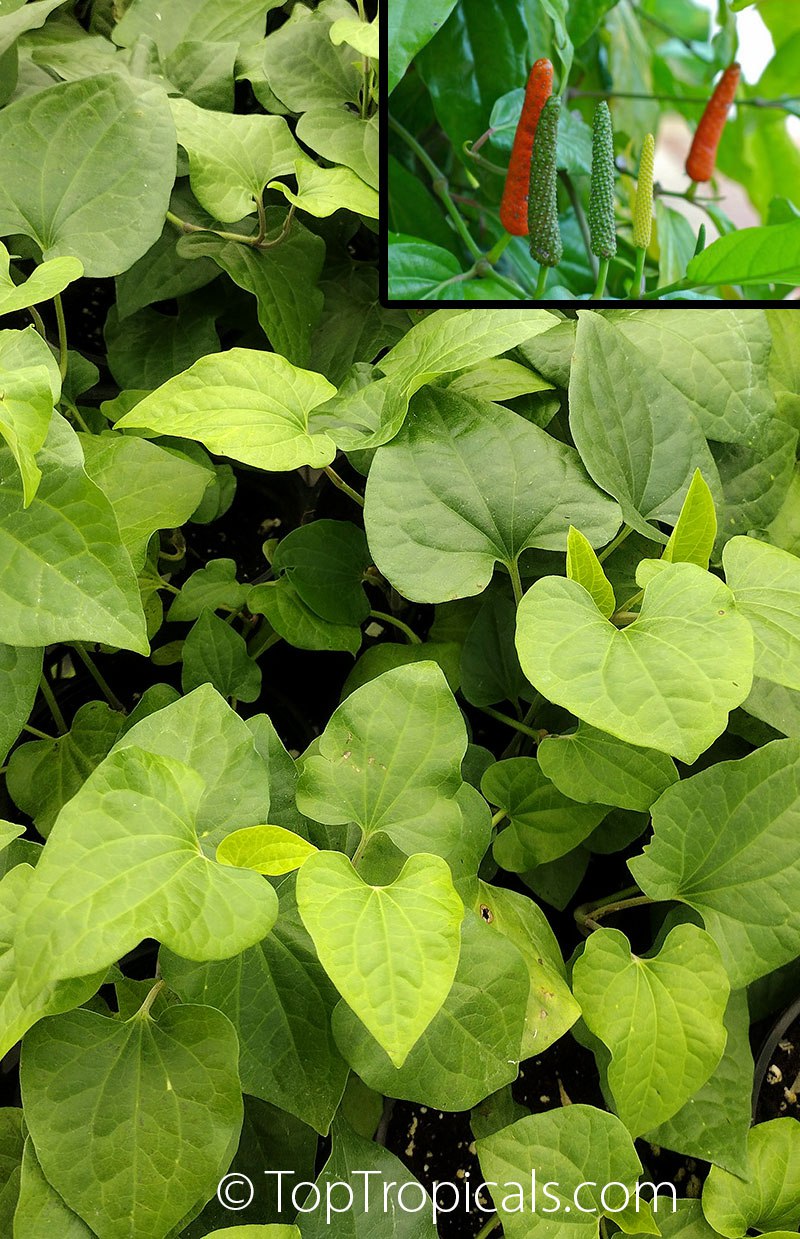
Piper longum - Indian Long Pepper, Pippali, Bengal Peppe
ℹ️ Leafy Pepper plants - Pipers - are a source of black pepper and many other "peppery" flavors. These plants come from the Piperaceae family and are used as a spice for their pungent, peppery flavor. Don't confuse them with with Capsicum peppers, such as bell and chili peppers.
- 🔻
Learn more:
📚 Vietnamese Pepper - Lalot food wraps BBQ recipe
🎥
🛒 Shop pepper plants: Pipers
#Food_Forest #Recipes #Container_Garden #How_to
🔴 Join 👉 TopTropicals