Areca catechu (Areca Palm)
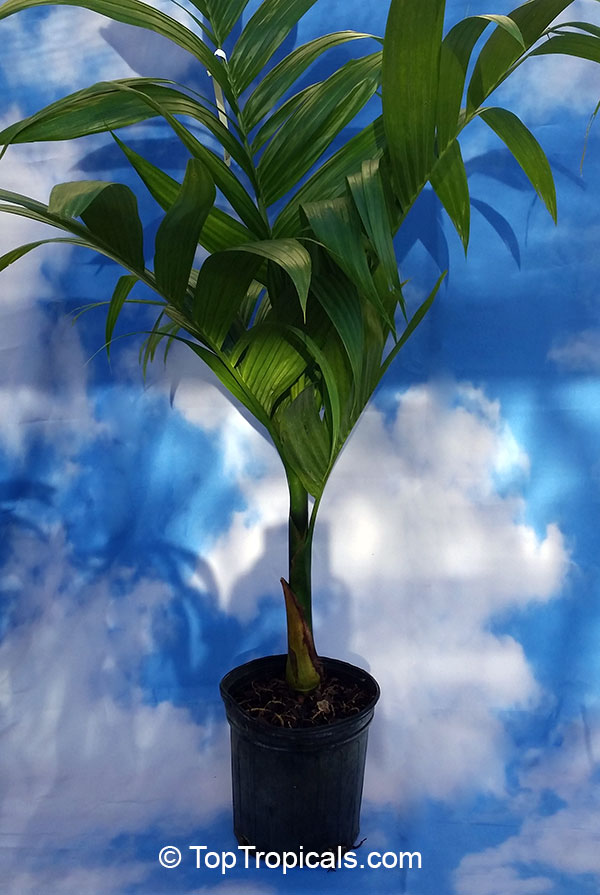
Areca catechu (Areca Palm) in a black plastic container with long, slender, arching green leaves.
Botanical names: Areca catechu, Areca triandra
Common names: Areca Palm, Betel Nut , Bunga, Pinang
Family: Arecaceae / Palmae
Origin: Malaysia, Singapore
USDA Plant Hardiness Zone Map
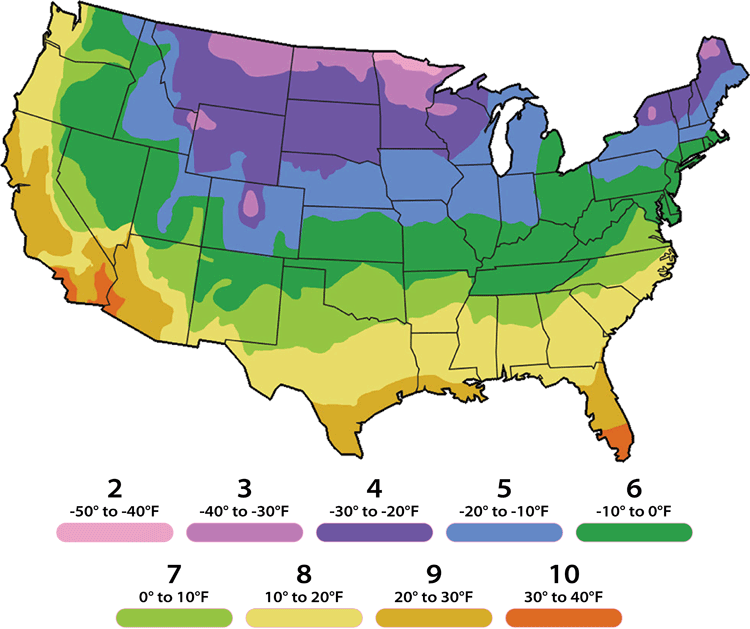
USDA Zone: 9-10
Plant type: Fruit or edible
Fruit type: Fruit or edible
 Plant form: Large tree
 Mature height: 20 ft or more
 Sun exposure: Full sun or bright light indoor
 Cold tolerance: Frost sensitive. Protect from freezing.
 Watering: Regular; moderate
 Suitable for: Outdoors in the suitable USDA zone; large gardens
 Ethnomedical: Ethnomedical plant, traditionally used in folk or indigenous medicine
An easily grown palm for both the tropics and warm sub-tropical areas (it is apparently cold sensitive). It prefers shade when young, although it does take full sun at quite a young age. It likes a moist, well drained soil, and doesn't like to dry out. This palm is the basis of a large industry in SE Asia, where the seed is chewed for its intoxicating properties, as well as its supposedly beneficial side effects, such as aiding digestion, and controlling internal parasites and dysentery.
Similar plants: Areca catechu (Areca Palm)
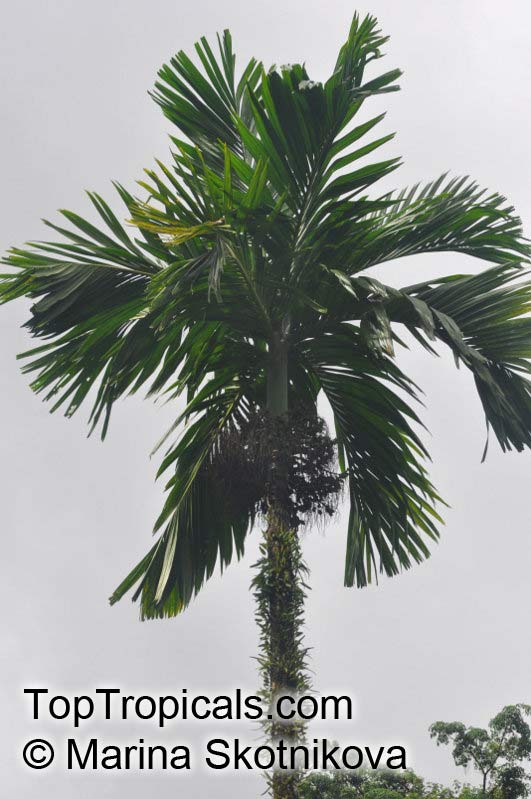
Areca catechu (Areca Palm) reaching upward with arching fronds and dense clusters of dark fruit.
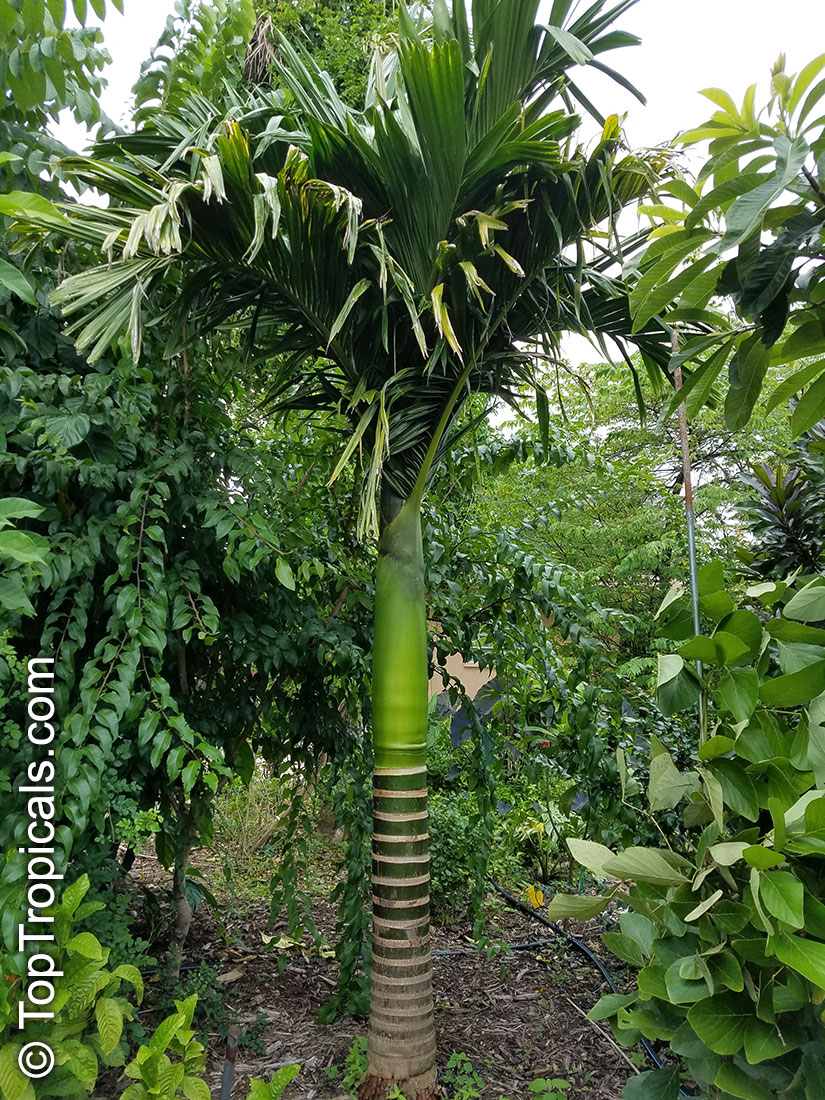
Areca catechu (Areca Palm) tree with tall ringed trunk and deep green long narrow fronds.
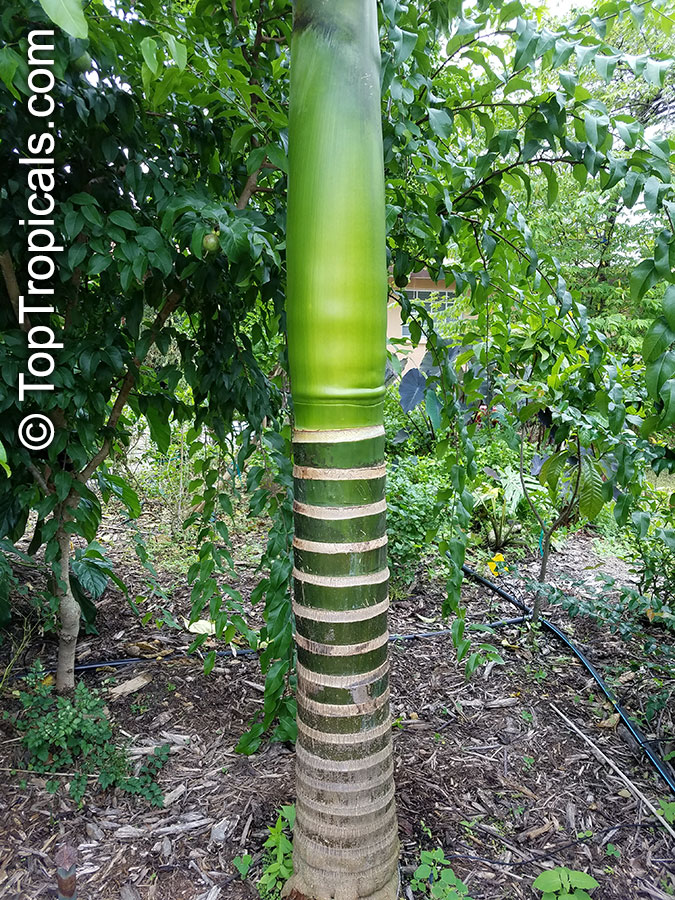
Areca catechu (Areca Palm) smooth green trunk rising vertically from the ground through dense foliage
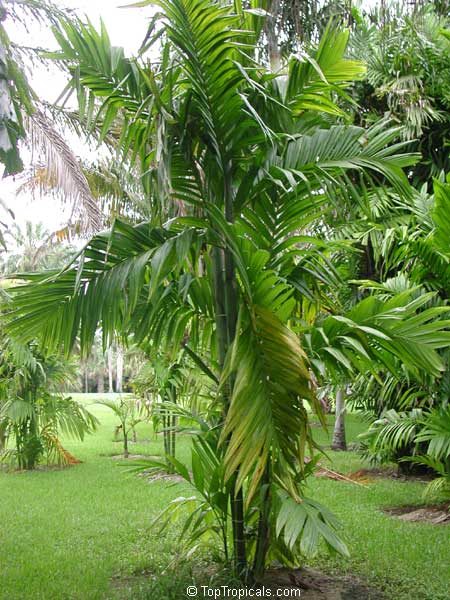
Areca catechu (Areca Palm) with long elegant green fronds arching from a tall slender trunk
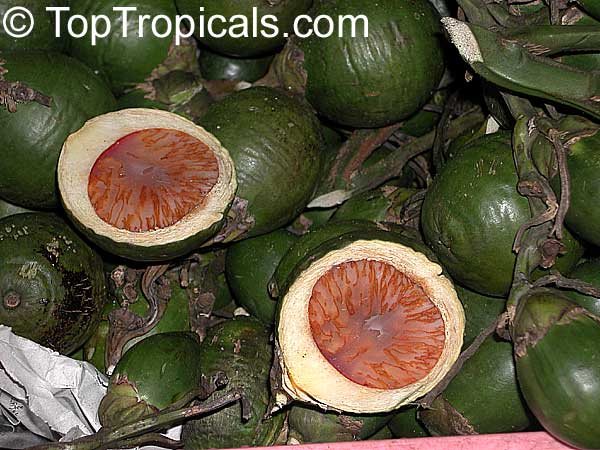
Areca catechu fruit clusters with cut sections showing orange interiors and rinds
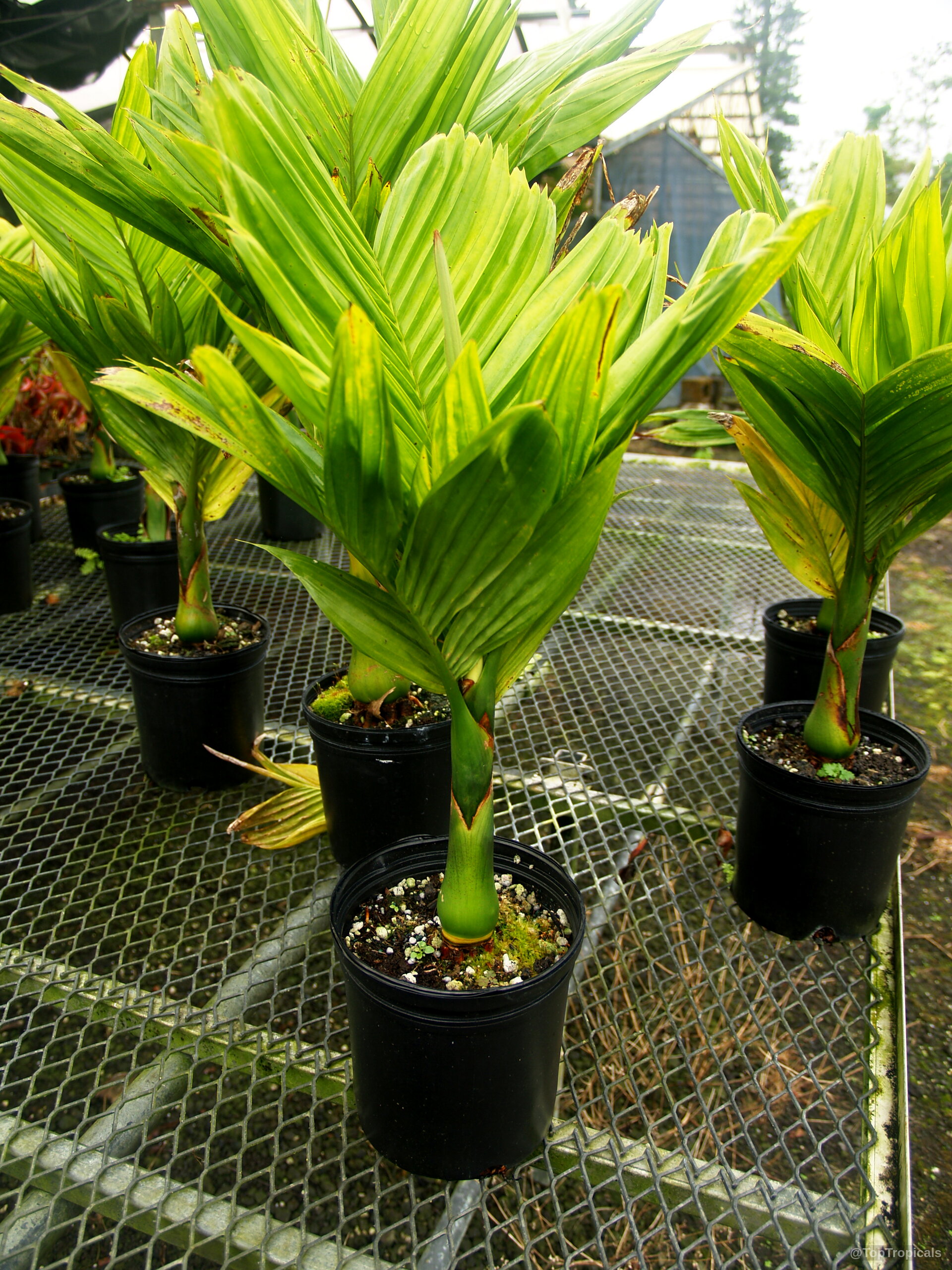
Areca catechu (Areca Palm) young plants with yellow green leaves seated in black plastic pots.
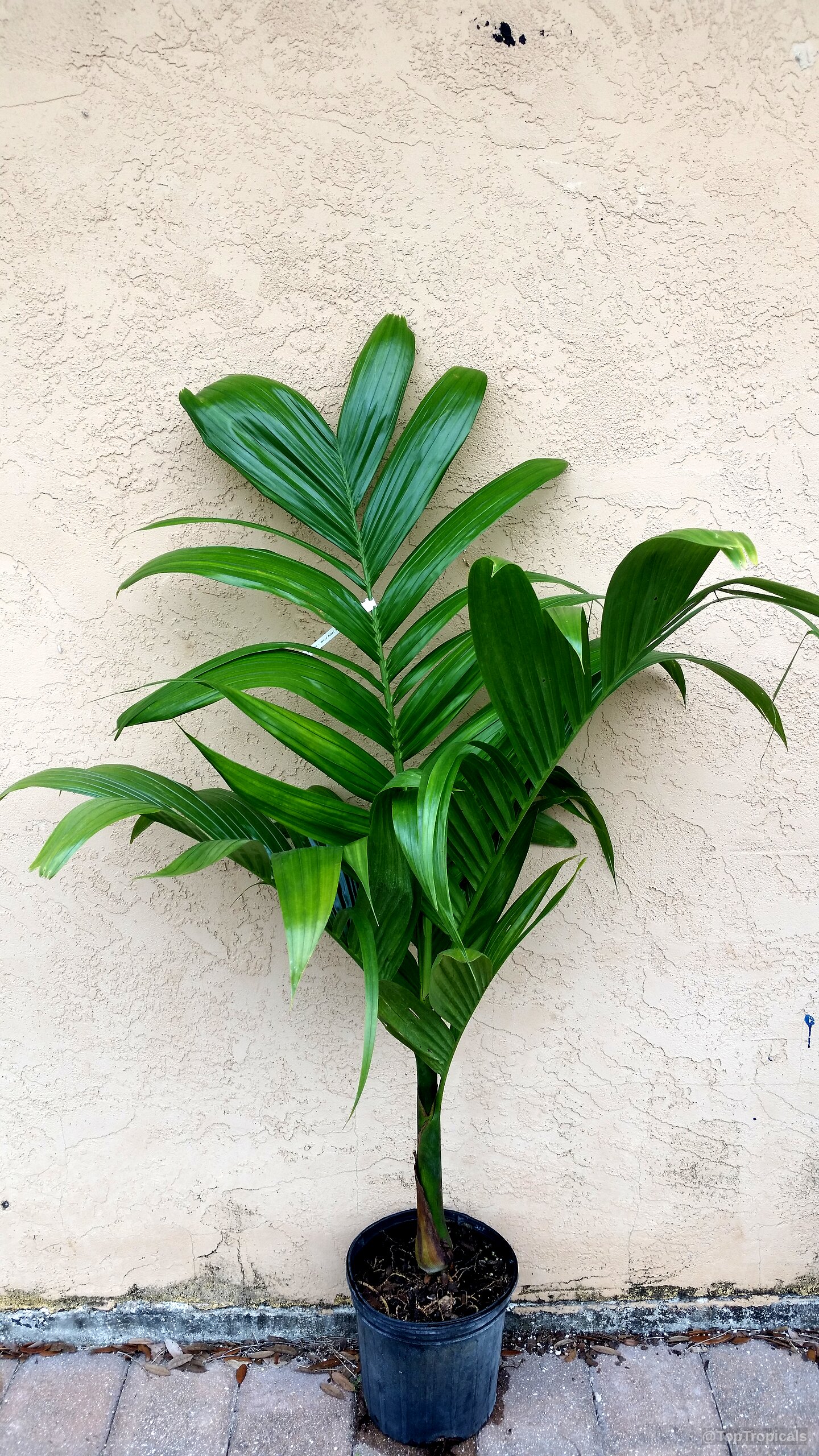
Areca catechu (Areca Palm) with long green pinnate leaves standing in a black nursery pot
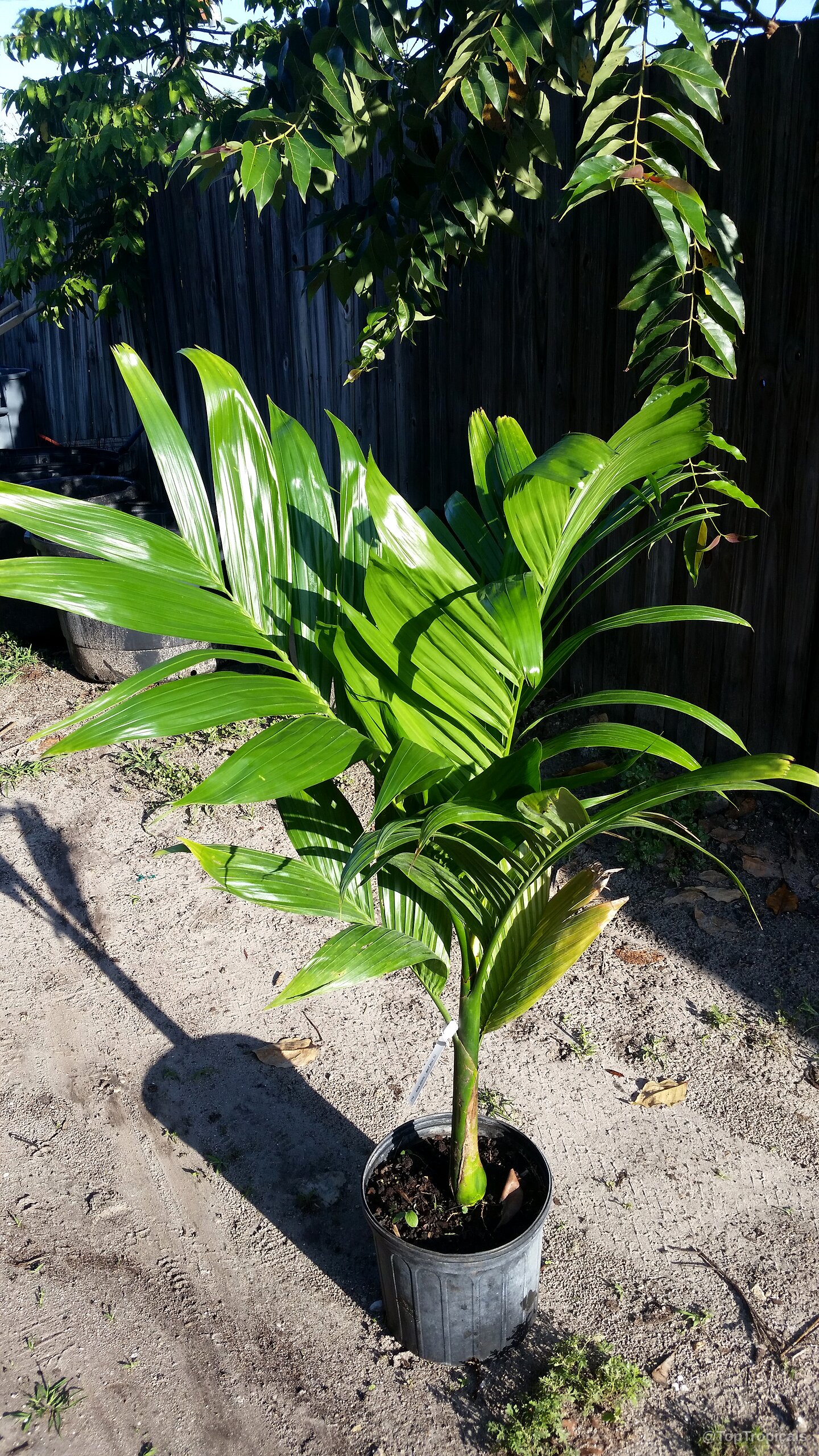
Areca catechu (Areca Palm) with lush green pinnate leaves inside a black plastic nursery container.
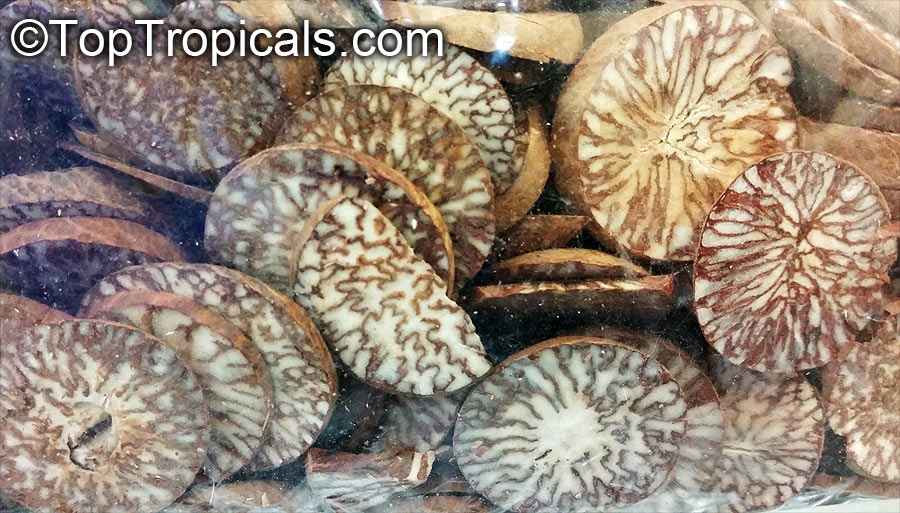
Areca catechu (Areca Palm) sliced fruit showing circular cross section with interior web texture
Link to this plant:
https://toptropicals.com/catalog/uid/areca_catechu.htm
Betel Nut, Bunga, Pinang. This variety is reported to be semi-dwarf and can be grown in a large container.
This palm is the basis of a large industry in SE Asia, where the seed is chewed for its intoxicating properties, as well as its supposedly beneficial side effects, such as aiding digestion, and controlling internal parasites and dysentery.
Recommended Fertilizer: SUNSHINE Robusta - Rapid Growth Booster
This palm is the basis of a large industry in SE Asia, where the seed is chewed for its intoxicating properties, as well as its supposedly beneficial side effects, such as aiding digestion, and controlling internal parasites and dysentery.
Recommended Fertilizer: SUNSHINE Robusta - Rapid Growth Booster
Grown in
6"/1 gal pot