Garden Blog - Top Tropicals

Date: 19 Dec 2024

Why Coffee tree is the best gift plant

House plant Coffee (Coffea arabica) and a cat

House plant Coffee (Coffea arabica) and a cat

☕️ Why Coffee tree is the best gift plant

  • ☕️ Discover the joy of growing one of the most beloved indoor fruit trees – the Coffee Plant (Coffea arabica). Whether you’re a coffee enthusiast, a plant lover, or looking for the perfect gift, this lush, shade-loving plant is a stunning addition to any home. Enjoy the satisfaction of growing your own beans!
  • ☕️ 5 Reasons to Grow a Coffee Plant

  • ☕️ Perfect Indoor Fruit Tree


    Coffee plants thrive indoors and add a unique touch to your collection. They’re compact, adaptable, and incredibly rewarding to grow.
  • ☕️ Shade-Loving & Low Maintenance
  • Perfect for homes with limited sunlight, coffee plants prefer indirect light and need only little watering to thrive. No green thumb? No problem!
  • ☕️ Stunning Aesthetic Appeal
  • With glossy green leaves and star-shaped, fragrant white flowers (similar to gardenias, as they are from the same family!), your coffee plant will bring a refreshing tropical vibe to your home.
  • ☕️ Sustainable Fresh Coffee
  • Grow and harvest your own beans! Enjoy the satisfaction of drying, roasting, and grinding your very own homegrown coffee.
  • ☕️ Year-Round Beauty & Fragrance
  • Coffee plants stay evergreen, providing lush greenery all year long. Plus, the fragrant flowers add a sweet, soothing aroma to your space.
  • ☕️ What Makes Coffee Plants Special?
  • ☕️ Easy to Grow: Coffee plants are forgiving and flourish with minimal care. Regular water and filtered light keep them happy.
  • ☕️ Unique Fruiting: The berries change color from green to yellow to red as they ripen. Inside are the seeds – your coffee beans!
  • ☕️ Gardenia-Like Blooms: Fragrant, white star-shaped flowers appear in clusters, adding charm and elegance to any room.
  • ☕️ Perfect Gift Idea: Looking for a thoughtful and unique gift? Coffee plants make amazing gifts for friends, family, or any coffee lover 🎁


📚 Learn more from previous posts:
Top 10 fruit you'll ever need for your health benefits: #2. Coffee Tree
What is the best Gift plant?
What is the most popular and the easiest tropical fruit tree grown as a house plant?

📱 Video: growing Coffee tree

🛒 Plant a Coffee Tree

#Food_Forest #Container_Garden #Shade_Garden

🔴 Join 👉 TopTropicals
Date: 12 Jan 2025

How to protect tropical plants in Winter

Winter tips and podcast

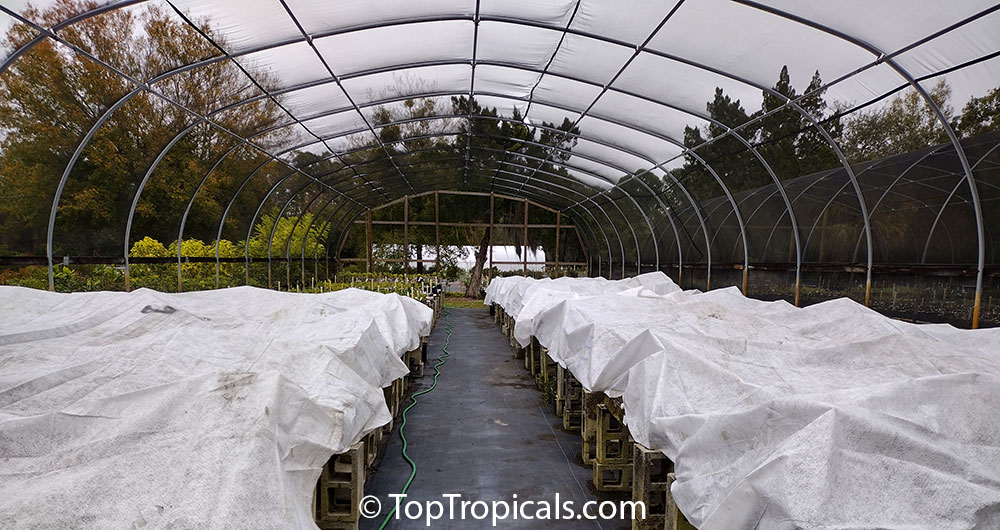
Photo above: wrapping plants with frost cloth

Winter can be tough on plants, especially on tropical varieties. But with a little preparation, you can protect your garden and keep your plants safe from the cold. Here's how:

Winter Care Tips for Tropical Plants

Cut watering: Reduce watering to prevent root rot. Cold + wet = dead roots.
Water before frost: Thirsty plants are more vulnerable. Water them before a cold night to prevent damage.
Wind protection: Wind is more harmful than temperature drops. Plant near structures like houses or trees for shelter.
Prepare for long cold periods: If cold weather lasts for hours, use all available protection, including Christmas lights and propane heaters.
Don't use dry fertilizer in winter: Heavy fertilizing encourages tender growth, which is more susceptible to cold damage. Sunshine Boosters liquid fertilizers are safe to use year around as their intake is controlled by reduced watering.
Use fabric covers, not plastic: Plastic can cook plants in the sun, while fabric allows better ventilation.

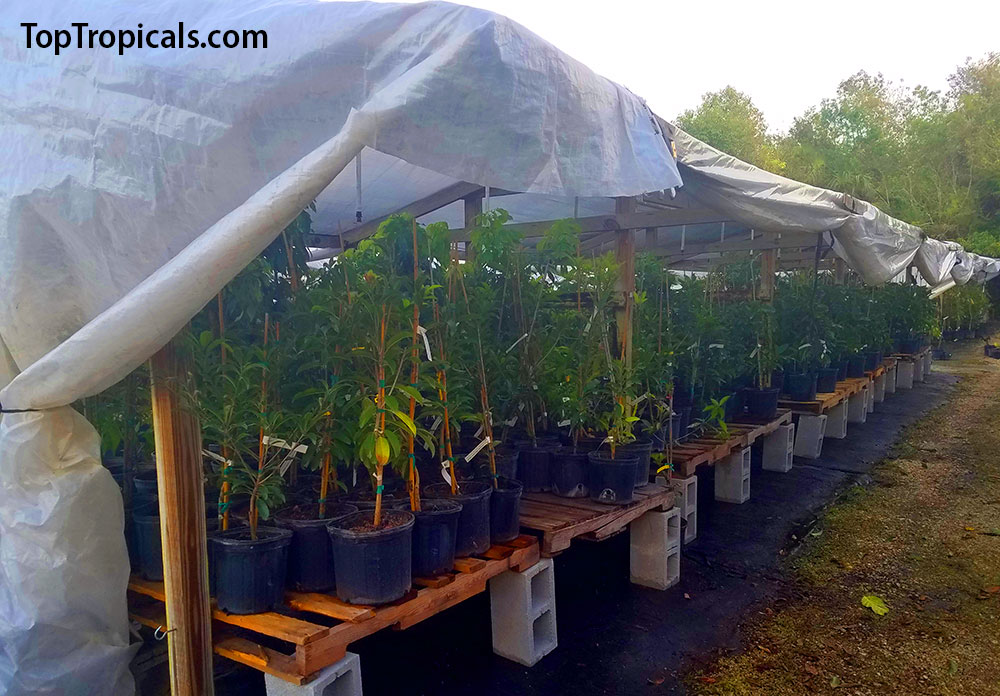
Protecting  tropical  plants  in  winter  with  covers

Photo above: we cover our plants in the nursery with a thin synthetic fabric (sintepon) called "frost cloth" or "strawberry cloth". It is light, breathable and allows light and water to go through unlike plastic that creates heavy water pockets.

Prepare for Cold Nights

Wrap plants: On cold nights, cover individual plants or trees with sheets or blankets to shield them from wind chill.
Use Christmas lights: A simple string of lights can add extra warmth, protecting your plants during frosty nights.
Use propane heaters: For added warmth in a larger area, place a propane heater near your plants. Make sure to follow safety guidelines and keep the heater at a safe distance from flammable materials. This can help maintain a few extra degrees of warmth, especially in more open garden spaces or temporary greenhouses. Always ensure proper ventilation to avoid harmful gas buildup.

Protecting  tropical  plants  in  winter  with  heaters

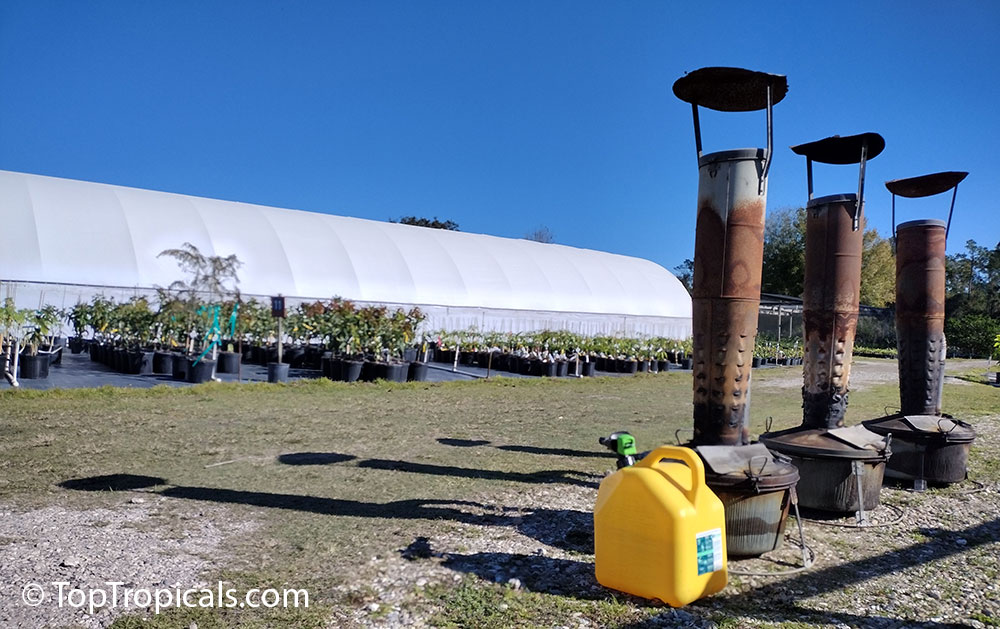
Photo above: we use both propane and kerosene heaters at the nursery

Large Collections? Build a Temporary Greenhouse

Affordable winter greenhouse: For large plant collections, you don't need an expensive greenhouse. A mobile carport with plastic or fabric covering, costing around $200, can house up to 100 plants!

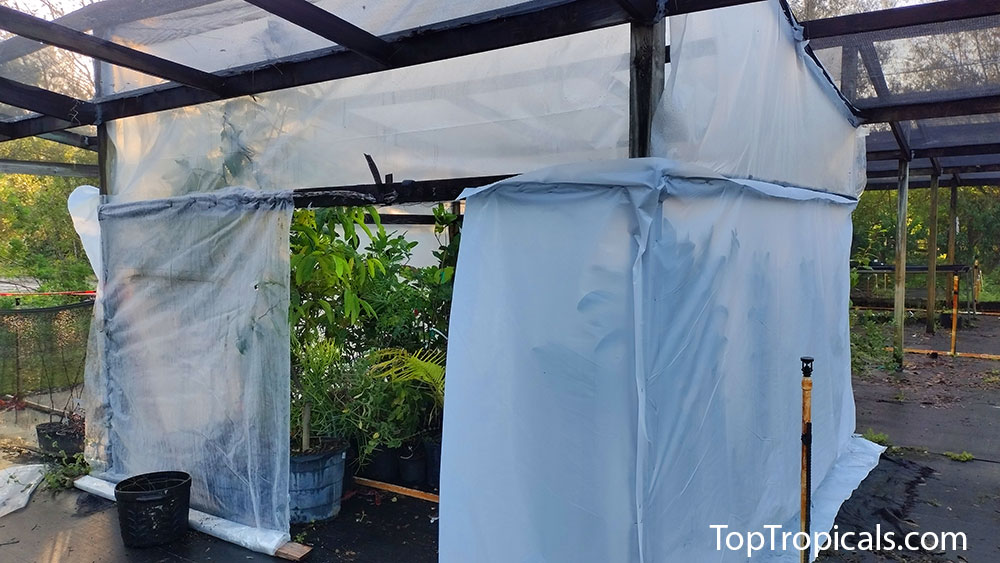
Protecting  tropical  plants  with  temporary  greenhouse

Photo above: Temporary wrapping around plant collection with a plastic or frost cloth protects from a windchill. It may also win you a few degrees even without a heater. In this particular case, according to our temp sensors, with 30F outside, it was 41F inside this "dome", no heaters used.

Southern Exposure and Garage Storage

Southern windowsills: Compact tropicals can thrive on southern-facing windowsills, getting plenty of sunlight during the day.
Move plants inside: If you have larger collections, move them into a well-lit garage for the colder nights or longer periods.

Protecting  tropical  plants  in  winter  with  Christmas  lights

Photo above: using Christmas lights around plants while wrapping with frost cloth.

Key Factors for Survival

Cold duration: Tropical plants can survive brief cold spells but long durations, even above freezing, can be deadly.
Wind-chill: Wind chill can be harsher than the temperature itself.
Exposure: Southern-facing slopes hold heat longer, making them ideal for your plants.
Humidity: Proximity to lakes or oceans can create a milder micro-climate.
Gradual temperature Drops are safer. Plants adjust better to slow temperature changes than sudden cold blasts. Gradual cooling allows plants to prepare, reducing the risk of damage.

Protecting  tropical  plants  in  winter  with  plastic  greenhouse

Strengthen Plant Hardiness

Health and maturity: Well-established, healthy plants are more cold-hardy.
Boost plant immunity: Use products like SUNSHINE-Epi to improve cold resistance. Apply it before and during cold snaps to protect your plants.
Healthy plant is hardy. Make sure to fertilize your plants on regular basis - healthier and stronger plants are more cold hardy.

With these steps, you can protect your plants and help them survive the winter months. Stay warm and keep your garden thriving!

Podcast with Horticulturist Mark Hooten:
How to Protect Tropical Plants in Winter

Protect  plants  in  winter  podcast

Date: 14 Apr 2025

Hop into Easter Week Sale - Plant Joy and Save!

Hop into Easter Week Sale - Plant Joy and Save!

🐰 Hop into Easter Week Sale - Plant Joy and Save!


  • 🐣 Happy Easter Week, Tropical Gardeners!
  • Spring is here - and so is your chance to grow your own magic. Eggs may be pricey... but guess what? You can grow your own food instead! Plant a fruit tree this Easter and watch it hatch into something better than chocolate - like juicy Mangoes, Dragon Fruits and Carambolas, sweet Papayas and Bananas, healthy Avocados and Jackfruits or your very own exotic Sugar Apples hanging from the branches!

  • 🐣 Easter is about hope, renewal, and starting fresh - just like your garden! Whether you're planting your first tree or adding a rare gem to your edible jungle, now is the perfect time.


🛍 Get 15% OFF everything in our store using this code:


  • 🛍 EASTERWEEK 🛍

Min order $150, excluding S/H. Exp. Exp 4-20-25.

🐰 Hop to it! Don't put all your eggs in one basket... unless it's a basket full of fruit trees of flowering shrubs. Let's plant some hope together - one tree at a time.

🛒 Plant Your Easter Joy!

#Discounts

🔴 Join 👉 TopTropicals

Date: 14 Apr 2025

See the Difference: Grow Plants That Protect Your Vision

See the Difference: Grow Plants That Protect Your Vision

👁 See the Difference: Grow Plants That Protect Your Vision


Your eyes work hard every day - give them the nutrition they deserve!
These tropical fruits and plants are rich in Vitamin A and beta-carotene, known to support clear vision, retinal health, and even help prevent age-related eye decline. Grow them in your garden and harvest real, living eye care.


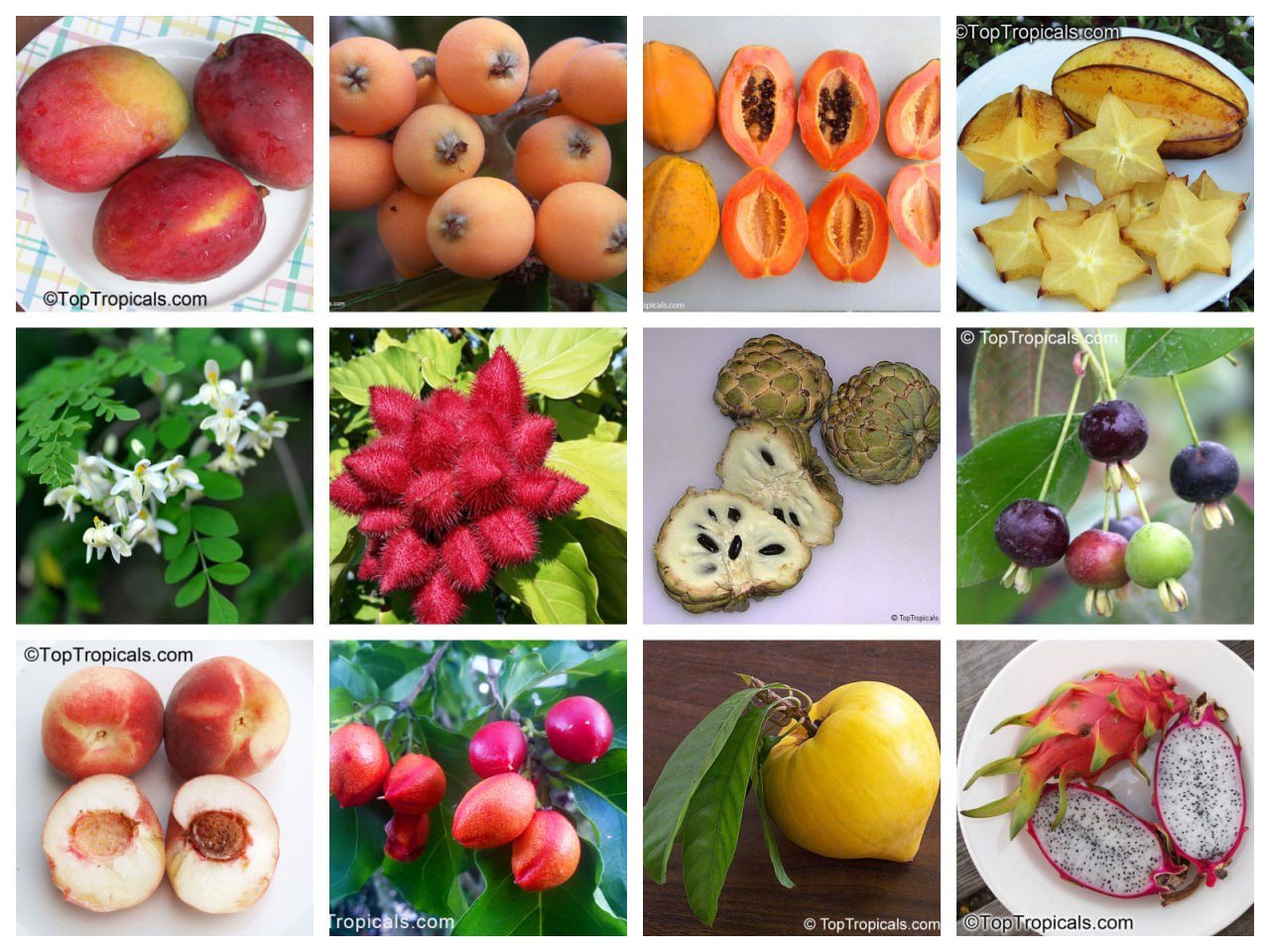
👁 Top 12 Eye-Supporting Fruit and Plants (Vitamin A - Retinol)

  • 🟡 Mango - Packed with beta-carotene, which your body converts into Vitamin A to support sharp, healthy vision.

  • 🟡 Loquat - Naturally rich in Vitamin A, known for supporting retina and eye tissue health.

  • 🟡 Papaya - A tasty source of beta-carotene, great for protecting your eyes and immune system.

  • 🟡 Carambola (Starfruit) - Offers a dose of Vitamin A, beneficial for maintaining clear eyesight.

  • 🟡 Moringa - A leafy powerhouse loaded with beta-carotene that helps support visual health.

  • 🟡 Annatto - High in carotenoids, especially bixin, which may support eye health and clarity.

  • 🟡 Annona - Contains antioxidants, including beta-carotene, to help nourish your eyes.

  • 🟡 Eugenia Cherry (Cherry of the Rio Grande, Brazilian Cherry, Surinam Cherry, Pitomba) – A sweet fruit rich in Vitamin A, promoting overall eye wellness.

  • 🟡 Peach - Supports both skin and eye health with its naturally high Vitamin A content.

  • 🟡 Peanut Butter Fruit - Contains beta-carotene, a powerful nutrient for eye and vision support.

  • 🟡 Canistel (Eggfruit) - Extremely high in beta-carotene, offering deep support for vision and skin.

  • 🟡 Dragon Fruit - Offers beta-carotene and antioxidants that may protect your retinas and night vision.


📚 Learn more about health benefits of tropical plants:


TROPICAL FRUIT HEALTH BENEFITS GUIDE - Part 1 and Part 2

🛒 Shop Vision-Boosting Plants - buy tropical fruit trees for your eye health

#Food_Forest #Discover #Remedies

🔴 Join 👉 TopTropicals

Date: 28 May 2025

How to make your own coffee from homegrown beans

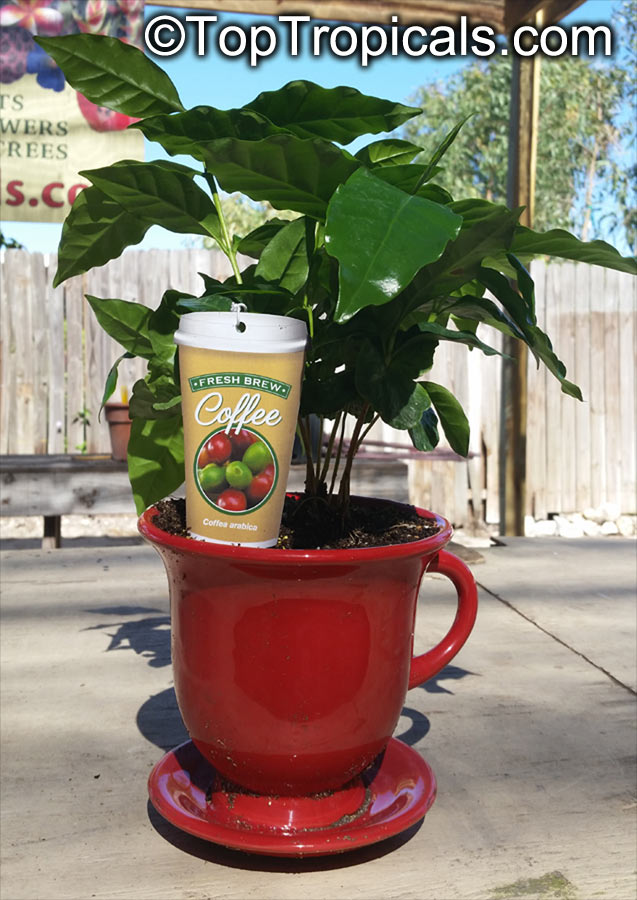
Coffee Tree in a cup (Coffea arabica)

Coffee Tree in a cup (Coffea arabica)

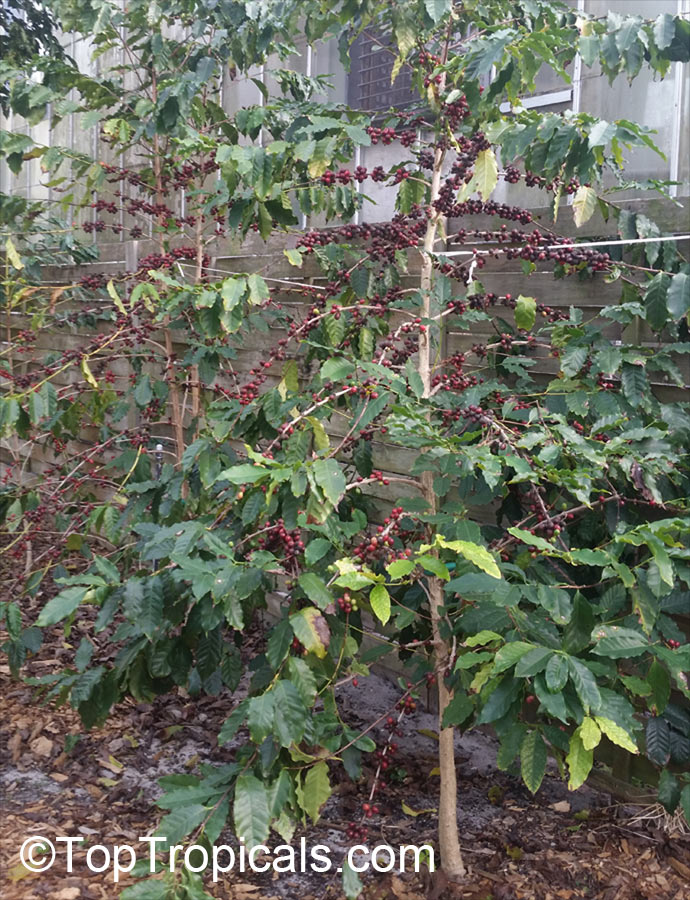
Coffee Tree with fruit (Coffea arabica)

Coffee Tree with fruit (Coffea arabica)

Coffee beans (Coffea arabica)

Coffee beans (Coffea arabica)

Coffee beans (Coffea arabica)

Coffee beans (Coffea arabica)

Coffee beans (Coffea arabica)

Coffee beans (Coffea arabica)

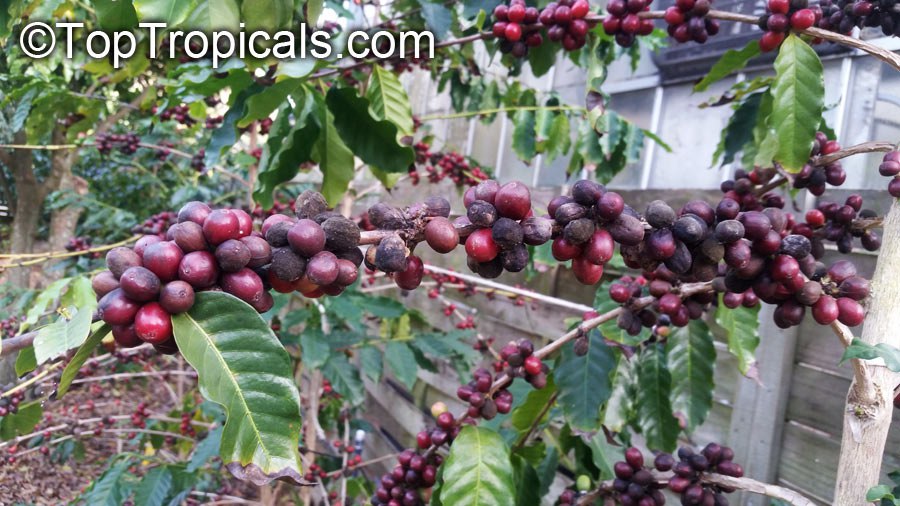
Coffee cherries on a tree (Coffea arabica)

Coffee cherries on a tree (Coffea arabica)

☕️ How to make your own coffee from homegrown beans


Q: Can you make coffee from your
own tree? Isn't there a process involved to prepare beans for it?
A: Absolutely! Yes, it is quite a process... But homegrown coffee lets you enjoy the freshest, chemical-free beans with rich flavor and the satisfaction of growing it yourself. Besides, it's fun! Below is a quick guide how to grow and make your own coffee from freshly harvested coffee fruit (called "cherries").
  • Harvest the ripe cherries


    Pick the bright red fruits when they are fully ripe. These contain the coffee beans inside.
  • Remove the beans


    Squeeze the cherries to pop out the seeds (beans). Rinse off any pulp and soak them in water for 1-2 days to ferment and remove the slimy coating.
  • Dry the beans


    Spread the clean beans on a tray in a sunny, dry spot. Let them dry for 1-2 weeks, turning them daily, until they feel hard and papery.
  • Remove the parchment


    Once dried, crack and remove the thin husk around each bean. You now have green coffee beans ready to roast.
  • Roast the beans


    Use a dry skillet or oven. Heat until beans turn brown and fragrant, stirring constantly. The longer you roast, the darker and stronger the flavor.

Cool and grind


Let roasted beans cool completely, then grind them just before brewing. Enjoy your homemade cup of fresh coffee!

🛒 Grow it. Pick it. Roast it. Drink it. Buy your coffee tree now!

📚 Learn more from previous posts:


#Food_Forest #Container_Garden #Shade_Garden #Discover

🔴 Join 👉 TopTropicals