Garden Blog - Top Tropicals

Date: 16 Apr 2025

Mango and Ricotta/Cottage Cheese Dumplings
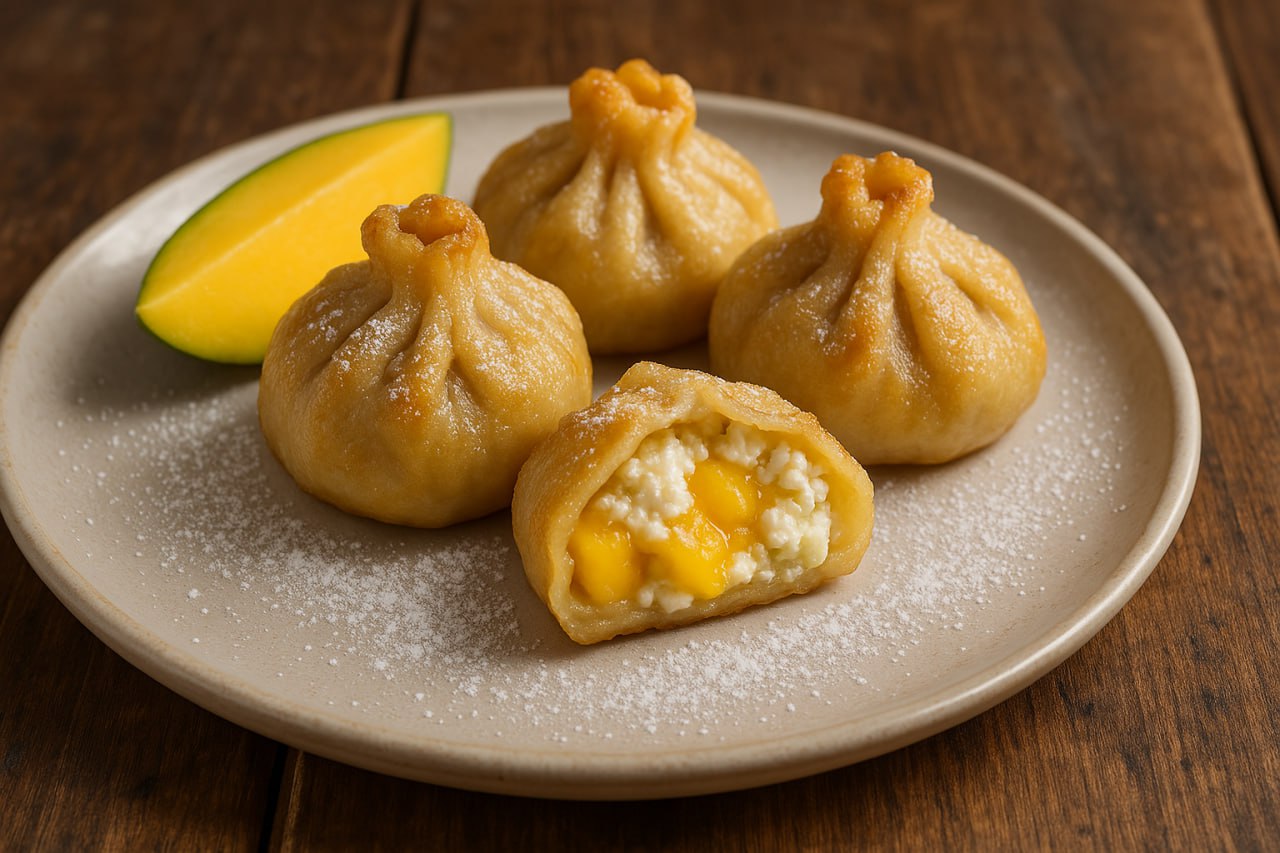
Mango and Ricotta/Cottage Cheese Dumplings

❤️ Mango and Ricotta/Cottage Cheese Dumplings


🥭 Ingredients:


· 1 large ripe mango, peeled and finely chopped
· cup ricotta cheese or cottage cheese (use ricotta for a smoother texture or cottage cheese for a more textured filling)
· 2 tablespoons sugar (adjust based on the sweetness of the mango)
· 1 teaspoon vanilla extract
· 1 package of wonton wrappers
· Water, for sealing the wrappers
· Powdered sugar, for dusting (optional)
· Butter or oil, for frying

🥭 Instructions:


Prepare the Filling:
In a mixing bowl, combine the chopped mango, ricotta or cottage cheese, sugar, and vanilla extract. Mix well until the ingredients are evenly distributed.

Assemble the Dumplings:
· Lay out the wonton wrappers on a clean surface. Spoon about one tablespoon of the mango-cheese mixture into the center of each wrapper.
· Dip your finger in water and run it along the edges of the wrapper to moisten them. This helps seal the dumplings.
· Bring the edges of the wrapper together to form a triangle or purse, making sure to expel any air pockets as you seal the edges firmly.

Cook the Dumplings:
· For Frying: Heat butter or oil in a frying pan over medium heat. Once hot, add the dumplings and fry until golden brown on both sides. Remove from the pan and place on paper towels to drain excess oil.
· For Steaming: If you prefer a healthier option, you can steam the dumplings. Place them in a steamer basket over boiling water and steam for about 10-15 minutes or until the wrappers are translucent.

🥭 Serve:


Serve the dumplings warm. Dust with powdered sugar if desired for a sweet finish.

Optional Sauce:
You can serve these dumplings with a simple dipping sauce made by mixing some honey with a splash of lime juice. This adds a zesty contrast to the sweet and creamy filling.

These mango and cheese dumplings are a creative twist on traditional dessert dumplings, bringing together flavors that are both refreshing and comforting. Enjoy your cooking!

🛒 Plant your own Mango Tree and always have mango supply

#Food_Forest #Recipes #Mango

🔴 Join 👉 TopTropicals
Date: 10 May 2025

Is Blue Java Banana really blue? Great question!

Ice Cream (Blue Java) Banana - Musa balbisiana x Musa acuminata

🍌 Is Blue Java Banana really blue? Great question!


🔵 The Blue Java Banana, also known as the Ice Cream Banana, really does have a blueish tint when the fruit is unripe.

🔵 It's not bright neon blue, but more of a silvery blue-green or frosty blue tone.

🔵 This cool color is especially noticeable under sunlight and is one of the reasons the variety is so eye-catching.

🔵 Once ripe, the fruit turns pale yellow and has a creamy texture with a vanilla-like flavor, hence the nickname "ice cream banana."

🍌 Ice Cream (Blue Java) is a cold-tolerant hybrid of Musa balbisiana and Musa acuminata, vigorous banana growing 10-15 feet tall and producing 40-60 lb bunches of stout, bluish-skinned fruit with sweet, vanilla-flavored, cream-like flesh that can be eaten raw or cooked.

🆒 Banana #Fun_Facts

🟡Bananas are rich in potassium, which helps regulate blood pressure and supports heart health.
🟡They provide a quick source of energy and are great for post-workout recovery.
🟡The fiber in bananas aids digestion and promotes gut health.
🟡Eat them fresh, add to smoothies, bake into breads and desserts, or use in various savory dishes.
🟡Rubbing the inside of a banana peel on mosquito bites can reduce itching and swelling.

🛒 Blue bananas exist - and you can grow them!

📚 Learn more:


About #Bananas
What are the best varieties of edible Banana and which one should I plant?

#Food_Forest #Bananas

🔴 Join 👉 TopTropicals

Date: 12 Sep 2025

What flowers do NOT attract bees?

Butterfly on a flower that doesn't attract bees

❌ What flowers do NOT attract bees?


Most tropical flowers bring in pollinators, and bees are usually first in line. But what if you’d rather avoid them? Maybe you’re allergic, or just don’t want bees buzzing around. Good news: some flowers attract butterflies, hummingbirds, moths, or even flies - but not bees.

👉 Quick rules:


✔️ Night-blooming + strong fragrance = moths or bats, not bees.
✔️ Red tubular flowers with little scent = hummingbirds or butterflies, not bees.
✔️ Rotten or fermented smell = flies, not bees.
✔️ Carnivorous plants = trap insects, no bee nectar.

1.

Night-blooming, fragrant - moth and bat flowers


Bees forage by day, so many night-fragrant flowers skip them.

Brugmansia - Angel’s Trumpet - big, hanging blooms, moth and bat pollinated.
Cestrum nocturnum - Night-blooming Jasmine - powerful night scent, moths only.
Hylocereus Dragon Fruit - huge cactus flowers, bats and moths.
Brunfelsia - Lady of the Night - sweet fragrance at dusk, no bee interest.

2.

Hummingbird and butterfly flowers


Bees don’t see red well. Tubular reds, oranges, and yellows usually go to birds and butterflies.

Hibiscus - hummingbirds and butterflies visit, bees less so.
Heliconis and Gingers - designed for hummingbird beaks, bold tubes are for birds, not bees.
More good picks: Ruellia, Sanchezia, Aeschynanthus, Aphelandra, Anisacanthus, Cuphea, Fuchsia, Iochroma, Justicia, Lonicera, Hamelia, Russelia, Odontonema, Tecomaria, Bougainvillea.

3.

🐱 Fly-pollinated oddballs


Some flowers smell bad to us but irresistible to flies.

Amorphophallus (Voodoo Lily) - rotting meat scent.
Tacca (Bat Head Lily) - spooky black flowers, fly-pollinated.
Stapelia (Carrion Flower) - also fly-pollinated.
Aristolochia (Pelican Flower) - giant, bizarre fly-traps.

4.

🌸 Specialized orchids


Not all orchids rely on bees. Many use moths, butterflies, or beetles instead.

Vanilla orchid - its natural bee pollinator is absent in most regions, so no bee appeal elsewhere.
Brassavola nodosa and others - open at night for moths, not bees.

5.

🕷 Bonus: carnivorous curiosities


Carnivorous plants don’t offer nectar. They trap insects instead, so bees stay away.

Nepenthes (Pitcher Plant) - uses pitchers of liquid to lure and digest insects.

These flowers keep the beauty, fragrance, and wildlife appeal - but without making your garden a bee hotspot.

🛒 Explore butterfly attractors

#Butterfly_Plants #How_to #Discover


🟢 Join 👉 TopTropicals

Date: 17 May 2023

NEW VIDEO:
ABC7 Fort Myers News:
Rare Tropical Fruit Trees at Top Tropicals

We received lots of orders from our customers for butterfly attracting plants after our recent . We are glad you liked the story and the plants!

Today's topic is on tropical fruit. Enjoy this quick tour and learn more about different varieties of rare tropical fruit and what can be grown in your yard. We have them all! And we can ship them to your door.

Fruit and plants introduced in the video:

Persimmon
Coffee
Sapodilla
Sapote
Vanilla
Pomegranate
Yellow Dragon fruit
Litchi
Tamarind
Chocolate Tree
Raspberry
Grape

Watch the news segment by Rachel Anderson for ABC-7: Rare fruit trees at Top Tropicals.

Subscribe to our Channel:

Stay updated with TopTropicals Videos by subscribing to our channel at YouTube.com/TopTropicals and get our latest video news of what is fruiting and blooming!

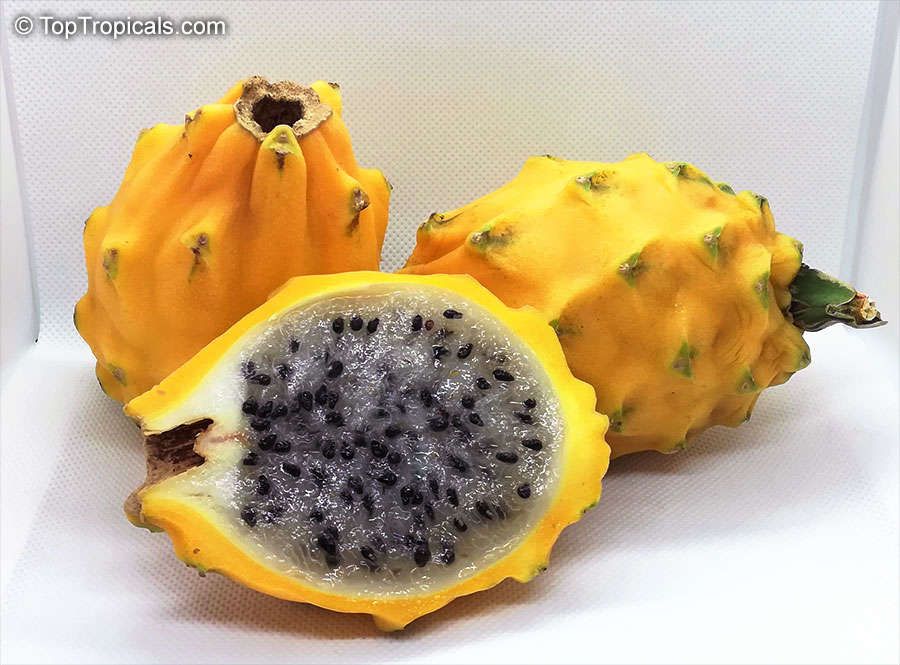
Yellow  Dragon  Fruit,  Selenicereus  megalanthus,  fruit

In the photo: Yellow Dragon Fruit, Selenicereus megalanthus, the sweetest and the most flavorful rare Yellow Pitaya. The taste is said to be superior to most cactus fruits.

Date: 3 Feb 2019

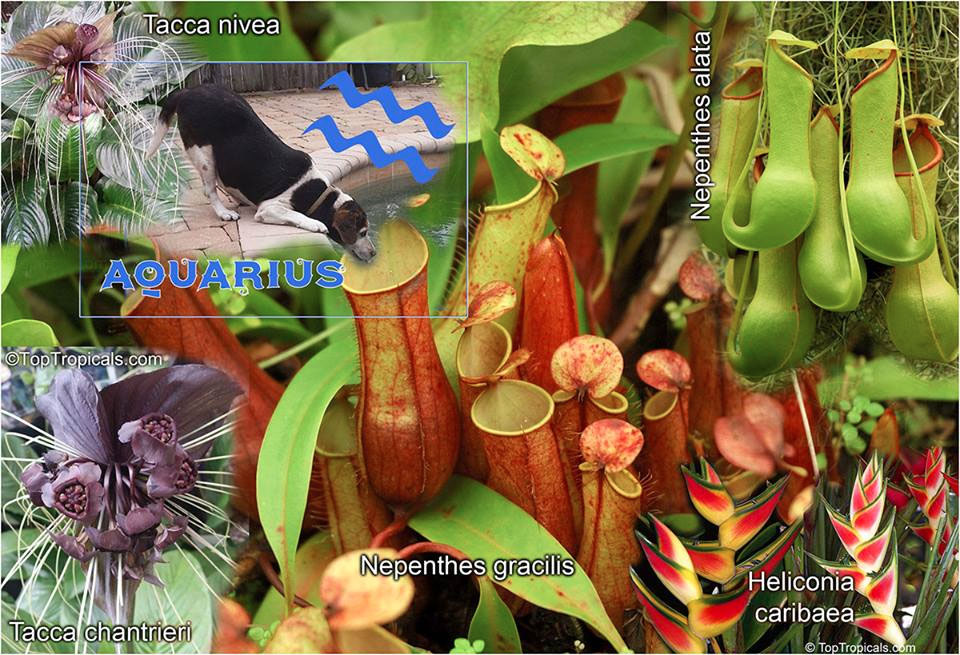
Aquarius Plant Horoscope

TopTropicals.com

Aquarius - 1/22 - 2/18. Aquarius is an AIR sign ruled by odd-ball Uranus.
The water-bearer's plants will often grow in unusual places and may vary in appearance. They often have purple or blue flowers, or may have unusual colors.
The most healing and beneficial plants for Aquarius are the ones that help circulation, relax the nervous system, or promote inspiration. When Uranus was discovered, it replaced Mercury as ruler of Aquarius. Physiologically, Uranus rules the bioelectrical impulses that power the body's nervous system (nervous tension and nervous exhaustion brought on by powerful changes in the environment are related to both Mercury and Uranus). Physically, Aquarius rules the lower legs, the calves, and the ankles, and the electrical impulses that travel through the body's nervous system. The nervous system itself is ruled by Mercury, and Uranus is said to be a "higher octave" of Mercury. Since Uranus was discovered after the correspondences with plants had been established, the herbs used in Aquarius are Mercury herbs. Always difficult to pinpoint, quirky Aquarius appreciates the unusual and complex flavor of star anise. Use this star-shaped spice when you wish to bring happy surprises into your life.

Aquarius Zodiac lucky plants:

Anise, Orchid, Golden rain - Koelreuteria paniculata, Bird of Paradise, Heliconia, Petrea, Mandevilla, Jasminum, Kiwi, Persimmon, Loquat, Olive, Alocasia, Colocasia, Citrus, Apple, Peppers, Gingers, Carambola, herbs spicy with an unusual flavor, White Pothos, Ivy, Shami - Prosopis cineraria, Neem, Medinilla, Sheesham Tree, Catnip, Passion fruit, Valerian, Aloe, Myrrh, Kava-kava, Cinnamon, Clove, Eucalyptus, Coffee, Cola nut, Nepenthes, Vanilla Orchid, Strongylodon - Jade vine, Tacca - Bat Lily, Eranthemums, Agapanthus, Orchid trees, Bolusanthus, Chamaedorea metallica, Clerodendrum ugandense, Clitoria, Duranta, Guaiacum, Jacaranda, Lavanda.

For other signs information, see full Plant Horoscope.