Garden Blog - Top Tropicals

Date: 17 Apr 2025

Fuel Your Day Naturally: Grow Plants That Boost Your Energy
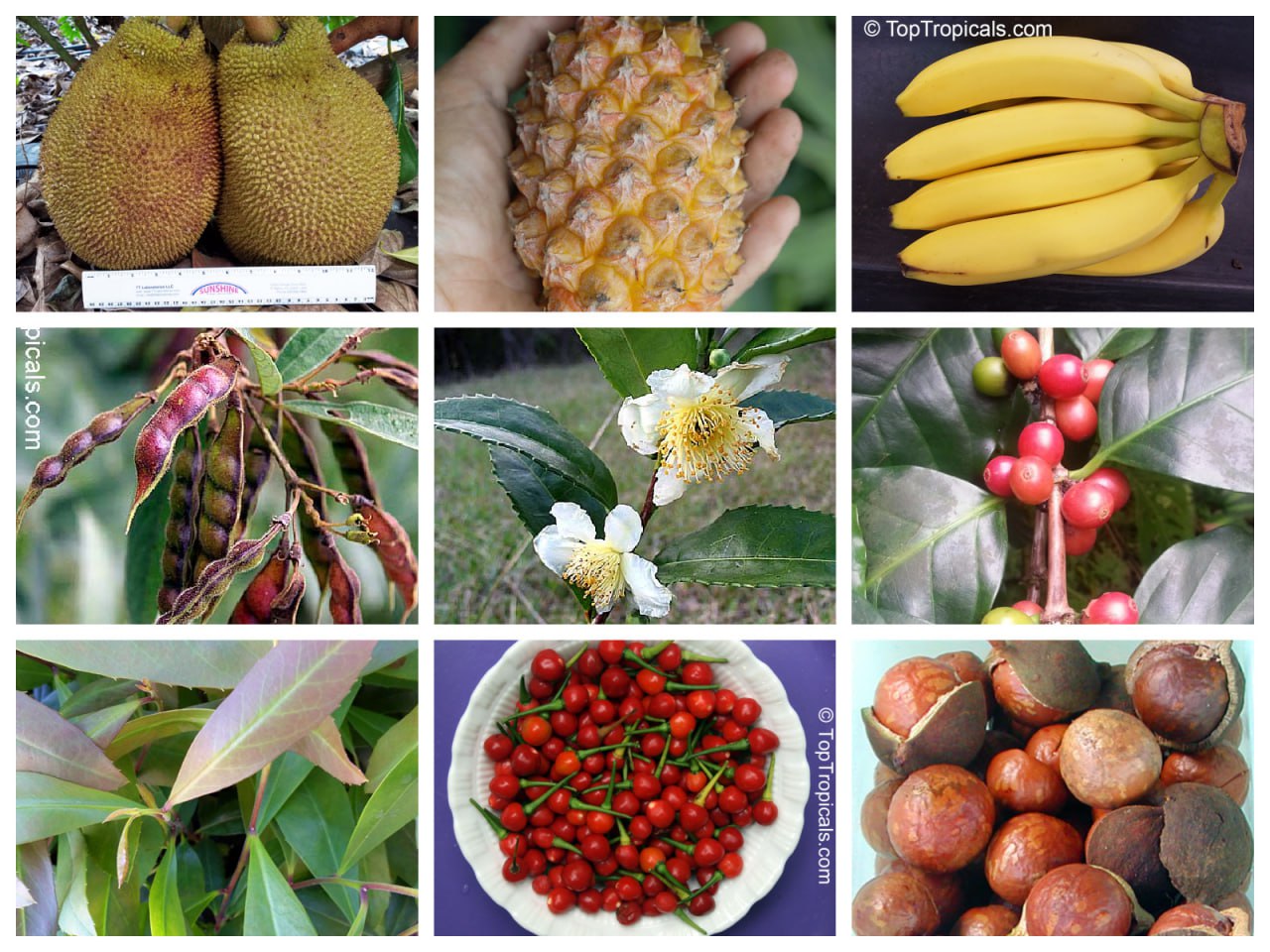
Tropical fruit that boost energy

Tropical fruit that boost energy

⚡️ Fuel Your Day Naturally: Grow Plants That Boost Your Energy


Feeling tired, sluggish, or mentally foggy? Your garden can be your energy station!
These tropical fruits and edibles are rich in Vitamin B1 (Thiamine), natural caffeine, and metabolism-enhancing compounds that help convert food into fuel, power your body, and sharpen your mind - naturally and sustainably.


⚡️ Top 9 Energy-Supporting Plants (Vitamin B1 - Thiamine):

  • 🟡 Jackfruit - A delicious tropical source of vitamin B1, supporting energy production and nervous system function.
  • 🟡 Pineapple - Contains thiamine, essential for turning food into usable energy.
  • 🟡 Banana - Supplies vitamin B1 and quick-access natural sugars, ideal for an energy lift.
  • 🟡 Pigeon Pea (Cajanus cajan) - A protein-rich edible legume packed with thiamine to aid in energy metabolism.
  • 🟡 Camellia sinensis (Tea Plant) - Leaves used to brew green and black tea, combining caffeine with L-theanine to promote sustained mental energy.
  • 🟡 Coffee - One of nature's most famous energy boosters - grown from a beautiful tropical tree.
  • 🟡 Yerba Mate - A South American favorite for mental clarity and physical stamina - with natural caffeine and nutrients.
  • 🟡 Wiri wiri and Biquinho Peppers - These fiery little peppers are rich in capsaicin, which may help boost metabolism, burn fat, and enhance overall energy levels.
  • 🟡 Macadamia Nut - Loaded with thiamine (B1) and healthy fats that support nervous system function and long-lasting energy.


📚 Learn more about health benefits of tropical plants:


TROPICAL FRUIT HEALTH BENEFITS GUIDE - Part 1 and Part 2

🛒 Shop Energy-Boosting Plants for Natural Energy

#Food_Forest #Discover #Remedies #Bananas

🔴 Join 👉 TopTropicals
Date: 19 May 2025

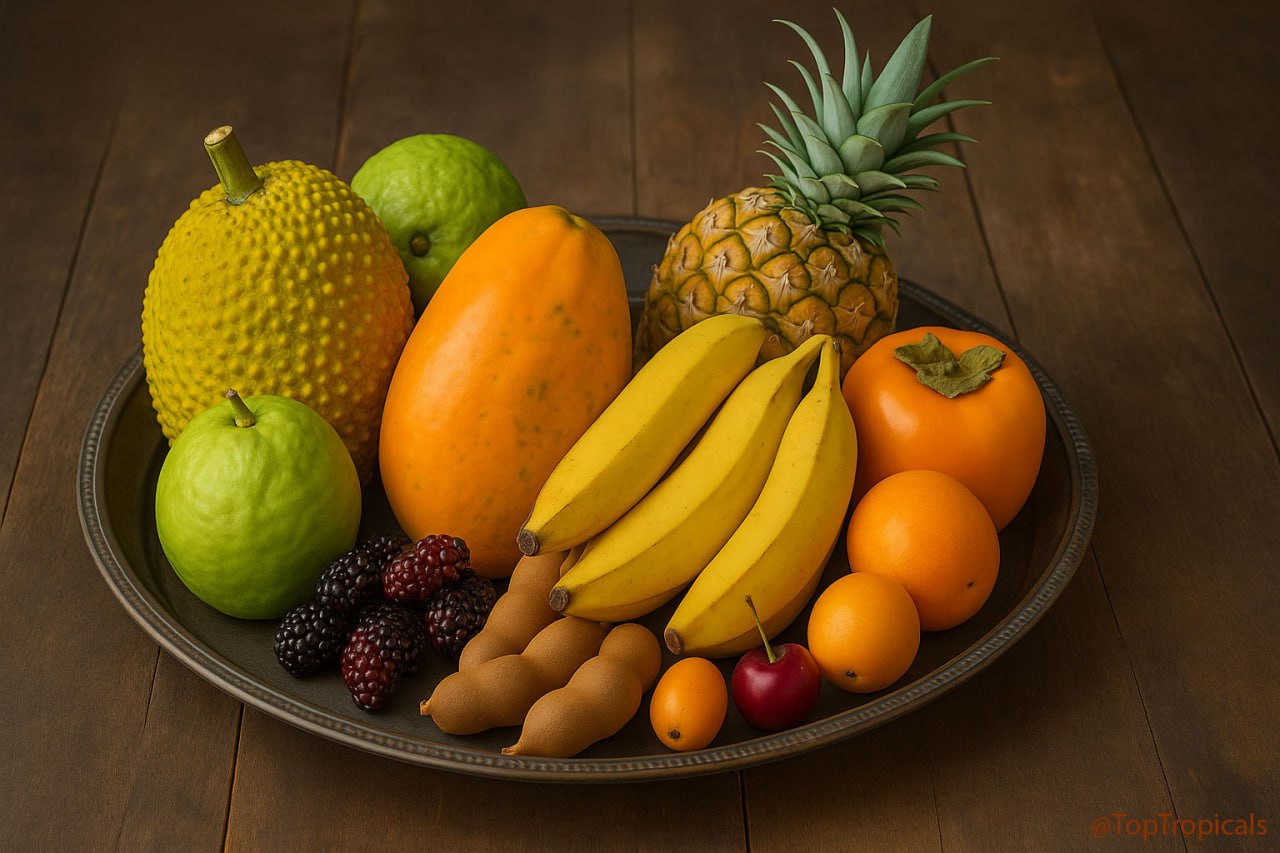
What fruit can reduce your blood pressure. Tropical fruit and plants that help keep blood pressure in balance

Tropical fruit that can reduce your blood pressure

Tropical fruit that can reduce your blood pressure

❤️ Tropical fruit and plants that help keep blood pressure in balance.
Part 1: What fruit can reduce your blood pressure?


💲 You don’t need to spend $$$ on doctors and medications to stay healthy and young. By eating right and adding a few powerful plants and fruits to your diet, you can naturally keep your blood pressure in check. Plant them today and harvest your own medicine tomorrow! And don’t forget - gardening itself is therapeutic! It keeps you active, reduces stress, and helps your whole body stay in balance.

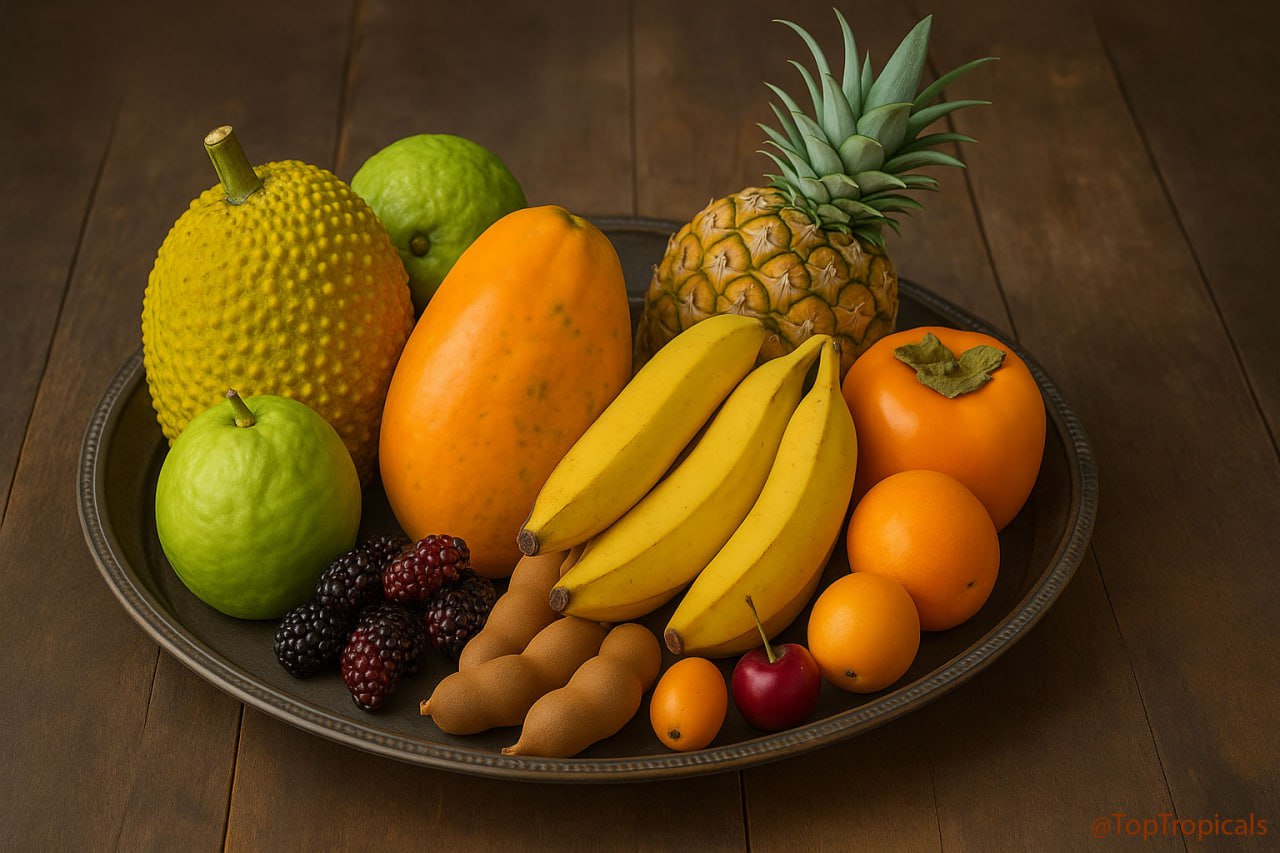
💚 Tropical fruit that help reduce blood pressure:

  • Jackfruit (Artabotrys hexapetallus) - Contains potassium and magnesium, which help relax blood vessels and regulate blood pressure.
  • Guava (Psidium sp.) - Rich in potassium and fiber, supports vascular health and may help lower blood pressure.
  • Papaya (Carica papaya) - High in potassium and antioxidants, promoting healthy blood pressure.
  • Banana (Musa sp.) - Well-known for its high potassium content, which helps counteract sodium and lower blood pressure.
  • Pineapple (Ananas comosus) - Contains potassium and bromelain, which may support circulation and reduce inflammation.
  • Persimmon - High in fiber and antioxidants, which can contribute to better heart and vascular function.
  • Mulberry (Morus sp.) - Contains resveratrol and other antioxidants linked to heart health and blood pressure support.
  • Tamarind (Tamarindus indica) - Rich in potassium and fiber, may help regulate blood pressure and support arterial health.
  • Loquat (Eriobotrya japonica) - Contains potassium, aiding in fluid balance and blood pressure control.
  • ✅🍒 Tropical Cherry (Eugenia) - Contains antioxidants and supports healthy circulation.

Part 2: Edible plants reducing blood pressure - see next post⤵️

🛒 Shop tropical fruit trees that boost your health

📚 Learn more:


Tropical fruit health benefits guide
#Disover more #Remedies and #Fruit_Forest

🔴 Join 👉 TopTropicals

Date: 23 May 2025

What fruit can reduce your blood pressure?

Top  ten  tropical  fruit  that  help  reduce  blood  pressure

Q: Can you recommend trees which fruit are beneficial for balancing blood pressure? I have limited space, so I want to be selective and grow a food forest that truly supports my health.

A: You don't need to spend $$$ on doctors and medications to stay healthy and young. By eating right and adding a few powerful plants and fruits to your diet, you can naturally keep your blood pressure in check. If you plant them today - you can harvest your own medicine tomorrow. And don't forget - gardening itself is therapeutic! It keeps you active, reduces stress, and helps your whole body stay in balance.

💚 Top ten tropical fruit that help reduce blood pressure:

🍈 Jackfruit - Contains potassium and magnesium, which help relax blood vessels and regulate blood pressure.

🍉 Guava - Rich in potassium and fiber, supports vascular health and may help lower blood pressure.

🍊 Papaya - High in potassium and antioxidants, promoting healthy blood pressure.

🍌 Banana - Well-known for its high potassium content, which helps counteract sodium and lower blood pressure.

🍍 Pineapple - Contains potassium and bromelain, which may support circulation and reduce inflammation.

🍅 Persimmon - High in fiber and antioxidants, which can contribute to better heart and vascular function.

🍇 Mulberry - Contains resveratrol and other antioxidants linked to heart health and blood pressure support.

Tamarind - Rich in potassium and fiber, may help regulate blood pressure and support arterial health.

🍑 Loquat - Contains potassium, aiding in fluid balance and blood pressure control.

🍒 Tropical Cherry (Eugenia) - Contains antioxidants and supports healthy circulation.

Date: 26 Feb 2026

Stop Sugar Crashes: 5 Tropical Fruit Hacks for Healthy Dessert

Exotic Tropical Fruits for Blood Sugar Management. Stop the sugar crash cycle. Learn how to manage glucose levels and insulin spikes using tropical fruits, healthy fats, and metabolic hacks for healthy dessert.

Exotic Tropical Fruits for Blood Sugar Management. Stop the sugar crash cycle. Learn how to manage glucose levels and insulin spikes using tropical fruits, healthy fats, and metabolic hacks for healthy dessert.

🍨 Stop Sugar Crashes: 5 Tropical Fruit Hacks for Healthy Dessert


The smarter way to handle sugar cravings - no restriction required

Tired of the post-cookie slump? Sugar cravings are a physiological response to blood glucose fluctuations, not a lack of willpower. Refined sugars trigger an insulin spike followed by a hypoglycemic crash, trapping you in a cycle of fatigue and hunger.
The secret to metabolic health is managing glycemic load. By choosing nutrient-dense tropical fruits, you satisfy your sweet tooth while maintaining stable energy homeostasis.
The solution is not to give up dessert. It is to change what dessert means. Here is how to use tropical horticulture to hack your biology and regulate insulin:
  • 🍭 1. Choose fruit that comes with fiber


    Whole tropical fruits deliver sweetness wrapped in fiber, water, and nutrients. That slows sugar absorption and keeps energy steady.
    Try:

· Mango, chilled and sliced
  • · Sapodilla - naturally caramel-sweet
  • · Mulberries by the handful
  • · Loquat halves straight from the fridge
  • · Dragon Fruit for light, clean sweetness
Same pleasure. Less crash.
  • 🍭 2. Pair sweet with fat to blunt the glucose spike


    Healthy lipids are a biological hack for your metabolism. Fats slow gastric emptying, ensuring a steady glucose release rather than an inflammatory spike. Furthermore, lipids trigger cholecystokinin (CCK) - the hormone that signals satiety to the brain - effectively "turning off" cravings at the source.

· Avocado blended into a chocolate-style mousse: The monounsaturated fats create a creamy texture while blunting the sugar response.
  • · Banana with nut butter: Combining fast-acting fruit sugars with dense protein and fats.
  • · Pineapple with raw nuts: The bromelain in pineapple aids digestion, while the fats in nuts provide long-lasting satiety.
  • · Mango mixed into full-fat yogurt: The combination of probiotics, protein, and lipids turns a simple fruit into a complete, low-glycemic snack.
When fruit is balanced with fat, cravings calm down instead of escalating.
  • 🍭 3. Use naturally rich fruits in place of sugar


    Some tropical fruits taste like dessert already.

· Jackfruit has candy-like sweetness
  • · Sapote is creamy and custard-like
  • · Guava brings floral depth
  • · Cherries add brightness
  • · Mash Banana into baking instead of white sugar.
  • · Blend Mango into yogurt instead of syrup.
  • · Top oatmeal with Mulberry instead of brown sugar.
Dessert stays. The crash disappears.
  • 🍭 4. Balance sweet with tart


    Adding contrast reduces the urge to overeat sweetness.

· Carambola adds crisp tang.
  • · Pineapple brightens the palate.
  • · Loquat gives gentle acidity.
Balanced flavors satisfy faster.
  • 🍭 5. Start the day right


    Skipping breakfast increases late-day sugar cravings.
    A morning smoothie with Avocado, Banana, and Mango prevents the afternoon energy dip. Hydration also matters - thirst often disguises itself as a sweet craving.
  • 🍭 In essence


    Dessert is not the enemy. Refined sugar is.
    When sweetness comes from nature's bounty, it nourishes instead of draining energy.
    You do not need to quit dessert.
    You just need to let nature handle it.

    Consult with a healthcare professional before making significant dietary changes, especially if you have diabetes or metabolic conditions


🛒 Start your tropical fruit journey

Annona · Guava · Mango · Sapodilla · Mulberry · Pineapple · Avocado · Banana · Loquat · Dragon fruit · Jackfruit · Sapote · Cherries · Carambola

📚 Learn more:


#Food_Forest #Remedies #Discover

🟢 Join 👉 TopTropicals

Date: 24 Jun 2018

TopTropicals

URBAN TROPICAL GARDENING:
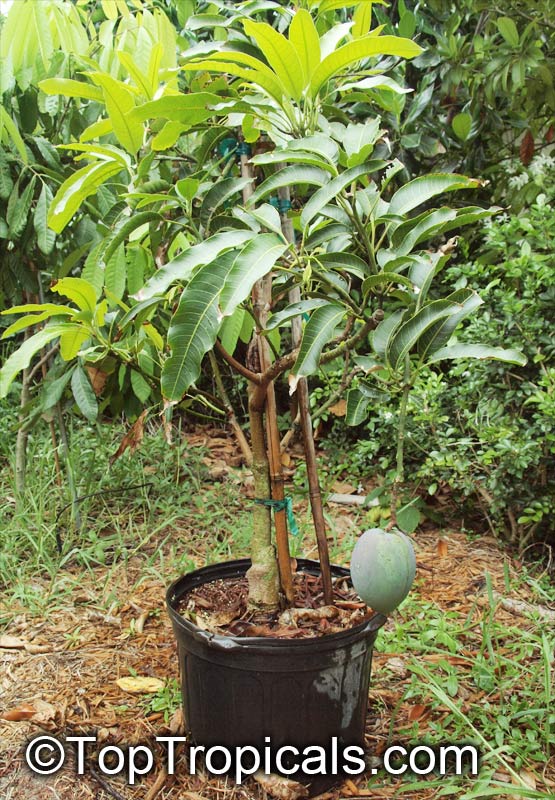
10 secrets of successful Container Mango growing on a balcony.

Q: I live in Miami in apartment on a second floor, and I have a balcony with SE exposure. I wonder if I can grow a mango tree in a pot? Will it fruit for me? I recently moved to South Florida and I don't know much about tropical plants; but I tasted real fiberless mangos from someone's garden - it was so delicious and different from those in the grocery store. I wonder if I can have a fruiting tree on my balcony? And if yes, how do I plant and take care of it?

A: Yes, you can! Here is what you need to do:
1) Temperature. You are lucky to live in Tropics, keep it on a balcony year round.
2) Light. Position the pot in a spot with the most sun exposure. Mango trees can take filtered light too, but the less sun, the less fruit you will get.
3) Soil and Container. Use only well drained potting mix. Step up the purchased plant into next size container (3 gal into 7 gal, 7 gal into 15 gal). When transplanting, make sure to keep growth point (where roots meet the trunk) just at the top of the soil. Covering base of the trunk with soil may kill the plant.
4) Water. Water daily during hot season, but only if top of soil gets dry. If it still moist, skip that day. Mangoes (unlike Avocados!) prefer to stay on a dry side.
5) Fertilizer. Use balanced fertilizer once a month, 1 tsp per 1 gal of soil. Do not fertilize during fruiting - this may cause fruit cracks.
6) Microelements. Apply SUNSHINE-Superfood once a month. This will help your mango healthy, vigorous, and resistant to diseases. Use SUNSHINE-Honey to make your fruit sweeter.
7) Insect control. Watch for scales and mealybugs, clean with solution of soapy water + vegetable oil (may need to repeat 2-3 times with 10 days interval), or with systemic insecticide like imidacloprid only as needed (if non-harsh treatment didn't help). Most Flea shampoo for dogs contain that chemical, you may try that shampoo solution.
8) Trimming. Once potted, do not remove leaves that are discolored or have spots until new growth appears. Dark dots on mango leaves, especially in humid climate like Florida, may be signs of fungus. Treat with fungicide according to label, and remove only badly damaged leaves. Trim crown as needed after flowering and fruiting (by Fall). Train into a small tree, and you may remove some lower branches eventually.
9) Flower and fruit. Mangoes are winter bloomers with bunches of tiny flowers coming in thousands. Many of them set fruit (if pollinating insects present). Keep in mind that young trees can only bare a few fruit. Normally a tree will drop excessive fruit and keep only a few that it can manage. To save the young tree some energy, remove fruit if too many and leave only 2-3 for the first year. It will pay you next year with more abundant crop.
10) Variety. Last but not least: Choose the right variety for container culture! Pick from "condo" dwarf varieties such as Icecream, Nam Doc Mai, Carrie, Cogshall, Julie, Fairchild, Pickering, Graham, Mallika, and a few others - check out Mango Chart pdf and full list of our Mango varieties.