Garden Blog - Top Tropicals

Date: 24 Jun 2018

TopTropicals

Cleanest fruit?

"Dirty" fruit: According to the Environmental Working Group research, Strawberries are top the list of the 12 "dirtiest" fruits and vegetables grown commercially. Spinach is the second, followed by (in order of contamination) nectarines, apples, grapes, peaches, cherries, pears, tomatoes, celery, potatoes and sweet bell peppers. Each of these foods tested positive for pesticide residues and contained higher concentrations of pesticides than other produce. This causes of course chronic health implications. Children are of special concern as younger bodies have greater susceptibility to pesticides than adult bodies, the report emphasizes. Pesticides may induce chronic health complications in children, including neuro- and behavioral problems, birth defects, allergies, asthma, and even cancer...

"Clean 15": Avocados lead 2018's clean fruits and veggies list, that also includes: mangoes, papayas, pineapples, kiwi, sweet corn, cabbage, onions, frozen sweet peas, asparagus, eggplant, honeydew melon, cantaloupe, cauliflower and broccoli.
Obviously, home grown fruit and vegetables are even better. Such fruit as Custard Apples, Sapodilla, Sapote, Jackfruit, Dragon Fruit, Passion Fruit and other rare varieties of tropical fruit, are even better for you because they are not grown commercially, and the choice from your own organic garden is the healthiest for yourself and your family!
Plant them today and get your cleanest fruit tomorrow!

Check out all tropical fruit trees and all tropical spice plants.

Date: 2 Feb 2022

5 most rewarding tropical fruit trees

Top Tropicals @ Garden America Radio Show

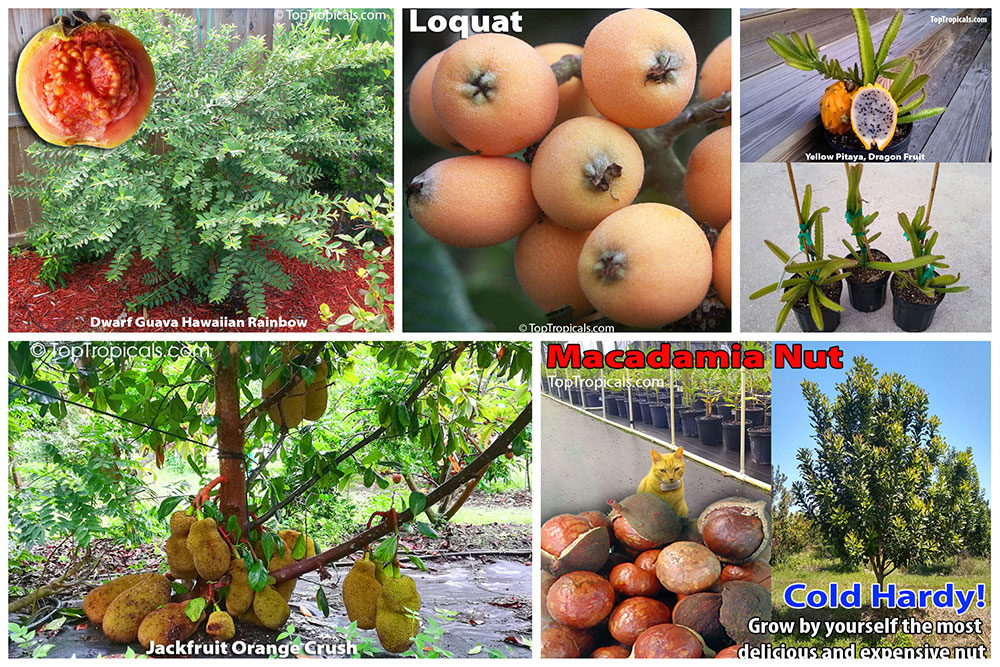
...The most popular garden radio show Garden America is featuring Top Tropicals topic "5 most practical and rewarding fruit trees for subtropical areas".

1) Jackfruit Orange Crush (Artocarpus heterophyllus)
...We recently obtained this variety and it is hands down the best Jackfruit we ever tasted. It is crunchy, sweet, aromatic, with bright orange pulp...

2) Dwarf Guava Hawaiian Rainbow (Psidium nana)
- A very small version of the favorite aromatic Guava.
- Grows only up to 5-6 ft tall with a short trunk and branching, bushy habit.

3) Yellow Pitaya, Dragon Fruit (Selenicereus megalanthus)
- This particular species of Dragon fruit is the sweetest and has great flavor unlike most pitayas
- doesn't mind regular water and rains but is also drought-tolerant

4) Loquat (Eriobotrya japonica)
- Can be kept as a very compact tree, and fruits in a pot.
- Flowers and fruits right away. The plants are covered with flowers now and setting fruit.
- Very cold hardy to upper 20's, drought tolerant, fast growing

5) Macadamia Nut (Macadamia integrifolia x tetraphylla)
- The most delicious and popular sweet nuts that are usually so expensive, can be produced in your garden!
- Cold hardy, fast growing, and very productive.

Listen to Facebook-Live Show (recording):

Date: 29 Aug 2021

Tropical Fruit Collections

September is a great month to plant. The soil is warm and the air is beginning to get cooler which helps to encourage new roots to grow. For much of the Country, September typically brings more opportunity for additional rain and moisture, allowing you to water less. Take advantage of this time of year to establish new plants in your gardens!

Tropical Fruit Starter Collection

Tropical Fruit Starter Collection - 4 plants for price of 2.
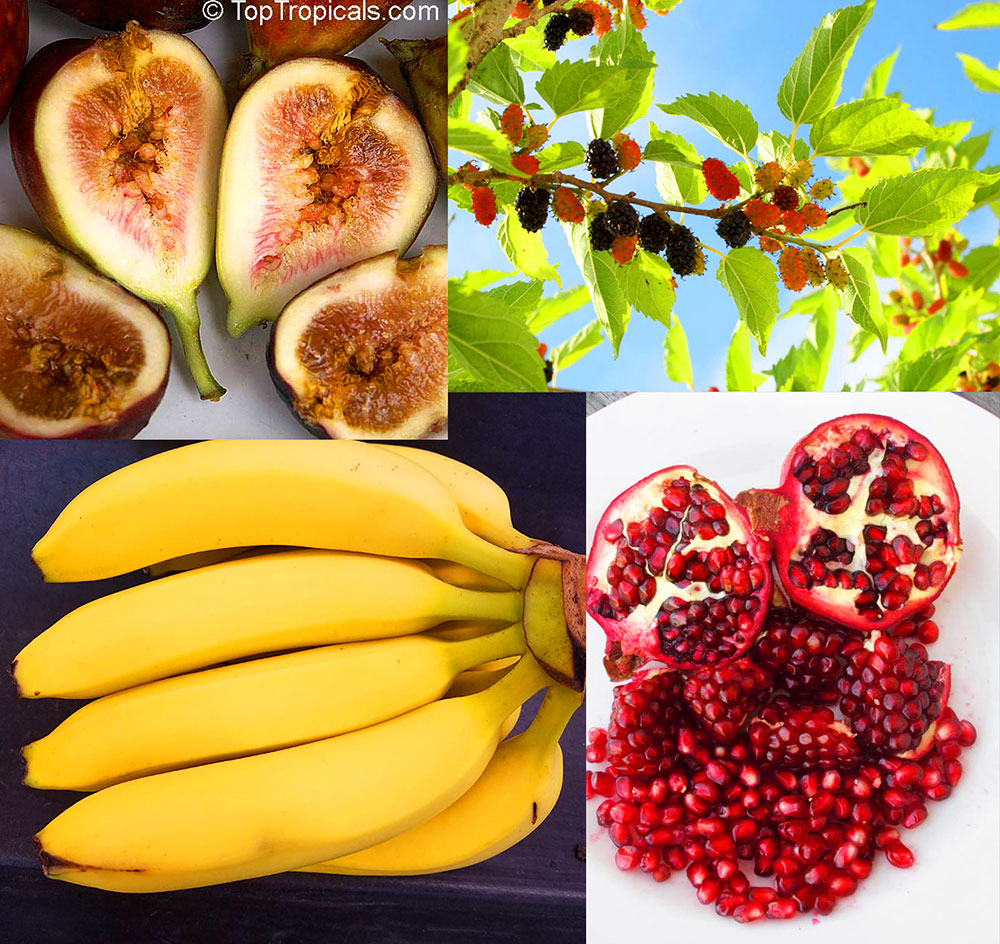
Tropical Fruit Starter set for half price! Rare tropical fruit trees that are easy to grow even for beginners. Start today to get fruit of your labor tomorrow! The Collection includes 1 of each: Fig, Banana, Mulberry, and Pomegranate.
Ficus carica - Fig Brown Turkey
Musa - Banana Double Mahoi
Morus sp. - Mulberry, Dwarf Everbearing
Punica granatum - Pomegranate var. Eversweet

Super Foods Bundle

Super Foods Bundle Collection - 4 plants for price of 2
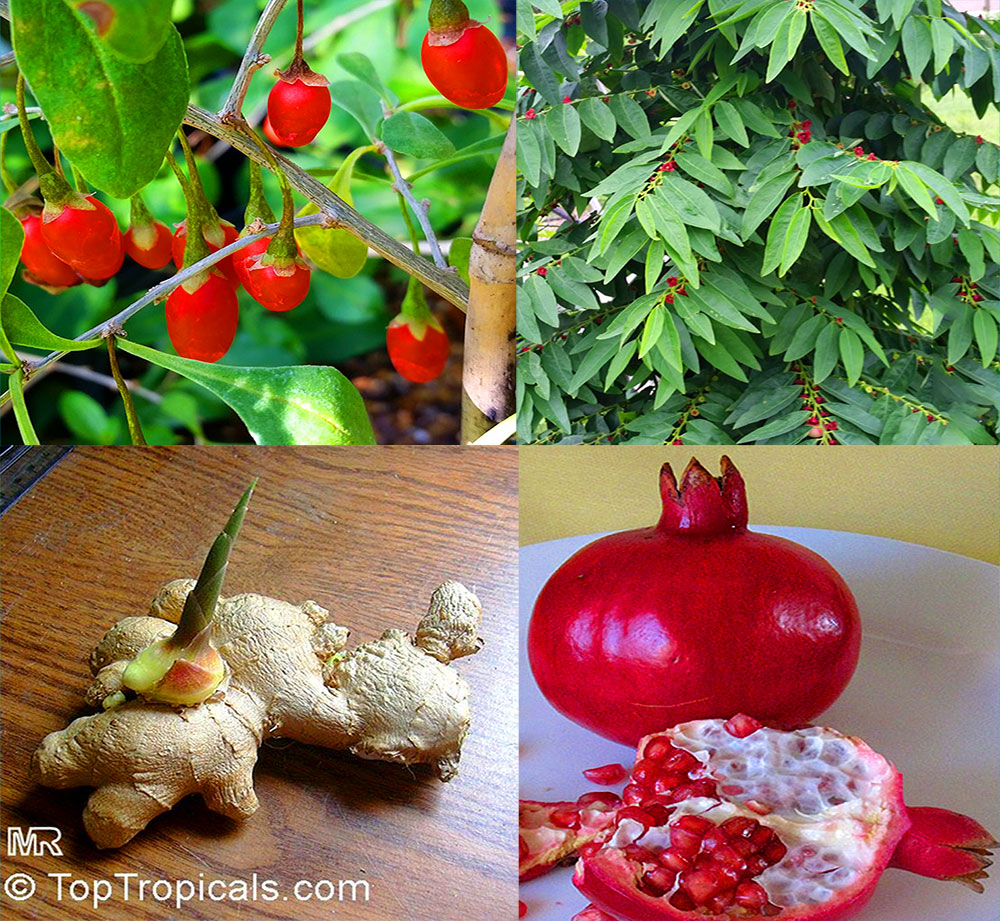
Super Foods Bundle for half price! Get health foods right from your backyard. Start today to get healthy tomorrow! The Collection includes 1 of each: Goji Berry, Spice Ginger, Pomegranate, Tropical Asparagus (Katuk).
Lycium barbarum - Goji Berry
Zingiber officinale - Spice Ginger
Punica granatum - Pomegranate var. Eversweet
Sauropus androgynus - Katuk, Tropical Asparagus

Rare Fruit Collection

Rare Fruit Collection - 4 rare plants for half price.
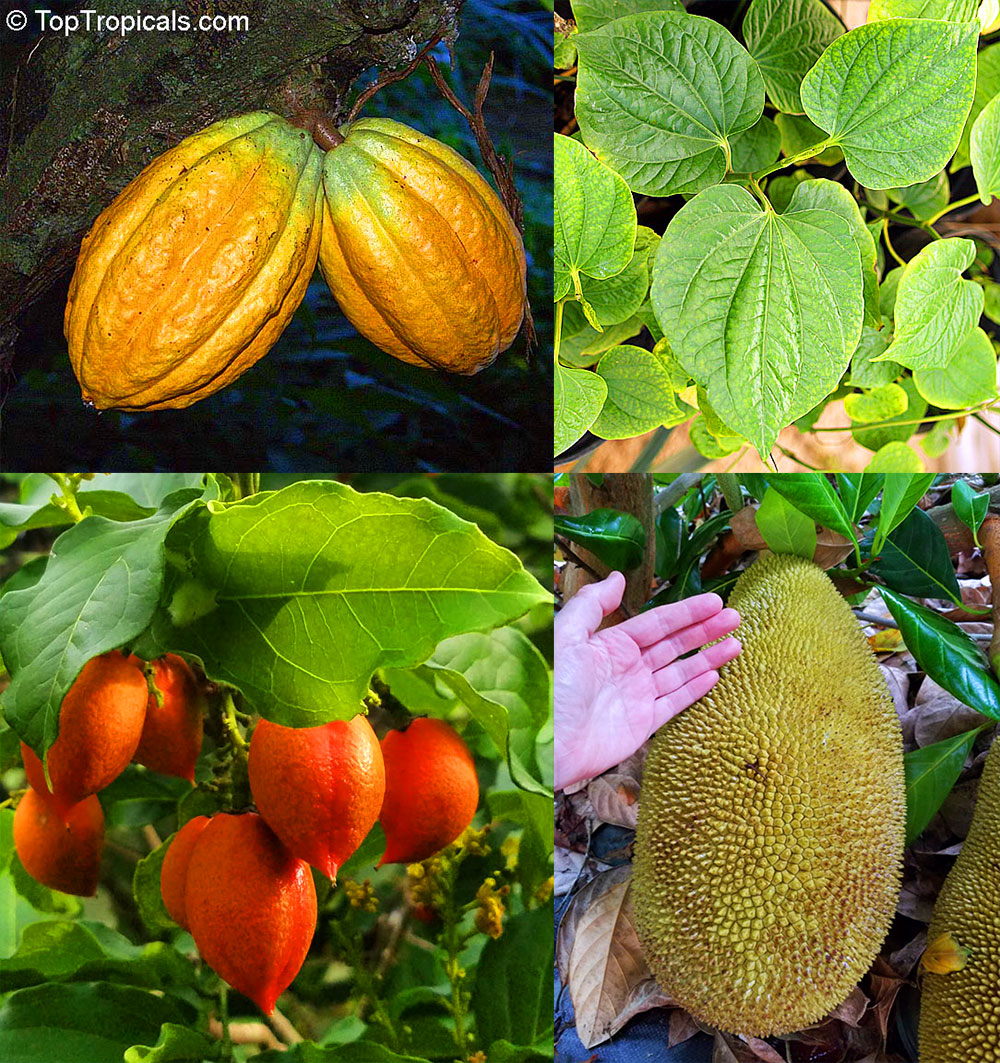
Rare Fruit Set for Real Collectors - for half price! Hard to find, much wanted species all at once at low cost! Limited time offer. The Collection includes 1 of each: Chocolate Tree, Vietnamese Pepper, Peanut Butter Tree, Jackfruit.
Theobroma cacao - Chocolate tree
Piper sarmentosum - Vietnamese Pepper, Lalot
Bunchosia argentea - Peanut Butter Tree
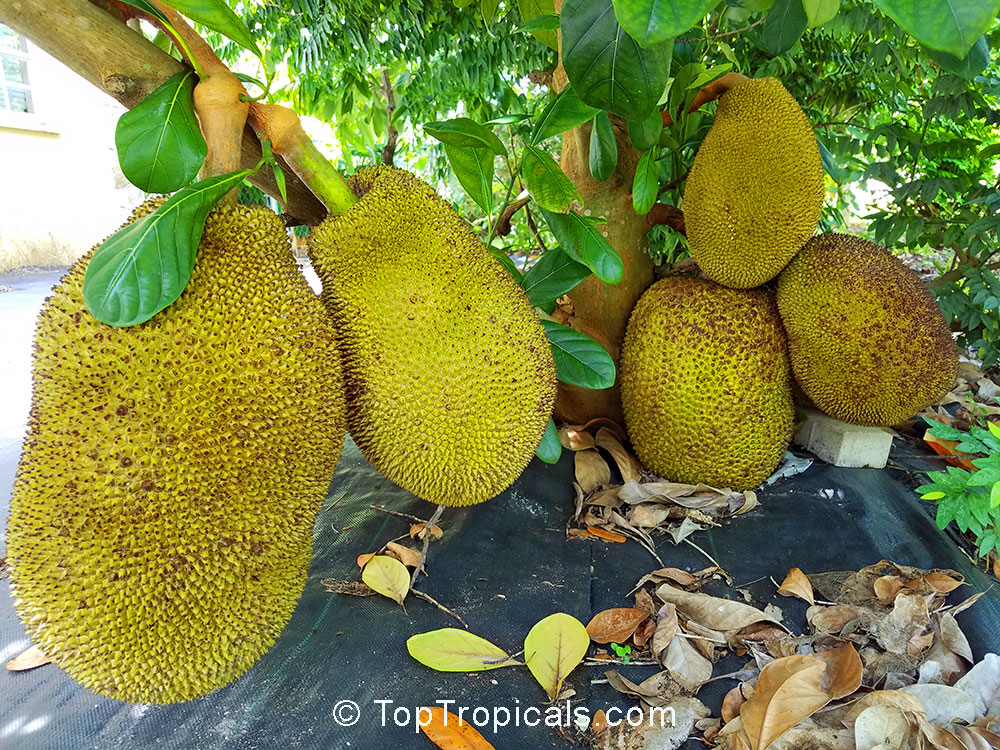
Artocarpus heterophyllus - Jackfruit Super Thai

Date: 16 Jan 2020

Jack-edak - Cheena

Artocarpus x integer (Jackfruit x Chempedak)

by Mark Hooten, the Garden Doc

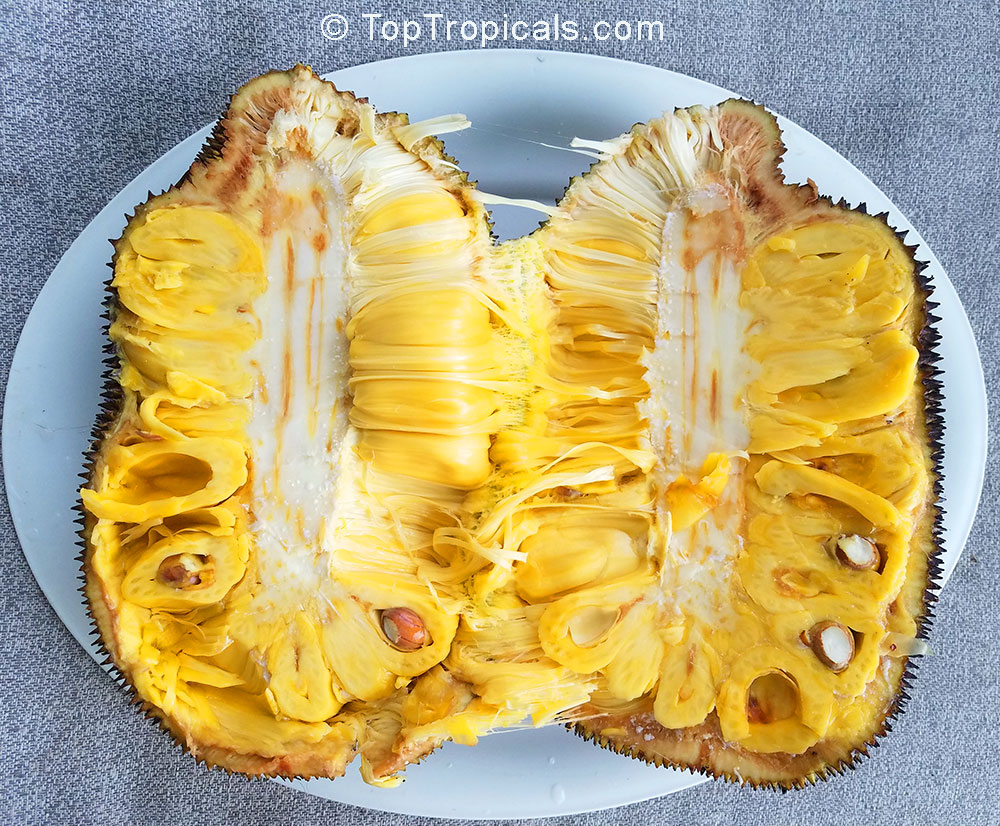
...While pure Jackfruits develop bulbs which are somewhat larger by comparison, those of the Jackfruit/Chempedak hybrid Cheena (which I call "Jack-edak"), are more numerous and have a much smaller ratio of inedible "packing material" around them than the pure Jackfruits. They're also easier to cut open, having much less dripping latex than regular Jackfruits. The tightly packed bulbs are tender, juicy, and basically fiber-less, having a flavor we find very similar to really good Sugar Apples, yet even richer and more complex. My son has used it for making what several friends have described as the best chutney of all-time!..

CONTINUE READING >>

Date: 22 Mar 2017

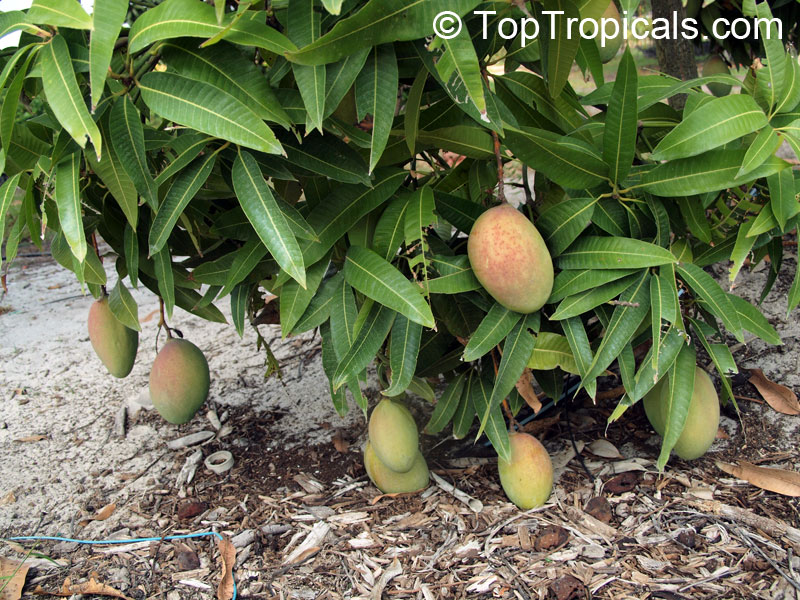
Condo Mango

Q: I was curious about indoor fruiting mango trees. I live in upstate New York and was thinking about trying to grow an indoor tree for fruit. I have a small heated greenhouse. Is there a variety that can be grown from seed that would suit my purposes and if not what is the most economical way I could obtain a cutting or small grafted plant? I keep my greenhouse around 60F in the winter and have no supplemental lighting. Are there any varieties that may work in a sunroom or other well lit indoor location?

A: There are many dwarf varieties of mango suitable for container culture. They are called "condo mangoes".
The most popular condo varieties are: Carrie, Cogshall, Cushman, Fairchild, Graham, Ice Cream, Julie , Mallika, Nam Doc Mai, Pickering. You may read more about them in our online catalog. You may also look into variety Lancetilla which is also a compact tree, and produces one of the biggest size fruit, up to 5 pounds. If you want some rare variety that hardly anyone else has - try Baptiste, an exotic Haitian dessert mango.

Your greenhouse should work for the winter time. Mango trees can take as low as mid 40s during winter and even lower as long as that cold is occasional. If you keep the temperature around 60, this should work well for over wintering. Just make sure to reduce watering to a minimum, because cool temperatures, low light and wet soil - is a bad combination for tropical plants, especially for mango trees which prefer to be kept on a dry side.

Many indoor gardeners have fruiting mango trees in their collection. However, keep in mind that the most important requirement for a mango is full sun. While you may over winter the plant for a few months in a low light conditions, in order for it to flower and produce fruit it needs lots of light. If moving the tree into full sun your yard during the summer is possible, this would be the best solution.

We always recommend SUNSHINE boosters for both over wintering tropical plants in colder climates, and for indoor gardening. SUNSHINE applications will help your tree to cope with cool temperatures and low light conditions. This will also dramatically increase flowering and fruiting performance. Another important factor for keeping your container plant healthy is quality of your potting soil. We offer a special professional mix that contains lots of good stuff: coconut fiber, peat moss, pine bark, and perlite. Fertilizing potted plants is also very important during the warm season, because this is the only way for them to get nutrients (which in the ground can be reached by spreading root system).

As far as seedlings vs. grafting - the only way to have a nicely fruiting mango tree is to plant a grafted variety. Seedlings start producing only after 8-15 years, and the quality of such fruit may be questionable. Only grafted plants can guarantee the desired taste of a variety. Besides, grafted mangoes start producing immediately - you may see fruit forming on plants as small as 3 ft, in 3 gal containers. However, during the first 1-2 years you will need to remove extra fruit and leave only 1-2 fruit so the plant doesn't get exhausted and has enough energy to establish strong root system.

For fun stories about growing mango, check out our Radio Show recording YO Tango Mango!