Date: 3 Jan 2026
Garden Blog - Top Tropicals
Date: 3 Jan 2026
Cutting into a 37-pound Jackedak Jackfruit with Chiane and Ashley
🍈 Cutting into a 37-pound Jackedak Jackfruit with Chiane and Ashley
📱
#Food_Forest #Jackfruit
🟢 Join 👉 TopTropicals
Date: 26 Feb 2026
Stop Sugar Crashes: 5 Tropical Fruit Hacks for Healthy Dessert
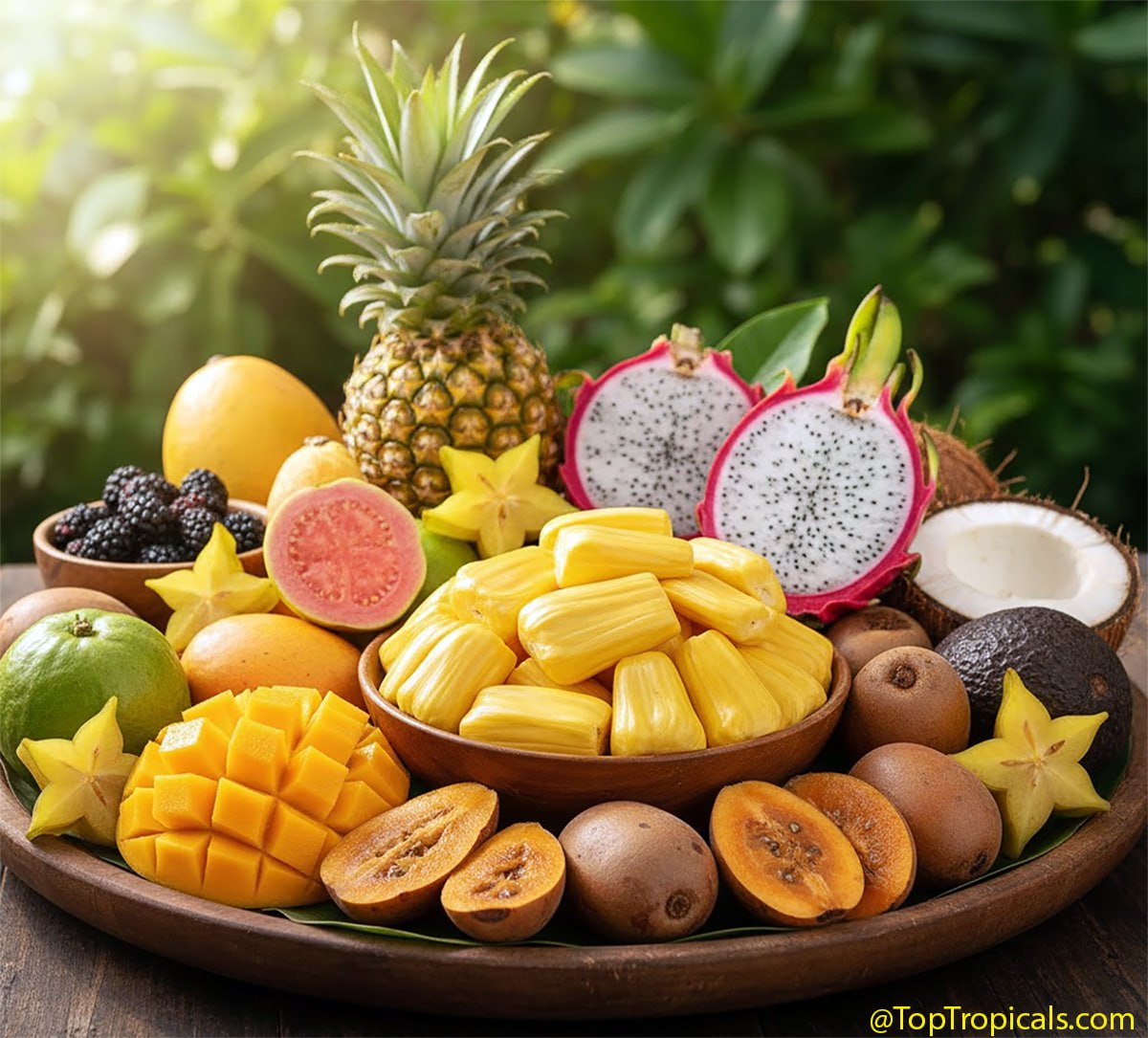
Exotic Tropical Fruits for Blood Sugar Management. Stop the sugar crash cycle. Learn how to manage glucose levels and insulin spikes using tropical fruits, healthy fats, and metabolic hacks for healthy dessert.
🍨 Stop Sugar Crashes: 5 Tropical Fruit Hacks for Healthy Dessert
The smarter way to handle sugar cravings - no restriction required
Tired of the post-cookie slump? Sugar cravings are a physiological response to blood glucose fluctuations, not a lack of willpower. Refined sugars trigger an insulin spike followed by a hypoglycemic crash, trapping you in a cycle of fatigue and hunger.
The secret to metabolic health is managing glycemic load. By choosing nutrient-dense tropical fruits, you satisfy your sweet tooth while maintaining stable energy homeostasis.
The solution is not to give up dessert. It is to change what dessert means. Here is how to use tropical horticulture to hack your biology and regulate insulin:
🍭 1. Choose fruit that comes with fiber
Whole tropical fruits deliver sweetness wrapped in fiber, water, and nutrients. That slows sugar absorption and keeps energy steady.
Try:
· Mango, chilled and sliced


· Sapodilla - naturally caramel-sweet
· Mulberries by the handful
· Loquat halves straight from the fridge
· Dragon Fruit for light, clean sweetness Same pleasure. Less crash.
🍭 2. Pair sweet with fat to blunt the glucose spike
Healthy lipids are a biological hack for your metabolism. Fats slow gastric emptying, ensuring a steady glucose release rather than an inflammatory spike. Furthermore, lipids trigger cholecystokinin (CCK) - the hormone that signals satiety to the brain - effectively "turning off" cravings at the source.
· Avocado blended into a chocolate-style mousse: The monounsaturated fats create a creamy texture while blunting the sugar response.


· Banana with nut butter: Combining fast-acting fruit sugars with dense protein and fats.
· Pineapple with raw nuts: The bromelain in pineapple aids digestion, while the fats in nuts provide long-lasting satiety.


· Mango mixed into full-fat yogurt: The combination of probiotics, protein, and lipids turns a simple fruit into a complete, low-glycemic snack. When fruit is balanced with fat, cravings calm down instead of escalating.
🍭 3. Use naturally rich fruits in place of sugar
Some tropical fruits taste like dessert already.
· Jackfruit has candy-like sweetness
· Sapote is creamy and custard-like
· Guava brings floral depth
· Cherries add brightness
· Mash Banana into baking instead of white sugar.
· Blend Mango into yogurt instead of syrup.
· Top oatmeal with Mulberry instead of brown sugar. Dessert stays. The crash disappears.
🍭 4. Balance sweet with tart
Adding contrast reduces the urge to overeat sweetness.
· Carambola adds crisp tang.
· Pineapple brightens the palate.
· Loquat gives gentle acidity. Balanced flavors satisfy faster.
🍭 5. Start the day right
Skipping breakfast increases late-day sugar cravings.
A morning smoothie with Avocado, Banana, and Mango prevents the afternoon energy dip. Hydration also matters - thirst often disguises itself as a sweet craving.
🍭 In essence
Dessert is not the enemy. Refined sugar is.
When sweetness comes from nature's bounty, it nourishes instead of draining energy.
You do not need to quit dessert.
You just need to let nature handle it.
Consult with a healthcare professional before making significant dietary changes, especially if you have diabetes or metabolic conditions
🛒 Start your tropical fruit journey
Annona · Guava · Mango · Sapodilla · Mulberry · Pineapple · Avocado · Banana · Loquat · Dragon fruit · Jackfruit · Sapote · Cherries · Carambola
📚 Learn more:
A leaf you grow, not a pill you buy: Insulin ginger - the plant people actually use
How to lose weight naturally with tropical fruit and plants
What's for breakfast? Guava versus Banana
11 tropical fruits to eat instead of taking a fiber supplement
How to make lots of Insulin Ginger plants quickly and get more health benefits
Truth about which fruit helps you lose weight faster: Mango or Papaya?
Five best tropical fruits to naturally boost your energy
Finally: a sugar that’s good for your health
#Food_Forest #Remedies #Discover
🟢 Join 👉 TopTropicals
Date: 23 Sep 2020
Fast-fruiting trees?
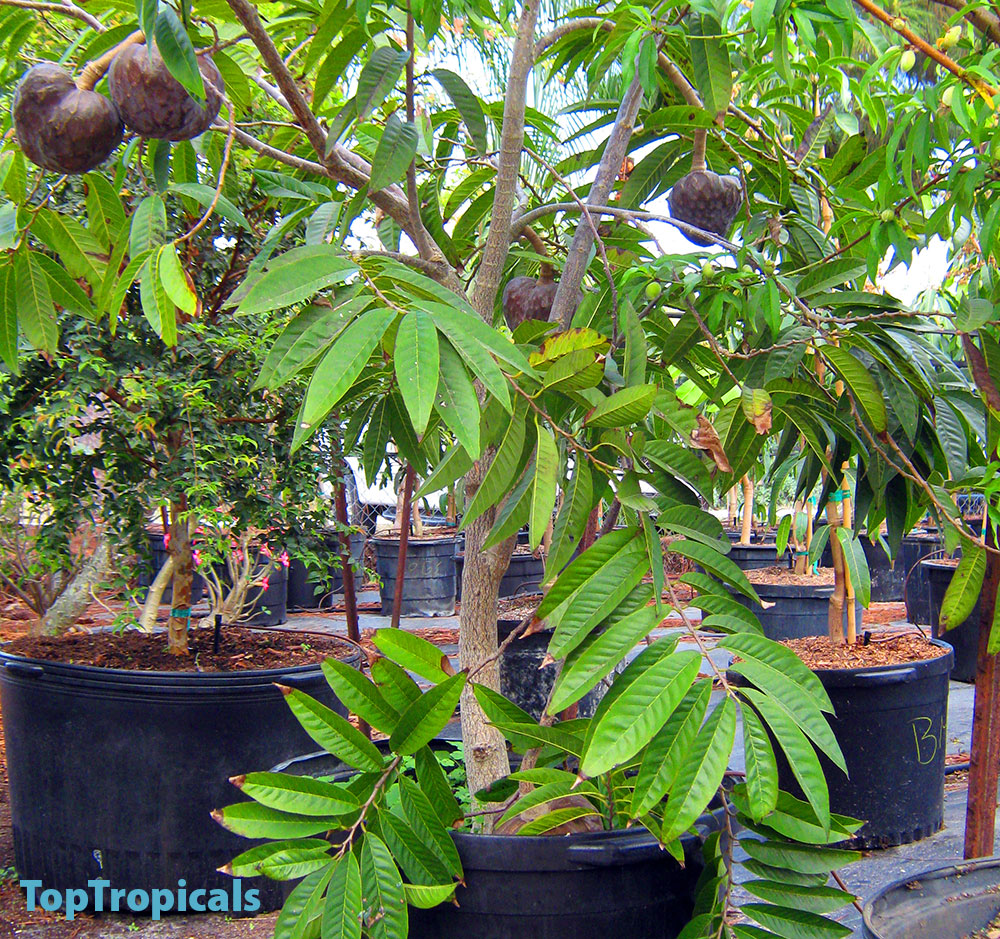
Photo above: Annona reticulata - Red Custard Apple
Q: More of a question than a review, but a review regarding your catalog, it would be easier for us buyers, if we could search for plants that produce fruit in 2 years or less, I don't have the patience to wait longer than that for fruit. I'm trying to buy for a fairly good sized garden but want some fast growers and fruit produced in 2 yrs. Can you help me out?
A: Fruiting time depends on many factors (established size,
growing conditions, fertilizing, and even specific variety), this is why we can
not just put a simple icon "will fruit within 2 years".
However, most grafted and air-layered fruit trees, including all Mango, Avocado, Loquat, Sapote, Sapodilla, Lychee/Longan, Peaches and Nectarines - will fruit right away. If you see in our store
"grafted" or "air-layered" in plant description - these trees will fruit
soon. Some of them already flowering and fruiting.
Some non-grafted trees or seedlings like Annona, Artocarpus (Jackfruit), Eugenia, Guava, Banana, Dragon fruit, Mulberry, Blackberry/Raspberry - will fruit within 3-4 years from seed or even
sooner (Banana, Mulberry, Dragon fruit, Blackberry-Raspberry - within a year).
Usually it says in description that this plant can produce fruit soon.
Bigger size plants are more established and have more energy to produce, so
try to get larger size plants if your budget permits, and especially if you can
pick up bigger plants rather than shipping them - obviously, shipping has size
limitations.
In addition, all spice trees like Bay Leaf, Bay Rum, Allspice and many more - they will
produce spice for you right away, so you don't need to wait at all!
If you have questions about fruiting time on any specific plant you put
your eye on, don't hesitate to ask!

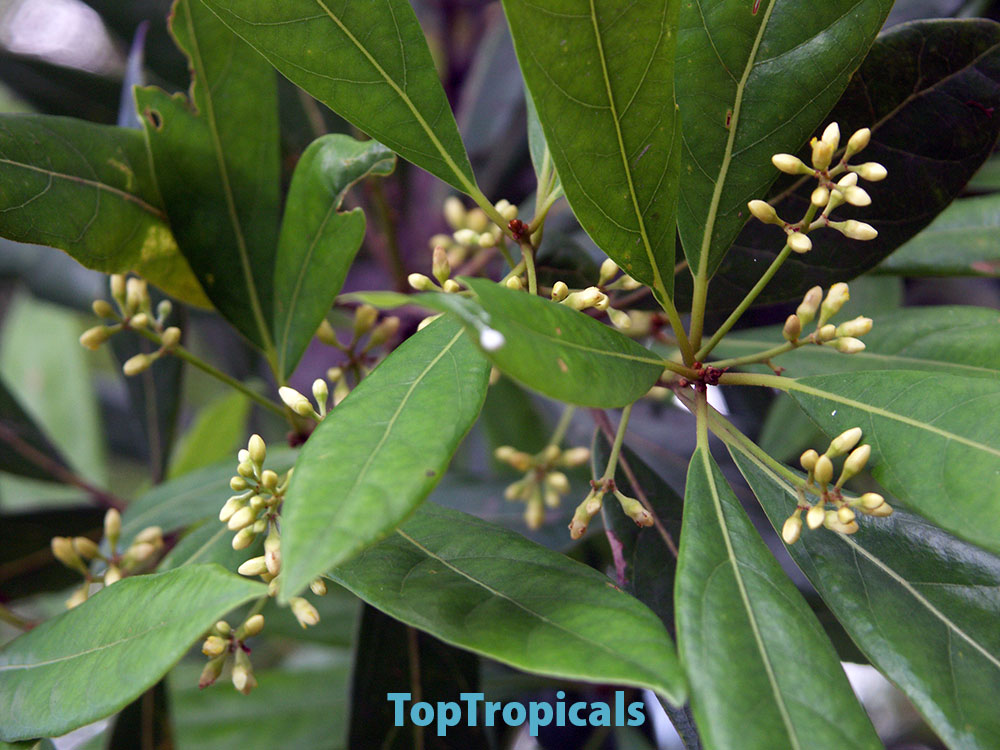
Photo above: Pimenta dioica - Allspice
Date: 3 Aug 2019
Grafted or seedling?
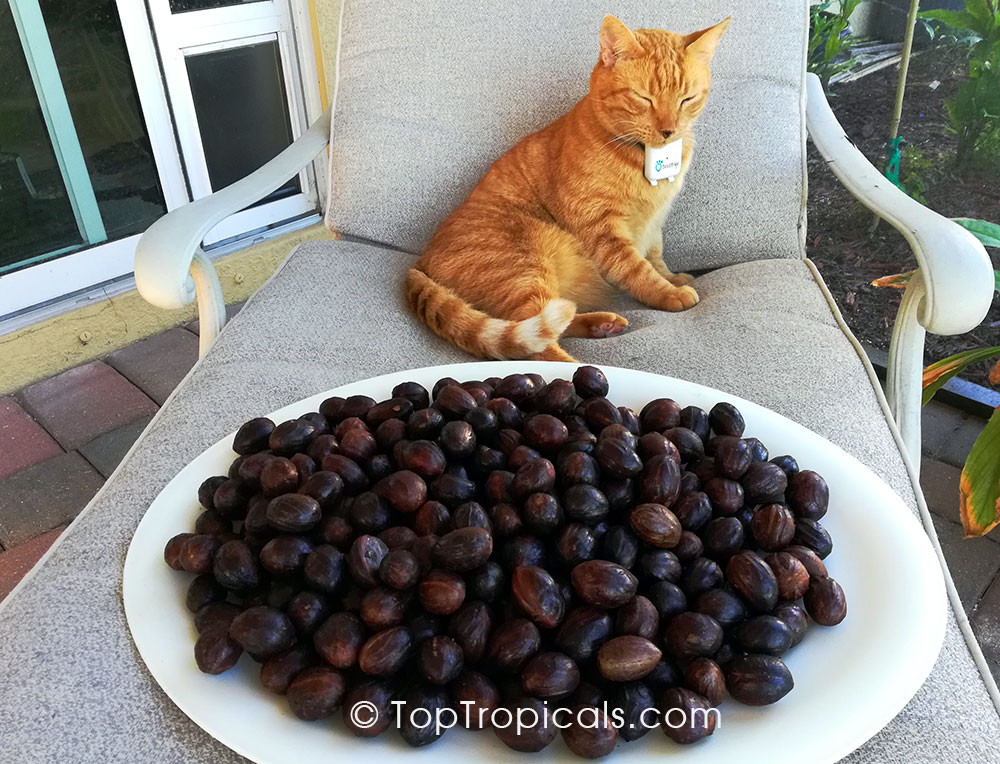
Photo: Mr Barcy meditating before planting Nutmeg seeds
Q: I planted an avocado seed and it sprouted quickly, it has been only a couple months and I already have a small plant. How soon will it produce fruit? Can I grow other tropical fruit from seed?
A: Unfortunately, some fruit trees, including varieties of
avocado, mango, lychee, as well as apples and peaches - must be either grafted or
air-layered in order to produce, for 2 main reasons:
- seedlings may take a very long time until fruiting, up to 10-15 years
- seedling gives no guarantee on the quality of the fruit or variety
These fruit trees should be propagated as "clones" - both grafted
material or cuttings are actually copies of the mother plant and will keep the
same fruit qualities. Grafted trees usually start producing immediately.
However there is a number of fruit trees that come true from seed, and
take a very short time to start flowering. Jackfruit, Annonas (Sugar Apple, Guanabana, etc), Papaya, Icecream Bean, Eugenias start producing at a young age (3-4 years from seed).
Recommended fertilizers for fruit trees:
Fruit Festival Plant Food - Super Crop Booster
Mango-Food - Smart Release Fruit Tree Booster
SUNSHINE-Honey - for sweeter fruit
SUNSHINE SuperFood - microelement supplement
