"The fruit of the mango tree is no longer forbidden.
Indeed, it has been recommended to me by the physicians as an antidote to the
plague."
- Louis IX, King of France -
Q: Why do you want to grow your own tropical
fruit tree?
A: Growing your own tropical fruit tree can have
many benefits. Here are a few reasons why someone might choose to grow their
own tropical fruit tree:
1. Fresh, flavorful fruit: When you grow your own tropical fruit
tree, you have access to fresh, flavorful fruit that you may not be able to
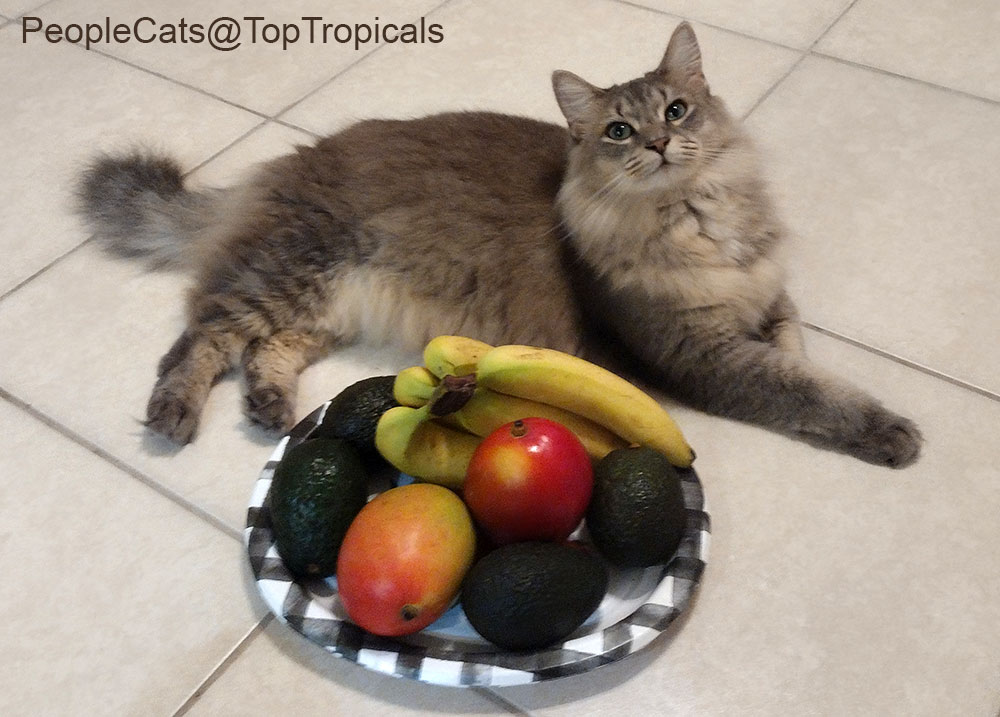
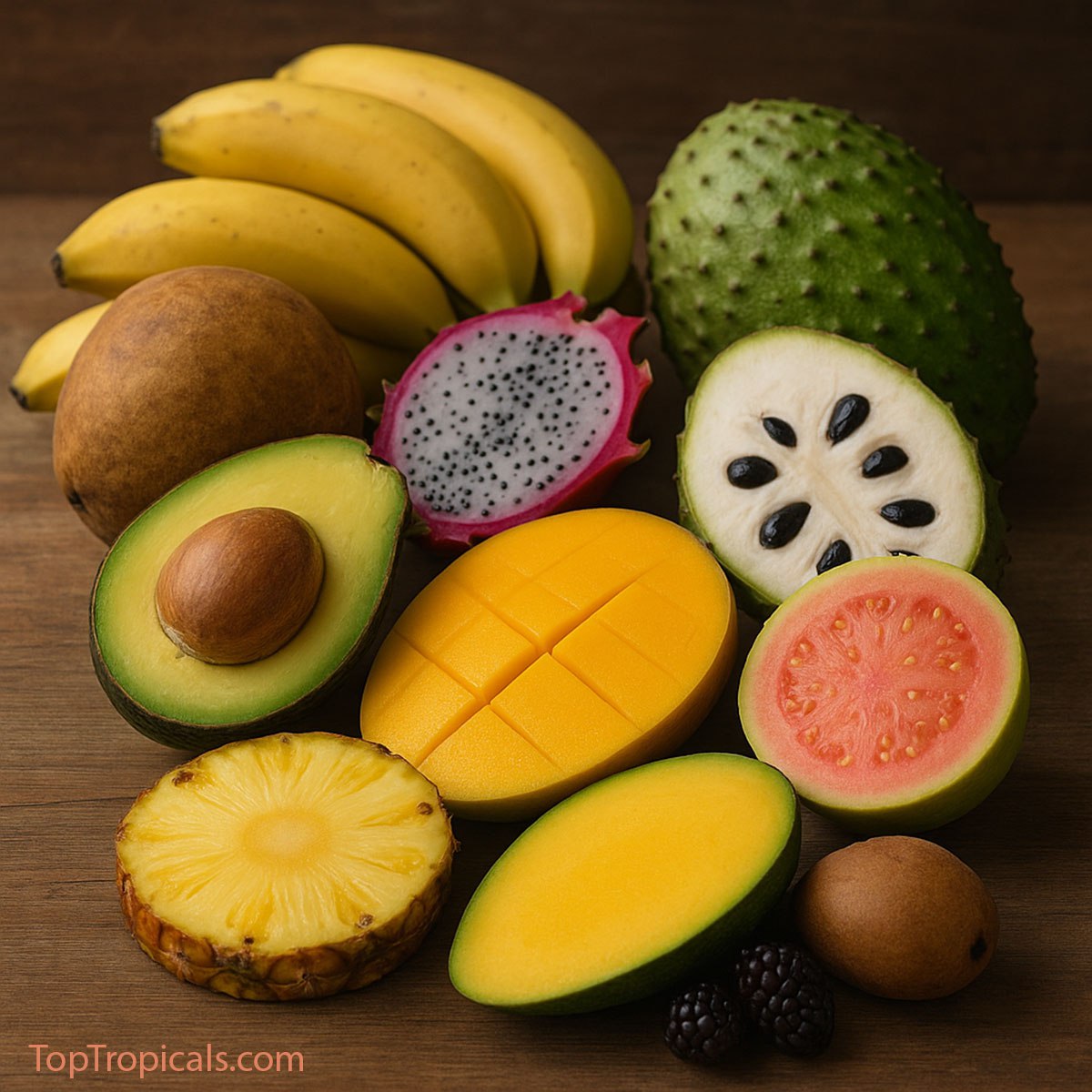
find at your local grocery store. Tropical fruit, like avocado,
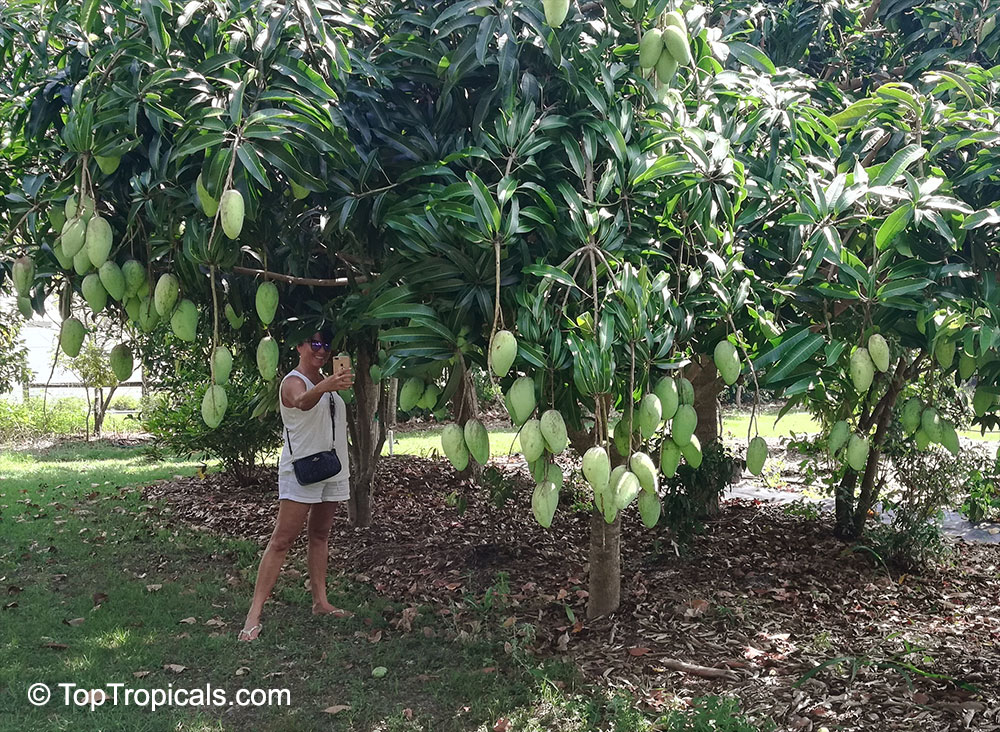
mangoes,
papayas, and
passionfruit, jackfruit,
Dragon Fruit, Annona have a short shelf life, and the fruit you find at the store may
have been harvested weeks ago. When you grow your own fruit tree, you can
pick the fruit when it's fully ripe and enjoy it at its peak flavor. Besides,
some rare fruit like Akee or
Sapodilla simply never offered from the store.
2. Environmental benefits: Growing your own fruit trees can have
environmental benefits. Trees absorb carbon dioxide from the air and release
oxygen, which can help reduce your carbon footprint. Additionally, growing
your own fruit trees reduces the need to transport fruit long distances, which
can help reduce greenhouse gas emissions.
3. Cost savings: Depending on where you live and the availability
of tropical fruit, growing your own fruit tree can be a cost-effective way
to enjoy your favorite tropical fruits.
4. Gardening and outdoor hobby: Growing a fruit tree can be a
fulfilling and rewarding outdoor hobby. It can also be a great way to teach
children about where their food comes from and the importance of taking care of
the environment.
Overall, growing your own tropical fruit tree can be a great way to
enjoy fresh, flavorful fruit, reduce your carbon footprint, save money, and enjoy
a fulfilling outdoor hobby.
11 tropical fruits to eat instead of taking a fiber supplement
Tropical fruits to eat instead of taking a fiber supplement
🍑 11 tropical fruits to eat instead of taking a fiber supplement
When we think of tropical fruit, we picture sweetness, sunshine, and exotic flavors packed with vitamin C. But beneath all that juicy goodness lies another gift: dietary fiber - quietly working to support digestion, feed the gut microbiome, and help keep blood sugar steady.
Avocado leads the pack among tropical fruits for fiber content. One creamy, ripe fruit can provide around 10 grams of fiber, roughly a third of an adult’s daily need. And there’s more to avocado than fiber - it’s also rich in healthy fats, micronutrients, and that silky texture everyone loves.
Other tropical fruits bring their own kind of fiber strength. Guava delivers up to 9 grams per cup, plus a burst of vitamin C.
Mango offers about 3 grams in half a fruit, especially when eaten with some of the skin.
Pineapple, though not always seen as a fiber powerhouse, still contributes around 2 grams per cup, along with bromelain, the enzyme that helps digestion.
Jackfruit’s fibrous pulp makes it another standout - it’s so meaty, it’s even used as a plant-based substitute in savory dishes.
Sapote fruit (Mamey, Canistel) and Sapodilla add fiber with a smooth, custard-like texture.
Adventurous tropical varieties like Annona (custard apple, soursop) may not top the charts in fiber numbers, but their soft, fibrous flesh still adds value: about 1.3 grams of fiber per 100 grams of fruit.
Bananas contain both soluble and insoluble fiber; the soluble part (mainly pectin) helps control blood sugar and appetite, while the insoluble fiber aids regularity.
Mulberries are rich in insoluble fiber, especially in their skin, supporting digestion and promoting healthy bowel movements.
Dragon fruit offers a mix of soluble fiber in its juicy flesh and insoluble fiber from its tiny edible seeds, which help support gut health and feed good bacteria.
These fruits aren’t just delicious - they help you meet your daily fiber needs in ways that are far more enjoyable (and sustainable) than taking supplements. And when home gardeners, farmers, or tropical communities grow and share them, it’s a double win: nutrition and tradition hand in hand.
✔️ Tropical fiber power: tips for getting more fiber from tropical fruits
⏺Eat whole, not juiced. Most of the fiber is in the pulp, skin, and seeds. Juicing removes much of that goodness. ⏺Mix it up. Tropical fruits are great, but balance them with legumes, whole grains, nuts, and veggies for a full fiber range. ⏺Take it slow. If your diet is low in fiber, increase gradually to avoid bloating or discomfort. ⏺Drink plenty of water. Fiber works best when paired with hydration. ⏺Mind the ripeness. Unripe fruits can have more resistant starch, another form of fiber. ⏺Get creative. Toss tropical fruits into smoothies, salsas, breakfast bowls, or even desserts - a tasty stealth-fiber strategy.
Sunshine: John said it smelled like a thousand
jasmines. Smokey: And somehow that's all the information he brought
back from Thailand. Sunshine: He brought a photo, too. Smokey: Excellent. We can begin our international manhunt.
Well, Smokey and Sunshine have closed the case and found the mystery
plant. The cork board is coming down, the magnifying glass is back in the
drawer, and the "Enchanted
Incense" mug is finally empty.
Now let's talk about the plant itself.
🌸 Some plants arrive with a label. Some arrive with a
story.
Cerbera x manghas - Enchanted Incense - produces some of the most
unusual
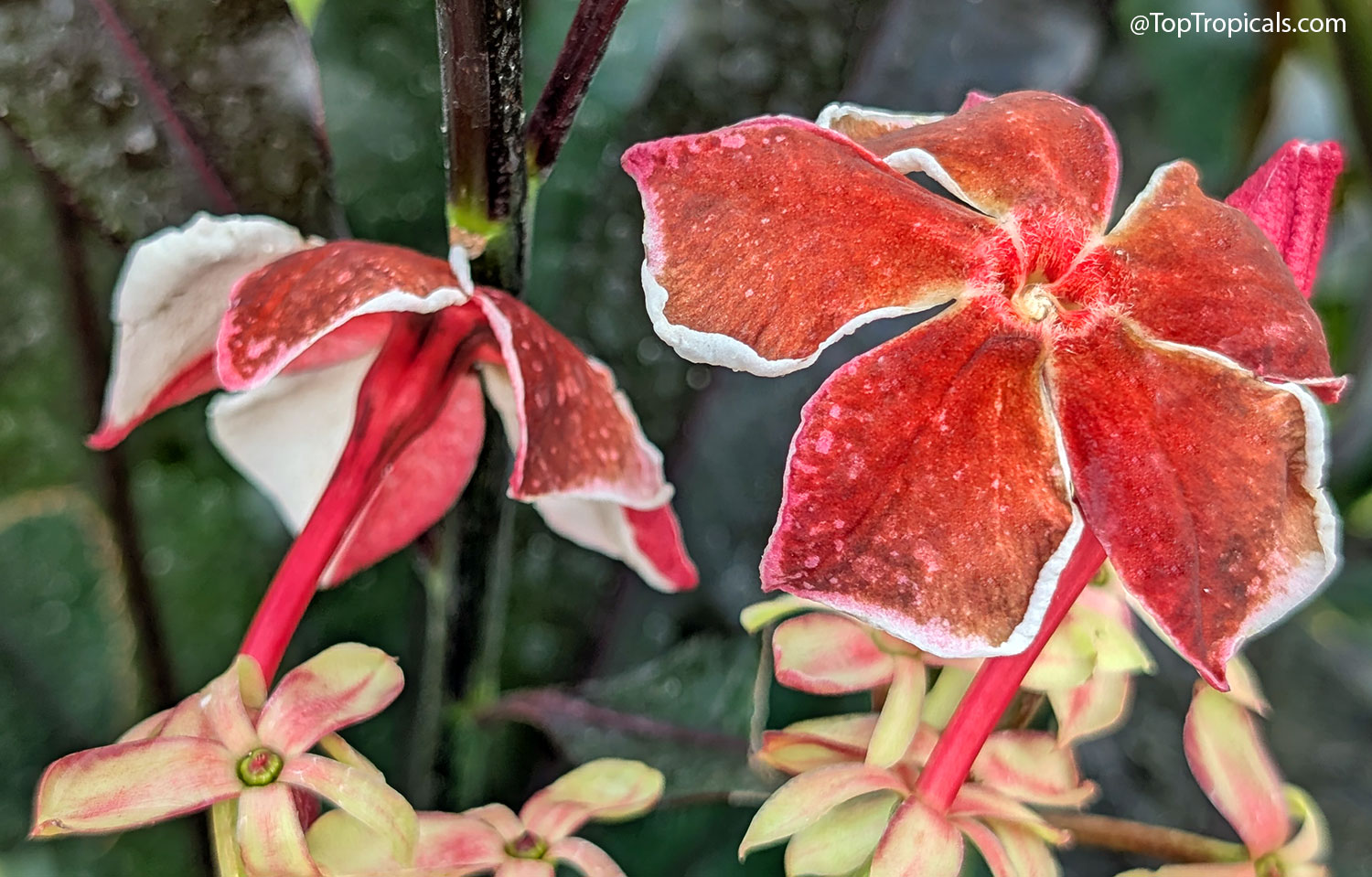
fragrant flowers in the tropical garden. Its velvety reddish blooms,
outlined in white and carried on vivid pink tubes, create an exotic display
that looks hand-painted.
When our good friend John Mood returned from a plant conference in
Thailand, he did not bring us a plant. He brought us a mystery.
John had spent decades growing and collecting rare tropical plants. When he
said he had found something special, we paid attention.
On a visit to Chatuchak
Market, one of the most famous plant markets in Asia,
something stopped him. Not the flowers. The fragrance.
"I found a plant that smells stronger than a thousand jasmines," John
told us.
That one sentence stayed with us for years.
He had photographs. He had his memory of that scent. What he did not have
was a name. No tag. No seller information. Just the photos and the certainty
that he had smelled something genuinely unusual.
So we started looking.
We showed the photographs around. We asked collectors. We compared flowers.
Every lead turned into another question. But eventually, after years of
searching on and off, we found it.
The mystery plant turned out to be an unusual Cerbera
unlike anything we had grown before.
Today we call it Enchanted Incense. Fragrance lovers recognized
immediately what John had recognized in that Bangkok market. This was not
just another pretty tropical flower.
🌸 The Plant
Even when
not in full bloom, Cerbera
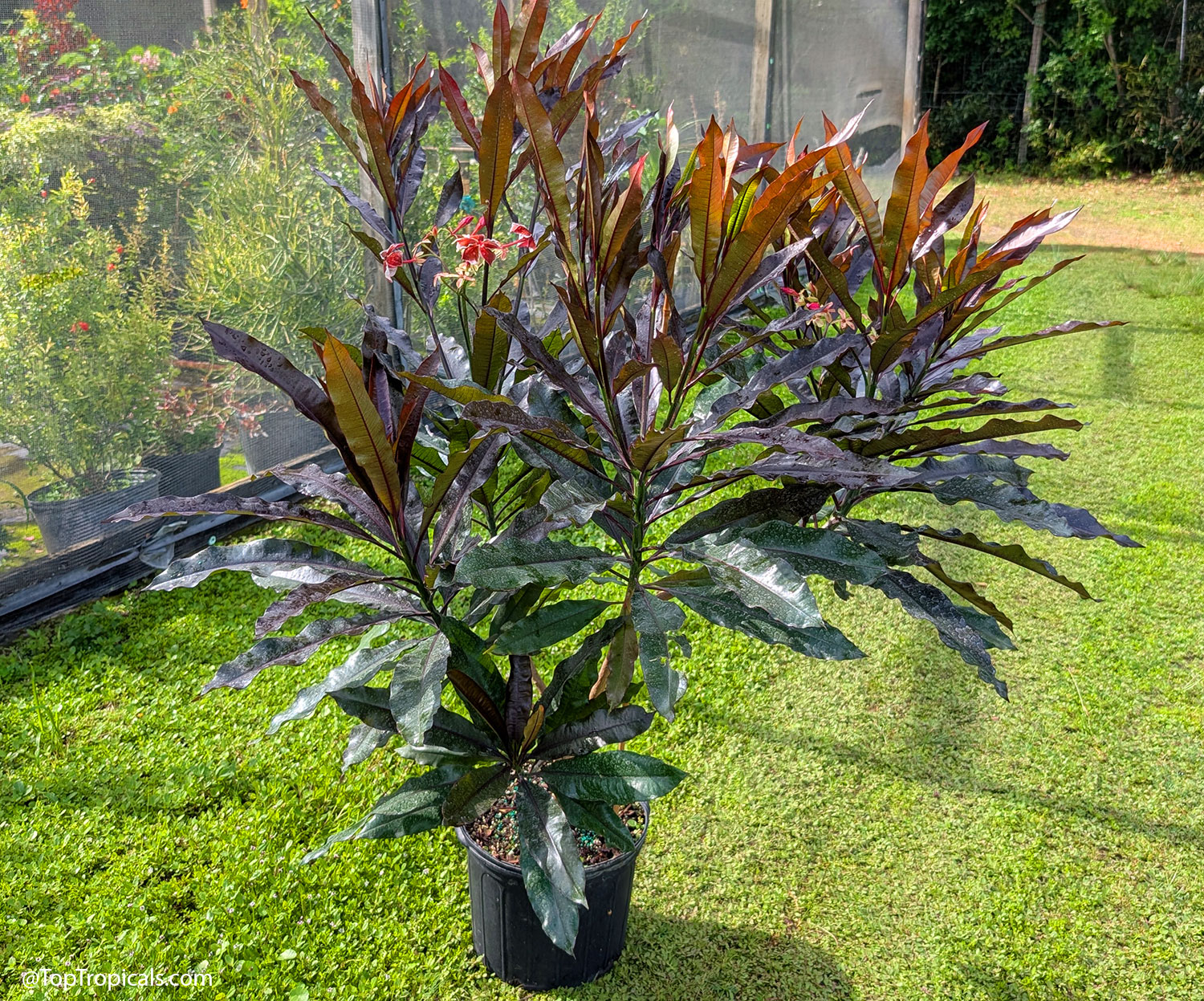
x manghas Enchanted Incense is a standout plant. Its glossy, deep
burgundy foliage and bronze new growth create a bold tropical presence,
while the unusual flowers add an extra layer of intrigue.
Visitors at our nursery still walk past it and stop. Not because they
noticed the plant. Because they noticed something in the air and could not
figure
out where it was coming from.
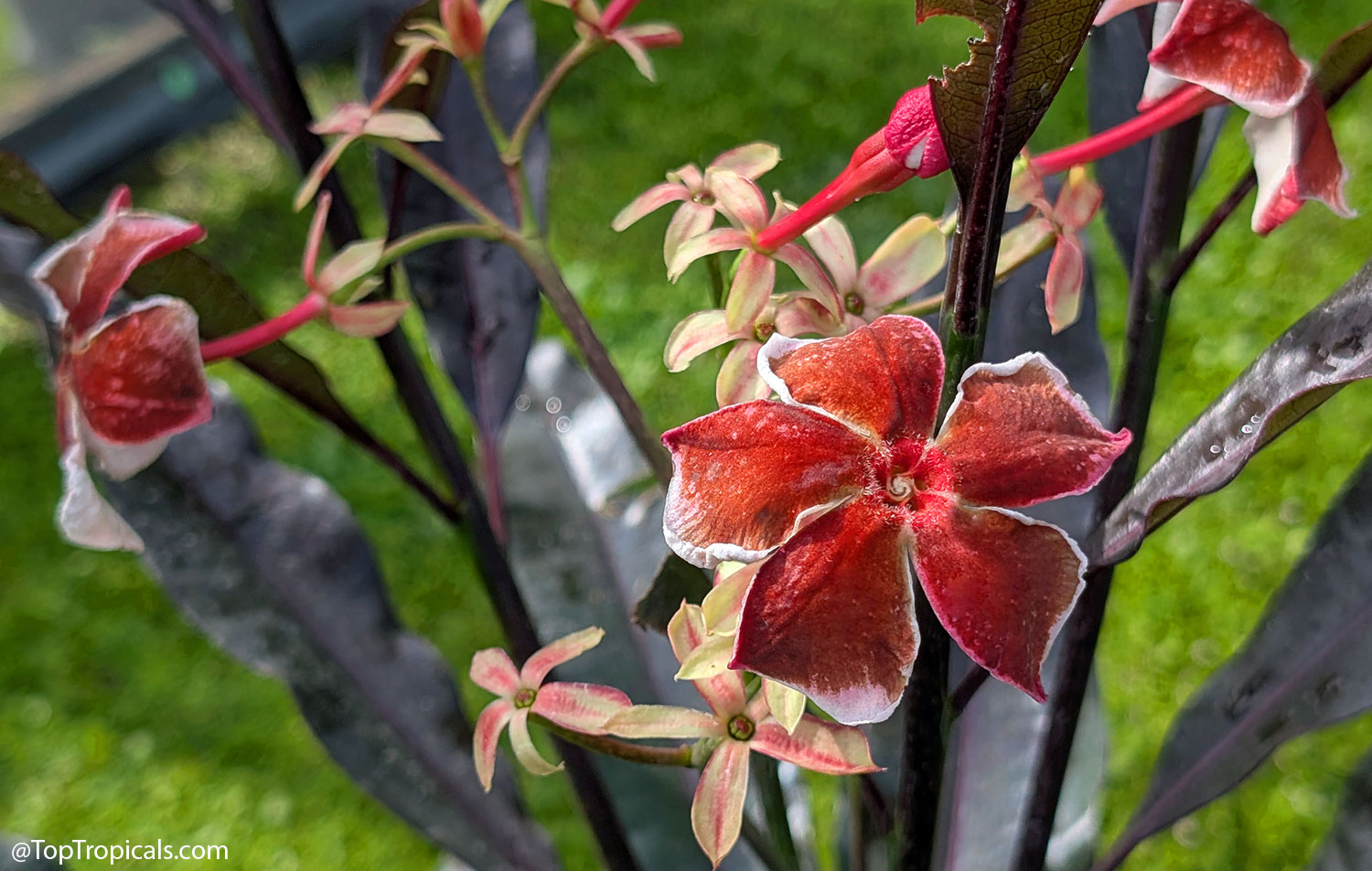
The flowers start soft pink and white, then deepen to rich red and auve as
they mature. They come in clusters, four to five inches across, and the
fragrance they produce does not stay close to the flower. It moves. It fills
the space around the plant. On a warm morning it can perfume an entire
patio.
The foliage is worth mentioning too. Deep green leaves with burgundy and
mauve tones that make it attractive even when it is not blooming. The growth
habit is slow and slightly weeping, similar to plumeria,
which is no coincidence since they are close
relatives. Unlike plumeria, Enchanted Incense stays evergreen in warm
climates.
It is a compact, slow-growing small tree that is happy in a container. That
makes it practical for gardeners in colder climates who need to bring it in
for winter, and for anyone who wants a fragrant plant near a seating area
rather than somewhere across the yard.
🌸 Why We Grow It
The
flowers of Cerbera
x manghas - Enchanted Incense - look otherworldly. Deep reddish petals,
bright pink
tubes, and contrasting white edges combine to create one of the most
distinctive fragrant blooms.
We grow thousands of plants, and most can be described in a sentence or
two.
This one cannot.
A large Enchanted Incense grows right outside our office. Every year it
reminds us why we
spent so much time searching for it.
Visitors stop beside it and ask the same question: "What is that
smell?"
They usually notice the fragrance before they notice the plant.
Some follow the scent across the nursery. Others stop in the middle of a
conversation and start looking around. Nearly
everyone ends up standing next to the tree trying to figure out where that
incredible fragrance is coming from.
In a world full of beautiful tropical plants, Enchanted Incense remains
one of the few that announces itself before you even see it.
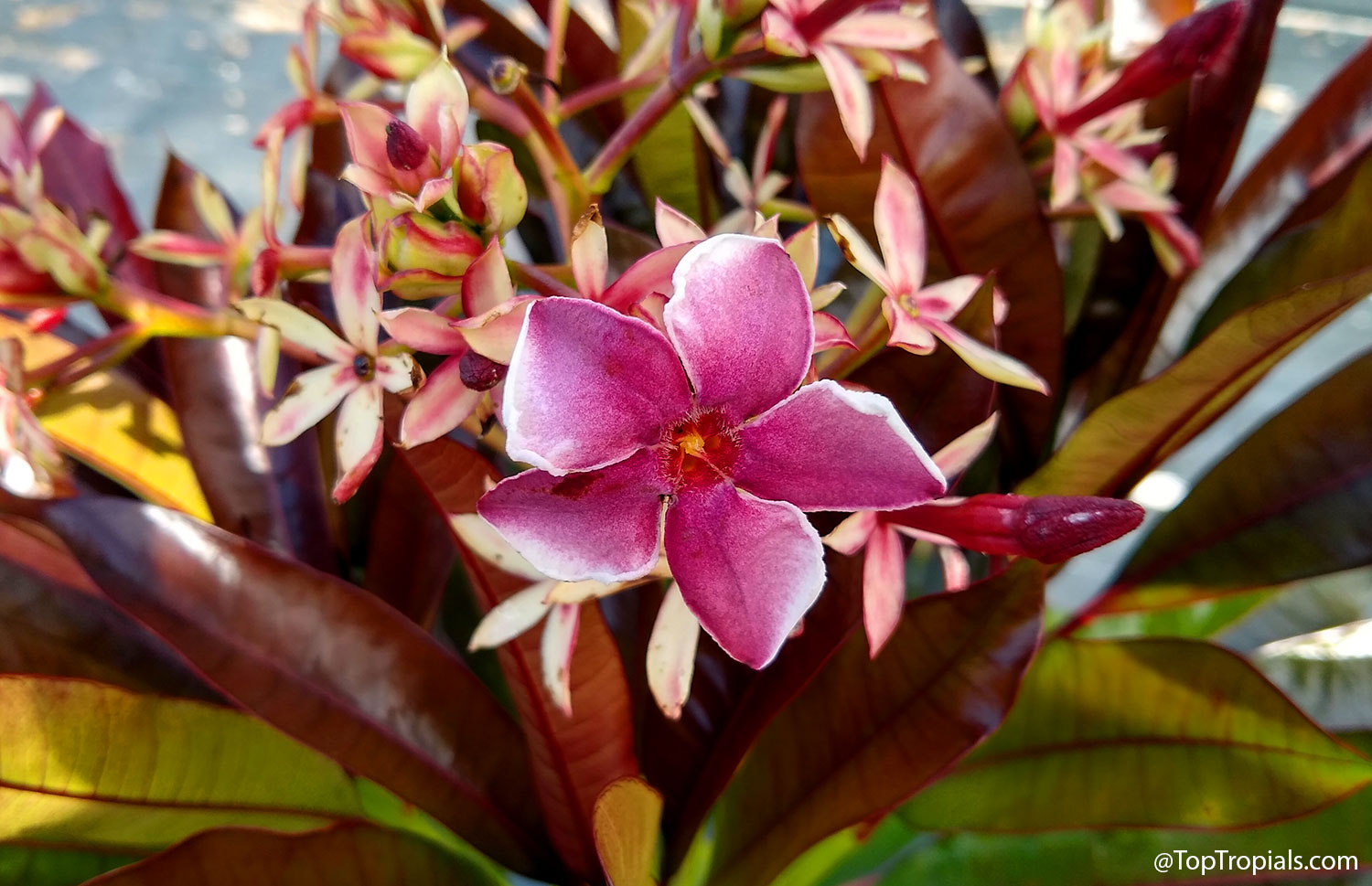
Cerbera
x manghas -
Enchanted Incense can display remarkable variation in flower color. This
form
combines soft rose-pink blooms with white-edged petals and rich burgundy
foliage, creating a striking contrast throughout the plant.
Light: Full sun is best (at least
six hours
daily). It will tolerate partial shade but blooms much more generously in
good
light.
Watering: Water regularly during
warm weather. In cool weather and winter, keep the soil on the drier side.
Overwatering when
temperatures are low is the most common mistake.
Soil: Use a well-draining mix. This
plant absolutely does not want wet feet.
Fertilizer: Feed with a
Green Magic
controlled-release fertilizer for flowering plants in spring, supplemented
with occasional liquid fertilizer through the summer. For non-stop blooms
without the risk of
salt build-up in containers, we highly recommend
Sunshine
Boosters™.
Read
our Guide to Sunshine Boosters™ and Green Magic fertilizer
Winter Care: Bring it indoors
when temperatures approach the mid-30s°F. The rootstock is fairly
tough,
but the foliage is not. Cold and wet conditions combined are the real risk.
One Last Thing
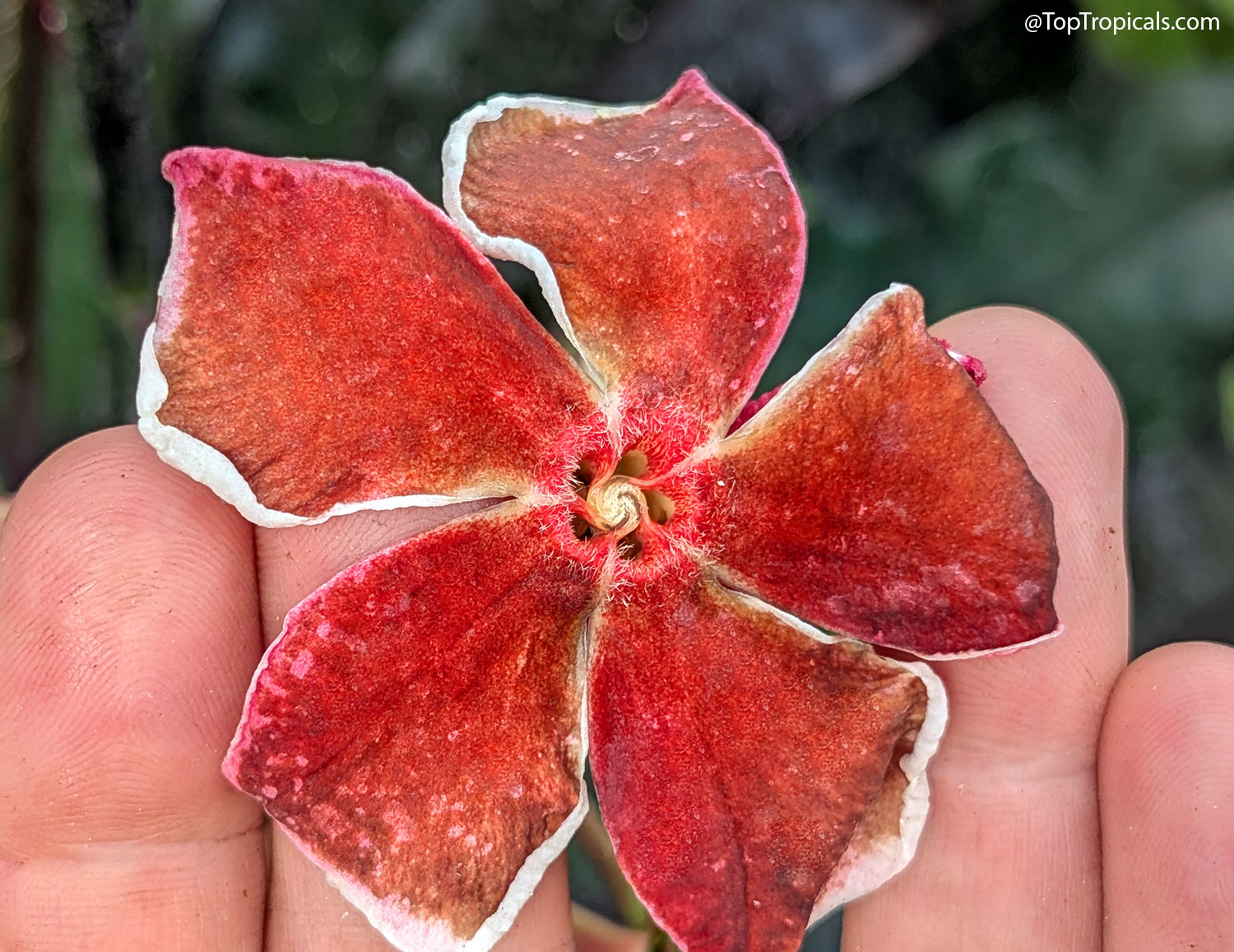
A closer
look reveals the remarkable details of Cerbera
x manghas - Enchanted Incense.
The velvety petals, crisp white edging, and fuzzy pink center give the
flower an appearance
unlike anything else in the garden. And then comes the scent...
John came back from Bangkok with a few photographs and a fragrance he
could not forget. It took us years to track down the plant behind that
memory. We have never regretted a single minute of the search.
Sunshine: So after all those years, what's the answer? Smokey: Stand next to the plant. Sunshine: That's it? Smokey: The fragrance explains the rest.
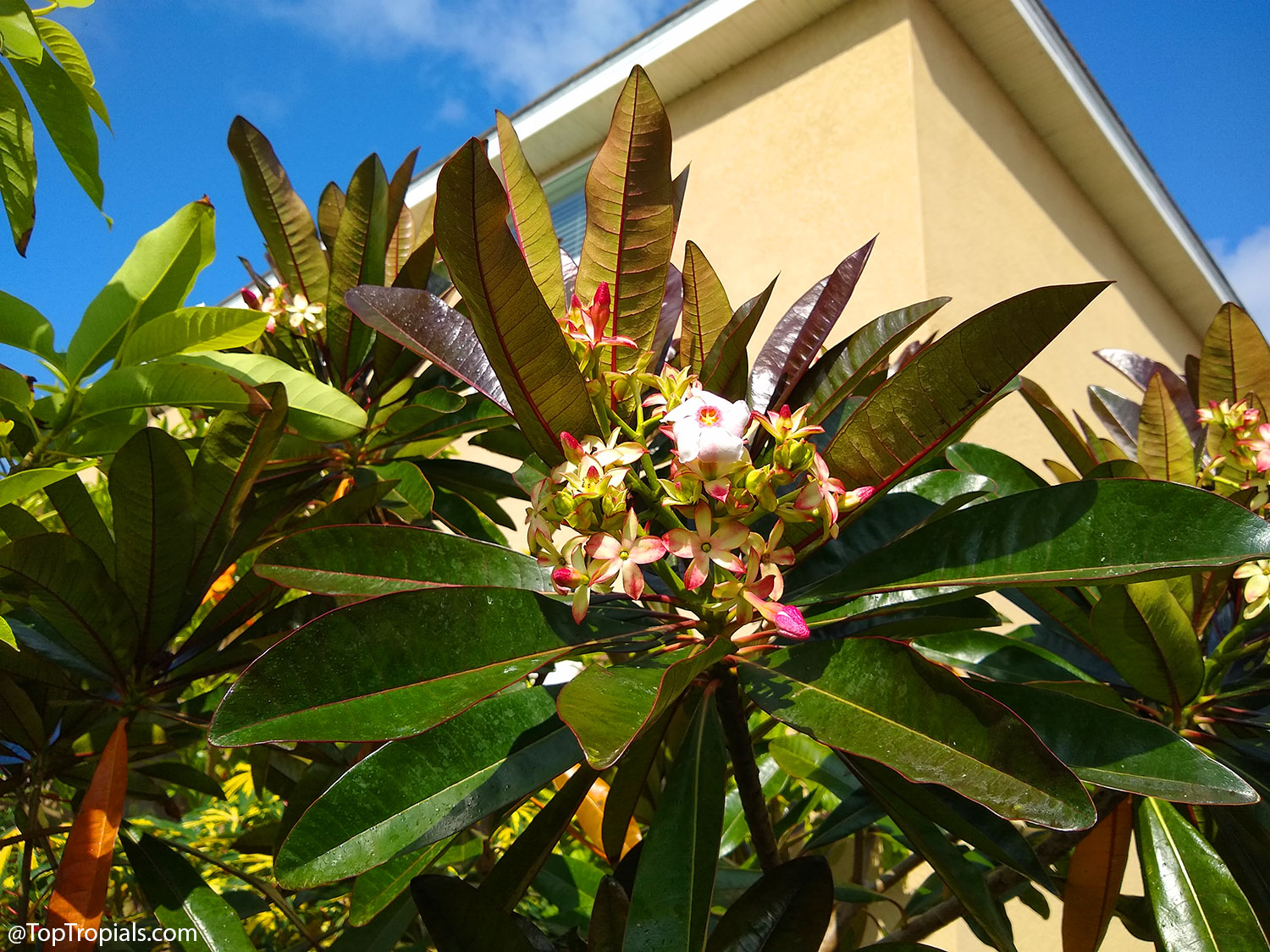
A closer
look reveals the remarkable details of Cerbera
x manghas - Enchanted Incense develops into an attractive small tree
with lush evergreen foliage and colorful new growth. In the
landscape, it combines year-round structure with clusters of bright
redding-pink fragrant flowers that stand out beautifully against the glossy
leaves.
Date: 12 Jan 2025
How to protect tropical plants in Winter
Winter tips and podcast
Photo above: wrapping plants with frost cloth
Winter can be tough on plants, especially on tropical varieties. But with a little preparation, you can protect your garden and keep your plants safe from the cold. Here's how:
Winter Care Tips for Tropical Plants
Cut watering: Reduce watering to prevent root rot. Cold + wet = dead roots.
Water before frost: Thirsty plants are more vulnerable. Water them before a cold night to prevent damage.
Wind protection: Wind is more harmful than temperature drops. Plant near structures like houses or trees for shelter.
Prepare for long cold periods: If cold weather lasts for hours, use all available protection, including Christmas lights and propane heaters.
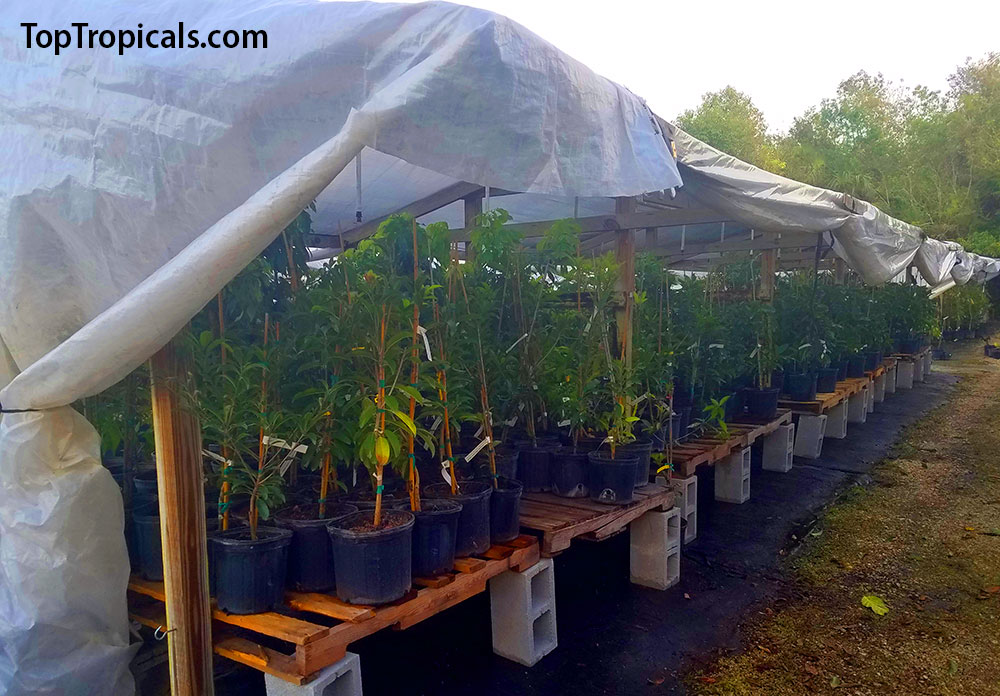
Don't use dry fertilizer in winter: Heavy fertilizing encourages tender growth, which is more susceptible to cold damage. Sunshine Boosters liquid fertilizers are safe to use year around as their intake is controlled by reduced watering. Use fabric covers, not plastic: Plastic can cook plants in the sun, while fabric allows better ventilation.
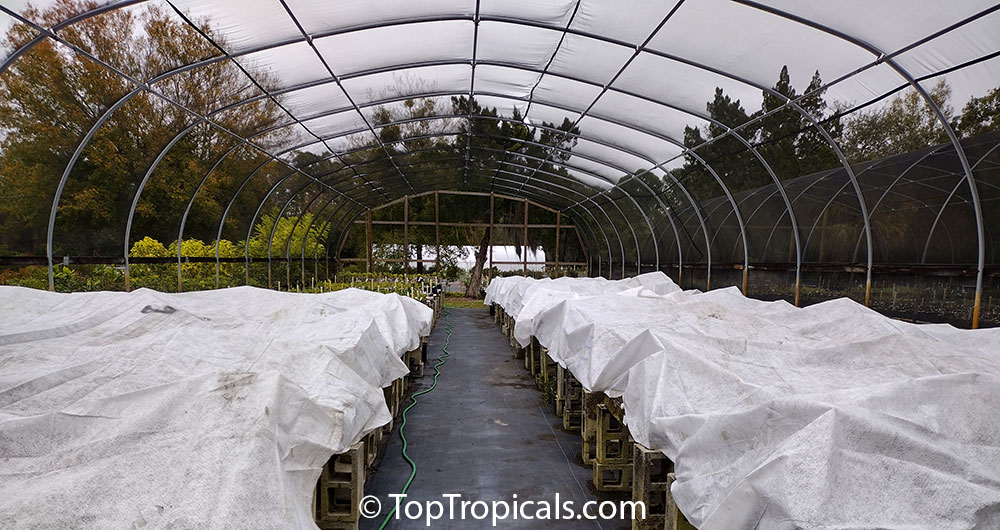
Photo above: we cover our plants in the nursery with a thin synthetic fabric (sintepon) called "frost cloth" or "strawberry cloth". It is light, breathable and allows light and water to go through unlike plastic that creates heavy water pockets.
Prepare for Cold Nights
Wrap plants: On cold nights, cover individual plants or trees with sheets or blankets to shield them from wind chill.
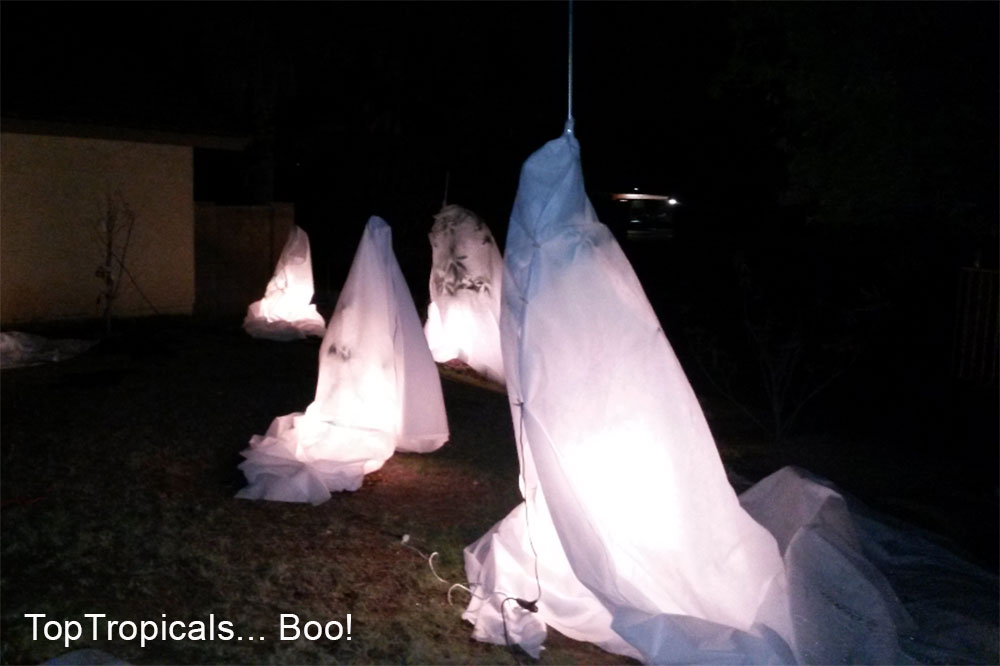
Use Christmas lights: A simple string of lights can add extra warmth, protecting your plants during frosty nights.
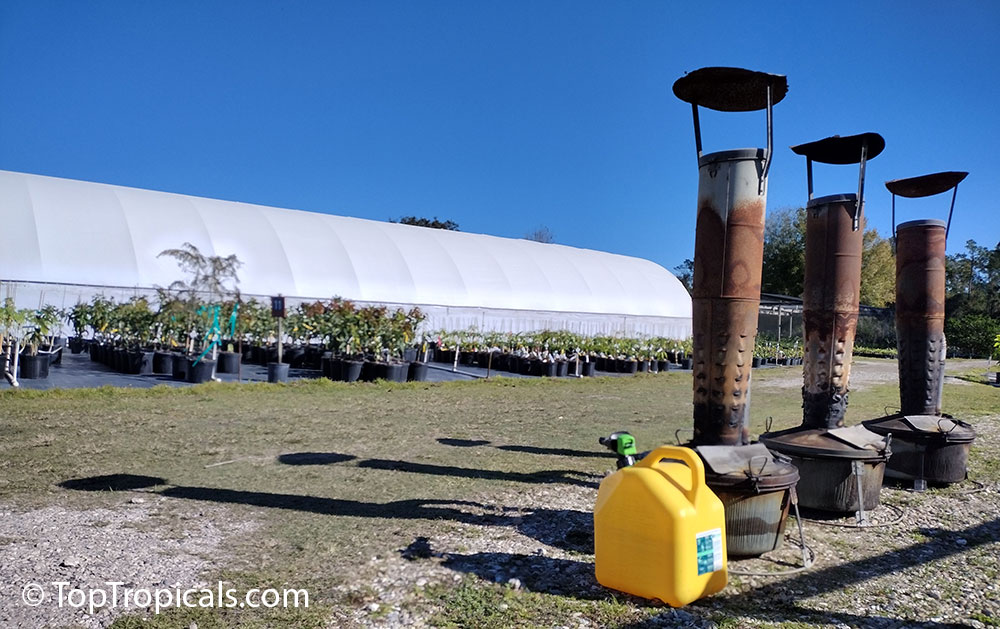
Use propane heaters: For added warmth in a larger area, place a propane heater near your plants. Make sure to follow safety guidelines and keep the heater at a safe distance from flammable materials. This can help maintain a few extra degrees of warmth, especially in more open garden spaces or temporary greenhouses. Always ensure proper ventilation to avoid harmful gas buildup.
Photo above: we use both propane and kerosene heaters at the nursery
Large Collections? Build a Temporary Greenhouse
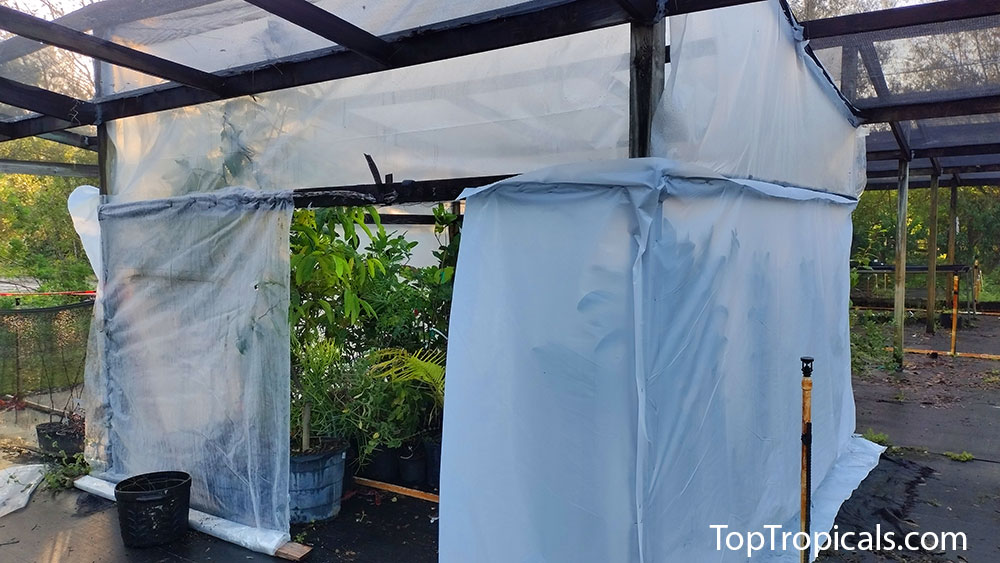
Affordable winter greenhouse: For large plant collections, you don't need an expensive greenhouse. A mobile carport with plastic or fabric covering, costing around $200, can house up to 100 plants!
Photo above: Temporary wrapping around plant collection with a plastic or frost cloth protects from a windchill. It may also win you a few degrees even without a heater. In this particular case, according to our temp sensors, with 30F outside, it was 41F inside this "dome", no heaters used.
Southern Exposure and Garage Storage
Southern windowsills: Compact tropicals can thrive on southern-facing windowsills, getting plenty of sunlight during the day.
Move plants inside: If you have larger collections, move them into a well-lit garage for the colder nights or longer periods.
Photo above: using Christmas lights around plants while wrapping with frost cloth.
Key Factors for Survival
Cold duration: Tropical plants can survive brief cold spells but long durations, even above freezing, can be deadly.
Wind-chill: Wind chill can be harsher than the temperature itself.
Exposure: Southern-facing slopes hold heat longer, making them ideal for your plants.
Humidity: Proximity to lakes or oceans can create a milder micro-climate.
Gradual temperature Drops are safer. Plants adjust better to slow temperature changes than sudden cold blasts. Gradual cooling allows plants to prepare, reducing the risk of damage.
Strengthen Plant Hardiness
Health and maturity: Well-established, healthy plants are more cold-hardy. Boost plant immunity: Use products like SUNSHINE-Epi to improve cold resistance. Apply it before and during cold snaps to protect your plants. Healthy plant is hardy. Make sure to fertilize your plants on regular basis - healthier and stronger plants are more cold hardy.
With these steps, you can protect your plants and help them survive the winter months. Stay
warm and keep your garden thriving!
Podcast with Horticulturist Mark Hooten:
How to Protect Tropical Plants in Winter


 Growing Tips