Garden Blog - Top Tropicals

Date: 23 Apr 2026

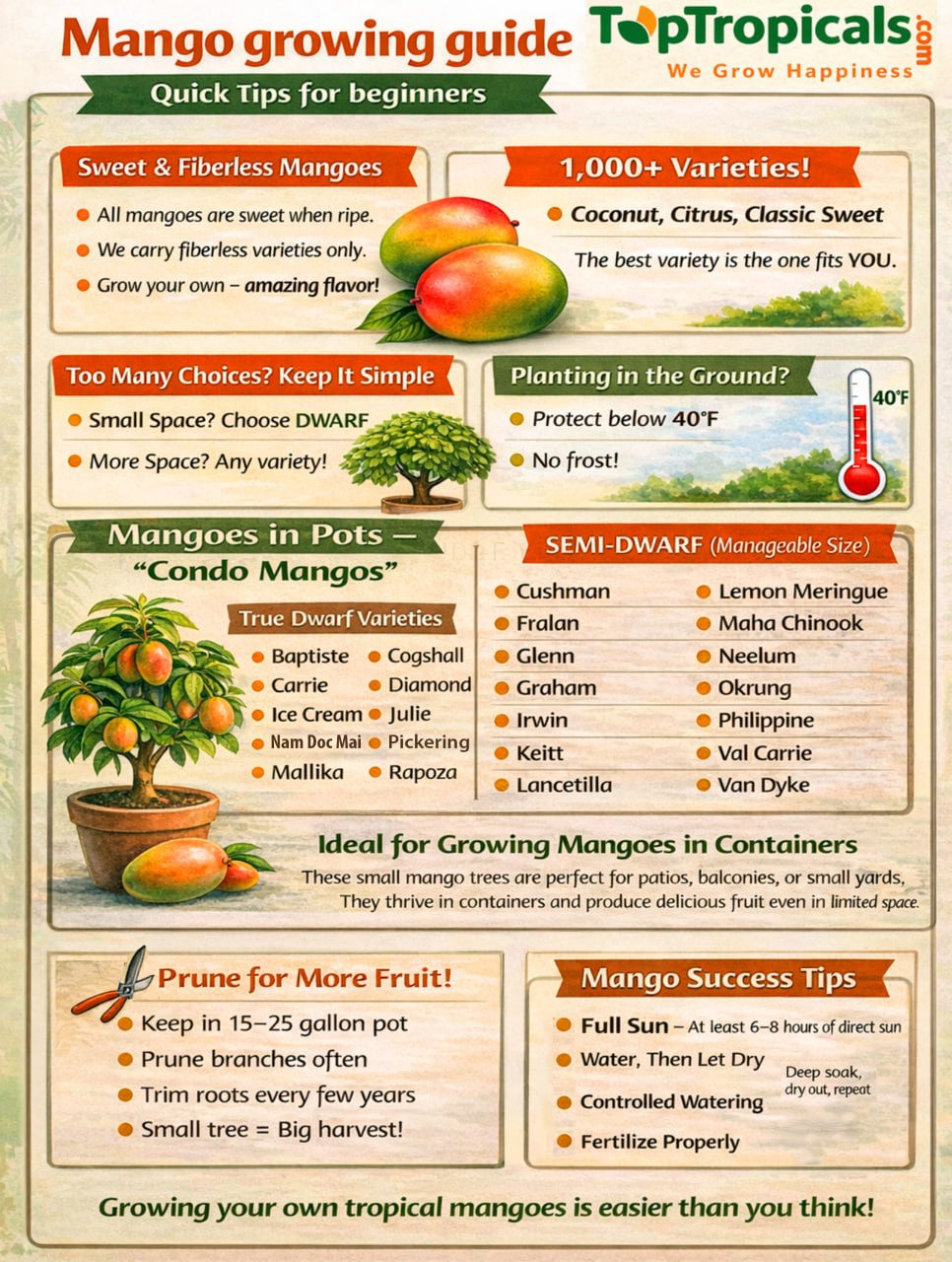
Mango Rainbow: Coconut Carrie - big flavor in a condo-size tree
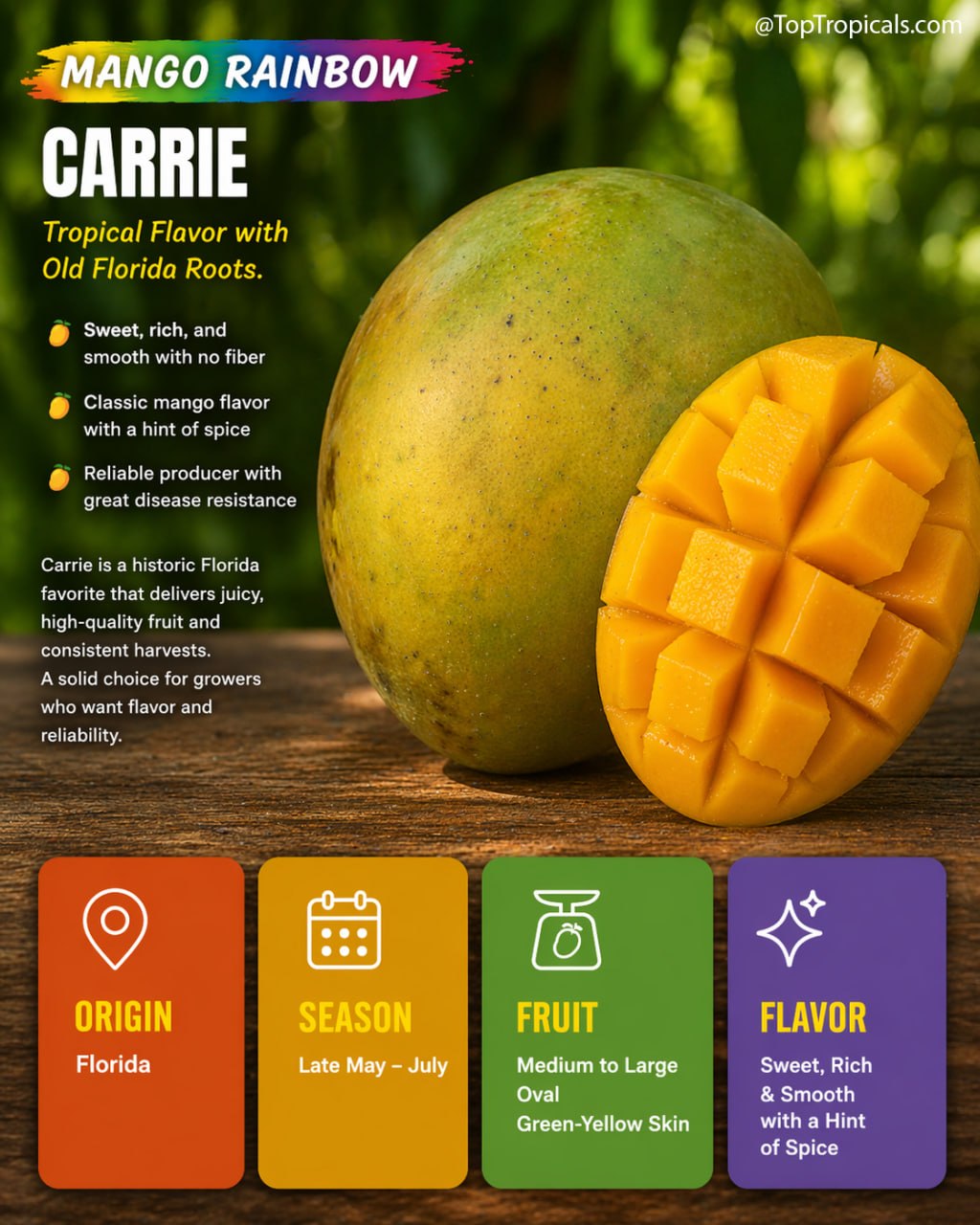
Carrie Mango

Carrie Mango

Mango Rainbow: Coconut Carrie - big flavor in a condo-size tree 🌈
  • 🥭 Carrie is one of the best-tasting mangoes you can grow, period.
  • 🥭 Carrie is a compact Florida mango with insanely rich, sweet, and aromatic flavor - completely fiberless with a deep orange, melting texture and a hint of spice. It may not be flashy on the outside, but once you taste it, you’ll understand why so many growers swear by it.
  • 🥭 As a true Condo Mango, Carrie stays naturally small with a dense, manageable canopy and minimal pruning. It’s perfect for containers, patios, and small yards, while still producing reliably year after year. More 👉


🛒 Shop Mango varieties

📚 Learn more:
#Food_Forest #Mango #Mango_Rainbow

Plant Facts

Mangifera indica
Mango
USDA Zone: 9-11
Large tree taller than 20 ftSmall tree 10-20 ftFull sunModerate waterYellow, orange flowersPink flowersEdible plantSeaside, salt tolerant plant
🟢 Join 👉 TopTropicals

Date: 22 Apr 2026

Mango Growing Guide

Mango Growing Guide

Mango Growing Guide

Mango Growing Guide 🥭

Growing mangoes at home is easier than most people think.

You don’t need a big yard. You don’t need perfect conditions.
You just need the right variety - and a few simple rules.
  • 🔻Small space? Go with condo mango varieties
  • 🔻Full sun is key
  • 🔻Water deep, then let it dry
  • 🔻Prune to keep trees compact and productive

Most store mangoes are picked early.
Homegrown fruit - completely different experience.
Sweeter, richer, and actually worth the wait.
Start with the basics, keep it simple, and your mango tree will reward you.

🛒 Explore Mango varieties

📚 Learn more:

Plant Facts

Mangifera indica
Mango
USDA Zone: 9-11
Large tree taller than 20 ftSmall tree 10-20 ftFull sunModerate waterYellow, orange flowersPink flowersEdible plantSeaside, salt tolerant plant

#Food_Forest #Mango #How_to

🟢 Join 👉 TopTropicals

Date: 18 Apr 2026

Surinam cherry skillet glaze: quick-n-fun exotic recipes

Surinam cherry skillet glaze

Surinam cherry skillet glaze

Surinam cherry, Pinanga - Eugenia uniflora

Surinam cherry, Pinanga - Eugenia uniflora

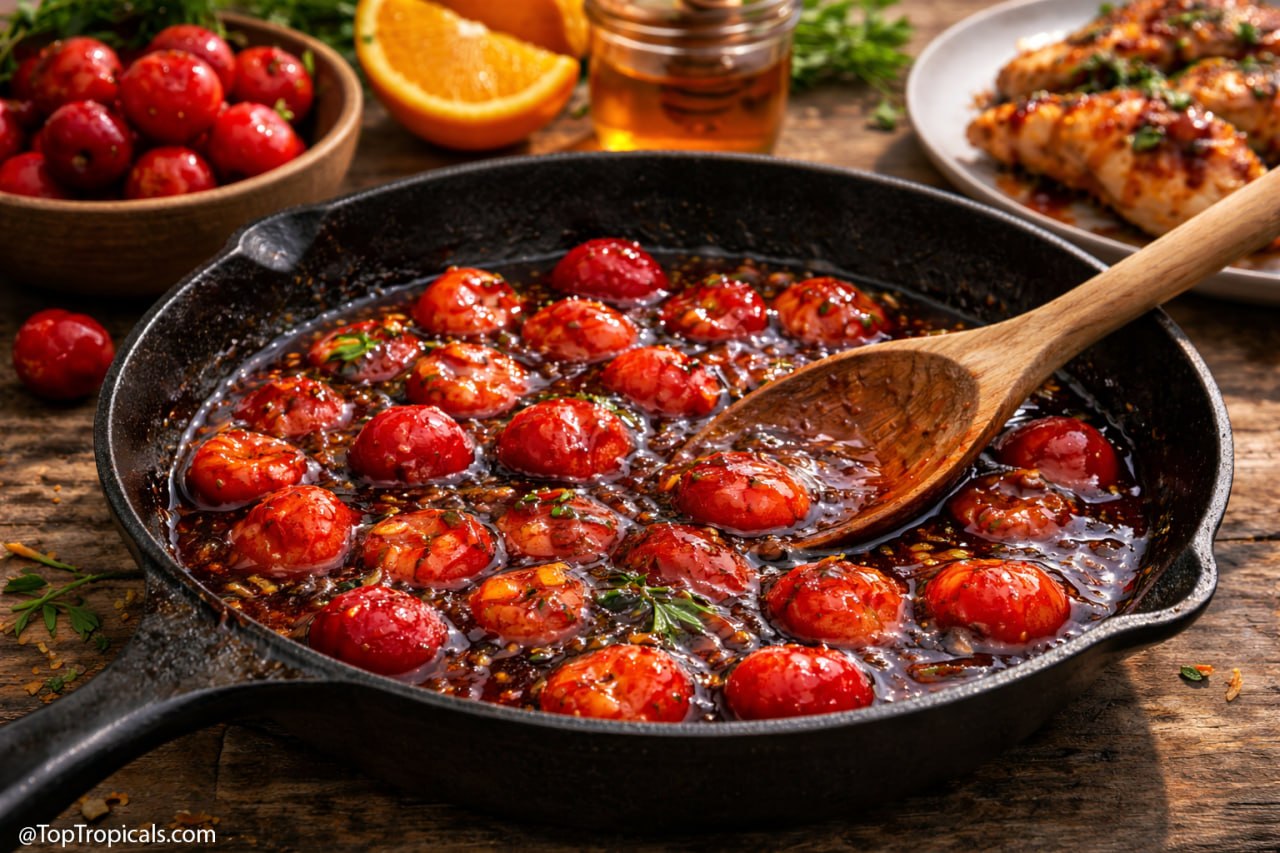
🍴 Surinam cherry skillet glaze: quick-n-fun exotic recipes

  • 🔴Halve ripe Surinam cherries, take the seed out
  • 🔴Cook in a pan with honey and a squeeze of orange. Simmer until syrupy.
  • 🔴Pour over grilled chicken or roasted vegetables.


🌿 About the plant:


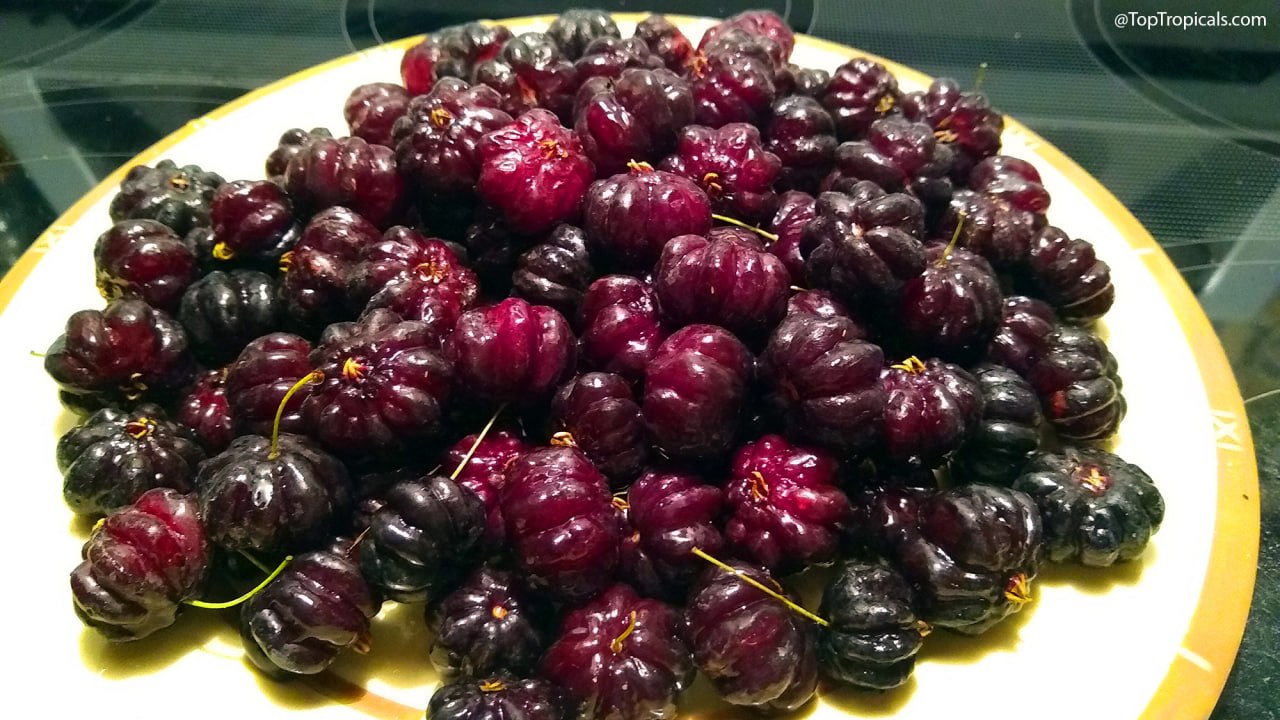
Surinam cherry produces bright ribbed fruit that range from sweet to tangy depending on variety and ripeness.

🏡 In the garden:


A tough, adaptable shrub that can be trimmed as a hedge. Fruits multiple times a year in warm climates.

🛒 Plant Surinam Cherry in your garden

📚 Learn more:

Plant Facts

Eugenia uniflora, Eugenia michelii
Surinam Cherry, Pitanga, Brazilian Cherry
USDA Zone: 9-11
Plant used for bonsaiLarge shrub 5-10 ft tallSmall tree 10-20 ftSemi-shadeFull sunModerate waterRegular waterWhite, off-white flowersEdible plantFragrant plantSubtropical plant. Mature plant cold hardy at least to 30s F for a short time

#Food_Forest #Recipes

🟢 Join 👉 TopTropicals

Date: 18 Apr 2026

The Secret to a Sharper Mind Might Be Growing in Your Backyard

Harvesting tropical fruits

Harvesting tropical fruits

The Secret to a Sharper Mind Might Be Growing in Your Backyard


Your garden shed might hold a more powerful tool for brain health than your medicine cabinet. What if the best defense against cognitive decline isn’t found in a pill bottle - but right outside your door? While we often think of gardening as just a hobby, new research suggests that the combination of physical "zone-pushing" and harvesting your own nutrient-dense tropical fruit could be a literal life-saver for your brain.
  • 🍒 What the Research Actually Says


    A massive study recently published in the journal Neurology followed more than 92,000 people to see how diet impacts the mind. The findings were clear: the quality of the plant-based foods you eat plays a massive role in your risk of dementia. It isn't just about "eating your veggies" - it's about which ones you choose.
    (The full study: Plant-Based Dietary Patterns and Risk of Alzheimer Disease and Related Dementias in the Multiethnic Cohort Study)
  • 🍒 Why Growing Your Own Fruit Changes the Game


    If you grow your own fruit, you quietly solve two problems at once. It turns a "diet plan" into a natural part of your day.

    1. Effortless Nutrition
    When a ripe mango, a handful of mulberries, or a fresh guava is hanging within arm's reach, you eat it. It replaces processed, sugary snacks without any "willpower" required. You are naturally moving toward the high-quality, whole-food diet the research supports.

    2. Functional Fitness
    Gardening doesn't feel like a workout, but it is. Bending, pruning, carrying pots, and digging are all forms of functional movement. It’s steady, useful physical activity that supports your heart and brain while you’re focused on your plants.

    3. The "Outdoor" Effect
    Sunlight and fresh air are natural mood boosters. The mental focus required to manage tropical plants - especially when you’re protecting them from a surprise freeze - provides a level of mental engagement and stress relief that you just can't get from a treadmill.
  • 🍒 What to plant if you are just starting


    You don’t need a massive orchard to start investing in your brain health. One or two plants can shift your habits immediately.

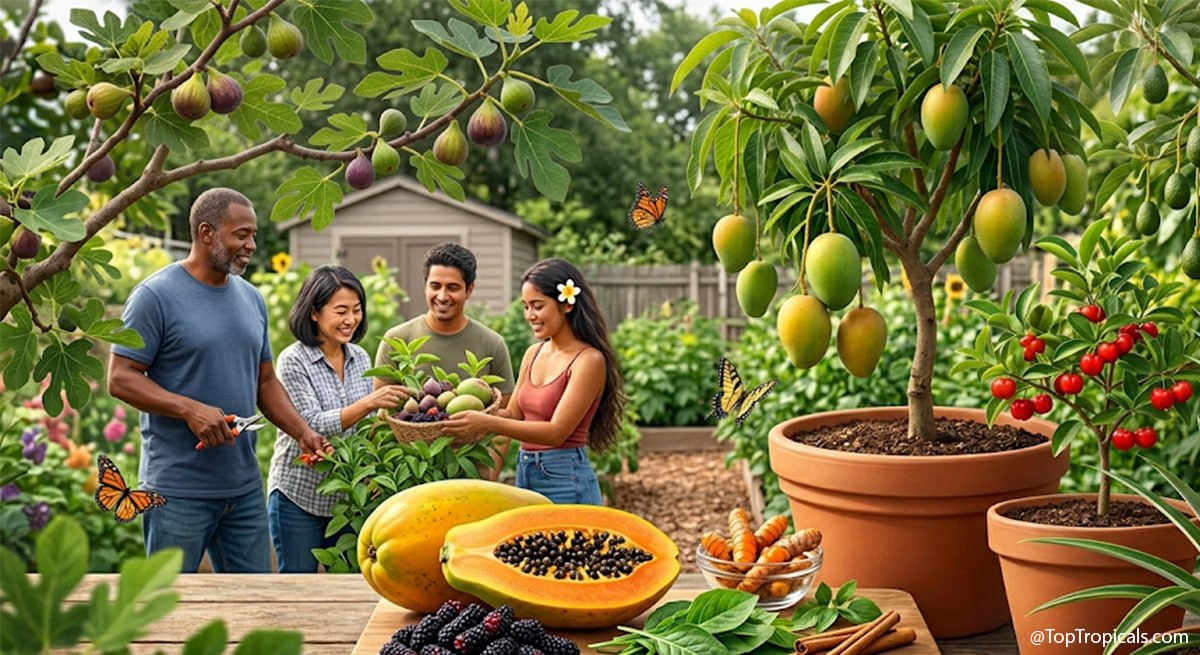
    For Fast Results: Papaya and Mulberries produce fruit quickly and are incredibly easy to manage. Turmeric (curcuma), leafy greens (Longevity spinach, Katuk) and Cinnamon proved instant harvest.
    For Small Spaces: Dwarf Mango varieties and Cherries (Eugenias or Acerola), Pineapples thrive in containers and provide massive doses of antioxidants.
    For the "Zone Pusher": Figs and cold-hardy Avocados offer healthy fats and fiber that are essential for long-term health.
  • 🍒 Start Small, Start Now


    The research makes one thing clear: improving your food quality matters, and you can see results no matter your age. Planting a fruit tree changes what you eat, how you move, and how often you step outside.
    That’s more than just gardening - that’s a lifestyle shift your brain will thank you for.
  • 🍒 FAQ


    Does fruit really support brain health?
    Yes. Diets rich in whole, high-quality plant foods are linked to a lower risk of dementia, especially when they replace processed snacks and added sugars.

    Is gardening enough to count as exercise?
    Absolutely. Regular gardening provides steady, functional movement that improves circulation and supports overall physical health.

    Is it too late for me to start?
    No. The study showed that even participants who improved their diet quality in their 60s and 70s saw a measurable reduction in dementia risk.


🛒 Start your tropical fruit journey

Guava · Mango · Mulberry · Papaya · Pineapple · Avocado · Cherries · Figs

📚 Learn more:


#Food_Forest #Remedies #Discover

🟢 Join 👉 TopTropicals

Date: 4 Apr 2026

Rare Night-Blooming Cactus that Glows and Grows Large Edible Fruit

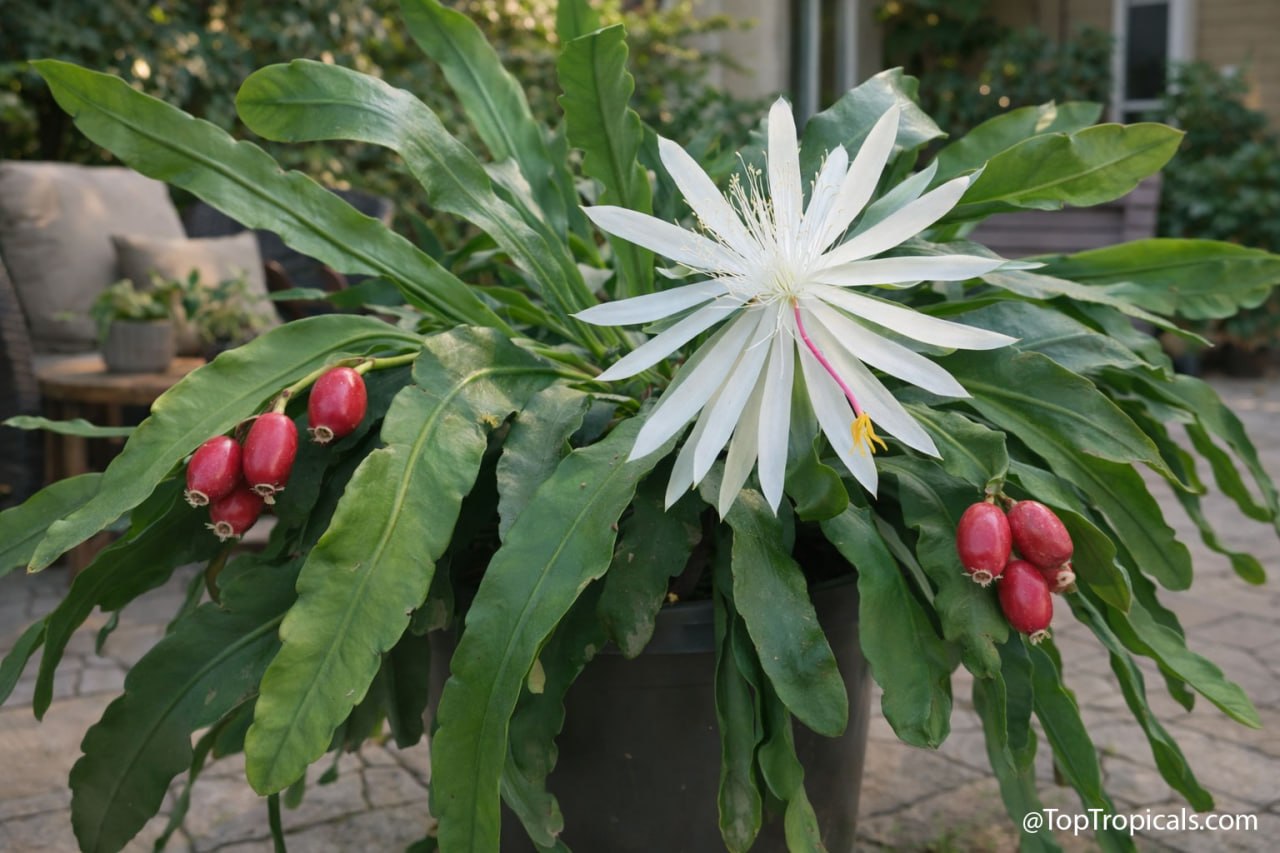
Epiphyllum hookeri - Rare Night-Blooming Cactus with fragrant flowers and large edible fruit

Epiphyllum hookeri - Rare Night-Blooming Cactus with fragrant flowers and large edible fruit

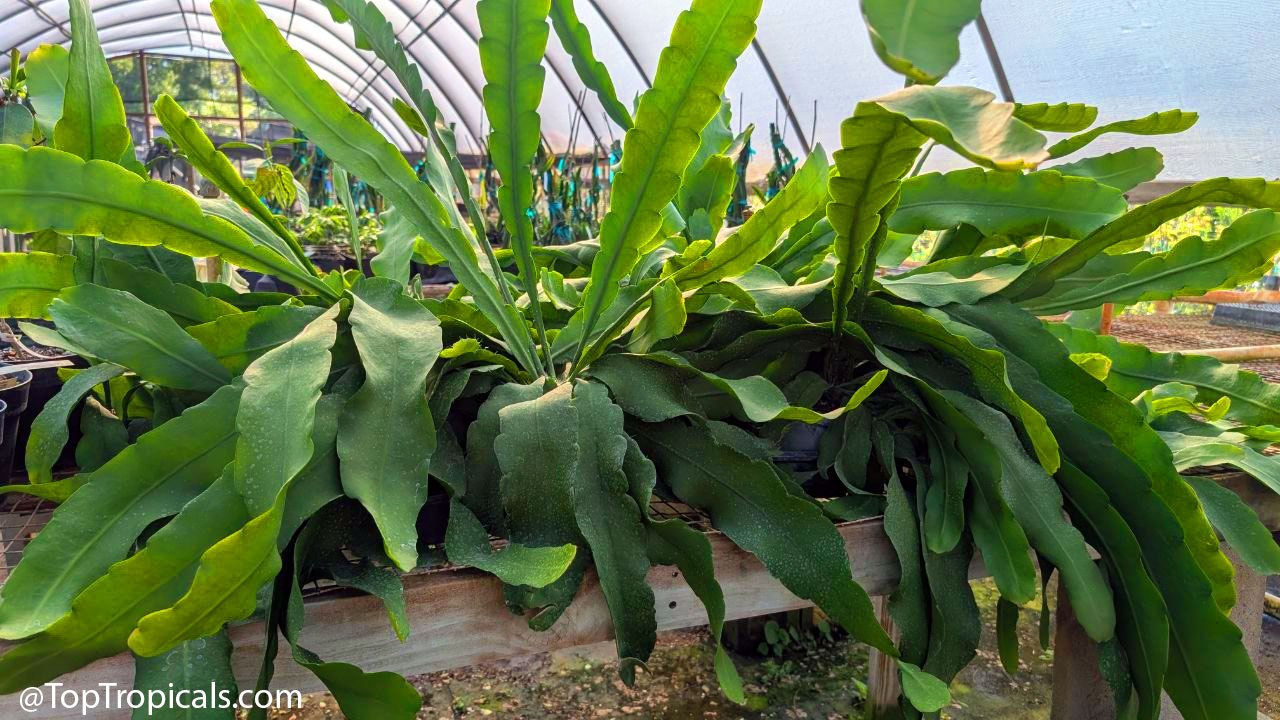
Epiphyllum hookeri - Night-Blooming Cactus with large leaves

Epiphyllum hookeri - Night-Blooming Cactus with large leaves

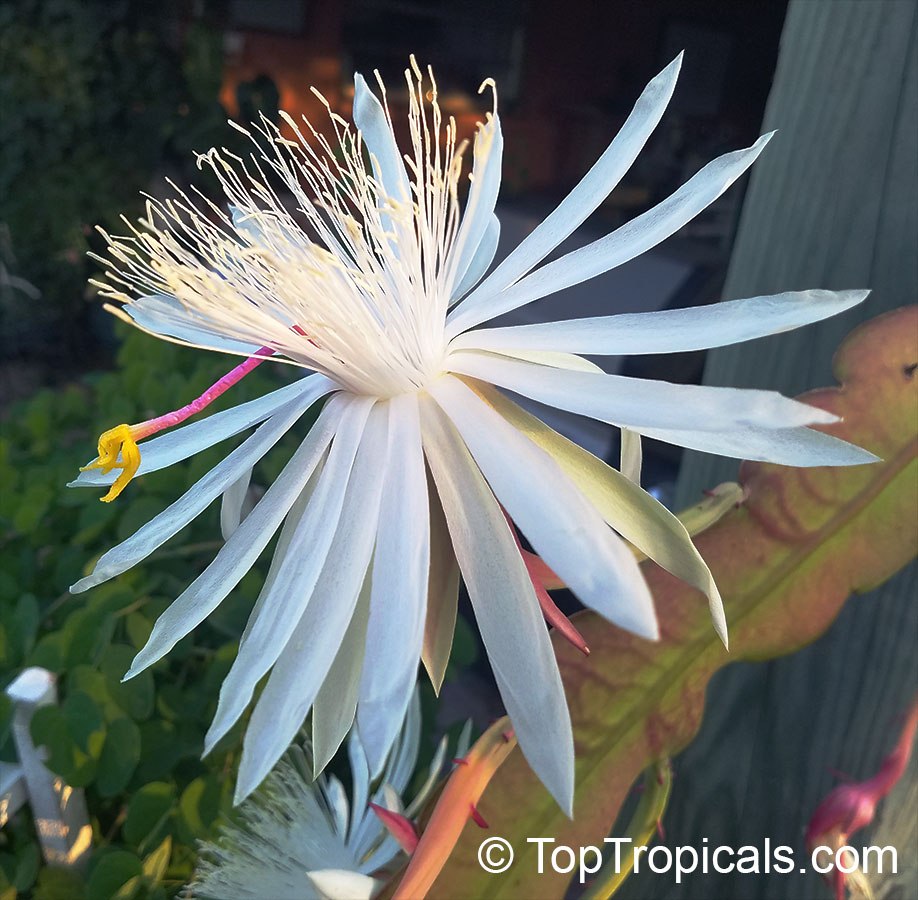
Epiphyllum hookeri - Night-Blooming Cactus large flowers

Epiphyllum hookeri - Night-Blooming Cactus large flowers

Rare Night-Blooming Cactus that Glows and Grows Large Edible Fruit 🍅

Did you know this nigh blooming beauty has large edible fruit? Why the Epiphyllum hookeri is the ultimate two-for-one plant for tropical garden lovers.
  • 🌠 The Midnight Spectacle


    Most gardeners grow the Epiphyllum hookeri for its "ghostly" white flowers. These massive, fragrant blooms wait until sunset to unfurl, reaching their peak beauty under the moonlight before fading at dawn.
  • 🌠 The Edible Bonus


    What many don’t realize is that this specific seed-grown type is a "fruiting" powerhouse. After the dramatic floral display, the plant sets smooth, elongated fruit. The flavor? Mild, sweet, and surprisingly refreshing -think of it as a garden-grown secret.
  • 🌠 How to Grow It


    Light: Filtered sun or bright shade (no harsh midday sun!).
    Hydration: Regular watering in well-drained soil.
    Display: It’s a natural climber/cascader—put it in a hanging basket and let it shine.


🛒 Claim your fruiting night-bloomer

Collect epiphytic jungle cacti:

📚 Learn more:

Plant Facts

Epiphyllum hookeri, Epiphyllum strictum, Epiphyllum stenopetalum, Epiphyllum phyllanthus
Climbing Cactus, Hooker's Orchid Cactus
USDA Zone: 9-11
Small plant 2-5 ftSemi-shadeModerate waterWhite, off-white flowers

#Container_Garden #Shade_Garden #Food_Forest

🟢 Join 👉 TopTropicals