Garden Blog - Top Tropicals

Date: 7 Mar 2026

SUNSHINE Boosters: The Professional Advantage

By Tatiana Anderson, Horticulture Expert at Top Tropicals with Smokey & Sunshine help

Sunshine  Boosters  plant  fertilizers  lineup  including  Bloom,  Pikake, 
 Robusta,  Omnibus,  Ananas,  Mango  Tango,  Citrus,  and  MegaFlor

Sunshine Boosters for different types of plants

Here is why SUNSHINE Boosters are the smart choice for your garden this spring:

  • Amino Acid Stability: Unlike traditional fertilizers that use synthetic EDTA chelators, our formulas are amino-acid based. This means 100% of the nutrients are bioavailable and consumed by the plant, leaving zero toxic residues or salt build-up in your soil.
  • Safe for Every Watering: Because our concentrations are scientifically balanced and mild, they are safe for daily use. This eliminates the "feast or famine" cycle of dry fertilizers and prevents accidental root burn.
  • Pure Taste for Edibles: Our delicate formulas do not contain excess salts, urea, or ammonium salts that can ruin the flavor of your harvest. Your fruit and vegetables will retain their pure, natural taste.
  • Pollinator Friendly: Our boosters are designed to be safe for honeybees and other beneficial insects, making them the responsible choice for an organic-style garden.

🌿For Potted Plants: Breaking the "Foodless" Cycle
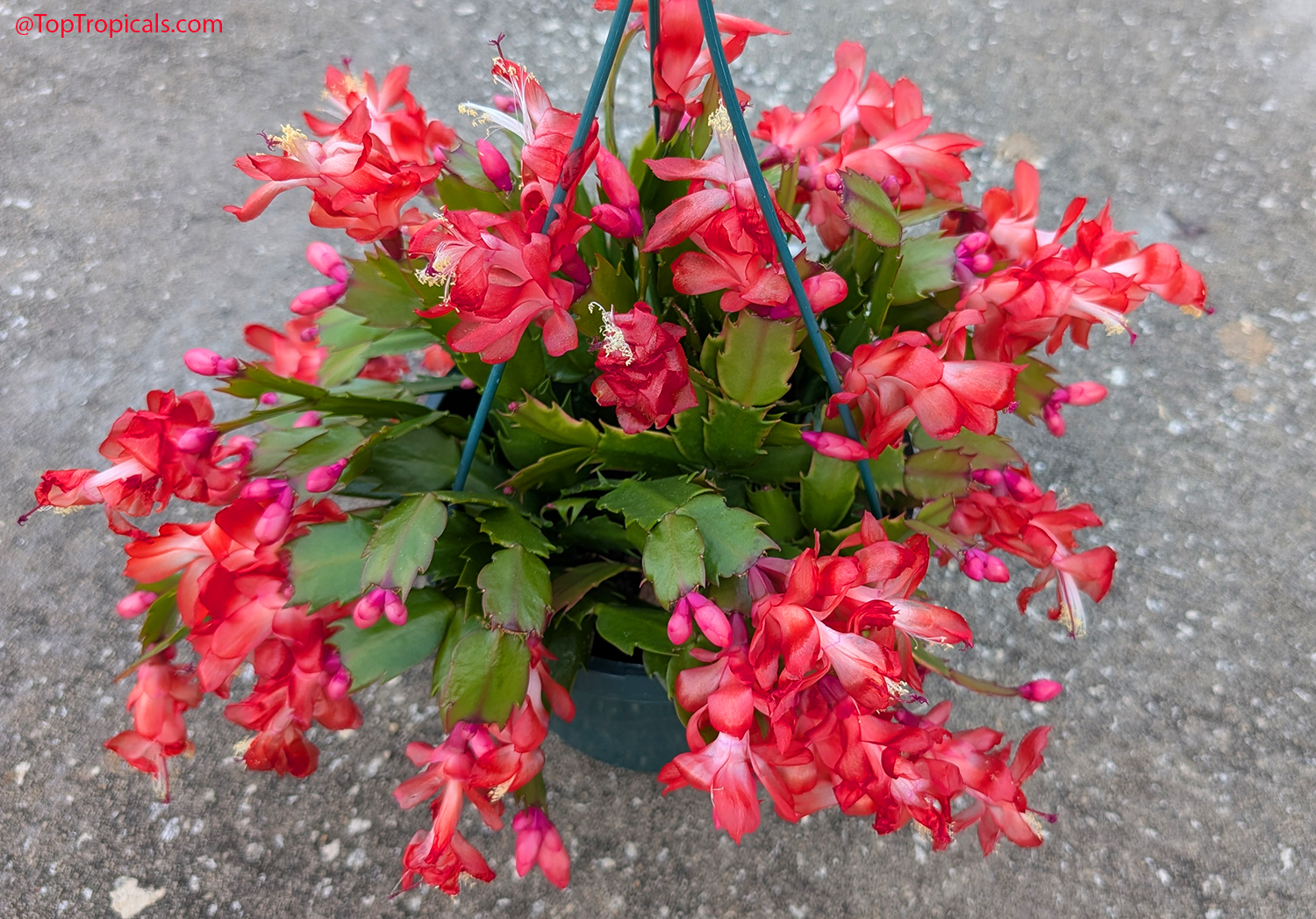
Schlumbergera  Christmas  cactus  with  abundant  red  blooms  after  feeding 
 with  Sunshine  Megaflor  fertilizer

Schlumbergera - Christmas cactus - after boosting flowers with Sunshine Megaflor

Container-grown plants are trapped in soilless mixes (peat, bark, perlite) that are structurally great but naturally nutrient-deficient.

  • Total Nutrition: Since pots lack the natural "buffet" of the ground, SUNSHINE Boosters™ provide every essential mineral the plant cannot find on its own.
  • No Salt Build-up: Our amino-acid based formulas are consumed entirely by the plant, leaving zero toxic residue or root-burning salts behind.
  • Daily Safety: Our mild concentrations eliminate the "feast or famine" cycle of dry fertilizers, making them safe for use with every single watering.

For In-Ground Plants: Unlocking the Soil
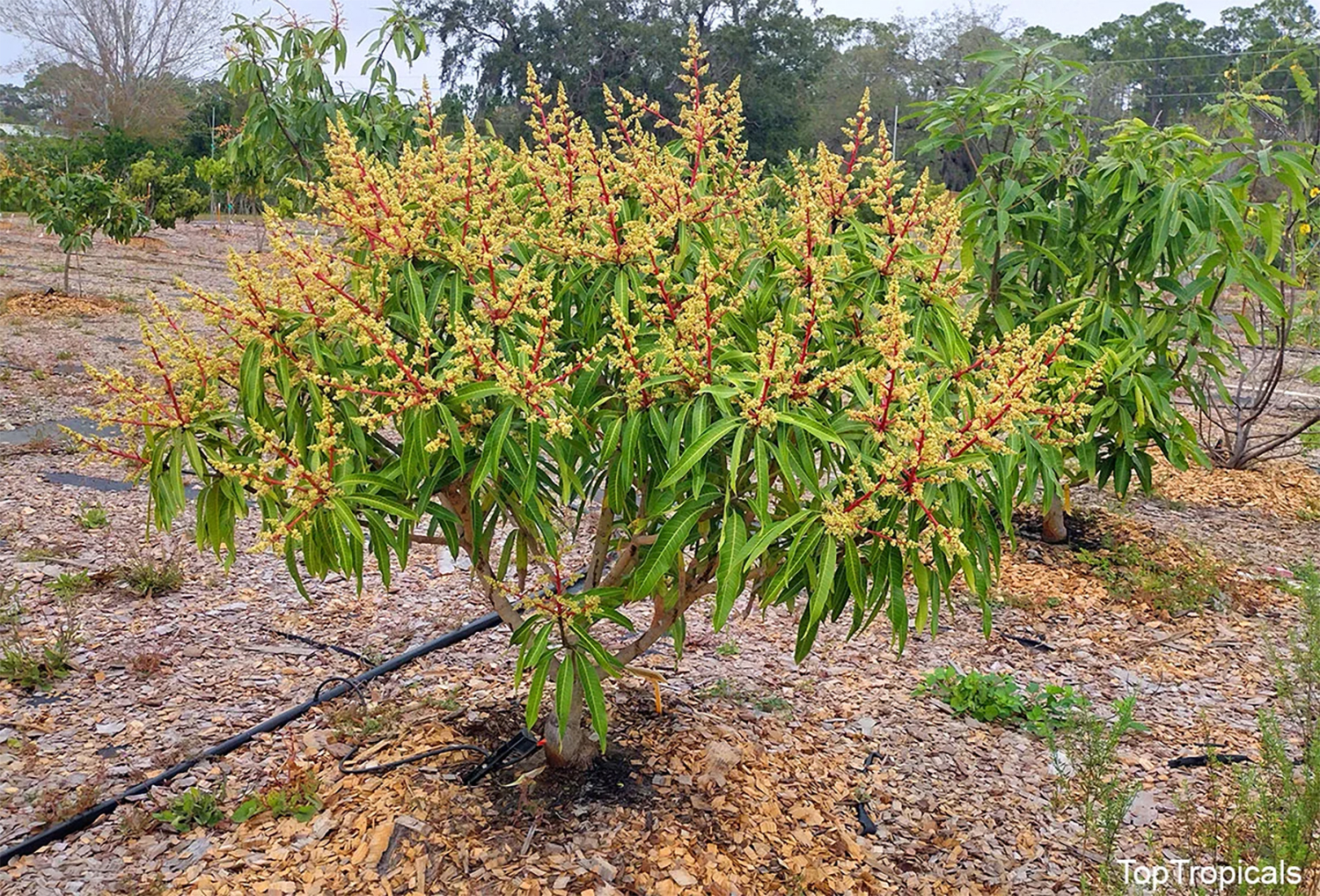
Mango  tree  blooming  produsely  after  applying  Sunshine  Mango  Tango 
 Booster

Mango tree blooming produsely after applying Sunshine Mango Tango Booster

Even in the ground, plants often struggle to absorb what they need because soil compounds can "lock up" nutrients.

  • Enhanced Solubility: SUNSHINE Boosters create a slightly acidic environment that helps dissolve stubborn salts in the soil, making them accessible to roots again.
  • Precision Delivery: We provide mobile elements like Nitrogen precisely when the plant needs to push new spring growth.

🌿The Foliar Advantage: Direct-to-Leaf Delivery

Did you know a plant leaf can absorb nutrients even more efficiently than the roots? Foliar feeding is your "emergency button" for instant results.

  • Quick Fix: Foliar applications with Sunshine Superfood are the fastest way to correct yellowing leaves or visible deficiencies.
  • Metabolism Boost: Sprays like SUNSHINE-Epi act as a bio-regulator, helping plants recover from the stress of spring temperature swings.
  • Better Fruit: SUNSHINE Honey is applied to leaves to naturally move sugars to the fruit, increasing sweetness and flavor.

🌿The Calcium Problem: Solved

As your plants wake up this Spring, they need structural strength. Think of Calcium as the "cement" that holds plant cells together. Without it, new spring growth is doomed to fail.

Signs Your Plant is Starving for Calcium:

  • Deformed Leaves: New growth looks twisted, hooked, or curled.
  • Blackened Tips: The very edges of young leaves turn white, then quickly blacken and die.

The Industry Secret: The "Missing" Mineral

Most fertilizers, both dry and liquid, completely skip Calcium. Why? Because it’s a chemical nightmare to keep stable in a concentrated solution. Most manufacturers rely on your irrigation water to deliver Calcium, but tap water is inconsistent and often fails to provide what a hungry, growing plant needs.

The SUNSHINE Boosters: Stable Calcium in Every Bottle

We have successfully stabilized Calcium directly into every single Sunshine Booster formula. Whether you are using Bombino, Robusta, or Megaflor, you are delivering a precise, stable dose of Calcium with every watering. No lockout, no sediment, and no relying on the "luck" of your tap water. Just strong, healthy cell walls and perfect spring growth.

🌿SUNSHINE-Epi: The Year-Round Bio-Regulator

Whether it’s the transition of spring, the extreme heat of summer, or the dry air of indoor wintering, SUNSHINE-Epi is your plant’s primary defense. This natural Brassinosteroid acts as a powerful immune booster, helping plants navigate stress wherever it comes from.

  • Universal Stress Shield: Protects against temperature swings (both heat and cold), drought, and transplant shock.
  • Vigorous Development: Dramatically improves root growth and speeds up the metabolism of young seedlings and cuttings.
  • Eco-Safe: 100% non-toxic to humans, pets, and pollinators.

Note: While Epi is highly effective, it is a performance booster, not a substitute for proper care. It works best when paired with the right light, water, and a consistent feeding program. It won't bring a dead plant back to life, but it will help a struggling one find its footing.

🛒 Feed your plants

Don't let your garden wake up to an empty nutrition plate.
Smokey: Save your gas money for donuts. We're shipping the boosters for free.
Sunshine: Agreed. My charm covers the delivery cost.

No coupon code required: The free shipping is automatically applied at checkout.

Complete Nutrition: Stock up on Robusta, Superfood, and Epi for the Spring growth push.
Offer valid through 03/14/2026. Free shipping offer is valid on SUNSHINE Boosters liquid products only. Not valid on previous purchases and cannot be combined with any other offers, coupons, or discounts. Offer subject to change or cancellation without notice.

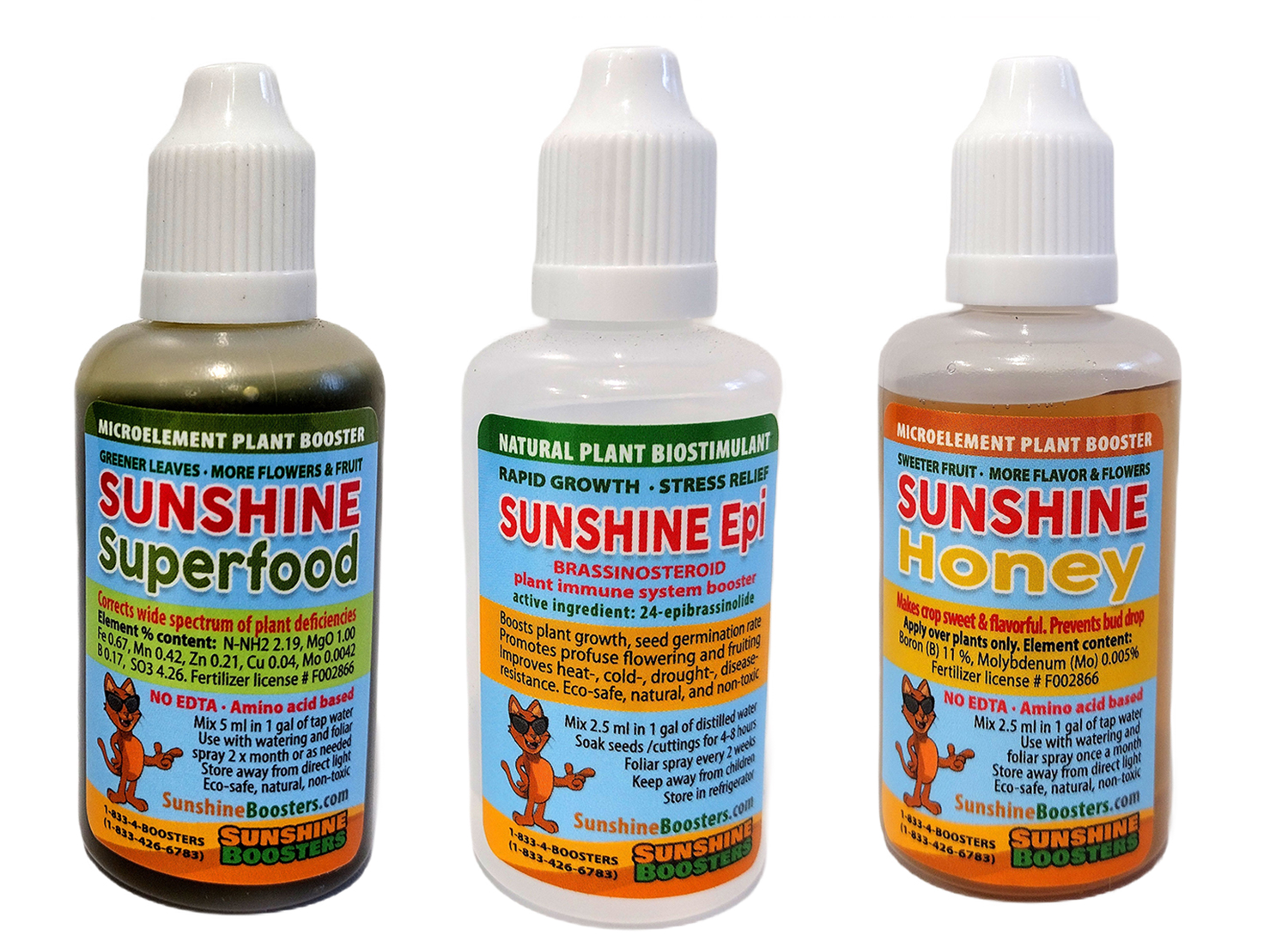
Sunshine  Boosters  plant  supplements  including  Superfood  micro  element 
 complex,  Epi  biostimulant,  and  Honey  fruit  enhancer

Sunshine Boosters micro elements and supplements - Superfood micro-element complex, Sunshine Epi biostimulant and Sunshine Honey supplement for better fruit

❓Frequently Asked Questions: SUNSHINE Boosters™

  • What water should I use for foliar spraying?
    Tap water works perfectly for most. However, if your water is very "hard" (leaving white mineral spots on leaves), switch to distilled water for a cleaner finish and better absorption.
  • How long does a diluted solution last?
    For maximum potency and to avoid nutrient degradation, try to use your diluted mixture within a few hours of preparation. Keep away from direct sun. Fresh is always best!
  • Can I use SUNSHINE Boosters as a daily foliar spray?
    Yes! You can mist your plants daily to maintain high vigor, but you must reduce the dosage (use half the recommended strength) to avoid over-feeding.
  • Can I mix boosters with pesticides or fungicides?
    It is best to apply them separately. Mixing fertilizers with chemical pesticides in one tank can trigger reactions that "lock out" nutrients or reduce the efficacy of the treatment.
  • Will the liquid stain my patio or hands?
    No. Unlike traditional fertilizers with heavy blue or pink dyes, our solutions are clear or very light-colored. If you spill it, simply rinse with water—no stains, no mess.
  • Can I mix different SUNSHINE Boosters together in one sprayer?
    Yes. All SUNSHINE Boosters are chemically compatible. You can combine a "growth" booster like Robusta with a "micro-element" complex like Superfood in the same water to save time.
  • Are these products safe to use around my pets?
    Absolutely. Our formulas are 100% non-toxic and amino-acid based. Just ask Smokey and Sunshine—they are perfectly safe for households with curious cats, dogs, and children.
  • Can I use these boosters on indoor plants?
    Yes. They are ideal for indoor use because they don't produce a "fertilizer smell" and won't cause salt crusting on your decorative pots or furniture.
  • Is it safe to use on fruit and vegetables I plan to eat?
    Yes. Because our formulas contain no urea, nitrates, or harsh salts, they don't leave a "chemical" aftertaste. They actually help improve the natural sugars and flavor profile of your harvest.
  • What is the best temperature for foliar spraying?
    Apply when temperatures are below 85°F. Early morning or late evening is best; this allows the leaves to remain wet longer, giving the plant more time to absorb the nutrients.

What Fertilizer to Use and How?

Green Magic controlled release fertilizer keeps plants green during active growth season - apply only once in 6 months.
Sunshine: Smokey, you saved my coffee tree. But what do I do now so it stays happy?

Smokey: Simple. Spray Sunshine Robusta every five days during active growth.

Sunshine: Five days? Smokey, I barely remember where I left my coffee mug five minutes ago.

Smokey: That is exactly why we use Green Magic.

Sunshine: Fertilizer for forgetful gardeners?

Smokey: Controlled release. Sprinkle once and it feeds the plant for six months.

Sunshine: Six months? I can have a very good nap in that time.

Smokey: Exactly. The plant keeps eating slowly while you keep napping.

Sunshine: Perfect. Remember, I will bring the coffee. You bring the donuts.

Smokey: And next week we will show you exactly how Green Magic works and why plants love it. Stay tuned.

🛒 Feed your plants

✍️ Learn more about fertilizers

Date: 23 Nov 2025

🏡 To Use Your Garden Or Be Used By It

Two  cats  in  a  garden  planting  a  young  tree.  Smokey,  a  black-and-white 
 tuxedo  cat,  holds  a  small  shovel  and  works  the  soil,  while  Sunshine,  a 
 fluffy  orange  tabby,  sits  smiling  beside  a  bag  of  garden 
 soil.

Smokey and Sunshine November Planting.

Smokey: Winter roots make spring easy. Keep that plant straight.
Sunshine: I am keeping it straight by not touching it at all.
Smokey: That is exactly what I was afraid of.

November is the month when the garden finally stops yelling at you. The heat backs off, the bugs calm down, and the weeds take a breath. This is when we get to take control again. And as gardeners, we know the truth: Either you use your garden, or your garden will use you in spring. Let me walk you through this, gardener to gardener.

"November is when the garden finally listens. Give it a little direction now, shape it, guide it, and prepare it for spring. It will reward you all year." - Tatiana Anderson, Top Tropicals Plant Expert

🌴 When The Garden Uses You

We have all lived this scene:

  • March weeds appear, and two days later it looks like a jungle.
  • One missed watering turns into five wilted plants and a full week of recovery.
  • A skipped feeding shows up as yellow leaves and panic searching online.
  • Bugs return fast, and suddenly you are washing leaves every other day.
  • Random plant purchases fill your yard with chaos and mismatched care needs.
  • When the garden takes control, spring feels like hard work, not joy.

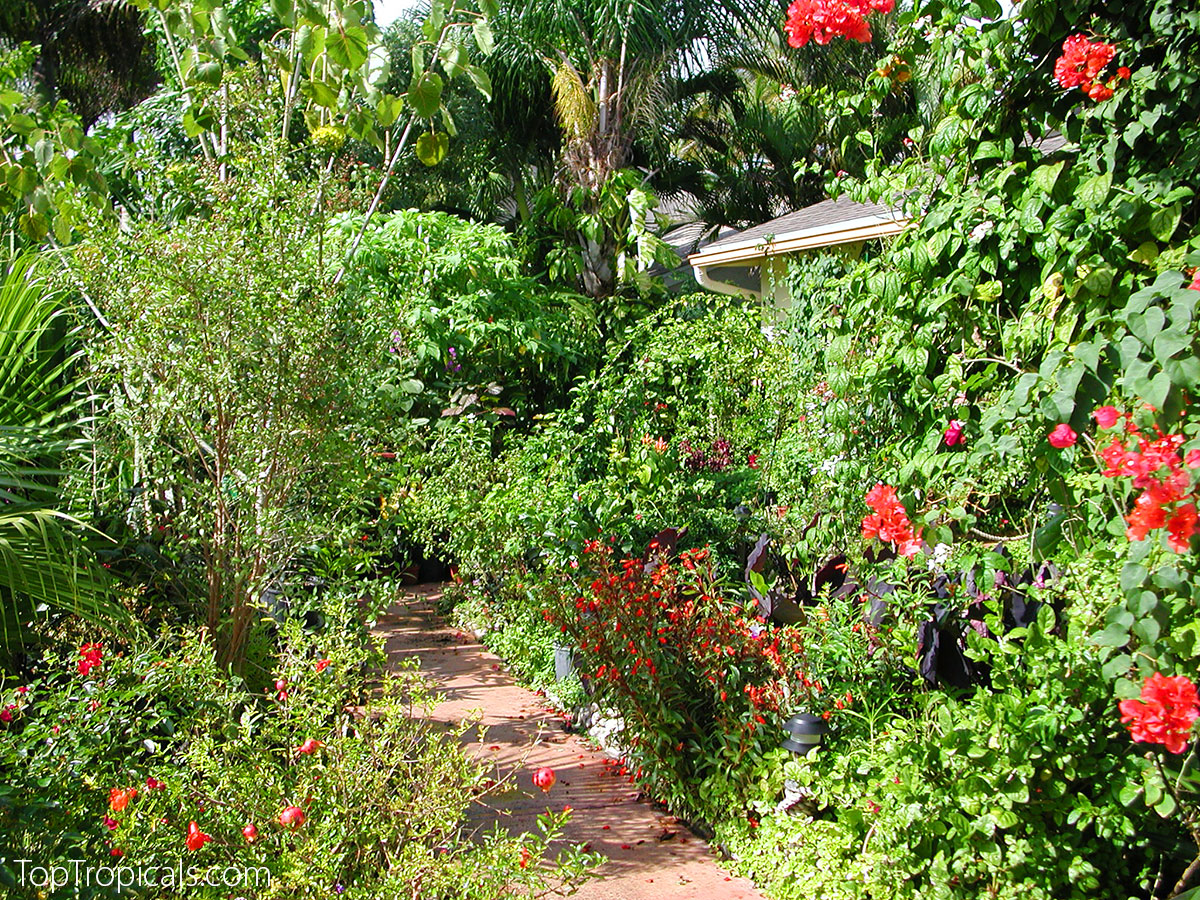
An  overgrown  tropical  garden  with  dense  foliage  and  vines  spilling  over
    a  walkway,  showing  how  a  garden  can  take  over  when  not  maintained.

Overgrown Tropical Garden Showing How a Garden Can Use You

📊 When You Use Your Garden

November flips the script. Plants slow down. Soil stays warm. This is the safest month to experiment, move plants, fix mistakes, and redesign.

What you do now pays off huge in March.

  • You map out sun zones and shade zones.
  • You mulch now so weeds do not explode later.
  • You move plants to better positions without heat stress.
  • You remove the high-drama plants before they start another season of complaints.
  • You pick what you want for next year instead of letting impulse buys rule you.

Spring becomes smooth instead of overwhelming. And honestly? It feels good to walk outside in March and see order instead of chaos.

A  neat,  organized  tropical  garden  with  trimmed  plants,  open  pathways, 
 and  balanced  landscaping,  showing  how  a  gardener  can  use  and  direct  the 
 garden.

In the photo: Every garden starts in small steps. Biquinho Pepper (front) in the garden.

What Benefit Do You Get Personally?

  • Less watering.
  • Fewer bugs.
  • Bigger fruit.
  • Better flowering.
  • Less money wasted.
  • Less time fixing problems you could have prevented now.

This is why experienced tropical gardeners adore November.

Garden

In the photo: Organized Tropical Garden. Firebush (lemon gold variety) and Cordylines (Ti Leaf) make colorful spots in the garden.

🐭 Start With Something Small Today (5 Minutes)

Pick one:

  • Add mulch to the driest spot in your yard.
  • Cut one dead branch from any tree.
  • Move one pot to a better sun angle.
  • Pull three weeds from the worst area.
  • Water deeply once this week.

Small steps now save hours later.

⭐ One Short Story

Last year we planted a Star Fruit in November. By March, it was already covered in flowers, and have been harvesting fruit non-stop since then! That is what winter planning does: it gives plants a head start you can actually see.

Young  Carambola  Star  Fruit  tree  fruiting

🐍 Plants That Will Use You If You Let Them

These are great plants, but only if you plan before planting them:

  • Banana (thirsty)
  • Hibiscus (hungry)
  • Brugmansia (sensitive)
  • Passion vine (takes over anything it touches)

Place them wrong, and they become full-time jobs.

An  overgrown  passion  vine  covering  a  garden  swing,  showing  how  a 
 fast-growing  plant  can  take  over  when  not  maintained.

In the photo: Passion Vine taking over the swing.

🐰 Plants That Work For You

These feel like free upgrades to the yard:

Pick even one of these and your garden starts giving back.

A  landscaped  garden  path  with  a  Cattley  Guava  tree  featuring  a  twisted 
 multicolor  trunk,  surrounded  by  trimmed  tropical  plants  and  decorative 
 garden 
 elements.

In the photo: Cattley Guava brings not only tasty fruit but also a wonderful character with its amazing multi-color twisted trunk.

🌡️ November Advantage

You cannot ruin anything in November. This is the safest, calmest month to shape your garden the way you want. If you act now, spring becomes a victory lap. If you wait, spring becomes a rescue mission.

A  landscaped  tropical  garden  with  a  potted  Adenium  in  full  bloom,  red 
 Cordylines  behind  it,  and  neat  mulched  beds  with  decorative  garden 
 elements.

In the photo: Adenium is a colorful accent in the garden.

💐 Thanksgiving Tie-In

This is the season to reset, breathe, and be thankful for your outdoor space. A garden that works for you is one of the best gifts you can give yourself going into the new year.

Start your November plan today. Use your garden. Do not let it use you.

A  neatly  designed  tropical  garden  bed  featuring  Megaskepasma,  iris, 
 Colocasia,  colorful  Crotons,  Dracaena,  and  Ti  Leaf  plants  arranged  in 
 mulched 
 landscaping.

In the photo: Megaskepasma, Iris, Colocasia, Crotons, Dracaena and Ti Leaf bring instant tropical look to your garden.

Shop Fruit trees

Shop Flowering shrubs

Date: 18 Apr 2026

The Secret to a Sharper Mind Might Be Growing in Your Backyard

The Secret to a Sharper Mind Might Be Growing in Your Backyard

The Secret to a Sharper Mind Might Be Growing in Your Backyard


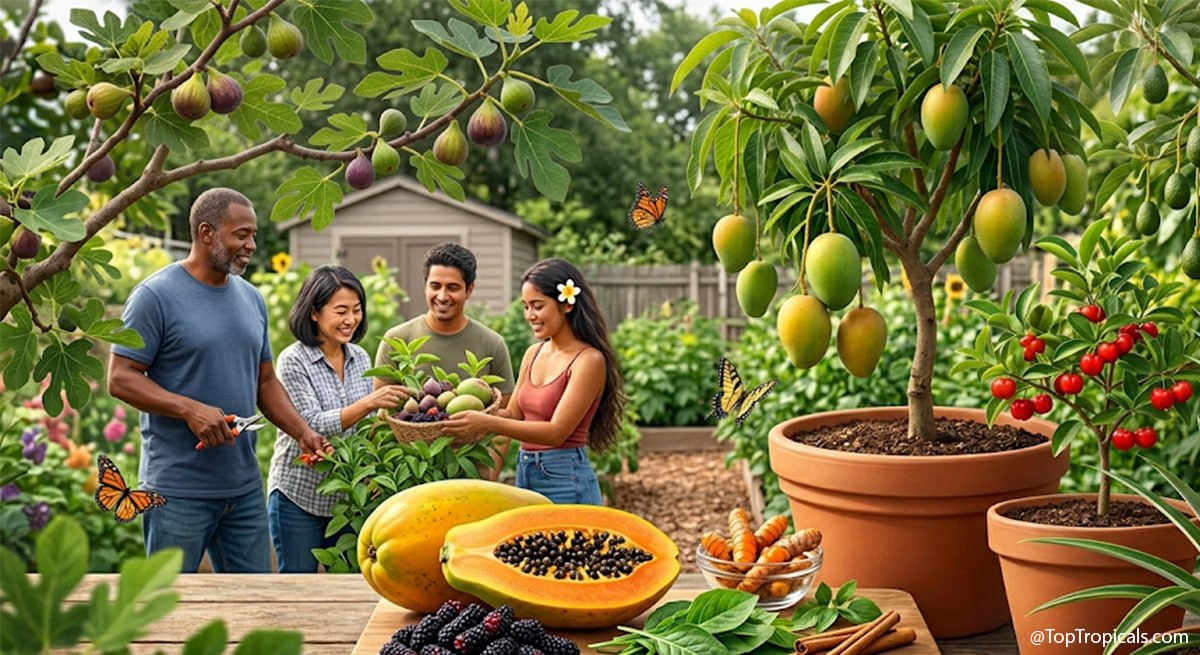
Your garden shed might hold a more powerful tool for brain health than your medicine cabinet. What if the best defense against cognitive decline isn’t found in a pill bottle - but right outside your door? While we often think of gardening as just a hobby, new research suggests that the combination of physical "zone-pushing" and harvesting your own nutrient-dense tropical fruit could be a literal life-saver for your brain.

  • 🍒 What the Research Actually Says


A massive study recently published in the journal Neurology followed more than 92,000 people to see how diet impacts the mind. The findings were clear: the quality of the plant-based foods you eat plays a massive role in your risk of dementia. It isn't just about "eating your veggies" - it's about which ones you choose.
(The full study: Plant-Based Dietary Patterns and Risk of Alzheimer Disease and Related Dementias in the Multiethnic Cohort Study)

  • 🍒 Why Growing Your Own Fruit Changes the Game


If you grow your own fruit, you quietly solve two problems at once. It turns a "diet plan" into a natural part of your day.

1. Effortless Nutrition
When a ripe mango, a handful of mulberries, or a fresh guava is hanging within arm's reach, you eat it. It replaces processed, sugary snacks without any "willpower" required. You are naturally moving toward the high-quality, whole-food diet the research supports.

2. Functional Fitness
Gardening doesn't feel like a workout, but it is. Bending, pruning, carrying pots, and digging are all forms of functional movement. It’s steady, useful physical activity that supports your heart and brain while you’re focused on your plants.

3. The "Outdoor" Effect
Sunlight and fresh air are natural mood boosters. The mental focus required to manage tropical plants - especially when you’re protecting them from a surprise freeze - provides a level of mental engagement and stress relief that you just can't get from a treadmill.

  • 🍒 What to plant if you are just starting


You don’t need a massive orchard to start investing in your brain health. One or two plants can shift your habits immediately.

For Fast Results: Papaya and Mulberries produce fruit quickly and are incredibly easy to manage. Turmeric (curcuma), leafy greens (Longevity spinach, Katuk) and Cinnamon proved instant harvest.
For Small Spaces: Dwarf Mango varieties and Cherries (Eugenias or Acerola), Pineapples thrive in containers and provide massive doses of antioxidants.
For the "Zone Pusher": Figs and cold-hardy Avocados offer healthy fats and fiber that are essential for long-term health.

  • 🍒 Start Small, Start Now


The research makes one thing clear: improving your food quality matters, and you can see results no matter your age. Planting a fruit tree changes what you eat, how you move, and how often you step outside.
That’s more than just gardening - that’s a lifestyle shift your brain will thank you for.

🍒 FAQ


Does fruit really support brain health?
Yes. Diets rich in whole, high-quality plant foods are linked to a lower risk of dementia, especially when they replace processed snacks and added sugars.

Is gardening enough to count as exercise?
Absolutely. Regular gardening provides steady, functional movement that improves circulation and supports overall physical health.

Is it too late for me to start?
No. The study showed that even participants who improved their diet quality in their 60s and 70s saw a measurable reduction in dementia risk.

🛒 Start your tropical fruit journey

Guava · Mango · Mulberry · Papaya · Pineapple · Avocado · Cherries · Figs

📚 Learn more:


#Food_Forest #Remedies #Discover

🟢 Join 👉 TopTropicals

Date: 10 Nov 2025

❄️ How to Prepare Your Tropical Garden for Winter

Two  cats  in  a  tropical  garden  at  sunset.  Smokey,  a  black-and-white 
 tuxedo  cat  wearing  a  wool  cap,  holds  a  thermometer  while  Sunshine,  a  fluffy 
 orange  tabby,  sits  beside  mulch  and  folded  frost  cloths  surrounded  by  banana
    and  hibiscus  plants.

Smokey and Sunshine Wrap Up the Garden with Frost Cloth Before the Chill.

Smokey: "Thermometer says 45. Time to wrap the bananas!"
Sunshine: "You wrap the bananas. I’ll guard the mulch… from this sunny spot."
Smokey: "Teamwork, Sunshine. Teamwork."

🌡️ Cold nights are coming - but your tropicals do not need to shiver!

Even in sunny Florida and other warm zones, one cold snap can undo months of growth. Preparation is everything. Tropical plants can handle a lot, but they dislike surprises. Let’s make sure your garden stays safe, strong, and happy all winter long.

Tips from Tatiana Anderson, Top Tropicals Plant Expert

👉 Group and Check Your Plants

You already know which plants are in pots and which are in the ground. What matters now is prioritizing by cold sensitivity. Identify the tender tropicals – papaya, banana, plumeria, adenium, heliconia – and decide which ones get covered first when temperatures drop. Keep frost cloths or old sheets near those areas, ready to grab fast. If your garden is large, label protection zones or mark plants that always need extra care. The goal is to have a plan, not a panic, when the cold alert hits.

Once you know your priorities, you can plan the rest of your protection strategy.

👉 Feed and Mulch

Stop using high-nitrogen fertilizers by late fall. They push soft new growth that freezes easily. Add compost around the base of your plants and top with 3 to 4 inches of mulch. Mulch acts like a blanket: it keeps warmth in, protects the roots, and keeps soil moisture steady. Just make sure the soil drains well; cold and soggy soil leads to root rot. In raised beds, check that water flows away easily.

After you feed and mulch, it is time to look at how your local zone changes the game.

👉 Zone-by-Zone Tips

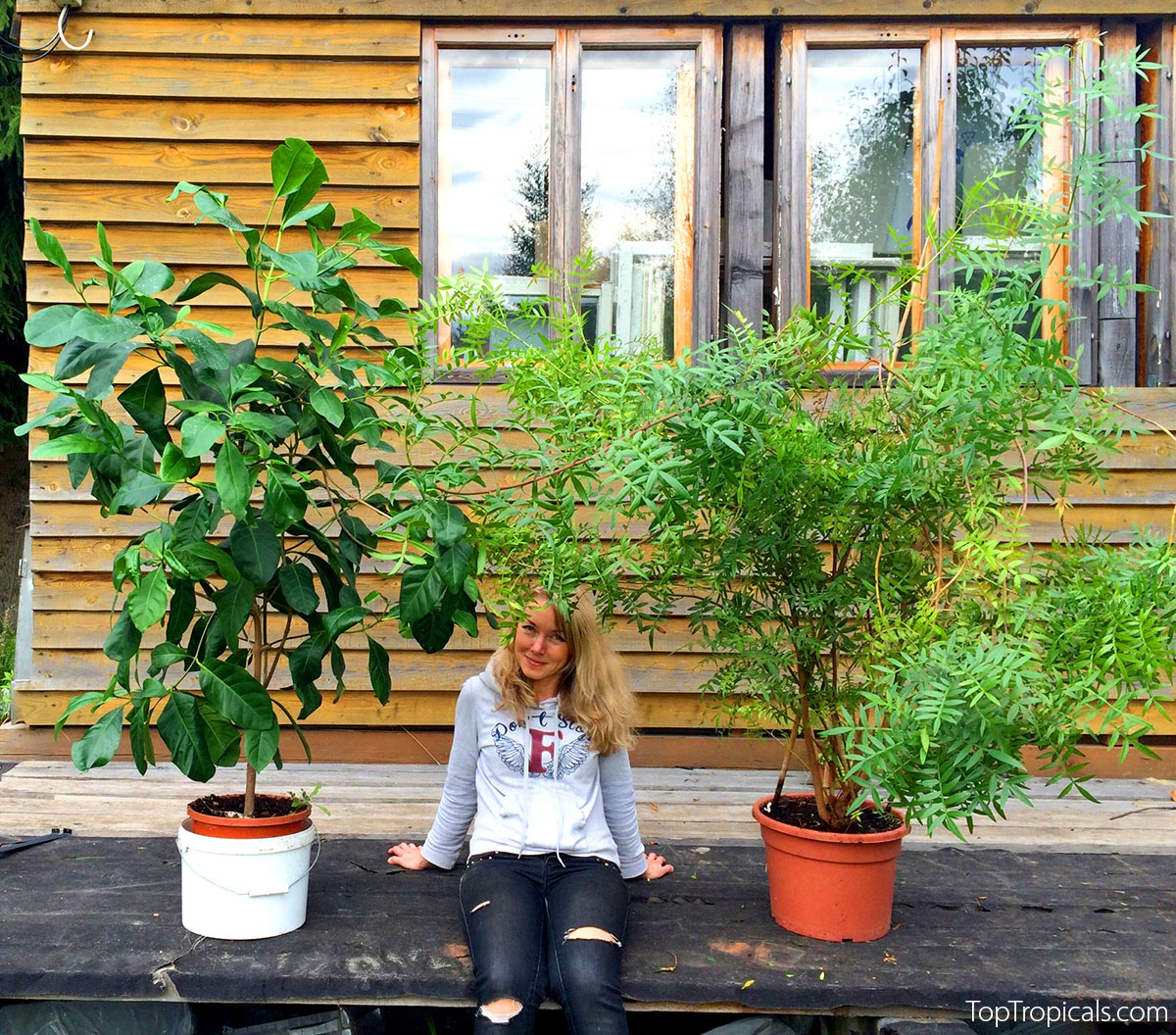
Woman  sitting  between  two  large  potted  tropical  plants  on  a  wooden  deck
    in  front  of  a  house,  preparing  to  move  them  indoors  for  the  winter.

Moving Tropical Plants Indoors for Winter Protection

  • Zone 10: You are lucky! This is mostly a maintenance season. Watch for root rot after heavy rain, trim lightly if needed, and protect tender young trees during surprise chills. Keep some frost cloth ready just in case.
  • Zone 9: This is the main action zone. Nights can dip into the 30s. Deep-water your trees once before cold nights to insulate the roots. Apply heavy mulch, and have frost protection ready to go. If you grow tropical fruit like mango or guava, consider wrapping young trunks in burlap or foam pipe insulation.
  • Zone 8: This is where tropical gardening becomes creative. Stick to cold-hardy tropicals such as loquat, guava, or cold-hardy avocado varieties. Use portable greenhouses, wrap trunks, and move smaller plants indoors or to a heated porch when frost threatens.

Now that the garden beds are set, let’s look at your pots and containers – your most mobile plants.

👉 Container and Patio Plants

Potted plants are the easiest to protect but also the quickest to freeze. Start reducing watering now so roots do not stay too wet in cooler weather. Before moving them, check for insects hiding under leaves or in the soil. Group your pots close to a wall for reflected heat and wind protection. If you plan to bring them indoors, do it gradually. Move them closer to the house for a few days before bringing them all the way inside to help them adjust to lower light and humidity.

When the chill starts, many gardeners rush to move everything inside at once – but a smooth transition works much better.

👉 Indoor Plants

When bringing plants inside, give them a good rinse to remove dust and bugs, and flush the soil to wash out salts from summer fertilizing. Keep them separate from your houseplants for a week to make sure no pests come along. Expect some leaf drop – it is normal as they adjust to lower light. Give them bright light near a window, and cut watering by about half until spring. Avoid misting too much; good airflow matters more than humidity during winter.

Many tropicals, like hibiscus, brugmansia, and crotons, may look tired for a while, but they will bounce back quickly once days get longer.

👉 Timing Is Everything

The key is to prepare before the first cold warning. Check your weather app regularly once nights start dropping into the 50s. Keep covers, mulch, and supplies ready so you are not running outside at midnight with a flashlight and a frozen hose. Have your frost cloths labeled by plant group and stored in an easy spot. A little organization now saves a lot of stress later.

Many tropicals, like hibiscus, brugmansia, and crotons, may look tired for a while, but they will bounce back quickly once days get longer.

Remember: the goal is to help your plants rest safely. Many gardeners prune or fertilize too late in the season – we will talk about why that can be risky next week."— says Tatiana Anderson, Top Tropicals Plant Expert

Coming next mail-list: The best gadgets for cold protection (lights, heaters, frost covers) and what NOT to do in winter.

📚 Learn more from Top Tropicals Blog:

Cold protection - winter action for your plant collection

What plants are good to order in Winter?

How to take care of house plants in Winter

How to protect tropical plants in Winter

How to take care of a mango tree in winter

How to protect Avocado from cold

Overwintering Adeniums outside of tropics

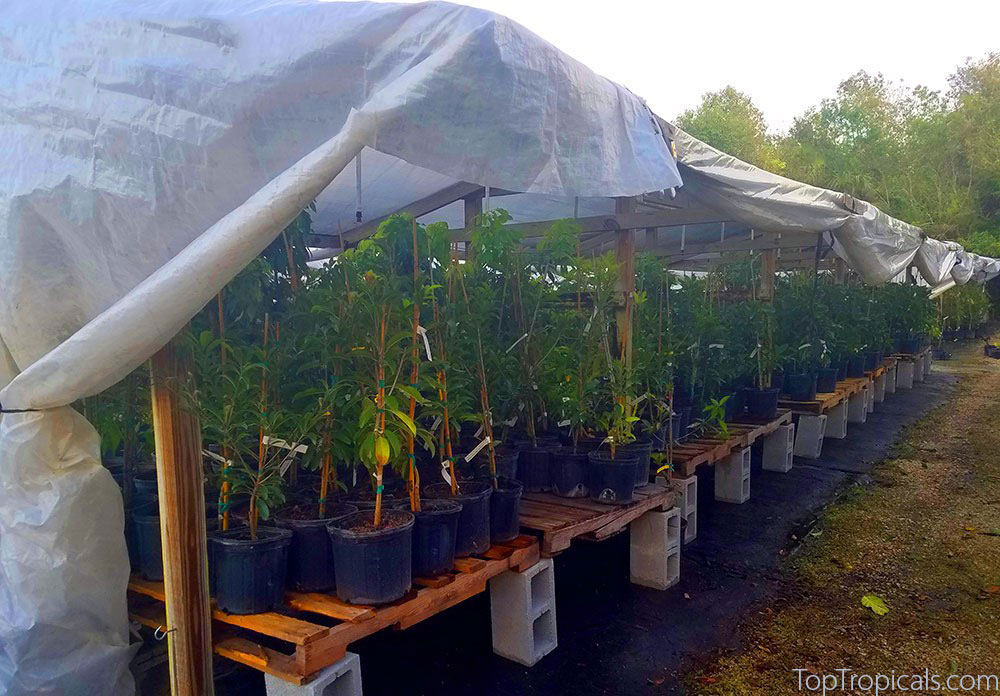
Rows  of  tropical  plants  in  black  pots  covered  with  frost  cloth  and 
 plastic  sheeting  for  winter  protection  at  Top  Tropicals  nursery.

Protecting Tropical Plants with Frost Covers at Top Tropicals Nursery

Date: 24 Sep 2023

Go Bananas!
10 good reasons to plant bananas in your garden

Cat  with  bananas  in  refrigerator

Adding banana plants to your subtropical garden or plant collection can enhance the aesthetics of your outdoor and indoor space, provide fresh and nutritious fruits, and offer a fun gardening experience with relatively low maintenance requirements. It's a delightful way to connect with nature and enjoy the benefits of homegrown produce.

1. Tropical Ambiance: Banana plants bring a touch of the tropics to your subtropical garden. Their large, lush leaves create a lush and exotic atmosphere that can transform your garden into a tropical paradise.

2. Homegrown Flavor: Growing your own banana trees allows you to enjoy the freshest, most flavorful bananas right from your garden. Homegrown bananas often have a superior taste compared to store-bought varieties.

3. Nutritional Benefits: Bananas are packed with essential vitamins, minerals, and dietary fiber. By cultivating your own banana trees, you gain access to a nutritious and healthy snack option right in your backyard.

4. Quick Results: Banana plants are known for their fast growth. In subtropical climates, they can produce fruit in as little as one to two years. This means you don't have to wait long to savor the fruits of your labor!

5. Low Maintenance: Banana trees are relatively low-maintenance once established. They require regular watering, but their hardy nature makes them a relatively easy addition to your garden. They are not messy in a landscape.

6. Versatility: Bananas offer versatility in your garden. You can choose from dessert bananas for snacking, cooking bananas like plantains for culinary experiments, or even ornamental banana varieties to enhance your garden's aesthetics. There are so many varieties to enjoy! You can't find this big selection in a grocery store.

7. Sustainable Living: Growing your own bananas reduces your reliance on store-bought produce, contributing to a more sustainable lifestyle. It also minimizes the carbon footprint associated with transporting fruits to market.

8. Educational Value: Cultivating banana plants can be an educational experience for both adults and children. It offers insights into tropical horticulture and can foster an appreciation for gardening and botany.

9. Landscaping Appeal: Beyond their fruit-bearing potential, banana plants add visual interest to your garden. Their unique form and striking leaves make them an excellent choice for landscaping and providing shade in your outdoor space.

10. Resilience: While bananas thrive in tropical conditions, many banana varieties are hardy enough to withstand cooler climates, making them a durable addition to your garden.

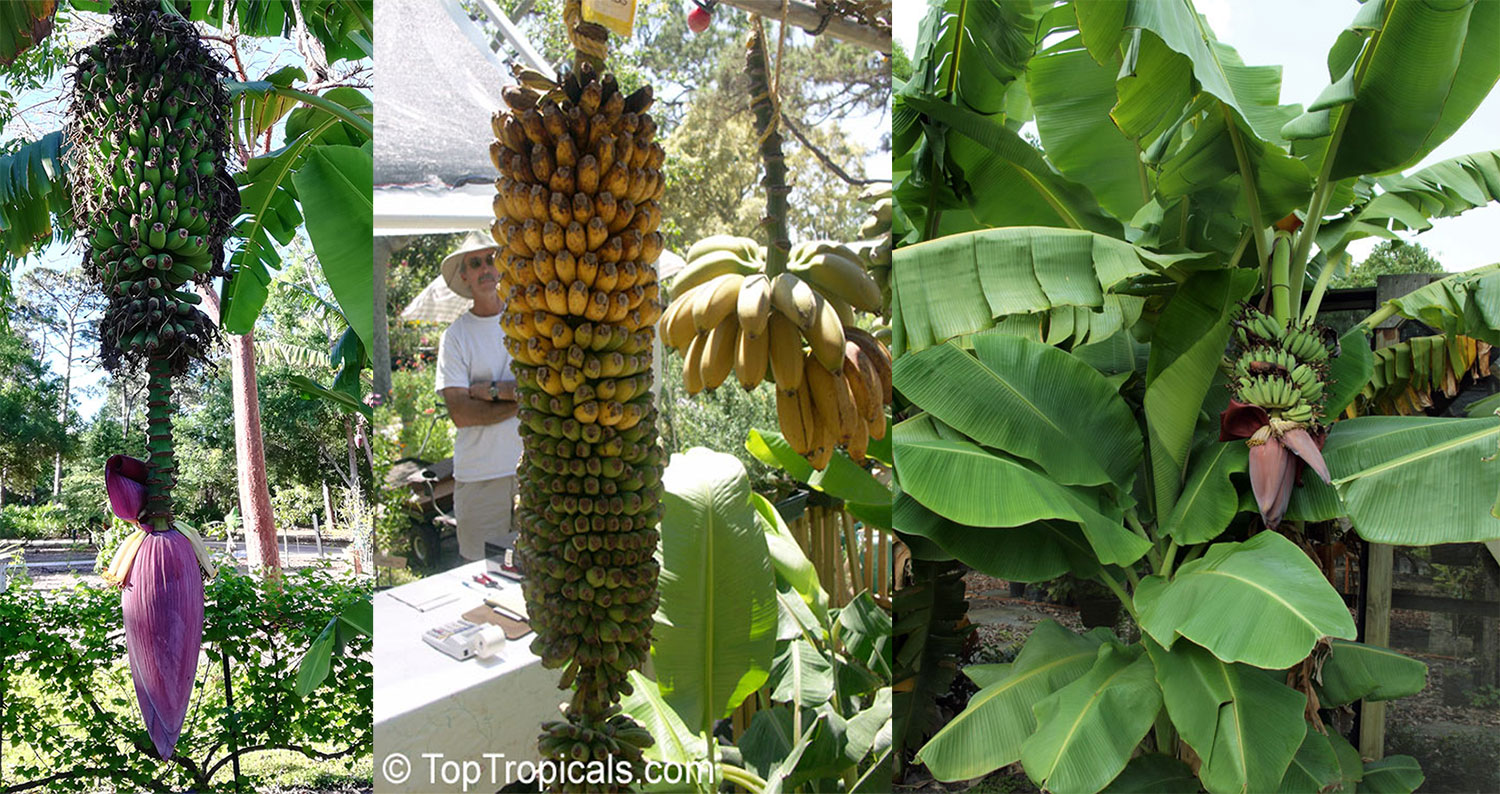
bananas  and  banana  trees