Optional: sliced green onions or chili flakes for garnish
Instructions
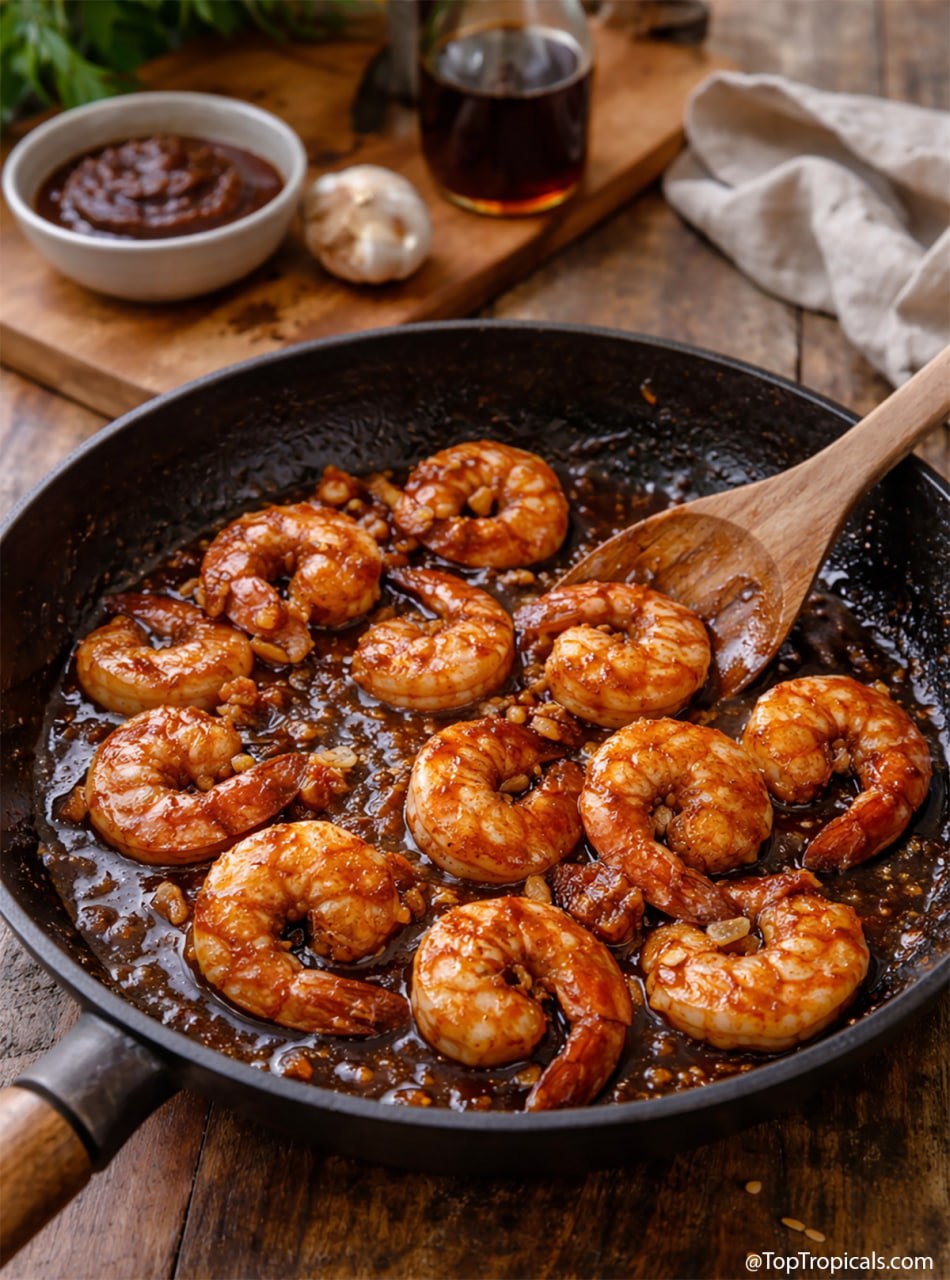
In a small bowl mix tamarind pulp, garlic, fish sauce, brown sugar, and water until a smooth sauce forms.
Heat oil in a very hot skillet or wok.
Add shrimp and stir-fry for 3 to 4 minutes until they begin turning pink.
Pour the tamarind sauce into the skillet and toss shrimp to coat evenly.
Cook about 1 more minute until the sauce becomes glossy and slightly thick.
Serve immediately. Garnish with green onions or chili flakes if desired.
🌿 About the plant:
The pulp of tamarind can be used fresh from the pod, pressed into blocks, or sold as concentrate. Its acidity works like citrus but with more complexity - slightly fruity, slightly caramel-like.
🏡 In the garden:
Tamarind trees - Tamarindus indica - are drought-tolerant once established and surprisingly hardy in brief cool snaps. They develop a beautiful spreading canopy and fine, fern-like leaves that close at night.
Tamarind Plant Facts
Botanical name: Tamarindus indica Also known as: Tamarind, Sampalok
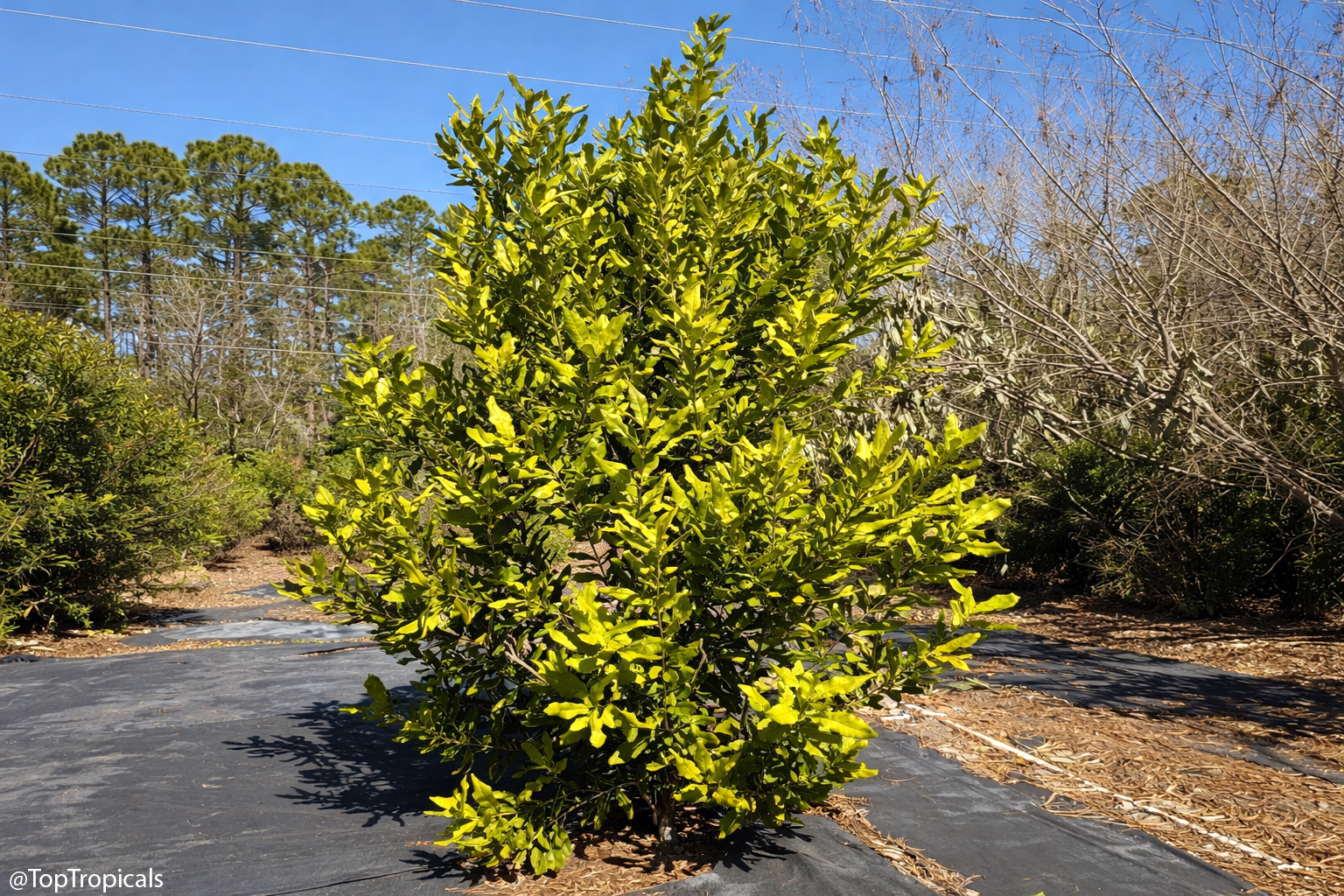
3 year old macadamia tree after 3 nights of hard
freeze in February 2026 - standing strong.
Earlier in early February we had a rough stretch at the B-Farm in Sebring. Three nights around 25°F with steady wind. Weather like that quickly shows which plants actually belong in Zone 9 and which ones only look good on paper.
Once things warmed up and we could see the real results, a few clear winners stood out. All of the macadamias handled the cold surprisingly well. The grumichamas stayed solid. And the cold-hardy avocado varieties again proved why gardeners rely on them in borderline climates.
Avocado Plant Facts
Botanical name: Persea americana, Persea gratissima Also known as: Avocado, Alligator Pear, Aguacate, Abacate
USDA Zone: 9 - 11
Highligths
Instead of listing every tropical plant that might survive a freeze, we decided to keep things practical and focus on the ones that actually went through this cold spell and that we currently have in stock.
If you garden in USDA Zone 8b-9, these are the kinds of trees that make winter a lot less stressful.
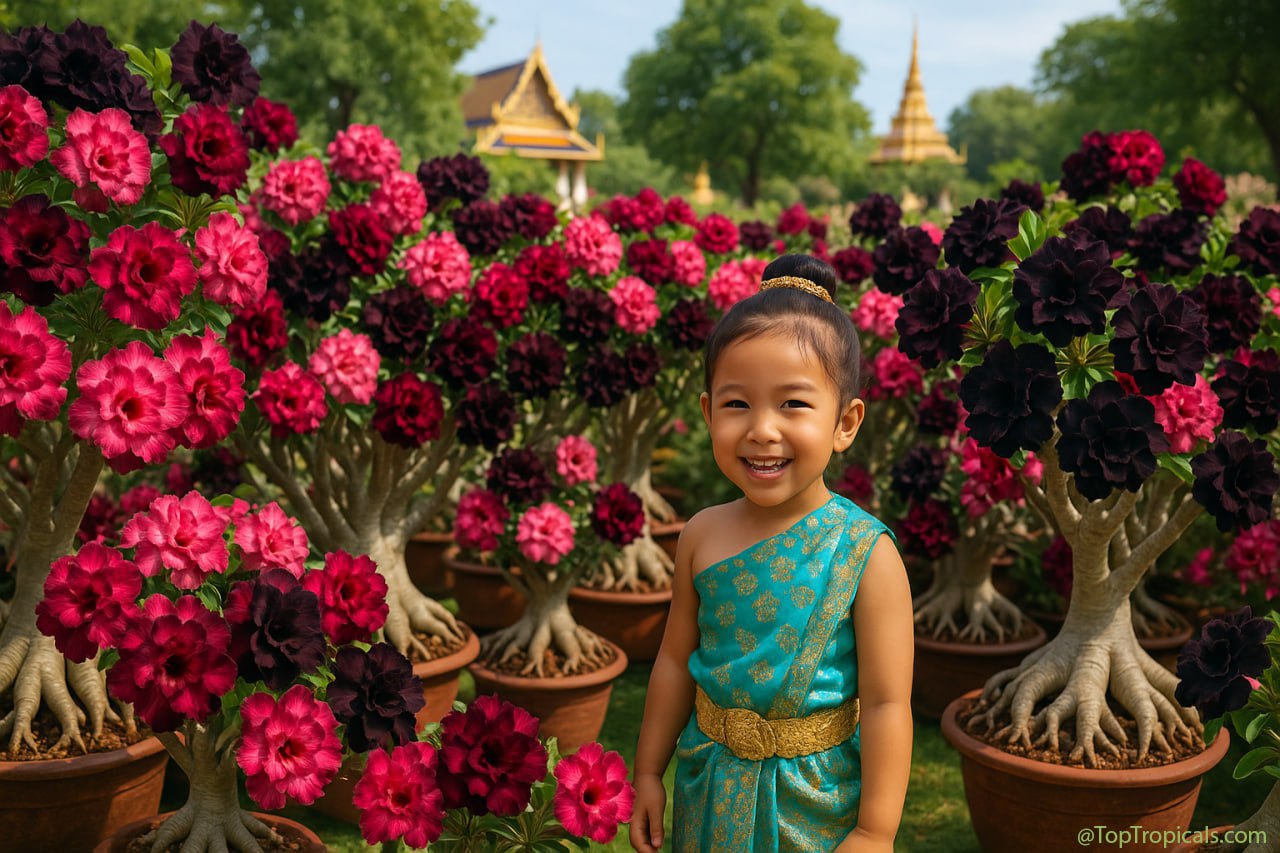
🌸 Thai flower names often sound like characters from a legend - golden spirits, celestial jewels, or lucky guardians of the garden. In Thailand, plants are not always named in a purely botanical way. Instead, breeders often choose names that carry meaning, symbolism, and a little imagination.
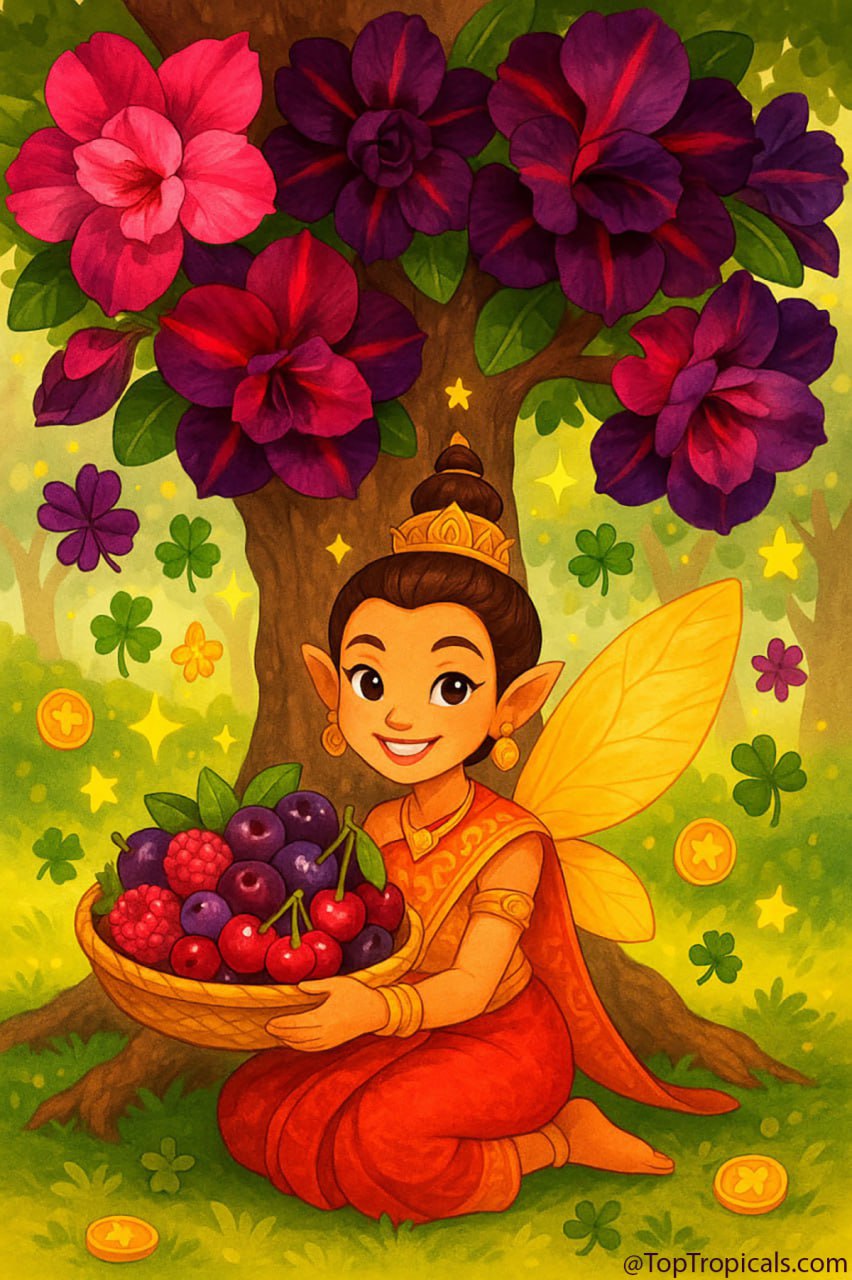
🌸 Looking at Adeniums through this lens feels almost magical. A flower can become a jewel, a lotus from heaven, or a golden treasure. The whimsical scenes below capture that spirit - a world where Adeniums bloom like treasures, garden fairies dance among flowers, and every name tells a story waiting to be discovered.
Adenium Plant Facts
Botanical name: Adenium sp. Also known as: Adenium, Desert Rose, Impala Lily
How to learn the secret meanings behind Thai flower names
Cats Smokey and Sunshine in Thai Adenoium garden
How to learn the secret meanings behind Thai flower names 🔮
If you have ever looked at names of Adeniums or Plumerias from Thailand, you may have noticed something interesting. Many of them sound poetic, mysterious, or even magical. That is not accidental.
Adenium Plant Facts
Botanical name: Adenium sp. Also known as: Adenium, Desert Rose, Impala Lily
USDA Zone: 9 - 10
Highligths
Plumeria Plant Facts
Botanical name: Plumeria sp. Also known as: Plumeria, Frangipani
USDA Zone: 9 - 11
Highligths
Thai plant breeders often give their hybrids meaningful names connected to jewels, wealth, beauty, and mythology. Instead of simple numbers or codes, the plants receive names that sound like something from a legend - Jade Swan, Golden Lotus, Rainbow Diamond.
Once you learn a few common Thai words, these names suddenly start to make sense. It is almost like decoding a secret language of flowers.
Below are some of the most common words you will see in Thai plant names.
🔠 Glossary of common Thai words used in plant names
Gems and precious stones 💎
Anyamanee - precious jewel or rare gem. Gaew / Kaew - crystal or glass-like jewel. Manee - jewel or gemstone. A classic word in elegant Thai names. Noppakao - nine gems, a symbol of royal power and prosperity. Petch - diamond. Symbol of brilliance and beauty. Ploy - gem or precious stone. Often used for plants considered rare or jewel-like. Yok - jade.
Wealth, luck, and prosperity 💰
Boon - merit, blessing, good karma. Chok - luck or good fortune. Kanjana / Kanjamapon - golden or noble. Mongkol - auspicious or lucky. Paruay / Pa Ruay - to become wealthy or prosperous. Ramruay - to become rich or prosperous. Sap / Sab - wealth or treasure. Sedthee - wealthy person. Tawee / Taweechok - to increase or multiply. Thong - gold. Yod - the best, the peak, or the finest.
Mythology and cultural symbolism 🐉
Bua - lotus. Chai / Chai Lai - victory or triumph. Hassadee - derived from the mythical Hatsadiling, an elephant-bird creature in Thai mythology. Hong - mythical swan or phoenix. Jai - heart or spirit. Maha - great or grand. Moradok - heritage, treasure, or legacy. Orathai - heart of Thailand or beloved Thai. Pratum / Pratuma - lotus blossom. Siam - Thailand, the historic name of the country.
Colors and visual descriptions 🎨
Chompoo - pink color. Lai - patterned or striped. Lueng - yellow. Moung / Muang - purple color.
Nature and poetic imagery
Chaba - hibiscus flower. Dao - star. Doung - heart, soul, or central essence. Fah - sky. Example: Sai Fah - sky-colored. Nam - water. Namwhan - sweet water or sweetness. Natee - river or flowing water. Sai - thread, line, or ray. Sairung - rainbow. Sang Aroon - dawn or sunrise. Suree - sun or sunlight.
🌸 Examples of plant names built from these words
Once you know the meanings, the names start to read like short poems.
Hong Yok - Jade Swan Ploy Nappan - Celestial Jewel Thong Hassadee - Golden Mythical Elephant Ped Sairung - Rainbow Diamond Som Paruay - Golden Prosperity Sai Fah - Sky Blue Pratum Thong - Golden Lotus Ramruay - Becoming Rich Chok Dee - Good Luck Thong Yod - Peak of Gold
You will see these words frequently in the names of Thai-bred Adeniums, Plumerias, Orchids, and other tropical flowers. Once you recognize them, plant names become much easier - and more fun - to understand.
📅 Do Not Miss: March 21
- Spring Equinox Plant Market
🍩 Saturday, March 21, 2026: 9 am - 4 pm
Sunshine: Smokey, look at me! See what I can do on my bike? I'm
practicing to give people what they like: coffee and donuts.
Smokey: You'd be perfect for a Gulf beach cafe. But gardeners don't
come here for donuts.
Sunshine: Really? Then why do they come?
Smokey: Some gardeners lost plants to the freeze. Others want trees
that will handle winter better. Cold-hardy avocados. Macadamia. Grumichama.
And some just come for fun - to see the PeopleCats. Sunshine: And my charm... and my donuts will make it more fun.
🐱King is
back on gate duty - inspecting every vehicle for proper
plant-hauling capacity.
😺Paisley
is rearranging freeze survivors and new arrivals like a design
consultant.
😼Snitch is
supervising recovery efforts from a comfortable chair.
😸Persephone
is checking under tables for "hidden spring energy."
😻Sushi and
Loki are
preparing for guided garden tours - recovery edition.
This is not just a plant market. This is the spring reset.
👍 Why You Should Come
It is finally warm in Florida. After several nights of hard freeze, some
plants survived - and some didn’t. This event is your chance to see
real freeze champions in person.
If you lost plants, you are not alone. If you are ready to plant
smarter, this is your moment.
Walk the gardens.
See proven winter survivors.
Discover cold-hardy fruit trees and resilient ornamentals.
Get practical advice about replanting after freeze. This is rebuilding -
Florida style.
♥️ What Makes This Event Special
We are featuring:
Verified freeze survivors
Cold-hardy fruit trees
Tough flowering trees and shrubs
Replacement plants for damaged landscapes
Smart layering ideas for frost-resilient gardens
You will see which species handled 25F with wind and multiple nights of
freeze - with no protection.
Real-world test. Real results.
Cold hardy fruit favorites include:
Cold-hardy Avocado varieties, including varieties, which are cold hardy
to 15-20°F: Joey, Fantastic, Mexicola, Poncho, Brogdon and more.
Botanical name: Caesalpinia mexicana Also known as: Mexican Bird of Paradise, Dwarf Poinciana
USDA Zone: 9 - 11
Highligths
🎉Event Highlights
30% OFF online prices
FREE plants with purchase
$5-10 specials
Exciting raffle prizes
🌳Don't just mow - grow!
Start your food forest, beat rising prices, and plant a future your
family will thank you for.
🌿 Friendly Reminder
Just a quick reminder before we go: Sunshine Boosters are still
shipping free.
If you were thinking about stocking up for the season, now is a
great time to do it while the offer is still active.
Dont Wait Years: 8 Fruit Plants You Can Harvest the Same Season
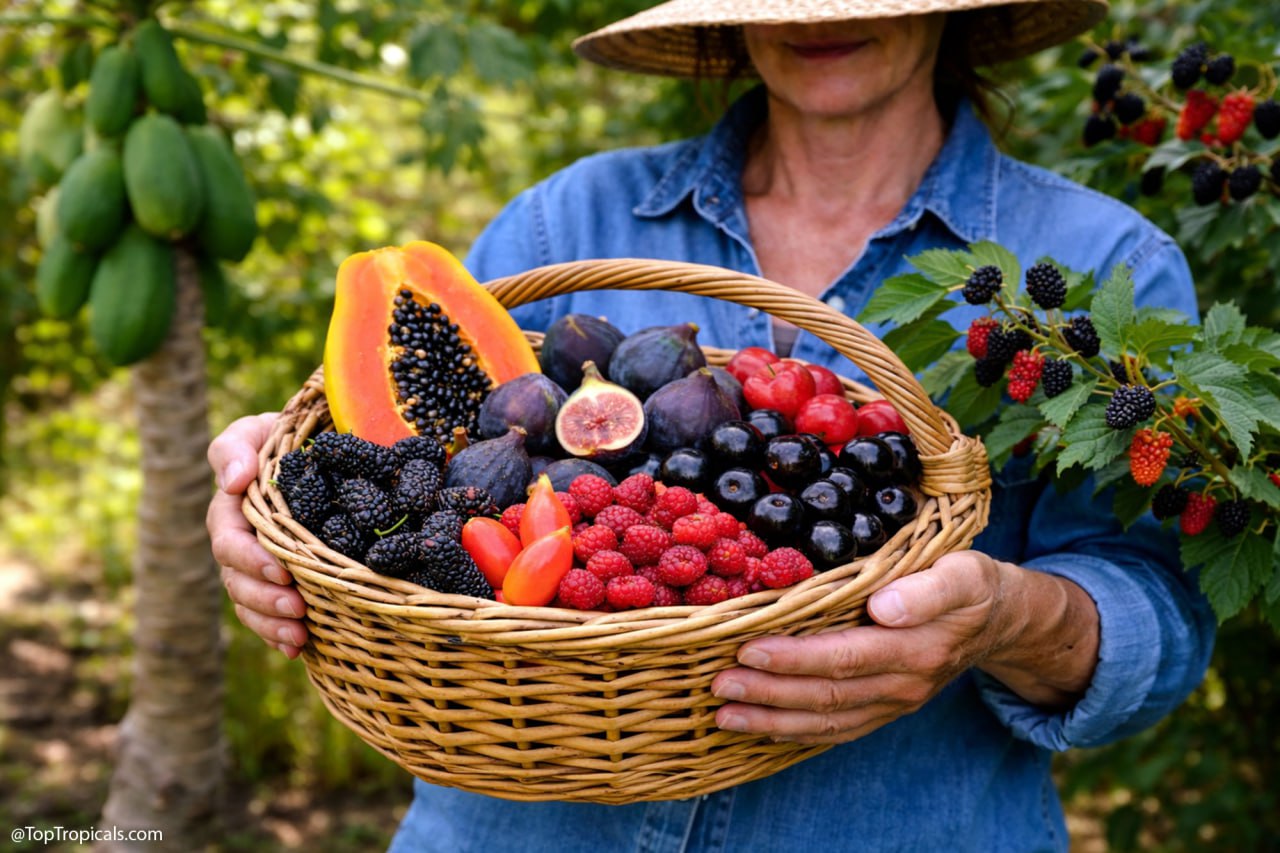
Don't wait years for fruit! Harvest papayas, berries, figs, and more in the very same season you plant them with these fast-growing varieties.
Don't Wait Years: 8 Fruit Plants You Can Harvest the Same Season 🍒
Growing fruit at home usually requires years of patience. Most gardeners view fruit trees as a long-term investment that may not pay off for a decade.
But you don't have to wait.
Certain tropical and subtropical plants are "fast-track" growers. In warm climates like Florida, choosing the right varieties means you can see flowers and fruit within months of planting - often in the very same season.
If you want a backyard harvest without the wait, here are the fastest-producing fruits you can plant today.
A compact shrub perfect for containers. It produces star-shaped flowers and dark purple fruit that tastes exactly like blackberry preserves. Established plants often fruit in their first season.
Blackberry Jam Fruit Plant Facts
Botanical name: Randia formosa, Mussaenda formosa, Randia mussaenda, Rosenbergiodendron formosum Also known as: Blackberry Jam Fruit, Jasmin de rosa
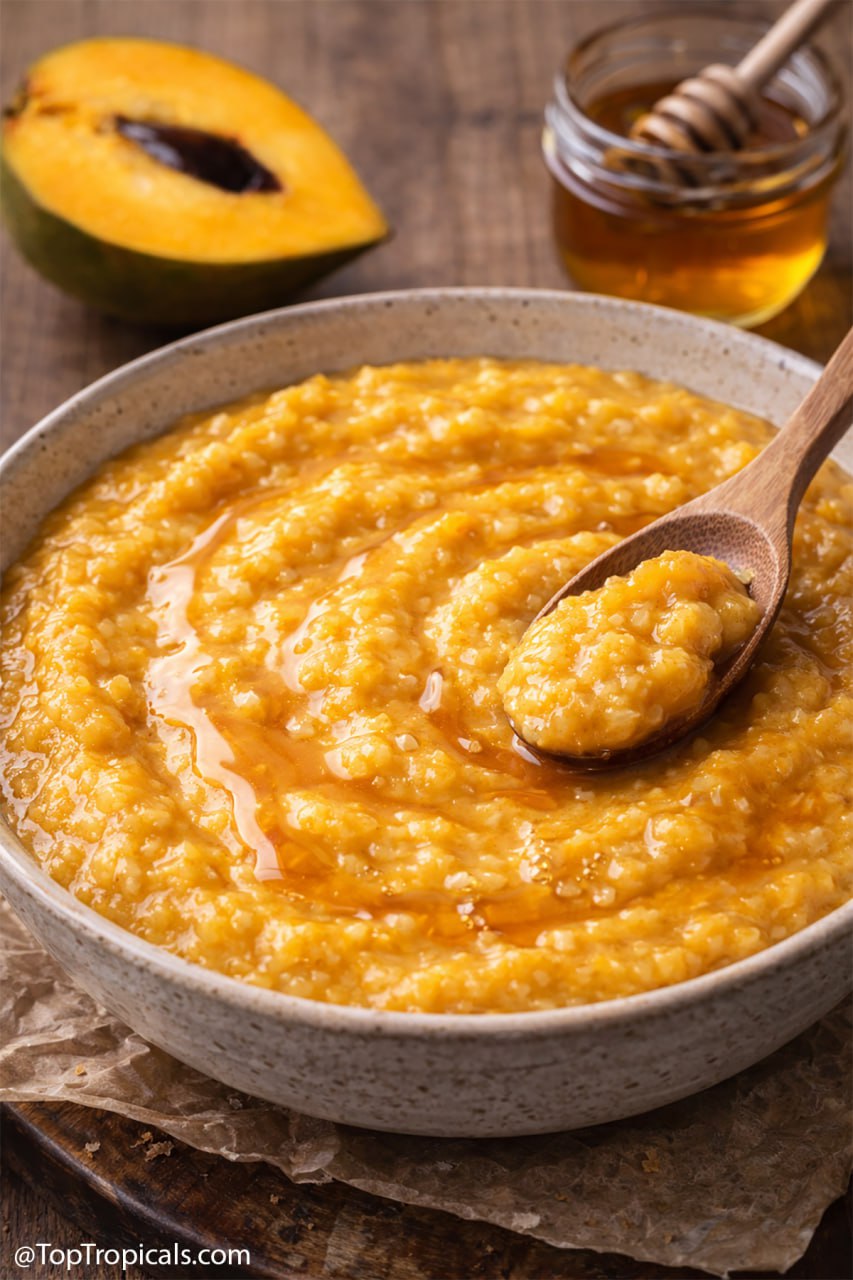
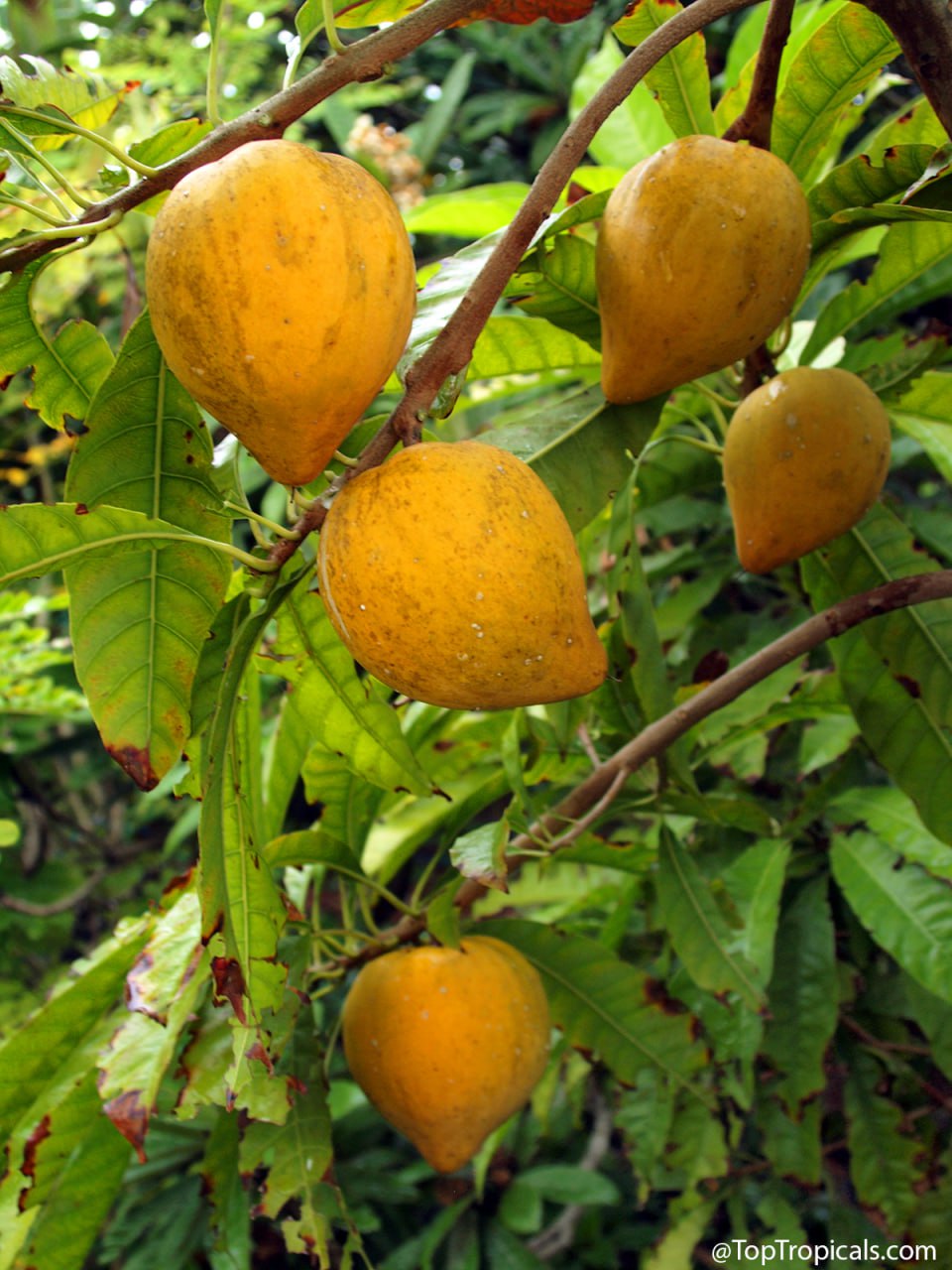
This fast-growing large shrub produces orange pulp with the uncanny flavor and texture of peanut butter. Expect flowers and bright red berries within months of planting in warm conditions.
The "giant herb" of the fruit world. Papayas are legendary for their speed, often flowering just months after planting and providing sweet, vitamin-rich fruit within the same year.
Papaya Plant Facts
Botanical name: Carica papaya Also known as: Papaya
The 'Lolita' cultivar is a game-changer. It grows quickly as an edible hedge and produces nearly black, resin-free fruit that is significantly sweeter than the common red varieties.
Surinam Cherry Plant Facts
Botanical name: Eugenia uniflora, Eugenia michelii Also known as: Surinam Cherry, Pitanga, Brazilian Cherry
Unlike traditional berries that require chill hours, these Rubus species thrive in the heat. Their vigorous canes grow rapidly, often fruiting the same season they hit the soil.
Holy Bramble Plant Facts
Botanical name: Rubus sanctus, Rubus ulmifolius subsp. sanctus Also known as: Holy Bramble, Burning Bush of the Bible
Mulberries are incredibly generous. Everbearing varieties produce sweet berries over an extended window and often begin fruiting the very first year they are planted.
Figs are the champions of container gardening. They are highly drought-tolerant and famous for setting honey-sweet fruit even at a very young age—often just months after being established.
Fig Tree Plant Facts
Botanical name: Ficus carica Also known as: Fig Tree, Brevo
Growing in containers?Fig trees are the drought-tolerant champions.
👉 Tips for Faster Results
• Start Large: Buy "nursery-established" plants rather than seeds. • Feed the Need: Use high-quality organic fertilizer to support rapid growth. • Sun is Fuel: Most of these varieties require at least 6-8 hours of direct sunlight to trigger flowering.
📷 Freshly picked tropical fruit bounty: don't wait years for fruit! Harvest papayas, berries, figs, and more in the very same season you plant them with these fast-growing varieties.
🌹 Today, March 8, a big part of the world celebrates International Women's Day.
In many European countries it is also a celebration of spring, love, and new beginnings. The day when flowers appear everywhere, small gifts are exchanged, and warm wishes are shared.
🌹 Smokey and Sunshine decided they should not miss such an important occasion. Smokey arrived properly prepared with a bright bouquet, while Sunshine handled the essentials - coffee and donuts. And of course, no celebration at our place would be complete without plants.
🌹 So here is a cheerful March 8 greeting from our greenhouse crew!
Happy March 8 to all - both related and non-related.
Wishing love, happiness, and many beautiful days ahead to all women and to everyone lucky enough to have them in their lives.
"The moment you realize your better half isn't exactly your twin."
Two apples from the same tree: Meet Niki and Cash.
😼 Niki is the grumpy one. Stubborn as a tank - if she decides to go somewhere, everyone else should simply move. It is usually easier to step aside than try to stop her. She snores so loudly you can hear it across the house. But Niki has absolutely no insecurities about it.
😻 Cash, on the other paw, is a delicate gentleman and a hopeless romantic. He spends the whole day softly singing little songs to himself in a sweet voice, like a shy poet wandering through life.
Same breed. Same house.
Very different philosophies about life.