Garden Blog - Top Tropicals

Date: 17 Dec 2024

How to care for your mango tree in winter

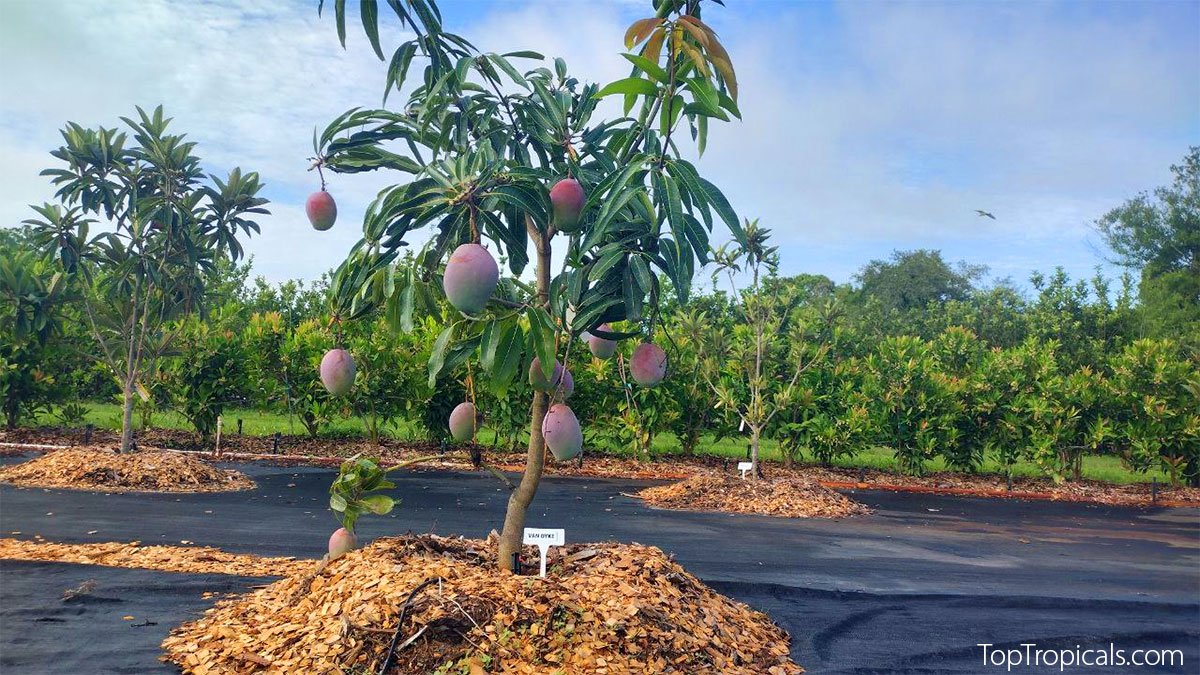
Colorful  Mango  fruit

Q: I bought a few mango trees from you this year, and they're doing great! So far, winter's been pretty mild here in Florida, but I know January and February can get chilly. Is there anything special I should do to keep my trees happy so I can enjoy fruit next year?

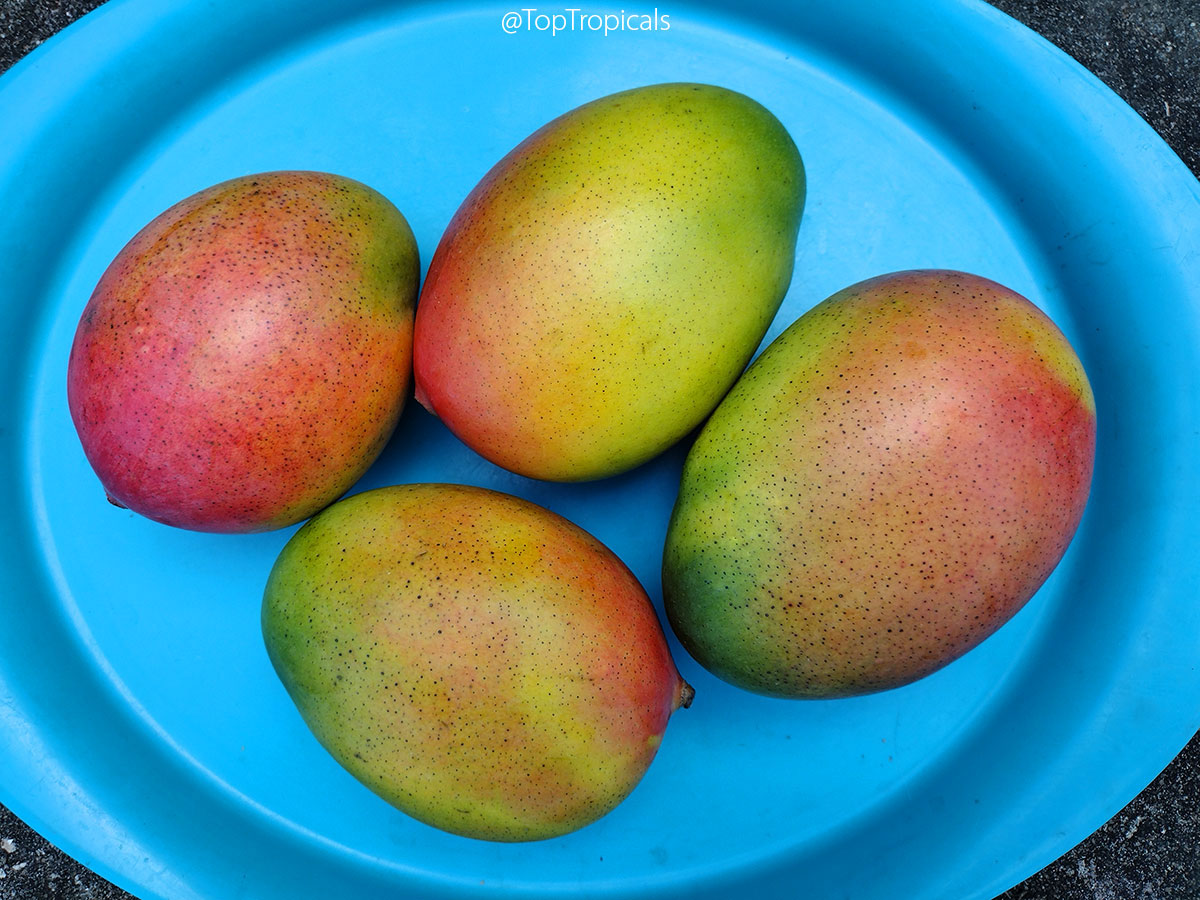
A: If you want to enjoy mangoes like ours (in the photo) next summer, protecting your tree in winter is a must! Give it the care it needs now, and you'll reap sweet rewards when the warm weather returns.

Keep it cozy and protected: Mango trees love warmth, so when winter comes, they need extra care to stay happy.

Temperature: Mango trees are sensitive to cold. If temperatures drop below 35F, cover the tree with frost cloth or burlap to protect it. For potted mango trees, move them indoors or to a greenhouse.

Watering: Reduce watering during winter. Mango trees don't like soggy roots in cold weather. Let the soil dry slightly between waterings.

Mulching: Add a thick layer of mulch around the base of the tree to insulate the roots and retain warmth. Keep the mulch a few inches away from the trunk.

No pruning: Avoid heavy pruning in winter, as it can stress the tree. Besides, pruning promotes young tender growth that may get cold damaged. Save major trimming for spring.

Feeding: Stop dry fertilizer in winter. The tree slows its growth, so too much dry fertilizer can do more harm than good. You can continue using Sunshine Boosters Mango Tango year-round because it is water-soluble and natural, and the amount of food needed will adjust with reduced watering.

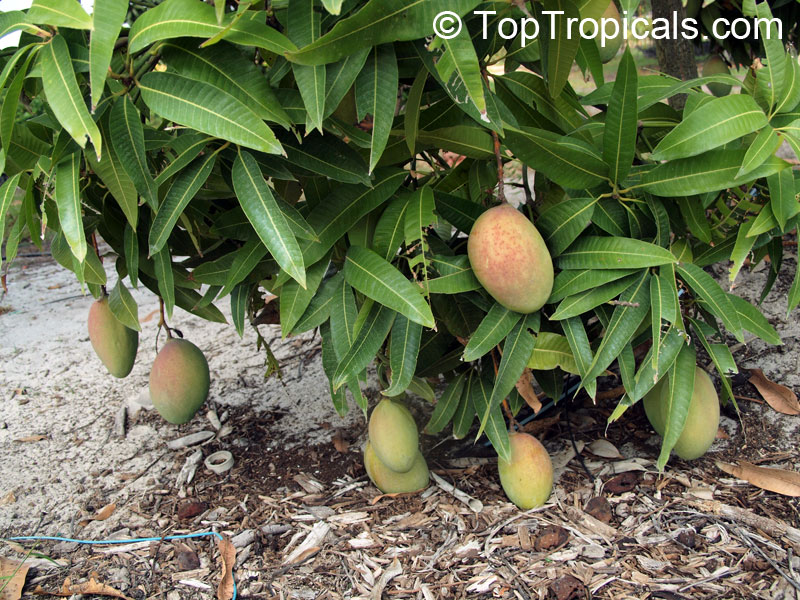
Mango  tree  with  colorful  fruit

Date: 14 Jul 2019

Dwarf and Condo mangoes - easy mangoes

Q: We leave in zone 6a, could you tell us what is the list of different types of mango plants that could be planted indoor and that they can bear fruits?

A:There is a large group of mangoes called "Condo Mango" - they literally can be grown in your apartment! Those are dwarf varieties that can remain compact in containers with minimal pruning and successfully bear fruit providing bright light and proper care, including plant food.

The best dwarf and semi-dwarf varieties are: Carrie, Cogshall, Cushman, Fairchild, Graham, Ice Cream, Julie, Mallika, Nam Doc Mai, Pickering, Irwin, Jahangir, Juliette, Lancetilla, Little Gem, Manilita, Sia Tong, Torbert, Pim Seng Mun, Super Julie.

They produce juicy, fiberless sweet fruit. Julie is also a very popular dwarf variety, however, it is very cold sensitive and not the easiest to grow. If you get a 3 gal size mango, step it up to 7 gal when the plant reaches 4 ft; you may use a bigger container as the root system grows, up to 15 gal or even 25 gal, space permitting. Trim the tree under 6-8 ft after production season is over (summer-fall).

See more information on growing condo mangoes

RECOMMENDED FERTILIZERS:

Mango-Food - Smart Release Fruit Tree Booster
Fruit Festival Plant Food - Super Crop Booster
For sweeter fruit, use SUNSHINE-Honey - sugar booster

Date: 12 Jan 2026

Cherry of the Rio Grande quick compote: quick-n-fun exotic recipes

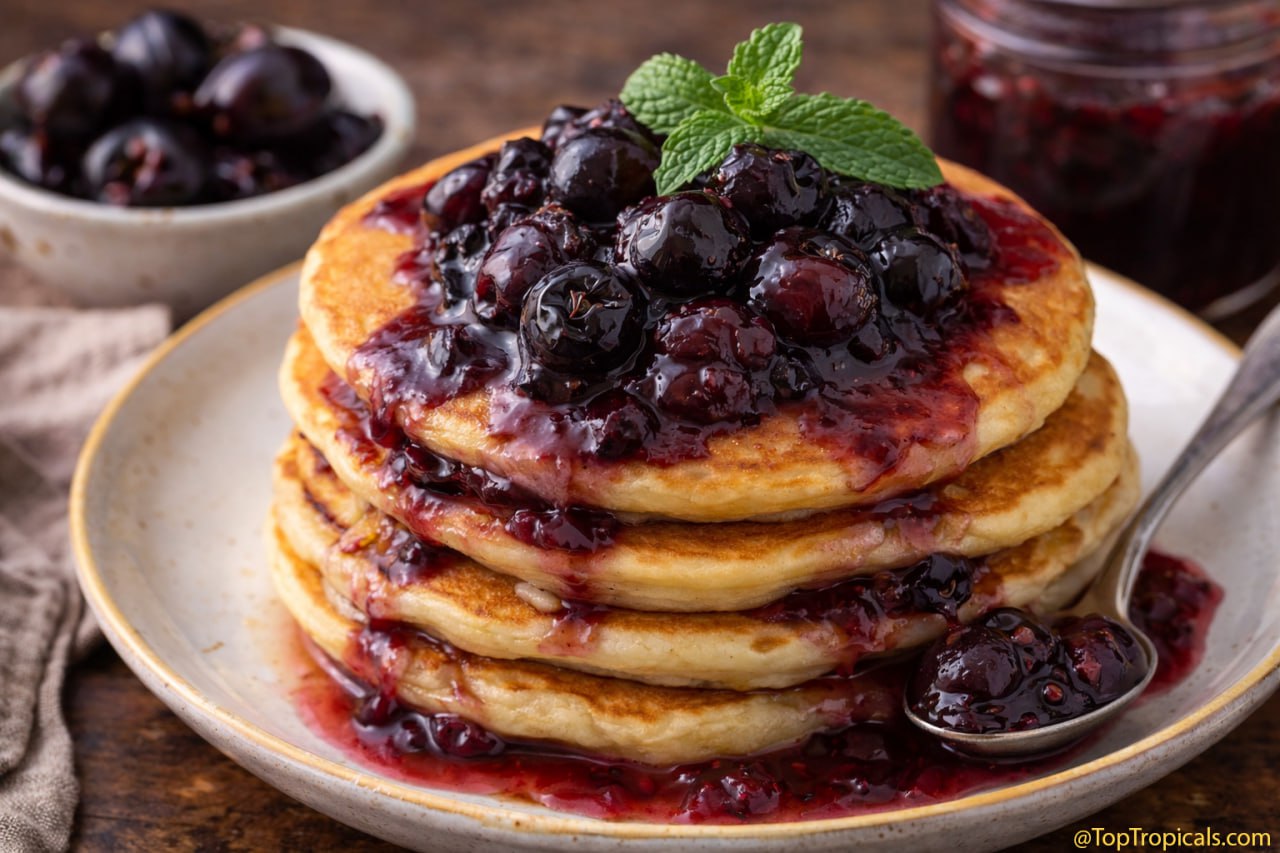
Cherry of the Rio Grande quick compote over pancakes

Cherry of the Rio Grande quick compote over pancakes

Eugenia aggregata - Cherry of the Rio Grande fruit

Eugenia aggregata - Cherry of the Rio Grande fruit

🍴 Cherry of the Rio Grande Quick Compote

This fast cherry compote is made from Cherry of the Rio Grande (Eugenia aggregata). It is tart, rich, and perfect over pancakes, waffles, toast, or warm bread.

Ingredients

  • 1 cup Cherry of the Rio Grande fruit, pitted
  • 2 to 4 tablespoons water

Instructions

  1. Place cherries and water in a small saucepan.
  2. Simmer over medium heat until the cherries soften and release juice.
  3. Mash lightly with a spoon for a chunky texture.
  4. Spoon warm compote over pancakes or bread and serve immediately.

🛒 Plant Cherry of the Rio Grande

📚 Learn more:


#Food_Forest #Recipes

🟢 Join 👉 TopTropicals

Date: 2 Mar 2026

😼😺 The Story Behind Smokey and Sunshine 🐾

Smokey  and  Sunshine  in  office  presentation  about  Cherry  of  the  Rio 


Grande  freeze  survival,  with  Sunshine  pointing  at  polar  bear  and  penguin 


marketing  poster,  coffee  and  donuts  on  table,  tropical  plants  on  shelves  in 


background.
Sunshine: You know, February 27 was International Polar Bear Day. I just learned about it and got a brilliant marketing idea. Cherry of the Rio Grande survived 25F. With wind. Real wind. That means we go north. Let them taste this magic. I even have a donut recipe with the fruit. It’s a bomb, Smokey. We expand. Trust me. Finally you can afford that new watering timer.

Smokey: Not so fast, genius. Twenty five degrees is not the North Pole. And polar bears and penguins do not share zip codes.

Sunshine: You always pour cold water on my brilliance. Fine. Where do we start?

Smokey: Well, first you go talk to Tatiana. She graduated from the Geography Department. She can explain climate zones. Cherry of the Rio Grande can grow in North Florida, Texas, and similar climates. Let’s master that before we conquer Arctic.

Sunshine: So… Phase One: Geography?

Smokey: Exactly.

Some stories are easier to tell with a little humor. Smokey and Sunshine were never just mascots. They represent the two forces behind every decision we make here: bold ideas and careful reality. One dreams big. The other checks the climate zone map. Together, they remind us that growing plants is part science, part optimism, and always personal. If you have ever wondered why they keep appearing in our newsletters, you can read their full story on the Smokey and Sunshine page. They have been with us longer than most people realize.

🐾 Learn the Story of Smoky and Sunshine

Freeze Testing of Grumichama and Cherry of Rio Grande 🍒❄️
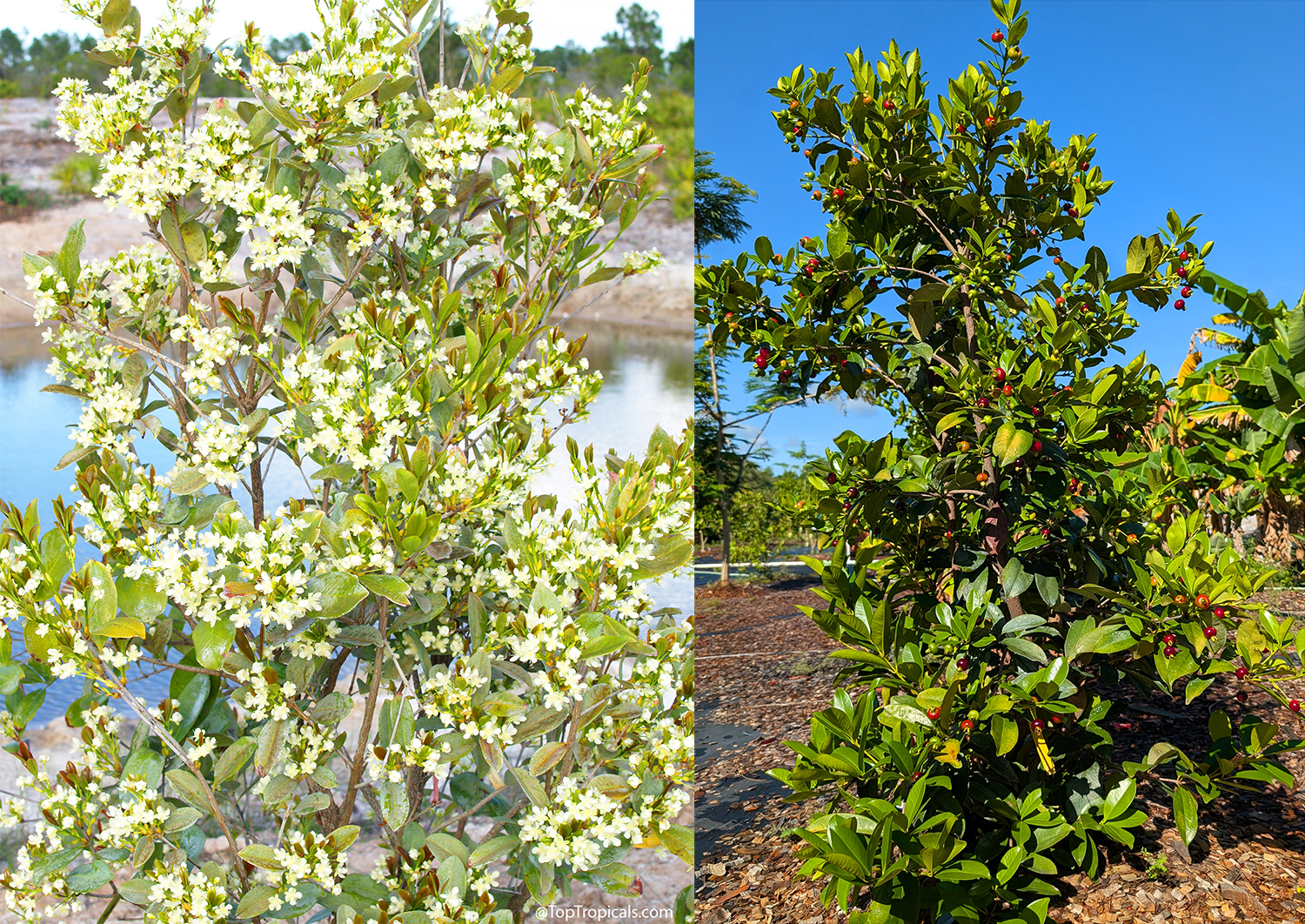
Grumichama  tree  (Eugenia  brasiliensis)  showing  white  flowers  and  ripe 


red  fruits  in  tropical  garden 


conditions

Eugenia brasiliensis - Grumichama tree flowering and fruiting

When temperatures dropped to 25F, with wind chill near 14F, winter made it clear which tropical trees were truly resilient. Some plants burned back. Tender growth collapsed. But our established Eugenia cherries stood steady. Leaves held. Branches stayed flexible. The canopy remained intact.

Cherry of the Rio Grande (Eugenia aggregata) and Grumichama (Eugenia brasiliensis) are among the most cold-hardy tropical cherries for Southern gardens. Both are native to Brazil and thrive in USDA Zones 9b–11, and even protected 9a sites.

Cherry of the Rio Grande produces dark ruby fruit that ripens almost black, with a rich, full cherry flavor. It flowers early in spring and can fruit well into summer. Mature trees can tolerate brief drops into the low 20s once established. Trees typically grow 8 to 15 feet tall, remain naturally compact, and often begin fruiting within 2 to 3 years.

Grumichama is an evergreen tree known for both beauty and productivity. In spring, it covers itself in white starburst flowers that attract pollinators. Within about four weeks, glossy purple-black fruit develops. Established trees tolerate temperatures into the upper 20s and grow well in the ground or in 5–10 gallon containers. Mature trees can produce hundreds of fruits per season.

Across the Eugenia group, strengths are consistent: early bearing, compact growth, heat tolerance, light freeze endurance, and low pest pressure. They are adaptable to different soils, need modest water once established, and perform in full sun or partial shade. Birds enjoy the fruit, but there is usually plenty to share.

Nutritionally, Eugenia cherries provide Vitamin C, fiber, antioxidants, and notable Vitamin A that supports eye health. They offer sweetness with real dietary value.

In the kitchen, they are simple and rewarding. Cherry of the Rio Grande makes an easy compote. Simmer the fruit with a small amount of water until soft, mash lightly, and spoon over pancakes or warm bread. Grumichama turns into a deep red jam with sugar and lime, or can be blended into a bright spoon drizzle over vanilla ice cream.

Even when not fruiting, both trees remain attractive year-round with glossy evergreen foliage and clean structure. They fit well into edible landscapes, small yards, and container gardens.

Winter will return. The difference lies in planting fruit trees that can handle heat, humidity, and the occasional cold snap. If you are building a food forest for lasting harvests, cold-hardy tropical cherries like Cherry of the Rio Grande and Grumichama deserve a place in your garden.
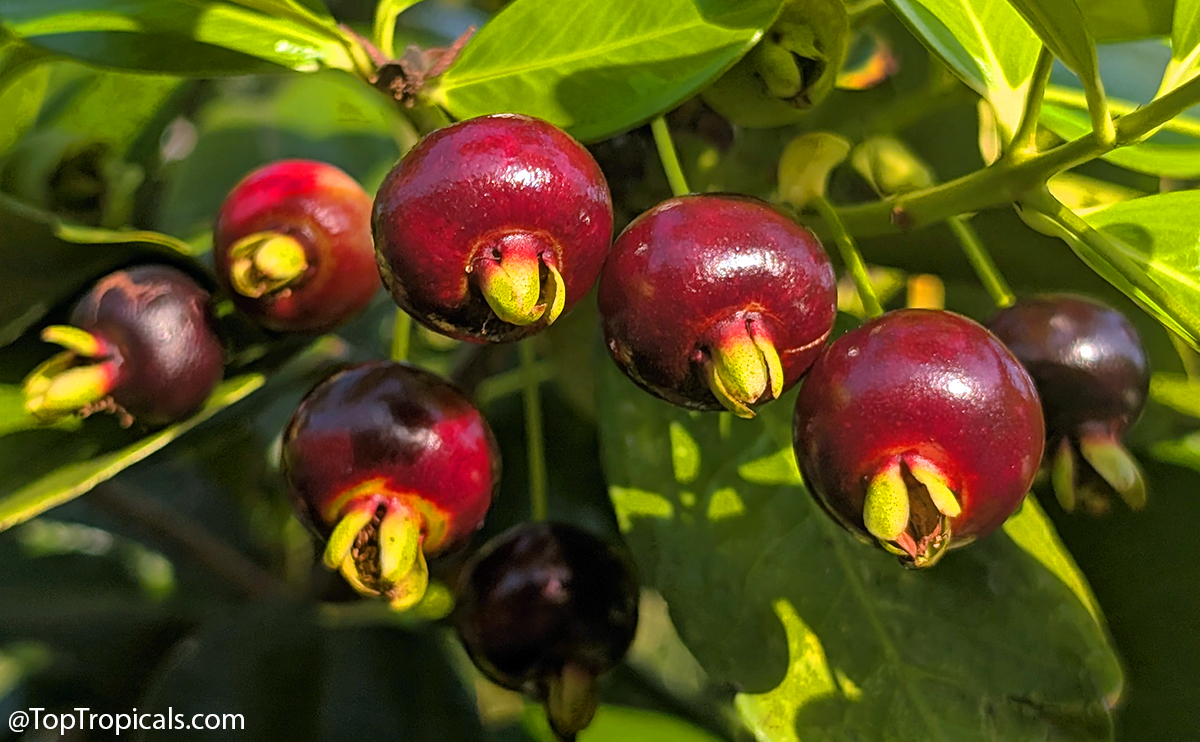
Ripe  Grumichama  fruits  (Eugenia  brasiliensis)  hanging  on  a  branch  with 


glossy 


leaves

Ripe Grumichama (Eugenia brasiliensis) fruits developing on the tree, turning deep red to nearly black when fully mature.
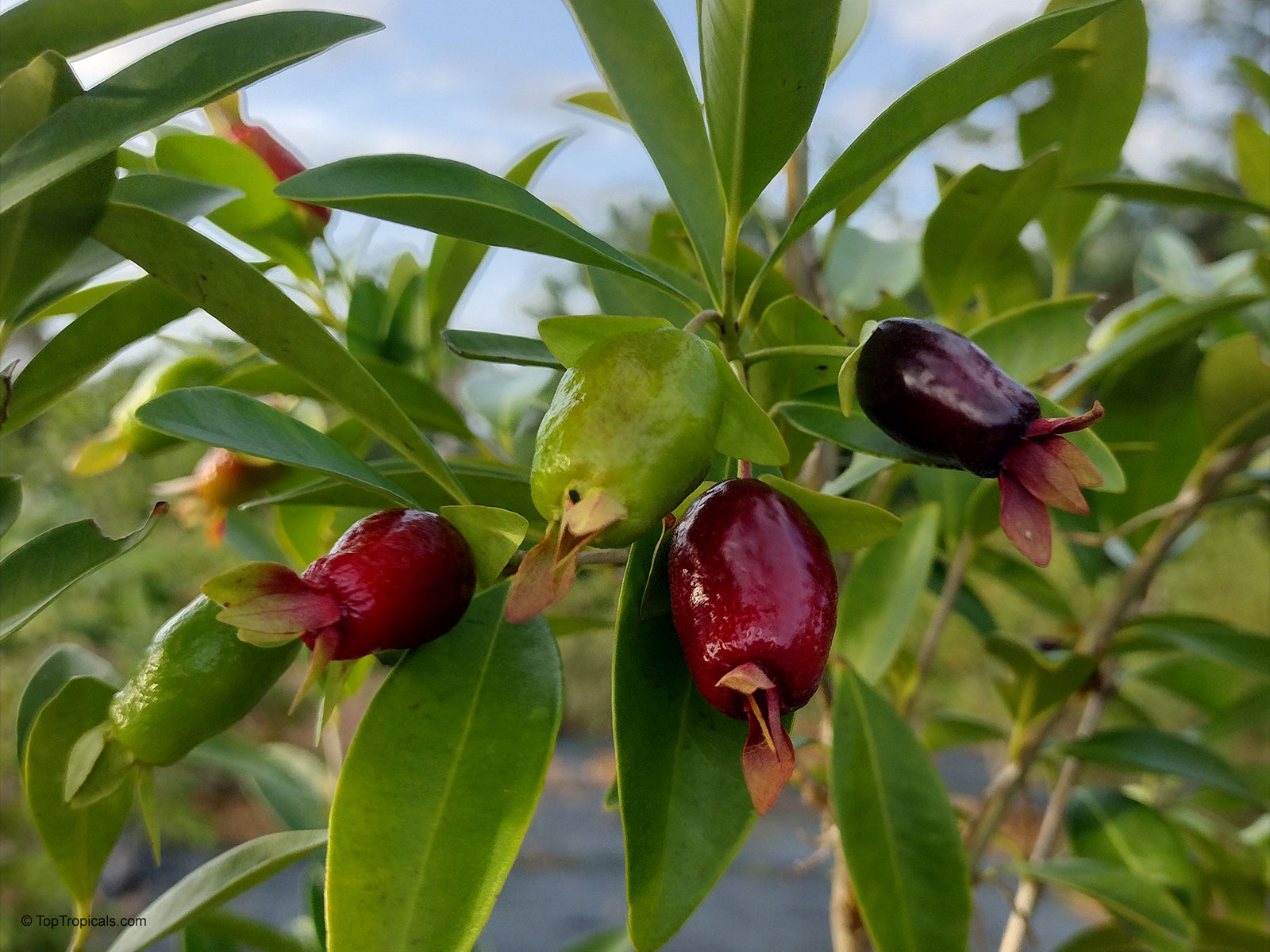
Cherry  of  the  Rio  Grande  (Eugenia  aggregata  cv.  Calycina)  fruits 


ripening  from  green  to  dark  purple  on  the 


branch

Eugenia aggregata (cv. Calycina), Cherry of the Rio Grande

🛒 Plant hardy Eugenia cherries
Date: 8 Aug 2024

Mango Rainbow tasting table-2: whats the taste of that Mango variety?

Mango Rainbow tasting table

🌈 Mango Rainbow tasting table-2: what's the taste of that Mango variety?

🥭 We've had another mango tasting table and asked participants to describe the taste in a few words. And this is what we got:
  • 🟠 Haden - mild, melting, classic heavenly mango flavor,dark yellow flesh, almost fiberless.
  • 🟠 Ugly Betty - opposite to the name, the taste is excellent , juicy, melting, sweet.
  • 🟠 Cotton Candy - true candy, fiberless, sweet, melting.
  • 🟠 Madame Fransis - dark orange pulp, slightly fibrous, robust, meaty like a steak, good with cognac. A little pulpy but unique flavor.
  • 🟠 Diamond - bright yellow, fiberless, sugary, juicy, no pulp at all, classic mango taste, good with ice cream, "wow" taste!
  • 🟠 Pickering - zesty, waterfall: all the flavors come at once, eat with White wine and/or a cake. Oval fruit somewhat flat, very large for a dwarf tree!
  • 🟠 Baptiste - hint of citrus, melts in your mouth, dark orange flesh, crisp, eat with Red wine and cheese.
  • 🟠 Florigon - creamy, buttery, spicy. Eat with Ice cream!
  • 🟠 Tommy Atkins - has a bit zing to it, perfect consistency, perfect taste. Super colorful, crimson red to purple skin!
  • 🟠 Nam Doc Mai - gold standard! Perfect every day.
  • 🟠 Carry - tastes even better than all others, smooth buttery, lite!


What Mango varieties have you tried this year?
Share in comments
👇

📝 Previous post: Mango Rainbow Tasting Table

🛒 Shop Mango varieties

#Food_Forest #Mango #Mango_Rainbow

🔴 Join 👉 TopTropicals