Garden Blog - Top Tropicals

Date: 11 Nov 2024

Why is it called Chinese Hat Flower? Winter bloomer is here!

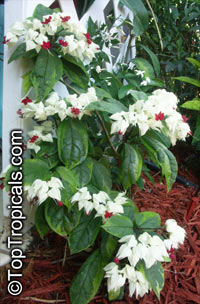
Holmskioldia sanguinea, or Chinese Hat Flower

💍 Why is it called Chinese Hat Flower? Winter bloomer is here!

  • 👒 The Holmskioldia sanguinea, or Chinese Hat Flower, gets its charming nickname from the shape of its blooms. Each flower resembles a tiny, colorful hat or parasol, with a narrow tubular structure backed by a broad, circular calyx, giving it a "hat-like" appearance!
  • 👒 This unique form has also inspired other playful names like Cup and Saucer, Parasol Flower, and Mandarin's Hat.
  • 👒 One of the most amazing features of the Chinese Hat Flower is that it's a vibrant winter bloomer. Just when many plants are dormant, it bursts into color, brightening up gardens with its eye-catching hues.
  • 👒 The classic variety produces red blooms, but there are also rare types, including Holmskioldia citrina, which has bright yellow flowers, and a bronze variety with orange-bronze blooms. These vibrant colors make it a fantastic choice for adding a splash of color to any garden during the cooler months.
  • 👒 This scrambling shrub is not only beautiful but also hardy and fast-growing, perfect for training along trellises, fences, or arbors, where its cascading blooms can shine.
  • 👒 Besides being visually striking, the Chinese Hat Flower is a magnet for pollinators, drawing in butterflies and hummingbirds.
  • 👒 For gardeners seeking a low-maintenance, colorful plant with a tropical vibe, the Chinese Hat Flower is an ideal choice!


📸 More photos of varieties in the next post ⬇️⬇️⬇️

🛒 Shop Chinese Hat Plants

#Butterfly_Plants #Hedges_with_benefits

🔴 Join 👉 TopTropicals

Date: 14 Nov 2024

What is an easy growing butterfly bush for a low maintenance landscape?

Cassia bahamensis (Senna mexicana) - Bahama Senna

Cassia bahamensis (Senna mexicana) - Bahama Senna

🏖 What is an easy growing butterfly bush for a low maintenance landscape?

  • ☀️ Cassia bahamensis (Senna mexicana) - Bahama Senna is a fantastic addition to low-maintenance landscapes, especially in Southern gardens.
  • ☀️ This hardy, compact shrub is beloved for its dense, lush green foliage and abundant clusters of vibrant golden-yellow flowers that bloom from fall to early spring.
  • ☀️ The blooms are not only visually striking but also serve as an essential nectar source for butterflies, particularly the Cloudless Sulphur butterfly, making it a pollinator magnet.
  • ☀️ What makes Bahama Senna a landscaper's favorite is its remarkable resilience. It's highly drought-tolerant, thrives in full sun, and requires little water once established - perfect for areas with water restrictions or hot climates.
  • ☀️ Its low-growing, compact habit (typically under 5 feet) makes it ideal for small gardens, borders, or containers, where it adds a splash of color without overwhelming other plants.
  • ☀️ Additionally, its evergreen foliage provides year-round interest, and it requires minimal pruning to maintain its shape, making it truly low-maintenance.
  • ☀️ For those looking for a beautiful, easy-care shrub that attracts pollinators and brightens the garden with golden hues, Bahama Senna is an outstanding choice.


🛒 Plant Bahama Senna

#Butterfly_Plants #Hedges_with_benefits

🔴 Join 👉 TopTropicals

Date: 23 Nov 2024

Monkey Orange or Monkey Ear?

Monkey Orange (Strychnos spinosa)

Monkey Orange (Strychnos spinosa)

Monkey Orange (Strychnos spinosa)

Monkey Orange (Strychnos spinosa)

🐵 Monkey Orange or Monkey Ear? 🙉
  • 🍊 Besides bizarre Monkey Ear Tree that we mentioned earlier, there is another interesting Monkey Tree -
  • 🍊 The Monkey Orange (Strychnos spinosa) is a captivating fruit tree from tropical Africa and Madagascar, known for its vibrant yellow fruits and wide range of uses.
  • 🍊This small to medium-sized tree, has glossy leaves and thorny branches that make it visually striking.
  • 🍊 What does the Monkey Orange taste like?


    The fruits, size of an orange, have a hard shell that protects their sweet-tart pulp with interesting pleasant taste somewhat similar to mangosteen. Some people say it tastes like a mix of citrus and pineapple with a hint of fermentation.
  • 🍊Rich in vitamin C and B vitamins, the fruit can be enjoyed fresh or transformed into jams, juices, and even wine.
  • 🍊Its durable wood is prized for carvings, and its leaves and roots are used in traditional medicine and as natural insecticides.
  • 🍊Slow-growing yet resilient, this hardy tree thrives in full sun and well-drained soil, offering beauty, nourishment, and practicality - an excellent choice for tropical or subtropical landscapes.


🐒 Why is it called Monkey Orange?


The "monkey orange" likely gets its name from its appeal to monkeys that eat the fruit and distribute the seeds in their habitat in Africa.

🛒 Plant Monkey Orange

#Food_Forest #Remedies

🔴 Join 👉 TopTropicals

Date: 22 Nov 2024

What tropical fruit is better than a watermelon?

Syzygium samarangense, Java Apple, Macopa

Syzygium samarangense, Java Apple, Macopa

Syzygium samarangense, Java Apple, Macopa

Syzygium samarangense, Java Apple, Macopa

Syzygium samarangense, Java Apple, Macopa

Syzygium samarangense, Java Apple, Macopa

🍉 What tropical fruit is better than a watermelon? Wax Jamboo!

  • 🍐 Syzygium samarangense, commonly known as Wax Jamboo, Java Apple, or Macopa, is an attractive tree native to tropical regions, with striking, glossy leaves and beautiful, fragrant flowers.
  • 🍐 It produces pear-shaped fruits with smooth, waxy skin in varying colors, including white, green, pink, and crimson.
  • 🍐 In tropical climates, it can yield abundant crops with up to 700 fruits per tree, harvested in two fruiting seasons annually!
  • 🍐 Wax Jamboo is known for its crisp, crunchy texture and refreshing, mildly sweet flavor, making it a popular choice for both eating fresh and using in various culinary dishes. They're widely used in Indian-Ocean-Island cuisine for fresh salads or lightly sautéed dishes.
  • 🍐 This tree is not just decorative; it's also quite low-maintenance. It thrives in fertile, well-drained soil with adequate rainfall and some humidity, and it is hardy down to just above freezing temperatures. It's also perfect for container gardening, requiring minimal care apart from regular watering and occasional feeding
  • 🍐 Wax Jamboo fruits are often compared to watermelons because of their juicy, thirst-quenching properties, making them a fantastic treat on hot days.


🛒 Shop Wax Jamboo

#Food_Forest

🔴 Join 👉 TopTropicals

Date: 27 Nov 2024

Why is Jujube Tree called the Tree of Happiness?

Jujube Tree (Ziziphus jujuba)

Jujube Tree (Ziziphus jujuba)

Jujube Tree (Ziziphus jujuba) fruit

Jujube Tree (Ziziphus jujuba) fruit

Jujube Tree (Ziziphus jujuba)

Jujube Tree (Ziziphus jujuba)

Jujube Tree (Ziziphus jujuba)

Jujube Tree (Ziziphus jujuba)

🙂 Why is Jujube Tree called the Tree of Happiness?

  • 😇 The Jujube Tree (Ziziphus jujuba) is often called the "Tree of Happiness" and is one of the #Nature_wonders.
  • 😇 Nutritious Fruit: The Jujube tree (Ziziphus jujuba) produces small, sweet, and slightly tangy fruits that are enjoyed by both children and adults.
  • 😇 Hardy and Easy: This small, spreading tree with drooping branches grows quickly and thrives in poor, dry, and even moderately saline soils. It requires minimal care to flourish.
  • 😇 Medicinal Uses: Every part of the Jujube tree, from its leaves to its bark and fruit, has medicinal properties. The fruit is known for its stress-relieving and immunity-boosting benefits.
  • 😇 Thousands of Years in cultivation: Widely cultivated in China and India, jujubes have been grown for over 4,000 years. China has more jujube trees than any other type of fruit tree.
  • 😇 Symbolism:


    - The name Ziziphus comes from the Persian zizfum or Arabic zizouf.
    - The tree is associated with Ziziphus spina-christi, the Christ's Thorn Jujube, which provided the thorns for the biblical crown of thorns.
    - In Indian legends, the Jujube tree is said to be blessed with a boon: no matter how badly it is cut, it will never die, and a single root will cause it to regrow.
    - Revered in India, the Jujube is known as the "Tree which removes sorrow" and is often offered to the god Siva.
  • 😇 Greek Mythology: Some horticulturists draw a comparison between the Jujube tree and the Greek myth of Sisyphus. Like Sisyphus' boulder that endlessly rolls back down, the Jujube tree regrows tirelessly, symbolizing resilience, perseverance, and renewal.


📚 Learn more:


The tree of Happiness that removes sorrow

🛒 Plant Jujubу - Tree of Happiness

#Food_Forest #Remedies

🔴 Join 👉 TopTropicals