Date: 18 Apr 2016
Seeds germination in summer
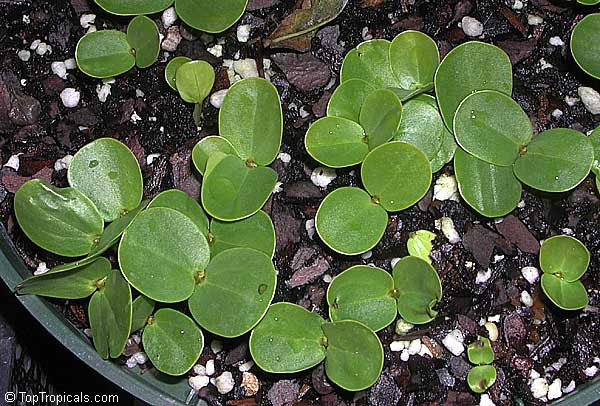
Q: What is the best way to germinate seeds in summer? Should I keep trays indoors or put them outside?
A: Summer is the best growing season for plants, and for their propagation. Seed germination process of tropical plants usually benefits from warm, and even hot temperatures, so keeping pots with seeds outside in full or partial sun can be the best way. However some seeds may be more sensitive than others, or require slightly cooler or higher temperature for germination. These are a few tips that may help:
- For seed germination, use only well drained mixes, containing either peat moss or coconut fiber to retain moisture. Some succulents may require adding sand to the germination mix. You may also try our Professional Formula Seed Germination Mix.
- Large tropical seeds, like palms, or seeds of Fabaceae (Bean) family, can be grown in full sun. Their germination will benefit from higher temperatures (up to 90-95F). Make sure to keep soil moist. Cover them well, with 3/4 to 1 inch of soil.
- Fruit seeds (large size) should be germinated either in individual cells or small pots (3-4"diameter).
- Small to medium size seeds can be grown in so-called community pots. Seedlings can be separated after they establish their first roots.
- Tiny seeds should be planted closer to the surface, covered with only 1/4-1/8 inch of soil; some seeds require bright light for germination, so full sun will be a plus. Some small seeds like Ficus for example, prefer to be broadcasted on the surface, uncovered. Put containers with such seeds in bright shade, as you don't want the surface of the soil to dry out.
- Once your seeds sprouted, move them in filtered light - bright to medium shade depending on tenderness of the species. (Gingers prefer shade, while succulent sprouts can stay in brighter light). Regardless of water/sun needs of the species, all young sprouts and first leaves are sensitive to hot sun and may get burned or even killed. Once a baby plant has a few leaves and well-branched root system, you may start moving trays into a brighter light.
- Do not overwater young seedlings, keep soil slightly moist but not soggy.
Date: 26 Mar 2026
🌈 Adeniums: More Than Just Plants

Smokey: Caudex. Water and nutrient storage for future use.
Sunshine: I need a caudex too. For coffee and my donuts
Smokey: You already have one. Have you looked in the mirror lately?.
Read more about Smokey & Sunshine
🌱 Shape, Color, and Why Each Adenium Feels Unique
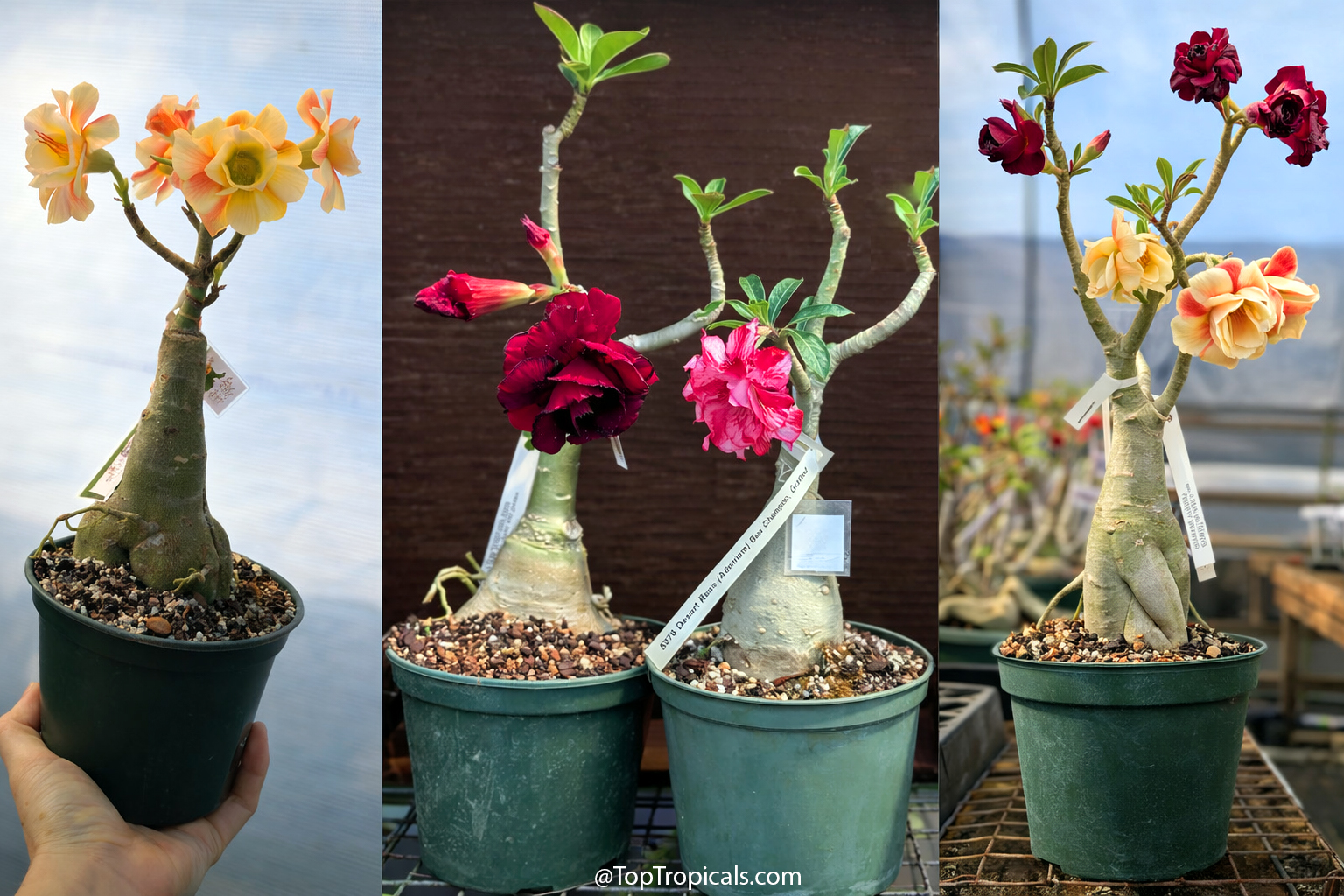
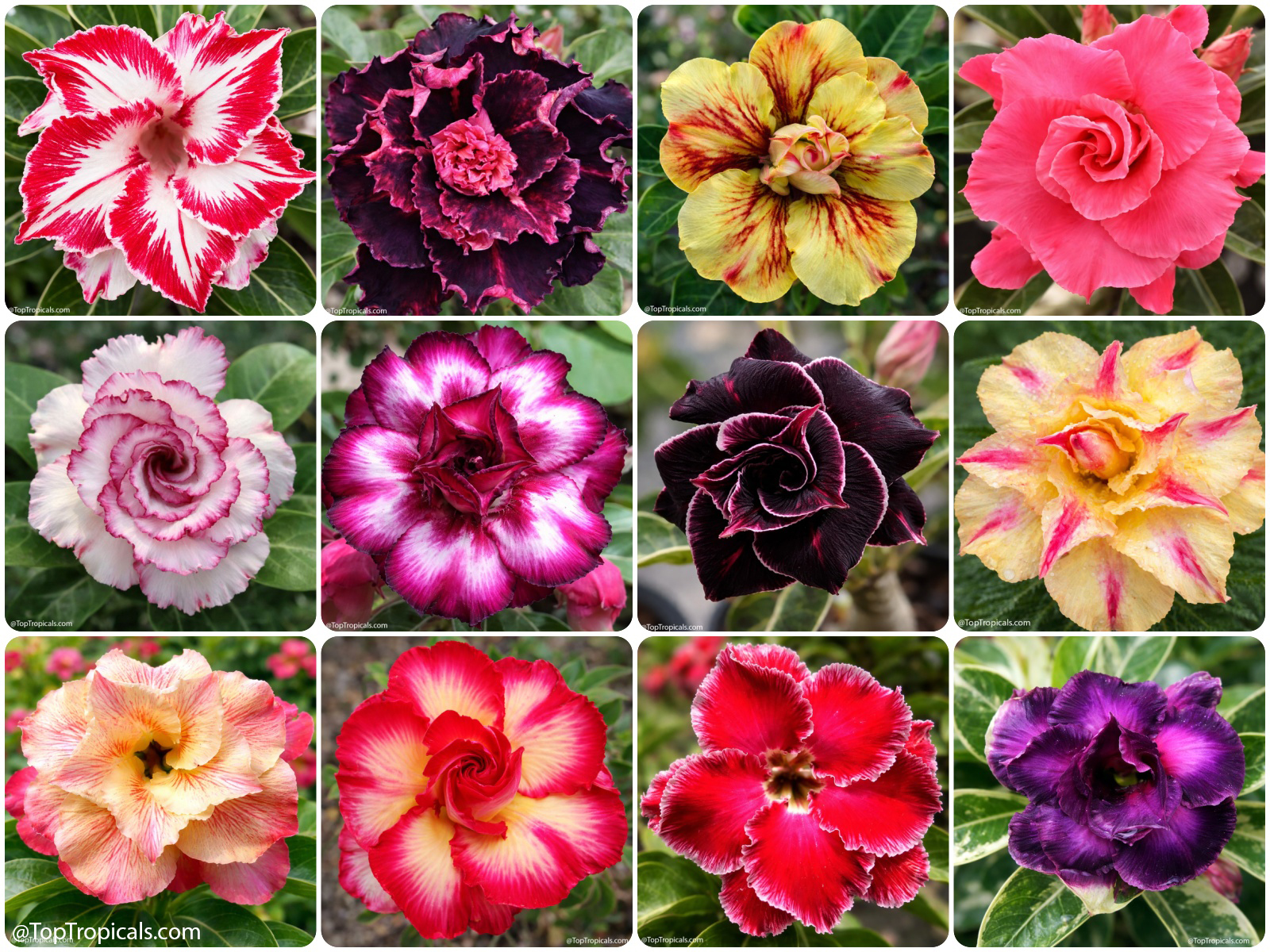
Adeniums can stop you in a strange way. It is not only the flowers, although they help. It is the whole plant. The swollen base, the curves, the way no two look quite the same. Some are thick and heavy, some more refined, almost like they were shaped on purpose. After a bit, you stop seeing them as regular plants and start treating them more like objects you want to keep and look at.
That is usually how a collection starts. One plant, then another that feels different, and then you want contrast. Light next to dark, soft next to bold, one with a wide base next to a taller form. It is not really about having many. It is about how they look together. And over time, each one changes a little, so the collection never stays the same.
Date: 10 Apr 2025
Pre-hurricane season tips: how to protect your trees from winds
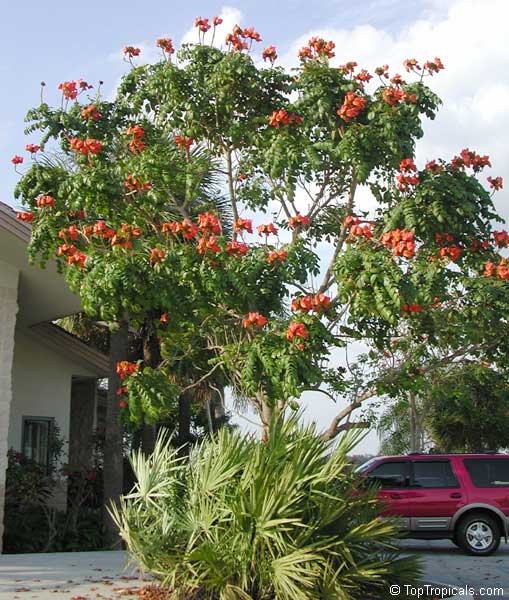
Spathodea campanulata - African Tulip Tree
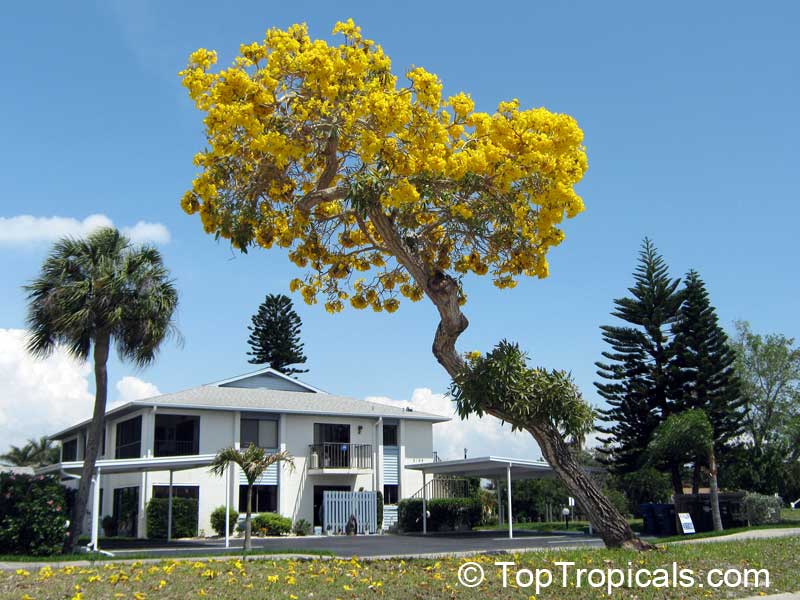
Tabebuia caraiba - Yellow trumpet tree crooked with wind
🌪 Pre-hurricane season tips: how to protect your trees from winds
Some trees like mango have deep roots and handle wind well. Others - like our favorites Spathodea campanulata - African Tulip Tree or Tabebuia caraiba - Yellow trumpet tree (in the photos) - need extra care. You've likely seen crooked Tabebuias in South Florida or lost a bushy Tulip Tree to strong winds. Their wide crowns act like sails in a storm.
💨 To help your trees withstand wind damage:
- ✅ Stake young trees with strong support - use a tripod-style setup (three bamboo sticks or boards secured around the tree for balance from all sides)
- ✅ Check and adjust supports every 6 months
- ✅ Trim long or rubbing branches - they break first
- ✅ Add extra support if a storm is coming (larger trees benefit from sturdy tripod-style bracing with boards)
- ✅ Lighten bushy growth, less sail = more survival
💡 Some remove all leaves from plumeria before a hurricane - it works!
💡 We pruned our Tulip Tree and Ceiba - and they withstood Hurricane Milton while others fell
- ✅ If a tree falls, stand it up ASAP and support it. Trim broken branches - they’ll remind you what needed pruning before, not after!
- ✅ Trees protected young, grow strong for life.
🛒 Grab your beautiful Tulip Tree and Tabebuia Tree today - support them early for strength and beauty later!
📚 Learn more:
Everyone loves these tulips growing on a tree
#How_to #Trees #Discover
🔴 Join 👉 TopTropicals
Date: 24 Jul 2023
Easy,
stress-free plants
for Summer planting
Q: With the rising temperatures, I'm concerned about shipping my plants safely. Can they withstand the heat during transit? Also, is it okay to plant them in the ground now, or should I wait for cooler Fall weather?
A: Your concern about shipping plants in hot weather is valid. For sensitive plants, we'll delay shipping until conditions are more favorable in your area. However, there are plenty of heat-tolerant tropical plants that handle shipping well with minimal stress. These plants adapt easily when planted during the hot summer months. Simply follow the included planting instructions, gradually acclimate them to full sun, and they should thrive.
Certain flowering tropical plants, such as Allamandas, Calliandras, Caesalpinias, Adeniums, and Clerodendrums, are excellent options for shipping and establishing during the summer. Flowering vines like Jasmines also adapt well. Consider using Sunshine Booster fertilizers to promote robust growth, they are safe to use right after planting.
Additionally, many fruit trees flourish in heat. Mangoes, Avocados, Pomegranates, Pineapples, Loquats, Eugenias - Tropical cherries, Bananas, Jackfruits, Dragon Fruit, and Olive trees are great choices for summer planting. Noni trees are hardy survivors and usually ship and grow well during the summer, in spite of their lush tropical leaves.
Feel free to check with us about the specific plant you plan to order for its suitability in summer shipping. We're here to take care of your green babies and address your year-round planting needs!
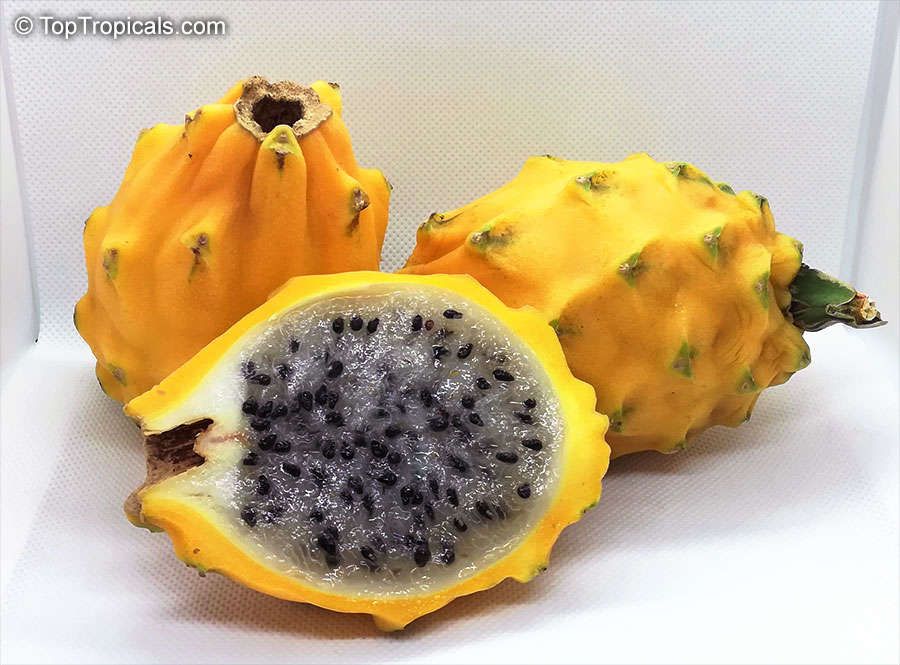
Pitaya, Yellow Dragon Fruit, Selenicereus megalanthus
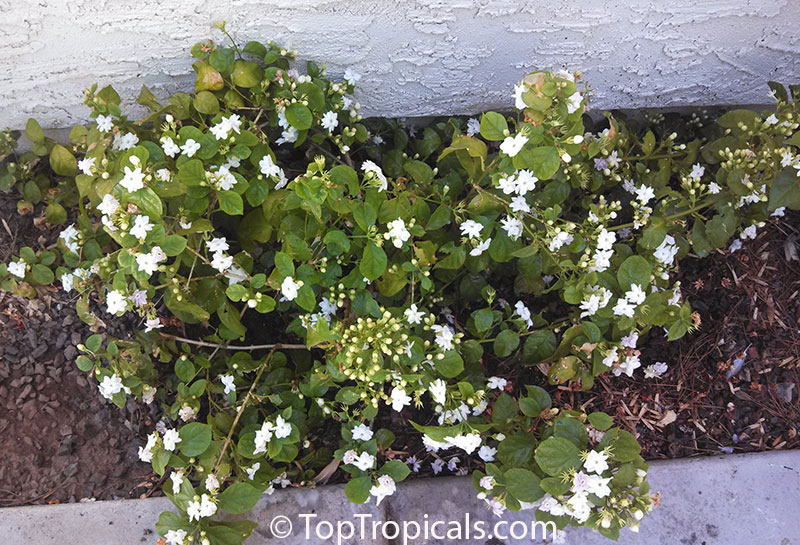
Jasminum sambac Maid of Orleans thrives and blooms in hot sun
Date: 23 Apr 2019
Fruit tree size and production
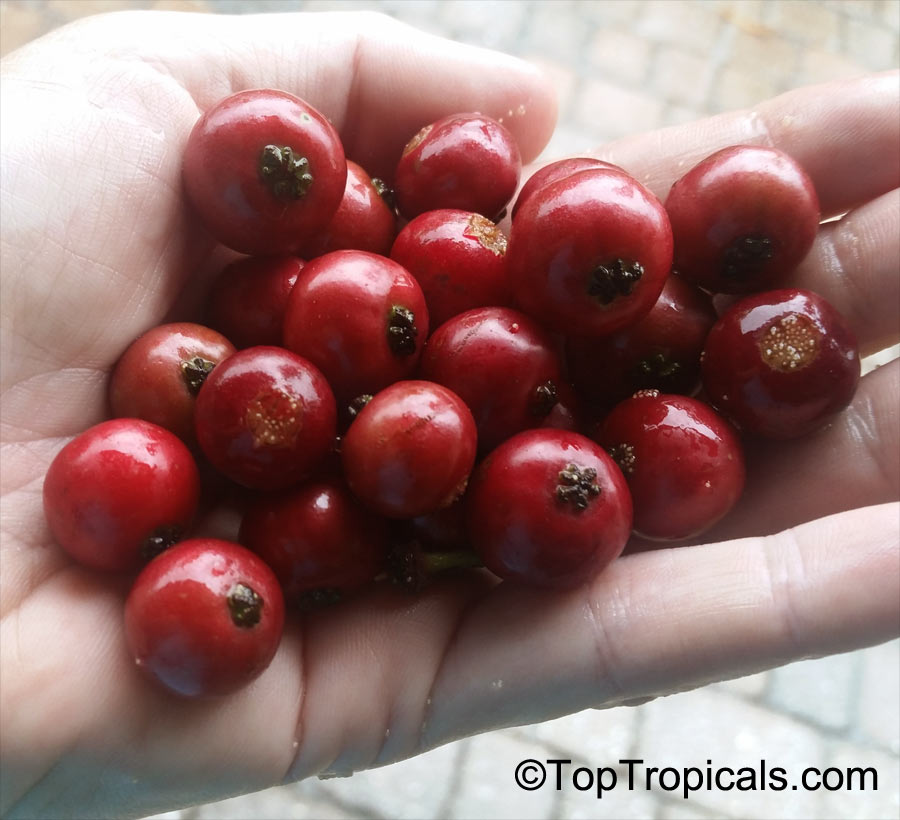
Q: I am interested in a Strawberry Tree... does this tree produce fruit while still small or do I have to wait until it is large before it produces? Should I fertilize it so it produces sooner? I ask because my garden is not large and I prefer to keep my fruit growing trees in a smaller size. Also, how big is the fruit and does it have a seed?
A: Strawberry Tree, Muntingia Calabura, is one of those fascinating fruit trees that starts
flowering and fruiting in small size. We have plants growing in 1 gal
containers that already have flowers. This tree is nearly year-round producer
providing warm conditions. It is a fast grower, although a compact tree when
mature, and can be trimmed to desirable size without affecting production.
Muntingia fruit is one of our favorites. It is super sweet and juicy,
and the seeds are tiny small, not bigger than the strawberry seeds, so you
don't have to spit them out. The fruit size normally about 1/2 inch, but we have
a tree in our garden that produces almost cherry-size fruit! See picture
above. The secret is, good watering and using fruit booster - SUNSHINE honey micro-element supplement. We also fertilize our fruit
trees using Fruit Festival and Mango-Food fertilizers.
