Garden Blog - Top Tropicals

Date: 12 May 2026

The strange tropical plant that eats bugs - and gardeners cant stop collecting
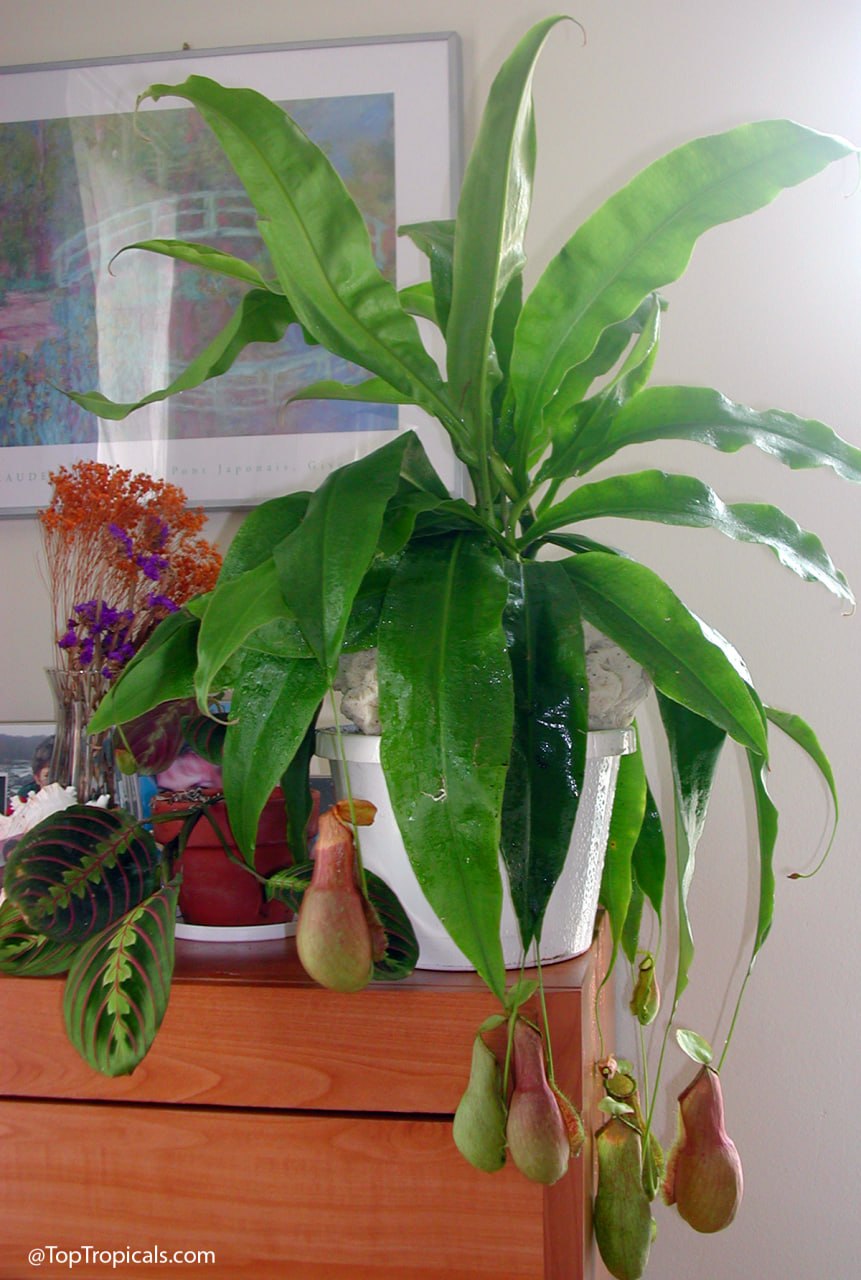
Nepenthes - Pitcher Plant
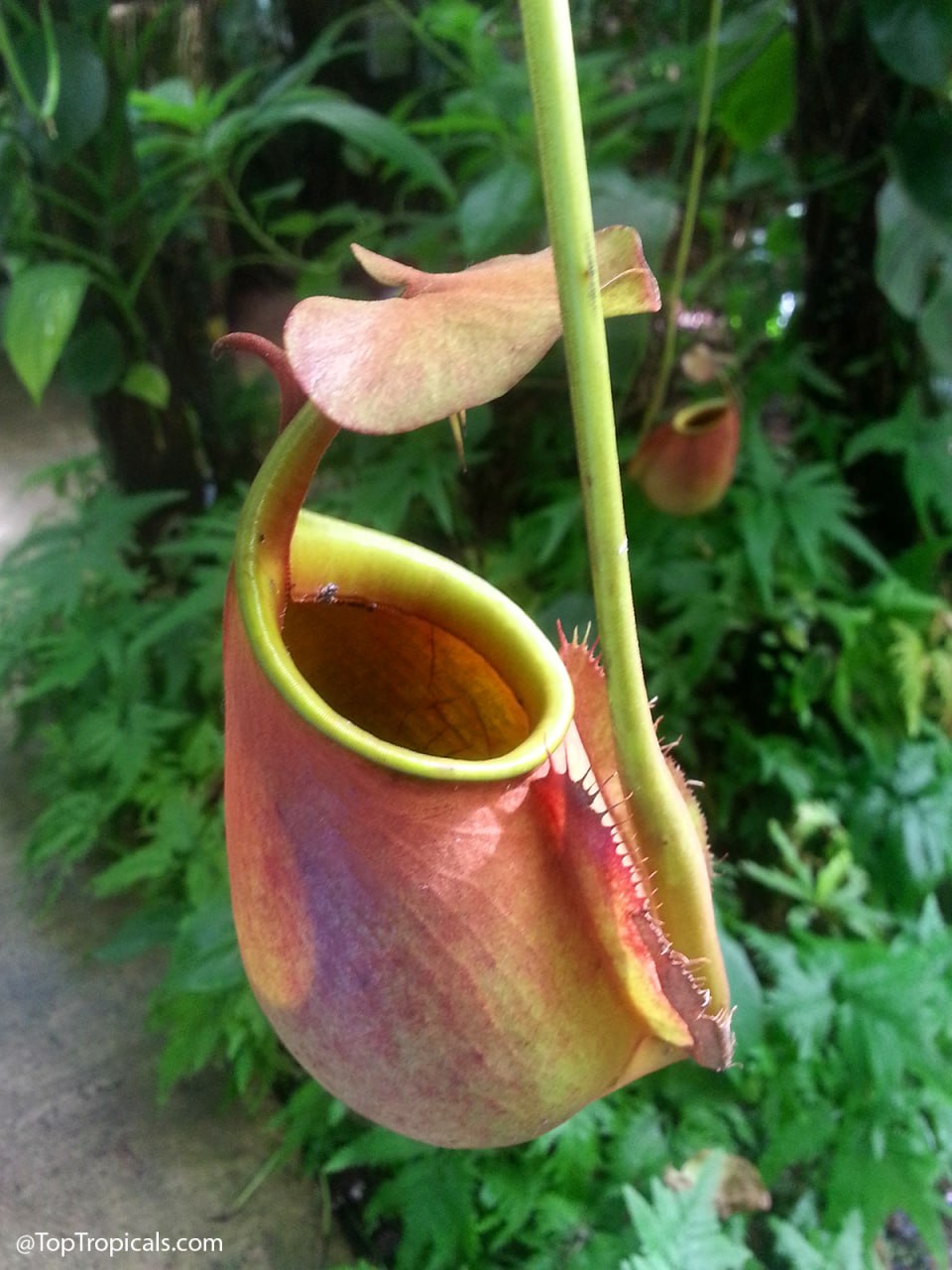
Nepenthes - Pitcher Plant

Nepenthes - Pitcher Plant close up
Nepenthes - Pitcher Plant close up

Nepenthes - Pitcher Plants collage

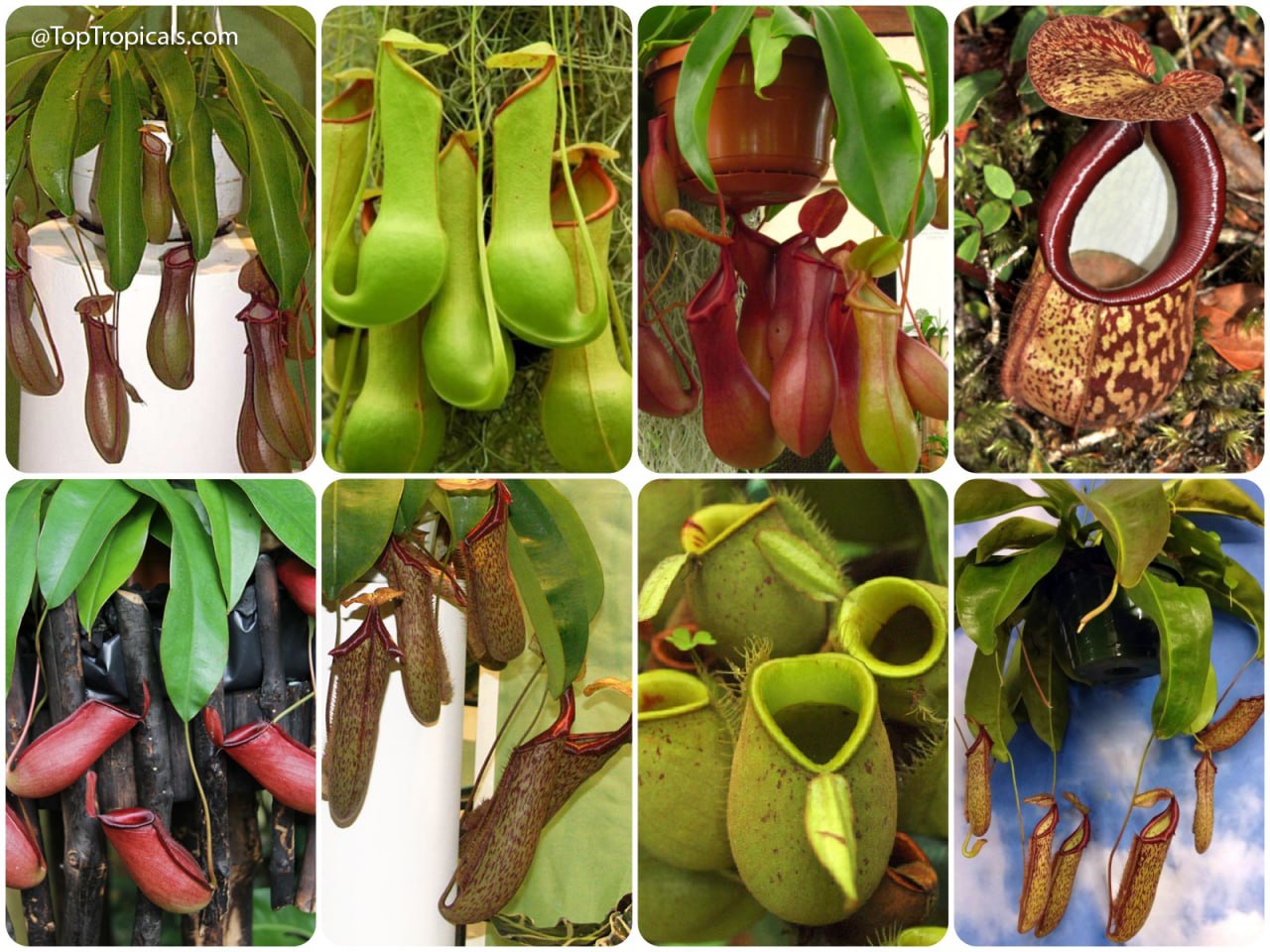
Nepenthes - Pitcher Plants collage

🐸 The strange tropical plant that eats bugs - and gardeners can't stop collecting


Nepenthes - tropical Pitcher Plants - look almost fake. Long vines and shiny leaves give way to colorful pitchers resembling exotic lanterns or sci-fi creatures. But these aren't flowers; they are sophisticated traps. Among the world's most fascinating carnivores, they lure insects into fluid-filled vessels to digest them for nutrients. Giant species can even trap small frogs or mice! 🐸🐭

🐱 Why pitcher plants look so unreal


Pitchers are modified leaves designed to attract prey with vibrant colors and nectar. Many feature dramatic stripes or flared, sculpted rims. The diversity is immense: compact species fit on windowsills, while jungle giants produce foot-long traps. Some thrive in steamy lowlands, others in misty mountains. Their digestive fluid can even become sticky and elastic, making escape impossible.

🐱 The plant that inspired engineering


These plants have inspired more than just gardeners. Their slippery surfaces led to "liquid-infused" materials used in anti-fogging and water-repelling tech. Engineers study them as nature’s original biological pitfall trap, a masterclass in biomimetic design.

🐱 Why collectors become obsessed with Pitcher plants


What starts as a curiosity often becomes an obsession. With hundreds of species and hybrids, pitchers can resemble cobra heads, wine goblets, or alien pods. Under bright light, they develop stunning hues of burgundy, orange, or candy-stripes. Because of their popularity, ethical hobbyists emphasize buying nursery-propagated plants to protect wild populations from poaching.

🐱 Surprisingly easier than people think


Despite their reputation, many hybrids thrive indoors with basic care. They need bright indirect light, high humidity, and excellent drainage. Crucially, they require mineral-free water (distilled or rainwater) and airy media like sphagnum moss. Regular potting soil or tap water can be fatal to these sensitive plants.

🐱 The pitchers are temporary - and that's normal


It is normal for old pitchers to dry up as the plant grows. Healthy Nepenthes constantly replace traps, often changing shape and color as they mature. This shape-shifting behavior makes them addictive to watch - one month it’s an ordinary vine, the next it’s a living rainforest documentary.

🛒 Ready to go carnivorous? Feed your curiosity - get one for your collection

📚 Learn more:

Winged Nepenthes Plant Facts

Botanical name: Nepenthes alata, Nepenthes graciliflora
Also known as: Winged Nepenthes, Pitcher Plant
USDA Zone: 9 - 10
Highligths Vine or creeper plantSmall plant 2-5 ftSemi-shadeWatering: Regular. Let topsoil dry slightlyEpiphyte plantUnusual color
Get personalized tips for your region

Nepenthes Pitcher plants in Plant Encyclopedia
Nepenthes: Deadly traps of Monkey Cups

#Container_Garden #Nature_Wonders

🟢 Join 👉 TopTropicals

Date: 22 Sep 2025

🐲 The taste you will never forget

Dragon  fruit  collage  -  yellow,  red,  purple,  white  varieties

If you only know dragon fruit from the grocery store, you probably think it looks pretty but tastes bland. That is because most commercial fruit is picked early, shipped far, and loses its sweetness. The truth? Homegrown dragon fruit is juicy, sweet, and full of flavor. The best of all is the yellow variety, Palora (Selenicereus megalanthus), a cactus fruit from Ecuador that bursts with tropical taste.

🌵 Pitaya or Dragon fruit – what is the difference?

Both names describe the same climbing cactus. In Latin America it is called Pitaya, while Asia and English speakers say Dragon fruit. There are three main kinds:

Some hybrids give purple or magenta flesh. All are beautiful, all are easy to grow at home.

⚡️ Do red, white, and yellow taste different?

Yes. White types are mild and refreshing. Reds are sweeter and juicier. Yellows are the sweetest of all.

⚡️ Flowers from a fairy tale

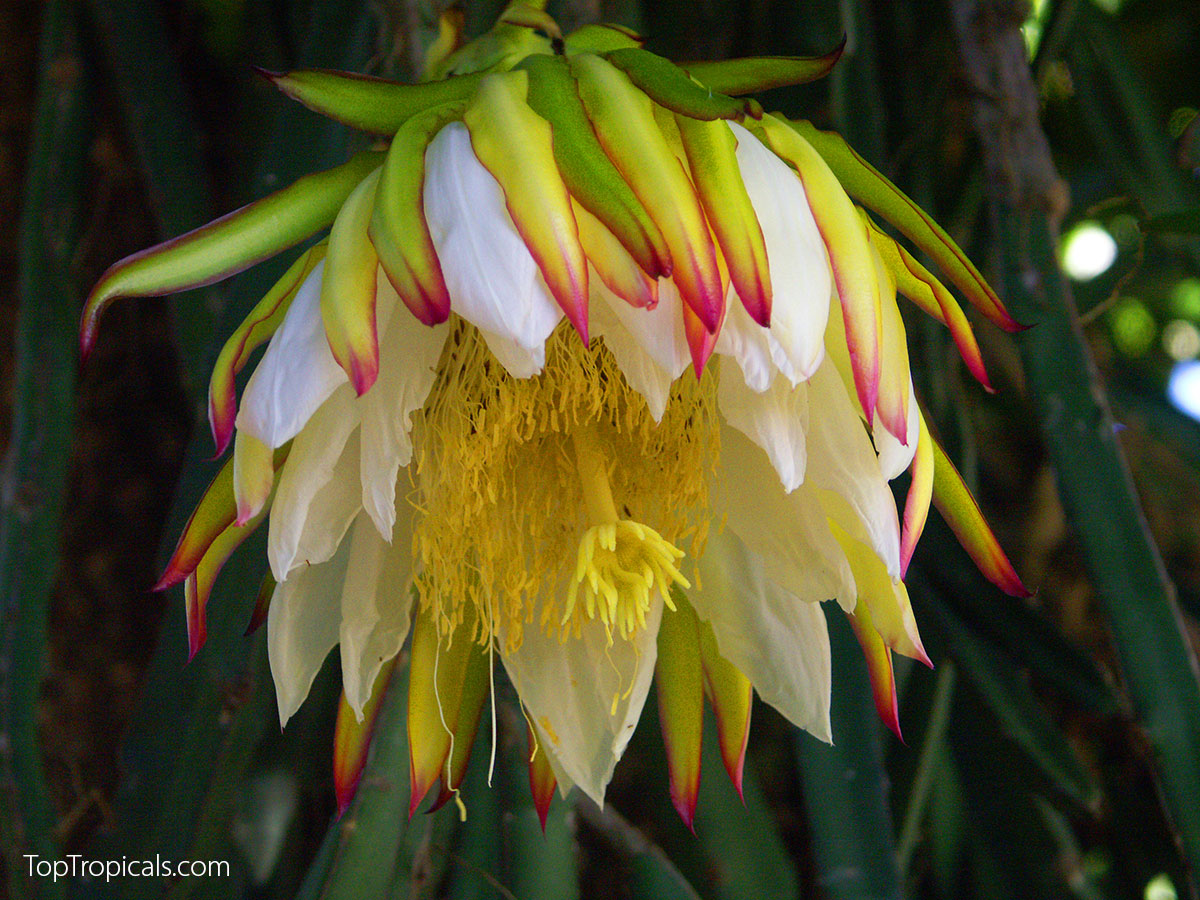
Close-up  of  a  blooming  dragon  fruit  pitaya  flower  with  white  petals  and
   yellow 
 center

Dragon fruit flowers are among the most spectacular in the plant world. They open at night, glowing under moonlight, with pale petals and a sweet fragrance. Each flower can be a foot wide. Seeing one bloom feels like stepping into another world.

⚡️ Top Dragon Fruit Health Benefits

  • High in fiber for digestion and gut health
  • Low in calories but full of vitamins
  • Great for weight management
  • Adds color and freshness to smoothies and salads

🍹 Dragon Fruit Smoothie recipe

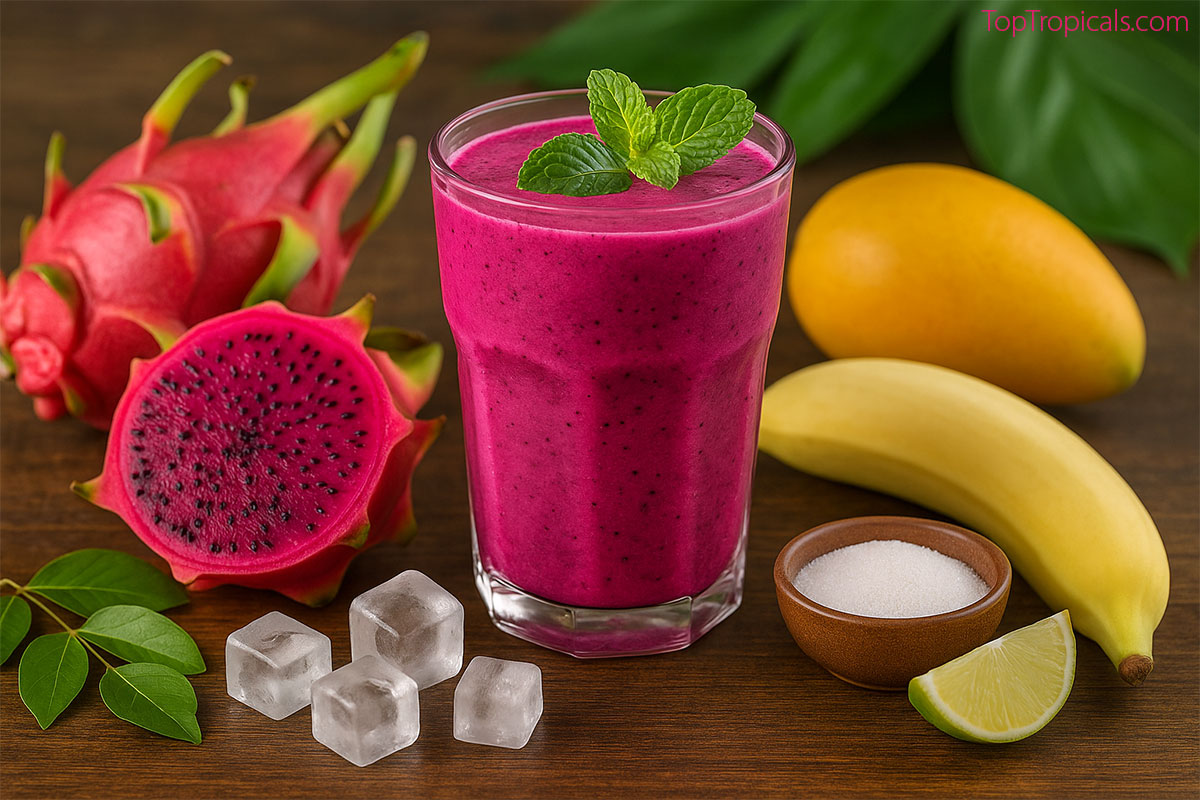
Glass  of  dragon  fruit  pitaya  smoothie  with  fresh  dragon  fruit,  banana, 
 mango,  lime,  sugar,  and  ice 
 cubes

Blend together:

  • 2 dragon fruits, peeled
  • 1/2 cup mango pulp
  • 1 banana
  • 1 cup milk of your choice
  • 2 tbsp sugar
  • 1/2 tsp lime juice
  • Ice cubes to taste

Top with mint for a refreshing tropical treat.

Watch Dragon Fruit short videos:

Date: 12 Jun 2026

The Tree That Turns Streets Purple Every Spring: Why Gardeners Fall in Love with Jacaranda

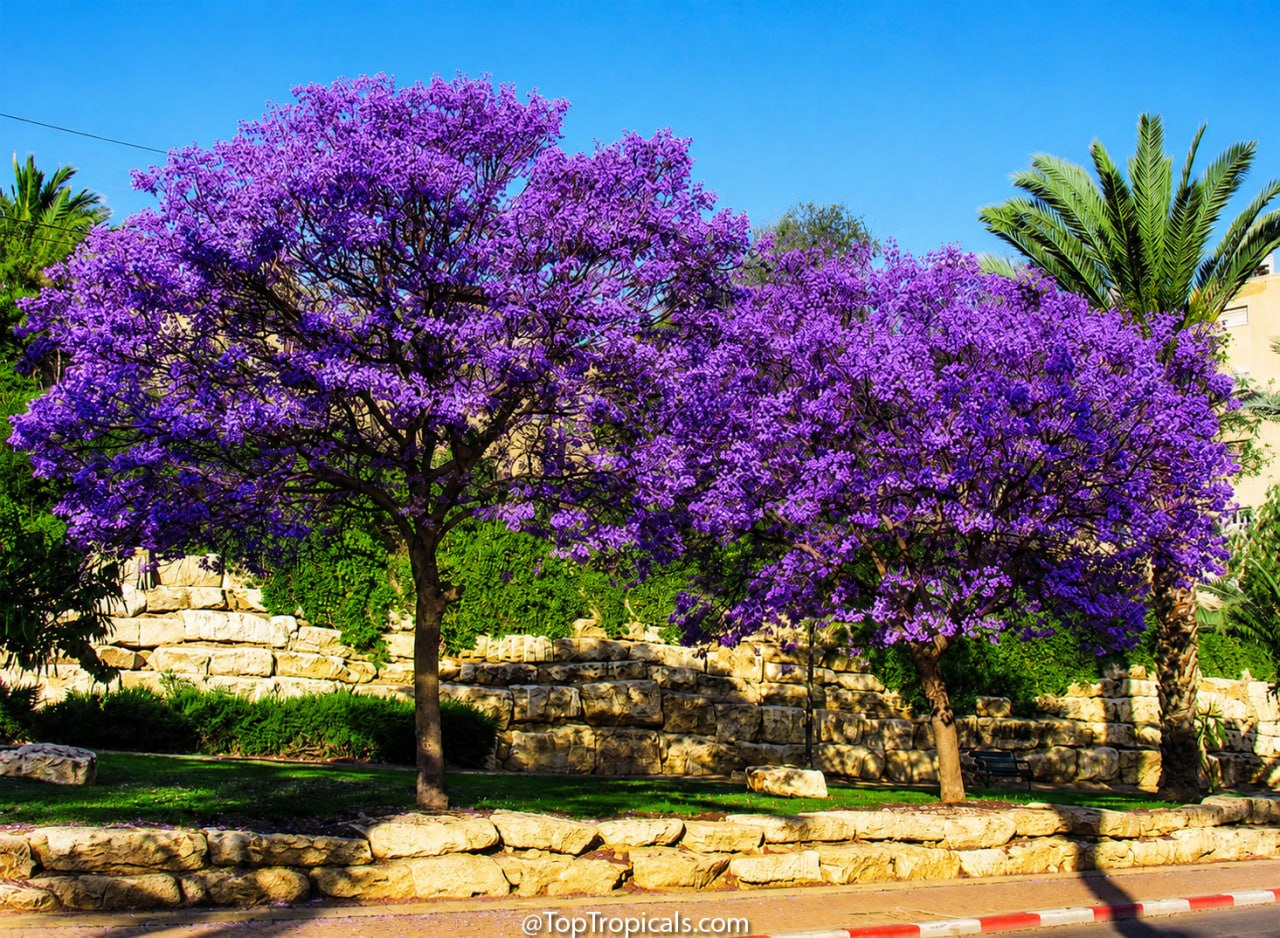
Jacaranda tree

Jacaranda tree

💜 The Tree That Turns Streets Purple Every Spring: Why Gardeners Fall in Love with Jacaranda

For a few magical weeks each year, a mature Jacaranda looks almost unreal. Its canopy disappears beneath thousands of lavender-blue flowers, while the ground below becomes covered in a purple carpet of fallen blooms. Native to South America, Jacaranda mimosifolia has become one of the world's most beloved flowering trees. In bloom, it transforms ordinary streets, parks, and gardens into scenes people stop to photograph.

💜 When Entire Cities Turn Purple


Few trees create such a dramatic display.

In places where Jacarandas are planted by the thousands, flowering season becomes an event. Streets, sidewalks, and lawns are blanketed with violet-blue petals, creating the impression that spring has been painted across the landscape.

The spectacle is so striking that entire cities have become famous for it. Pretoria, South Africa, is known worldwide as "The Jacaranda City" because of its thousands of flowering trees. In Australia, parts of Sydney and Brisbane attract visitors specifically during Jacaranda season, while neighborhoods in Los Angeles become social-media hotspots when the trees burst into bloom.

For a few short weeks each year, ordinary streets are transformed into unforgettable purple landscapes.

I think that's worth the extra space. It's specific, visual, and memorable, while still staying compact. In fact, this may become one of the most quoted sections of the article because readers love discovering that a tree can become famous enough to define an entire city.

💜 Beautiful Even Without Flowers


Unlike many flowering trees that are forgettable after blooming, Jacaranda remains attractive year-round.
Its finely divided, fern-like foliage gives the tree a soft, tropical appearance and casts light, filtered shade. Even without flowers, its graceful branching structure makes it a standout specimen tree.

💜 How Large Does It Get?


A mature Jacaranda typically reaches 25-30 feet tall with a broad, spreading canopy of similar width.
Because of its eventual size, it works best as a lawn tree, shade tree, or focal point where its canopy has room to develop.

💜 Growing Jacaranda Successfully


For the best flowering display, provide:

· Full sun
· Well-drained soil
· Warm subtropical or tropical conditions
· Protection from severe freezes while young

Once established, Jacaranda is fairly drought tolerant, although occasional watering during extended dry periods helps maintain vigorous growth.

💜 Cold Hardiness


Jacaranda is best suited to USDA Zones 9-11.
Established trees can tolerate brief light freezes, but young trees are more sensitive to cold. Hard freezes may cause dieback, though mature trees often recover when warm weather returns.

💜 Why Gardeners Love It


Some trees provide shade. Others provide flowers.
Jacaranda provides both.
Its fern-like foliage, elegant form, and unforgettable clouds of lavender-blue blooms make it one of the most spectacular ornamental trees for warm-climate gardens. Few trees can transform an ordinary landscape into something people stop to photograph.

🛒 Plant your own Purple Jacaranda tree

📚 Learn more:

Jacaranda Plant Facts

Botanical name: Jacaranda mimosifolia, Jacaranda acutifolia
Also known as: Jacaranda
USDA Zone: 9 - 11
Highligths Large tree taller than 20 ftSmall tree 10-20 ftFull sunWatering: Regular. Let topsoil dry slightlyBlue, lavender, purple flowersWhite, off-white flowersPlant attracts butterflies, hummingbirdsSubtropical plant. Mature plant cold hardy at least to 30s F for a short time
Get personalized tips for your region

· Jacaranda tree in Plant Encyclopedia
· Why the Purple Tango of Jacaranda is so hypnotizing
· Three top tropical trees - from the legends of Caribbean
· Awe-inspiring Jacaranda and its legends

#Trees #Discover

🟢 Join 👉 TopTropicals

Date: 19 Jun 2026

Pitaya Yellow

🍉 Pitaya Yellow Palora: dragon fruit beyond pink and white - A Collector's Guide


Most dragon fruits are pink or red; Palora - Selenicereus megalanthus - breaks all the rules. With bright yellow skin, white flesh, and an intensely sweet tropical flavor, Palora has earned a reputation as one of the most desirable dragon fruit varieties in the world. Many collectors consider it the finest-tasting dragon fruit available, and once you've tried one, it's easy to understand why.

🔸 The dragon fruit that tastes like candy


Palora is an Ecuadorian selection of Selenicereus megalanthus, a species native to parts of Ecuador, Colombia, Peru, and Bolivia. Unlike the more common red dragon fruits, Palora produces smaller golden-yellow fruit covered with soft spines that naturally fall off as the fruit ripens.

Inside is translucent white flesh packed with tiny edible seeds.

What truly sets Palora apart is the flavor. The fruit is remarkably sweet, often testing much higher in sugar than red dragon fruit varieties. Growers commonly describe the flavor as a blend of honey, pineapple, pear, and tropical fruit, with a richness that many dragon fruits simply don't have.

🔸 Why collectors hunt for it


Ask experienced dragon fruit growers to name the best-tasting variety, and Palora frequently appears near the top of the list.

Unlike some dragon fruits that can be mild or watery, Palora has concentrated sweetness and a smooth, juicy texture. The flavor is so distinctive that many people who are unimpressed by ordinary dragon fruit become instant fans after tasting a ripe yellow Palora.

🔸 Different from other dragon fruits


Palora belongs to a different species than most popular dragon fruits. The plant tends to have thinner stems and a somewhat different growth habit.

It is self-fertile, meaning a single plant can produce fruit on its own. The fruit are generally smaller than red dragon fruits, but what they lack in size they more than make up for in flavor.

Another pleasant surprise is the plant's adaptability. It appreciates regular watering and rainfall but also handles dry conditions remarkably well once established.

🔸 Why it deserves the hype


Every fruit category has its superstar variety. For mangoes it might be Coconut Cream or Lemon Zest. For avocados, perhaps Oro Negro and Fantastic. In the dragon fruit world, Palora is often that variety.

Its bright yellow skin, exceptional sweetness, tropical pineapple-honey flavor, self-fertility, and collector appeal have made it one of the most sought-after dragon fruits available.

If you're only going to grow one dragon fruit for flavor, many experienced collectors would tell you to make it Palora. 👉 More...

🛒 Explore and collect Dragon Fruit varieties

📚 Learn more:

Pitaya Plant Facts

Botanical name: Selenicereus megalanthus
Also known as: Pitaya, Pitahaya, Dragon Fruit, Strawberry Pear
USDA Zone: 9 - 11
Highligths Vine or creeper plantSemi-shadeFull sunWatering: Moderate. Water when top soil feels dryWatering: Regular. Let topsoil dry slightlyYellow, orange flowersWhite, off-white flowersThorny or spinyEdible plantFragrant plantSubtropical plant. Mature plant cold hardy at least to 30s F for a short time
Get personalized tips for your region

· Yellow Dragon fruit (Selenicereus megalanthus) in Plant Encyclopedia
· Pitaya Vietnamese Jaina White: dragon fruit beyond pink and white
· Pitaya Tricia: dragon fruit beyond pink and white
· Pitaya "Sweet Red": dragon fruit beyond pink and white
· Pitaya Purple Haze: dragon fruit beyond pink and white
· Pitaya Hana: dragon fruit beyond pink and white
· Pitaya Eureka Red: dragon fruit beyond pink and white
· Pitaya David Bowie: Dragon Fruit Beyond Pink and White
· A Quick Guide to Dragon fruit varieties: Red, White, Yellow, Purple and more...
· What is the best Dragon fruit with red flesh?
· Planting your own Dragon Fruit plantation
· Do-It-Yourself Support Structure for Dragon Fruit
· Why you need to grow your own dragon fruit
· Do red, white and yellow Dragon fruit taste differently?

#Food_Forest #Dragon_Fruit #Discover

🟢 Join 👉 TopTropicals

Date: 17 Apr 2024

Just hanging out in Tropical Paradise

😺🍹🏝 Just hanging out in Tropical Paradise...

How is your Garden doing? Get some Tropicals from TopTropicals! 🥭🌺

📸 😺 👇 Share your cats in comments!

#PeopleCats

TopTropicals.com
We Grow Happiness