Date: 24 Jun 2018
Plant Horoscope. Sagittarius Zodiac lucky plants: Fig and Baobab


Sagittarius
- 11/22 - 12/21. Sagittarius is a FIRE sign
that is ruled by the large and optimistic planet Jupiter.
Archer's plants tend to be large in size and fairly
conspicuous, with a pleasant odor. They may have large, or
elongated leathery leaves and showy flowers.
The best plants for Sagittarius will support the body's
largest glandular organ, the liver. The planet Jupiter
also rules the hips, thighs, lower spine, and the
autonomic nervous system, as well as the process of growth
and preservation. Herbs related to Jupiter have
traditionally been used to treat lower back problems
(including sciatica and lumbago), arthritis, and
rheumatism. Herbs with a high silica content are related
to Sagittarius (they promote a positive frame of mind), as
are plants with large taproots and trees that produce
fruit and nuts. Illnesses of Jupiter are said to arise
from immoderate consumption. Basil is an herb that's both
expansive and cheerful - just like Sagittarius - and its
reputation as a money attractor resonates with this sign's
generous nature as well. Use this happy herb when you want
to infuse your life with fun and prosperity!
Sagittarius Zodiac lucky plants: Mulberry, Ceiba, Chonemorpha, Beaumontia, Baobab, Grapefruit, Anise, Sage, Cinnamon, Blueberry, Thistles, Nut trees, Lemon, all Ficus trees, Peepal, Fig, Coleus, Basil, Banana, Mango, Ironwood Mesua ferrea, Clematis, Peony, Jasmine, Nutmeg, Mint, Tea, Date palm, Guava, Jambul, Maple, Magnolia, Teak, Bird of Paradise, Heliconia, Showy Gingers.
For other signs information, see full Plant Horoscope
Date: 24 Jun 2018

Our honest advise on Holiday Gift Plants
Q: Any suggestions on gift plants? With Holidays around the corner, I've been thinking of getting a present for my grandma, she lives in FL and is an experienced gardener. I also have a friend that lives in CA, also warm climate, but she doesn't have a green thumb. Any "easy" plants I can try for her?
A:
Live plant is a perfect gift, as we all know. However when
ordering a plant online as a present, for a happy
experience, you should have three things to consider:
1) Gardener's experience. Planting instructions are
included with every order, and usually success is there if
you follow them. But all plants go through shipping stress
(some more, others less) and need time, patience and love
to recover. Also, a plant will need a new home after
shipping: a pot and a good soil mix. It would be wise if
you add potting mix with a gift
order; the plant should be planted in a permanent pot as
soon as possible, but normally can wait a day in a packing
bag until its new owner gets a pot, if it is not ready
yet.
2) How easy the plant is? If buying a plant for a
beginner, chose something easy, as well as showy. Adeniums - Desert Roses, Jasmines, Clerodendrums, Cordylines are always a good
choice. Calatheas, Gingers and
Heliconias are always showy, even when not in bloom.
Spice trees and herbs are
fun, easy to grow and one can enjoy their aroma right away
without waiting on them growing bigger. Miracle Fruit is an awesome
present, it comes with detailed instructions how to grow
the Miracle!
3) How easy the plant ships? Some plants can be
easy in cultivation, but they don't take shipping well.
After being in a dark box for a few days, most plants
usually recover well in experienced hands. When making a
present, you want something showy, not just a stick to
arrive. Besides Adeniums and Jasmines, many fruit trees
usually take shipping without a problem - such as Mango or Sapote trees. You may not
want to start with Avocado, Papaya, Carambola, or Cacao - unless they go to
an experienced grower - these may take some time and skill
to etanblish. Fig trees are super easy in
shipping, but figs may drop leaves in Winter - for this
same reason, you may think twice about deciduous plants
like Sugar Apples, Grapes, Mulberries or Persimmons to be sent as
gifts. On the other hand, if you are sending a deciduous
tree to a gardener who can appreciate the variety, this
may be a good choice - dormant plants take shipping with
less stress!
Holiday special: On the picture: Adenium Xmas Santa. A Holiday Special Desert Rose with Christmas-colored flowers - deep-red and white.
Still not sure which plant to choose? You may buy a Top Tropicals Gift Certificate
Date: 24 Jun 2018

Fruitful Fruit and SuperFood...
Q: I have a large fruit garden here in Florida with many mango trees, avocadoes, guavas, and other tropical fruit. Last year hurricane Irma and flooding killed a few avocado trees, but mangos and guavas survived OK, but the sad part is, very few flowers this year and almost no fruit setting. I noticed on your website your Superfood and Sunshine-Honey boosters that supposedly help fruiting? But I am afraid it is too late now as your instructions say first application must be in early Spring? I wish I discovered earlier that my trees wouldn't want to fruit this year...
A:
First of all, it is never late to give the food! You may
start applications of SUNSHINE products at any time
of the year. The best results will be achieved once you
treat your plants on regular basis throughout the whole
year cycle of metabolism.
Couple weeks ago we started harvesting our 2 guava trees.
These two are the same variety (Variegated Honeymoon),
planted within 20 ft from each other and growing in the
same conditions. The only difference was, one was treated
with SUNSHINE-Honey and SUNSHINE-SuperFood, and another
one didn't get any treats in order to have a control
plant.
Results are very interesting, see the picture. Both trees
were heavily covered with fruit. However the one with
treatments developed fruit that is much larger, much
sweeter and juicier, and the most interestingly - with
less seeds, almost no seeds!
To answer your question: yes, you can start feeding your
fruit trees right now. It is still a Springtime. Many
mango varieties have late season; even early varieties may
delay their fruiting if flowering triggered by
miscro-elements. Guavas have very long season and most
varieties can have multiple crops throughout Summer-Fall.
Here is a simple and affordable feeding schedule to
help your fruit garden recover from last year hurricane
stress, and establish reliable production:
1) SUNSHINE-E - for boosting
metabolism - once a month
2) SUNSHINE-Honey - for bringing
sugars to the heart of the tree and boosting fruit
sweetness and quality - now and in 2 weeks
3) SUNSHINE-SuperFood - for
overall health, recovering from hurricane and fixing root
damage from flood - now and every 2 weeks throughout warm
season.
4) You may apply regular balanced fertilizer NPK as
usual (we apply once a month, a handful per in-ground
tree)
It's that simple. Just try and watch your trees produce
again!
Check out all SUNSHINE boosters... We offer FREE shipping on them, so you can make your plants happy!

Date: 19 Jan 2022
Avocado Q & A
Sensation: Avocado 2.5 y.o seedling just bloomed!

Ed's Avocado seedling blooming at age 2.5 years old... Go figure!
Q: Can I plant a seed from a store bought avocado and expect it to bear fruit?
A: Avocados grown from seed do not always come true, meaning being the same as the avocado that produced the seed being planted. Also, avocados grown from
seed will take upwards of 8 years to flower and bear fruit unless grown by Ed Jones and his witchcraft. Ed Jones, the Avocado Guy... Yes,
he is also the Mango Guy, and the Booster Guy... We don't know how he does it. He grows the most beautiful fruit trees, many of them from seed and they all
seem to flower within two years! (See his blogs about his Star Fruit, Olive trees, and video about Shaping Mango Trees). All we know for sure, he uses
Sunshine Boosters for all his plant experiments.
As far as Avocado
, we recommend a grafted variety, where a scion, or branch tip, of a known cultivar is grafted to good rootstock. These trees will usually flower right away and bear good amount of fruit within a couple
of years of being planted in the ground.
It's a good chance now to get a good grafted Avocado on our special Happy Value Sale
Date: 20 Oct 2025
11 tropical fruits to eat instead of taking a fiber supplement
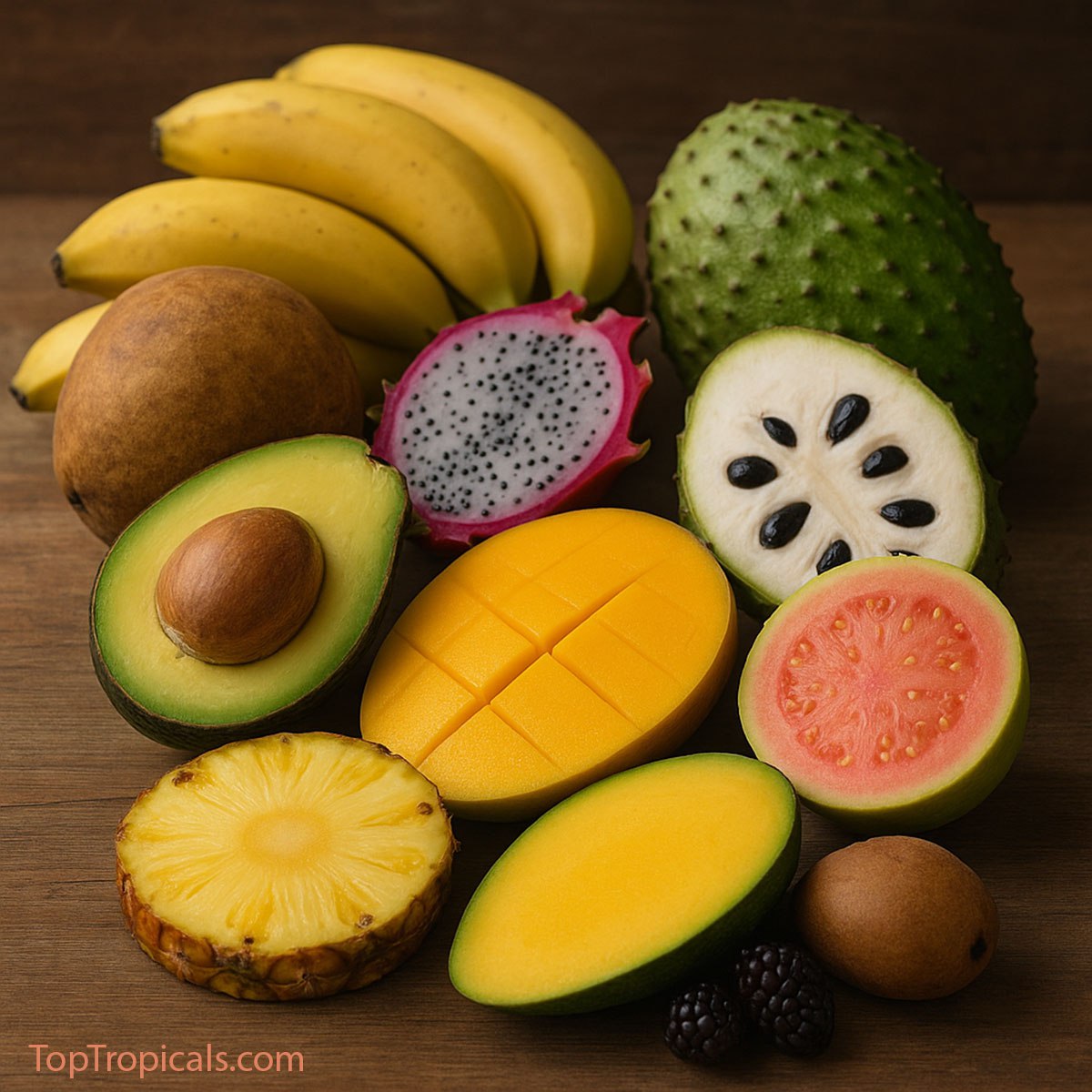
Tropical fruits to eat instead of taking a fiber supplement
🍑 11 tropical fruits to eat instead of taking a fiber supplement
- When we think of tropical fruit, we picture sweetness, sunshine, and exotic flavors packed with vitamin C. But beneath all that juicy goodness lies another gift: dietary fiber - quietly working to support digestion, feed the gut microbiome, and help keep blood sugar steady.
- Avocado leads the pack among tropical fruits for fiber content. One creamy, ripe fruit can provide around 10 grams of fiber, roughly a third of an adult’s daily need. And there’s more to avocado than fiber - it’s also rich in healthy fats, micronutrients, and that silky texture everyone loves.
- Other tropical fruits bring their own kind of fiber strength. Guava delivers up to 9 grams per cup, plus a burst of vitamin C.
- Mango offers about 3 grams in half a fruit, especially when eaten with some of the skin.
- Pineapple, though not always seen as a fiber powerhouse, still contributes around 2 grams per cup, along with bromelain, the enzyme that helps digestion.
- Jackfruit’s fibrous pulp makes it another standout - it’s so meaty, it’s even used as a plant-based substitute in savory dishes.
- Sapote fruit (Mamey, Canistel) and Sapodilla add fiber with a smooth, custard-like texture.
- Adventurous tropical varieties like Annona (custard apple, soursop) may not top the charts in fiber numbers, but their soft, fibrous flesh still adds value: about 1.3 grams of fiber per 100 grams of fruit.
- Bananas contain both soluble and insoluble fiber; the soluble part (mainly pectin) helps control blood sugar and appetite, while the insoluble fiber aids regularity.
- Mulberries are rich in insoluble fiber, especially in their skin, supporting digestion and promoting healthy bowel movements.
- Dragon fruit offers a mix of soluble fiber in its juicy flesh and insoluble fiber from its tiny edible seeds, which help support gut health and feed good bacteria.
These fruits aren’t just delicious - they help you meet your daily fiber needs in ways that are far more enjoyable (and sustainable) than taking supplements. And when home gardeners, farmers, or tropical communities grow and share them, it’s a double win: nutrition and tradition hand in hand.
✔️ Tropical fiber power: tips for getting more fiber from tropical fruits
- ⏺Eat whole, not juiced. Most of the fiber is in the pulp, skin, and seeds. Juicing removes much of that goodness.
- ⏺Mix it up. Tropical fruits are great, but balance them with legumes, whole grains, nuts, and veggies for a full fiber range.
- ⏺Take it slow. If your diet is low in fiber, increase gradually to avoid bloating or discomfort.
- ⏺Drink plenty of water. Fiber works best when paired with hydration.
- ⏺Mind the ripeness. Unripe fruits can have more resistant starch, another form of fiber.
- ⏺Get creative. Toss tropical fruits into smoothies, salsas, breakfast bowls, or even desserts - a tasty stealth-fiber strategy.
🛒 Plant a fruit tree to harvest your fruit tomorrow
📚 Learn more:
Tropical fruit health benefits guide - what fruit and edibles can help with health issues and vitamin deficiencies, Part 1 and Part 2.
#Food_Forest #Remedies #Discover #How_to
🟢 Join 👉 TopTropicals