Garden Blog - Top Tropicals

Date: 13 Jun 2026

Pitaya Sweet Red: dragon fruit beyond pink and white - A Collectors Guide
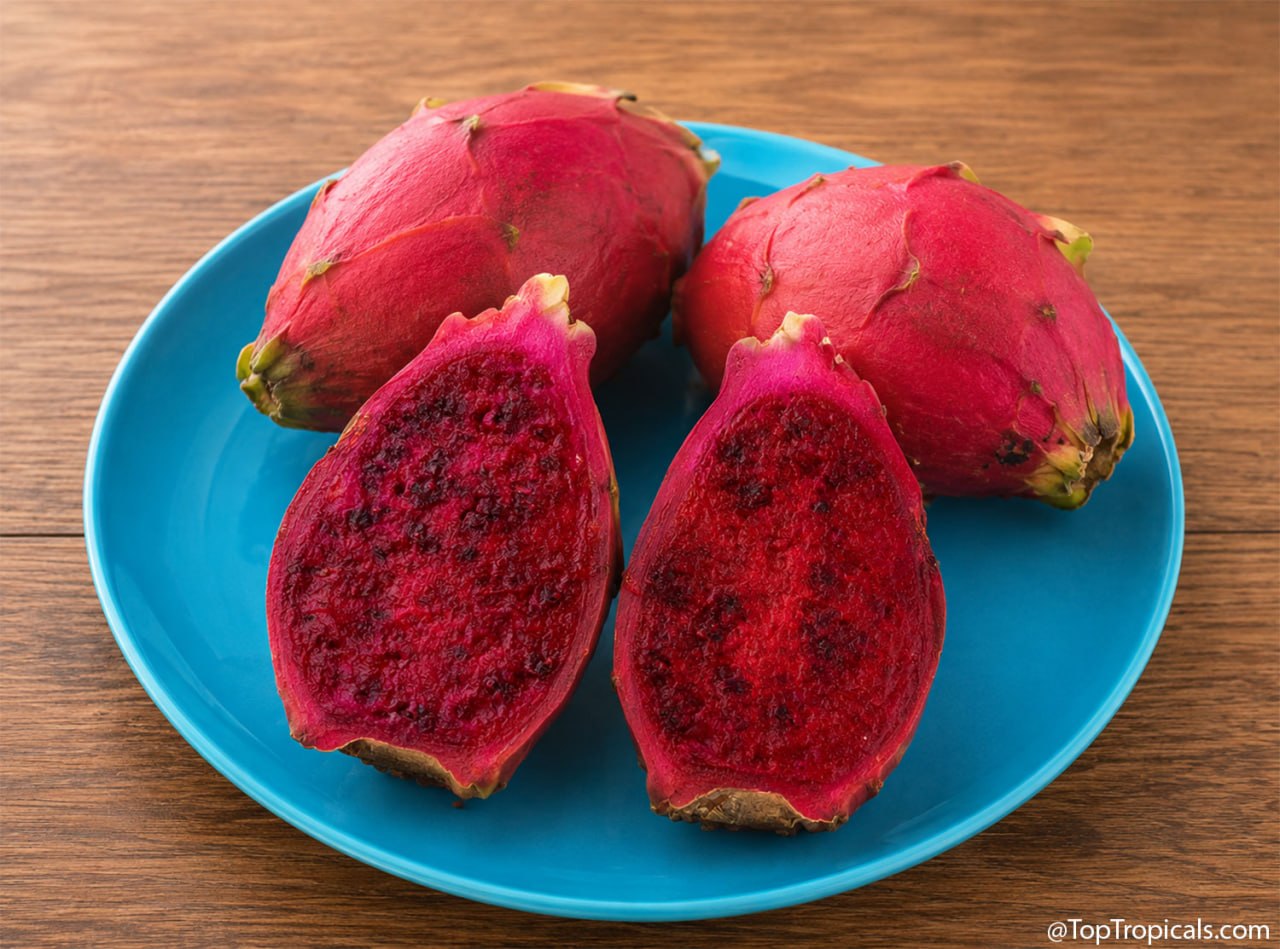
Pitaya "Sweet Red"

Pitaya "Sweet Red"

🍉 Pitaya "Sweet Red": dragon fruit beyond pink and white - A Collector's Guide


Many people discover dragon fruit through white-fleshed varieties. Then they cut open a Sweet Red and realize they're looking at something completely different.
With brilliant red skin and deep red flesh, Sweet Red is one of the most colorful dragon fruits you can grow. It is also considered by many collectors to be among the best-tasting varieties available.


🔸 A dragon fruit that lives up to its name


Sweet Red (Hylocereus costaricensis) produces striking fruit with bright red to magenta skin and rich crimson flesh filled with tiny black seeds. The color is so intense that the fruit almost looks artificial, but it's completely natural.

Unlike some dragon fruits that can be bland when picked too early, Sweet Red is known for delivering consistently rich flavor when fully ripe.

🔸 Why growers love it


This variety is self-fruiting, meaning a single plant can produce fruit without requiring another dragon fruit nearby. It is also an exceptionally vigorous grower, quickly climbing trellises and producing long stems once established.

Like other dragon fruits, Sweet Red rewards growers with spectacular night-blooming flowers followed by colorful fruit that seem almost tropical enough to belong in a rainforest.

🔸 Sweet, juicy, and packed with color


The flavor is often described as sweeter and more intense than many white-fleshed dragon fruits, with hints of kiwi and pear balanced by subtle earthy notes.

The flesh is juicy with a pleasantly crunchy texture from the tiny edible seeds, making it refreshing to eat fresh and excellent for smoothies, fruit bowls, and desserts.

🔸 Why collectors seek it out


Dragon fruit enthusiasts are always searching for varieties that combine beauty, flavor, and reliable production. Sweet Red checks all three boxes. Its self-fruiting habit, rapid growth, stunning red flesh, and exceptional sweetness have made it a favorite among home gardeners and collectors alike.

If you're looking for a dragon fruit that delivers both eye-catching color and outstanding flavor, Sweet Red is one of the easiest varieties to recommend. 👉 More...

🛒 Explore and collect Dragon Fruit varieties

📚 Learn more:

Pitaya Plant Facts

Botanical name: Hylocereus sp.
Also known as: Pitaya, Pitahaya, Dragon Fruit, Strawberry Pear
USDA Zone: 9 - 11
Highligths Large shrub 5-10 ft tallVine or creeper plantSemi-shadeFull sunWatering: Moderate. Water when top soil feels dryWhite, off-white flowersThorny or spinyEdible plantSubtropical plant. Mature plant cold hardy at least to 30s F for a short timeSeaside, salt tolerant plant
Get personalized tips for your region

· Dragon fruit Hylocereus in Plant Encyclopedia
· Pitaya Purple Haze: dragon fruit beyond pink and white
· Pitaya Hana: dragon fruit beyond pink and white
· Pitaya Eureka Red: dragon fruit beyond pink and white
· Pitaya David Bowie: Dragon Fruit Beyond Pink and White
· A Quick Guide to Dragon fruit varieties: Red, White, Yellow, Purple and more...
· What is the best Dragon fruit with red flesh?
· Planting your own Dragon Fruit plantation
· Do-It-Yourself Support Structure for Dragon Fruit
· Why you need to grow your own dragon fruit
· Do red, white and yellow Dragon fruit taste differently?

#Food_Forest #Dragon_Fruit #Discover

🟢 Join 👉 TopTropicals
Date: 8 Nov 2024

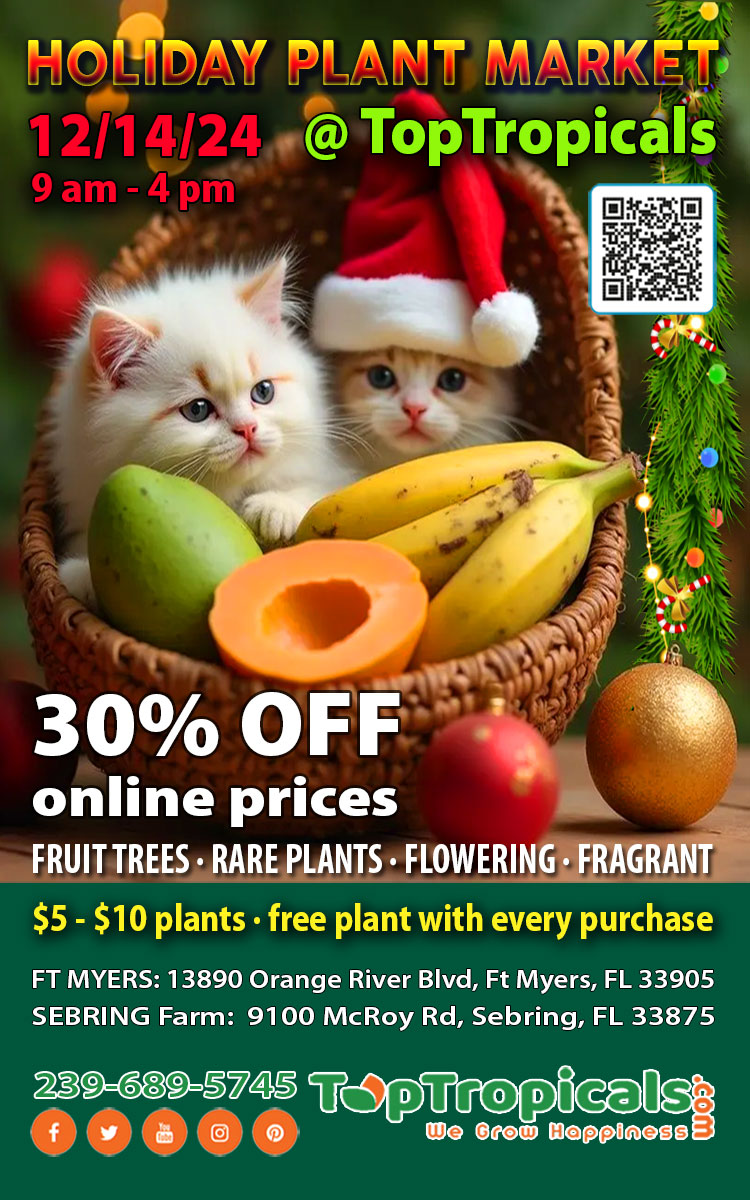
Mark your calendars: December 14, 2024

December  14,  2024  -  SATURDAY  -  Holiday  Plant  Market

Holiday Plant Market
Saturday, December 14, 9 am - 4 pm

Save the date! Join us on December 14 for our Holiday Plant Market!

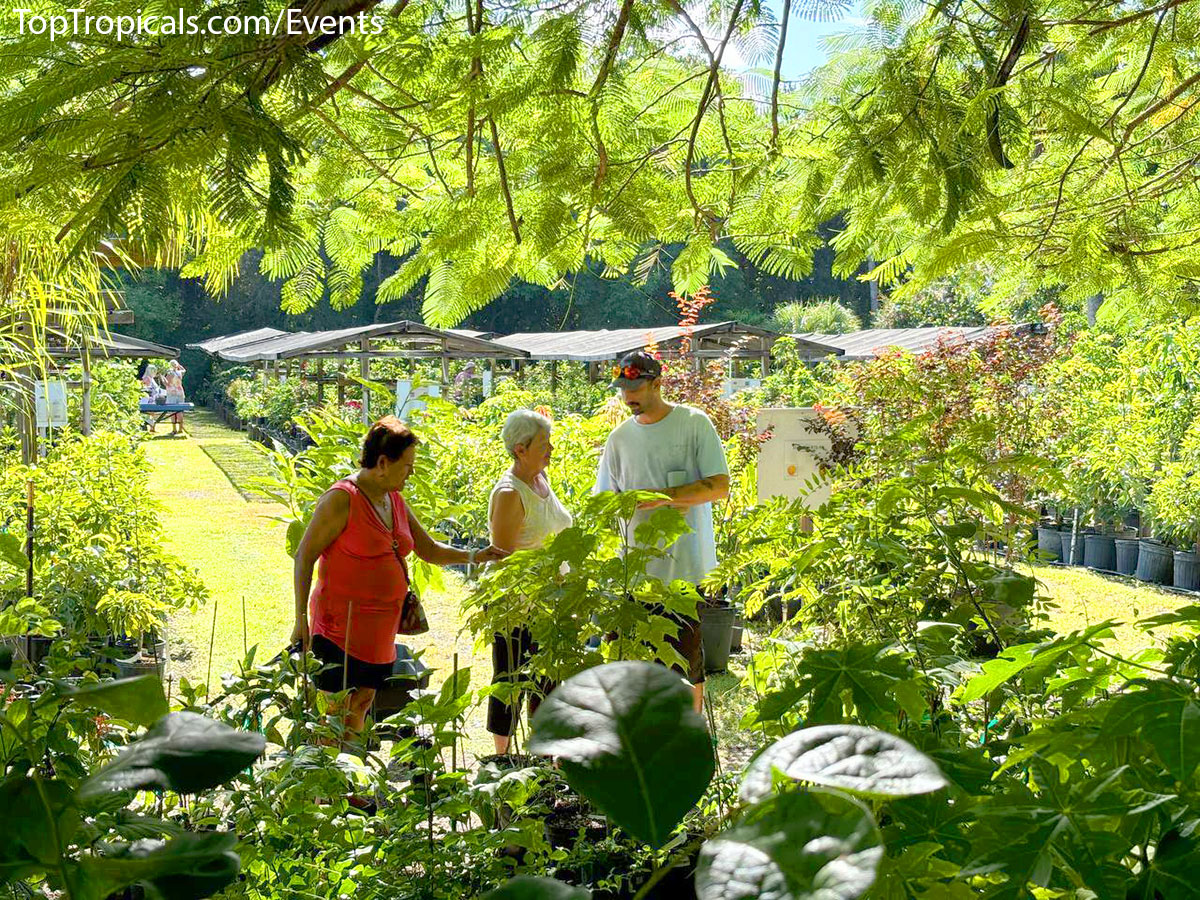
It's the perfect time to find unique holiday gifts in our Tropical Wonderland, where lush greenery and vibrant blooms replace snow. Discover a stunning variety of tropical plants, from fragrant flowering shrubs and rare vines to fruit trees and spice plants - ideal for holiday giving!

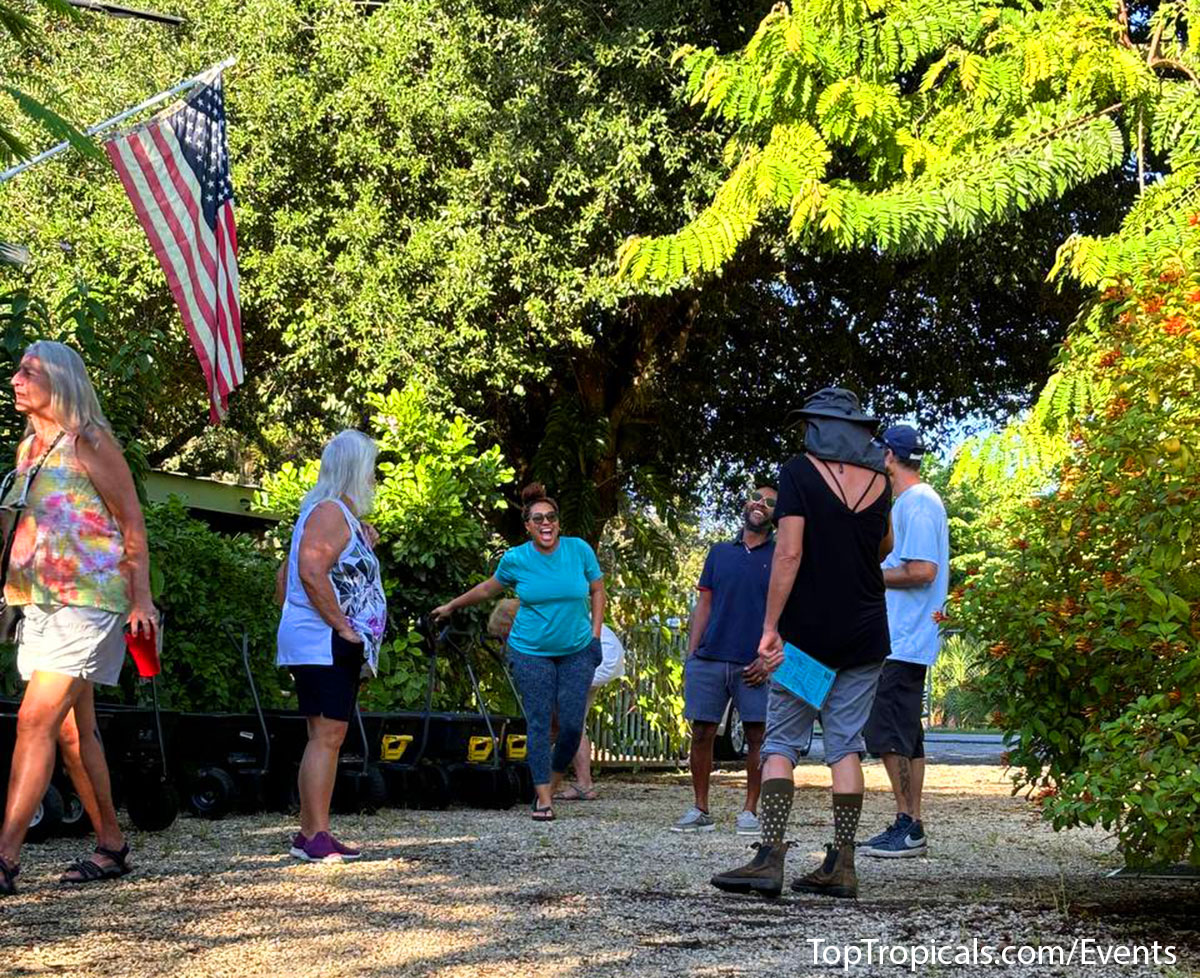
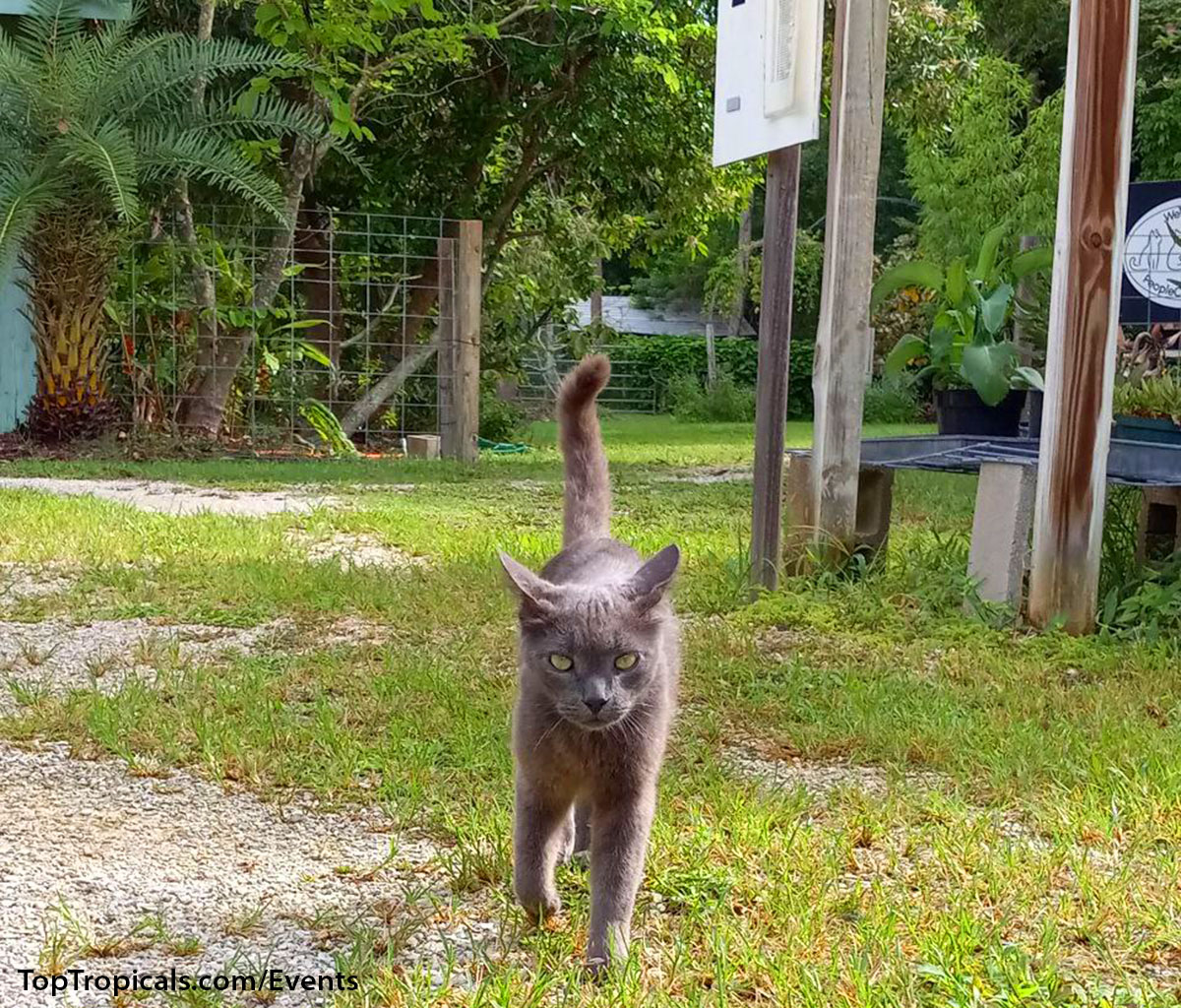
Enjoy amazing deals with plants starting at just $5 and $10, plus receive a free plant with every purchase. Our plants have grown big and beautiful over the summer. Bring friends and family to explore, and let our friendly PeopleCats help you find the perfect plants. Celebrate the season with us in full tropical style - we can't wait to see you there!

Highlights of the event:

30% OFF online prices, one day only! (excluding 15 gallon material and rare plants)
$5 and $10 plants
Raffle
Free plant with any purchase as a token of our appreciation

Event discounts valid at both locations:

Ft Myers Garden Center: 13890 Orange River, Ft Myers, FL
Sebring B-Farm: 9100 McRoy Rd, Sebring, FL

Plant  Market

Holiday  Plant  Market  Cat

Plant  Market

Date: 9 Mar 2026

Dont Wait Years: 8 Fruit Plants You Can Harvest the Same Season

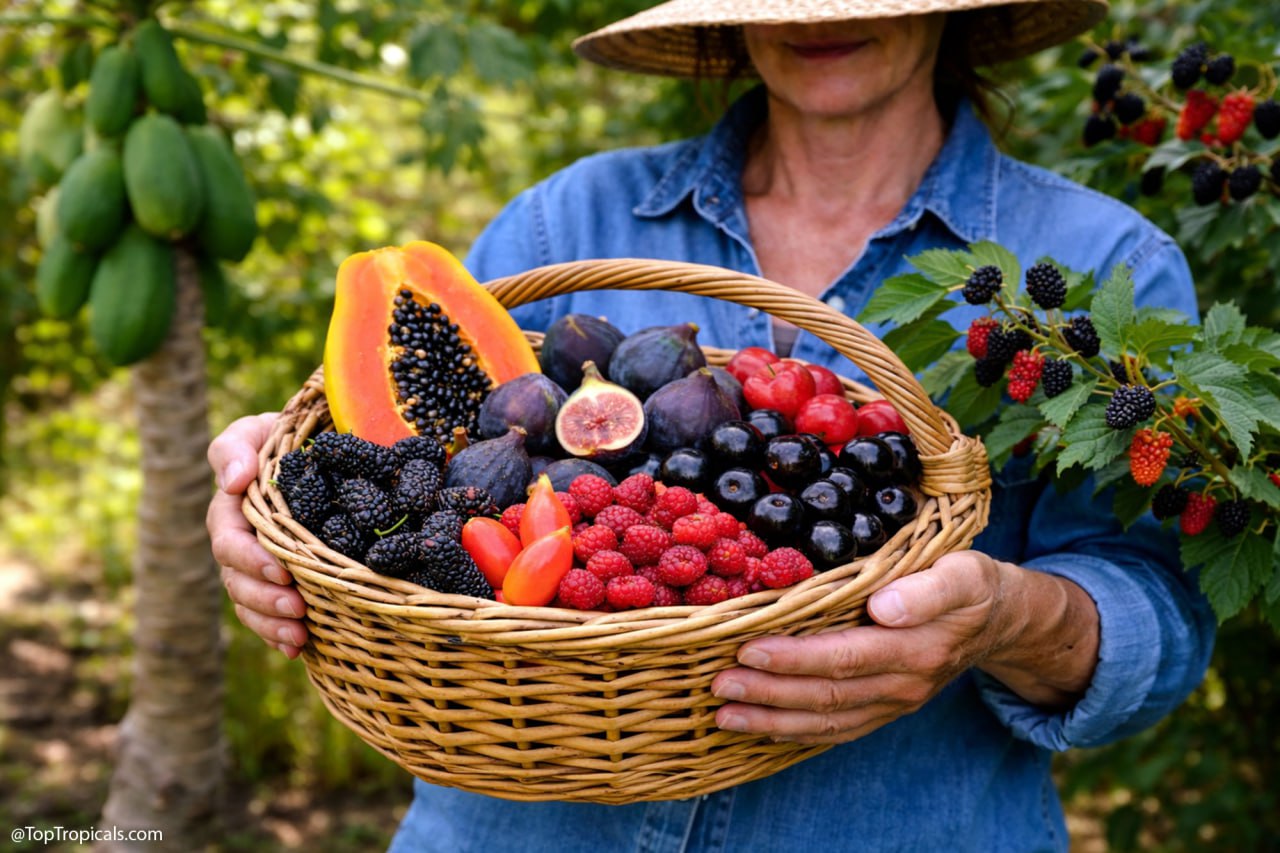
Don't wait years for fruit! Harvest papayas, berries, figs, and more in the very same season you plant them with these fast-growing varieties.

Don't wait years for fruit! Harvest papayas, berries, figs, and more in the very same season you plant them with these fast-growing varieties.

Don't Wait Years: 8 Fruit Plants You Can Harvest the Same Season 🍒

Growing fruit at home usually requires years of patience. Most gardeners view fruit trees as a long-term investment that may not pay off for a decade.
But you don't have to wait.
Certain tropical and subtropical plants are "fast-track" growers. In warm climates like Florida, choosing the right varieties means you can see flowers and fruit within months of planting - often in the very same season.
If you want a backyard harvest without the wait, here are the fastest-producing fruits you can plant today.


🍓 1. Blackberry Jam Fruit (Randia formosa)


A compact shrub perfect for containers. It produces star-shaped flowers and dark purple fruit that tastes exactly like blackberry preserves. Established plants often fruit in their first season.

Blackberry Jam Fruit Plant Facts

Botanical name: Randia formosa, Mussaenda formosa, Randia mussaenda, Rosenbergiodendron formosum
Also known as: Blackberry Jam Fruit, Jasmin de rosa
USDA Zone: 9 - 11
Highligths Large shrub 5-10 ft tallSmall tree 10-20 ftSemi-shadeFull sunKeep soil moistWhite, off-white flowersEdible plantPlant attracts butterflies, hummingbirdsFragrant plantSubtropical plant. Mature plant cold hardy at least to 30s F for a short time
Get personalized tips for your region


🍓 2. Peanut Butter Fruit (Bunchosia)


This fast-growing large shrub produces orange pulp with the uncanny flavor and texture of peanut butter. Expect flowers and bright red berries within months of planting in warm conditions.

🍓 3. Papaya (Carica papaya)


The "giant herb" of the fruit world. Papayas are legendary for their speed, often flowering just months after planting and providing sweet, vitamin-rich fruit within the same year.

Papaya Plant Facts

Botanical name: Carica papaya
Also known as: Papaya
USDA Zone: 9 - 11
Highligths Small tree 10-20 ftFull sunWater Requirement: Low. Allow soil to dry out between wateringsWatering: Moderate. Water when top soil feels dryYellow, orange flowersWhite, off-white flowersEdible plantEthnomedical plant.
Plants marked as ethnomedical and/or described as medicinal, are not offered as medicine but rather as ornamentals or plant collectibles.
Ethnomedical statements / products have not been evaluated by the FDA and are not intended to diagnose, treat, cure, or prevent any disease. We urge all customers to consult a physician before using any supplements, herbals or medicines advertised here or elsewhere.Subtropical plant. Mature plant cold hardy at least to 30s F for a short time
Get personalized tips for your region


🍓 4. Grumichama Cherry (Eugenia brasiliensis)


A stunning Brazilian evergreen. Grafted plants can fruit the same season they are planted, offering glossy, dark cherries with a sweet, mild finish.

Grumichama Plant Facts

Botanical name: Eugenia brasiliensis, Eugenia dombeyi
Also known as: Grumichama, Brazilian Cherry
USDA Zone: 9 - 11
Highligths Small tree 10-20 ftSemi-shadeFull sunWatering: Moderate. Water when top soil feels dryEdible plantSubtropical plant. Mature plant cold hardy at least to 30s F for a short timeSeaside, salt tolerant plant
Get personalized tips for your region


🍓 5. Black Surinam Cherry (Eugenia uniflora var. Lolita)


The 'Lolita' cultivar is a game-changer. It grows quickly as an edible hedge and produces nearly black, resin-free fruit that is significantly sweeter than the common red varieties.

Surinam Cherry Plant Facts

Botanical name: Eugenia uniflora, Eugenia michelii
Also known as: Surinam Cherry, Pitanga, Brazilian Cherry
USDA Zone: 9 - 11
Highligths Plant used for bonsaiLarge shrub 5-10 ft tallSmall tree 10-20 ftSemi-shadeFull sunWatering: Moderate. Water when top soil feels dryWatering: Regular. Let topsoil dry slightlyWhite, off-white flowersEdible plantFragrant plantSubtropical plant. Mature plant cold hardy at least to 30s F for a short time
Get personalized tips for your region


🍓 6. Mysore Raspberry and Tropical Blackberries (Rubus sp.)


Unlike traditional berries that require chill hours, these Rubus species thrive in the heat. Their vigorous canes grow rapidly, often fruiting the same season they hit the soil.

Holy Bramble Plant Facts

Botanical name: Rubus sanctus, Rubus ulmifolius subsp. sanctus
Also known as: Holy Bramble, Burning Bush of the Bible
USDA Zone: 7 - 11
Highligths Large shrub 5-10 ft tallGroundcover and low-growing 2ft plantFull sunWatering: Moderate. Water when top soil feels dryPink flowersThorny or spinyEdible plantPlant attracts butterflies, hummingbirdsEthnomedical plant.
Plants marked as ethnomedical and/or described as medicinal, are not offered as medicine but rather as ornamentals or plant collectibles.
Ethnomedical statements / products have not been evaluated by the FDA and are not intended to diagnose, treat, cure, or prevent any disease. We urge all customers to consult a physician before using any supplements, herbals or medicines advertised here or elsewhere.Subtropical plant. Mature plant cold hardy at least to 30s F for a short time
Get personalized tips for your region


🍓 7. Everbearing Mulberry (Morus sp.)


Mulberries are incredibly generous. Everbearing varieties produce sweet berries over an extended window and often begin fruiting the very first year they are planted.

Mulberry Plant Facts

Botanical name: Morus sp.
Also known as: Mulberry
USDA Zone: 8 - 11
Highligths Large tree taller than 20 ftSmall tree 10-20 ftFull sunWatering: Regular. Let topsoil dry slightlyEdible plant
Get personalized tips for your region


🍓 8. Fig Trees (Ficus carica)


Figs are the champions of container gardening. They are highly drought-tolerant and famous for setting honey-sweet fruit even at a very young age—often just months after being established.

Fig Tree Plant Facts

Botanical name: Ficus carica
Also known as: Fig Tree, Brevo
USDA Zone: 7 - 10
Highligths Plant used for bonsaiSmall tree 10-20 ftFull sunWatering: Moderate. Water when top soil feels dryOrnamental foliageEdible plantDeciduous plantSubtropical plant. Mature plant cold hardy at least to 30s F for a short timeFlood tolerant plantSeaside, salt tolerant plant
Get personalized tips for your region


🏡 Where to plant them?

👉 Tips for Faster Results


•  Start Large: Buy "nursery-established" plants rather than seeds.
•  Feed the Need: Use high-quality organic fertilizer to support rapid growth.
•  Sun is Fuel: Most of these varieties require at least 6-8 hours of direct sunlight to trigger flowering.

🛒 Plant these fruits now - some can produce within months

📷 Freshly picked tropical fruit bounty: don't wait years for fruit! Harvest papayas, berries, figs, and more in the very same season you plant them with these fast-growing varieties.

#Food_forest #How_to #Discover

🟢 Join 👉 TopTropicals

Date: 16 Jan 2026

The most asked-about tree in the Sunshine State: Bauhinia

Purple Orchid tree - Bauhinia purpurea

🌸 The most asked-about tree in the Sunshine State: Bauhinia


🌸 If you visit Florida in winter, chances are you will notice a tree covered in orchid-like flowers and wonder what it is. That tree is often an orchid tree, most commonly Bauhinia purpurea. It is fast growing, wide spreading, and blooms from late winter through spring, sometimes with a second round in summer. The flowers range from magenta to lavender, are lightly fragrant, and stand out even from a distance. The leaves are just as distinctive - split into two halves like butterfly wings, which is why these trees are also called butterfly trees.

🌸 Orchid trees are easygoing and practical. They thrive in full sun, tolerate many soil types as long as drainage is good, and need little water once established. Growth is quick, often 2–3 feet per year, making them excellent shade trees for hot climates. The flowers attract bees, butterflies, and hummingbirds, and in some cultures the buds and blossoms are used in cooking, while the bark has a long history in folk remedies. Beautiful, useful, and low maintenance, orchid trees are a perfect fit for Southern landscapes.

🛒 Discover Bauhinias - Orchid trees

📚 Learn more:

Dwarf White Orchid Tree Plant Facts

Botanical name: Bauhinia acuminata
Also known as: Dwarf White Orchid Tree, White Bauhinia, Kaa-long, Snowy Orchid
USDA Zone: 9 - 11
Highligths Large shrub 5-10 ft tallSmall tree 10-20 ftFull sunWatering: Moderate. Water when top soil feels dryWhite, off-white flowersDeciduous plant
Get personalized tips for your region

Bauhinias - Orchid trees in Plant Encyclopedia
Compact Bauhinias - everblooming container trees
Cassia vs Bauhinia: which is better as an everblooming container tree?
You won’t believe this red orchid tree exists!
Rare Orchid Tree you may never find again and everyone wants
Why gardeners love the Pink Butterfly Tree: blooms, shade, and zero fuss
Napoleons Plume - Orchid Tree that blooms in a pot
How to grow Orchid Trees in pots
Bauhinias: trees with Orchid Flowers and Butterfly Wings
Why Bauhinias are called Orchid Trees: orchid flowers with butterfly wings...
Bauhinia blakeana - Hong Kong Orchid Tree
Bauhinia galpinii (punctata) - Pride of De Kaap or Nasturtium Bauhinia

#Trees

🟢 Join 👉 TopTropicals

Date: 24 May 2026

Fruit Tree Hacks: 5 High-Yield Fruit Trees You Can Buy for Under $50

High-Yield Fruit Trees You Can Buy for Under $50

High-Yield Fruit Trees You Can Buy for Under $50

💲 Fruit Tree Hacks: 5 High-Yield Fruit Trees You Can Buy for Under $50


Starting a home orchard doesn’t have to cost a fortune. While high-end grafted Mangoes or Avocados can easily set you back $100 or more, there is a "secret category" of fruit plants that are affordable, fast-growing, and perfect for beginners. If you have a $40-50 budget and a small sunny spot, these five options provide the best "bang for your buck" in terms of growth speed and flavor.

1. Dragon Fruit: The Vertical Speedster


Dragon Fruit is the ultimate budget win. Because it grows from cuttings easily, nursery prices stay low.
The Payoff: It grows incredibly fast. In a single season, a small pot can turn into a massive climbing cactus.
Space Saver: It grows vertically on a post or trellis, making it perfect for side-yards or balconies.
👉 More...

2. Peanut Butter Fruit (Bunchosia)

This is the ultimate conversation starter for your garden.
The Flavor: The fruit has a dense, sticky texture that tastes exactly like sweet peanut butter.
Why it’s a Bargain: It stays naturally compact (shrub-sized) and often begins fruiting in its second or third year - much faster than traditional fruit trees.
👉 More...

3. Blackberry Jam Fruit (Randia formosa)

If you love gardening in containers, this is your best friend.
The Experience: You don't pick a bucket of these; you enjoy them as a garden snack. The pulp inside is black and gooey, tasting remarkably like high-quality preserves.
The Price Point: Because it is technically a woody shrub, you can often find "ready-to-fruit" sizes for very reasonable prices compared to large-canopy trees.
👉 More...

4. The "Eugenia" Group (Surinam, Grumichama, Rio Grande)

Professional landscapers love this family of plants because they double as "Edible Hedges."
Surinam Cherry: Extremely tough. It handles poor soil and neglect while producing star-shaped, ribbed fruits.
Grumichama: Often called the "Brazilian Cherry," it produces a fruit that looks and tastes strikingly like a true Bing cherry but grows in warm climates where cherries usually fail.
Cherry of the Rio Grande: A beautiful, upright grower with attractive peeling bark. It produces dark purple, teardrop-shaped fruits that are among the best tasting of all the tropical cherries. The tree is the most cold hardy of all eugenias.
👉 More...

5. Mulberries

While not on every list, a Mulberry is a budget powerhouse. They are often sold in small 3-gallon pots for $30-40 and will literally start popping out berries the same week you plant them.
👉 More...

👉 Pro Tip: How to Save Even More


To keep your costs down, look for these plants in 3-gallon containers.
Why? 3-gallon plants are the "sweet spot" for value. They are large enough to be established and hardy, but they haven't reached the premium price point of 7 or 15-gallon "instant landscape" trees.

🛒 Shop Budget-Friendly Fruit Trees

📚 Learn more:

Murta Plant Facts

Botanical name: Blepharocalyx salicifolius, Eugenia salicifolia
Also known as: Murta
USDA Zone: 9 - 10
Highligths Small tree 10-20 ftSemi-shadeFull sunWatering: Regular. Let topsoil dry slightlyWhite, off-white flowers
Get personalized tips for your region

· Eugenia cherries in Plant Encyclopedia
· 3 Best Trees for a "Fast-Fruit" Garden
· 10 best fruit trees to grow in Florida and Southern landscapes
· Top 10 fast-fruiting trees
· 5 fast-growing fruit trees and shrubs for quick, low-effort harvests (Top Tropicals experts for Martha Stuart)

#Food_Forest #How_to #Discover

🟢 Join 👉 TopTropicals