Garden Blog - Top Tropicals

Date: 10 Aug 2025

Tuxedo  cat  planting  tropical  tree  with  Sunshine  Boosters  bag,  orange  cat  waving  to  kitten  with  backpack  by  school  bus  in  sunny  garden 
 scene.

🌺 Back to School and Back to Planting – Cats in the Garden

Back to School, Back to Planting – Why August Works for Tropicals

Planting Season Isn't Over Yet

August is still a good month for planting tropicals in warm climates. The soil stays warm enough to push root growth, and late-summer weather gives plants time to settle in before winter. In drier areas, regular watering will keep them moving along just fine.

Tropicals in warm climates aren't usually harmed by cooler Winter weather, but as days get shorter, growth may slow down. This is why planting in late Summer-Fall lets roots grow during this last warm stretch, so the plant enters winter already established.

By spring, those roots are ready to drive new shoots, flowers, and fruit. There's no lost time to transplant shock - plants can get straight to blooming and fruiting earlier in the season.

August Planting FAQ

How can heat be prevented from harming new tropicals?

Water in the morning so plants start the day hydrated. Warm soil is good for root growth, but don't let it dry out.

How should new plants be protected from strong sun?

For the first couple of weeks, use a shade cloth or even a white bed sheet to soften midday sun and prevent leaf scorch.

What fertilizer works best for planting in summer heat?

Controlled-release types are best. We use professional grade Green Magic. You may pair it with Sunshine Boosters for steady, gentle feeding through the warm months.

Which tropicals grow best when planted in August?

Most tropical plants do well when planted in warm end-of-summer conditions, including Mango, Avocado, Guava, Jackfruit, Annona, Bananas, Orchid Trees, Jasmines, Allamanda and most of flowering trees, shrubs and vines.

Can tropical trees planted in August produce fruit next year?

Many can, especially fast growers, since they have established roots by the time spring growth begins.

How can tropicals be kept healthy when planting in August?

Mulch around the base to help prevent soil from drying out too quickly. Water deeply in the morning to help plants handle the heat.

Shop Flowering trees

Shop Fruit trees and edibles

Date: 21 Feb 2026

The best time to plant a fruit tree was 20 years ago - here is why you need to plant it now

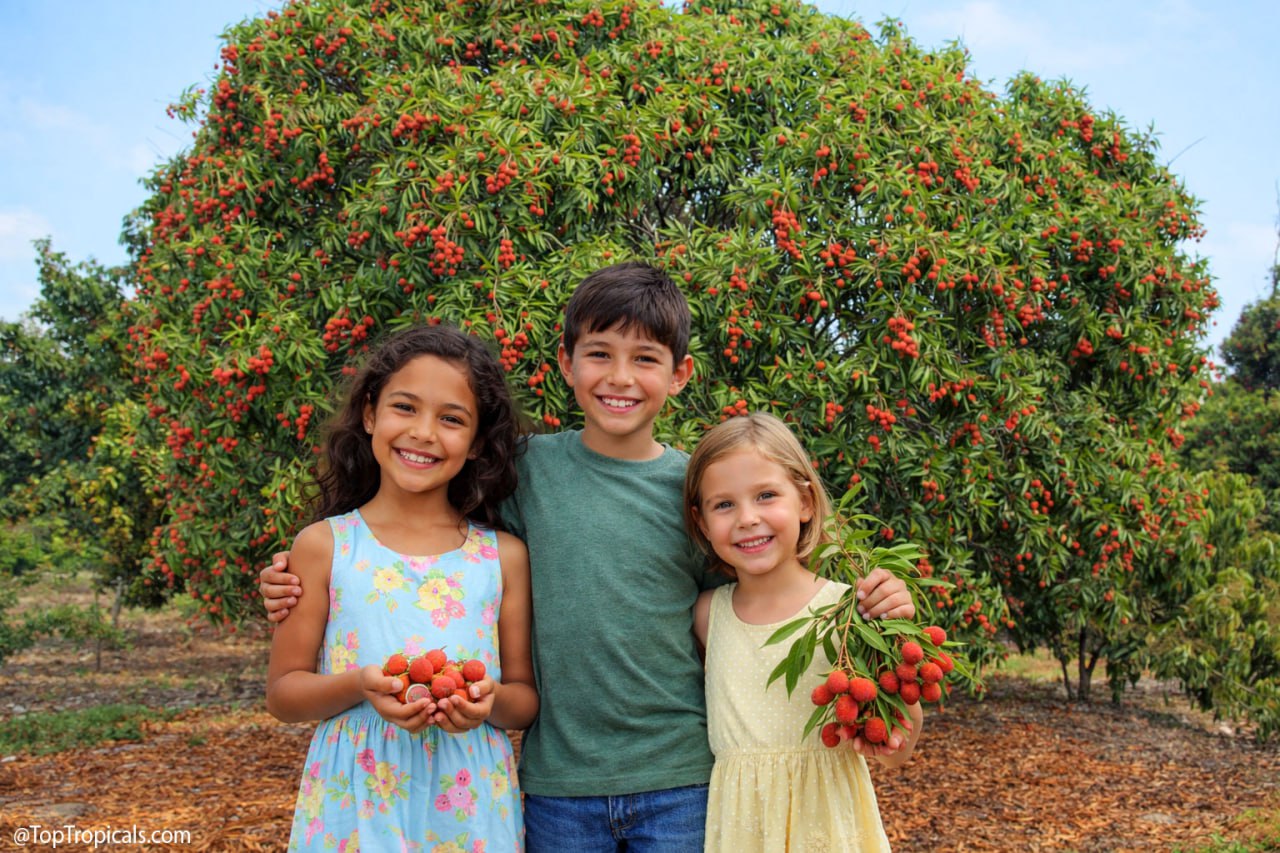
Litchi chinensis - Smiles under the Lychee tree

Litchi chinensis - Smiles under the Lychee tree

🍑 The best time to plant a fruit tree was 20 years ago - here is why you need to plant it now


They say the best time to plant a fruit tree was 20 years ago.
The second best time is today.

A fruit tree is not a seasonal purchase. It is not a decoration. It is a decision that stretches far beyond you.

When you plant a mango, an avocado, a loquat, a lychee tree - you are not just planting for this summer. You are planting for children who will climb that tree. For neighbors who will ask for a basket of fruit. For someone who may live in your house long after you are gone.

Fruit trees are quiet investments in the future.
Unlike annual crops that come and go, a tree deepens its roots every year. Many fruit trees - especially mangoes - can live for decades, even a century. They outlive trends, owners, renovations, even mortgages. They stand there, steady, producing.

Even if you sell the house, the tree remains.
The next family will walk into the yard and discover fruit hanging overhead. Imagine buying a home and realizing someone before you planted abundance!

That is a gift.

In many parts of the world, mango trees are called generational crops. One farmer plants them. His children harvest them. His grandchildren sell the fruit. A single decision continues to feed and support a family long after the planter is gone.
There is something deeply grounding about that.

We live in a fast world. Quick returns. Quick moves. Quick upgrades.
A fruit tree moves at a different pace. It asks for patience. It rewards consistency. It teaches you to think long term.

Planting a fruit tree says:
I believe in tomorrow.
I believe this land will matter.
I believe someone will stand here after me.

And even if you never taste the fullest harvest, someone will.
Passing fruit trees through generations is more than horticulture - it is legacy. It is continuity. It is resilience. It is saying that this space, this soil, this home will keep giving.

So plant it now.
Plant it for your children.
Plant it for the next homeowner.
Plant it for shade you may never sit under.
Plant it for fruit you may never pick.
Because one day, someone will walk into that yard, look up, and thank the person who thought ahead.
Let that person be you.

🛒 Explore fruit trees for your orchard
  • 👉 Tropical Fruit favorites:


🥭 Mango
Avocado
🍒 Cherry
🍊 Loquat
🍈 Jackfruit
🍑 Peach tree
🍉 Guava
🍏 Sugar apple
🍇 Mulberry
🍐 Sapodilla

#Food_Forest #Discover

🟢 Join 👉 TopTropicals

Date: 31 May 2024

Top 5 favorite Mango varieties
and Top 10 Condo Mango trees

How to chose the right variety of a Mango tree?

Cat  with  mango  fruit

Q: The most Frequently Asked Question about fruit trees: What is your favorite Mango variety? Which mango varieties are the best? Help me to make a choice!

A: As we mentioned on our Introduction to Mango Varieties page, there are thousands of named mango cultivars available. Similar to the classification of avocados (see our Avocado Variety Guide), mango trees can be selected based on your specific needs. These needs can include tree size and growth habit, disease resistance and hardiness, and most importantly, fruit characteristics such as taste, texture, size, color, storage ability, juice and sugar content.

We are currently working on a comprehensive Mango Variety Guide and will be sharing it with you soon. In the meantime, below are a few tips on selecting the right mango tree.
NOTE: all of the Mango varieties we offer are FIBERLESS!

Top 5 Favorite Mango we just love!

1. Alphonso - the best Indian cultivar in terms of sweetness and flavor. One of the rarest varieties and sought after - sweet large juice fruit. Coconut-like flavor.
2. Maha Chinook - Many consider it the best mango had ever tasted. Very rare mango variety from Singapore. This variety is semi-dwarf and great for pot culture. Nam Doc Mai close relative.
3. Fralan - Super reliable producer and hardy tree. Green fruit, sweet and juicy. Fralan means "Thunder" - as the fruit cracks when peeled.
4. Fruit Cocktail - Flavor is an amazing palette of different fruit, with citrus, pineapple, and guava notes.
5. Nam Doc Mai - It's not just us, everyone loves this Mango! The most popular variety: semi-dwarf and great for pot culture. Eaten green or ripe, a Thailand favorite. It is hands down the most sought after of the Asian mangoes and for good reason.

Cat  with  three  mango  fruit

Top 10 Dwarf "Condo" Mango

1. Mallika - condo mango native to India. Among the best of the new generation of Indian dessert mangos. Intensely sweet, rich and highly aromatic flavor with hints of citrus and melon.
2. Ice Cream - far and away the most popular of the "condo mangoes." Flavored like the name. The tree can easily be maintained at a height of just six feet (!) making it ideal for container growing.
3. Julie - the most popular variety in Jamaica and many other Caribbean islands because of its rich, sweet, coconut/pineapple-like flavor. It is a dwarf cultivar, great for containers, but keep in mind it's very cold sensitive, don't plant it in the ground if you get freeze in winter.
4. Okrung - Thai compact cultivar, fruit eaten while green. The fruit is traditionally served in Thailand in combination with sticky rice. One of the most popular varieties in Thailand. The fruit is very sweet, with the highest sugar content.
5. Pickering - great for pot culture. It has a bushy, compact growth habit, and can be maintained in a container at just six feet (!). The fruit has a firm flesh with a fantastic coconut/mango flavor.
6. Nam Doc Mai - The most popular variety for pot culture, we already mentioned in our favorites above.
7. Cogshall - an ultra compact grower. Suitable for container growing on a balcony, or planting in a suburban backyard. It can easily be maintained at just eight feet tall, and it will still produce a good size crop year after year. The fruit is very colorful and has a mild, sweet flavor. It is also fungus resistant.
8. Carrie - the flavor is by far the most outstanding. It has absolutely no fiber and extremely rich in flavor, sweet, aromatic and a pure pleasure to eat. You will savor every mouthful! Its compact size makes it an excellent dooryard tree.
9. Diamond - It has a great taste very similar to Nam Doc Mai. Very compact, of a dwarf habit, great as condo mango.
10. Keitt - the best all-around late mango. It is very productive, good-flavored, and disease resistant. It also has a very long and late season. The compact tree is semi dwarf that bears 4-5 pound goliath fruit!

Mango  tree  with  fruit

Photo above: Pim Seng Mun mango tree is a reliable and heavy producer.

Top 5 recommended vigorous growers and reliable producers

1. Glenn - Excellent eating quality, consistent production, and effortless to grow.
2. Pim Seng Mun - extremely productive mango.
3. Sweet Tart - New patented variety - exclusive offer.
4. Fruit Punch - Multi fruit flavor, delicious!
5. Orange Sherbet - One of the best new varieties for backyard growing. Flavor is sweet citrus-orange and less lemony than Lemon Meringue mango. The tree is moderately vigorous.

Top 5 exotic varieties for rare fruit collection

Now that you have decided to collect them all but have limited space, these are the top 5 of the most interesting rare cultivars:

1. Kar Lon Long - rare and unusual, native to India. Fruits that can weigh up to 5 lbs each! The unique flavor that has been described as being a cross between a mango and a pineapple.
2. Mun Kun Si - similar to Nam Doc Mai but much bigger. Rare variety, very popular among Thai and Vietnamese people. The fruit are extremely sweet, fiberless and somewhat crunchy ("Mun" means crunchy). Very late producer, fruit may still be on a tree as late as January.
3. Pina Colada - very sweet, has rich flavor with a hint of coconut and pineapple.
4. Ugly Betty - awesome mango, great sweet flavor, while the fruit is real ugly! Slightly mis-shaped at the top - hence the name.
5. Giselle - from Zill's breeding program and was a seedling of a mango called Tower. It was described as a juice mango and is named after Gary's wife.

Mango  fruit  display

Photo above: preparing mango seeds for planting - growing seedlings for future grafting.

Date: 13 Jan 2023

Secrets of Winter planting:
Tropical Planting Breaks the Rules

Winter  flowering  tree  -  Ceiba

by Murray Corman, Garden of Delights

Wintertime does not just mean hard work for tropical gardeners. It is also a time to enjoy the fruits of our labor. Winter-blooming plants and the visitors they attract - birds, bats and butterflies - make the garden as enjoyable in winter as any other time of year.
What a welcome relief: January daytime temperatures in the 70s, dropping to the 60s at night. This is why I came to live in the subtropics of southern Florida. The balmy climate of South Florida represents one of the few places on the mainland United States where tropical plants thrive unprotected outdoors.
But just as I had to leave behind so many of my favorite northern trees, so too did I have to put behind me many of the so-called "rules" of horticulture. These had worked well for me up north and I thought they would hold true anywhere in the world. Florida's subtropical climate posed new challenges and I soon realized that gardening in the Sunshine State would not be business as usual...
CONTINUE READING >>

See also: A Guide to Cold Hardy Tropical Fruit Trees and Avoicado Varieties (pdf download)

Noni  tree  with  Christmas  tree  indoors

Photo above: Noni is not just a useful fruit tree, but also a great ornamental for both sun or shade. It is also great for interior floral design or as an exotic addition to your room decorations in Winter! It fruits year round even indoors!
Order Noni online.

Date: 5 May 2025

🎀 Five plant gifts she'll love this Mother's Day

Q: My mother loves gardening and I am thinking to buy her a live plant to make her happy. What plant do you recommend?

A: At Top Tropicals, we have a big selection of wonderful gift plants . Below are a few suggestions for you, these plants are large, developed and ready to bloom or fruit!

1. Joy Perfume Tree

Magnolia  (Michelia)  champaca,  Joy  Perfume  Tree,  Champaka

The Champaka or Joy Perfume Tree (Magnolia champaca) - is a top choice for Southern landscapes, prized for its striking columnar shape and fragrant, fruity bubble gum-scented blooms - you won't be able to stop sticking your nose in this flower! A signature plant at Top Tropicals, it's known for producing the world's most expensive perfume, Joy. The Joy Perfume Tree blooms on and off year-round and is currently in full bloom at our farm in Sebring, FL, filling the air around with fantastic sweet scent. This tree thrives in both pots and the ground, growing bushy and full as it matures. At Top Tropicals, we have beautiful Champaka trees in all sizes, from 3-4 ft tall (ready to bloom in a year) to 6-10 ft tall (already bloomed) for local pick up or delivery.
Learn more, with a short video.

2. Tropical Raspberry Mysore

Raspberry  Mysore  Tropical,  Rubus  albescens  (niveus)

Tropical Raspberry Mysore (Rubus albescens) - is the perfect solution for those missing Northern fruit in hot climates. Unlike traditional raspberries that can't handle the heat, this fast-growing Raspberry from India thrives in humid, hot conditions and produces juicy, sweet fruit almost year-round! The clusters of purple-black fruit are packed with flavor, and the plant is perfect for large containers, producing plenty of fruit in no time. Cold-hardy to the upper 20s F, it's an easy-to-grow, fast producer. We have beautiful, fruit-ready 3 gal Raspberry bushes, ready to add a burst of sweetness to your garden!
Learn more, with a short video.

3. Fragrant Jasmine Sambac

Jasminum 
 sambac

Jasminum Sambac is widely regarded as the most fragrant jasmine, cherished by tropical gardeners and plant collectors alike. Native to India, this jasmine is the source of jasmine perfume oil and the signature ingredient in jasmine tea. With various varieties offering unique flower sizes, shapes, and growth habits, it’' perfect for both sun and shade, thriving as a container plant or indoor favorite. Its delightful fragrance fills the air, and with the help of Sunshine Pikake plant booster, you can enjoy even more blooms. Jasmine Sambac, along with Champaka, is another signature plant of Top Tropicals. Through the decades, we've collected all the available varieties in cultivation - check them out!
Learn more about Jasmine Sambac varieties, with a short video.

4. Everbearing mulberry

Mulberry  tree  Dwarf  Everbearing  (Morus 
 sp.)

The Dwarf Everbearing Mulberry (Morus sp.) - is the perfect way to enjoy fruit year-round! This beautiful, cold hardy bush produces sweet, juicy mulberries starting from the very first year - often the same season you plant it. With its dwarf habit (easily maintained at 4-6 ft), it's perfect for containers and small spaces. Cold-hardy and drought-resistant, this productive plant thrives in various climates, from USDA zones 5 to 10! The fast-growing Mulberry will provide fruit year-round, and with minimal care, it will flourish in almost any soil. Our Everbearing Mulberry bushes produce enough fruit for both birds and breakfast - we pick a handful every day!
Learn more, with a short video.

5. Medinilla Coral Spike

Medinilla  scortechinii  -  Orange  Coral  Spike

Rare Medinilla scortechinii - Orange Coral Spike - is a rare gem that brings a touch of the ocean to your garden! With bright orange stems bursting into star-shaped blooms, it looks like something straight from a coral reef. Compact and easy to grow, this plant stays under 2-3 ft tall, making it perfect for pots, hanging baskets, or as an epiphytic accent. The glossy dark leaves contrast beautifully with the vibrant orange panicles, and it thrives in bright shade. A must-have for collectors of unusual tropical plants, this coral spike adds a bold pop of orange wherever it grows - but hurry, it doesn't stay in stock for long!
Learn more, with a short video.