Garden Blog - Top Tropicals

Date: 13 Apr 2026

🌸 Secrets of Blooming Plumerias

Plumeria  Orange  KLS  stands  out  with  a  rare  mix  of  five  colors  -  peach, 
 yellow,  orange,  white,  and  crimson  -  all  blending  into  one  vivid  bloom. 
 Fragrant  and  eye-catching,  it’s  a  truly  unique  plumeria.

Plumeria Orange KLS stands out with a rare mix of five colors - peach, yellow, orange, white, and crimson - all blending into one vivid bloom. Fragrant and eye-catching, it’s a truly unique plumeria.

Practical Growing Tips (Keep It Simple)

  • Sun: Full sun is key. 6+ hours daily for best blooms.
  • Soil: Fast-draining mix. In pots, use cactus mix or add perlite and sand. The best soil for Plumerias is a 50:50 mix of Abundance potting soil with coarse sand.
  • Watering: Water well, then let soil dry out before watering again.
  • Containers: Excellent for pots. Easier control and mobility.
  • Feeding: Light feeding during active growth helps more blooms. Use liquid Sunshine Boosters Megaflor for profuse blooming and controlled release Green Magic fertilizer every 6 months.
  • Airflow: Good airflow keeps plants healthy and clean.
  • Spacing: Give each plant room - better shape and more flowers.

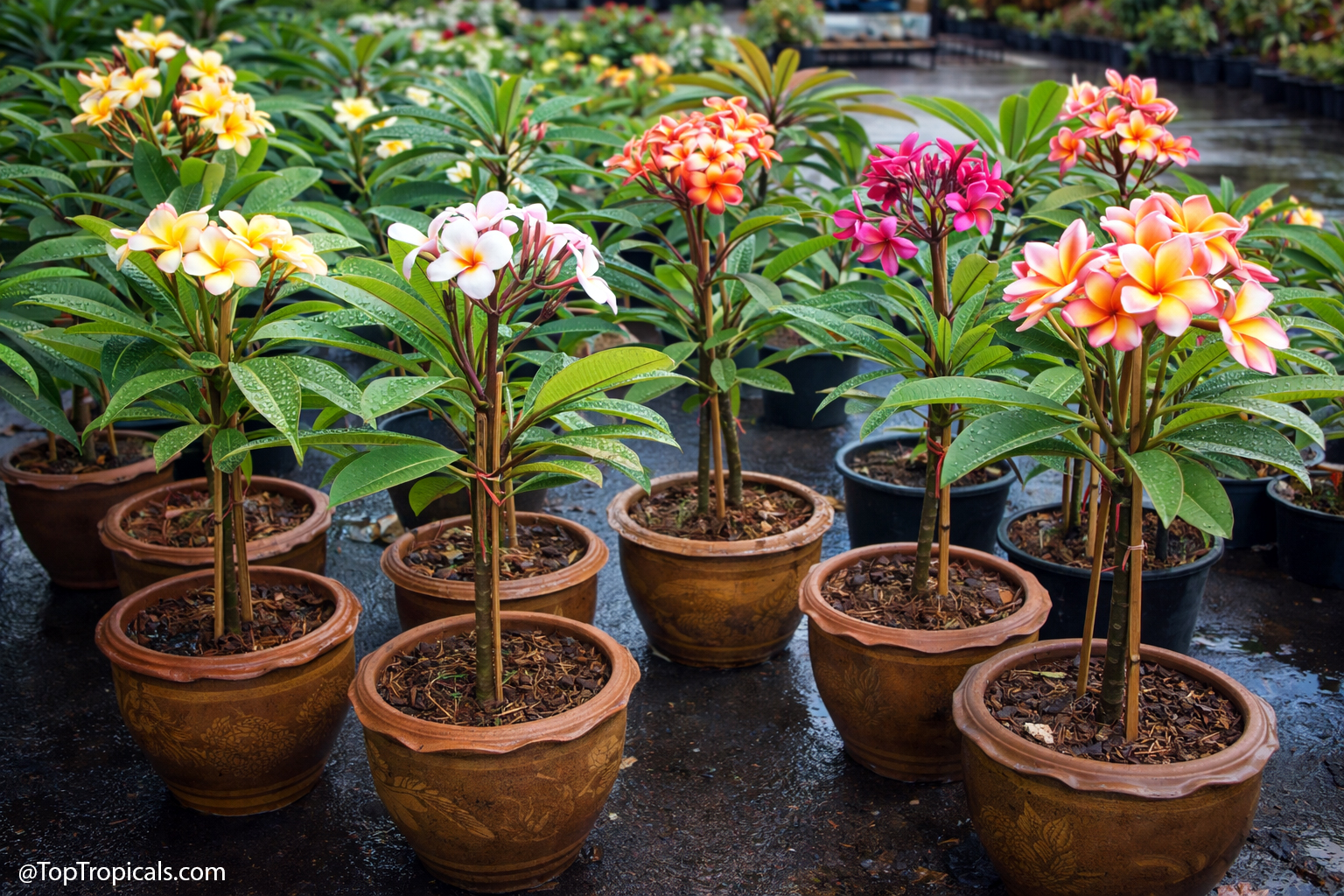
Blooming  plumeria  plants  in  multiple  pots  with  colorful  flowers, 
 arranged  outdoors  in  a  nursery  setting  after  rain.

Blooming plumeria plants in pots after rain.

Winter Care (Very Important)

  • Temperature: Protect from freeze. Below 40F they need protection.
  • Dormancy: Leaves drop in winter. This is normal.
  • Watering: Almost dry during dormancy.
  • Indoors: Move containers inside if frost is expected.
  • Light: Bright spot is enough. No need for full sun in dormancy.
  • No feeding: Do not fertilize during winter rest.
  • Restart: Resume watering when new growth appears in spring.

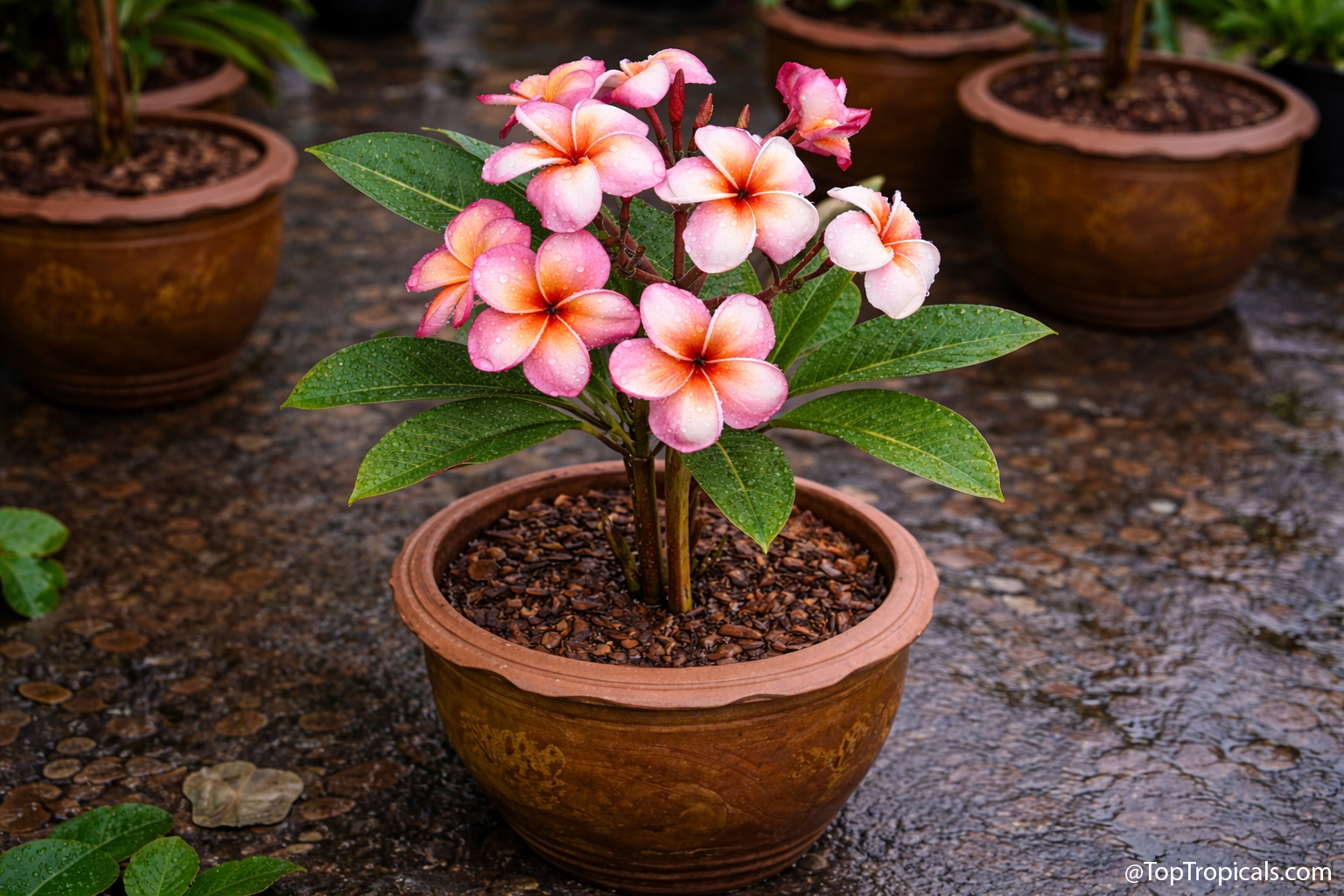
potted  plumeria  plant  pink  orange  flowers  with  water  droplets  on  leaves
    and  petals

Potted plumeria in bloom.

About Plumeria Rust (Florida Reality)

If you are growing plumerias in Florida, you will likely see plumeria rust at some point. It shows up as orange powdery spots on the underside of leaves and can cause leaves to yellow and drop early. It is driven by high humidity and is most common in the fall, right before the plant naturally starts dropping its leaves.

It looks alarming, but it is mostly a cosmetic issue and does not harm the plant long term. Good airflow, full sun, and avoiding overhead watering help reduce it. If needed, you can remove affected leaves or use a simple fungicide (in our experience, the most effective one for Plumeria rust is Southern Ag Garden Friendly Fungicide), but in most cases the plant grows right through it and comes back clean with fresh growth.

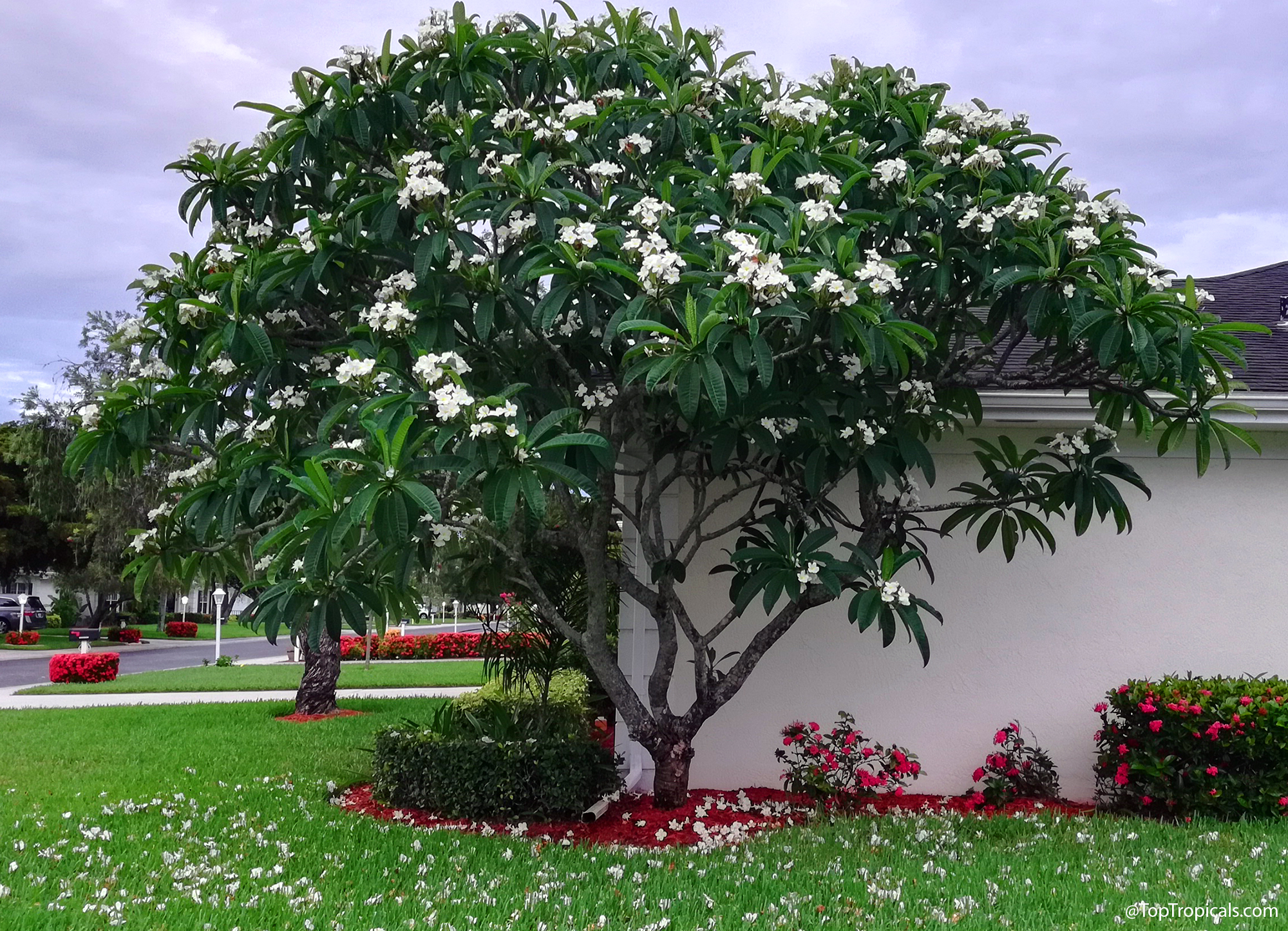
white  plumeria  tree  full  bloom  in  yard  with  green  leaves  and  fallen 
 flowers  on 
 grass

White and Yellow Plumerias are the most fragrant.

Plumeria Fragrance - Bring It Anywhere

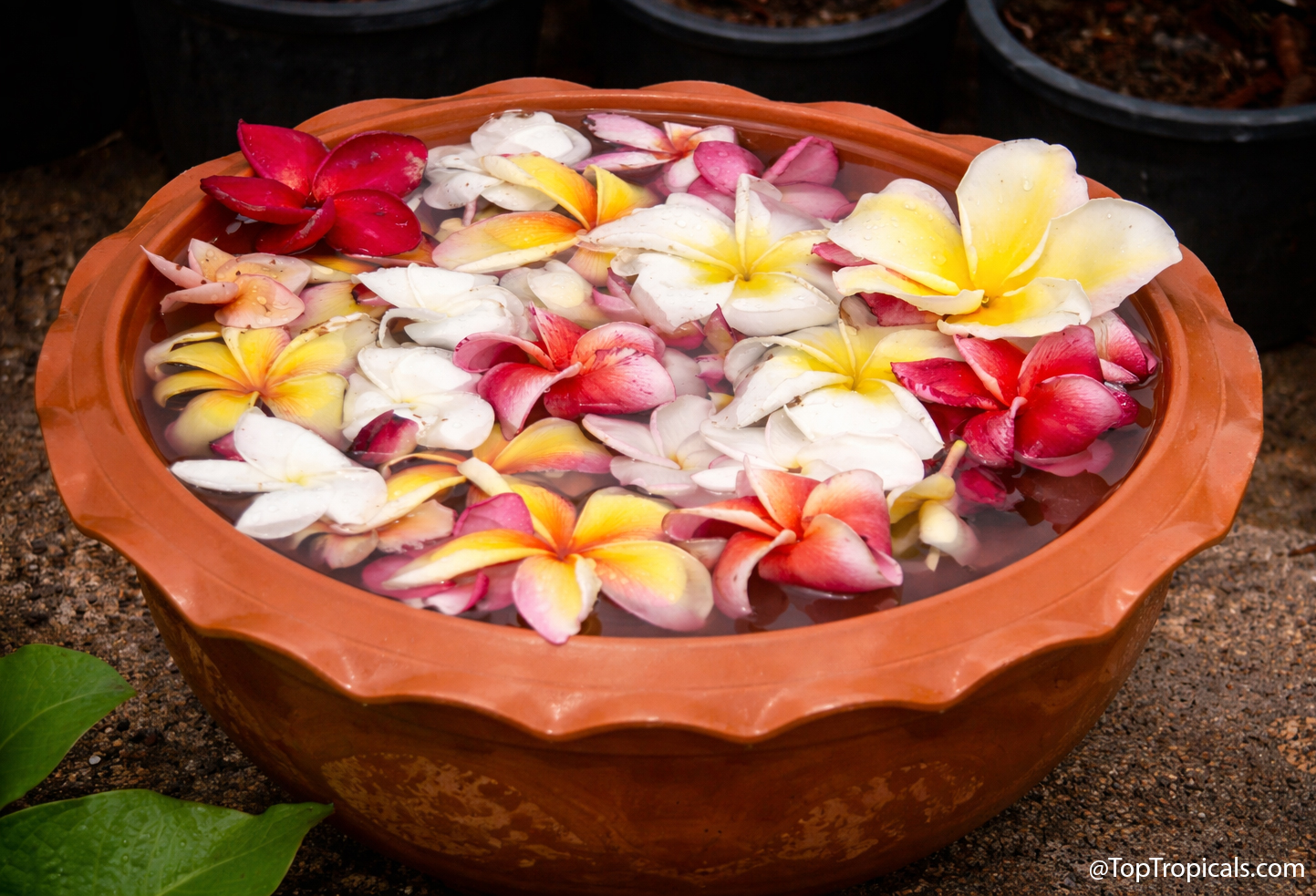
That scent does not have to stay in the garden. Fresh plumeria flowers can be brought inside and placed in a small bowl of water they will float and gently perfume the room. You can make a simple lei, keep a few blooms on a table, or even place a flower in your car on a hot day - the warmth releases the fragrance.

Terracotta  bowl  filled  with  floating  plumeria  flowers  in  white,  yellow,
    pink,  and  red,  set  outdoors  on  wet  ground  in  a  garden 
 setting.

Bowl with Plumeria flowers creates a scented space anywhere

🎥 Watch Plumeria videos

📚 Learn about Plumerias from our Blog

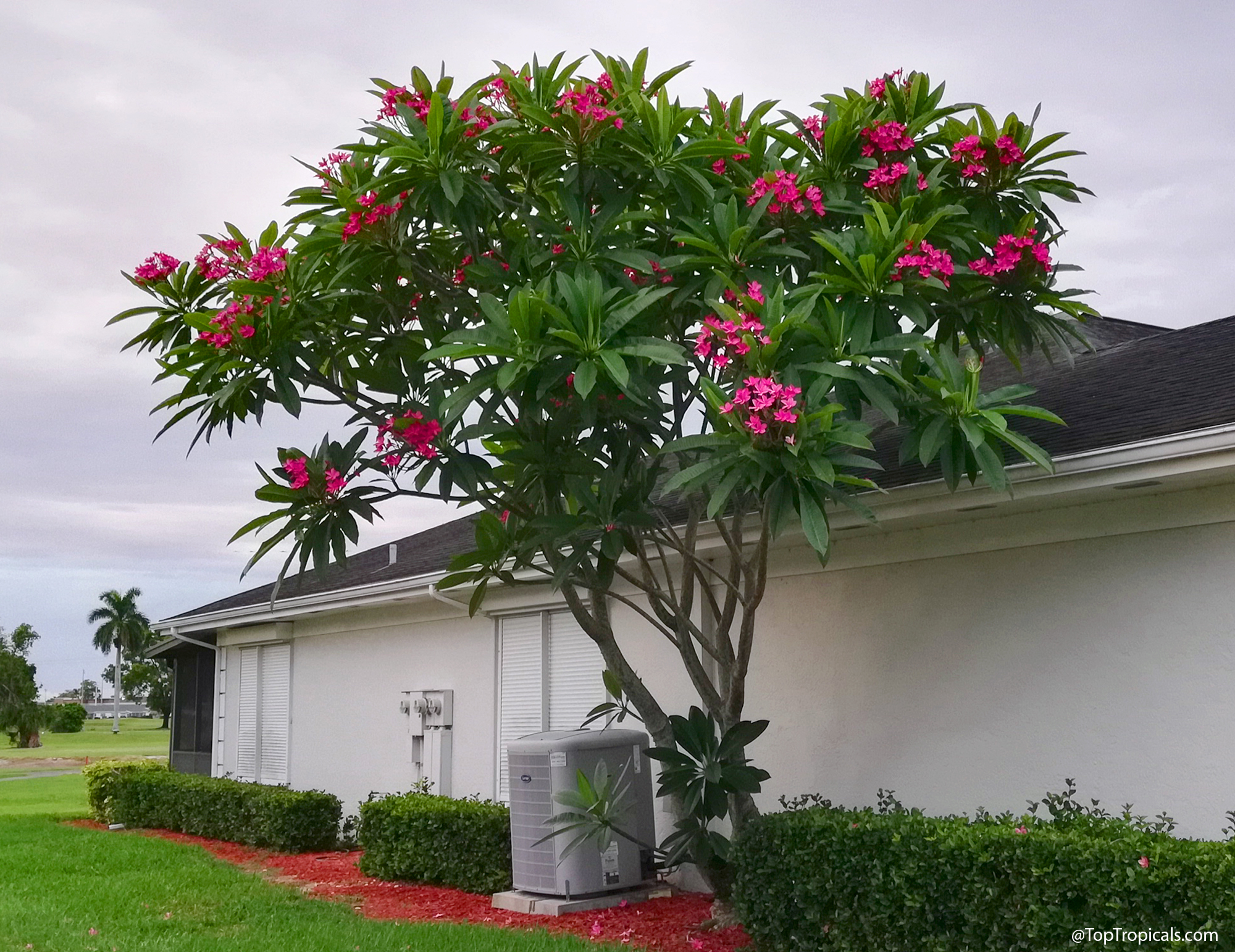
red  plumeria  tree  full  bloom  pink  red  flowers  in  residential  yard 
 tropical  flowering  tree

Red Plumeria is not just fragrant, it is one of the most spectacular trees when in full bloom

Build Your Plumeria Paradise - Save 10%

Get 10% off with coupon code PLUMERIA2026 on plumeria trees.
Offer valid through 04/15/2026.
Discount applies to plumeria plants only. Not valid on previous purchases and cannot be combined with other promotions or discounts. Offer subject to change without notice.

Date: 15 Apr 2026

7 best exotic dwarf trees for maximum impact in small tropical landscapes

7 best exotic dwarf trees for maximum impact in small tropical landscapes 7 best exotic dwarf trees for maximum impact in small tropical landscapes 7 best exotic dwarf trees for maximum impact in small tropical landscapes 7 best exotic dwarf trees for maximum impact in small tropical landscapes 7 best exotic dwarf trees for maximum impact in small tropical landscapes 7 best exotic dwarf trees for maximum impact in small tropical landscapes 7 best exotic dwarf trees for maximum impact in small tropical landscapes
7 best exotic dwarf trees for maximum impact in small tropical landscapes 🏡

For a yard that feels like a tropical escape but doesn't have the space for a massive jungle, these seven selections from TopTropicals are game-changers, chosen for their compact size, high "curb appeal," and unique tropical flair.

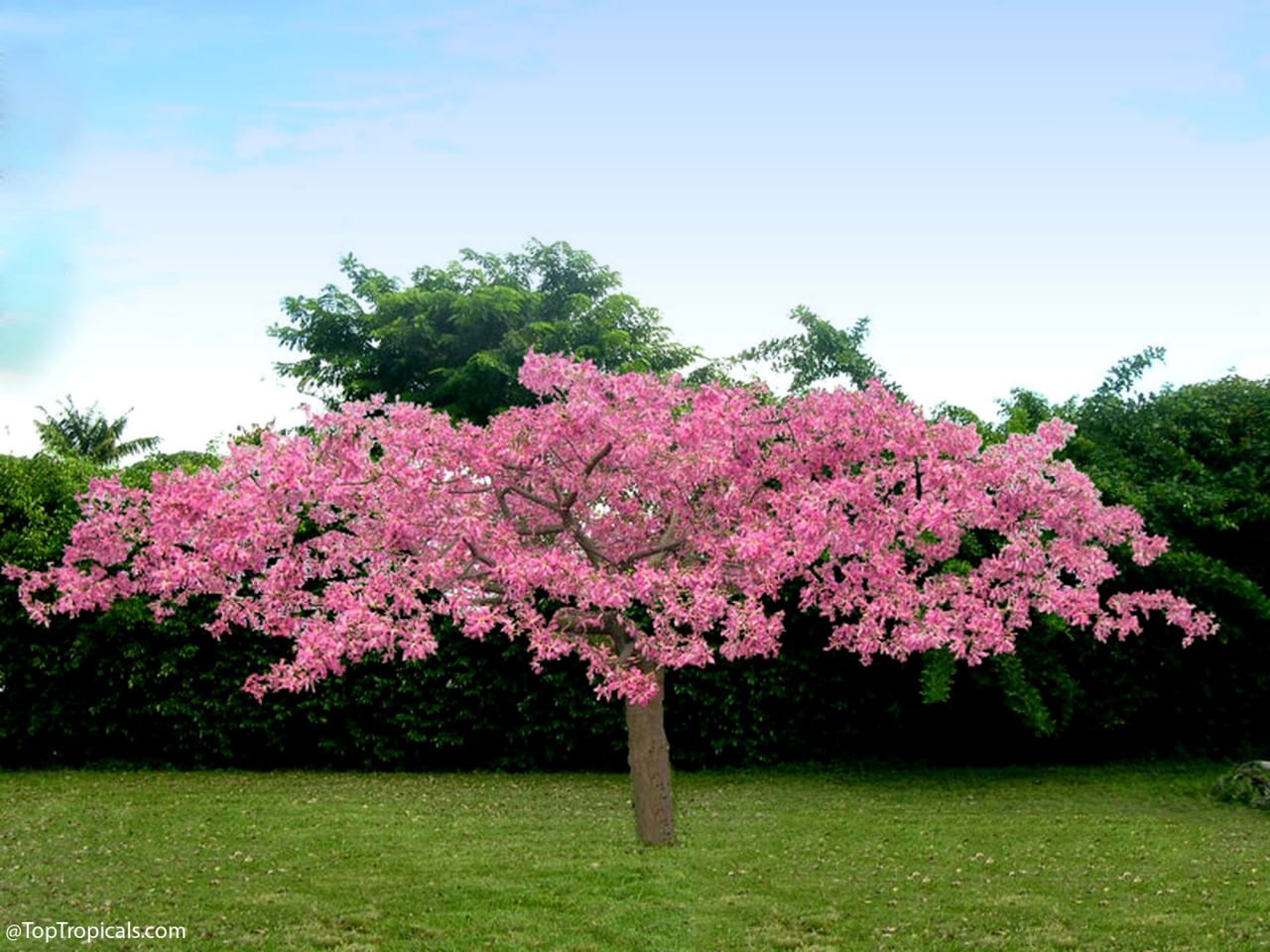
1. Dwarf Pink Princess Silk Floss Tree (Ceiba hybrid)

  • 🌳 A spectacular grafted hybrid of the famous Silk Floss tree, but in a much smaller package: a unique, often "fat" or bottle-shaped trunk and large, showy pink flowers with white centers.

🏡 Unlike the standard Ceiba which can become a giant, the 'Pink Princess' is grafted to stay compact (usually under 10 - 12 feet), allowing you to enjoy those exotic, orchid-like blooms even in a tiny garden.
  • 👉 more

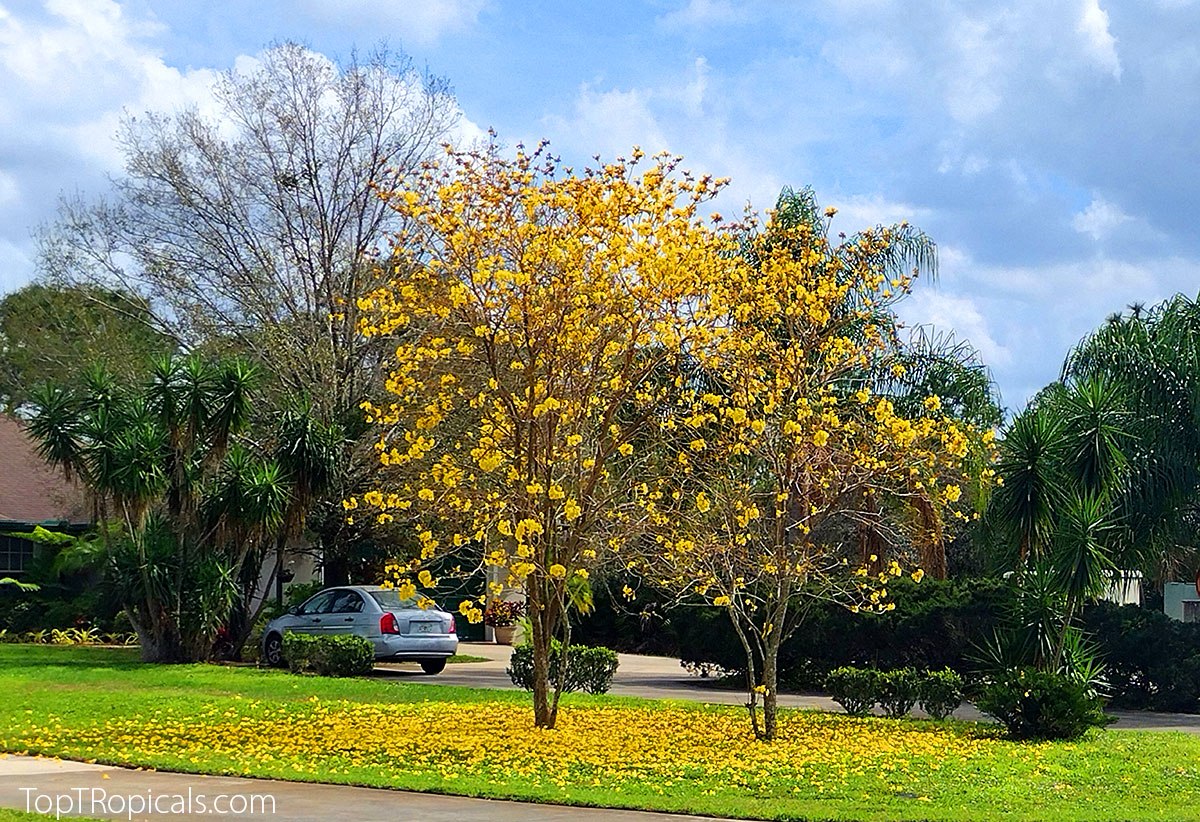
  • 2. Dwarf Golden Tabebuia (Tabebuia chrysotricha)

  • 🌳 Known as the "Golden Trumpet Tree," this dwarf selection puts on one of the most brilliant displays in the plant kingdom. Before the leaves emerge in spring, the entire tree is covered in bright, trumpet-shaped yellow flowers.

🏡 This specific dwarf form stays much smaller and more manageable than the standard Tabebuias seen on city streets. Its silver-green foliage and rounded canopy make it an ideal "specimen" tree that acts as a focal point for your front yard.
  • 👉 more

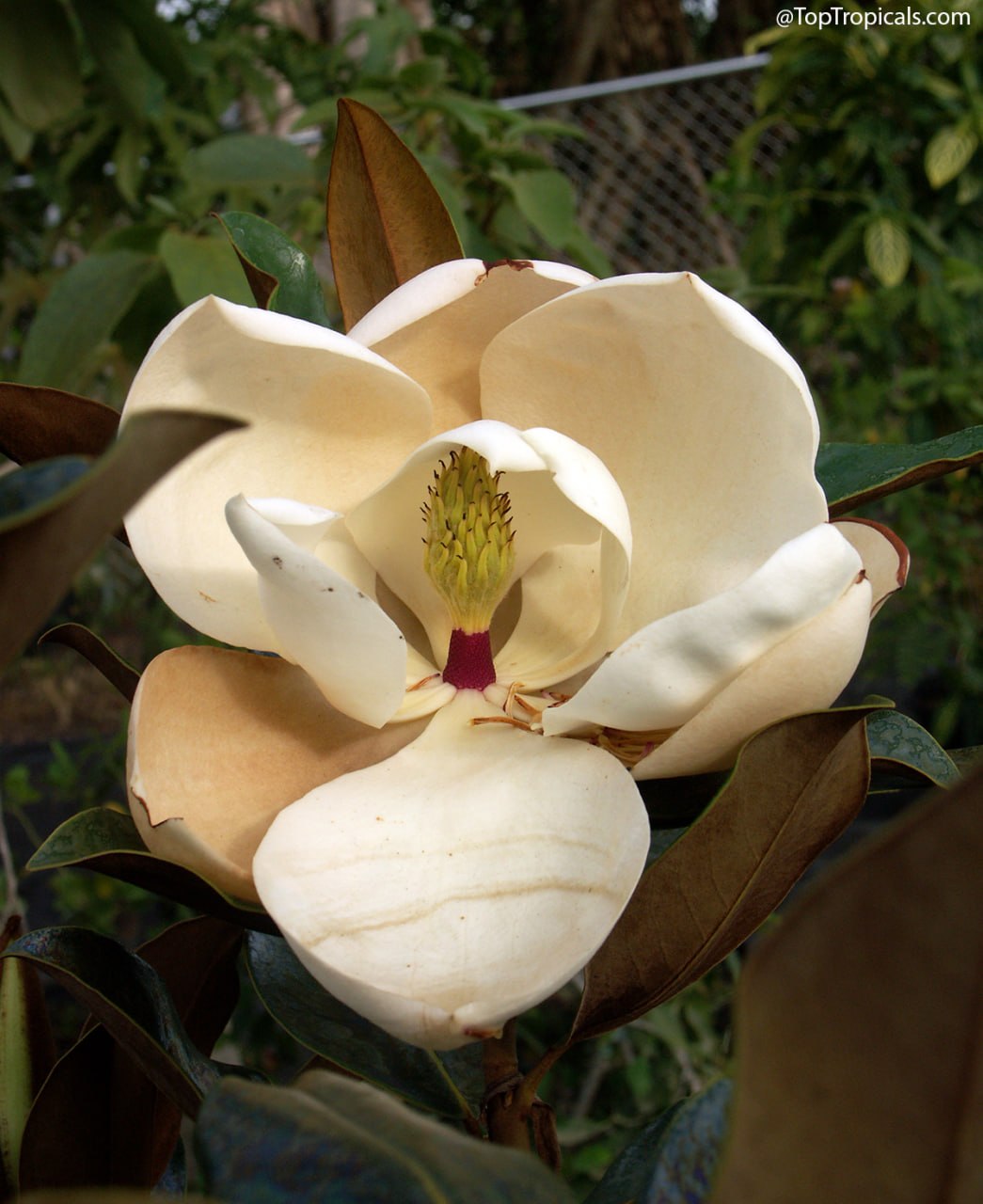
  • 3. Little Gem Southern Magnolia (Magnolia grandiflora)

  • 🌳 All the elegance of a classic Southern Magnolia but in a miniaturized version. It has the iconic waxy white, lemon-scented flowers and glossy leaves with fuzzy bronze undersides.

🏡 'Little Gem' is narrow and columnar, typically reaching only 15-20 feet (half the size of the standard species). It starts blooming at a very young age, so you don't have to wait years for those famous fragrant flowers.
  • 👉 more

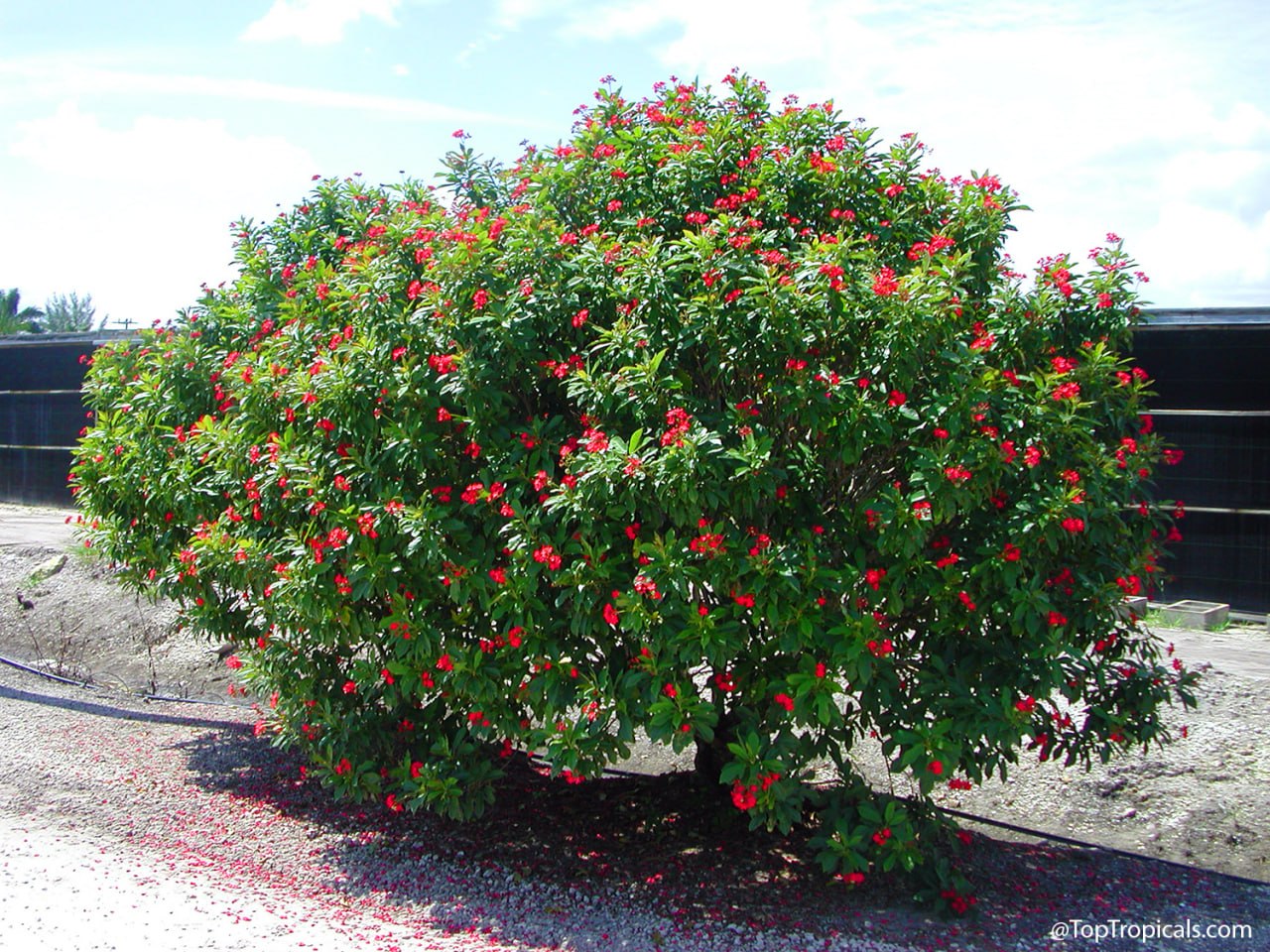
  • 4. Compact Butterfly Jatropha (Jatropha integerrima Compacta)

  • 🌳 This "ever-blooming" small tree is a butterfly magnet. It features clusters of bright, cherry-red star flowers against glossy, fiddle-shaped leaves.

🏡 The Compacta variety is specifically bred to stay bushy and small. It blooms almost 365 days a year in warm climates, providing a constant splash of red that draws in hummingbirds and pollinators.
  • 👉 more

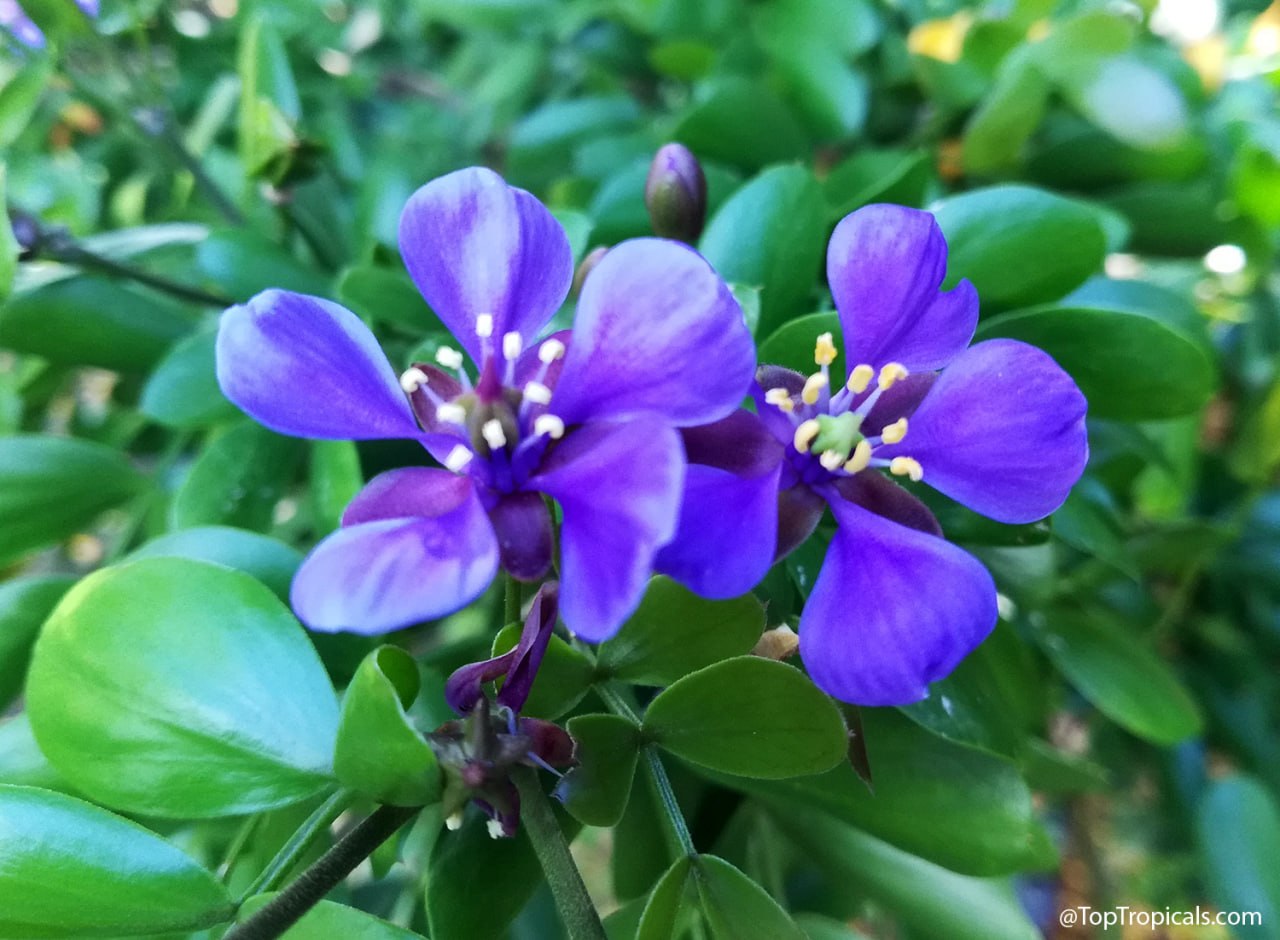
  • 5. Lignum Vitae (Guaiacum sanctum)

  • 🌳 Known as the "Wood of Life," this is one of the slowest-growing trees in the world. It has fine-textured, dark green foliage and produce stunning, small blue flowers that fade to white, followed by bright orange seed pods.

🏡 Because it grows so slowly, it will never outgrow its space. It is extremely hardy, salt-tolerant, and hurricane-resistant, making it a "plant it and forget it" heirloom tree for coastal or small urban lots.
  • 👉 more

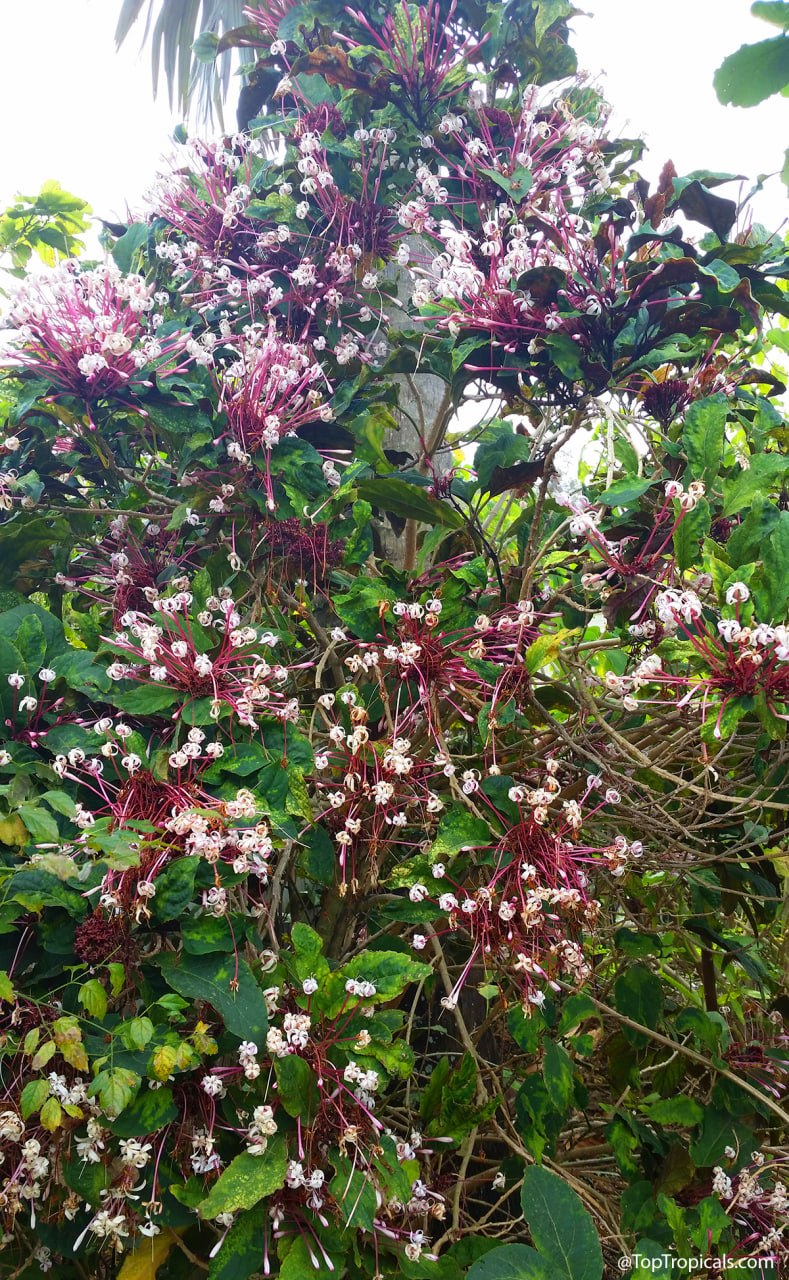
  • 6. Winter Starburst (Clerodendrum quadriloculare)

  • 🌳 A visual firework display. The leaves are deep green on top and rich purple underneath. In late winter, it produces massive, 8-inch wide clusters of tubular pink-and-white flowers that look like an exploding star.

🏡 It is easily pruned to a single-trunk tree form. The purple foliage provides "curb appeal" year-round, while the winter blooms provide a much-needed pop of color when other plants are dormant.
  • 👉 more

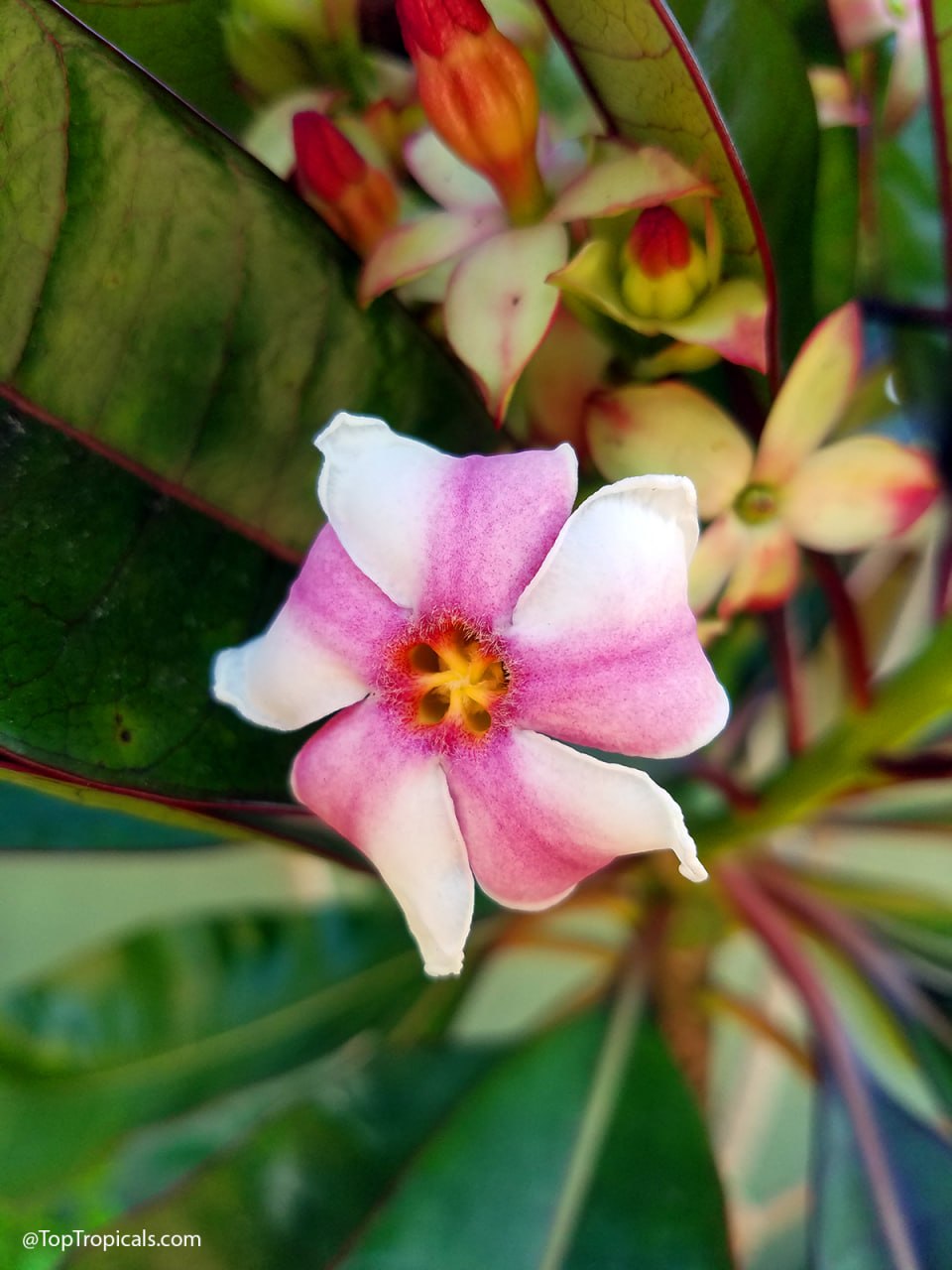
  • 7. Enchanted Incense (Cerbera x manghas)


🌳 This is a rare, small evergreen tree with glossy, dark green leaves and clusters of highly fragrant, star-shaped white flowers with a red "eye."
🏡 It has an naturally architectural, upright habit. The fragrance is incredible - sweet and heavy - making it a perfect "sensory" tree to plant near a patio where you can enjoy the scent on summer evenings.

🛒 Choose small trees for a small yard

📚 Learn more:

Plant Facts

Ceiba speciosa, Chorisia speciosa
Silk Floss Tree, Bombax
USDA Zone: 9-11
Small tree 10-20 ftSemi-shadeFull sunModerate waterRegular waterPink flowersThorny or spinyPlant attracts butterflies, hummingbirdsSubtropical plant. Mature plant cold hardy at least to 30s F for a short time

#How_to #Discover #Trees

🟢 Join 👉 TopTropicals

Date: 7 Oct 2025

⭐ The Winter Stars: 8 Flowering Trees That Steal the Show
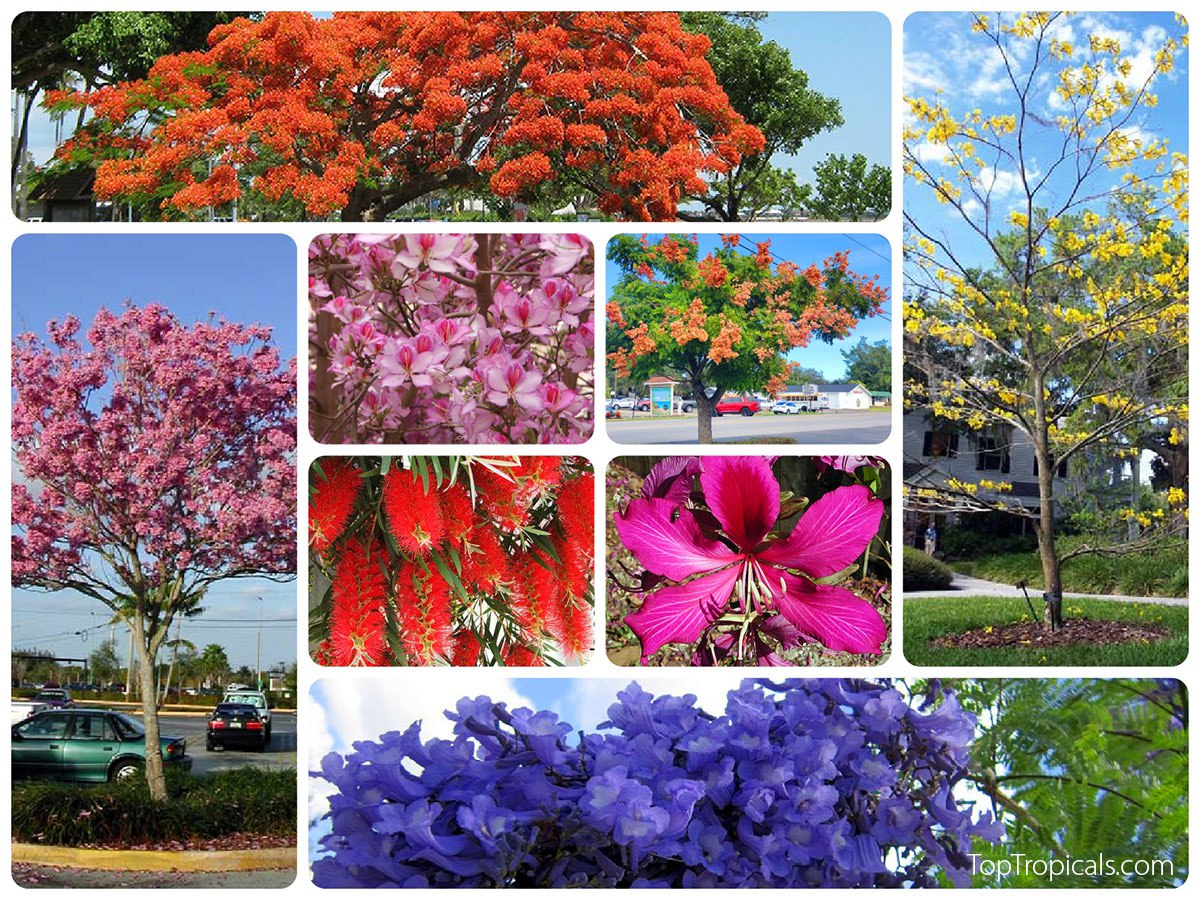
Collage  showing  eight  tropical  and  subtropical  winter-flowering  trees: 
 Royal  Poinciana  with  red-orange  canopy,  Dwarf  Pink  Tabebuia,  Dwarf  Golden 
 Tabebuia,  Pink  Butterfly  Orchid  Tree,  Golden  Rain  Tree,  Weeping  Red 
 Bottlebrush,  Hong  Kong  Orchid  Tree,  and  Jacaranda  with  purple 
 flowers.

8 Best Flowering Trees That Bloom in Winter: Royal Poinciana with red-orange canopy, Dwarf Pink Tabebuia, Dwarf Golden Tabebuia, Pink Butterfly Orchid Tree, Golden Rain Tree, Weeping Red Bottlebrush, Hong Kong Orchid Tree, and Jacaranda with purple flowers.

Royal Poinciana (Delonix regia)

The diva of tropical trees. Huge red-orange flowers blanket the branches from late winter through summer. If you’ve ever seen one in full bloom, you know — it stops traffic. Best in large yards or open spaces, but young ones do great in big pots for a few years. 🛒 Shop
Tatiana: “If you want a tree that makes people say ‘wow,’ this is it.”

Tabebuia chrysotricha – Dwarf Golden Tabebuia

Small tree, big drama. It turns solid gold just before new leaves appear. Blooms while completely bare — a stunning contrast of yellow on brown wood. Perfect for patios, courtyards, and containers. Handles cool nights down to the mid-20s F. Bright, cheerful, and forgiving — the kind of tree that always looks like it’s celebrating. 🛒 Shop

Tabebuia impetiginosa – Dwarf Pink Tabebuia (Pau D’Arco)

The Florida “cherry blossom.” Pink-lavender flowers smother the branches each winter, often before any leaves return. Thrives in sandy soil, tolerates drought, and grows beautifully in large planters or pots indoors near a sunny window. Ideal for seasonal residents or anyone who wants color when everything else is asleep. 🛒 Shop

Jacaranda mimosifolia

If color had music, this would be jazz. Soft, fern-like leaves and cascades of violet-blue trumpet flowers — airy, elegant, unforgettable. Outdoors, it makes a graceful shade tree; in containers, it stays compact with regular pruning. Jacarandas reward patience — they bloom bigger each year. 🛒 Shop

Koelreuteria paniculata – Golden Rain Tree

A favorite for its surprises — golden blooms in summer, pink paper lantern pods in fall, and bronze leaves before rest. Fast-growing, tough, and easy. Loves full sun and moderate water. Great for open lawns or patio tubs. The kind of tree that gives you something new to look at every month. 🛒 Shop

Callistemon citrinus – Bottlebrush Tree

The hummingbird magnet. Bright red, brush-shaped flowers bloom several times a year — sometimes even in cool weather. The dwarf form, ‘Little John,’ stays about 4 feet tall, perfect for pots or small borders. Trim lightly after flowering to keep it compact and colorful. 🛒 Shop
Tatiana: “If you’ve never grown a tropical tree before — start here. It’s the friendliest one.”

Bauhinia variegata – Pink Butterfly Tree

Graceful, fragrant, and forgiving. Its pink-lavender orchid-like flowers open from late winter through spring, filling the garden with color and pollinators. It’s fast-growing, drought-tolerant, and excellent for both ground and pots. Even the buds are edible — a fun bonus for adventurous gardeners. 🛒 Shop

Bauhinia blakeana – Hong Kong Orchid Tree

The queen of them all. Huge magenta-purple blooms that last for months, from fall through spring. Fragrant, clean (no messy seed pods), and perfect for patios or large decorative containers. Give it sun, a little water, and it will reward you with bloom after bloom. 🛒 Shop
Tatiana: “It’s the one tree that never lets winter win.”

A note on grafted Hong Kong Orchid Trees: Most Hong Kong Orchid Trees are grafted, and that’s actually a big advantage. Because they don’t grow from seed, grafted plants mature faster and begin blooming while still small — sometimes within the first year. That makes them perfect for patio pots or small gardens where space is limited.

Bringing the Tropics Home

Whether your garden faces the Gulf or your window faces the snow, these trees let you live in color year-round. Plant them outdoors in warm zones or grow them in pots indoors — they adapt, they bloom, they brighten every corner.

Gardening isn’t about waiting for spring — it’s about finding joy in every season. And when a tree blooms in January, that joy feels twice as sweet.

🛒 Shop Winter Flowering Plants
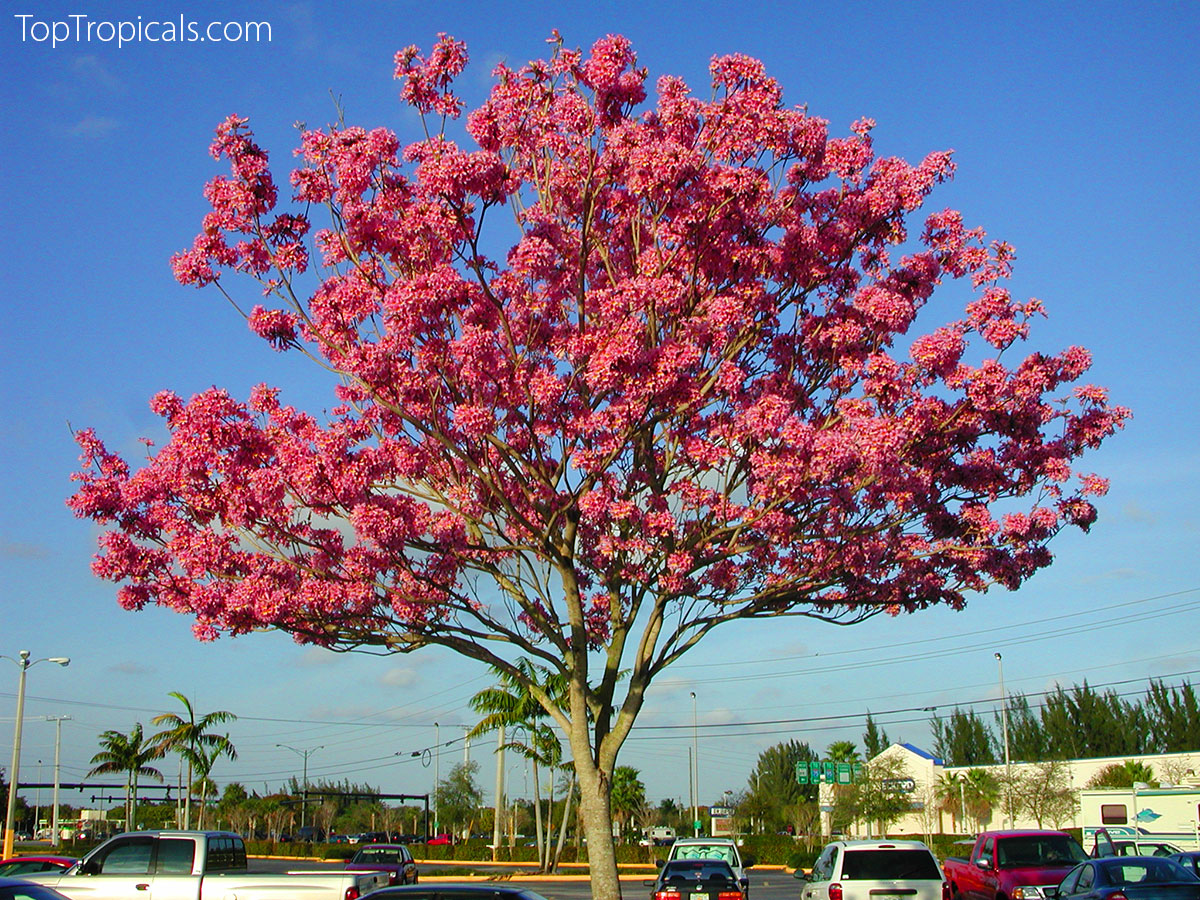
Tabebuia  impetiginosa  -  Dwarf  Pink  Tabebuia,  Pau  DArco,  Taheebo

✍️ Winter Bloomer Q&A

Q: Can these trees really bloom indoors?

Yes! Smaller species like Bottlebrush ‘Little John,’ Dwarf Tabebuias, and many Bauhinias bloom beautifully in pots with bright light or grow lamps.

Q: Do they lose their leaves in winter?

Some, like Tabebuias and Jacarandas, drop leaves right before blooming — it’s normal and part of their charm. Others, like Bottlebrush, stay evergreen.

Q: What fertilizer works best?

We use Sunshine Boosters — gentle, balanced, and perfect for tropicals. Feed every 2–3 weeks during active growth.

Q: How do I know when to water?

Touch the soil! If it’s dry an inch or two down, water deeply. Overwatering is the main mistake with tropicals.

Q: Can they handle frost?

A quick dip into the upper 20s F is fine for most mature trees. Cover young ones or move containers under shelter if colder.

Q: Which are best for beginners?

Start with Bottlebrush ‘Little John’ or Golden Tabebuia — compact, colorful, and nearly foolproof.

Q: When will they bloom?

Usually within few years if they get enough sun and warmth. Grafted plants blooms much sooner

Q: Which of these trees are best for pot growing?

For patios, balconies, or indoor sunrooms, choose the compact or grafted types:

🎥 Watch videos of Dwarf trees in bloom:

Dwarf Golden Tabebuia

Dwarf Pink Tabebuia

🛒 Shop Winter Flowering Plants
Date: 24 Sep 2023

Go Bananas!
10 good reasons to plant bananas in your garden

Cat  with  bananas  in  refrigerator

Adding banana plants to your subtropical garden or plant collection can enhance the aesthetics of your outdoor and indoor space, provide fresh and nutritious fruits, and offer a fun gardening experience with relatively low maintenance requirements. It's a delightful way to connect with nature and enjoy the benefits of homegrown produce.

1. Tropical Ambiance: Banana plants bring a touch of the tropics to your subtropical garden. Their large, lush leaves create a lush and exotic atmosphere that can transform your garden into a tropical paradise.

2. Homegrown Flavor: Growing your own banana trees allows you to enjoy the freshest, most flavorful bananas right from your garden. Homegrown bananas often have a superior taste compared to store-bought varieties.

3. Nutritional Benefits: Bananas are packed with essential vitamins, minerals, and dietary fiber. By cultivating your own banana trees, you gain access to a nutritious and healthy snack option right in your backyard.

4. Quick Results: Banana plants are known for their fast growth. In subtropical climates, they can produce fruit in as little as one to two years. This means you don't have to wait long to savor the fruits of your labor!

5. Low Maintenance: Banana trees are relatively low-maintenance once established. They require regular watering, but their hardy nature makes them a relatively easy addition to your garden. They are not messy in a landscape.

6. Versatility: Bananas offer versatility in your garden. You can choose from dessert bananas for snacking, cooking bananas like plantains for culinary experiments, or even ornamental banana varieties to enhance your garden's aesthetics. There are so many varieties to enjoy! You can't find this big selection in a grocery store.

7. Sustainable Living: Growing your own bananas reduces your reliance on store-bought produce, contributing to a more sustainable lifestyle. It also minimizes the carbon footprint associated with transporting fruits to market.

8. Educational Value: Cultivating banana plants can be an educational experience for both adults and children. It offers insights into tropical horticulture and can foster an appreciation for gardening and botany.

9. Landscaping Appeal: Beyond their fruit-bearing potential, banana plants add visual interest to your garden. Their unique form and striking leaves make them an excellent choice for landscaping and providing shade in your outdoor space.

10. Resilience: While bananas thrive in tropical conditions, many banana varieties are hardy enough to withstand cooler climates, making them a durable addition to your garden.

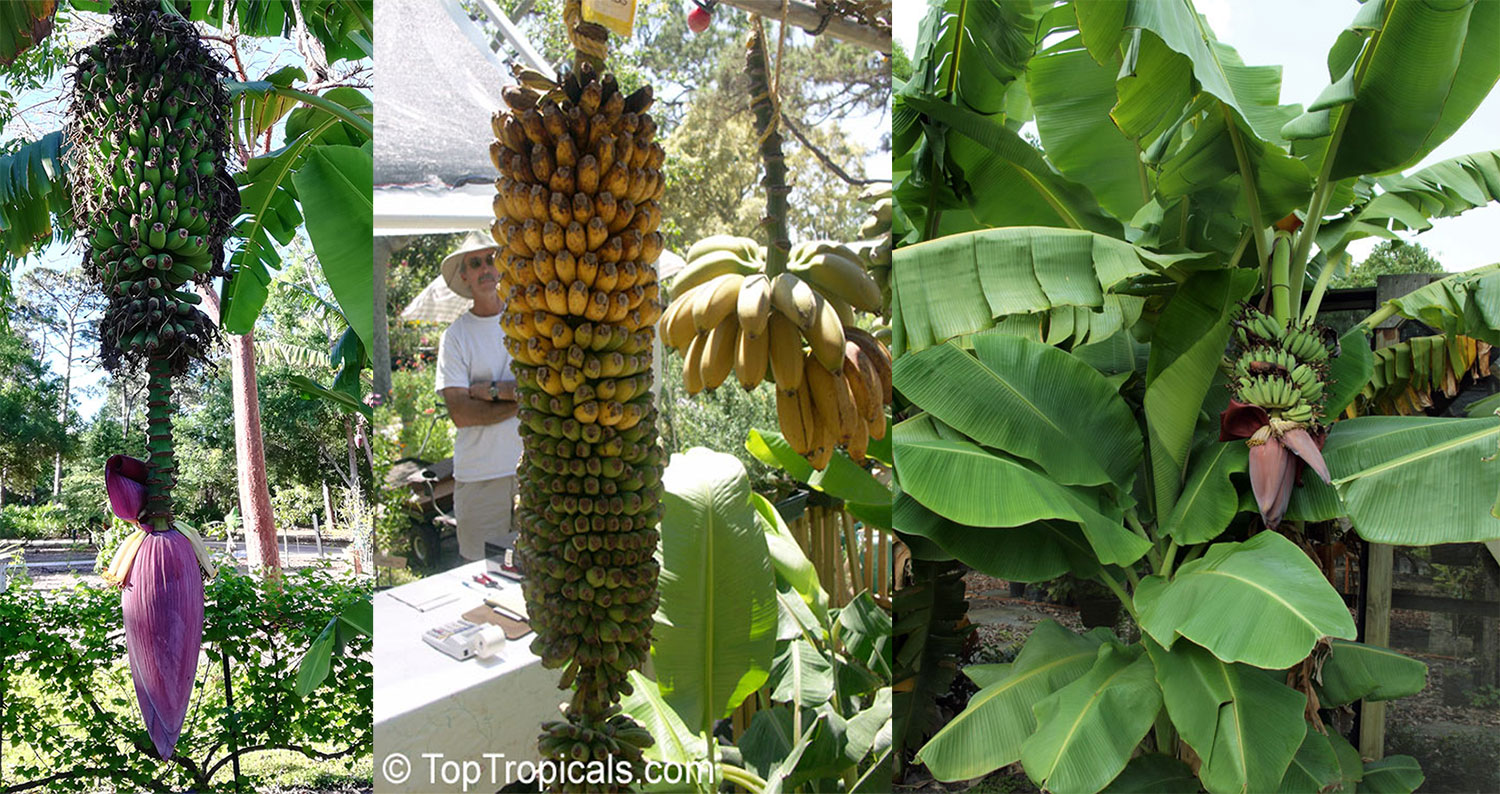
bananas  and  banana  trees

Date: 24 Jul 2023

Easy, stress-free plants
for Summer planting

Cat  with  Bananas

Q: With the rising temperatures, I'm concerned about shipping my plants safely. Can they withstand the heat during transit? Also, is it okay to plant them in the ground now, or should I wait for cooler Fall weather?

A: Your concern about shipping plants in hot weather is valid. For sensitive plants, we'll delay shipping until conditions are more favorable in your area. However, there are plenty of heat-tolerant tropical plants that handle shipping well with minimal stress. These plants adapt easily when planted during the hot summer months. Simply follow the included planting instructions, gradually acclimate them to full sun, and they should thrive.

Certain flowering tropical plants, such as Allamandas, Calliandras, Caesalpinias, Adeniums, and Clerodendrums, are excellent options for shipping and establishing during the summer. Flowering vines like Jasmines also adapt well. Consider using Sunshine Booster fertilizers to promote robust growth, they are safe to use right after planting.

Additionally, many fruit trees flourish in heat. Mangoes, Avocados, Pomegranates, Pineapples, Loquats, Eugenias - Tropical cherries, Bananas, Jackfruits, Dragon Fruit, and Olive trees are great choices for summer planting. Noni trees are hardy survivors and usually ship and grow well during the summer, in spite of their lush tropical leaves.

Feel free to check with us about the specific plant you plan to order for its suitability in summer shipping. We're here to take care of your green babies and address your year-round planting needs!

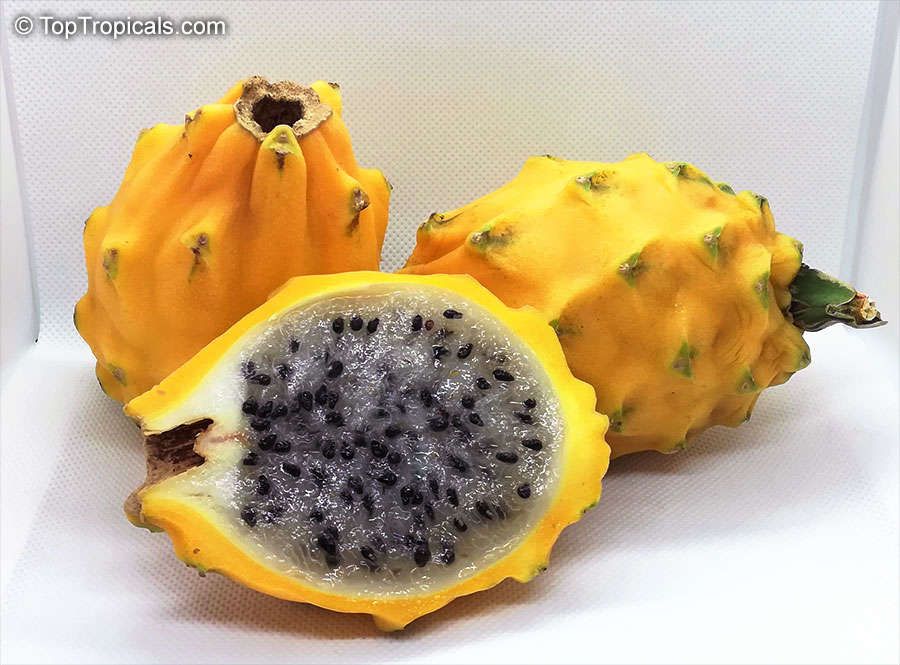
Pitaya  Yellow  Dragon  Fruit,  Selenicereus  megalanthus

Pitaya, Yellow Dragon Fruit, Selenicereus megalanthus

Cat  with  Bananas

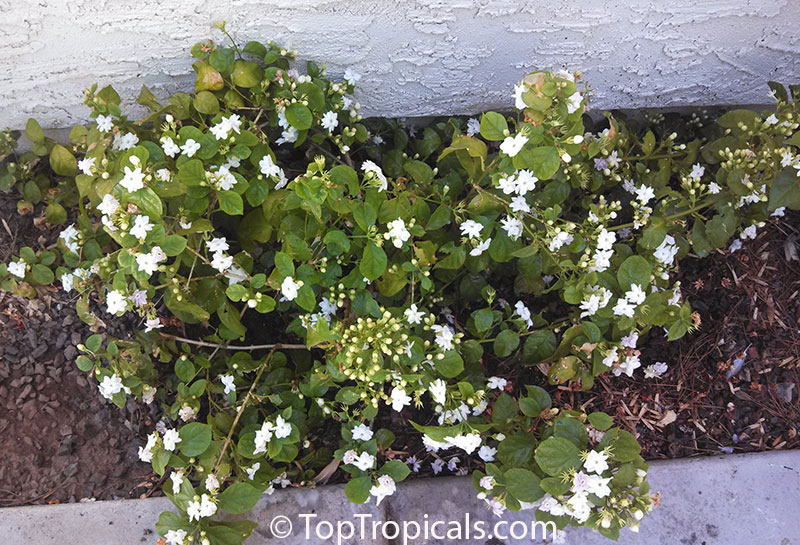
Jasminum sambac Maid of Orleans thrives and blooms in hot sun

Cat  with  Bananas

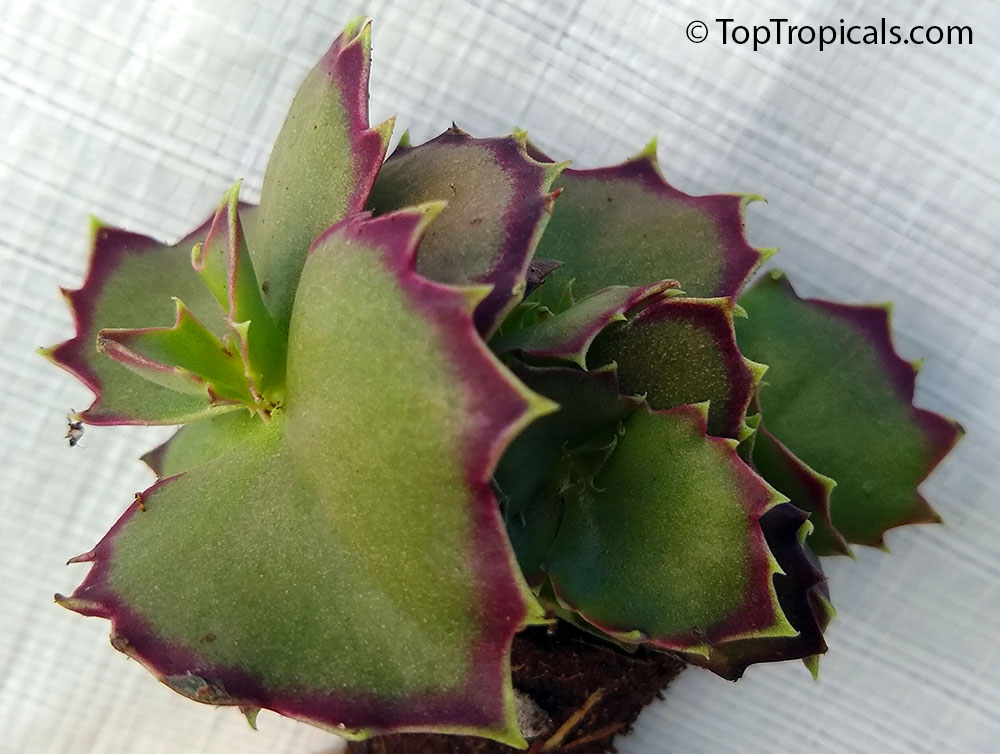
Kalanchoe synsepala Magnificent - Walking Cup Kalanchoe, spectacular plant, loves dry and hot conditions