Garden Blog - Top Tropicals

Date: 31 May 2026

🔮 The Search for Enchanted Incense
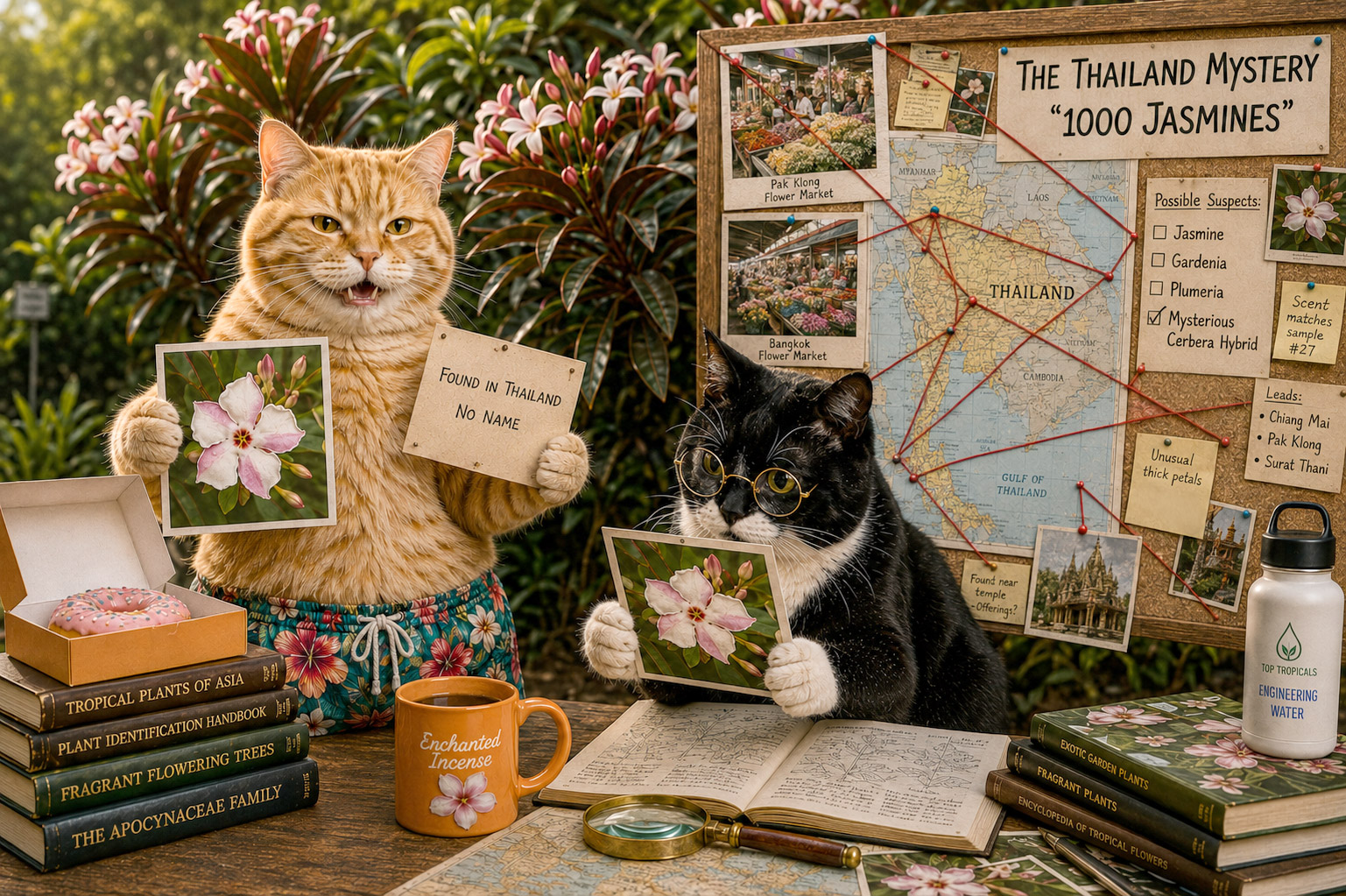
Smokey  and  Sunshine  investigate  the  mystery  of  Enchanted  Incense,  a 
 fragrant  Cerbera  hybrid  from  Thailand,  using  photos,  maps,  and  botanical 
 clues.
Sunshine: John said it smelled like a thousand jasmines.
Smokey: And somehow that's all the information he brought back from Thailand.
Sunshine: He brought a photo, too.
Smokey: Excellent. We can begin our international manhunt.

Well, Smokey and Sunshine have closed the case and found the mystery plant. The cork board is coming down, the magnifying glass is back in the drawer, and the "Enchanted Incense" mug is finally empty. Now let's talk about the plant itself.

🌸 Some plants arrive with a label. Some arrive with a story.
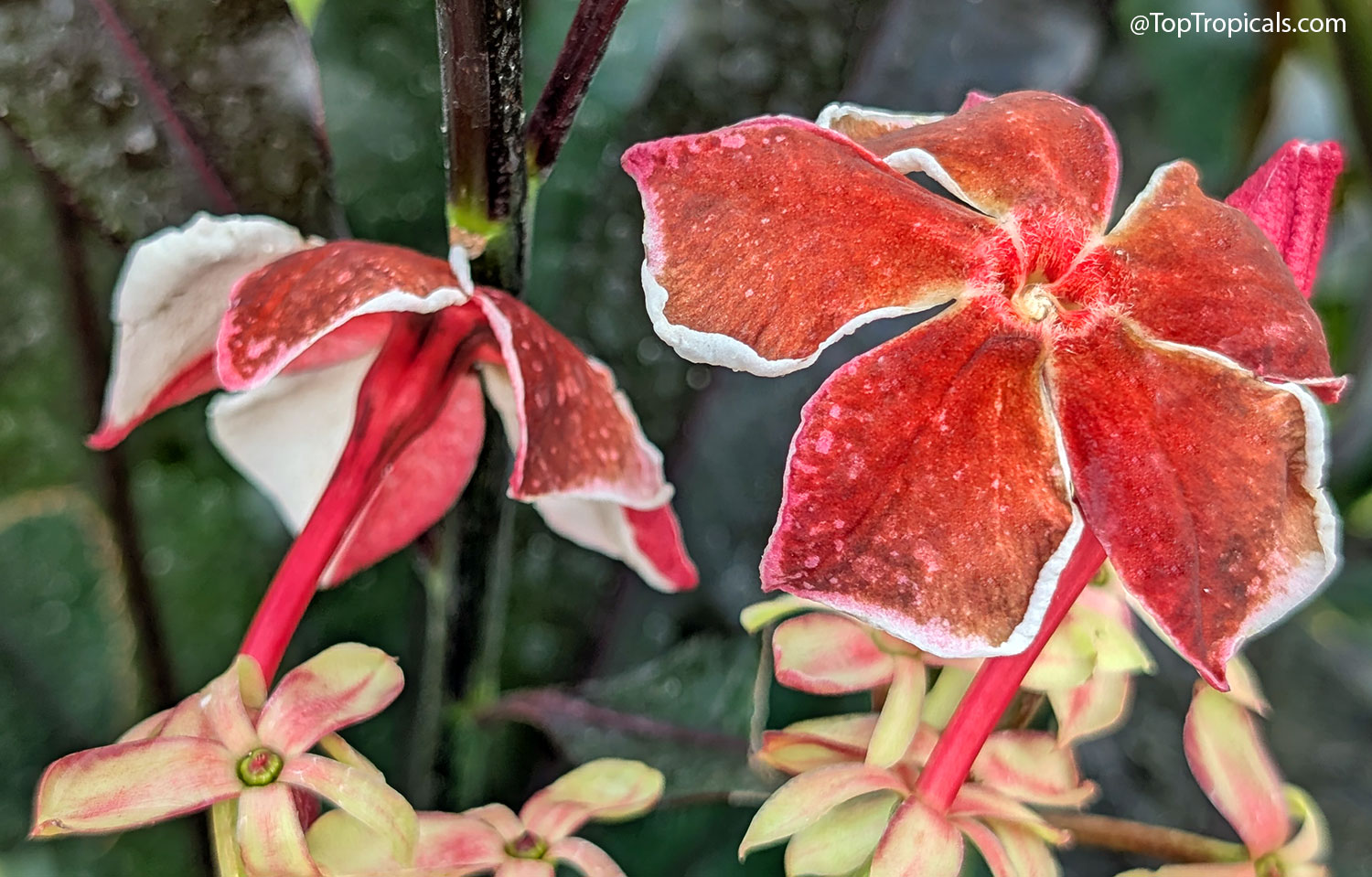
Close-up  of  Cerbera  x  manghas  Enchanted  Incense  flowers  showing  rich 
 reddish-brown  petals  with  soft  white  edges  and  bright  pink  flower  tubes.  The
    unusual  blooms  are  displayed  against  dark  foliage,  highlighting  their 
 exotic  shape  and  velvety  texture.

Cerbera x manghas - Enchanted Incense - produces some of the most unusual fragrant flowers in the tropical garden. Its velvety reddish blooms, outlined in white and carried on vivid pink tubes, create an exotic display that looks hand-painted.

When our good friend John Mood returned from a plant conference in Thailand, he did not bring us a plant. He brought us a mystery.

John had spent decades growing and collecting rare tropical plants. When he said he had found something special, we paid attention.

On a visit to Chatuchak Market, one of the most famous plant markets in Asia, something stopped him. Not the flowers. The fragrance.

"I found a plant that smells stronger than a thousand jasmines," John told us.

That one sentence stayed with us for years.

He had photographs. He had his memory of that scent. What he did not have was a name. No tag. No seller information. Just the photos and the certainty that he had smelled something genuinely unusual.

So we started looking.

We showed the photographs around. We asked collectors. We compared flowers. Every lead turned into another question. But eventually, after years of searching on and off, we found it.

The mystery plant turned out to be an unusual Cerbera unlike anything we had grown before. Today we call it Enchanted Incense. Fragrance lovers recognized immediately what John had recognized in that Bangkok market. This was not just another pretty tropical flower.

🌸 The Plant
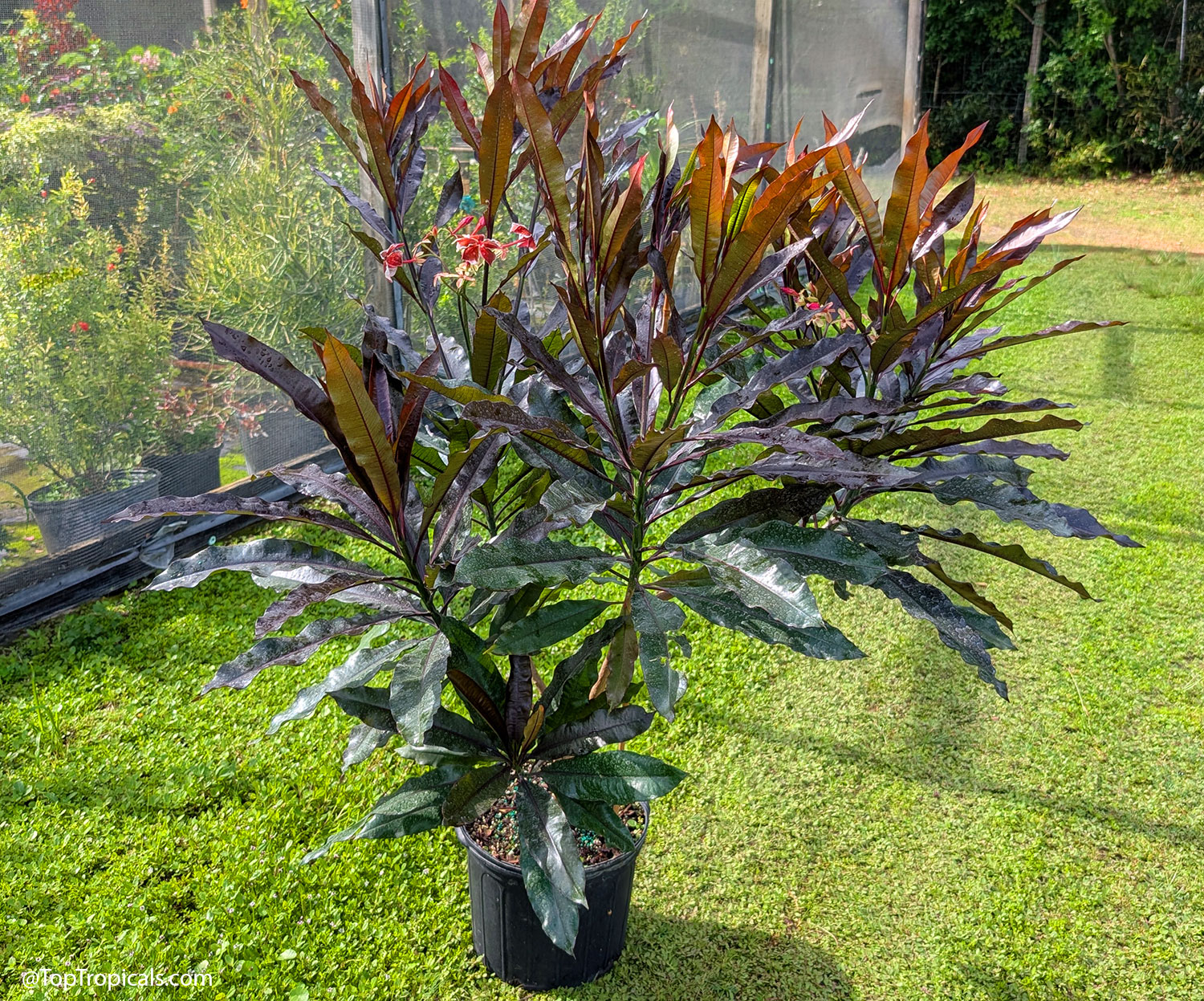
Full  view  of  Cerbera  x  manghas  Enchanted  Incense  growing  in  a  nursery 
 container,  displaying  dramatic  dark  burgundy  foliage  with  wavy-edged  leaves 
 and  clusters  of  unusual  reddish-pink  flowers.  New  growth  emerges  in  rich 
 bronze  tones,  creating  a  striking  tropical  appearance.

Even when not in full bloom, Cerbera x manghas Enchanted Incense is a standout plant. Its glossy, deep burgundy foliage and bronze new growth create a bold tropical presence, while the unusual flowers add an extra layer of intrigue.

Visitors at our nursery still walk past it and stop. Not because they noticed the plant. Because they noticed something in the air and could not figure out where it was coming from.

The flowers start soft pink and white, then deepen to rich red and auve as they mature. They come in clusters, four to five inches across, and the fragrance they produce does not stay close to the flower. It moves. It fills the space around the plant. On a warm morning it can perfume an entire patio.

The foliage is worth mentioning too. Deep green leaves with burgundy and mauve tones that make it attractive even when it is not blooming. The growth habit is slow and slightly weeping, similar to plumeria, which is no coincidence since they are close relatives. Unlike plumeria, Enchanted Incense stays evergreen in warm climates.

It is a compact, slow-growing small tree that is happy in a container. That makes it practical for gardeners in colder climates who need to bring it in for winter, and for anyone who wants a fragrant plant near a seating area rather than somewhere across the yard.

🌸 Why We Grow It
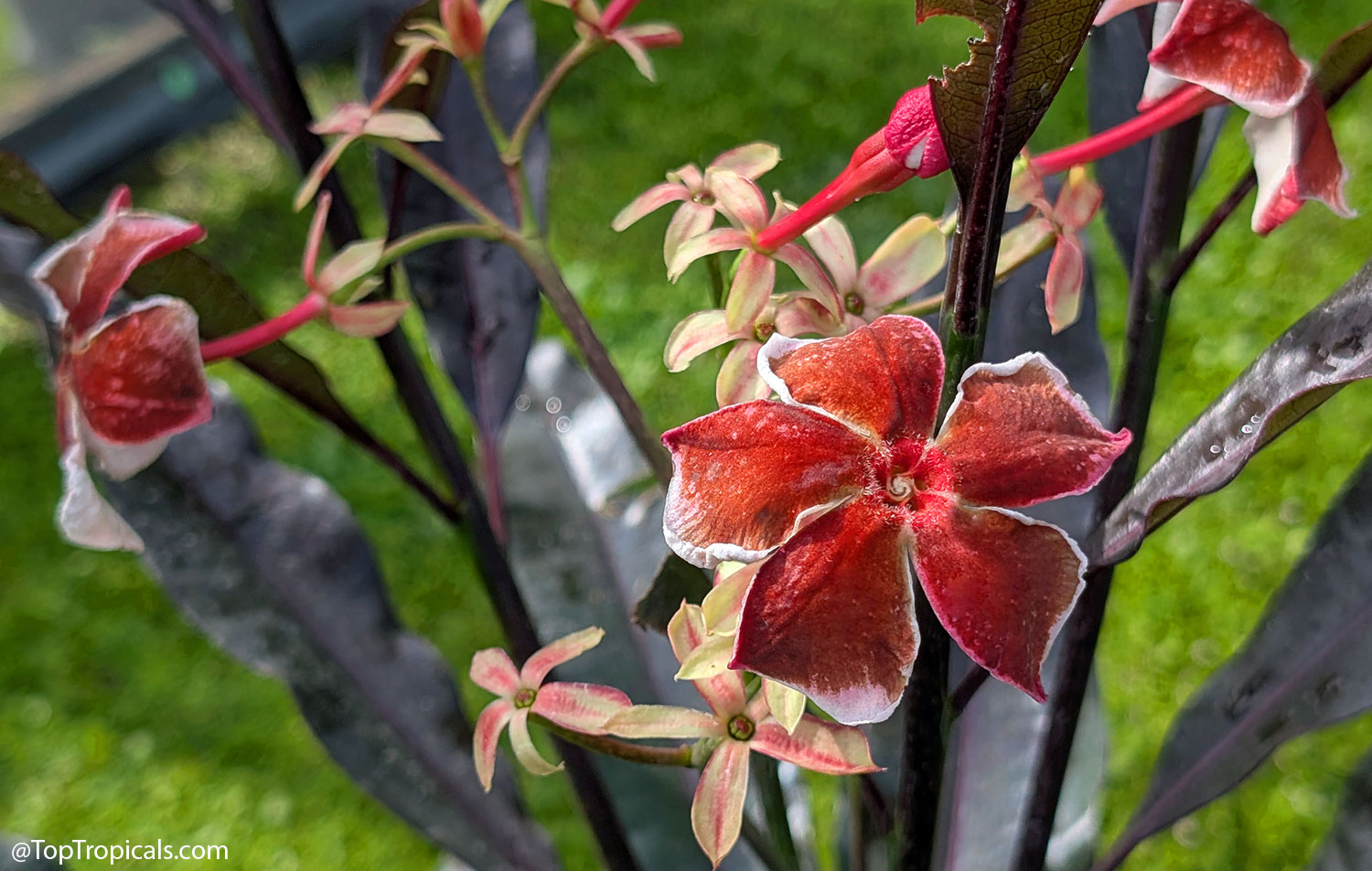
Close-up  of  Cerbera  x  manghas  Enchanted  Incense  flowers  nestled  among 
 dark  burgundy  foliage.  The  unusual  blooms  feature  velvety  reddish-brown 
 petals  edged  in  white,  emerging  from  vivid  pink  flower  tubes  and  surrounded 
 by  pale  star-shaped  calyces.

The flowers of Cerbera x manghas - Enchanted Incense - look otherworldly. Deep reddish petals, bright pink tubes, and contrasting white edges combine to create one of the most distinctive fragrant blooms.

We grow thousands of plants, and most can be described in a sentence or two.

This one cannot.

A large Enchanted Incense grows right outside our office. Every year it reminds us why we spent so much time searching for it.

Visitors stop beside it and ask the same question: "What is that smell?"

They usually notice the fragrance before they notice the plant.

Some follow the scent across the nursery. Others stop in the middle of a conversation and start looking around. Nearly everyone ends up standing next to the tree trying to figure out where that incredible fragrance is coming from.

In a world full of beautiful tropical plants, Enchanted Incense remains one of the few that announces itself before you even see it.

That is why we love growing it.

Feature Description
Common Name Enchanted Incense
Botanical Name Cerbera x manghas
Origin Thailand
Flowers White to soft pink, deepening to red and pink
Fragrance Exceptional, far-reaching
Container Friendly Yes
Cold Tolerance USDA Zones 9-11 (Low 30s°F with caution)
Growth Habit Slow, compact, slightly weeping

🛒 Add Enchanted Incense to your collection

Growing Tips

Close-up  of  a  pink-flowering  form  of  Cerbera  x  manghas  Enchanted 
 Incense,  featuring  velvety  rose-pink  petals  with  crisp  white  edges.  The 
 flower  is  surrounded  by  burgundy  foliage,  red  flower  buds,  and  pale  pink 
 star-shaped 
 calyces.

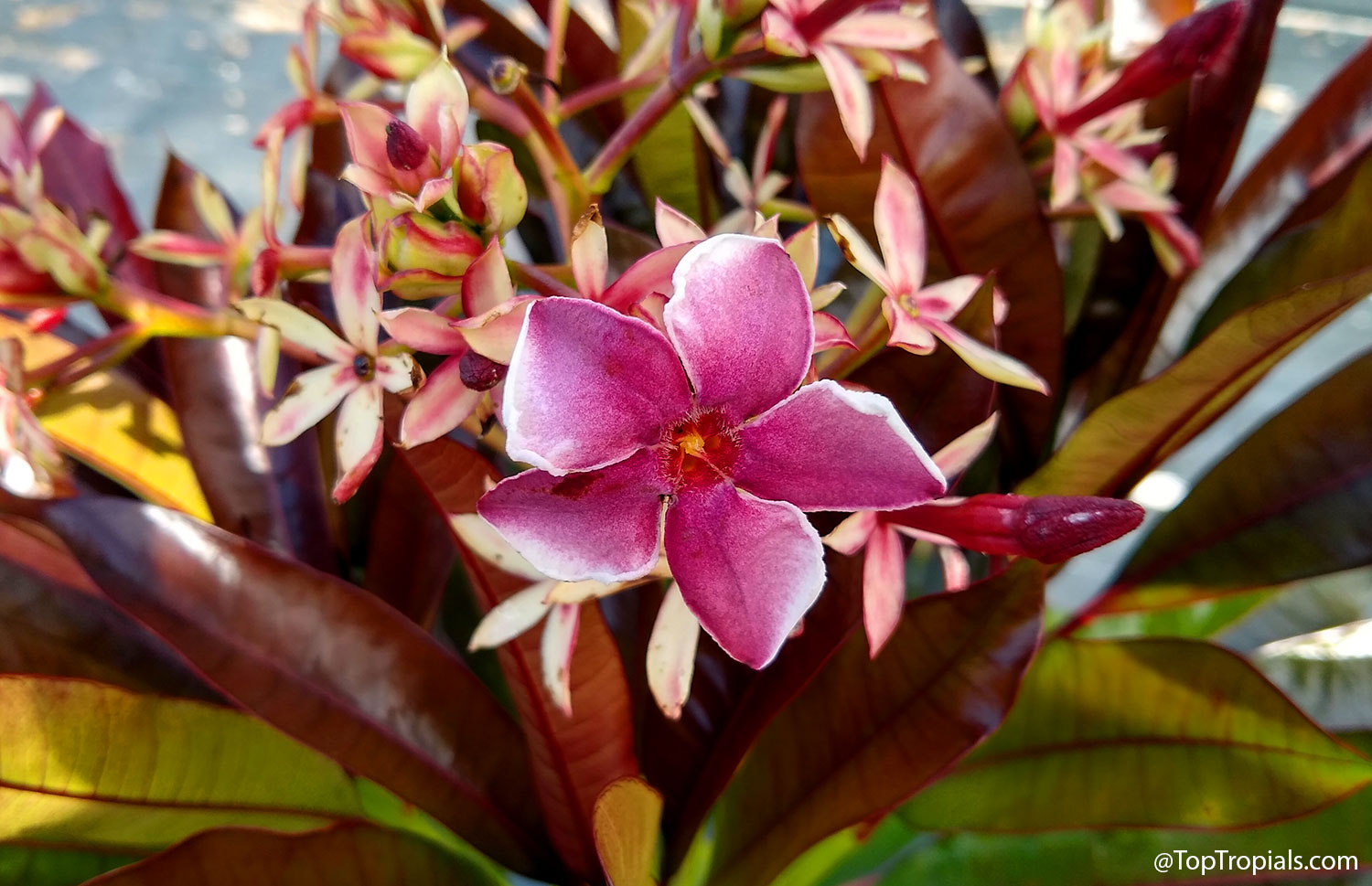
Cerbera x manghas - Enchanted Incense can display remarkable variation in flower color. This form combines soft rose-pink blooms with white-edged petals and rich burgundy foliage, creating a striking contrast throughout the plant.
  • Light: Full sun is best (at least six hours daily). It will tolerate partial shade but blooms much more generously in good light.
  • Watering: Water regularly during warm weather. In cool weather and winter, keep the soil on the drier side. Overwatering when temperatures are low is the most common mistake.
  • Soil: Use a well-draining mix. This plant absolutely does not want wet feet.
  • Fertilizer: Feed with a Green Magic controlled-release fertilizer for flowering plants in spring, supplemented with occasional liquid fertilizer through the summer. For non-stop blooms without the risk of salt build-up in containers, we highly recommend Sunshine Boosters™. Read our Guide to Sunshine Boosters™ and Green Magic fertilizer
  • Winter Care: Bring it indoors when temperatures approach the mid-30s°F. The rootstock is fairly tough, but the foliage is not. Cold and wet conditions combined are the real risk.

One Last Thing
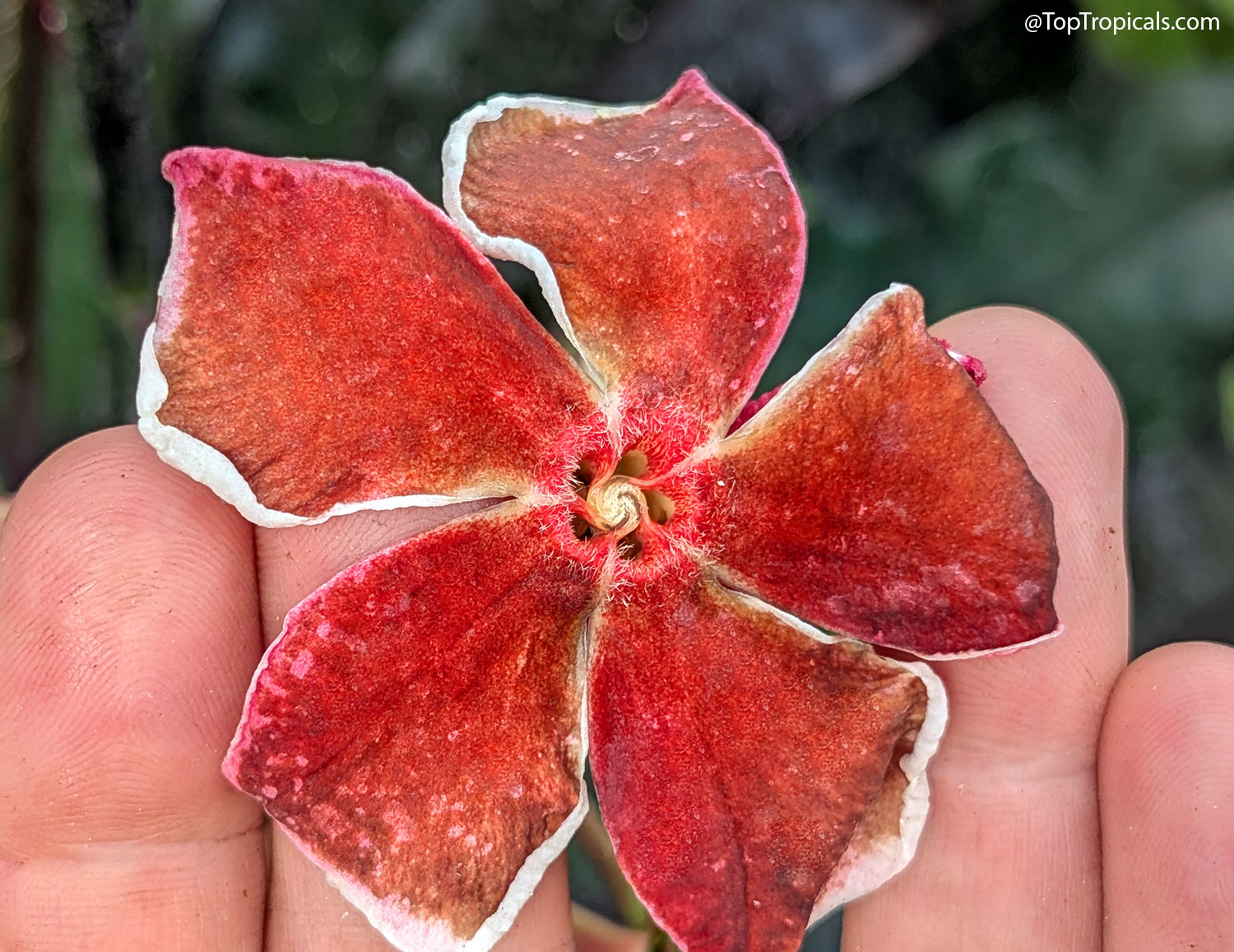
Macro  close-up  of  a  Cerbera  x  manghas  Enchanted  Incense  flower  resting 
 against  a  person's  fingers  for  scale.  The  bloom  features 
 velvety  reddish-brown  petals  with  narrow  white  margins  and  a  fuzzy  bright 
 pink 
 center,  revealing  the  intricate  details  of  this  unusual  tropical  flower.

A closer look reveals the remarkable details of Cerbera x manghas - Enchanted Incense. The velvety petals, crisp white edging, and fuzzy pink center give the flower an appearance unlike anything else in the garden. And then comes the scent...

John came back from Bangkok with a few photographs and a fragrance he could not forget. It took us years to track down the plant behind that memory. We have never regretted a single minute of the search.

Sunshine: So after all those years, what's the answer?
Smokey: Stand next to the plant.
Sunshine: That's it?
Smokey: The fragrance explains the rest.
🛒 Grow Enchanted Incense

📚 Learn more from our Blog

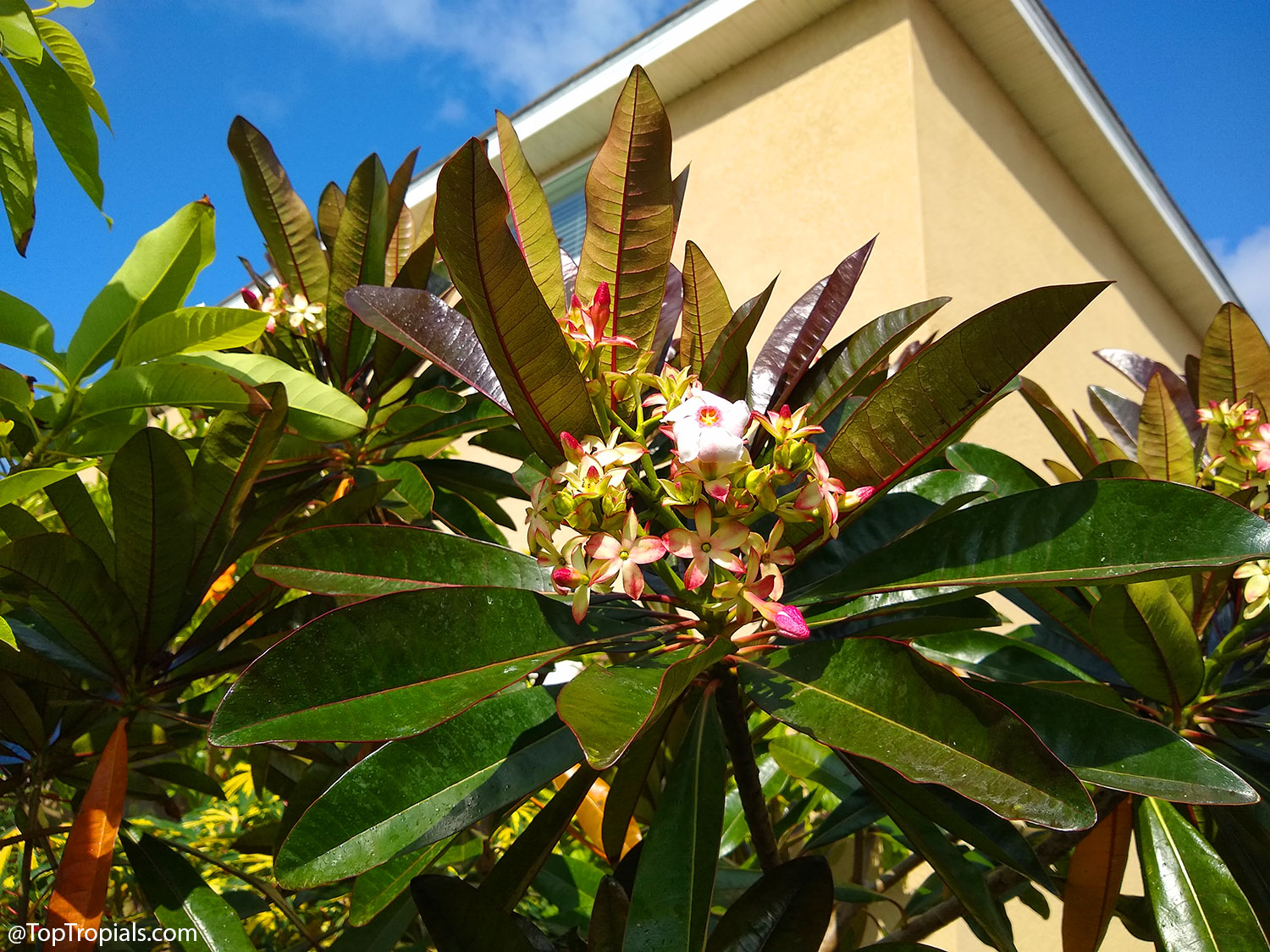
Mature  Cerbera  x  manghas  Enchanted  Incense  growing  as  a  landscape  tree 
 beside  a  house.  The  plant  displays  glossy  dark  green  leaves,  bronze-toned 
 new  growth,  and  clusters  of  flowers  and  buds  against  a  bright  blue 
 sky.

A closer look reveals the remarkable details of Cerbera x manghas - Enchanted Incense develops into an attractive small tree with lush evergreen foliage and colorful new growth. In the landscape, it combines year-round structure with clusters of bright redding-pink fragrant flowers that stand out beautifully against the glossy leaves.

Date: 22 Sep 2025

🐲 The taste you will never forget

Dragon  fruit  collage  -  yellow,  red,  purple,  white  varieties

If you only know dragon fruit from the grocery store, you probably think it looks pretty but tastes bland. That is because most commercial fruit is picked early, shipped far, and loses its sweetness. The truth? Homegrown dragon fruit is juicy, sweet, and full of flavor. The best of all is the yellow variety, Palora (Selenicereus megalanthus), a cactus fruit from Ecuador that bursts with tropical taste.

🌵 Pitaya or Dragon fruit – what is the difference?

Both names describe the same climbing cactus. In Latin America it is called Pitaya, while Asia and English speakers say Dragon fruit. There are three main kinds:

Some hybrids give purple or magenta flesh. All are beautiful, all are easy to grow at home.

⚡️ Do red, white, and yellow taste different?

Yes. White types are mild and refreshing. Reds are sweeter and juicier. Yellows are the sweetest of all.

⚡️ Flowers from a fairy tale

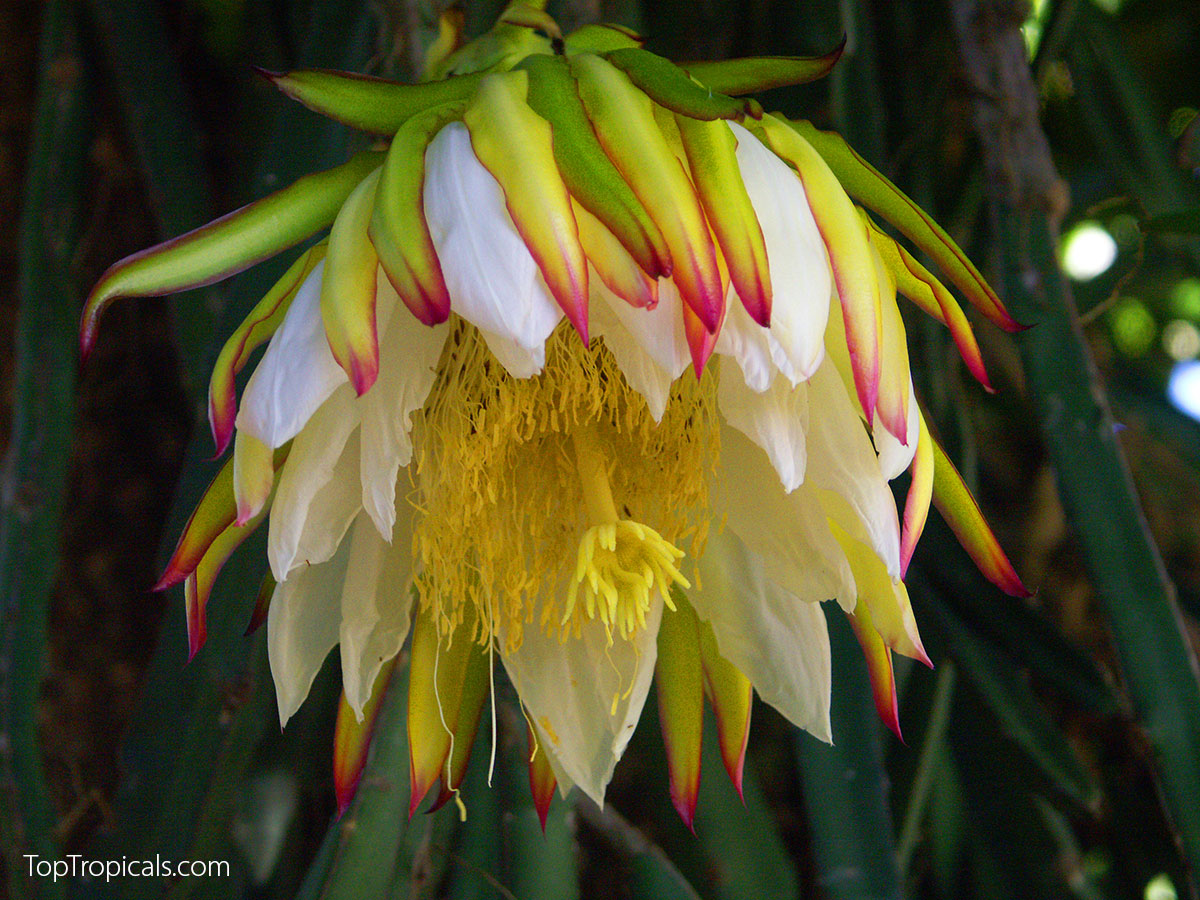
Close-up  of  a  blooming  dragon  fruit  pitaya  flower  with  white  petals  and
   yellow 
 center

Dragon fruit flowers are among the most spectacular in the plant world. They open at night, glowing under moonlight, with pale petals and a sweet fragrance. Each flower can be a foot wide. Seeing one bloom feels like stepping into another world.

⚡️ Top Dragon Fruit Health Benefits

  • High in fiber for digestion and gut health
  • Low in calories but full of vitamins
  • Great for weight management
  • Adds color and freshness to smoothies and salads

🍹 Dragon Fruit Smoothie recipe

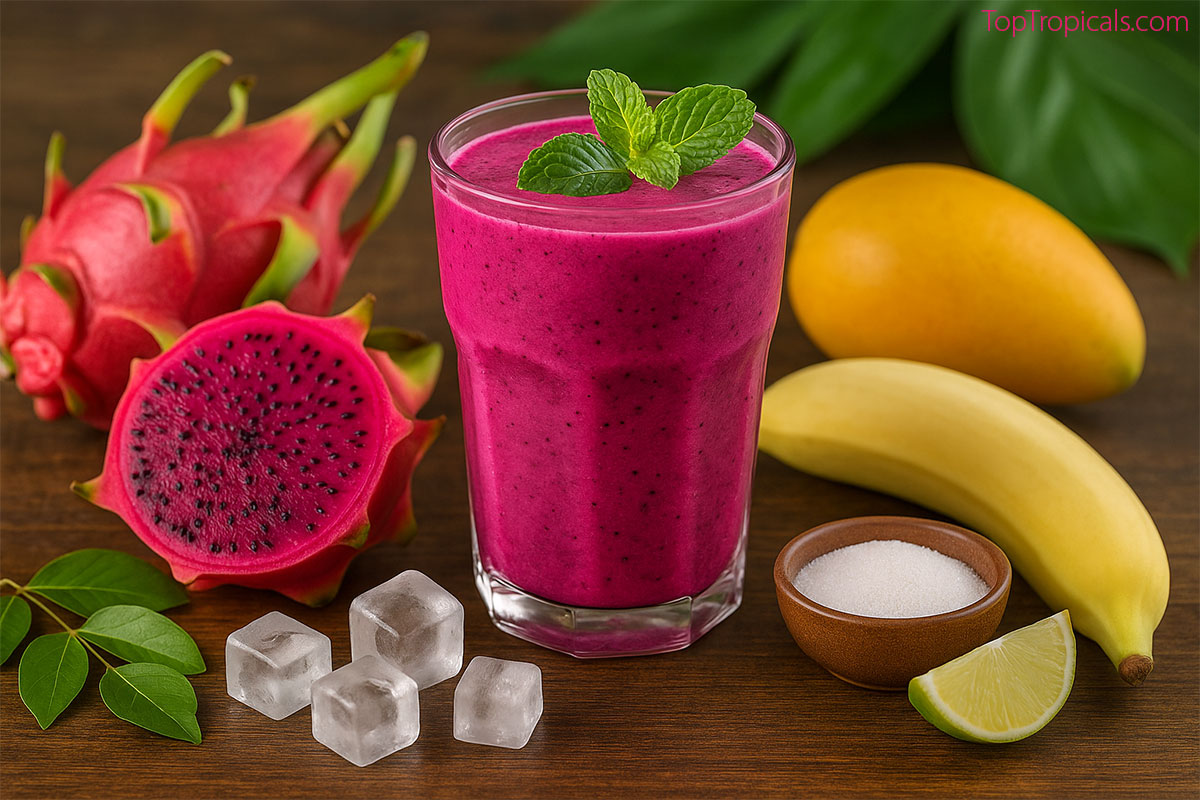
Glass  of  dragon  fruit  pitaya  smoothie  with  fresh  dragon  fruit,  banana, 
 mango,  lime,  sugar,  and  ice 
 cubes

Blend together:

  • 2 dragon fruits, peeled
  • 1/2 cup mango pulp
  • 1 banana
  • 1 cup milk of your choice
  • 2 tbsp sugar
  • 1/2 tsp lime juice
  • Ice cubes to taste

Top with mint for a refreshing tropical treat.

Watch Dragon Fruit short videos:

Date: 6 Jun 2026

The easy orchid that blooms like a tropical sunrise: Epidendrum

Orange Reed Ground Orchid or Sunrise Orchid - Epidendrum

🌅 The easy orchid that blooms like a tropical sunrise: Epidendrum


Most people think orchids are fussy plants that belong in greenhouses or on windowsills. Epidendrum radicans - also known as Orange Reed Ground Orchid or Sunrise Orchid - proves otherwise. This colorful orchid grows in the ground, tolerates heat and humidity, multiplies easily, and can bloom for months with very little care.

🔥 Not your typical orchid


Unlike many orchids that grow on trees, Epidendrum radicans is a terrestrial orchid native to Mexico, Central America, and northern South America. It naturally grows on the ground and even among rocks.

Its upright reed-like stems are topped by clusters of brilliant orange flowers with golden-yellow highlights. A single mature stem can carry dozens of blooms, and large plantings resemble patches of miniature tropical sunrises.

🔥 Easy to grow, easy to share


Epidendrum thrives in Florida's heat and humidity and performs best in bright light and well-drained soil. In warm climates it often blooms throughout the year.

One reason gardeners love it is its ability to spread. The stems naturally produce roots along their length, making division and propagation remarkably easy. A single plant can eventually develop into a large, colorful colony.

🔥 A pollinator favorite


The vivid orange flowers attract butterflies and hummingbirds and stand out brightly against green foliage. This makes Epidendrum a valuable addition to pollinator gardens and tropical landscapes.

🔥 Better than a flowering annual


Unlike annual flowers that must be replaced each season, Epidendrum returns year after year and gradually expands into larger clumps. It works well along walkways, patios, entryways, borders, and mixed tropical beds where its upright growth adds height and color.

🔥 The orchid that deserves more attention


Some plants become famous because they are difficult or rare. Epidendrum radicans deserves attention for the opposite reason.
It is colorful, dependable, beginner-friendly, and generous with flowers. Give it sunshine, good drainage, and a place to grow, and it will reward you with months of vibrant blooms that bring the warmth and energy of a tropical sunrise into your garden. 👉 More...

💡 #Fun_facts:

📌 The common name "Crucifix Orchid" comes from the tiny cross-shaped structure in the center of each flower.
📌 Unlike many orchids, it naturally produces roots along its stems, which is one reason it spreads and propagates so easily.
📌 In Florida, it's often used as a landscape orchid rather than a houseplant.

📚 Learn more:

Bamboo Orchid Plant Facts

Botanical name: Arundina graminifolia, Arundina affinis, Bletia graminifolia
Also known as: Bamboo Orchid, Bird Orchid
USDA Zone: 9 - 10
Highligths Small plant 2-5 ftSemi-shadeShadeFull sunWatering: Regular. Let topsoil dry slightlyEpiphyte plantWhite, off-white flowersPink flowers
Get personalized tips for your region

· Epidendrum in Plant Encyclopedia
· Orange Reed Ground Orchid, Sunrise
· The "Fake" Bamboo That Blooms Like a Rare Orchid Year-Round
· The prettiest flower for shade
· Ground orchids: all-summer colors
· Why do we love Ground Orchids
· Terrestrial orchids
· What orchids can be grown in the ground
🎥 Ground orchids: all-summer colors for shady gardens

🛒 Shop Ground Orchids

#Container_Garden #Shade_Garden #Discover

🟢 Join 👉 TopTropicals

Date: 20 Sep 2025

Banana cinnamon fritters: Quick-n-Fun exotic recipes

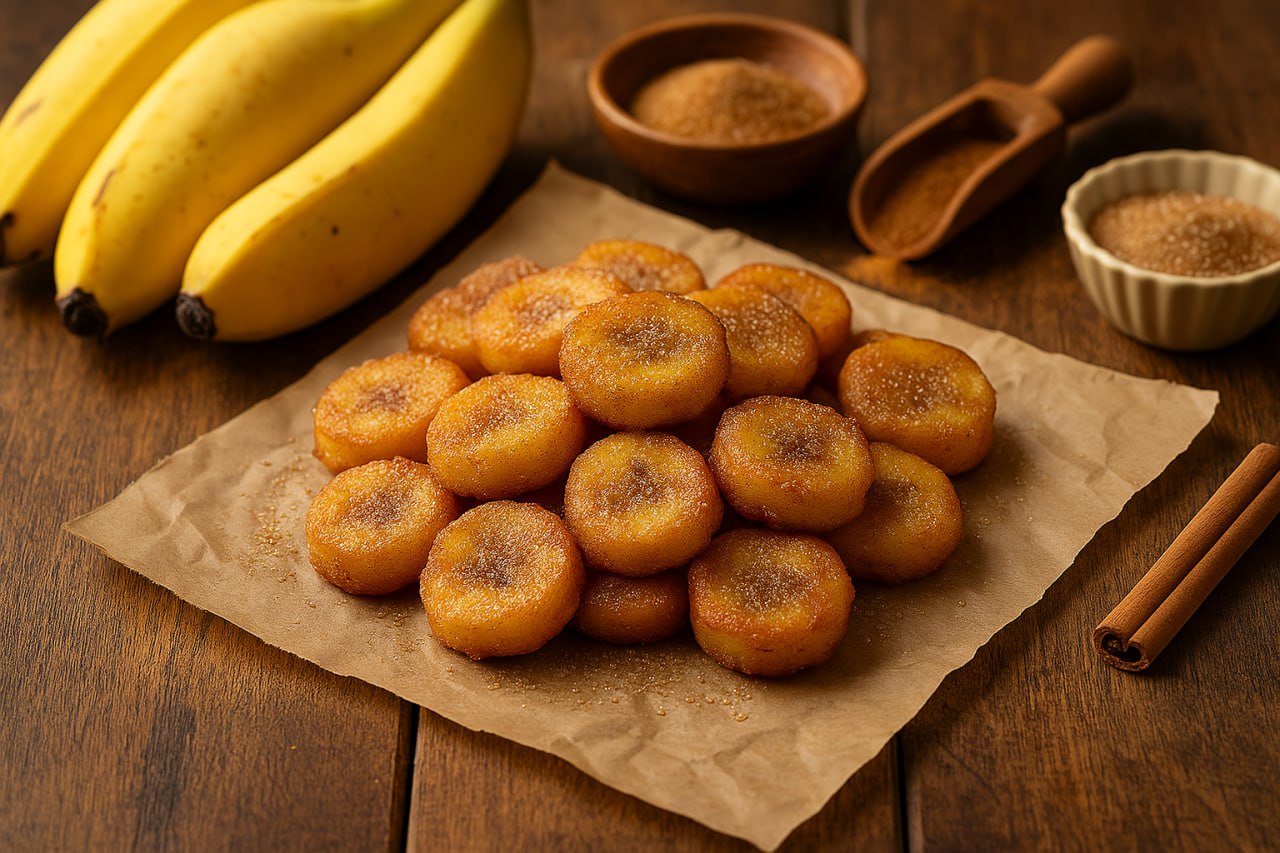
Banana cinnamon fritters

Banana cinnamon fritters

🍴 Banana cinnamon fritters: Quick-n-Fun exotic recipes 🍌


🟡Dip banana slices in a light batter, fry quickly, then dust with cinnamon sugar.
🟡Sweet street-food style snack!

Banana Cinnamon Fritters recipe

Ingredients

  • 2 ripe bananas
  • 1/2 cup flour
  • 1/4 cup water (or milk)
  • 1 tbsp sugar
  • 1/2 tsp cinnamon
  • 1/4 tsp baking powder
  • Pinch of salt
  • Oil for frying
  • Extra cinnamon sugar for dusting

Instructions

  1. Slice bananas into thick rounds.
  2. Mix flour, baking powder, sugar, cinnamon, salt, and water to form a light batter.
  3. Dip banana slices in batter and fry in hot oil until golden brown.
  4. Remove and drain on paper towels.
  5. Dust with cinnamon sugar and serve warm.

🛒 For home grown ingredients you will need:
Banana trees
Cinnamon tree

#Food_Forest #Recipes #Bananas

🟢 Join 👉 TopTropicals

Date: 23 Sep 2025

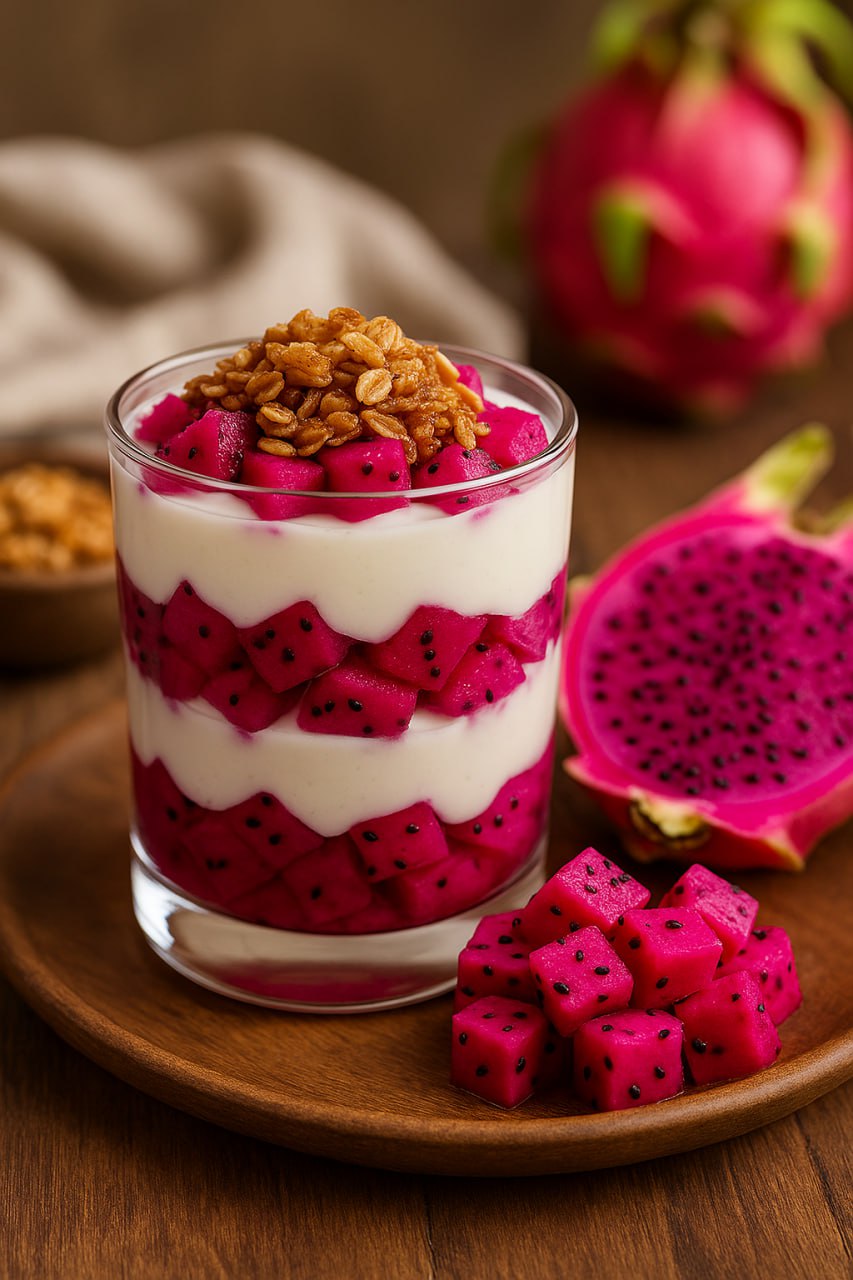
Dragon fruit coconut parfait: quick-n-fun exotic recipes

Dragon fruit coconut parfait

Dragon fruit coconut parfait

🍴 Dragon fruit coconut parfait: quick-n-fun exotic recipes


🔵Layer Dragon Fruit cubes with coconut cream and toasted granola.
🔵A tropical breakfast that looks neon and tastes fresh!

Dragon fruit coconut parfait recipe

Ingredients

  • 1 fresh Dragon Fruit, diced into cubes
  • 1 cup coconut cream
  • 1/2 cup toasted granola
  • Optional: honey or maple syrup for drizzle

Instructions

  1. Layer Dragon Fruit cubes in a glass or bowl.
  2. Add a layer of coconut cream, then sprinkle toasted granola.
  3. Repeat layers until glass is full, finishing with granola on top.
  4. Serve immediately for a refreshing tropical breakfast or snack.

🛒 Explore Dragon Fruit varieties

#Food_Forest #Recipes

🟢 Join 👉 TopTropicals