Epidendrum - Plant Encyclopedia Results
| Number of plants found: 3 |
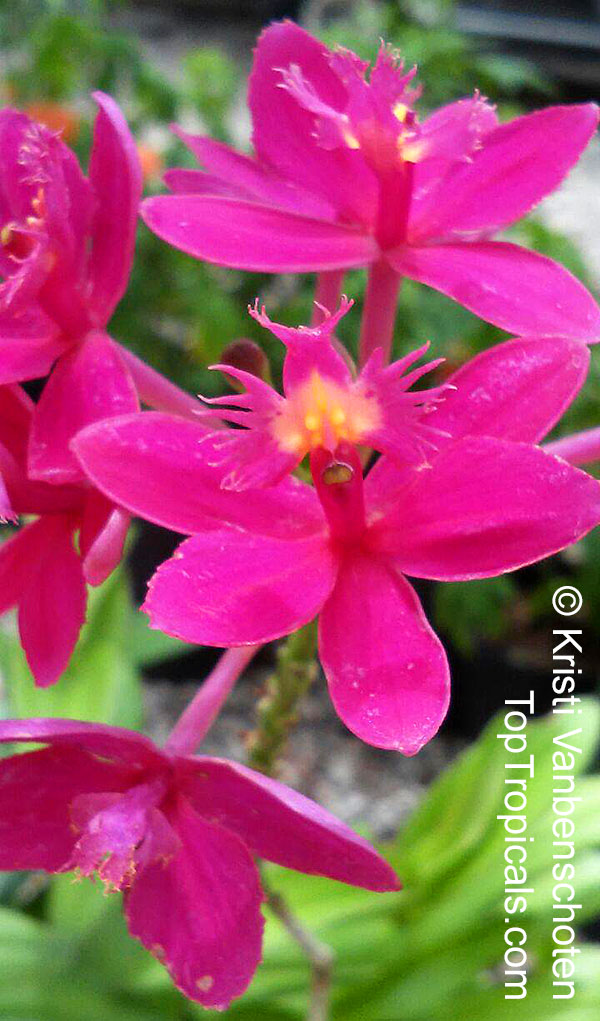
Botanical name: Epidendrum sp.
Common names: Reed Orchid, Epidendrum Orchid, Clustered Flowers Orchid, Crucifix Orchid
Family: Orchidaceae
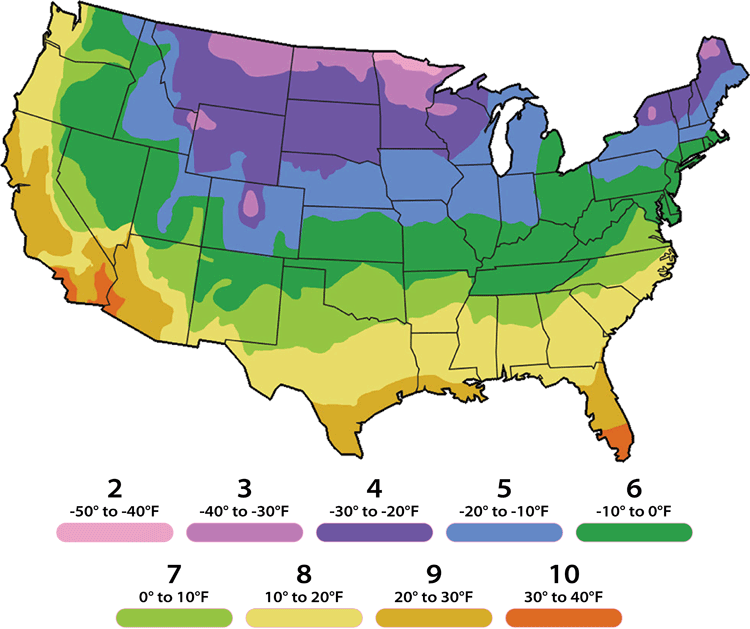
USDA Zone: 9-11
Cold tolerance: 25°F


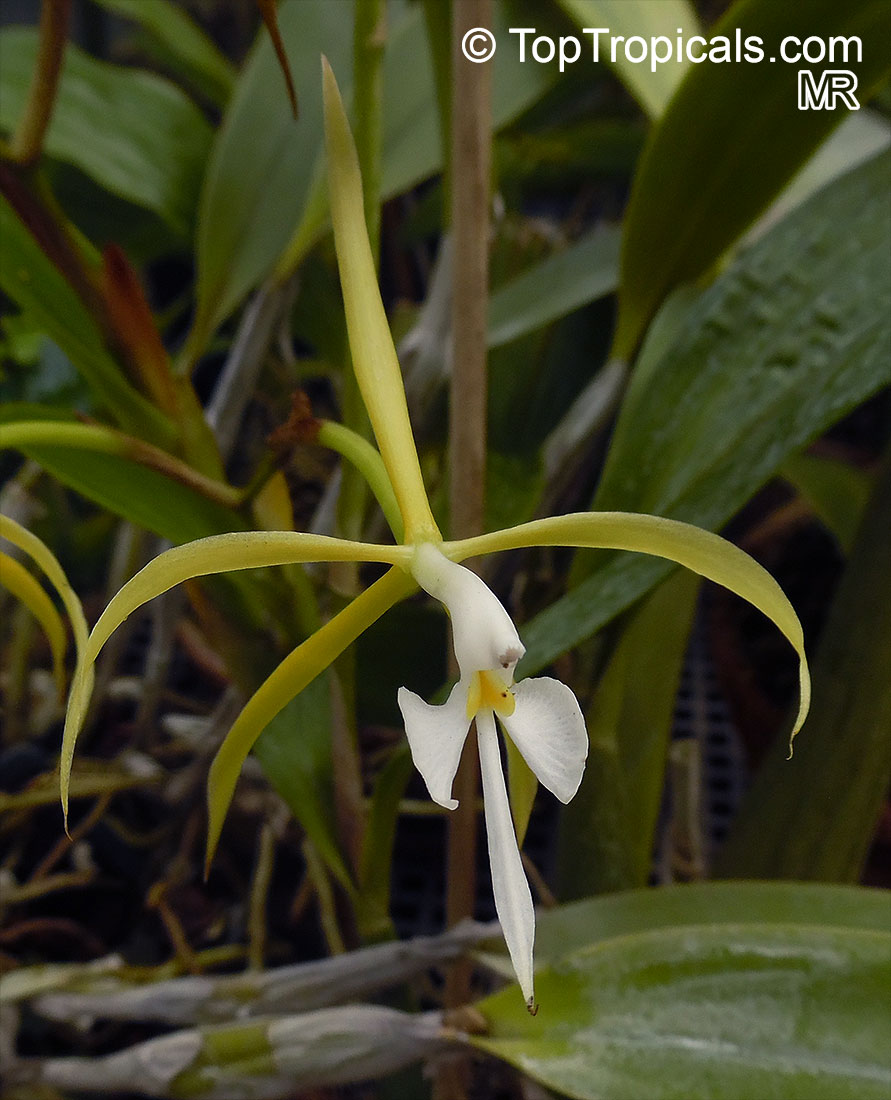
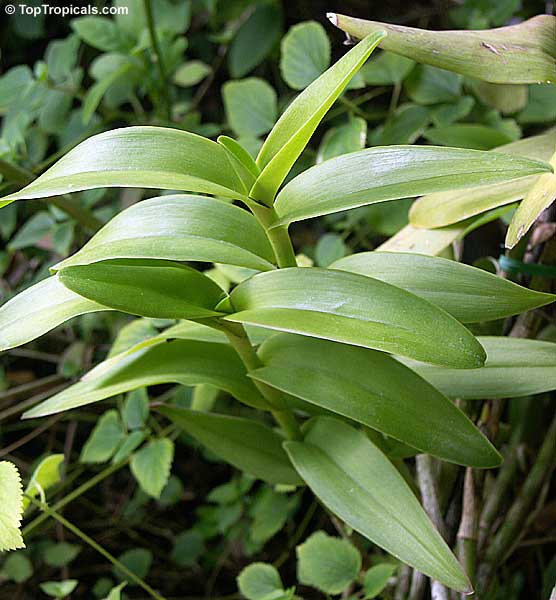
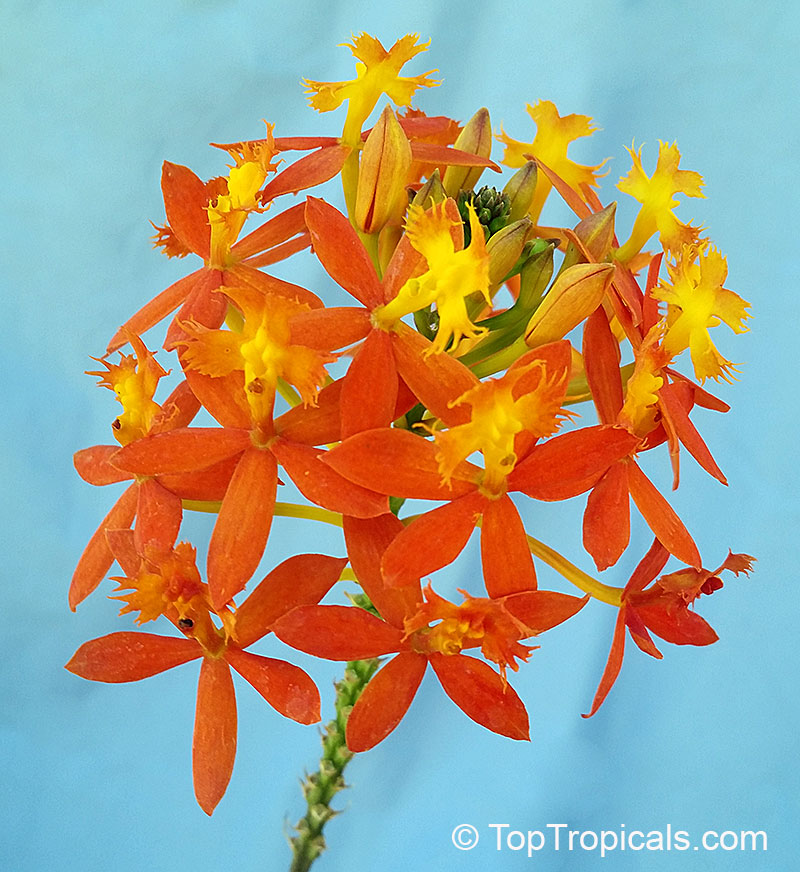
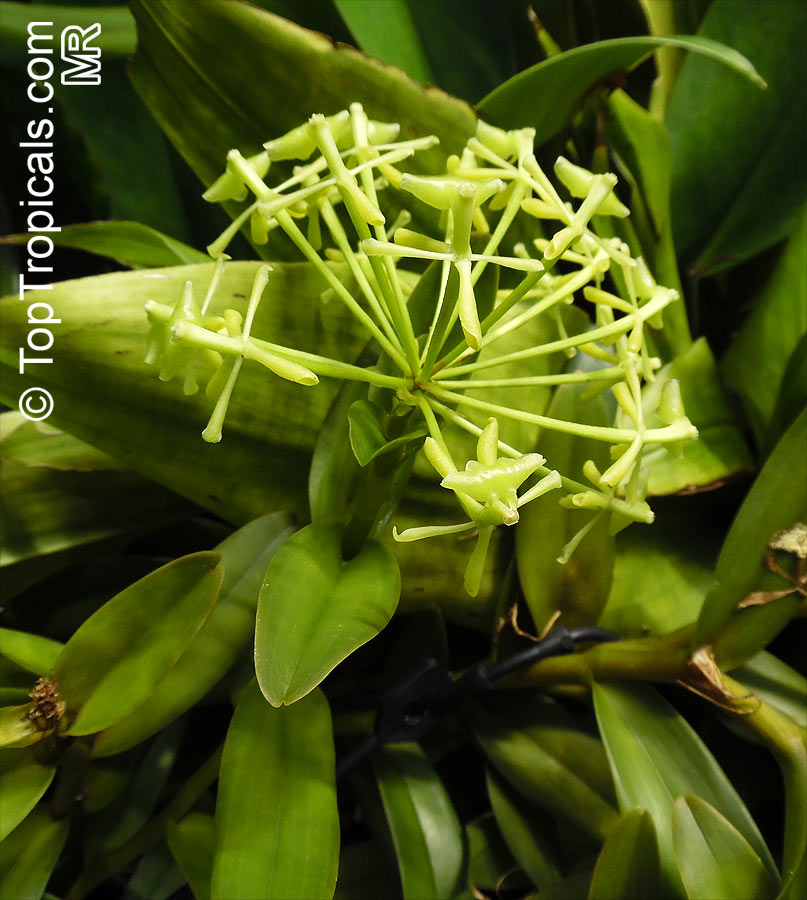
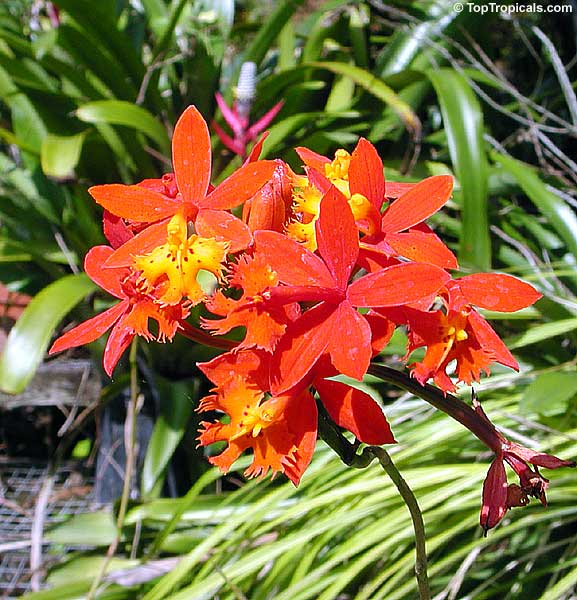
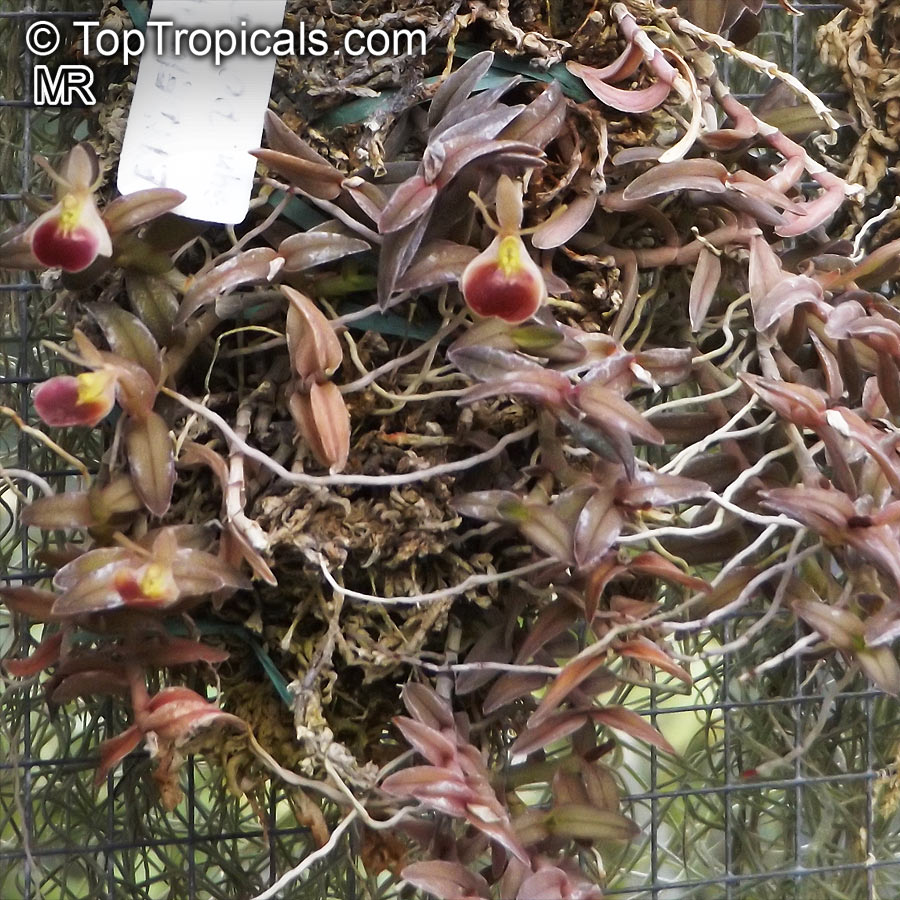
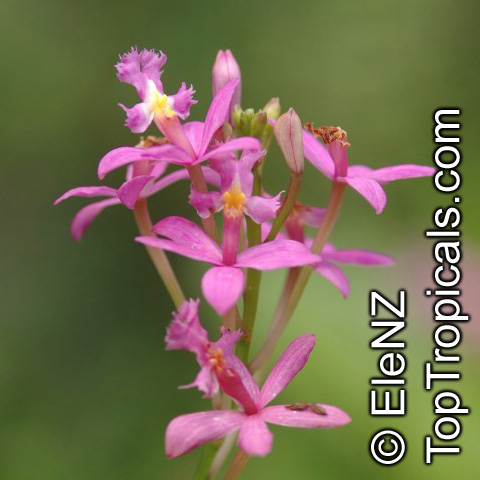
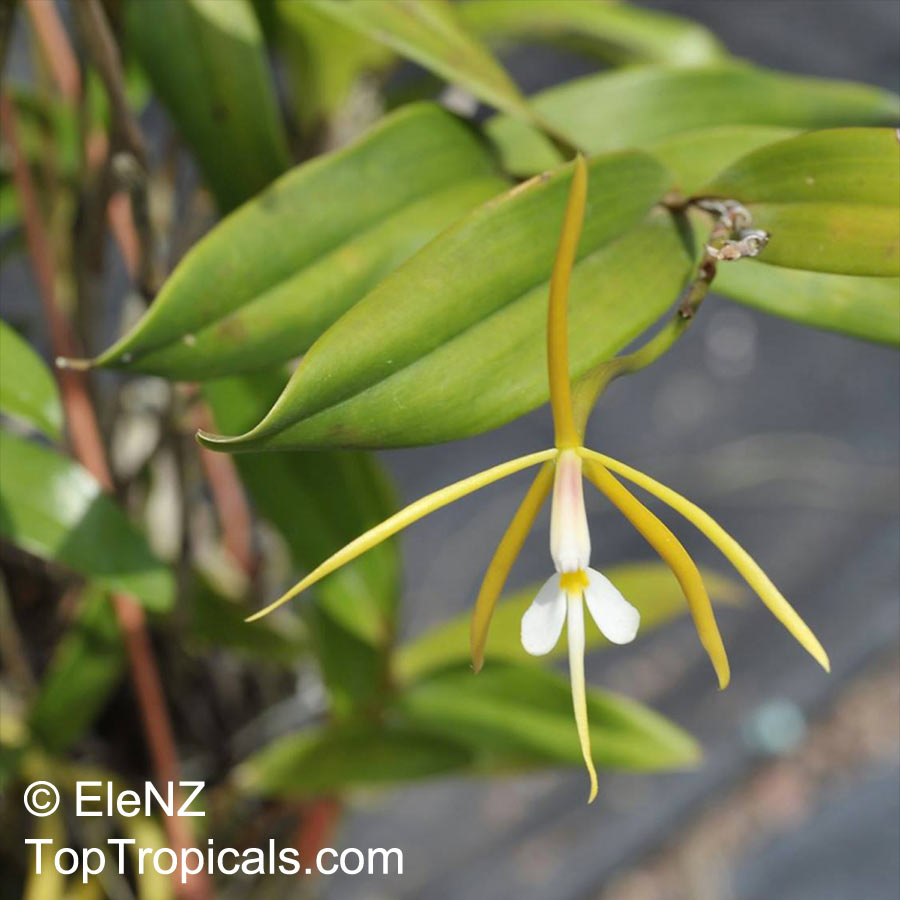
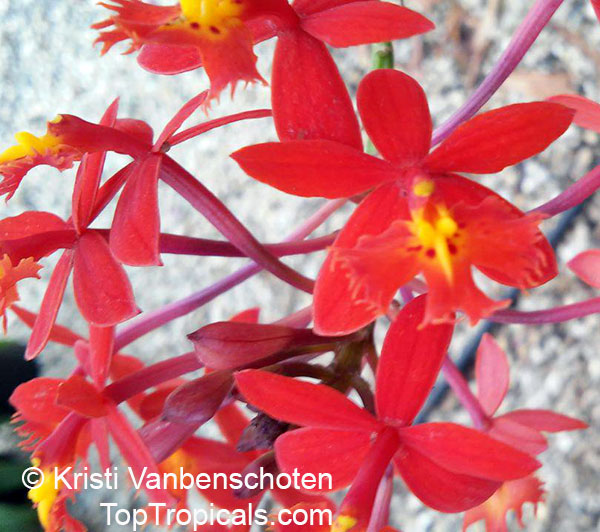
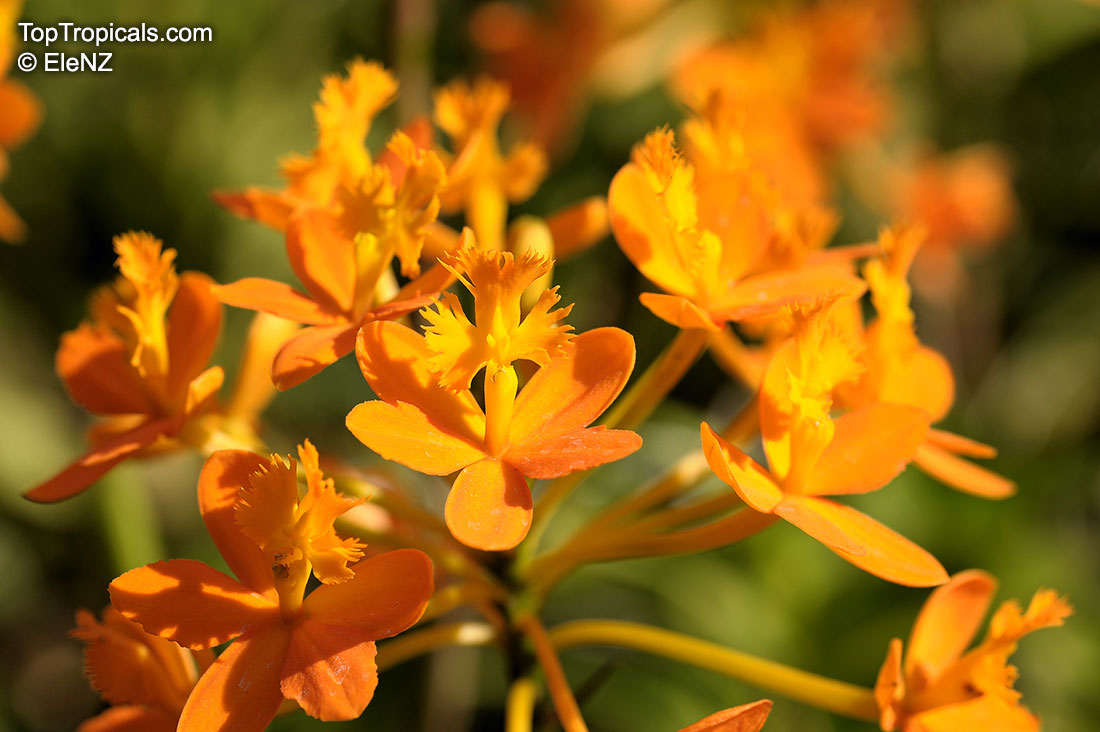
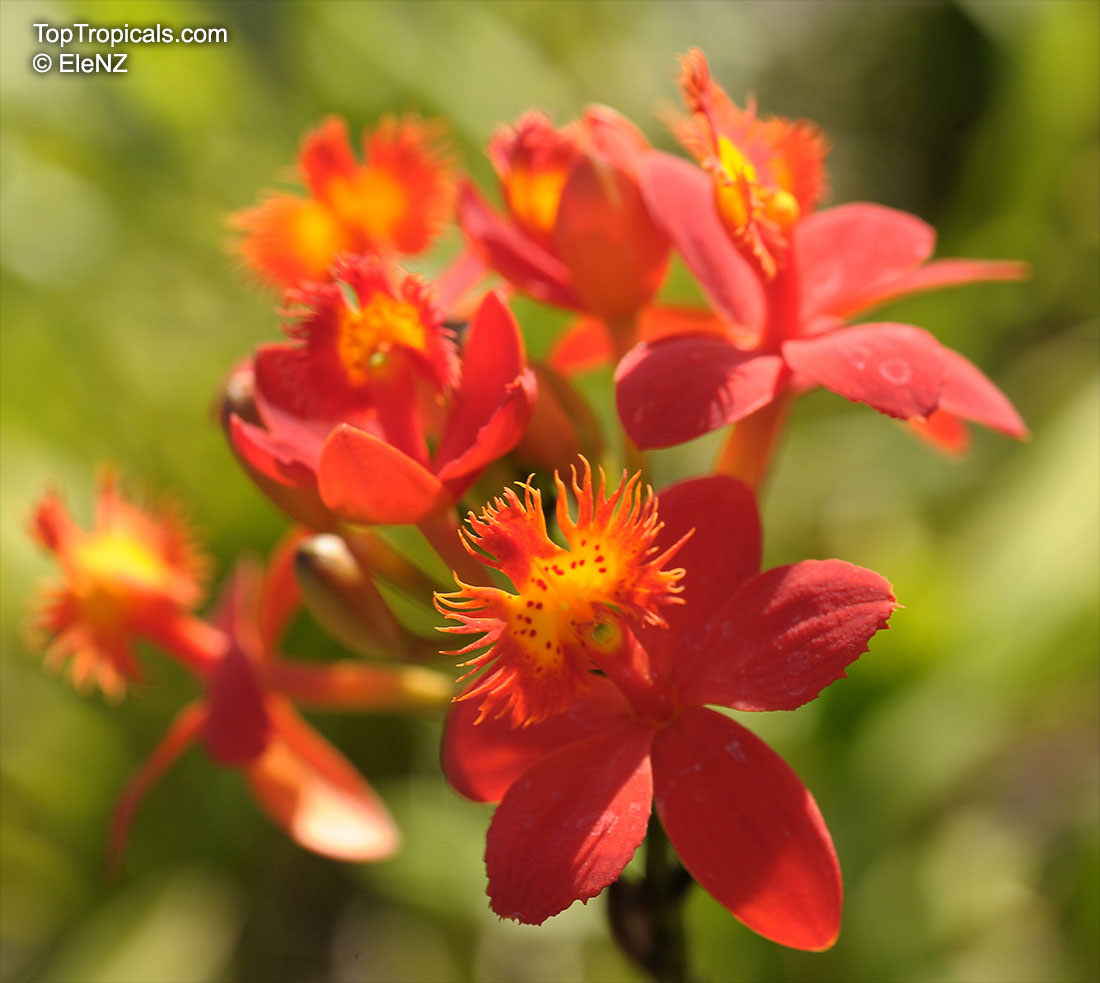
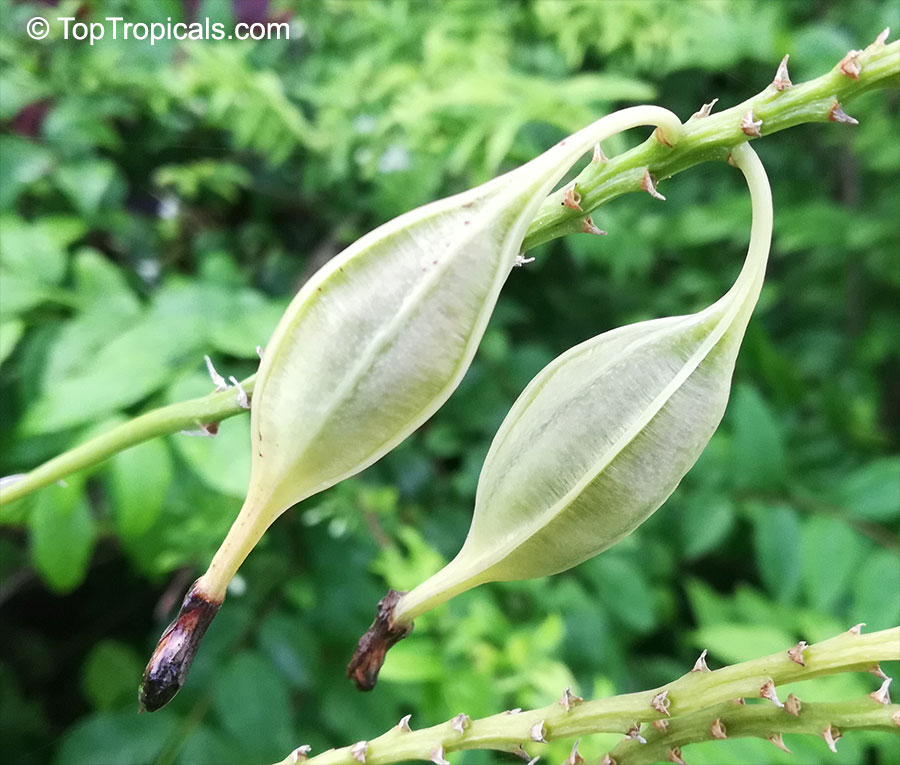
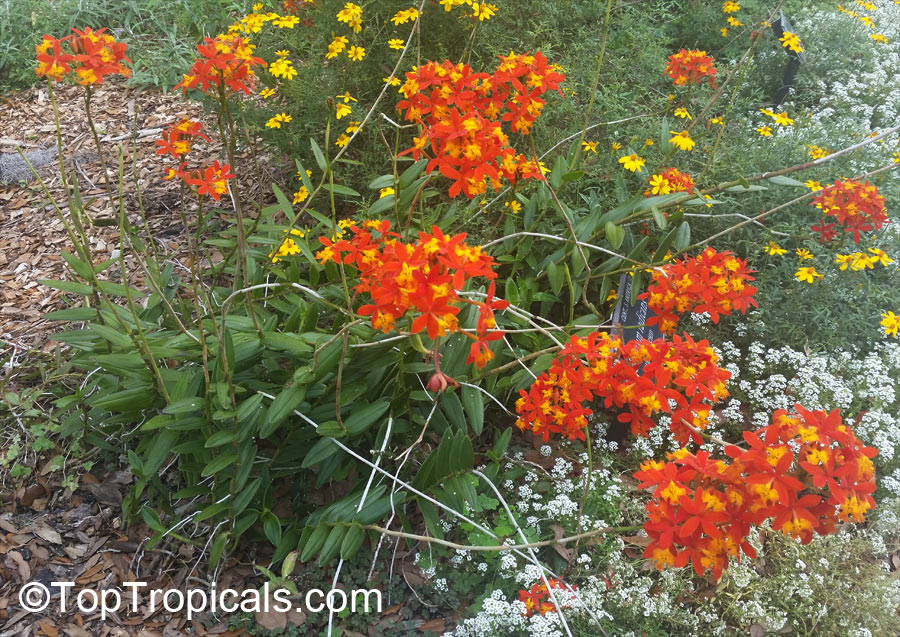
Epidendrum is a very large and morphologically diverse genus of orchids in the Orchidaceae family, native to tropical and subtropical regions of the Americas. Its species occupy habitats ranging from humid lowland forests to cool mountain regions and may grow as epiphytes, lithophytes, or terrestrial plants. Growth forms vary greatly, from compact orchids to large plants with elongated stems, and flowers range from small and inconspicuous to large and brightly colored. Many species have a distinctive lip that is partly or completely fused to the column. The popular reed-stem Epidendrums, with upright cane-like stems and showy terminal clusters of red, orange, pink, yellow, or purple flowers, represent only one horticulturally important group and should not be regarded as typical of the genus as a whole.
Cultivation requirements vary considerably among species because of the genus's enormous ecological range. Many commonly cultivated Epidendrums prefer bright filtered light to partial sun, good air circulation, and an open, well-drained orchid medium, with regular moisture during active growth. Reed-stem types are particularly adaptable and are widely grown in tropical and subtropical gardens as well as containers. Numerous species and hybrids are cultivated, and Epidendrum has also contributed to many intergeneric orchid hybrids. Cold tolerance varies greatly; tropical garden types generally require frost-free or nearly frost-free conditions, while cooler-growing species should be cultivated according to the climate of their native habitats.
See Orchid page for pictures of different orchids and care info.
See video about Ground Orchids.

Recommended Fertilizer: SUNSHINE Megaflor - Bloom Nutrition Booster
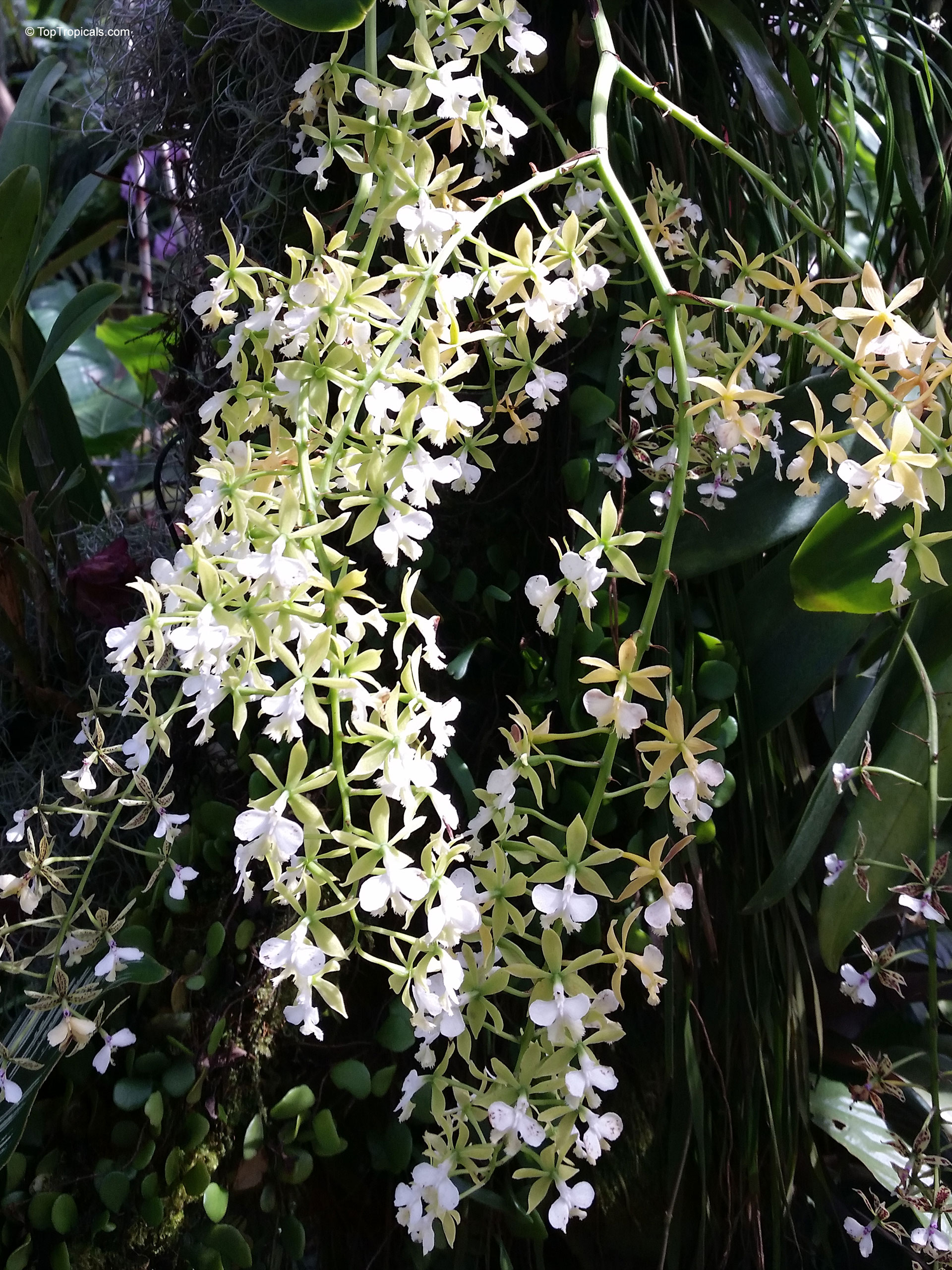
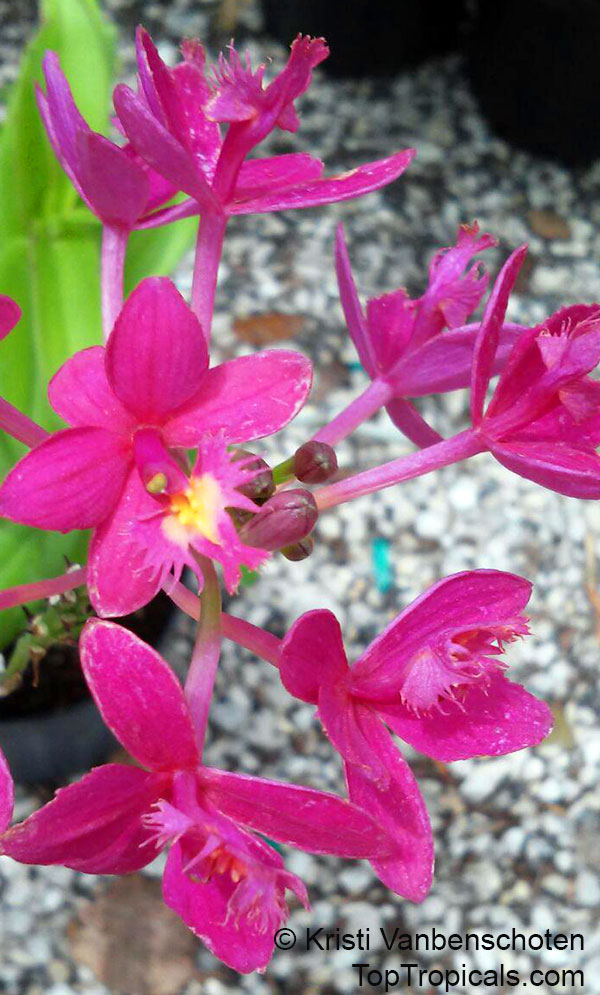
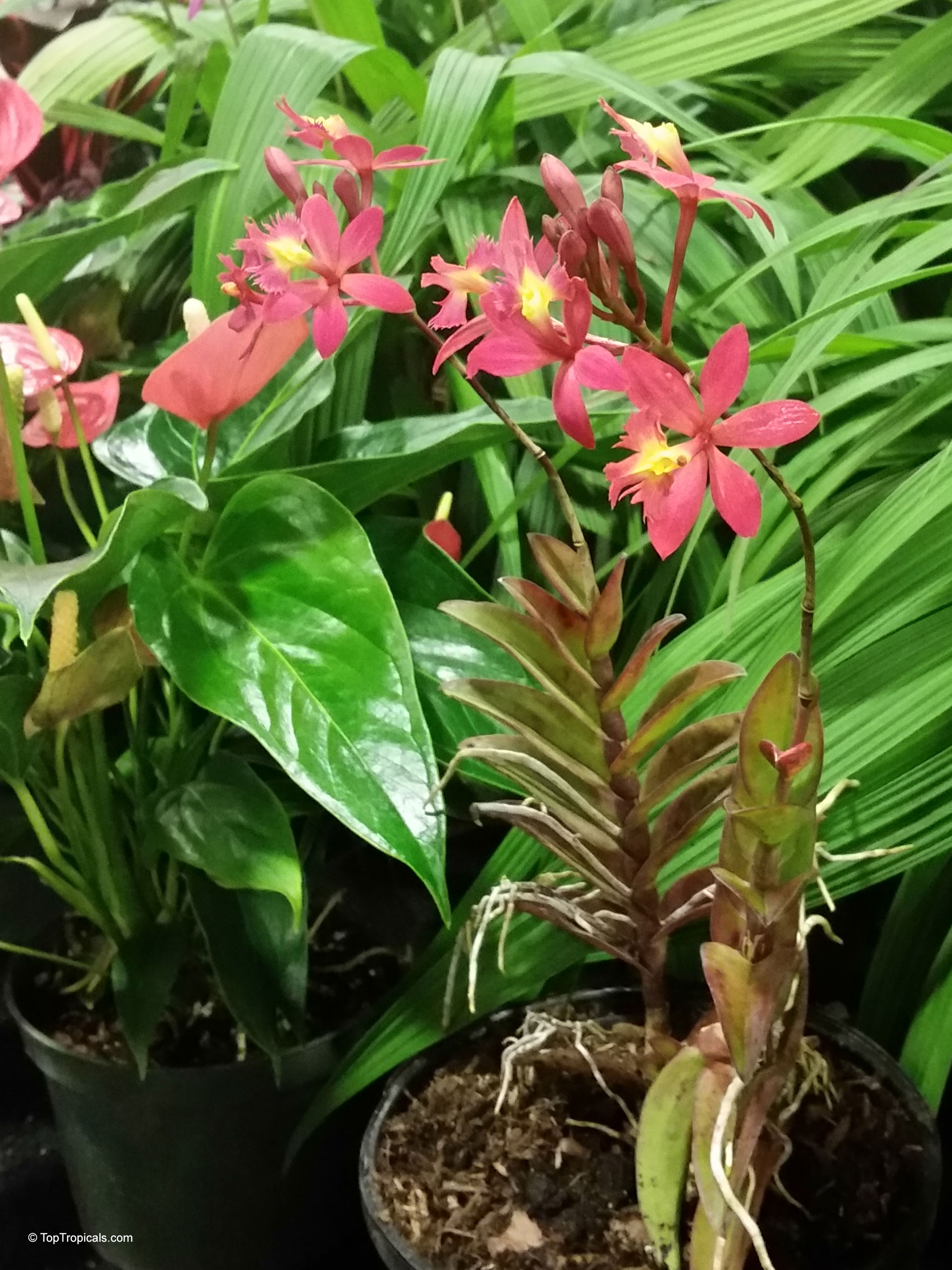
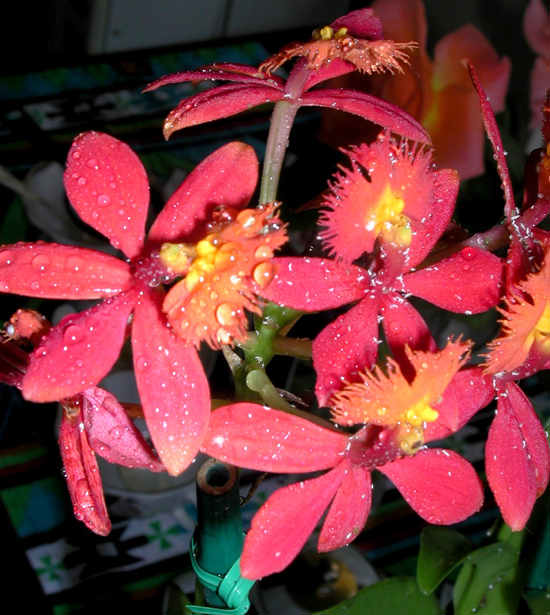
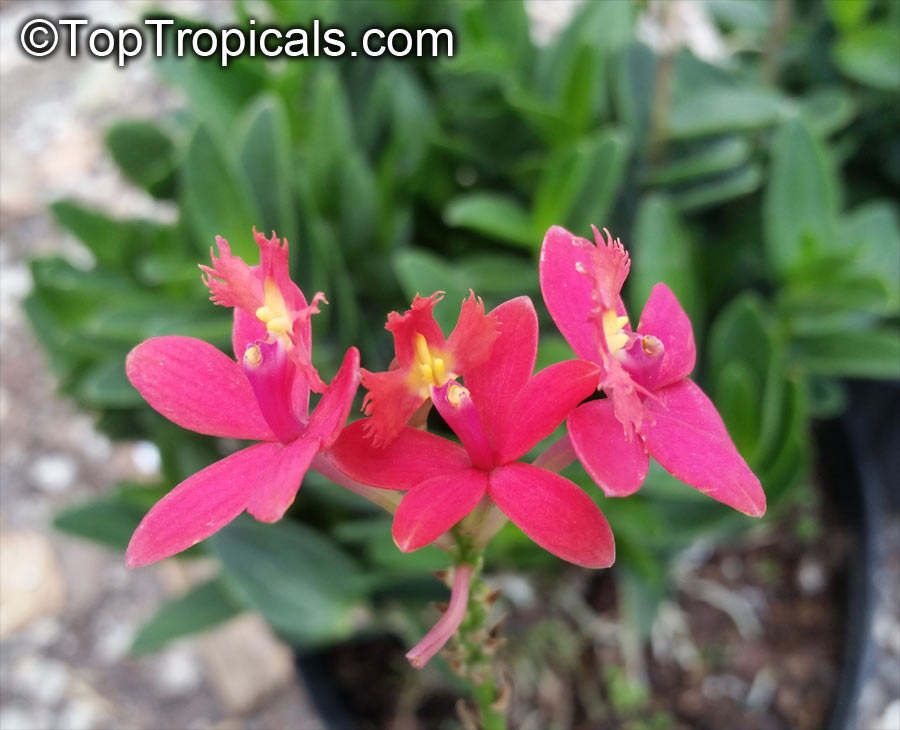
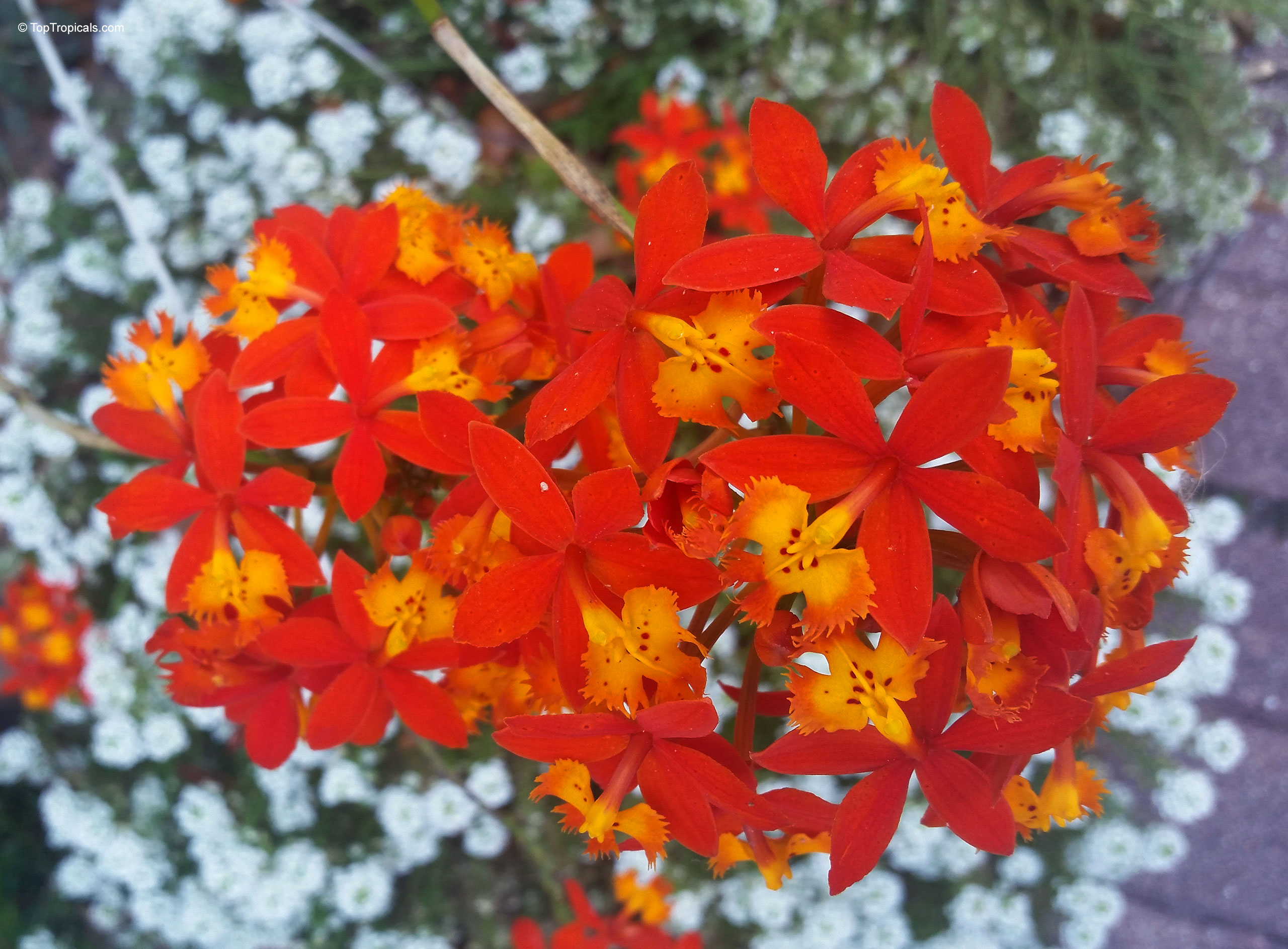
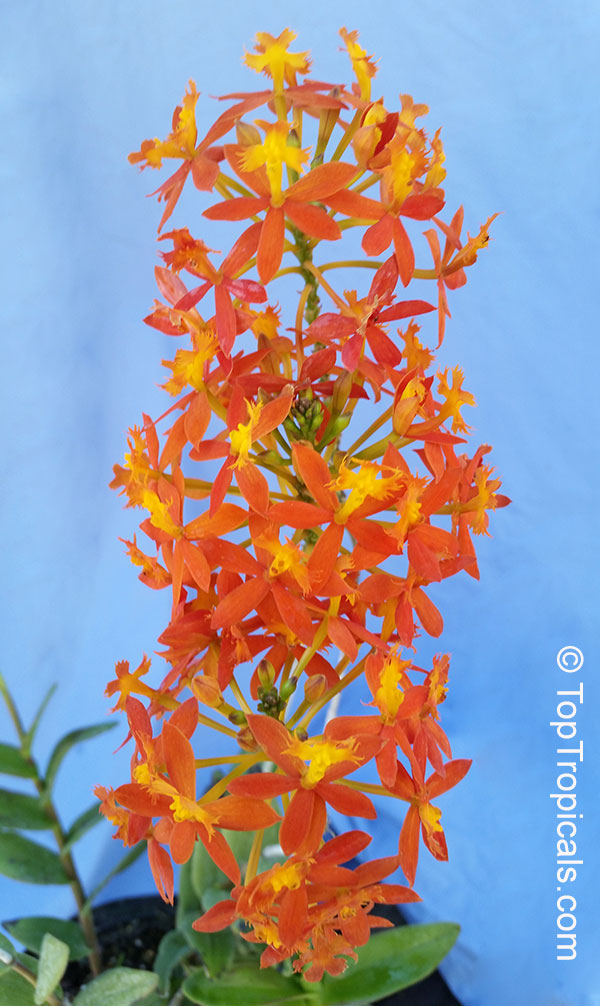
Epidendrum is a diverse neotropical genus that has flowers characterized by a frilly or fringed lip. This feature is occasionally diagnostic to distinguish between species. These orchids are widely cultivated and may be hybridized with Sophronitis, another South American genus. The flowers are usually small and delicately colored, and borne on a dense inflorescence. Many species have a fragrance. These well established plants are a red raspberry color.
See video about Ground Orchids.
Recommended Fertilizer: SUNSHINE Megaflor - Bloom Nutrition Booster
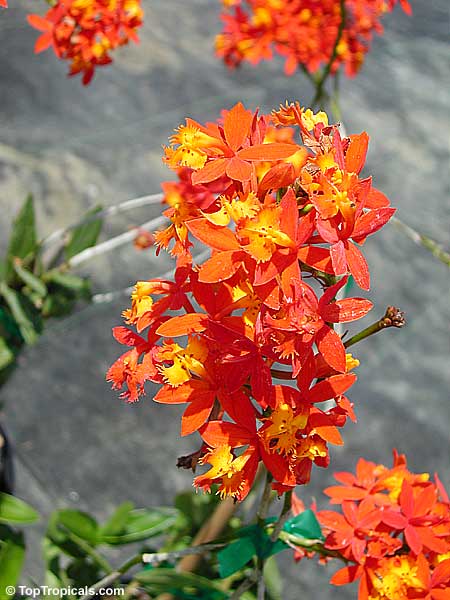
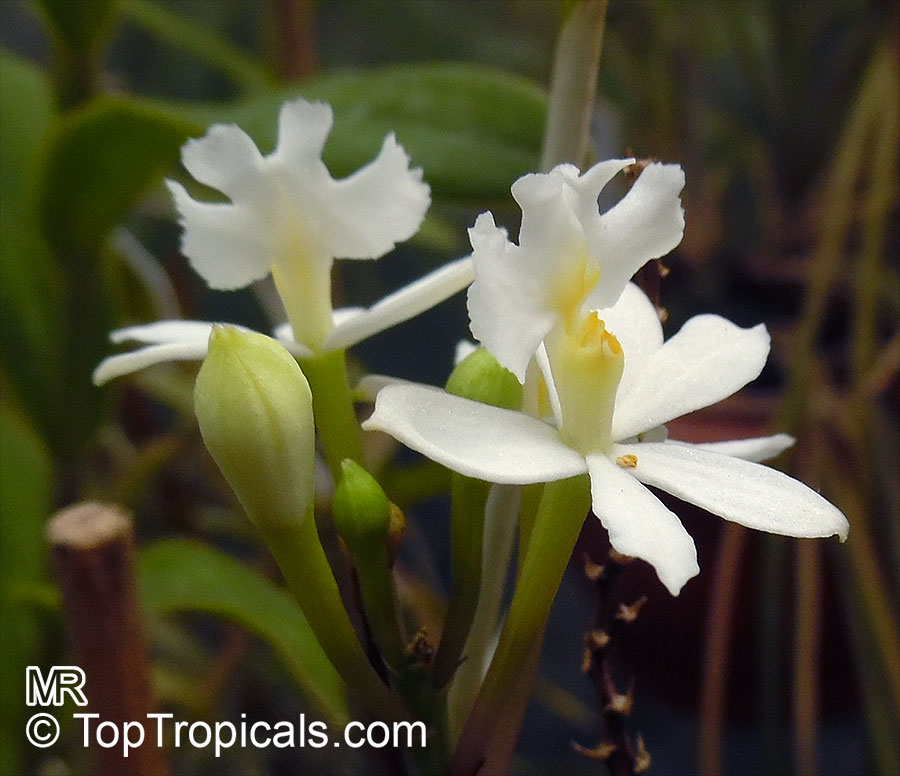
Epidendrum is a diverse neotropical genus that has flowers characterized by a frilly or fringed lip. This feature is occasionally diagnostic to distinguish between species. These orchids are widely cultivated and may be hybridized with Sophronitis, another South American genus. The flowers are usually small and delicately colored, and borne on a dense inflorescence. Many species have a fragrance.
See video about Ground Orchids.
Recommended Fertilizer: SUNSHINE Megaflor - Bloom Nutrition Booster
Recommended Fertilizer: SUNSHINE Megaflor - Bloom Nutrition Booster
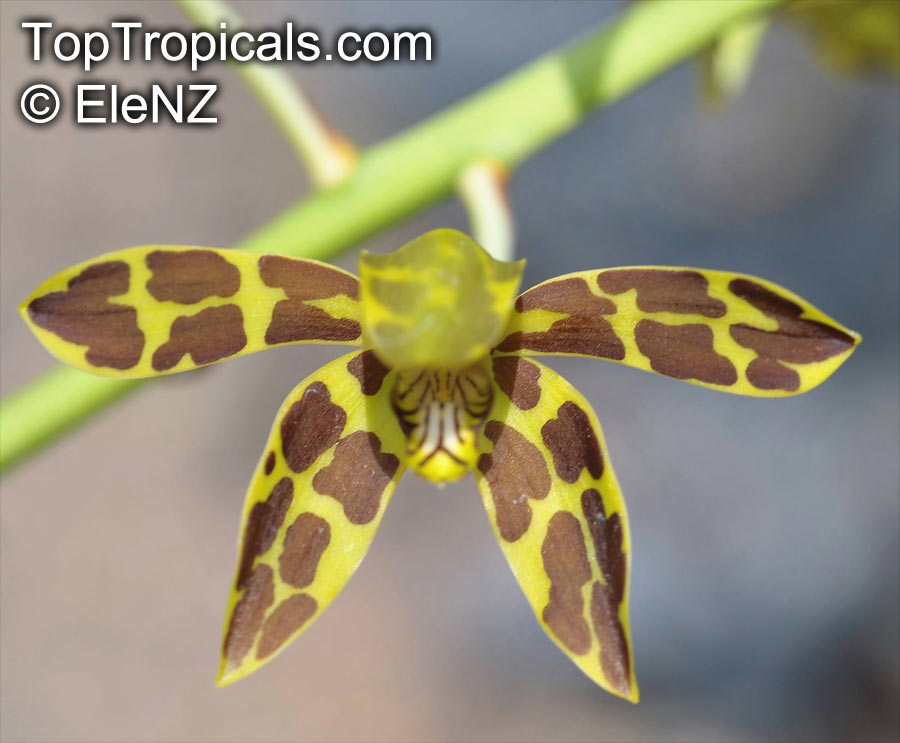
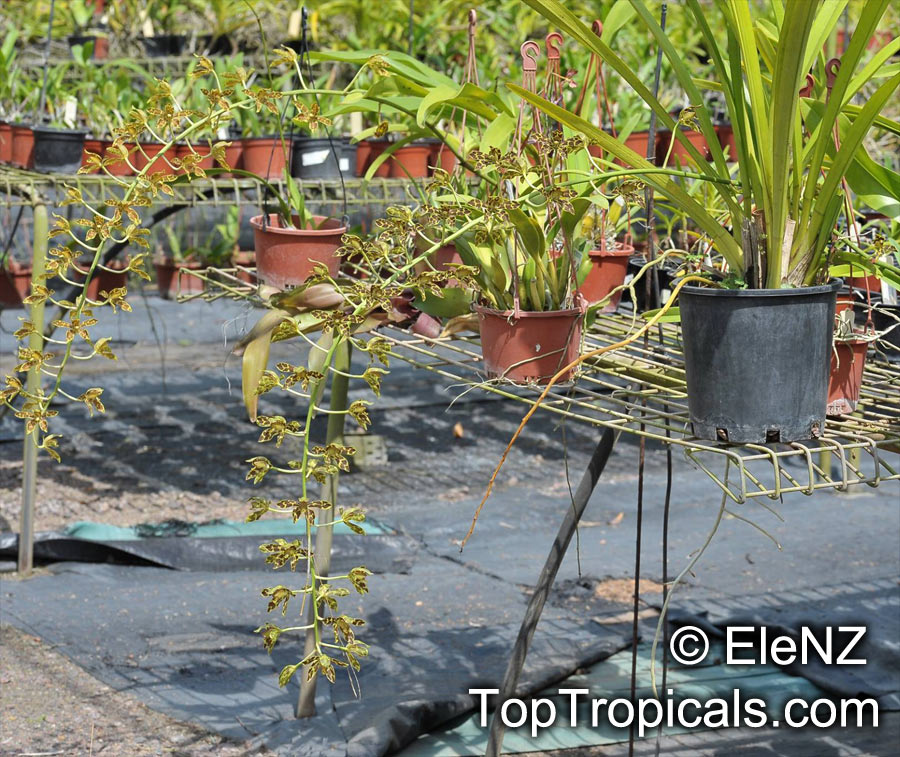
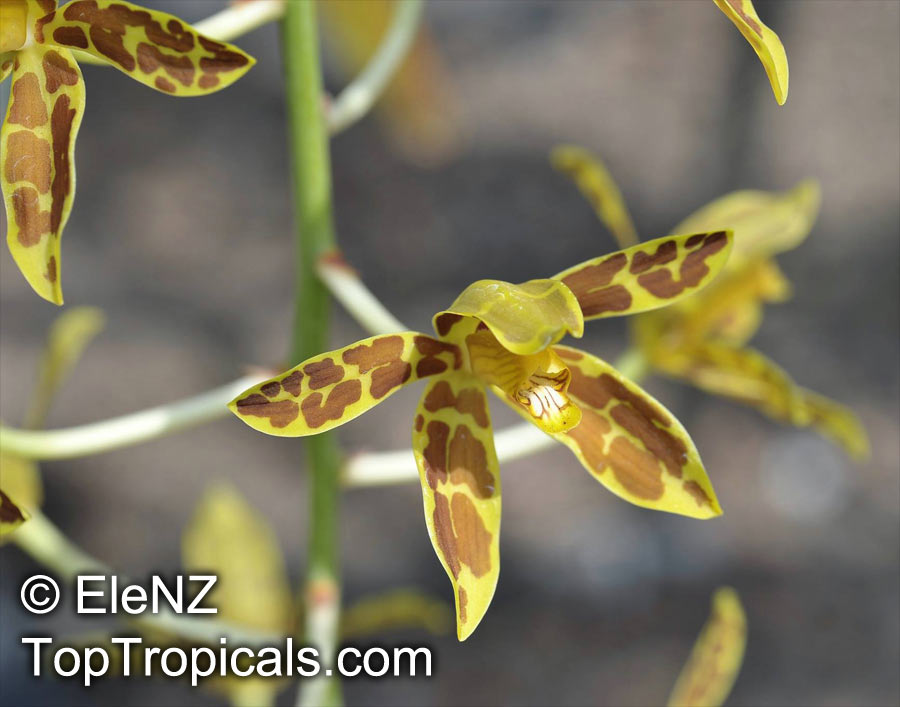
Botanical names: Grammatophyllum scriptum, Epidendrum scriptum
Common name: Grammatophyllum
Family: Orchidaceae
Origin: Southeast Asia
USDA Zone: 9-10


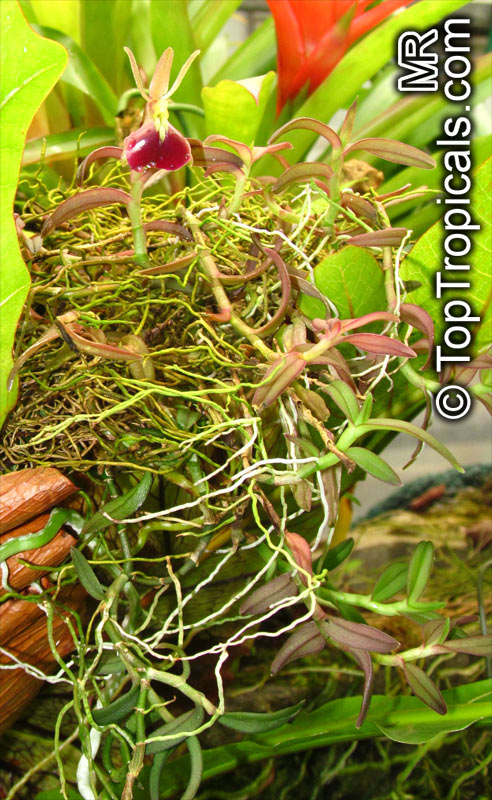
Due to their large size, plants are rarely found in cultivation outside botanical institutions.
Require plenty of water and high humidity during the growing season. Less water is required during the cooler months.
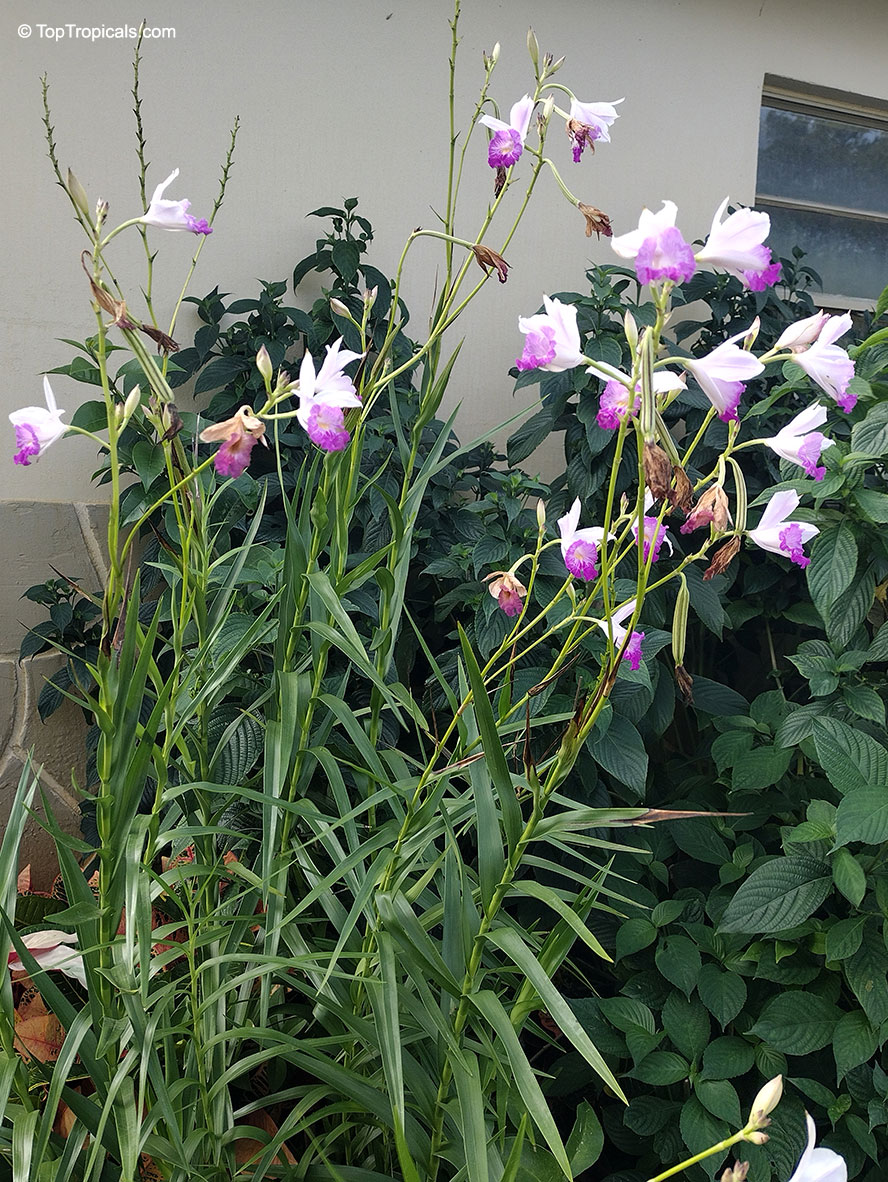
Botanical names: Arundina graminifolia, Arundina affinis, Bletia graminifolia
Common names: Bamboo Orchid, Bird Orchid
Family: Orchidaceae
Origin: SE Asia
USDA Zone: 9-10

The bamboo orchid, Arundina graminifolia, is a species of orchid and the sole accepted species of the genus Arundina. This tropical Asiatic genus extends from India, Sri Lanka, Nepal, Thailand, Vietnam, the Ryukyu Islands, Malaysia, Singapore, China to Indonesia, the Philippines and New Guinea. It has become naturalized in Reunion, Fiji, French Polynesia, Micronesia, the West Indies, Costa Rica, Panama and Hawaii.
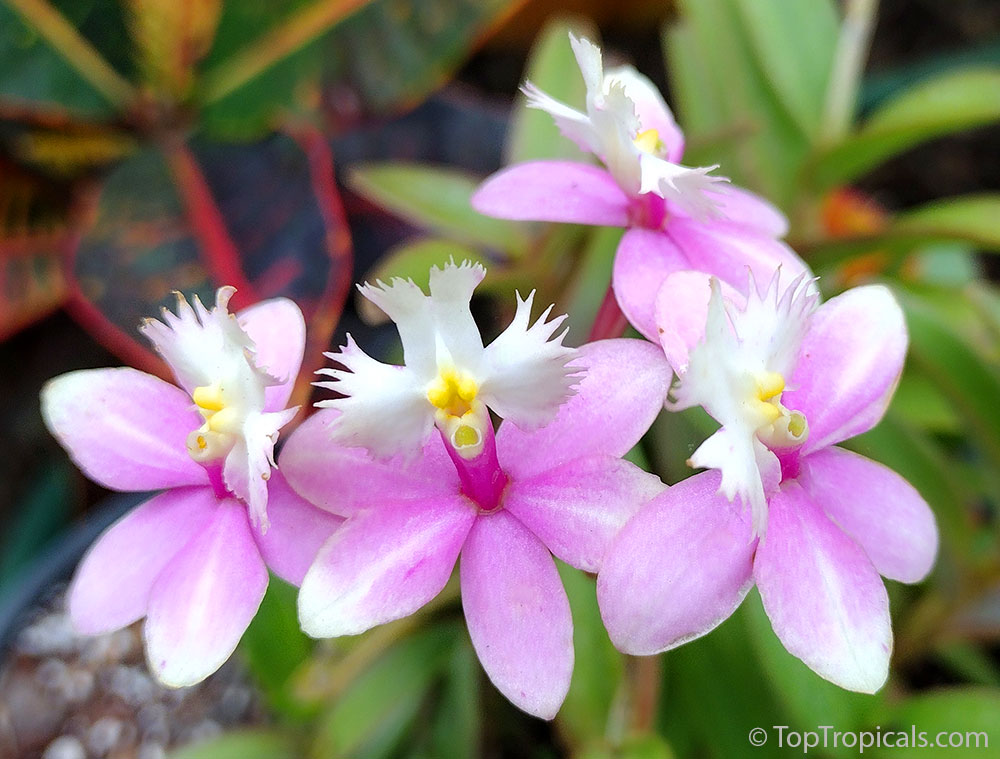
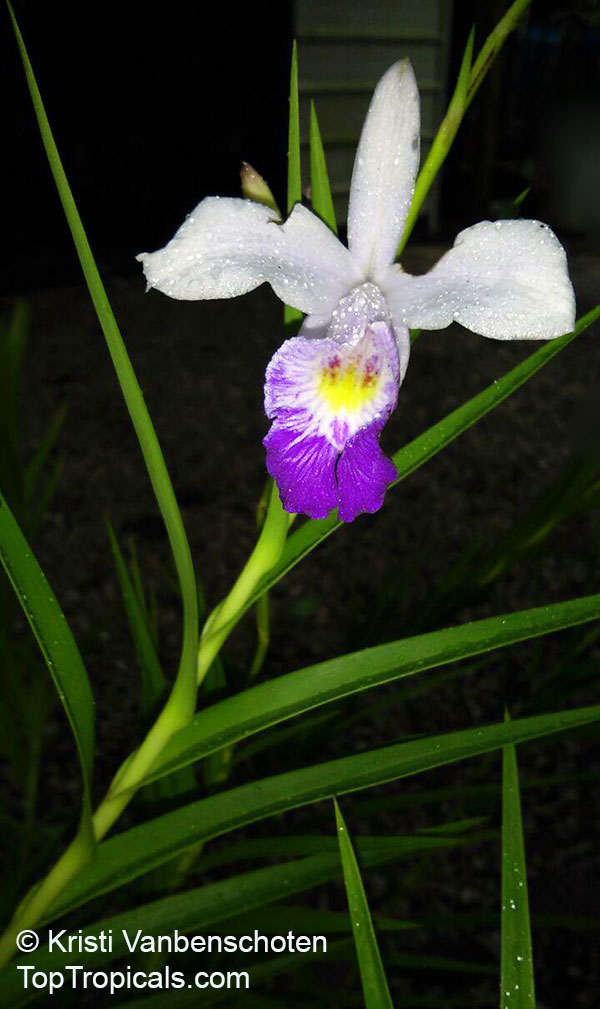
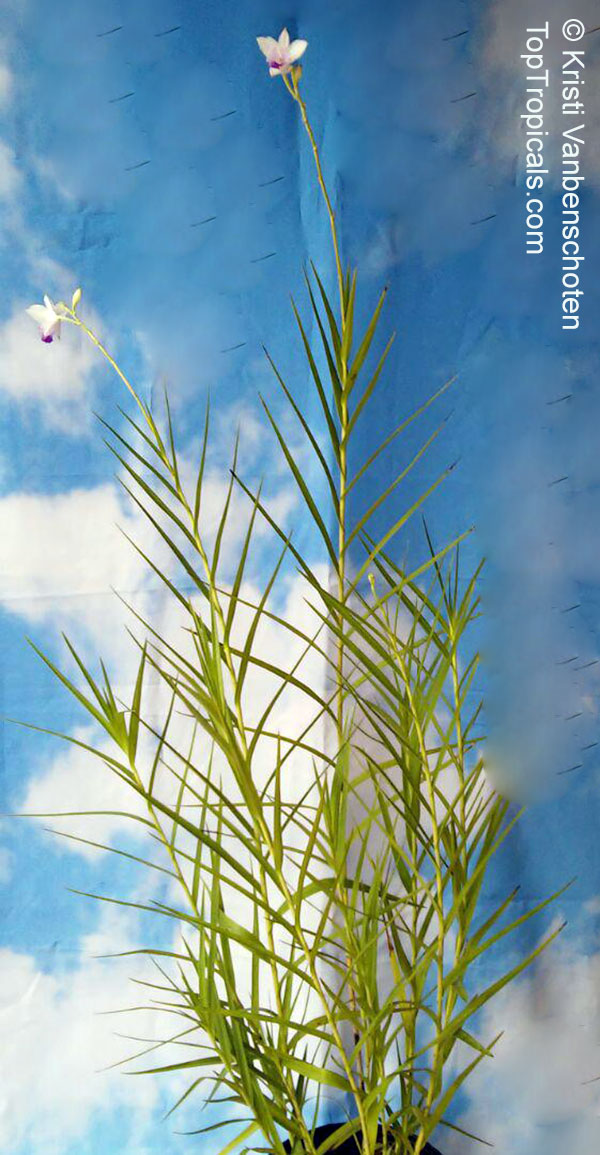
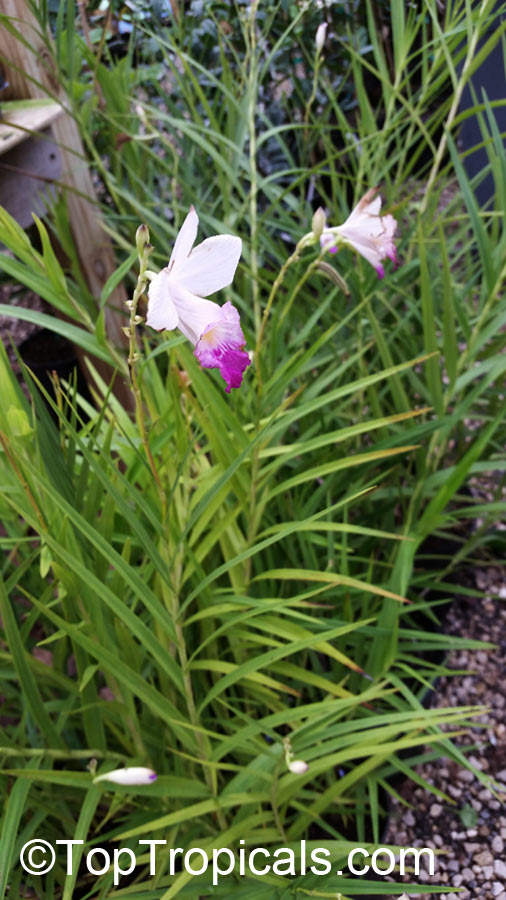
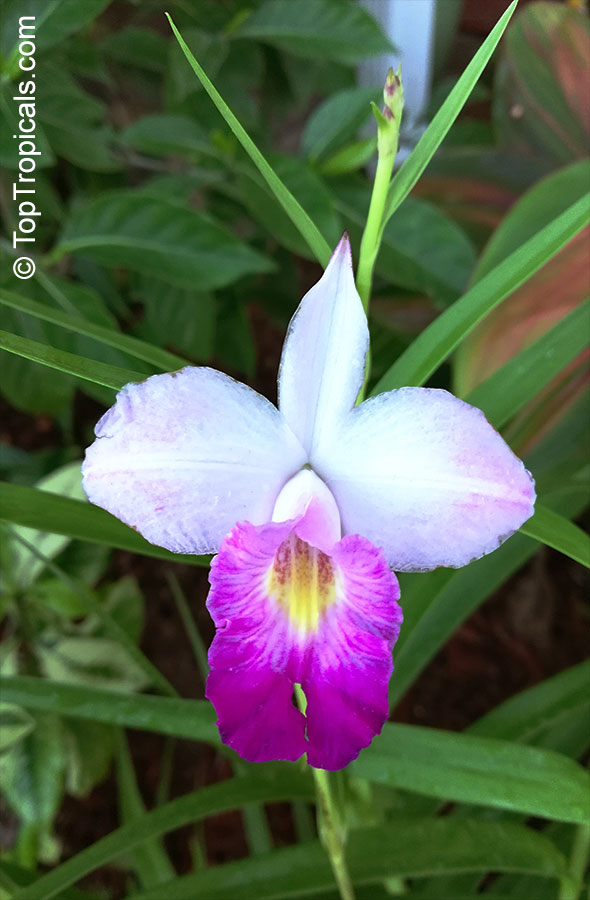
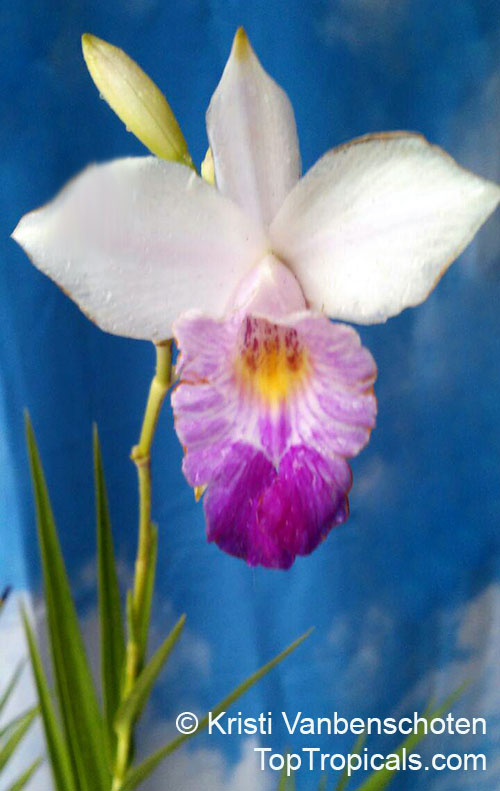
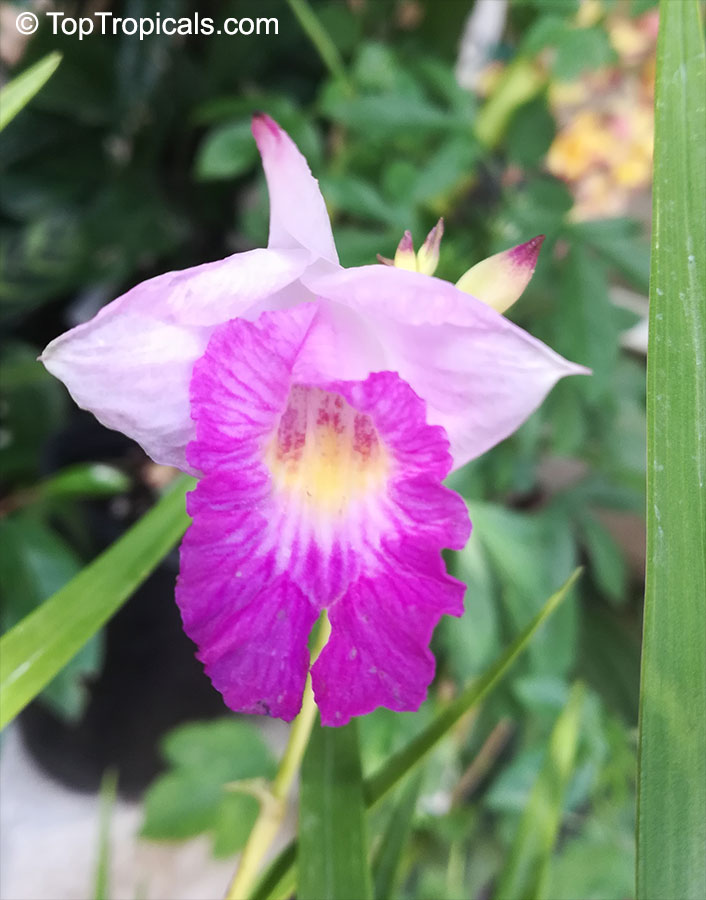
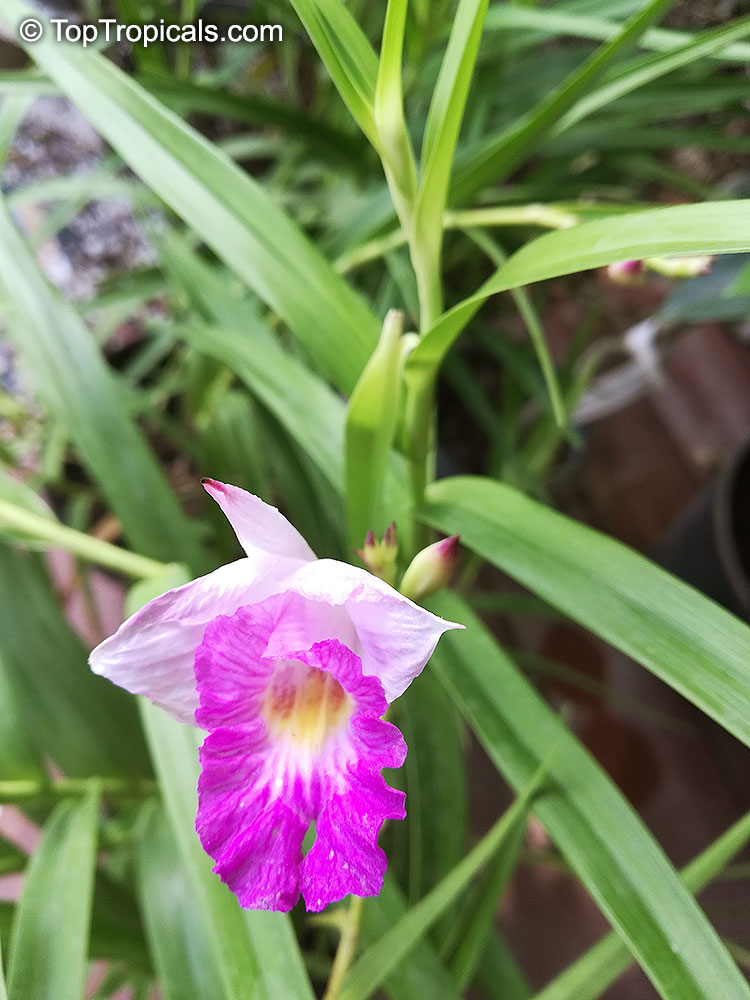
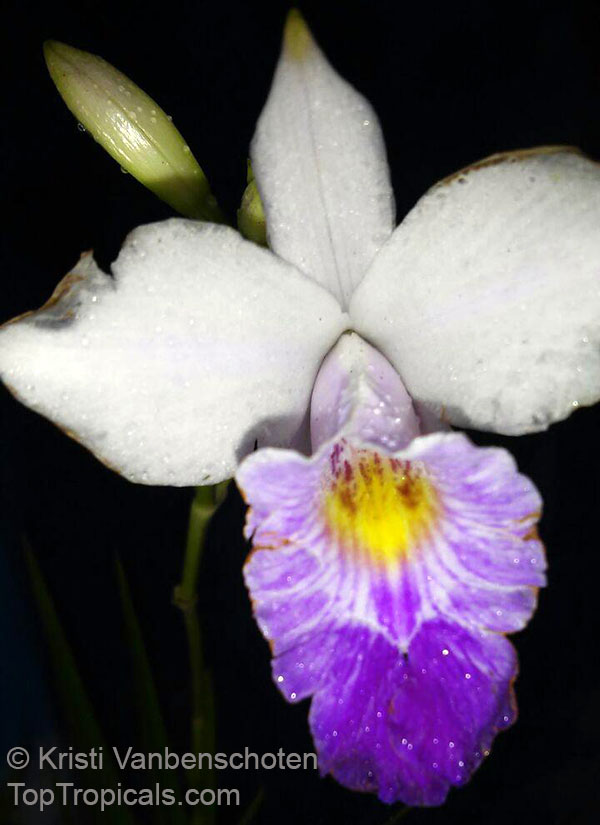
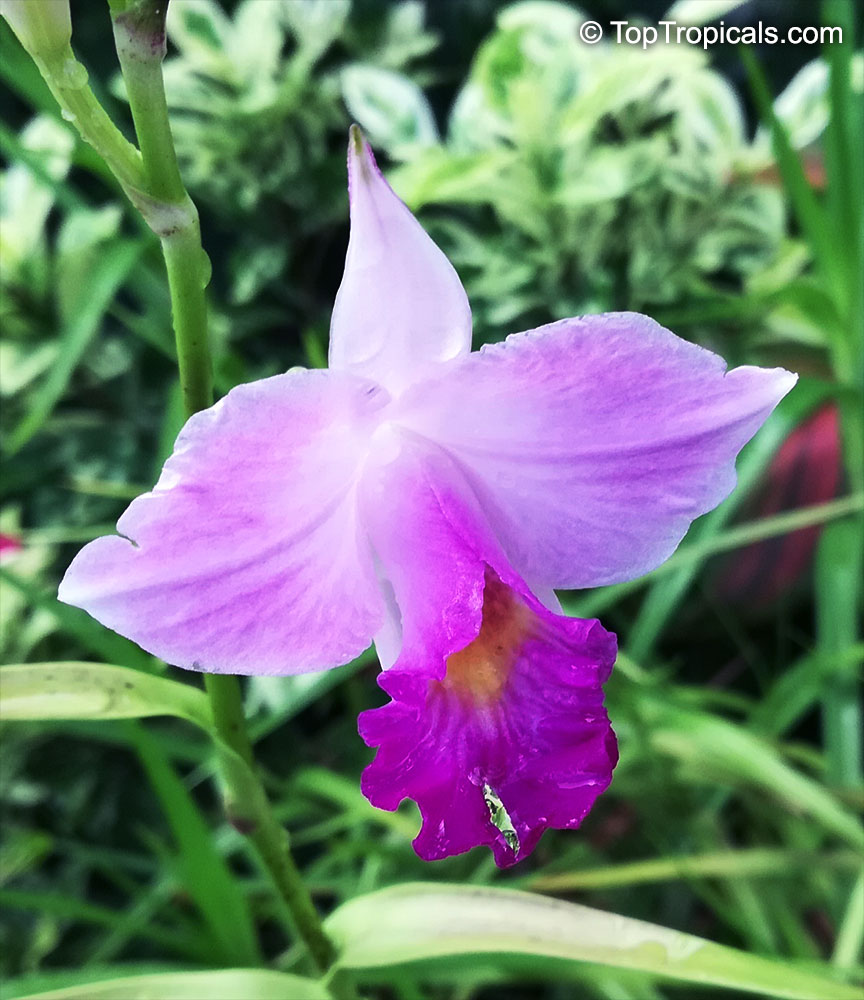
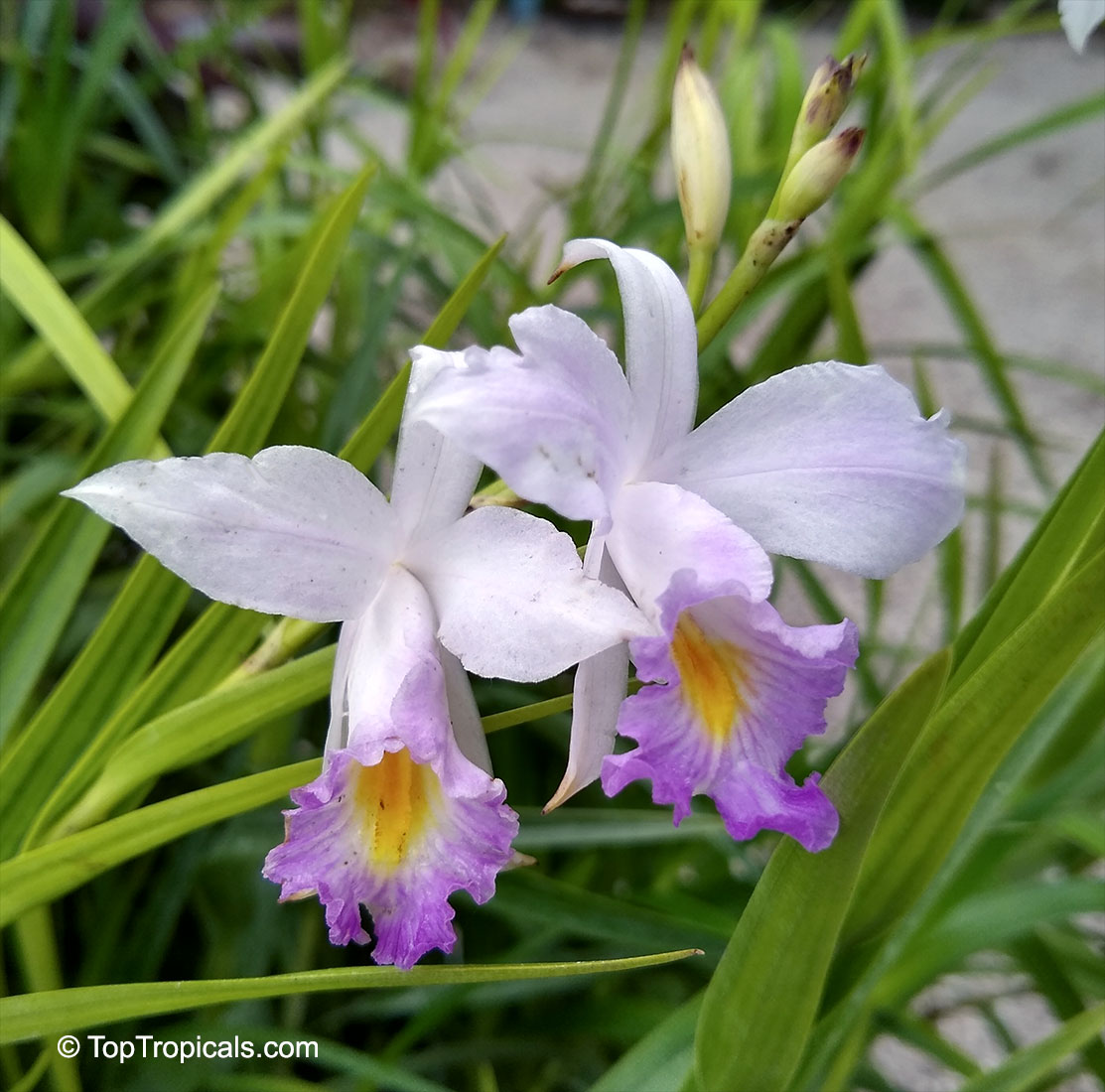
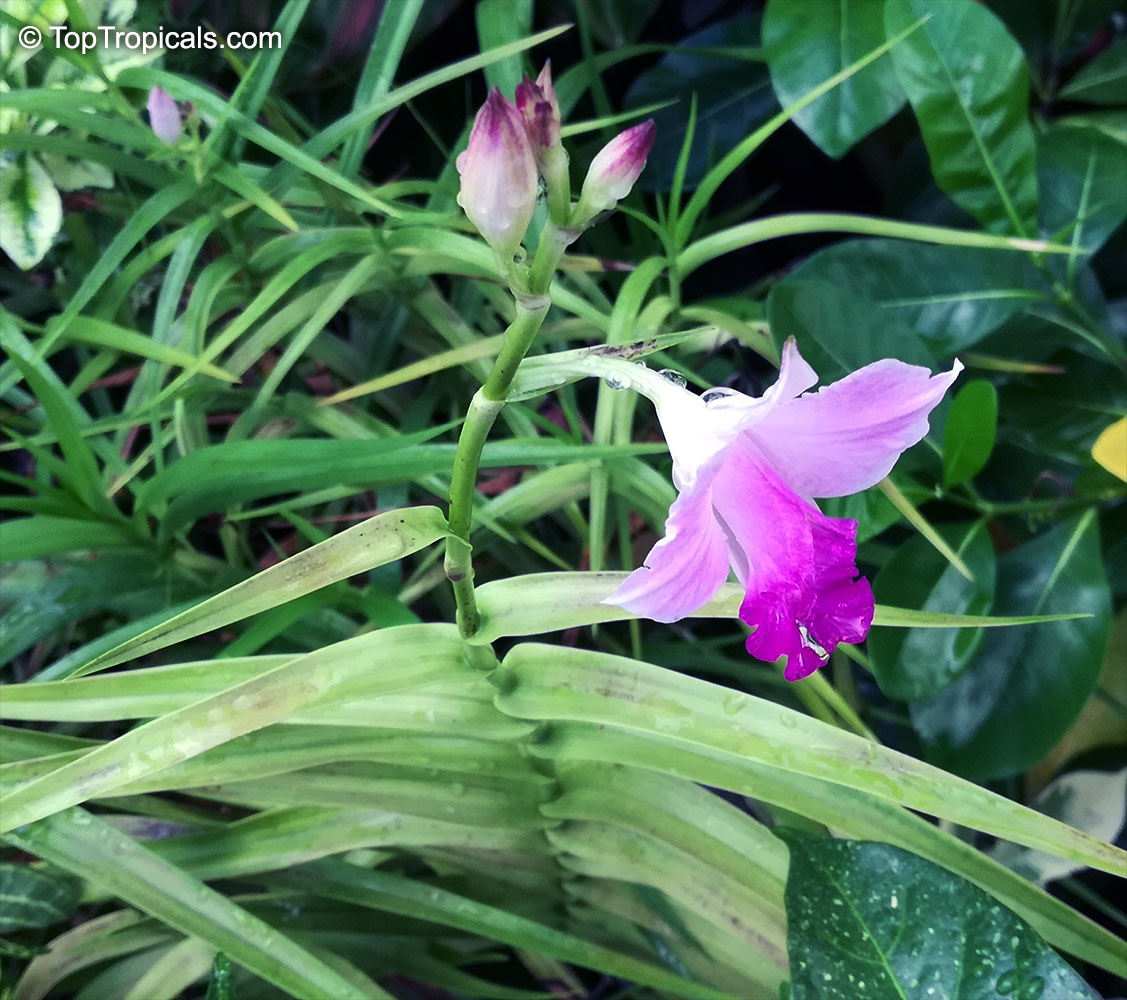
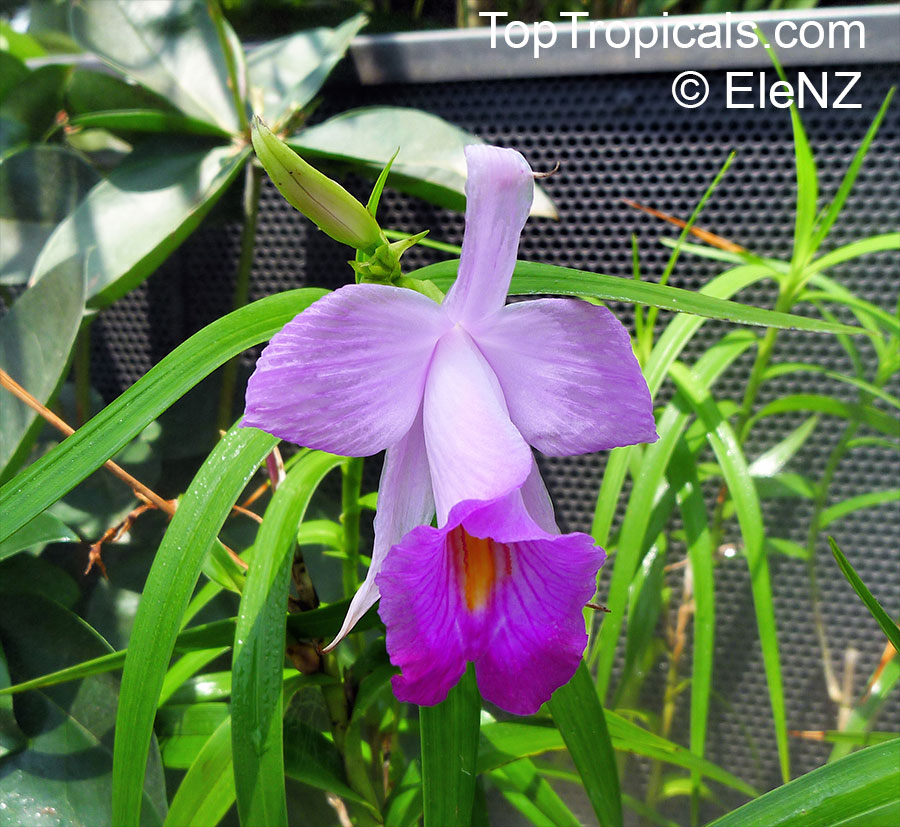
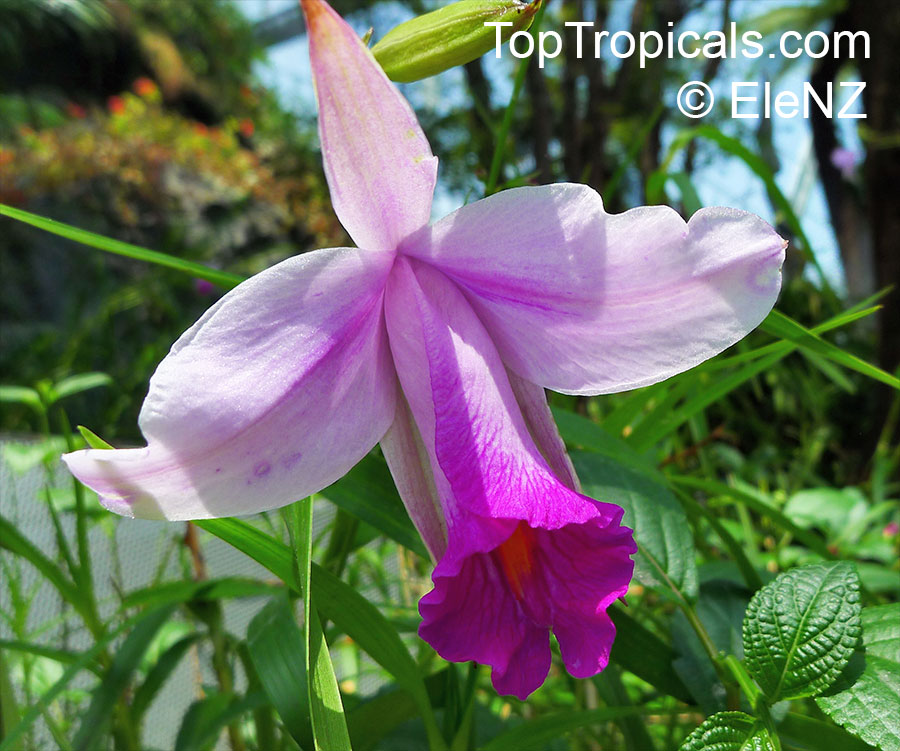
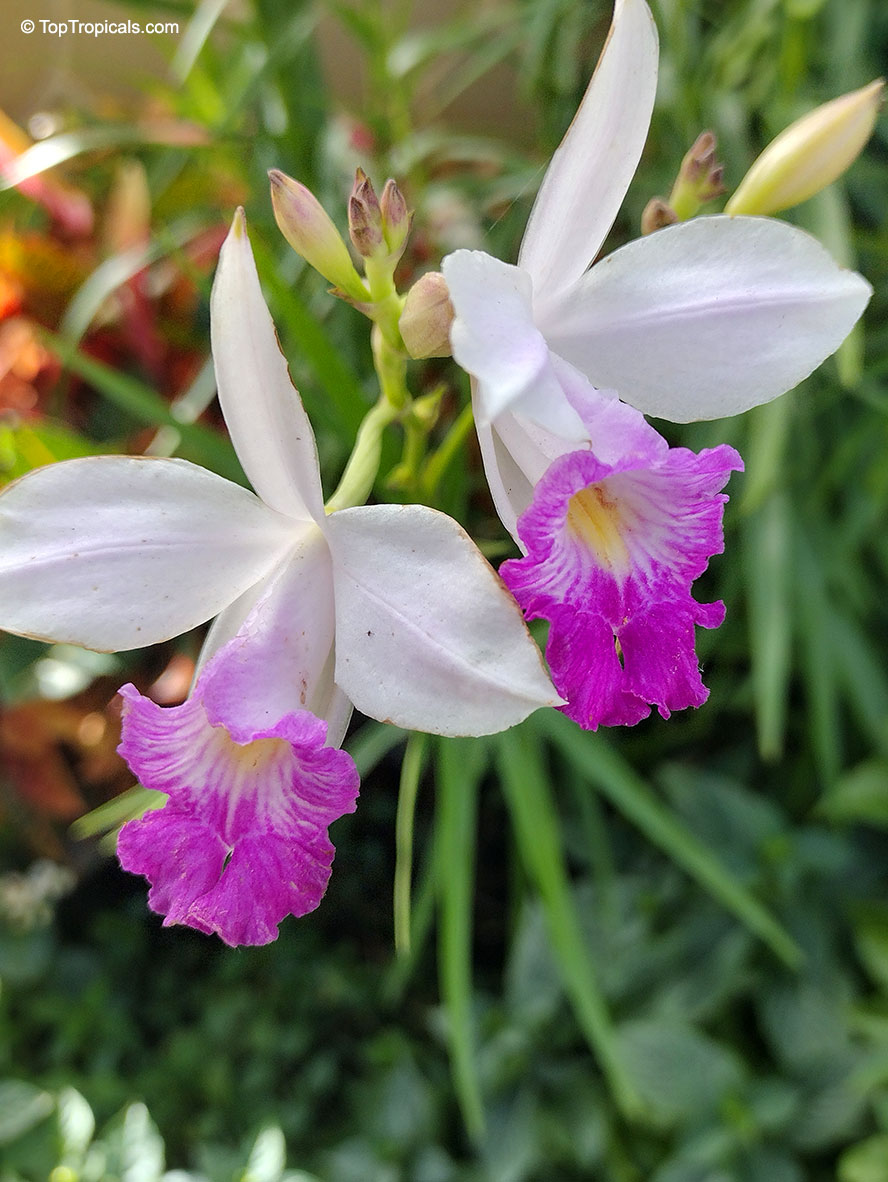
Arundina graminifolia is a terrestrial, perennial orchid with reedy stems, forming into large clumps. This orchid blooms in summer and autumn, showing rather open clusters of showy terminal flowers, ten at the most. They bloom in succession on the terminal racemes. These flowers are a rosy lilac and white disk with a purple lip. The bracts are wide triangular and surround the main stalk of the flower cluster. The occasional fertilized seed pods contain minute powdery seeds, and small plants often develop near the cane ends after flowering, and likely aid in propagation if allowed to reach the soil.
With only 200 of the plant to be recorded growing naturally in Singapore, the species is close to extinction there, largely caused by the destruction of its natural habitat, namely the rainforests and mangrove forests. The remaining plants, commonly called Tapah weeds, can be found in the secondary forests or at the forest fringes. It is however very common in road cuts and other disturbed areas in full sun in Sarawak, East Malaysia, where it often is the most common flowering plant to be seen along the roadsides.
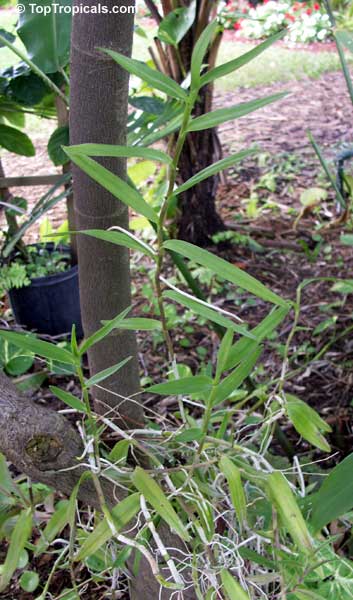
Bamboo Orchid produces pinkish flowers at the top of tall cane-like pseudobulbs. It's the only species in the genus. The plants are quite tall; they'll reach at least hip level, possibly over your head, and their vegetative resemblance to bamboo can be uncanny. The long pseudobulbs have leaves alternating along their length, similar to Epidendrum orchids. The flower stems, which emerge from the top of the canes, produce several flowers sequentially, so that there will be one at a time over an extended period. The flowers are white with a purple-to-pink lip, and shaped similarly to a Cattleya orchid flower. They are 2-3 inches across, and can appear for much of the year, especially in summer.
Arundinas readily propagate themselves by keikis, which frequently develop along the pseudobulbs. Once a keiki has roots a couple inches long (several cm), you can carefully cut it off and pot it separately. The canes do not grow rigidly upright, they'll sometimes tip over; in nature, this allows the keikis to get established nearby, so it's a major vegetative propagation strategy for these plants; it helps them rapidly grow into large clumps. These plants like colonizing disturbed habitats, often growing as roadside weeds in much of Southeast Asia; being able to grow quickly helps them succeed in such places.
These plants are tough: they are quite robust and forgiving of less-than-attentive care. They are terrestrial orchids, so they like a denser potting mix than most orchids. It should still drain freely, however, and not be as dense as soil. A good starting point is equal parts sand, sphagnum moss, and fine fir bark. Bamboo orchids should be watered as they approach dryness; don't let them dry out too thoroughly. If you grow them outdoors, either if you live in a warm climate or if you just brought it outdoors for the summer, rainfall might water it often enough in some areas; but if it's starting to dry out water it thoroughly. If you grow orchids indoors, these plants are often too big to take to the sink; the easiest way to water will often be to dunk the pot in a bucket, then pull it out. Any aerial roots, such as on keikis, should be misted regularly. Fertilize regularly; the usual recommendation is to use a fertilizer especially formulated for orchids feeding weakly. Most orchid fertilizers are designed to be dissolved in the plant's water. They like high light: 2000-3000 footcandles is ideal, similar to the low end of Cattleya lighting. In nature, they commonly grow in direct sunlight. As long as the lighting isn't too dim you're probably fine. If it doesn't bloom, try increasing the lighting. You'll get the best results growing them at warm temperatures. It's OK if the temperature varies more widely than this; they can actually withstand mild freezes occasionally, though it's quite stressful for them. Any temperature that's reasonably comfortable (or a bit hot and muggy) for humans is going to be fine for bamboo orchids. They like good humidity, perhaps 70%, though this isn't critical. If the humidity is low, the plant should be misted regularly, especially if it has any keikis.
See video about Ground Orchids.
See video about Ground Orchids.
Recommended Fertilizer: SUNSHINE Megaflor - Bloom Nutrition Booster
Use link to repeat this search:
https://toptropicals.com/cgi-bin/garden_catalog/cat.cgi?find=Epidendrum&search_op=and&keyword_op=and&language=e&number=10
&no_change_lang=1&user=tt&sale=1&first=0