Garden Blog - Top Tropicals

Date: 18 Aug 2023

Does Size Matter?

TopTropicals plants vs other mail order plants

Cat  shipping  plants

Q: I purchased various plants via mail order (including a Coffee tree and some flowering vines) from companies *** and ***, but they did not survive, possibly due to their small size and the stress of shipping. Could you provide information about the size of your plants, their resilience to shipping stress and the time required for establishment?

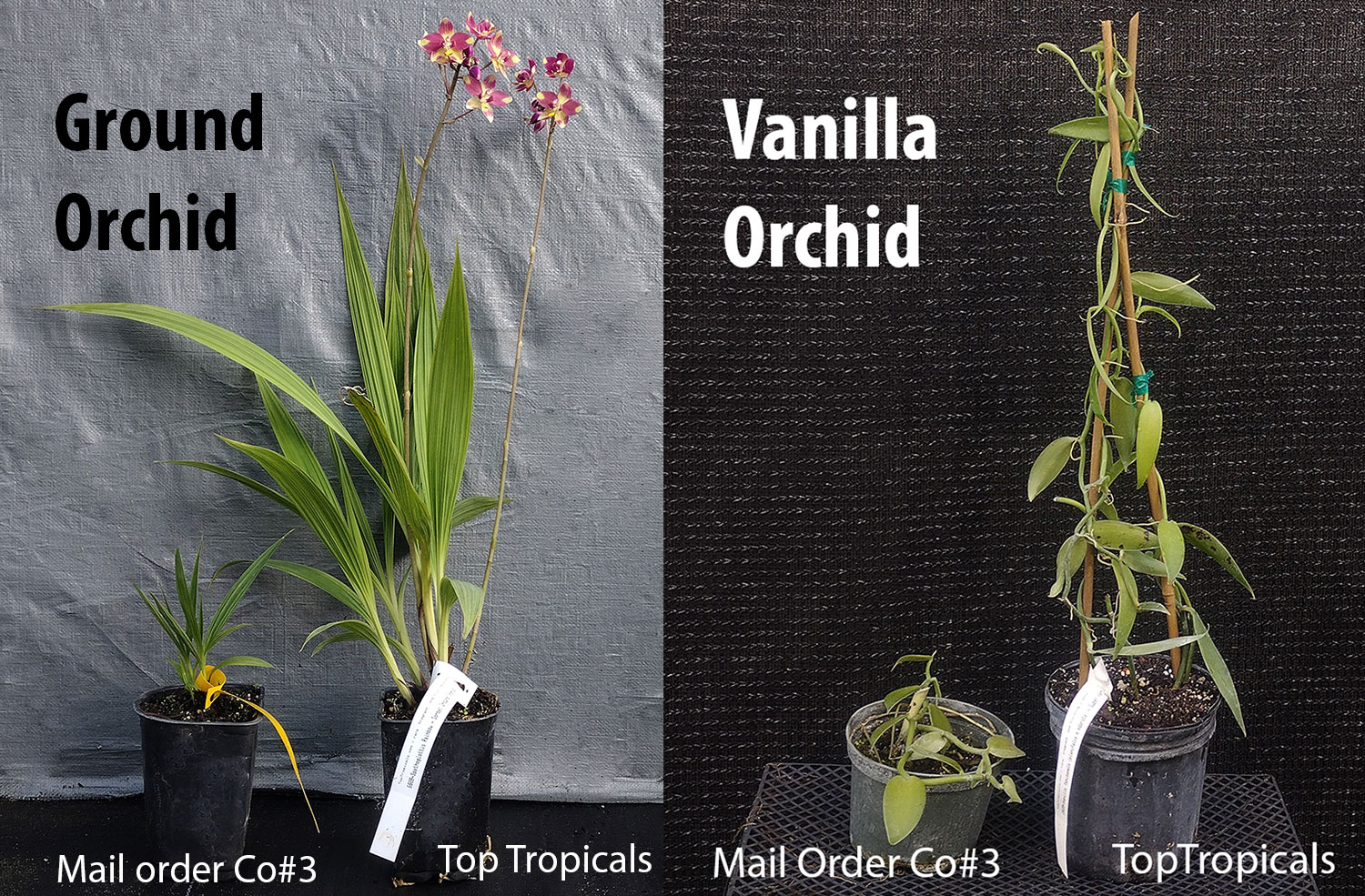
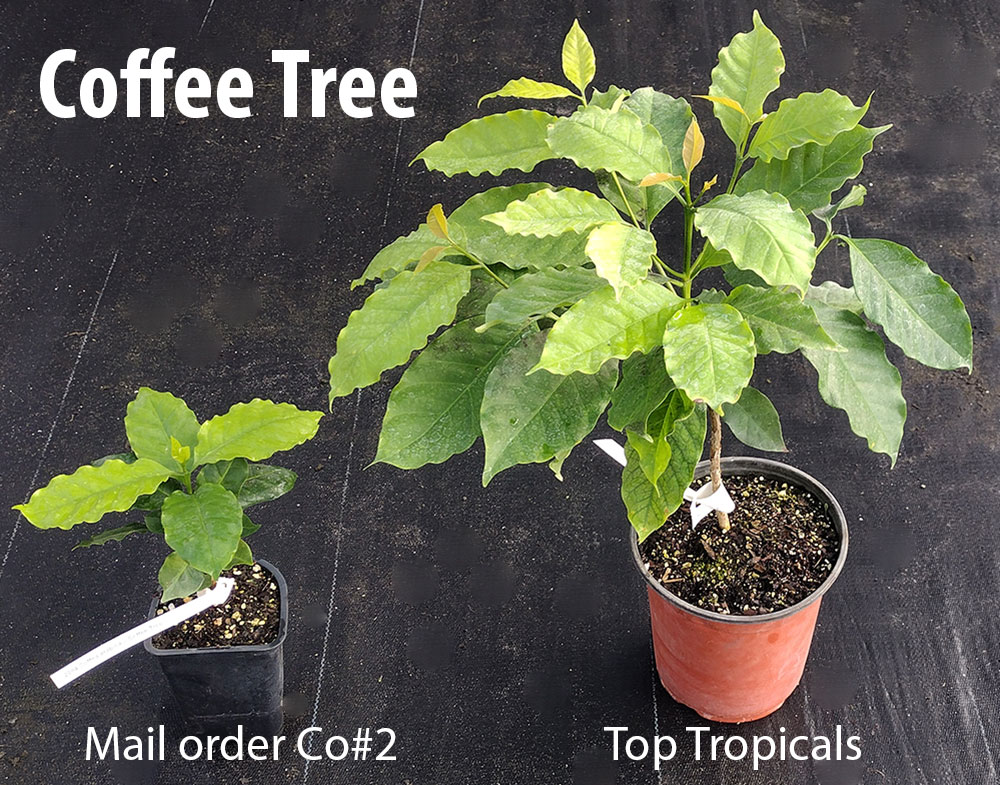
A: Plants, as living beings, may experience stress during a few days of travel in a dark box. However, the critical factor influencing their survival is the plant's size. Most of our plants are grown in pots ranging from 1 to 3 gallons, have established root systems and developed branches. Some even feature flowers and fruit, although these may drop during transit. We've included images comparing our 1 gallon size plants with those from other mail-order firms we previously obtained for our own collection.

Understanding that post-shipping plant establishment is a gradual process is crucial. Yet, most plants handle shipping well and commence new growth within days to a couple of weeks post-arrival. Here are some success pointers:

1) Opt for a container matching the root ball size, avoiding excessive sizing until growth initiates.
2) Begin in a shaded area, progressively transitioning to brighter spots.
3) Apply Sunsine Epi spray to lessen stress and enhance vitality. 4) Initiate fertilization once the plant displays fresh growth.

For more information on how to establish mail order plants, simply download our Plant Care Guide.
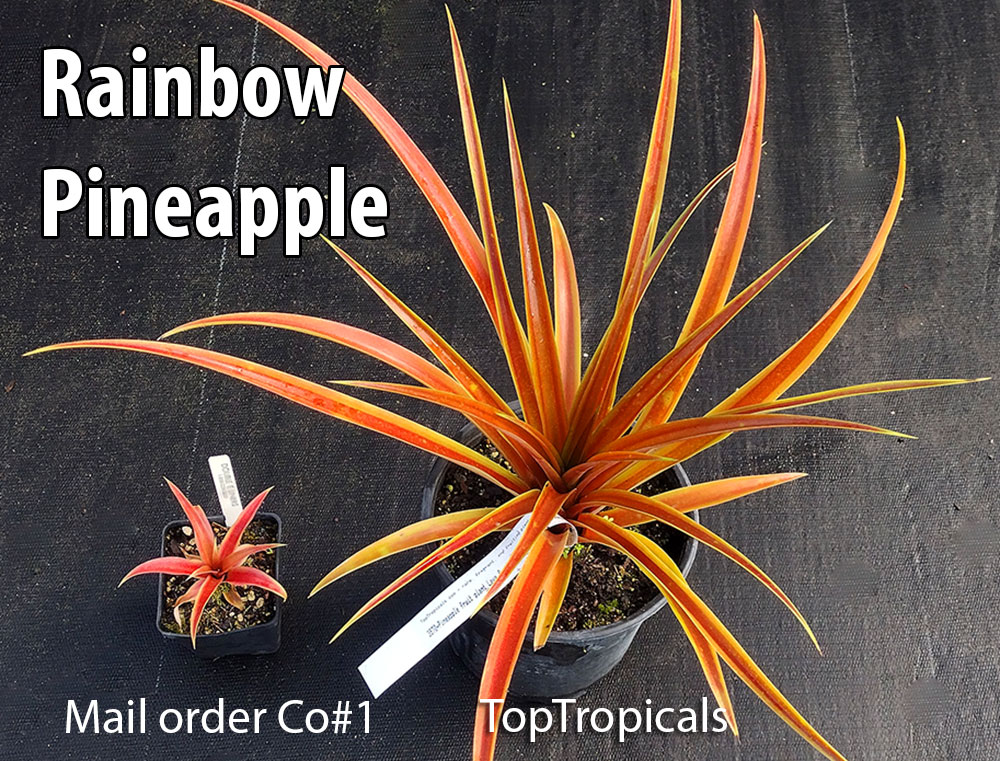
Side-to-side  pineapple  plant  from  Top  Tropicals

Side-to-side  coffee  tree  from  Top  Tropicals

Side-to-side  orchids  from  Top  Tropicals

Date: 2 Apr 2022

Grow Your Own Food:
Costa Rican Guava - Guava for Drinking!

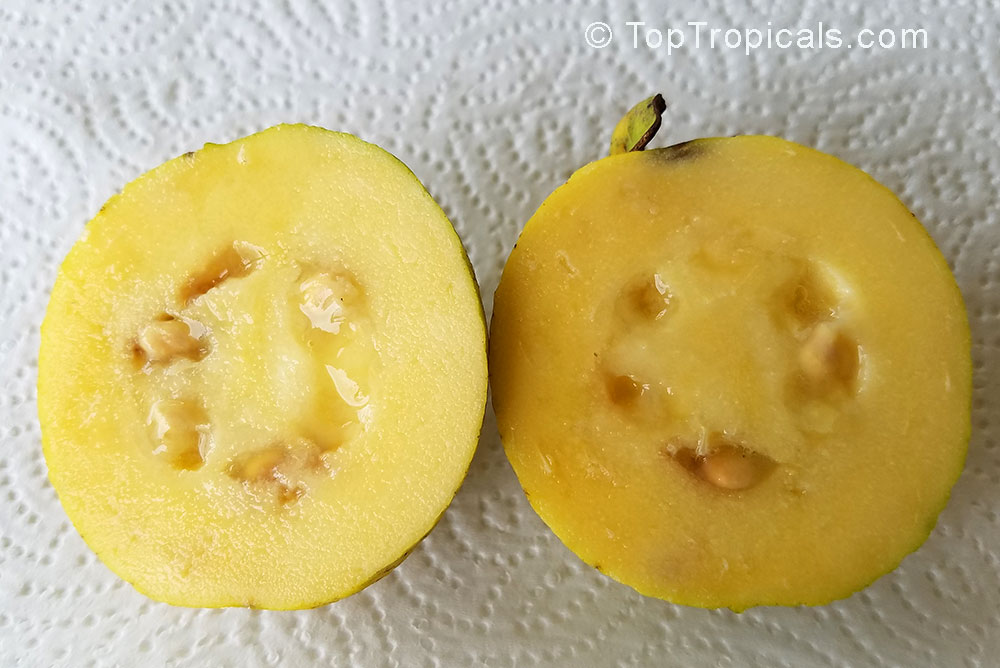
Cas  Guava  -  Psidium  friedrichsthalianum,  Fruit

by Alex Butova, the Witch of Herbs and Cats

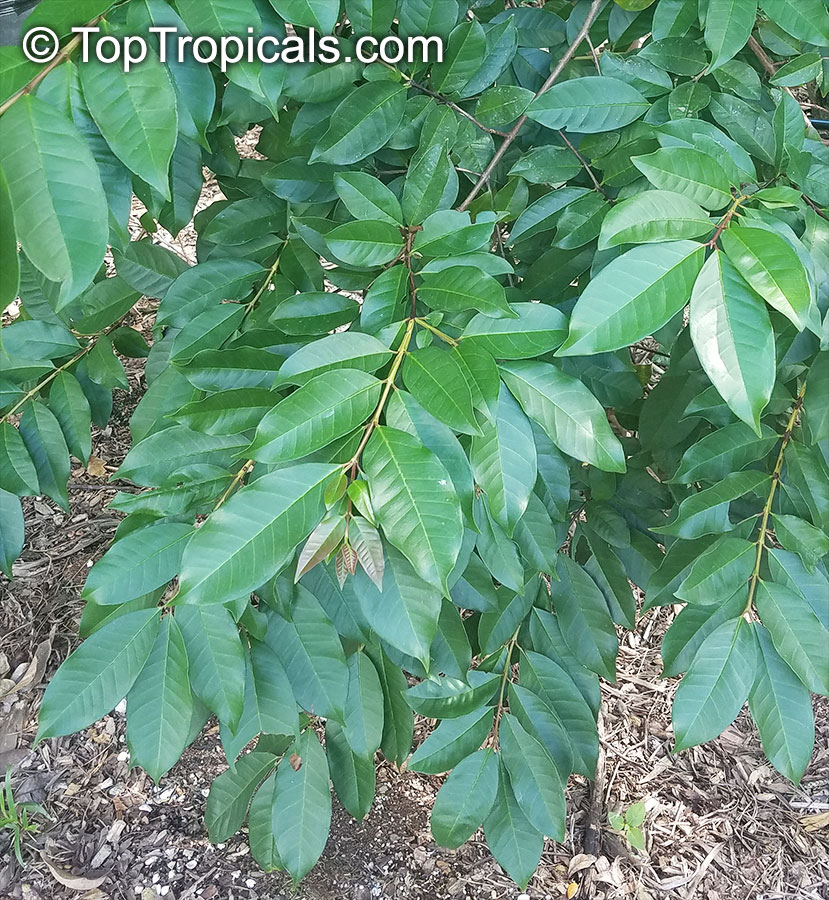
...Looking for a handsome, unusual fruit tree for container culture with healthy and flavorful fruit? Or simply want an easy fruit tree that is hardy and undemanding? Psidium friedrichsthalianum (family Myrtaceae), the Costa Rican Guava or Cas Guava, is a perfect small guava tree that can be very rewarding. In Nicaragua it is called "Guava for Drinking" or "Fresco de Guava". Despite the tartness, the flavor is excellent with passionfruit and pineapple tones and is much more pronounced than the subtle flavor of the common Guava. These fruits are very much a part of the culture and cuisine of Costa Rica. Also it has been successfully grown in California now and can be grown in many subtropical regions or as a container plant - "condo" fruit tree...

Cas  Guava  -  Psidium  friedrichsthalianum,  Tree

Date: 27 Feb 2025

What Fertilizer to Use Now and How?
Five important keys to healthy plants

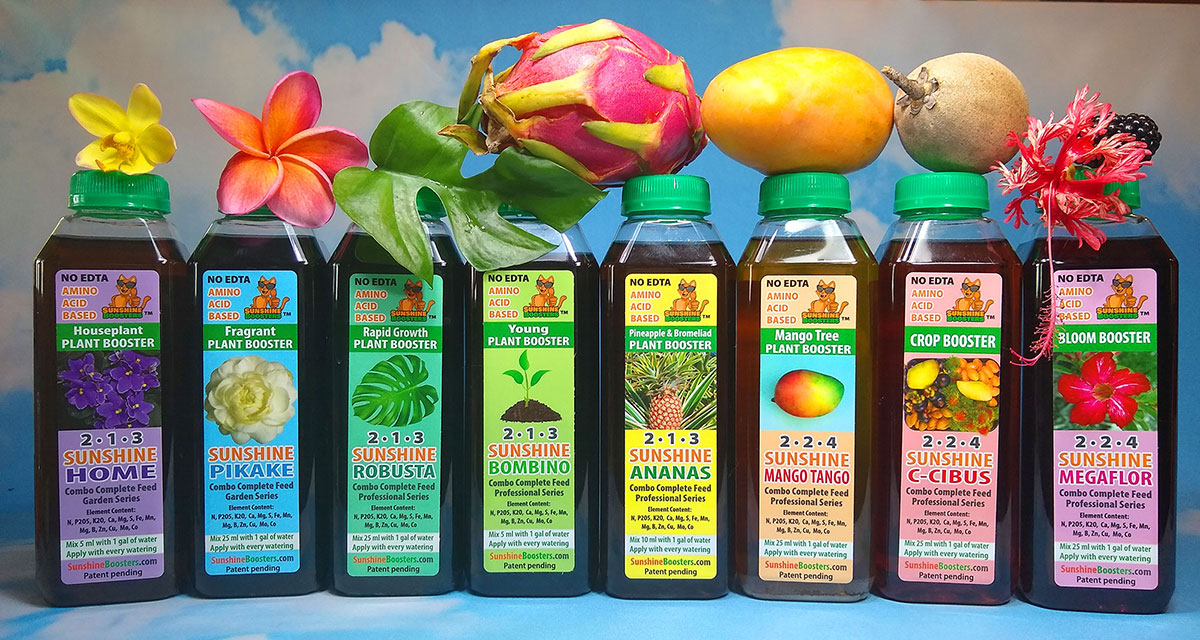
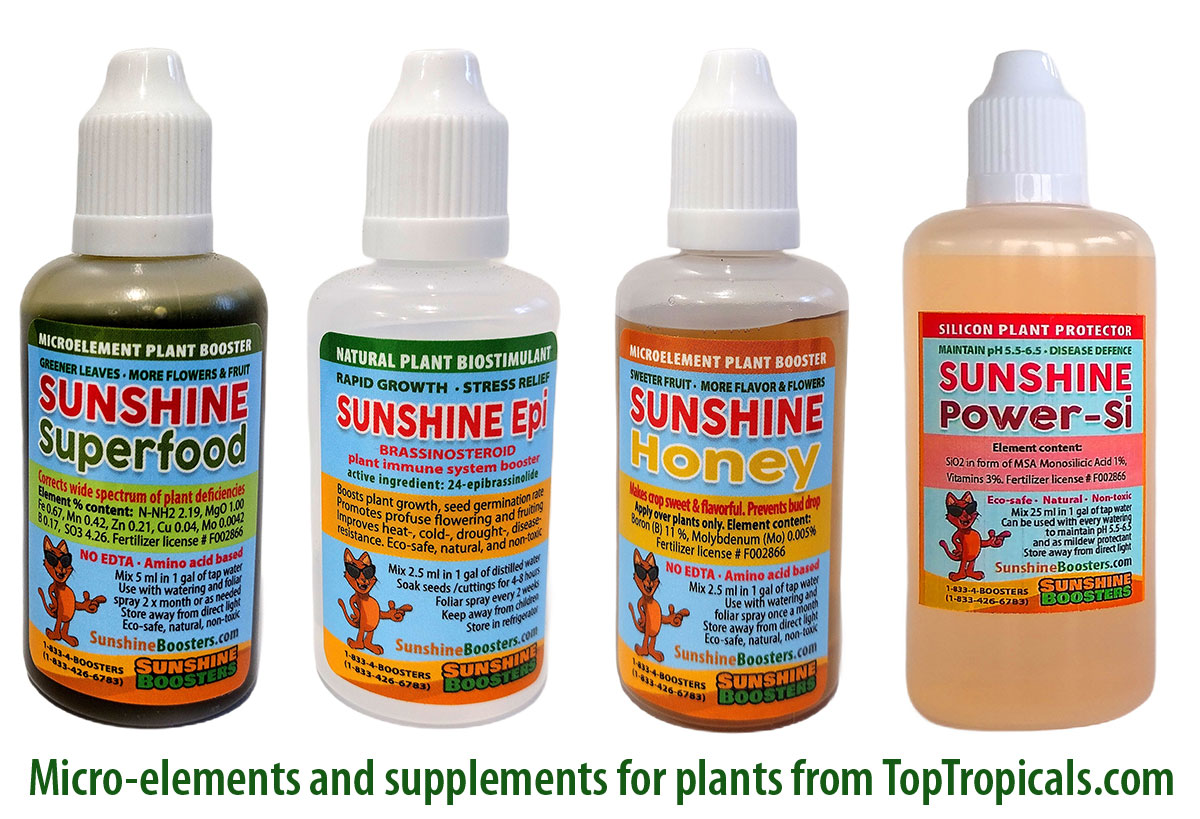
Sunshine  Boosters  Selection

Q: It's early Spring this year. Should I start fertilizing my plants sooner than usual?

A: Most fertilizer instructions recommend fertilizing tropical plants from March to November. This is because plants don't need as much food during the cooler months when many go dormant, and excess nutrients can burn the roots if not absorbed. However, for the most effective fertilizer program and healthy plants, consider these points:

1. Sunshine Boosters Year-Round

Liquid amino-acid-based fertilizers like Sunshine Boosters are safe to use year-round. Since watering is reduced in cooler weather, the intake of water-soluble fertilizer is also lower, providing plants with just the essential nutrients for their minimal needs.

2. Dry Fertilizer Schedule

Be cautious with dry fertilizers. Apply them only during active growth in the hot season.

3. Temperature Is Key

If March is still cold, delay dry fertilizer use. However, if nighttime temperatures in February stay above 65F, you can start a dry fertilizer program using slow-release, granulated plant food.

4. What Fertilizers to Use and How

Check out our Sunshine Boosters selection for different types of plants and choose the right type for your needs. These can be applied as often as with every watering:

For Rapid Growth
Sunshine Robusta - Rapid Growth Booster: general fertilizer for both foliage plants and small starters that need an extra boost.

For Flowers
Sunshine Megaflor - Bloom Booster: boosts flowers on established plants; and Sunshine Pikake - Fragrant Plant Booster: best for fragrant flowers.

For Fruit Trees
Sunshine C-Cibus - Crop Booster: contains all necessary elements for fruit trees and their production. Sunshine Mango Tango - specifically formulated for Mango and Avocado trees, and Sunshine Citron - ideal for citrus trees.

For Tender Perennials
Sunshine Orchidasm - Orchid Total Feed and Sunshine Ananas - Pineapple and Bromeliad Booster: mild formulas for these tender perennials.

5. Microelement Supplements Are a Must

Besides macronutrients, plants need additional microelements, just like humans need vitamins. Be sure to apply these supplements along with your regular plant food:

For Green Leaves and Health
Sunshine SuperFood - Complex Microelement Supplement: a must for healthy plants. Apply once a month.

For Stress Relief
Sunshine-Epi - Brassinosteroid Plant Hormone: essential for plants recovering from stress (shipping, transplanting, drought, insect damage, cold stress, etc.). Apply as needed.

For Sweeter, Bigger Fruit
Sunshine Honey - Fruit Sugar Booster: application on fruit trees will make fruit bigger and sweeter by directing sugars to the fruit from other plant parts, and helps to prevent bud drop. Apply 4 times a year: at bud setting, flowering, fruit setting, and after harvesting.

For Better Resistance
Sunshine Power Si - Silicon Protector - enhances resistance to insects, diseases, drought, and frost, while boosting growth. Apply once a month, along with Sunshine SuperFood.

Need Help? Our Plant Experts Are Ready to Assist!

Microelements  and  supplements  for 
 plants

Date: 23 May 2025

What fruit can reduce your blood pressure?

Top  ten  tropical  fruit  that  help  reduce  blood  pressure

Q: Can you recommend trees which fruit are beneficial for balancing blood pressure? I have limited space, so I want to be selective and grow a food forest that truly supports my health.

A: You don't need to spend $$$ on doctors and medications to stay healthy and young. By eating right and adding a few powerful plants and fruits to your diet, you can naturally keep your blood pressure in check. If you plant them today - you can harvest your own medicine tomorrow. And don't forget - gardening itself is therapeutic! It keeps you active, reduces stress, and helps your whole body stay in balance.

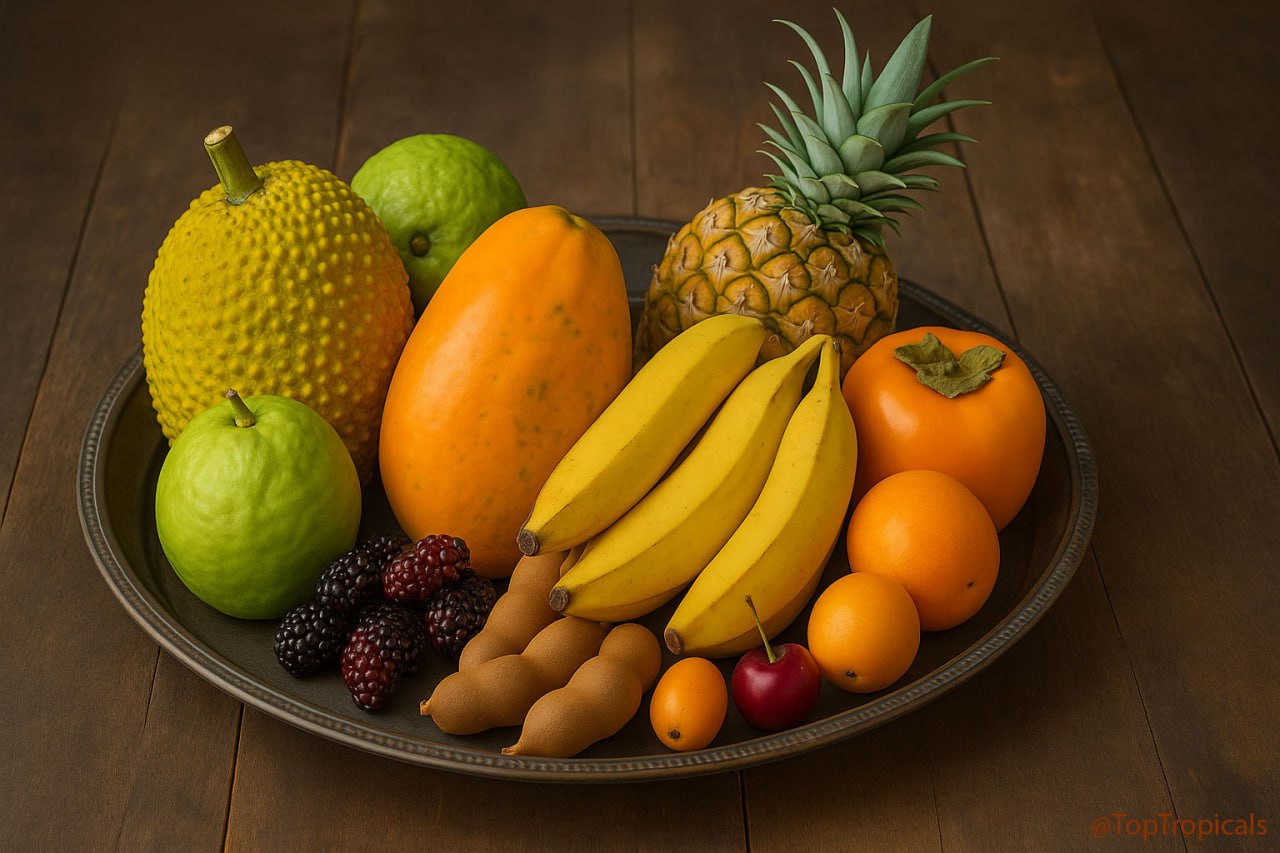
💚 Top ten tropical fruit that help reduce blood pressure:

🍈 Jackfruit - Contains potassium and magnesium, which help relax blood vessels and regulate blood pressure.

🍉 Guava - Rich in potassium and fiber, supports vascular health and may help lower blood pressure.

🍊 Papaya - High in potassium and antioxidants, promoting healthy blood pressure.

🍌 Banana - Well-known for its high potassium content, which helps counteract sodium and lower blood pressure.

🍍 Pineapple - Contains potassium and bromelain, which may support circulation and reduce inflammation.

🍅 Persimmon - High in fiber and antioxidants, which can contribute to better heart and vascular function.

🍇 Mulberry - Contains resveratrol and other antioxidants linked to heart health and blood pressure support.

Tamarind - Rich in potassium and fiber, may help regulate blood pressure and support arterial health.

🍑 Loquat - Contains potassium, aiding in fluid balance and blood pressure control.

🍒 Tropical Cherry (Eugenia) - Contains antioxidants and supports healthy circulation.

Date: 20 Oct 2025

11 tropical fruits to eat instead of taking a fiber supplement

Tropical fruits to eat instead of taking a fiber supplement

Tropical fruits to eat instead of taking a fiber supplement

🍑 11 tropical fruits to eat instead of taking a fiber supplement


When we think of tropical fruit, we picture sweetness, sunshine, and exotic flavors packed with vitamin C. But beneath all that juicy goodness lies another gift: dietary fiber - quietly working to support digestion, feed the gut microbiome, and help keep blood sugar steady.

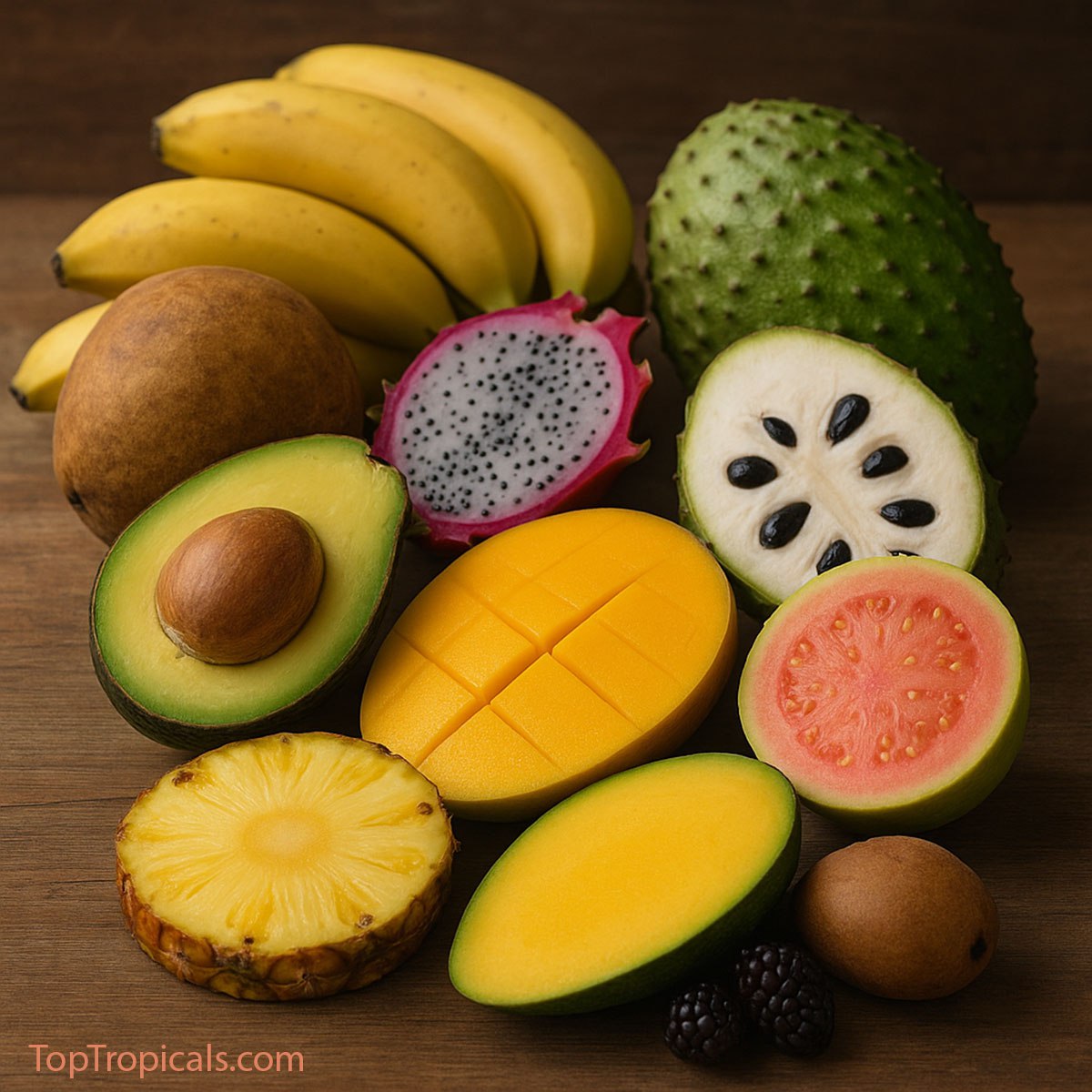
Avocado leads the pack among tropical fruits for fiber content. One creamy, ripe fruit can provide around 10 grams of fiber, roughly a third of an adult’s daily need. And there’s more to avocado than fiber - it’s also rich in healthy fats, micronutrients, and that silky texture everyone loves.

Other tropical fruits bring their own kind of fiber strength. Guava delivers up to 9 grams per cup, plus a burst of vitamin C.

Mango offers about 3 grams in half a fruit, especially when eaten with some of the skin.

Pineapple, though not always seen as a fiber powerhouse, still contributes around 2 grams per cup, along with bromelain, the enzyme that helps digestion.

Jackfruit’s fibrous pulp makes it another standout - it’s so meaty, it’s even used as a plant-based substitute in savory dishes.

Sapote fruit (Mamey, Canistel) and Sapodilla add fiber with a smooth, custard-like texture.

Adventurous tropical varieties like Annona (custard apple, soursop) may not top the charts in fiber numbers, but their soft, fibrous flesh still adds value: about 1.3 grams of fiber per 100 grams of fruit.

Bananas contain both soluble and insoluble fiber; the soluble part (mainly pectin) helps control blood sugar and appetite, while the insoluble fiber aids regularity.

Mulberries are rich in insoluble fiber, especially in their skin, supporting digestion and promoting healthy bowel movements.

Dragon fruit offers a mix of soluble fiber in its juicy flesh and insoluble fiber from its tiny edible seeds, which help support gut health and feed good bacteria.

These fruits aren’t just delicious - they help you meet your daily fiber needs in ways that are far more enjoyable (and sustainable) than taking supplements. And when home gardeners, farmers, or tropical communities grow and share them, it’s a double win: nutrition and tradition hand in hand.

✔️ Tropical fiber power: tips for getting more fiber from tropical fruits


⏺Eat whole, not juiced. Most of the fiber is in the pulp, skin, and seeds. Juicing removes much of that goodness.
⏺Mix it up. Tropical fruits are great, but balance them with legumes, whole grains, nuts, and veggies for a full fiber range.
⏺Take it slow. If your diet is low in fiber, increase gradually to avoid bloating or discomfort.
⏺Drink plenty of water. Fiber works best when paired with hydration.
⏺Mind the ripeness. Unripe fruits can have more resistant starch, another form of fiber.
⏺Get creative. Toss tropical fruits into smoothies, salsas, breakfast bowls, or even desserts - a tasty stealth-fiber strategy.

🛒 Plant a fruit tree to harvest your fruit tomorrow

📚 Learn more:


Tropical fruit health benefits guide - what fruit and edibles can help with health issues and vitamin deficiencies, Part 1 and Part 2.

#Food_Forest #Remedies #Discover #How_to

🟢 Join 👉 TopTropicals