Garden Blog - Top Tropicals

Date: 19 Jun 2026

Pitaya Yellow Palora: dragon fruit beyond pink and white - A Collectors Guide

Pitaya Yellow Palora

🍉 Pitaya Yellow Palora: dragon fruit beyond pink and white - A Collector's Guide


Most dragon fruits are pink or red; Palora - Selenicereus megalanthus - breaks all the rules. With bright yellow skin, white flesh, and an intensely sweet tropical flavor, Palora has earned a reputation as one of the most desirable dragon fruit varieties in the world. Many collectors consider it the finest-tasting dragon fruit available, and once you've tried one, it's easy to understand why.

🔸 The dragon fruit that tastes like candy


Palora is an Ecuadorian selection of Selenicereus megalanthus, a species native to parts of Ecuador, Colombia, Peru, and Bolivia. Unlike the more common red dragon fruits, Palora produces smaller golden-yellow fruit covered with soft spines that naturally fall off as the fruit ripens.

Inside is translucent white flesh packed with tiny edible seeds.

What truly sets Palora apart is the flavor. The fruit is remarkably sweet, often testing much higher in sugar than red dragon fruit varieties. Growers commonly describe the flavor as a blend of honey, pineapple, pear, and tropical fruit, with a richness that many dragon fruits simply don't have.

🔸 Why collectors hunt for it


Ask experienced dragon fruit growers to name the best-tasting variety, and Palora frequently appears near the top of the list.

Unlike some dragon fruits that can be mild or watery, Palora has concentrated sweetness and a smooth, juicy texture. The flavor is so distinctive that many people who are unimpressed by ordinary dragon fruit become instant fans after tasting a ripe yellow Palora.

🔸 Different from other dragon fruits


Palora belongs to a different species than most popular dragon fruits. The plant tends to have thinner stems and a somewhat different growth habit.

It is self-fertile, meaning a single plant can produce fruit on its own. The fruit are generally smaller than red dragon fruits, but what they lack in size they more than make up for in flavor.

Another pleasant surprise is the plant's adaptability. It appreciates regular watering and rainfall but also handles dry conditions remarkably well once established.

🔸 Why it deserves the hype


Every fruit category has its superstar variety. For mangoes it might be Coconut Cream or Lemon Zest. For avocados, perhaps Oro Negro and Fantastic. In the dragon fruit world, Palora is often that variety.

Its bright yellow skin, exceptional sweetness, tropical pineapple-honey flavor, self-fertility, and collector appeal have made it one of the most sought-after dragon fruits available.

If you're only going to grow one dragon fruit for flavor, many experienced collectors would tell you to make it Palora. 👉 More...

🛒 Explore and collect Dragon Fruit varieties

📚 Learn more:

Pitaya Plant Facts

Botanical name: Selenicereus megalanthus
Also known as: Pitaya, Pitahaya, Dragon Fruit, Strawberry Pear
USDA Zone: 9 - 11
Highligths Vine or creeper plantSemi-shadeFull sunWatering: Moderate. Water when top soil feels dryWatering: Regular. Let topsoil dry slightlyYellow, orange flowersWhite, off-white flowersThorny or spinyEdible plantFragrant plantSubtropical plant. Mature plant cold hardy at least to 30s F for a short time
Get personalized tips for your region

· Yellow Dragon fruit (Selenicereus megalanthus) in Plant Encyclopedia
· Pitaya Vietnamese Jaina White: dragon fruit beyond pink and white
· Pitaya Tricia: dragon fruit beyond pink and white
· Pitaya "Sweet Red": dragon fruit beyond pink and white
· Pitaya Purple Haze: dragon fruit beyond pink and white
· Pitaya Hana: dragon fruit beyond pink and white
· Pitaya Eureka Red: dragon fruit beyond pink and white
· Pitaya David Bowie: Dragon Fruit Beyond Pink and White
· A Quick Guide to Dragon fruit varieties: Red, White, Yellow, Purple and more...
· What is the best Dragon fruit with red flesh?
· Planting your own Dragon Fruit plantation
· Do-It-Yourself Support Structure for Dragon Fruit
· Why you need to grow your own dragon fruit
· Do red, white and yellow Dragon fruit taste differently?

#Food_Forest #Dragon_Fruit #Discover

🟢 Join 👉 TopTropicals

Date: 28 Sep 2025

Guava Tree Plant Care

Tips from Top Tropicals Plant Expert - Tatiana Anderson

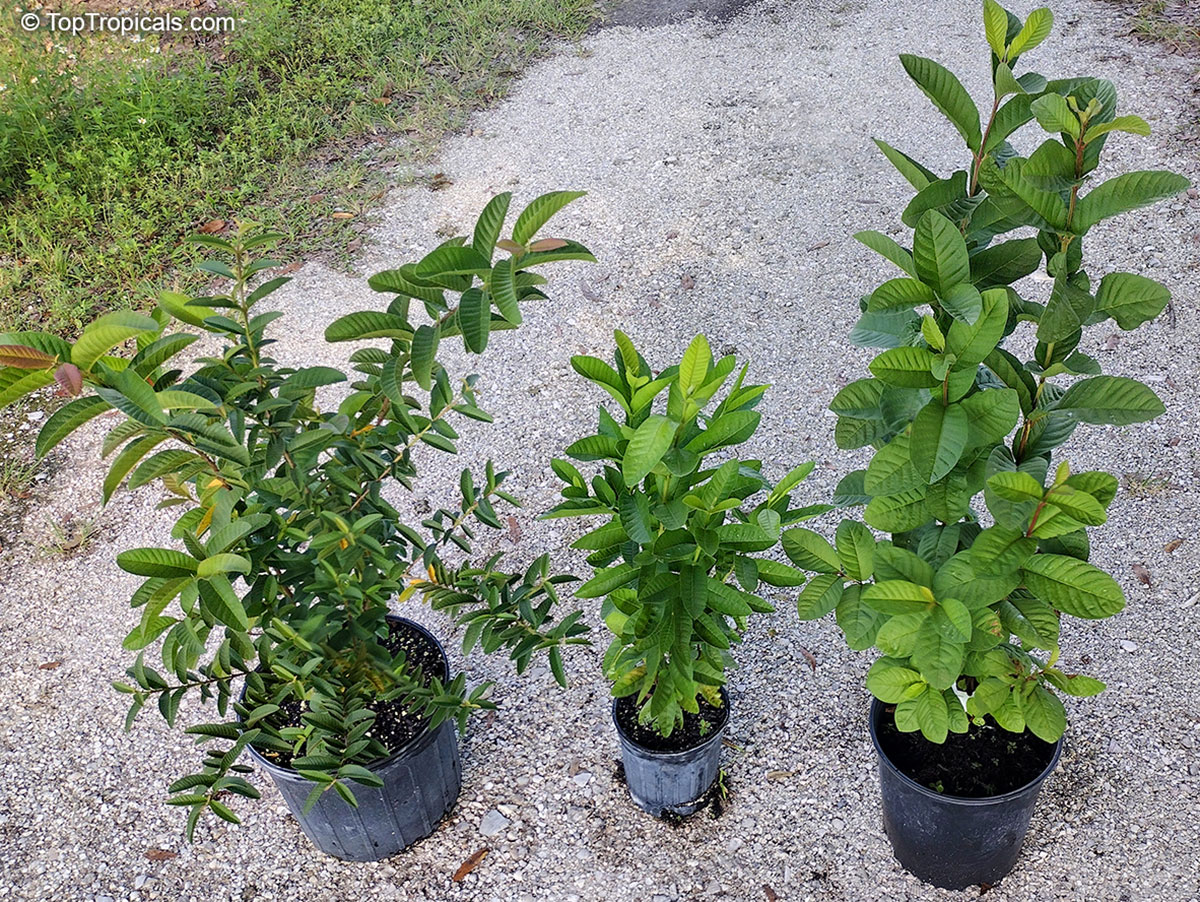
Guava  trees  for  sale  in  3-gallon  nursery  pots,  healthy  young  plants 
 with  green 
 foliage.

Where to Plant Outdoors

Guavas love full sun — aim for 6–8 hours of direct light. They’re adaptable to many soils but do best in well-drained, organic-enriched mixes. Plant them in a spot where you can water easily; guavas are thirsty trees during fruiting.

Container & Indoor Growing

Don’t have space or live in a cooler climate? Guavas thrive in large pots. Use well-drained potting mix. LINK TO OUR SOIL Keep them on a sunny patio during warm months and bring them indoors when nights dip below freezing. Compact varieties like Dwarf Hawaiian Rainbow or Tikal are especially good for pots.

Winter Care

Mature guavas can handle a light frost (down into the high 20s F), but young plants need protection. If planted outdoors, cover them with frost cloth on cold nights. Container guavas can be wheeled into a garage, greenhouse, or bright indoor window until the weather warms.

Watering and Fertilizing

Water deeply once or twice a week, more often in hot weather or when fruit is developing. They don’t like soggy soil, but they won’t complain about short floods either. Fertilize 3–4 times a year during the growing season with a balanced fruit tree fertilizer. Guavas especially love potassium and phosphorus for strong flowering and heavy crops. We recommend liquid crop booster Sunshine C-Cibus and balanced controlled release fertilizer Green Magic.

Pruning

Prune after fruiting to keep them compact and open up airflow. Remove crossing or dead branches. In containers, trim back vigorous shoots regularly to manage size and encourage more fruiting wood.

Pests and Problems

Guavas are generally tough and pest-resistant. The main thing to watch for in humid or rainy climates is mealybugs - those cottony white clusters on leaves or stems. They're easy to manage with neem oil or a quick spray of horticultural soap.

Fruit time

Guavas fruit young - often within a year or two.

Pollination

Guavas are self-pollinating, so you'll get fruit even with a single tree. Planting more than one tree, however, often boosts harvests and gives you a longer fruiting season.

If you've ever wanted instant gratification from a fruit tree, guava is it.

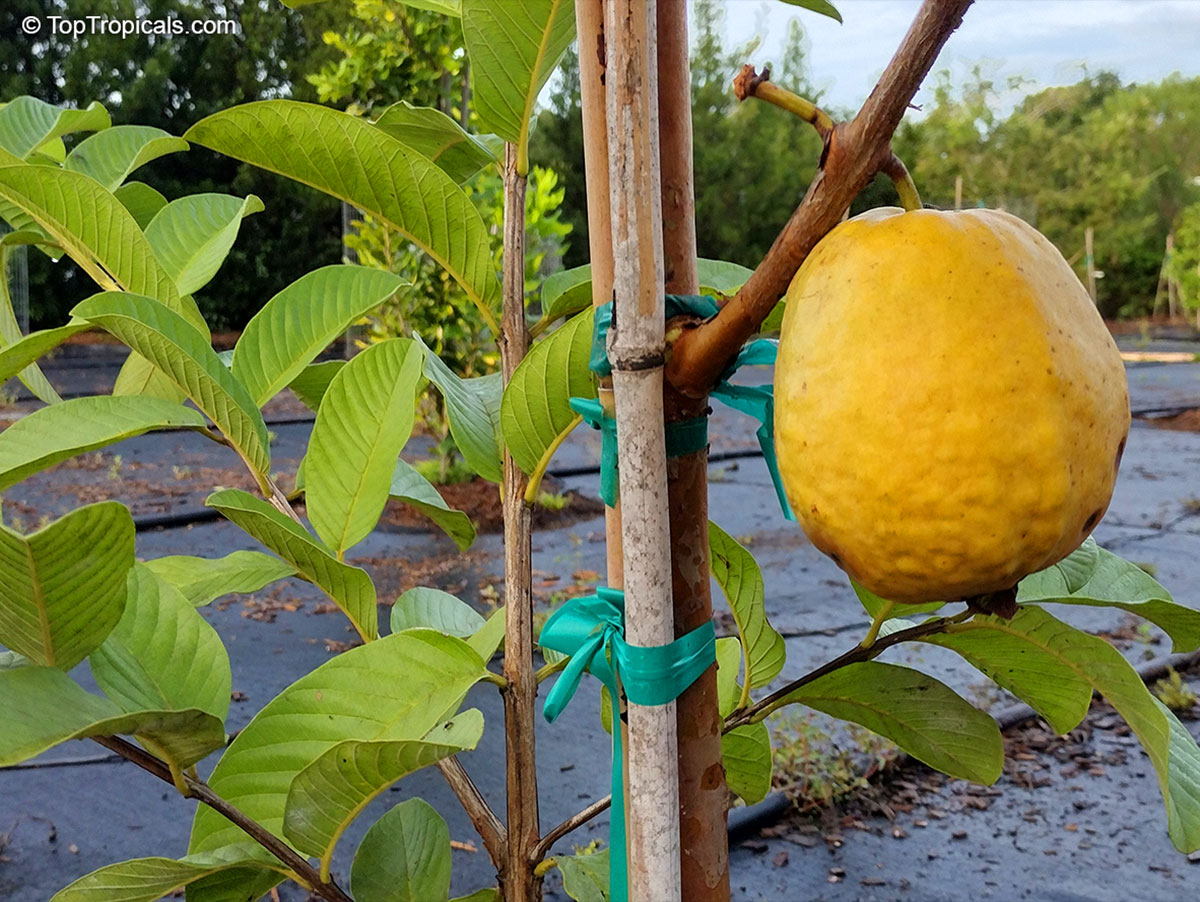
Ruby  Supreme  Guava  tree  with  a  large  ripe  yellow  fruit,  variety  known 
 for  sweet  pink  flesh  and  reliable 
 harvests.

🍴 Guava Recipes

With all that fruit, the next question is always: "What do I do with it?" Here are our favorites:

  • Cas Guava: Make Agua de Cas

    Boil halved Cas Guava fruits with sugar, simmer, strain, and bottle. Dilute with water when serving. The concentrate keeps for months in the fridge.
    Check out the recipe.

  • Hawaiian Gold: Make Drinks

    Perfect for Mojitos or Margaritas. Sweet, tangy juice pairs beautifully with lime and mint. Learn more

  • Araca Pera: Guava Wine

    Famous in Brazil, where the fruit is turned into a vibrant rosу wine. Locals say it’s the taste of summer in a glass — and yes, you can make it at home too. Learn more...

  • Quick snack: Guava Grilled Cheese

    Spread guava paste or fresh mashed fruit with cheese, grill until golden. Sweet and savory heaven. Learn more...

  • Simple Guava Juice

    Blend ripe guavas with water, ice, and a little sugar if you like. Instant refreshment.

✅Ready to Grow? Whether you want fresh juice, sweet fruit, or even your own guava wine, we’ve got the best varieties in stock right now. Your future self, sipping guava juice on a hot summer afternoon, will thank you.

👉 Order your guava tree today

Tabby  cat  sitting  between  a  glass  of  yellow  guava  juice  with  white 
 guavas  and  a  glass  of  pink  guava  juice  with  green  guavas  and  cut  pink  guava 
 fruit.

Date: 15 Jun 2026

Pitaya Tricia: dragon fruit beyond pink and white - A Collectors Guide

Pitaya Tricia dragon fruit

Pitaya Tricia dragon fruit

🍉 Pitaya Tricia: dragon fruit beyond pink and white - A Collector's Guide


Some dragon fruit varieties are known for their flavor. Others are prized for their appearance. Tricia manages to stand out for both.
Developed by California dragon fruit breeder Edgar Valdivia and named after one of his daughters, Tricia is a unique hybrid between Hylocereus polyrhizus and Hylocereus ocamponis. It combines striking ornamental qualities with excellent fruit and has become a favorite among serious dragon fruit collectors.


🔸 A plant that looks different from the start


Even before it flowers or fruits, Tricia catches attention.

The vigorous plant produces long, thick, three-sided stems with a distinctive grayish-green color. This natural gray coating helps protect the stems from intense summer sun and winter cold, giving the plant a rugged appearance unlike most dragon fruits.

The stems are heavily armed with large spines, a reminder of its wild ancestry.

🔸 Some of the most impressive flowers in the dragon fruit world


When Tricia reaches maturity, it produces spectacular summer blooms that can reach an astonishing 15 inches across.

The flowers are not only huge but also brightly colored and highly ornamental. From flower bud to bloom takes about 30 days, followed by another 30 days from flower to ripe fruit.

For many growers, the flowers alone make Tricia worth growing.

🔸 Large fruit with sweet magenta flesh

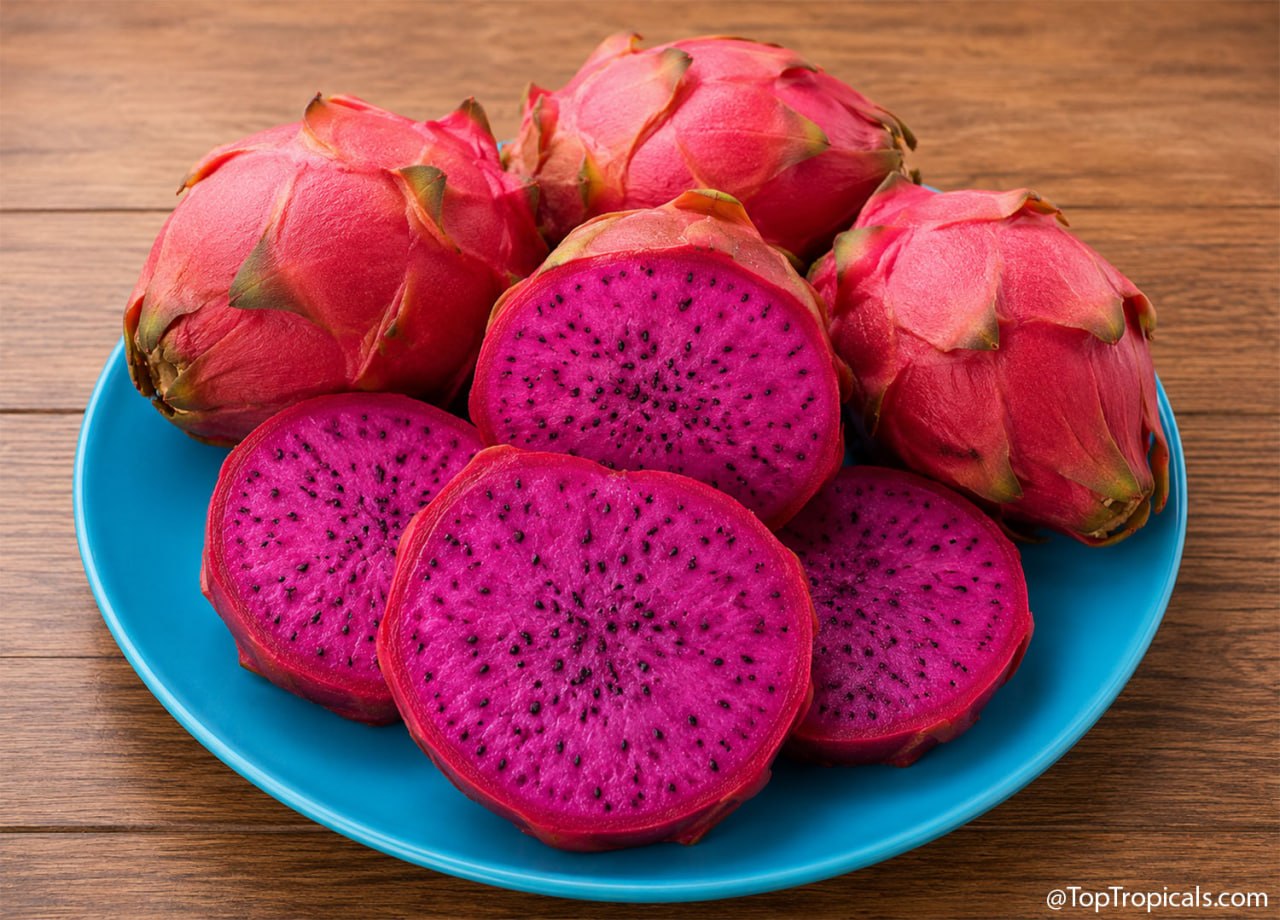
Once pollinated, Tricia produces attractive egg-shaped fruit averaging about one pound each. The fruit have numerous small fins that give them a distinctive appearance.

Inside is rich red flesh with a flavor that sets it apart from many dragon fruits. The fruit is sweet and flavorful, with little to no acidic aftertaste. The result is a smooth, pleasant flavor that many growers find easy to enjoy fresh out of hand.

🔸 A variety for collectors


Unlike self-fertile varieties, Tricia requires pollen from another dragon fruit variety and usually benefits from hand pollination. While this adds an extra step for growers, the reward is a unique plant with extraordinary flowers, unusual stems, and delicious fruit.

For collectors looking beyond ordinary dragon fruit varieties, Tricia offers something special at every stage of growth - from its distinctive gray stems to its giant blooms and sweet magenta-fleshed fruit. 👉 More...

🛒 Explore and collect Dragon Fruit varieties

📚 Learn more:

Pitaya Plant Facts

Botanical name: Hylocereus sp.
Also known as: Pitaya, Pitahaya, Dragon Fruit, Strawberry Pear
USDA Zone: 9 - 11
Highligths Large shrub 5-10 ft tallVine or creeper plantSemi-shadeFull sunWatering: Moderate. Water when top soil feels dryWhite, off-white flowersThorny or spinyEdible plantSubtropical plant. Mature plant cold hardy at least to 30s F for a short timeSeaside, salt tolerant plant
Get personalized tips for your region

· Dragon fruit Hylocereus in Plant Encyclopedia
· Pitaya "Sweet Red": dragon fruit beyond pink and white
· Pitaya Purple Haze: dragon fruit beyond pink and white
· Pitaya Hana: dragon fruit beyond pink and white
· Pitaya Eureka Red: dragon fruit beyond pink and white
· Pitaya David Bowie: Dragon Fruit Beyond Pink and White
· A Quick Guide to Dragon fruit varieties: Red, White, Yellow, Purple and more...
· What is the best Dragon fruit with red flesh?
· Planting your own Dragon Fruit plantation
· Do-It-Yourself Support Structure for Dragon Fruit
· Why you need to grow your own dragon fruit
· Do red, white and yellow Dragon fruit taste differently?

#Food_Forest #Dragon_Fruit #Discover

🟢 Join 👉 TopTropicals

Date: 22 Feb 2023

Benefits of growing your own tropical fruit

"The fruit of the mango tree is no longer forbidden. Indeed, it has been recommended to me by the physicians as an antidote to the plague."
- Louis IX, King of France -

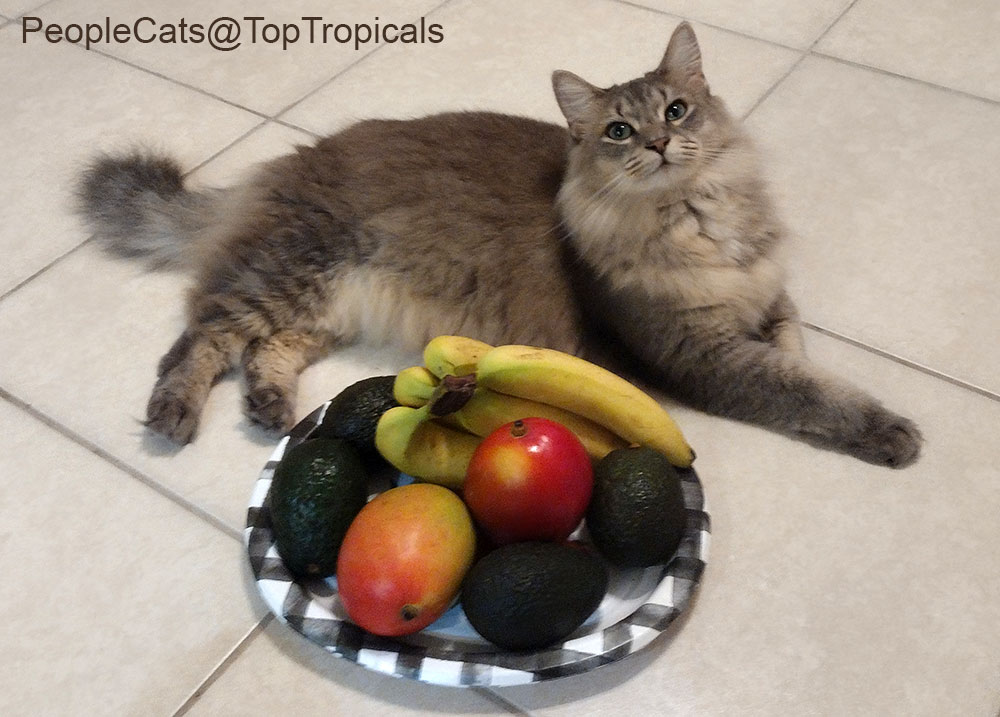
Fluffy  cat  with  a  tray  of  tropical  fruit

Q: Why do you want to grow your own tropical fruit tree?

A: Growing your own tropical fruit tree can have many benefits. Here are a few reasons why someone might choose to grow their own tropical fruit tree:

1. Fresh, flavorful fruit: When you grow your own tropical fruit tree, you have access to fresh, flavorful fruit that you may not be able to find at your local grocery store. Tropical fruit, like avocado, mangoes, papayas, and passionfruit, jackfruit, Dragon Fruit, Annona have a short shelf life, and the fruit you find at the store may have been harvested weeks ago. When you grow your own fruit tree, you can pick the fruit when it's fully ripe and enjoy it at its peak flavor. Besides, some rare fruit like Akee or Sapodilla simply never offered from the store.

2. Environmental benefits: Growing your own fruit trees can have environmental benefits. Trees absorb carbon dioxide from the air and release oxygen, which can help reduce your carbon footprint. Additionally, growing your own fruit trees reduces the need to transport fruit long distances, which can help reduce greenhouse gas emissions.

3. Cost savings: Depending on where you live and the availability of tropical fruit, growing your own fruit tree can be a cost-effective way to enjoy your favorite tropical fruits.

4. Gardening and outdoor hobby: Growing a fruit tree can be a fulfilling and rewarding outdoor hobby. It can also be a great way to teach children about where their food comes from and the importance of taking care of the environment.

Overall, growing your own tropical fruit tree can be a great way to enjoy fresh, flavorful fruit, reduce your carbon footprint, save money, and enjoy a fulfilling outdoor hobby.

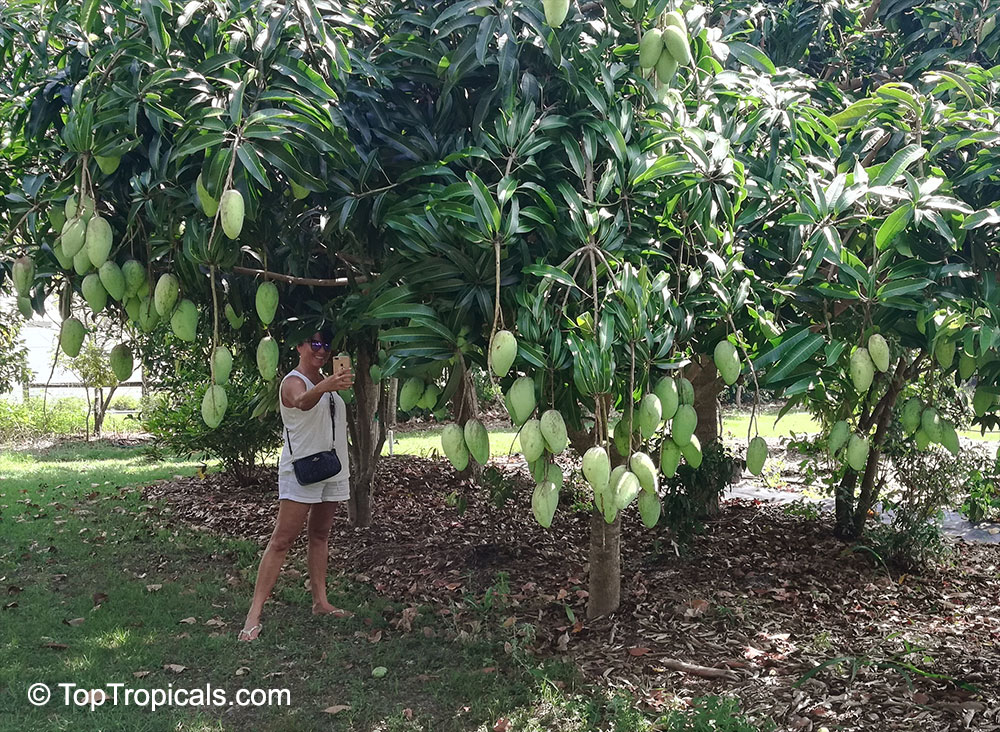
Taking  a  picture  of  a  mango  tree  loaded  with  fruit

In the photo: Mango tree in Top Tropicals garden.

Date: 22 Sep 2025

🐲 The taste you will never forget

Dragon  fruit  collage  -  yellow,  red,  purple,  white  varieties

If you only know dragon fruit from the grocery store, you probably think it looks pretty but tastes bland. That is because most commercial fruit is picked early, shipped far, and loses its sweetness. The truth? Homegrown dragon fruit is juicy, sweet, and full of flavor. The best of all is the yellow variety, Palora (Selenicereus megalanthus), a cactus fruit from Ecuador that bursts with tropical taste.

🌵 Pitaya or Dragon fruit – what is the difference?

Both names describe the same climbing cactus. In Latin America it is called Pitaya, while Asia and English speakers say Dragon fruit. There are three main kinds:

Some hybrids give purple or magenta flesh. All are beautiful, all are easy to grow at home.

⚡️ Do red, white, and yellow taste different?

Yes. White types are mild and refreshing. Reds are sweeter and juicier. Yellows are the sweetest of all.

⚡️ Flowers from a fairy tale

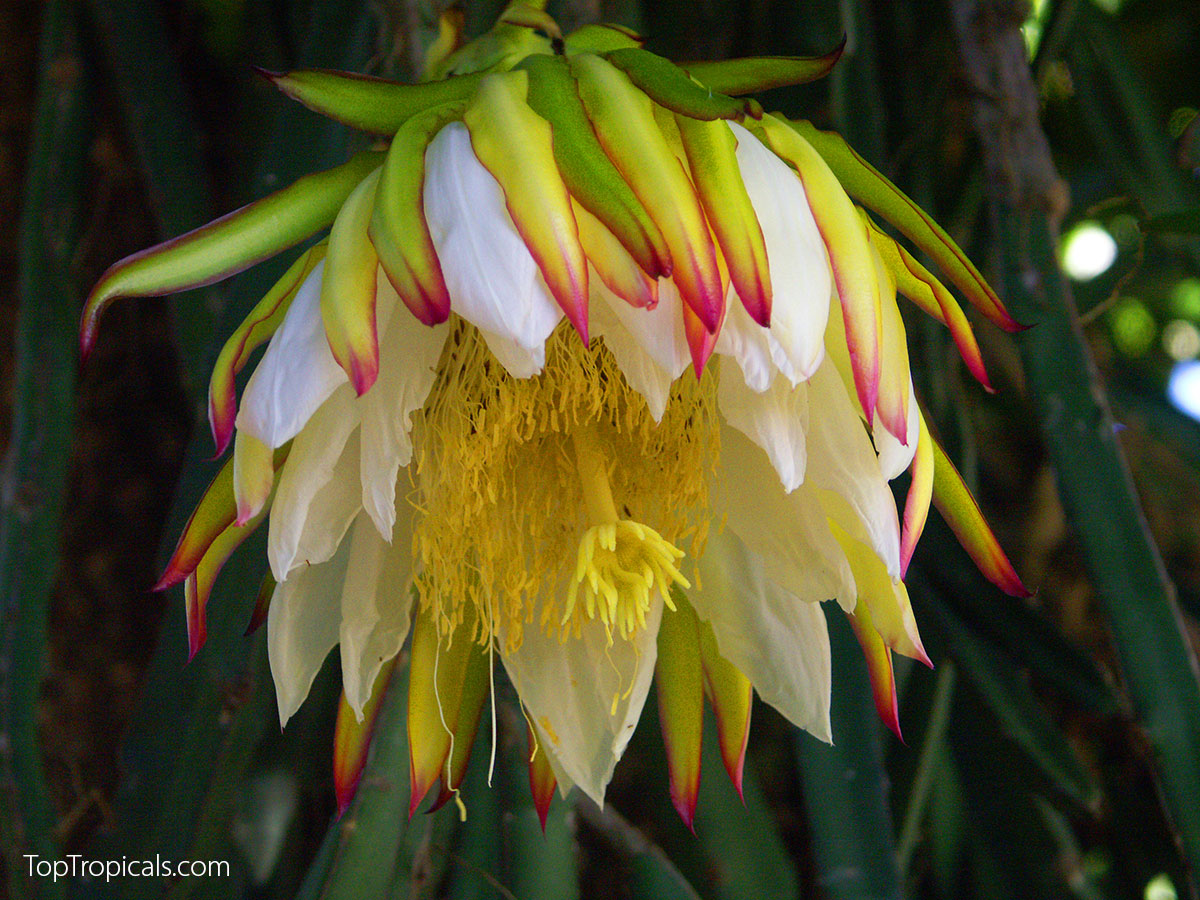
Close-up  of  a  blooming  dragon  fruit  pitaya  flower  with  white  petals  and
   yellow 
 center

Dragon fruit flowers are among the most spectacular in the plant world. They open at night, glowing under moonlight, with pale petals and a sweet fragrance. Each flower can be a foot wide. Seeing one bloom feels like stepping into another world.

⚡️ Top Dragon Fruit Health Benefits

  • High in fiber for digestion and gut health
  • Low in calories but full of vitamins
  • Great for weight management
  • Adds color and freshness to smoothies and salads

🍹 Dragon Fruit Smoothie recipe

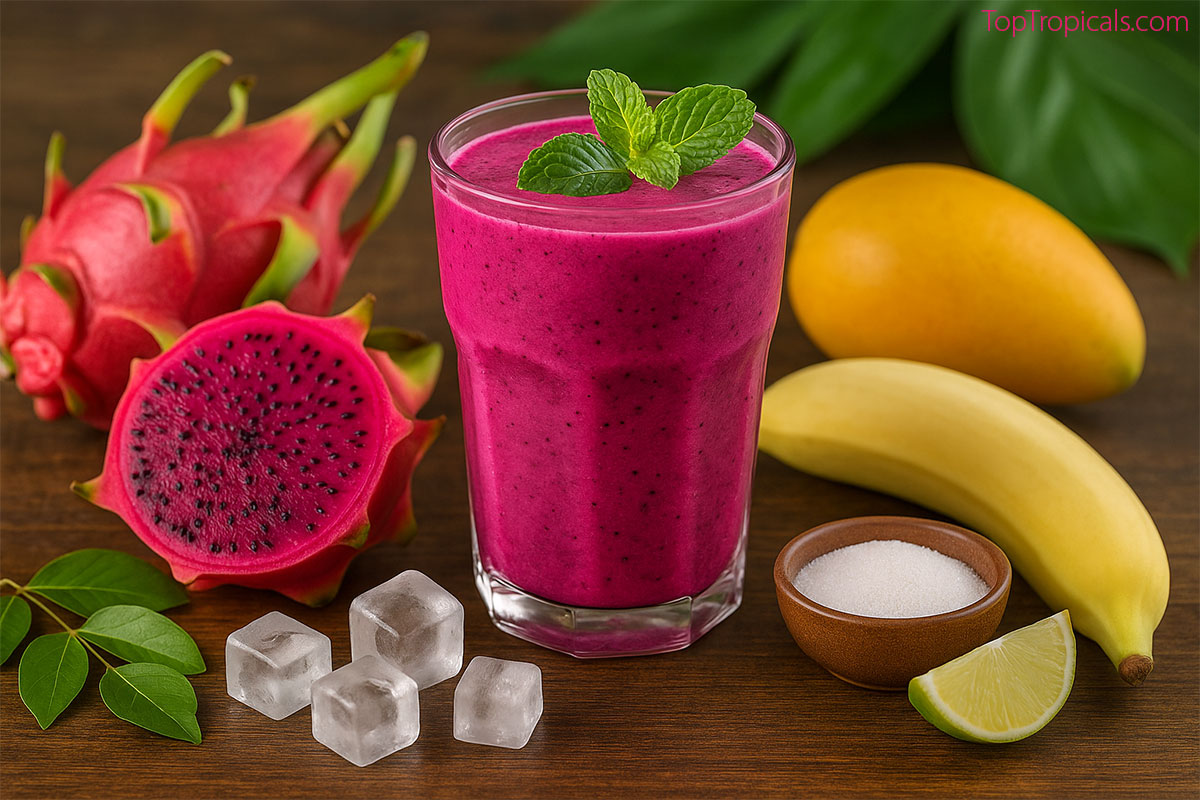
Glass  of  dragon  fruit  pitaya  smoothie  with  fresh  dragon  fruit,  banana, 
 mango,  lime,  sugar,  and  ice 
 cubes

Blend together:

  • 2 dragon fruits, peeled
  • 1/2 cup mango pulp
  • 1 banana
  • 1 cup milk of your choice
  • 2 tbsp sugar
  • 1/2 tsp lime juice
  • Ice cubes to taste

Top with mint for a refreshing tropical treat.

Watch Dragon Fruit short videos: