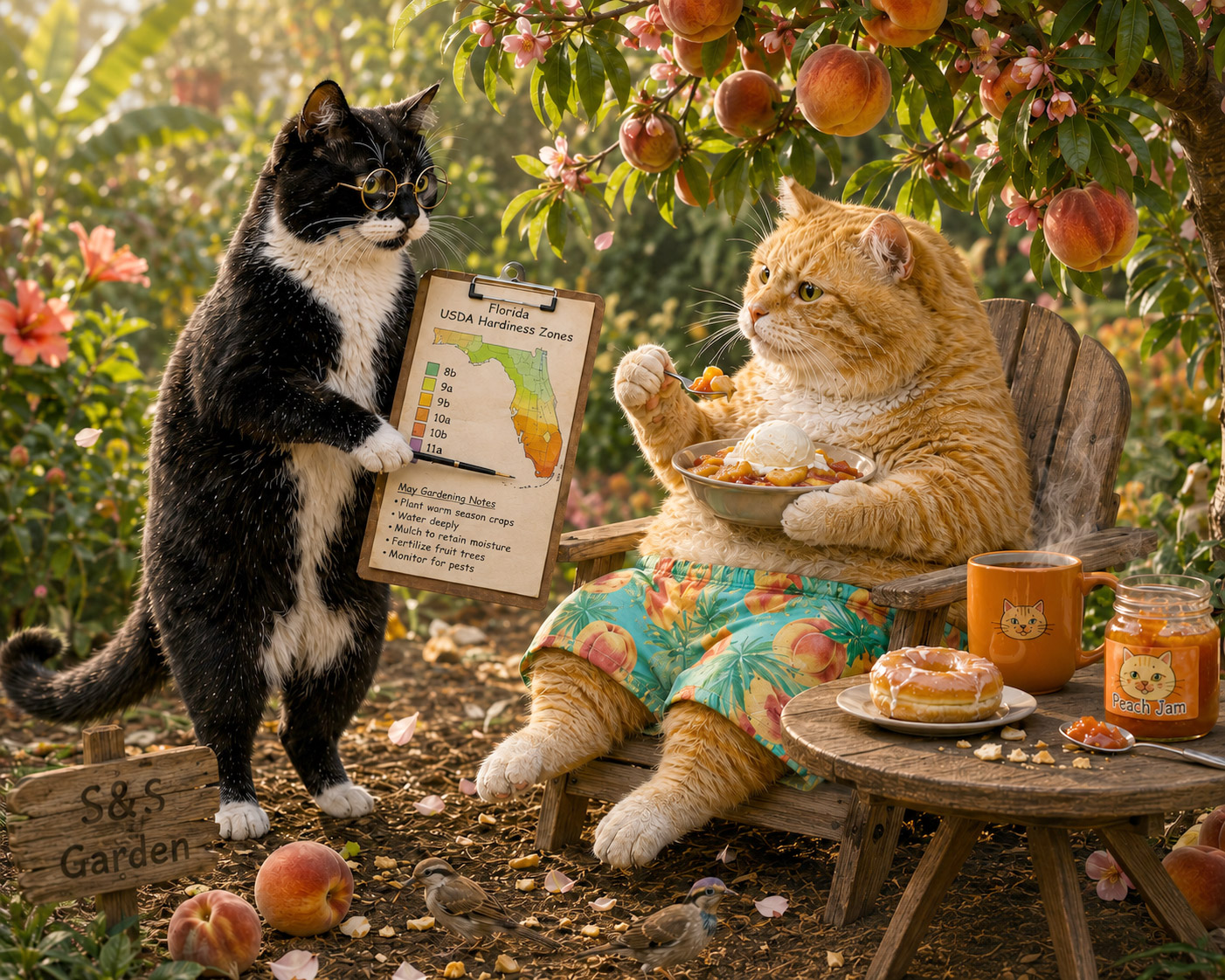
Sunshine: I love peach cobbler. Smokey, why are peaches on
the tree so early? Smokey: Low-chill peach varieties for Florida. They ripen
much sooner. Sunshine: I thought peaches were for Georgia. Smokey: Not if you plant low-chill peaches. And speaking
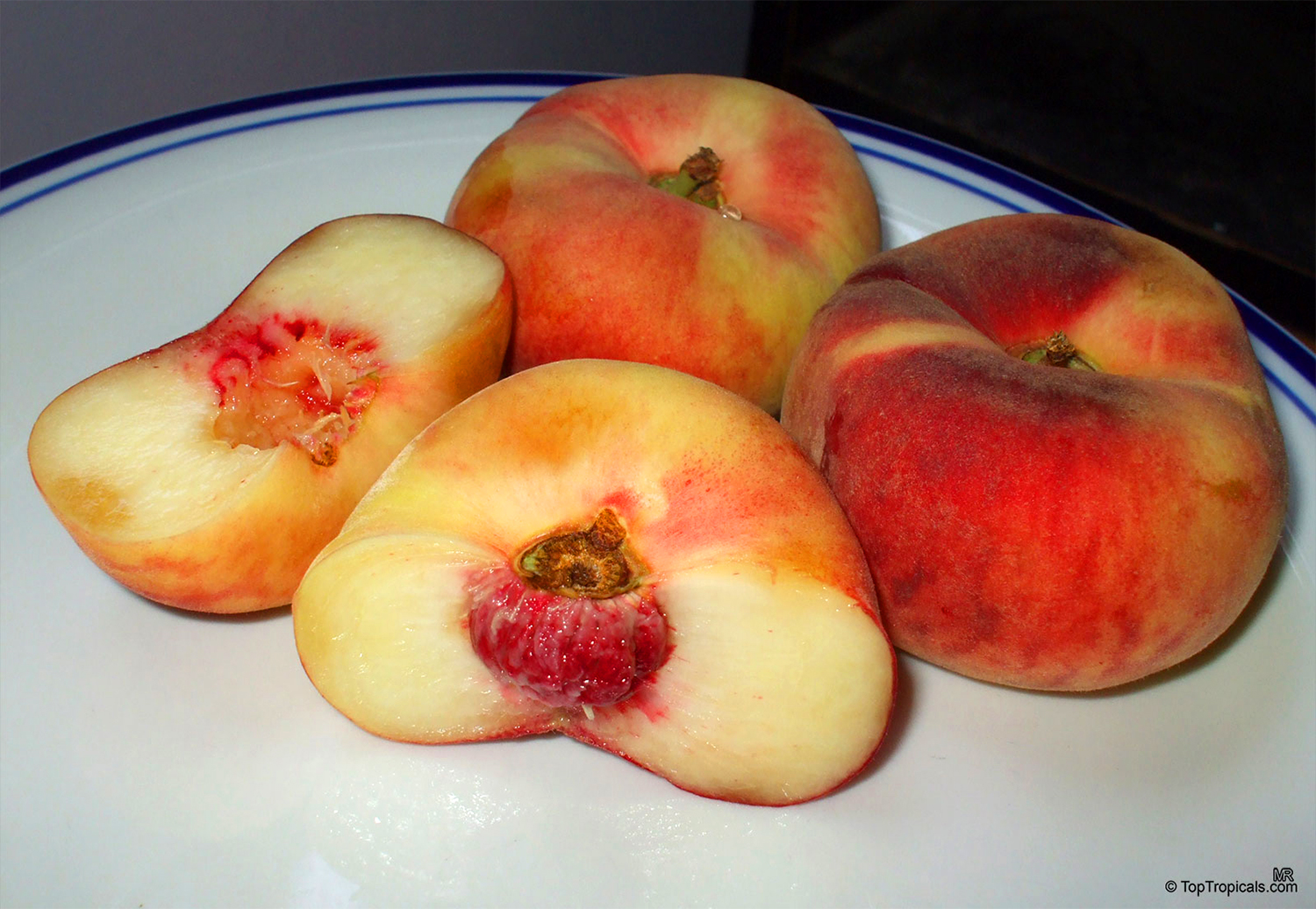
of peaches, do you know about donut peaches? Sunshine: Donut peaches? Finally, horticulture I can
understand.
Some fruits carry memories before you've even tasted them.
There's something about a peach still warm from the tree - the way it
gives a little when you pick it, the smell that hits you before you even
take a
bite. It makes you slow down. It makes summer feel like it actually meant to
show up.
Peach Plant Facts
Botanical name: Prunus persica, Amygdalus persica Also known as: Peach
USDA Zone: 5 - 10
Highligths
For Florida gardeners, that moment used to feel borrowed. Peaches were a
Georgia thing, a Carolina thing. You'd admire someone else's harvest and
quietly file it under not for us.
Low-chill peaches rewrote that story.
Here's the thing about regular peaches - they need cold. Not just a cool
night or two, but a real winter. We're talking 600 to 1,000 hours below 45F.
That's how they know to wake up in spring and actually fruit. South Florida
just doesn't deliver that. The trees will grow fine, look healthy even, and
then give you almost nothing come harvest time. Frustrating doesn't cover
it.
Low-chill varieties are different. They were bred specifically for
places like ours - warm winters, mild springs. Some only need 100 hours of
chill.
A hundred. That's a few cold fronts, not a season. And because they're
working with our climate instead of against it, they fruit reliably. Every
year.
They're not just a Florida trick either. Gardeners in coastal Texas,
southern Louisiana, southern California - anywhere in that Zone 8b to 10
range -
have been growing these successfully. If you've got warm winters and thought
peaches weren't for you, they probably just weren't the right peaches.
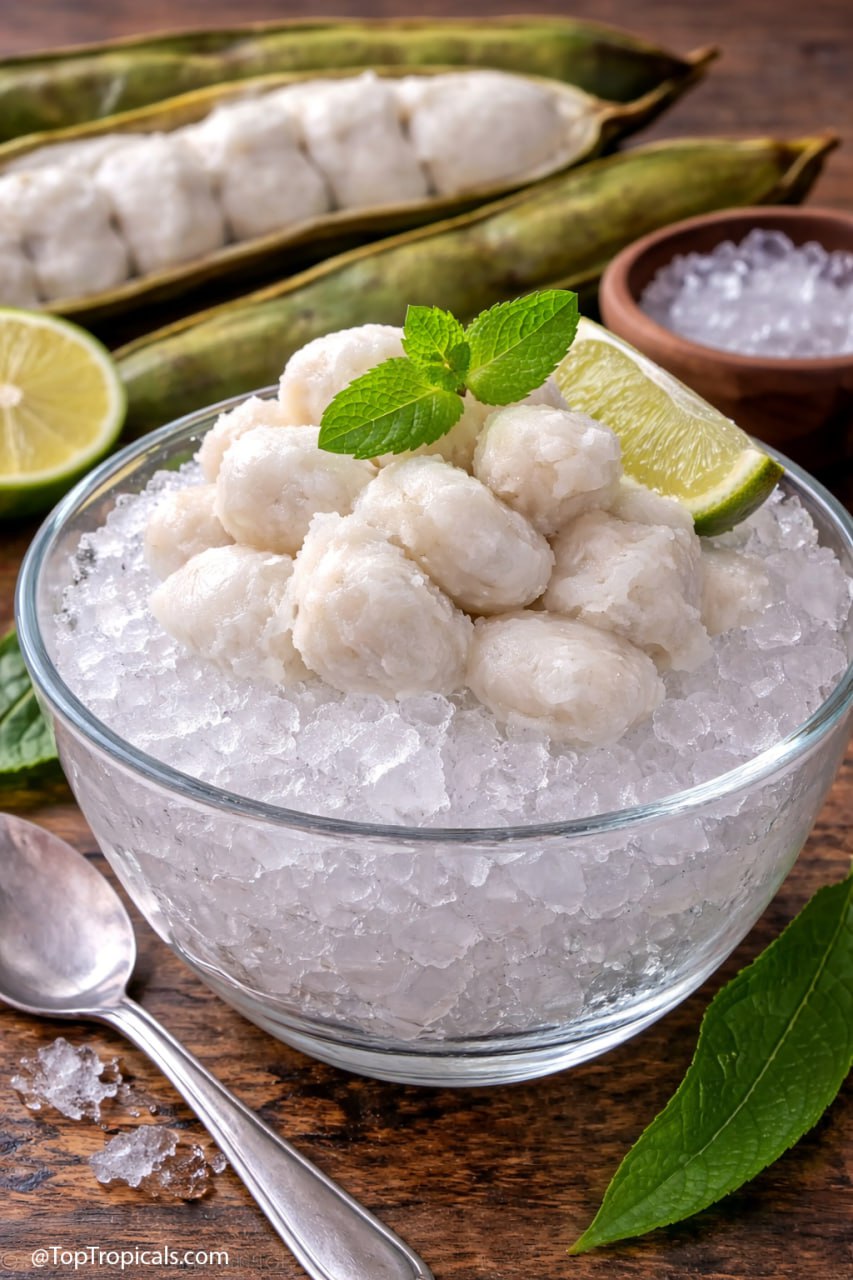
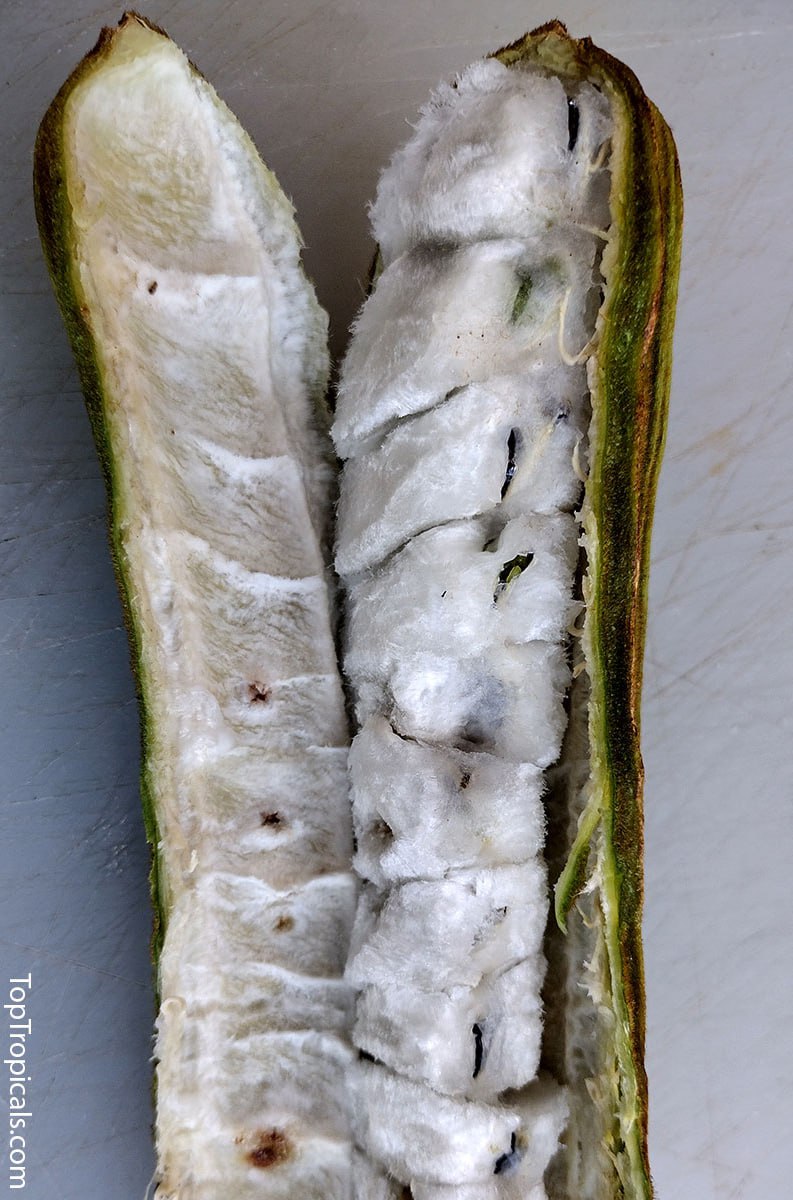
Open ripe Ice Cream Bean pods and scoop out the sweet white pulp.
Remove and save the seeds if you want to plant more Ice Cream Bean trees.
Chill the pulp for 20 to 30 minutes.
Serve the chilled pulp over crushed ice as a natural shaved-ice dessert.
🌿 About the plant:
Ice cream bean (Inga edulis) produces long pods filled with sweet, cottony white pulp surrounding dark seeds. The flavor is mild, vanilla-like, and naturally creamy. The pulp is eaten fresh and used as a natural dessert across South and Central America.
Ice Cream Bean Plant Facts
Botanical name: Inga edulis, Inga feuilleei Also known as: Ice Cream Bean, Inga, Guama, Guaba
USDA Zone: 9 - 11
Highligths
🌱 In the garden:
Inga edulis is a fast-growing tropical tree with lush foliage and nitrogen-fixing roots that improve soil health. It is a perfect tree for a quick shade solution in just one season. While large in the ground, it can be managed with pruning in home orchards.
Sunshine: You know, February 27 was International Polar Bear Day. I
just learned about it and got a brilliant marketing idea. Cherry of the Rio
Grande survived 25F. With wind. Real wind. That means we go north. Let them
taste this magic. I even have a donut recipe with the fruit. It’s a
bomb,
Smokey. We expand. Trust me. Finally you can afford that new watering
timer.
Smokey: Not so fast, genius. Twenty five degrees is not the North
Pole. And polar bears and penguins do not share zip codes.
Sunshine: You always pour cold water on my brilliance. Fine. Where
do we start?
Smokey: Well, first you go talk to Tatiana. She graduated from the
Geography Department. She can explain climate zones. Cherry of the Rio
Grande
can grow in North Florida, Texas, and similar climates. Let’s master
that before we conquer Arctic.
Sunshine: So… Phase One: Geography?
Smokey: Exactly.
Some stories are easier to tell with a little humor. Smokey and Sunshine
were never just mascots. They represent the two forces behind every decision
we make here: bold ideas and careful reality. One dreams big. The other
checks
the climate zone map. Together, they remind us that growing plants is part
science, part optimism, and always personal. If you have ever wondered why
they keep appearing in our newsletters, you can read their full story on the
Smokey and Sunshine page. They have been with us longer than most people
realize.
Freeze Testing of Grumichama and Cherry of Rio Grande
🍒❄️
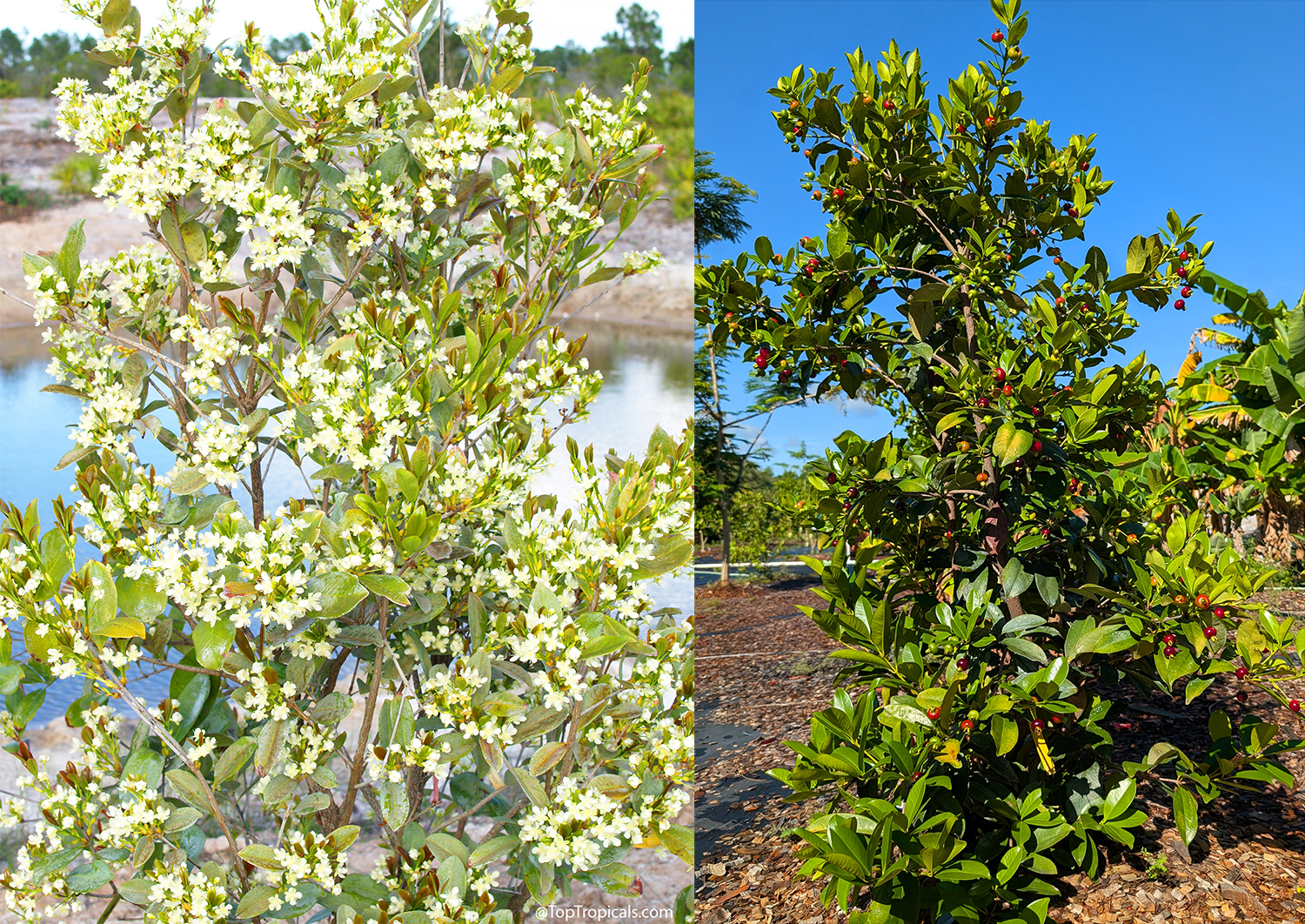
Eugenia brasiliensis - Grumichama tree flowering and fruiting
When temperatures dropped to 25F, with wind chill near 14F, winter made
it clear which tropical trees were truly resilient. Some plants burned back.
Tender growth collapsed. But our established Eugenia cherries stood
steady. Leaves held. Branches stayed flexible. The canopy remained intact.
Cherry of the Rio Grande (Eugenia aggregata) and Grumichama (Eugenia brasiliensis) are among the most cold-hardy tropical
cherries for Southern gardens. Both are native to Brazil and thrive in USDA
Zones 9b–11, and even protected 9a sites.
Cherry of the Rio Grande Plant Facts
Botanical name: Eugenia involucrata, Eugenia aggregata Also known as: Cherry of the Rio Grande, Cere Jodo Rio Grande
USDA Zone: 9 - 11
Highligths
Grumichama Plant Facts
Botanical name: Eugenia brasiliensis, Eugenia dombeyi Also known as: Grumichama, Brazilian Cherry
USDA Zone: 9 - 11
Highligths
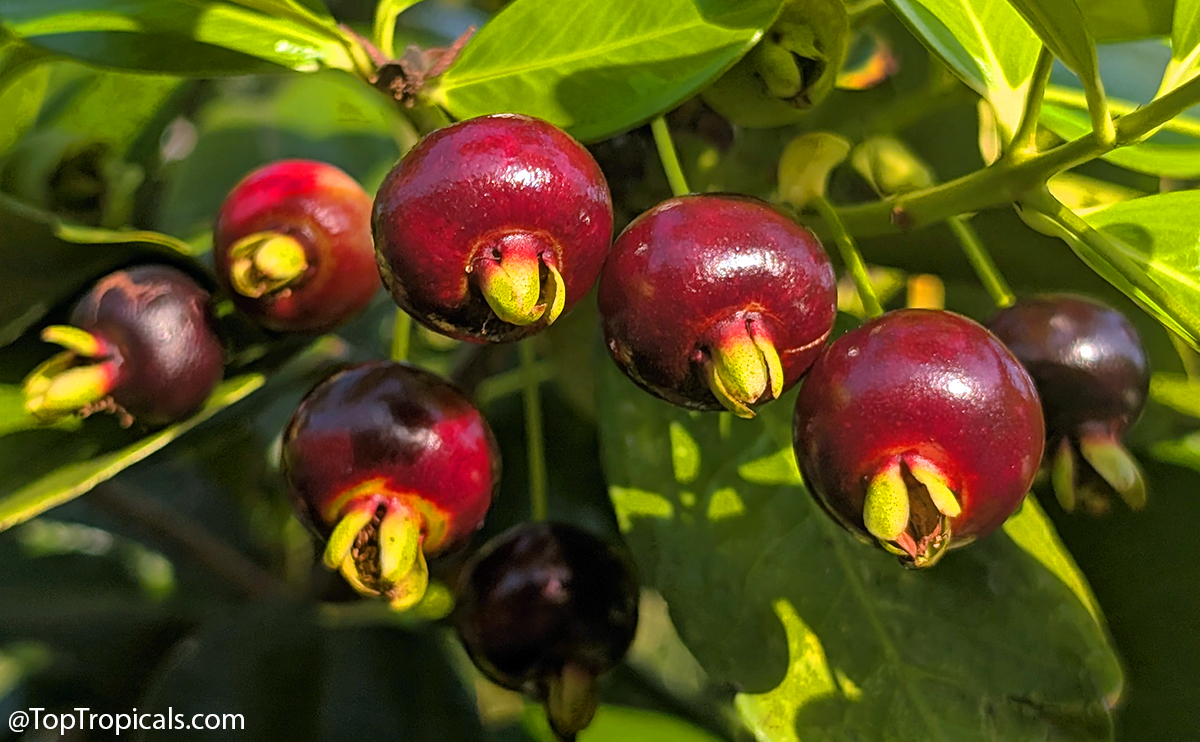
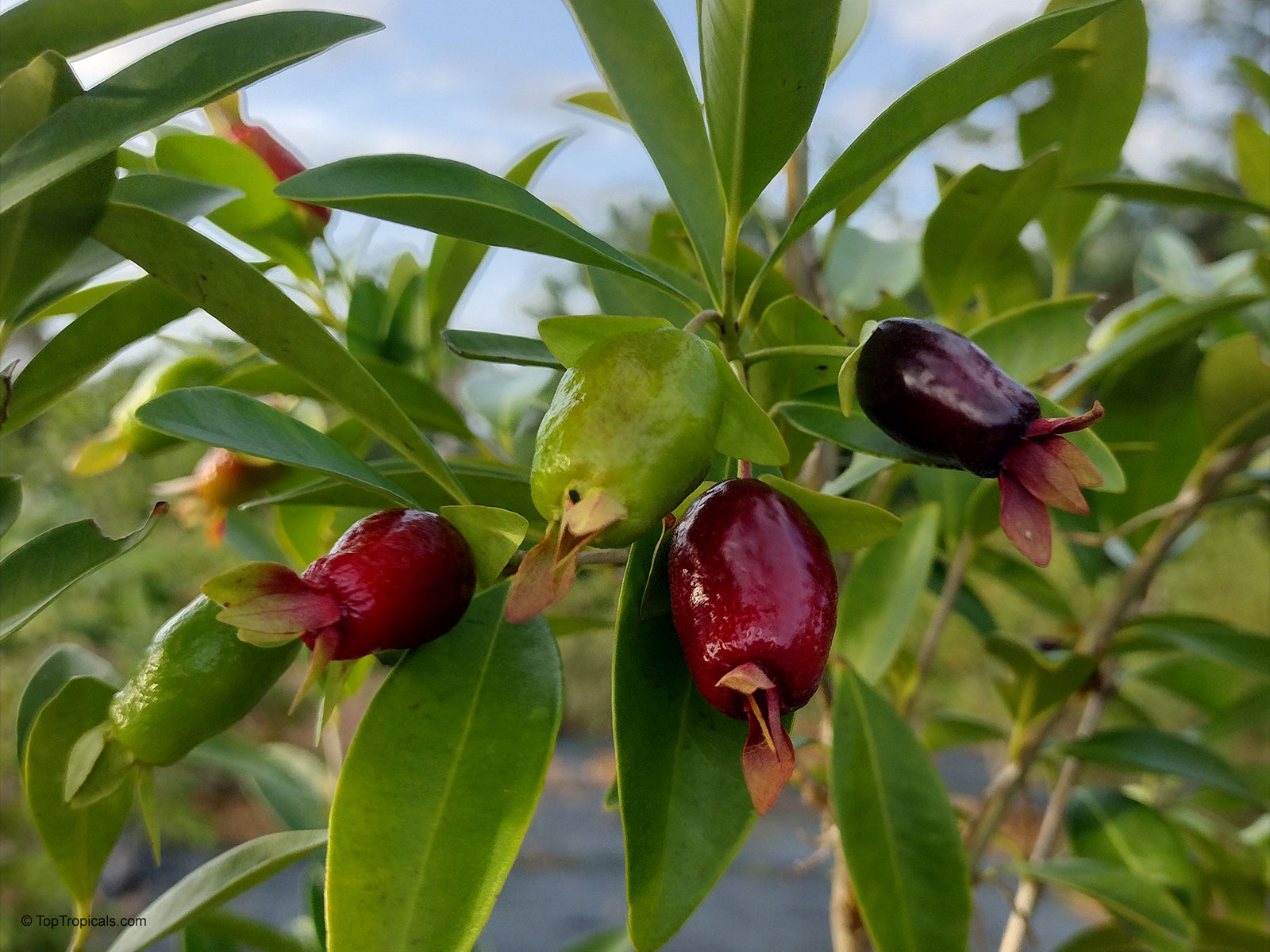
Cherry of the Rio Grande produces dark ruby fruit that ripens
almost black, with a rich, full cherry flavor. It flowers early in spring
and
can fruit well into summer. Mature trees can tolerate brief drops into the
low
20s once established. Trees typically grow 8 to 15 feet tall, remain
naturally compact, and often begin fruiting within 2 to 3 years.
Grumichama is an evergreen tree known for both beauty and
productivity. In spring, it covers itself in white starburst flowers that
attract
pollinators. Within about four weeks, glossy purple-black fruit develops.
Established trees tolerate temperatures into the upper 20s and grow well in
the
ground or in 5–10 gallon containers. Mature trees can produce hundreds
of
fruits per season.
Across the Eugenia group, strengths are consistent: early
bearing, compact growth, heat tolerance, light freeze endurance, and low
pest
pressure. They are adaptable to different soils, need modest water once
established, and perform in full sun or partial shade. Birds enjoy the
fruit, but there
is usually plenty to share.
Nutritionally, Eugenia cherries provide Vitamin C, fiber,
antioxidants, and notable Vitamin A that supports eye health. They offer
sweetness
with real dietary value.
In the kitchen, they are simple and rewarding. Cherry of the Rio Grande
makes an easy
compote. Simmer the fruit with a small amount of water until soft, mash
lightly, and spoon over pancakes or warm bread. Grumichama turns into a deep
red
jam with sugar and lime, or can be blended into a bright spoon drizzle over
vanilla ice cream.
Even when not fruiting, both trees remain attractive year-round with
glossy evergreen foliage and clean structure. They fit well into edible
landscapes, small yards, and container gardens.
Winter will return. The difference lies in planting fruit trees that can
handle heat, humidity, and the occasional cold snap. If you are building a
food forest for lasting harvests, cold-hardy tropical cherries like Cherry
of
the Rio Grande and Grumichama deserve a place in your garden.
Ripe Grumichama (Eugenia brasiliensis) fruits developing on the
tree, turning deep red to nearly black when fully mature.
Eugenia aggregata (cv. Calycina), Cherry of the Rio Grande
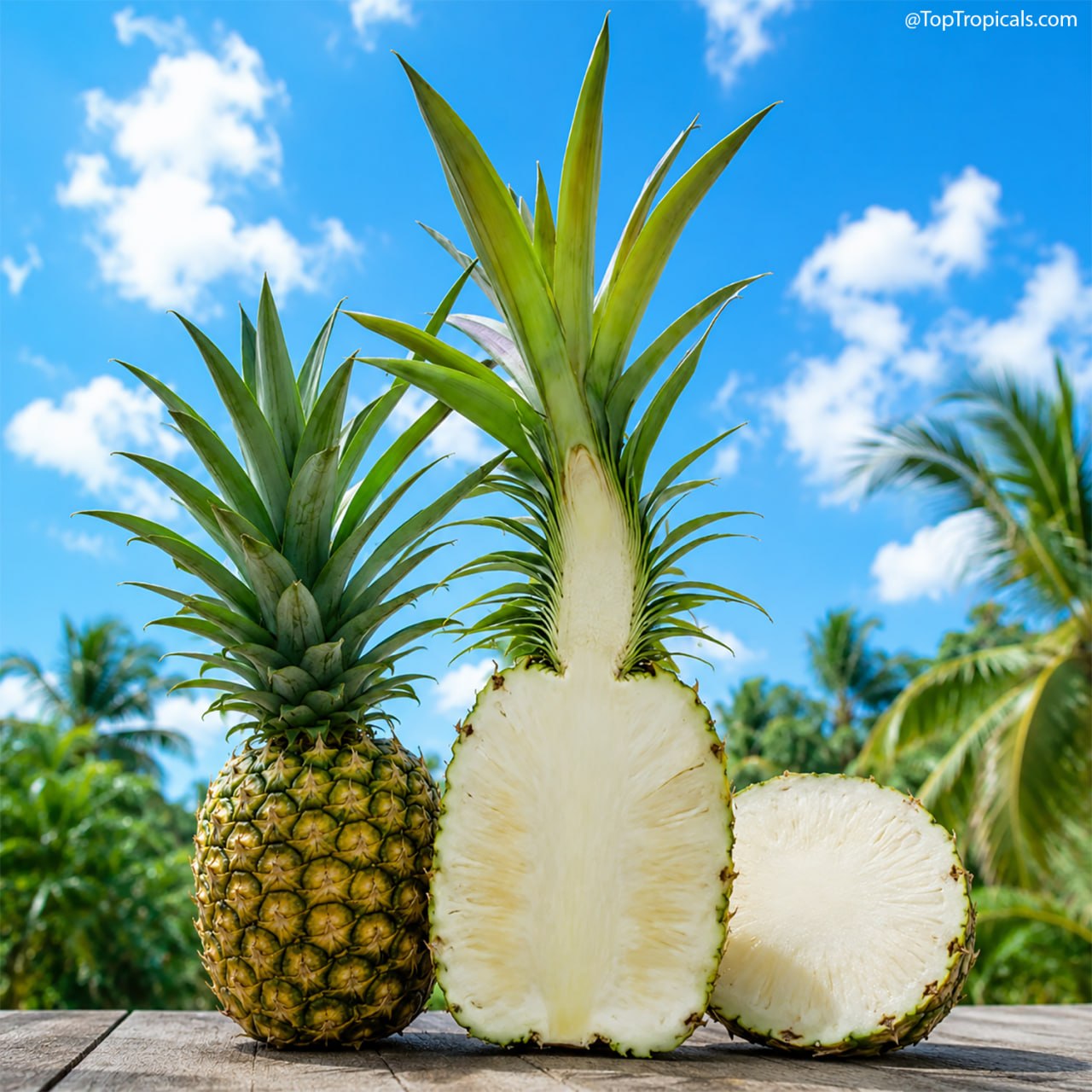
The white-fleshed, low-acid pineapple disrupting tropical gardens
Sugar Loaf Pineapple, Kona Sugarloaf Ananas
🍍 The white-fleshed, low-acid pineapple disrupting tropical gardens
Most people think all pineapples taste roughly the same - sweet, tangy, yellow, and a little acidic. Then they try a Sugar Loaf pineapple and suddenly understand why rare fruit collectors are obsessed with this variety. Sugar Loaf - also known as Kona Sugarloaf - completely changes expectations of what a pineapple can taste like. If regular pineapples leave your mouth burning after a few bites, this variety may change your mind about growing tropical fruit at home.
🍍 Why Kona Sugarloaf is completely different from store-bought pineapples
Originally associated with West Africa and later popularized in Hawaii, Sugar Loaf stands out for several unusual characteristics:
Creamy white flesh - Instead of the typical golden-yellow interior, Sugar Loaf produces soft, juicy, creamy-white fruit.
Very low acidity - The flavor is smooth, mild, and intensely sweet, with many growers describing notes of vanilla, honey, and coconut.
An edible core - Unlike regular pineapples with tough woody centers, the core of Sugar Loaf is tender and fully edible.
The green deception - One of the strangest things about this pineapple is that it often stays dark green even when fully ripe. Many first-time growers wait too long expecting it to turn gold.
Standard Pineapple:
Golden Skin ✦ Yellow Flesh ✦ High Acid ✦ Woody Core Sugar Loaf Pineapple:
Green Skin ✦ White Flesh ✦ Low Acid ✦ Edible Core
🍍 A heavyweight performer in the garden
The fruit itself has a unique shape - taller, slimmer, and noticeably heavier for its size than standard pineapples. Under ideal tropical conditions, a single Sugar Loaf fruit can approach 10 pounds.
Beyond the fruit, gardeners love the plant for its ornamental appeal. It produces a dramatic pointed crown and arching tropical foliage, making it attractive even before fruit appears.
🍍 Kona Sugar Loaf at a glance
Pineapple Plant Facts
Botanical name: Ananas comosus Also known as: Pineapple, Pina
USDA Zone: 9 - 11
Highligths
Plant Type: Compact, self-fruitful bromeliad Fruit Size: Up to 10 lbs under ideal conditions Skin Color at Ripeness: Deep green Flesh Color: Creamy white Cold Tolerance: Tropical; protect from frost
🍍 Container-friendly for northern growers
You do not need a Hawaiian orchard to grow this collector favorite. Because Sugar Loaf grows as a compact bromeliad, it adapts well to patios, containers, and small gardens.
In tropical climates, it can be planted directly in the ground. In colder regions, gardeners often grow it in large pots outdoors during warm weather and move it indoors near a bright window for winter.
👉 Grower's Tip: Pineapples and bromeliads respond especially well to regular feeding during warm weather. SUNSHINE Ananas - Pineapple and Bromeliad Booster was designed specifically for bromeliads and fruiting pineapples to support vigorous growth and sweeter fruit production.
For tropical fruit enthusiasts, Sugar Loaf has quietly become one of those varieties that makes ordinary grocery-store pineapples feel surprisingly boring afterward.