Garden Blog - Top Tropicals

Date: 5 Jan 2026

How to grow papaya from seed without killing it

How to grow papaya from seed without killing it
🍊 How to grow papaya from seed without killing it, Part 1: Papaya basics

Papaya (Carica papaya) is one of the fastest and most rewarding fruit plants you can grow from seed - but it is also one of the easiest to lose early if you treat it like a regular tree. In this guide, we start at the very beginning: what papaya really is, how to choose and prepare seeds, and what it actually takes to get strong, healthy seedlings off to a good start.
  • 🍊 Papaya basics - what kind of plant it really is


    Papaya is not a tree - and that changes how you should grow it

  • 🟡 Papaya is technically not a tree. It is a herbaceous plant with a hollow trunk - often jokingly called a giant grass.
  • 🟡Papaya grows extremely fast from seed and usually starts producing fruit within 10–15 months. It has a palm-like look, with a large canopy of leaves at the top. Flowers and fruit form directly under that canopy, right on the trunk.
  • 🟡In the ground, papaya can grow 10–15 ft tall, but there are dwarf varieties that stay under 4–5 ft in containers while still producing full-size fruit.
  • 🟡Papayas are very productive and are one of the best exotic fruit plants to grow even outside the tropics, especially because they perform so well in containers.


🍊 Growing papaya from seed - what to know first


What grocery store papaya seeds don’t tell you

Papaya is easy to grow from seed, but one detail matters more than most people realize:
  • 🟡Seeds from store-bought fruit come from unknown varieties
  • 🟡Most will not be dwarf
  • 🟡If you want a compact plant, start with a known dwarf variety or seeds from one
  • 🟡The good news: papaya comes true from seed, so when the source is known, the result is reliable.

Now that you understand what papaya is - and what grocery store seeds don’t tell you - it is time to move on to the most misunderstood stage of all: germination. In Part 2, we break down exactly how papaya seeds sprout, what they need, how long they really take, and why so many people give up too early.

🛒 Explore Papaya varieties

📚Learn more:

🎥 Nobel Prize goes to this pregnant male papaya

#Food_Forest #How_to #Papaya

🟢 Join 👉 TopTropicals
Date: 1 Jan 2026

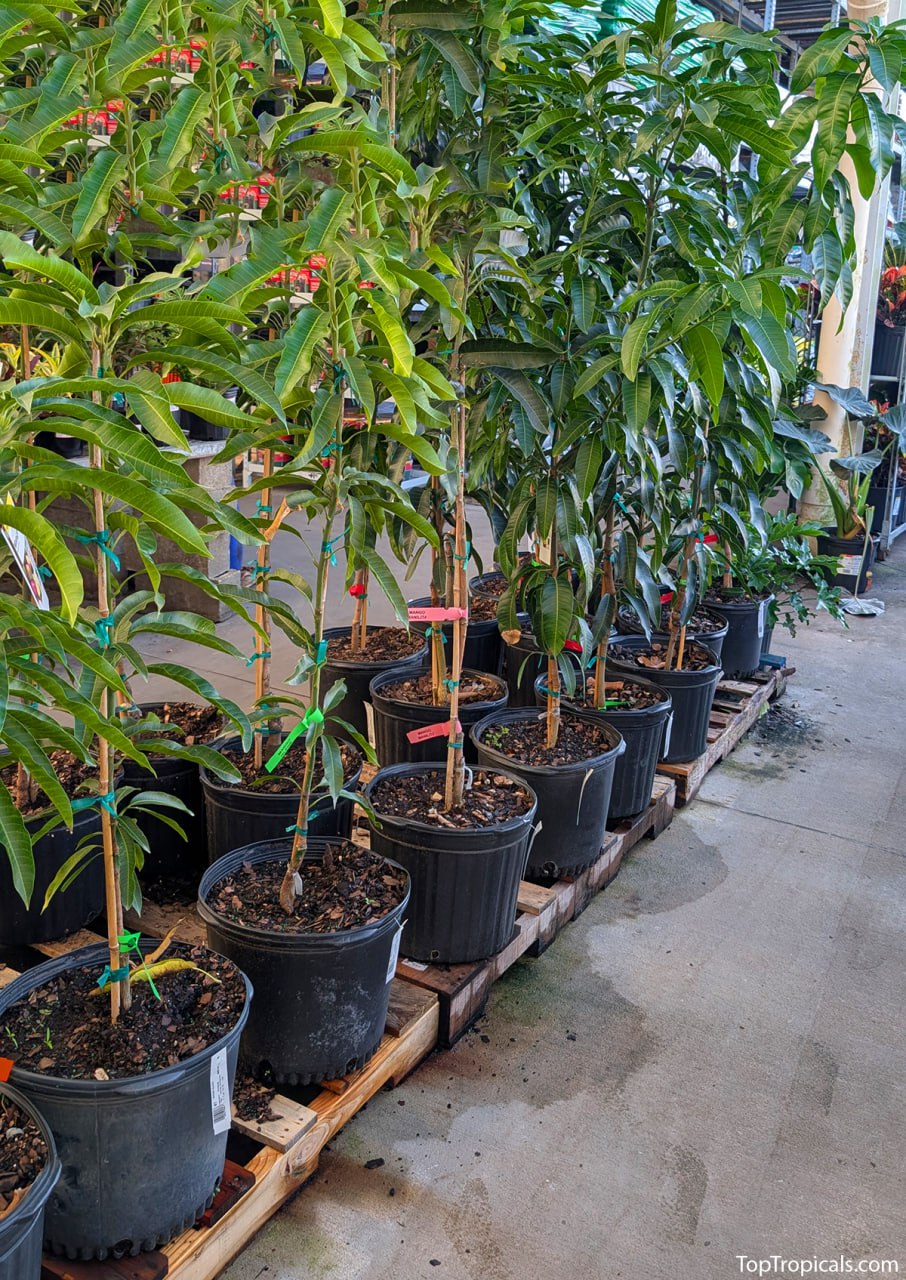
Why young trees need staking?

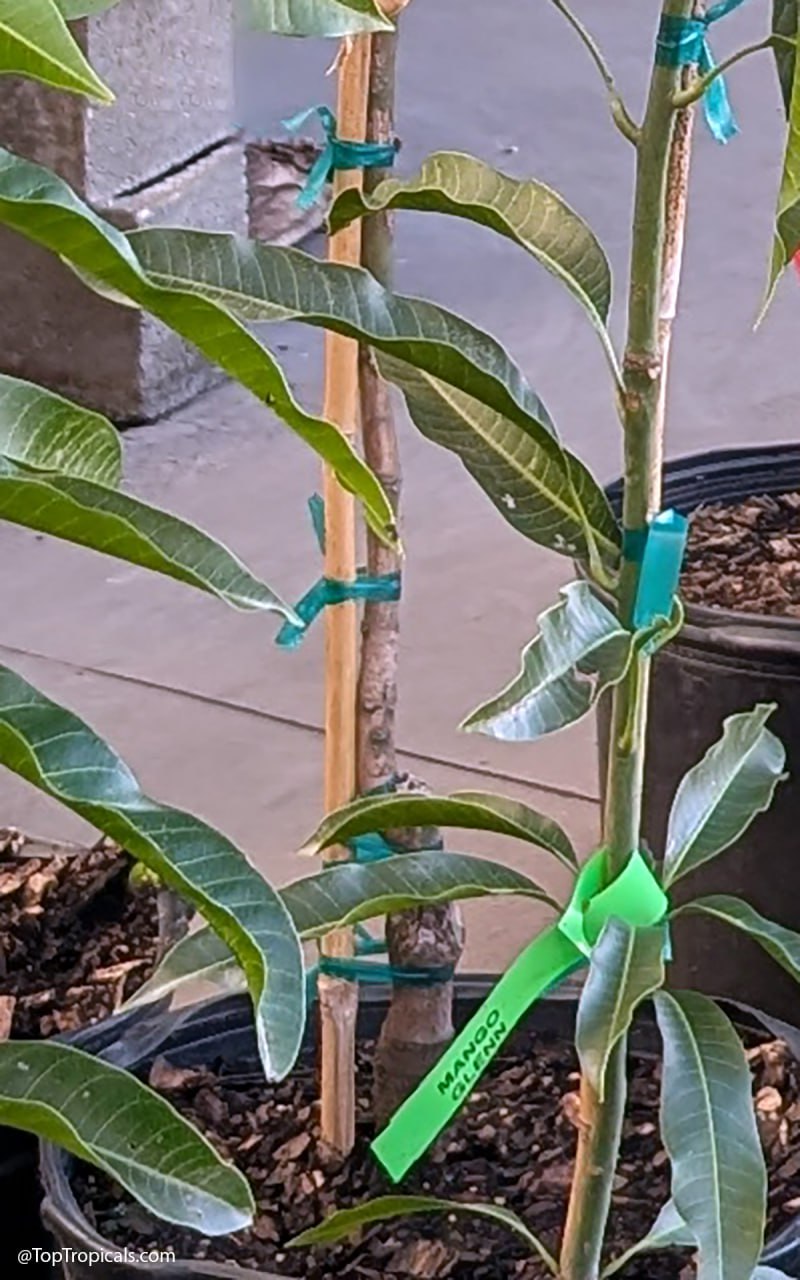
Mango trees with bamboo support

Mango trees with bamboo support

Staking young trees

Staking young trees

🌳 Why young trees need staking?


Staking a young tree is simple but important. The goal is to attach a bamboo stake to support the trunk, encourage straight growth, and-most importantly-prevent the stem from wiggling.

Young trees grow fast and vigorously, but their trunks are often much taller and heavier than their root systems can support. At the same time, those trunks are still thin and flexible. Even light wind can cause the tree to rock back and forth. This movement disturbs developing roots and slows establishment.
  • ❗️ Without proper support:


  • 🔹 The trunk can break in strong wind.
  • 🔹 Roots loosen instead of anchoring.
  • 🔹 The trunk may grow crooked.
  • 🔹 The tree becomes uneven and less stable long-term.


🌳 How to stake correctly

  • 🌳 Small trees


  • 🔹 Create an A-frame with one bamboo stake.
  • 🔹 Attach near the top, forming a triangle.
  • 🔹 Do not push the stake right next to the trunk. It may look neat, but it can damage roots and will not provide proper stability.


🌳 Medium trees

  • 🔹 Use 2-3 tie points along the trunk.
  • 🔹 Use soft green garden tape, 1/2" wide.
  • 🔹 Secure firmly but allow slight movement.


🌳 Tall or heavy trees

  • 🔹 Use a strong support such as a metal pipe. We use 1" aluminum electrical conduit.
  • 🔹 Attach with wider green tape, about 1" to protect the bark.
  • 🔹 Build tripods around larger trees.


❗️ Important maintenance tips:

  • 🔸 Check ties and tape often-every few weeks to once a month.
  • 🔸 As the tree grows, re-adjust the tape so it does not cut into the trunk as it thickens and doesn't cause any rot.
  • 🔸 Re-position bamboo stakes as needed, and be ready to replace them with a larger, stronger stake as the tree grows.

These rules apply to both potted trees and trees planted in the ground. Proper staking early on helps your tree establish faster, grow straighter, and develop a strong, stable root system for the future.

📸 Mango trees in 7 gal pots with "nursery-style" bamboo stakes that create a neat "standard". When stepping up or planting in the ground, attach a new stake and keep it away from the trunk.

🛒 Explore fruit trees and flowering trees

#Food_Forest #Trees #How_to

🟢 Join 👉 TopTropicals

Date: 28 Dec 2025

Mango tree tipping - Quick Field Guide: why it improves flowering and production

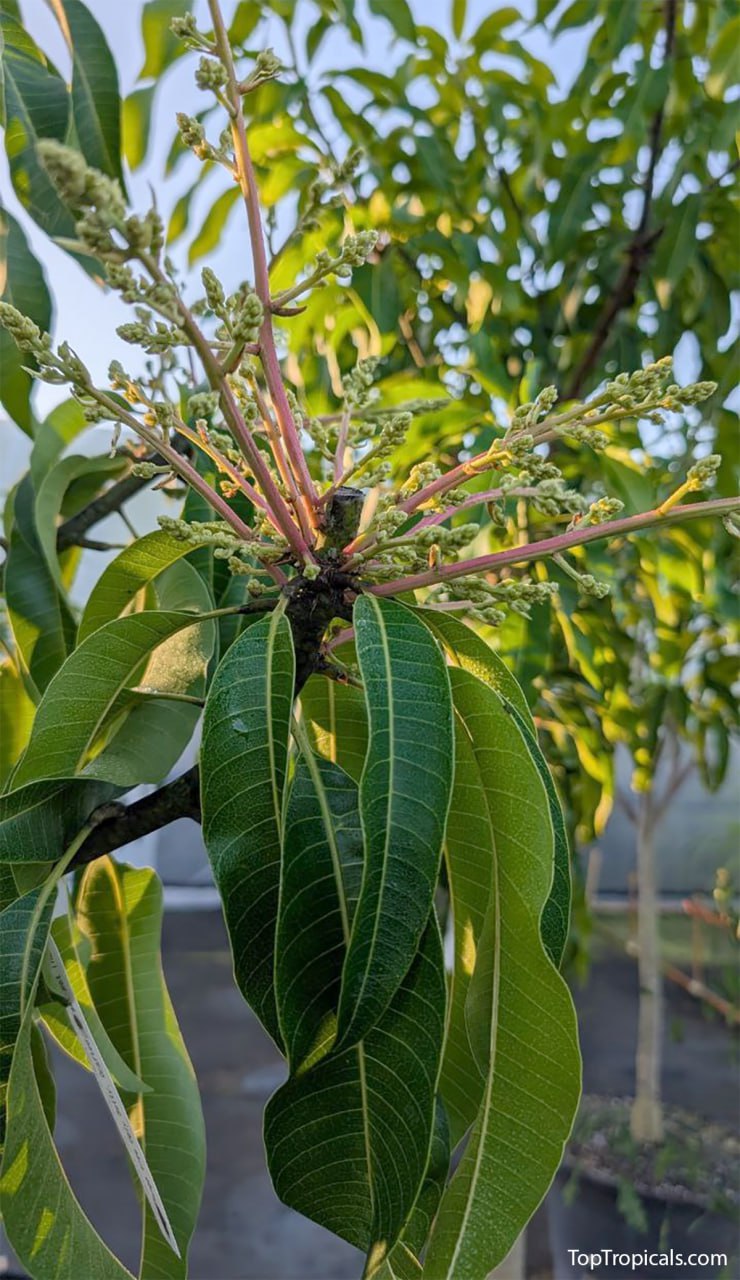
Mango tree tipping - Quick Field Guide

Mango tree tipping - Quick Field Guide

🥭 Mango tree tipping - Quick Field Guide: why it improves flowering and production


📊 Mango Tree Tipping - Quick Field Guide


It is mid-winter. While early mango varieties like Nam Doc Mai are already flowering, late varieties still have a month or two before they start. Trees such as Keitt, Honey Kiss, Kent, Venus, Beverly, Palmer, and Neelam bloom later in the season. In warm climates without expected cold snaps, this is still a good window for tipping before flowering begins. Tipping encourages more branching, more flower tips, and better fruit production. If cold weather is still possible, save this guide and tip after the risk of cold has passed - but always before the tree enters the flowering stage.
  • ✔️ What tipping is


    Tipping is the removal of the soft growing tip of a mango branch once it reaches about 20 inches long. This simple cut stops straight upward growth and forces the branch to split into multiple side shoots.
  • ✔️ When to tip


  • · Young, actively growing trees
  • · After a flush hardens slightly (not brand-new soft growth)
  • · Warm weather when the tree is growing strongly
  • · Best during the training years, not heavy fruiting years


✔️ How to tip (step-by-step)

  • · Let a branch grow to about 20 inches
  • · Using clean pruners, remove 1-2 inches from the tip
  • · Cut just above a node (leaf joint)
  • · Do not cut into thick woody growth - this is a light heading cut


✔️ What happens next

  • · 2-4 new branches usually form below the cut
  • · The tree becomes shorter, wider, and stronger
  • · More branch tips = more flowering points
  • · Better light penetration inside the canopy


✔️ Why it improves flowering and production

  • · Mango flowers form at branch tips
  • · More branches = more tips
  • · A well-shaped tree puts energy into fruiting, not height
  • · Easier harvesting and long-term structure


❌ Common mistakes to avoid

  • · Letting branches get too long before tipping
  • · Tipping weak or stressed trees
  • · Over-tipping all at once (stagger cuts)
  • · Doing it right before cold weather
  • · Doing it too close to flowering


✍️ Simple rule to remember


→ grow 20 inches → tip → repeat
This builds a compact, productive mango tree from the start.

🛒 Explore mango trees

📚 Learn more:


Tipping mango trees
📱 Why tipping mango trees makes them fruiting machines (DIY Garden Tip)

#Food_Forest #Mango #How_to

🟢 Join 👉 TopTropicals

Date: 25 Dec 2025

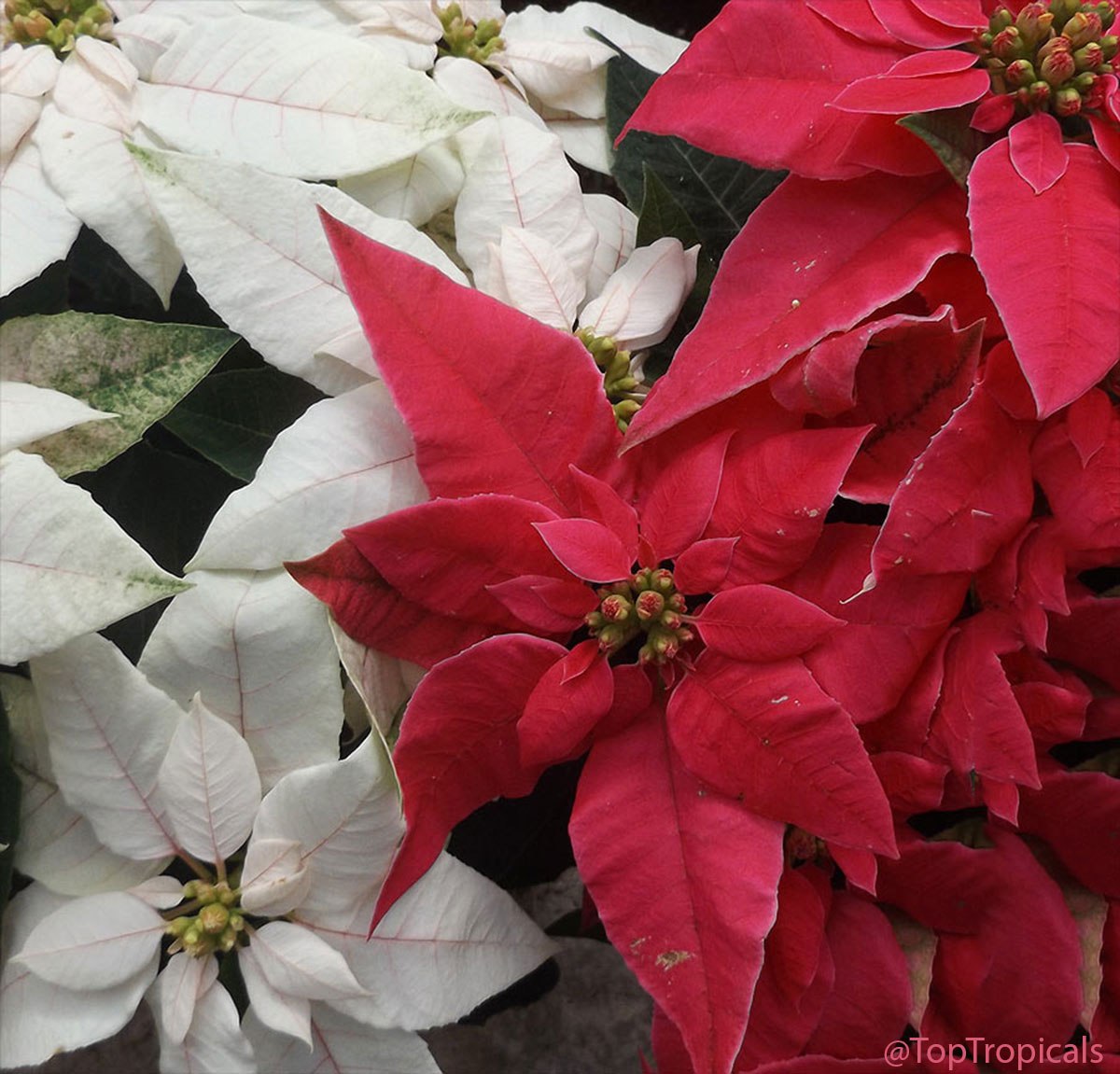
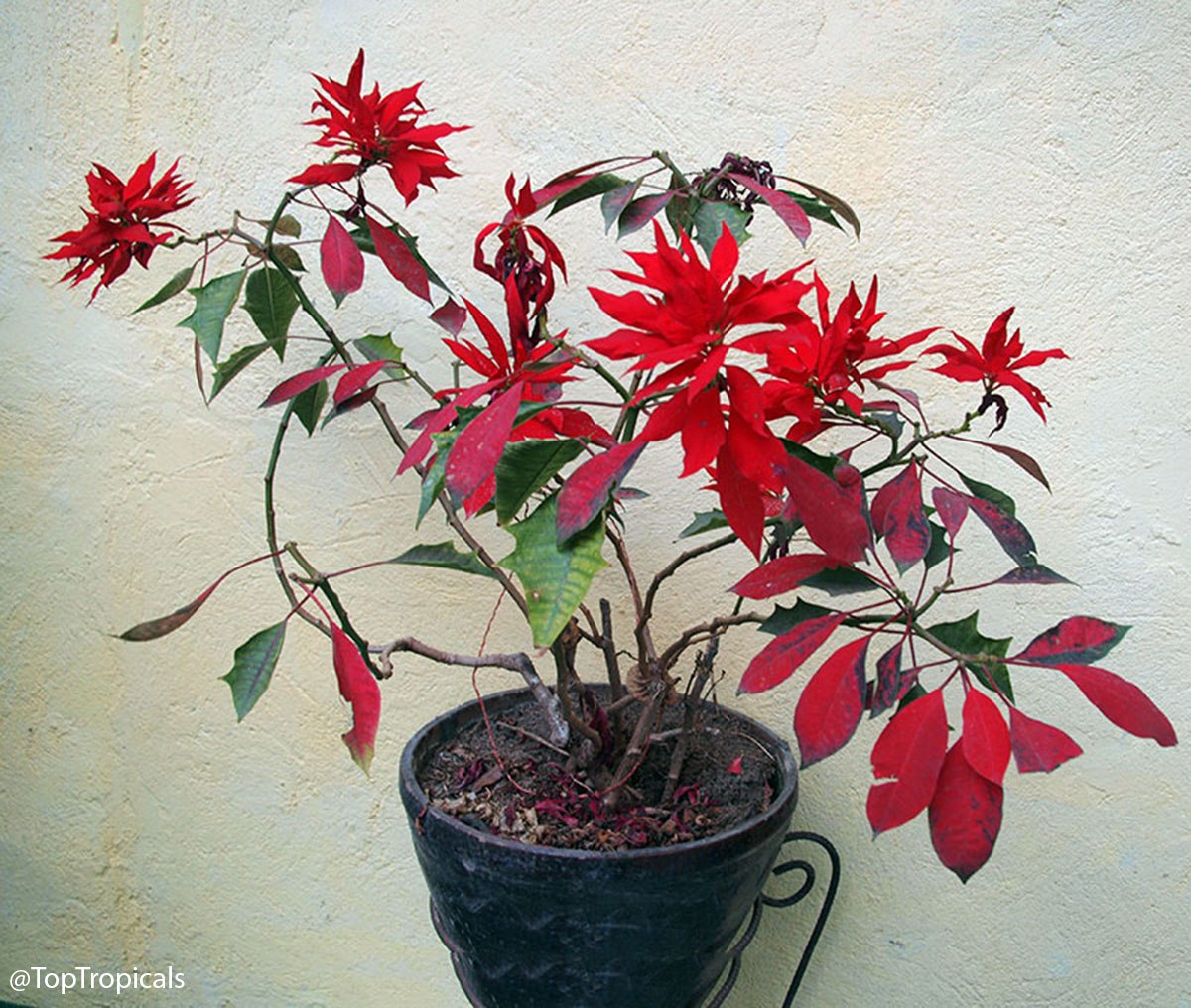
Do not throw out your poinsettia - 4 simple tips how to keep it alive for next Christmas

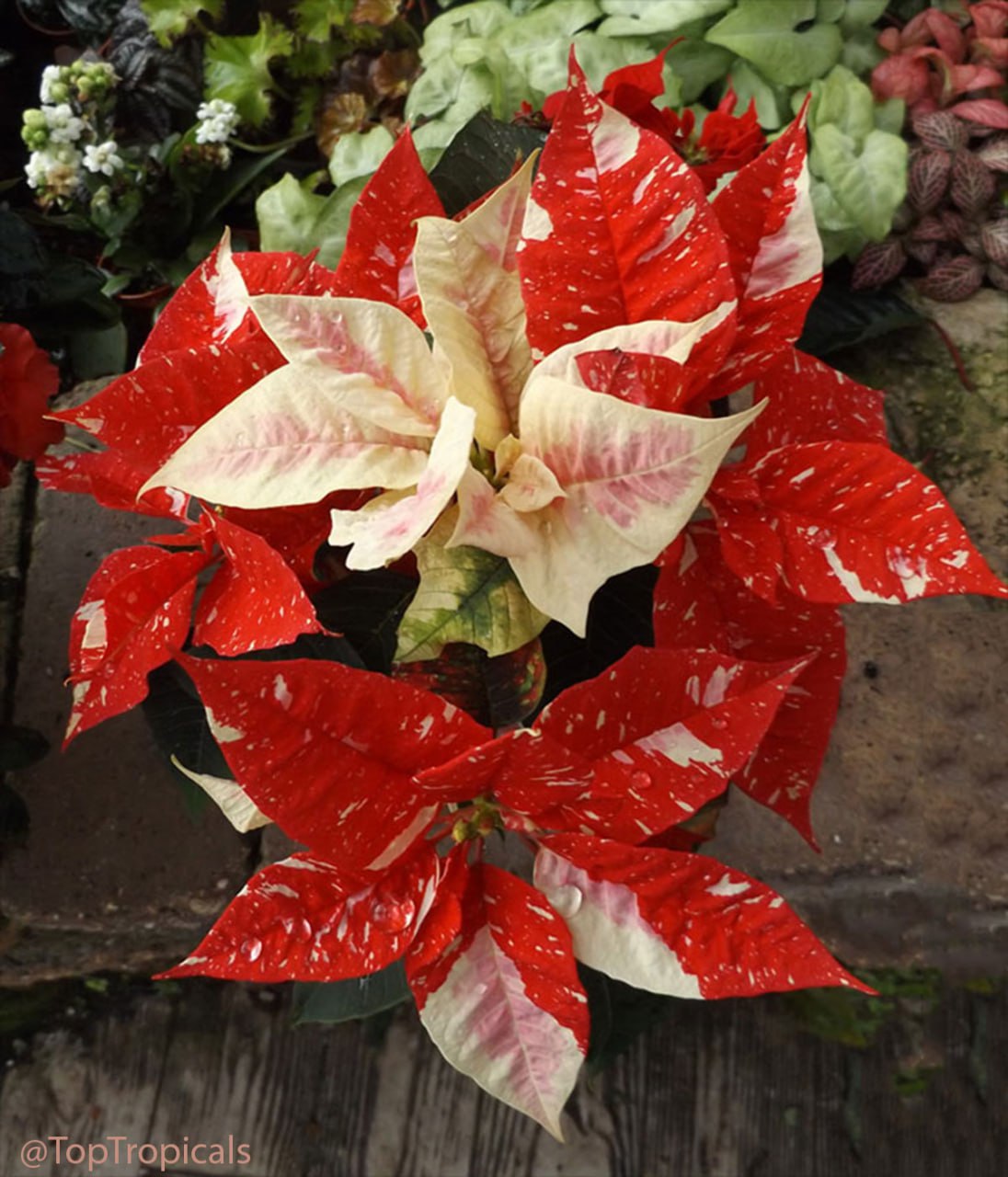
Poinsettia - Euphorbia pulcherrima veriegated leaves

Poinsettia - Euphorbia pulcherrima veriegated leaves

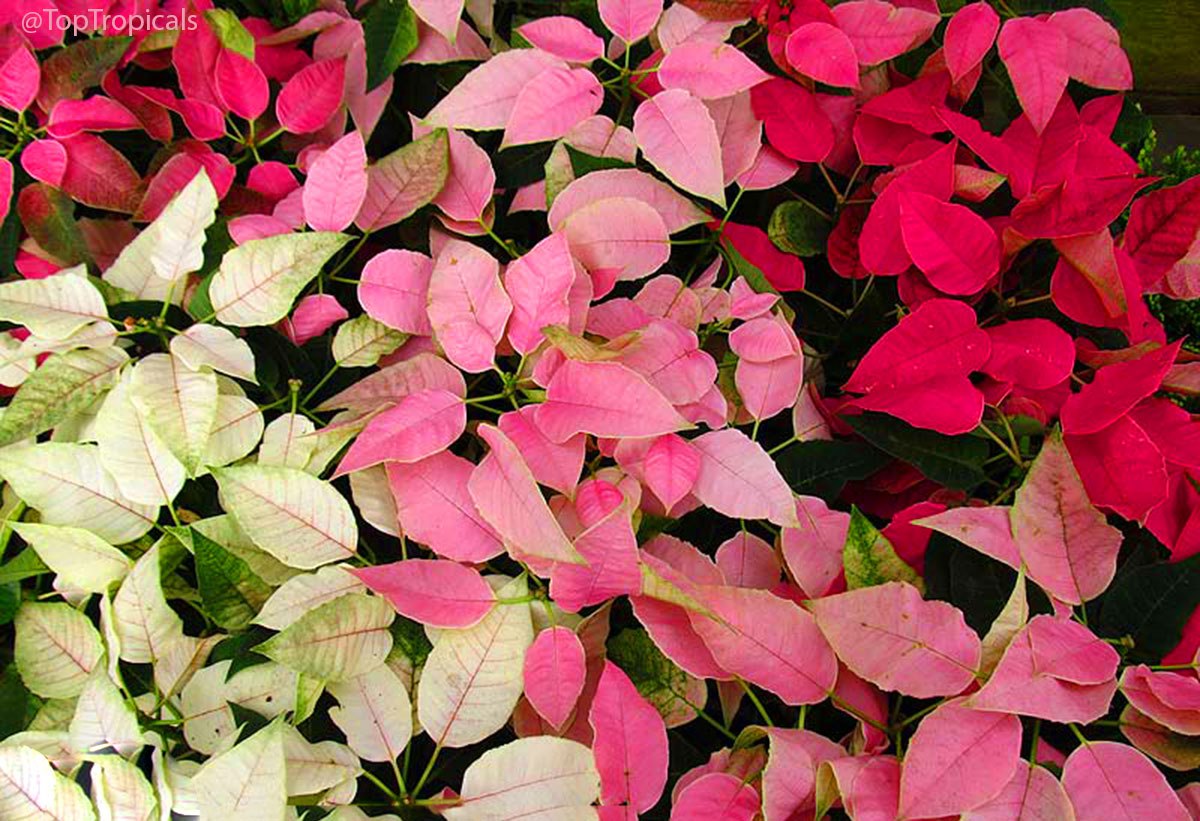
Poinsettia - Euphorbia pulcherrima - white, pink and red

Poinsettia - Euphorbia pulcherrima - white, pink and red

Poinsettia - Euphorbia pulcherrima - white and red

Poinsettia - Euphorbia pulcherrima - white and red

Poinsettia - Euphorbia pulcherrima - in a pot

Poinsettia - Euphorbia pulcherrima - in a pot

🎄 Do not throw out your poinsettia - 4 simple tips how to keep it alive for next Christmas


Poinsettias - Euphorbia_pulcherrima - are tender perennials, not one-season plants. After the holidays they naturally fade, rest, and regroup. With a few simple care tweaks, a healthy plant can live all year and rebloom next winter.
  • 🎄 1. Let it rest after the holidays


  • ✦ Flowering ends naturally - faded bracts and some leaf drop are normal.
  • ✦ Prune when bracts fall: cut stems back by 1/3 to 1/2, leaving 4-5 inches.
  • ✦ Wear gloves - the sap can irritate skin.
  • ✦ Move to a cooler, bright spot for 4-6 weeks.
  • ✦ Ideal temp: 55-60°F
  • ✦ Reduce watering.
  • ✦ Water only when the top 2 inches of soil are dry.
  • ✦ Avoid soggy soil.


🎄 2. Repot in late spring

  • ✦ New growth usually starts in late spring.
  • ✦ Repot at this stage to refresh nutrients and give roots space.
  • ✦ Use a well-draining, slightly acidic potting mix.
  • ✦ Choose a pot only slightly larger, with drainage holes.
  • ✦ Loosen roots gently and remove old compacted soil.
  • ✦ Water lightly, then place in a bright, warm spot.
  • ✦ Resume regular watering and light feeding through spring and summer.


🎄 3. Adjust care during the growing season

  • ✦ Increase temperature gradually to 64-68°F.
  • ✦ Water more often once growth resumes.
  • ✦ Wilted or curling leaves signal thirst.
  • ✦ Water thoroughly and evenly.
  • ✦ Bright light is key, but avoid harsh direct sun.
  • ✦ Use sheer curtains or a grow light if needed.
  • ✦ Fertilize periodically with a balanced houseplant fertilizer.
  • ✦ Pinch back new shoots in late spring for a fuller, bushier plant.


🎄 4. Preparing for winter color

  • ✦ In fall, poinsettias need long nights to bloom.
  • ✦ Provide 12-14 hours of complete darkness nightly for 6-8 weeks.
  • ✦ This triggers colorful bracts in time for the holidays.


❓ Quick FAQ


Can it go outside?
Yes, in warm months only. Bring it indoors before temps drop below 50°F.

Winter outdoors?
No - poinsettias are cold-sensitive and must stay inside.

🎄 Poinsettias don't die after Christmas - they just take a nap. Give them rest, light, and patience, and they will reward you next year.

✍️ Expert reference: Homes and Gardens

🛒 Explore plants for containers

📚 Learn more:


#How_to #Container_Garden

🟢 Join 👉 TopTropicals

Date: 15 Dec 2025

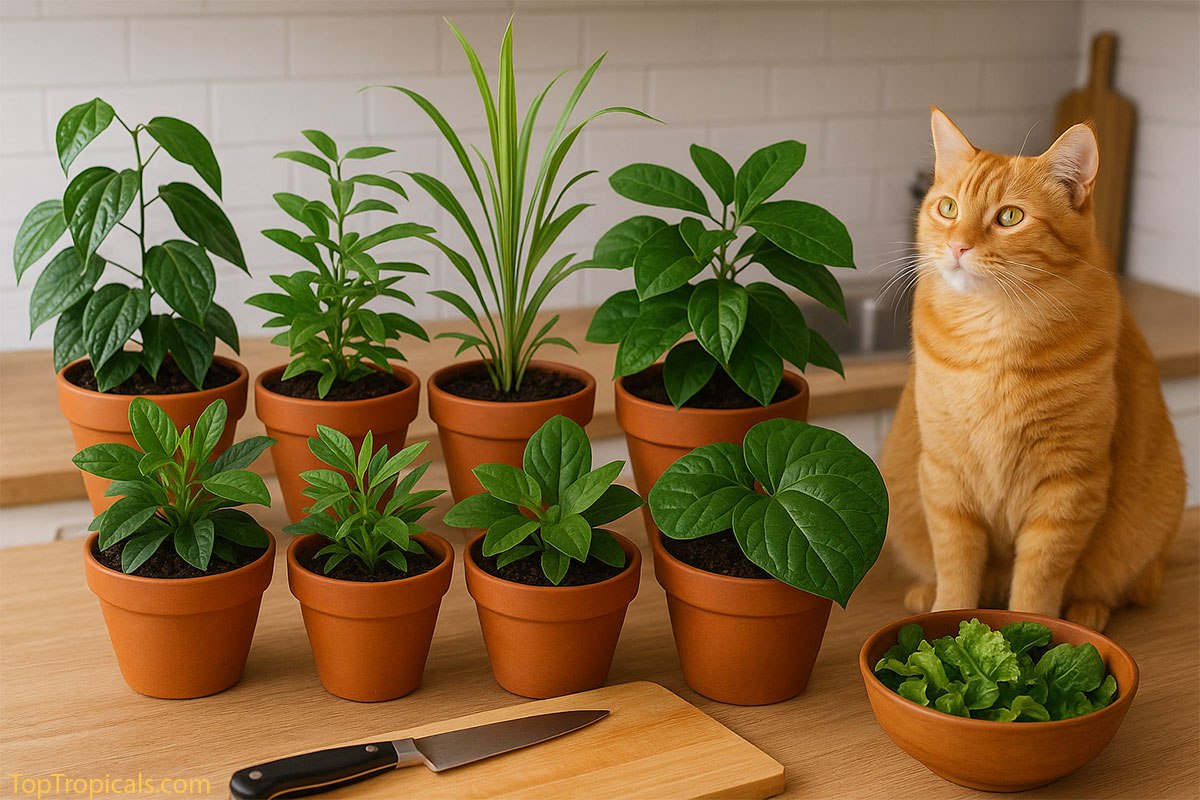
9 tropical vegetables to grow indoors, or how to have garden-fresh produce all year

9 tropical vegetables to grow indoors

9 tropical vegetables to grow indoors

🌱 9 tropical vegetables to grow indoors, or how to have garden-fresh produce all year


Cold weather does not have to mean the end of homegrown food. According to Southern Living, vegetables like lettuce, carrots, and radishes can be grown indoors during winter. The downside is that most of these are annuals - you harvest once, then start over.

Tropical vegetables work differently. Many are perennial, long-living plants that grow well in containers and keep producing for years. Grow them indoors year-round, move them outside in summer for extra sun and growth, then bring them back indoors before cold weather. With enough light and regular care, these plants can provide fresh harvests in every season.
  • ✅ Tips for growing tropical vegetables indoors


  • 📍Place plants near a bright window or supplement with grow lights for steady growth
  • 📍Use containers with good drainage and quality potting mix
  • 📍Keep plants away from cold drafts and heating vents
  • 📍Rotate pots and prune regularly to encourage fresh, tender growth
  • 📍Feed regularly with natural Sunshine Boosters - they are formulated for edibles


✅ Tropical vegetables to grow indoors

  • 🌿 Gynura procubens - Longevity Spinach, Cholesterol spinach - a fast-growing leafy green often called a superfood. The tender leaves are used fresh or lightly cooked and can be harvested repeatedly. This plant stays compact, handles containers easily, and regrows quickly after cutting.
  • 🌿 Sauropus androgynus - Katuk, Tropical Asparagus. One of Southeast Asia’s most popular leafy vegetables. Katuk produces edible shoots and leaves that are cooked in soups and stews. It grows well indoors and rewards regular harvesting with constant new growth.
  • 🌿 Cymbopogon citratus - Lemon grass: a tough, productive plant that adapts well to container growing. The stalks and leaves are used for teas, soups, and flavoring. Indoors, it grows more slowly but stays productive, especially when moved outdoors in summer.
  • 🌿 Lippia dulcis - Aztec Sweet Herb, Sweetleaf: a low-growing herb with naturally sweet leaves. The foliage can be eaten fresh or used as a sugar substitute in teas and desserts. It stays compact, tolerates pruning, and performs well in pots indoors.
  • 🌿 Piper sarmentosum - Vietnamese Pepper, Lalot: grown for its aromatic, edible leaves rather than peppercorns. The leaves are eaten fresh, cooked, or used as food wraps. This plant stays manageable indoors with light pruning.
  • 🌿 Piper nigrum - Black Pepper: the true black pepper vine. Grows well indoors as a container vine with support. It prefers warm temperatures, steady moisture, and bright filtered light.
  • 🌿 Piper auritum - Root Beer Plant, False Kava-Kava: close relative of Piper methysticum (Kava-Kava) known for its large, fragrant leaves with a spicy, root beer-like aroma. The leaves are used for wrapping foods and flavoring dishes. Best grown indoors with room for its bold foliage.
  • 🌿 Piper betle - Betel leaf: a traditional edible and medicinal leaf used widely in Asia. The glossy leaves are harvested continuously and used fresh or as wraps. This vine grows well indoors with warmth, humidity, and a small trellis.
  • 🌿 Piper longum - Indian Long Pepper, Pippali, Bengal Pepper: A tropical pepper relative grown for its elongated spice fruits and edible leaves. Slower to fruit indoors but easy to maintain as a leafy spice plant in containers with bright light and regular feeding.

Tropical vegetables make indoor gardening more rewarding because they do not stop after one harvest. With containers, light, and basic care, these plants can become long-term food producers that move seamlessly between indoors and outdoors - keeping fresh flavors within reach all year.

🛒 Explore tropical edibles, herbs and spices

📚 Learn more:


🎥 Karkade Tea
Longevity Spinach


#Food_Forest #Remedies #Container_Garden #How_to #Discover

🟢 Join 👉 TopTropicals