Garden Blog - Top Tropicals

Date: 22 Jun 2026

Carambola Starfruit FAQ: how dwarf is a seedling?
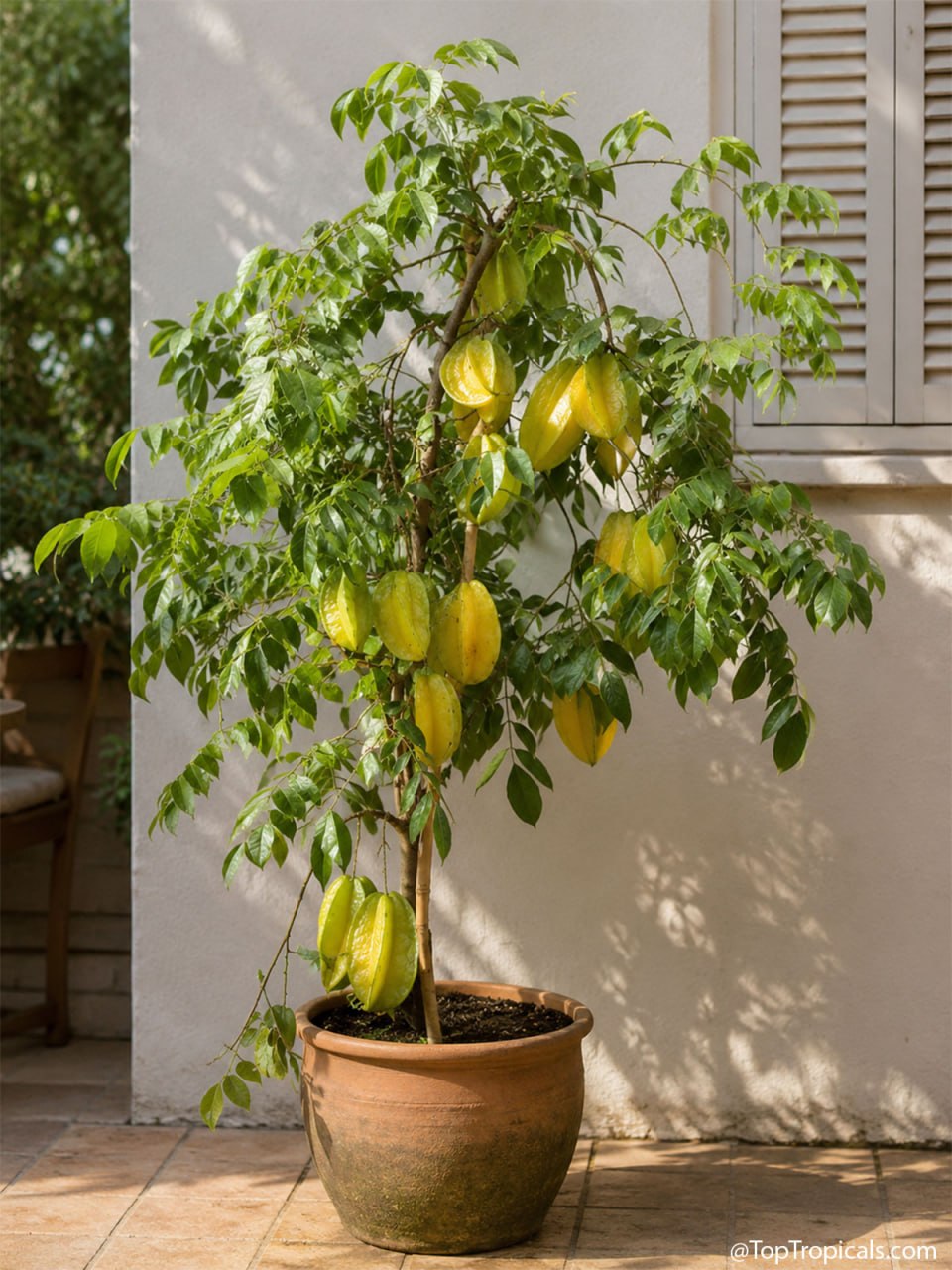
Carambola Starfruit FAQ: how dwarf is a seedling?

🌟 Carambola Starfruit FAQ: how dwarf is a seedling?


I recently ordered a dwarf Hawaiian star fruit seedling from your glorious stock of tropical trees, however upon doing further research it seems like grafted trees guarantee fruit results while seedlings may vary from what the parent plant was. I was planning on putting it in a planter since it’s a dwarf but I’m worried about the quality of fruit since it’s a seedling. Could you elaborate on that a bit?

✅ You are correct that grafted trees provide the greatest certainty because they are clones of a known variety. Seedling trees can show some variation from their parents.

In this case, however, your seedling is not from an unknown or mixed genetic background. The seeds were collected from a true Dwarf Hawaiian cultivar that was growing among other selected dwarf carambola cultivars, primarily Dwarf Hawaiian and a few Fwang Tong trees. Because both the seed parent and the surrounding pollen parents were dwarf, we expect the offspring to retain many of the desirable dwarf characteristics.

While we cannot guarantee that every seedling will be identical to the parent tree, the chances of obtaining a compact, productive tree with good fruit quality are quite favorable. In fact, seedlings sometimes combine the best qualities of both parents and may even produce fruit that is equal to or better than either parent.
The main difference between a grafted tree and a seedling is predictability. A grafted tree gives you a known result. A seedling introduces some genetic variation, but in this case the variation comes from a pool of carefully selected dwarf varieties rather than from unknown parents.

For container growing, we would still expect your tree to be well suited to pot culture, especially with periodic pruning to maintain size and shape. Many growers actually enjoy growing seedlings because there is always the possibility of discovering an exceptional individual. Carambola is a quick fruit tree: 3-4 years from seed to fruit.

We believe your Dwarf Hawaiian seedling has excellent potential and should make a rewarding container-grown fruit tree.

🛒 Plant Star Fruit Carambola Tree

📚 Learn more:

Carambola Plant Facts

Botanical name: Averrhoa carambola
Also known as: Carambola, Starfruit, Five-finger, Balimbing
USDA Zone: 9 - 11
Highligths Small tree 10-20 ftSemi-shadeFull sunWatering: Regular. Let topsoil dry slightlyEdible plantSubtropical plant. Mature plant cold hardy at least to 30s F for a short time
Get personalized tips for your region

Averrhoa carambola in Plant Encyclopedia
Star fruit chili relish: quick-n-fun exotic recipes
Grilled star fruit slices: quick-n-fun exotic recipes
How to gets lots of Star Fruit Carambola
Star Fruit from our garden
Grow your own Carambola
Top 10 fast-fruiting trees: #8. Carambola - Starfruit
Carambola Banana Whip
Carambola Jam recipe
When young Carambola trees are covered with fruit
Carambola tree is the Star of the orchard

#Food_Forest #Discover #How_to

🟢 Join 👉 TopTropicals
Date: 18 Jun 2026

Container Gardening in Hot Climate: Your Pot May Be Hotter Than You Think

Container Gardening in Hot Climate

Container Gardening in Hot Climate

Container Gardening in Hot Climate: Your Pot May Be Hotter Than You Think


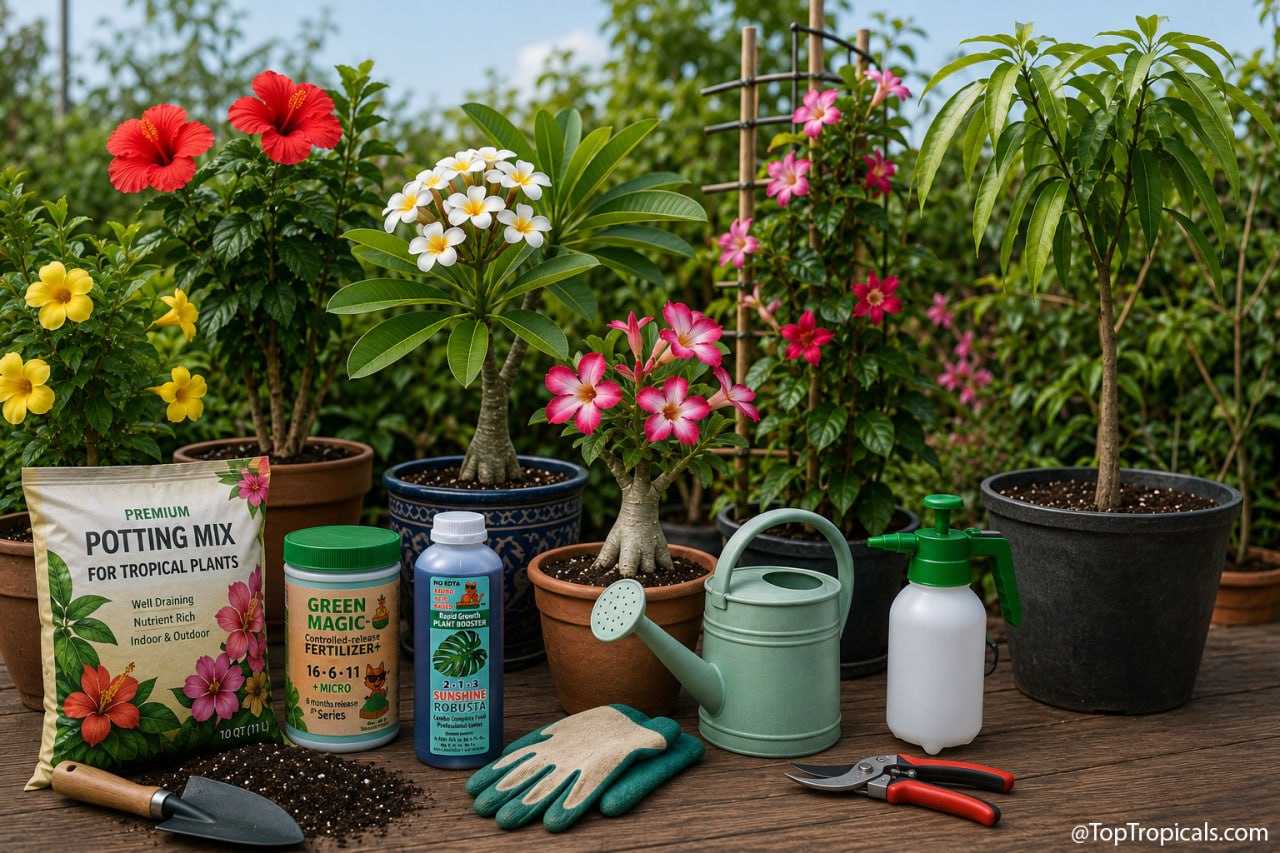
Container gardening lets you grow almost anything - tropical flowers, fruit trees, herbs, even small edible gardens. But in hot climates, pots create challenges that plants growing in the ground never face.
The biggest problem? Heat. A container sitting in full sun can become surprisingly hot. The potting mix dries much faster than garden soil, and roots can literally bake against the sides of the container during summer.
On a sunny summer day, the soil inside a container can heat up much faster than garden soil. While the leaves may look fine, roots trapped inside a hot pot can dry out, overheat, and become stressed long before gardeners notice a problem. That's why growing plants in containers during hot weather often requires a different approach than growing them in the ground.


Bigger Pots Stay Cooler🌡

• Large containers hold more soil, which means they stay moist longer and protect roots from temperature swings.
• Small pots may need watering daily - sometimes twice a day during extreme heat.
• Choose the largest container practical for your space and the plant's size. Avoid oversized pots, which can stay wet too long and promote root rot.

Protect the Pot, Not Just the Plant ☂️

Many gardeners focus on protecting the foliage from heat, but roots often suffer first.
Grouping containers together allows plants to shade each other's pots, helping keep the root zone cooler throughout the day. This is especially helpful for black nursery pots exposed to afternoon sun.
If a container sits in full sun all day, consider wrapping the pot with shade cloth or placing it inside a larger decorative planter. The goal is simple: keep the roots cooler while allowing the plant itself to receive the sunlight it needs.
The plant wants sun. The roots want shade.

Choose Containers Wisely

• Many gardeners love the look of clay pots, but in hot climates they can dry out very quickly because moisture evaporates through the porous sides.
• For most tropical plants, plastic nursery pots often perform better because they retain moisture longer and keep roots from drying out as fast.
• If appearance matters, simply place the nursery pot inside a decorative planter with good drainage.

Water Deeply, Not Constantly 💧

Frequent shallow watering encourages weak roots near the soil surface.
Instead, water thoroughly and allow excess water to drain away. A layer of mulch on top of the potting mix can also help slow moisture loss.

Feed Regularly

Container plants depend entirely on you for nutrition. Regular fertilizing during the warm growing season helps support stronger growth, flowering, and fruit production.

Check for Pests Often 🐛

Plants under heat and drought stress are more vulnerable to insects. Inspect leaves regularly for spider mites, scale, mealybugs, and other common pests before small problems become big ones.

Hot Climate Container Garden Checklist ✍️

• Use large containers whenever possible
• Make sure every pot has drainage holes
• Use quality potting mix, not garden soil
• Mulch the soil surface
• Fertilize regularly during active growth
• Inspect for pests weekly
• Watch for root-bound plants and repot as needed
• Be cautious with clay pots in hot weather

A healthy container garden is really a balance between moisture and drainage. Keep roots cool, provide consistent water and nutrition, and even tropical plants can thrive through the hottest months of summer.

🛒 Get real food and fresh soilless mix for your plants

📚
Learn more:
Sunshine Boosters: Complete Plant Nutrition System
Why June Is the Most Important Month for Potted Tropical Plants
Why young trees need staking?
The SECRET growers never tell you: simple trick how to bring plants back to life and keep green 
How to re-pot a plant properly?

#Discover #How_to

🟢 Join 👉 TopTropicals

Date: 13 Jun 2026

Why June Is the Most Important Month for Potted Tropical Plants

Cats Smokey and Sunshine planting tropical plants

Cats Smokey and Sunshine planting tropical plants

Why June Is the Most Important Month for Potted Tropical Plants


For many tropical plants, June is the start of peak growing season. Days are longer, temperatures are warmer, and plants that spent winter indoors or in a greenhouse are suddenly growing at full speed.
A few simple tasks now can mean stronger growth, more flowers, and better fruit later in the season.


Smokey: Sunshine, why are you mixing fertilizer with coffee and donut crumbs?
Sunshine: I'm testing a new growth formula.
Smokey: Based on what research?
Sunshine: Based on a highly controlled breakfast study. I call it Hibiscus Turbo Boost Deluxe.


✅ 1. Repot Before Plants Become Root-Bound


·  If roots are circling the pot, growing through drainage holes, or the soil dries out unusually fast, it's time to move up one pot size.
·  Fresh potting mix provides new space, better drainage, and access to nutrients that older soil may no longer contain. Use professional soilless mix Abundance for best results.
·  Don't jump from a small pot to an oversized container. One size larger is usually enough.

✅ 2. Feed Hungry Summer Growth


· Tropical plants are no longer resting. They are actively producing roots, leaves, flowers, and fruit.
· June is the perfect time to begin regular feeding.
· A balanced fertilizer program helps support strong growth, while products such as Green Magic and Sunshine Boosters provide additional nutrients that fast-growing tropicals can quickly use during summer.
· A well-fed plant grows faster, recovers from stress better, and flowers more heavily.

✅ 3. Acclimate Plants to Full Sun


One of the most common mistakes is moving a plant directly from indoors or a greenhouse into full summer sun. Leaves that developed in shade can burn within hours.
Start with bright shade or morning sun, then gradually increase exposure over one to two weeks. Even sun-loving plants benefit from a transition period.

✅ 4. Prune for Shape and Strength


June is an excellent time to remove weak, damaged, or overly long branches.
Light pruning encourages branching and creates a fuller, stronger plant.
For fruit trees, selective trimming can also help maintain a manageable size for container growing.

✅ 5. Check for Pests Before They Multiply


·  Warm weather brings rapid plant growth - and rapid pest growth.
·  Inspect new leaves, stems, and undersides of foliage for aphids, scale, spider mites, mealybugs, and whiteflies.
·  Treat problems early before populations explode during the heat of summer. We recommend Sunshine NoBug all-natural pesticide.

✅ 6. Add Stakes, Trellises, and Supports


·  Many tropical plants can double or triple their size during summer.
·  Climbing plants, vanilla orchids, passion fruit, dragon fruit, mandevilla, and many vining species appreciate support before they become tangled.
·  Installing stakes or trellises now is much easier than trying to do it later.

✅ 7. Water for Active Growth


·  A tropical plant that needed water once a week in spring may need it every day during summer.
·  Higher temperatures mean faster growth, greater water use, and more nutrient uptake.
·  Check containers frequently, especially during hot or windy weather. Water thoroughly and allow excess water to drain away.

✅ 8. Refresh Mulch and Clean Up Pots


·  Remove weeds, old leaves, and debris from containers.
·  A thin layer of mulch helps moderate soil temperatures and slows moisture loss during the hottest months.
·  Clean pots also reduce hiding places for pests and disease.

✅ The Bottom Line


June is when potted tropical plants shift into high gear. Repot if needed, fertilize regularly, inspect for pests, provide support, and keep up with watering. A little attention now often produces the biggest growth, best blooms, and heaviest fruiting of the entire year.

🛒
Get fresh soilless mix and real food for your plants

📚
Learn more:
Sunshine Boosters: Complete Plant Nutrition System
Why young trees need staking?
The SECRET growers never tell you: simple trick how to bring plants back to life and keep green 
How to re-pot a plant properly?

#Discover #How_to #Smokey_Sunshine

🟢 Join 👉 TopTropicals

Date: 7 Jun 2026

Which jaboticaba to grow: a quick guide to the most popular varieties

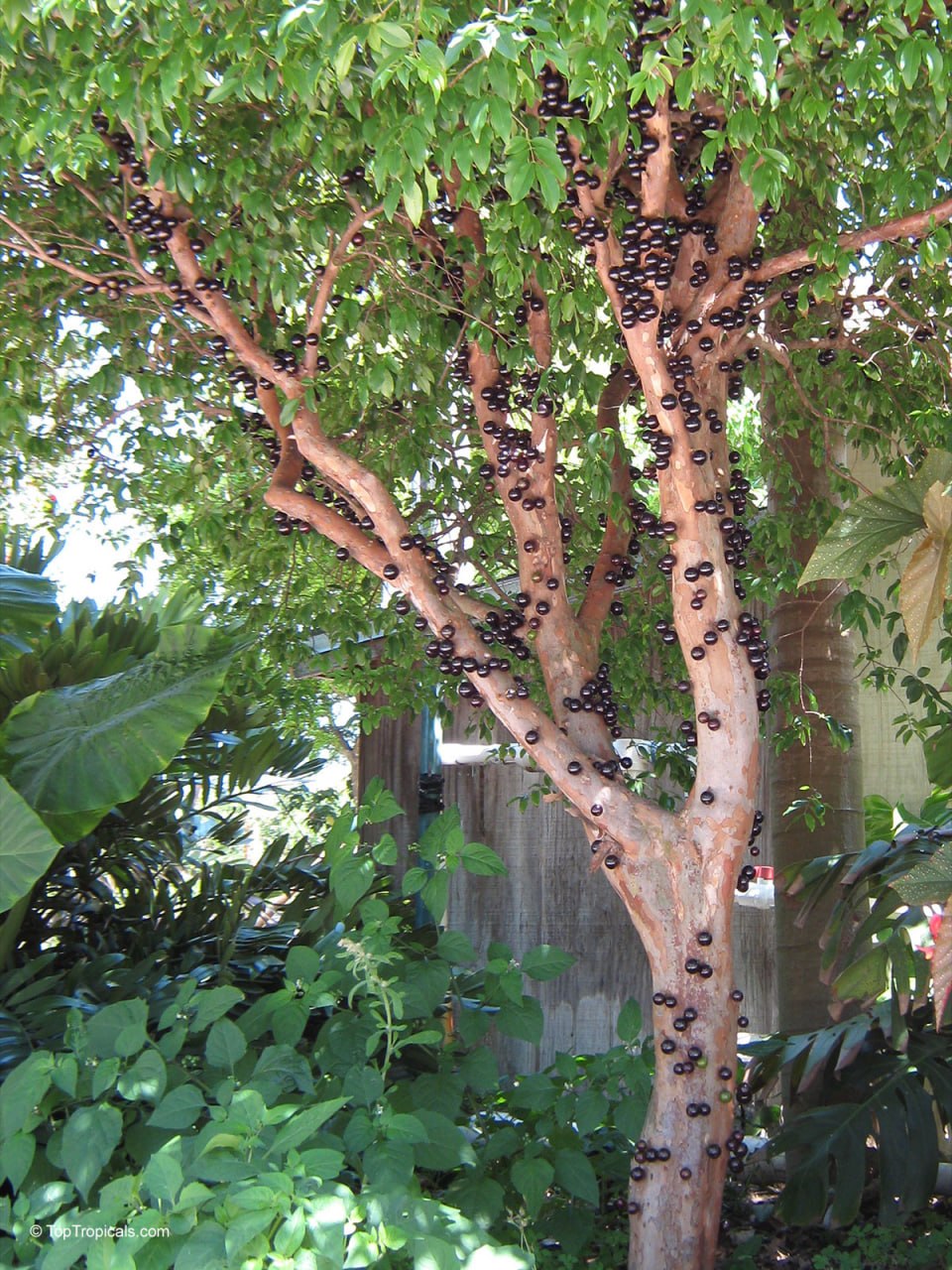
Myrciaria cauliflora Jaboticaba tree

Myrciaria cauliflora Jaboticaba tree

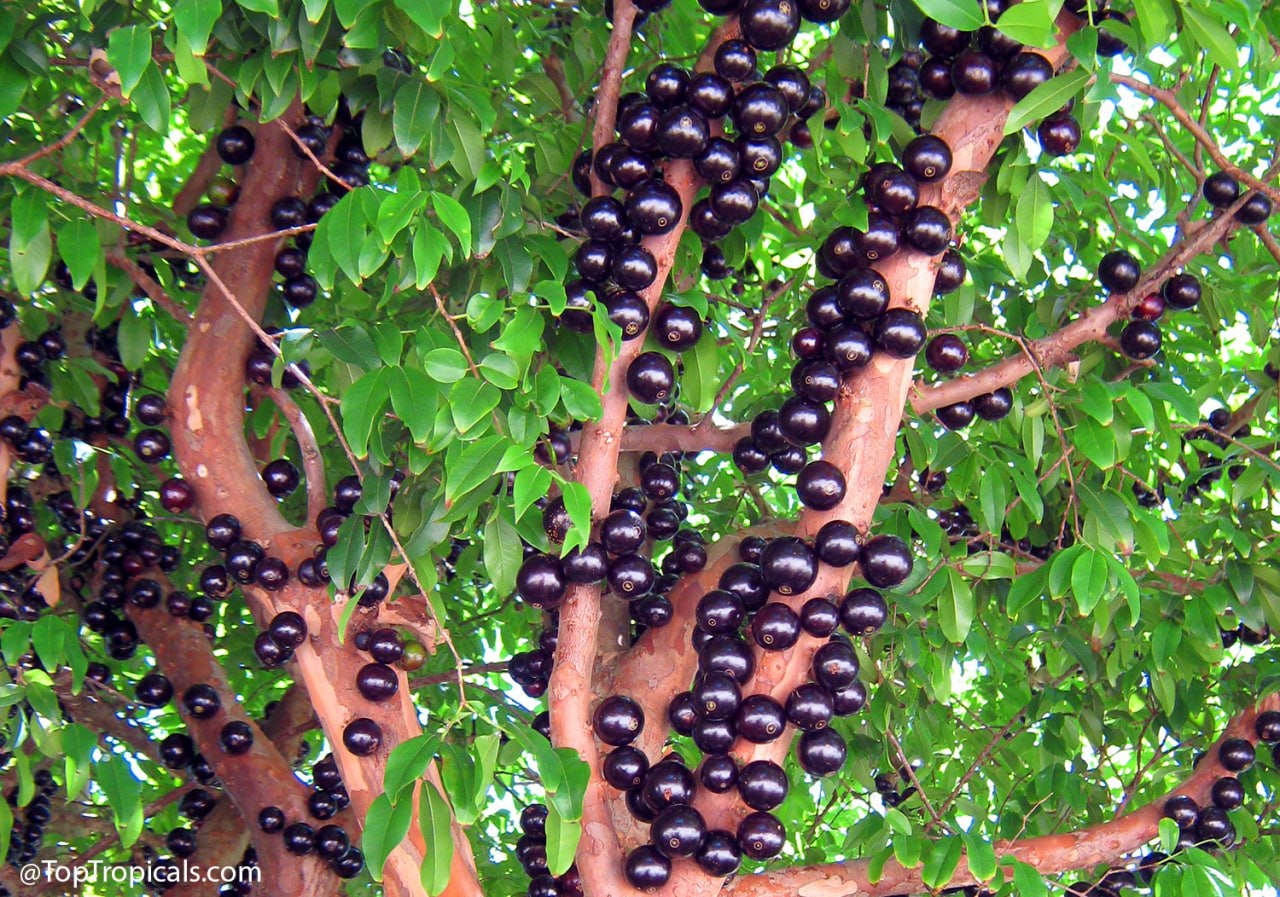
Myrciaria cauliflora Jaboticaba fruit

Myrciaria cauliflora Jaboticaba fruit

Myrciaria cauliflora Jaboticaba fruit

🍇Which jaboticaba to grow: a quick guide to the most popular varieties

Jaboticabas are among the most unusual fruit trees in the world. Native to Brazil, they produce grape-like fruit directly on the trunk and branches. Most varieties have sweet pulp, can fruit multiple times per year, and grow well in containers.

Despite their tropical appearance, jaboticabas are surprisingly cold hardy. During our historic Florida freeze, established trees handled 25F for two nights and nearly two weeks of unusual cold without protection. Many varieties can tolerate temperatures into the 20s, making them one of the more cold-hardy tropical fruit trees for Florida.

From fast-fruiting dwarfs to giant-fruited collectors' varieties, each jaboticaba offers something a little different. Here's a practical guide to some of the most popular selections.

For beginners: Precoce Dwarf (Red Scarlet)


One of the fastest-fruiting jaboticabas, often producing in 3-5 years. Compact, container-friendly, ideal for gardeners who want fruit sooner.

•  Fruits young
•  Naturally compact
•  Excellent container plant
•  Good for cooler climates where winter protection is needed

The classic choice: Sabara


The classic Brazilian jaboticaba and still the most widely grown variety. Small, exceptionally sweet fruit with thin skin and juicy pulp. Can produce several crops per year.

•  Traditional jaboticaba flavor
•  Thin-skinned fruit
•  Sweet and juicy
•  Excellent for bonsai and containers
•  One of Brazil's most popular wine varieties

For large fruit: Grimal


Often called Giant Jaboticaba, with much larger fruit than most varieties. Thick juicy pulp, small seeds, heavy production.

•  Larger fruit
•  Thick pulp
•  Heavy producer
•  Excellent fresh eating quality

For exceptional flavor: ESALQ


Known for large, exceptionally sweet fruit and relatively early production.

•  Outstanding sweetness
•  Large fruit
•  Fruits in about 4-5 years
•  Collector favorite

For beauty and productivity: Branca Vinho


One of the most ornamental jaboticabas, with attractive foliage, upright growth, and excellent white-fleshed fruit. Fruits young and often several times per year.

•  Beautiful foliage and trunk
•  White-fleshed fruit
•  Excellent flavor
•  Multiple crops per year
•  Good cold tolerance

For collectors: Blue Jaboticaba


A close jaboticaba relative (Myrciaria vexator) producing blue-purple fruit with a sweet grape-like flavor. Often grown as much for its beauty as its fruit.

•  Unique blue fruit
•  Sweet grape-like flavor
•  Ornamental tree
•  Rare and unusual

For faster growth: Volcano Red (La Vinotinto)


More vigorous and faster growing than traditional jaboticabas. Famous in Hawaii for Volcano Red wine.

•  Faster growth
•  More vigorous tree
•  Good adaptability
•  Tolerates occasional waterlogging
•  Source of Hawaiian Volcano Red wine

Which one is right for you?


•  Fastest fruit: Precoce Dwarf
•  Classic flavor: Sabara
•  Largest fruit: Grimal
•  Sweetest fruit: ESALQ
•  Best ornamental: Branca Vinho or Blue Jaboticaba
•  Fastest growth: Volcano Red

👉 All jaboticabas share the same magical trait - flowers and fruit appearing directly on the trunk. The differences are in fruit size, growth rate, and how quickly you'll enjoy your first harvest. Jaboticabas are notoriously slow growing, and large fruiting-size trees can take many years to develop. Established specimens are hard to find and can save years of waiting. If you've been thinking about adding one to your garden, remember: the best time to plant a jaboticaba was years ago - the second-best time is today.

🛒 Select from Jaboticaba varieties

📚 Learn more:

Jaboticaba Plant Facts

Botanical name: Myrciaria cauliflora, Plinia cauliflora, Eugenia cauliflora
Also known as: Jaboticaba, Duhat
USDA Zone: 9 - 11
Highligths Plant used for bonsaiSmall tree 10-20 ftFull sunKeep soil moistEdible plantSubtropical plant. Mature plant cold hardy at least to 30s F for a short timeFlood tolerant plant
Get personalized tips for your region

Jaboticaba (Myrciaria cauliflora) in Plant Encyclopedia
Before you open a bottle of wine, meet the Secret Wine Tree from Brazil
What does Blue Jaboticaba taste like?
How Blue Jaboticaba is different from regular Jaboticaba?
What is Jaboticaba? I like the sound of this word!

#Food_Forest #Discover #How_to

🟢 Join 👉 TopTropicals

Date: 27 May 2026

How to Root Plumeria Cuttings: The Dry Method for Success

Rooting Plumeria Cuttings

Rooting Plumeria Cuttings

How to Root Plumeria Cuttings: The "Dry" Method for Success ✔️

Plumeria cuttings root with incredible ease if you respect their succulent nature. Most failures come from two mistakes: planting too early and watering too much. Whether you use the traditional potting method or the professional Thailand "Surface" Method, the secret is: Keep it dry until it grows

✍️ Stability Note: Cuttings vs. Grafted Trees


While cuttings are easy, they develop shallow, horizontal root systems.
Best for: Pots and sheltered garden spots.
For windy or hurricane-prone areas: Consider Grafted Plumeria. Grafted trees use a seedling rootstock with a strong taproot, providing much better anchoring and long-term stability.

🌸 5 steps how to root plumeria cuttings - simple method that works


🌸 Step 1: Prepare and Cure (The 5-Day Rule)


Before a cutting ever touches soil, it must heal.
Cut: Take healthy branches 6-12 inches long and remove all leaves.
Cure: Place the cuttings in bright shade with plenty of airflow.
The Goal: Wait 3-5 days until the cut end is bone-dry, firm, and callused.
Pro Tip: Planting a "wet" cutting is the #1 cause of stem rot. If it isn't callused, do not plant it.

🌸 Step 2: Use Fast-Draining Soil


Plumerias hate "wet feet." You need a medium that drains instantly.
The Recipe: 50% professional potting mix (like Top Tropicals Abundancу mix) and 50% coarse sand.
Why it works: The bark provides structure, while the sand ensures water runs straight through, leaving no stagnant moisture.

🌸 Step 3: Planting & The "Thailand Method"


You have two proven ways to set your cuttings:

Method A: The Traditional Pot
1. Hormone (Optional): Dip the dry end in rooting hormone and tap off the excess.
2. Depth: Insert only 2–3 inches deep. Roots emerge from the base, not the stem.
3. Secure: Firm the soil so the cutting doesn't wobble.

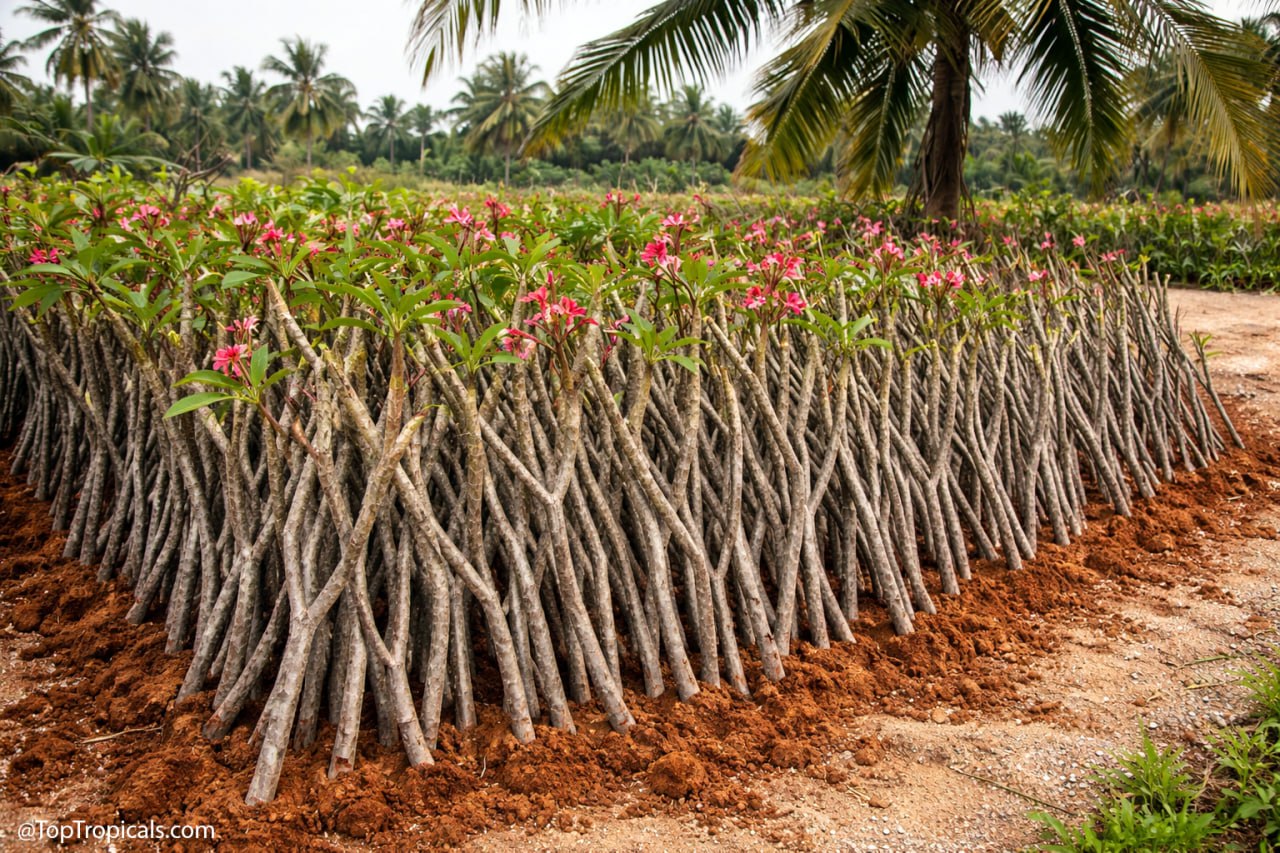
Method B: The Thailand Style (Surface Rooting)
As seen in the image, large-scale growers often don't bury cuttings at all.
1. The Bed: Prepare a bed of well-draining soil.
2. The Placement: Stand the cuttings on top of the soil, leaning them against each other or a support.
3. The Benefit: This provides maximum airflow to the base and zero risk of rot. Roots will naturally dive into the soil as they emerge.

🌸 Step 4: Critical Watering Rules


This is where most gardeners fail.
Initial Watering: After planting, moisten the soil slightly—just once.
The Wait: Do not water again for 5–7 days. The Logic: No roots = No water intake. If the soil stays wet without roots to drink it, the cutting will rot.

🌸 Step 5: Heat, Light, and Air


Sun: Start in bright shade for a few days, then move to full sun. Heat is the catalyst for root growth.
Ground Heat: Placing pots on a warm surface (like a concrete patio or black ground cover) can accelerate rooting.
Airflow: Never root plumeria in a humid greenhouse or enclosed space. They need "open air" to thrive.

🌸 What to Expect


2-4 Weeks: Callusing ends and initial roots form.
4-8 Weeks: New leaf "claws" appear at the tip.
Success: Once you see full leaves, you can begin a regular watering and fertilization schedule.

✅ Quick Success Checklist


Dry the cutting for 3–5 days.
Use 50% sand for instant drainage.
Plant shallow (or use the Thailand surface method).
Wait a week before watering again.
Provide maximum sun and airflow.

❌ What NOT to do:


Avoid frequent watering. If you think it’s time to water, wait one more day.
Plumeria cuttings have no roots to drink with yet.
If the soil looks dry and you feel the urge to water, wait 24 hours. When in doubt, keep it dry.
Remember: You can save a dry cutting, but you can't save a rotten one.

🛒 Shop Grafted Plumeria Collection

📚 Learn more:
· Plumeria varieties in Plant Encyclopedia
· #PlumeriaRainbow

#Perfume_Plants #Container_Garden #How_to #Discover

Dwarf Plumeria Plant Facts

Botanical name: Plumeria alba
Also known as: Dwarf Plumeria
USDA Zone: 9 - 11
Highligths Large shrub 5-10 ft tallSmall tree 10-20 ftFull sunWatering: Moderate. Water when top soil feels dryWhite, off-white flowersFragrant plant
Get personalized tips for your region
🟢 Join 👉 TopTropicals