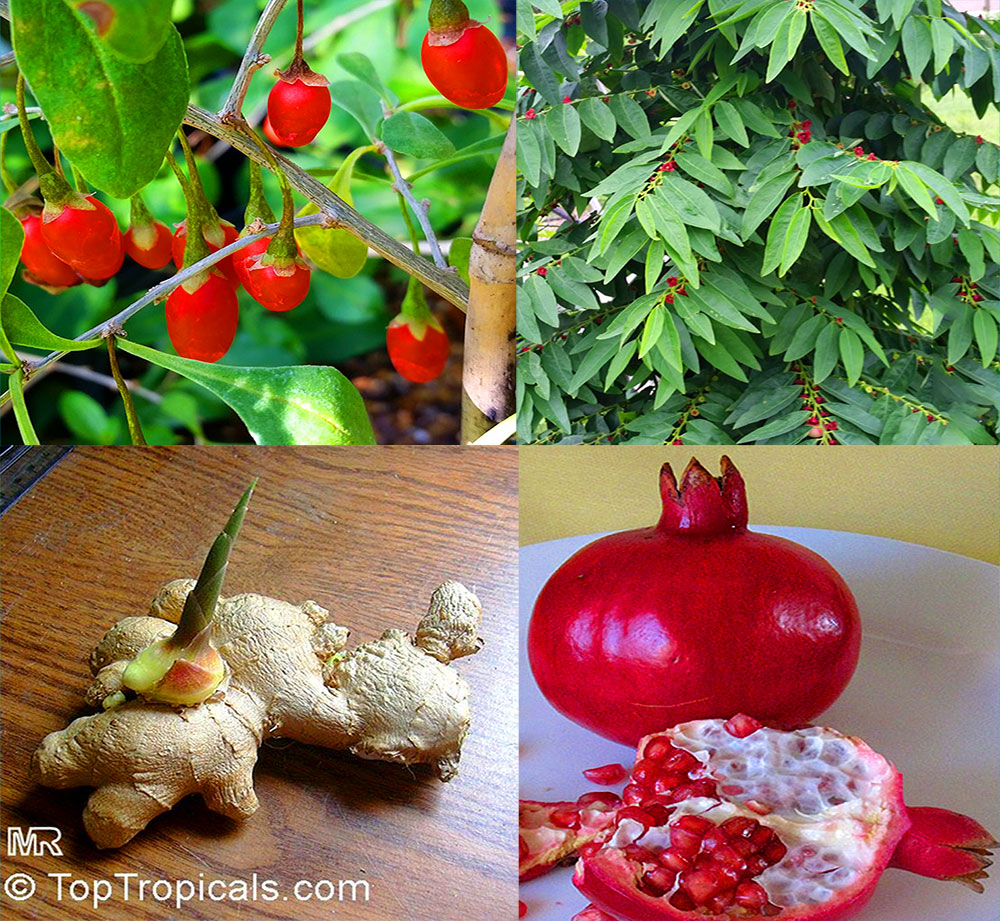
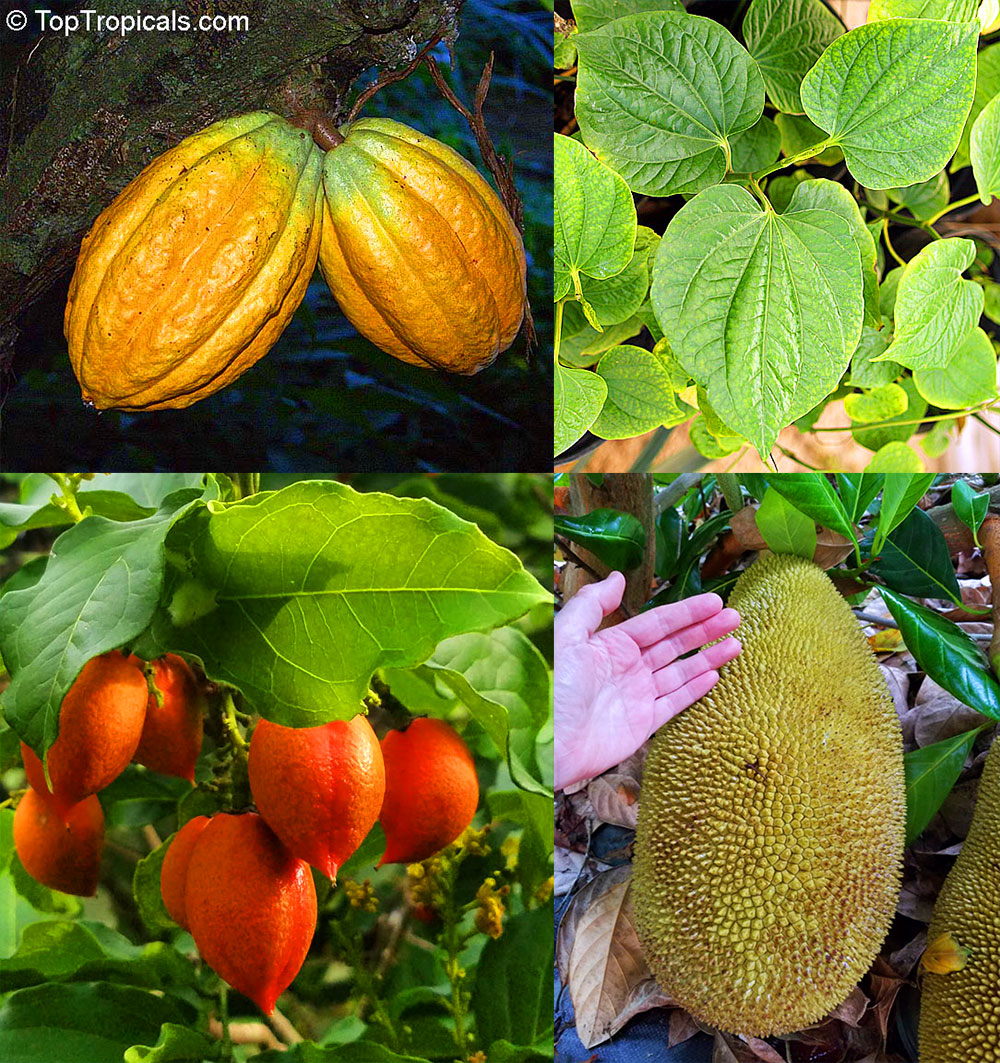
"The fruit of the mango tree is no longer forbidden.
Indeed, it has been recommended to me by the physicians as an antidote to the
plague."
- Louis IX, King of France -
Q: Why do you want to grow your own tropical
fruit tree?
A: Growing your own tropical fruit tree can have
many benefits. Here are a few reasons why someone might choose to grow their
own tropical fruit tree:
1. Fresh, flavorful fruit: When you grow your own tropical fruit
tree, you have access to fresh, flavorful fruit that you may not be able to
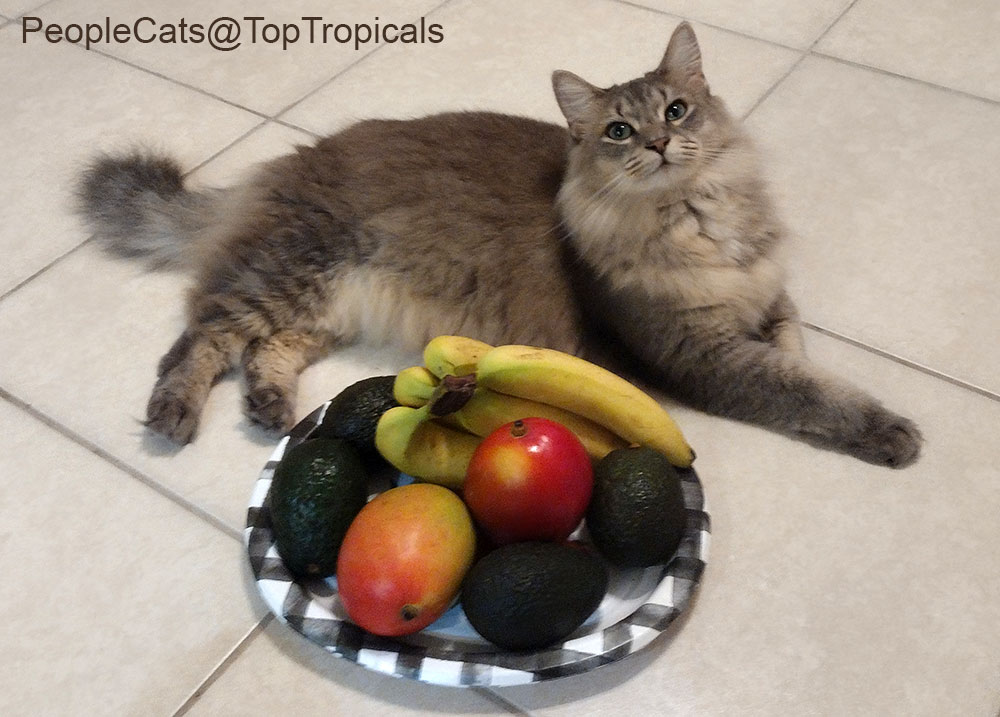
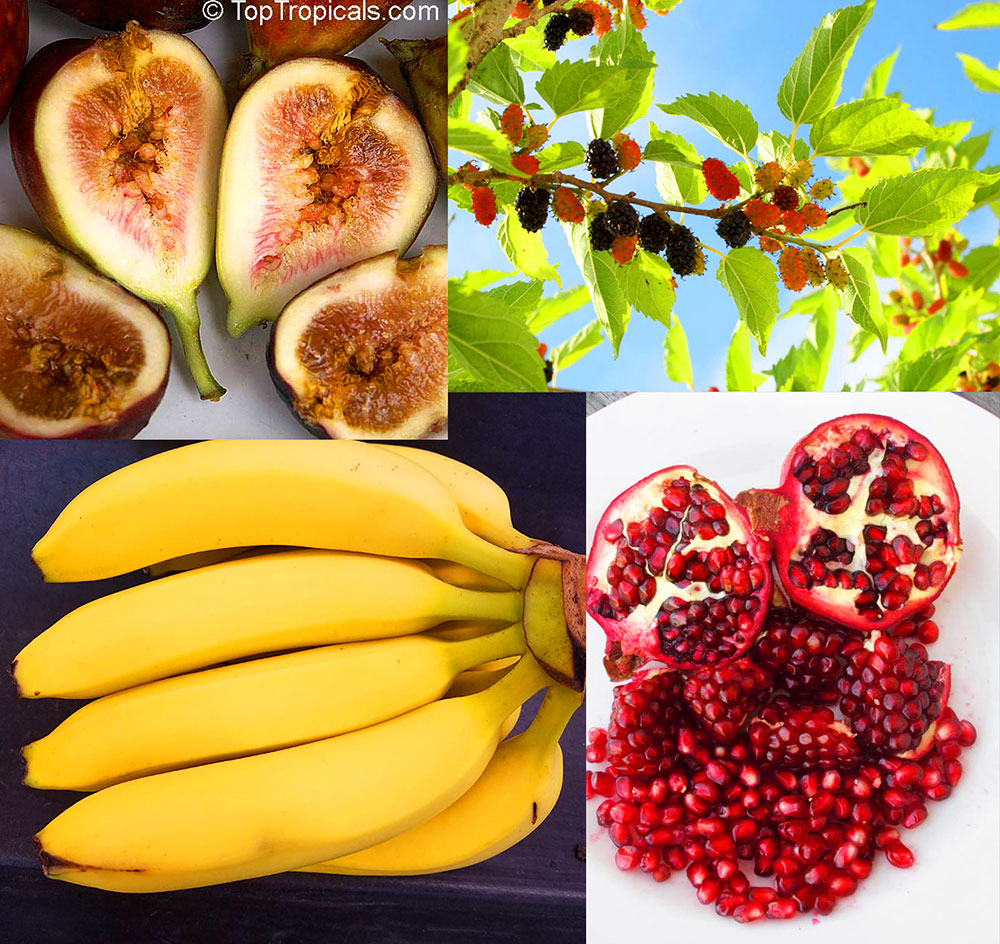
find at your local grocery store. Tropical fruit, like avocado,
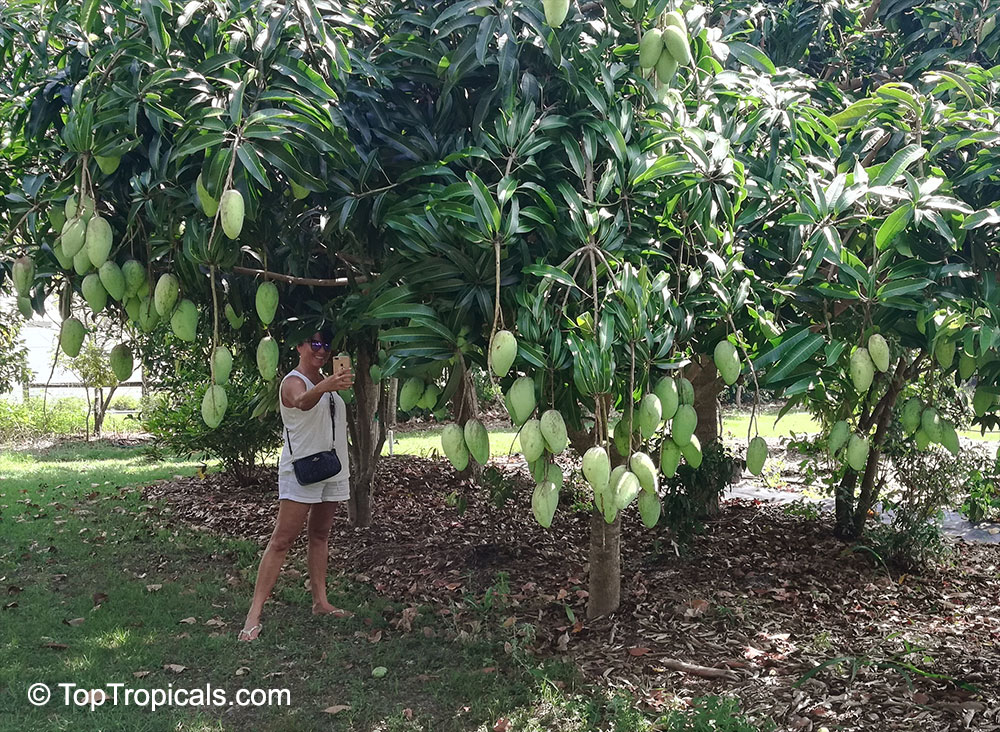
mangoes,
papayas, and
passionfruit, jackfruit,
Dragon Fruit, Annona have a short shelf life, and the fruit you find at the store may
have been harvested weeks ago. When you grow your own fruit tree, you can
pick the fruit when it's fully ripe and enjoy it at its peak flavor. Besides,
some rare fruit like Akee or
Sapodilla simply never offered from the store.
2. Environmental benefits: Growing your own fruit trees can have
environmental benefits. Trees absorb carbon dioxide from the air and release
oxygen, which can help reduce your carbon footprint. Additionally, growing
your own fruit trees reduces the need to transport fruit long distances, which
can help reduce greenhouse gas emissions.
3. Cost savings: Depending on where you live and the availability
of tropical fruit, growing your own fruit tree can be a cost-effective way
to enjoy your favorite tropical fruits.
4. Gardening and outdoor hobby: Growing a fruit tree can be a
fulfilling and rewarding outdoor hobby. It can also be a great way to teach
children about where their food comes from and the importance of taking care of
the environment.
Overall, growing your own tropical fruit tree can be a great way to
enjoy fresh, flavorful fruit, reduce your carbon footprint, save money, and enjoy
a fulfilling outdoor hobby.
Winter can be tough on plants, especially on tropical varieties. But with a little preparation, you can protect your garden and keep your plants safe from the cold. Here's how:
Winter Care Tips for Tropical Plants
Cut watering: Reduce watering to prevent root rot. Cold + wet = dead roots.
Water before frost: Thirsty plants are more vulnerable. Water them before a cold night to prevent damage.
Wind protection: Wind is more harmful than temperature drops. Plant near structures like houses or trees for shelter.
Prepare for long cold periods: If cold weather lasts for hours, use all available protection, including Christmas lights and propane heaters.
Don't use dry fertilizer in winter: Heavy fertilizing encourages tender growth, which is more susceptible to cold damage. Sunshine Boosters liquid fertilizers are safe to use year around as their intake is controlled by reduced watering. Use fabric covers, not plastic: Plastic can cook plants in the sun, while fabric allows better ventilation.
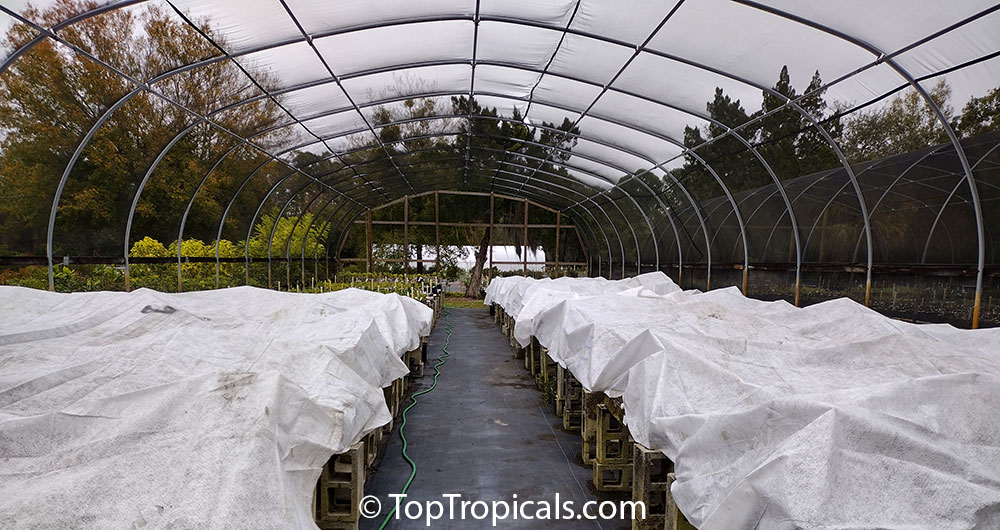
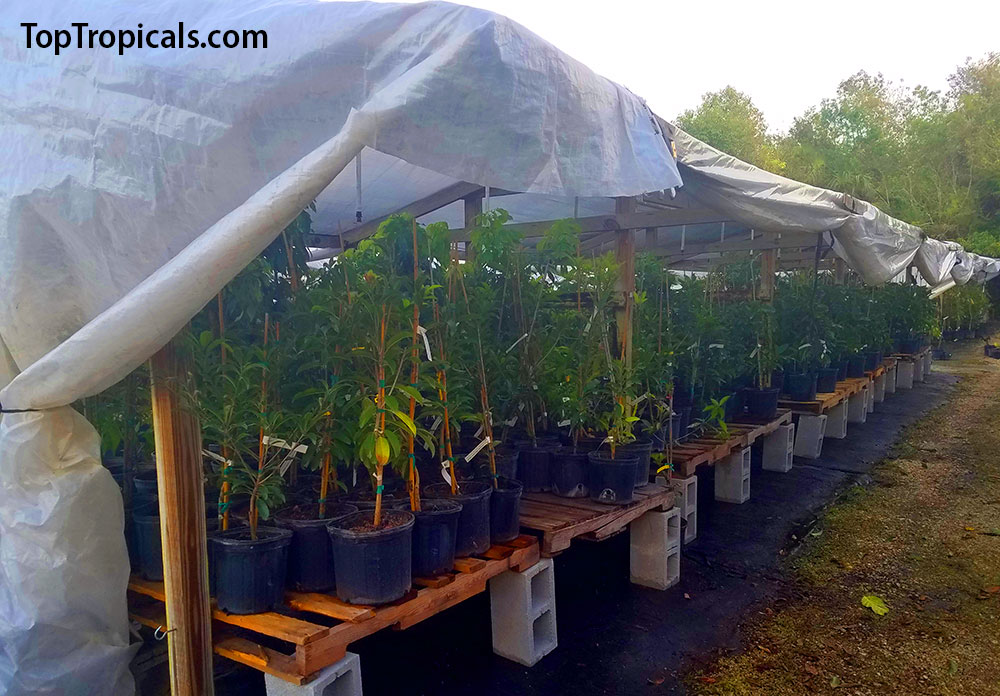
Photo above: we cover our plants in the nursery with a thin synthetic fabric (sintepon) called "frost cloth" or "strawberry cloth". It is light, breathable and allows light and water to go through unlike plastic that creates heavy water pockets.
Prepare for Cold Nights
Wrap plants: On cold nights, cover individual plants or trees with sheets or blankets to shield them from wind chill.
Use Christmas lights: A simple string of lights can add extra warmth, protecting your plants during frosty nights.
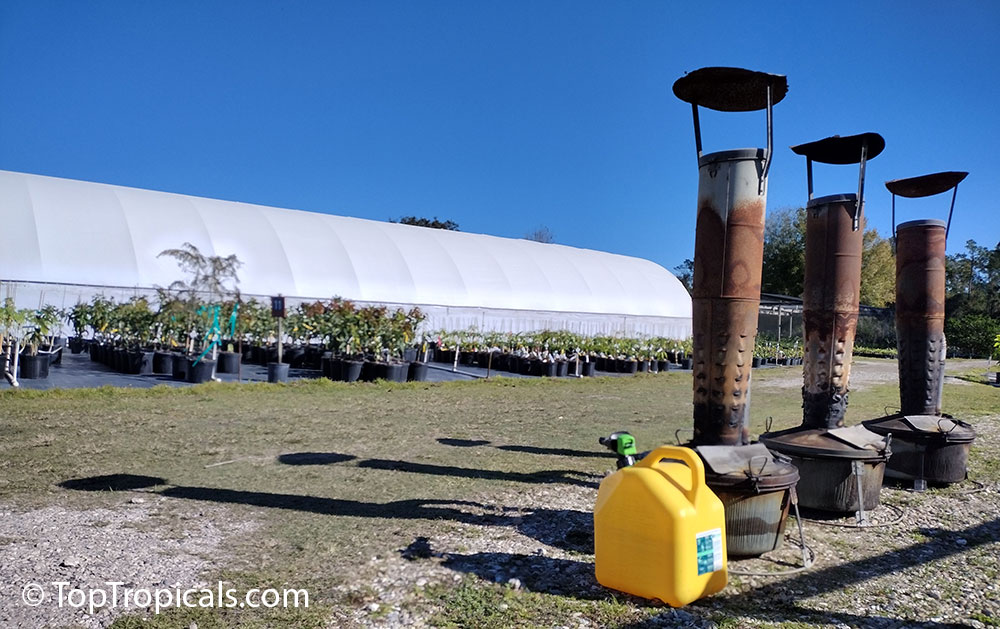
Use propane heaters: For added warmth in a larger area, place a propane heater near your plants. Make sure to follow safety guidelines and keep the heater at a safe distance from flammable materials. This can help maintain a few extra degrees of warmth, especially in more open garden spaces or temporary greenhouses. Always ensure proper ventilation to avoid harmful gas buildup.
Photo above: we use both propane and kerosene heaters at the nursery
Large Collections? Build a Temporary Greenhouse
Affordable winter greenhouse: For large plant collections, you don't need an expensive greenhouse. A mobile carport with plastic or fabric covering, costing around $200, can house up to 100 plants!
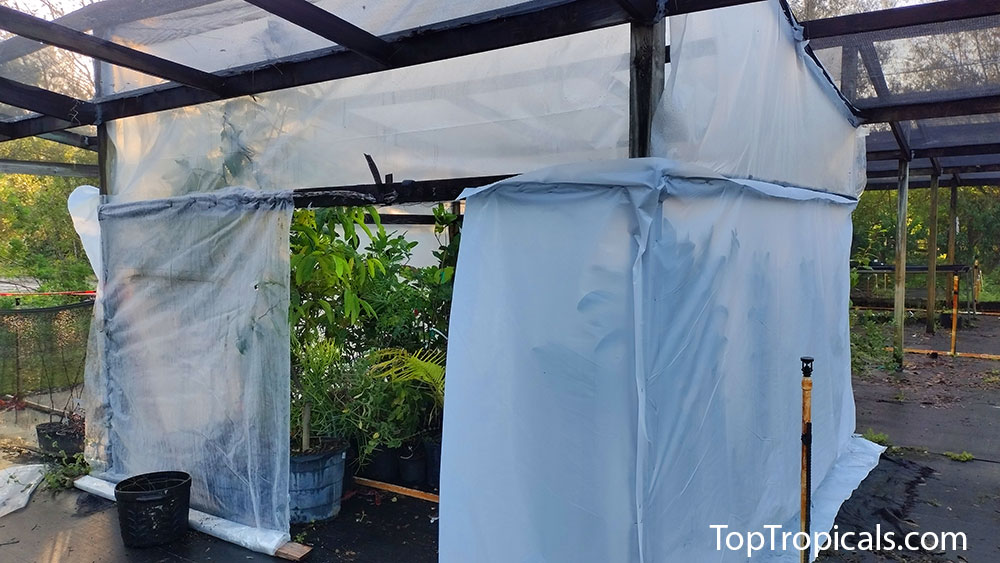
Photo above: Temporary wrapping around plant collection with a plastic or frost cloth protects from a windchill. It may also win you a few degrees even without a heater. In this particular case, according to our temp sensors, with 30F outside, it was 41F inside this "dome", no heaters used.
Southern Exposure and Garage Storage
Southern windowsills: Compact tropicals can thrive on southern-facing windowsills, getting plenty of sunlight during the day.
Move plants inside: If you have larger collections, move them into a well-lit garage for the colder nights or longer periods.
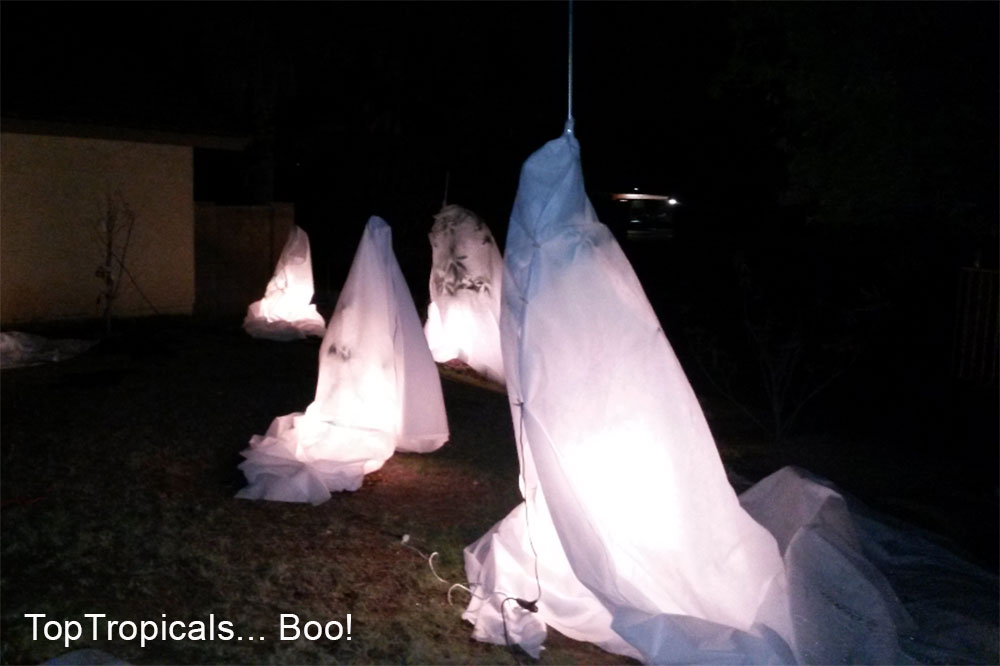
Photo above: using Christmas lights around plants while wrapping with frost cloth.
Key Factors for Survival
Cold duration: Tropical plants can survive brief cold spells but long durations, even above freezing, can be deadly.
Wind-chill: Wind chill can be harsher than the temperature itself.
Exposure: Southern-facing slopes hold heat longer, making them ideal for your plants.
Humidity: Proximity to lakes or oceans can create a milder micro-climate.
Gradual temperature Drops are safer. Plants adjust better to slow temperature changes than sudden cold blasts. Gradual cooling allows plants to prepare, reducing the risk of damage.
Strengthen Plant Hardiness
Health and maturity: Well-established, healthy plants are more cold-hardy. Boost plant immunity: Use products like SUNSHINE-Epi to improve cold resistance. Apply it before and during cold snaps to protect your plants. Healthy plant is hardy. Make sure to fertilize your plants on regular basis - healthier and stronger plants are more cold hardy.
With these steps, you can protect your plants and help them survive the winter months. Stay
warm and keep your garden thriving!
Podcast with Horticulturist Mark Hooten:
How to Protect Tropical Plants in Winter
Tropical Plant Art Contest:
we counted all the votes!
Painting above: 3rd place: "Tropical Florida" by Linda
Hedary
"WOW! So many great works! Our followers certainly have a GREAT
collective talent!
Makes me so proud!" - a quote from TopTropicals Art Jury member, artist
Mark Hooten.
Now that the whole country in in competition mode, gardeners are no
exception! Every painting is a work of art and it was hard for the Jury to make
the decision. We counted in all the votes that came in by the deadline ;)
Finally, we are happy to announce the winners of the Plant Art Contest!.
Visit our 2020 Tropical Plant Art Contest Page on our website and see all
participant entries, winners and their prizes!
All winners will be contacted by us via email or Facebook within a few
days for their prizes. If you haven't heard from us by 11/9/20, please contact us with
the subject "Tropical Plant Art Contest" and your shipping information. You may also simply reply to this email, just make sure to set the proper subject.
A few entries came late, pass deadline/voting, keep up with the great
artwork and don't miss the next contest submission!
Thank you to all the amazing plant lovers who shared your artwork and
talents with us. So much creativity and beauty for everyone to enjoy! Happy
painting, and stay updated - new contest will be coming soon!
Painting above: "Hibiscus Wish" by Santhoshi Kavali
Painting above: "Purple Passion" by Joan Maier. Joan's painting "Butterfly" is the 1st place winner (see
Contest page)
Date: 29 Nov 2023
What plants are good to order in Winter?
Photo above: Christmas time in Ukraine (left) and Florida (right)
Q: Are there any tropical plants that will do well if I order them in Winter?
We just bought a house in New Jersey with a large sunroom, and I can't wait to
fill it with tropical beauties! Should I wait until Spring, or do you have something for a Winter start?
A: This is indeed a very good question, as many tropical plant collectors grow their treasures
outside the tropics. The short answer is - yes! You can start filling your tropical sunroom any time of the year, but some plants
are easier to deal with in Winter than others. Below are some guidelines.
6. Winter plant care. During Winter the daylight is shorter and temperatures are
cooler.
- Reduce watering
- Use only liquid amino-acid based fertilizer Sunshine Boosters (safe to use year around)
- Monitor insects.
7. Shipping in Winter. We ship year around. However, if it gets
below freezing in your area, you may use FedEx Hold location, they are temperature controlled so you don't have
to worry about a box being dropped off at your cold porch outside.
8. A note for mild climate residents. Most tropical plants can be
planted in the ground year around. Some ultra-tropical tender species such
Chocolate tree, Ylang Ylang, or small size Mango trees can be grown in pots until Spring and planted out once
chances of cold spell are gone. Until then, they can be moved indoors for cold
nights.
Think outside the box and bring tropical paradise indoors during the
time when we need warmth the most! Tropical plants will brighten your short winter days and help you to have truly HAPPY HOLIDAYS!
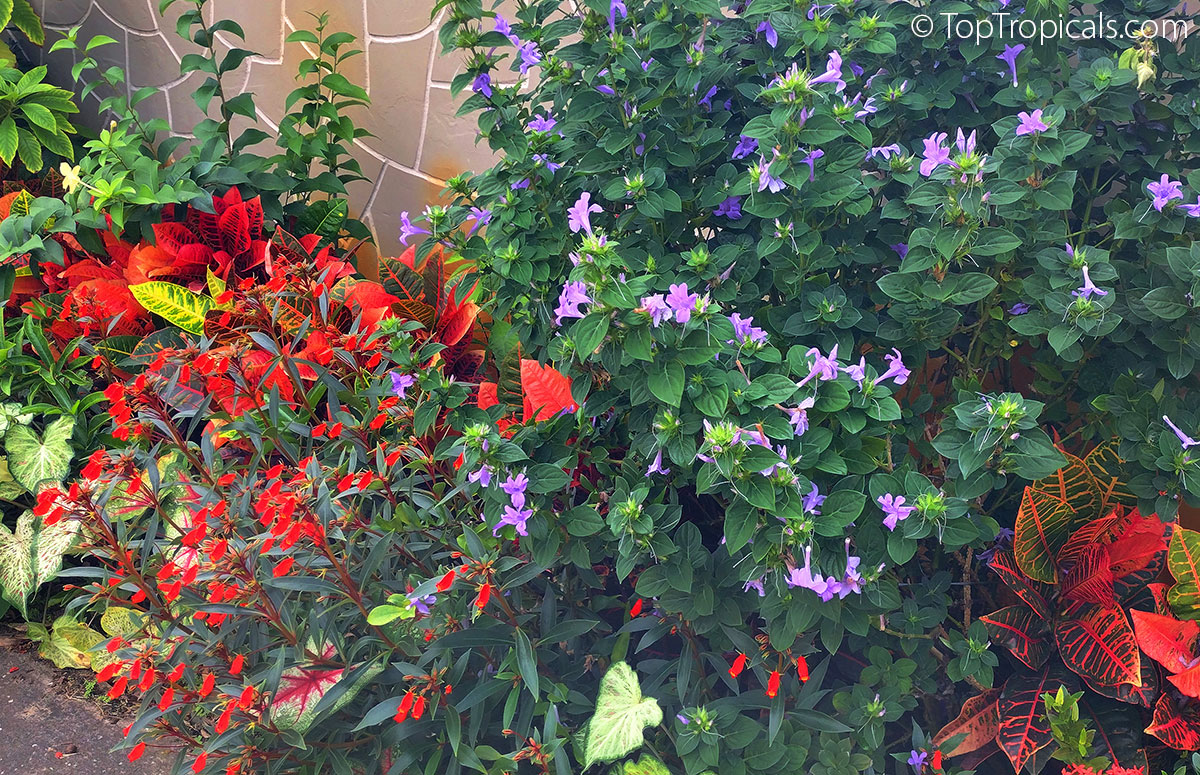
Winter bloomers today, left to right: Gloxinia,
Barleria, and ever-bright Crotons...
Date: 29 Aug 2021
Tropical Fruit Collections
September is a great month to plant. The soil is warm and the air
is beginning to get cooler which helps to encourage new roots to grow. For
much of the Country, September typically brings more opportunity for
additional rain and moisture, allowing you to water less. Take advantage of this time
of year to establish new plants in your gardens!