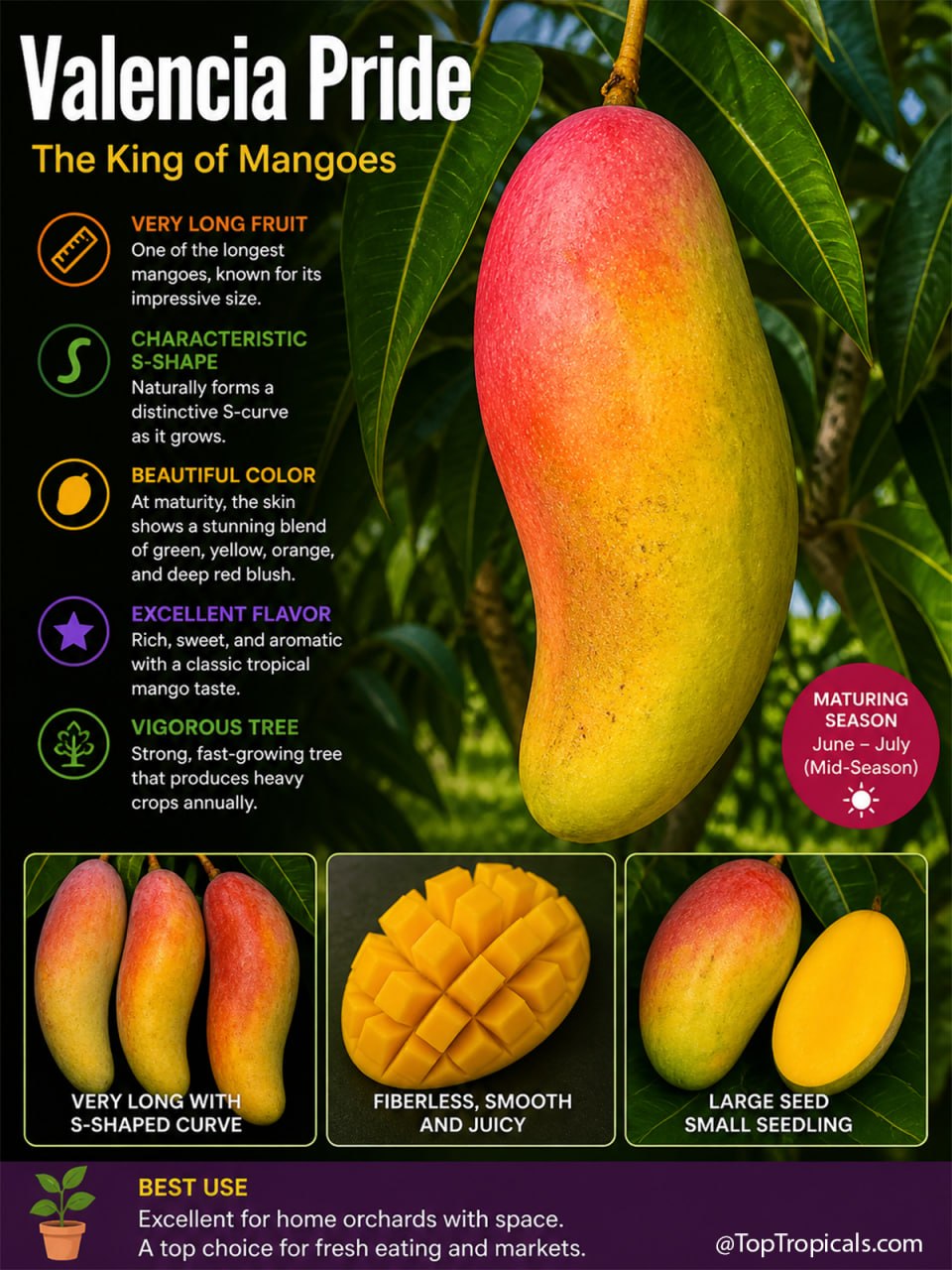
🥭 Valencia Pride is big, bold, and impossible to miss.
🔸Classic sweet tropical mango flavor
🔸Juicy, smooth, nearly fiberless flesh
🔸Large, colorful fruit with that signature S-shape
One of Florida’s classic mangoes, known for size and reliable production. The tree grows fast and big - perfect for shade, but give it space. If you want a mango that looks impressive and delivers every year, Valencia Pride is a strong pick. More 👉
The strange tropical plant that eats bugs - and gardeners cant stop collecting
🐸 The strange tropical plant that eats bugs - and gardeners can't stop collecting
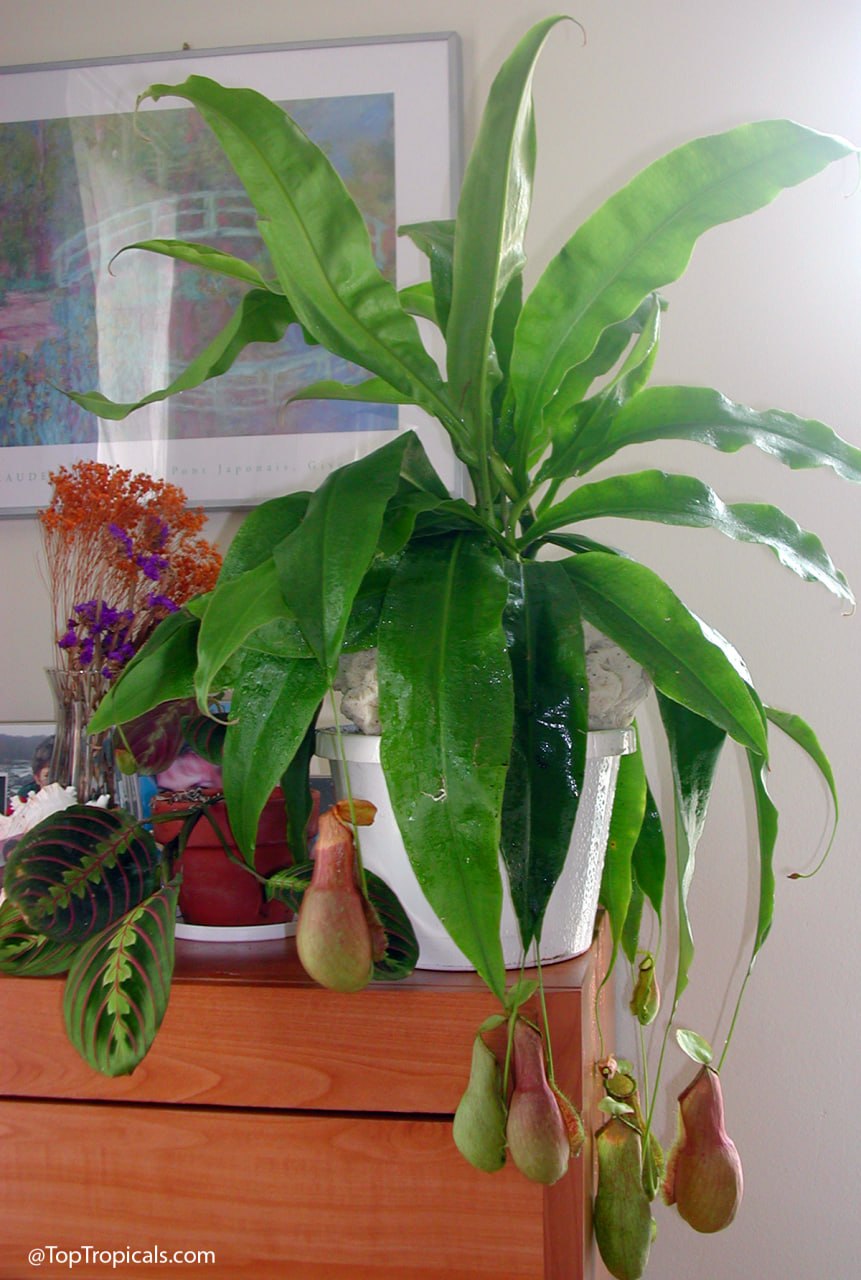
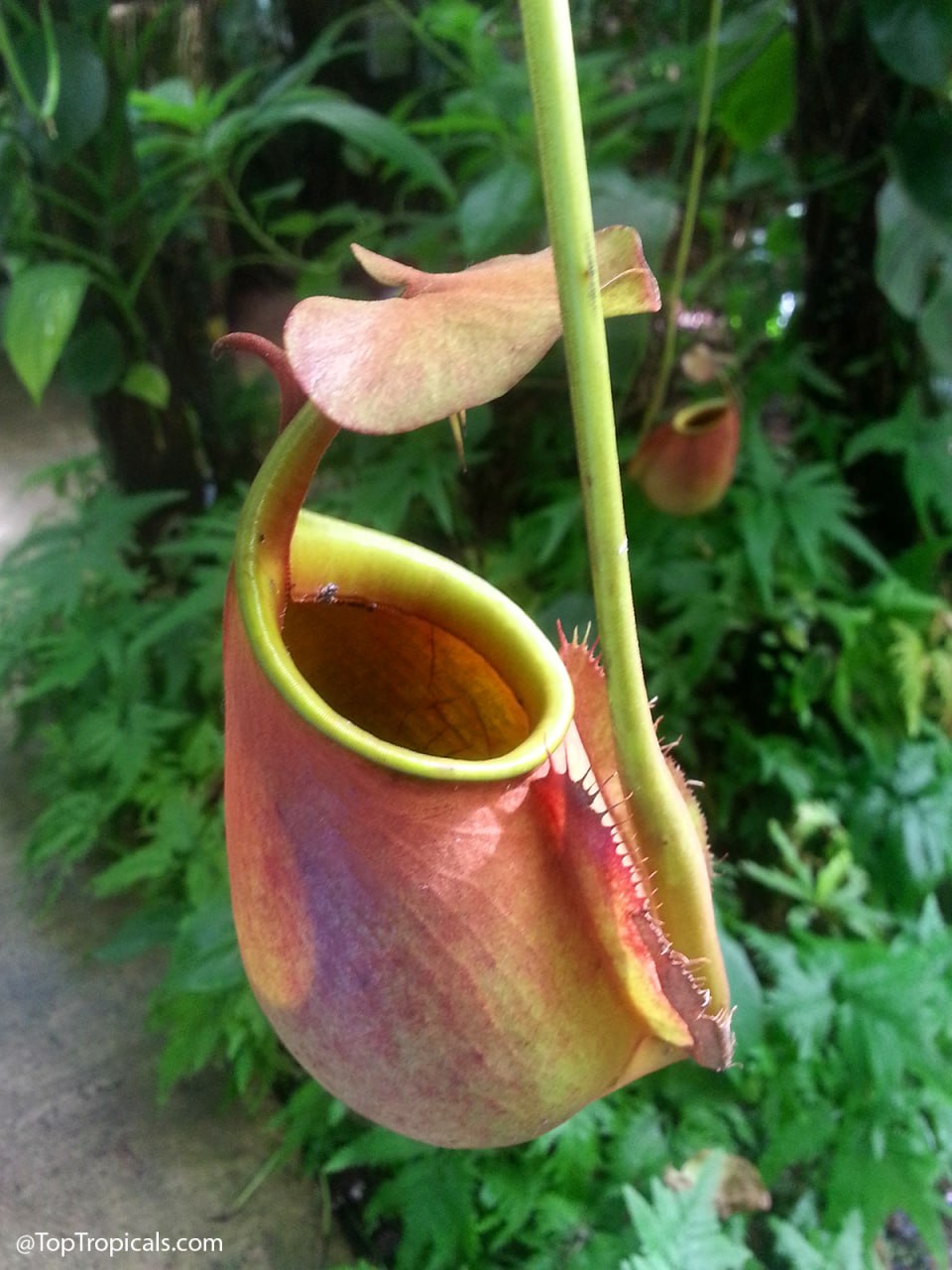
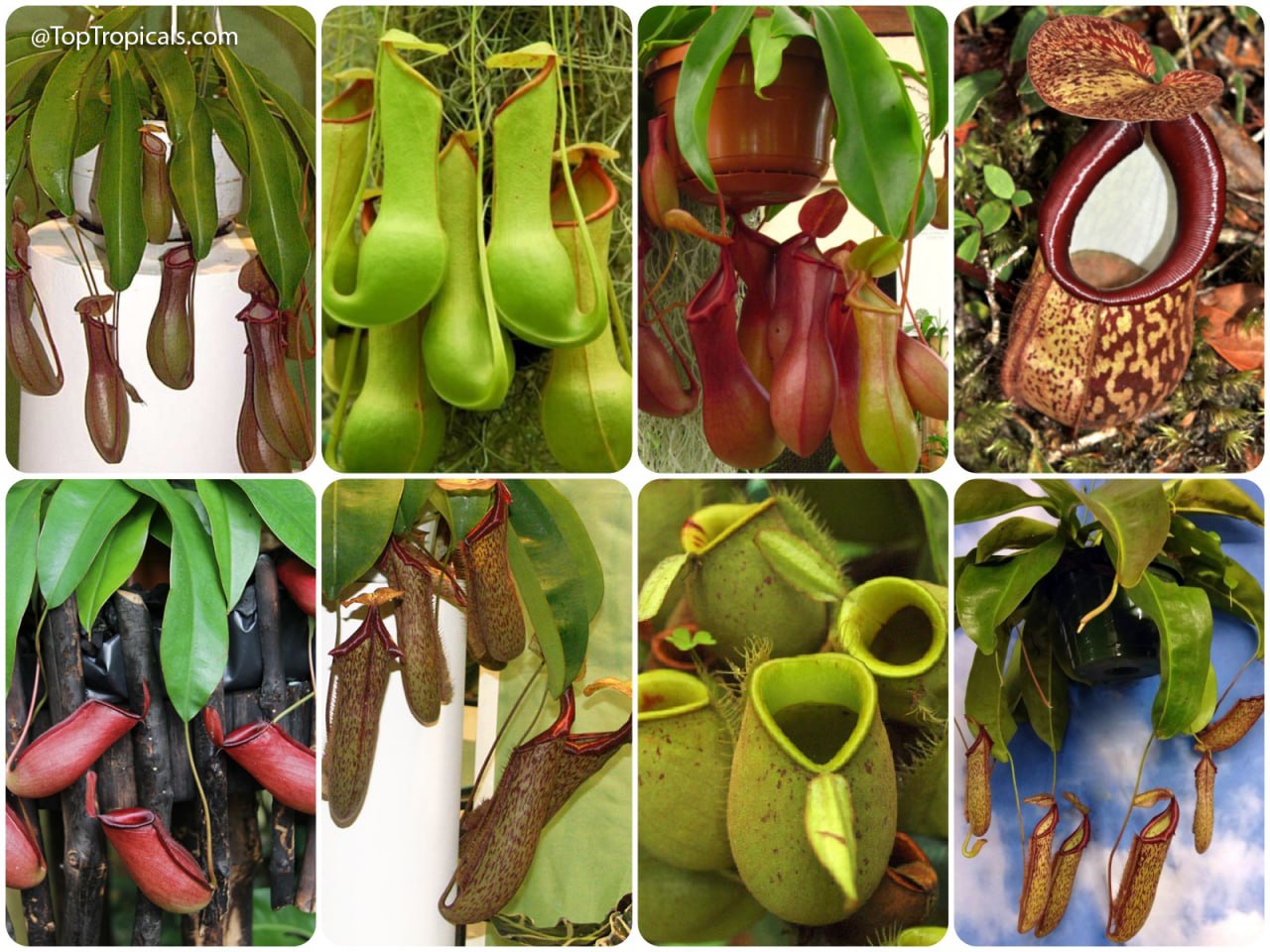
Nepenthes - tropical Pitcher Plants - look almost fake. Long vines and shiny leaves give way to colorful pitchers resembling exotic lanterns or sci-fi creatures. But these aren't flowers; they are sophisticated traps. Among the world's most fascinating carnivores, they lure insects into fluid-filled vessels to digest them for nutrients. Giant species can even trap small frogs or mice! 🐸🐭
🐱 Why pitcher plants look so unreal
Pitchers are modified leaves designed to attract prey with vibrant colors and nectar. Many feature dramatic stripes or flared, sculpted rims. The diversity is immense: compact species fit on windowsills, while jungle giants produce foot-long traps. Some thrive in steamy lowlands, others in misty mountains. Their digestive fluid can even become sticky and elastic, making escape impossible.
🐱 The plant that inspired engineering
These plants have inspired more than just gardeners. Their slippery surfaces led to "liquid-infused" materials used in anti-fogging and water-repelling tech. Engineers study them as nature’s original biological pitfall trap, a masterclass in biomimetic design.
🐱 Why collectors become obsessed with Pitcher plants
What starts as a curiosity often becomes an obsession. With hundreds of species and hybrids, pitchers can resemble cobra heads, wine goblets, or alien pods. Under bright light, they develop stunning hues of burgundy, orange, or candy-stripes. Because of their popularity, ethical hobbyists emphasize buying nursery-propagated plants to protect wild populations from poaching.
🐱 Surprisingly easier than people think
Despite their reputation, many hybrids thrive indoors with basic care. They need bright indirect light, high humidity, and excellent drainage. Crucially, they require mineral-free water (distilled or rainwater) and airy media like sphagnum moss. Regular potting soil or tap water can be fatal to these sensitive plants.
🐱 The pitchers are temporary - and that's normal
It is normal for old pitchers to dry up as the plant grows. Healthy Nepenthes constantly replace traps, often changing shape and color as they mature. This shape-shifting behavior makes them addictive to watch - one month it’s an ordinary vine, the next it’s a living rainforest documentary.
EXCLUSIVE INTERVIEW: Behind the scenes with Smokey and Sunshine - after years of rumors they speak out!
🎙 EXCLUSIVE INTERVIEW: Behind the scenes with Smokey and Sunshine - after years of rumors they speak out!
Many people loved our mascots - Smokey and Sunshine - and kept asking the same questions over and over. So we finally decided to sit them down for an interview and ask everything at once.
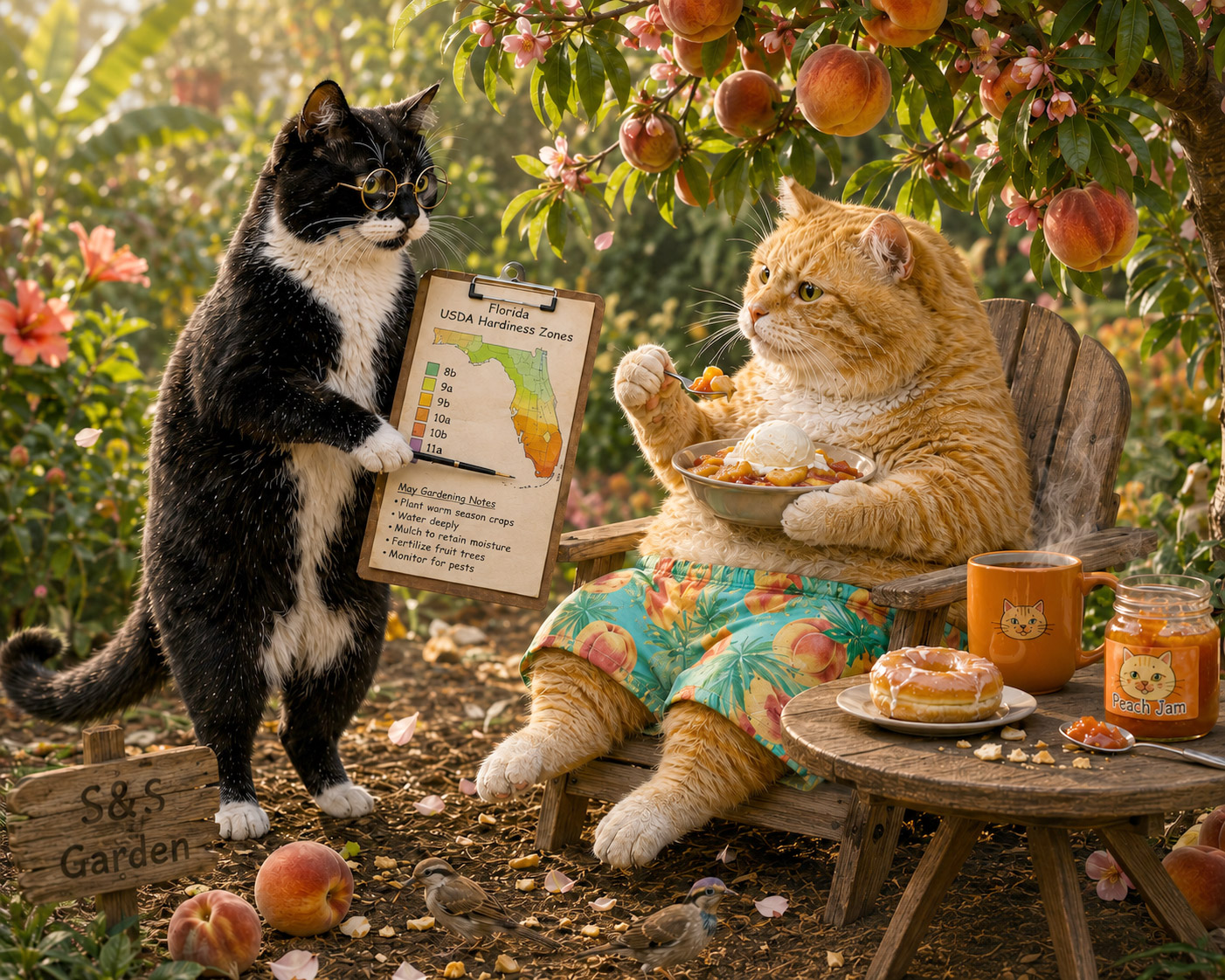
Smokey is the tuxedo "engineering cat" with professor glasses, serious plant advice, and strong opinions about fertilizer and soil pH.
Sunshine is the fluffy orange Aloha guy of the group - chubby, relaxed, permanently snack-oriented, and somehow never in a hurry about anything. He approaches life with the confidence of a cat who believes coffee breaks, warm sunshine, and donuts are all basic human rights. He is also the one asking the questions normal people are actually thinking.
Together, they somehow turned gardening into conversations about plants, coffee, cats, donuts, and the meaning of life in a greenhouse.
In this interview, you will find out:
🐾 Are Smokey's glasses fake?
🐾 Are Sunshine's donuts real?
🐾 Are these cats based on real rescued Top Tropicals cats?
🐾 How many cats have been adopted by Top Tropicals over the years and how many are currently living in the gardens?
🐾 Why does Smokey take gardening so seriously?
🐾 Why does Sunshine think every problem can be solved with snacks?
Some answers may surprise you. Some may explain a lot.
Tired of shrubs that burn out in summer? A lot of shrubs look great in spring - then collapse when real heat hits. Leaves scorch, blooms stop, and watering becomes a full-time job. That’s where the right plant choice changes everything. These shrubs are built for extremes. They handle blazing sun, reflected heat, and dry soil without constant attention. Some even perform better when conditions get tough.
Silvery leaves reflect heat, and it thrives in dry, poor soils where most plants fail. One of the most powerful butterfly plants! 👉 More
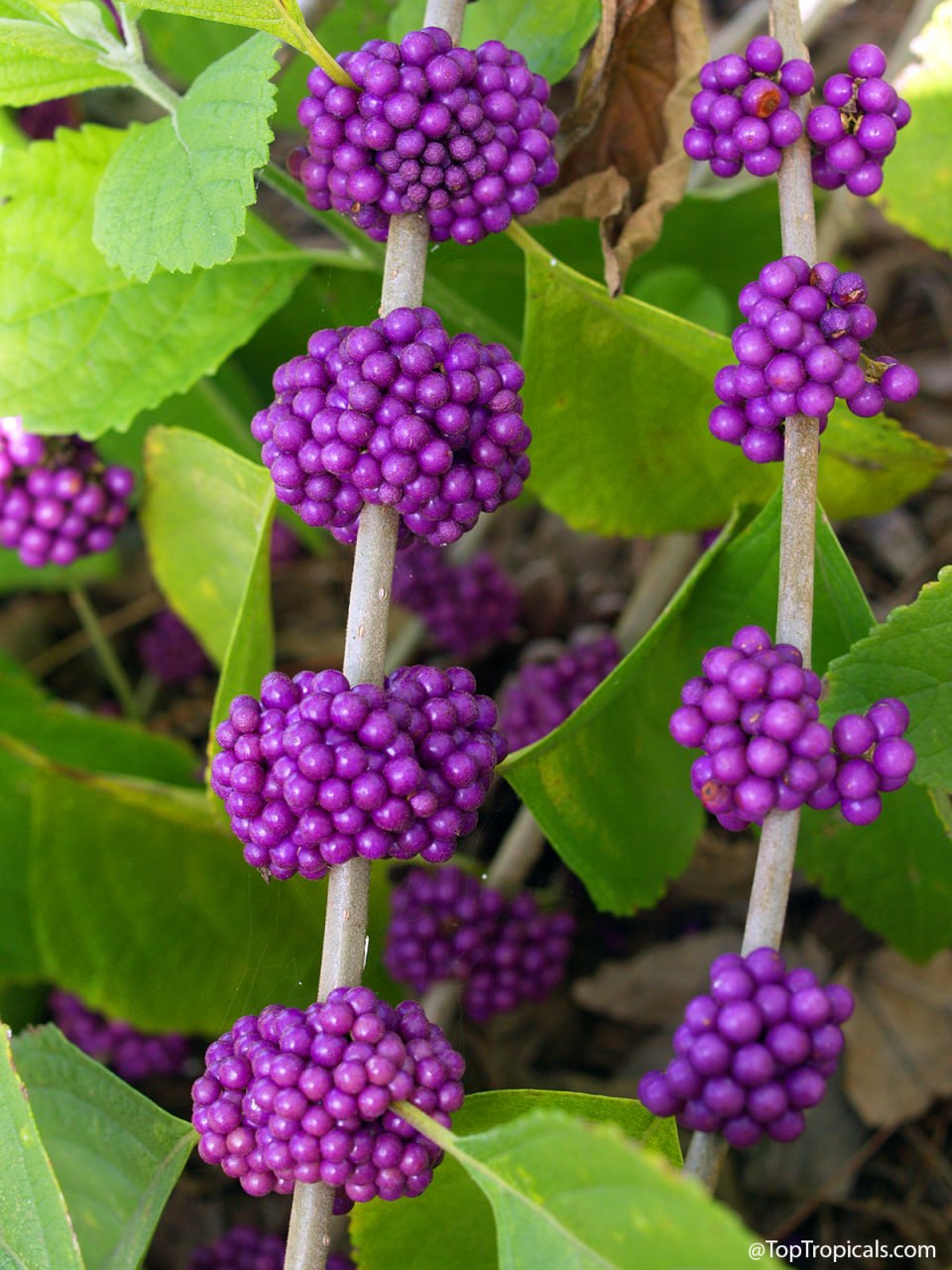
☀️ 2. American Beautyberry - Callicarpa americana 📸
A Florida native that handles heat well - drought tolerant once established and known for its bright purple berries. 👉 More
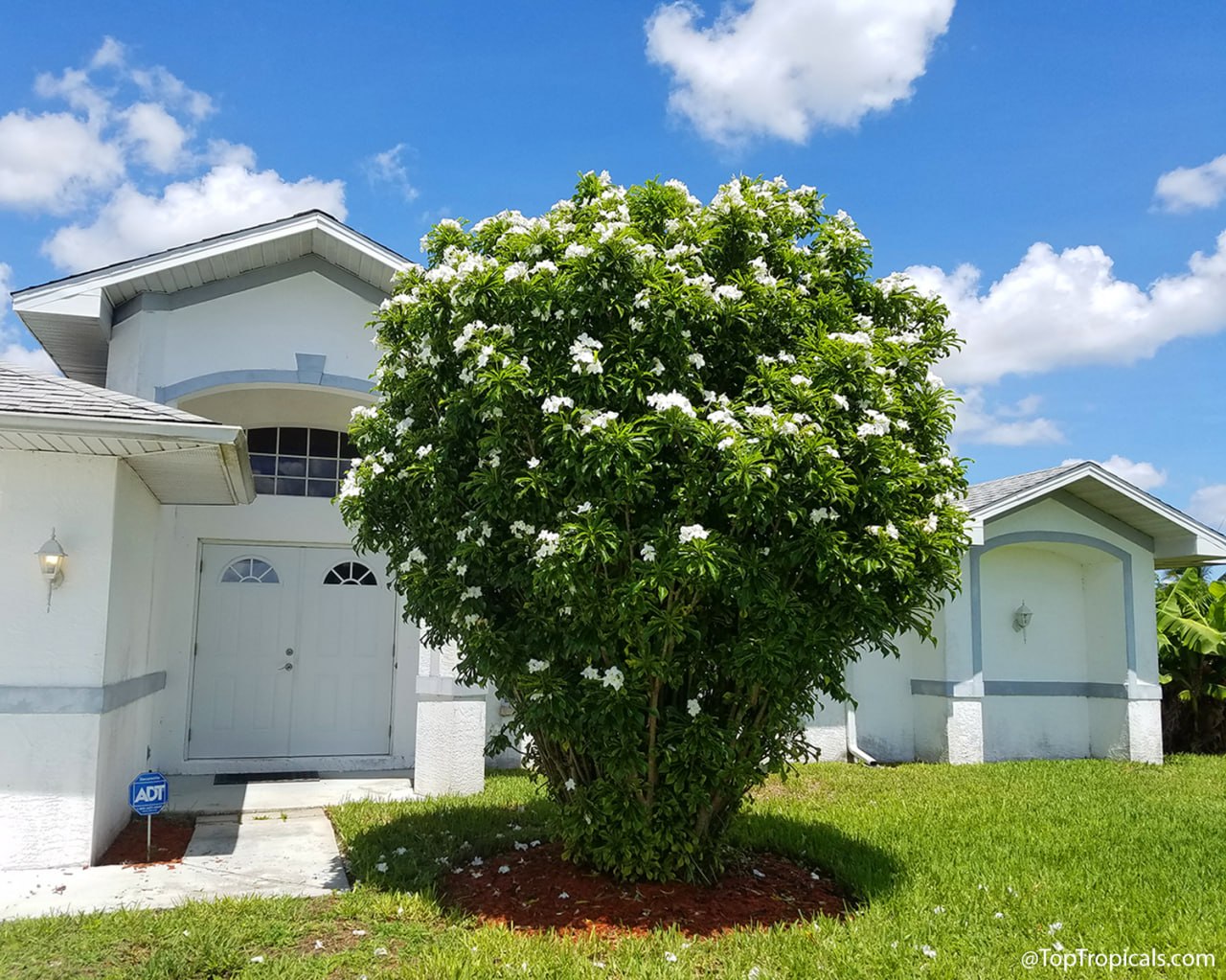
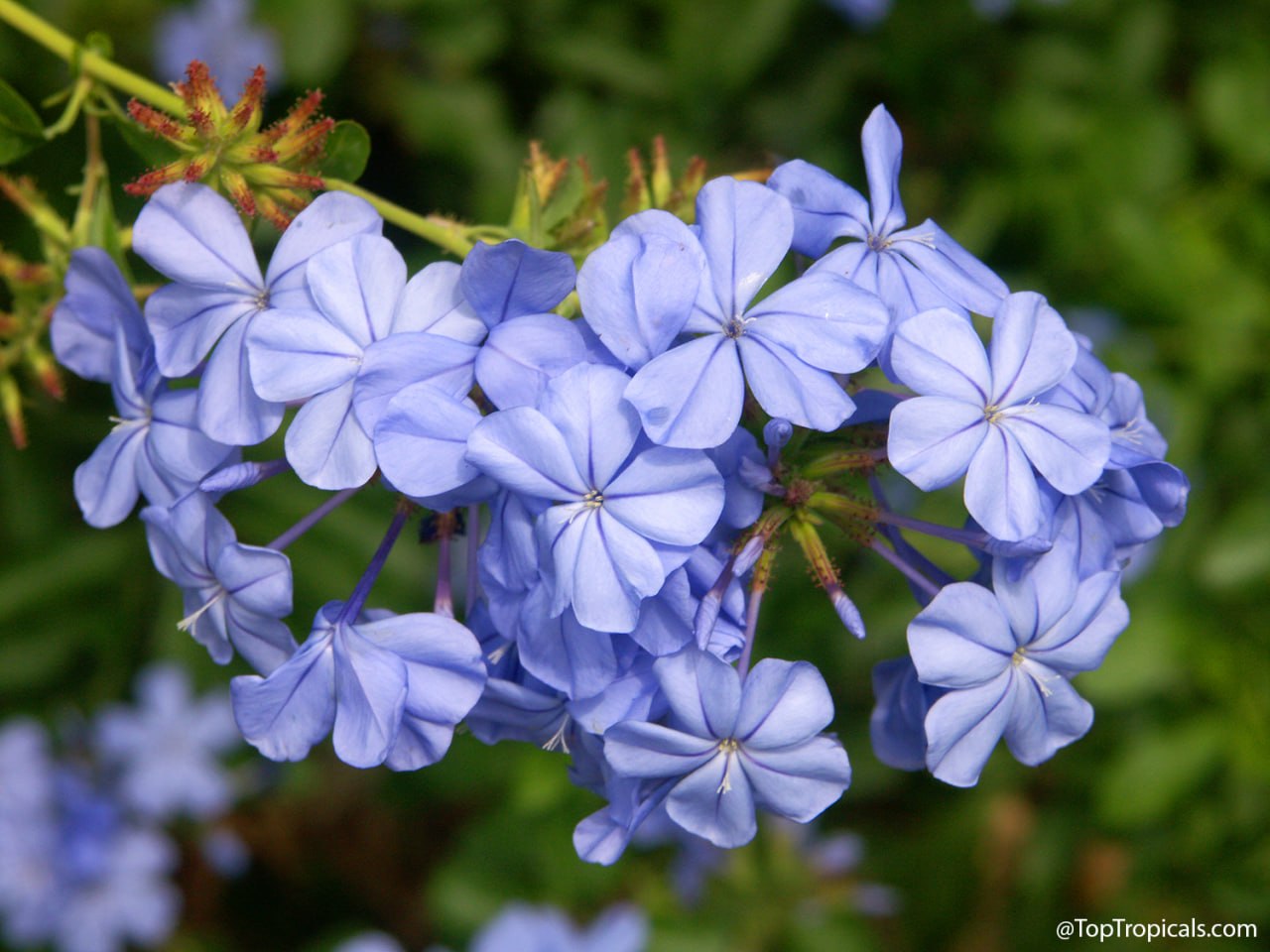
☀️ 3. Plumbago 📸
One of the easiest flowering shrubs - thrives in full sun and keeps blooming with pretty sky-blue flowers through heat with minimal water. 👉 More
☀️ 4. Cocoplum - Chrysobalanus icaco
Excellent for coastal and dry conditions - tough, evergreen, and great as a hedge. Plus tasty fruit bonus! 👉 More
☀️ 5. Dwarf Bottlebrush - Callistemon Little John
A compact, dense version of the classic bottlebrush that stays small but performs big in heat. It handles full sun, poor soil, and dry conditions once established, while still producing those bright red brush-like flowers that pollinators love. Perfect for tight spaces where you need something tough, tidy, and reliable. 👉 More
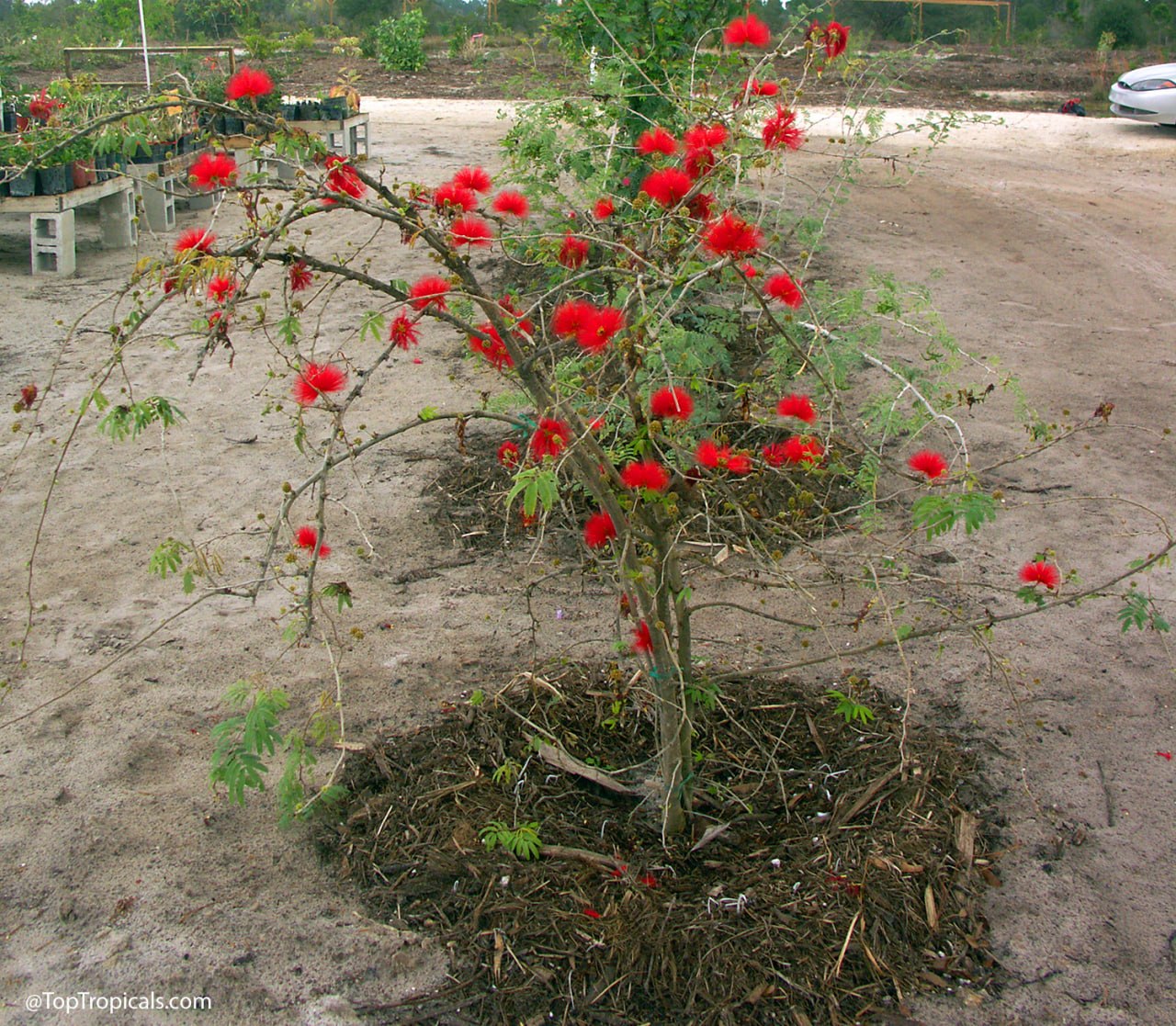
☀️ 6. Calliandra tweedii With Love - Red Tassel Flower 📸
Fast-growing, very cold-tolerant, and handles dry spells surprisingly well once established. Beautiful scarlet red flowers throughout the year. 👉 More
☀️ 7. Dwarf Powderpuff - Calliandra emarginata
Compact, resilient, and a great choice for smaller spaces that still need something tough. 👉 More
👉 Think trees and vigorous shrubs are your only option? Stay with us - next up are smaller plants and vines that thrive where everything else dries out.
💕 Why is this shrub everywhere in Southern landscapes?
🌸 Nonstop blooms
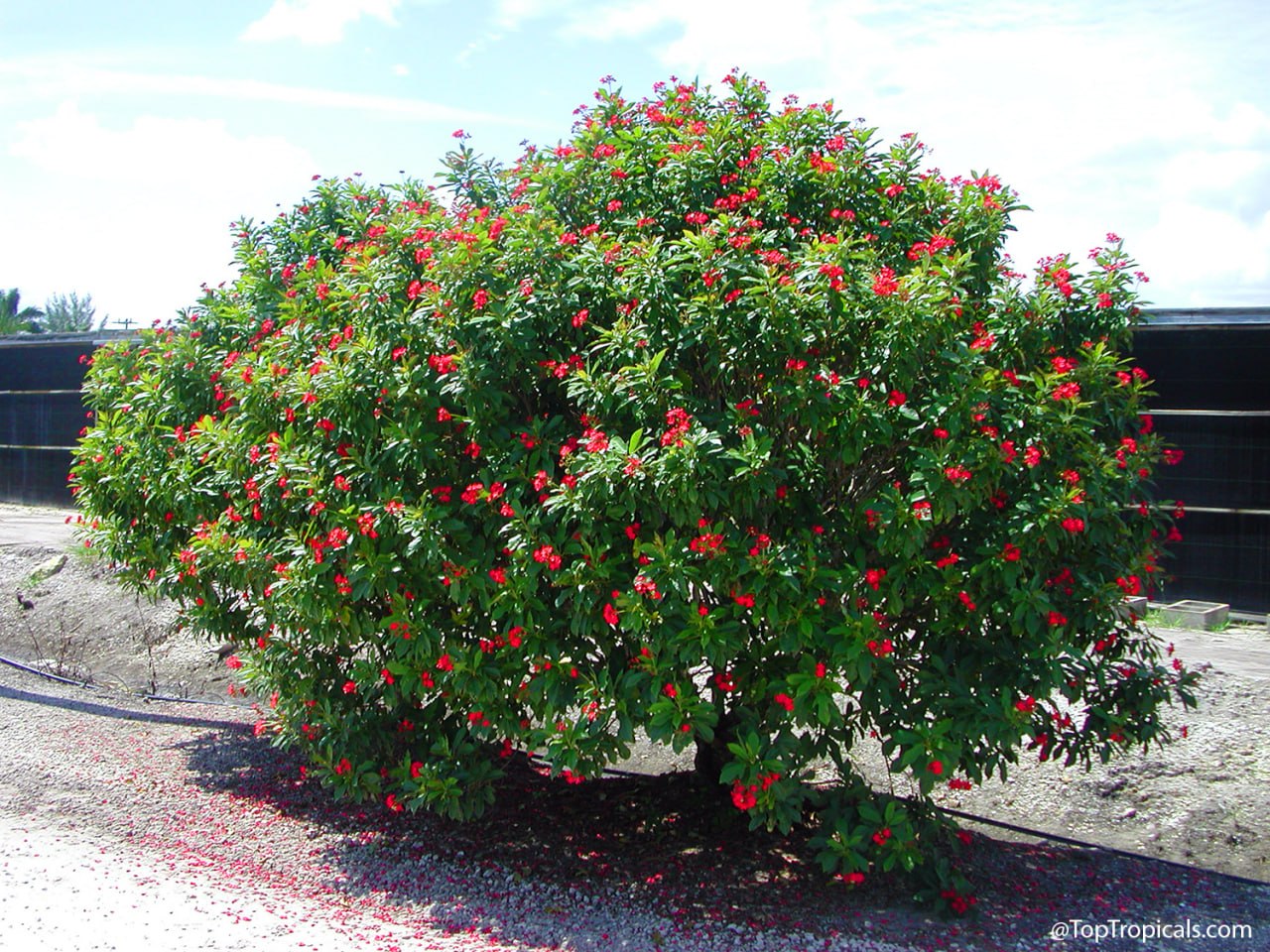
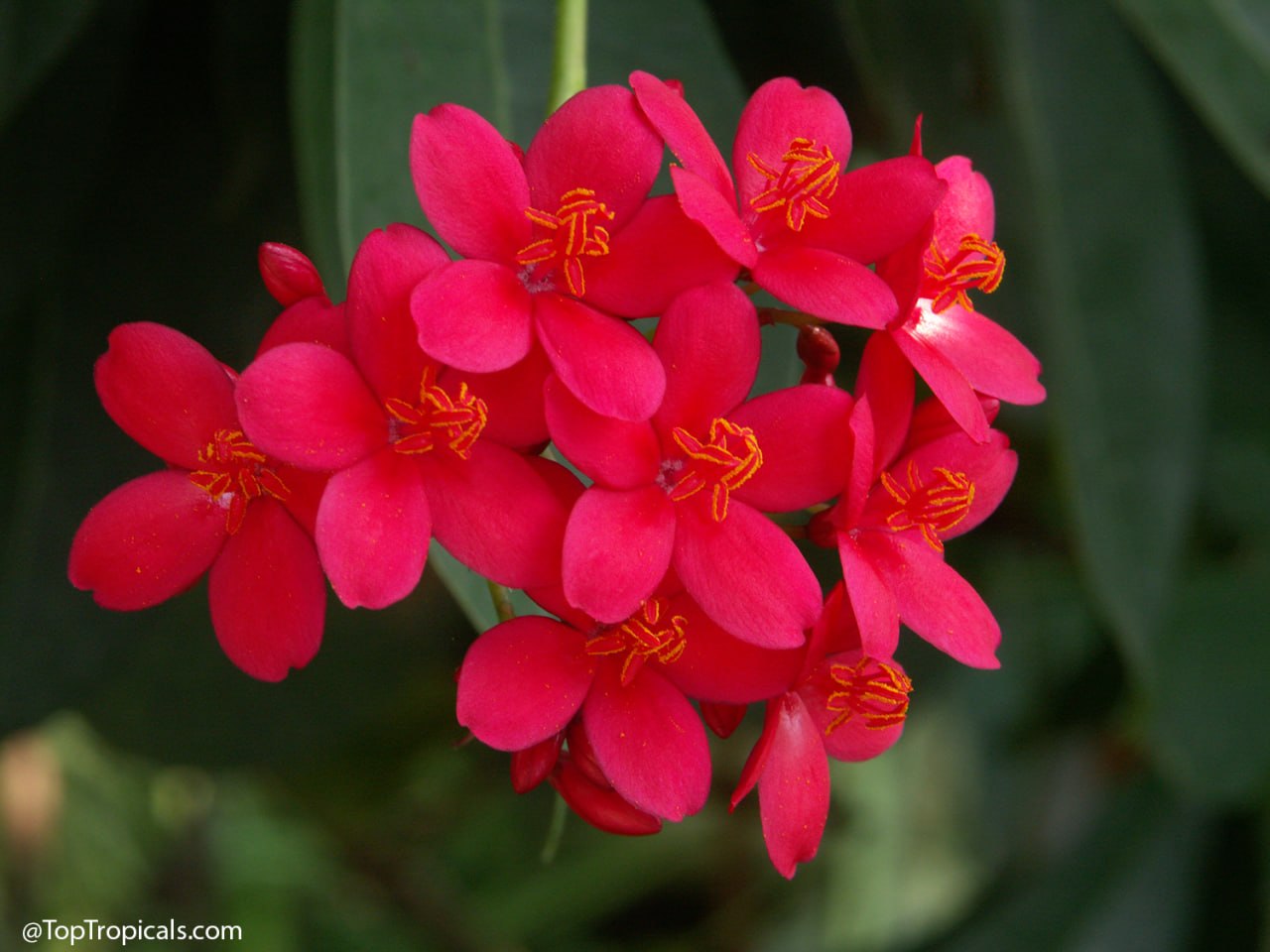
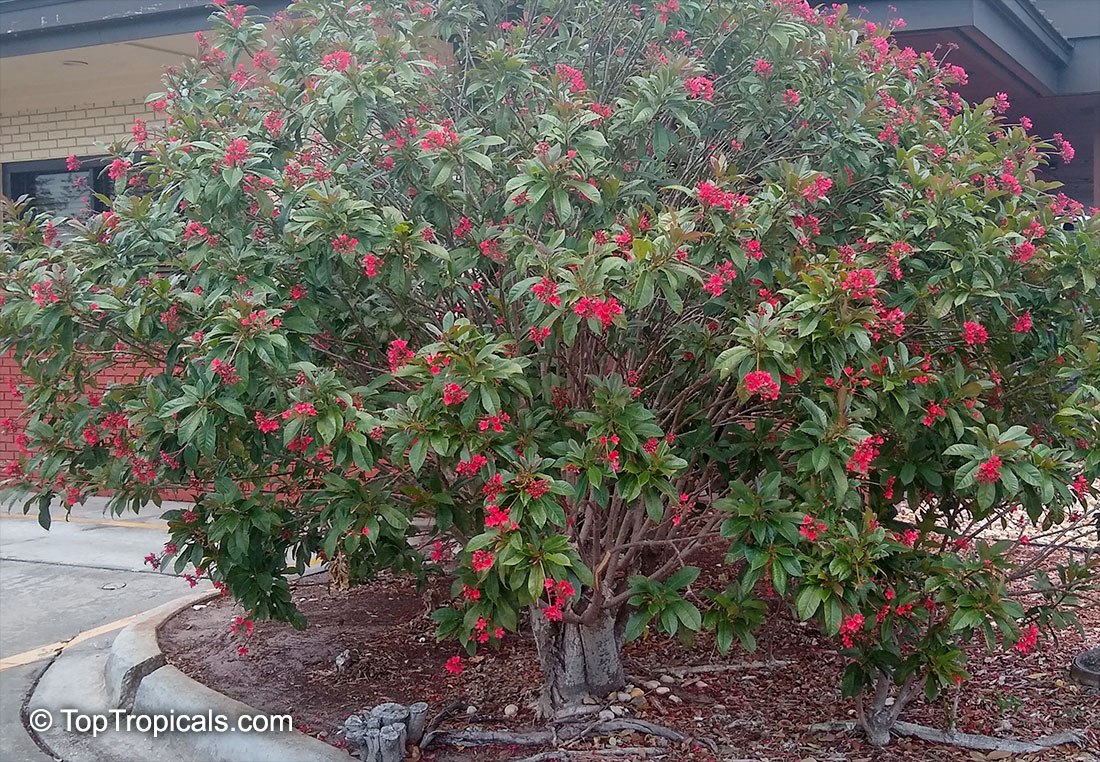
One look at Jatropha integerrima compacta - Peregrina and the answer becomes pretty obvious. This compact tropical shrub or a dwarf tree blooms almost nonstop with clusters of bright scarlet star-shaped flowers that butterflies can't seem to resist. In warm climates, it keeps adding color when many other plants take a break.
🌸 Compact size, big impact
Compacta stays smaller and fuller than the regular Peregrina, which makes it especially popular for foundation plantings, pool areas, patios, and smaller gardens where oversized shrubs become a headache. The glossy green leaves stay attractive year round, giving it a clean, lush look even when it's between bloom cycles.
🌸 Surprisingly low maintenance
Another reason gardeners love it - this plant is surprisingly easygoing. It tolerates many soil types as long as drainage is good, handles heat well, and can be pruned almost anytime because it flowers on new growth. Want a tidy shrub? Trim it. Want a small tropical tree shape? It can do that too.
🌸 A Southern landscape favorite
For Southern gardeners looking for reliable color without constant fuss, Peregrina has quietly become one of those "plant it and enjoy it" landscape favorites.
🍑 From the Garden: Why I Always Recommend
Growing
Your Own Peaches
by Tatiana Anderson, Top Tropicals Garden
Expert
Peach trees are beautiful long before harvest day - glossy green
leaves,
colorful fruit, and that classic fuzzy peach look straight from the branch.
I'll be honest with you. The first time I bit into a peach straight off
the tree, still warm from the afternoon sun, I understood why people get
obsessed with this fruit. There is no comparison to what you find in a
grocery
store. Store peaches are picked hard, shipped cold, and by the time they
reach
you, something important is already gone. A tree-ripened peach is soft,
fragrant, juicy, and sweet in a way store peaches rarely are. Eat it fresh,
slice
it into a cobbler, throw it on the grill - it holds up beautifully either
way.
So let's talk about how to actually get there.
Planting
Peaches are not difficult. Give them sun, drainage, and room for air
movement, and they will usually tell you very quickly that they are
happy.
Full sun is essential - 8 hours minimum, and more is
better.
Drainage matters - peach roots do not like sitting
wet.
If your soil stays wet, plant on a mound - simple fix,
big difference.
Water deeply, then pause - let the soil partially dry
before watering again.
Prune every year - it keeps the tree open, improves
airflow, and helps the tree put energy into fruit instead of tangled
growth.
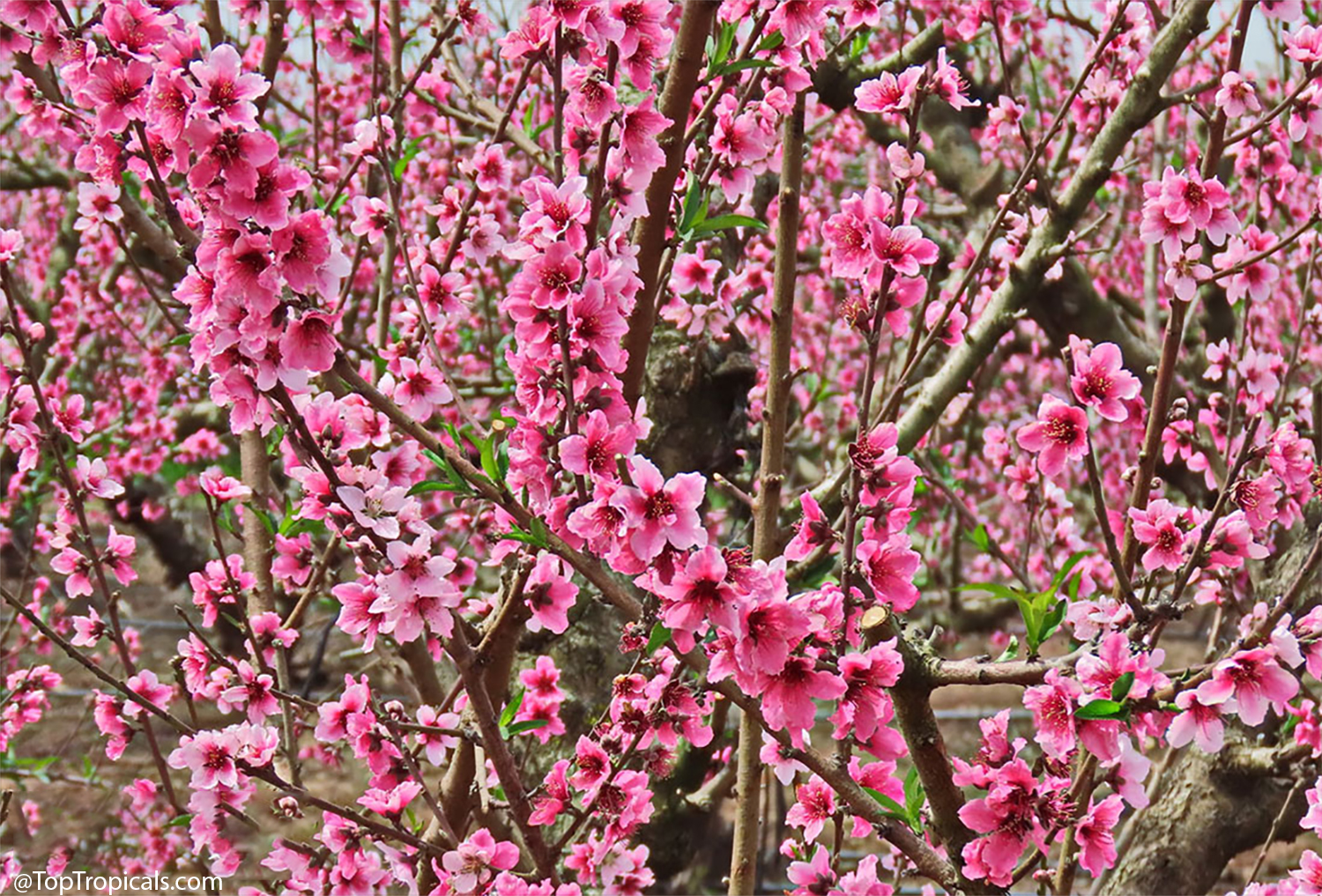
Peach trees put on one of spring's prettiest shows - clouds of pink
blossoms before the fruit season even begins.
What If You Do Not Have Room?
You can still grow peaches in a large container. This is a great option
for patios, small yards, renters, or gardeners who want better control over
soil and drainage.
Place the container in the sunniest spot you have.
Water more often than in-ground trees, but never let the pot stay
soggy.
Prune to keep the tree compact and easy to manage.
Fertilizing
Peach trees are generous plants, but producing vigorous growth and a
heavy crop of sweet fruit takes energy. Regular feeding makes a noticeable
difference in tree health, flowering, and fruit quality.
I prefer a simple two-part approach that provides both steady background
nutrition and quick, readily available nutrients when the tree is actively
growing.
Green Magic controlled-release fertilizer provides a steady
supply of nutrients for months and serves as the foundation of the feeding
program.
Sunshine Boosters liquid fertilizers deliver amino
acid-based nutrients that are quickly absorbed and especially useful during
periods of active growth, flowering, and fruit development. Sunshine C-Cibus formula is the best for fruit trees.
During the growing season, this combination helps build stronger
branches, healthier leaves, better flowering, and sweeter, higher-quality
fruit.
If your tree shows yellowing leaves or weak growth, consistent feeding
often makes a dramatic difference within a few weeks.
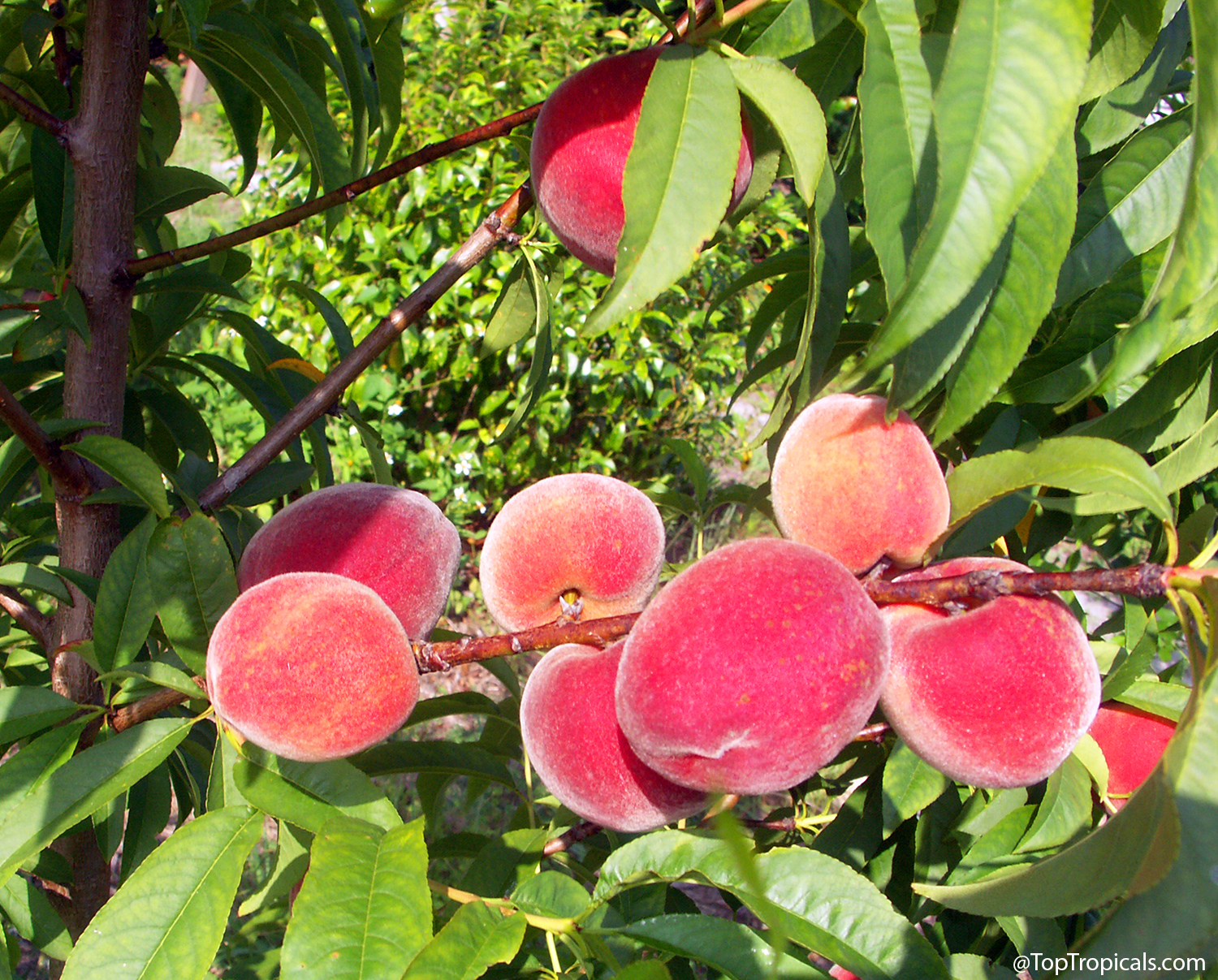
Tree-ripened Tropic Beauty peaches warming in the sun - fuzzy,
colorful,
and almost ready to pick straight from the branch. Tropic
Beauty variety is one of the most colorful and sweet.
Sunshine absolutely loves peach cobbler, especially when someone else
does all the peeling, slicing, mixing, and baking. But when he is left to
prepare dessert on his own, his standards become much more practical. Why
turn on
the oven when perfectly ripe peaches already taste amazing? His
philosophy
is simple: if a recipe takes less than five minutes and ends with peaches
and vanilla ice cream in the same bowl, it is a masterpiece.
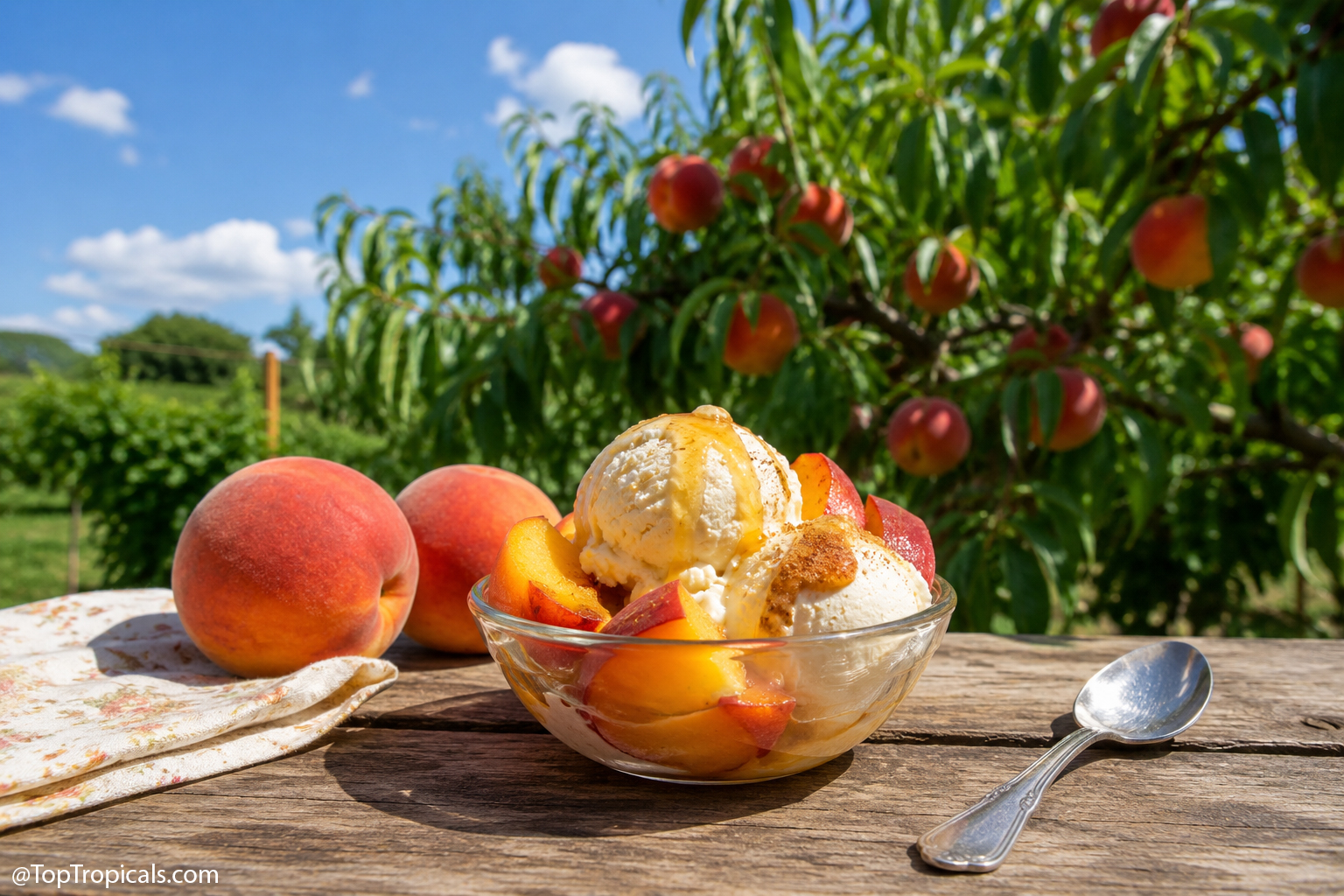
Sunshine's Lazy Peach Sundae - fresh peaches, cold ice cream, and zero
effort on a perfect sunny day.
Sunshine's Lazy Peach Sundae
This is not cooking. This is assembly.
Ingredients
2 ripe homegrown peaches
2 big scoops of vanilla ice cream
A drizzle of honey (optional)
A pinch of cinnamon (optional)
Instructions
Slice the peaches.
Put them in a bowl.
Add vanilla ice cream.
Drizzle with honey and sprinkle with cinnamon if you feel
ambitious.
Eat immediately while smiling.
Sunshine's Review
"I peeled exactly nothing and still got dessert. This is my kind of
gardening."
Want this?
Start with a low-chill peach tree. That is usually how it begins.
Sunshine: I love peach cobbler. Smokey, why are peaches on
the tree so early? Smokey: Low-chill peach varieties for Florida. They ripen
much sooner. Sunshine: I thought peaches were for Georgia. Smokey: Not if you plant low-chill peaches. And speaking
of peaches, do you know about donut peaches? Sunshine: Donut peaches? Finally, horticulture I can
understand.
Some fruits carry memories before you've even tasted them.
There's something about a peach still warm from the tree - the way it
gives a little when you pick it, the smell that hits you before you even
take a
bite. It makes you slow down. It makes summer feel like it actually meant to
show up.
For Florida gardeners, that moment used to feel borrowed. Peaches were a
Georgia thing, a Carolina thing. You'd admire someone else's harvest and
quietly file it under not for us.
Low-chill peaches rewrote that story.
Here's the thing about regular peaches - they need cold. Not just a cool
night or two, but a real winter. We're talking 600 to 1,000 hours below 45F.
That's how they know to wake up in spring and actually fruit. South Florida
just doesn't deliver that. The trees will grow fine, look healthy even, and
then give you almost nothing come harvest time. Frustrating doesn't cover
it.
Low-chill varieties are different. They were bred specifically for
places like ours - warm winters, mild springs. Some only need 100 hours of
chill.
A hundred. That's a few cold fronts, not a season. And because they're
working with our climate instead of against it, they fruit reliably. Every
year.
They're not just a Florida trick either. Gardeners in coastal Texas,
southern Louisiana, southern California - anywhere in that Zone 8b to 10
range -
have been growing these successfully. If you've got warm winters and thought
peaches weren't for you, they probably just weren't the right peaches.
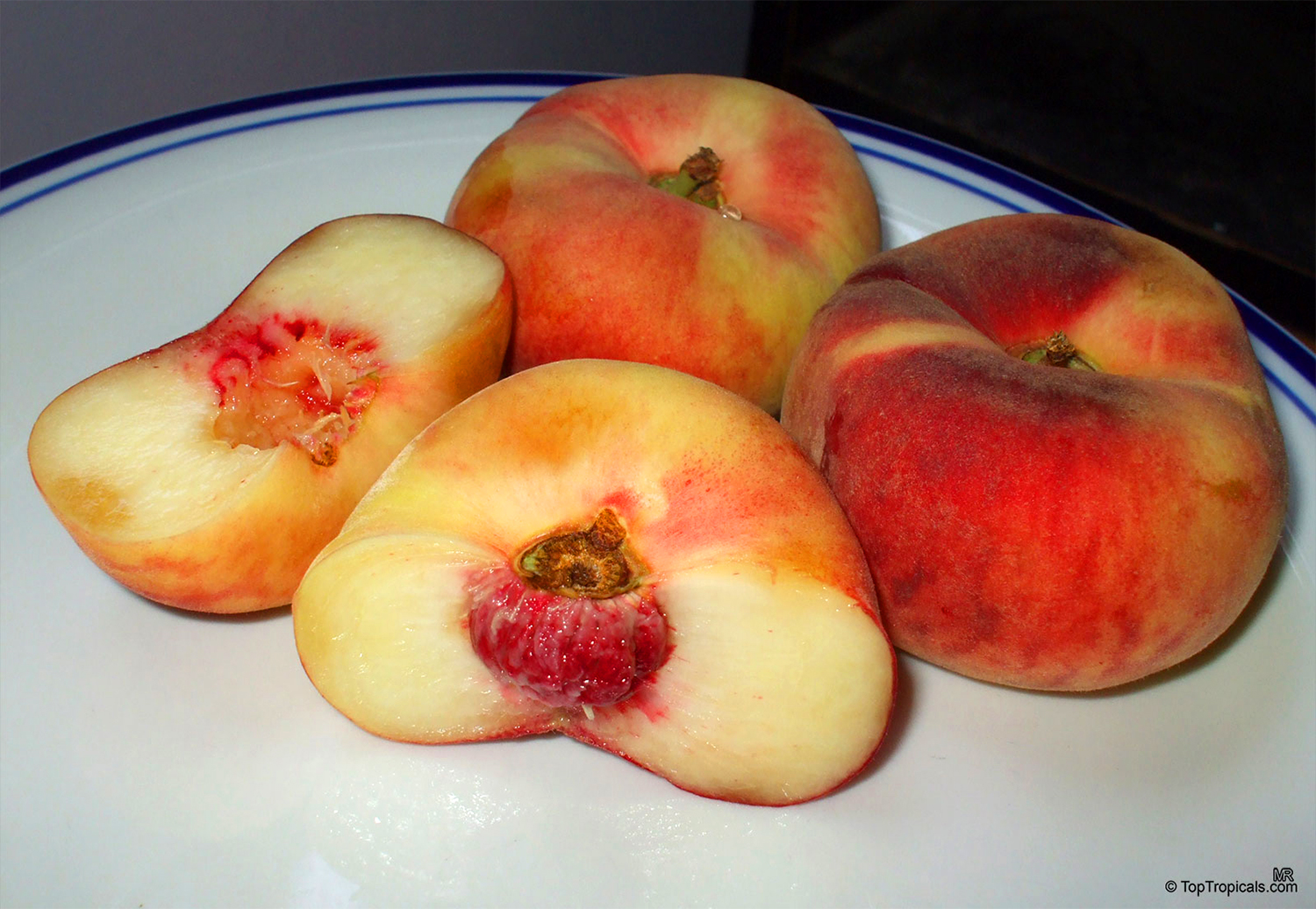
Flat peaches - sometimes called DONUT peaches - are
known
for their sweet white flesh, low acidity, and fun squashed shape.
Date: 9 May 2026
9 tough trees for hot, dry spots that actually thrive
☀️ 9 tough trees for hot, dry spots that actually thrive
Why that one brutal spot in your yard never works? There’s always that one place - blazing sun, sandy or rocky soil, dries out fast, and everything you plant there struggles. In Florida, Arizona, and California, this isn’t rare - it’s the norm. The good news? Some trees don’t just tolerate it - they prefer it. Once established, these picks handle heat, drought, and neglect far better than typical landscape plants. What makes these trees different? These are survivors. Many store water, have deep root systems, or evolved in dry climates. Translation - less watering, fewer losses, and a lot less frustration.
🔥 9 best trees for hot, dry spots
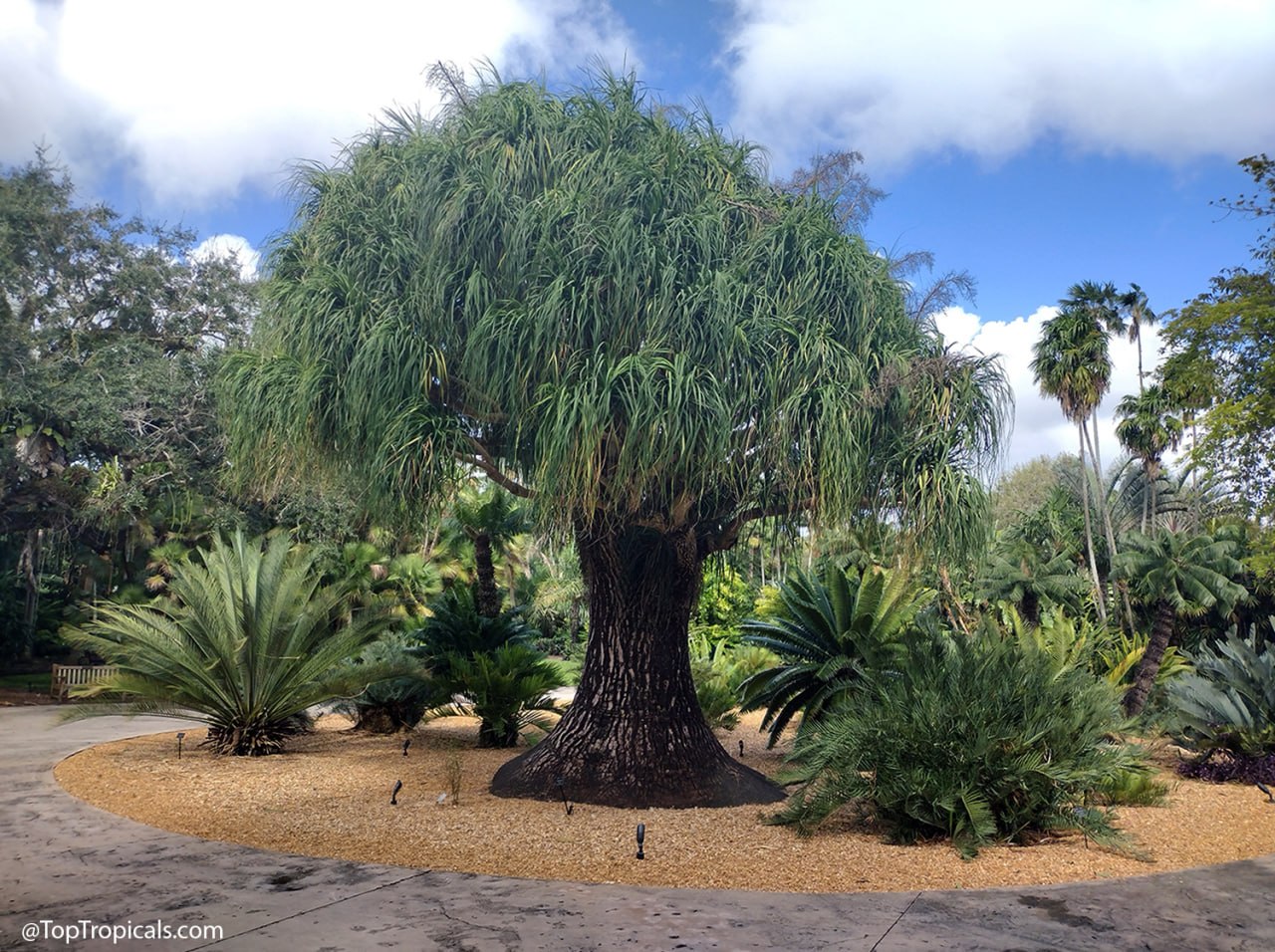
☀️ 1. Pony Tail Palm - Beaucarnea recurvata 📸
Not a true palm - it stores water in its showy, swollen trunk, making it incredibly drought tolerant and perfect for harsh, dry areas.
Ponytail Palm Plant Facts
Botanical name: Beaucarnea recurvata, Nolina recurvata Also known as: Ponytail Palm, Pony Tail, Bottle Palm, Nolina, Elephant-foot Tree
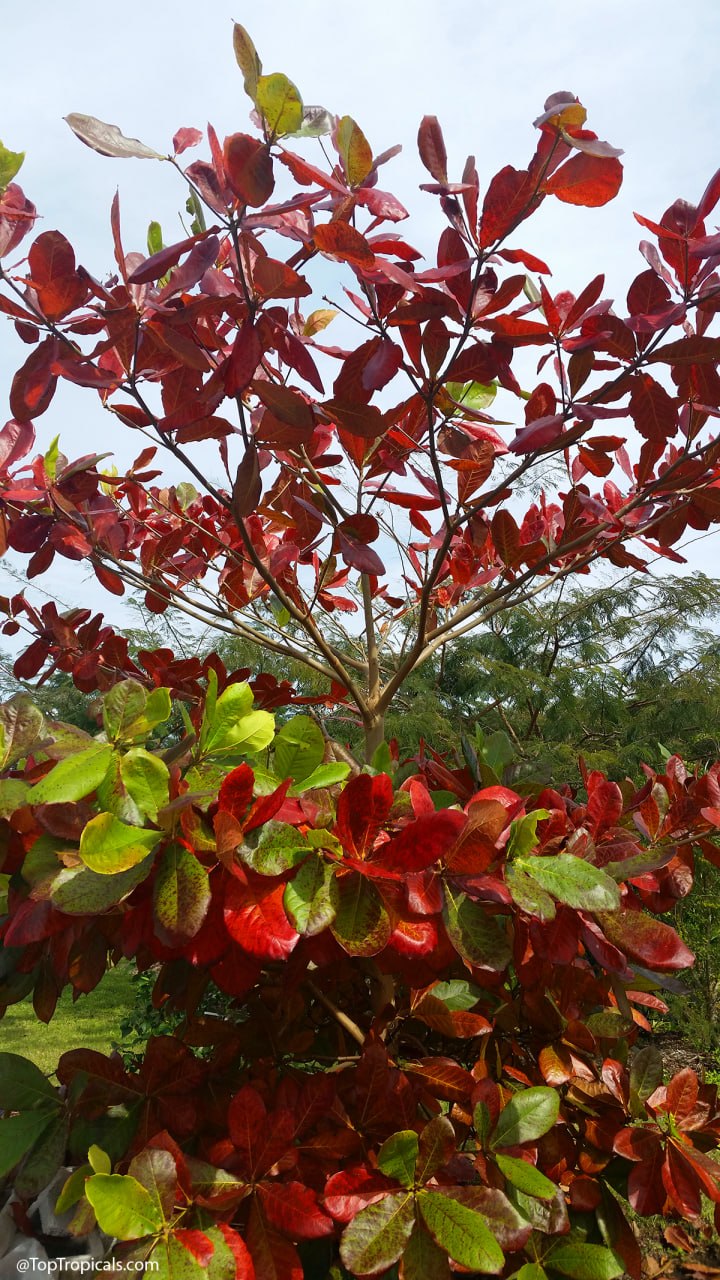
☀️ 9. Tropical Almond - Terminalia catappa 📸 A classic coastal shade tree that thrives in heat, wind, and dry sandy soil once established. Its broad, layered canopy provides excellent shade, and the large leaves turn striking shades of red and orange before dropping - a rare bonus color show for hot-climate landscapes. Plus almond nuts as extra bonus!
Tropical Almond Plant Facts
Botanical name: Terminalia catappa Also known as: Tropical Almond, Badamier, Java Almond, Indian Almond, Malabar Almond, Singapore Almond, Ketapang, Huu Kwang, Pacific Almond











 Planting