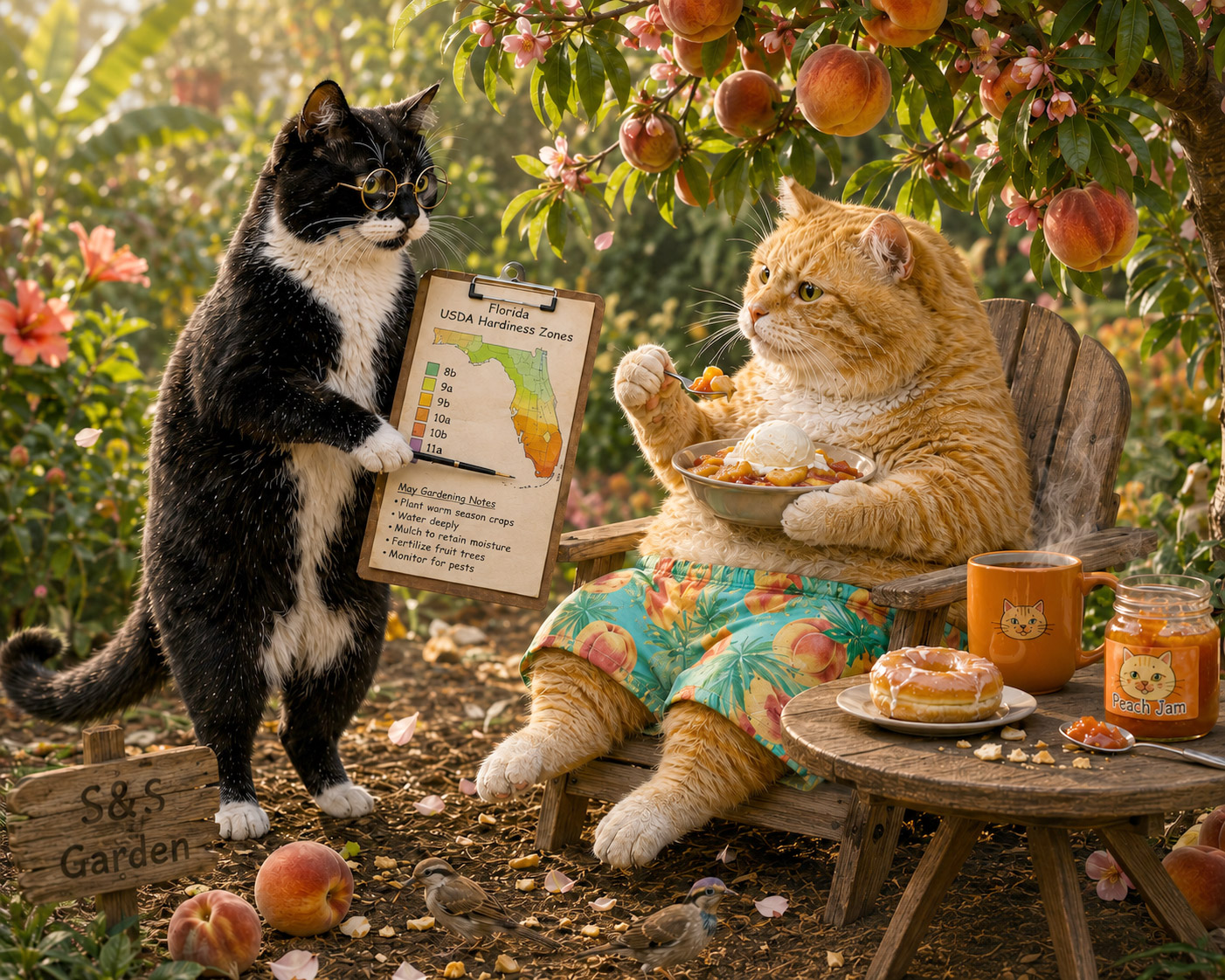
Sunshine: I love peach cobbler. Smokey, why are peaches on
the tree so early? Smokey: Low-chill peach varieties for Florida. They ripen
much sooner. Sunshine: I thought peaches were for Georgia. Smokey: Not if you plant low-chill peaches. And speaking
of peaches, do you know about donut peaches? Sunshine: Donut peaches? Finally, horticulture I can
understand.
Some fruits carry memories before you've even tasted them.
There's something about a peach still warm from the tree - the way it
gives a little when you pick it, the smell that hits you before you even
take a
bite. It makes you slow down. It makes summer feel like it actually meant to
show up.
Peach Plant Facts
Botanical name: Prunus persica, Amygdalus persica Also known as: Peach
USDA Zone: 5 - 10
Highligths
For Florida gardeners, that moment used to feel borrowed. Peaches were a
Georgia thing, a Carolina thing. You'd admire someone else's harvest and
quietly file it under not for us.
Low-chill peaches rewrote that story.
Here's the thing about regular peaches - they need cold. Not just a cool
night or two, but a real winter. We're talking 600 to 1,000 hours below 45F.
That's how they know to wake up in spring and actually fruit. South Florida
just doesn't deliver that. The trees will grow fine, look healthy even, and
then give you almost nothing come harvest time. Frustrating doesn't cover
it.
Low-chill varieties are different. They were bred specifically for
places like ours - warm winters, mild springs. Some only need 100 hours of
chill.
A hundred. That's a few cold fronts, not a season. And because they're
working with our climate instead of against it, they fruit reliably. Every
year.
They're not just a Florida trick either. Gardeners in coastal Texas,
southern Louisiana, southern California - anywhere in that Zone 8b to 10
range -
have been growing these successfully. If you've got warm winters and thought
peaches weren't for you, they probably just weren't the right peaches.
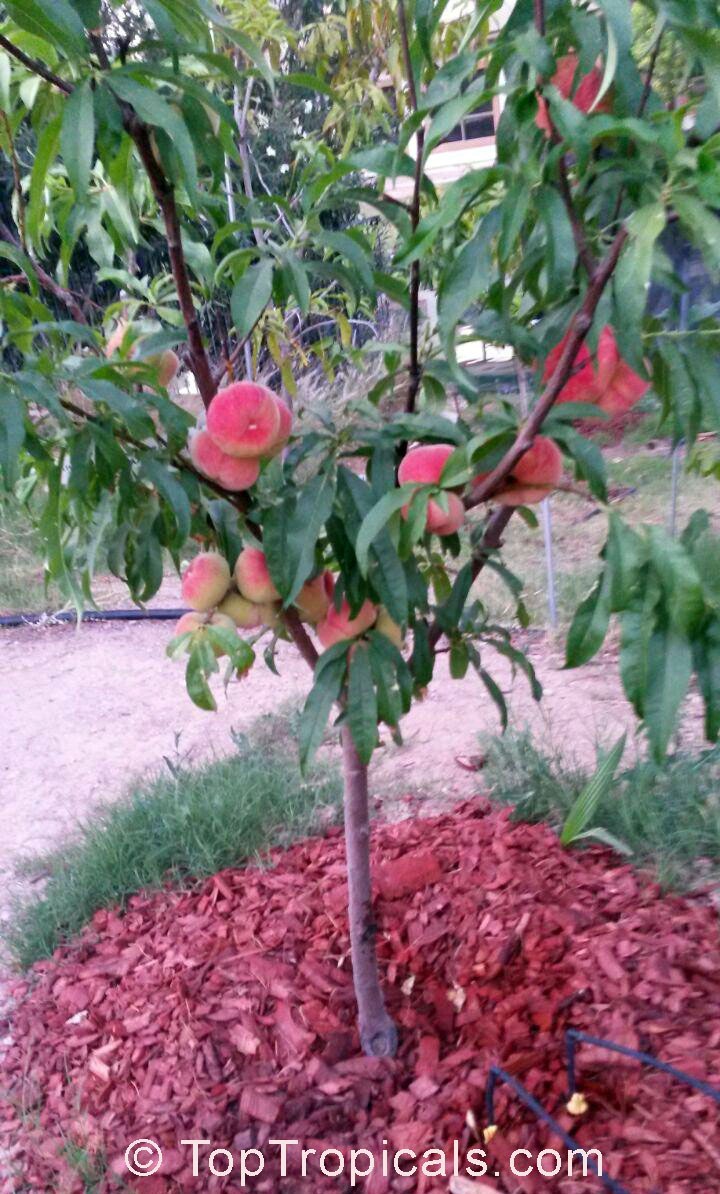
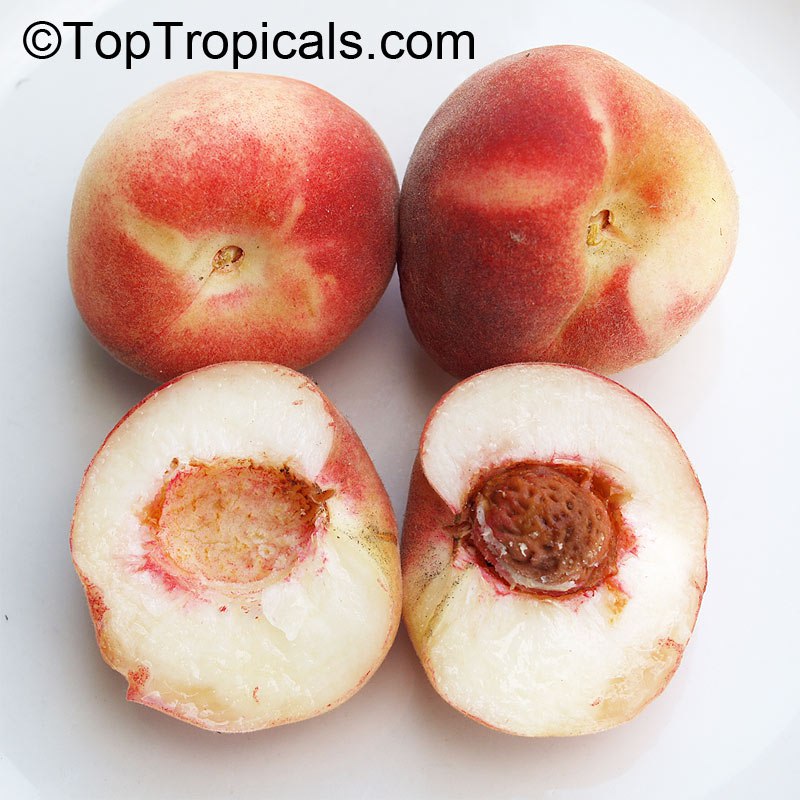
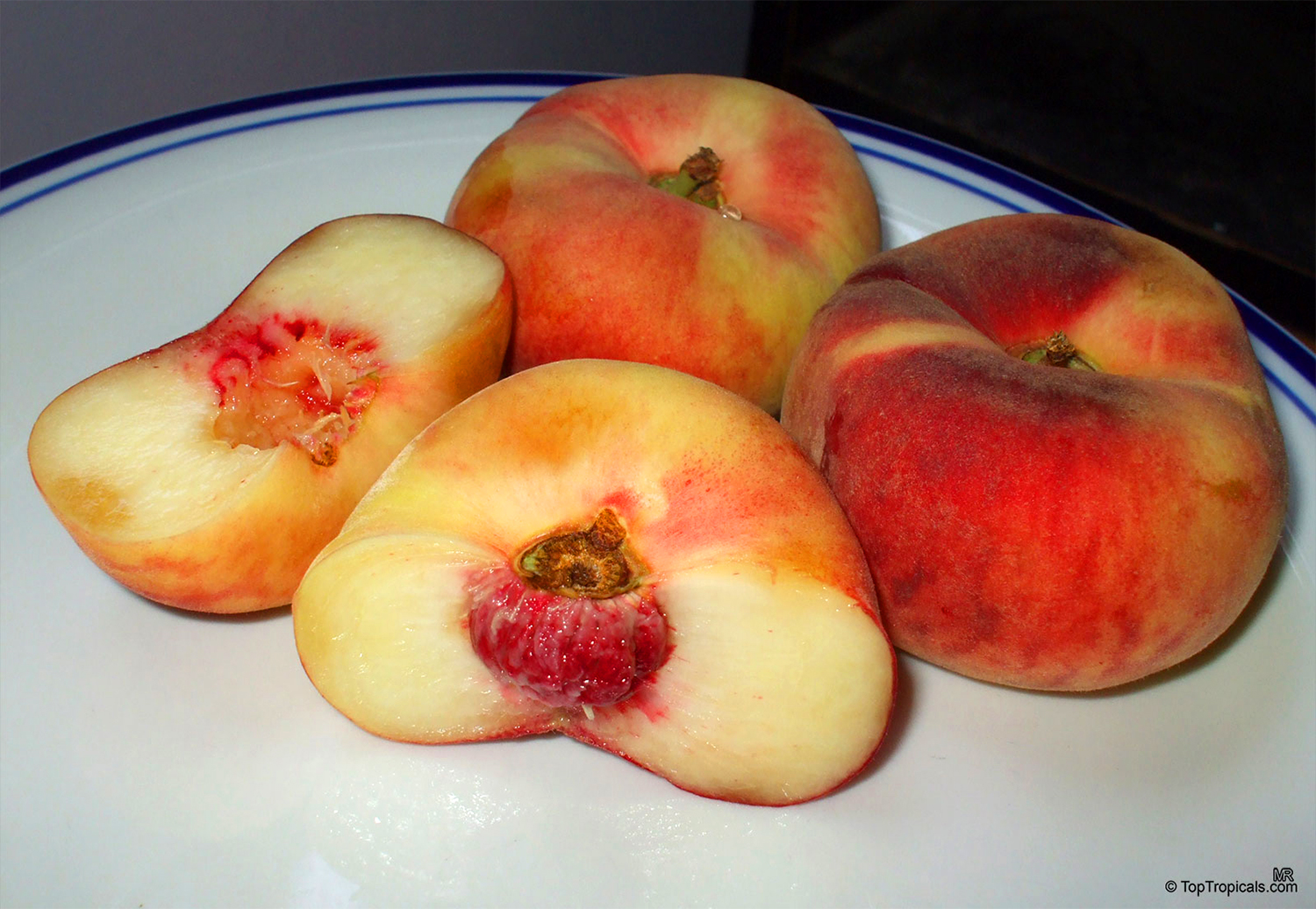
Flat peaches - sometimes called DONUT peaches - are
known
for their sweet white flesh, low acidity, and fun squashed shape.
Date: 10 May 2026
🍑 From the Garden: Why I Always Recommend
Growing
Your Own Peaches
by Tatiana Anderson, Top Tropicals Garden
Expert
Peach trees are beautiful long before harvest day - glossy green
leaves,
colorful fruit, and that classic fuzzy peach look straight from the branch.
I'll be honest with you. The first time I bit into a peach straight off
the tree, still warm from the afternoon sun, I understood why people get
obsessed with this fruit. There is no comparison to what you find in a
grocery
store. Store peaches are picked hard, shipped cold, and by the time they
reach
you, something important is already gone. A tree-ripened peach is soft,
fragrant, juicy, and sweet in a way store peaches rarely are. Eat it fresh,
slice
it into a cobbler, throw it on the grill - it holds up beautifully either
way.
Peach Plant Facts
Botanical name: Prunus persica, Amygdalus persica Also known as: Peach
USDA Zone: 5 - 10
Highligths
So let's talk about how to actually get there.
Planting
Peaches are not difficult. Give them sun, drainage, and room for air
movement, and they will usually tell you very quickly that they are
happy.
Full sun is essential - 8 hours minimum, and more is
better.
Drainage matters - peach roots do not like sitting
wet.
If your soil stays wet, plant on a mound - simple fix,
big difference.
Water deeply, then pause - let the soil partially dry
before watering again.
Prune every year - it keeps the tree open, improves
airflow, and helps the tree put energy into fruit instead of tangled
growth.
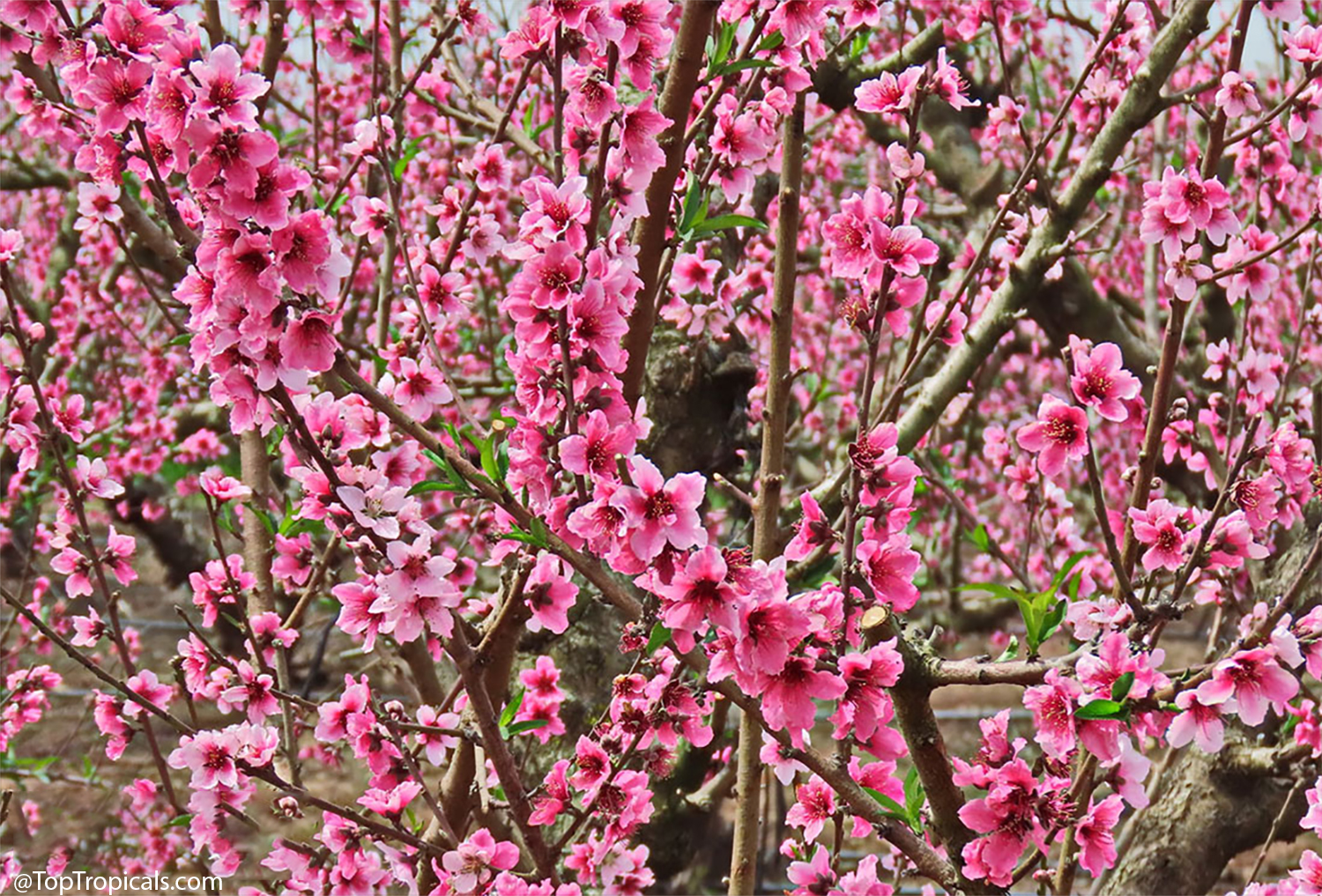
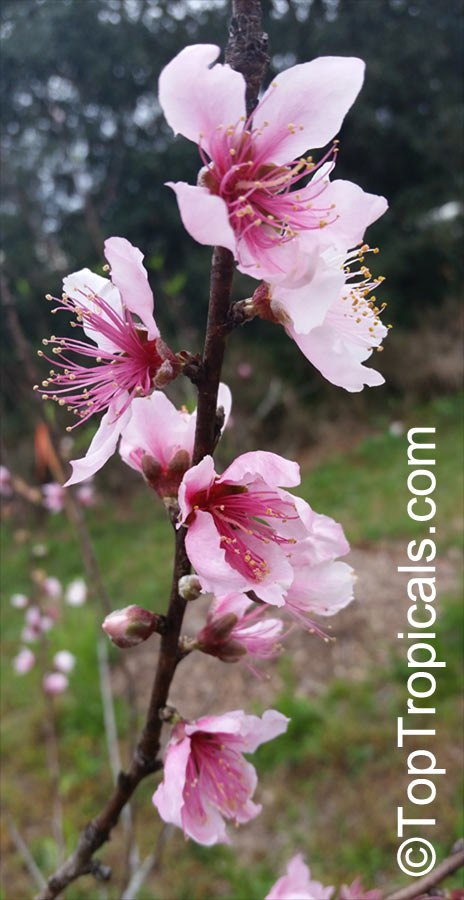
Peach trees put on one of spring's prettiest shows - clouds of pink
blossoms before the fruit season even begins.
What If You Do Not Have Room?
You can still grow peaches in a large container. This is a great option
for patios, small yards, renters, or gardeners who want better control over
soil and drainage.
Place the container in the sunniest spot you have.
Water more often than in-ground trees, but never let the pot stay
soggy.
Prune to keep the tree compact and easy to manage.
Fertilizing
Peach trees are generous plants, but producing vigorous growth and a
heavy crop of sweet fruit takes energy. Regular feeding makes a noticeable
difference in tree health, flowering, and fruit quality.
I prefer a simple two-part approach that provides both steady background
nutrition and quick, readily available nutrients when the tree is actively
growing.
Green Magic controlled-release fertilizer provides a steady
supply of nutrients for months and serves as the foundation of the feeding
program.
Sunshine Boosters liquid fertilizers deliver amino
acid-based nutrients that are quickly absorbed and especially useful during
periods of active growth, flowering, and fruit development. Sunshine C-Cibus formula is the best for fruit trees.
During the growing season, this combination helps build stronger
branches, healthier leaves, better flowering, and sweeter, higher-quality
fruit.
If your tree shows yellowing leaves or weak growth, consistent feeding
often makes a dramatic difference within a few weeks.
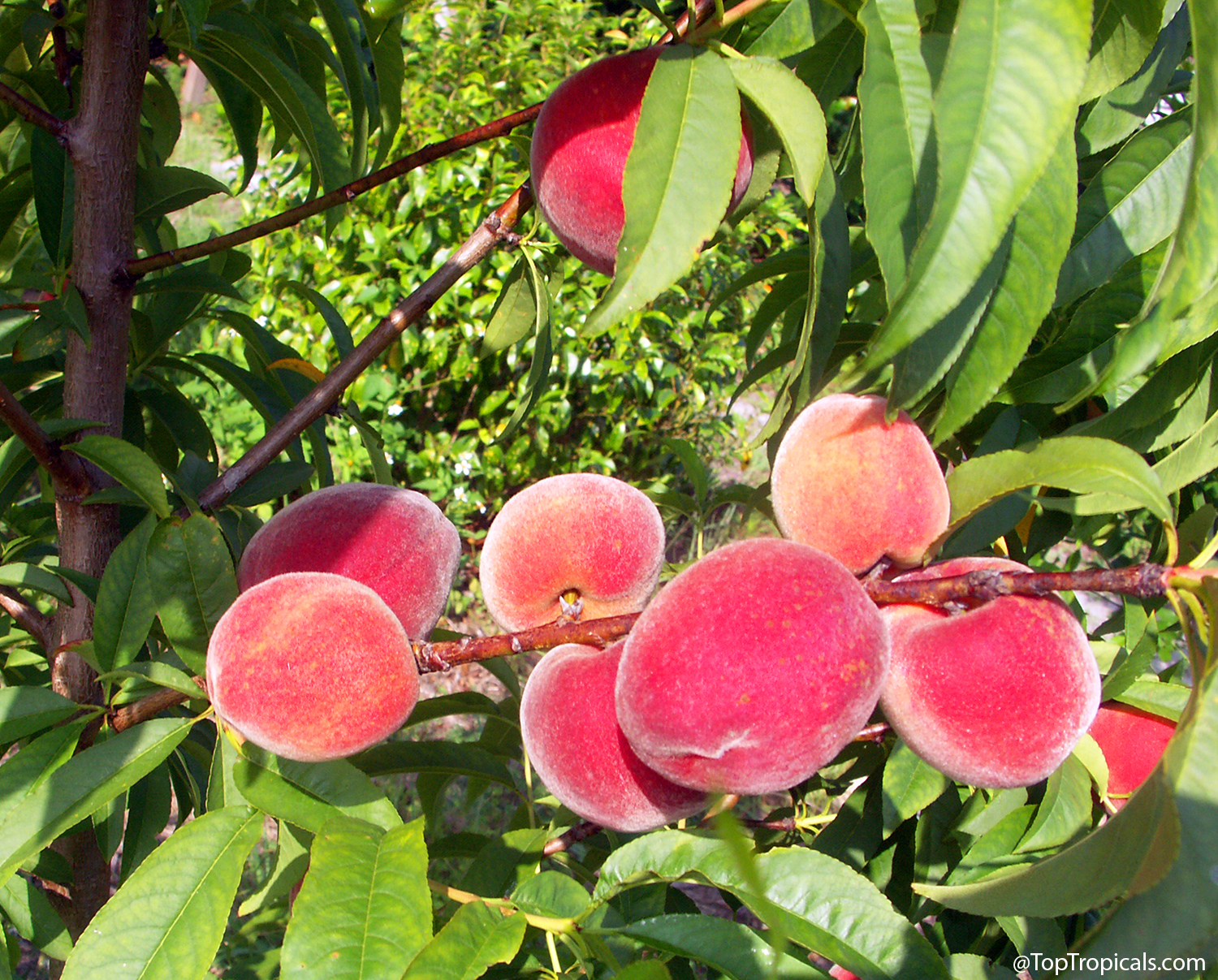
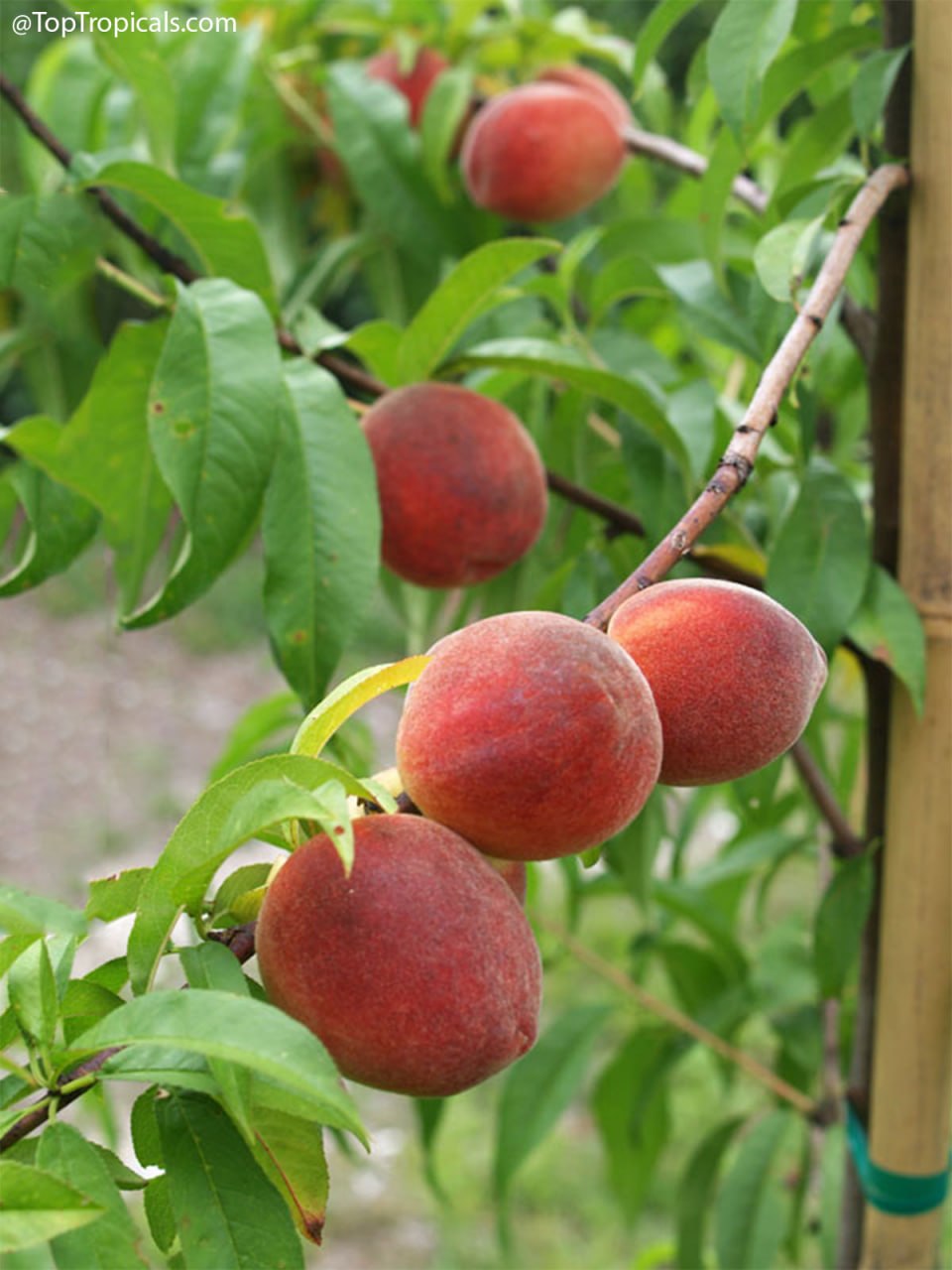
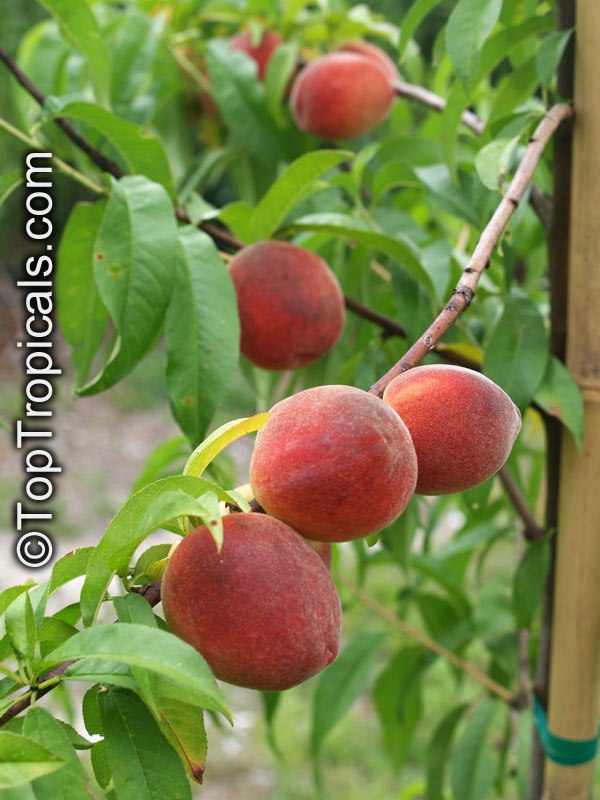
Tree-ripened Tropic Beauty peaches warming in the sun - fuzzy,
colorful,
and almost ready to pick straight from the branch. Tropic
Beauty variety is one of the most colorful and sweet.
Sunshine absolutely loves peach cobbler, especially when someone else
does all the peeling, slicing, mixing, and baking. But when he is left to
prepare dessert on his own, his standards become much more practical. Why
turn on
the oven when perfectly ripe peaches already taste amazing? His
philosophy
is simple: if a recipe takes less than five minutes and ends with peaches
and vanilla ice cream in the same bowl, it is a masterpiece.
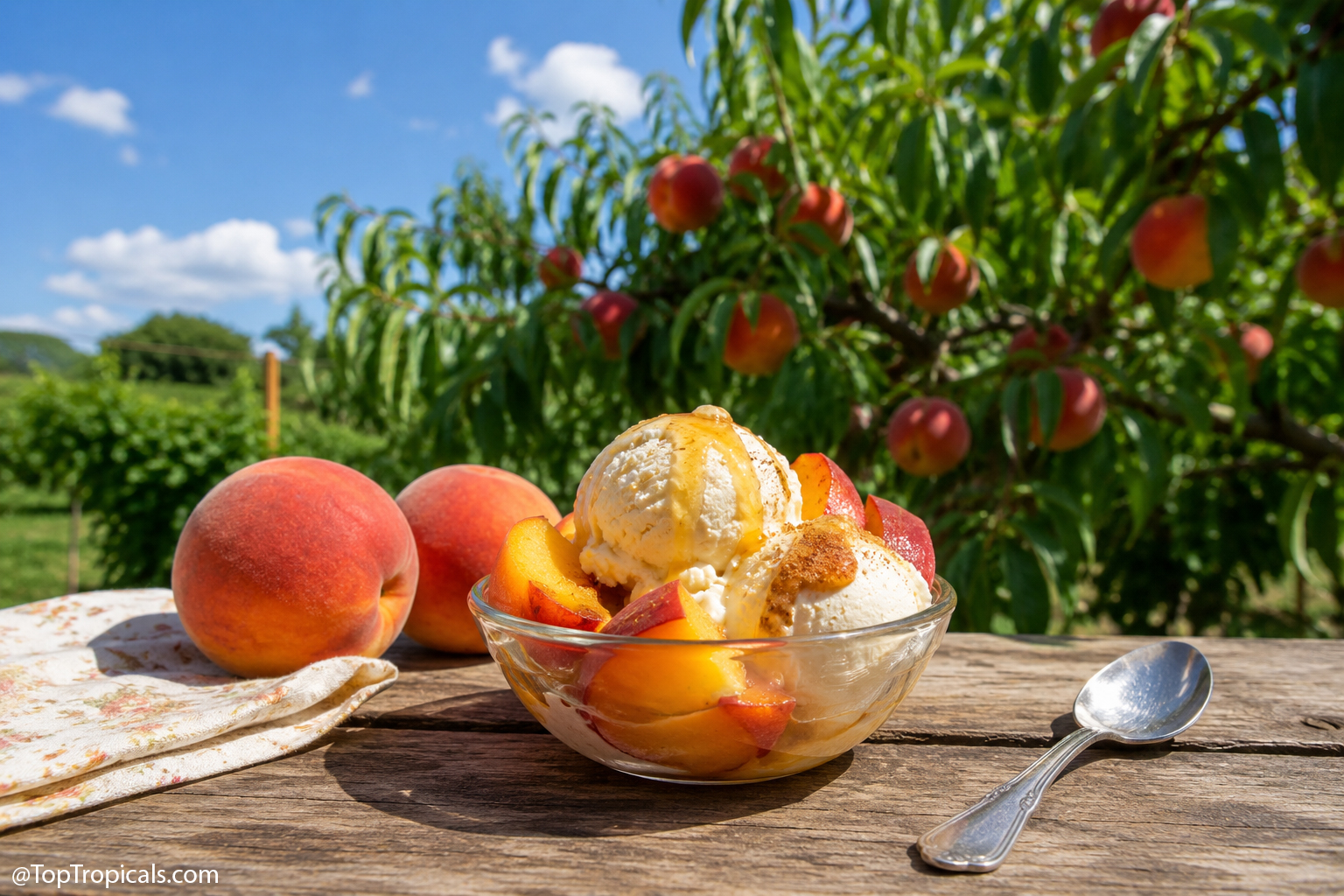
Sunshine's Lazy Peach Sundae - fresh peaches, cold ice cream, and zero
effort on a perfect sunny day.
Sunshine's Lazy Peach Sundae
This is not cooking. This is assembly.
Ingredients
2 ripe homegrown peaches
2 big scoops of vanilla ice cream
A drizzle of honey (optional)
A pinch of cinnamon (optional)
Instructions
Slice the peaches.
Put them in a bowl.
Add vanilla ice cream.
Drizzle with honey and sprinkle with cinnamon if you feel
ambitious.
Eat immediately while smiling.
Sunshine's Review
"I peeled exactly nothing and still got dessert. This is my kind of
gardening."
Want this?
Start with a low-chill peach tree. That is usually how it begins.
The One Peach Tree Every Florida Gardener Should Know About: Tropic Beauty
Peach tree in full bloom
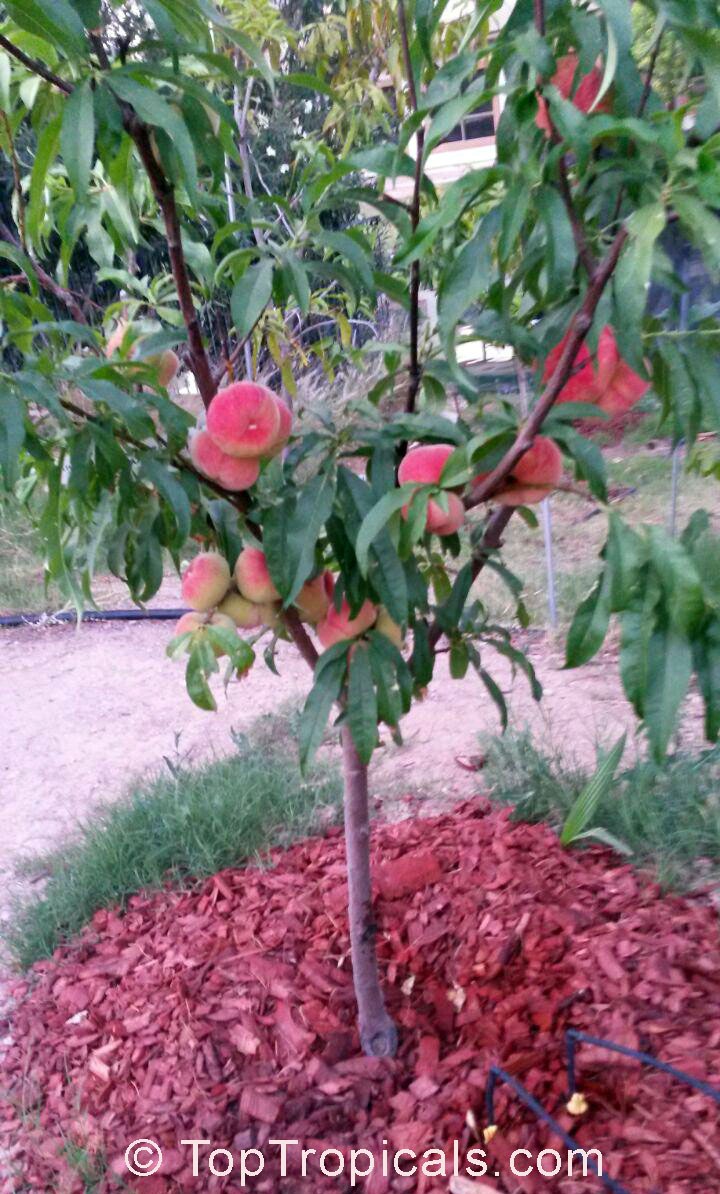
Tropic Beauty Peach tree
Tropic Beauty Peach fruit
The One Peach Tree Every Florida Gardener Should Know About: Tropic Beauty
Most Florida gardeners assume peaches are off the table. Wrong climate, not enough cold, too much heat. Tropic Beauty exists specifically to prove that wrong - and it ripens in late April while the rest of the country is still waiting on summer.
Peach Plant Facts
Botanical name: Prunus persica, Amygdalus persica Also known as: Peach
USDA Zone: 5 - 10
Highligths
I Didn't Think You Could Grow Peaches Here
I'll be honest - when I first started growing fruit trees in Florida, I assumed peaches were just off the table. Too much heat, not enough cold winters, wrong climate entirely. Then someone at my local nursery pointed me toward Tropic Beauty, and that assumption went right out the window.
This variety has been around since 1989, developed jointly by the University of Florida and Texas A&M. That's over three decades of Florida gardeners growing it, eating it, and planting more of them. When a cultivar sticks around that long, it's just a good tree.
Why Low Chill Actually Matters Here
Most peaches need 700 to 1,000 chill hours - the number of hours below 45°F the tree needs during winter to break dormancy and set fruit. In central and south Florida, we're lucky to scrape together 150 to 300 hours in a mild year. That rules out most varieties before you even get started.
Tropic Beauty only needs 150. It was built for exactly the winters we have here - cool but not cold, brief but not brutal. Most years, it gets what it needs without you thinking about it at all.
What the Fruit Is Actually Like
Medium-sized peaches, deep red blush covering about 70% of the skin over a bright yellow background. They look genuinely good on the tree - the kind of fruit that makes you grab your phone before you even pick one.
Cut one open and you get soft, melting yellow flesh with classic sweet peach flavor, plus a little acidity to keep it interesting. The pit is semi-freestone, easy enough that you're not wrestling with it.
If you've ever bitten into a grocery store peach and been let down - mealy texture, no real flavor - this is the opposite of that. Warm from the tree on a late April morning, it tastes like what peaches are supposed to taste like.
April Harvest: Earlier Than You'd Think
Ripening in late April, Tropic Beauty is one of the earliest peaches you can grow anywhere. Most of the country is still waiting on peach season while you're already making cobbler.
The fruit also holds well on the tree - no need to pick everything at once. You can let them hang and harvest over a couple of weeks, which is a real convenience if you're planning to can and want to spread the work out.
One Tree Is Enough (But Two Doesn't Hurt)
Tropic Beauty is self-fertile, so it doesn't need a second tree to produce fruit. Plant one, get peaches. That matters if you're working with a smaller yard or just testing the waters.
If you have space for two, yields do go up with cross-pollination - worth keeping in mind for a small home orchard.
It Fits More Spaces Than You'd Expect
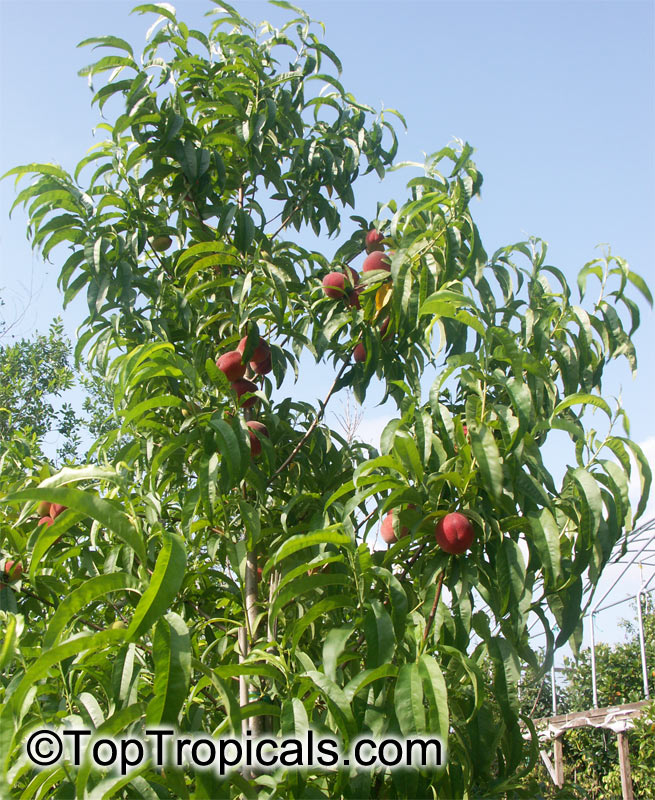
The tree can grow 15 to 20 feet, but with regular pruning it's easy to keep around 10 feet. It also works well in containers, which makes it more accessible than most fruit trees.
Plant it in full sun, well-drained soil. Peaches don't love wet feet, so if drainage is questionable in your yard, mounding the soil before planting is a smart move.
Worth Planting?
If you're in central or south Florida and you've been wanting to grow peaches but weren't sure it was realistic - Tropic Beauty is your answer. Proven over decades, adapted to the climate, and when it produces, it produces well.
Some trees you plant and hope for the best. This one, you just wait for April.
"Before the peaches, there's this. Tropic Beauty in full bloom - proof that a fruit tree can be just as beautiful as anything you'd plant purely for looks.
What is the most rewarding hardy fruit tree suitable for hot climate
Low Chill Peach (Prunus sp.) tree
Low Chill Peach (Prunus sp.) flowers
Low Chill Peach (Prunus sp.) fruit
Low Chill Peach (Prunus sp.) fruit
🍑 What is the most rewarding hardy fruit tree suitable for hot climate
💬 Can I grow peaches and plums in Florida?
✅ Yes, you can grow peaches, nectarines, apricots and plums in Florida, provided you choose low-chill varieties.
🍑 These have been developed specifically for subtropical regions like Central and South Florida, where traditional temperate varieties struggle due to insufficient chill hours.
🍑 Low-chill varieties require as little as 150–300 chill hours (temperatures below 45°F) and thrive in hot climates, making them perfect for Florida' warm winters and hot summers.
🍑 These heat-tolerant fruit trees also perform well in other challenging climates, like Arizona.
🍑 While apricots generally need more chill hours than Florida's climate can provide, hybridization efforts have made peaches, nectarines, and plums reliable options for gardeners in these areas.
Q: Recently I started working remotely and I kinda like it, no
need to commute, it saves me so much time so I can have life now! My friend got
me involved into growing some small houseplants but I really want to take
advantage of our Florida climate and sun. I want to plant some cool fruit trees
since I have a decent size yard. But I live in Florida Panhandle and we do
have some occasional freeze in winter, although not for too long. But it gets
very hot in summer! Are there any tropical fruit trees that will be happy
here? Or should I keep everything in pots? I am excited to have my own tropical
plant collection!
A: There is a perfect plant for everyone, and a perfect tree for
every climate. Many tropical and especially subtropical plants can be much
hardier than they are believed to be, both flowering and fruiting trees among
them. You may keep the most sensitive species in pots and bring them inside
for winter, while there are so many trees that will be happy in your area.
Start with these that are perfect for climates with hot summers and cool winters:
1. Peaches and Plums
Low-chill, Heat-tolerant Peaches, Nectarines, Plums are especially
selected for Florida hot summers. They produce well and do not require many
"chill" hours like temperate fruit trees. They only need 150 chill hours and grow
well in even in Arizona, so you know they are taking the heat.
2. Figs
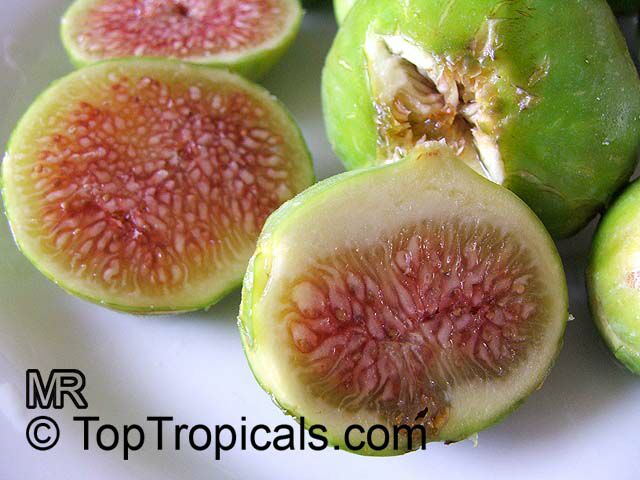
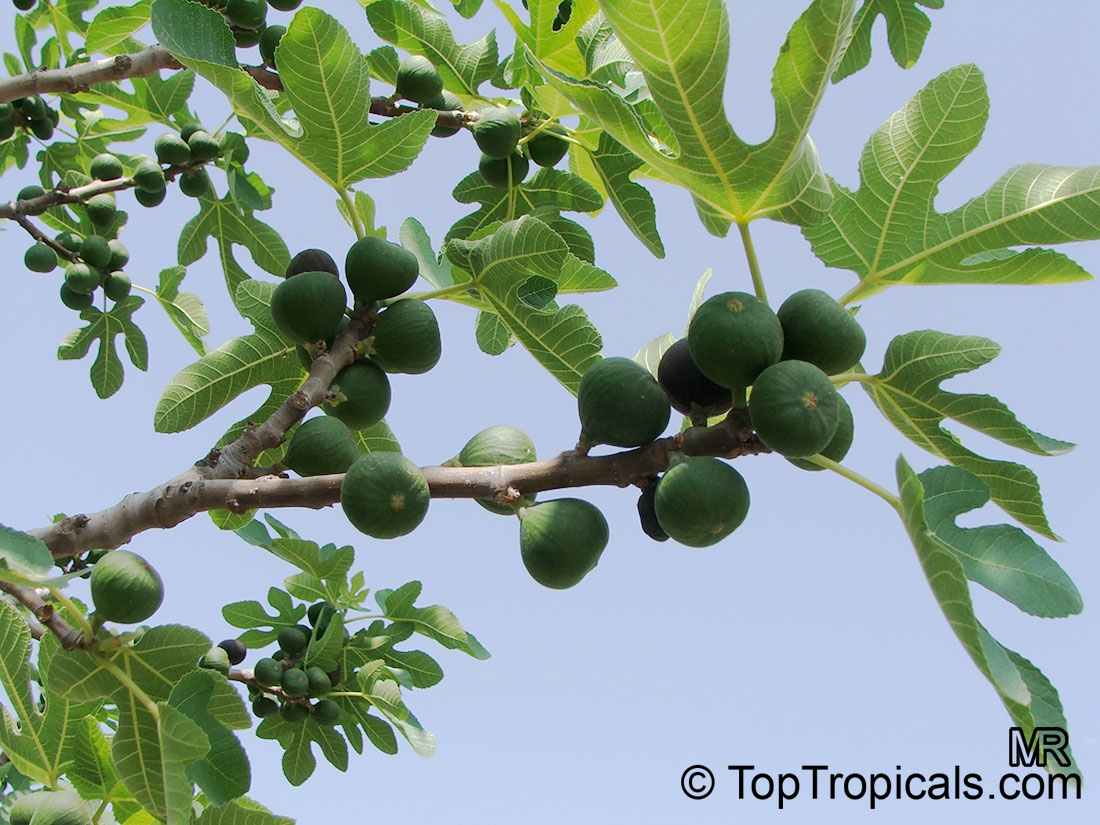
2) Fig trees - they are easy to grow, heat- and drought- resistant trees.
They are prized for their delicious fruit, which can be one to three inches
in length, violet, brown or black. There are even varieties with yellow fruit.
Most fruits are borne from early summer to late fall on new growth, and the
fruits generally mature very quickly. These trees are sensitive to frost only
when actively growing, but can withstand 10F when dormant.
Read more about Fig trees.



 Planting