Mangifera indica 'Mun Kun Si' (Mun Kun Si Mango)
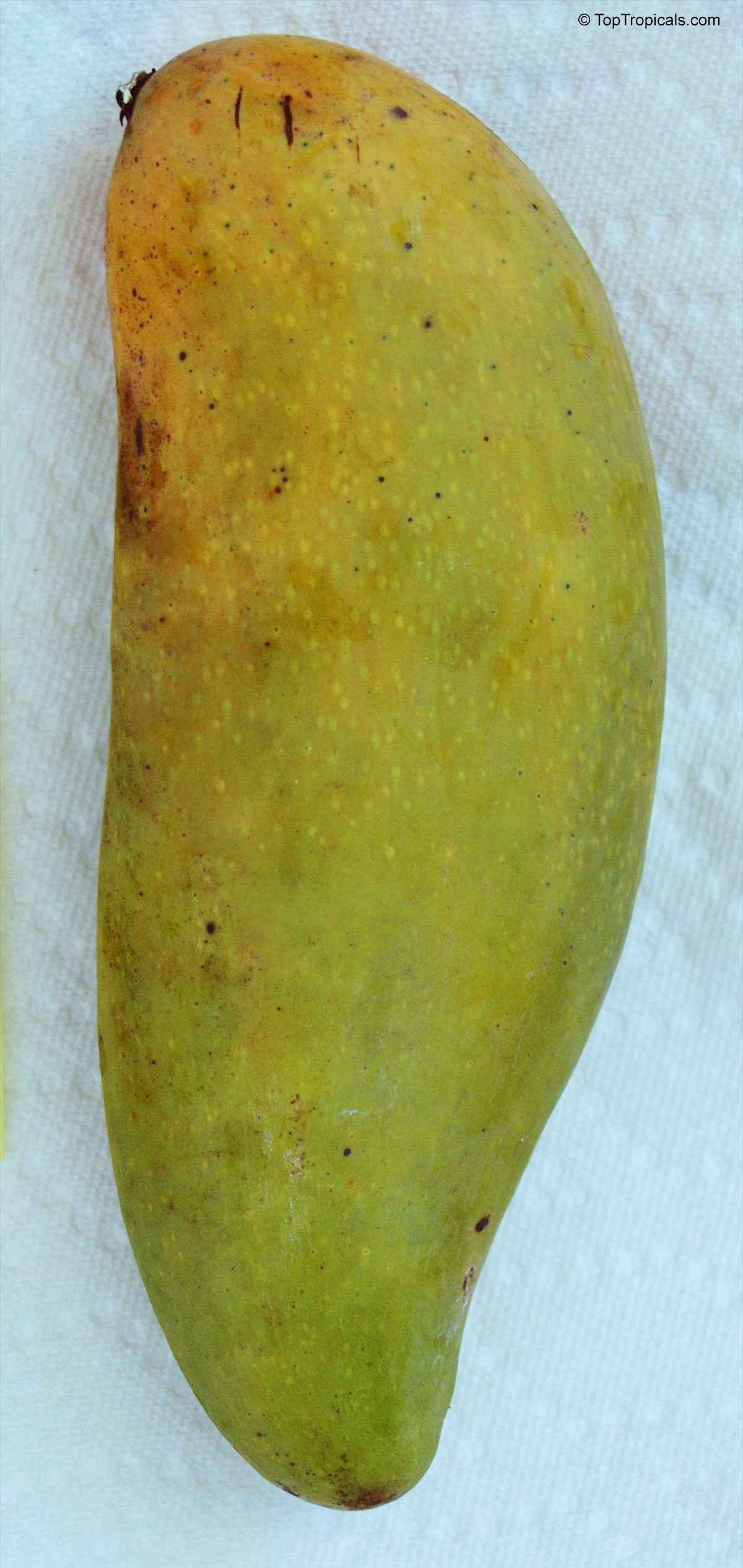
Botanical name: Mangifera indica
Common name: Mun Kun Si Mango
Cultivar: Mun Kun Si
Family: Anacardiaceae
Origin: South Asia and India
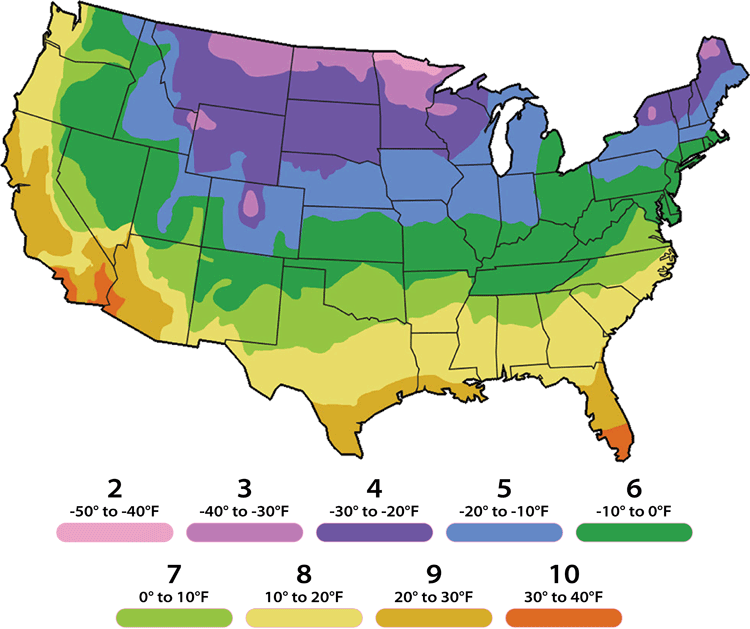
USDA Zone: 10-11
Cold tolerance: 30°F

 Plant form: Large or medium tree
 Mature height: 20 ft or more
 Sun exposure: Full sun or bright light indoor
 Cold tolerance: Frost sensitive. Protect from freezing.
 Watering: Moderate
 Suitable for: Outdoors in the suitable USDA zone; large gardens
Mangifera indica (Mango) is a large evergreen tree native to South Asia and among the oldest cultivated fruit trees, grown in India for over 4,000 years. In tropical climates it can reach 60-80 feet with a broad crown of glossy leaves. Small yellowish flowers appear in spring, followed by fleshy drupes known worldwide as mangoes.
Fruit shape varies from oval to kidney-shaped, with skin that may remain green or ripen to yellow, orange, or red. The flesh is juicy and aromatic, sometimes fiberless and sweet, sometimes more resinous depending on type. Mangoes are eaten fresh, dried, blended, or cooked, making them one of the most versatile tropical fruits. Some people experience irritation on the lips from the peel, so fruits are usually eaten peeled.
The tree thrives in full sun and well-drained soil in warm climates, hardy only to USDA Zones 10-11 (Zone 9 only with winter protection). With hundreds of named cultivars, Mangifera indica remains one of the world s most widely grown and culturally important fruit trees.
See Mango varieties.
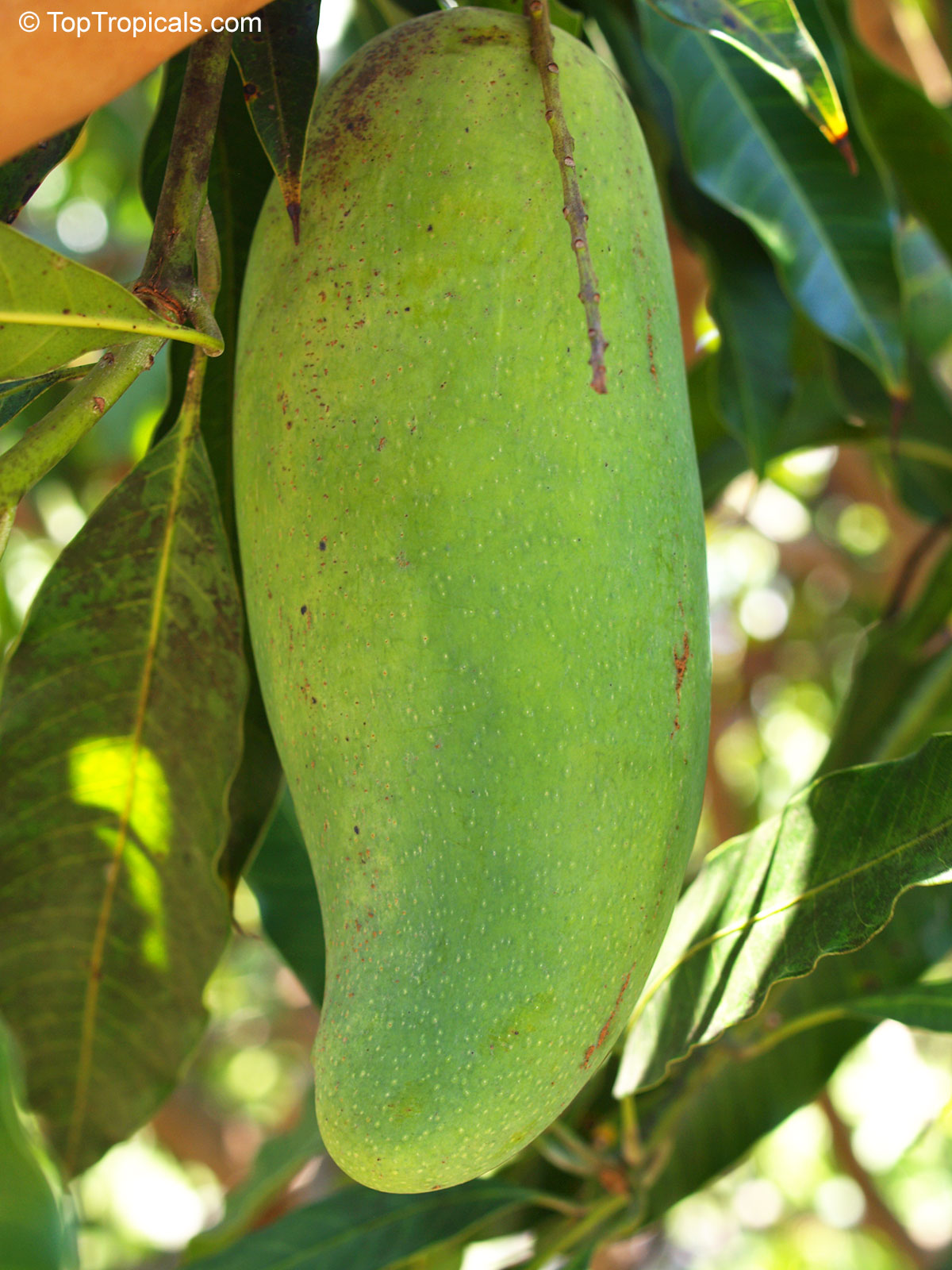
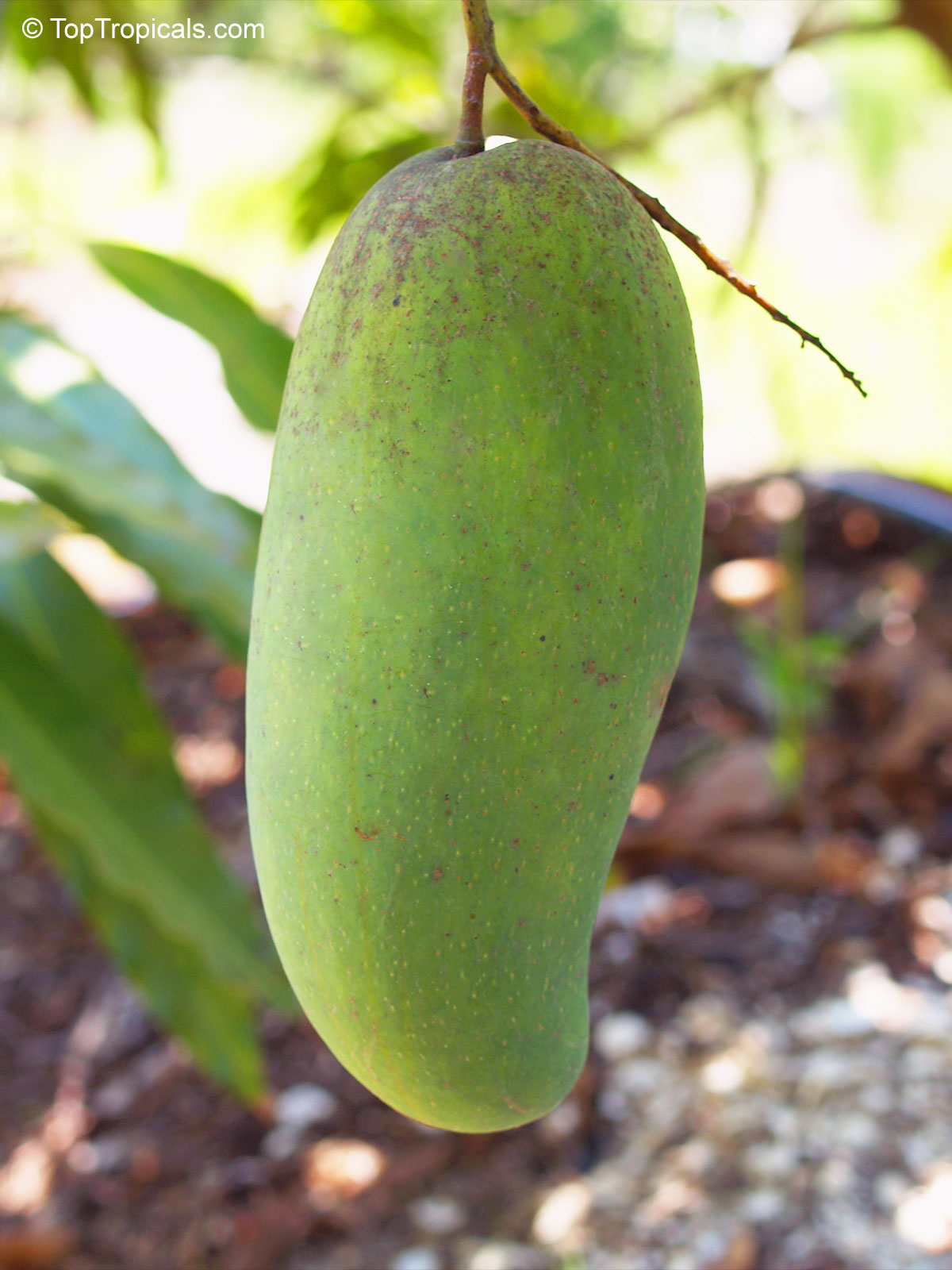
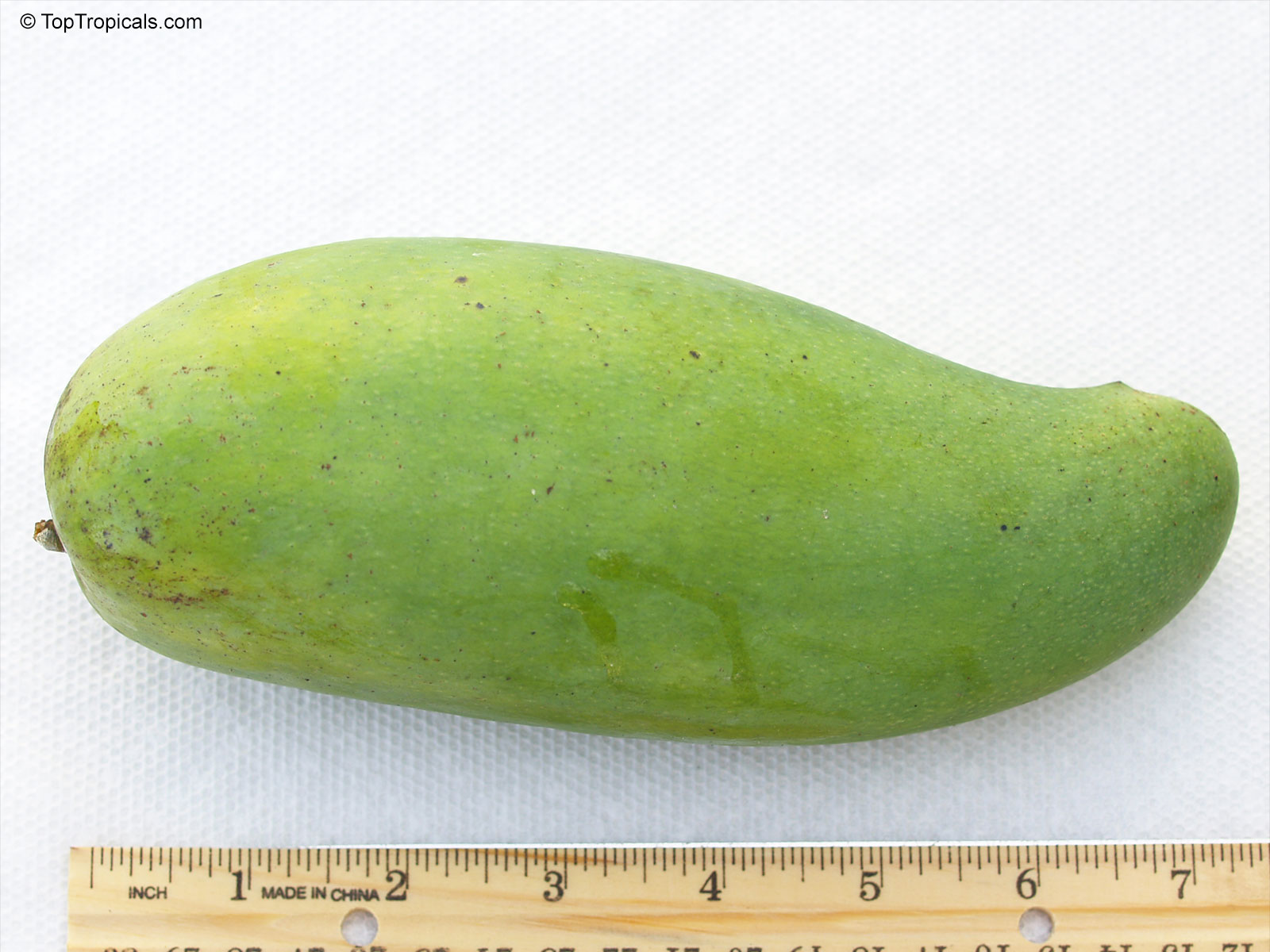
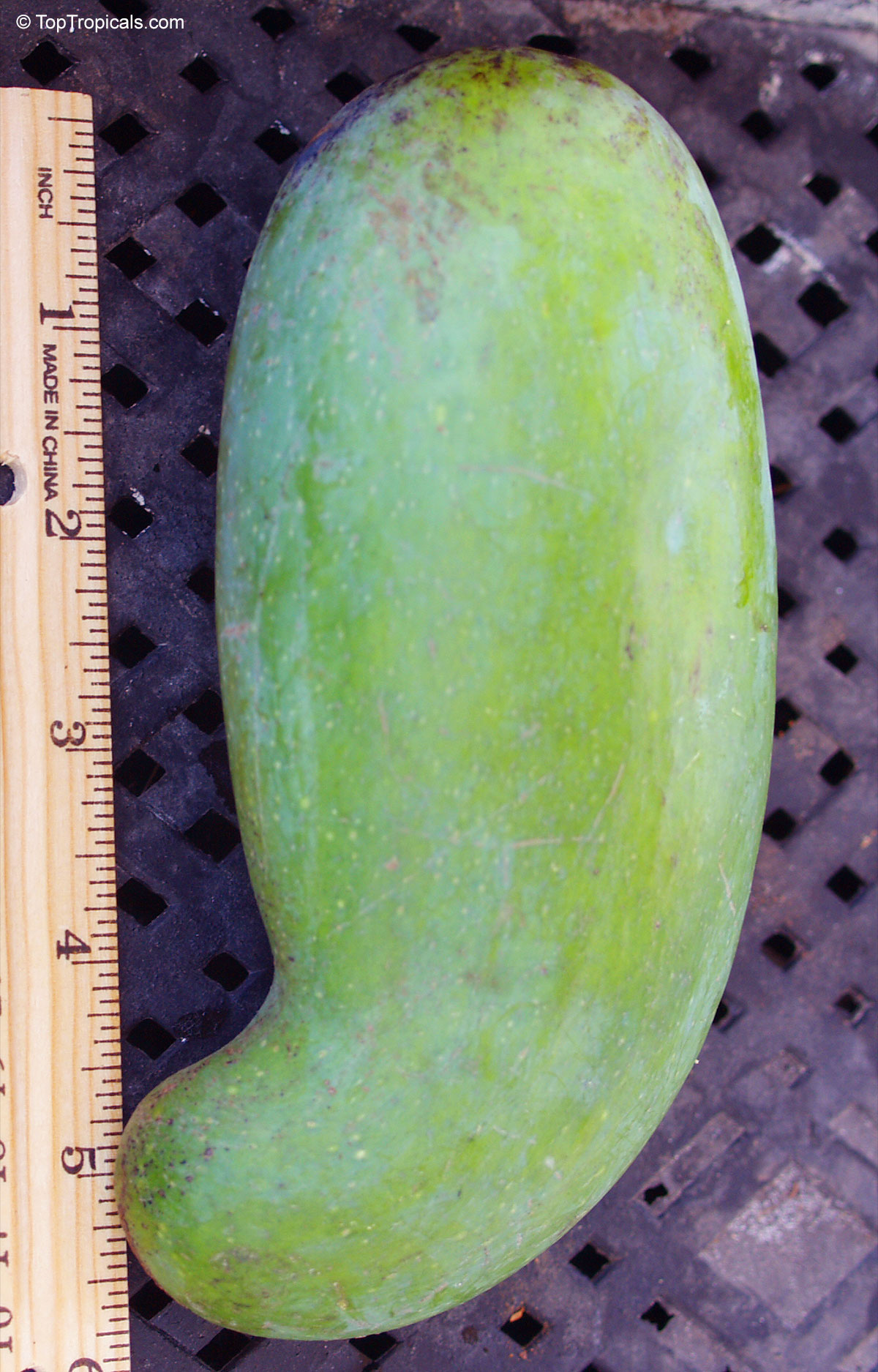
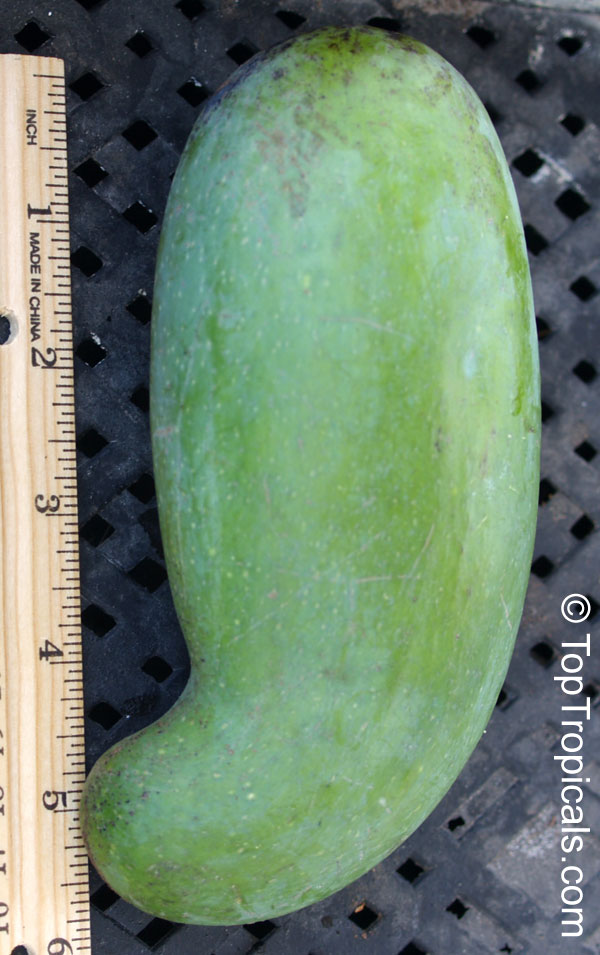
Mangifera indica 'Mun Kun Si' (Mun Kun Si Mango) is a rare Thai variety similar to 'Nam Doc Mai' but producing larger fruit that can be eaten both green and fully ripe. The fruit is long, slender, and slightly curved, hanging in clusters and turning yellow-green to golden-yellow when ready to pick. In its green stage, it is crisp, sweet, and refreshingly tart - 'Mun' means crunchy in Thai - while ripe fruit become extremely sweet, fiberless, and slightly firm, keeping their pleasant texture. The flesh is pale yellow, smooth, and aromatic, offering a clean, delicate taste appreciated by mango lovers in Thailand and Vietnam. The tree is moderately vigorous, upright, and highly productive, often fruiting very late, with fruit sometimes remaining on the tree as late as January.
Mun Kun Si performs best in tropical and subtropical climates, thriving in full sun and well-drained soil with regular watering and pruning after harvest. It tolerates humidity well and is an excellent choice for home gardens and collectors seeking both crisp green and sweet ripe mangoes from the same tree. Trees thrive in USDA Zones 10 11 and need protection from frost, with minimum tolerance down to about 30F.
Related cultivars: Mangifera indica 'Mun Kun Si' (Mun Kun Si Mango)
- Mangifera indica ''Sunset'' (Sunset Mango Sunset)
- Mangifera indica Ah Ping ''Ah Ping'' (Ah Ping Mango )
- Mangifera indica Alampur Baneshan ''Alampur Baneshan'' (Alampur Baneshan Mango)
- Mangifera indica Alphonso ''Alphonso'' (Alphonso Mango)
- Mangifera indica Baileys Marvel ''Baileys Marvel'' (Baileys Marvel Mango)
- Mangifera indica Beverly ''Beverly'' (Beverly Mango)
- Mangifera indica Bombay ''Bombay'' (Bombay Mango)
- Mangifera indica Cac ''Cac'' (Cac Mango)
- Mangifera indica Carabao ''Carabao'' (Carabao Mango)
- Mangifera indica Carrie ''Carrie'' (Carrie Mango)
Similar plants: Mangifera indica 'Mun Kun Si' (Mun Kun Si Mango)
Recommended Fertilizer: SUNSHINE Mango Tango - Mango Tree Booster
SUNSHINE-Honey - sugar booster
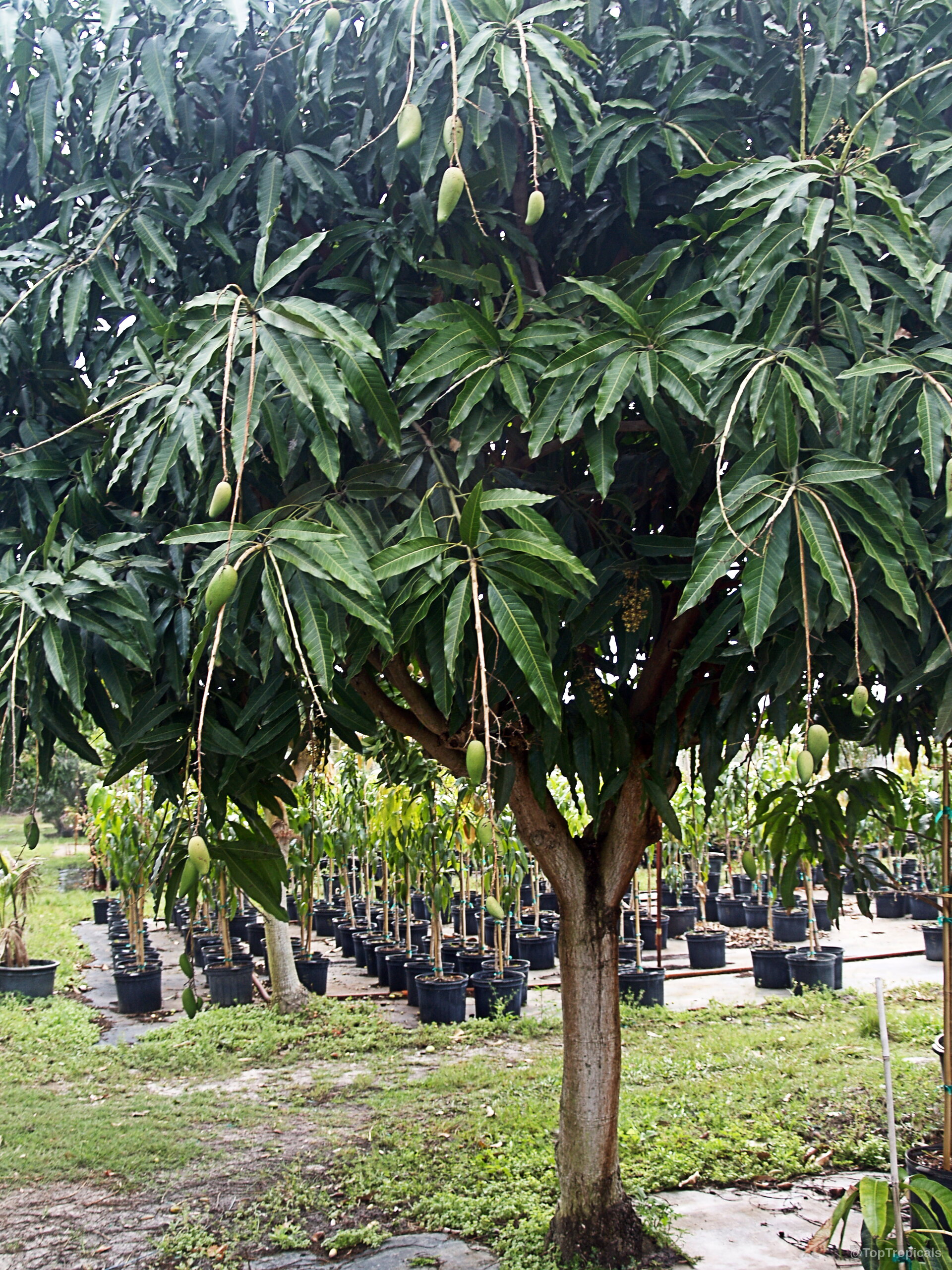
7 gal pot. More developed root system, thicker trunk and branches. Plant height depends on growing season and variety. Dwarf varieties are slow growers and may be shorter. Contact us for exact size description if size/height matters to you. 7 gal plants may be shipped separately from other items by Ground service due to large size. See here time in transit (business days, excluding Sat-Sun!)
Last one
Recommended Fertilizer: SUNSHINE Mango Tango - Mango Tree Booster
SUNSHINE-Honey - sugar booster