Mangifera indica 'Po Pyu Kalay' (Po Pyu Kalay Mango)
Top Tropicals Plant Encyclopedia
Botanical name: Mangifera indica
Common names: Po Pyu Kalay Mango, Lemon Meringue Mango
Cultivar: Po Pyu Kalay
Family: Anacardiaceae
Origin: South Asia and India
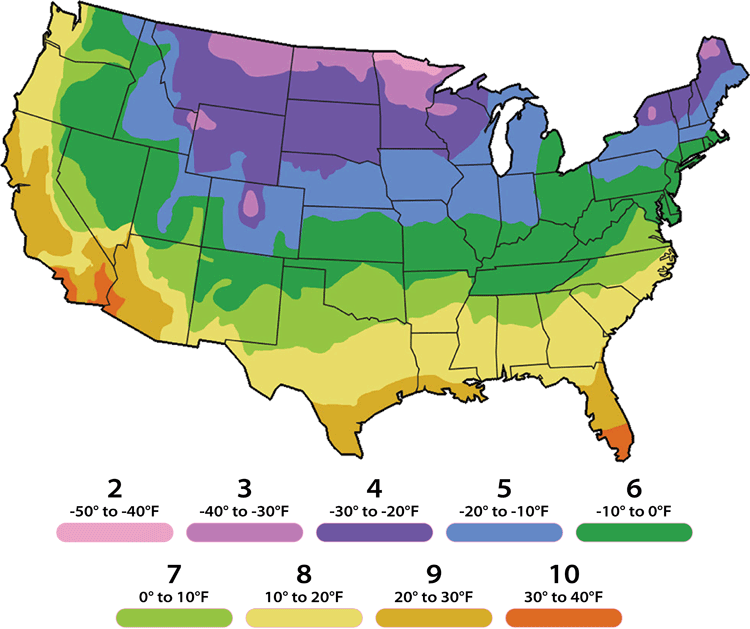
Hardiness: 30°F


Mangifera indica (Mango) is a large evergreen tree native to South Asia and among the oldest cultivated fruit trees, grown in India for over 4,000 years. In tropical climates it can reach 60-80 feet with a broad crown of glossy leaves. Small yellowish flowers appear in spring, followed by fleshy drupes known worldwide as mangoes.
Fruit shape varies from oval to kidney-shaped, with skin that may remain green or ripen to yellow, orange, or red. The flesh is juicy and aromatic, sometimes fiberless and sweet, sometimes more resinous depending on type. Mangoes are eaten fresh, dried, blended, or cooked, making them one of the most versatile tropical fruits. Some people experience irritation on the lips from the peel, so fruits are usually eaten peeled.
The tree thrives in full sun and well-drained soil in warm climates, hardy only to USDA Zones 9-11. With hundreds of named cultivars, Mangifera indica remains one of the world s most widely grown and culturally important fruit trees.
See Mango varieties.
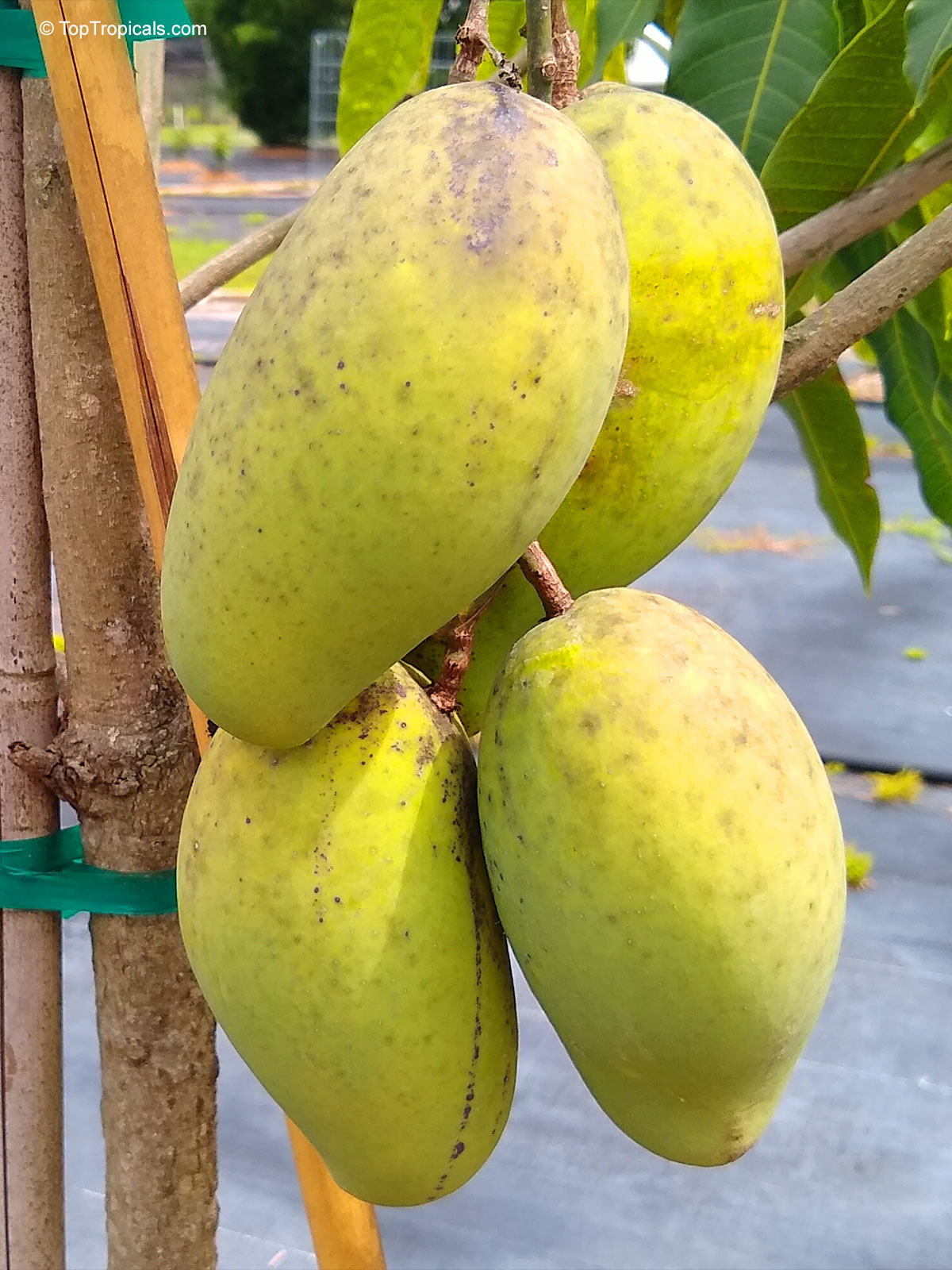
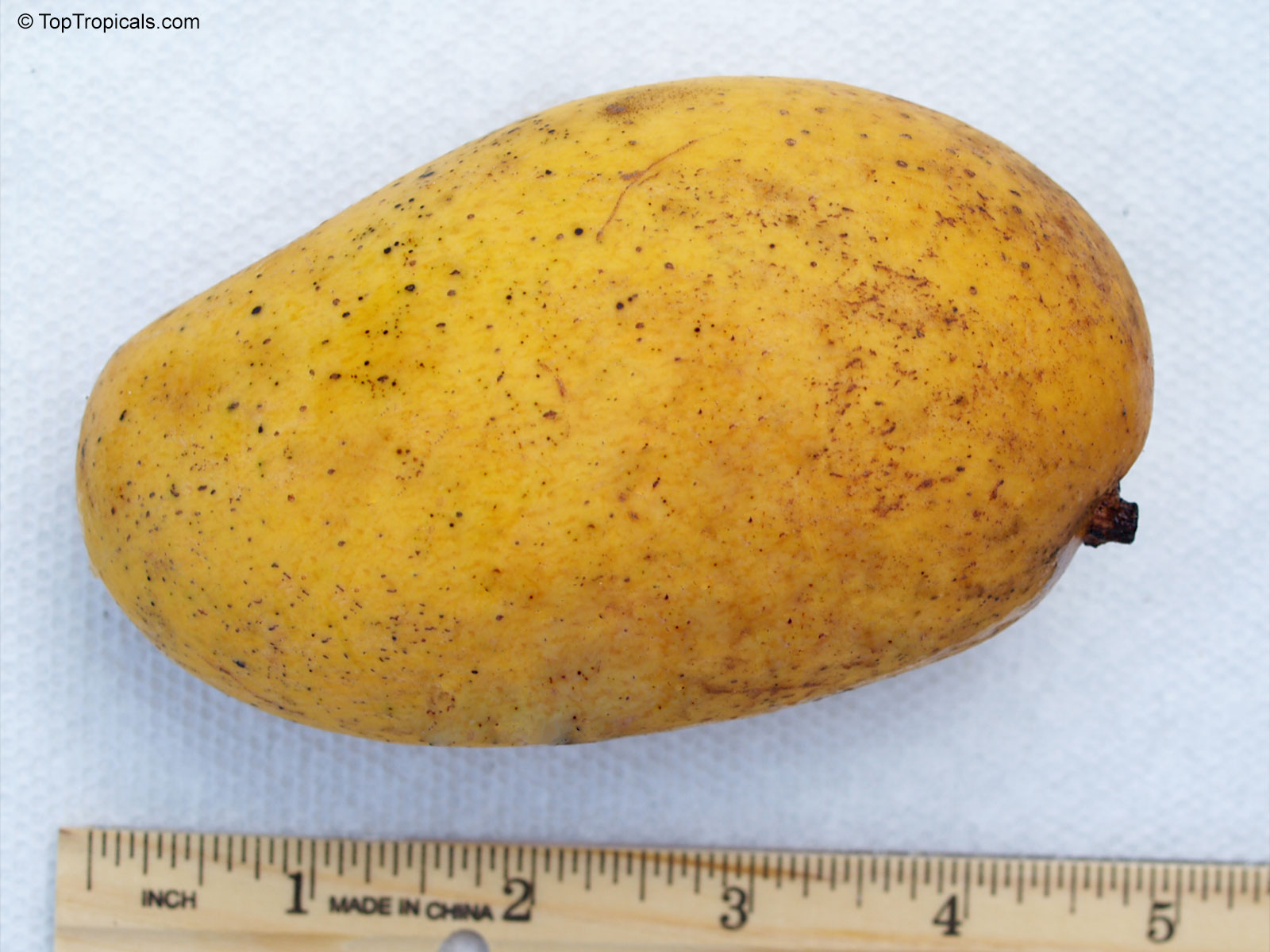
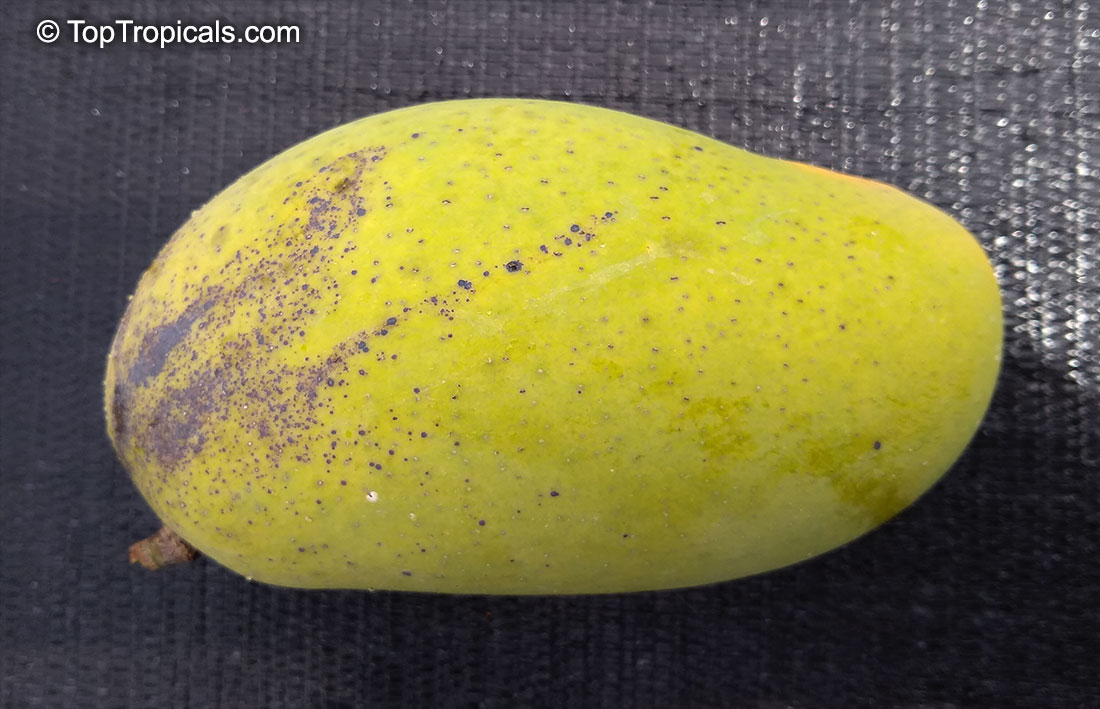
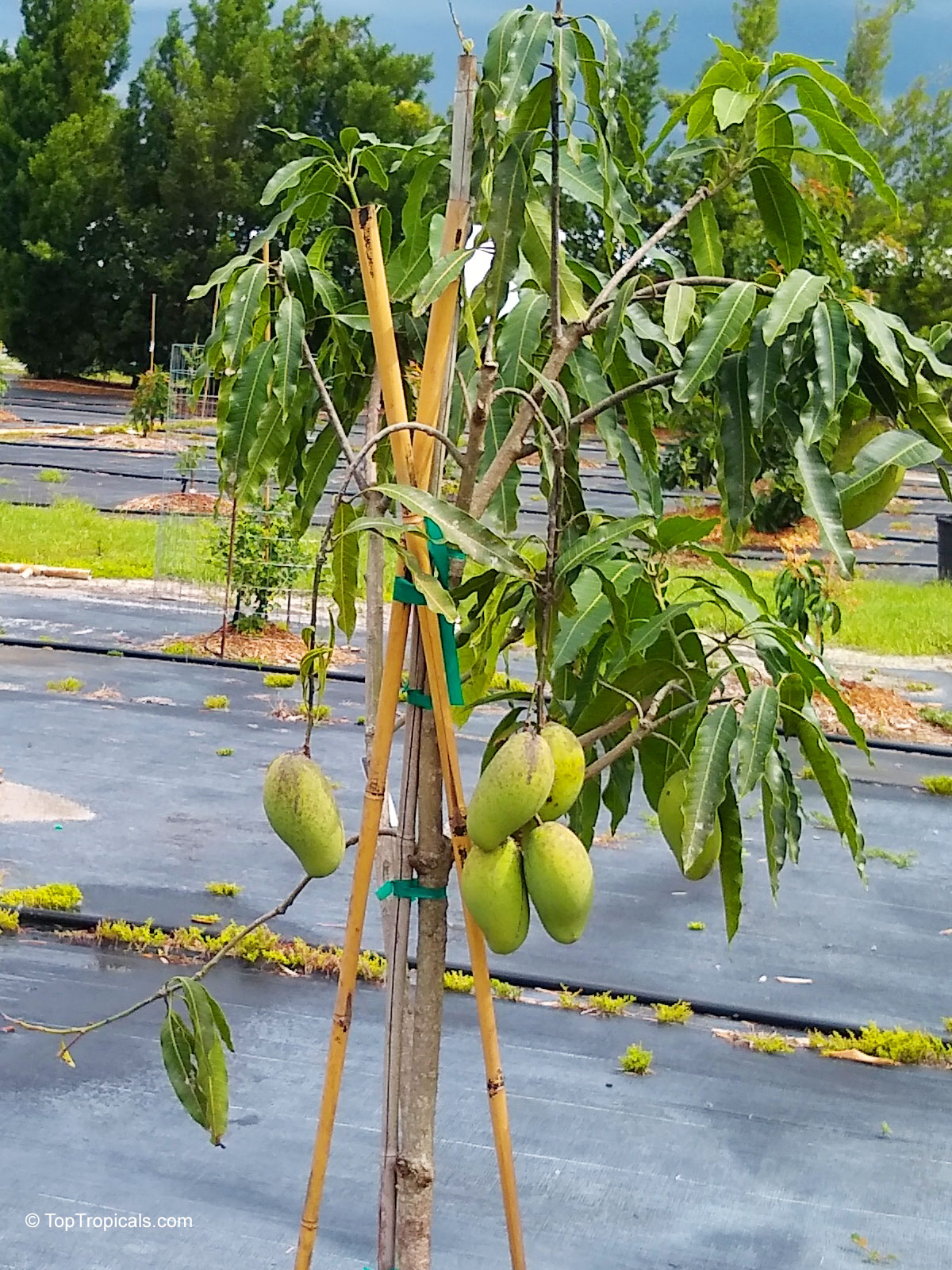
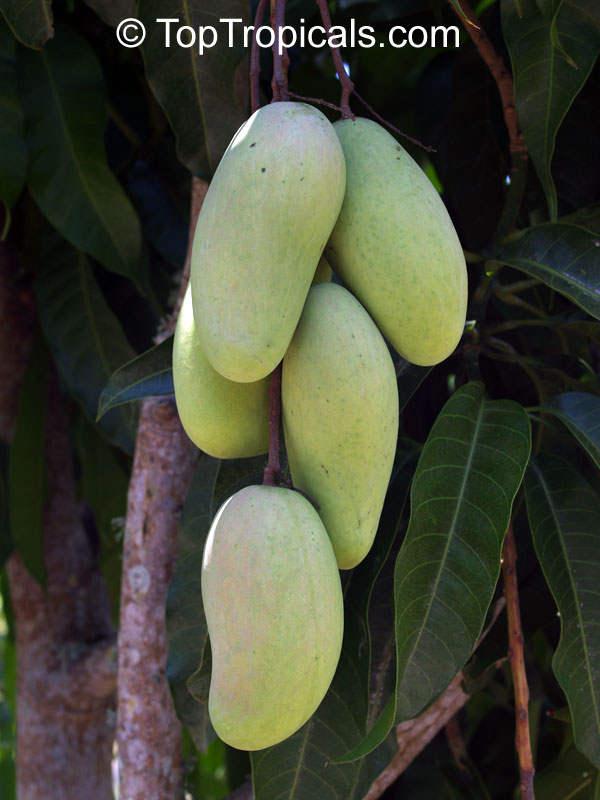
This Burmese cultivar is prized for its bright citrus fragrance and clean, refreshing sweetness that evokes lemon meringue. The fruit is medium sized, typically elongated with a smooth yellow skin when fully ripe. The flesh is completely fiberless, rich in aroma, and noted for its delicate balance of acidity and sweetness. Most fruits develop a uniform golden color, and the seed is small, giving a high flesh-to-seed ratio. The tree is naturally manageable in size and performs well in container culture or small gardens, where it remains productive and visually tidy.
The trees flower and set fruit reliably in tropical and subtropical climates and are considered relatively cold tolerant for a Southeast Asian cultivar. Growth is vigorous but not overly dense, with upright branching and good disease resistance in warm, humid regions. Because the fruit hang in loose clusters, harvesting is easy and the ripening pattern is consistent. This cultivar is especially valued by home growers for its compact habit, excellent dessert quality, and unique lemon-like aroma that distinguishes it from other mango varieties.
Related cultivars: Mangifera indica 'Po Pyu Kalay' (Po Pyu Kalay Mango)
- Mangifera indica 'Sunset' ''Sunset'' (Sunset Mango)
- Mangifera indica Ah Ping ''Ah Ping'' (Ah Ping Mango )
- Mangifera indica Alampur Baneshan ''Alampur Baneshan'' (Alampur Baneshan Mango)
- Mangifera indica Alphonso ''Alphonso'' (Alphonso Mango)
- Mangifera indica Baileys Marvel ''Baileys Marvel'' (Baileys Marvel Mango)
- Mangifera indica Beverly ''Beverly'' (Beverly Mango)
- Mangifera indica Bombay ''Bombay'' (Bombay Mango)
- Mangifera indica Cac ''Cac'' (Cac Mango)
- Mangifera indica Carabao ''Carabao'' (Carabao Mango)
- Mangifera indica Carrie ''Carrie'' (Carrie Mango)
Similar plants: Mangifera indica 'Po Pyu Kalay' (Po Pyu Kalay Mango)
See more info about Mango varieties.
Recommended Fertilizer: SUNSHINE Mango Tango - Mango Tree Booster
SUNSHINE-Honey - sugar booster
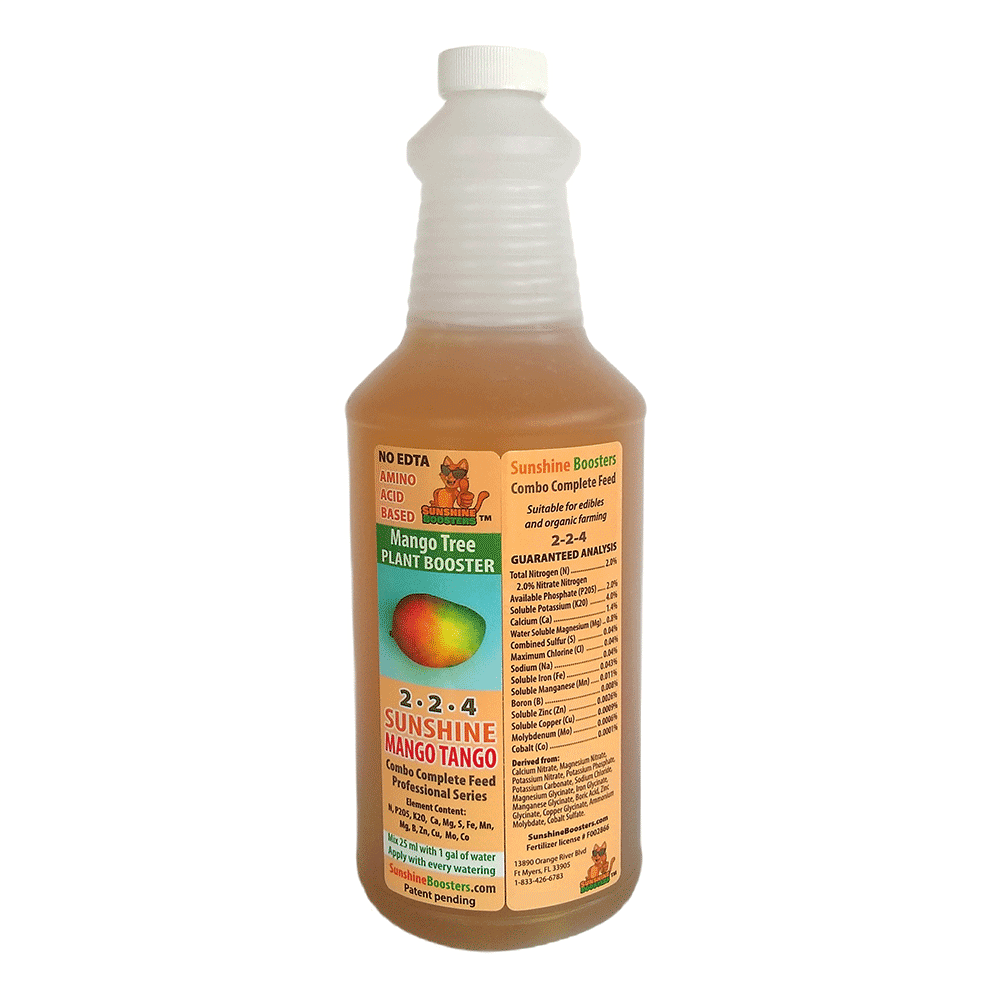 SUNSHINE Mango Tango (NPK 2-2-4) - eco-friendly concentrated nutrition booster for Mango trees. Helps to produce strong growth, high yield, larger fruit size. Improves quantity and quality of flowers and ability to set fruit. Encourages profuse blooming and reduces bud-flower-fruit drop. Can be used as often as with every watering. For best results, use in combination with
 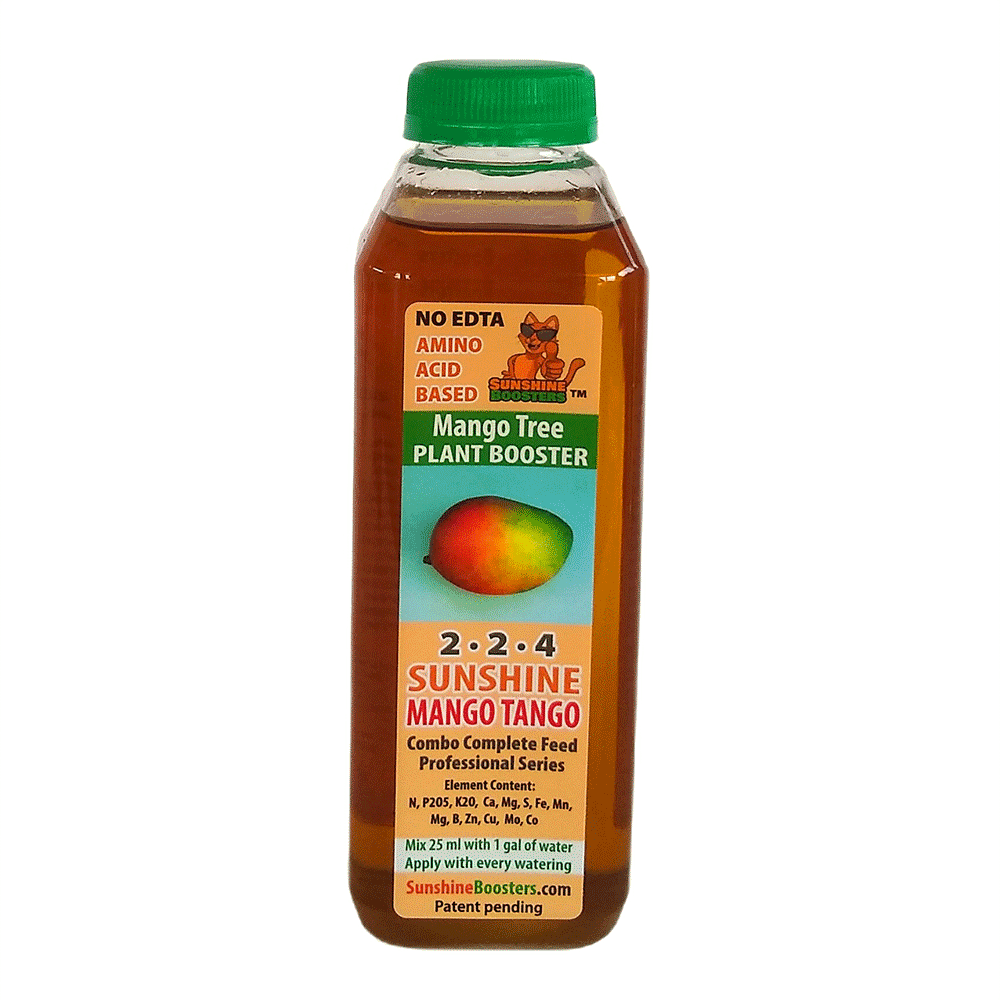 SUNSHINE Mango Tango (NPK 2-2-4) - eco-friendly concentrated nutrition booster for Mango trees. Helps to produce strong growth, high yield, larger fruit size. Improves quantity and quality of flowers and ability to set fruit. Encourages profuse blooming and reduces bud-flower-fruit drop. Can be used as often as with every watering. For best results, use in combination with