Garden Blog - Top Tropicals
Date: 22 Oct 2026
Tropical paradise in the shade, Part 1:
🌳 Tropical paradise in the shade, Part 1:
Making the most of limited sunshine.
More sunshine, more flowers and fruit. Right?
Usually! But Florida's blazing summer sun can scorch leaves and overheat roots, while too little light limits growth and blooming.
What if your garden is shaded by trees, your patio is covered, or your tropicals spend winter indoors?
Can you still grow a tropical paradise? Absolutely! The secret is knowing your shade.
Bright filtered light: Sunlight passing through an open tree canopy or shade cloth. Excellent for many tropical plants, including flowering and fruiting species.
Partial shade: A few hours of direct sun, preferably morning sun, followed by shade during the hottest hours. Often ideal for flowering tropicals in Florida.
Bright indirect light: Plenty of daylight without direct sun, as on a covered patio or near a bright window. Great for foliage and some flowering plants.
Deep shade: Dense canopy, dark corners, or areas between buildings. Mostly suited to foliage plants. Don't expect abundant flowers or fruit.
Even a shaded outdoor garden often receives much more light than a bright-looking indoor room.
You don't need a light meter to evaluate your garden.
On a sunny day, look at the shadow your hand casts on the ground:
Sharp, dark shadow: Strong direct sunlight.
Soft, blurry shadow: Filtered light or light shade.
Barely visible shadow: Deep shade or weak indirect light.
Check the same spot in the morning, at noon, and in the afternoon. Light changes throughout the day and across seasons.
Best trick: Count the hours of direct morning sunshine. Even 2-4 hours can make a big difference for many flowering tropicals.
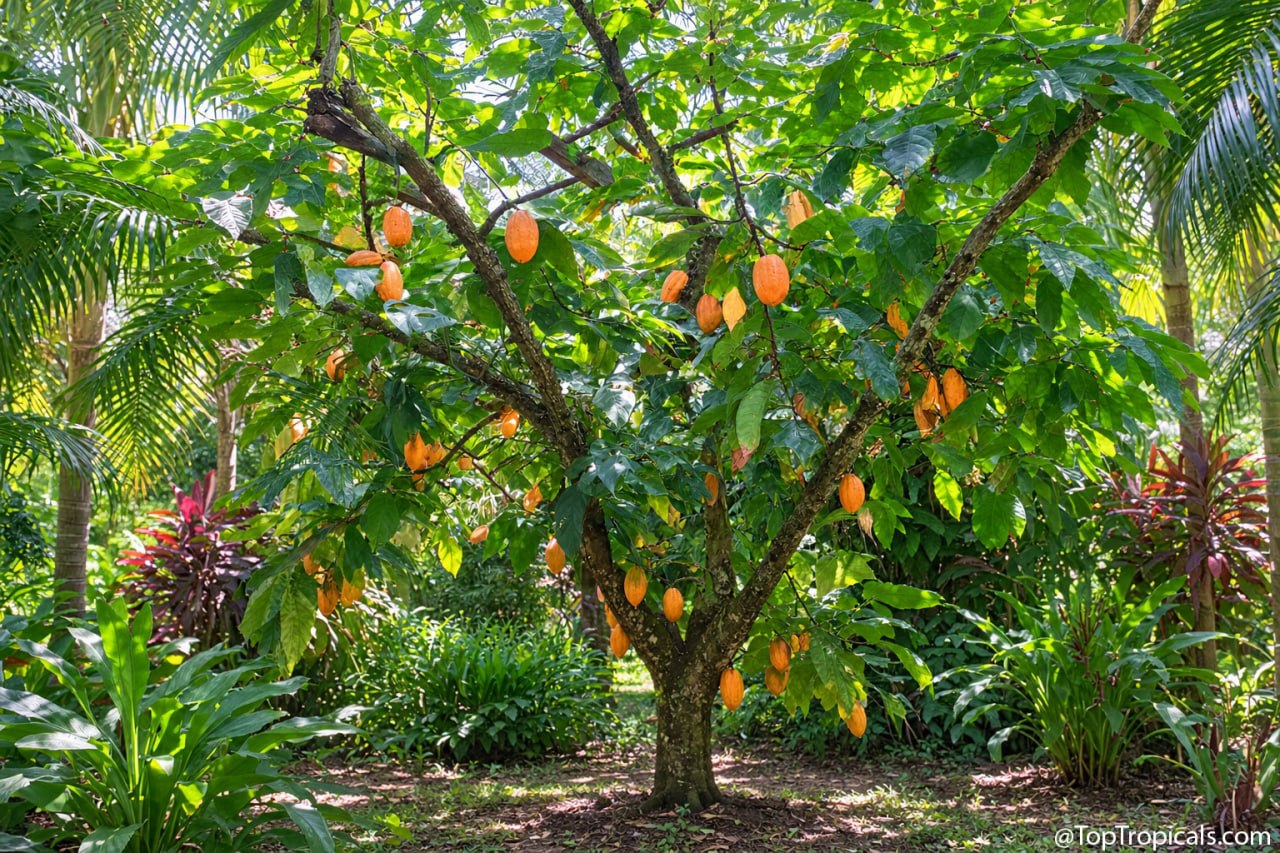
Tropical forests grow in layers. Philodendrons and Aglaonemas thrive beneath trees, Coffee and Cacao tolerate filtered light, while vines climb toward the sun.
But shade-tolerant doesn't mean darkness-loving. Even understory plants often grow and bloom better with brighter light.
A plant may grow lush foliage in shade but never bloom. Less light means less energy for flowers and fruit.
Rule of thumb: More light means more bloom, bigger harvests. But not necessarily full sun! Morning sun and filtered afternoon light often work great.
Watch how sunlight moves through your garden. Even shady spots may get valuable morning sun.
Save brighter spots for flowers and fruit; place foliage plants in deeper shade.
Create jungle layers with shrubs, vines, and groundcovers.
Thin tree canopies to let in filtered light.
Grow vertically: let vines climb toward sunshine.
Move containers as seasonal light changes.
Water less: shaded soil stays moist longer.
Don't overfertilize: fertilizer can't replace sunlight.
Allow airflow to prevent fungal problems in damp shade.
🌳 Growing indoors?
Indoor light drops sharply away from windows. Choose the brightest spot or add grow lights.
Overwintering tropicals? Just keep them healthy until spring. Slower growth is normal. Reduce watering and feeding, and avoid cold window glass.
In Florida, afternoon shade protects leaves from scorching, keeps roots cooler, and reduces water stress. Tree canopies may even offer some frost and wind protection.
The secret is balance: enough light for healthy growth without excessive sun.
Don't fight your garden's conditions. Choose plants that make the most of them!
👉 Coming next: Part 2: What to plant: tropical foliage, fragrant flowers, vines, and even fruit trees that grow in filtered light.
🛒 Explore shade-tolerant tropical plants
· Tropical paradise in the shade, Part 2: What to plant? Shade-tolerant tropical plants.
· Full Sun Isn't Always Best for Peach Trees - Especially in Florida
· When Is the Best Time to Water Your Plants?
· How much water is too much?
#How_to #Discover
🟢 Join 👉 TopTropicals
Making the most of limited sunshine.
More sunshine, more flowers and fruit. Right?
Usually! But Florida's blazing summer sun can scorch leaves and overheat roots, while too little light limits growth and blooming.
What if your garden is shaded by trees, your patio is covered, or your tropicals spend winter indoors?
Can you still grow a tropical paradise? Absolutely! The secret is knowing your shade.
🌳 Not all shade is created equal
Bright filtered light: Sunlight passing through an open tree canopy or shade cloth. Excellent for many tropical plants, including flowering and fruiting species.
Partial shade: A few hours of direct sun, preferably morning sun, followed by shade during the hottest hours. Often ideal for flowering tropicals in Florida.
Bright indirect light: Plenty of daylight without direct sun, as on a covered patio or near a bright window. Great for foliage and some flowering plants.
Deep shade: Dense canopy, dark corners, or areas between buildings. Mostly suited to foliage plants. Don't expect abundant flowers or fruit.
Even a shaded outdoor garden often receives much more light than a bright-looking indoor room.
🔎 Quick shade test: Look at the shadows!
You don't need a light meter to evaluate your garden.
On a sunny day, look at the shadow your hand casts on the ground:
Sharp, dark shadow: Strong direct sunlight.
Soft, blurry shadow: Filtered light or light shade.
Barely visible shadow: Deep shade or weak indirect light.
Check the same spot in the morning, at noon, and in the afternoon. Light changes throughout the day and across seasons.
Best trick: Count the hours of direct morning sunshine. Even 2-4 hours can make a big difference for many flowering tropicals.
🌳 Learn from the rainforest
Tropical forests grow in layers. Philodendrons and Aglaonemas thrive beneath trees, Coffee and Cacao tolerate filtered light, while vines climb toward the sun.
But shade-tolerant doesn't mean darkness-loving. Even understory plants often grow and bloom better with brighter light.
🌳 Growing isn't the same as flowering or fruiting
A plant may grow lush foliage in shade but never bloom. Less light means less energy for flowers and fruit.
Rule of thumb: More light means more bloom, bigger harvests. But not necessarily full sun! Morning sun and filtered afternoon light often work great.
🌳 Work with your shade, not against it
Watch how sunlight moves through your garden. Even shady spots may get valuable morning sun.
Save brighter spots for flowers and fruit; place foliage plants in deeper shade.
Create jungle layers with shrubs, vines, and groundcovers.
Thin tree canopies to let in filtered light.
Grow vertically: let vines climb toward sunshine.
Move containers as seasonal light changes.
Water less: shaded soil stays moist longer.
Don't overfertilize: fertilizer can't replace sunlight.
Allow airflow to prevent fungal problems in damp shade.
🌳 Growing indoors?
Indoor light drops sharply away from windows. Choose the brightest spot or add grow lights.
Overwintering tropicals? Just keep them healthy until spring. Slower growth is normal. Reduce watering and feeding, and avoid cold window glass.
🌳 A little shade can be a blessing
In Florida, afternoon shade protects leaves from scorching, keeps roots cooler, and reduces water stress. Tree canopies may even offer some frost and wind protection.
The secret is balance: enough light for healthy growth without excessive sun.
Don't fight your garden's conditions. Choose plants that make the most of them!
👉 Coming next: Part 2: What to plant: tropical foliage, fragrant flowers, vines, and even fruit trees that grow in filtered light.
🛒 Explore shade-tolerant tropical plants
📚 Learn more
· Tropical paradise in the shade, Part 2: What to plant? Shade-tolerant tropical plants.
· Full Sun Isn't Always Best for Peach Trees - Especially in Florida
· When Is the Best Time to Water Your Plants?
· How much water is too much?
#How_to #Discover
🟢 Join 👉 TopTropicals
Date: 21 Oct 2026
Daily Cat Lesson: Pets dont know theyre disabled




🐾 Daily Cat Lesson: Pets don't know they're disabled
Pets don't know they're disabled. They don't feel sorry for themselves or worry about what they're missing. They simply adapt and enjoy life with whatever equipment they have!
A missing eye, a few teeth, or even three legs instead of four? No big deal!
Cats are remarkably good at adjusting to physical limitations, using their other senses and abilities to compensate. They don't dwell on what they've lost. They're too busy being cats!
🐾 Daily Dose of Cat: Meet Marie the Pirate! 🏴☠️
Remember our story about the box of kittens with a one-eyed mama?
Well, we owe you a correction! The tiny "mama" turned out to be just another kitten.
Yes, apparently it was just a box of miscellaneous cats!
Marie is is about 8 months old, and her vet recently discovered that she was actually born with only one eye!
Marie moved to our B-Farm, quickly made friends with Simon and 12 other cats, got spayed, and is now happily exploring her new catio.
One eye, zero worries, and a whole new life!
Marie will be reporting from her favorite Catio soon. Stay with us for more pirate adventures!
🐈📸 Top Tropicals rescued cat One-Eye Marie found her new home and new friend - Toothless Simon at PeopleCats.Garden.
📚 Learn more:
Orphaned kittens finding the Right Door
Simon "Walkie-Talkie" - the cat who made the right decision
🐈 Stay with us for your #DailyDoseOfCat!
#DailyCatLesson #PeopleCats
🟢 Join 👉 TopTropicals
Date: 21 Oct 2026
9 Exotic Mango Recipes From Around the World
🍴 9 Exotic Mango Recipes From Around the World
Got too many mangoes? Excellent problem to have. Here are nine delicious ways to take them around the world without leaving the kitchen.
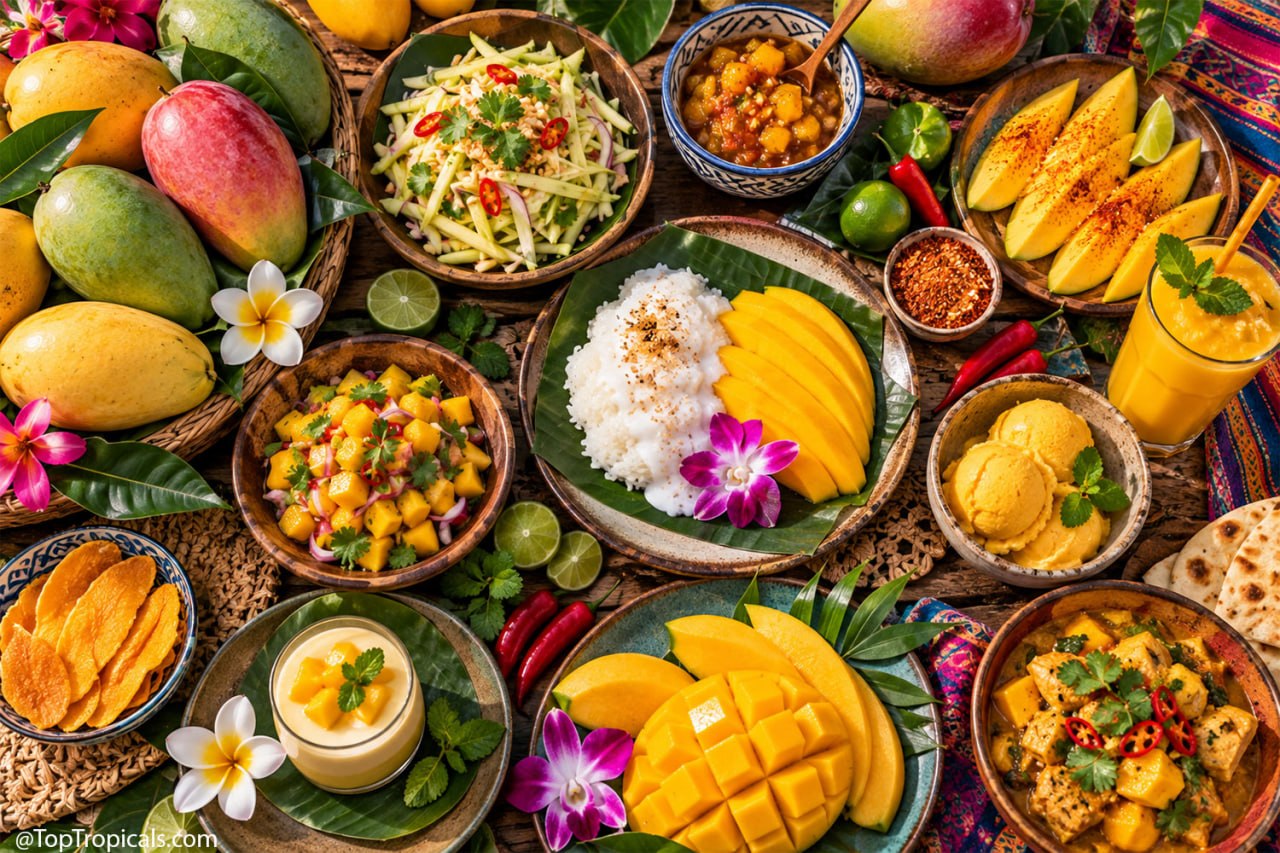
- 🥭 1. Thai Mango Sticky Rice
Cook sticky rice and stir in warm coconut milk with a little sugar and salt. Serve with thick slices of ripe mango and drizzle with more coconut cream.
The trick: Use your sweetest, softest mango. Nam Doc Mai is perfect. - 🥭 2. Spicy Green Mango Salad
Julienne a firm green mango and toss with red onion, cilantro, fresh chili, lime juice and a splash of fish sauce. Add crushed peanuts for crunch.
Sweet, sour, salty, spicy and crunchy all at once. - 🥭 3. Indian Mango Chutney
Simmer diced mango with ginger, vinegar, brown sugar, chili and warm spices until thick and glossy.
Serve with curry, grilled chicken, cheese or simply attack the jar with a spoon. - 🥭 4. Mexican Chili-Lime Mango
Cut ripe mango into spears. Squeeze fresh lime over them and sprinkle generously with Tajín or chili-lime seasoning.
That's it. Three ingredients and somehow mango tastes completely different. - 🥭 5. Tropical Mango Salsa
Mix diced mango with red onion, cilantro, jalapeño and lime juice. Add a pinch of salt and let it sit for 10 minutes.
Fantastic with grilled fish, shrimp, chicken or tortilla chips. - 🥭 6. Mango Lassi
Blend ripe mango with plain yogurt, a splash of milk, cardamom and a little honey. Add ice and blend until thick and frothy.
Breakfast, dessert or emergency mango disposal system. - 🥭 7. Homemade Mango Sorbet
Blend ripe mango with lime juice and a little sugar or honey. Freeze, stirring a couple of times as it firms up.
For extra tropical flavor, replace a little of the mango with coconut milk. - 🥭 8. Mango Curry
Cook onion, garlic and ginger with curry spices. Add coconut milk, chunks of mango and chicken or vegetables and gently simmer.
Add the mango toward the end so you still get juicy pieces instead of mango disappearing into the sauce. - 🥭 9. Chili-Mango Dried Slices
Slice mango thinly, sprinkle lightly with lime juice and chili, then dry in a dehydrator or very low oven until chewy.
Make plenty. Somehow these disappear much faster than fresh mangoes. - 🥭 One Mango, Nine Adventures
Ripe, green, spicy, creamy, frozen, savory or sweet: mango is one of those rare fruits that can do almost anything.
The hardest part may be deciding which recipe gets the next mango.
🛒 Shop mango varieties
📚 Learn more:
Mango Tree - Mangifera indica - in Plant Encyclopedia
Mango Traditions From Around the World
Best Mango Varieties for Florida: It is Not Just About Taste
Early, Midseason & Late Mangoes: How to Get Fruit for Months
6 Best-Tasting Mango Varieties
6 Best Thai and Southeast Asian Mango Varieties
5 Best Indian Mango Varieties and Their Flavors
5 Best Dwarf Mango Trees for Small Yards
5 Best Mango Trees for Beginners
#Mango_Rainbow - varieties you should try
#Food_Forest #Recipes #Discover #Mango


Date: 20 Oct 2026
The tree that brings snow to Florida
❄️ The tree that brings snow to Florida 🐊
Baccharis halimifolia - Aster Tree, Snow Bush, Groundsel Tree.
When we bought our first acreage property in Florida, I noticed compact green native trees scattered around the land. Nothing special. Just ordinary, rather boring bushes.
Until one morning in November.
Almost overnight, they had exploded into clouds of fluffy white "snow"! The display lasted for weeks, brightening our landscape through the cooler months. I had discovered Snow Bush - one of Florida's most surprising natives.
Yes! Snow Bush belongs to Asteraceae, the huge family of daisies, asters, sunflowers, and chrysanthemums. Unlike most familiar members, it grows into a woody, often multi-trunked shrub or small tree, usually 6-10 feet tall. It's among the unusual tree-like asters native to eastern North America.
Baccharis halimifolia is the only member of the Aster family in eastern North America to reach tree stature!
- NC State's wetland plant guide
❄️ Those clouds aren't flowers... Think dandelions!
The tiny flowers are easy to miss. The spectacular white show comes later, from silky hairs attached to the fruits. Like thousands of miniature dandelion parachutes, they catch the light and carry seeds on the wind.
Snow Bush flowers in fall, offering late-season nectar and pollen for bees, butterflies, and other insects. Its dense branches provide cover for wildlife, too. The snowy seed display follows flowering and can persist for weeks, depending on weather.
❄️ From freezing winters to scorching summers🔥
Don't let those delicate clouds fool you. This plant is tough!
During our February 2026 Florida freeze, temperatures fell to 25°F with fierce winds and prolonged freezing nights. Many tropical plants suffered. Our Snow Bush? Not a scratch - one of the clear winners! And here is why -
Baccharis halimifolia is reported hardiness extends into USDA Zone 5!
- University of Florida
At the other extreme, it handles blazing Florida summers. From deep winter cold to triple-digit heat, its climatic range spans well over 100°F.
Drought after establishment? Fine.
Poor sandy soil? Fine.
Salt spray? Also fine. It tolerates periodic wet conditions, too. Give it sun, room to grow, and little fuss.
All year, Snow Bush quietly blends into the greenery. Then, just as other plants slow down, it puts on its white winter coat.
Florida snow - no freezing weather required!
🛒 Grow your own Florida snow!
📚Learn more:
• Baccharis halimifolia in Plant Encyclopedia
• The most unique Florida Native
• 9 tough trees for hot, dry spots that actually thrive
• What tropical plants survived Floridas historic freeze without protection
• 15 "Bulletproof" Fruit Trees for Tough Ground
#Discover #Trees #Butterfly_Plants


🟢 Join 👉 TopTropicals
Baccharis halimifolia - Aster Tree, Snow Bush, Groundsel Tree.
When we bought our first acreage property in Florida, I noticed compact green native trees scattered around the land. Nothing special. Just ordinary, rather boring bushes.
Until one morning in November.
Almost overnight, they had exploded into clouds of fluffy white "snow"! The display lasted for weeks, brightening our landscape through the cooler months. I had discovered Snow Bush - one of Florida's most surprising natives.
❄️ The only tree in the Daisy family
Yes! Snow Bush belongs to Asteraceae, the huge family of daisies, asters, sunflowers, and chrysanthemums. Unlike most familiar members, it grows into a woody, often multi-trunked shrub or small tree, usually 6-10 feet tall. It's among the unusual tree-like asters native to eastern North America.
Baccharis halimifolia is the only member of the Aster family in eastern North America to reach tree stature!
- NC State's wetland plant guide
❄️ Those clouds aren't flowers... Think dandelions!
The tiny flowers are easy to miss. The spectacular white show comes later, from silky hairs attached to the fruits. Like thousands of miniature dandelion parachutes, they catch the light and carry seeds on the wind.
❄️ A feast when gardens are winding down
Snow Bush flowers in fall, offering late-season nectar and pollen for bees, butterflies, and other insects. Its dense branches provide cover for wildlife, too. The snowy seed display follows flowering and can persist for weeks, depending on weather.
❄️ From freezing winters to scorching summers🔥
Don't let those delicate clouds fool you. This plant is tough!
During our February 2026 Florida freeze, temperatures fell to 25°F with fierce winds and prolonged freezing nights. Many tropical plants suffered. Our Snow Bush? Not a scratch - one of the clear winners! And here is why -
Baccharis halimifolia is reported hardiness extends into USDA Zone 5!
- University of Florida
At the other extreme, it handles blazing Florida summers. From deep winter cold to triple-digit heat, its climatic range spans well over 100°F.
‼️ From bitter northern winters to Florida's triple-digit summer heat - Snow Bush thrives across an astonishing climatic range of more than 100 degrees!
Drought after establishment? Fine.
Poor sandy soil? Fine.
Salt spray? Also fine. It tolerates periodic wet conditions, too. Give it sun, room to grow, and little fuss.
All year, Snow Bush quietly blends into the greenery. Then, just as other plants slow down, it puts on its white winter coat.
Florida snow - no freezing weather required!
🛒 Grow your own Florida snow!
📚Learn more:
• Baccharis halimifolia in Plant Encyclopedia
• The most unique Florida Native
• 9 tough trees for hot, dry spots that actually thrive
• What tropical plants survived Floridas historic freeze without protection
• 15 "Bulletproof" Fruit Trees for Tough Ground
#Discover #Trees #Butterfly_Plants
Date: 19 Oct 2026
Cold-hardy tropical fruit: How cold is cold?
❄️ Cold-hardy tropical fruit: How cold is cold?
Dreaming of tropical fruit outside the tropics? Some exotic trees are surprisingly tough. But before planting an avocado in Michigan, read this!
- ❄️ Cold-hardy doesn't mean snow-hardy!
A customer once complained:
"I planted a Mango tree last year. But after the snow melted, it never sprouted back. I need a replacement!"
Unfortunately, tropical plants don't read winter forecasts!
Cold-hardy is relative. A tree surviving 28F may be considered hardy compared with one damaged at 40F. But neither belongs outdoors through a Michigan winter.
A brief frost and months of freezing weather are different challenges. Established trees tolerate more cold than young plants. And survival doesn't guarantee a harvest - flowers and fruit may be lost. - ❄️ Florida's great freeze test of 2026
In February 2026, our Top Tropicals farm in Sebring became an accidental cold-hardiness testing ground:
25F minimum temperature
Three freezing nights, 8-10 hours each
20 mph winds, gusting to 50 mph
Daytime temperatures near 50F for over a week
Many established trees, 2-3 years old, had no protection. Some suffered badly. Others escaped with little or no damage.
❄️ Meet the freeze survivors!
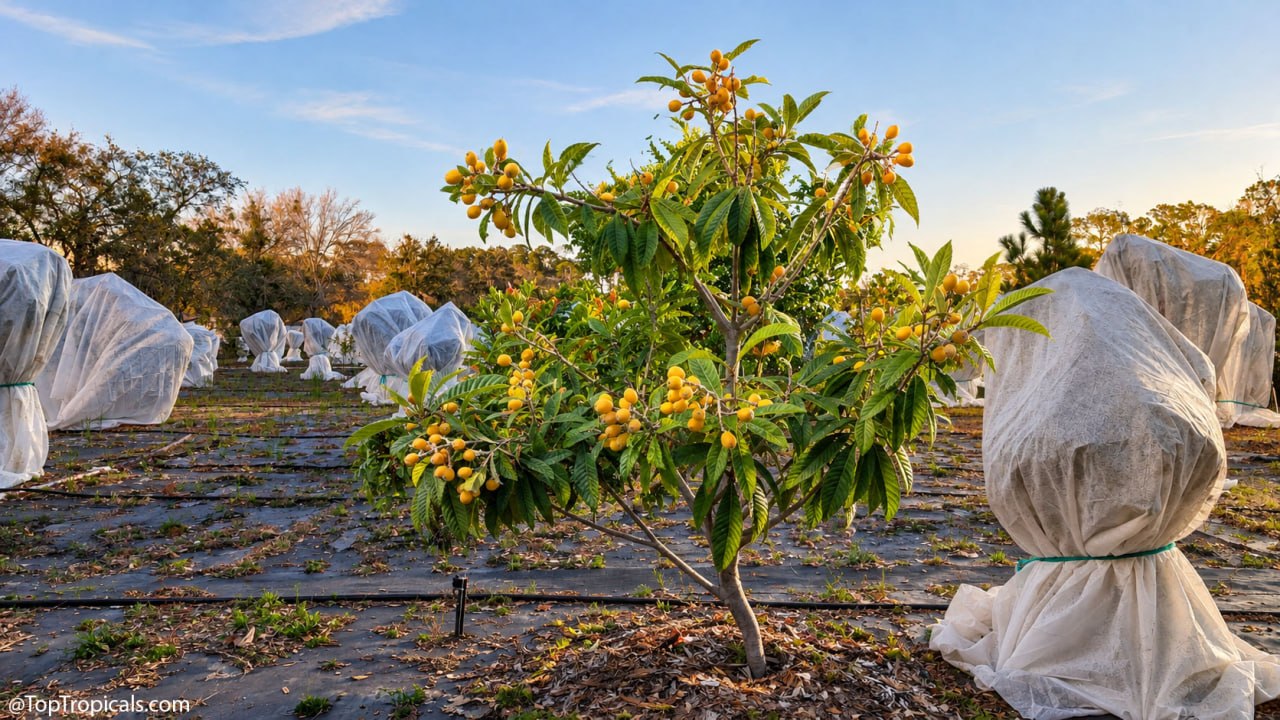
🍑 Loquat (Eriobotrya japonica) - One of the toughest subtropical fruits. Mature trees survive temperatures into the teens, although winter flowers and fruit are vulnerable.
🍒 Eugenia Cherries (Eugenia) - Surinam Cherry, Cherry of the Rio Grande, and Grumichama survived. Beautiful evergreens with delicious berries.
🍇 Jaboticaba (Myrciaria / Plinia) - The Brazilian tree that fruits directly on its trunk! Established trees survived; young plants need protection.
🍐 Pineapple Guava (Feijoa sellowiana) - A subtropical champion! Much hardier than most tropical fruits, with edible flower petals and aromatic fruit.
Macadamia (Macadamia) - Our Macadamia nut trees survived 25F. Flowers and young growth are more sensitive.
🍈 Cattley Guava (Psidium cattleyanum) - Tougher than Tropical Guava. Compact evergreen with aromatic fruit.
Cold-hardy Avocados (Persea americana) - Mexican-derived varieties are tougher than typical avocados. Fantastic, Joey, Lila, Stewart, Brazos Belle, Winter Mexican, and others survived. Detailed field report coming soon!
❄️ More hardy edibles!
Not all are truly tropical, but all passed our freeze test:
Mulberry (Morus) - Productive and hardy; dwarf varieties suit small gardens.
Fig (Ficus carica) - Deciduous, adapted to winter dormancy.
Pomegranate (Punica granatum) - Loves heat, tolerates freezing winters.
Persimmon (Diospyros) - American and Asian types tolerate cold.
Peach, Plum, Nectarine (Prunus) - Choose low-chill varieties for Florida.
Blackberry, Mysore Raspberry (Rubus) - Hardy berries.
Grape (Vitis) - Many varieties tolerate freezing winters.
Olive (Olea europaea) - Mediterranean, not tropical, but cold-tolerant.
Also surviving: Gin Berry, Bay Leaf, Elderberry, Yerba Mate, and Nopal Cactus.
❄️ Survived underground
Moringa and edible Gingers survived underground.
Their tops may die back, but roots and rhizomes regenerate in warm weather.
❄️ Help your trees survive!
Plant in spring and feed well to establish roots.
Choose sheltered locations away from cold-air pockets.
Mulch and protect young trees with frost cloth.
Delay pruning until spring growth reveals the damage.
In colder climates, grow suitable tropical fruits in containers and overwinter indoors or in a greenhouse.
Our freeze showed that many subtropical fruits can handle 25F, strong winds, and three freezing nights.
But remember: these were established trees in Central Florida, not newly planted trees in Michigan!
🛒 Shop cold hardy tropicals
📚 Learn more:
· Loquat tree (Eriobotrya japonica) in Plant Encyclopedia
· 2026 Freeze Guide: Cold-Hardy Avocados and Fruit Trees
· What tropical plants survived Florida's historic freeze without protection
· Cold-hardy avocado survival groups - what the numbers really mean
#Food_Forest #How_to #Discover
🟢 Join 👉 TopTropicals