Eriobotrya japonica (Loquat)
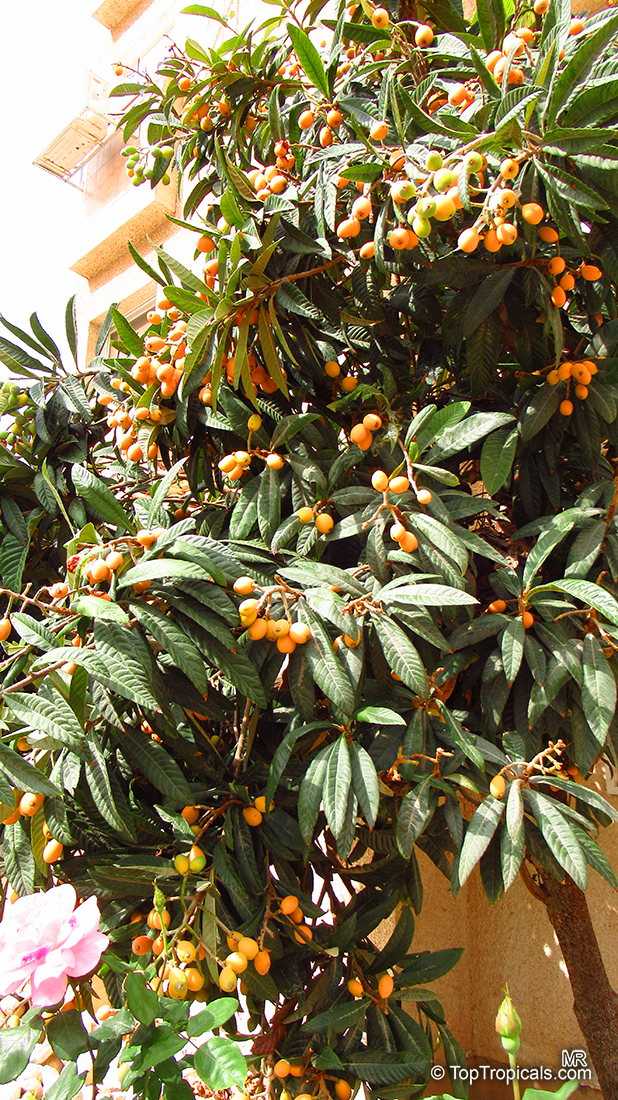
Botanical name: Eriobotrya japonica
Common names: Loquat, Japanese Plum, Nispero
Family: Rosaceae
Origin: China
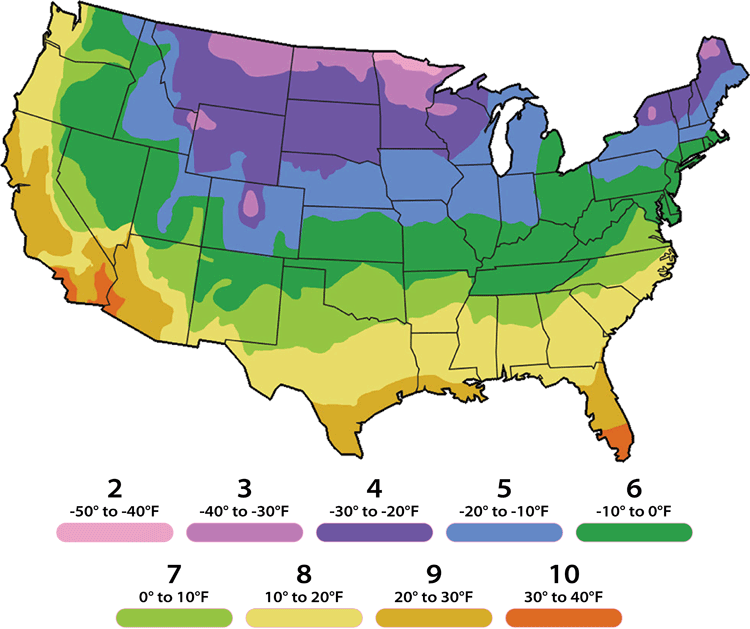
USDA Zone: 8-11
Cold tolerance: 25°F
 Plant form: Small tree
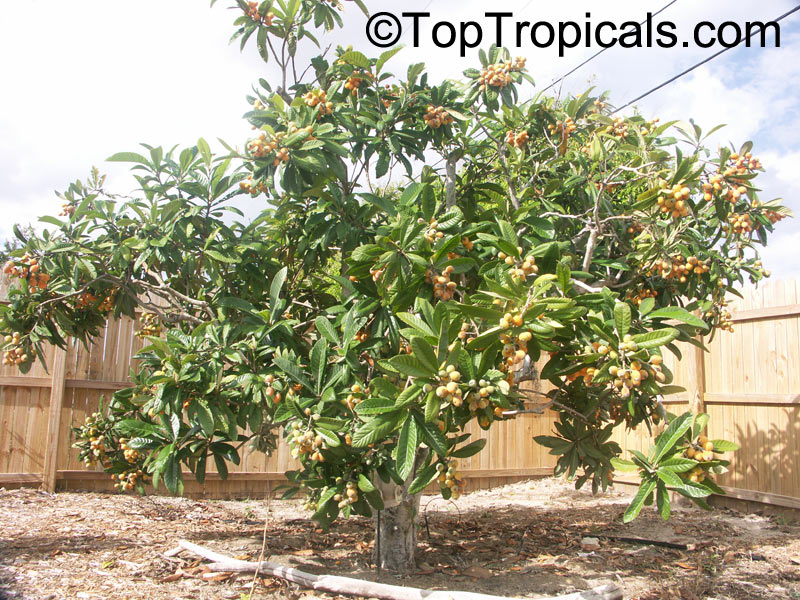
 Mature height: 10-20 ft
 Sun exposure: Full sun or bright light indoor
 Cold tolerance: Tolerates light freezing to about 30°F for short periods (mature plants). Young plants must be protected.
 Watering: Moderate
 Suitable for: Outdoors in the suitable USDA zone; small gardens, containers, and indoor growing
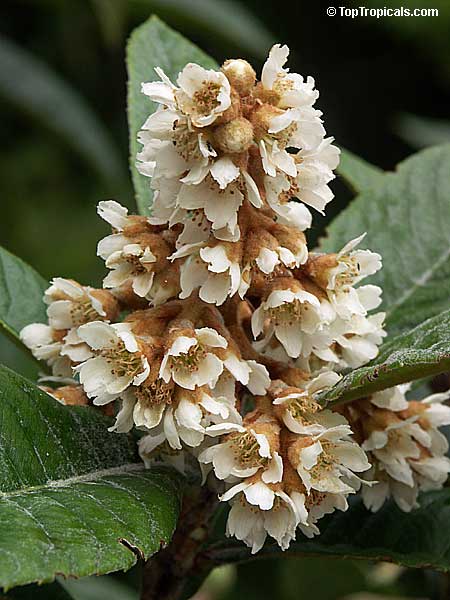
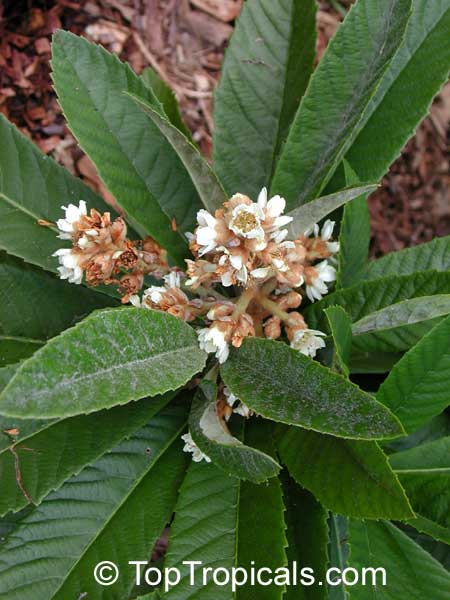
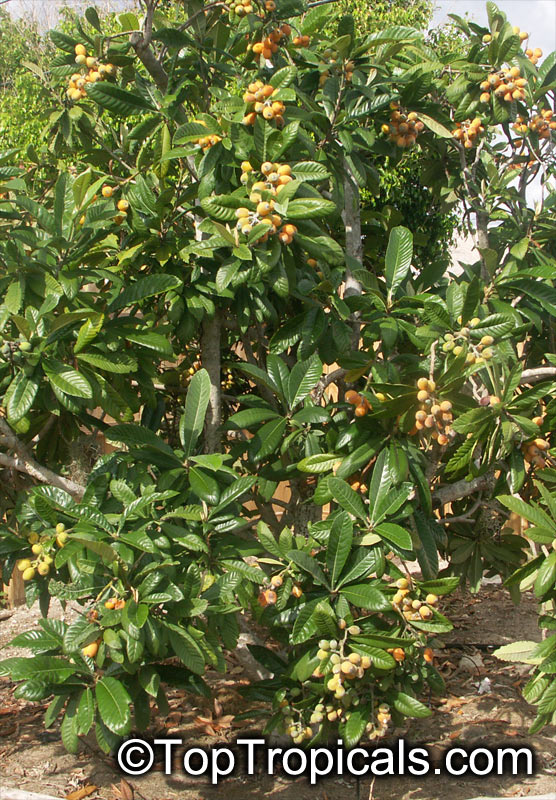
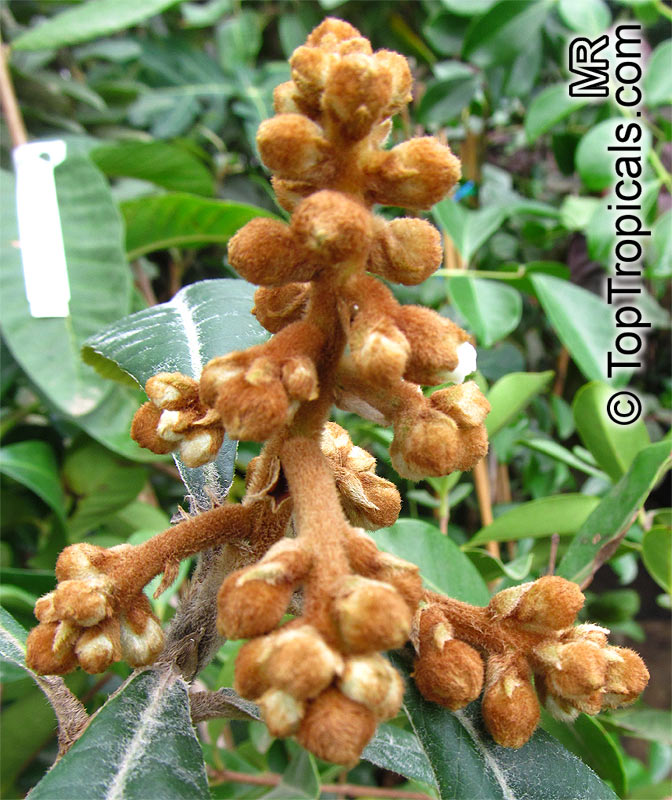
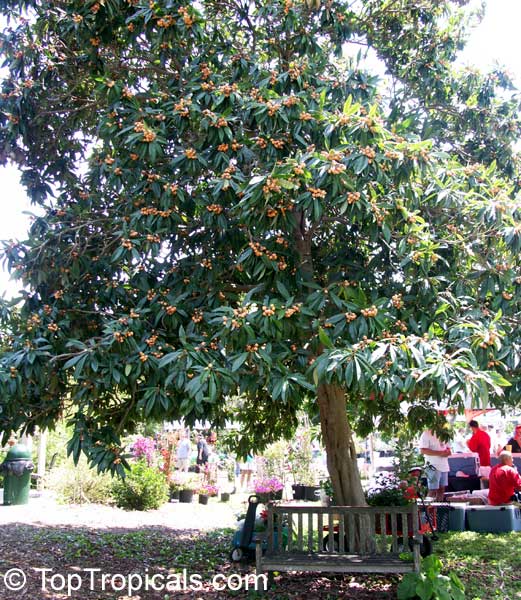
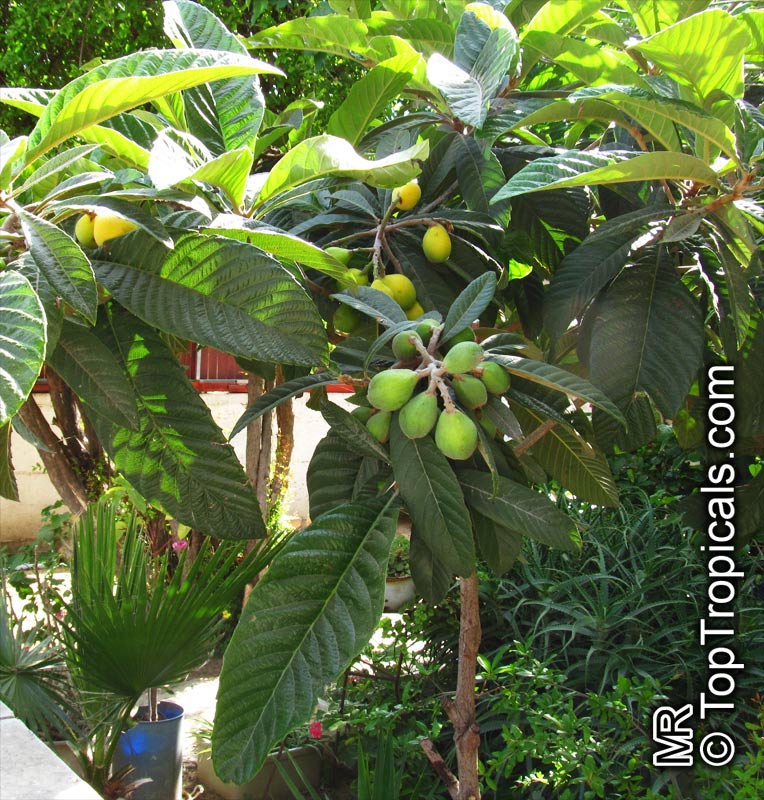
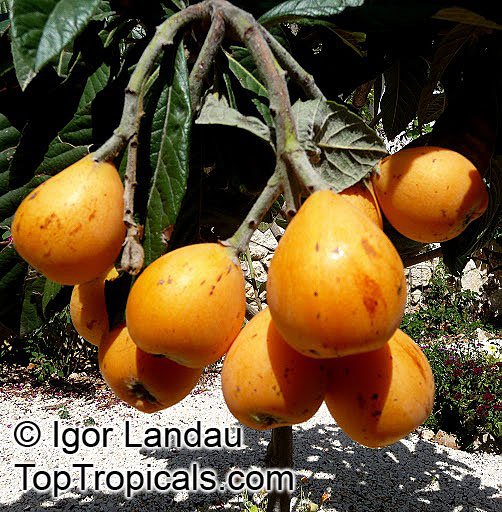
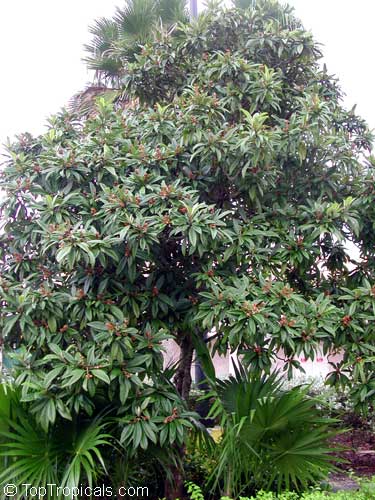
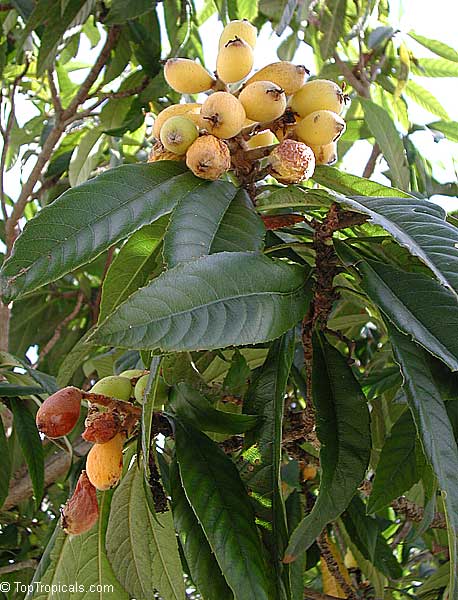
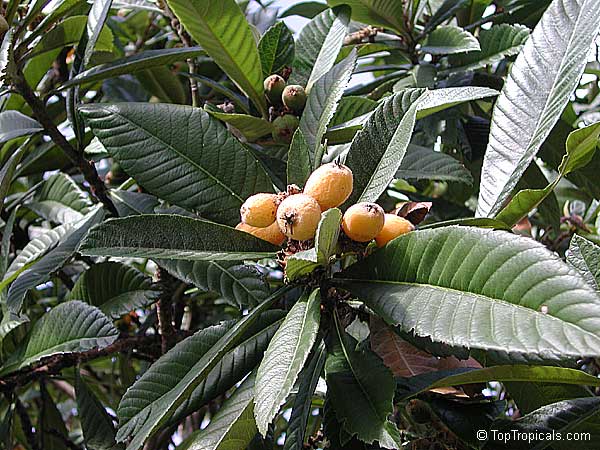
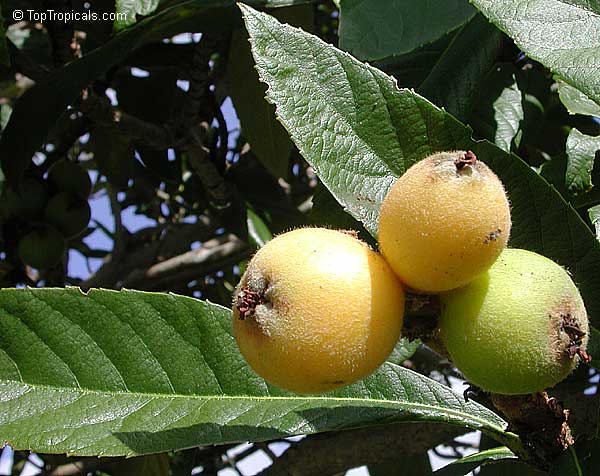
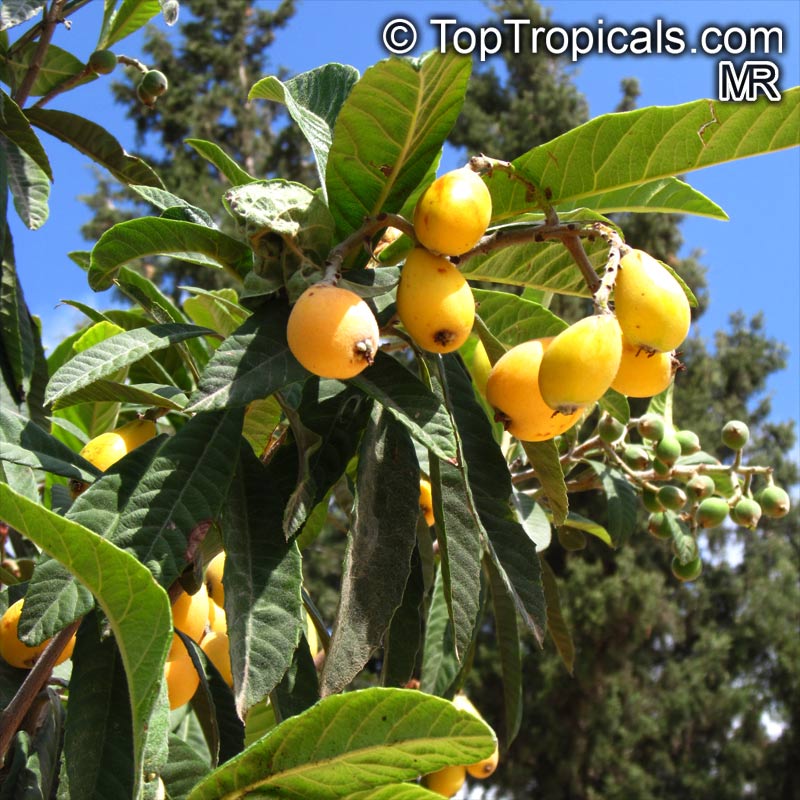
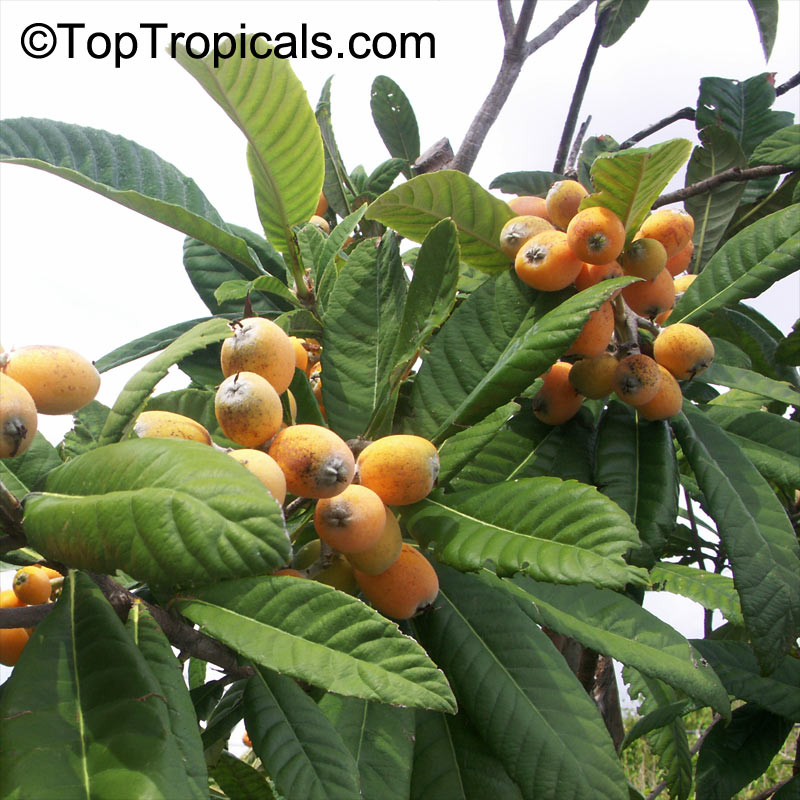
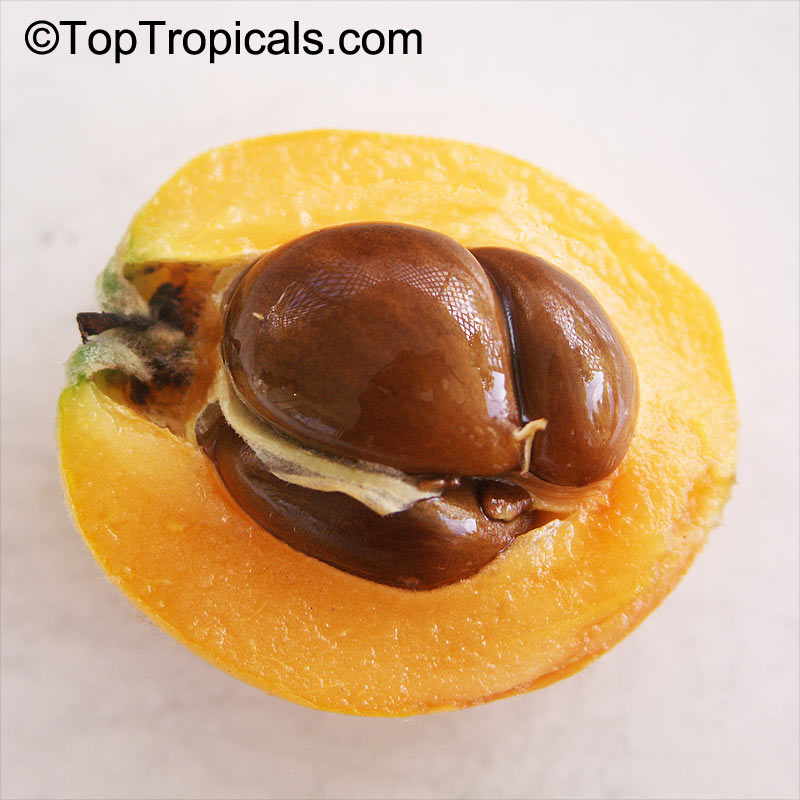
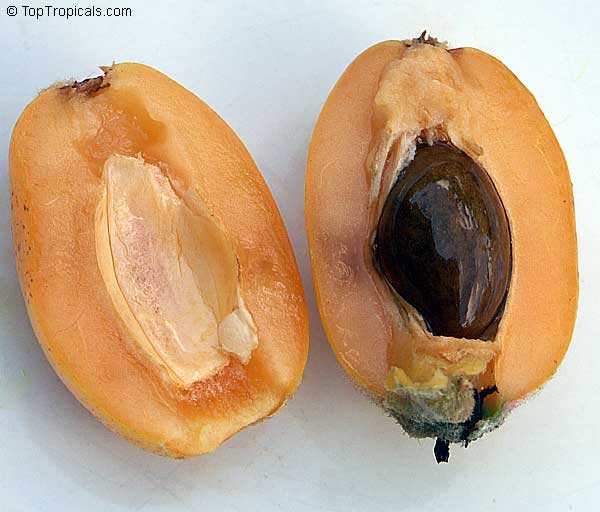
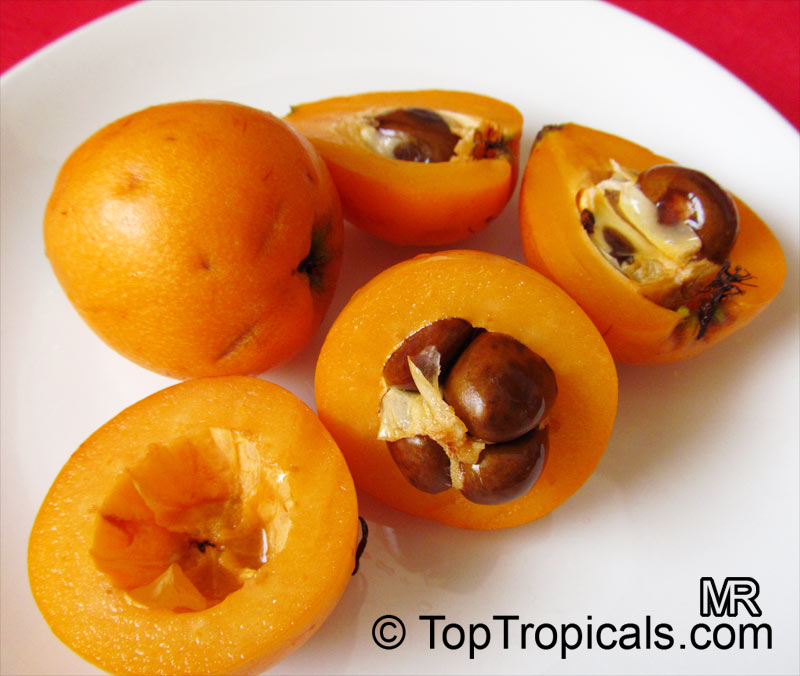
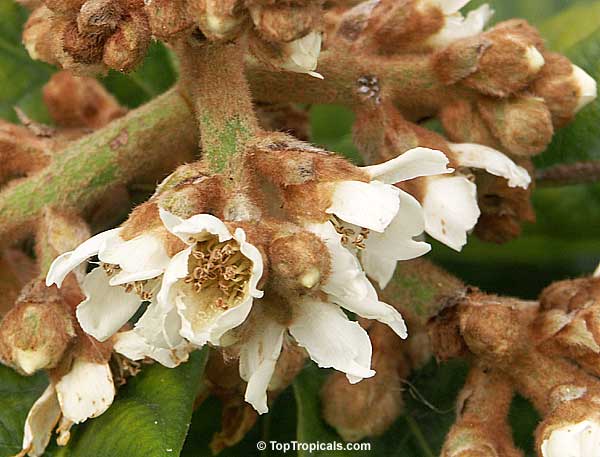
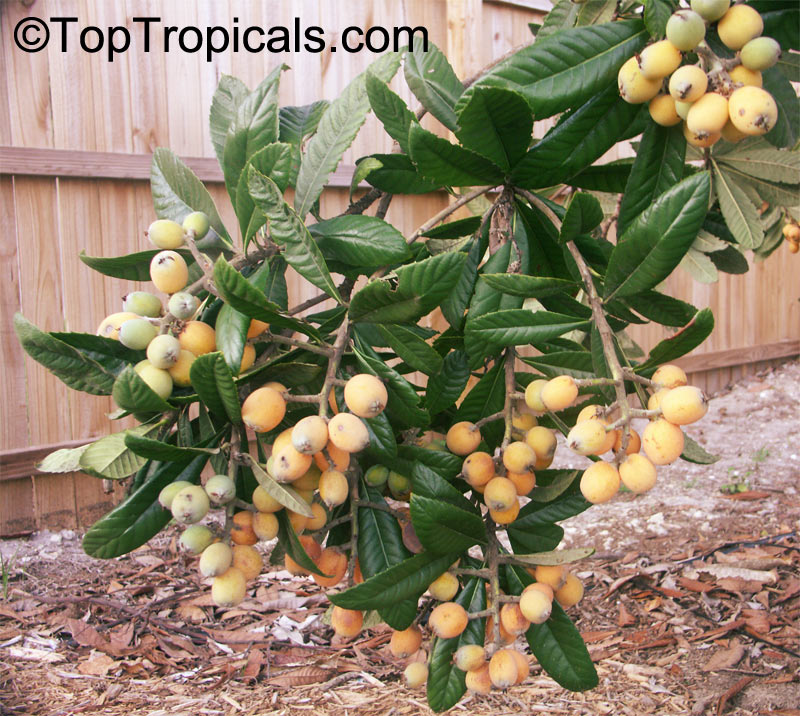
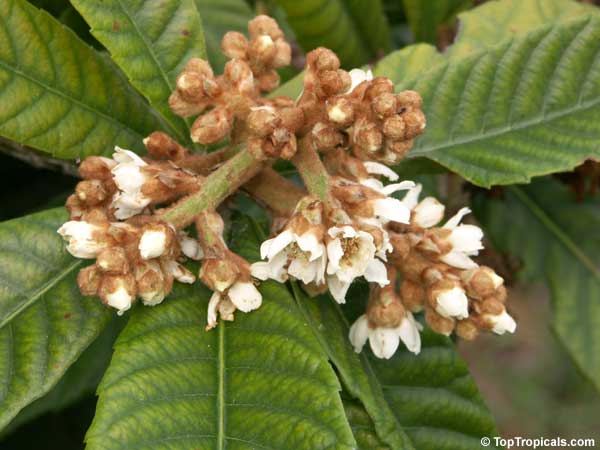
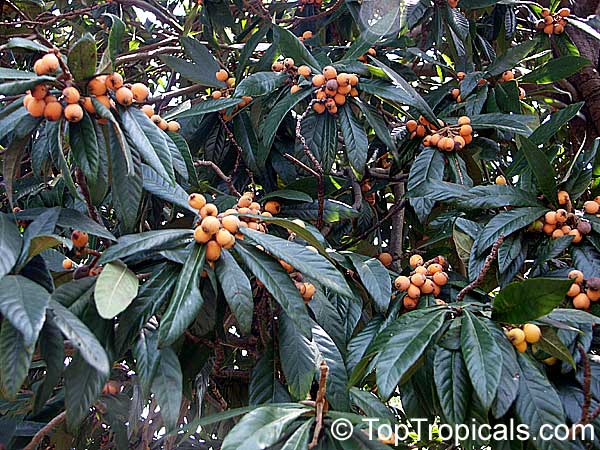
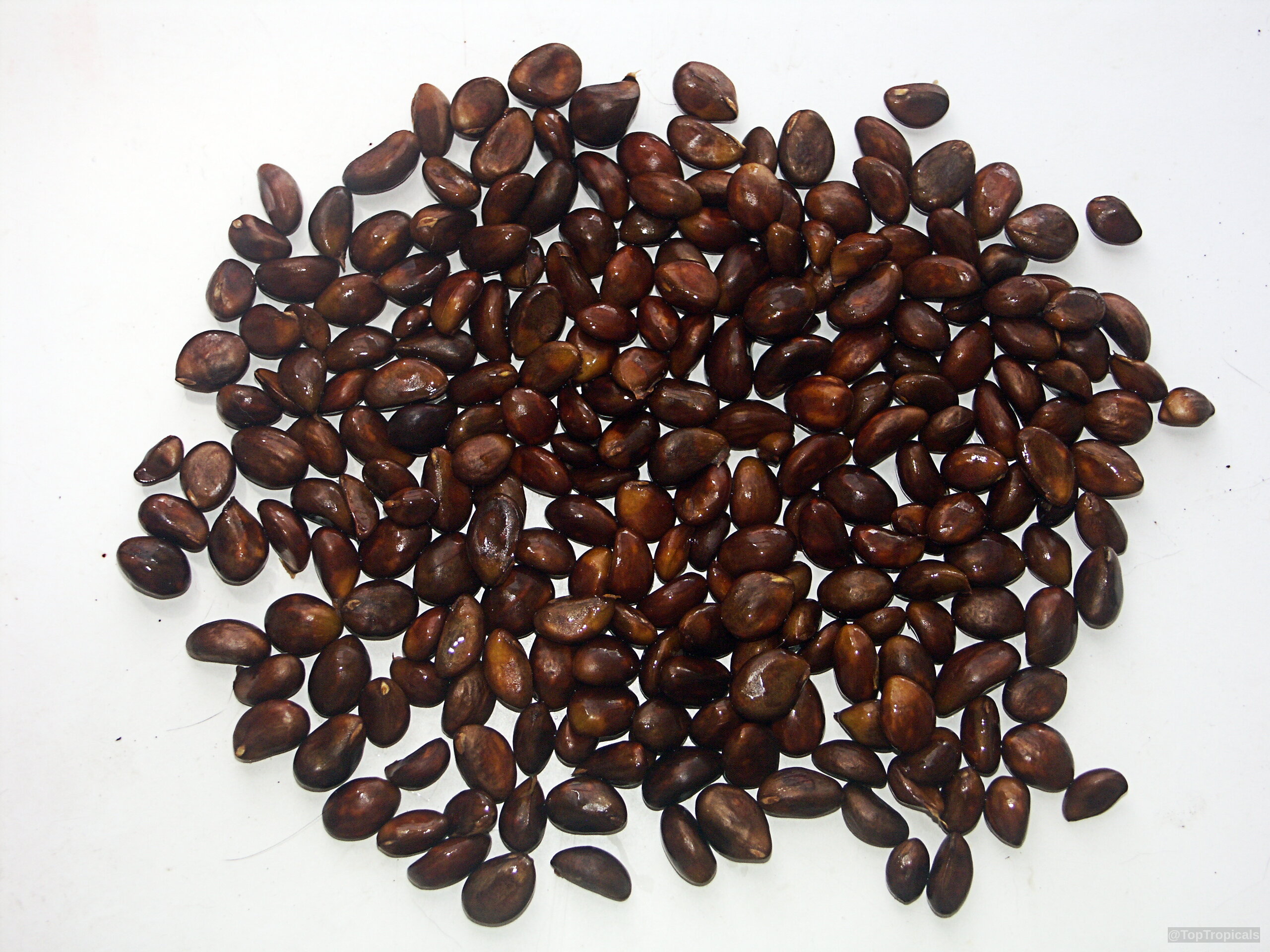
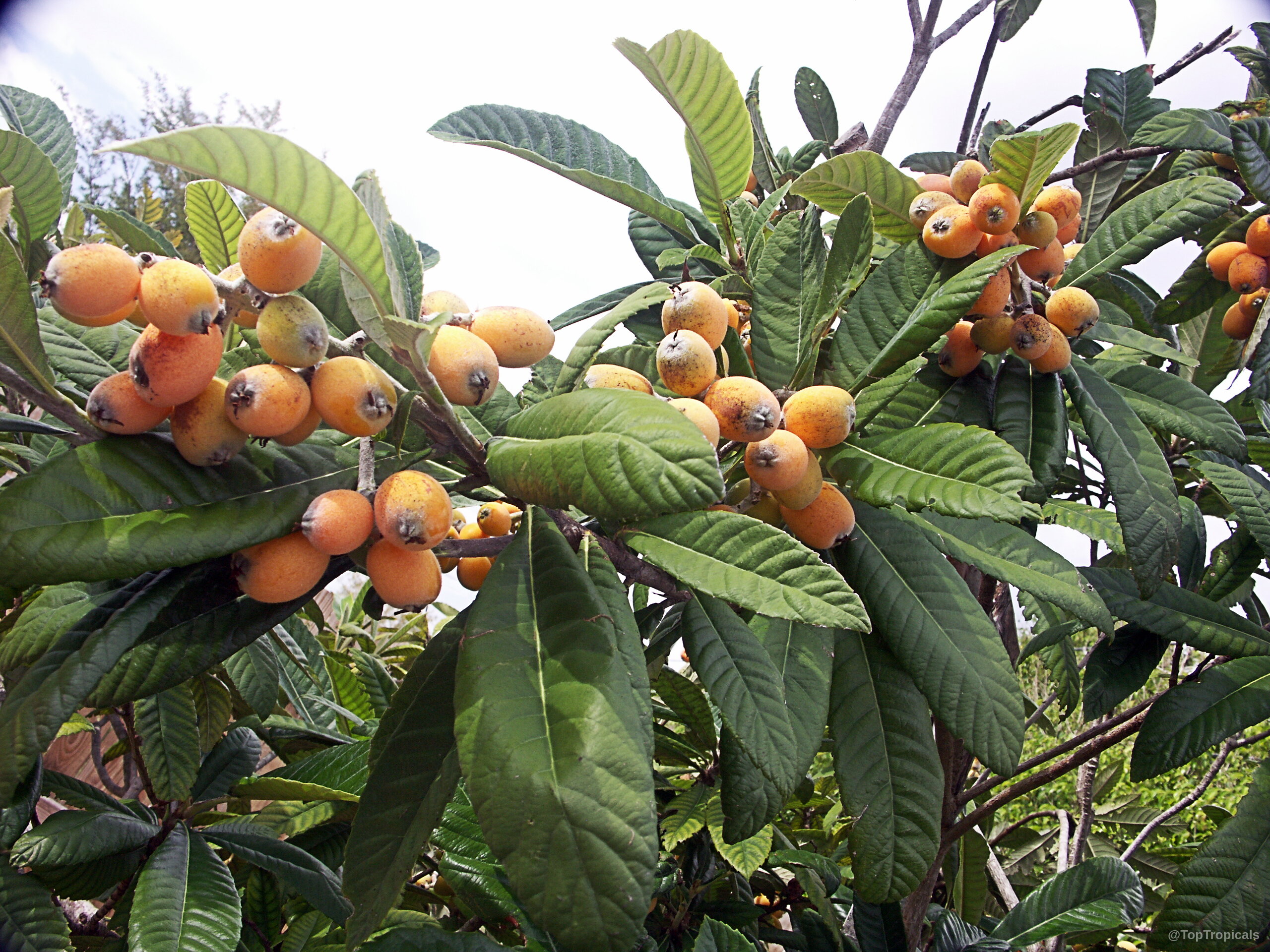
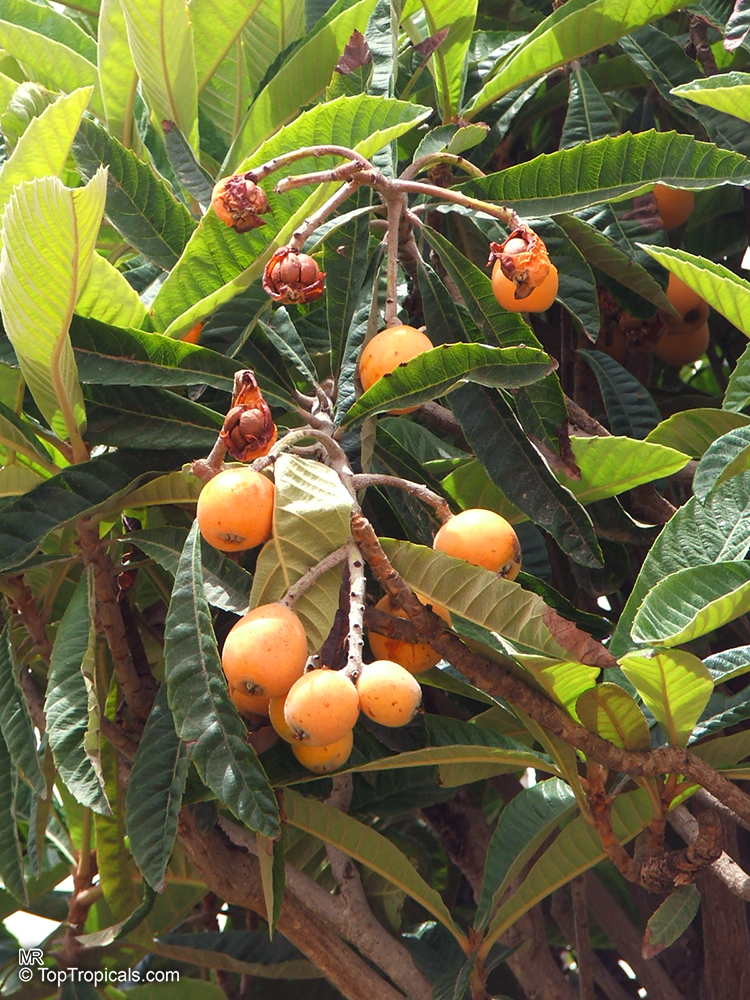
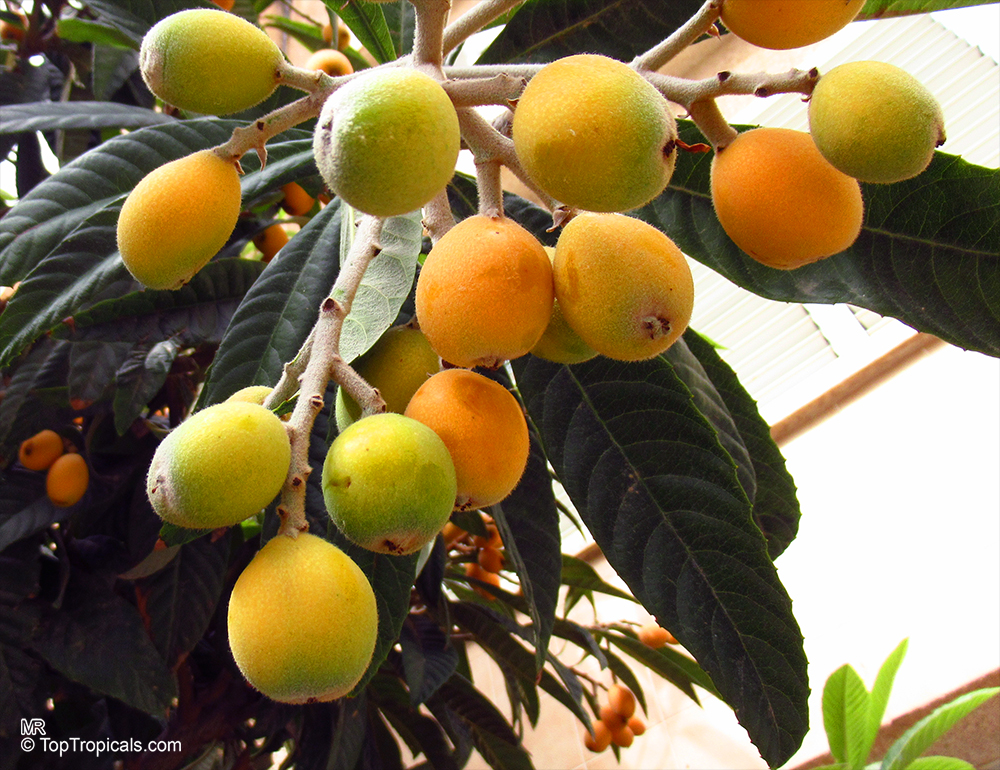
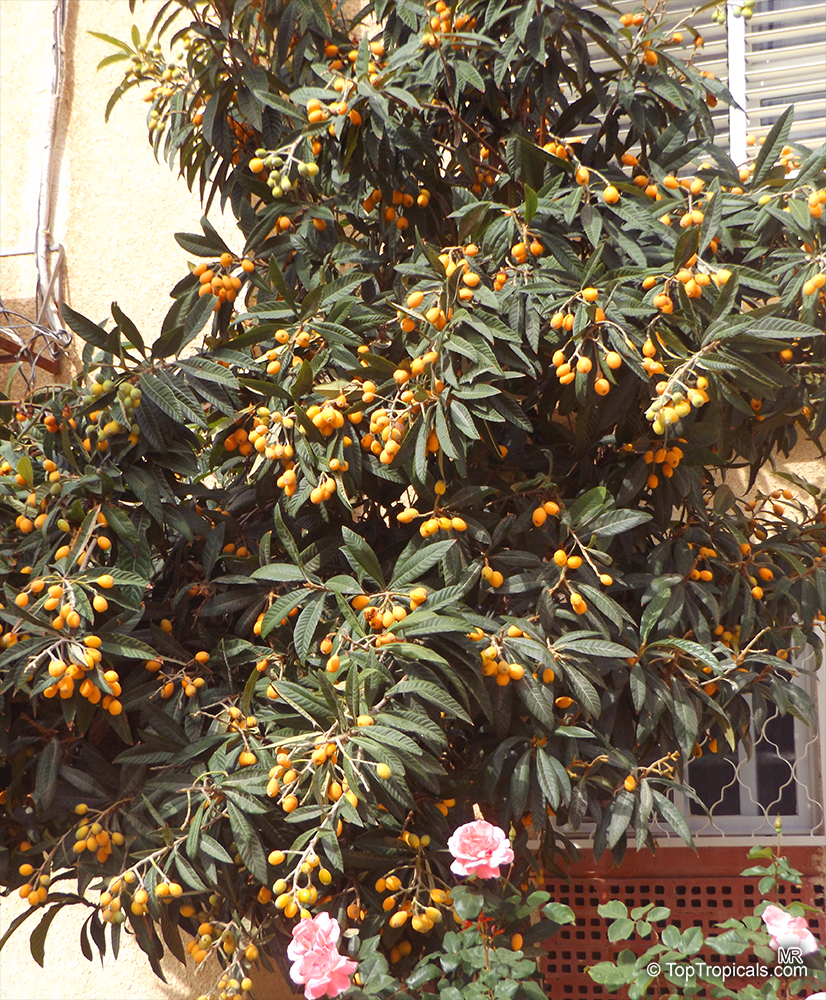
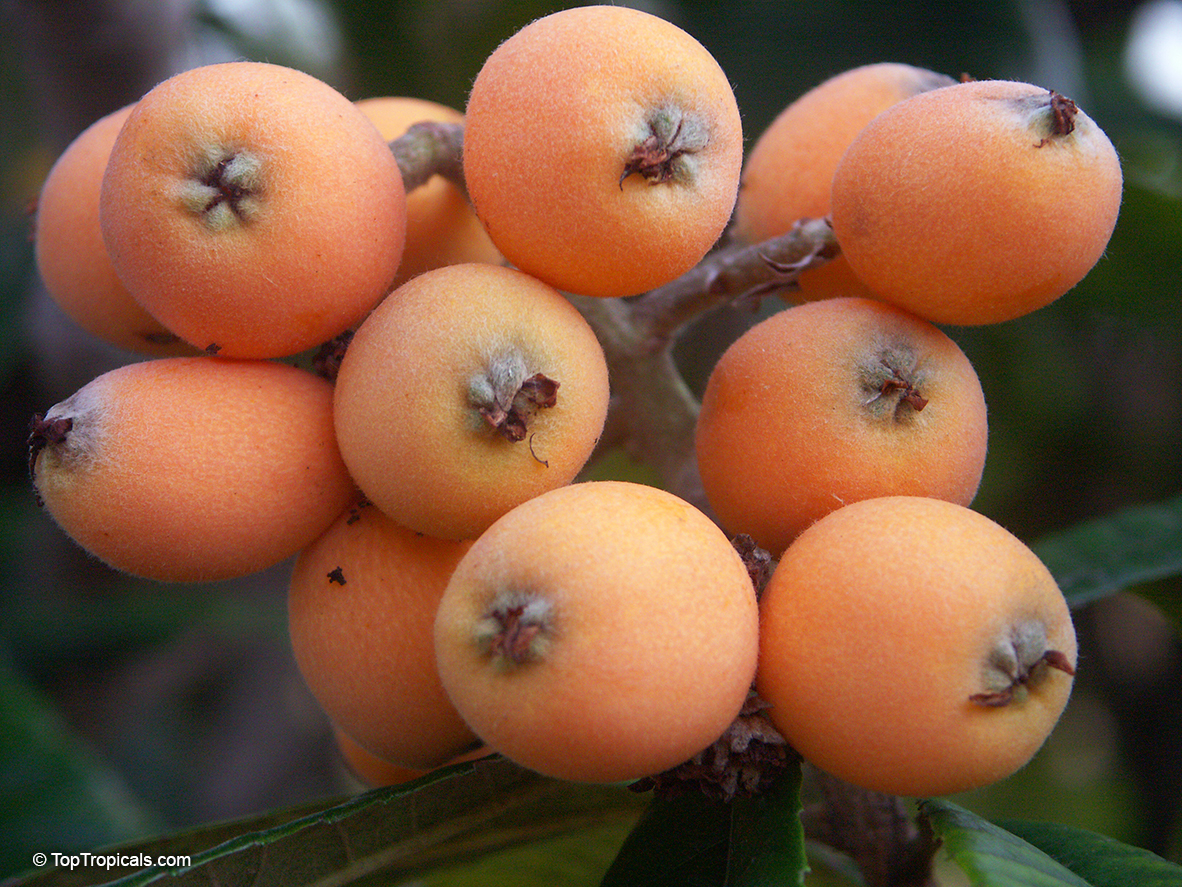
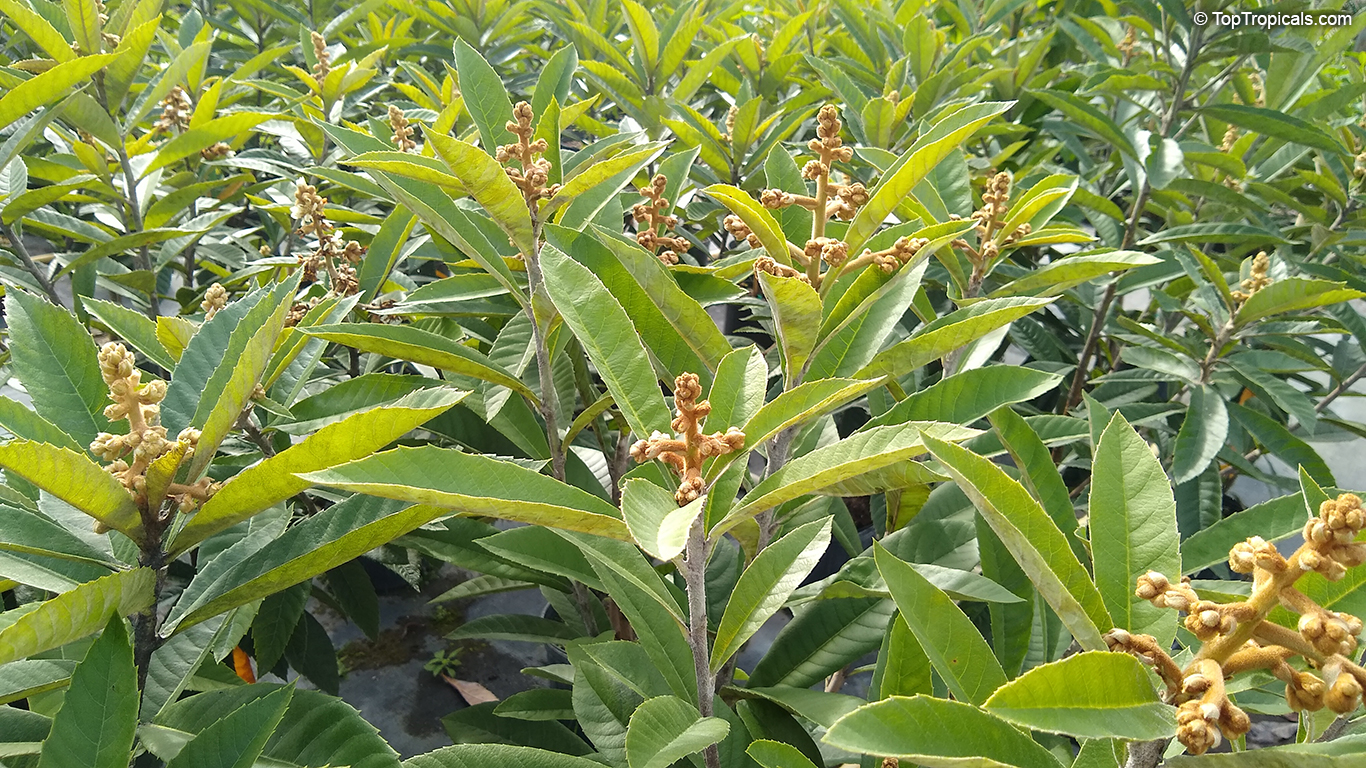
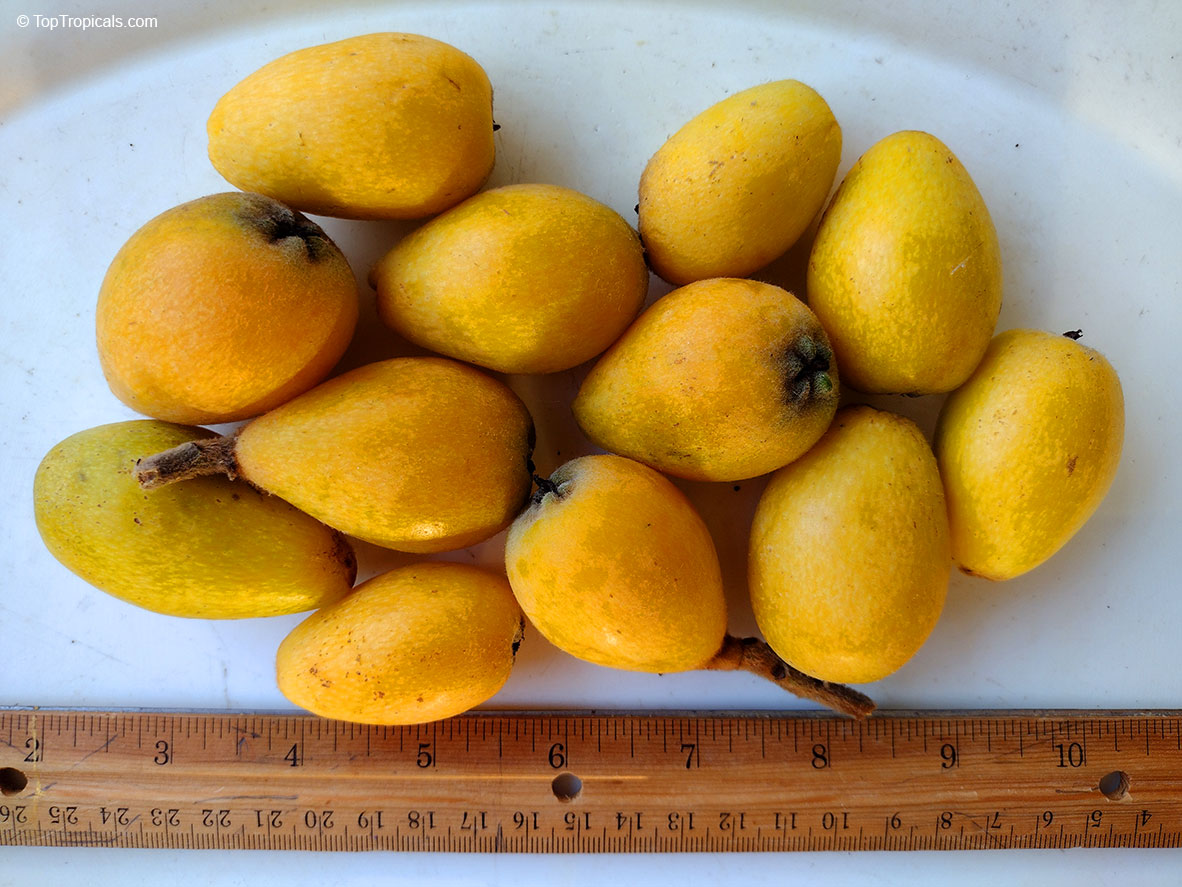
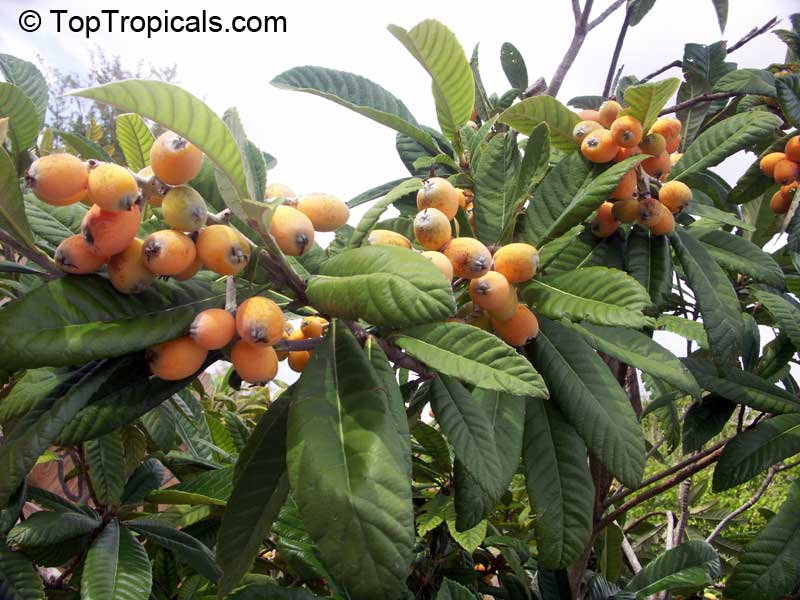
Eriobotrya japonica, commonly known as loquat or Japanese medlar, is an evergreen fruit tree in the Rosaceae family, native to southeastern China and cultivated in East Asia for centuries. It forms a rounded, dense crown and typically grows 10-25 ft tall. The large, leathery, strongly veined leaves are dark green above and covered with rusty-brown hairs beneath. Fragrant creamy white flowers appear in dense terminal clusters in fall or winter, followed by rounded to pear-shaped fruits that ripen in spring or early summer. The yellow to orange fruits have juicy, aromatic, sweet to tart flesh surrounding several large brown seeds. Numerous cultivars have been selected for fruit size, flavor, flesh color, and seed number.
Eriobotrya japonica grows best in full sun and fertile, well-drained soil, although it adapts to many soil types. Established trees tolerate moderate drought, but regular moisture improves fruit development. The tree itself tolerates light frost, while flowers and young fruits are considerably more cold-sensitive, so crop production is most reliable where winters are mild. Loquat can be grown as an ornamental shade tree even where fruiting is unreliable. Named cultivars are usually propagated by grafting or budding. It is generally suitable for USDA Zones 8-11.
More to read:
- PDF download. Overlooked fruit: tasty Loquat recipes. (from Tropical Treasures Magazine).




Recommended Fertilizer: SUNSHINE C-Cibus - Crop Nutrition Booster
SUNSHINE-Honey - sugar booster
Recommended Fertilizer: SUNSHINE C-Cibus - Crop Nutrition Booster
SUNSHINE-Honey - sugar booster
Local pickup only. This item is not available for shipping. Local delivery may be available in Ft. Myers or Sebring, Florida. Contact us for an estimate. Non-pickup orders are subject to restocking fees.
Recommended Fertilizer: SUNSHINE C-Cibus - Crop Nutrition Booster
SUNSHINE-Honey - sugar booster
Recommended Fertilizer: SUNSHINE C-Cibus - Crop Nutrition Booster
SUNSHINE-Honey - sugar booster
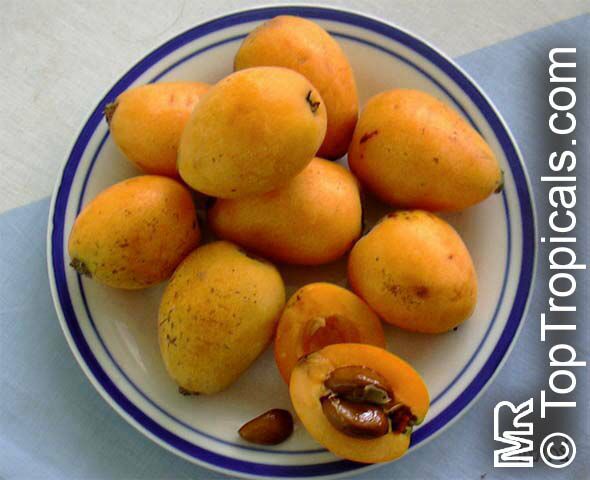
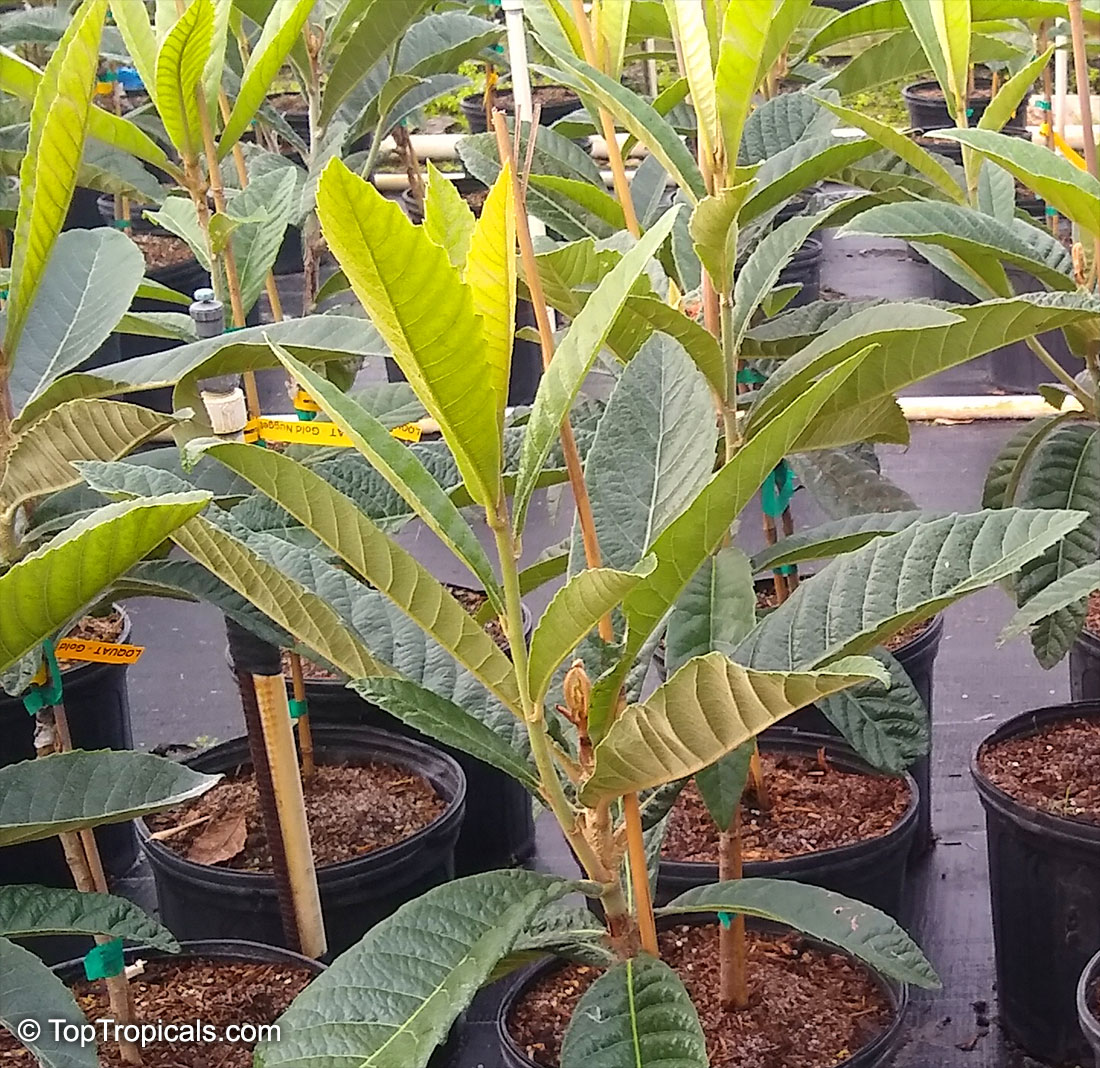
Very cold hardy fruit tree, easy to grow, drought tolerant, fast growing. Fruit are large size, yellow orange flesh, mildly sweet with very small seed inside. In Florida fruit ripens in late February-March. Fruit is great for eating fresh or making jam.
More about Loquat:
- Article
- Video
- PDF download. Overlooked fruit: tasty Loquat recipes. (from Tropical Treasures Magazine).
Recommended Fertilizer: SUNSHINE C-Cibus - Crop Nutrition Booster
SUNSHINE-Honey - sugar booster
Recommended Fertilizer: SUNSHINE C-Cibus - Crop Nutrition Booster
SUNSHINE-Honey - sugar booster
Local pickup only. This item is not available for shipping. Local delivery may be available in Ft. Myers or Sebring, Florida. Contact us for an estimate. Non-pickup orders are subject to restocking fees.