Garden Blog - Top Tropicals
Date: 22 Aug 2026
Why Coffee and Chocolate Grow Under Ice Cream Bean Trees
☕️🍧 Why Coffee and Chocolate Grow Under Ice Cream Bean Trees
The Ice Cream Bean Tree (Inga edulis) sounds like it was invented for kids: enormous pods filled with fluffy white pulp that tastes sweet and vanilla-like.
But in the tropics, it has another important job.
Farmers have been growing coffee and cacao - the plant that gives us chocolate - under Inga trees for generations.
And once you understand how a tropical forest works, the combination makes perfect sense.
🌳 Think in layers, not rows
Tropical forests grow vertically.
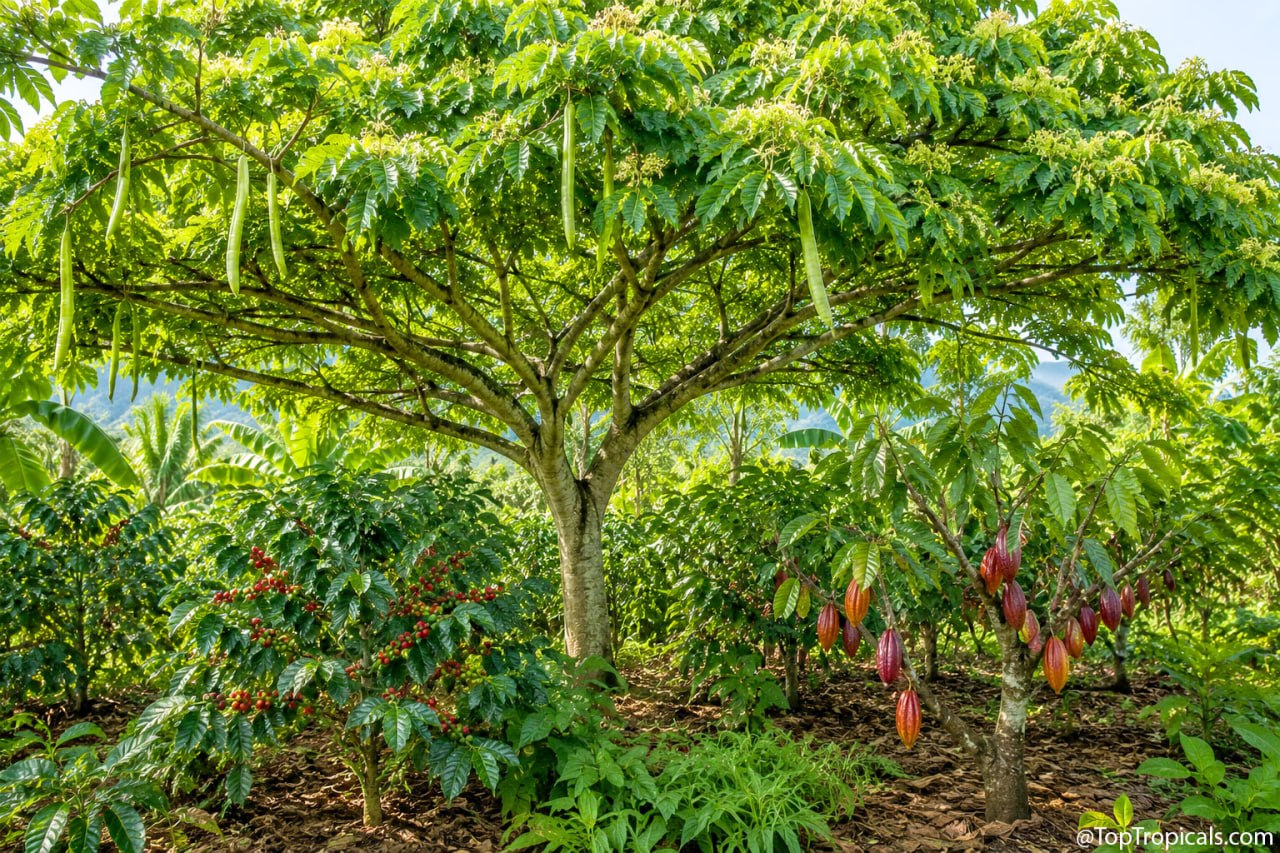
At the top, fast-growing Ice Cream Bean creates a broad canopy. Below it, smaller coffee and cacao trees grow in filtered light. Closer to the ground, there's still room for smaller tropical crops and groundcovers.
That's agroforestry: essentially companion planting in layers. Instead of giving every plant its own separate patch of ground, you combine plants that can benefit from growing together, each occupying a different level.
Ice Cream Bean = upper floor
Coffee and cacao = middle floor
Smaller plants, gingers = ground floor
One piece of land suddenly becomes much more productive.
🌳 Why Ice Cream Bean?
Inga edulis grows fast and develops a spreading crown, which is exactly why it has long been used as a shade tree for coffee and cacao.
Better yet, the shade is manageable. Inga tolerates pruning and regrows vigorously, so the canopy can be opened when the plants underneath need more light.
But shade is only part of the story.
Ice Cream Bean is a legume capable of fixing atmospheric nitrogen through associations with soil bacteria. It also produces lots of leaves and branches.
When leaves fall - or branches are cut during pruning - that material can stay right where it lands as mulch. It helps cover the soil, suppress weeds and gradually adds organic matter and nutrients.
You're basically growing some of your mulch above the garden.
🌳 Build a tiny tropical forest
This same idea can work in a home garden.
Instead of planting every tropical tree in isolation, borrow a trick from nature. Use a larger tree for the upper canopy, grow smaller shade-tolerant plants underneath, and fill the lowest level with groundcovers and other small tropicals.
An Ice Cream Bean can provide the roof.
Coffee and cacao can occupy the protected space below.
And your "shade tree" happens to produce those ridiculous giant pods filled with sweet white fluff.
🌳 So which crop is the bonus?
That's the funny part.
Most people want Inga edulis for the famous Ice Cream Bean fruit. But in tropical farming, the tree has also earned its place for shade, fast growth, biomass and its role in productive layered gardens.
So you're not necessarily planting just one fruit tree.
You may be planting the roof of your future tropical garden.
🛒 Start "Companion" tropical garden:
Ice Cream Bean tree • Coffee tree • Chocolate tree
📚 Learn more:


Ice Cream Bean tree (Inga edulis) in Plant Encyclopedia
The Nitrogen-Fixing Myth: Why Your Ice Cream Bean Tree Still Needs Fertilizer
Did you know that ice cream actually grows on a tree?
What does Ice Cream Bean fruit taste like?
Ice Cream Bean cool fluff: quick-n-fun exotic recipes
🎥
#Food_Forest #Discover #How_to
🟢 Join 👉 TopTropicals
Date: 21 Aug 2026
That tasty garden water
That tasty garden water
"Mom, at least I didn't drink from the toilet. I have standards!"
👍 Thumbs up if your cat drinks from the watering can too
🐈📸 Top Tropicals rescued cat Timo has his drinks preferences at PeopleCats.Garden.
#PeopleCats #Quotes
🟢 Join 👉 TopTropicals
Date: 21 Aug 2026
How Big Will Your Mango Tree Actually Get?
🥭 How Big Will Your Mango Tree Actually Get?
That little mango tree in a 3-gallon pot looks innocent now. But where should you plant it, and how much room will it really need? Before you pick a permanent spot, think about the tree it will become, not the tree you're holding today.
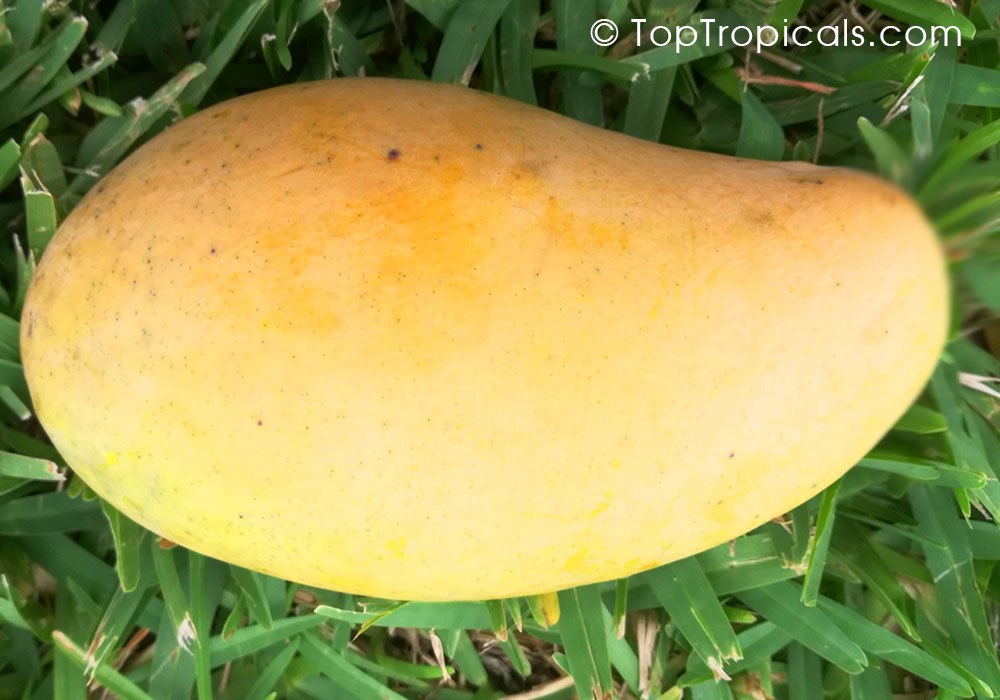
❓Q: How big will my Orange Sherbet mango tree get? How much room should I give it?
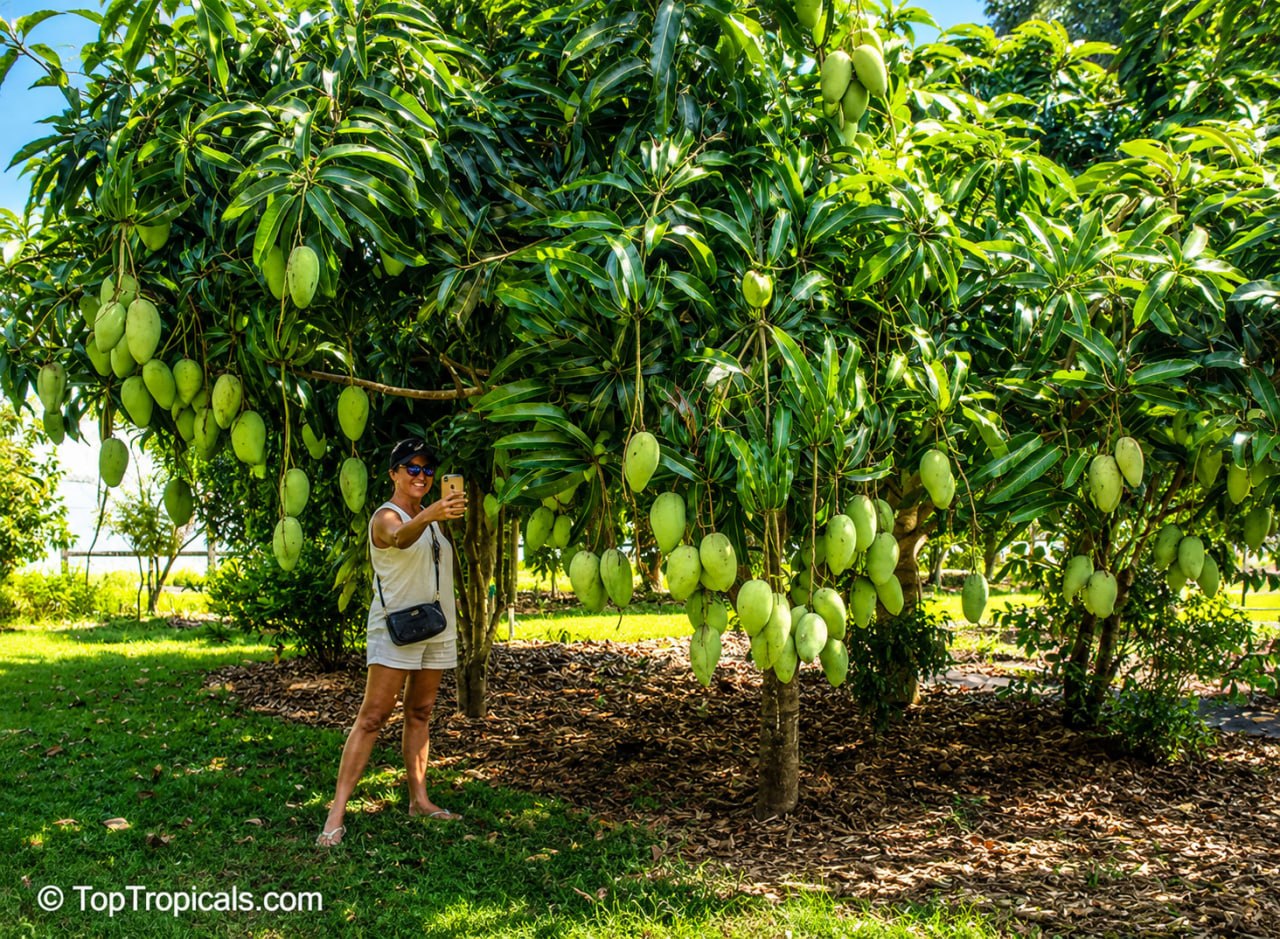
In a home landscape, plan for about a 12-15 ft canopy. With regular pruning, you can comfortably maintain the tree at around 10-15 ft tall and wide.
If you never prune it? Well, it's a mango. It has bigger ambitions.
The good news is that mangoes respond very well to pruning. Annual pruning and tipping after harvest can keep the tree compact, encourage branching, and make fruit much easier to reach. Condo Mango can be easily kept in containers with minimal pruning.
👉 Our planting rule: Don't plan for the size of the tree you bring home. Plan for the tree it wants to become.
Give Orange Sherbet plenty of sun, room for a 12-15 ft canopy, and keep the pruning shears handy.
💛 Orange Sherbet Mango - sweet, rich, citrusy flavor and absolutely worth making room for! More...
🛒 Shop Mango varieties
📚 Learn more:
Mango Tree - Mangifera indica - in Plant Encyclopedia
#Mango_Rainbow - varieties you should try
How big does the Condo Mango grow?
Forget the Tropics: These 5 "Condo Mango" Varieties Thrive in Your Living Room
Mango varieties and Condo Mango
Yes, you can grow a mango tree on your patio - here is how to do it right
Mango Tree for Zone 5: top 15 Condo Mango for growing in cold areas
How long does it take for a mango tree to bear fruit?
What are the Condo Mangos - a practical guide
Top 10 Dwarf "Condo" Mango, great for container culture
Top 5 recommended vigorous Mango tree varieties, reliable producers
Top 5 Favorite Mango we just love
10 steps how to grow a mango tree
#Food_Forest #How_to #Discover #Mango


🟢 Join 👉 TopTropicals
That little mango tree in a 3-gallon pot looks innocent now. But where should you plant it, and how much room will it really need? Before you pick a permanent spot, think about the tree it will become, not the tree you're holding today.
❓Q: How big will my Orange Sherbet mango tree get? How much room should I give it?
✅ A: Orange Sherbet is a moderate-growing mango, but it is not a true dwarf.
In a home landscape, plan for about a 12-15 ft canopy. With regular pruning, you can comfortably maintain the tree at around 10-15 ft tall and wide.
If you never prune it? Well, it's a mango. It has bigger ambitions.
The good news is that mangoes respond very well to pruning. Annual pruning and tipping after harvest can keep the tree compact, encourage branching, and make fruit much easier to reach. Condo Mango can be easily kept in containers with minimal pruning.
👉 Our planting rule: Don't plan for the size of the tree you bring home. Plan for the tree it wants to become.
Give Orange Sherbet plenty of sun, room for a 12-15 ft canopy, and keep the pruning shears handy.
💛 Orange Sherbet Mango - sweet, rich, citrusy flavor and absolutely worth making room for! More...
🛒 Shop Mango varieties
📚 Learn more:
Mango Tree - Mangifera indica - in Plant Encyclopedia
#Mango_Rainbow - varieties you should try
How big does the Condo Mango grow?
Forget the Tropics: These 5 "Condo Mango" Varieties Thrive in Your Living Room
Mango varieties and Condo Mango
Yes, you can grow a mango tree on your patio - here is how to do it right
Mango Tree for Zone 5: top 15 Condo Mango for growing in cold areas
How long does it take for a mango tree to bear fruit?
What are the Condo Mangos - a practical guide
Top 10 Dwarf "Condo" Mango, great for container culture
Top 5 recommended vigorous Mango tree varieties, reliable producers
Top 5 Favorite Mango we just love
10 steps how to grow a mango tree
#Food_Forest #How_to #Discover #Mango
Date: 20 Aug 2026
The Sunshine and the Blackhole

☀️ 💣 The Sunshine and the Blackhole
"In order for the light to shine so brightly, the darkness must be present." - Francis Bacon
🐈📸 TopTropicals rescued cats Jacques and Kiwi at PeopleCats.Garden
#PeopleCats #Quotes
🟢 Join 👉 TopTropicals
Date: 20 Aug 2026
Tamarind BBQ ribs:
🍴 Tamarind BBQ ribs: quick-n-fun exotic recipes
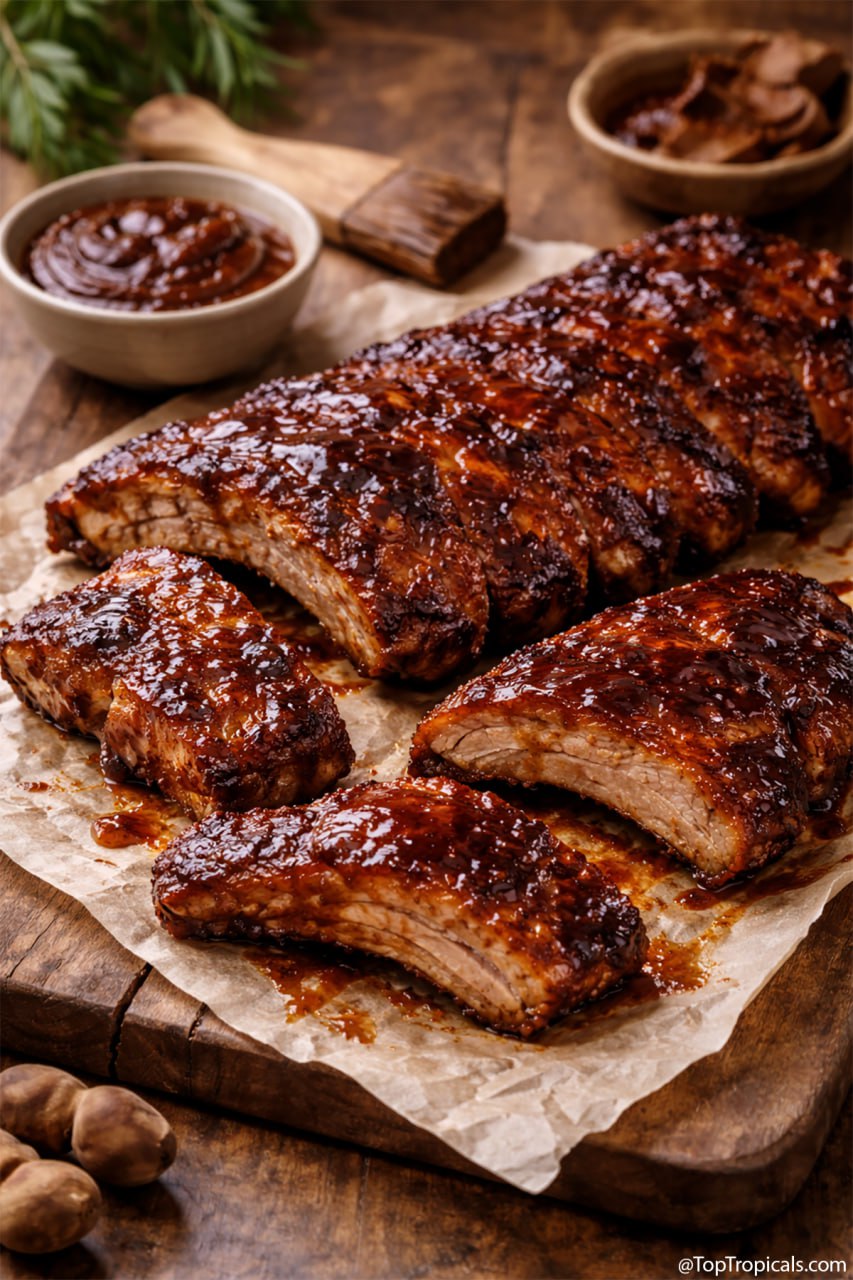
🟡Stir tamarind paste into your favorite BBQ sauce.
🟡Brush over ribs during the final 15 minutes of roasting.
🟡Dark, sticky, and layered.
🌿 About the plant:
Because of its natural acidity, tamarind tenderizes meat slightly while adding depth. That is why it works beautifully in marinades and glazes.
🏡 In the garden:
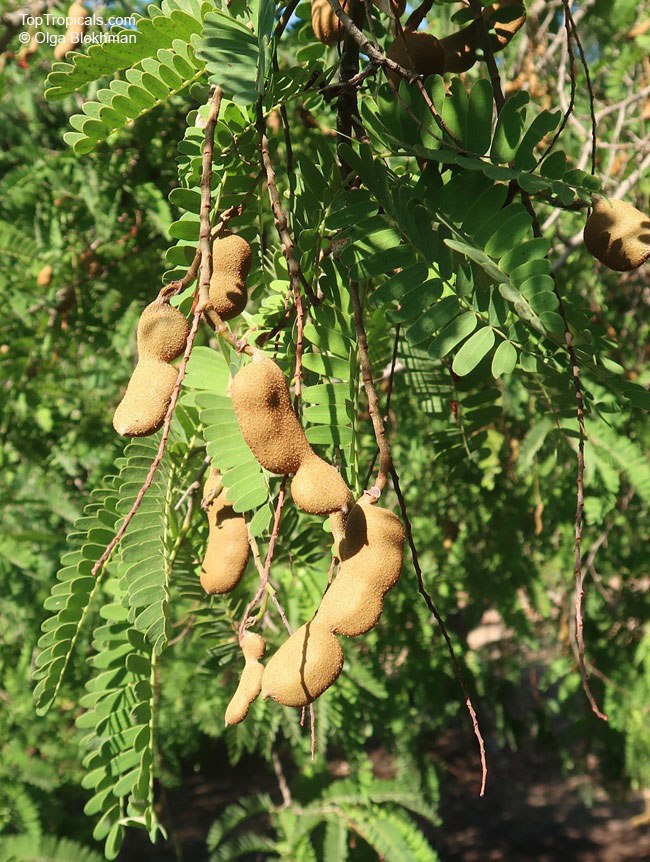
Tamarind (Tamarindus indica) trees are moderately slow growing at first but become strong and resilient over time. Deep roots help them handle drought.
🛒 Plant a Tamarind tree in your garden
📚 Learn more:

Tamarindus indica in Plant Encyclopedia
Tamarind Agua Fresca: quick-n-fun exotic recipes
Tamarind mango chutney: quick-n-fun exotic recipes
Tamarind shrimp stir-fry: quick-n-fun exotic recipes
Tamarind date dipping sauce: quick-n-fun exotic recipes
Top 10 fruit you'll ever need for your health benefits: #7 Tamarind
How to use Tamarind in cooking
#Food_Forest #Recipes
🟢 Join 👉 TopTropicals