Garden Blog - Top Tropicals
Date: 11 Jul 2026
The intoxicating golden giant that out-blooms classic white butterfly ginger
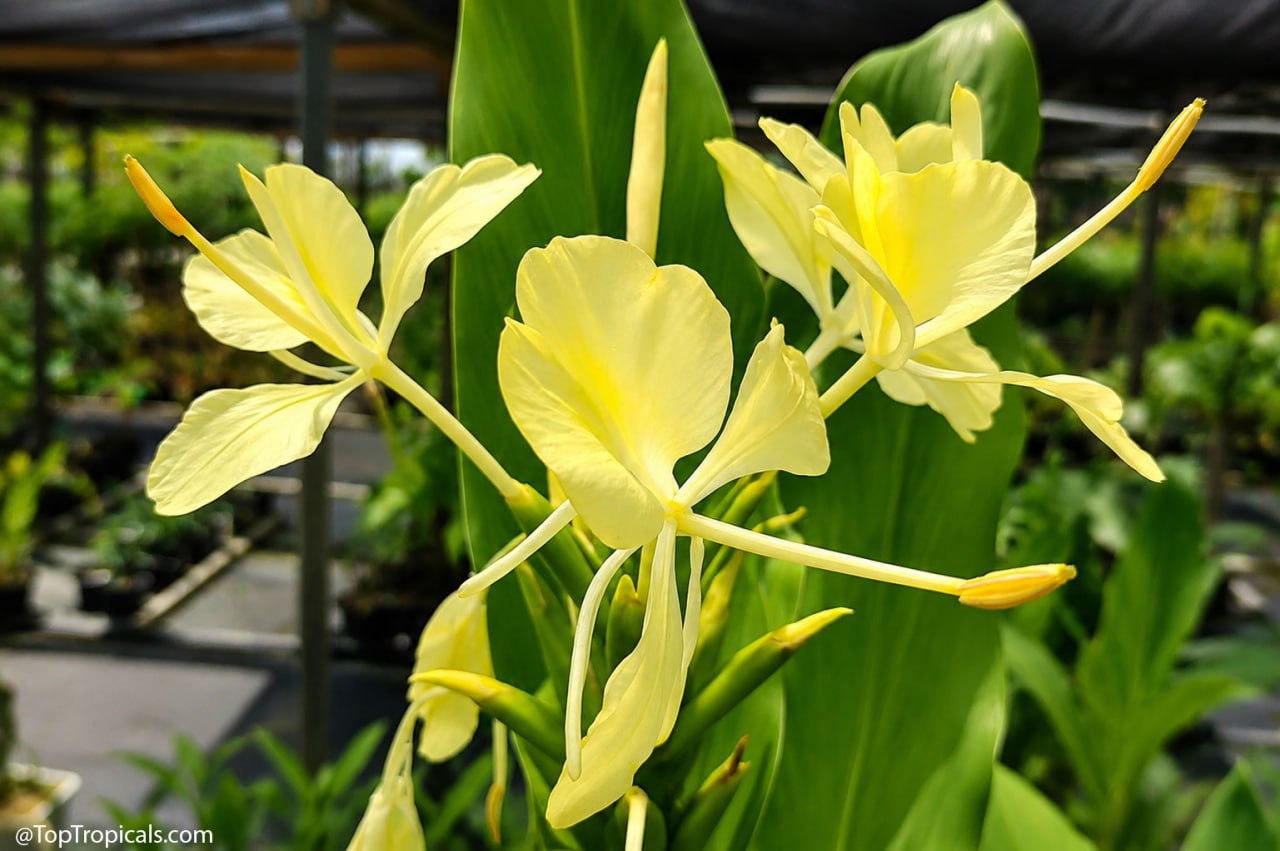
The Yellow Butterfly Ginger - Hedychium flavum x coronarium, flowers
The Yellow Butterfly Ginger - Hedychium flavum x coronarium
✨ The intoxicating golden giant that out-blooms classic white butterfly ginger
If you've ever walked past a blooming butterfly ginger on a warm summer evening, you probably remember the fragrance. It's one of those rare, hypnotic scents that forces people to stop, spin around, and ask, "What smells so amazing?"
Now, imagine that exact same intoxicating perfume - but on a larger, more vigorous plant with soft, buttery-yellow flowers instead of classic white.
🌿 Bigger Growth, Bigger Visual Impact
The Yellow Butterfly Ginger (Hedychium flavum × coronarium) is a powerhouse hybrid that takes everything gardeners love about the classic white variety and turns it up a notch.
It grows taller, forms more massive clumps, and produces an incredibly dramatic tropical architecture. The bold, deep green foliage delivers instant jungle vibes, making it a perfect privacy screen, a backdrop for smaller perennials, or a massive focal point on its own.
🌿 A Fragrance That Drifts For Yards
While the giant leaves are stunning, the perfume is the real reason this plant belongs in your yard.
Yellow Butterfly Ginger Growing Guide
- 👃 Fragrance: Intense, sweet, tropical resort vibe
- ☀️ Light: Full sun to partial shade
- 💧 Moisture: Loves regular water & rich soil
As the sun sets on warm, humid evenings, the sweet fragrance releases into the air and drifts surprisingly far. Planting it near patios, walkways, or outdoor seating areas instantly transforms your backyard into a luxury tropical resort.
🌿 A Continuous, Non-Stop Summer Display
While an individual ginger flower only lasts about a day, the plant is engineered for a continuous show.
The heavy flower spikes open fresh blooms one after another, day after day. This means your garden enjoys a steady, unbroken supply of fresh perfume and color all through the peak of summer, rather than one quick burst that fades away.
The Flower Show: The individual blooms share the same elegant, butterfly-like shape as the white variety, but they are washed in warm, soft yellow tones that look glowing and luminous at dusk.
🌿 Give This Jungle Beauty Room to Shine
This isn’t a plant that sits quietly in the corner. Thanks to its vigorous hybrid genetics, it appreciates a bit of space, rich soil, and regular moisture to truly reach its potential. In return, it rewards you with unmatched height, lush tropical textures, and a scent you'll look forward to every single year.
If you already love the classic white ginger, this yellow upgrade gives you the same unforgettable fragrance with a bolder, warmer, and more dramatic presence.
🛒 Bring home this spectacular yellow bloomer today
📚 Learn more:


Hedychium flavum × coronarium in Plant Encyclopedia
Why gardeners are swapping white Butterfly Ginger for this yellow giant
Rare Butterfly Gingers
The most fragrant ginger
#Shade_Garden #Perfume_Plants
🟢 Join 👉 TopTropicals
Date: 10 Jul 2026
Tamarind sticky rice drizzle: quick-n-fun exotic recipes

Tamarind sticky rice drizzle

Tamarindus indica - Tamarind
🍴 Tamarind sticky rice drizzle: quick-n-fun exotic recipes
🟡Reduce tamarind with brown sugar until syrupy.
🟡Spoon over warm sticky rice.
🟡Unexpected dessert twist.
🌿 About the plant:
The flavor of tamarind intensifies when reduced. Heating concentrates its caramel notes and softens sharp acidity.
🏡 In the garden:
Tamarind (Tamarindus indica) can be pruned to control size when young, but it naturally wants to grow tall and wide. Best planted where it has room to spread.
🛒 Plant a Tamarind tree for exotic desserts
📚 Learn more:


Tamarindus indica in Plant Encyclopedia
Tamarind Agua Fresca: quick-n-fun exotic recipes
Tamarind mango chutney: quick-n-fun exotic recipes
Tamarind shrimp stir-fry: quick-n-fun exotic recipes
Tamarind date dipping sauce: quick-n-fun exotic recipes
Top 10 fruit you'll ever need for your health benefits: #7 Tamarind
How to use Tamarind in cooking
#Food_Forest #Recipes
🟢 Join 👉 TopTropicals
Date: 10 Jul 2026
That fantastic Avocado Fantastic - and our Fantastic Avocado Knowledge Hub
Avocado "Fantastic"
That fantastic Avocado "Fantastic" - and our Fantastic Avocado Knowledge Hub
What if one avocado could do it all? Fantastic is exceptionally cold hardy, naturally compact, and produces beautiful fruit that ripens from green to a striking reddish-black. Inside is rich, buttery flesh with a sweet, nutty flavor, wrapped in paper-thin skin. Some avocado lovers even enjoy eating the skin, making this remarkable Mexican avocado as unique as it is delicious.
💚 Fantastic Avocado isn't just a great name - it's one of the most cold-hardy avocados you can grow.
This remarkable Mexican-type avocado has earned a reputation for surviving temperatures as low as 15F on mature trees for short periods. At our Sebring, Florida nursery, it also came through the historic February 2026 freeze (25F with several nights below freezing) without noticeable damage.
💚 The fruit is small but outstanding - rich, buttery, creamy, and packed with flavor. Its paper-thin skin darkens as it ripens and is so thin that many people simply scoop out the flesh with a spoon. Some even enjoy eating the skin.
💚 Fantastic also stays more compact than many Florida avocado varieties, making it a great choice for home gardens. Crush one of its leaves and you'll discover another surprise - a sweet anise fragrance, a signature trait of Mexican-type avocados.
For gardeners who thought avocados were only for the tropics, Fantastic proves otherwise. It truly lives up to its name. 👉 More
Avocado 'Fantastic' Superpowers
- ✓ Type: Mexican avocado
- ✓ Cold hardiness: Mature trees tolerate about 15F for short periods
- ✓ Growth habit: Compact, upright, easy to manage
- ✓ Fruit size: 6-8 oz
- ✓ Skin: Very thin, ripens from green to deep reddish-black
- ✓ Flesh: Rich, buttery, creamy
- ✓ Flavor: Sweet with delicate nutty notes
- ✓ Seed: Small
- ✓ Best use: Fresh eating, salads, sandwiches
- ✓ Special feature: Some people eat the paper-thin skin
- ✓ Bonus: Leaves release a pleasant anise fragrance when crushed
💡 Want to discover the hidden world of avocados?
Fantastic is only the beginning. Visit our complete Avocado Knowledge Hub - the most comprehensive avocado resource online. Explore dozens of varieties, compare cold hardiness, learn the science behind rootstocks and pollination, discover professional growing techniques, solve common problems, and find expert advice from planting your first tree to harvesting your own fruit.
👉 Explore the Top Tropicals Avocado Knowledge Hub
🛒 Shop cold hardy Avocado varieties
📚 Learn more:
· Avocado Knowledge Hub and Growing Guide: Cold Hardiness, Varieties, and Engineering Success
· Avocado Variety Guide: Snack or Guacamole? Collector's inspiration
· Avocado Fantastic: the hidden world beyond green and black
· What tropical plants survived Florida's historic freeze without protection
· Cold-hardy avocado survival groups - what the numbers really mean
· How to protect Avocado from cold and how hardy is it?
· All posts about #Avocado
📖 Our Book: Avocado Variety Guide
· Hard copy · PDF File Download
#Food_Forest #Avocado #Discover
🟢 Join 👉 TopTropicals
Date: 9 Jul 2026
You never know who did it
Rescued cats at TopTropicals: Cash, Bob, James Coconuts, Georgie, Ricki and Lilimon
👩❤️👨 You never know who did it
The advantage of having only one child is that you always know who did it."- Erma Bomb
🐈📸 A few rescued cats at TopTropicals PeopleCats.Garden: Cash, Bob, James Coconuts, Georgie, Ricki and Lilimon
#PeopleCats #Quotes
🟢 Join 👉 TopTropicals
Date: 9 Jul 2026
Blue Java Banana: the Ice Cream Banana that looks too good to be real
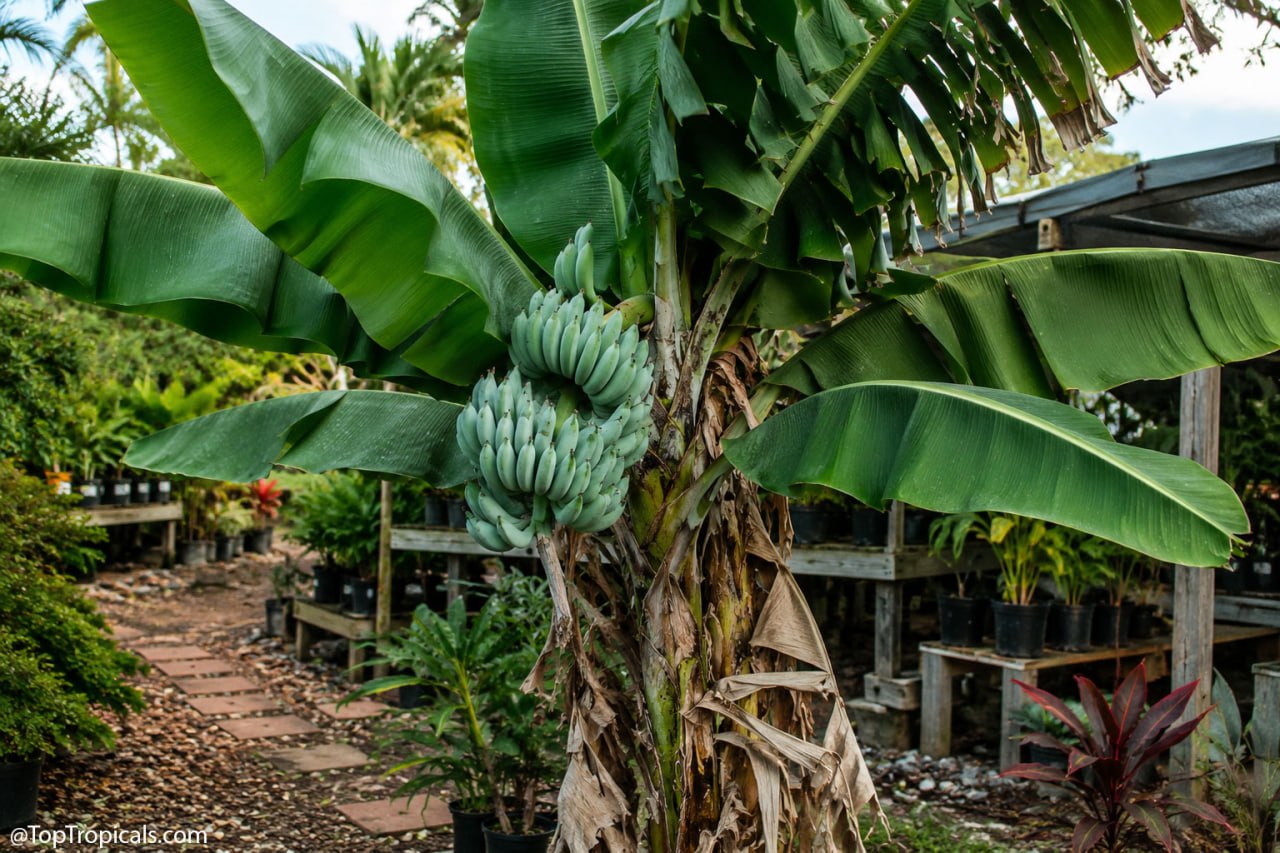
Ice Cream Banana
Ice Cream Banana
🍌 Blue Java Banana: the Ice Cream Banana that looks too good to be real.
Most bananas (Musa acuminata) look the same. Blue Java isn't one of them.
Every year, as soon as the growing season begins, gardeners start asking the same question: "Do you have Ice Cream bananas?" Last season it was one of our most requested plants - and this year is no different.
Known as the Ice Cream Banana, Blue Java has become one of the world's most talked-about banana varieties. Once you see a bunch hanging on the plant, it's easy to understand why. Before ripening, the fruit develops a natural silvery blue-green color that almost looks unreal. It's not painted, dyed, or edited - that's simply how this remarkable banana grows.
The real surprise comes after harvest.
As the fruit ripens, the blue-green skin gradually turns soft yellow. Inside is creamy white flesh with an unusually smooth, custard-like texture. Many gardeners describe the flavor as sweet with hints of vanilla, which earned it the nickname "Ice Cream Banana." Whether you enjoy it fresh, in smoothies, or frozen for desserts, it's unlike the typical supermarket banana.
Blue Java isn't grown only for its bananas.
The plant itself is spectacular, with huge tropical leaves, a sturdy trunk, and dramatic reddish-purple flower buds that develop into heavy clusters of fruit. Mature plants typically reach 10-15 feet tall and produce impressive bunches weighing 40-60 pounds under good growing conditions.
One reason Blue Java has become so popular is that it is more cold-tolerant than many dessert bananas. While it still loves warm weather, full sun, rich soil, and regular watering, established plants can handle cooler temperatures better than many other banana varieties, making them an excellent choice for gardeners in marginal tropical and subtropical climates.
Blue Java is still considered a specialty variety, which is why most people never get the chance to taste one. If you've only eaten standard Cavendish bananas, growing your own Blue Java is a completely different experience - from the unusual blue fruit to its creamy, dessert-like flavor.
It's one of those plants that makes visitors stop, point, and ask:
"Are those really blue bananas?"
👉 Grab it while it’s in stock.
🛒 Explore Banana Varieties

Bananas (Musa) in plant encyclopedia
Blue Ice Cream banana you’ll never find in stores
Is Blue Java Banana really blue?
Why is Mahoi banana called DOUBLE?
Why every garden needs a banana tree (or three!)
The best varieties of edible Bananas
#Food_Forest #Bananas #Discover
🟢 Join 👉 TopTropicals
Most bananas (Musa acuminata) look the same. Blue Java isn't one of them.
Every year, as soon as the growing season begins, gardeners start asking the same question: "Do you have Ice Cream bananas?" Last season it was one of our most requested plants - and this year is no different.
Known as the Ice Cream Banana, Blue Java has become one of the world's most talked-about banana varieties. Once you see a bunch hanging on the plant, it's easy to understand why. Before ripening, the fruit develops a natural silvery blue-green color that almost looks unreal. It's not painted, dyed, or edited - that's simply how this remarkable banana grows.
🔹 Why is it called the Ice Cream Banana?
The real surprise comes after harvest.
As the fruit ripens, the blue-green skin gradually turns soft yellow. Inside is creamy white flesh with an unusually smooth, custard-like texture. Many gardeners describe the flavor as sweet with hints of vanilla, which earned it the nickname "Ice Cream Banana." Whether you enjoy it fresh, in smoothies, or frozen for desserts, it's unlike the typical supermarket banana.
🔹 A beautiful plant even before it fruits
Blue Java isn't grown only for its bananas.
The plant itself is spectacular, with huge tropical leaves, a sturdy trunk, and dramatic reddish-purple flower buds that develop into heavy clusters of fruit. Mature plants typically reach 10-15 feet tall and produce impressive bunches weighing 40-60 pounds under good growing conditions.
🔹 Easier to grow than many tropical bananas
One reason Blue Java has become so popular is that it is more cold-tolerant than many dessert bananas. While it still loves warm weather, full sun, rich soil, and regular watering, established plants can handle cooler temperatures better than many other banana varieties, making them an excellent choice for gardeners in marginal tropical and subtropical climates.
🔹 A banana you'll probably never find at the grocery store
Blue Java is still considered a specialty variety, which is why most people never get the chance to taste one. If you've only eaten standard Cavendish bananas, growing your own Blue Java is a completely different experience - from the unusual blue fruit to its creamy, dessert-like flavor.
It's one of those plants that makes visitors stop, point, and ask:
"Are those really blue bananas?"
👉 Grab it while it’s in stock.
🛒 Explore Banana Varieties
📚 Learn more:
Bananas (Musa) in plant encyclopedia
Blue Ice Cream banana you’ll never find in stores
Is Blue Java Banana really blue?
Why is Mahoi banana called DOUBLE?
Why every garden needs a banana tree (or three!)
The best varieties of edible Bananas
#Food_Forest #Bananas #Discover
🟢 Join 👉 TopTropicals