Avocado Growing Guide: Cold Hardiness, Varieties, and Engineering Success
By
Michael Dubinovsky.
Reviewed by Tatiana Anderson and
with insights from Smokey & Sunshine

🥑 Quick Guide: Successful Avocado Cultivation
To grow Persea americana successfully in subtropical and marginal climates, align three things: the right genetics, cold hardiness matched to your site, and healthy soil drainage.
- 🚀 The Strategy: Match variety genetics (Mexican, Guatemalan, or West Indian) to your winter lows and soil pH.
- ❄️ Cold Hardiness: Selection ranges from 15°F (Mexican hybrids) to 30°F (West Indian types).
- 🏗️ Structural Defense: Use mounded planting (18" elevation) to prevent root hypoxia and whitewash young trunks to stop sunscald.
- 📈 The Payoff: A properly established tree can produce 100 to 200+ lbs of fruit annually, with flavor and oil quality that outperforms anything you'll find in a store.
Core Takeaway: Most avocado failures come down to a mismatch between genetics and environment, not bad luck. Use the data-driven matrices below to pick the right tree for your site.

🧭 Where Do You Want to Start?
This guide covers a lot of ground. Jump straight to what applies to you right now:
 Growing in a container?
🩺 What's Wrong With My Tree? Quick Diagnostic Index
Match what you're seeing to the most likely cause, then click through for the full explanation and fix.
| 👀 What You're Seeing | 🔍 Likely Cause |
|---|---|
| Yellow leaves with dark green veins | Mineral Lockout (high soil pH) |
| Yellowing that starts on older, lower leaves first | Nutrient Deficiency |
| Sudden wilting, but the leaves stay attached to the branch | Laurel Wilt |
| Fruit or leaves dropping while the soil stays wet | Root Rot / Poor Drainage |
| Cracked, peeling, or blistered bark on the trunk | Sunscald |
| Brown, crispy leaf edges | Salt Burn |
| Tree looks dead or bare after a freeze | Post-Freeze Recovery: don't give up yet |
| Fruit won't ripen, or turns rubbery instead of softening | Picked Too Early |
| Heavy crop one year, almost nothing the next | Alternate Bearing (normal cycle) |
| Vigorous new growth from the base with different-looking leaves | Rootstock Suckers |
| Stunted growth or yellowing in a container | Container Drainage Issue |
Not seeing your exact symptom, or want to audit your general practices? See Avoid the Pitfalls for a broader troubleshooting guide.
📘 Preface: An Engineering Approach for the Home Grower
This guide is written by a systems engineer with over 20 years of hands-on growing experience. Where most gardening advice relies on anecdote, this guide relies on data: a clear, comprehensive approach to treating your backyard like the production system it actually is.
1. Why the Data-Driven Approach Works
Most avocado tree failures aren't a matter of a black thumb. They come down to a mismatch between the tree's genetics and its environment. This guide replaces guesswork with real data: which varieties survive which winters, and what each one needs from the soil to thrive, so you can match the right tree to your site from the start.
2. Why is this guide comprehensive?
Most gardening advice skips the two biggest killers of a young avocado tree: Root Hypoxia (suffocation from poor drainage) and Genetic Mismatch (the wrong variety for your climate). This guide covers both in depth, because the difference between a tree that fails in two years and one that feeds your family for fifty often comes down to what's happening underground: the rootstock and the drainage most guides never mention.
3. How to use this Manual
This guide is organized so you can jump to whatever phase you're in. If a section gets technical, skip straight to the Core Takeaway box. The practical action item is always the priority.
- 🔎 To Pick Your Tree: Jump to the Variety Master Table.
- 🛠️ To Plant Correctly: Skip to the Establishment Protocol.
- 🧬 For Technical Mastery: Review the Advanced Physiology.
Successful Avocado Growing: How to Match the Right Tree to Your Yard
The Engineer's Summary: Structural Planning for a Perfect Harvest
This guide is written from an Engineering Perspective. In engineering, we don't rely on "luck" or "hope." We rely on data, structural integrity, and risk mitigation. Growing an avocado is no different. If you treat your yard as a biological system and your tree as a living machine, its performance becomes far more predictable.
How to read this guide: This is a long technical manual, but you don't need to be a scientist to use it. If you encounter a complex term (like "Katabatic Flow" or "Dichogamy"), feel free to skip the word. The Core Takeaway will always be clear.
- The Genetic Filter: We identify which of the three genetic races matches your taste and your winter lows. (Mexican = Hardiest, West Indian = Tropical).
- The Survival Tier: We define the exact cold threshold for each variety (25°F, 20°F, or 15°F) so you can match the tree to your local weather history.
- The Root Engine: We explain why the Rootstock is the most important part of the tree for defending against Florida's wet soil and root rot.
- The Pollination Relay: We show how pairing Type A and Type B varieties creates a pollen relay for maximum fruit set.
💡 The Simple Bottom Line
You don't need a degree in botany to succeed. If you provide excellent drainage, choose a variety rated for your cold zone, and plant a grafted tree, you have already solved 90% of the problems that cause other growers to fail. This guide handles the remaining 10% of technical precision.
Avocado Cultivation: The Decision Framework
Choosing the right avocado tree comes down to matching a few key factors to your specific site. Here's what this guide walks through, and why each one matters:
🔬 Technical Definition: Physiological Alignment
Successful Persea americana cultivation is the result of Physiological Alignment: matching a variety's genetic cold-threshold and flowering clock (Type A/B) to the specific microclimate, soil drainage capacity, and freeze-duration profile of the planting site. Most tree failures are not random; they are the predictable result of a mismatch between variety genetics and environmental physics.
📊 Matrix: Core Decision Variables for Your Site
| ⚙️ Variable | 🧪 Technical Scope | 🛠️ Strategic Impact |
|---|---|---|
| Cold Hardiness Tiers | Classification by 15°F, 20°F, 25°F, and 30°F survival limits. Read more about Cold Hardiness Tiers | Determines Survival Probability based on your verified record-low temperatures. |
| Genetic Lineage | Phylogenetic differences: Mexican, Guatemalan, and West Indian races. Read more about Avocado Races | Predicts oil content, fruit texture, and Thermal Mass development speed. |
| Flowering Clock | Synchronization of Type A and Type B sexual phases. Read more about Avocado Types | Ensures Pollen Relay efficiency and consistent annual fruit set. |
| Irrigation Management | Soil drainage physics, mound engineering, and irrigation cycles. Read more about Avocado watering | Prevents Root Hypoxia and systemic Phytophthora colonization. |
| Container Growing | Container parameters, root pruning, and "Container Cold" penalties. Read more about Container Growing | Enables Environmental Mobility for growers in Tier 1 cold zones. |
Defining Survival vs. Performance
There's an important difference between a variety's Survival Rating and its Performance Baseline. A cold hardiness rating represents survival under short-duration freeze conditions. It is modified by tree age (Thermal Mass), soil moisture (Heat Conductivity), and wind exposure (Desiccation).
📊 Data-Driven Selection
Variety selection must begin with verified local weather data, specifically Duration Exposure. A variety that survives a quick dip may fail during a 12-hour freeze event.
📈 Structural Stability
Rootstock compatibility and drainage capacity are the primary determinants of long-term production consistency and structural defense against pathogens.
The Economics of Flavor: Home-Grown vs. Commercial Supply
🔬 Technical Definition: Post-Maturity Tree Storage
As climacteric fruits, avocados reach physiological maturity while still on the branch but remain firm until detached, enabling a unique on-tree storage phase. During this time, the fruit continues to accumulate dry matter, specifically lipids, oils, and complex esters, that maximize flavor intensity and buttery texture. Unlike commercial operations that must harvest at minimum legal maturity to ensure shipping durability, home growers can utilize extended tree-hanging to achieve a peak oil percentage and flavor profile that commercial supply chains simply cannot replicate.
The modern supermarket avocado is a miracle of logistics, but a failure of flavor. Commercial varieties are selected for Shipping Durability and Shelf Life, not for the rich, buttery intensity that an established home tree provides.
📊 Matrix: Commercial Logistics vs. Home-Orchard Reality
| ⚙️ Variable | 🛒 Supermarket Standard | 🌳 Home-Grown Professional |
|---|---|---|
| Variety Selection | Monoculture (primarily Hass) for uniform size and tough skin. | Genetic Diversity: Access to 100+ varieties (Oro Negro, Monroe, Choquette, etc.). See here List of Avocado Varieties. Choose between buttery Mexican hybrids or massive West Indian types. |
| Harvest Control | Harvested en masse by crew; ripened artificially using ethylene gas. | Precision Harvesting: Natural ripening; fruit hangs on the tree until you are ready to eat. You select the specific fruit that has reached peak oil concentration. |
| Lipid Content | Harvested early to prevent bruising; often has lower oil levels. | Harvested at peak Dry Matter for maximum buttery texture. |
| Texture & Use | "One size fits all" texture; often stringy if harvested too early. | Tailored to your use: Dense for guacamole or clean-slicing for salads. |
| Volume & Yield | Purchased by the unit; subject to supply chain price spikes. | Sustained Output: 100–200+ lbs per year from a single mature specimen. |
The Tree-to-Table Pipeline
When you grow your own, you are no longer a passive consumer squeezing fruit in a produce aisle. You become the Ripening Manager. Because avocados do not soften until picked, you can effectively stagger your harvest over several weeks or months, ensuring a constant supply of perfect-maturity fruit.
🥑 The Culinary Advantage
Home growers have access to gourmet varieties like Oro Negro or Monroe that have superior oil content but are too delicate to survive the 2,000-mile commercial shipping process.
📈 Sustained Productivity
A properly managed tree isn't just a garden feature. It's a productive asset that yields well over 100 lbs of fruit annually, providing household food security and surplus for sharing.
💡 The Top Tropicals ProTip: Variety Changes Everything
The commercial industry has convinced the public that avocado means Hass. In reality, the flavor spectrum ranges from the anise-scented leaves of Mexican races to the sweet, massive fruits of the West Indian lowlands, with enough variety across Early, Mid, and Late-season types that a Florida grower can harvest fresh fruit for 8 to 10 months of the year. Growing your own lets you experience the full genetic potential of the species: flavor that simply cannot be bought in a store.
💡 The Top Tropicals ProTip: The Appreciation Asset
An avocado tree is one of the few landscape investments that improves with age. As the Thermal Mass and canopy volume increase, the tree becomes more resilient to cold and more productive in yield (read more about Avocado Selection). If your climate allows it, the question isn't why grow it. It's which variety will best fill your harvest window.
The Florida Advantage: 4 Strategic Reasons to Grow Your Own
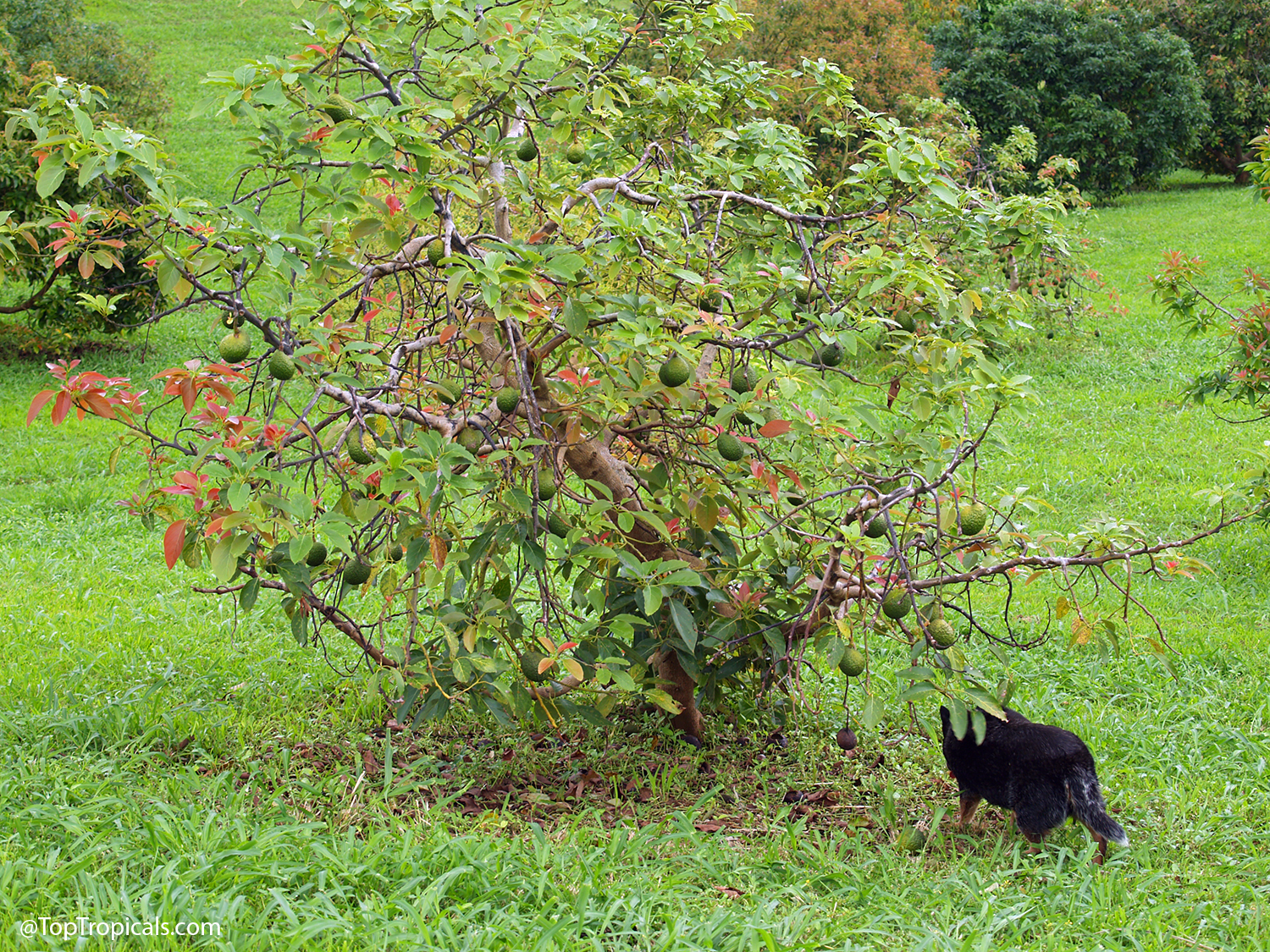
📊 Matrix: Value Drivers for Florida Avocado Cultivation
| 🌟 Strategic Driver | 🧪 Technical / Cultural Context | 🛠️ The Homeowner Benefit |
|---|---|---|
| Nutrient Density | High-fat superfood profile containing Potassium, Folate, Magnesium, and Vitamins C, E, & B. | Reliable, high-calorie food security from a permanent, low-maintenance backyard tree. |
| The "Alligator Pear" | A historic nickname for West Indian types that thrive in Florida's intense heat and humidity. | Vigorous growth of large, green, slightly pebbled fruit perfectly adapted to the local climate. |
| Input Transparency | Complete control over fertilization timing, irrigation cycles, and pest management (Organic vs. Chemical). | Eliminates reliance on commercial supply chains that prioritize transport durability over flavor and purity. |
| Harvest Staggering | Strategic variety selection allows for a continuous fruit supply across multiple seasons. | Ability to harvest fresh fruit from Spring through Winter by matching varieties to your specific site. |
Harvest Season Staggering: By planting multiple varieties that mature at different times, you can extend your harvest well beyond a single season. In Florida, avocado isn't limited to one harvest window: with the right selection, you can pick fruit from spring into winter.
Wurtz (Little Cado)
Bacon / Simmonds
Day / Oro Negro
Choquette / Monroe
Example harvest windows shown here reflect Top Tropicals' B-Farm in Sebring, Florida. See the Master Variety Table for full season info on all varieties.
💡 The Top Tropicals ProTip: The Stability Factor
In Florida, the better your varieties match your specific Soil pH and Winter Tier, the more stable your production becomes. Homegrown fruit is typically 20–30% larger and significantly richer in oil than store-bought counterparts because it is allowed to reach full physiological maturity on the branch.
Avocado Nutritional Profile
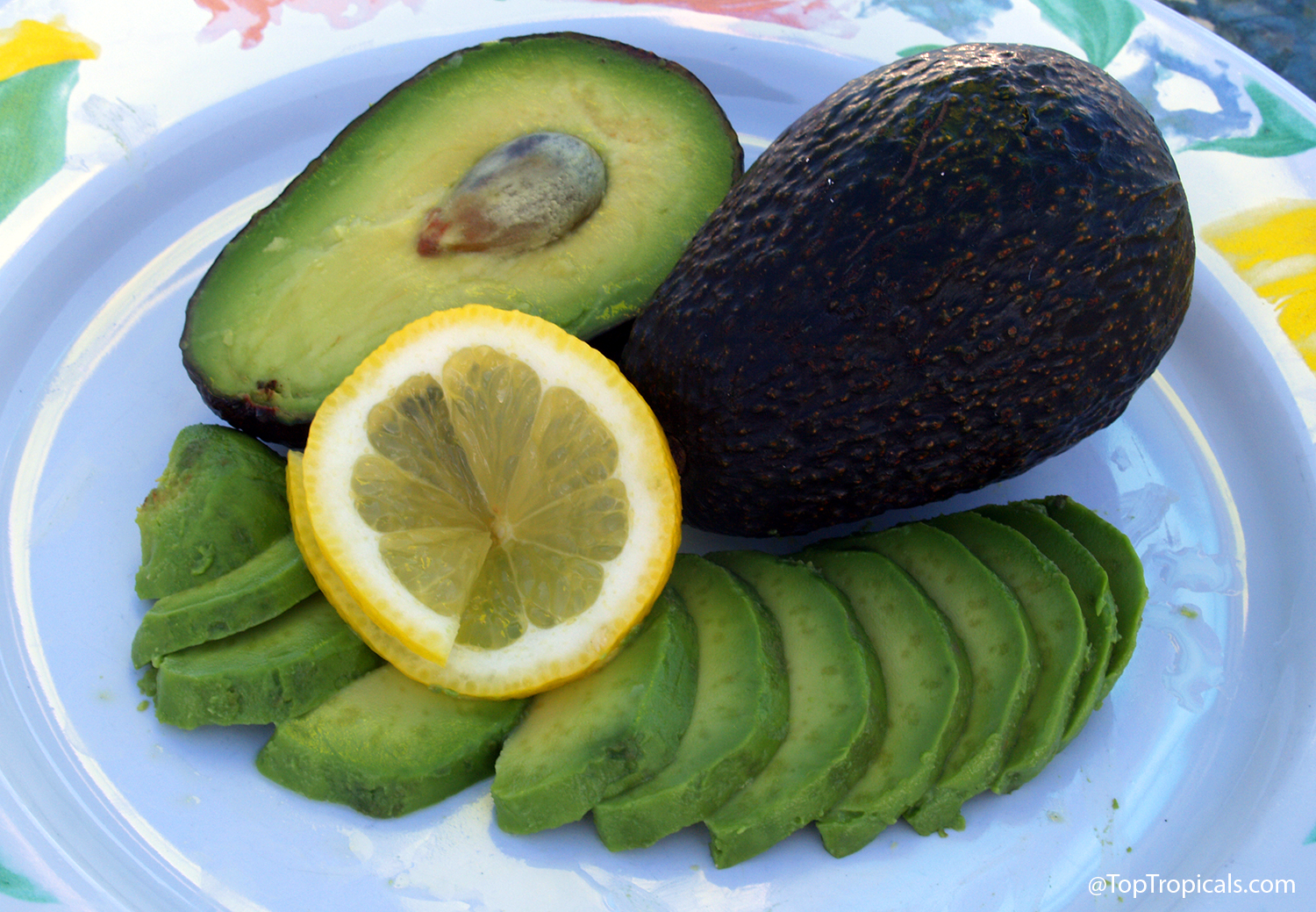
📊 Matrix: Nutritional Composition (Per 100g Serving)
| 🧪 Component | 📊 Value | 🧬 Biological Function |
|---|---|---|
| Energy & Macronutrients | ||
| Energy (Calories) | 112 kcal | Metabolic fuel with low glycemic impact. |
| Total Fat | 8.87 g | Heart-healthy monounsaturated fatty acids (MUFAs). |
| Dietary Fiber | 5.3 g | Supports satiety and gastrointestinal health. |
| Carbohydrates | 8.91 g | Low-sugar energy source. |
| Protein | 1.59 g | Essential amino acid contributor. |
| Essential Minerals & Electrolytes | ||
| Potassium (K) | 488 mg | Regulates fluid balance and nerve transmission. |
| Magnesium (Mg) | 34 mg | Cofactor for energy metabolism and muscle recovery. |
| Phosphorus (P) | 39 mg | Critical for bone mineralization and ATP production. |
| Sodium (Na) | 5 mg | Naturally low-sodium electrolyte profile. |
| Vitamin Complex & Antioxidants | ||
| Vitamin A | 612 IU | Supports vision and immune system integrity. |
| Vitamin C | 7.9 mg | Antioxidant protection for collagen and tissues. |
| B-Complex (B2, B3, B5, B6) | High | Drives mitochondrial energy and cellular repair. |
| Vitamin E & K | Trace | Protects cell membranes and supports blood clotting. |
💡 ProTip: The Nutrient Booster Effect
The high monounsaturated fat content in avocados helps unlock nutrients from other foods. Provitamin A carotenoids like beta-carotene, found in foods such as carrots and tomatoes, are fat-soluble, and published research from Ohio State University (Journal of Nutrition) has found that eating them alongside avocado increases their absorption by roughly 2 to 12 times or more, depending on the specific nutrient and food pairing.
Avocado Classification: West Indian vs. Mexican/Guatemalan Hybrids
📊 Matrix: Technical Comparison of Avocado Botanical Races
| 🧬 Feature | 🌴 Florida Type (West Indian) | 🥑 Guacamole Type (Mexican/Guat. Hybrid) |
|---|---|---|
| Common Label | "Large Green" or "Smooth-Skin" | "Buttery," "Rich," or "Hass-Type" |
| Oil Content | Lower to Moderate (3.0% – 10.0% fat) | High (15.0% – 25.0% fat) |
| Skin Texture | Smooth, bright green; stays green when ripe | Pebbled/rough; often turns purple/black when ripe |
| Fruit Size | Large to Extra-Large | Small to Medium |
| Flavor & Texture | Mild, slightly sweet; firm/watery (holds shape) | Rich, nutty, savory; creamy/buttery (spreadable) |
| Cold Hardiness | Low: Tropical (Susceptible to frost) | High: Cold-tolerant (Frost resistant) |
| Best Culinary Use (*) | Salads, professional slicing, light dressings | Guacamole, spreads, baking |
(*) In our Variety Master Table, varieties are marked (G) for Guacamole (high-oil/creamy) or (S) for Snack (lower-oil/firm).
💡 The Top Tropicals ProTip: The Climate Factor
Choosing a variety is a balance of culinary preference and regional reality. If you are located in Tier 1 or Tier 2 cold zones, you should prioritize the high-oil Mexican hybrids (like Oro Negro or Bacon) not just for their flavor, but for their superior genetic frost resistance.
Avocado Variety Master Table
- Race: Guat = Guatemalan, Mex = Mexican, W. Indian = West Indian. See The Three Genetic Races for a full explanation.
- Type: A/B refers to flowering behavior for pollination. See Pollination Engineering for details.
- Guacamole or Snack: G = higher-oil, best for guacamole; S = lower-oil, best for slicing or snacking. See Avocado Classification for a full breakdown.
- Season: Harvest windows shift earlier or later depending on your local climate. Treat these months as a general reference, not a fixed date. These windows reflect harvest timing at Top Tropicals' B-Farm in Sebring, Florida.
- USDA Zone: Corresponds to the USDA Plant Hardiness Zone Map. A rating like 9a+ means the variety is suited to Zone 9a and any milder zone above it, not that zone alone.
⚠️ A Guideline, Not a Guarantee
The minimum temperatures listed are for brief exposure, typically a few hours, not an absolute floor. Real-world cold tolerance depends on several factors beyond genetics alone:
- Microclimate & wind: site placement, wind exposure, and elevation can shift effective hardiness by several degrees. See Strategic Site Selection.
- Tree maturity: even a cold-hardy variety needs protection while young. See Protecting Young Avocado Trees.
- Tree health & soil moisture: stressed or waterlogged trees are far more vulnerable. Cold plus wet soil is significantly more damaging than cold alone.
- Freeze duration: a brief dip and a prolonged freeze at the same temperature can have very different outcomes. See Duration Science.
- Container vs. in-ground: a potted tree is meaningfully less cold-hardy than the same variety in the ground. See The 10-Degree Rule.
Click on column header to sort data
| Variety | Min temp | USDA Zone | Size | Race | Fruit size | Color | Type | Guacamole or Snack | Season | Shape |
|---|---|---|---|---|---|---|---|---|---|---|
| Anise | 20°F | 9a+ | 30' x 20' | Mexican | 12 - 16 oz | Green/Black | B | S | July - September | Pear |
| Bacon | 20°F | 9a+ | 30' x 20' | Mexican | 12 - 16 oz | Green | B | S | November - March | Oval |
| Bernecker | 30°F | 10a+ | 30' x 20' | West Indian | 24 - 40 oz | Green | A | G | July - September | Pear |
| Beta | 30°F | 10a+ | 30' x 20' | Guat x West Indian | 14 - 24 oz | Green | B | G | August - October | Large Oval |
| Black Prince | 30°F | 10a+ | 30' x 20' | Guatemalan | 16 - 32 oz | Green | A | G | August - September | Oval |
| Booth 8 | 30°F | 10a+ | 30' x 20' | Guatemalan | 14 - 22 oz | Dark Green | B | G | September - November | Oval |
| Brazos Belle (Wilma) | 15°F | 8b+ | 25' x 25' | Mexican | 6 - 8 oz | Black | B | S | October-November | Pear |
| Brogdon (Brogden) | 20°F | 9a+ | 30' x 20' | Mexican | 7 - 20 oz | Black | B | S | September - October | Pear |
| Buck | 20°F | 9a+ | 30' x 20' | Guat x Mex | 16 - 28 oz | Green | B | S | March - May | Oval/Pear |
| Catalina | 30°F | 10a+ | 30' x 20' | Guat x West Indian | 16 - 32 oz | Green | A | G | August - October | Long Pear |
| Choquette | 25°F | 9b+ | 30' x 20' | Guat x West Indian | 18 - 40oz | Green | A | G | October – February | Oval |
| Day | 20°F | 9a+ | 30' x 20' | Guat x West Indian | 8 - 16 oz | Green | A | G | July - September | Pear |
| Donnie (Doni) | 35°F | 10b+ | 30' x 20' | West Indian | 12 - 20oz | Green | A | G | May – August | Pear |
| Ettinger | 30°F | 10a+ | Upright | Guat x Mex | 9 - 16 oz | Green | B | S | October - January | Pear |
| Fantastic | 15°F | 8b+ | 25' x 25' | Mexican | 6 - 8 oz | Black | A | S | August - October | Pear |
| Florida Hass (Haas) | 30°F | 10a+ | 30' x 20' | Guat x Mex | 4 - 12 oz | Green, Ripening to Purple-Black | A | S | July - September | Oval |
| Fuerte | 20°F | 9a+ | 15' x 20' | Guat x Mex | 12 - 14 oz | Green/Black | B | S | November - June | Pear |
| Hall | 25°F | 9b+ | 30' x 20' | Guat x Mex | 24 - 30 oz | Green | B | S | October - December | Pear |
| Hardee Red | 25°F | 9b+ | 30' x 20' | Guat x West Indian | 16-32 oz | Green/Red | B | S | July - August | Long Pear |
| Hialeah Red | 35°F | 10b+ | 30' x 20' | West Indian | 16-32 oz | Red | B | G | August - September | Oval |
| Joey | 15°F | 8b+ | 30' x 20' | Guatemalan | 6 - 10 oz | Purple/Black | B | S | September - October | Pear |
| Kampong (Sushi) | 30°F | 10a+ | 60' x 40' | Guat x West Indian | 20-32 oz | Green | B | S | December - March | Oval |
| Lila (Opal) | 15°F | 8b+ | 25' x 15' | Mexican | 6 x 12 oz | Green | A | S | July - September | Pear |
| Loretta | 30°F | 10a+ | 30' x 20' | Guat x West Indian | 30 - 40 oz | Green | A | G | August - September | Oval |
| Lula | 25°F | 9b+ | 30' x 20' | Guat x West Indian | 14 - 24 oz | Green | A | G | October - January | Pear |
| Marcus Pumpkin | 20°F | 9a+ | 30' x 30' | Guat x West Indian | 18 - 48 oz | Green | B | S | September - November | Round |
| Maria Black | 30°F | 10a+ | 30' x 20' | Guat x Mex | 20-32 oz | Black | B | G | November - January | Oval |
| Mexicola | 20°F | 9a+ | 25 x 15 | Mexican | 4 - 7 oz | Black | A | S | August - October | Oval |
| Mexicola Grande | 20°F | 9a+ | 30' x 20' | Mexican | 6 - 10 oz | Black | A | S | August - October | Pear |
| Miguel | 30°F | 10a+ | 30' x 20' | Guat x West Indian | 18- 32 oz | Green | B | G | July - August | Oval |
| Monroe | 30°F | 10a+ | Upright | Guat x West Indian | 16 - 24 oz | Green | B | G | November - January | Oval |
| Nishikawa | 35°F | 10b+ | 30' x 20' | Guatemalan | 18 - 24 oz | Green/Black | B | S | October - December | Pear |
| Oro Negro | 25°F | 9b+ | 30' x 20' | Guat x West Indian | 16 - 32 oz | Black | B | S | November - January | Pear |
| Pollock | 35°F | 10b+ | 30' x 20' | West Indian | 16 - 24 oz | Green | B | G | June - August | Pear |
| Poncho (Pancho) | 15°F | 8b+ | 25' x 15' | Guat x Mex | 6–8 oz | Green/Red | B | S | July - September | Pear |
| Red Russell | 35°F | 10b+ | 25' x 15' | West Indian | 16 - 24 oz | Red | A | G | July - August | Club |
| Reed | 35°F | 10b+ | 35' upright | Guatemalan | 12 - 24 oz | Green | A | G | November - February | Round |
| Russell | 35°F | 10b+ | 25' x 15' | West Indian | 16 - 24 oz | Green | A | G | July - August | Club |
| Simmonds | 30°F | 10a+ | 30' x 20' | West Indian | 16 - 24 oz | Green | A | G | June - August | Oval |
| Thomson Red | 30°F | 10a+ | 30' x 20' | Guat x Mex | 20 - 40 oz | Red | B | S | September - November | Pear |
| Tonnage | 30°F | 10a+ | 30' x 20' | Guatemalan | 14 - 24 oz | Green | B | G | October - November | Pear |
| Ulala (Oh La La, Super Hass) | 20°F | 9a+ | 25' x 15' | Mexican | 6-10 oz | Purple/Black | A | S | November - February | Pear |
| Waldin | 35°F | 10b+ | 30' x 20' | West Indian | 14 - 28 oz | Green | A | G | August - October | Oval |
| Winter Mexican | 20°F | 9a+ | 40' x 25' | Guat x Mex | 12 - 18 oz | Dark Green | B | S | December - January | Pear |
| Wurtz (True Dwarf) | 25°F | 9b+ | 12' x 8' | Guat x Mex | 6 - 12 oz | Dark Green | A&B | S | May - September | Pear |
| Yamagata | 30°F | 10a+ | 25' x 15' | Guatemalan | 16 - 28 oz | Green | B | S | March - July | Pear |
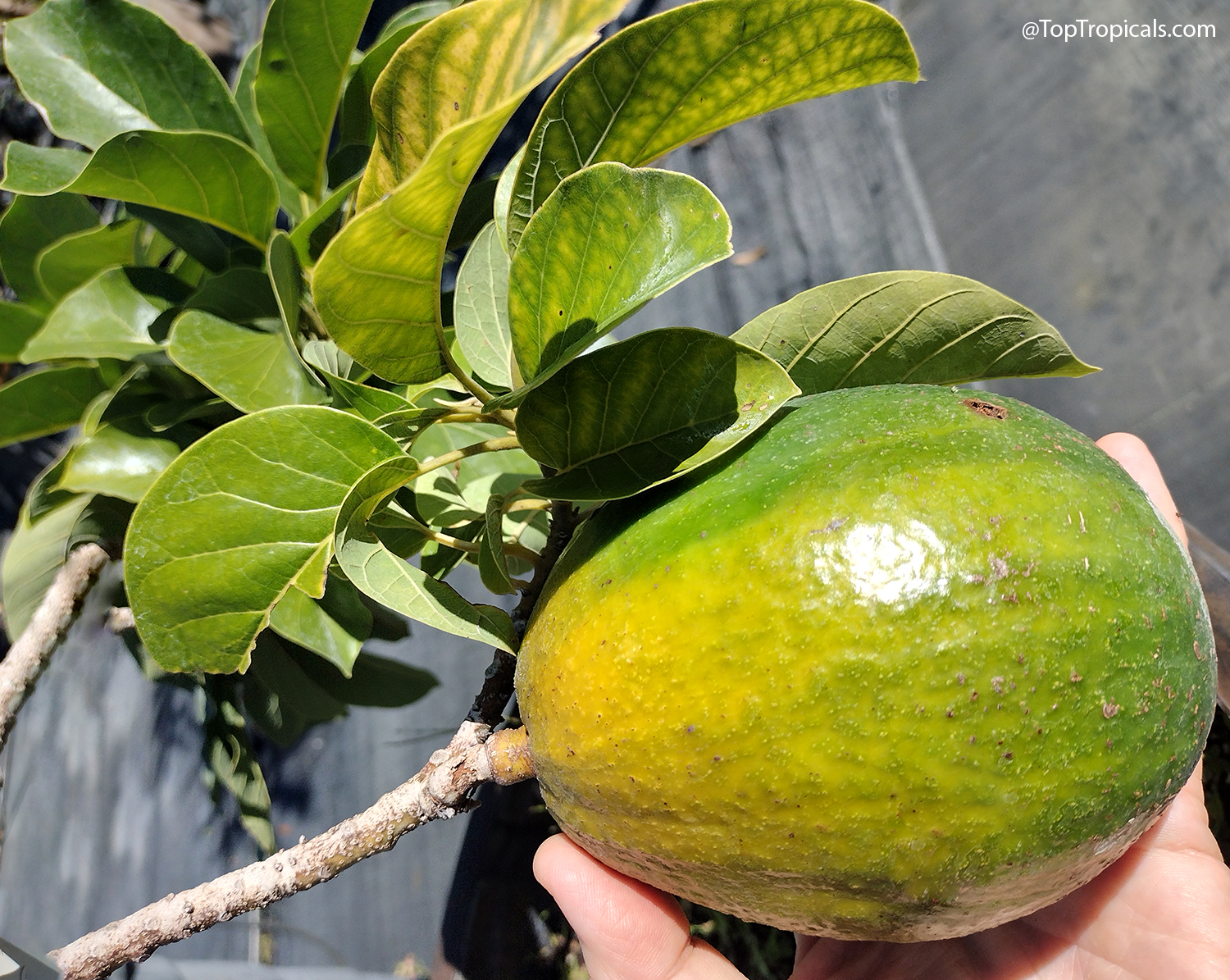
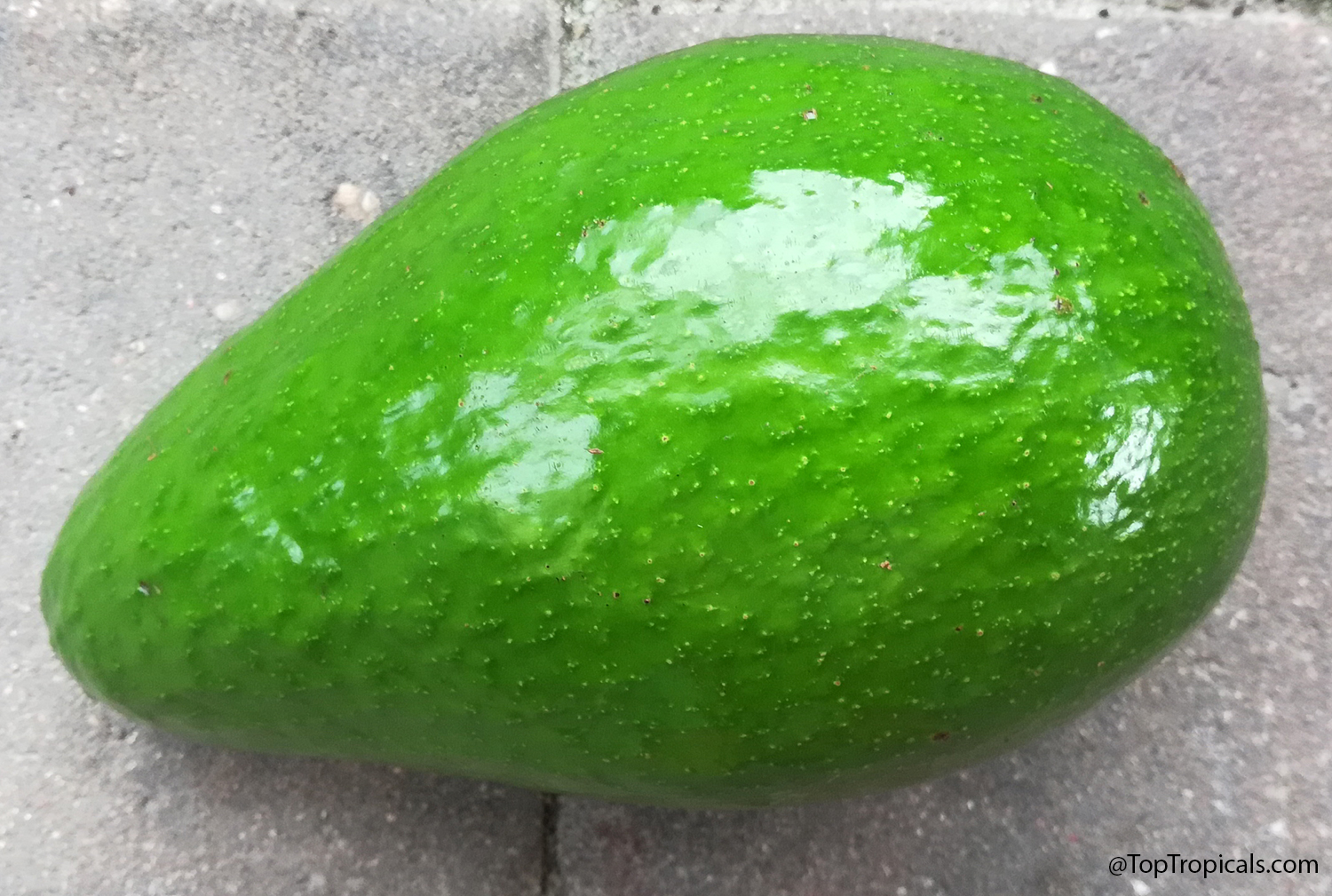
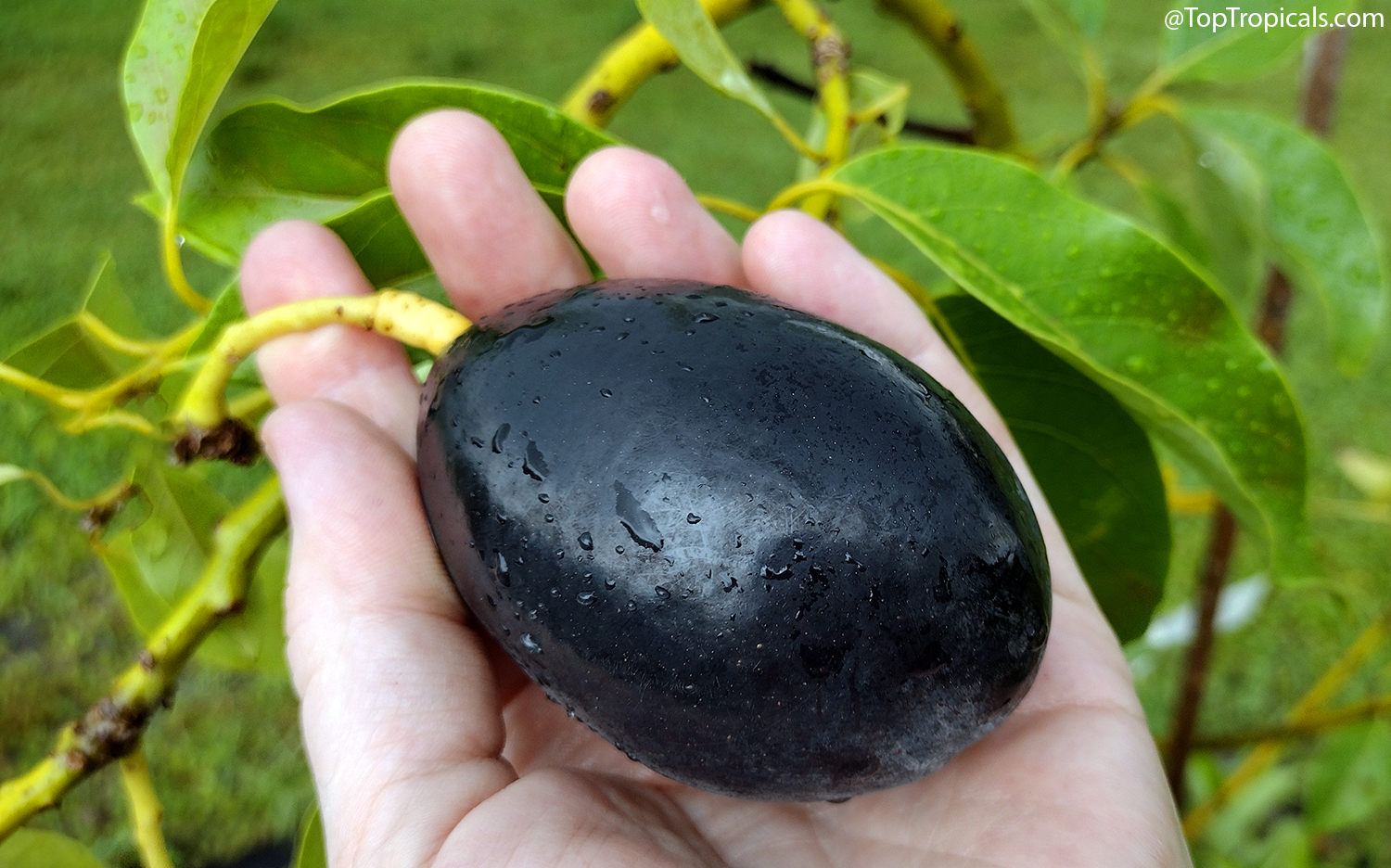
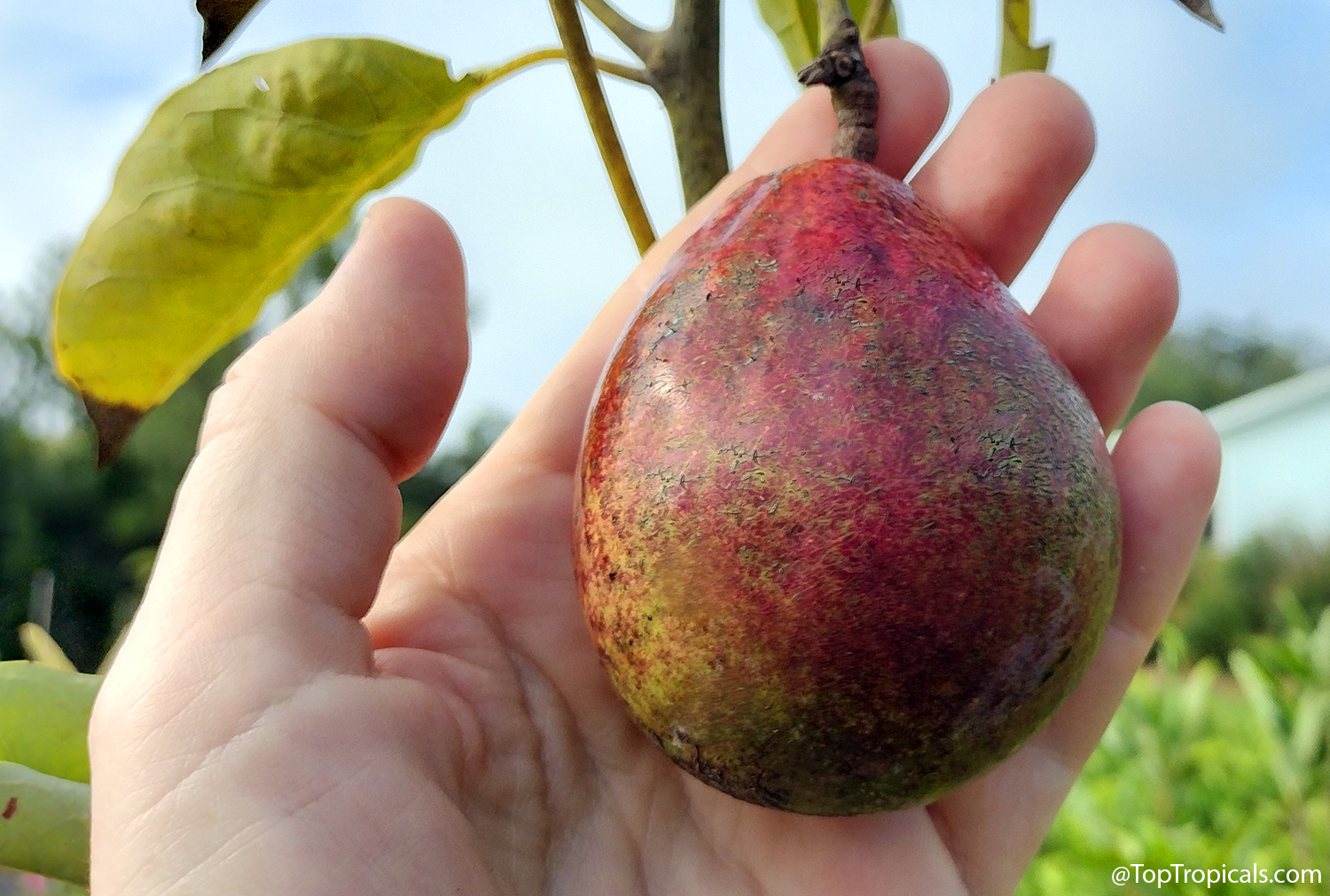
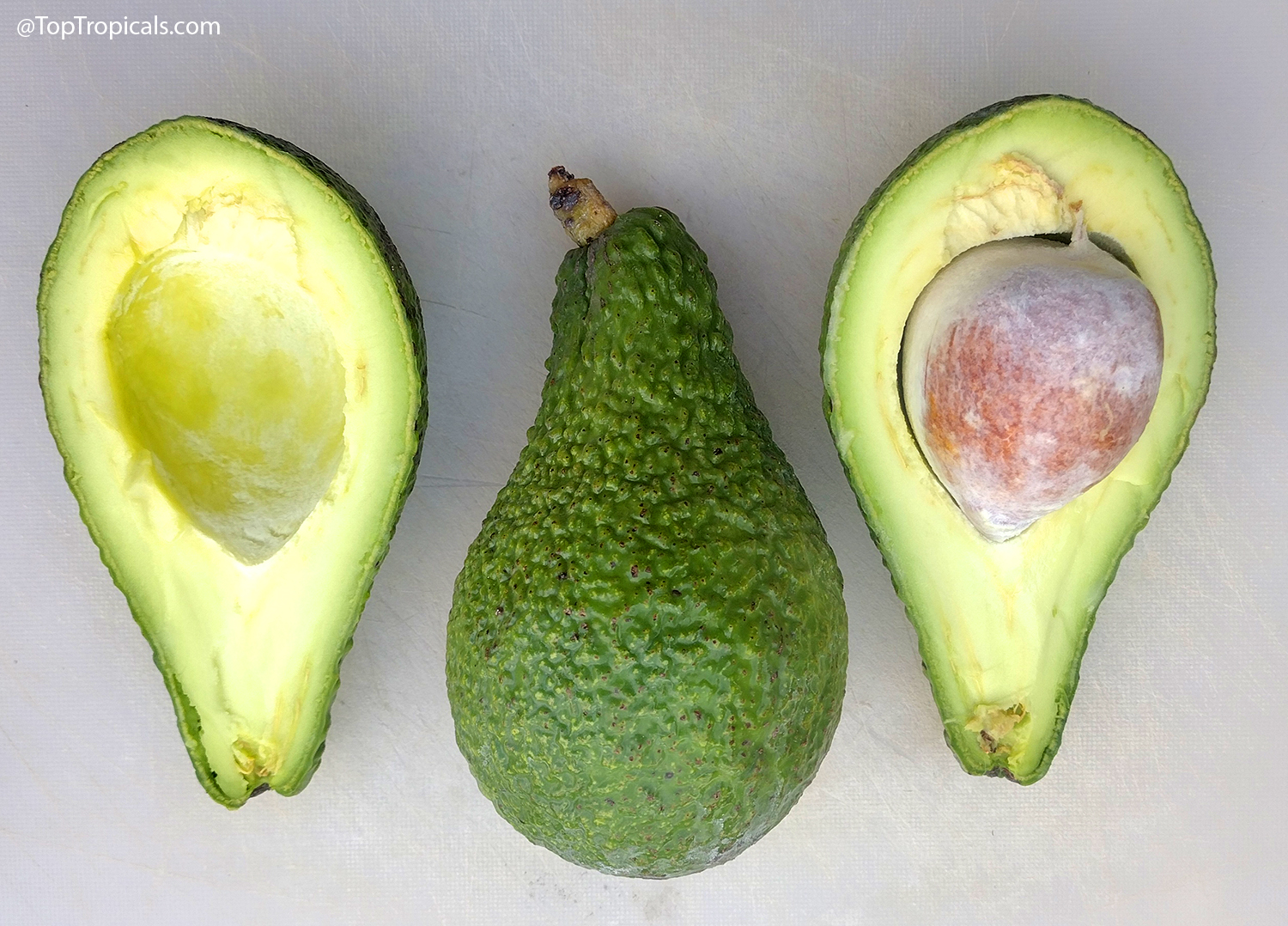
Avocado Variety Photo Gallery
See what these varieties actually look like, straight from the Top Tropicals nursery.
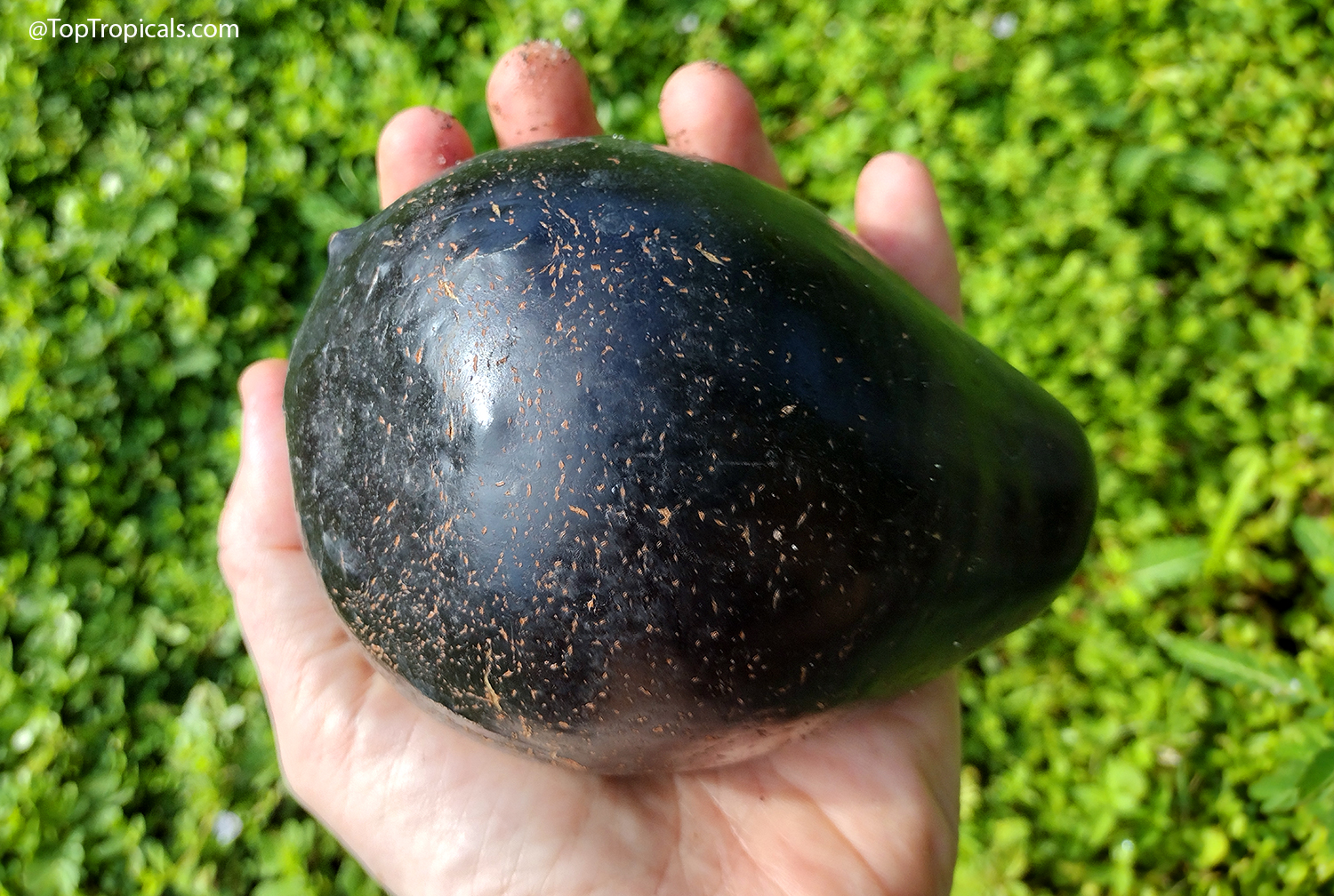
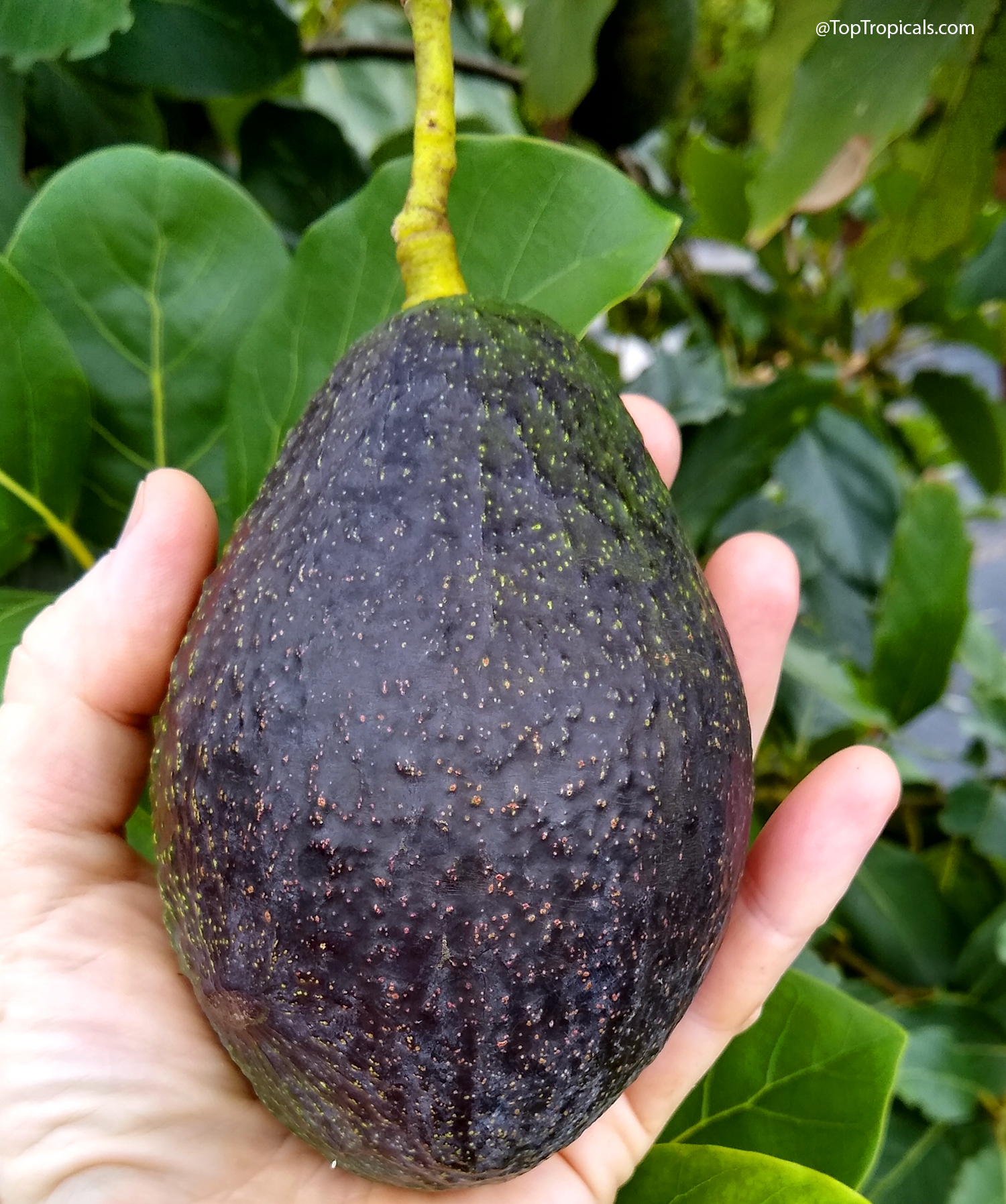
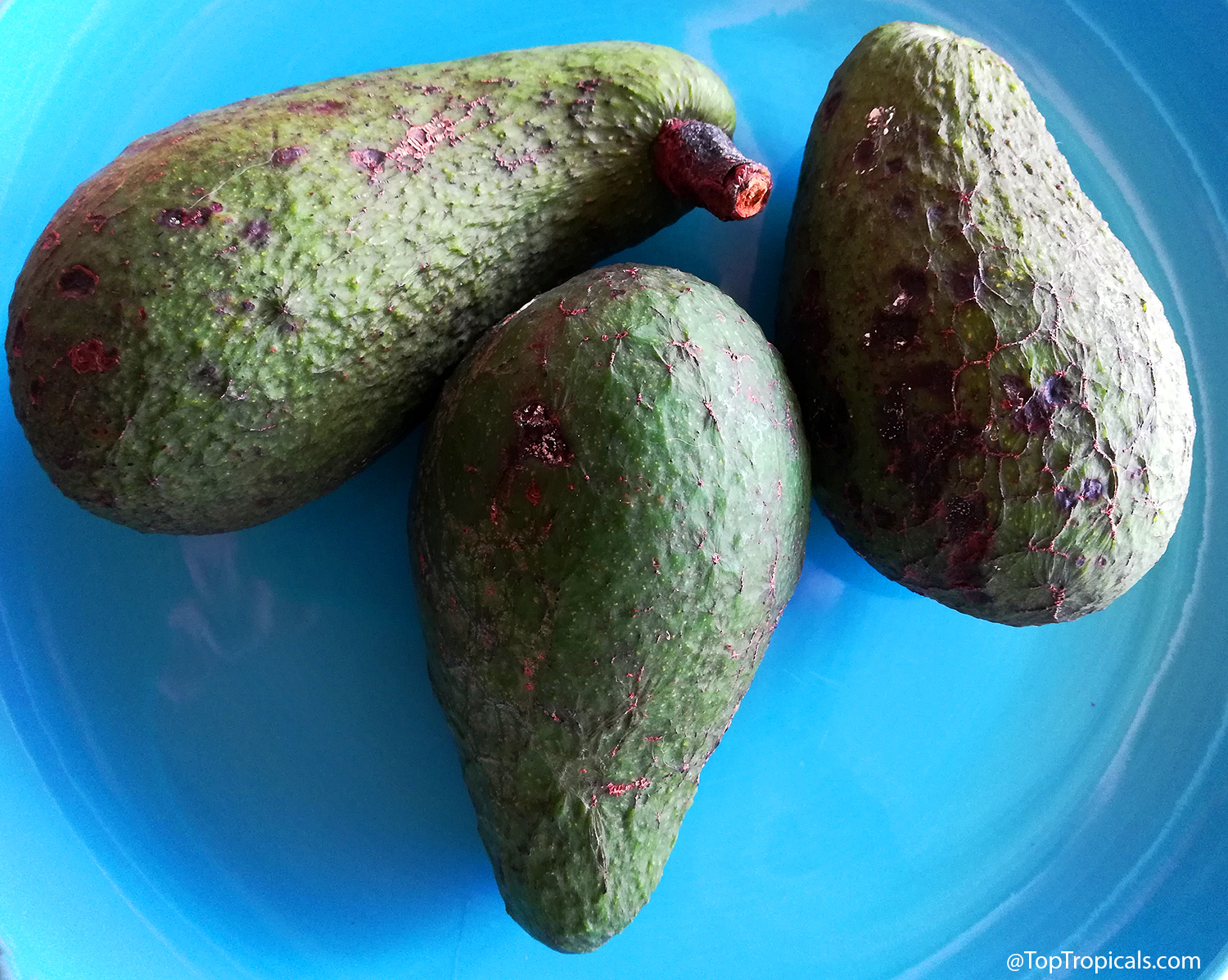
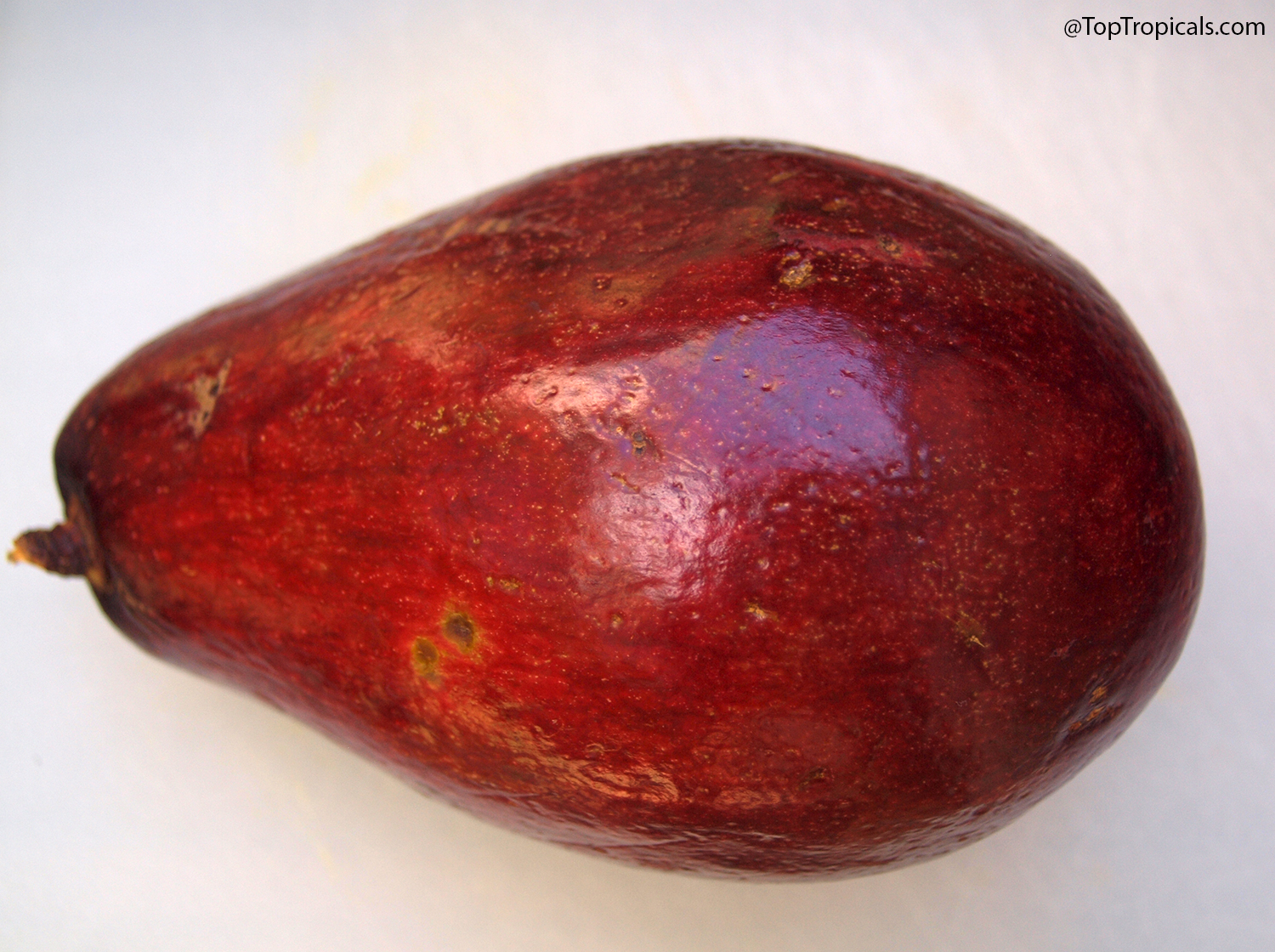
Choosing Your Tree: The 4 Critical Decisions & Survival Tiers
The Avocado Selection Matrix: 4 Strategic Decisions
Choosing the right avocado tree is a long-term investment. To ensure a productive canopy and winter survival, evaluate your growing site against these four technical criteria before making a purchase.
📊 Matrix: Key Factors for Avocado Variety Selection
| 🛠️ Decision Pillar | 🔍 Critical Question | 🧪 Technical Consideration |
|---|---|---|
| Climate & Hardiness | What is your absolute minimum winter temperature? | Match your site to a Survival Tier (1-5). Varieties chosen outside your thermal threshold will grow in summer but fail during extreme winter events. |
| Oil & Culinary Use | Do you prefer rich, buttery textures or light slicing types? | Choose High-Oil (Guatemalan/West Indian) hybrids like Oro Negro for guacamole, or Low-Oil (West Indian) types like Simmonds for refreshing salads. |
| Space & Habit | Is the tree for a large landscape or a patio container? | Standard varieties provide a shade canopy for in-ground planting. Compact/Dwarf varieties like Wurtz (Little Cado) are specifically suited for limited space and container gardening. |
| Investment & Time | How long are you willing to wait for the first harvest? | 3-gallon trees require 2-3 years of patience and extra protection. 7-gallon to 25-gallon trees offer "Instant Orchard" benefits with higher natural cold resilience and a shorter timeline to fruit. Read more in Size vs. Yield section. |
💡 The Top Tropicals ProTip: The Size-Resilience Connection
When it comes to avocados, bigger is safer. A 25-gallon tree has a thicker trunk and a more established root system, which provides significantly more "thermal mass" to survive a freeze compared to a 3-gallon sapling. If you are in a Tier 2 or 3 zone, investing in a larger tree is the best insurance policy against winter loss.
🔬 Technical Definition: Frost vs. Freeze
Frost (30°F–32°F) occurs when water vapor crystallizes on surfaces; it primarily damages tender foliage. A Freeze (Below 28°F) is a more severe event where ice crystals form inside plant cells. This intracellular freezing leads to Vascular Collapse, potentially injuring the wood, roots, and the graft union itself.
Choosing genetics suited for your specific USDA zone is the first step toward a tree that lasts. These classifications represent the thresholds for mature, established, in-ground trees during short-duration events. Read more about Size and Cold Protection
📊 The "Culinary vs. Climate" Matrix (Tier Refinement)
| Survival Tier | 🌡️ Threshold | 🛡️ Resistance Profile | Primary Varieties | Culinary Profile | 📍 Geographic Best Fit |
|---|---|---|---|---|---|
| Tier 1 | 15°F+ | High Resistance: Mexican-type selections. Short freezes near 15°F are survivable with minor leaf burn. | Fantastic, Joey, Lila | High Oil / Nutty | USDA Zone 8b / 9a transition regions. Central/North Florida, Texas, Arizona |
| Tier 2 | 20°F+ | Moderate: Brief freezes usually survivable. Full recovery may take an entire growing season. | Bacon, Day, Mexicola | Medium Oil / Creamy | Coastal 9a. Inland Florida and colder microclimates. |
| Tier 3 | 25°F+ | Light: Visible canopy damage and branch dieback are common. Survival depends on wind protection. | Choquette, Oro Negro, Lula | Rich / "Black Gold" | Zone 9b/10a. Coastal Central Florida and protected microclimates. |
| Tier 4 | 30°F+ | Frost Tolerant Only: Even brief freezes cause rapid damage. Best for South Florida. | Simmonds, Black Prince | Mild / Large Slicing | USDA Zone 10a / 10b. S. Florida, Miami, Keys, Coast. |
| Tier 5 (Container) | Any | Compact: Grown in containers and moved indoors during cold, regardless of the variety's in-ground rating. See Growing Avocados in Containers. | Wurtz (Little Cado) | Rich / High Oil | Patio Growers & Containers |
See more varieties in our Master Avocado Varieties table
💡 The Top Tropicals ProTip: The Container Buffer
Remember: In-ground survival ratings do not apply to pots. For any container-grown avocado, you must move the plant or provide protection when temperatures are 5-10°F higher than the ratings listed above. A "15°F tree" in a pot can still suffer root death at 25°F. Read more in Growing Avocados in Containers section.
Avocado Cold Hardiness: The Duration Factor and Freeze Limits
Start With Climate: Minimum Winter Temperature Comes First
Cold Hardiness: The lowest temperature a mature, established tree can survive for a short-duration freeze event.
Cold hardiness ratings refer to survival, not cosmetic condition. A tree rated hardy to 15°F may survive a brief overnight freeze and still show leaf burn or tip dieback.
Key variables that influence freeze survival:
- Minimum temperature reached
- Duration below 32F
- Wind exposure
- Soil moisture at time of freeze
- Tree age and establishment level
- Microclimate (south wall, urban heat, elevation)
In Florida, even small differences matter. Interior locations often run 5 to 10+ degrees colder than coastal zones. That difference can determine survival versus structural damage.
Climate is the first filter. Everything else comes after.
Once you know your real low, match it to a Survival Tier to see which varieties can handle it.
Cold Survival Groups: What 15°F, 20°F, 25°F, and 30°F Actually Mean
📊 Cold Hardiness Survival Guide: Temperature Thresholds and Genetic Resilience
| Survival Rating | Typical Genetic Type | Survival Interpretation |
|---|---|---|
| Hardy to 15°F | Mexican-type selections | Strongest survivors; can withstand brief, extreme freeze events with minimal structural loss. |
| Hardy to 20°F | Moderately cold-tolerant hybrids | Survival is likely in short-duration freezes; recovery is generally swift. |
| Hardy to 25°F | Light freeze tolerant | Visible canopy and leaf damage are common; requires active protection during cold snaps. |
| Hardy to 30°F | Frost tolerant only | Serious damage likely even during brief freezes; strictly for tropical or protected microclimates. |
For specific variety recommendations at each tier, see the Culinary vs. Climate Matrix above.
Duration Science: Why the "Total Freeze Time" Is Critical
🔬 Technical Definition: Latent Heat of Fusion
Latent Heat of Fusion is the energy released as water transitions into ice. A tree's internal sap contains stored energy that prevents freezing for a short window. However, during Prolonged Duration Freezes, this energy is eventually exhausted. Once the internal temperature reaches the "Supercooling" limit, systemic ice formation begins, leading to vascular rupture.
The absolute lowest temperature recorded is often less important than the Total Hours of Exposure. An avocado tree may survive a "Quick Dip" to 18°F for 30 minutes, yet suffer total structural failure at 24°F if the freeze lasts for 8 hours with wind exposure.
📊 Matrix: Temperature vs. Duration Impact
| ⏳ Event Profile | 🧪 Physiological Impact | 🛡️ Survival Probability |
|---|---|---|
| The "Quick Dip" (< 1 Hour) |
Internal thermal mass prevents sap from reaching ambient freezing point. | High: Mature trees often show zero damage if the sun rises quickly. |
| The "Deep Freeze" (4–8 Hours) |
Latent heat is exhausted; ice crystals form in smaller branches. | Moderate: Expect foliage loss and tip dieback, even in hardy varieties. |
| The "Extended Event" (> 12 Hours) |
Complete vascular freeze reaches the trunk and graft union. | Low: High risk of structural death regardless of variety hardiness. |
📊 The Maturity Buffer
Cold survival is exponentially higher in mature trees. A 5-year-old tree has significantly more Internal Thermal Mass and a deeper root system, allowing it to withstand long-duration stress that would dehydrate and kill a newly planted sapling.
💡 The Top Tropicals ProTip: The First Filter Rule
When choosing a variety, always design for your Record Low, not your "Average Winter." Climate is the mandatory filter that determines viability; variety preference is secondary. If your site consistently sees 8-hour freezes, you must select from the 15°F Tier, even if you prefer the flavor of a 30°F Tier variety.
Microclimate Optimization: Choosing the Strategic Planting Site
🔬 Technical Definition: Thermal Buffering
Thermal Buffering is the capacity of dense structures (masonry walls, asphalt, or water bodies) to absorb solar radiation during the day and re-radiate that energy as heat during the night. In a freeze event, this localized release of infrared energy can keep the surrounding air 2–4°F warmer than the open landscape.
An avocado tree's survival often comes down to a game of inches. Two trees planted only 30 feet apart can experience completely different outcomes based on their specific microclimate. A difference of just 2 to 3 degrees often determines the line between minor leaf singe and total structural collapse.
📊 Matrix: Site Selection & Thermal Management
| 📍 Location Feature | 🛡️ Defensive Advantage | 🧪 Technical Reality |
|---|---|---|
| South/SE Exposure | Maximum Solar Gain: Places the tree in the warmest part of the property. | Ensures the tree enters the night with the highest possible internal carbohydrate and sap temperature. |
| Structural Proximity | Radiative Protection: Planting near south-facing walls or masonry. | Walls act as a "Heat Battery," dampening temperature swings and preventing rapid cooling of the graft union. |
| Wind-Blocking barriers | Desiccation Defense: Using hedges or fences to block North/NW winds. | Reduces the Wind-Chill Factor, preventing the rapid removal of latent heat from the leaf surface. |
| Avoid "Frost Pockets" | Cold Air Drainage: Avoid low spots where cold air settles. | Cold air is denser than warm air; it "pools" in depressions, creating localized temperatures significantly lower than the ridge. |
| Light Requirements | Full Sun: 6 to 8+ hours of direct daily light. | Improves overall vigor. Promotes lignification (strengthening of wood) before winter and accelerates metabolic recovery after cold stress. Weak, shaded trees enter winter stressed and are more vulnerable to cold damage. |
| Soil Hydrology | Mounded or well-drained soil; 1–2 ft above grade. | Prevents Root Hypoxia. Saturated roots during a freeze are significantly more susceptible to cellular collapse than well-drained roots. |
💡 The Top Tropicals ProTip: The 30-Foot Rule
Never plant your most cold-sensitive avocado in the middle of an open lawn or on the north side of a building. These areas are Heat Sinks that maximize exposure to arctic winds and radiative cooling. Instead, tuck high-value varieties into the "elbow" of a south-facing building. This simple placement decision is often more effective than any frost blanket.
💡 The Top Tropicals ProTip: The "Grass Test"
On the first morning of a light frost, walk your property. Areas where the grass stays white with frost the longest are Frost Pockets, never plant an avocado there. Areas where the frost melts first (usually near south-facing walls or slightly elevated spots) are your "Golden Zones" for maximum survival.
Elevation and Topography: The Science of Cold Air Drainage
🔬 Technical Definition: Katabatic Flow
Katabatic Flow is the gravity-driven movement of high-density cold air. At night, air cooled by radiative loss becomes heavier than the surrounding atmosphere and flows downhill, seeking the lowest point in the landscape. This creates Thermal Inversion layers where a depression can be 5–8°F colder than a ridge only a few yards away.
When it comes to avocado survival, the "high ground" is always the safest ground. Understanding how air moves across your property allows you to identify Safe Zones and Death Traps before you ever dig a hole.
📊 Matrix: Topographic Risk Assessment
| ⛰️ Terrain Feature | ⚠️ Freeze Risk Level | 🧪 Technical Reality |
|---|---|---|
| Ridges & Slopes | Low Risk | Dense cold air drains away, replaced by warmer, lighter air. Frost duration is minimized. |
| Open Flats | Moderate Risk | Subject to uniform radiative cooling. No natural drainage for cold air. |
| Basins & Depressions | High Risk | Acts as a "Frost Pocket." Cold air settles and "pools" here, staying stagnant and lethal for hours. |
📉 Avoid the "Death Trap" Sites
- Depressions: Even a 2-foot dip in the yard can trap air that is several degrees colder.
- Low Drainage Basins: Areas where water collects after rain usually collect cold air at night.
- Solid Fencing at Bottom of Slopes: A solid wall at the bottom of a hill can "dam" the cold air, forcing it to back up and submerge your trees.
💡 The Top Tropicals ProTip: The Morning Dew Test
To find the best spot for your avocado, observe your yard on a cold, dewy morning. The areas where the frost or dew stays the longest are your Coldest Zones. The areas that dry out first are your Thermal Highs. Plant your most sensitive varieties (like Simmonds or Choquette) where the sun hits first and the frost clears fastest.
The Lethal Synergy: Drainage and Cold Survival
🔬 Technical Definition: Anoxia-Induced Freeze Stress
Anoxia-Induced Freeze Stress occurs when saturated soil displaces oxygen in the root zone. In this state, the roots lose their ability to regulate solute concentrations. When a freeze hits, these "weakened" cells lack the osmotic pressure needed to resist internal Crystallization, leading to rapid root death even at temperatures that would otherwise be survivable.
One rule holds true across avocado culture: cold plus wet soil is significantly more damaging than cold alone. Roots deprived of oxygen are physiologically compromised and lose their natural resilience to thermal stress.
📊 Matrix: Soil Moisture vs. Cold Resilience
| 🧪 Soil Condition | 🛡️ Survival Impact | 🛠️ Structural Requirement |
|---|---|---|
| Well-Drained / Moist | Optimum Resilience: Damp soil holds latent heat better than dry soil without excluding oxygen. | Standard planting depth; maintain organic mulch layer. |
| Saturated / Standing Water | High Risk: Root "asphyxiation" leads to cellular collapse before the freeze even peaks. | Mandatory Mound: Tree must be elevated 12–24" above the water table. |
Why Saturated Soil Amplifies Cold Injury
In poorly draining soils, the water surrounding the roots conducts cold more efficiently than air pockets, effectively "refrigerating" the root system. To ensure survival in marginal zones (Tier 2 and Tier 3), you must eliminate the following hazards:
- Standing Water: If water remains for more than 2-4 hours after a rain, the site is a "Death Trap" for avocados during a freeze.
- Low Drainage Basins: These areas collect both the coldest air and the most water, a double threat to vascular health.
- Compacted Clay: Prevents the "Gravity Drainage" required to pull oxygen back into the root zone after a rain or irrigation event.
💡 The Top Tropicals ProTip: The "Dry Feet, Warm Heart" Rule
The most successful cold-hardy avocado growers in Florida all follow one rule: Keep the roots high and dry. By planting on a raised mound, you ensure that even during a "Cold-Wet" front, the main root mass stays in the oxygenated zone. This physical separation from the water table is the most effective "anti-freeze" you can provide your tree.
Wind Exposure: The "Force Multiplier" of Freeze Stress
🔬 Technical Definition: Desiccation & Boundary Layer
Desiccation is the extreme dehydration of plant tissue. During a cold event, wind strips away the Boundary Layer, a thin cushion of slightly warmer, humid air surrounding the leaves. This accelerates moisture loss faster than cold roots can replace it, leading to a "Physiological Drought" even if the soil is damp.
Wind does not change the thermometer reading, but it fundamentally changes the rate of heat loss. In the world of avocados, a calm 24°F night is often more survivable than a windy 28°F night. Understanding the difference between still air and moving air is critical for site engineering.
📊 Matrix: Wind Dynamics vs. Tree Survival
| 🌬️ Event Type | 🧪 Physiological Impact | 🛡️ Survival Strategy |
|---|---|---|
| Advective Freeze (Wind + Cold) |
Rapid Evaporative Cooling; strips stored heat from bark and foliage instantly. | Windbreaks: Burlap screens or "Living Fences" (hedges) to reduce air velocity. |
| Radiative Frost (Still Air + Cold) |
Cold air settles in low spots (Frost Pockets). High risk to small 3-gallon trees. | Thermal Mass: Use water jugs and overhead covers to trap ground-heat radiation. |
Strategic Placement for Wind Mitigation
Reducing wind exposure can add 3 to 5 degrees of "functional" protection. Before planting, evaluate your yard for the following "Wind Hazard" zones:
✅ The Leeward Advantage
Plant on the south or southeast side of structures. Buildings act as massive wind-shields against the North/Northwest Arctic fronts that bring the most damage to Florida.
❌ The "Venturi" Effect
Avoid planting in narrow gaps between buildings or solid fences. Wind accelerates in these "tunnels," creating a high-velocity blast that can shred avocado foliage.
💡 The Top Tropicals ProTip: Hydration is Your Best Anti-Freeze
Because wind causes Desiccation (drying out), the best defense is internal. Water your trees deeply 24-48 hours before a predicted wind event. A fully hydrated tree has more "thermal ballast" and can withstand the drying force of moving air much better than a thirsty tree.
Observed Field Patterns and Cold Damage Thresholds
The Variety-Specific Resistance
📊 Physiological Response by Avocado Race
Read more about Tier 1-5
| Damage Level | Tier 1: Mexican (Cold Hardy) | Tier 2/3: Guatemalan & Hybrids | Tier 4/5: West Indian & Compact |
|---|---|---|---|
| Leaf Burn Begins | 20° – 24° F | 26° – 28° F | 30° – 32° F |
| Stem/Wood Damage | 18° – 20° F | 24° – 26° F | 28° – 29° F |
| Tree Mortality Risk | Below 15° – 18° F | Below 22° F | Below 27° F |
Tier 1 & 2: Cold Hardy Resilience Matrix
Read more about Tier 1-5
📊 Target Varieties: Mexicola, Joey, Lila, Poncho, Brazos Belle, Bacon, Fuerte.
| Temp (°F) | 1-2 Hours (Quick Dip) | 4-6 Hours (Deep Freeze) | 8+ Hours (Extreme Event) |
|---|---|---|---|
| 26° – 32° | No damage; potential bloom boost. | Very minor leaf singeing on tips. | Minor leaf burn; dormant buds safe. |
| 21° – 25° | Minor leaf spotting; no wood damage. | Significant foliage burn; stems safe. | Major defoliation; 1-yr wood damage. |
| 16° – 20° | Severe foliage burn; tip dieback. | Wood damage; 2-3 yr branches die. | High risk of trunk damage (except Mexicola). |
| Below 15° | Major structural damage. | Severe structural damage likely; graft survival uncertain. | Total loss; potential rootstock survival. |
Tier 3, 4 & 5: Tropical and Compact Exposure Matrix
📊 Target Varieties: Choquette, Lula, Oro Negro, Monroe, Wurtz (Little Cado), Simmonds.
| Temp (°F) | 1-2 Hours (Quick Dip) | 4-6 Hours (Deep Freeze) | 8+ Hours (Extreme Event) |
|---|---|---|---|
| 30° – 32° | Safe; no visible damage. | Minor leaf burn on tender growth. | Tip dieback; flowers/fruit may drop. |
| 26° – 29° | Leaf singeing; foliage damage. | Significant wood damage; stems die. | Major structural damage; graft at risk. |
| 21° – 25° | Severe damage; wood splitting. | Severe structural damage likely; graft survival uncertain. | Total loss. |
| Below 20° | Critical failure; tree death. | Total loss. | Total loss. |
Acclimation: Why 20°F Is Not Always 20°F
A tree exposed to slow seasonal cooling can tolerate cold far better than a tree hit by a sudden Arctic front. Freeze tolerance is not just a static number; it is a reflection of the tree's metabolic state when the cold arrives.
📊 Matrix: Physiological Factors of Freeze Tolerance
| 🧪 Metabolic State | 📈 Improves Freeze Tolerance | 📉 Increases Freeze Damage |
|---|---|---|
| Temperature Shift | Gradual Decline: Allows the plant to "harden" cell structures over weeks. | Sudden Drop: Arctic fronts hitting after a warm spell catch tissues unprepared. |
| Vascular Activity | Reduced Sap Flow: Lowers internal pressure and water content in plant tissues. | Active Sap Flow: Expanding ice crystals in water-rich cells rupture cell walls. |
| Growth Stage | Semi-Dormancy: Directs energy toward cellular stress protection rather than growth. | Active Flush: Tender new growth stimulated by late-season warmth or nitrogen. |
🔬 Technical Definition: Sap Flow
Sap Flow is the movement of water and nutrients through the plant's vascular system. When a tree is actively growing, its cells are turgid (full of water). If a freeze occurs during active flow, the water inside the cells expands as it turns to ice, physically shredding the cellular membranes. Dormant or semi-dormant tissue tolerates significantly more stress than actively growing tissue.
💡 The Top Tropicals ProTip: Timing the "Harden Off"
To assist your avocado tree in the acclimation process, stop all high-nitrogen fertilization by late summer or early fall. This prevents the tree from pushing a "soft" flush of growth that would be instantly destroyed by the first frost. Instead, focus on micronutrients that support cell wall integrity without forcing vegetative spikes.
Avocado Post-Freeze Recovery: The "Wait and See" Protocol and Resuscitation Steps
The "Wait and See" Protocol: Post-Freeze Recovery
🔬 Technical Definition: Post-Freeze Shock
Post-Freeze Shock is a state of physiological stress occurring after a severe thermal event. While foliage may appear dead, vascular cambium often remains viable but dormant. Immediate intervention often causes more harm than the freeze itself.
If your tree has experienced a deep freeze, your first decisions determine whether it recovers or succumbs to secondary infections. Resist the urge to act right away. Patience matters more than panic here.
📊 Matrix: Post-Freeze Recovery Operations
| 🛠️ Phase | ❌ The Mistake | 🧪 Technical Reality | ✅ The Professional Fix |
|---|---|---|---|
| Pruning | Cutting away brown leaves the next day. |
|
Wait 2–6 weeks. Time reveals the true extent of vascular injury. |
| Diagnostic | Assuming the tree is dead because it is brown. | The Scratch Test reveals cambium health.
|
Wait 14+ days. Lightly scratch the bark. Only remove wood that is confirmed black or water-soaked. |
| Hydration | Heavy watering or fertilizing to "help" recovery. | A defoliated tree has zero Transpiration. Excess water displaces oxygen, inviting Phytophthora (Root Rot). | Keep soil barely moist. Zero Nitrogen until steady, active new growth appears in late spring. |
| Protection | Leaving the exposed "skeleton" bare. |
If the canopy is lost, internal branches are suddenly exposed to direct sun.
|
Apply a 50/50 mix of white latex paint and water to the trunk and major exposed limbs. |
| Evaluation | Ignoring the location of new sprouts. | The Graft Union is the life line. Growth from below the graft means the chosen variety is lost and only rootstock remains. | Identify the graft line. If all growth is from the rootstock, the tree must be re-grafted or replaced. |
💡 The Top Tropicals ProTip: The Patience Factor
Avocados are resilient but slow to signal recovery. A tree that looks like a "dead stick" in February can push a massive flush of growth from its trunk in May. The #1 cause of post-freeze death is overwatering by an anxious gardener. Let the soil dry out significantly between light waterings while the tree is leafless.
Planting for Maximum Cold Protection: Site Selection and Microclimate Engineering
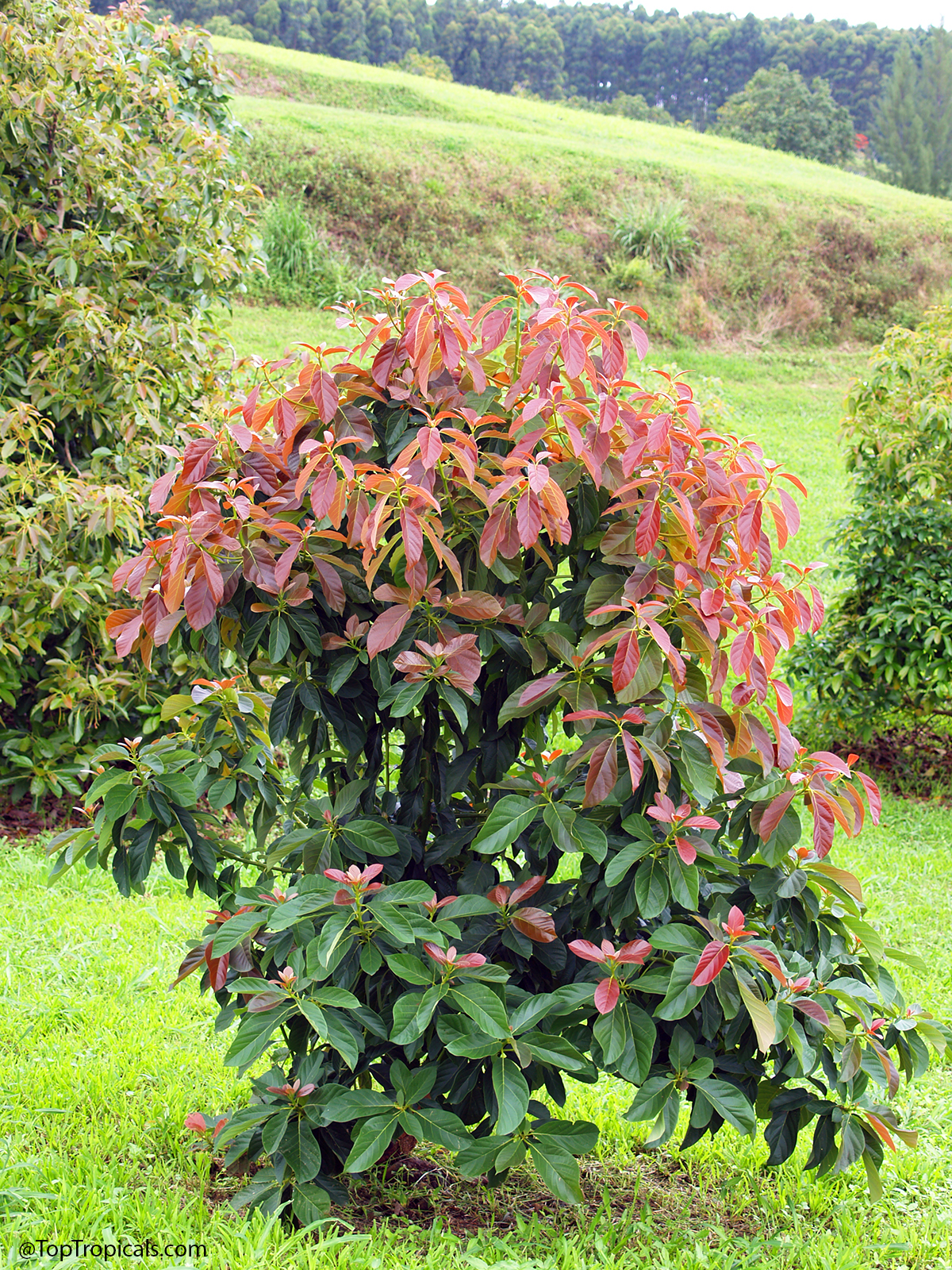
Where you plant matters just as much as how you protect the tree once it's in the ground. It's also extremely important to choose the right plant size for your site: larger, more established trees carry more thermal mass and handle marginal placement far better than young saplings. For the full breakdown of thermal buffering, wind protection, and frost-pocket avoidance, see Strategic Site Selection above.
Avocado Rootstock Science: Cold Tolerance, Vigor, and Soil Adaptation
Rootstock and Cold Tolerance: The Below-Ground Genetic Engine
🔬 Technical Definition: Scion vs. Rootstock
An avocado tree is a composite organism. The Scion is the named fruiting variety (e.g., Joey, Mexicola) responsible for canopy hardiness and fruit quality. The Rootstock is the seed-grown base that dictates water uptake, nutrient absorption, and soil-borne stress resilience.
🔬 Technical Definition: Salt Exclusion
Salt Exclusion is the genetically-driven ability of a rootstock to limit the uptake of sodium and chloride in saline or coastal soils. In coastal or irrigated areas, salt accumulation can mimic drought stress, reducing canopy vigor and fruit production over time.
While the scion determines the absolute temperature a tree can withstand (e.g., 15°F vs 25°F), the rootstock determines the recovery process and long-term survival probability in marginal soils.
📊 Matrix: Rootstock Influence on Tree Performance
| ⚙️ Variable | 🧪 Rootstock Role | 📈 Impact on Cold Survival |
|---|---|---|
| Hardiness Rating | Rootstock will not turn a 25°F-rated tree into a 15°F-rated tree. | The scion genetics determine the canopy's absolute thermal threshold. |
| Metabolic Vigor | Controls the rate of nutrient and water delivery to the canopy. | A vigorous root system ensures the canopy enters winter with high carbohydrate reserves. |
| Post-Freeze Recovery | Determines if post-freeze recovery is strong, slow, or incomplete. | Healthy rootstocks provide the vascular support needed to push a new flush after a freeze. |
| Hydraulic Support | Cold soil damage weakens vascular support to the canopy. | Poor drainage or a weak root system entering winter significantly reduces survival odds. |
| Soil Adaptability | Manages pH buffering and limestone (calcium carbonate) tolerance. | Prevents nutrient-deficiency stress, which makes leaves more susceptible to "freeze-burn." |
| Pathogen Defense | Primary defense against Phytophthora (Root Rot). | Healthy roots survive "Cold-Wet" soil conditions; diseased roots collapse during winter saturation. |
| Salt Exclusion | Limits sodium/chloride uptake in coastal or high-salinity irrigation areas. | Reduces "Salt Stress," a physiological condition that mimics and amplifies dehydration damage from cold winds. |
 Mexican-Type Rootstock
Preferred for the coldest regions. These seedlings exhibit superior tolerance to cold soils and perform exceptionally well in the drier winter conditions of the Southwest and Inland Florida.
🌴 West Indian Rootstock
The standard for South Florida. Selected primarily for high-pH limestone adaptation, superior salt exclusion, and maximum resistance to tropical root-rot pathogens.
💡 The Top Tropicals ProTip: The Engine and the Body
Longevity depends on the rootstock. A high-oil scion (like Oro Negro) cannot perform if the root system fails in poorly drained soil or if high-pH limestone blocks nutrient uptake. Cold tolerance begins with the scion, but survival is anchored by the rootstock.
Rootstock Selection: The strategic choice of the seed-grown base that determines soil adaptation, salt tolerance, vigor, and long-term resilience.
Most growers choose a tree based on the fruit (the scion). Professional growers evaluate the rootstock first.
In Florida and Gulf Coast environments, rootstock determines whether a tree thrives in:
- Calcareous (limestone) soil
- High soil pH conditions
- Coastal salt exposure
- Heavy rainfall and root-rot pressure
📊 Primary Rootstock Categories
| Category | Primary Examples | Best Environment | Key Advantage | Major Trade-off |
|---|---|---|---|---|
| West Indian | Waldin, Simmonds, Bernecker, Turicpan | Coastal & Limestone (FL Standard), 30°F - 35°F | Highest salt & alkalinity tolerance. Best at extracting Iron/Manganese from limestone soil. Highest salt exclusion for coastal sites. | Lowest cold tolerance; roots may fail in freezes |
| Guatemalan Hybrid | Lula, Choquette, Tonnage | General Florida/Gulf Coast, 25°F - 30°F | Balanced vigor & excellent graft compatibility. | Susceptible to Phytophthora in poor drainage |
| Mexican | Brazos Belle, Joey, Fantastic. 15°F - 20°F | Inland / Acidic Soils | Maximum root-zone cold hardiness. Provides maximum root-zone survival in Tier 1 cold zones. | Highly sensitive to salt and high pH |
📊 Environmental Stress Factors & Defense
| Stress Factor | Impact on Tree | Best Rootstock Defense |
|---|---|---|
| High pH (Alkalinity) | Restricts Iron/Manganese; causes chlorosis | West Indian: Superior at extracting micronutrients from lime. |
| Salt Exposure | Causes "tip burn" and leaf drop | West Indian: High salt exclusion capacity at root membrane. |
| Cold Risk | Root death or vascular collapse | Mexican / Hybrid: Provides a thermal buffer for root system. |
| Root Rot | Feeder root decay in wet soil | Clonal (Dusa): Improved resistance over standard seedlings. |
📊 Rootstock vs. Soil Type Match Matrix
| Soil Condition | Best Rootstock Choice | Why? |
|---|---|---|
| Limestone / High pH | West Indian (Waldin) | Best iron and manganese uptake in calcareous soils. |
| Coastal / Salty Water | West Indian | Superior salt exclusion at the root membrane. |
| Cold / Inland | Guatemalan Hybrid (Lula) | Improved cold buffer for the root system. |
| Heavy Clay (Wet Feet) | Grafted High on Hybrid | No avocado tolerates saturated soil well, but hybrids manage stress slightly better. |
Practical Summary
In subtropical climates:
- The scion determines canopy cold tolerance and fruit quality.
- The rootstock determines soil survival, salt management, and long-term resilience.
A high-oil Mexican scion cannot compensate for a rootstock that collapses in limestone soil.
Successful avocado production requires alignment between:
- Climate
- Soil chemistry
- Rootstock selection
- Scion genetics
📊 Rootstock Physiological Mechanics
| Concept | Technical Mechanism | Survival Risk |
|---|---|---|
| Graft Compatibility | Vascular integration between scion and rootstock. | Delayed Failure: Structural snap or canopy decline 2–4 years post-planting if growth rates are mismatched. |
| Root Architecture | Physical growth pattern (Taproot vs. Lateral). | Geological Mismatch: "Divers" (Mexican) hit limestone/water tables and rot; "Sprawlers" (West Indian) navigate rocky soil. |
| Propagation Type | Seedling (Variable) vs. Clonal (Identical). | Performance Gap: Seedlings are genetically unpredictable; Clonal (Dusa) offers uniform disease resistance. |
📊 Salt Tolerance & Mineral Uptake Matrix
| Mechanism | Mexican Race (Accumulator) | West Indian Race (Excluder) | Strategic Management |
|---|---|---|---|
| Salt Tolerance | Low: Absorbs salt into the vascular stream. | High: Filters sodium/chloride at root membrane. | Use West Indian base in coastal or hard-water areas. |
| Iron/Mineral Uptake | Inefficient; prone to chlorosis in high pH. | Superior: High efficiency in limestone soils. | West Indian is essential for pH > 7.0. |
| Root Design | Divers: Deeper taproot development. | Sprawlers: Aggressive lateral navigation. | Match "Divers" to deep soil; "Sprawlers" to shallow rock. |
📊 Seedling vs. Clonal Rootstock Comparison
| Feature | Seedling Rootstock | Clonal Rootstock |
|---|---|---|
| Origin | Grown from seed (sexual reproduction). | Genetically identical copy (asexual propagation). |
| Genetic Profile | Variable: Each tree is unique; slight variations in vigor occur. | Uniform: 100% consistency across the entire orchard. |
| Primary Examples | Lula, Waldin, Simmonds | Dusa, Toro Canyon |
| Disease Resistance | Moderate / Baseline resistance. | High: Specifically selected for Root Rot resistance. |
| Production Method | Simple germination of the pit. | Complex etiolation (double-grafting) technique. |
| Cost & Availability | Standard retail; widely available. | High-cost; primarily commercial nurseries. |
| Best Use Case | Home Landscapes: Reliable and sufficient for standard care. | Commercial Orchards: Critical for uniformity and high ROI. |
While understanding these technical parameters is essential for high-stakes commercial success, it should not deter the home grower from getting started. In most residential settings with standard soil and typical drainage, a high-quality grafted tree from a reputable nursery, usually on a reliable seedling rootstock like Lula or Waldin, is more than capable of thriving. As long as you provide excellent drainage and protect your tree during the first few winters, the rootstock will quietly do its job as the "invisible engine," allowing you to focus on the much more rewarding task of harvesting your own buttery, tree-ripened avocados.
Rootstock & Graft Protection: Engineering for Survival
🔬 Technical Definition: Thermal Mass
Thermal Mass is the ability of a material (typically water or masonry) to absorb, store, and later release heat energy. In a freeze event, utilizing thermal mass near the graft union creates a localized microclimate that can stay 3–5°F warmer than the ambient air.
When protecting a high-value scion, the rootstock is the "Single Point of Failure." If the rootstock or graft union reaches its kill temperature (typically 30–32°F for West Indian types), the entire tree is lost regardless of canopy hardiness. Move from biology to engineering to ensure survival.
📊 Matrix: Cold Mitigation Strategies
| 🛠️ Strategy | ⚙️ Implementation | 🧪 Technical Objective |
|---|---|---|
| Insulated Jacket | Wrap from soil line to 12" above graft using closed-cell foam or foil-backed bubble wrap. | Ground Heat Trapping: Prevents convective cooling of the graft union by capturing latent soil warmth. |
| Active Heat | Tight wrap of C9 incandescent lights (non-LED) around the base, covered by burlap. | Exothermic Support: Provides direct infrared heat to keep vascular tissues above the 25°F "Vascular Collapse" zone. Observe Electrical Safety Rules |
| Thermal Battery | Place 4–5 one-gallon water jugs against the trunk; wrap trunk and jugs together with frost cloth. | Radiant Buffering: Water releases latent heat as it cools, radiating energy upward toward the graft union. |
| High-Grafting | A preventative choice: Grafting the scion 18–24 inches above the soil level. | Thermal Stratification: Places the vulnerable graft union above the "Frost Pocket" layer where the coldest air settles. |
| Anti-Transpirants | Foliar/Bark spray of polymer films (e.g., Wilt-Pruf) before a freeze event. | Desiccation Mitigation: Reduces physiological drought caused when roots are too cold to move water to the canopy. |
💡 The Top Tropicals ProTip: The "Chimney Effect" Warning
The most common failure in trunk wrapping is leaving a gap at the bottom. This creates a Chimney Effect, where cold air is sucked upward through the wrap, actually accelerating freeze damage. Always seal the base of your wrap with extra mulch or soil to lock in ground heat.
Protecting Young Avocado Trees
The Juvenile Vulnerability Gap
A "15°F tree" rating only applies to mature specimens with thick, corky bark and significant internal volume. For the first 36 months, an avocado tree is essentially a green-stemmed succulent. Because its tissues are high in water and low in lignin, it can suffer fatal damage at 30-32°F, even if the variety is technically cold-hardy.
For saplings, the goal of cold protection is to preserve the graft union and the main trunk. If the canopy is lost but the graft is saved, the tree can regrow its framework in a single season.
| Method | Application & Instructions |
|---|---|
| Trunk Wrapping | Wrap the main trunk from the ground to the first set of scaffold branches. Use breathable materials like burlap, pipe insulation (slit down the side), or specialized tree wraps. This prevents the "sun-thaw-freeze" cycle that splits bark. |
| Soil Banking | Before a major freeze, mound clean soil or mulch 12–15 inches high around the base of the tree, covering the graft union. This uses the earth's natural 50-55°F thermal mass to keep the most critical part of the tree alive. Remove the mound immediately after the freeze to prevent bark rot. |
| Frost Blankets | Cover the entire canopy with a frost cloth or heavy blanket. The cover should extend all the way to the ground and be weighted down to trap the heat rising from the soil. Avoid plastic touching the foliage, as it conducts cold directly into the leaves. |
| Supplemental Heat | For extreme events, place a string of C9 incandescent holiday lights (not LEDs) or a 100W outdoor bulb inside the frost-cloth tent. This can raise the internal temperature by 5–8°F, which is often the difference between life and death for a young tree. Observe Electrical Safety Rules |
Establishment Milestones (Years After Grafting)
Read more about Avocado Age & Size
- Year 1: Maximum vulnerability. Protect at 32°F.
- Year 2: Bark begins to "cork" (turn brown and woody). Protect at 28-30°F.
- Year 3: Canopy provides some self-shading and wind protection. Begin transitioning to the variety's mature cold-hardy rating.
💡 The Hydration Defense
Critical Step: Always water your trees thoroughly 24–48 hours before a predicted freeze. Moist soil absorbs more solar radiation during the day and releases more latent heat at night than dry soil. A dehydrated tree is significantly more likely to suffer vascular collapse in the cold.
⚡ The Top Tropicals ProTip: Electrical Safety
When implementing supplemental heat for your trees, electrical safety is your top priority. If you are in doubt regarding your power configuration or the load capacity of your circuit, always consult a qualified electrician.
Observe these strict rules to prevent fire, short-circuit, or shock hazards:
- No Irrigation: Do not run irrigation systems, sprinklers, or hoses while electrical heat wires or extension cords are connected. Water is highly conductive; moisture contact with active electrical components creates a high-risk scenario for lethal shock or equipment failure.
- GFCI Required: Only plug into outlets protected by a Ground Fault Circuit Interrupter (GFCI). This is critical for preventing electrical shock in damp outdoor environments.
- Outdoor Integrity: Use only extension cords and lighting strings specifically rated for permanent outdoor use (look for "W" or "SJTW" ratings on the cord jacket).
- Gauge vs. Length: Long cords experience voltage drops and can overheat if the wire is too thin. For runs over 25 feet, use heavy-duty 12-gauge or 14-gauge cords. Never use thin indoor "zip cords."
- No Splitters or Daisy-Chains: Plug your heat source directly into the extension cord. Do not use multi-plug splitters or connect multiple extension cords together, as these create high-resistance points that lead to electrical fires.
⚠️ The Survival Equation: Scion + Rootstock + Soil + Placement
Practical takeaway: If you are planting in a cold-prone area, cold survival is a system, not just a variety choice.
- 1. Scion Selection: Choose a cold-hardy variety first.
- 2. Soil Physics: Ensure excellent drainage, avoiding heavy or waterlogged soils.
- 3. Placement: Use microclimate advantages, south exposure, wind protection, elevation, to buy extra degrees of protection.
- 4. Rootstock Integrity: Buy from nurseries using vigorous, adapted rootstock.
Neglect one variable, and the others cannot compensate
Avocado Pollination Mastery: Type A and Type B Flowering Clocks
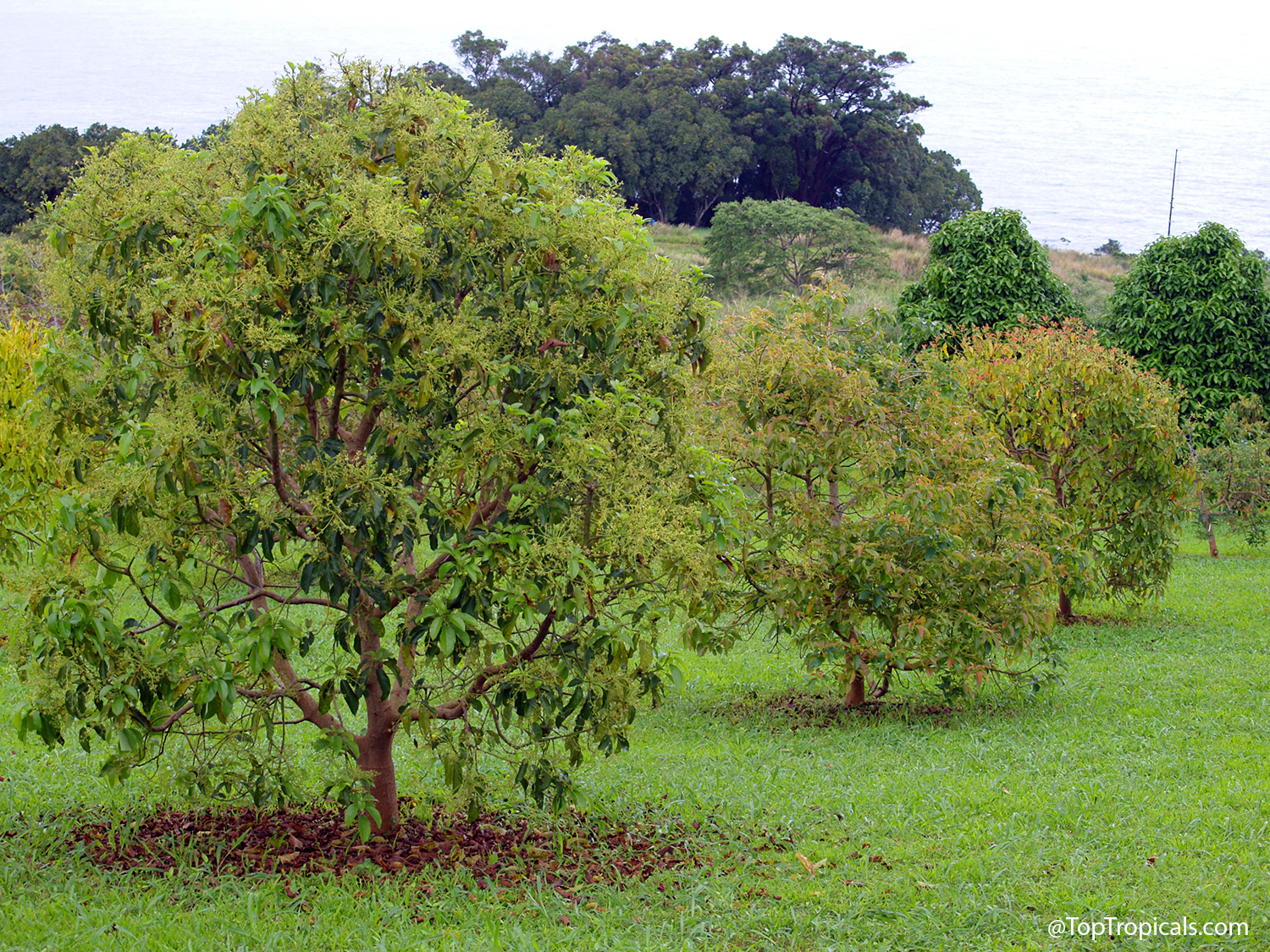
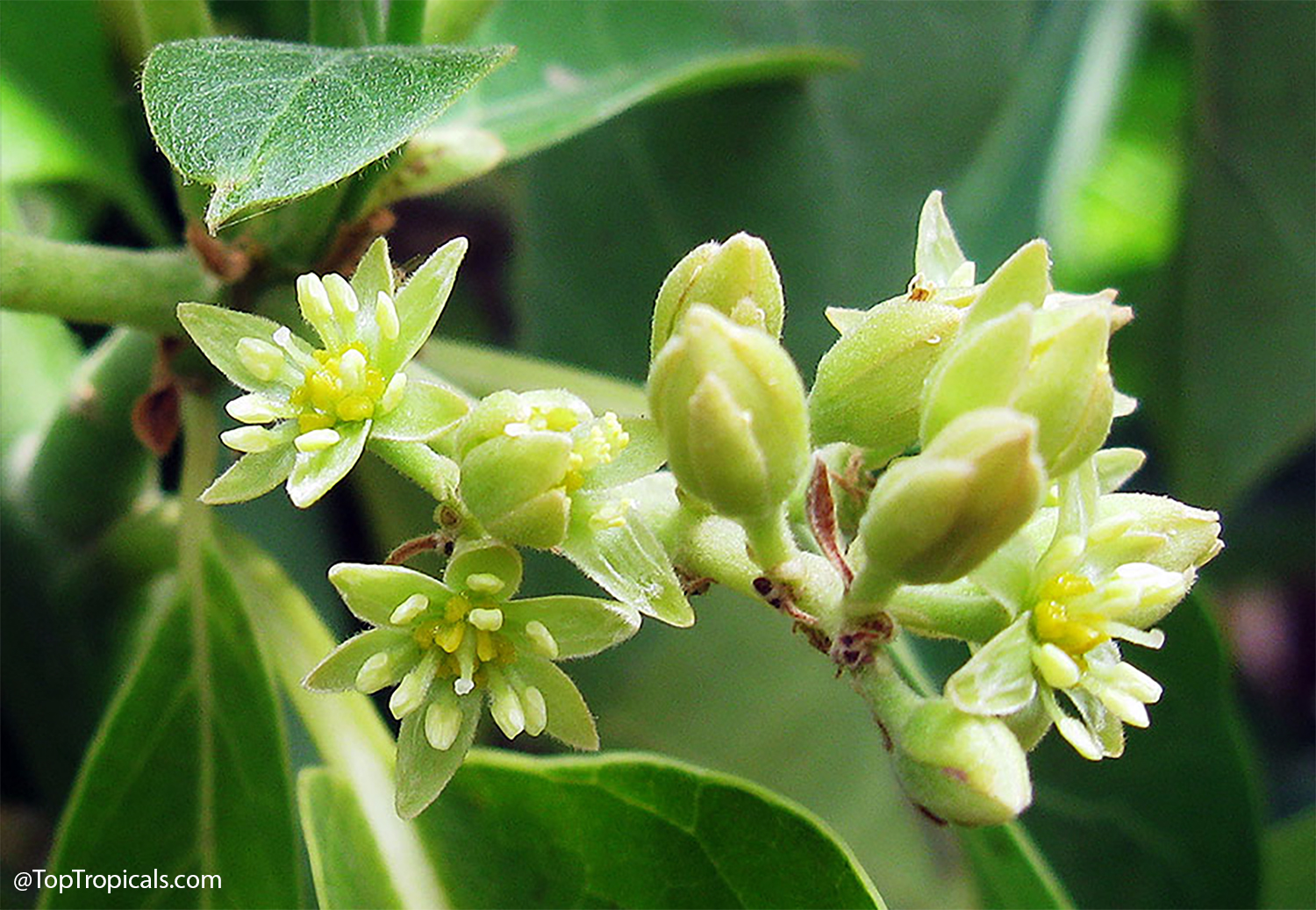
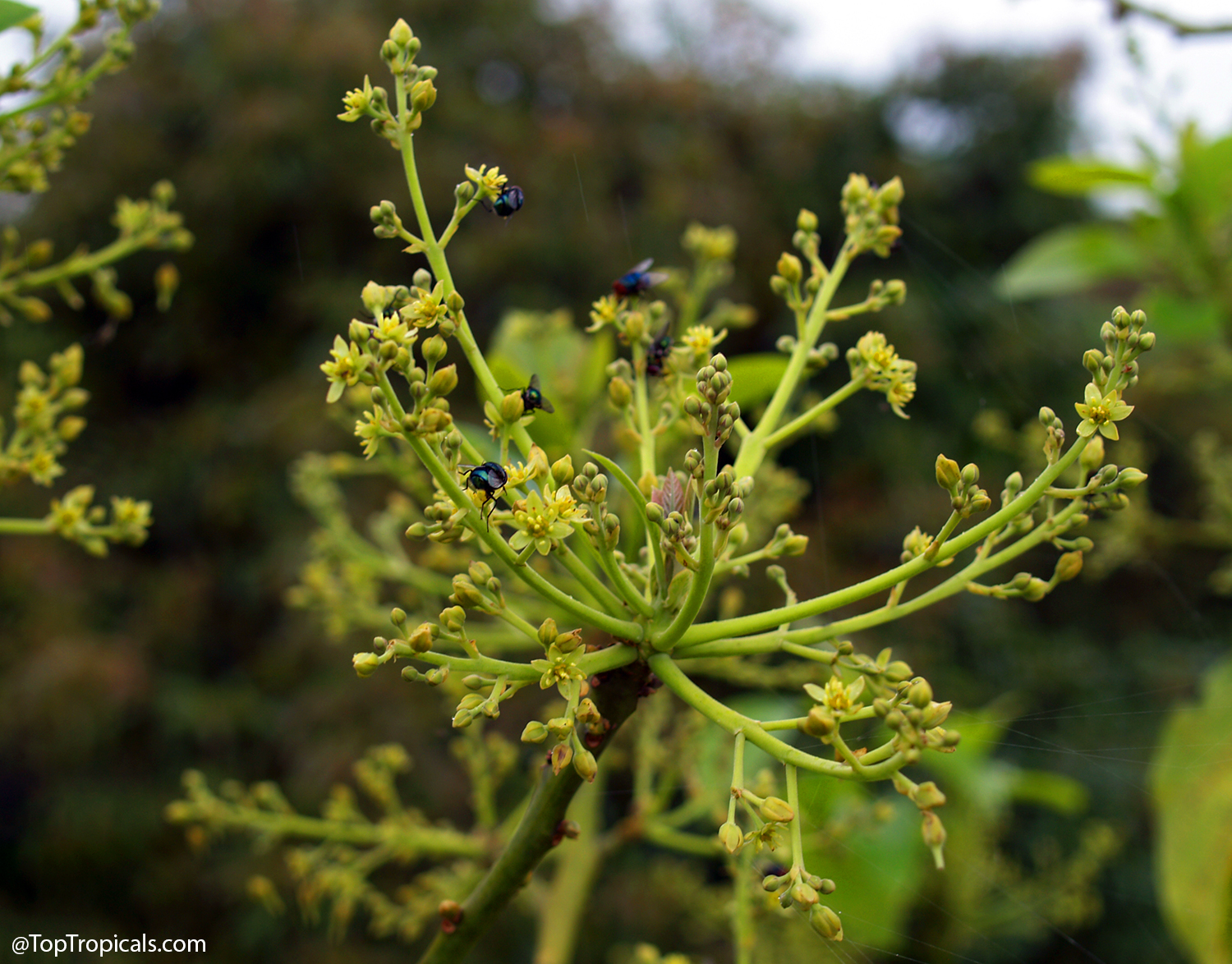
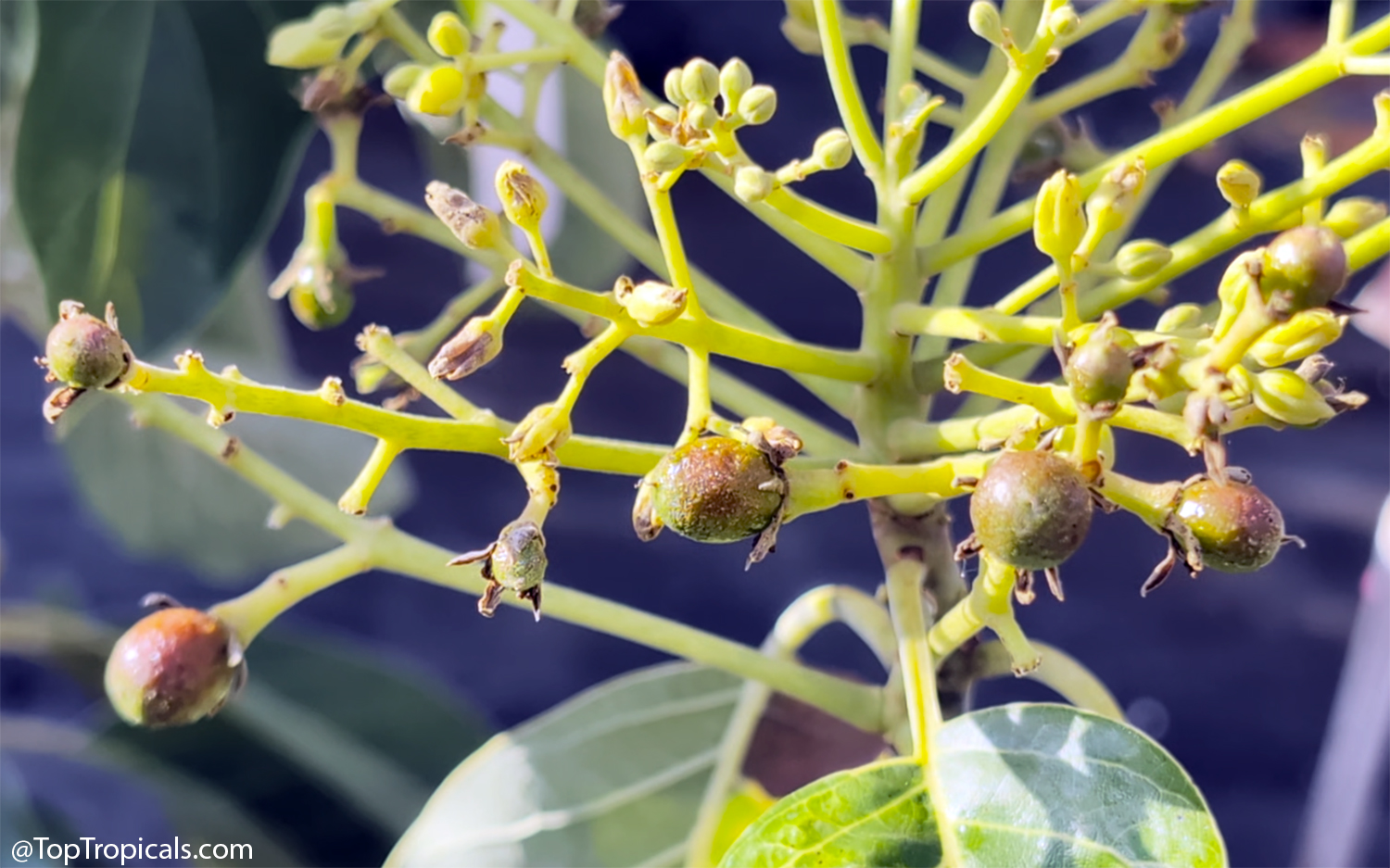
Pollination Engineering: The A/B Flowering Matrix
🔬 Technical Definition: Protogynous Dichogamy or Synchronous Dichogamy
Avocados exhibit Protogynous Dichogamy ("Proto" meaning first + "Gynous" meaning female + "Dichogamy" meaning split-marriage/timing) or Synchronous Dichogamy, a reproductive strategy where each flower opens twice over two days. On Day 1, the flower opens as Female (receptive to pollen); on Day 2, it opens as Male (shedding pollen). This process is synchronized across the entire tree to prevent self-pollination, requiring a complementary partner tree for maximum efficiency.
While many avocados are partially self-fertile, especially in the high humidity of Florida, pairing a Type A variety with a Type B variety creates a "Pollen Relay" that significantly stabilizes fruit set and increases total yield. To maximize the "Crop Load," you must engineer your orchard (or backyard) by pairing varieties from two distinct thermal-temporal groups.
🕒 Matrix: The Circadian Rhythm of Avocado Blooms. Flowering Cycles & Timing
| Variety Type | Examples | Day 1 (Morning) | Day 1 (Afternoon) | Day 2 (Morning) | Day 2 (Afternoon) |
|---|---|---|---|---|---|
| Type A | Choquette, Gwen, Hass, Lula, Mexicola, Reed, Simmonds | Female (Open) | Closed | Closed | Male (Pollen) |
| Type B | Bacon, Brazos Belle, Fuerte, Monroe, Oro Negro, Winter Mexican. | Closed | Female (Open) | Male (Pollen) | Closed |
See Master Variety Table for more avocado varieties
Operational Rules for Yield Optimization
- The Pollen Relay Effect: While many Florida varieties are "self-fertile" due to high humidity, cross-pollination between an A and B variety meaningfully increases fruit set, fruit size, and yield stability.
- Thermal Overlap: In cool springs, flowering synchronization can "leak," meaning male and female stages overlap on the same tree. This is why a single tree can still produce fruit, though yields will be lower.
- Pollinator Density: Bees are the primary "Logistics Providers" for pollen. Avoid using any insecticides during the flowering window to ensure high traffic between your Type A and Type B trees.
💡 The Florida Humidity Factor
In high-humidity environments like South Florida, the precision of the A/B clock often breaks down. This "irregularity" is actually a benefit for home growers, as it allows for Self-Pollination in varieties like Simmonds or Choquette. However, for consistent commercial-grade yields, always plant one of each type.
📊 Matrix: Environmental & Hybrid Pollination Factors
| ⚙️ Factor | 🧪 Technical Reality | 🛠️ Grower Impact |
|---|---|---|
| Thermal Glitch | Temperatures below 70°F disrupt the strict A/B rhythm. | Cold fronts "scramble" the clock; flowers may stay closed or overlap male/female stages on one tree. |
| Humidity Buffer | High humidity improves pollen viability and "blurs" the clock. | In Florida, single-tree success is high because warm nights allow for internal timing overlaps. |
| Isolated Yards | No neighbors with avocados within pollinator range (bees). | Pairing A + B is Mandatory for high-yield consistency in isolated areas. |
📊 Compatibility Matrix: Recommended Pollination Partners
See Master Variety Table for avocado types
| Primary Variety | Type | Recommended Partner |
|---|---|---|
| Hass / Reed / Lula | Type A | Bacon, Fuerte, Oro Negro |
| Brazos Belle / Monroe | Type B | Lila, Mexicola, Reed |
| Oro Negro | Type B | Hass, Lila, Simmonds |
| Choquette | Type B | Hass, Hall, Lula |
💡 The Top Tropicals ProTip: The Single-Tree Strategy
If you only have space for one tree, don't panic. Many varieties like Simmonds and Day are famously reliable as solo specimens in Florida. However, if your tree blooms heavily but drops all its fruitlets, it is likely a pollination timing issue. Adding a small potted variety of the opposite type nearby during bloom can solve this "yield gap" instantly.
🌳🌳 Type A/B Avocado Pairing
If planting one tree: Choose the variety that fits your climate and culinary preference first.
If planting two trees: Pair opposite types to encourage stronger pollination.
Cold hardiness and site placement matter more than A/B pairing in marginal climates.
For the full flowering-clock breakdown and compatibility matrix, see Pollination Engineering.
Growing Avocados in Containers: Best Dwarf Varieties and the Rules for Potted Success
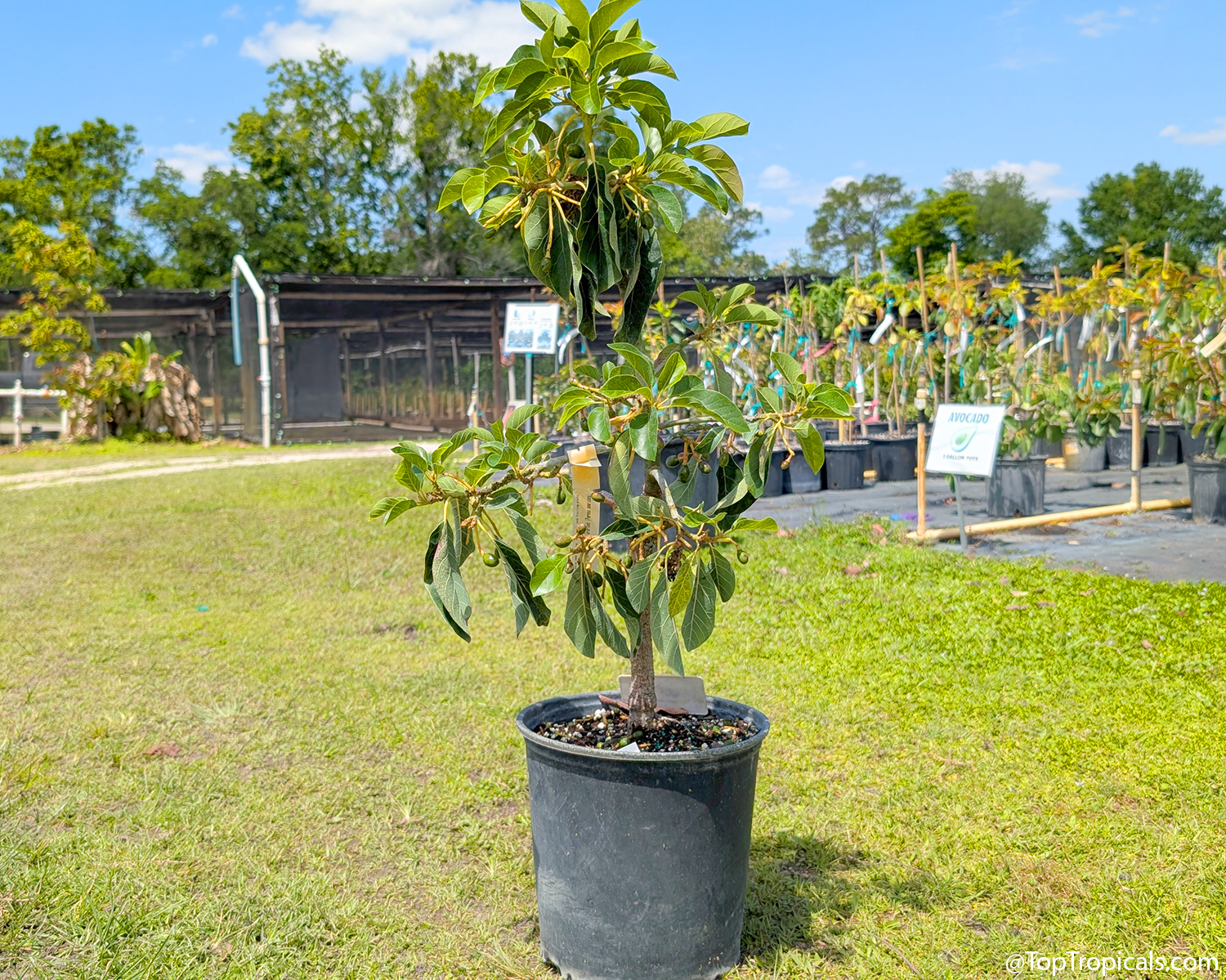
Container Growing Mastery: The Portable Orchard
🔬 Technical Definition: The Perched Water Table
A Perched Water Table occurs in containers when a layer of saturated soil forms at the bottom because the downward force of gravity is balanced by the upward force of capillary action. This zone is fatal for avocados; choosing a highly porous, soil-less mix is the only way to "break" this water table and ensure root oxygenation.
Why Grow Avocado in a Container?
- Protection during freezes
- Control over drainage
- Easier size management
- Suitable for patios and small spaces
- Works in colder zones where in-ground planting is risky
If your winter lows approach the survival limit of a variety, a container can mean the difference between survival and loss.
📊 Matrix: The Container Avocado Management System
| ⚙️ Variable | 🛠️ Implementation | 🧪 Technical Logic |
|---|---|---|
| Variety Selection |
|
Genetic Dwarfing: Compact varieties have shorter internodes, making them physiologically adapted to smaller root volumes. |
| Container Size |
|
Root-to-Canopy Ratio: Sufficient volume prevents the tree from becoming "root-bound," which leads to alternate bearing and fruit drop. |
| Substrate (Soil) |
Do not use heavy garden soil. Use:
|
Structural Porosity: Prevents anaerobic decay. Drainage speed is more critical than nutrient richness in a pot. |
| Watering |
Avocados are famously sensitive to "wet feet" (lack of oxygen in the root zone), but they also demand consistency.
|
Salinity Flushing: Thorough watering prevents the buildup of fertilizer salts that cause "leaf-tip burn" in containers. |
| Precision Nutrition: The Container Feeding |
Because container roots cannot "mine" the surrounding earth for minerals, you are 100% responsible for the tree's chemistry. In a closed system, nutrients leach out every time you water.
|
Constant-Feed Requirement: Confined roots cannot "scavenge" for nutrients. Frequent, light feeding prevents metabolic dips. |
| Cold Protection |
During cold:
|
Dynamic Mobility: Allows you to bypass the "Survival Tier" limits of the variety by artificially elevating the ambient temperature. |
| Root Spiraling | Air-Pruning of roots via Air-Pots or Fabric. | Prevents the "death-spiral" of roots; creates a dense, fibrous mass essential for nutrient uptake. |
| Thermal Oscillation | Rapid temperature swings in the root zone. | Use Light-Colored or Double-Walled containers to reflect solar radiation and prevent the "Root-Cooking" effect caused by black plastic. |
| Volume Limit | Extended Soil Volume for standard varieties. | Non-dwarf varieties require 40+ gallons to support structural weight and reach physiological maturity. |
| The "Container Cold" Penalty |
This is a critical warning for cold protection.
|
Thermal buffering: Unlike the earth, a pot allows Rapid Atmospheric Equilibrium, reaching lethal root temperatures hours faster than in-ground systems. |
| Canopy Management | Regularly "Pinch" growing tips to force lateral branching. | Apical Dominance Suppression: Redirects auxin flow to side buds, creating a "bushy" habit and increasing the number of flowering nodes. |
| Root Rejuvenation | Every 2–3 years, shave 1-2 inches off the outer root ball and repot with fresh media. | Vascular Renewal: Prevents "Girdling Roots" and replaces exhausted, compacted media to restore high oxygen penetration. |
The primary constraint in container growth is Root Spiraling and Thermal Oscillation.
📦 Matrix: Container Hardware Specifications
| Container Type | How It Works | Benefit |
|---|---|---|
| Air-Pot / Fabric | Air-Pruning of roots. | Prevents the "death-spiral" of roots; creates a dense, fibrous mass. |
| Traditional Plastic | Moisture retention. | Best for high-heat environments where fabric dries out too fast. |
| Large Varieties | Extended Soil Volume. | Standard non-dwarf varieties require 40+ gallons to support structural weight and reach physiological maturity. |
Operational Specification: Volume Requirements
- Dwarf Varieties: To produce meaningful fruit loads, a mature dwarf tree (like 'Wurtz') requires a minimum of 15–25 gallons of soil volume.
- Standard Varieties: Non-dwarf types must be stepped up to 40–100 gallon containers to prevent stunted growth and ensure sufficient "Engine Room" for the root system.
- Migration Protocol: When moving trees indoors for winter (Zones 4-8), acclimate them gradually over 7 days to prevent Leaf Abscission (shock-induced leaf drop) caused by the sudden drop in humidity and light.
❄️ Indoor Winter Management: The Transition Rules
Moving a tropical tree into a climate-controlled house is a major physiological shock. Success depends on managing Humidity and Light.
- The Light Threshold: An avocado indoors needs the brightest spot available, ideally a South-facing window. If you don't have enough natural light, you must use a full-spectrum LED grow light for 12 hours a day to prevent leaf drop.
- The "Dry Air" Problem: Indoor heaters strip moisture from the air, which causes "Tip Burn" and encourages Spider Mites. Mist the tree daily or place it near a humidifier to keep ambient humidity above 50%.
- The "Cold Feet" Danger: Even if your house is 70°F, the air at a window surface can be 10-15 degrees colder. Placing a pot directly on a cold windowsill (especially stone or tile) cools the root system, causing the tree to go into dormancy shock while the warm indoor air tells the leaves to keep growing.
The Fix: Elevate the pot using a wooden plant stand or a piece of insulation (cork or foam) to keep the roots at room temperature. - Watering Adjustment: Trees grow slower indoors. Check the soil deeply; it will take much longer to dry out than it did on the patio. Stop the daily watering routine or you will cause root rot within weeks.
- ⚠️ Winter Feeding Restriction: Do not fertilize an indoor tree that is simply "over-wintering" in a standard room. Without high intensity light and warmth, the tree's metabolism slows down; adding fertilizer now will lead to salt buildup and root burn.
The Exception: If your tree is in a Grow-Box or climate-controlled Sunroom with high-intensity grow lights, high humidity (60%+), and consistent temperatures above 75°F, the tree will stay in an active growth phase. Only in these "Active-Growth" environments should you continue a light feeding schedule with SUNSHINE™ Robusta. - Acclimatization: In spring, do not just move the tree back outside. Gradually introduce it to the sun over 7–10 days (starting with 1 hour of morning sun) to prevent "Sunscald" on the tender indoor leaves.
📊 The Top Tropicals ProTip: Yield Expectations
While a container tree will not match the 200+ fruit yield of a 30-foot in-ground specimen, a well-managed 25-gallon Wurtz can produce 20–50 full-sized avocados annually. The fruit quality, oil content, and flavor are identical to in-ground counterparts.
💡 The Top Tropicals ProTip: The "Elevated Pot" Secret
Never let your avocado container sit directly on flat concrete or in a saucer of water. Use pot feet or bricks to raise the container 2 inches off the ground. This ensures that the drainage holes are never blocked, allowing the "Perched Water Table" to drain freely and preventing the roots from sucking up stagnant water.
Structural Engineering: Architectural Pruning
🔬 Technical Definition: Apical Dominance & Crotch Integrity
Apical Dominance is the hormonal control exerted by the terminal bud to suppress lateral growth. In structural pruning, we manipulate this to establish a Central Leader. Crotch Integrity refers to the angle of branch attachment; narrow "V" shaped angles (codominant stems) are prone to Included Bark, creating a mechanical weak point that leads to splitting under stress.
Pruning is not just about size control. It is about Load Distribution. An unmanaged avocado tree will naturally develop a sprawling, brittle architecture. We intervene to build a "Biological Frame" that maximizes light penetration and minimizes the lever-arm effect on long branches.
📐 Matrix: Architectural Strategy by Growth Habit
| Variety Type | Structural Goal | Pruning Protocol |
|---|---|---|
| "Condo" / Dwarf (e.g., Wurtz) | Compact Volume Management. Keep canopy within a 8–10 ft "Sphere of Reach." | Annual Heading Back of terminal shoots. Maintain low center of gravity. |
| Upright / Vigorous (e.g., Reed, Lula) | Height Suppression. Prevent the "Telephone Pole" effect where fruit is out of reach. | Establish a Central Leader early. Use Thinning Cuts to open the interior. |
| Spreading (e.g., Fuerte) | Lateral Support. Prevent long branches from touching the ground or splitting. | Reduce branch length to decrease torque. Prune "skirt" to 2 ft above soil for airflow. |
The 3-Step Structural Protocol
- Eliminate Codominance: If two stems are competing for the top, remove one. A single central trunk is significantly more resistant to wind-splitting than a "V" fork.
- The 45-Degree Rule: Favor branches that grow at a 45-to-60 degree angle from the trunk. These have the strongest vascular connection and can support the heaviest fruit loads.
- Height "Heading": Once the tree reaches your maximum harvest height (usually 12–15 ft), prune the top to a lateral branch. This redirects energy horizontally and keeps the "Fruit Zone" accessible.
💡 The Top Tropicals ProTip: The Sunscald Safety Fix
Warning: Heavy structural pruning increases Vascular Exposure. If you open the canopy and expose previously shaded green bark to intense sun, it will burn (Sunscald). Protect newly exposed trunks with a 50/50 mix of White Interior Latex Paint and Water. This acts as a solar reflector while the tree adjusts.
Sunscald Prevention: Vascular Shielding
🔬 Technical Definition: Cambium Necrosis
Sunscald occurs when high-intensity solar radiation heats the bark tissue to lethal levels, causing Cambium Necrosis (death of the growing layer). This usually happens on the south or southwest side of the trunk. Once the cambium is destroyed, the tree's ability to transport water and nutrients is severed, leading to bark splitting, wood-borer secondary infections, and eventual structural failure.
Provide a temporary Solar Shield while tree is young (Years 1-3 after the graft) or after heavy structural pruning has exposed previously shaded branches.
📐 Matrix: Solar Shield Methods
| Method | Mechanism of Protection | Specification |
|---|---|---|
| White-Wash Paint | Increases Albedo (reflectance). Keeps the bark temperature 10-15°F cooler than ambient air. | Use a 50/50 mix of White Interior Latex Paint and water. Apply from soil line to first scaffold branches. |
| Shade Cloth / Tents | Filters 50-70% of UV radiation. Reduces Transpirational Stress on the foliage. | Erect a temporary structure on the south/west side. Use a breathable 40-50% shade mesh. |
| Tree Guards / Wraps | Physical barrier. Also prevents mechanical damage from weed-whackers. | Use white, corrugated plastic guards. Must be vented to prevent Thermal Trapping and mold. |
The White-Wash Protocol
- Material Selection: Use only Interior Flat White Latex paint. Do not use Exterior paint, as it often contains fungicides or biocides that can be phytotoxic to young avocado bark.
- Application: Paint the entire trunk and any major exposed horizontal branches. The white color reflects the sun's energy rather than absorbing it.
- Re-application: As the trunk expands, the paint layer will crack. Re-apply annually until the tree’s own canopy is dense enough to provide 100% self-shading.
⚠️ The Physics of Thermal Shock: Sunscald After a Freeze
Sunscald after a freeze is driven by Rapid Thermal Transition, where the tree's internal systems fail to cope with sudden temperature swings during the morning thaw.
- Metabolic Shock: Intense morning sun thaws the dark bark and cambium layer while the root system remains frozen. This "wakes up" cells that cannot be supported by the dormant roots, leading to localized tissue death.
- Frost Cracking (Cellular Rupture): The extreme temperature gradient between the sun-warmed side and the frozen shaded side creates intense mechanical stress. This results in the physical rupture of cell walls, manifesting as deep vertical splits in the bark.
- Vascular Failure: These splits expose the tree's primary fluid-transport systems (cambium). This causes rapid dehydration and provides an entry point for secondary infections from wood-boring insects and fungi.
Solution: To prevent this failure, the goal is to stabilize the bark temperature and increase Albedo (reflectance). By using White-Wash (50/50 white interior latex paint and water) or breathable Trunk Wraps, the bark reflects solar energy so it thaws slowly and evenly, keeping the vascular structure intact.
💡 The Top Tropicals ProTip: The "Dark Paint" Hazard
Warning: Never use dark colors or oil-based paints. Oil-based products clog the bark's lenticels (gas exchange pores), essentially "suffocating" the tree. Dark colors increase heat absorption, which will accelerate sunscald damage rather than preventing it.
From Flower to Harvest: Maximizing Fruit Production and Consistency
Grafted Trees vs. Seedlings: The Production Timeline
🔬 Technical Definition: Physiological Ontogeny
Physiological Ontogeny refers to the developmental stages of a plant. Seedlings must pass through a "Juvenile Phase" (focusing solely on vegetative growth) that can last over a decade. A Grafted Tree utilizes scion wood from a "Phase-Change" mature adult, effectively bypassing the juvenile stage so the tree is biologically capable of fruiting the moment it establishes roots.
The decision between a grafted tree and a seedling is a choice between Investment and ROI. While seedlings are "free," they carry a massive hidden cost in time, space, and unpredictable results.
📊 Matrix: The 2-Year vs. 15-Year Production Reality
| 📊 Metric | 🌳 Grafted (The Professional Path) | 🌱 Seedling (The Hobbyist Trap) |
|---|---|---|
| Time to First Fruit | 2 – 4 Years: Accelerated by mature genetics. Read more about Realistic Production Milestones for Grafted Trees | 7 – 15+ Years: Slowed by juvenile hormones. |
| Fruit Quality | Guaranteed Genetics: An exact genetic clone of the parent variety. | Genetic Lottery: Unpredictable size, texture, and oil content. |
| Growth Habit | Controlled: Typically bushier and easier to prune/harvest. | Excessive Vigor: Often grows into 40ft "monsters" before flowering. |
| Cold Management | Easier: Compact canopy is simpler to wrap or protect. | Impossible: Massive size makes thermal protection unfeasible. |
📈 The "Opportunity Cost" of a Seedling
In the 10 years you wait for a seedling to produce its first (possibly poor quality) fruit, a grafted tree would have already provided 7–8 years of high-quality harvests totaling hundreds of pounds of fruit. For the serious home grower, the initial cost of a grafted tree pays for itself in the very first harvest season.
💡 The Top Tropicals ProTip: Don't Waste Your Microclimate
In Florida, garden space is often limited. Dedicating your best "South-facing, well-drained" spot to a seedling is a strategic error. Use your premium microclimates for Grafted Varieties that are guaranteed to perform. Save the "experiments" for the back corner of the yard where a 40-foot non-fruiting tree won't interfere with your food security. Read more about microclimate
How Much Fruit Can One Tree Produce?
🔬 Technical Definition: Resource Partitioning
Resource Partitioning is the process by which an avocado tree allocates its limited carbohydrate and water reserves. Because the tree produces millions of flowers, it must aggressively "thin" the developing crop to ensure the survival of the parent tree. This is a biological necessity, not a failure of the variety.
Understanding the difference between Normal Physiological Drop and Stress-Induced Loss is the hallmark of an experienced grower. A mature, high-vigor tree is a factory capable of immense output, provided its metabolic needs are met.
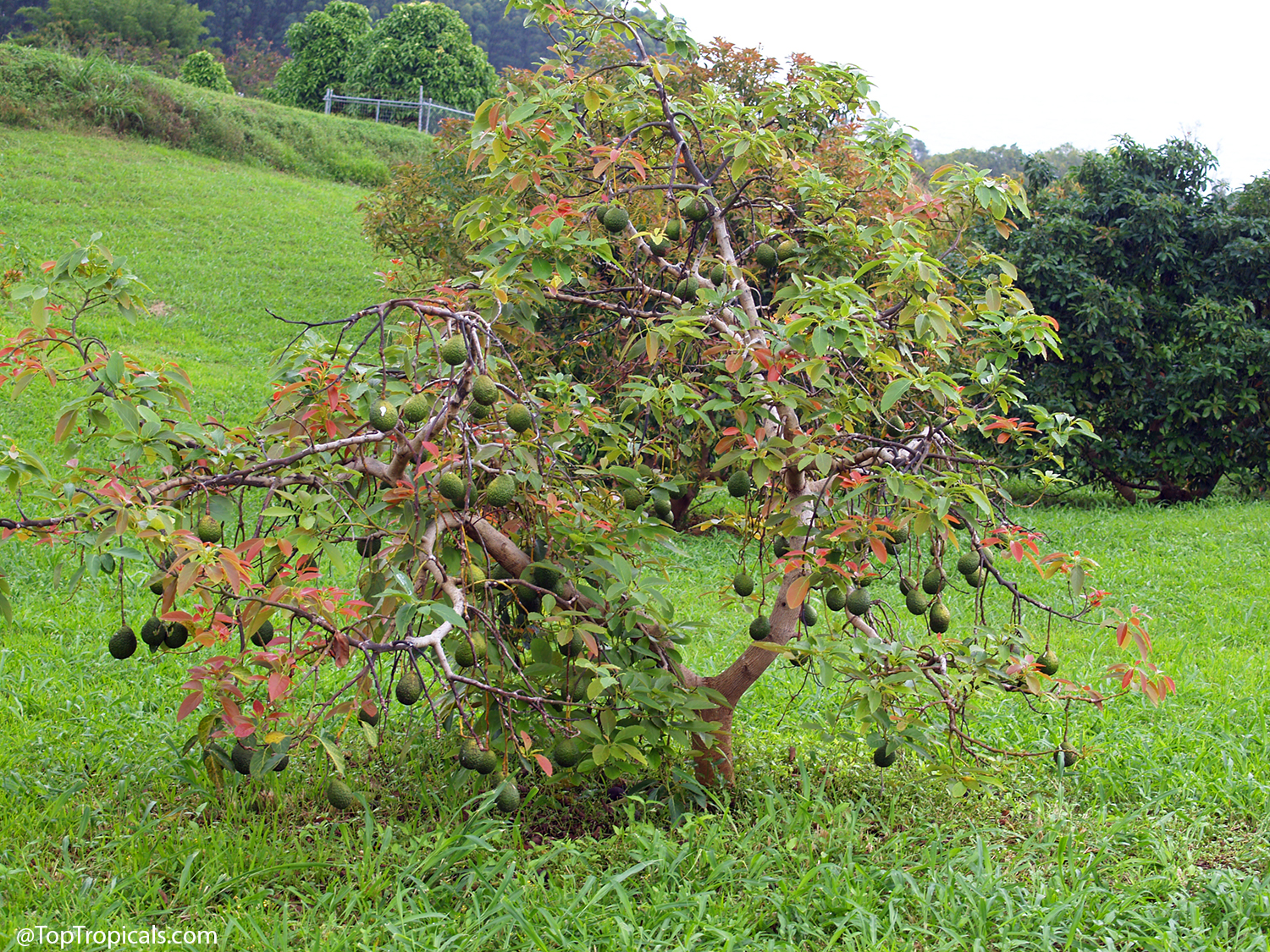
📊 Matrix: Yield Expectations & Biological Balancing
| 📊 Metric / Event | 🧪 Technical Reality | 🛠️ Pro-Active Management |
|---|---|---|
| Mature Tree Yield | 100 – 200+ lbs per season under optimal conditions. | Achieved through consistent Irrigation Strategy and targeted micronutrient support. |
| The "1% Rule" (Drop) | Less than 1% of flowers survive to maturity. Normal "self-thinning." | Do not panic. Ensure soil is moist but never saturated during the early summer "BB-size" drop. Young trees may drop much of their early fruit. That is normal. As the tree matures, fruit retention improves. |
| Alternate Bearing | An "On-Off" cycle where heavy crops are followed by light years. | Thin heavy crops manually and provide fertilization in "off" years to maintain vigor. |
| Early Fruit Retention | Young trees lack the vascular "plumbing" to support heavy fruit sets. | Allow the tree to drop fruit in years 1–2 to prioritize root and canopy architecture. |
⚖️ Managing the "On-Off" Cycle (Biennial Bearing)
Alternate bearing is triggered when a massive fruit load depletes the tree's starch reserves so thoroughly that it cannot produce flower buds for the following season. To break this cycle, professional growers often prune more heavily in "on" years and fertilize strategically to encourage vegetative flushes that will support the next crop.
💡 The Top Tropicals ProTip: The Stress-Drop Indicator
If your tree drops fruit that is larger than a golf ball, this is typically not "normal" thinning. Large fruit drop is usually a distress signal caused by a sudden heat spike, severe drought, or root hypoxia (saturated soil). Monitor your Irrigation Matrix closely during the mid-summer development phase to prevent this loss.
Why Do Avocados Drop Fruit?
Avocado trees naturally produce far more flowers than they can support. Less than 1 percent of flowers become fruit. Early fruit drop is normal and not a sign of failure. Trees balance themselves based on:
- Energy reserves
- Weather
- Water availability
- Tree age
Avocado Performance Matrix: Consistency and Yield Patterns Successful harvesting is a result of matching variety genetics with the Top Tropicals survival system. Use this table to plan your avocadoes based on how each tree manages its energy and carbohydrate reserves.
📊 Variety Comparison: Bearing Habits and Resource Needs
| Variety | Bearing Consistency | Yield Intensity | Management Requirement |
|---|---|---|---|
| Reed | High (Consistent) | Heavy / Annual | Excellent for home orchards; very reliable. |
| Wurtz (Little Cado) | High (Steady) | Moderate / Annual | Best for containers; slow and steady energy use. |
| Hass | Low (Alternate) | Extreme "On" Years | Requires heavy fertilizer loading (for example, Top Tropicals Green Magic - Controlled Release Fertilizer) to prevent "Off" years. |
| Gwen | Low (Alternate) | Heavy "On" Years | Dwarf habit but "empties the tank" during big harvests. |
| Pinkerton | Medium (Variable) | Very Heavy | May require fruit thinning to prevent "vacation" years. |
| Fuerte | Climate Dependent | Moderate | Sensitive to spring temps; consistent in stable weather. |
| Bacon | Medium-High | Reliable Annual | Often used as a pollinator due to consistent flowering. |
⚖️ Managing Alternate Bearing (The "On-Off" Cycle)
Some varieties, most notably Hass and Gwen, are genetically prone to "On-Year" and "Off-Year" cycles. A massive harvest one year depletes the tree's carbohydrate reserves, leading to a sparse crop the next.
The Pro-Active Solution:
- Nutrient Loading: Increase applications of SUNSHINE™ Robusta during "On-Years" to help the tree maintain energy levels for next year's buds.
- Fruit Thinning: If the tree is over-loaded, removing a portion of the small, young fruit in early summer prevents total exhaustion.
- Pruning: Pruning immediately after a heavy harvest stimulates the new vegetative growth needed for future flowering sites.
Even in a lighter "Off-Year," a healthy, well-managed tree will still produce a meaningful crop, it just won't match the peak of the previous season.
Size vs. Yield: Realistic Production Milestones for Grafted Trees
Realistic Expectation
Planting a grafted avocado tree is not an overnight harvest. But once established, it can supply your household for decades. Few backyard fruit trees offer that level of long-term return.
Maturity Matrix: Graft Age, Yield, and Cold Survival
💡 The Top Tropicals ProTip: The Maturity Advantage
Larger trees (15-25 gal) possess higher Carbohydrate Reserves. This makes them more resilient to "Transplant Shock" and better equipped to "break" the cycle of Alternate Bearing.
The "Mass" Factor: Why Tree Size Dictates Survival and ROI
🔬 Technical Definition: Thermal Inertia
Thermal Inertia is the ability of a material to resist changes in temperature. In avocados, a larger trunk caliper and thicker, corky bark act as a "heat battery." This mass slows the rate of internal sap freezing, allowing a 25-gallon specimen to survive a "Quick Dip" freeze that would cause total vascular collapse in a thin-stemmed 3-gallon sapling.
Choosing the right pot size is a decision between saving money (Starter trees) or saving time (Mature trees). A more developed specimen doesn't just fruit sooner; its thicker, lignified bark provides the thermal mass necessary to survive "Extreme Events." When reviewing cold hardiness ratings (e.g., "Hardy to 20°F"), remember these apply to established, mature trees. A young tree lacks the biological mass and architectural height to defend itself against ground-level radiative frost.
📊 Matrix: Performance Comparison by Tree Maturity
| 🌳 Pot Size | ⏳ Estimated Age* | 🛡️ Cold Defense Profile | 🥑 Production Timeline |
|---|---|---|---|
| Starter (3 Gallon) | 1 – 2 Years | High Risk: Thin, green juvenile bark; sits entirely within the ground "Frost Layer." | 2 – 4 years for meaningful harvest; high transplant shock. Needs maximum protection below 32°F. |
| Established (7 Gallon) | 2 – 3 Years | Moderate: Beginning to develop woody bark; graft union sits higher above ground. Better carbohydrate storage for faster freeze recovery. | 1 – 2 years to first fruit; faster root establishment. |
| Specimen (15-25+ Gallon) | 4 – 5+ Years | Superior: Thick, corky bark and large caliper provide high thermal mass; canopy is above frost pool. | Instant Orchard: Often fruits the first season after planting. |
*Age refers to time elapsed post-grafting.
Why Specimen Trees Provide Faster ROI
Time Is the Real Cost. A larger tree reduces the gap between planting and harvesting. For many growers, the higher upfront cost is offset by years saved.
A 25-gallon avocado tree is not just "bigger." It is a product of years of structural pruning, root expansion, and nursery care. You are purchasing Time.
📉 The Smaller Tree Path
- Lower initial entry cost.
- Requires extreme protection for first 3 winters.
- High "Opportunity Cost": You wait years for fruit while the tree remains vulnerable.
📈 The Specimen Tree Path
- Higher upfront investment.
- Higher natural resilience to radiative frost and wind.
- Faster Payback: Harvests begin years earlier, offsetting the initial cost in fruit value.
💡 The Top Tropicals ProTip: The "Height of Survival"
On still, cold nights, the coldest air "pools" in the bottom 2 feet of your yard. A 25-gallon tree is usually 6–8 feet tall; its graft union and main canopy sit safely above this deadly frost layer. If you are in a marginal cold zone (Tier 2 or 3), buying a larger tree is the single most effective insurance policy you can buy.
The Three Genetic Races: Mexican, Guatemalan, and West Indian
🔬 Technical Definition: Botanical Races of Persea americana
Avocados are classified into three distinct Botanical Races based on their evolutionary adaptation to specific altitudes and latitudes. While all belong to the species Persea americana, their divergent genetics dictate critical variables: Cold Hardiness, Lipid (Oil) Concentration, and Inflorescence Timing.
Understanding the genetic lineage of a variety allows you to predict its performance before it ever hits a frost. Most modern high-performance varieties are Interspecific Hybrids, engineered to combine the cold-hardiness of the Mexican race with the fruit size and shelf-life of the West Indian or Guatemalan groups.
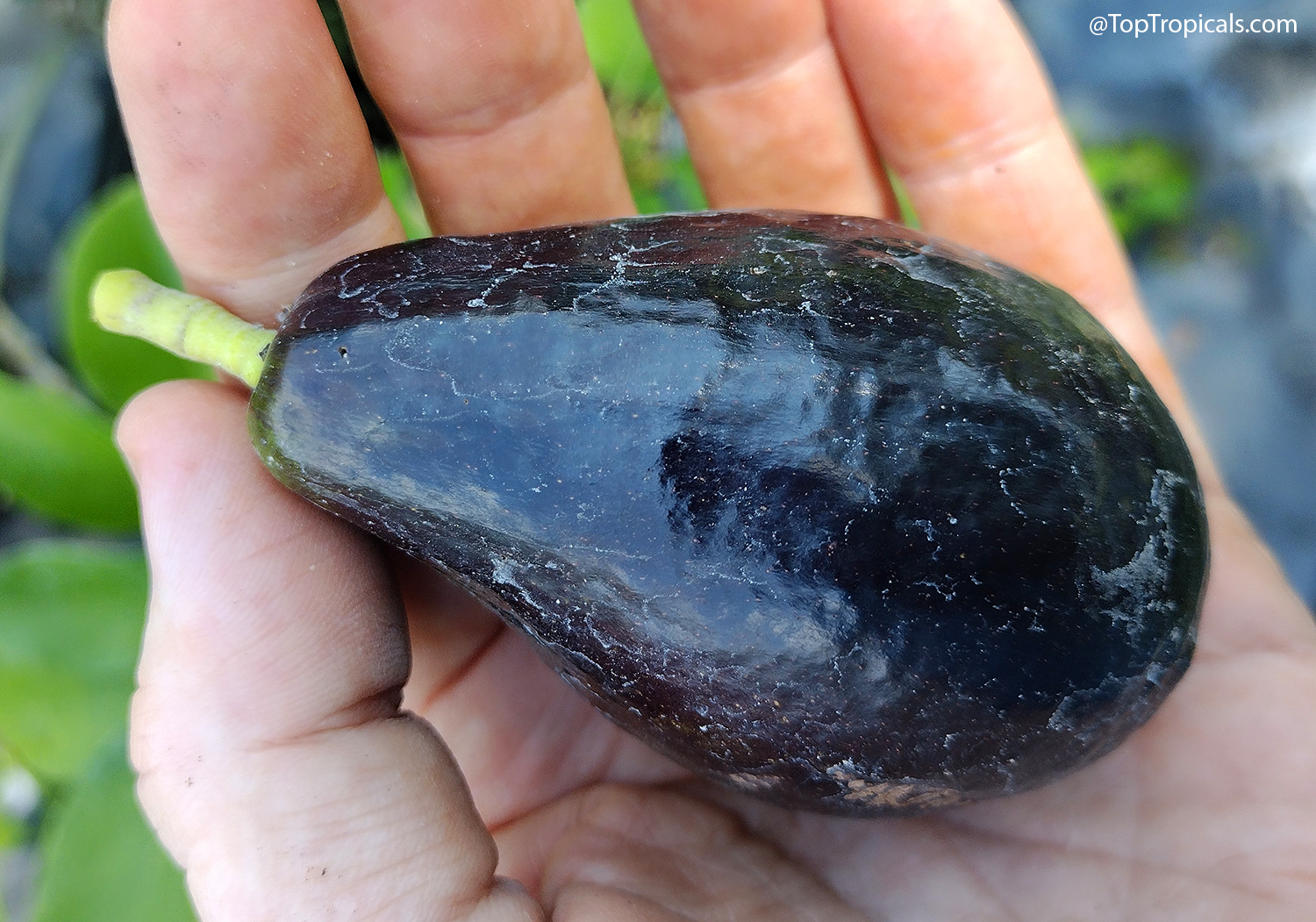
Mexican Race Mexicola Grande 20°F
Thin, waxy skin. Small fruit. Highest cold tolerance.
Shop Mexicola Grande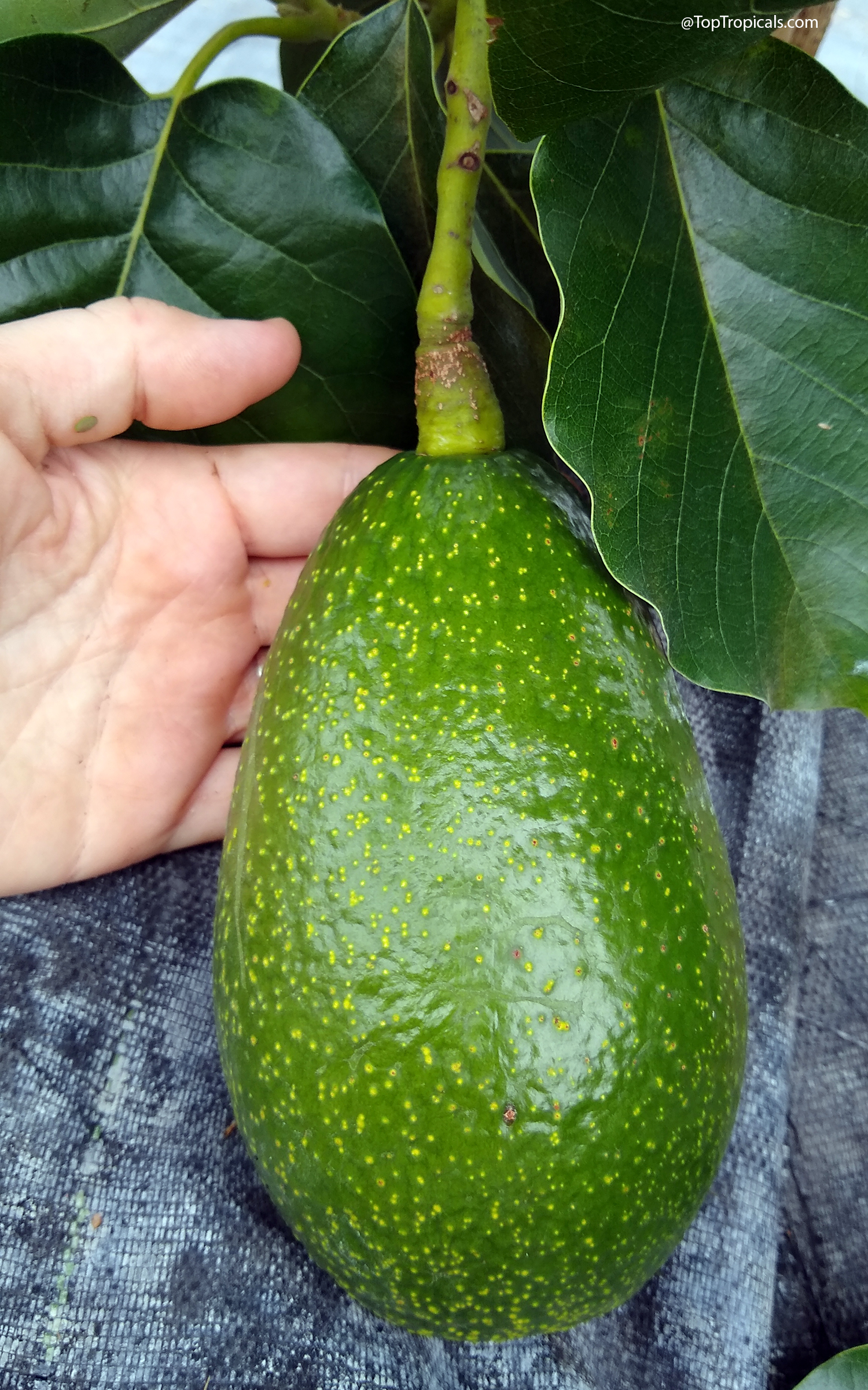
Guatemalan Race Nishikawa 35°F
Thick, rough skin. Medium-large fruit. Moderate cold tolerance.
Shop Nishikawa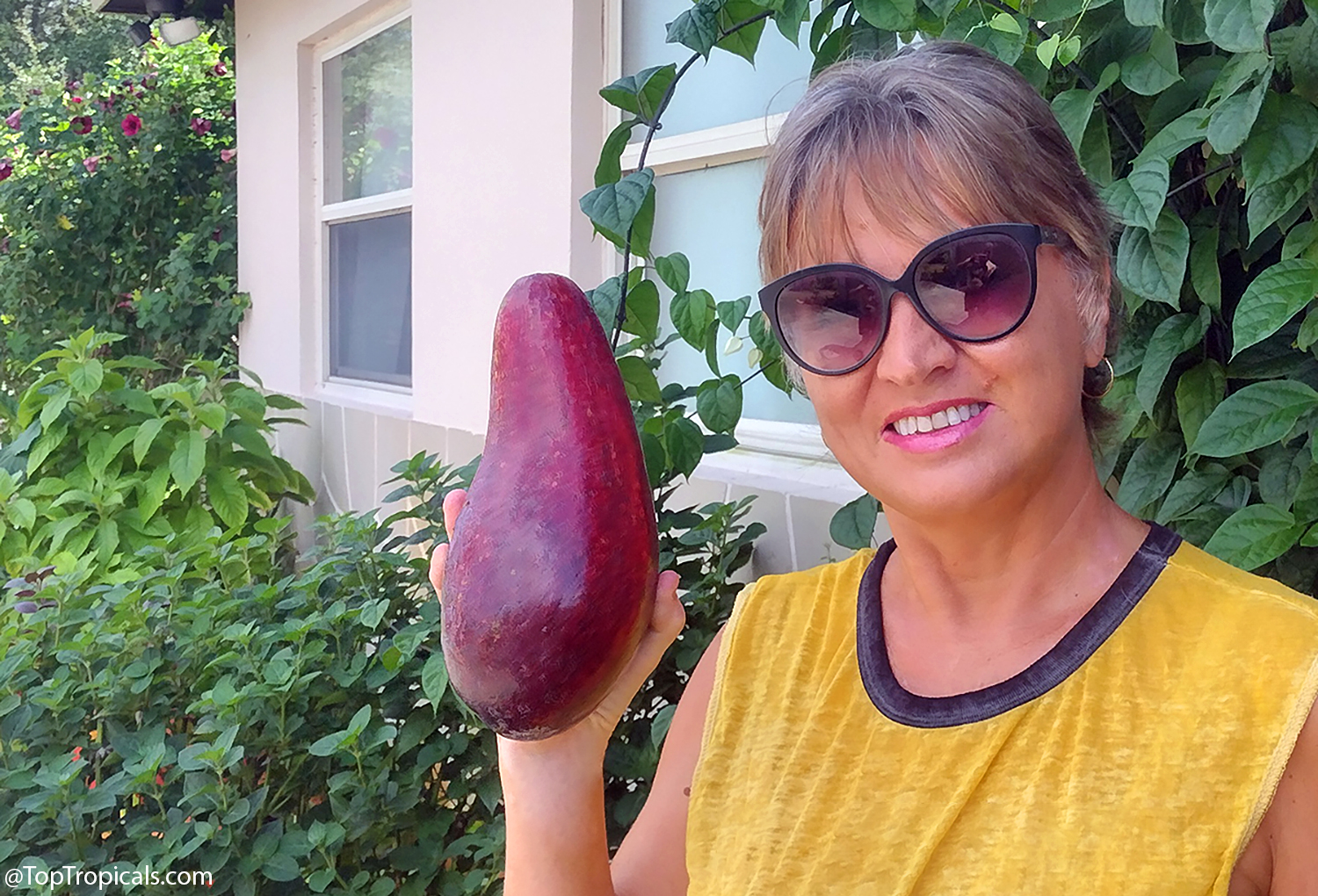
West Indian Race Red Russell 35°F
Thin, smooth skin. Largest fruit. Lowest cold tolerance.
Shop Red RussellThese three are just examples. See the Master Variety Table for more varieties, and read the temperature guideline note before treating any minimum temperature as an absolute floor.
📊 Matrix: Comparative Genetics & Physiological Traits
| 🧬 Race | ⛰️ Evolutionary Origin | ❄️ Cold Threshold | 🥑 Fruit Physiology |
|---|---|---|---|
| Mexican | High-altitude Highlands (Mexico) | 15°F – 20°F (Highest Tolerance) |
Smaller fruit, paper-thin skin, high oil content (20–30%), anise-scented leaves. |
| Guatemalan | Mid-elevation Highlands (Guatemala) | 25°F – 30°F (Moderate) |
Medium/Large fruit, thick woody skin, moderate oil content, long hang-time on tree. |
| West Indian | Tropical Lowlands (Central America) | 30°F – 32°F (Lowest Tolerance) |
Large fruit, smooth leathery skin, lower oil content (3–10%), mild/sweet flavor. |
The Hybrid Advantage
The majority of named varieties found in our Avocado Master Table are genetic crosses. By hybridizing these races, breeders have created "Bridge Varieties" that offer the rich, buttery flavor of the Mexican race with the superior fruit size of the West Indian race.
Mexican-Dominant
Examples: Mexicola, Lila, Fantastic.
Best for Tier 1 cold zones where survival is the priority.
 Guatemalan Hybrids
Examples: Fuerte, Hass, Gwen.
The standard for high oil content and pebbly, durable skins.
🏝️ West Indian Hybrids
Examples: Choquette, Simmonds, Monroe.
Ideal for South Florida's high humidity and warm winters.
💡 The Top Tropicals ProTip: Predictor of Performance
If a variety is listed as a Guatemalan × West Indian Hybrid (like Lula), you can expect a tree that handles "Quick Dip" freezes better than a pure tropical, while still producing the large, impressive fruit typical of the lowlands. Always check the genetic background to ensure the tree's "Evolutionary Memory" matches your local climate.
Avocado Tree Care & Management
Avocado Planting Essentials: The 7-Step Protocol
🔬 Technical Definition: Root Ball Asphyxiation
Root Ball Asphyxiation occurs when a tree is planted too deep or in a "bowl" of amended soil that traps water. Because avocado roots have an exceptionally high oxygen demand, even 24–48 hours of saturation can lead to irreversible cellular collapse and death.
Planting depth and drainage matter more than fertilizer. If the structural foundation is incorrect, even the most resilient variety will eventually decline. Follow this sequence for in-ground establishment.
📊 Matrix: In-Ground Planting & Site Engineering
| ⚙️ Phase | 🛠️ Implementation | 🧪 Technical Logic |
|---|---|---|
| The Site |
|
Thermal Gain: Maximizes winter solar absorption and prevents wind-chill desiccation. Read more about microclimate and site selection |
| The Hole |
|
Lateral Expansion: Encourages outward root growth into native soil rather than creating a "bathtub effect." |
| Height |
This is critical.
The top of the root ball should sit:
|
Air Exchange: Prevents crown rot and ensures the graft union remains dry and oxygenated. |
| Backfill |
|
Soil Interface: Prevents the "Perched Water Table" that occurs when roots transition between disparate soil textures. |
| Watering |
Flood the hole immediately to remove air pockets. Then water only as needed:
|
Capillary Action: Establishes water contact between the root ball and the surrounding landscape. Read more about avocado watering |
| Mulch |
|
Thermoregulation: Stabilizes soil temperature while preventing fungal moisture-bridges to the bark. |
| Support |
|
Thigmomorphogenesis: Natural movement stimulates the tree to produce a thicker, stronger trunk. |
💡 The Top Tropicals ProTip: The Native Soil Mandate
The most common "beginner" mistake is filling a planting hole with rich, soft potting soil. This creates a sponge effect: during heavy Florida rains, the hole fills with water that cannot drain into the harder native soil, effectively drowning the tree. Force the roots to adapt to your native soil from Day 1 to ensure long-term stability.
The Establishment Protocol (The First 36 Months)
By integrating these final variables, your cultivation strategy moves from a "gardening hobby" to a Predictable Production System. For the home grower, this technical approach effectively removes 90% of the risk. Once the tree passes the 3-year mark, it develops the thermal mass and bark thickness to become a self-sustaining, low-maintenance asset.
- ✅ Select Genetics based on your cold tier (Master Table).
- ✅ Select Rootstock based on your soil chemistry (Physiology Matrix).
- ✅ Implement Protection based on establishment physics (Trunk painting & mounding).
🛡️ Phase 1: The Establishment Protocol (First 36 Months)
| Variable | The Risk | The Technical Solution |
|---|---|---|
| Solar Radiation | Sunscald: Green, chlorophyll-rich trunks "cook" in direct UV, killing the cambium (vascular system). | Trunk Whitewash: Apply a 50/50 mix of white interior latex paint and water. Reflects heat and prevents thermal cracking. |
| Oxygen Access | Root Hypoxia: Feeder roots (top 6") suffocate in saturated Florida soil during heavy rain. | The 18-Inch Mound: Plant on a mound at least 18" high and 3-5' wide. Ensures aerobic respiration even in flooding. |
| Thermal Mass | Inertia Deficit: A young tree lacks the trunk diameter to "hold" heat, causing it to freeze at higher temps than rated. | Container "Bumping": Keep in pots until the trunk is 1–1.5" thick. Mature wood is your best natural insulation. |
| Wind Desiccation | Hydraulic Collapse: Winter winds dry out leaves faster than the cold roots can pull water. | Wind Breaks: Use 30-50% shade cloth or burlap cages for the first 2 seasons to reduce transpiration stress. |
💡 The Top Tropicals ProTip: The 3-Year "Safety Valve"
An avocado tree's hardiness rating is a maturity-based metric. A variety rated for 20°F lacks the thermal mass to survive that temperature during its first 36 months. Until the trunk transitions from green, photosynthesizing tissue to thick, corky brown bark (usually at a 1.5" diameter), treat the tree as one full hardiness tier lower than its label suggests. Defensive measures like trunk whitewashing and physical windbreaks are not optional. They are the mechanical bridge that gets your tree to its self-sustaining adult phase.
Irrigation Strategy: In-Ground vs. Container Management
🔬 Technical Definition: Anaerobic Hypoxia
Anaerobic Hypoxia is the total displacement of oxygen in the root zone by standing water. Avocado feeder roots have a specialized vascular structure that requires high gas exchange; if oxygen is absent for more than 24–48 hours, root cells undergo systemic collapse, providing the primary entry point for Phytophthora (Root Rot).
Avocados thrive on moisture but perish in saturation. The ultimate goal of your irrigation program is Deep Watering followed by Oxygenation. In the first 18 inches of soil, the balance of water and air decides the life of the tree.
📊 Matrix: Comparative Irrigation Protocol
| 💧 Environment | 🛠️ Operational Schedule | 🧪 Technical Objective |
|---|---|---|
| New In-Ground (Months 1-3) | Water every 2–3 days initially, tapering to 1–2 times per week. | Establishment: Maintains high Soil Tension near the root ball while roots transition into native soil. |
| Established In-Ground | Deep soak during dry spells; disable timers during rainy season. Avoid daily light lawn sprinklers. | Field Capacity: Encourages deep root architecture and prevents "Shallow Root Syndrome" caused by surface-only moisture. |
| Container Trees | Water until it exits the bottom; allow top 1–2" of soil to dry before re-watering. | Salinity Flushing: Prevents the toxic accumulation of fertilizer salts (Sodium/Chloride) in a confined root zone. |
Soil Physics: The Oxygen-Water Balance
Avocado roots lack the dense root hairs found in citrus or mangoes. Instead, they rely on a delicate network of feeder roots that are highly susceptible to "The Perched Water Table."
⚠️ The "Perched Water Table" Risk
In heavy clay or poorly drained soils, water fills the pore spaces, pushing out all oxygen. Within 48 hours, roots begin to die. The biological result: This stress signal attracts root rot pathogens. The solution: Plant on a 1–2ft mound to use gravity for aeration.
☝️ The Finger Test: Precision Control
Do not water on a calendar. Insert a finger 3–4" into the soil at the dripline. If the soil holds its shape when squeezed, do not water. If it crumbles, perform a slow, deep soaking. This respects the Soil Field Capacity.
🌊 Managing Salinity in Irrigation
For those using well or reclaimed water, frequent light waterings cause salts to accumulate in the upper soil profile. See the Donut Rule and Salt Leaching ProTip below for the monthly fix.
📊 Matrix: Diagnostic Signs of Water Stress
| 🍂 Symptom | 📉 Overwatering (Asphyxiation) | 📈 Underwatering (Desiccation) |
|---|---|---|
| Leaf Appearance | Yellowing leaves; leaf drop while soil is still moist. | Leaf curling; dry, brittle "crispy" edges. |
| Growth Pattern | Soft, weak growth; soil may smell sour or stagnant. | Stunted flushes; fruit drop during high-heat periods. |
| The Fix | Stop irrigation immediately; restore oxygen to the soil. | Check for Hydrophobic Soil; apply slow deep soak. |
Mulching: The "Forest Floor" Mimicry
Avocados evolved in high-organic leaf litter. Replicating this "Forest Floor" environment is the single best way to stabilize root health. A 4–6 inch layer of coarse wood chips or pine bark regulates temperature, suppresses nutrient-competing weeds, and encourages beneficial Trichoderma fungi.
💡 The Top Tropicals ProTip: The "Donut Rule" and Salt Leaching
The Donut Rule: Never let mulch touch the bark. Maintain a 3-inch gap (the donut hole) around the trunk to prevent crown rot.
Salinity Management: If using well water, perform one Heavy Leaching Irrigation per month. Run water for a long duration to flush accumulated salts below the root zone, preventing the leaf-tip burn discussed in our Rootstock Science section.
Bottom Line: Deep. Infrequent. Well-drained. Avocados will always prefer a slightly dry cycle over a constantly wet one. In the world of avocado culture, Drainage saves trees.
Solving Common Planting Problems: Soil & Drainage Engineering
🔬 Technical Definition: Iron Chlorosis (pH Lockout)
Iron Chlorosis occurs when soil pH rises above 7.0, causing essential micronutrients (especially Iron) to become chemically bound to soil particles. In avocados, this manifests as Interveinal Chlorosis: yellow leaves with prominent green veins. In high-pH limestone soils, utilizing chelated iron (like those in SUNSHINE boosters) is mandatory to bypass this lockout.
If there is one non-negotiable requirement for avocado success, it is Drainage. These trees are remarkably resilient to many stressors, but they will not tolerate "wet feet." Successful planting requires matching your soil physics to the tree's high oxygen demand.
📊 Matrix: Soil Requirements & Problem-Solving Matrix
| ⚙️ Variable | 🧪 Technical Reality | 🛠️ Professional Solution |
|---|---|---|
| Drainage (In-Ground) | Standing water for more than 2-4 hours after rain triggers root asphyxiation. | Mound Planting: Build a berm 12–24" high and 4–6' wide in case of problem soil. |
| Soil Texture | Avocados thrive in sand/loam but struggle in heavy, compacted clay. | Avoid "Bathtub" holes. Do not heavily amend the hole with soft compost; roots must adapt to native soil. |
| Soil pH | Ideal range: 6.0 to 7.0. High pH causes micronutrient lockout. | Use acidifying fertilizers or organic mulch to lower pH; apply chelated iron for alkaline limestone soils. |
| Container Mix | Garden soil in pots causes the "Perched Water Table" effect. | Use soil-less mixes (like Top Tropicals Abundance soil-less potting mix ). Read more about Container Growing |
| The First-Year Rule | Metabolic energy is finite. Fruit production competes with root growth. | Remove heavy fruit sets in Year 1. Prioritize root architecture over immediate harvest. Read more about Tree Age vs Yield |
The "Forest Floor" Substrate Logic
Avocados evolved in high-organic forest litters. While they require fast-draining mineral soil for structural stability, they thrive when the surface is protected by organic mulch. Improving overall site drainage is much more important than "enriching" the planting hole.
📈 Ideal Soil Candidates
- Sandy Soils/Sandy Loam: Perfect for rapid drainage.
- Limestone-Based Soils: Common in S. Florida; requires pH management.
- Well-Drained Loam: The gold standard for nutrient retention.
📉 High-Risk Environments
- Heavy Clay: Traps water and excludes oxygen.
- Compacted Soil: Physically blocks root expansion.
- Low Spots: Cold and wet roots kill faster than cold alone.
💡 The Top Tropicals ProTip: Fix Drainage Before, Not After
If leaves yellow while the soil stays wet, drainage is the problem, not fertilizer. Do not add nitrogen to a tree with saturated roots; the salts will only accelerate the decline. If your soil doesn't drain, fix the physics first. Build that 24-inch mound before the tree begins to decline. Sun and Drainage determine success more than fertilizer.
🌦️🚿💧 Irrigation Strategy by Climate: The Avocado Water Matrix
Success with avocados requires matching irrigation to climate pressure. Below is the technical matrix used by professional growers to balance soil oxygen and moisture across different geographic zones.
📊 Matrix: Regional Irrigation Strategy & Environmental Pressures
| Climate Region | Climate Characteristics | Irrigation Strategy | Critical Risk Profile |
|---|---|---|---|
| Humid Subtropical (Florida, Gulf Coast) |
High summer humidity; frequent thunderstorms; sandy soils; high disease pressure. | Water deeply but less frequently. Reduce significantly during rainy season. Avoid evening watering. | High: Root rot from oversaturation. In FL, overwatering is more common than underwatering. |
| Mediterranean (California Coastal) |
Dry summers; cool, wet winters; low humidity; heavy or mixed clay soils. | Deep soak every 7–14 days in summer. Use drip systems with long cycles. Minimal winter irrigation. | Moderate: Salt buildup in dry soil and drought stress during fruit sizing. |
| Desert Climate (Arizona, Inland) |
Extreme heat; very low humidity; rapid soil evaporation; alkaline soils. | Frequent deep watering + heavy mulch. Flush salts monthly. Evaporation is the enemy. | Extreme: Salt burn and rapid dehydration of shallow feeder roots. |
| Cool Marginal (Zone Edge Growers) |
Cooler springs; slower soil warming; periodic cold stress; low evaporation. | Reduce watering in cool soil. Avoid wet roots during cold spells. Resume only after soil warms. | Lethal: Cold + Wet soil = Root Suffocation. Cold soil holds water longer. |
Root Rot Deep Defense Strategy: Managing Phytophthora
🔬 Technical Definition: Phytophthora cinnamomi
Phytophthora cinnamomi is a soil-borne oomycete (water mold) that targets avocado feeder roots. It is an "opportunistic" pathogen that thrives in anaerobic (low-oxygen) conditions caused by soil saturation. Once the root tips are asphyxiated, the pathogen rapidly colonizes and destroys the vascular system.
Root rot is the leading cause of avocado mortality worldwide. While the pathogen is aggressive, poor drainage and low oxygen are the primary environmental triggers. Your defense must be staged from structural prevention to biological support.
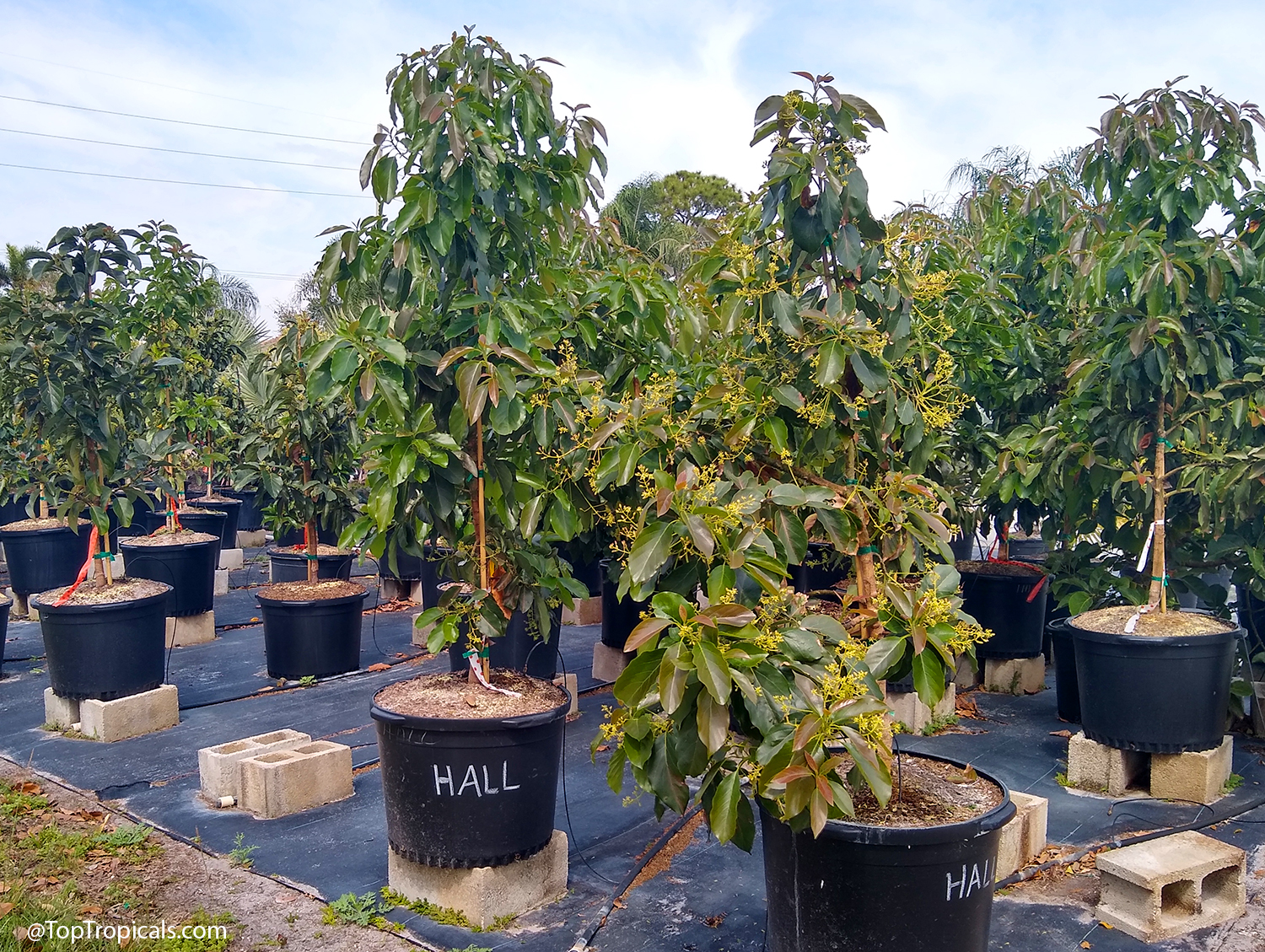
📊 Matrix: 5-Stage Root Defense Protocol
| 🛡️ Stage | ⚙️ Operational Focus | 🧪 Technical Objective |
|---|---|---|
| Structural Prevention Through Drainage |
|
Oxygenation: Ensures the top 18" of the root zone remains aerobic even during heavy rain events. Elevation and oxygen are your primary defenses. |
| Irrigation Discipline |
|
Watering Cycling: Prevents the chronic saturation that allows Phytophthora spores to swim and infect new roots. |
| Early Detection Signs |
|
Early Intervention: Distinguishes between nutrient deficiency and Vascular Collapse before dieback reaches the trunk. Root rot symptoms often mimic nitrogen deficiency, but adding fertilizer will not fix declining roots. |
| Biological Support |
|
Competitive Exclusion: Beneficial microbes and high organic matter suppress pathogen populations through competition. |
| Recovery Protocol for Mild Cases |
|
Metabolic Balancing: Lowers the workload on a damaged root system while oxygen levels are restored to the soil. |
💡 The Top Tropicals ProTip: The Golden Rule of Defense
You cannot cure root rot with chemicals if the soil is still wet. If you suspect decline, stop watering immediately and check for drainage blockages. Restoring oxygen to the soil is much more effective than any fungicide. Elevation and Oxygen are your only permanent defenses.
💡 The Top Tropicals ProTip: The "Donut Rule" of Mulching
Coarse wood chips are an avocado's best friend, but only if applied correctly. Always maintain a 3-inch clear gap between the mulch and the tree trunk. Piling mulch against the bark creates a "moisture bridge" that invites Colletotrichum (Canker) and crown rot, bypassing your root defenses entirely.
🌸🥑💧 Yield vs. Irrigation Modeling: The Stability Index
Avocado yield is not determined by water volume, but by moisture stability during three critical phenological phases. One single "stress event" (drought or saturation) can cause a tree to abort an entire season's crop.
📊 Matrix: Yield Impact by Irrigation Phase
| ⏳ Growth Phase | 💧 Irrigation Goal | 🚫 Stress Consequence | 🔍 Diagnostic: What to Look For |
|---|---|---|---|
| Phase 1: Bloom (Flower Set) |
Steady, even moisture. Soil should be damp, never saturated. | Drought: Flowers desiccate and drop. Saturation: Weak, "leggy" growth; disease spikes. |
Flowers turning brown/crisp before opening = Drought Stress. |
| Phase 2: Early Set ("June Drop") |
High oxygen return. Avoid "wet feet" at all costs. | Hypoxia: Roots suffocate; tree drops fruitlets to save itself from root rot. | Fruit dropping while soil is still visibly wet = Oxygen Deprivation (Hypoxia). |
| Phase 3: Sizing (Summer Heat) |
Deep, consistent soaking to match Evapotranspiration. | Flash Drought: Rapid fruit drop during heat waves as the tree "pulls" water from fruit to leaves. | Small fruit size or sudden drop during 95°F+ spikes = Inconsistent deep moisture. |
✅ High Yield Pattern
Deep irrigation + Partial dry-down + Consistent repetition.
⚠️ Low Yield Pattern
Frequent light "sprinkling" that keeps the top 2 inches of soil perpetually wet.
❌ Crash Pattern
Severe drought cycles followed by "Emergency Flooding."
Hardware Management: The Graft Union
🔬 Technical Definition: Adventitious Rootstock Dominance
The Graft Union is the surgical junction where the scion (desired fruit variety) is fused to the rootstock (the "engine" of the tree). Rootstock Dominance occurs when dormant buds below the graft trigger growth. Because rootstocks are selected for extreme vigor, these "suckers" will divert all vascular energy away from the scion, eventually causing the grafted variety to atrophy and die.
To maintain your tree's genetic integrity, you must actively manage the "Transition Zone" at the base of the trunk.
🛠️ Matrix: Scion vs. Rootstock Identification
| Feature | Desired Scion (Above Graft) | Rootstock Sucker (Below Graft) |
|---|---|---|
| Growth Pattern | Controlled, branching according to variety. | Aggressive, vertical "Water Sprouts." |
| Leaf Morphology | Matches the variety you purchased. | Often smaller, different shade of green, or lacks the typical aroma. |
| Location | Above the "V," "S," or bulbous scar on the trunk. | Originates from the soil line or the main trunk below the scar. |
The "Search and Destroy" Protocol
- Locate the Scar: Identify the graft union. It is usually 4–10 inches above the soil line and looks like a slight bulge or a change in bark texture.
- Prune Immediately: Any green growth emerging from below that union must be snapped off or pruned flush with the trunk as soon as it appears.
- Zero Tolerance: Never let a rootstock branch grow large enough to compete with the main canopy. If left for a full season, the rootstock can "choke out" the grafted variety entirely.
Salinity Engineering: Coastal Constraints & Rootstocks
🔬 Technical Definition: Chloride Ion Toxicity
Avocados are among the most salt-sensitive fruit trees. Chloride Toxicity occurs when the tree absorbs excess salts from soil or irrigation water, which accumulate in the leaf margins. This leads to Tip Burn and premature leaf drop, severely reducing the tree’s "Photosynthetic Budget" and stunted growth.
Managing coastal salinity comes down to two factors: Genetic Resistance (Rootstock) and Hydraulic Leaching (Maintenance).
📊 Matrix: Salinity Tolerance by Genetic Origin
| Race / Group | Salinity Tolerance | Use Case |
|---|---|---|
| Mexican | LOW: Extremely sensitive to chloride. | Best for inland, low-salinity areas with high cold-hardiness needs. |
| Guatemalan | MEDIUM: Moderate tolerance. | Standard for most commercial hybrids. |
| West Indian | HIGH: Most tolerant to salt and alkaline (high pH) soils. | ADVANCED ROOTSTOCK: Essential for coastal Florida and limestone-rich soils. |
The "Advanced Rootstock" Advantage
At Top Tropicals, we often utilize West Indian rootstocks (like 'Waldin') for our Florida-grown trees. This provides a "Hardware Shield" that allows even salt-sensitive varieties to thrive in coastal conditions. If you are planting within 5 miles of the ocean, a West Indian rootstock is a non-negotiable specification.
The Leaching Protocol (Maintenance)
- Salt Flushing: If you see "Tip Burn," you must perform a heavy irrigation flush. Apply 3-4 times the normal amount of fresh water to push the accumulated salts below the root zone (2-3 feet deep).
- Avoid "Salty" Fertilizer: Use low-salt index fertilizers. Avoid Muriate of Potash (Potassium Chloride); use Potassium Sulfate instead.
- Windbreak Strategy: In coastal areas, salt spray is as dangerous as soil salinity. Plant salt-tolerant hedges (like Seagrape or Clusia) to act as a "Physical Firewall" for your avocado trees.
🌊 Coastal Override: The Container Alternative
In extreme coastal environments where the water table is brackish, Container Growing is the most reliable method for long-term success. This approach utilizes Soil Isolation to protect the sensitive West Indian or hybrid rootstocks from chloride-heavy groundwater.
- Substrate Control: Use a professional-grade, well-draining potting mix to ensure zero salt accumulation from the start. Read Soil & Drainage Engineering for more info
- Mobility Protocol: Moving containers during salt-spray events (onshore winds) prevents "marginal burn" on the foliage.
- Leaching Efficiency: In a container, a "Freshwater Flush" is significantly more effective at purging salts than in the open ground, as the water moves vertically through the entire root zone without interference from the surrounding soil's mineral bank.
💡 The Top Tropicals ProTip: The "Tip Burn" Diagnostic
Don't confuse Salt Burn with Dehydration. Salt Burn starts at the very tip and moves evenly along the edges. Dehydration usually causes the whole leaf to wilt or turn brown randomly. If the burn is only on the tips, your "System" needs a freshwater flush.
Fertilizing Avocado Trees
Fertilizing Avocado Trees: In-Ground and Container
Avocados are steady feeders. Overfeeding creates soft, "freeze-bait" growth, while underfeeding leads to weak structures and poor fruit set. For maximum efficiency, slow and controlled-release fertilizers are the most effective, as they provide a consistent nutrient stream that matches the tree's metabolic pace.
Use balanced materials such as 6-6-6, 8-3-9, or similar fruit-tree blends. We highly recommend SUNSHINE Green Magic for its superior controlled-release profile, ensuring balance and consistency for a productive canopy.
📊 Matrix: Professional Age-Based Feeding Schedule (In-Ground)
| Year | Feeding Frequency (Times/Year) |
Amount per App (lbs) |
Total per Year (lbs) |
Micronutrient Sprays (Times/Year) |
Iron Chelate Drench (oz/tree/year) |
|---|---|---|---|---|---|
| 1 | 6 | 0.25 – 0.5 | 1.5 – 3.0 | 6 | 0.5 – 0.75 |
| 2 | 6 | 0.5 – 1.0 | 3.0 – 6.0 | 6 | 0.75 – 1.0 |
| 3 | 6 | 1.0 – 1.5 | 6.0 – 9.0 | 6 | 1.0 – 1.5 |
| 4 | 4 | 1.5 – 2.5 | 9.0 – 10.0 | 6 | 1.5 – 2.0 |
| 5 | 4 | 2.5 – 3.5 | 10.0 – 14.0 | 4 | 2.0 – 4.0 |
| 6 | 4 | 3.5 – 4.0 | 14.0 – 16.0 | 4 | 2.0 – 4.0 |
| 7 | 4 | 4.0 – 4.5 | 16.0 – 18.0 | 4 | 2.0 – 4.0 |
| 8+ | 4 | 4.5 – 5.0 | 18.0 – 20.0 | 4 | 2.0 – 4.0 |
📦 Container Feeding Protocol
- Frequency & Method: Light feeding every 4–6 weeks. For stable, long-term nutrition, use SUNSHINE Green Magic. Standard fertilizers can release nutrients unevenly in high heat. Green Magic is specifically designed for hot climates to ensure a steady, controlled release.
- The Foliar Advantage: Foliar spraying is the most effective way to feed container avocados. It ensures immediate nutrient absorption and eliminates the risk of mineral lockout or root burn.
- No Salinity Flush Required: When using the Top Tropicals foliar system, a salinity flush is not required. Because the nutrients are absorbed through the leaves, there is no accumulation of harmful salts in the soil.
- Daily Boosting: For maximum growth, SUNSHINE Robusta or similar boosters can be safely used with every watering to provide constant, gentle support to the tree's metabolic engine.
🔍 Micronutrient Strategy
- Iron: Use chelated iron (EDDHA) for alkaline/high-pH soils. Foliar spraying using SUNSHINE™ Robusta is the most effective way to deliver these nutrients directly to the plant when soil-based lockout occurs.
- Foliar Sprays: Apply Zinc, Manganese, and Boron during spring/summer growth flushes. SUNSHINE™ Robusta and similar boosters are the most effective for foliar spraying to bypass soil-based lockout.
- Diagnosis: Yellow leaves with green veins indicate mineral lockout, not Nitrogen deficiency.
This section includes information adapted from: Crane, Jonathan H. (2020). Avocado Growing in the Florida Home Landscape (CIR1034). University of Florida Institute of Food and Agricultural Sciences (UF/IFAS). DOI: https://doi.org/10.32473/edis-mg213-1983. Reviewed July 23, 2023.
🌍🧪🌿🥄 Fertilizer Strategy by Climate: The Nutrition Matrix
Avocado nutrition is not one-size-fits-all. Climate dictates the leaching rate, salt accumulation, and microbial activity of your soil. Use this matrix to match your feeding intensity to your environmental stress.
📊 Matrix: Regional Nutrition Protocols & Soil Dynamics
| 🌍 Region | 🧪 Soil & Climate Dynamics | 🌿 Top Tropicals Feeding Protocol | ⚠️ Critical Logic |
|---|---|---|---|
| 🐊 Humid Subtropical (FL, Gulf Coast) |
High leaching from rain; sandy soils lose N and K rapidly; high disease pressure. | Light, frequent doses. Supplement Potassium (K) during fruit set. Use SUNSHINE Robusta monthly. | Consistent "spoon-feeding" outperforms heavy seasonal applications in sand. |
| ☀️ Mediterranean (CA Coastal) |
Dry summers reduce leaching; cool winters slow microbe breakdown; salt buildup is common. | Apply Green Magic in early spring. Supplement Nitrogen (N) during summer flush. | Balanced feeding + deep irrigation cycles prevent toxic salt burn. |
| 🌵 Desert Climate (AZ, Inland) |
High evaporation concentrates salts; alkaline (high pH) soils lock up micronutrients. | Use Chelated micros (Iron/Zinc). Increase Potassium during sizing. Monthly deep leaching. | In the desert, salinity management is as vital as the nutrient supply itself. |
| ❄️ Cool Marginal (Zone Edge) |
Cool soil slows uptake; excess Nitrogen (N) increases freeze sensitivity; short growing season. | Feed ONLY during active growth. Avoid late-season N. Focus on root health over canopy height. | Restraint protects winter survival. Soft, late-season growth is "freeze bait." |
Nutritional Engineering: Nutrient Management
🔬 Technical Definition: Chlorosis & Bio-Availability
Chlorosis is the yellowing of leaf tissue due to a lack of chlorophyll, often caused by the Bio-Inaccessibility of minerals. In high-pH soils, essential elements like Iron (Fe) and Zinc (Zn) become chemically "locked," preventing root uptake even if the minerals are present in the soil.
Avocados are "Heavy Feeders" with specific requirements for vascular health and fruit quality. A standard N-P-K fertilizer is rarely sufficient for long-term productivity. Secondary and trace elements are the "spark plugs" of the avocado's metabolic engine. While N-P-K builds the structure, these elements regulate the complex chemistry of fruiting and cold-hardiness.
📊 Matrix: Advanced Macro & Micronutrient Diagnostic
| Deficiency | ⚙️ Biological Role | Visual Symptom | Action |
|---|---|---|---|
| Nitrogen (N) | Foundational element for proteins, amino acids, and chlorophyll. Drives rapid vegetative growth and canopy development. | General paling/yellowing of the entire tree, starting with older leaves. Reduced vigor and small leaf size. | Apply SUNSHINE Robusta. This professional-grade NPK formula provides the high-nitrogen "Fuel" needed for canopy expansion along with essential microelements. |
| Phosphorus (P) | Provides the core of the plant's energy transfer system (ATP). Foundational element for DNA, RNA, cell membranes, and rapid root system establishment. | Stunted growth, dark green or purplish/bronzed older leaves, especially on leaf margins. Weak root development. | Apply SUNSHINE Robusta. This professional-grade NPK formula provides essential Phosphorus for root and cell development alongside nitrogen and potassium for holistic growth. |
| Potassium (K) | Regulates stomata opening and water balance. Activates enzymes for photosynthesis, starch synthesis, and protein production. Imparts drought resistance. | Marginal necrosis (browning of leaf edges) on older leaves. Decreased fruit size and quality. | Supplement with SUNSHINE Robusta to provide high-quality Potassium Sulfate. Avoid Potassium Chloride (Muriate of Potash) due to avocado salt sensitivity. |
| Iron (Fe) | A key catalyst for chlorophyll synthesis and electron transport during photosynthesis. Essential for energy production. | New leaves are bright yellow with sharp, distinct green veins (Interveinal Chlorosis). | Apply SUNSHINE Superfood for a complete microelement spectrum. For high-pH (alkaline) soils, supplement with Chelated Iron (EDDHA) as a soil drench. |
| Magnesium (Mg) | The central atom of the chlorophyll molecule. Acts as an activator for numerous crucial enzymes in carbohydrate metabolism. | Interveinal yellowing/bronzing on older leaves. Often leaves a green "V-shape" at the leaf base. | Apply SUNSHINE Superfood to restore magnesium levels. This corrects the "Bronzing" common in sandy Florida soils. |
| Manganese (Mn) | Activates enzymes for splitting water molecules during photosynthesis and contributes to chlorophyll production and nitrogen metabolism. | Yellowing between veins of young leaves. Similar to Iron, but veins appear blurred or have wider green borders. | Apply SUNSHINE Superfood as a foliar spray or soil drench to provide bio-available Manganese, which is often locked in limestone soils. |
| Zinc (Zn) | A component of many enzymes and crucial for the synthesis of auxins (growth hormones) that regulate leaf size and internode length. | "Little Leaf" syndrome. Small, narrow, clustered leaves at branch tips with necrotic (dead) spots. | Apply SUNSHINE Superfood during new growth cycles. Zinc is critical for leaf expansion and preventing stunted internode growth. |
| Boron (B) | Critical for cell wall synthesis, sugar transport, and structural integrity. Essential for flower formation, pollen tube growth, and fruit set. | Distorted, "hooked" leaf tips and "shot-holes" in foliage. Fruit may be deformed or develop internal "stoniness." | Apply SUNSHINE Superfood twice a year. This ensures the precise, trace amounts of Boron required for fruit set without risking toxicity. |
The "Sunshine Booster" Protocol
To bypass soil-locking issues, use a liquid-phase nutritional program that provides amino-acid-complexed minerals. This ensures the nutrients remain stable and available for immediate absorption by the feeder roots.

New to the Sunshine Boosters System?
Robusta, Green Magic, and Superfood aren't separate, one-off fertilizers. They're part of one connected feeding system, built to remove the guesswork of managing multiple products and schedules. Just mix with water and apply during regular watering or as a foliar spray. See the Sunshine Boosters overview to see how the full system works together.
💡 The Top Tropicals ProTip: Foliar Delivery, Bypassing Soil Chemistry
Liquid foliar sprays provide a critical "Quick Action" advantage in your nutritional system. Because the nutrients are absorbed directly through the leaf stomata, they are immediately bio-available, completely bypassing the "Soil Lock-up" issues common in high-pH or alkaline environments where minerals like Iron and Manganese become chemically inaccessible to roots. While a liquid-only program can be used as your primary fertilizer system, we recommend a hybrid approach: use SUNSHINE liquid boosters for rapid corrections and growth flushes, while utilizing Green Magic, our professional-grade, controlled-release granulated fertilizer, to provide the consistent, long-term "Base Load" of nutrients required for a stable root zone.
💡 The Top Tropicals ProTip: The "Flush" Rule
The most efficient time to apply nutrients is during a Growth Flush (when you see new reddish-bronze leaves). This is when the tree's metabolic demand is at its peak. Applying fertilizer to a dormant tree in winter is a waste of resources and can lead to nutrient leaching.
💡 The Top Tropicals ProTip: Deficiency vs. Lockout
Micronutrient deficiencies are often pH-induced lockout rather than a lack of minerals in the soil. If your pH is above 7.5, even if you add Iron, the tree cannot "see" it. Always use Chelated forms for better uptake in alkaline soils or use liquid sprays.
Why Controlled-Release Fertilizer Performs Better for Avocados
For avocado trees, the delivery method of nutrients is just as important as the formula itself. While traditional quick-release fertilizers provide a sudden "spike" of nutrition, Slow and Controlled-Release Fertilizers (CRF) are significantly more effective because they align with the tree's natural metabolic pace.
The Science of "Steady Feeding"
Avocados are biologically categorized as steady feeders. They thrive when they receive a constant, low-level stream of nutrients rather than the "feast-or-famine" cycle created by standard granular fertilizers.
Controlled-release fertilizers are typically polymer- or resin-coated granules that release nutrients through diffusion. The release rate increases with temperature and moisture - closely matching avocado root activity and metabolic demand.
❄️ Avoids "Freeze-Bait" Growth
Quick-release fertilizers trigger a massive flush of soft growth. This wood is highly susceptible to "Transplant Shock" and is the first to die during a cold snap.
📈 Matches Metabolic Demand
SUNSHINE Green Magic uses a specialized coating that regulates discharge based on temperature and moisture - the same factors that dictate growth.
🔥 Engineered for Hot Climates
Standard fertilizers can release nutrients unevenly in heat. Green Magic is heat-stabilized for extreme environments like Florida and Arizona.
📊 Matrix: Standard vs. Controlled-Release Comparison
| Feature | Standard Quick-Release | 🌿 SUNSHINE Green Magic (CRF) |
|---|---|---|
| Nutrient Delivery | Sudden spike followed by rapid decline. | Consistent, level stream over 6 months. |
| Leaching Risk | High (especially in Florida's sandy soils). | Low: Nutrients stay in the root zone. |
| Root Safety | High risk of salt burn in containers. | Extremely Low Salt Accumulation Risk: When used as directed. |
| Climate Stability | "Melts" and releases too fast in heat. | Heat-stabilized for tropical/desert use. |
In humid climates like Florida, CRF reduces leaching losses. In desert climates like Arizona, it prevents salt spikes caused by high evaporation rates.
🏆 The Combined Protocol for Maximum Success
The most effective strategy for both in-ground and container avocados is a two-tier system:
- 🧱 The Foundation (Green Magic): Use a controlled-release base to provide the steady, balanced nutrition needed for strong structural wood and root health.
- 🚀 The Booster (Robusta): Supplement with SUNSHINE Robusta foliar sprays. Because foliar feeding bypasses the soil, it eliminates the risk of mineral lockout. For container trees, this means a salinity flush is not required, and Robusta can be used with every watering for continuous energy.
Stable nutrition also supports root oxygen resilience discussed in the Irrigation and Root Health sections of this guide.
⚖️ Green Magic Quick-Measure & In-Ground Dosing Chart
Whether you are feeding a small container or a mature orchard tree, use these household volume measurements to ensure an accurate, safe application of SUNSHINE™ Green Magic.
📊 Matrix: Green Magic Dosage
| 🥣 Volume Measure | ⚖️ Approx. Weight (Ounces) | 🌳 Best For... / Trunk Diameter |
|---|---|---|
| 1 Teaspoon | 0.15 oz | 1-Gallon Pots / Small Starters |
| 1 Tablespoon | 0.50 oz | 3-Gallon Pots / Small Trees |
| 1/4 Cup | 2.0 oz | 7-15 Gallon Pots / 1" Trunk Diameter |
| 1/2 Cup | 4.0 oz | 25-Gallon Pots / 2" Trunk Diameter |
| 1 Full Cup | 8.0 oz | 4" Trunk Diameter (In-Ground) |
| 2 – 4 Full Cups | 16.0 – 32.0 oz | Large Established In-Ground Trees (8"+ Trunk) |
💡 The Top Tropicals ProTip: When applying to in-ground trees, always spread the granules out to the drip line (the outer edge of the leaf canopy). This is where the most active "feeder roots" are located, waiting to capture nutrients.
Understanding Mineral Lockout & The Amino-Acid Solution
Mineral Lockout is a physiological state where essential nutrients are physically present in the soil, but the tree is unable to absorb them. This is typically caused by high soil pH (alkaline conditions), where the chemical bond between the mineral and the soil particles becomes too strong for the roots to break.
🥑 Why Lockout Happens in Avocados
Avocados thrive in slightly acidic soil (pH 6.0 – 7.0). When pH rises above 7.5, micronutrients like Iron (Fe), Zinc (Zn), and Manganese (Mn) become "locked" in a solid, non-soluble state. Even if you apply more fertilizer, the tree remains hungry and "chlorotic" (yellowing) because the roots cannot "see" the nutrients.
🔬 The Failure of EDTA
Standard synthetic chelates like EDTA often fail in alkaline soils (South Florida/Southwest). They are chemically unstable at high pH levels and "dump" their nutrients back into the soil before the tree can absorb them.
🚀 The Robusta Advantage: Amino-Acid Tech
SUNSHINE Robusta is not EDTA-based. It utilizes amino-acid-based chelates. Because amino acids are natural building blocks already recognized by the tree, they act as a "Trojan Horse," carrying nutrients directly through the leaf and cell walls with zero resistance.
📊 Matrix: Diagnostic Guide: Lockout vs. Nitrogen Deficiency
| 🔍 Symptom | 🔓 Mineral Lockout (High pH) | 📉 True Nitrogen Deficiency |
|---|---|---|
| Visual Pattern | Interveinal Chlorosis: Yellow leaf blades with dark green, prominent veins. | Uniform Yellowing: Entire leaf (including veins) turns pale lime green. |
| Location | Appears first on new growth (Micros are immobile). | Appears first on older leaves (Nitrogen is mobile). |
| 🚀 Corrective Action | Foliar spray with SUNSHINE Robusta. Bypasses soil chemistry entirely. |
|
💡 The Top Tropicals Verdict: Foliar feeding with amino-acid boosters is much more efficient than soil feeding in alkaline environments. It allows the tree to "inhale" nutrition through its leaves, greatly reducing how much soil pH limits nutrient uptake.
The Calcium (Ca) Factor: Structural Integrity
One of the most significant advantages of SUNSHINE Robusta is its inclusion of a stabilized, bioavailable form of Calcium (Ca). While many commercial liquid fertilizers omit Calcium, relying on the assumption that irrigation water contains sufficient levels, this is often scientifically inaccurate.
🚫 The Commercial "Water Gap"
Standard liquid mixes often rely on "hard water" to provide Calcium. However, if you use rainwater, RO water, or soft well water, your tree receives zero Calcium. Even in hard water areas, Calcium is often bound to carbonates and is not immediately bioavailable to the roots.
🏗️ Structural Role of Calcium
Calcium is the "cement" between cell walls. In avocados, it is critical for fruit quality and root tip elongation. Unlike Nitrogen, Calcium is immobile; it must be constantly present in the nutrient stream to support new growth flushes.
📊 Matrix: Calcium Factor
| ⚙️ Feature | 🔬 Technical Logic |
|---|---|
| Full Spectrum Delivery | Includes N, P, K, Ca, Mg, S, and all essential trace elements (Fe, Mn, Zn, Cu, B, Mo, Co). |
| Amino-Acid Stability | The amino-acid base prevents Calcium from reacting with Phosphorus (which usually causes "fallout" or sludge in other fertilizers). |
| Cell Wall Strength | Constant Ca supply prevents "grey pulp" in fruit and terminal dieback in young branches. |
Surface Engineering: The Mulch Blanket
🔬 Technical Definition: Rhizosphere Insulation
The Rhizosphere (the soil zone surrounding roots) requires a constant Thermal Buffer. Avocados lack deep taproots; their surface feeder roots are highly susceptible to "Desiccation Shock" from direct solar radiation and rapid temperature fluctuations.
Effective surface management mimics the forest floor by providing a decaying organic layer that regulates moisture and prevents root "cooking."
| Material | Thermal Performance | Maintenance Rule |
|---|---|---|
| Coarse Wood Chips | HIGH: 2-inch pieces allow for maximum air-to-water gas exchange. | Apply 4–6 inches deep. Replenish every 12–18 months. |
| Natural Leaf Litter | EXCELLENT: Contains variety-specific nutrients being "recycled" back to the tree. See Laurel Wilt (LW) exception | NEVER RAKE: Leave fallen avocado leaves in place; they are the tree's natural defense. |
| Pine Bark / Straw | MEDIUM: Acidifies the surface layer slightly (beneficial for pH). | Best for young trees to avoid nitrogen-tie-up at the soil surface. |
The "Self-Mulching" Protocol: Why We Keep the Leaves
A common question is whether fallen leaves harbor disease. In practice, the biological benefits of leaf litter outweigh the risks.
- The Antagonist Microbiome: Natural leaf litter hosts beneficial fungi (like Trichoderma) that actively compete with and suppress Phytophthora (Root Rot).
- Nutrient Recycling: Decomposing leaves release micro-elements back to the roots in a highly bio-available form, reducing the "System Load" for external fertilization.
- Thermal Shielding: Leaves provide a physical barrier against UV scorch on shallow feeder roots that wood chips alone cannot match.
💡 The "Donut" Rule & The LW Exception
Rule: Maintain a 3-inch "Donut" gap around the trunk to prevent Gummosis (bark rot).
Exception: If a tree is confirmed to have Laurel Wilt (LW) or severe Anthracnose, remove all debris immediately to prevent pathogen spread to the rest of your grove.
Avoid the Pitfalls: Why Avocado Trees Fail and How to Prevent It
Already seeing a specific problem? Jump straight to the Quick Diagnostic Index instead.
The Avocado Survival Matrix: Risk Mitigation
Success with avocados is often about what you don't do. Use this matrix to audit your grove or container garden and ensure you aren't inadvertently stressing your trees.
📊 Matrix: Troubleshooting & Risk Mitigation
| 🔍 Category | ❌ The Mistake | 🧪 Technical Reality | 🛠️ The Professional Fix |
|---|---|---|---|
| Watering | Planting in low spots or watering on a strict calendar. | Avocado roots require high oxygen. Saturated soil causes hypoxia; feeder roots die within 24–48 hours. This is the number one killer of avocado trees. | Water deeply, then allow drainage. In clay, plant on a 12 inch or more mound. Read more in Avocado Planting Essentials and Avocado Watering sections. |
| Planting | Setting the root ball below grade or piling mulch against the trunk. | The graft union is metabolically active and highly susceptible to crown rot if buried or kept moist. | Plant high (1–2 inch above grade). Maintain a "Donut" mulch shape with a 3 inch gap around the trunk. Read more in Avocado Planting Essentials section. |
| Drainage/Cold | Planting where water stands after rain (Cold-Wet combination). | Cold + wet soil is worse than cold alone. Waterlogged soil amplifies freeze damage; oxygen-starved roots cannot support recovery. | Never plant in depressions. Raise planting areas 12 inch or more if necessary. Read more in Avocado Planting Essentials section. |
| Nutrition | Applying strong turf fertilizers or heavy nitrogen late in the season. | Excess Nitrogen forces soft growth before roots are established. This wood is vulnerable to cold and heat. | Feed lightly during active growth. Stop heavy Nitrogen by early fall. Use Green Magic base. Read more in Fertilizing Avocado Trees section. |
| Pruning | Heavy pruning before a freeze or during extreme summer heat. | Thin bark contains chlorophyll. Sudden exposure causes sunscald and cambium damage. | Do not prune before winter. Protect exposed wood with 50/50 white interior latex paint/water. |
| Exposure | Planting in open areas with full wind exposure. | Dry wind during cold events increases desiccation and freeze damage. | Even a partial windbreak significantly improves survival. Read more in Planting for Maximum Cold Protection section. |
| Genetics | Growing from a pit and expecting commercial performance. | Seed-grown trees are genetically unpredictable and slow to fruit. | Start with grafted varieties if production and timing matter. Read more in Grafted Trees vs. Seedlings section. |
| Active Flush | Allowing soil to dry excessively during bloom or new growth. | High water demand during active flush/fruit set. Drought stress causes fruit drop. | Maintain consistent moisture ("wrung-out sponge"), never soupy, never bone dry. Read more in Watering Avocado Trees section. |
| Containers | Using dense potting soil without structural aeration. | Containers create a "Perched Water Table." Without coarse material, the lower root zone remains saturated. | Use 40–50% coarse perlite or bark. Ensure high oxygen penetration. Read more in The Essential Guide to Container Avocados section. |
| Early Care | Fertilizing immediately after planting before roots establish. | Young feeder roots are sensitive to salt burn. Early forced growth increases transplant shock and collapse. | Wait for the first flush before feeding. Prioritize micronutrients in alkaline soils. Read more in Fertilizing Avocado Trees section. |
| Fruiting Signals | Assuming early fruit drop means failure. | Excessive drop of small-sized fruit often signals root stress (drought or oxygen deprivation). | Monitor moisture closely during bloom. Maintain consistent, balanced irrigation. |
💡 The Top Tropicals "Oxygen Rule": A tree with a healthy, oxygenated root zone and consistent moisture through bloom will out-produce a tree that is fed heavily but stressed constantly.
Avocados are not fragile. They are particular
- Drainage
- Sun
- Air movement control
- Sensible watering
- Time
Give them these, and they reward you for decades.
Avocado Harvest & Post-Harvest Physiology
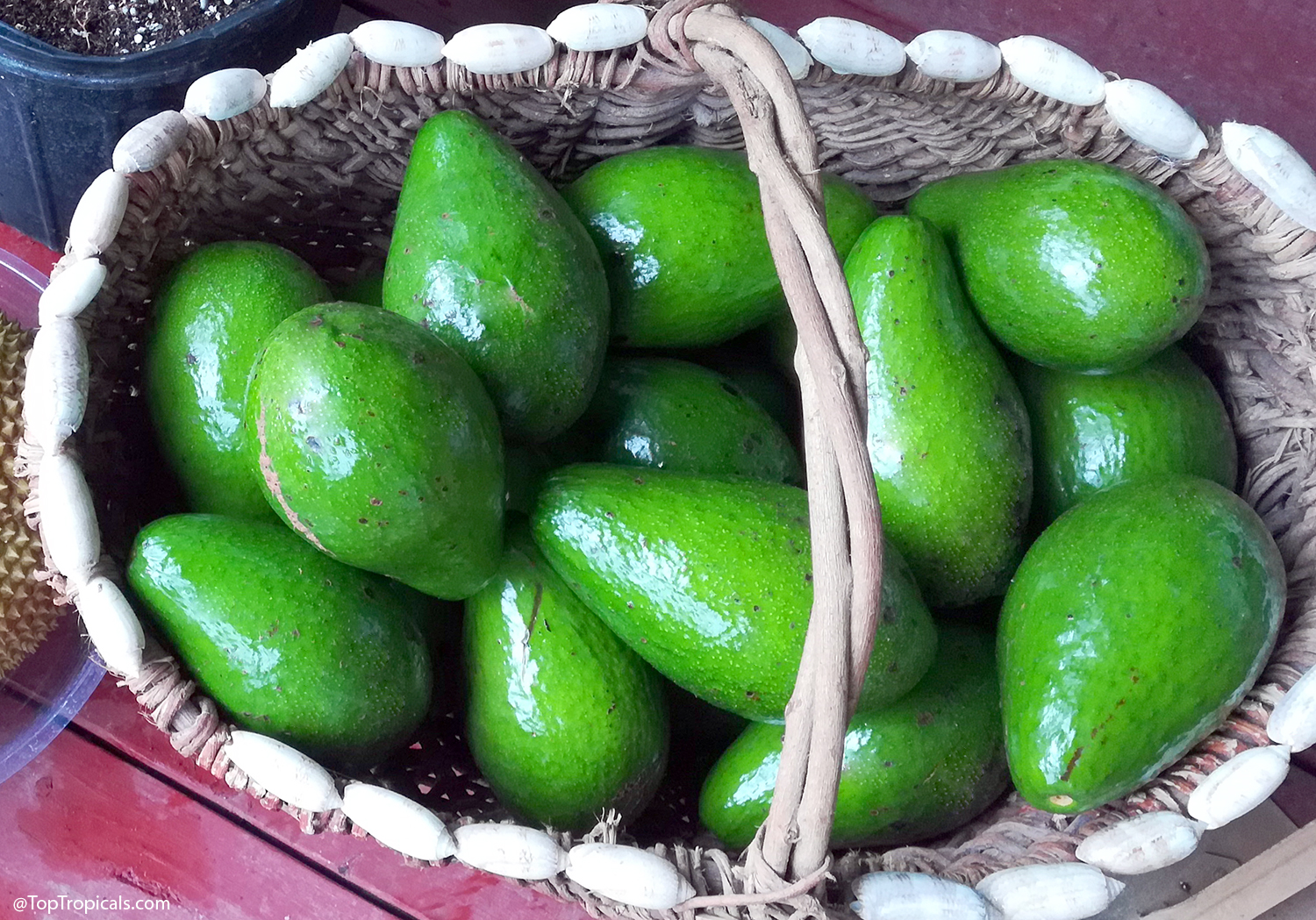
Harvest Management: Identifying Physiological Maturity
🔬 Technical Definition: Dry Matter Accumulation
Physiological Maturity is reached when the fruit has completed its accumulation of Dry Matter (lipids and complex oils). Picking before this threshold results in "Rubberizing," where the fruit shrivels and rots rather than softening. Once mature, the fruit enters a Quiescent Phase on the tree, allowing for extended storage until the abscission layer forms or the fruit is manually detached.
Use the following matrix to determine if a specific variety has reached the minimum requirements for harvest.
⚖️ Matrix: Visual & Physical Maturity Indicators
| Indicator | Mature Appearance | Technical Significance |
|---|---|---|
| Exocarp Gloss | Skin transitions from a "High-Gloss" shine to a "Dull" or matte finish. | Indicates the cessation of rapid cell expansion and wax deposition. |
| Pedicel (Stem) Color | The small stem connecting fruit to branch turns from bright green to yellowish-brown. | Signals the beginning of the Abscission process (detachment). |
| Lenticel State | The small pores (lenticels) on the skin become corky, raised, or brown. | Confirms the skin has reached its maximum thickness and protective capacity. |
| Skin Color Change | Dark Varieties: Transition from green to purple/black (e.g., Mexicola, Oro Negro). | Anthocyanin buildup indicates peak chemical maturity. |
🧪 The 7-Day Maturity Field Test
Picking too early results in rubbery, shriveled fruit that never develops proper oil content. Follow this protocol before a mass harvest:
- Select one of the largest, most mature-looking fruits from the tree.
- Store at room temperature (65°F–75°F).
- Pass: If it softens to a creamy texture within 3–8 days, the crop is ready.
- Fail: If it shrivels, turns rubbery, or takes 10+ days to soften, wait 2–3 weeks and re-test.
The "Seed Test" Protocol (Destructive Analysis)
If visual cues are ambiguous, perform a destructive test on a single representative fruit:
- Seed Coat Inspection: Cut the fruit open. In a mature avocado, the seed coat (the thin skin around the pit) will be dark brown and tissue-paper thin. If it is thick, fleshy, or white, the fruit is immature.
- Seed Cavity: The seed should be easily separated from the flesh without sticking.
💡 The "Snap Test"
Operational ProTip: For green-skinned varieties (like Simmonds or Choquette), try to "snap" the fruit upwards. If the pedicel snaps cleanly away from the branch with minimal effort, the tree is naturally ready to release the fruit. If you have to struggle or use shears, the fruit may benefit from another 2 weeks of On-Tree Storage to maximize oil content.
The Ripening Bridge: Maturity vs. Edibility
🔬 Technical Definition: Climacteric Delay
Avocados are Climacteric fruit with a unique biological inhibitor. Unlike peaches or citrus, an avocado will never ripen while attached to the tree. The tree provides a continuous flow of a "stay-green" hormone that prevents the softening enzymes from activating.
The "Seed Test" tells you the hardware is complete; the Ripening Protocol is the software execution. Picking the fruit is the "Trigger" that starts the metabolic clock.

⚖️ Matrix: The Maturity vs. Ripeness States
| Feature | Mature (Hardware Ready) | Ripe (Software Finished) |
|---|---|---|
| Location | On the Tree. | Off the Tree (Post-Harvest). |
| Physical Texture | Rock hard; non-yielding. | Buttery/Soft; yields to gentle pressure. |
| Oil Content | Maximum levels achieved. | Chemically stable and ready for consumption. |
| Edibility | INEDIBLE: Will be watery and bitter. | READY: Optimal flavor and texture. |
Why Extra Steps are Mandatory
If you simply pick a mature avocado and leave it on a counter, you risk "System Failure." The ripening protocol (paper bag and temperature control) is engineered to prevent two specific errors:
- Rubberizing: If the environment is too dry or too hot (>80°F), the fruit loses moisture faster than it can activate enzymes, turning into a shriveled, rubbery object that never softens.
- Chilling Injury: If a mature but firm avocado is placed in the refrigerator prematurely, the metabolic switch "crashes." This results in blackened vascular bundles (the "strings") and gray, bitter flesh.
💡 Final Operational Rule
The "Seed Test" identifies the Earliest Harvest Date. Once harvested, the fruit requires 3 to 10 days (variety dependent) of controlled ripening to reach physiological edibility. Never attempt to eat an avocado immediately after picking, regardless of how "mature" the seed looks.
Post-Harvest Logistics: Ripening Management
Avocados are Climacteric; they only soften after detachment. Proper management prevents "Rubberizing" (shriveling without ripening).
The Ripening Protocol
- Thermal Range: Maintain the fruit between 65°F and 75°F. Above 80°F, ripening becomes irregular and fruit develops off-flavors.
- Ethylene Concentration: Place fruit in a heavy paper bag to trap Ethylene Gas. Adding an apple or banana speeds up the metabolic "Softening Clock."
- The Refrigeration Threshold: Never refrigerate an un-ripened avocado. This causes Chilling Injury (graying of the pulp). Only move fruit to the fridge after it has reached "Ready-to-Eat" softness to stop the clock.
📊 Matrix: Thermal Thresholds for Post-Harvest Success
| 🌡️ Phase | 📍 Optimal Temp | 🧪 Biological Reality |
|---|---|---|
| Active Ripening | 60°F – 75°F | Enzymes convert starches into oils. Temperatures >80°F cause uneven ripening and "off" flavors. |
| Pre-Ripen Storage (West Indian) | 55°F (Minimum) | Tropical types are highly sensitive to "Chilling Injury." Temperatures below 55°F cause internal browning. |
| Pre-Ripen Storage (Hass/Cold-Hardy Types) | 40°F (Minimum) | Cold-hardy types can handle lower temps to delay ripening, but should not reach freezing. |
| Post-Ripen (Ready to eat) | 35°F – 40°F | Refrigerate only after the fruit is soft to halt further enzymatic breakdown. |
📦 Staggered Harvesting
Avocados act as their own storage unit. Mature fruit can "hang" on the tree for weeks. Harvest the largest fruit first to allow smaller ones to increase in size and oil content.
🥑 Oil Content vs. Timing
The longer the fruit hangs (within its variety window), the higher the oil content. Early-season picks are lighter; late-season picks are richer and creamier.
⚠️ The 1% Rule: Less than 1% of avocado flowers reach maturity. Trees naturally shed excess "BB-sized" fruit early in the season. This is normal self-thinning, not a sign of tree failure or disease.
Advanced Troubleshooting: Diseases & Insects
Regulatory & Safety Protocol
This section is for diagnostic reference and is not a substitute for professional agricultural consultation. Federal, State, and Local regulations regarding pest management must be observed. Always consult your local agricultural extension office to confirm pathogen identification and approved treatment methods.
Top Tropicals Environmental Standards: We prioritize safe, organic-compatible solutions.
- Protect Pollinators: NEVER apply treatments during the flowering stage; doing so is lethal to bees and beneficial insects.
- Food Safety: Always verify the required safety interval (Pre-Harvest Interval) between any application and fruit consumption.
🔬 Technical Definition: Vascular Occlusion & Surface Necrosis
Vascular Occlusion is a systemic blockage of the tree's internal transport (xylem), typically caused by a fungal response to an insect vector (Laurel Wilt). Surface Necrosis refers to localized tissue death on leaves or fruit (Lace Bugs/Anthracnose), which reduces the tree's photosynthetic "Solar Efficiency" but is usually manageable.
Once your tree is established and producing, monitor for these specific environmental stressors to ensure long-term structural health.
| Threat | Symptom & Mechanism | Action |
|---|---|---|
| Laurel Wilt | Vectored by the Ambrosia Beetle. Rapid leaf wilting; leaves remain attached to branches. Total vascular failure. | CRITICAL: Immediate removal of infected wood. Use only certified clean mulch. |
| Avocado Lace Bug | Yellow/brown spots on leaf undersides. High populations cause premature defoliation. | Increase airflow via pruning. Use neem oil or horticultural soaps for organic control. |
| Anthracnose | Fungal pathogen causing sunken black spots on fruit and leaves in high humidity. | Prune for open canopy architecture. Harvest fruit at peak maturity; do not leave "mummies" on the tree. |
| Avocado Scab | Corky, raised lesions on fruit skin. Primarily an aesthetic "Skin Integrity" issue. | Maintain tree vigor. Usually ignored in home orchards as it does not affect internal fruit quality. |
The Pathogen Firewall: Laurel Wilt Biosecurity
🔬 Technical Definition: Xylem Tyloses
Laurel Wilt (Raffaelea lauricola) is a vascular fungus spread by the Redbay Ambrosia Beetle. The tree responds by producing Tyloses, plugs that block its own water-conducting vessels (xylem). This causes a permanent, lethal wilt in as little as 21 days.
| Diagnostic Sign | Physical Appearance | System Status |
|---|---|---|
| Sawdust Toothpicks | Thin, white "frass" tubes protruding from the bark. | Active Infestation: Ambrosia beetles are boring into the heartwood. |
| Sapwood Staining | Dark blue/black streaks revealed under a small bark cut. | Vascular Infection: The LW fungus is actively spreading. |
| Sudden Wilting | Leaves turn dark and curl, but stay attached to the tree. | Critical Failure: Xylem is plugged; death is imminent. |
⚡ Biosecurity Directive
Zero Movement: Never move avocado wood or trimmings off your property. Infested wood must be chipped and tarped or buried on-site to prevent the beetles from jumping to neighboring "Hardware."
💡 The "Clean Slate" Rule
Most secondary issues are prevented by Sanitation. Remove fallen fruit, prune out dead wood, and keep the area under the canopy clear of debris. A clean site is the most effective pesticide you can use.
Final System Check: Success in the home orchard is the result of proper alignment between genetics and environment. By following the 36-month establishment protocol and matching your variety to your specific cold-tier, you have effectively bypassed the most common points of failure. Your next step is to select your specific variety from our inventory and begin mounding your planting site to ensure a lifetime of high-performance harvests.